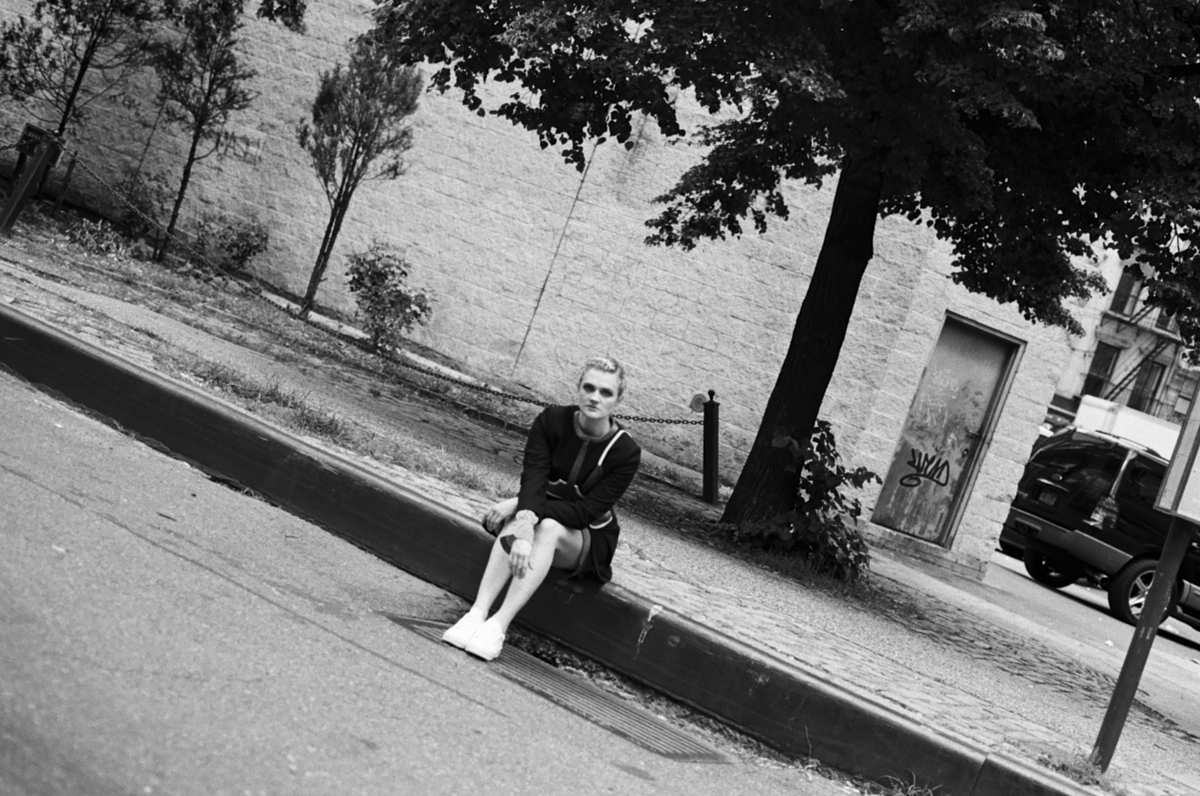
It may be hard to believe that a feminist message lies within a character who, as a result of species dysmorphia, believes she is a wolf — but one does, I swear. In fact, girl power can be found in all the female stars of GLOW, an 80s-set comedy about a diverse group of women training to become performance wrestlers.
Scottish actress Gayle Rankin positions her character, Sheila, as someone who exists on the fringes of society. But despite her fur outfits, wolf ears, and triple-layered caking of eyeliner, at the end of the day, Sheila is just like the rest of us: insecure. “I found it really important to make Sheila as pedestrian as possible,” says the Juilliard-trained actress. “She doesn’t… you know… live in the mountains. She lives in an apartment and she sleeps in a bed. She isn’t that different from all of us.”
Rankin and I are sitting in a New York hotel. It’s only two days after GLOW landed on Netflix and the show is already massively popular. But, even in the middle of the whirlwind, Rankin is contemplative — we have thoughtful discussions about feminism, Hollywood sexism, and Hamlet‘s Ophelia. Because, on top of promoting a new show, Rankin is currently playing Ophelia in Sam Gold’s Hamlet (running at The Public until September 3).
As she speaks about her desire to shift Ophelia away from passivity and towards intelligence and agency, it’s clear that Rankin takes acting seriously. As seriously as GLOW‘s determined, underemployed main character Ruth Wilder (Alison Brie) — who, in the middle of a wrestling match, performs a scene from Cat on a Hot Tin Roof (talk about going for the moment).
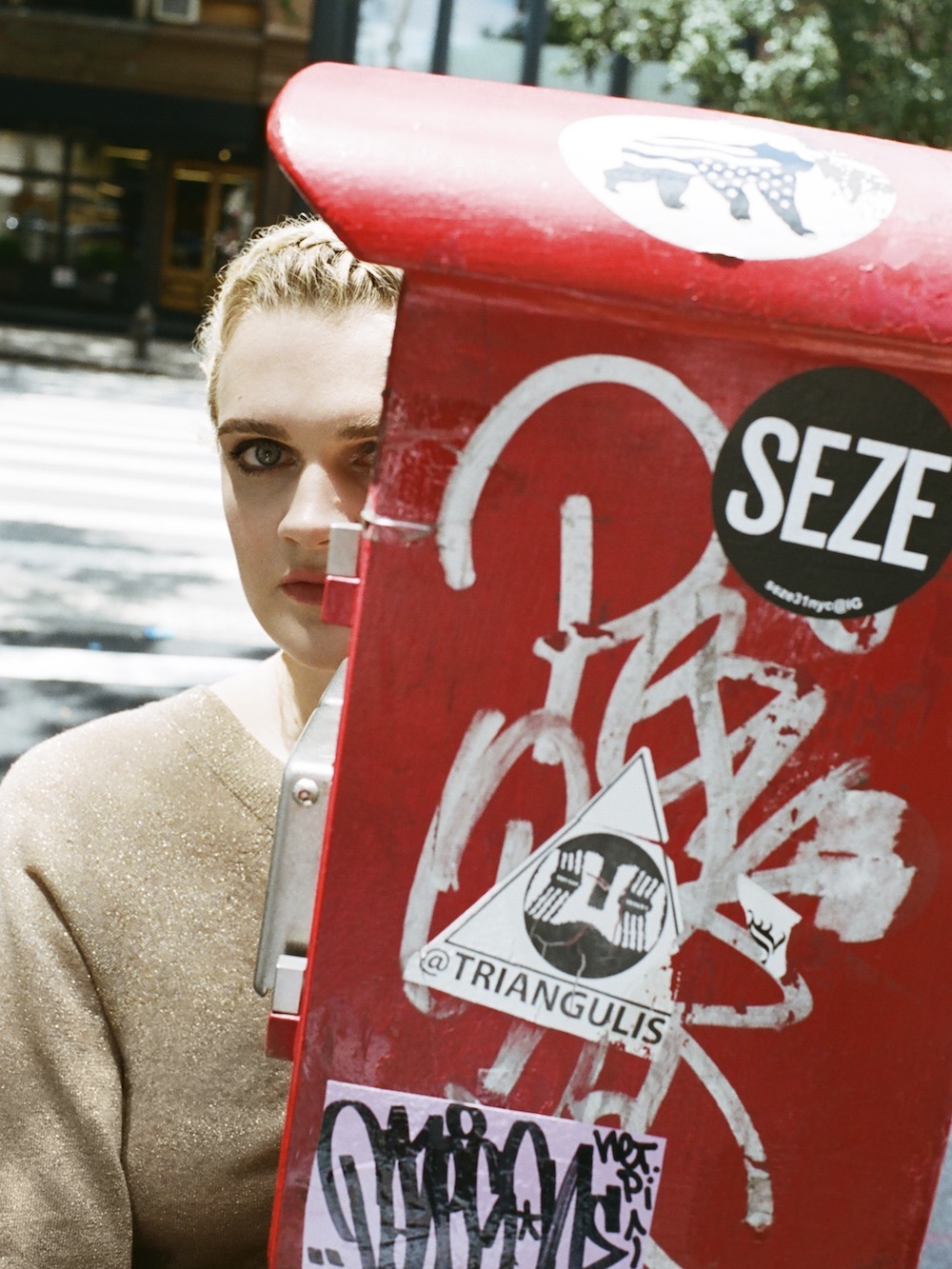
To prepare for GLOW, Rankin visited a wolf sanctuary and played with the animals. “I did a lot of research about species dysmorphia, because it’s an actual real thing,” she says, “and I get why people feel so connected to animals.” She also watched the original GLOW episodes from the 80s; she says the lo-fi videos reminded her of David Lynch films. Rankin and the other cast members even spent a month learning wrestling moves from two stunt women. “I feel like I relate to Sheila in that I’m also interested in bravery,” Rankin says. “I try to inspire bravery in people.”
GLOW is loaded with meta-commentary. It’s a show that illustrates how difficult it is for women to get meaningful roles on shows. The female-created comedy opens with a powerful bodyslam on misogyny when Ruth decides to read the commanding lines of a male lawyer during an audition instead of the brief, submissive lines of the secretary. Over the course of ten half-hour episodes, GLOW follows its mismatched group of women on a journey towards heartwarming sisterhood, but there are also arguments, low-blows, and jealousies. Because that’s how three-dimensional characters are written.
“It was tricky at some points to understand what we were trying to say and what point of view we were trying to take,” Rankin says, referencing plotlines like the perpetual struggle of the team’s director to decide whether he passionately hates or loves Ruth’s face and butt. “Sometimes I had to be like, ‘Oh no, no, no,’ we’re saying this now because later on we’re gonna fight back. The girls are not just gonna take all of this stuff. It’s part of the journey.”

Rankin too has had to navigate sexism within the entertainment industry. “I’ve definitely felt it,” she says. “I’ve definitely read breakdowns where it’s like, SEXY has to be ‘this, this, and this.’ That’s hard. And I’ve really palpably felt why I haven’t gotten a role. In someone’s eyes I’m not beautiful enough…”
Her words immediately conjure a scene in GLOW: in the show’s first episode, a casting director tells Ruth that she repeatedly brings the struggling actress in for auditions not because of her talent, but to show directors that they don’t actually want an “everyday girl” like her.
In her own life, Rankin’s solution has been this: only take on roles that offer a unique challenge and purpose. She says the experience of filming a show while surrounded by a strong female cast and production team encouraged her to be more courageous in her approach to playing Sheila. “This whole process has really turned my life and perception around about what [acting] is for,” she says. “It’s for other people. It’s for such good. I’ve been lucky to do a couple of projects that really point towards issues about women.”
Still, Rankin isn’t a fan of watching herself. She’s only seen five episodes of GLOW because, she says, she’s too self-critical to plow through them all at once.
But she’s using the overwhelmingly positive response to GLOW as motivation to be less self-critical. “I find it inspiring, and I’m able to put my own BS to the side and say, ‘This is more important than if I think I look weird or that I didn’t do that moment perfectly.’ I’m giving myself less and less of a hard time.”
GLOW is likely to make viewers feel more at ease with themselves, too. Because in the midst of a tumultuous debate about what women can and cannot do with their bodies, this comedy about fierce fighting feminists is cathartic and incredibly relevant.
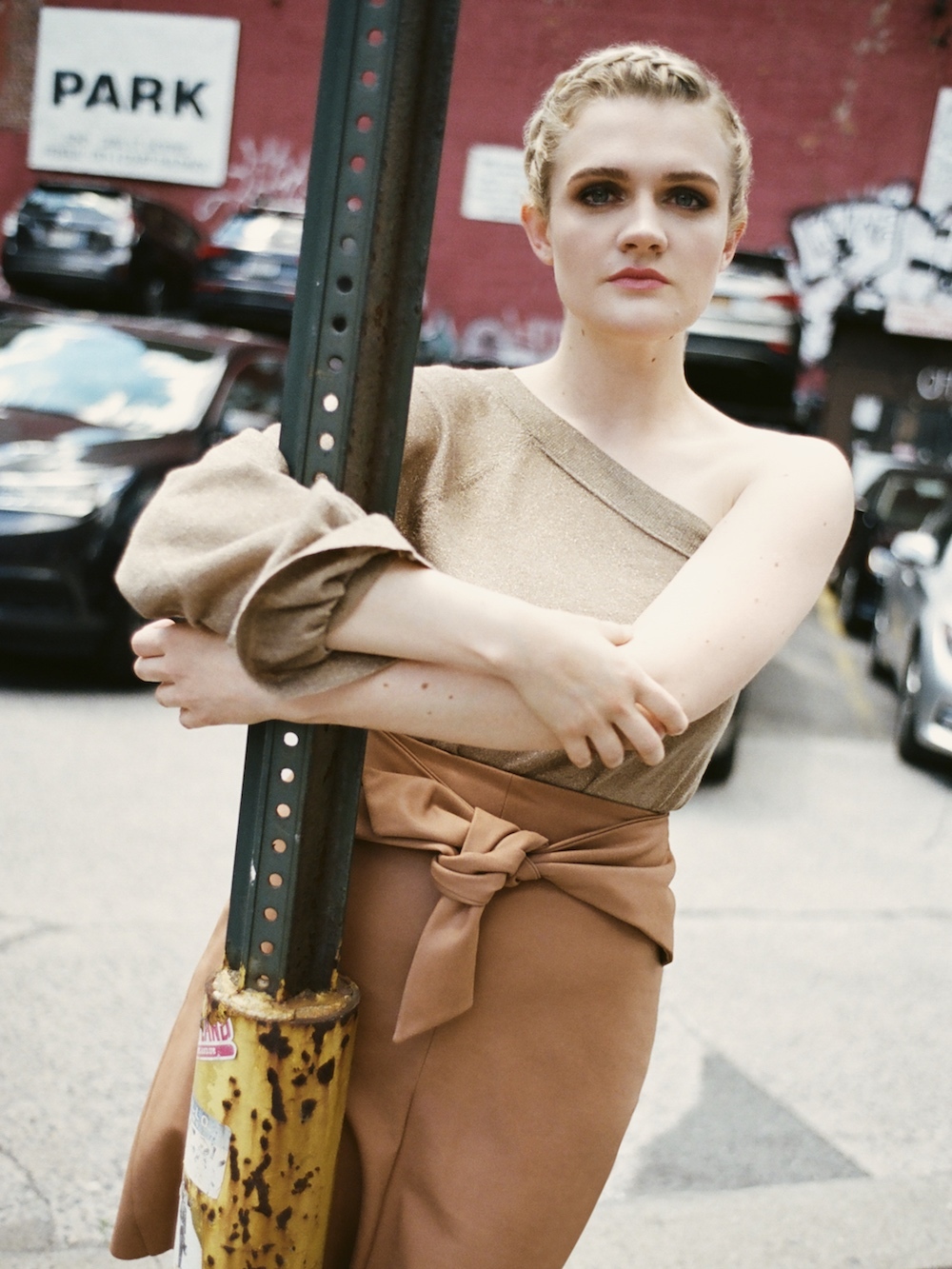
Credits
Text André-Naquian Wheeler
Photography Stanislaw Boniecki