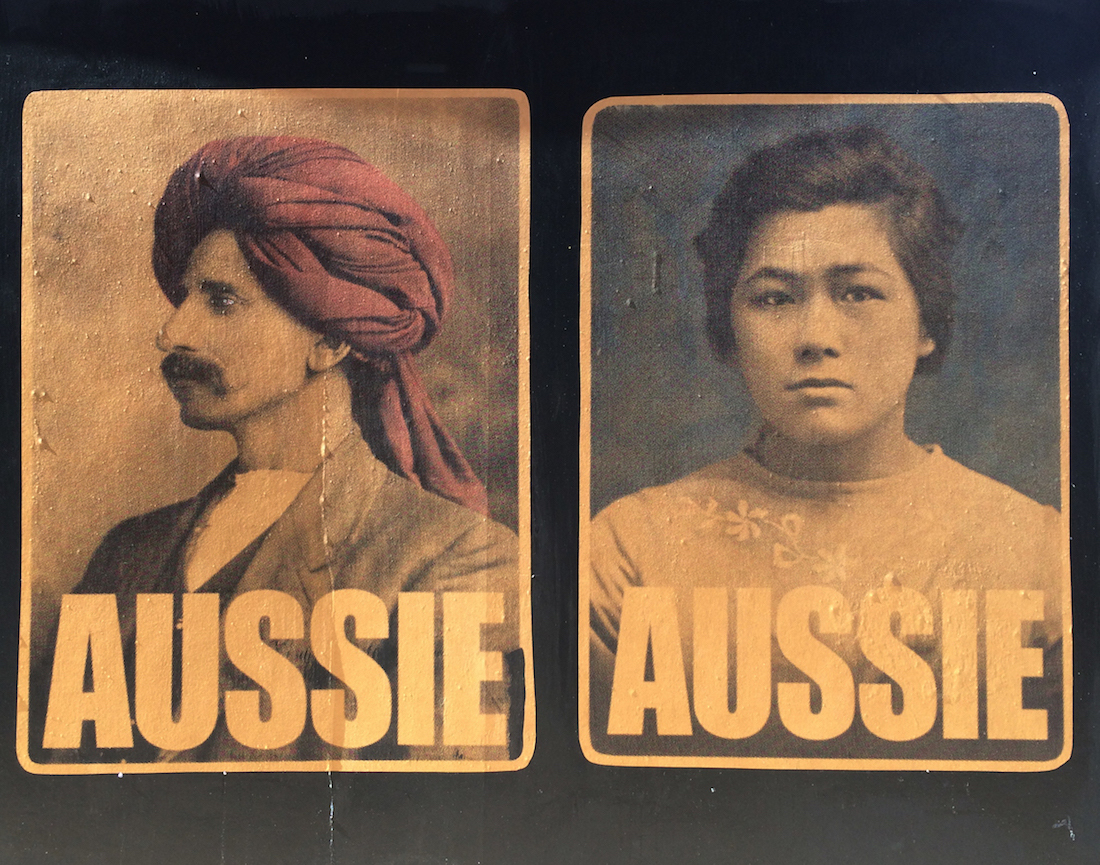
When we speak to Australian artist Peter Drew he is in the middle of his self-motivated What is a Real Aussie? campaign, almost out of posters and planning to return to his studio in Adelaide to print more. His mission is to paste up 1,000 posters featuring identification photos of early immigrants to Australia and the last print run will see him through the country’s remaining states: Brisbane, Hobart and Canberra.
The people in the images were typically given exemptions from the contentious White Australia Policy and the key figure is a man named Monga Khan who left India for a life selling goods between towns in Australia. Peter’s mission is to save Monga, and those like him, from being forgotten in the depths of the Australian National Archive. By humanising these figures and highlighting the fact that Australia has a long, multicultural history, he hopes to inspire greater tolerance in terms of the asylum seeker situation today.
This isn’t Peter’s first altruistic art project. This time last year he embarked on his first poster series with a campaign calledReal Australians Say Welcome, which saw artists from all over the country create work in support. Peter’s projects have a strong clear message and allow people to engage in simple but meaningful ways and both have easily raised the Pozible funds required. With an early election set for July 2nd, people are looking for someone who represents their feelings about the humane treatment of people seeking refuge and while the Green party promises policies that would help close the offshore detention centres and assimilate refugees, Peter has managed to rally and engage the community with his art.
It’s so crazy that Australia had a policy only allowing white people in for over 50 years. The people in your posters were given exemptions and allowed to settle?
A lot of the people let in were cameliers and in many cases they married Aboriginal women so a lot of their descendants are here today. It’s actually a common tale and I love that most of these love stories were in defiance of the authorities. A lot of these couples had to elope to the Northern Territory or South Australia to get married because the law at the time meant that Aboriginal people couldn’t marry non-Aboriginal people.
It’s hard to believe. I love the idea that you’re helping to humanise these characters so that their stories become a lesson for today.
That’s the job of artists. I’m not a historian but I think artists help create mythologies. They look at history and they imagine the kinds of things we can’t possibly know and that creates a vehicle for history. Without the imagination history is dry and it’s impersonal and we find it difficult to really identify with people back then, but if we use our imaginations we can begin to imagine.

What do you think is going to happen in terms of asylum seekers coming to Australia?
I’m not sure exactly butthe detention centres have to close. We need to imagine a solution that doesn’t involve imprisoning people indefinitely. I think that’s within our imaginations. In ending offshore detention Australia has an opportunity to show the world our courage and generosity. I just hope that a leader emerges who’s strong enough to take that opportunity.
There are so many cases of asylum seekers who are now valuable members of Australian society: doctors saving lives, lawyers, architects, all contributing positively to the culture.
The contrast between the reality and the fear people have is pretty stark. If you look at our history it starts to paint a picture of what people in years to come might think of us. So many of the people given exemptions to the white Australia policy were valuable and much loved members of the community. It’s amazing—the records have testimonials from their friends and employees saying how valuable they were. It’s not that different to now. We feel like we have a very welcoming, accepting community but in the future we’re going to be judged by our worst behaviour. We can’t just ignore that.
Credits
Text Briony Wright
Photography Rebecca Mansell