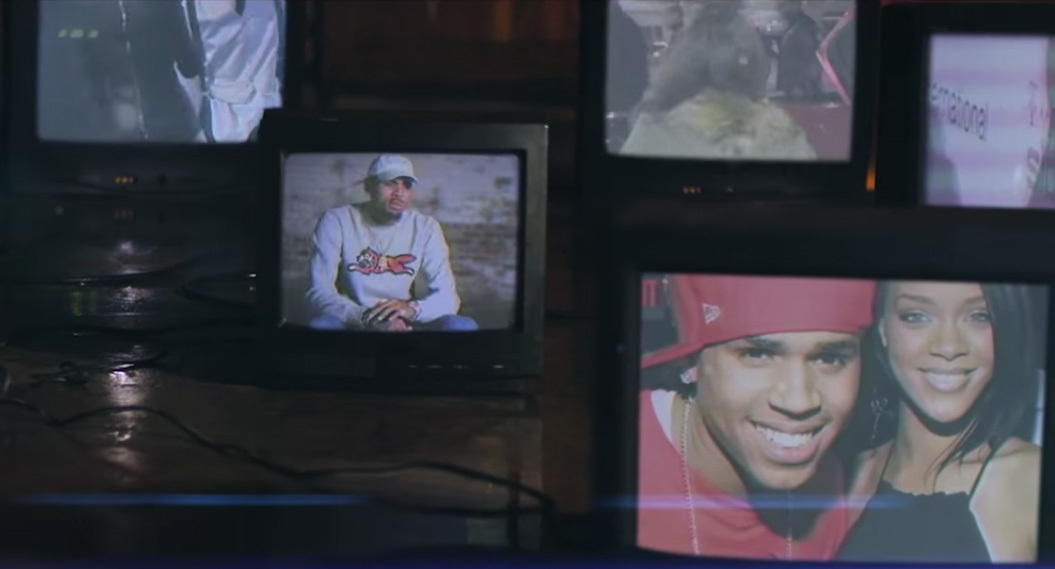
This week controversial artist Chris Brown released the trailer for his documentary Welcome To My Life. The preview is an unsettling look at how the singer sees himself, his actions and the public’s response to him. Despite ongoing issues with violence and public misogyny, since his 2009 arrest for assaulting then girlfriend Rihanna Chris Brown has become one of the most popular RnB artists working today. He’s arguably a poster boy for how much can be achieved when disturbing behaviour is forgiven for the price of a banger.
In the trailer his rise and fall is tracked through testimonials from very famous people. Jennifer Lopez, Usher, Rita Ora all make appearances—so does Rihanna.
With the help of his mum, the trailer breezes through his early life and career. The infamous 2009 assault is the key focus. The crime is framed as the result of a young man growing up too fast; the following backlash and legal ramifications are presented the hardest period of Brown’s life. He laments “I went from being on top of the world, number one songs, being kinda like America’s sweetheart to being public enemy number one”. He also references considering suicide at one point.
By the end of the 2 minutes and 45 seconds we’re treated to a montage of his huge stage shows and the assurance that this is a redemption story where everything works out. He is rewarded with a continuing career and waves of rabid fans, the majority of whom are young women.
The emotional presentation is clearly having its desired impact. The resulting news coverage of the film has gone hard on Chris’ personal struggle following his arrest with almost every related headline mentioning his suicidal period. Yet when another female star was in a similar position, Chris wasn’t sympathetic.
Last month he made light of singer Kehlani’s suicide attempt by Tweeting, “There is no attempting suicide. Stop flexing for the gram. Doing sh*t for sympathy so them comments under your pics don’t look bad.”
There is no attempting suicide. Stop flexing for the gram. Doing shit for sympathy so them comments under your pics don’t look so bad
— Chris Brown (@chrisbrown) March 30, 2016
It was hardly a one off for him, but rather part of an ongoing series of disturbing behaviour towards women. In recent years he got a neck tattoo that appears to be of a battered woman, was accused of assaulting another woman who tried to take his photo and released tracks like Biggest Fan that include the lyrics “Girl you better not change your mind / No is not an option… Imma take what’s mine.” Just this week, Best Coast front woman Bethany Cosentino called him out for perpetuating rape culture in one of his recent hits.
You’d be naïve to think this film would be an impartial examination of Chris Brown’s ongoing issues with women and violence. While it appears to edit out some of the more disturbing aspects of his personality, what remains is still telling. When Usher comments “If you truly love Chris Brown then you felt everything that has gone on with him,” you have to wonder what feelings he’s referring to—because it’s certainly not sympathy.
Credits
Text Wendy Syfret
Image via YouTube