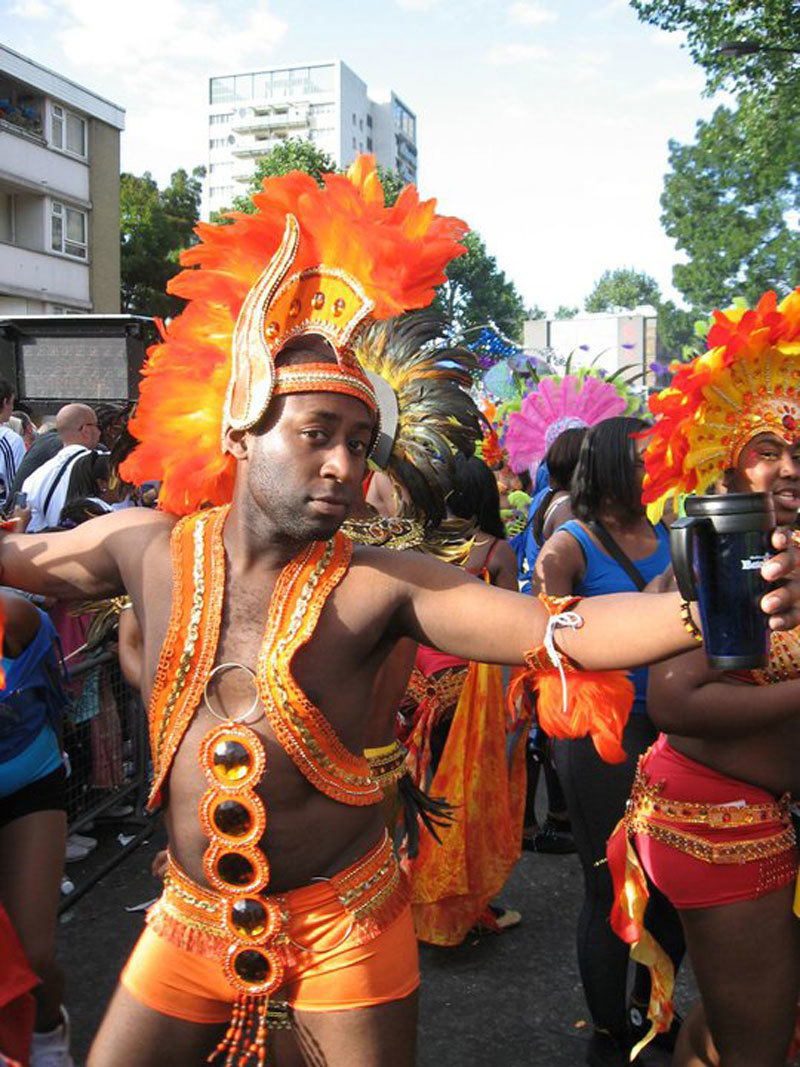
A couple of years back at Carnival, me and a gay friend stumbled upon a sound system in Portobello where the MC was shouting out full-on hate crime homophobia and the crowd were joyously doing “batty man fi dead” gun fingers. It was terrifying and we swiftly moved on to the next sound system… only to find more of the same. It left a sour taste, and when my friend posted on Facebook about how appalling it was being on the receiving end of such hatred in the neighbourhood he grew up in, the person most concerned was Shaun de Riggs, an openly gay British-born Grenadian who’s been in the parade with various mas bands for the last 20 years. For Shaun, Carnival is the highlight of his year (you can feel his excitement bubbling up in the run-up and you can sense the comedown when it’s ended) and a place where he can celebrate every aspect of his identity — not only his Caribbean roots in his hometown, but also his sexuality. Shaun was clearly upset that friends had experienced a negative side of his beloved Carnival, so some years on — and ready to head back to Notting Hill this weekend — I decided to get his take on being a gay man in a mas band.
What is it you love about Carnival?
It connects Caribbean communities not only from London, but across the country. People from across the world fly here to attend. I revel in seeing London that way. I feel proud of being British-born, from the Caribbean, representing my culture, amongst people from my culture, from different islands, from different races, with people in England. It’s an amazing feeling.
How does it compare to carnival in the Caribbean?
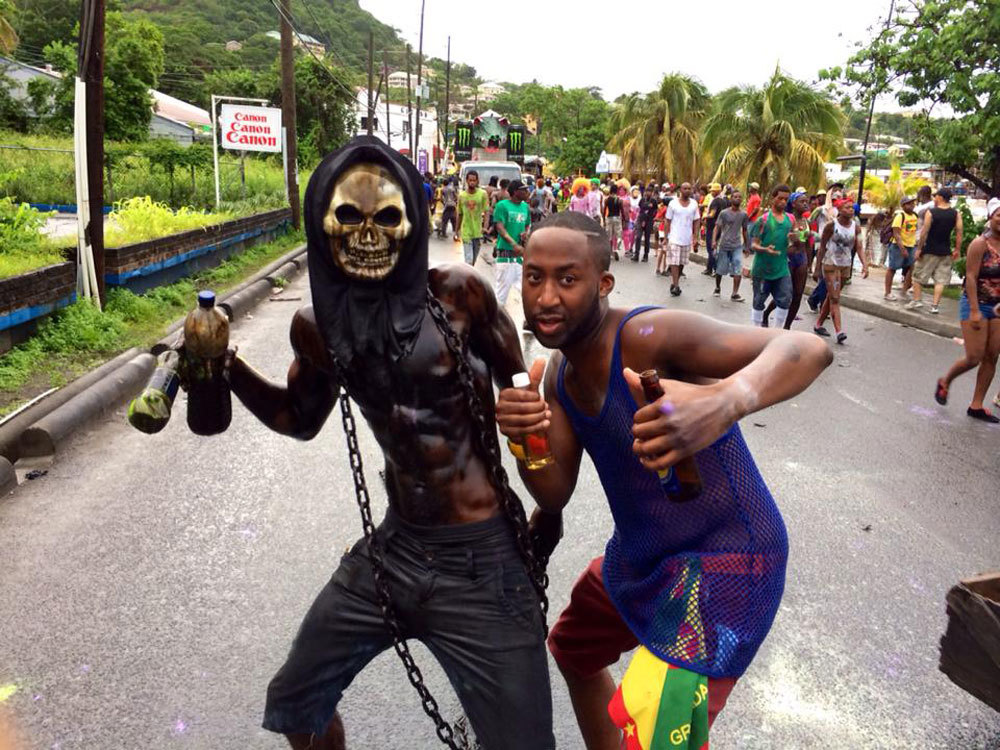
I’ve been to Grenada carnival four times, and Barbados crop over last year. Virtually all of the Caribbean islands have a carnival but Trinidadians pride themselves on having the biggest and best carnival in the region
I love that Rihanna still always makes the effort to go in Barbados.
What I admire about Rihanna is that she is an international star, but she’s never shied away about being from Barbados, going to carnival, wearing a costume, being on the road and personifying the island girl.
Tell us about your performance at the parade.
If you see me on the road, it’s gonna be no behaviour. A lot of people say #nobehaviour because it’s going to be scandalous. You’ve got licence. I’d say Caribbean carnival and soca music does tend to attract gay black men — it’s very visual and flamboyant. If you look at a lot of the bands at carnival, you’ll see it’s very well represented with gay black men. With Caribbean culture, music and dancing is just a way of life. There’s freedom in it. For our parents’ generation, Caribbean or second generation, it’s encouraged because you are keeping a part of the culture alive. If I couldn’t dance to Caribbean music, I would be disowned!
As you know, one year I encountered a pretty nasty homophobic atmosphere at one of the sound systems. Have you ever encountered that?
Years gone by, there were homophobic lyrics in bashment, but I think in this country, that challenged by the people in the music industry, by politicians, by government. It just kinda created this groundswell where saying stuff like “bun a chi-chi man” and “batty man fi dead” is offensive and derogatory.
Hopefully it’s having an effect. Popcaan is Jamaican’s biggest star right now and there’s no homophobia on his last album.
I think there has been a lot of progress in bashment, and the Caribbean as a whole, pushing for greater tolerance and gay rights. Over the last five years you don’t see or hear as much open homophobic abuse and lyrics. Not saying that it’s not there anymore, but I can definitely say there’s greater tolerance. When I was a teenager and heard certain lyrics, I would bristle. Now there’s a lot more visibility and acceptance of LGBT people, and in the media, in TV, in music. In the absence of homophobic lyrics, you’re probably going to feel more confident about being yourself and expressing yourself than you would have as a teenager 20 years ago.
Can you talk about homophobia in the Caribbean community? Do you think it’s a lazy prejudice that the Caribbean is more homophobic?
I don’t think it could be denied that in Caribbean culture – to be honest it varies from island to island – was less accepting of homosexuality than Western countries. But a lot of the Caribbean islands and African countries that were colonised by Europeans had to follow European [anti-gay] legislation. And they also had Christianity and Catholicism imposed on them. I think the black community was more conservative, but I think because of the diaspora moving to western countries like America, Canada and the UK, where there’s now a more liberal attitude to sexuality, you see that a lot of the black community’s opinions about it have shifted.
How about your own experiences?
I’m gay and open, so my family’s opinions of what it is to be gay — if they had opinions about it — would have changed. They’ve met my friends and colleagues, and that often changes stereotypes they might have had. Then when they go to the Caribbean, they take that attitude with them. My sister said that when she went to Grenada last month, the acceptance of gay people has improved. They just let them get on with it. I would say that there was an element of — and probably still is — conservatism towards homosexuality. But I’m pretty certain that people on the island would have seen that I’m different, and I can’t recall any hostility. I haven’t heard of any attacks against gay people in Grenada. On other islands, that has happened. Some islands are less tolerant of visible gays than others.
Have you ever got with a guy at Carnival?
Oh yeah! Yeah I’ve got off with a few people over the years. Our band is very open. You’ve got people from different islands, different countries. It’s black, white, Asian. Everyone’s represented and I think it creates an atmosphere where it’s diverse and there can be decadence! If I want to dance up against a girl or a guy or whatever, I feel quite safe to do that. I’ve still got telephone numbers and contacts from people at Carnival! I try not to take my phone on the road with me, so I’ll usually give someone my number, or say, “Find me on Facebook!” and make sure they add me.
What’s the wildest costume you’ve worn?
One year I wore shorts, but they were Lycra pants really, that didn’t leave much to the imagination and I was dancing towards the crowd and there were about five Jamaican women all reaching under my costume trying to have a grab. And I wasn’t that bothered — I was like, “Well if they want to!” I go for a good costume, but nothing that weighs me down, so I can hit the floor. I’ve hit the floor and had six people pile on top of me!
What were you doing on the floor?
I was whining on the floor! Some of the soca songs are on the ground, so you have to pump and whine on the ground and then quite often you’ll be doing that, then you’ll get a woman who’ll pump and whine on top of you. It’s a free for all.
Is there any gay community within Carnival?
I definitely have an affinity with my fellow gay black participants. Quite often when you’re dancing, they’ll be like “Go for it!” The gay black guys in the band tend to be the ones who can execute the moves better than the women. And you can see people from the crowd thinking, “Oh my got, that gay guy’s doing it!” Being a gay black man, going to Notting Hill Carnival is the best way you can express your sexuality and your roots, all at the same time, in front of hundreds of thousands of people. The success of Carnival is that you lose your inhibitions.
Credits
Text Stuart Brumfitt