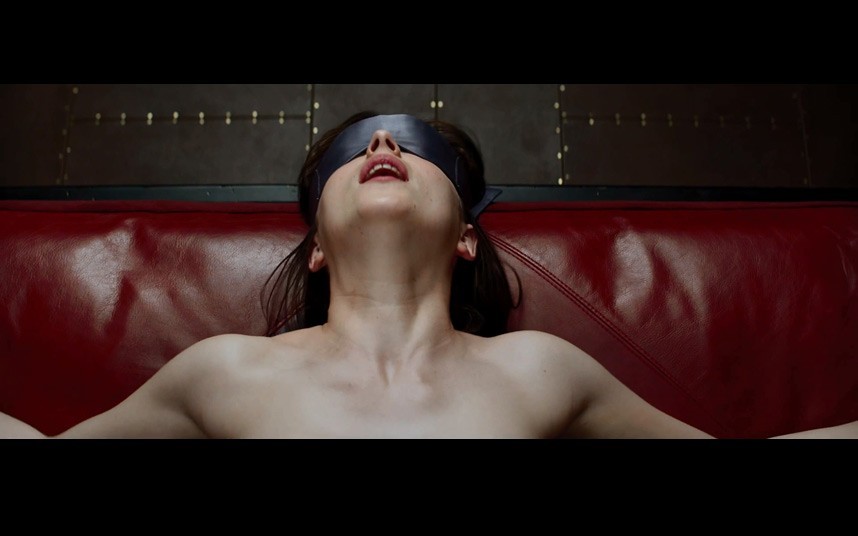
BDSM: an abbreviated term used to collectively describe bondage and discipline, dominance and submission, and sadism and masochism. It’s the sex subculture where pain equals pleasure, real life slaves exist and spanking is all part of foreplay. And it’s having a moment, BDSM is hot right now. E.L. James’s Fifty Shades of Grey phenomenon has been adapted by Sam Taylor-Johnson for our viewing pleasure and released onto cinema screens on the eve of Valentine’s Day. The remarkably popular erotic novel trilogy of the sweet and innocent Anastasia Steele and the dominating Christian Grey has sold over 100 million copies worldwide. It’s safe to say BDSM has spanked its way into our mainstream. Who today doesn’t know the meaning of pussy-whipping and safewords? But how has a sex scene that was once considered so taboo become so commercialized?
Once upon a time, a long time before Christian Grey introduced handcuffs and blindfolds to Miss Steele, there was a story named Memoirs of a Women of Pleasure written by John Cleveland in 1748. Also known as Fanny Hill, the novel is one of the earliest examples of BDSM in literature and it featured a rather notable scene of the protagonist Fanny, involved in flagellation. Unfortunately, this didn’t go down too well with our prudish ancestors; John Cleveland was sent to prison and the sexually explicit Fanny Hill was cast off as pornography and banished from bookshelves. Luckily, we’ve since become more liberal. Fast-forward to modern times and there are many other classic examples of BDSM in literature — like the masochistic fantasies in John Joyce’s Ulysses, the BDSM relationship in Elizabeth McNeil’s 9 ½ Weeks and of course, the infamous sadist Patrick Bateman in American Pyscho. There are also many visually stimulating examples of BDSM in film too. Possibly the most notable (and one of the sexiest things to ever happen in cinema), Steven Shainberg’s beautifully directed erotic flick The Secretary, stars Maggie Gyllenhaal as the sexually liberated submissive, as it followers her sadomasochistic relationship and sexual games with her boss. Then there’s Lars Von Trier’s dark depiction of BDSM in his hedonistic sex adventure Nymphomaniac, David Lynch’s violent lovers in the neo-noir Blue Velvet and a ball-gagged Bruce Willis in Quentin Tarantino’s cult classic Pulp Fiction. Not forgetting i-D cover girl Rihanna’s 2011 provocative pop hit S&M, which featured the rather racy lyrics: “sticks and stones may break my bones but chains and whips excite me.”
Like any taboo, the more we’re exposed to something, the more desensitized we become. However, even though BDSM has hit a sweet spot in our mainstream culture, the matter of the fact remains that it’s wet with negativity — with only a handful of exceptions. It seems that it’s often portrayed in the similar way to a mental illness, associated with abuse, pain and shame — just one example of this problematic stereotype is E.L. James’s Christian Grey. “I think people fear and demonize what they don’t understand, and for years people within the BDSM community, and even people with pretty run-of-the-mill fetishes, have been thought of as sex freaks, or threatening, or psychologically unwell, when that’s not at all the case,” explains writer of cult blog Slutever and all things sex Karley Sciortino. A common misconception is that pain is necessary to the BDSM experience, when actually it’s all about the power transfer. Maybe it’s possible that if there were more sex-positive and empowering kinks in the mainstream, we wouldn’t be so quick to dismiss it as taboo. Wild, weird and wonderful fetishes should be celebrated as part of our sex culture rather than identified as a freakish and nefarious behavior, simply because it’s out of the ordinary. But it’s hard to break the cultural codes that we have set in our anti-sex world, where BDSM equals bad.
Despite the negative portrayals that our popular culture has stylized on screen, the commercialization of the steamy sex subculture is having a positive effect in the real world of BDSM. As someone who has had firsthand experience as a Dominatrix, Karley argues how BDSM going mainstream is benefitting the community: “Now, peoples eyes have been opened to what BDSM actually is, and the potential pleasures of it, it’s having a positive effect on people both inside and outside the community.” Thankfully, it seems the stigma surrounding it is slowly changing and more of us — even if it is thanks to Fifty Shades — are tempted by the titillating idea of BDSM in the bedroom. “On the outside, it might inspire people to push their sexual boundaries, and feel free to discover things that may make sex a more heightened or intense experience for them. For certain people inside the BDSM community, mainstream acceptance helps to combat feelings of embarrassment, shame or exclusion that they might feel for their sexual practices,” continues Karley. “But of course, when we talk about BDSM going “mainstream” we’re only really talking about a small, preliminary element of what actually goes on in the community “BDSM-lite” as I like to call it. Whips, blindfolds and Domme/sub role-plays are just the tip of the iceberg.”
As whips and chains are about to make it big on screen, it’s interesting to note how a long list of sex acts that depict BDSM (including spanking, physical restrain and physical or verbal abuse) were banned from our masturbation material last December — most of which are considered pleasurable and empowering for women. Perhaps, it’s the image of a dominant female that our patriarchal society declines, rather than BDSM itself. You can’t ignore that as one of the biggest selling novels of all time, Fifty Shades presents a powerful and dominant male, Christian Grey. Now, there’s nothing wrong with a woman who gets her kicks from the submissive side of life, however from a feminist perspective it’s hard to ignore how the novel emphasizes how a woman is a “slave” to the patriarchy. In the real world, more often than not, it’s actually men who are in a powerful professional position that seek a Dominatrix to gain arousal from the role reversal they receive during their BDSM session.
It seems despite its commercialization, BDSM is only accepted within our culture when it’s clearly part of fruity fiction. But what’s important to remember is BDSM is fantasy. It takes the subs and Dommes away from reality for a satisfying experience where power becomes a play thing. If we’re happy to sit pretty in the cinema watching BDSM on screen, then maybe we should be more accepting of those who are a little more unconventional, because we’re all guilty of lapping up their kinky culture as something to be commodified. And why shouldn’t we? The sexually deviant world of BDSM dungeons, cock and ball torture and gimp masks might be hard for those who like things more vanilla to come to terms with, but it’s a brand spanking new, fantasy driven world to explore — be it in real life or on screen. Being beaten up in bondage may be on the more extreme side of things, but there’s probably a little dominatrix or submissive in most of us. It’s about time we reject the conservatism towards extreme sexual fetishism and stand up for the subversive. But if you don’t fancy being bent over a desk and spanked like a naughty little girl, a la Maggie Gyllenhaal in The Secretary, then maybe just live your inner kink through some sexually explicit erotica. After all, it feels so good being bad.
Credits
Text Billie Brand