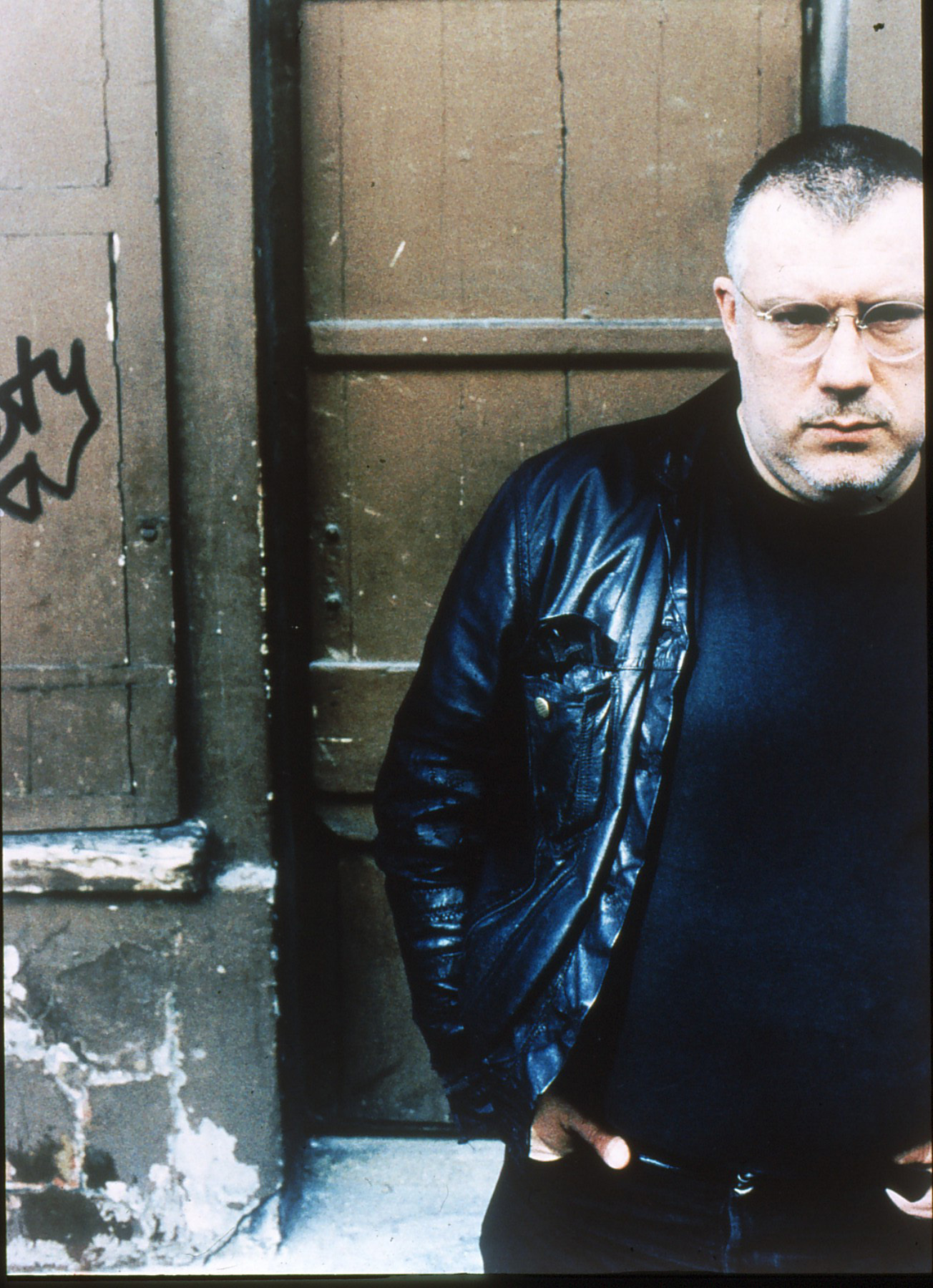
Jean Colonna is the designer, who kicked the 90s into shape next to peers such as Martin Margiela and Helmut Lang. Working with the legends created through the pages of i-D, he is an integral part of our mutual history, and when he opened a new store in September we couldn’t have been happier to have him back. One of the major influencers of the avant-garde streetwear since he founded his label in 85, Jean contributed to anti-fashion culture with concepts playing on simplicity and subversion; one of them, his infamous supermarket store where fashion was sold like groceries. Before his return to retail this autumn, Jean took a ten-year time-out from the collection circus, choosing instead to focus on other fashion projects and developing, in Nepal, what eventually became his new line, now on display in 22 rue Debelleyme, Paris. i-D phoned our old friend to get the lowdown on the store and on what Jean Colonna thinks about fashion right now.
Does the new store feel like a return to fashion for you?
No, because I never left fashion. I was doing things in a free way, and not the way where you have to do two collections a year. It took me two years’ work in Nepal to define the knitwear. I did a lot of work, for instance two books with photographers, so it wasn’t like I left fashion from one day to another.
Do you think it’s a different industry now than it was ten years ago?
The world is different than it was ten years ago and fashion follows this line. Now fashion is more of a money business than a creative business. It’s about marketing with pre-collections, collaborations, capsule collections, Christmas collections… there is such a quantity of clothes to attract people.
Do you think it’s too much?
When you’re working for a big company, you have someone to do the looks for you. The designer, who’s doing eight collections a year doesn’t spend his time doing everything. The pre-collections come from marketing. They say, “We want this, this and this,” and it’s far from creative. Do I want to be in this kind of job? Non. But the question didn’t even come to my mind, because I did the shows fifteen years ago, and I don’t know what it’s like now.
But choosing to ‘only’ open a shop almost seems like a reaction against the fashion circus?
I was just walking down the street and I saw a place to rent. You know, everything is more free for me today. I don’t have anybody to push me in terms of the shop. It’s my money, I do what I want. No regrets, no nostalgia, voilà!
What do you think about the musical chairs of designers, and all the houses that don’t actually belong to their original designers anymore?
I think when you go to a lake of crocodiles don’t expect not to be bitten.
Did you ever get offered one of those jobs?
I had an opportunity but there were incompatibilities.
Was there a house you always wanted to design for?
The one I wanted wasn’t possible and the one they offered me wasn’t interesting.
And there’s no way I can get out of you what those houses were?
Non.
Does the new store have any relation to your famous supermarket store?
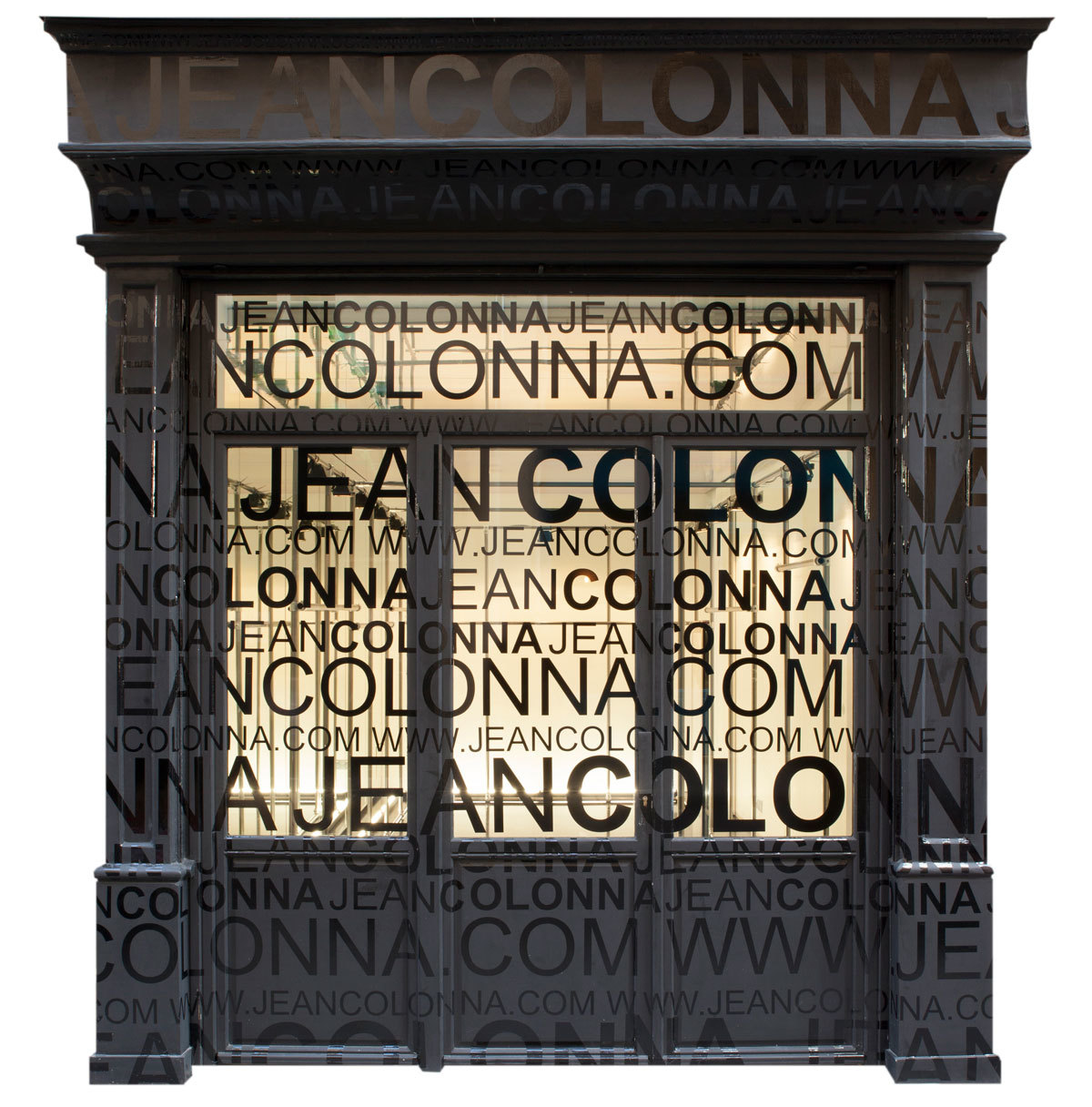
No. I was working with a French architect, Patrick Bouchain, and the idea was ‘the cage inside the box’. To amplify the volume we put mirrors on one side, and the floor is black mirror too, so when you’re in there it looks like there are thousands of garments. The idea was to make it sophisticated without sophistication.
How is it reflected in the new collection?
The collection is quite simple, because the knitwear is in quite simple shapes. The quality is very refined and very sheer for cashmere. It took my two years to find the right knit. I wanted it to be a bit… chic. But my definition of chic.
Which is?
Not chic.
Did you feel like you there was a void you wanted to fill in the current fashion landscape?
It’s about ‘no fashion’. When I work it’s without nostalgia. It’s what’s on my mind today. It’s more a question of the contemporaneity of my work. I don’t think about making ‘fashion pieces of the 90s’ into a trend.
But it must be hard not to be self-referential in your aesthetic?
When I started this job, I decided I had a goal. But a far-away goal, not a seasonal goal. I want to keep in mind the woman I like and always liked, who is not someone time-specific. It’s more about her mind. My direction is always the same. Of course, if you look at my work ten years ago, now I’ve changed – of course I’ve changed; I’ve learned – but in the same way I’m the same.
You’re part of i-D history. What are your memories, looking back?
i-D was a magazine with a perfect spirit for young fashion designers like Martin Margiela, Helmut Lang, and for me it was the same. I was working with unknown photographers, trying to find the photographers who were interesting at the time like Jüergen Teller, David Sims, and Corinne Day, who are consequently all linked to the 90s. Terry and Tricia gave a kind of freedom to photographers.
How so?
I remember when we did the Sex issue with Jüergen Teller. We were free. Terry came at the end of the day when we finished the shoot and said, “I think we have to sell the issue covered in a plastic bag.” Because you couldn’t sell things like that. It was very important for our generation to have i-D.
Somewhere for all these people to come together?
Yeah. It wasn’t about sophistication. In i-D you could find society, not just fashion. Streetwear was very new. Today you have Tommy Ton but at the time, i-D was Tommy Ton. It was a luxury working for i-D, a real luxury.
Credits
Text Anders Christian Madsen