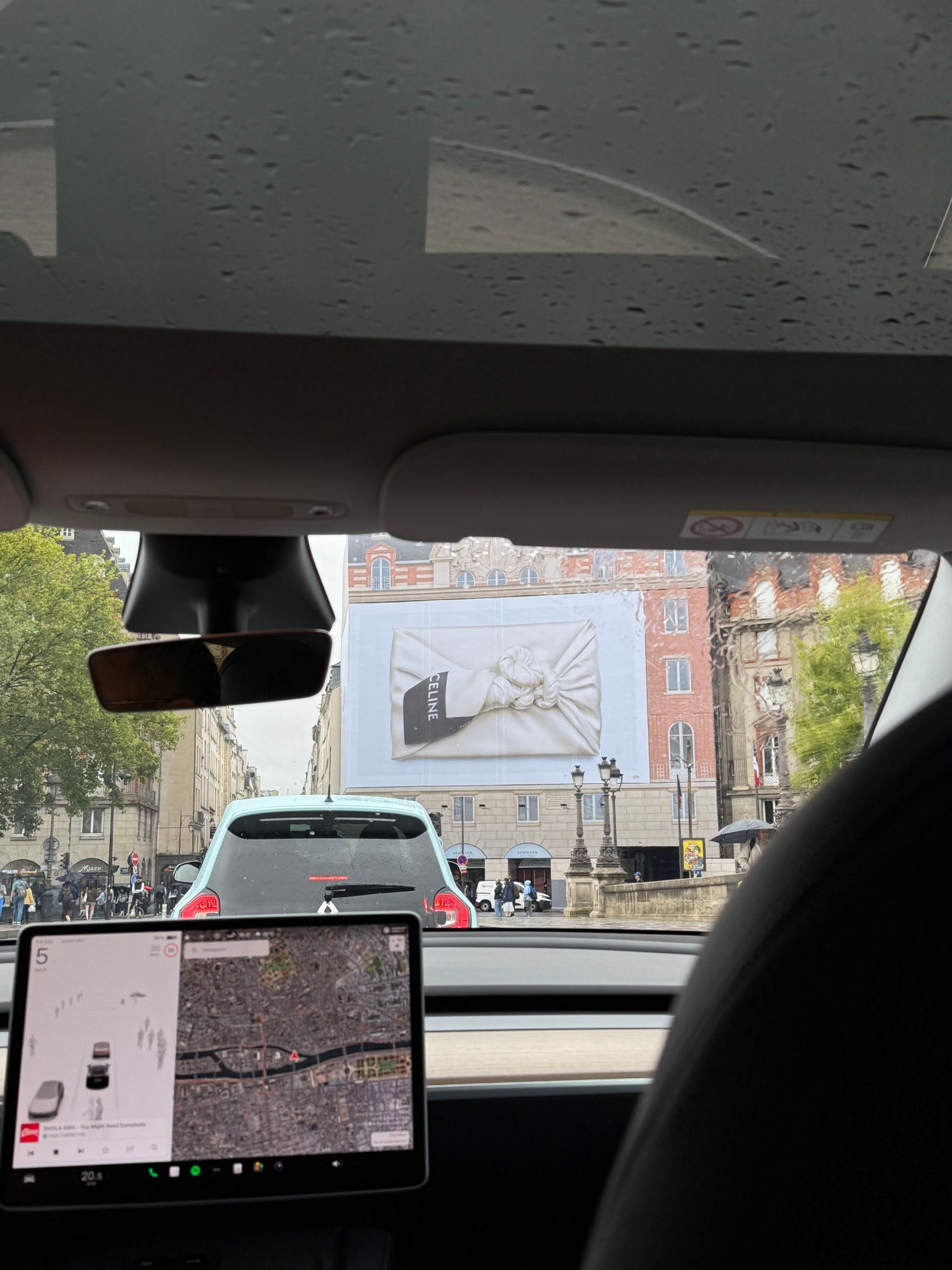
Next up in the creative director sweepstakes of 2025… Michael Rider at Celine. Taking over from the formidable Hedi Slimane, who famously dropped the accent from the brand’s name, the American designer—formerly part of Phoebe Philo’s Celine team, a protégé of Nicolas Ghesquière at Balenciaga, and most recently creative director at Polo Ralph Lauren—steps into one of fashion’s most exciting jobs. With both Philo and Slimane as predecessors, Rider inherits a house built on the rarest commodity in fashion: a clear sense of who it’s dressing. That precision, that personhood, is the hardest act to follow—and the gutsiest to rewrite.
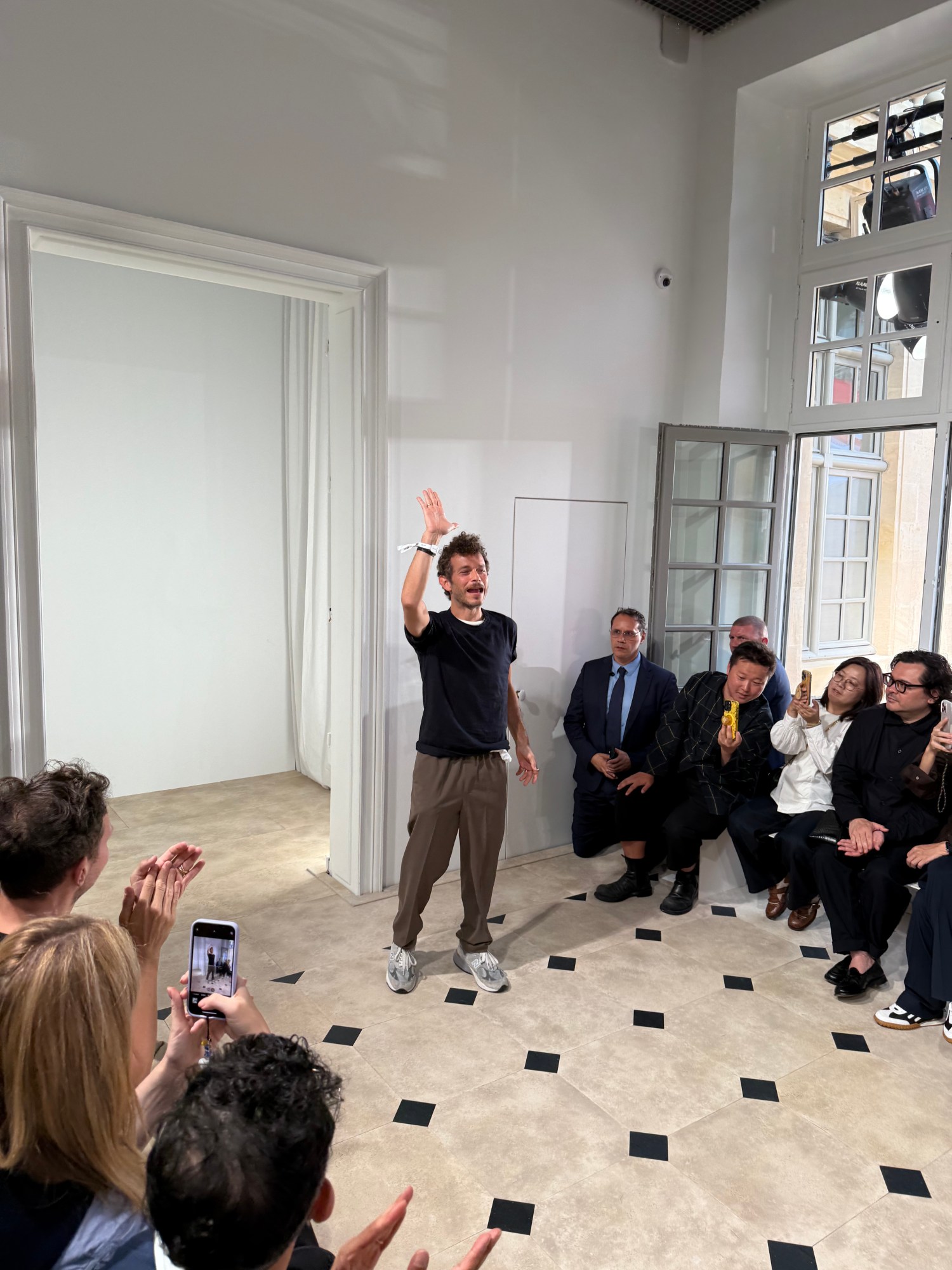
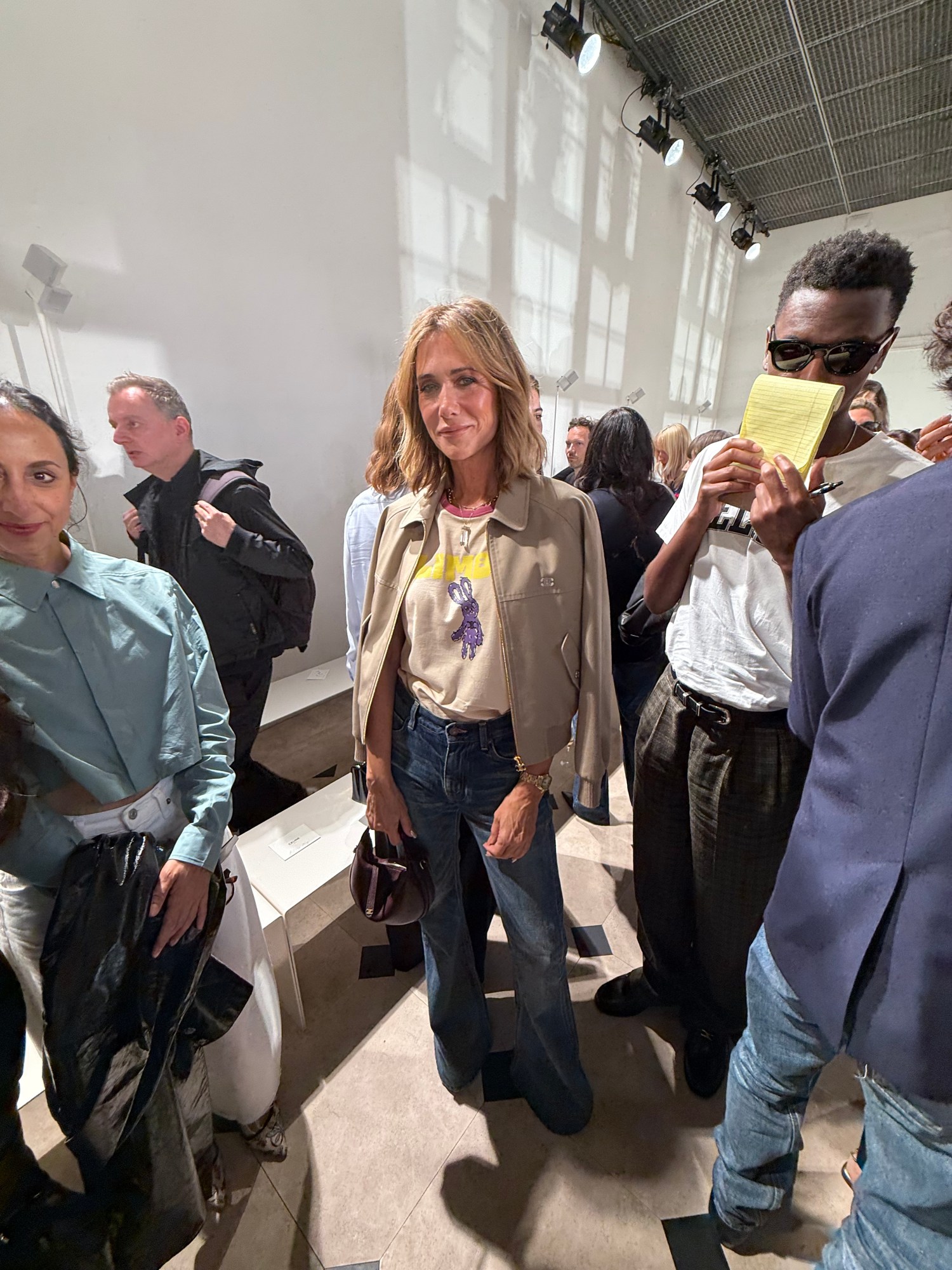
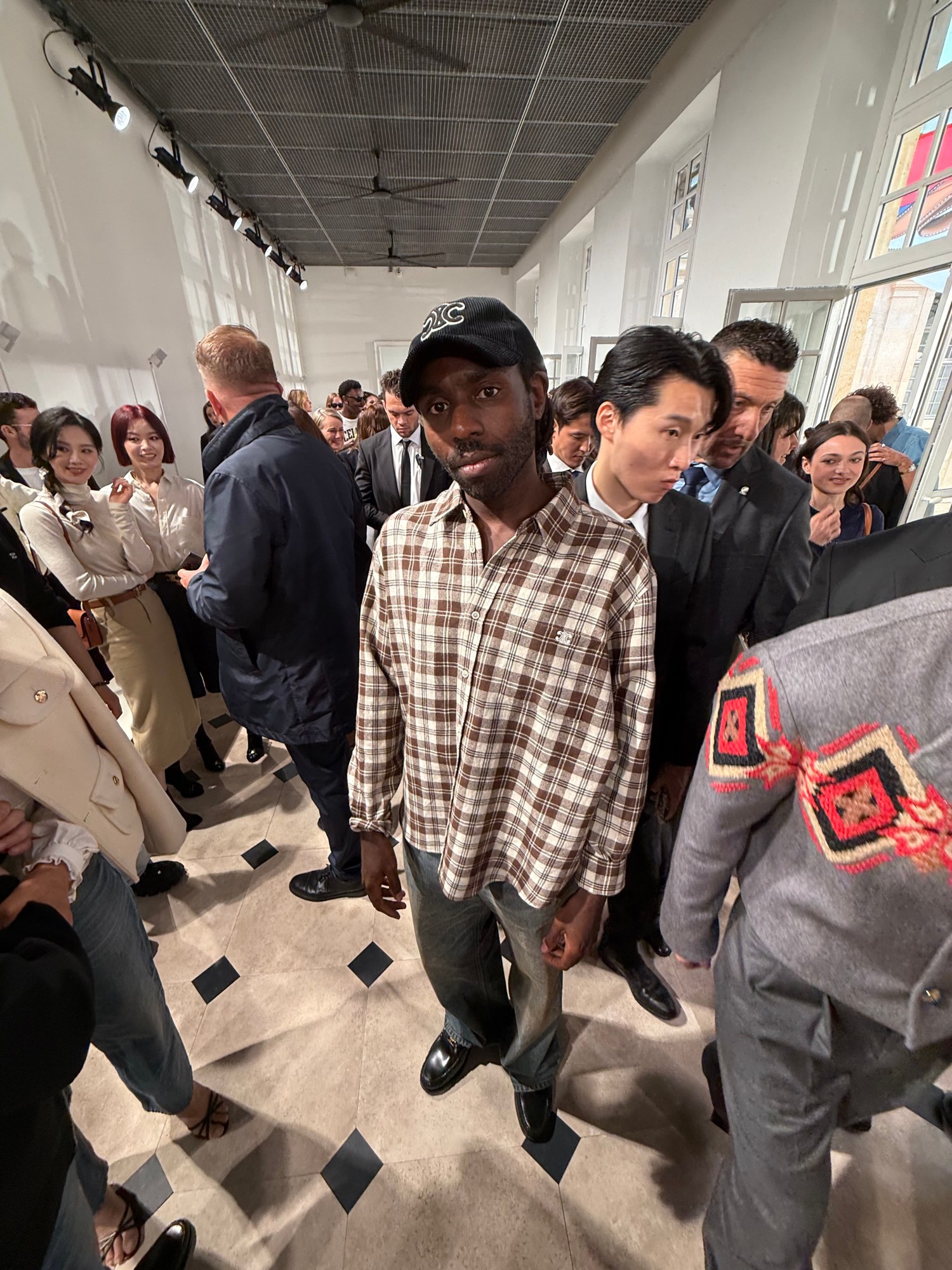
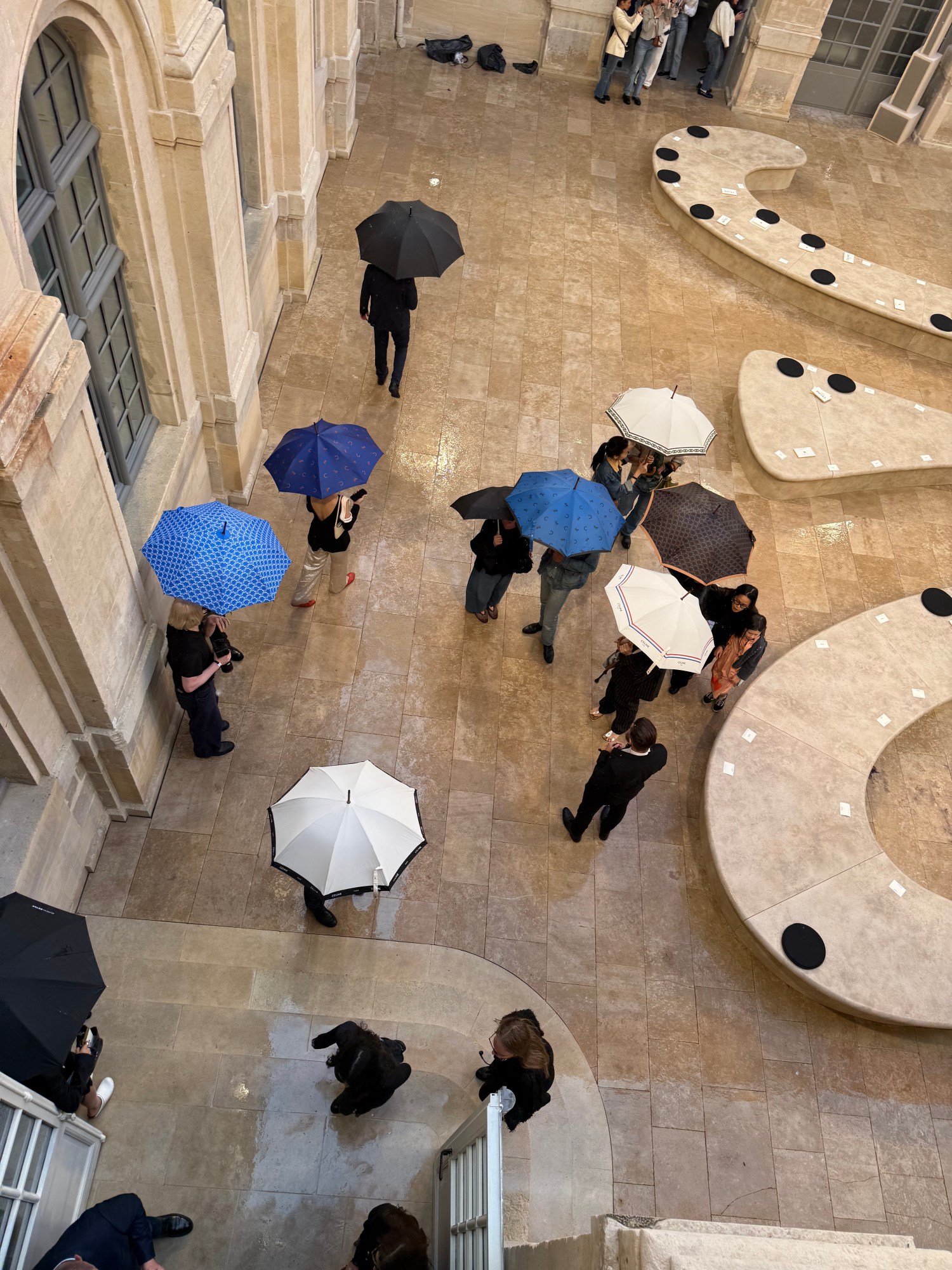
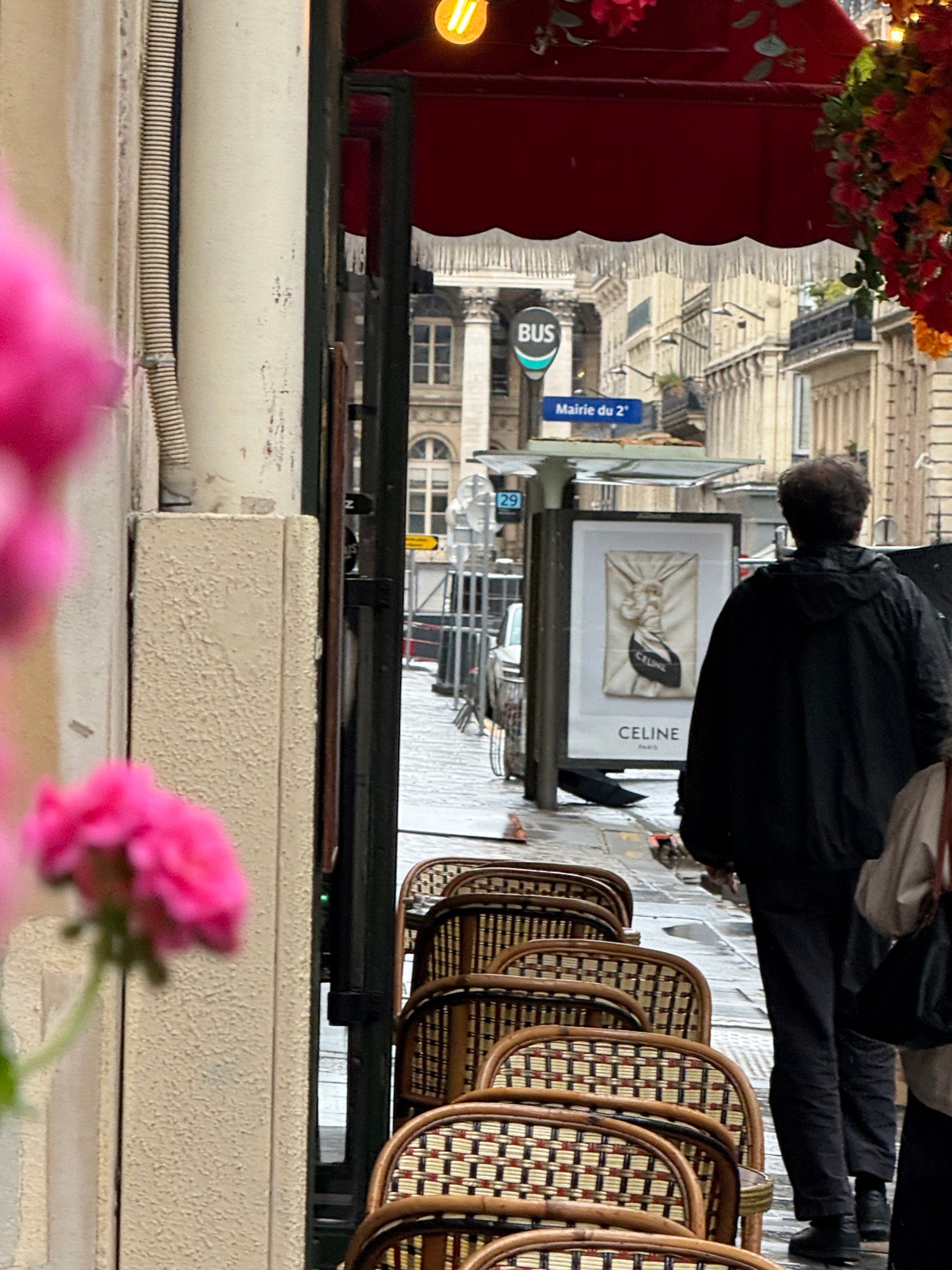
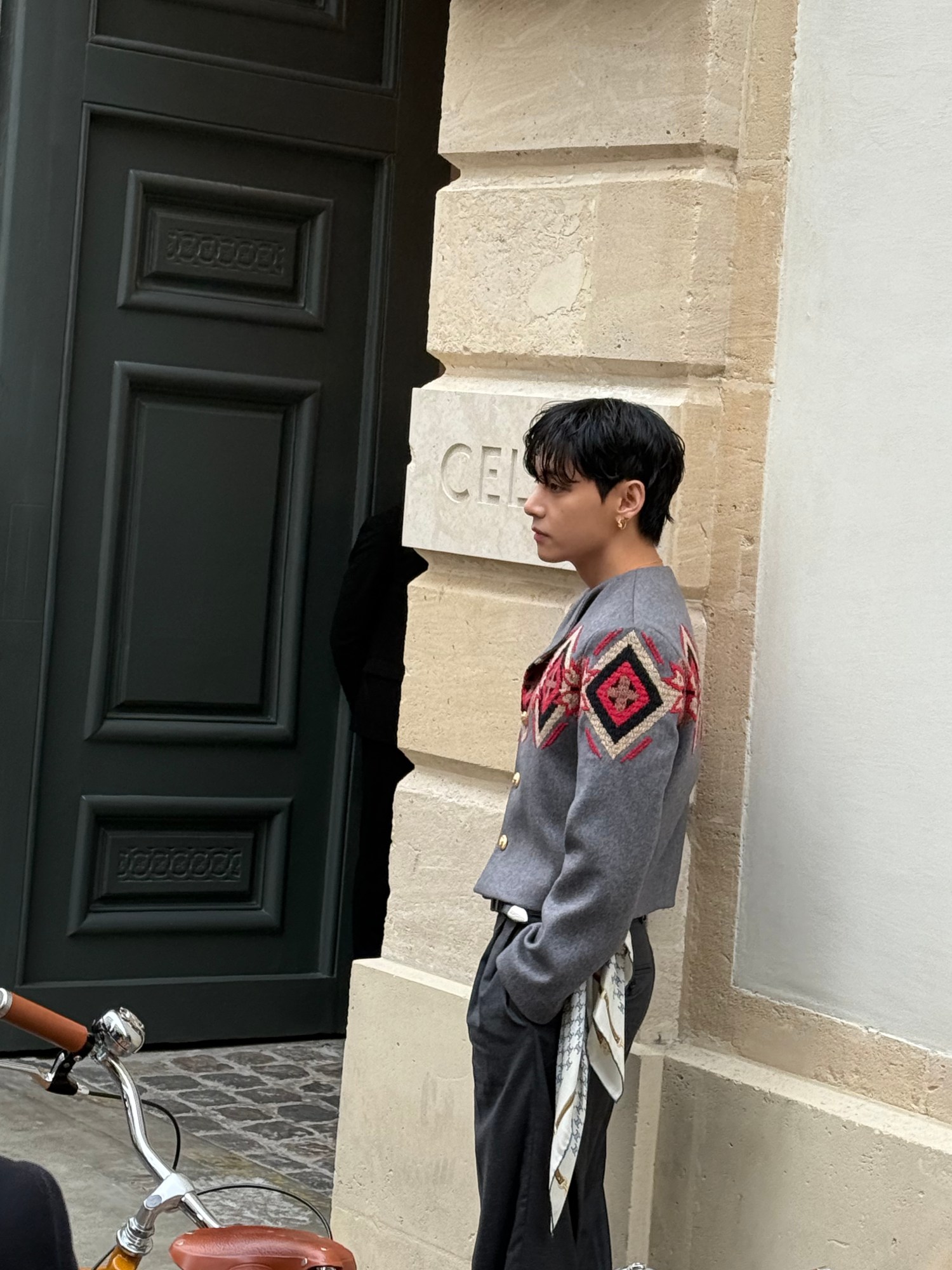
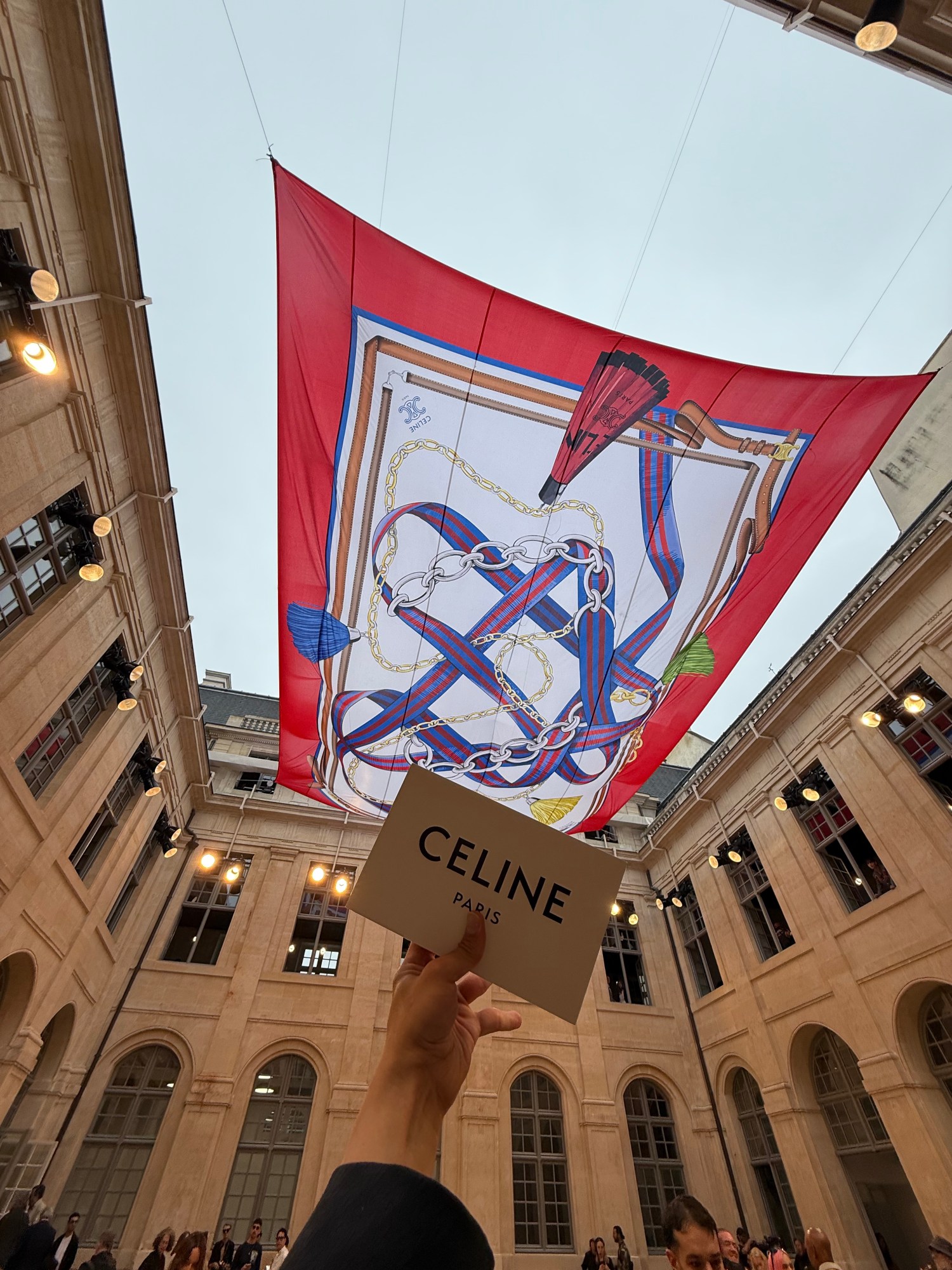
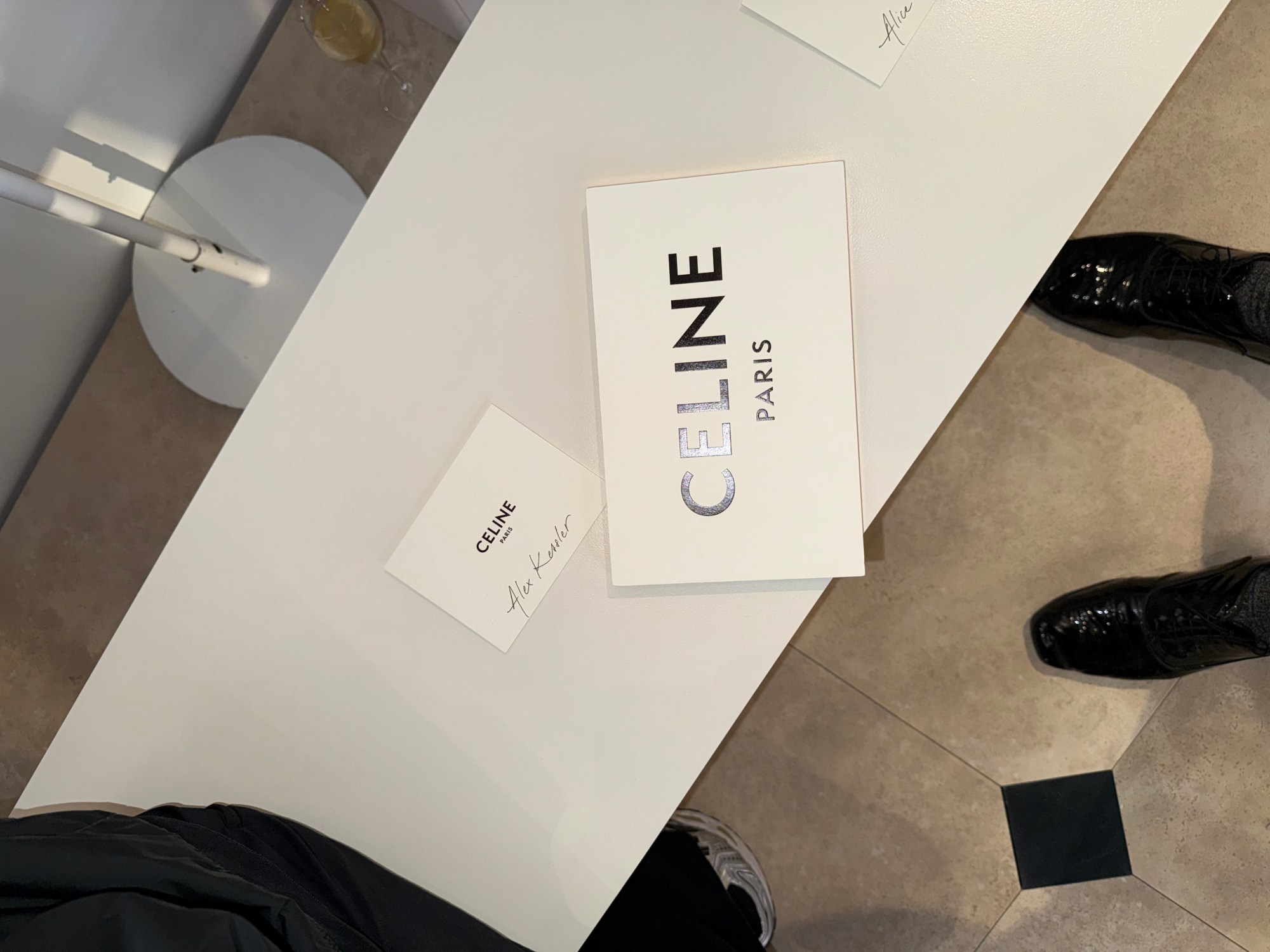
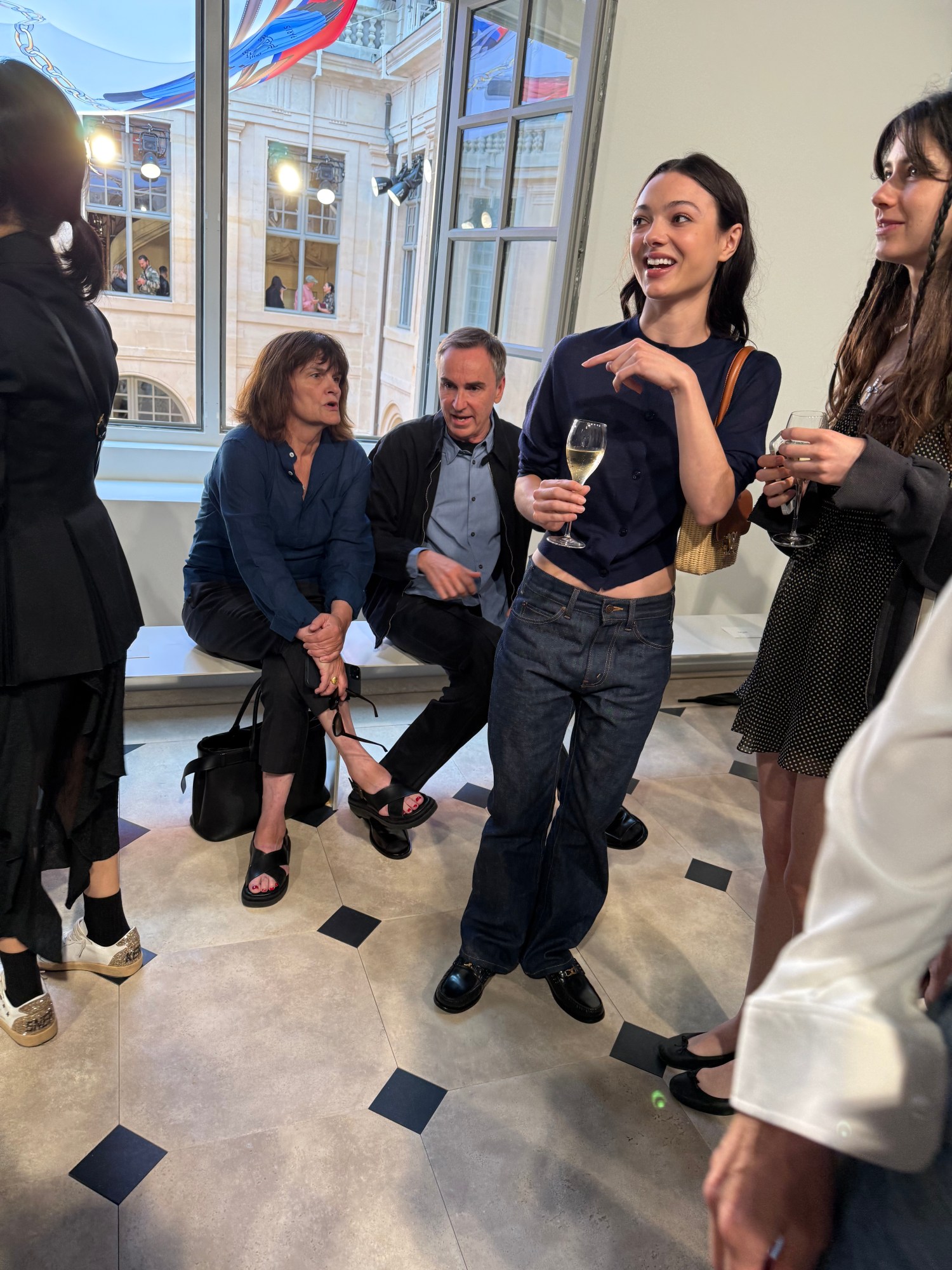
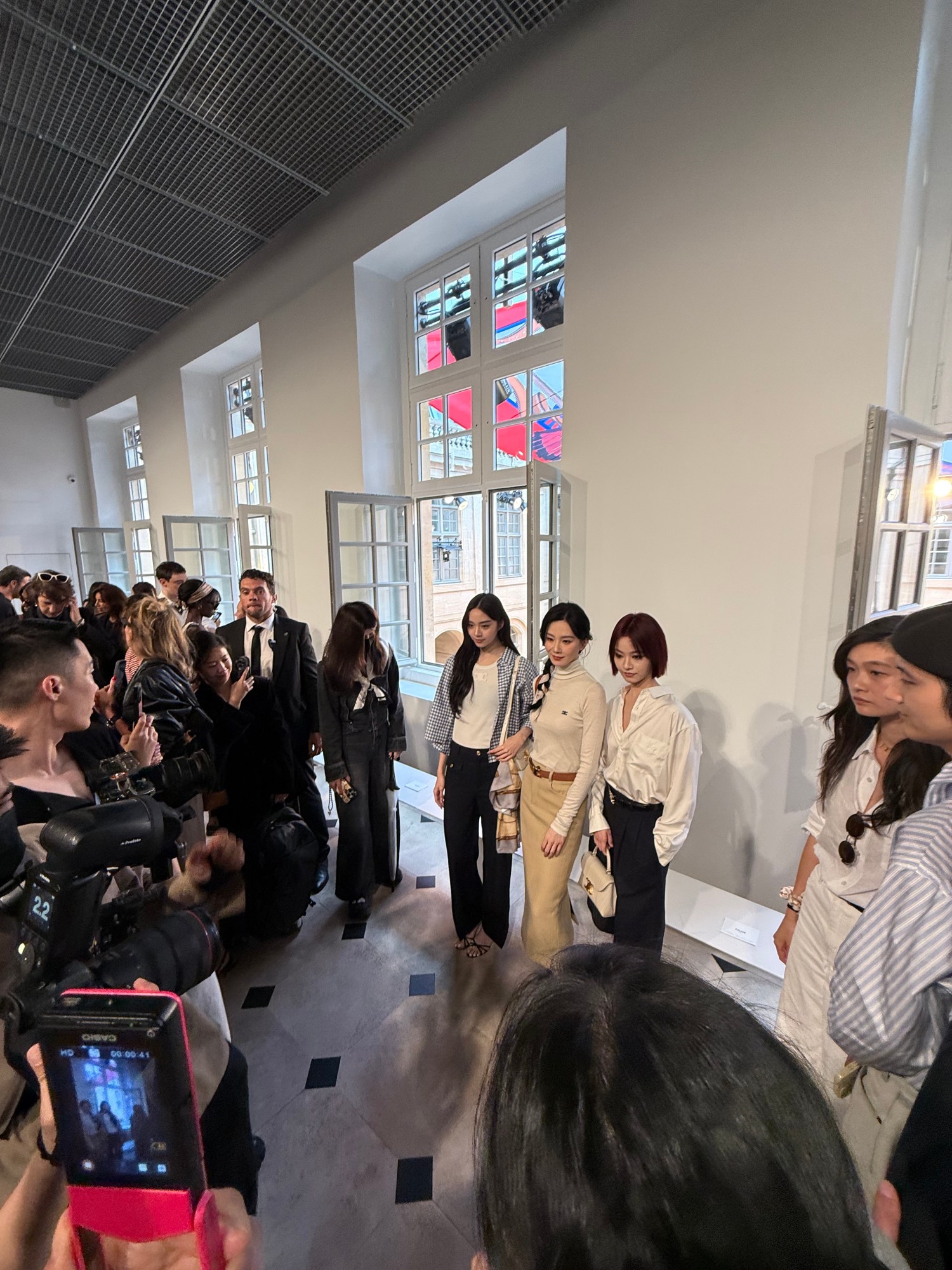
Held at 16 Rue Vivienne, Celine’s historic HQ, the Spring 2026 show was originally meant to unfold partially outdoors, but summer rain sent most guests inside while few remained outside under Celine-branded umbrellas. No matter. The mood stayed crisp, the room packed with a VIP crowd, from industry heavyweights like Jonathan Anderson (still buzzing from his recent Dior debut), Raf Simons, and Law Roach, to stars like BTS’s V, Dev Hynes, and Alanis Morissette. What they saw wasn’t a grand reinvention or aesthetic switcheroo. Instead, Rider offered something more restrained. A proposition for what it means to dress with both memory and modernity. “I did not want there to be a sense of erasure,” he said backstage. “There was a foundation to build on. That to me felt modern, it felt ethical, it felt strong.”



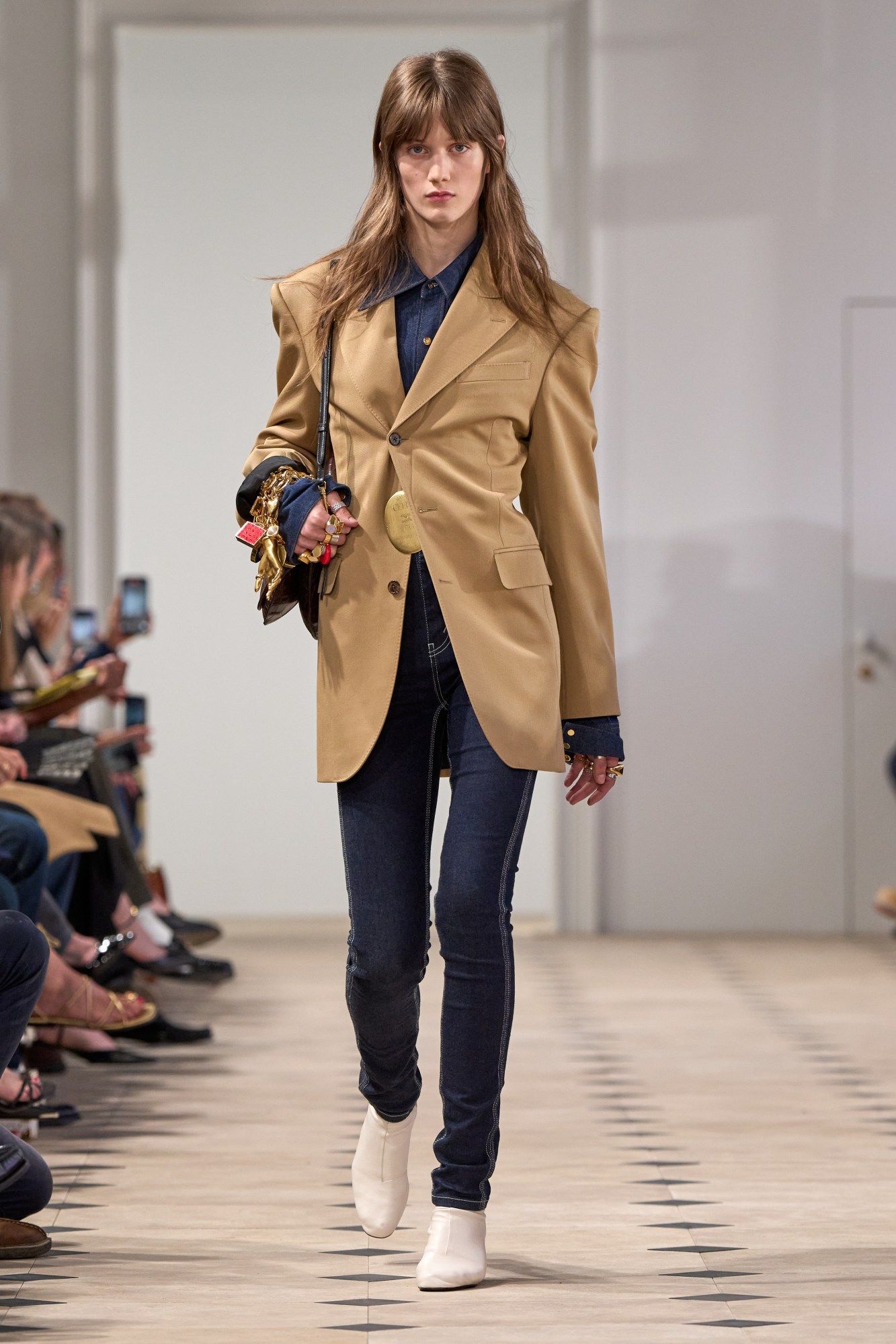
His collection lived in that tension between homage and evolution. The opening look set the tone. A structured camel blazer, worn over a denim shirt and skin-tight indigo jeans, so snug they bordered on leggings. White ankle boots and a clatter of keychains and rings gave the look a styled insouciance. The proportions and posture nodded to Slimane’s youth codes, while the cinched waist and assertive shoulder recalled Philo’s sculptural polish. A composite with a very clear understanding of its place in the Celine lineage.
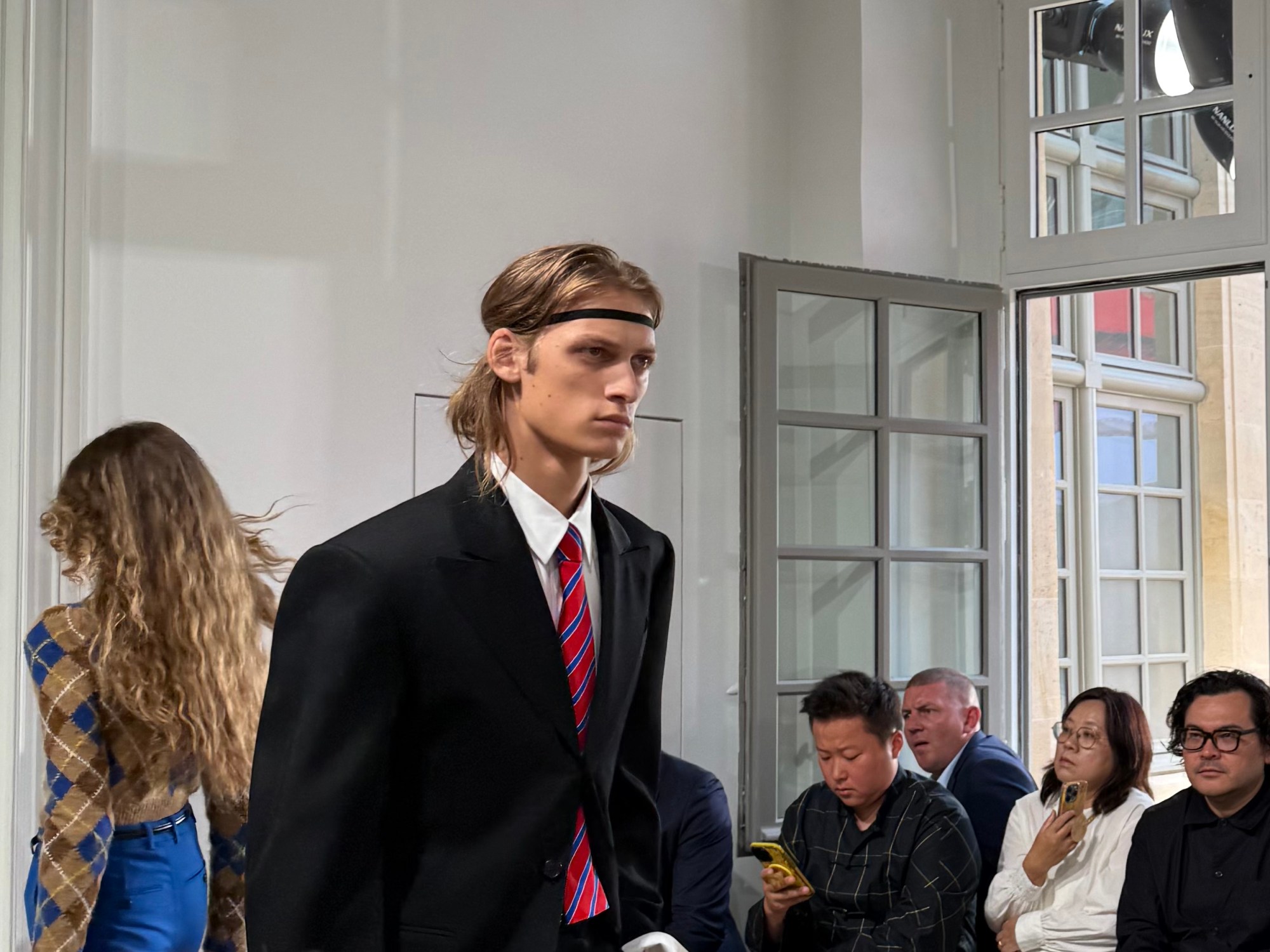
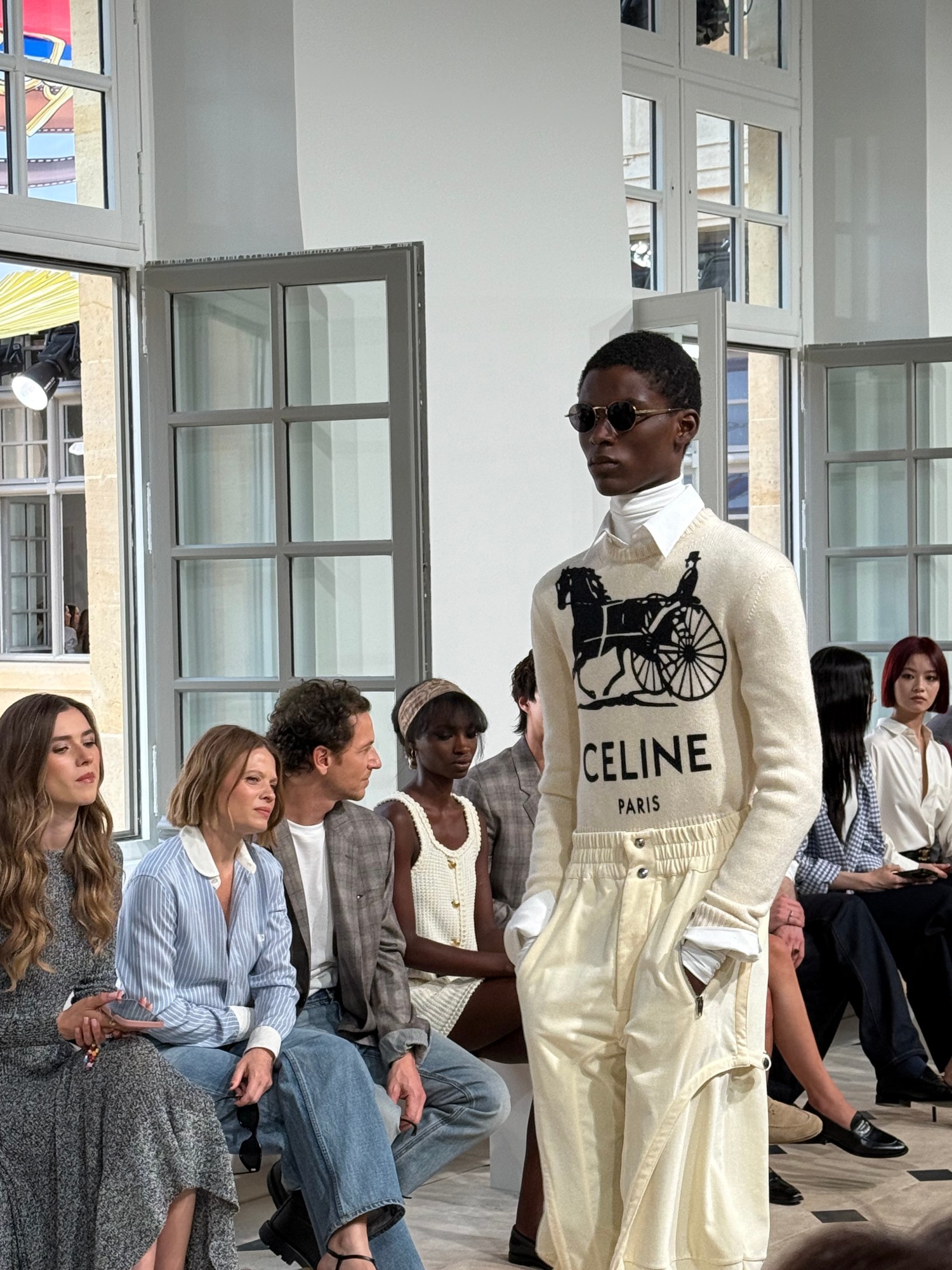
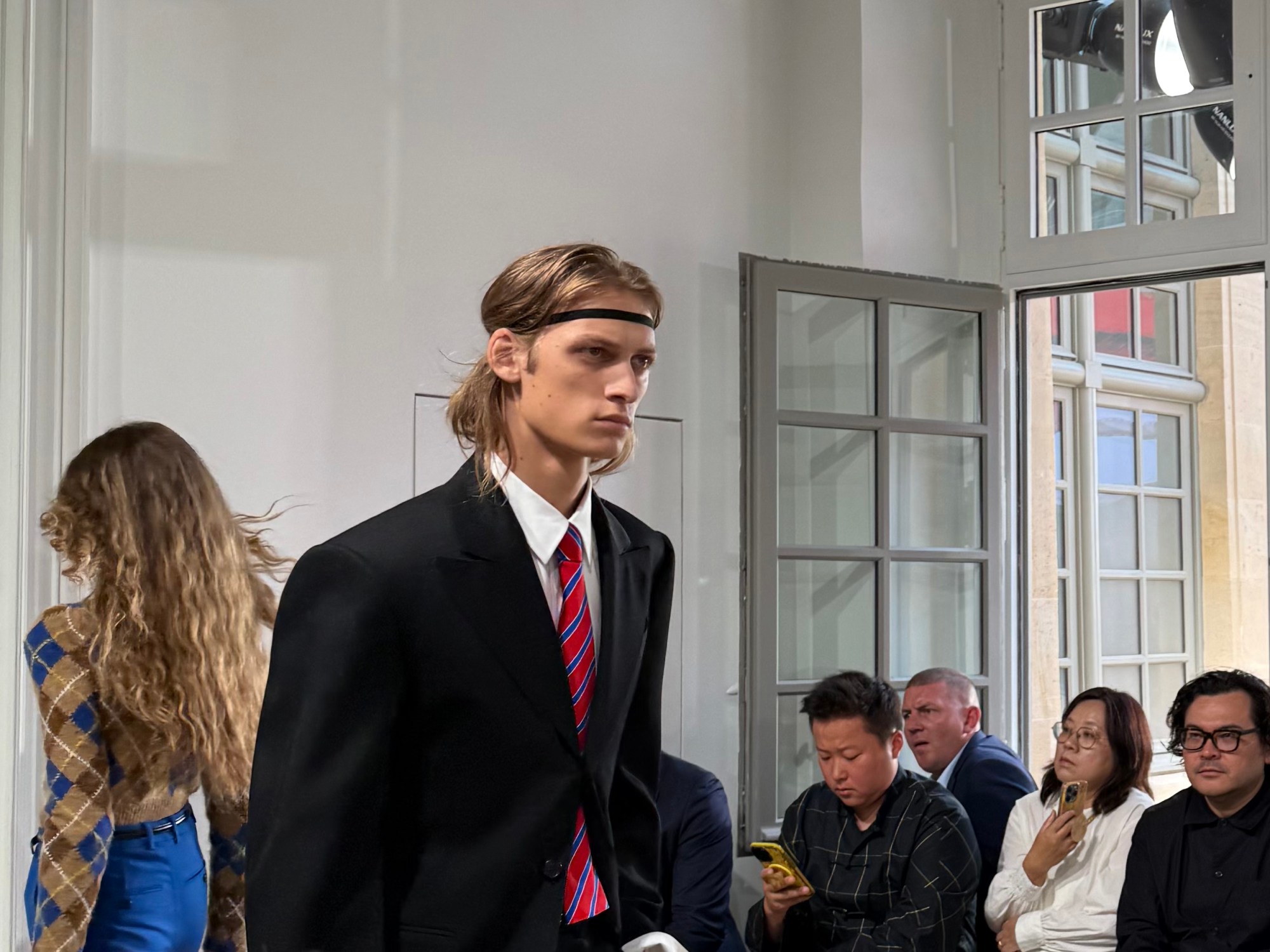
Throughout the show, Rider wove together threads from his fashion biography—American prep, Parisian minimalism—without flattening them into a single narrative. Menswear was the stronger, more assured statement. The tailoring had clarity: slouchy outerwear with soft structure, sharp lapels eased by relaxed layering, button-downs worn with quiet intent. One look paired jaunty harlequin leggings with a cinched overcoat. Odd, but exciting. Another standout was a chocolate leather biker, its sleeve jangling with dozens of metallic key charms. There were nods to his Ralph Lauren years with striped ties (she’s trending), Oxford shirts, argyle knits, but all distilled through a more refined, French lens.
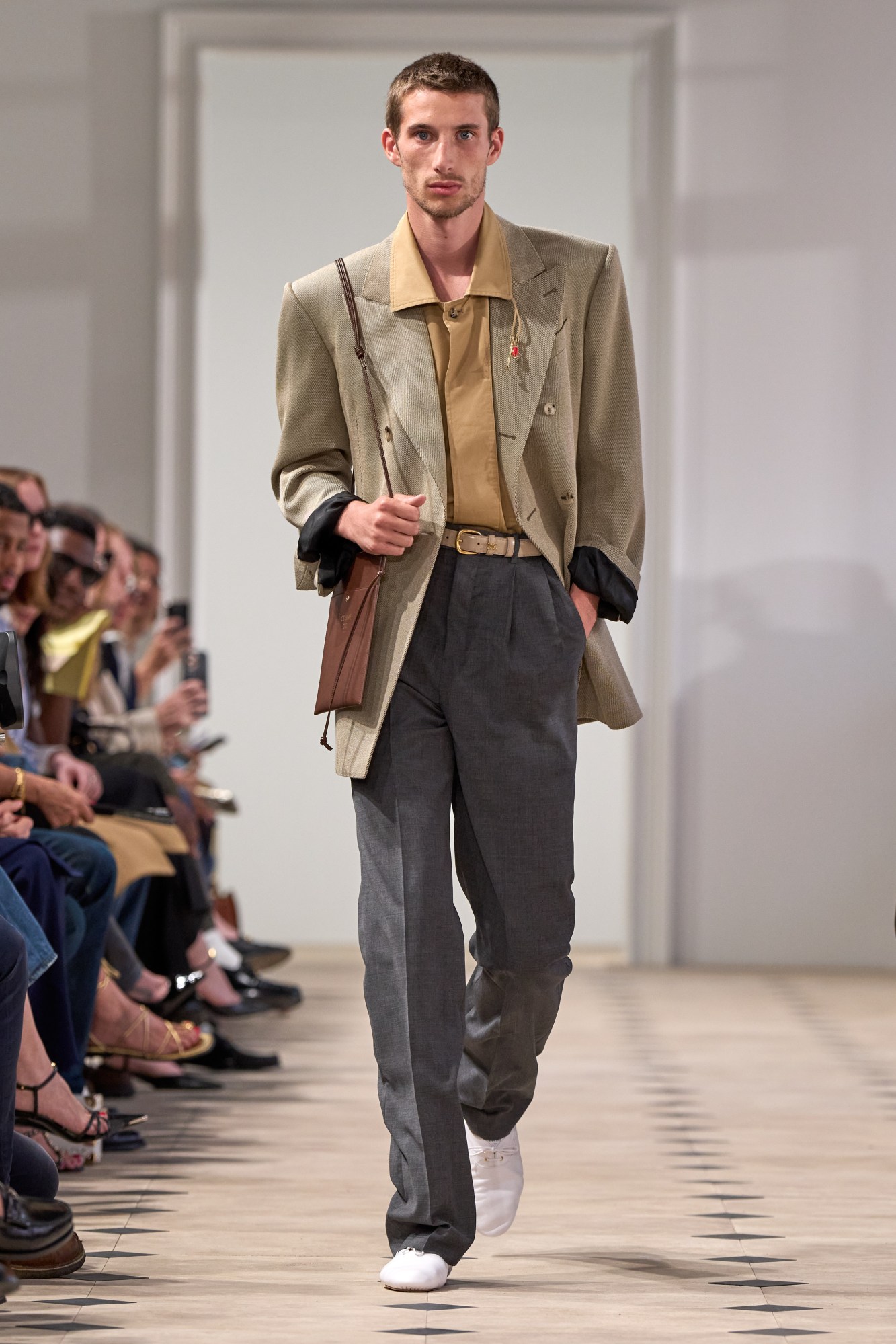
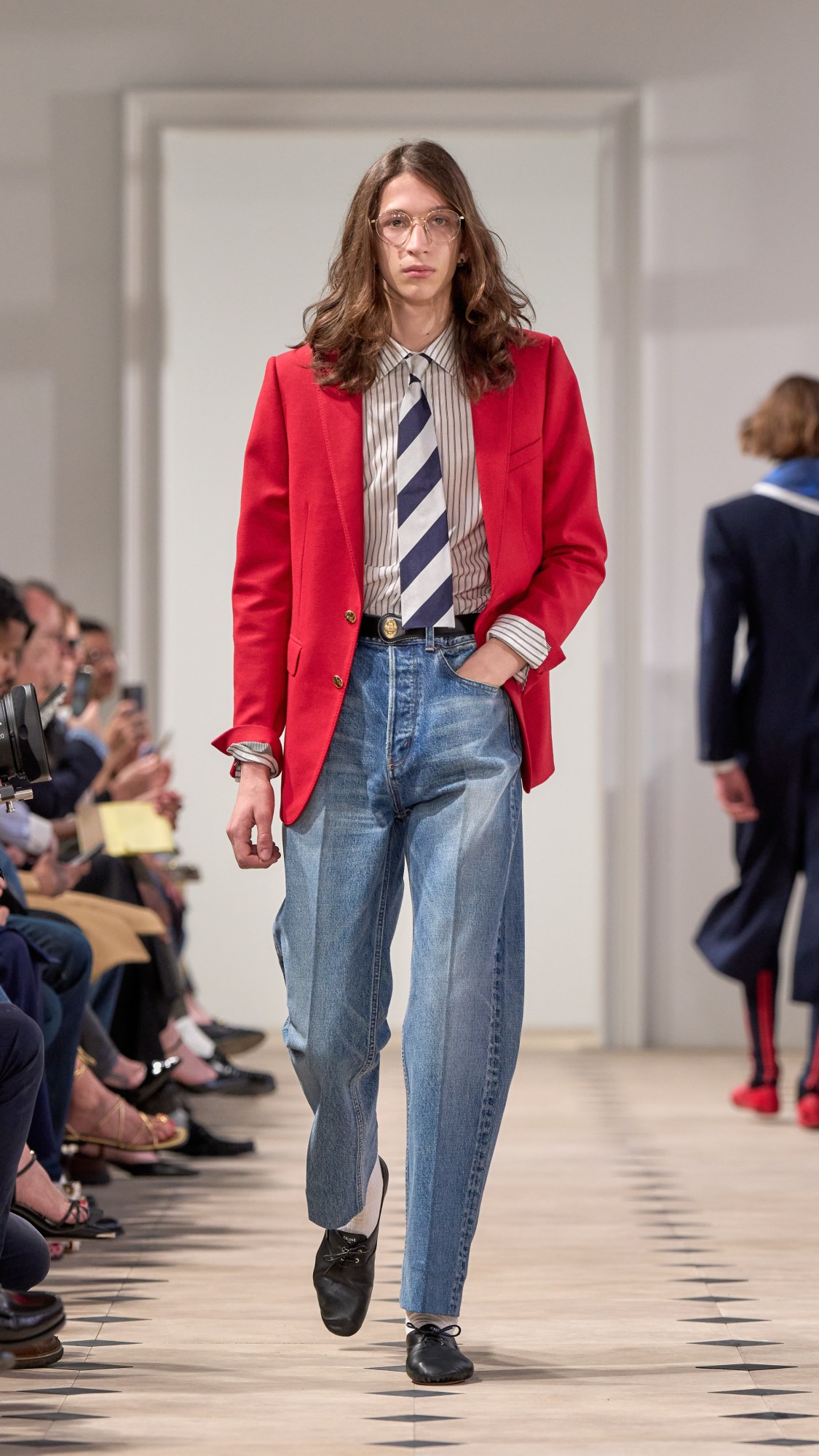
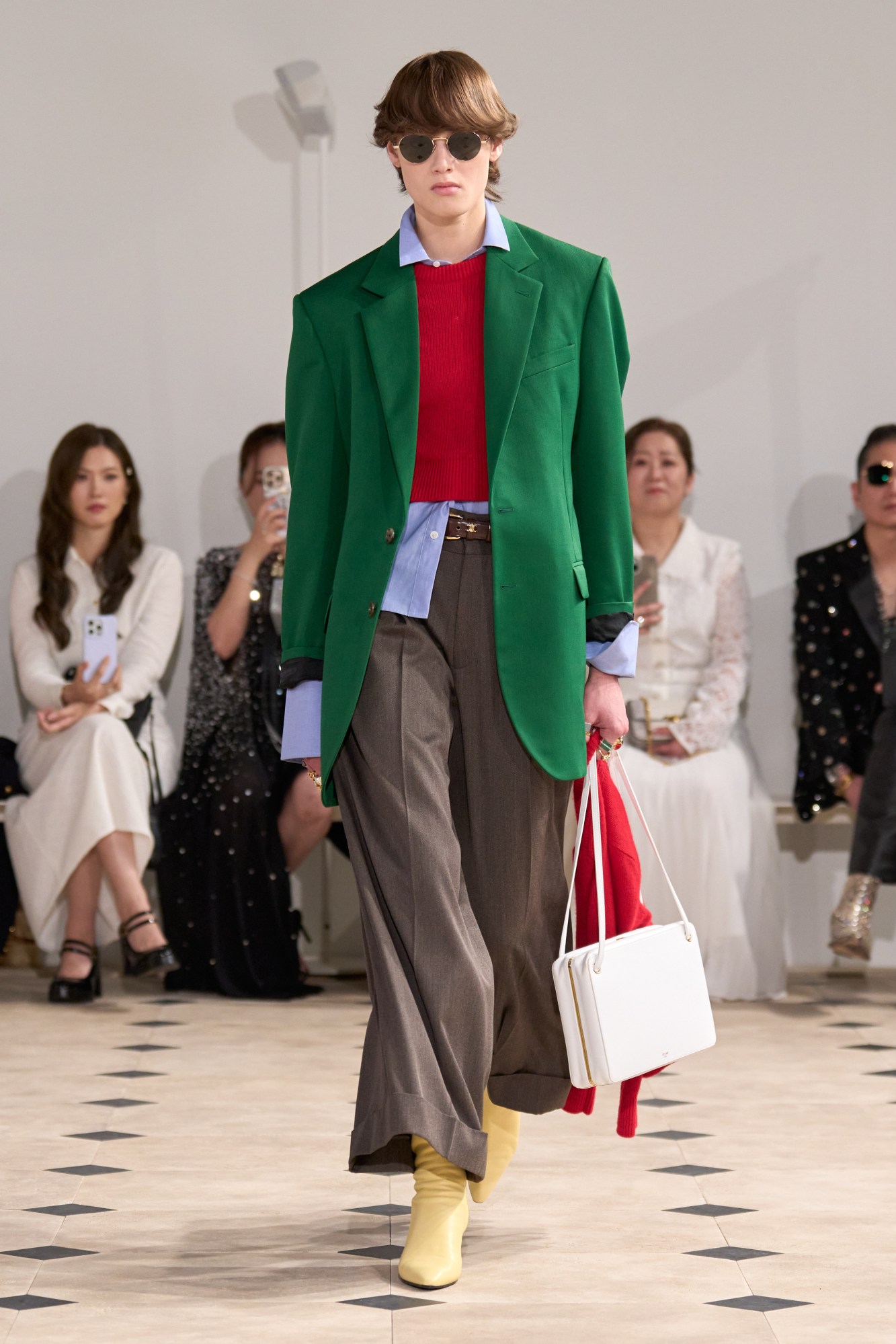
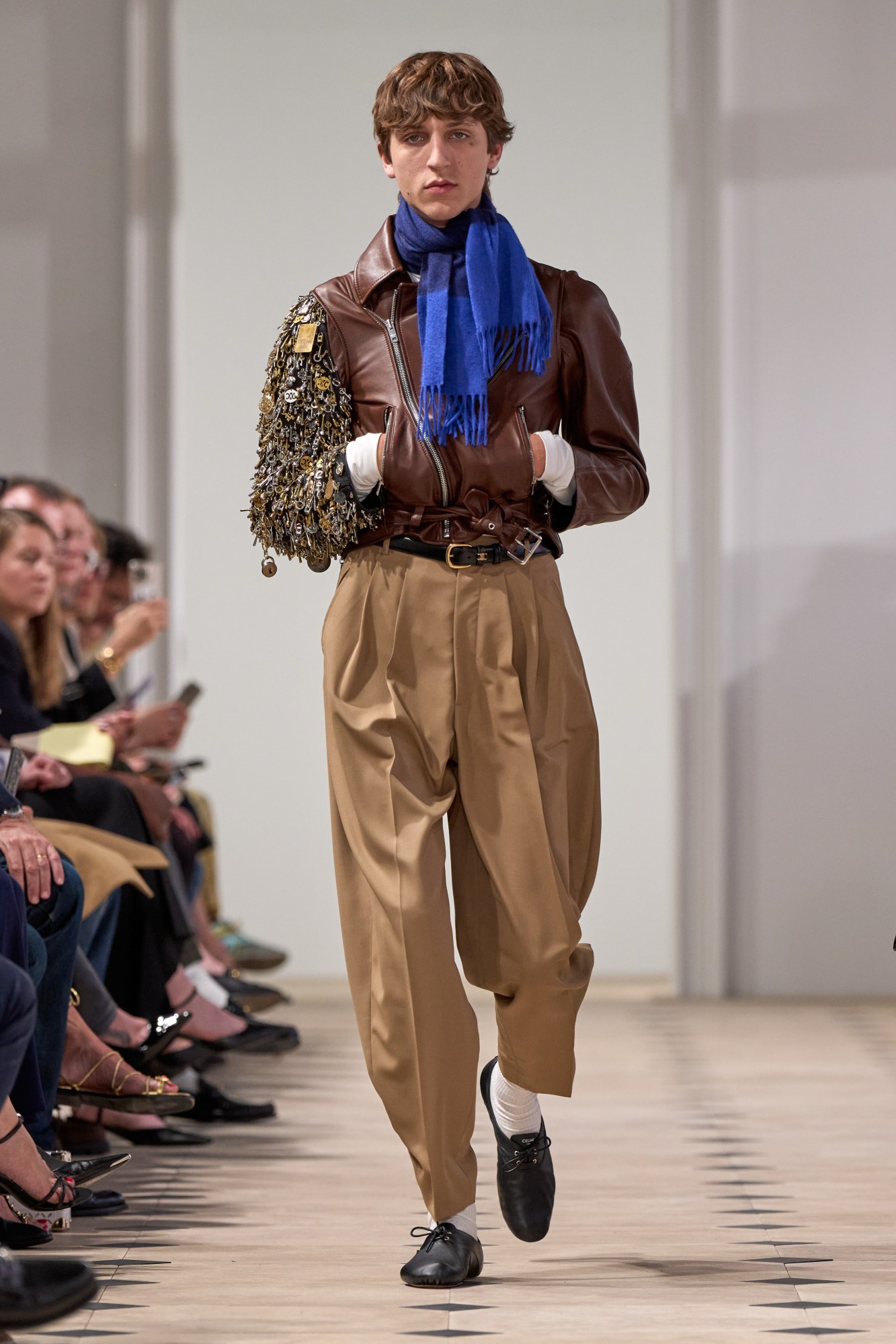

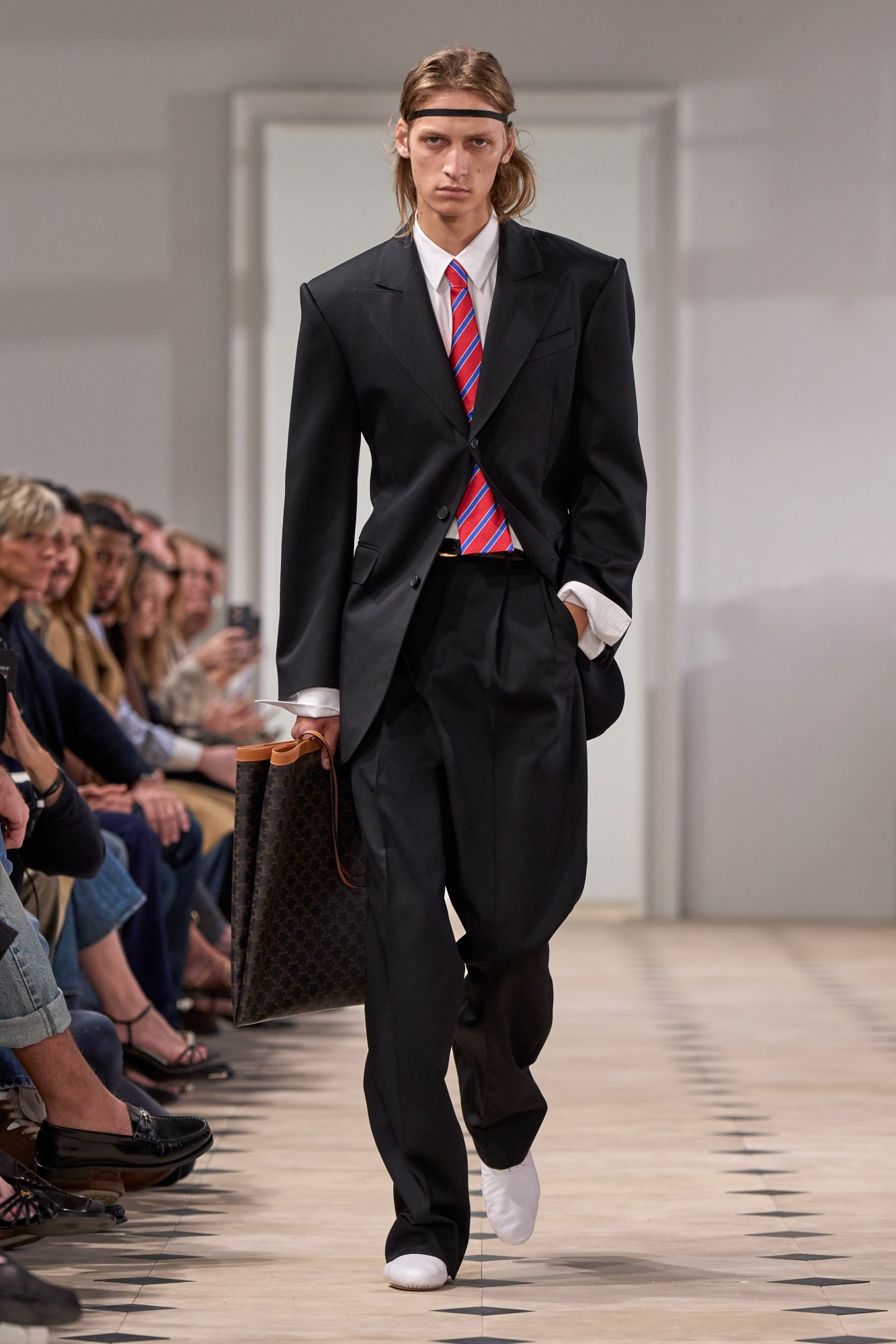
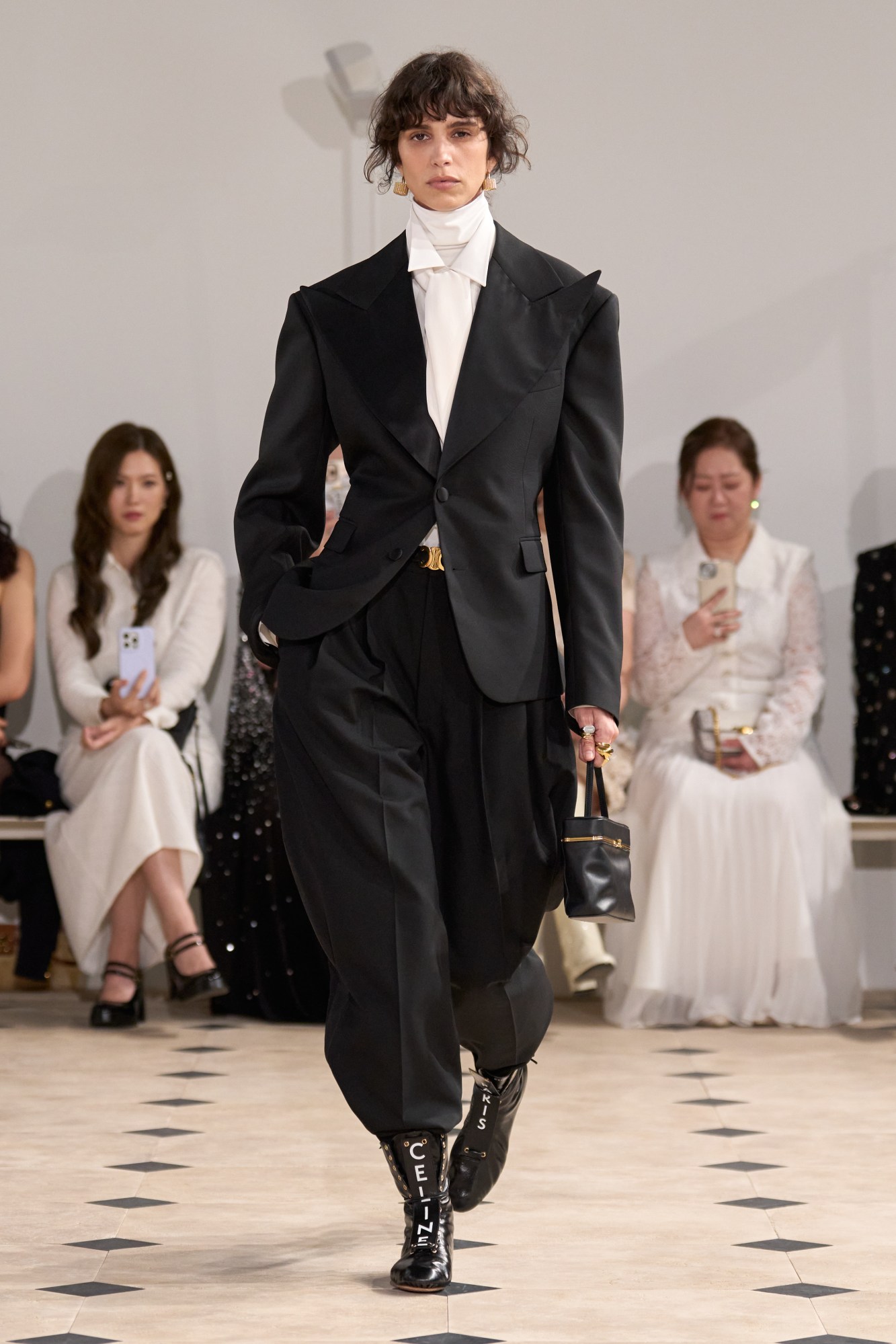
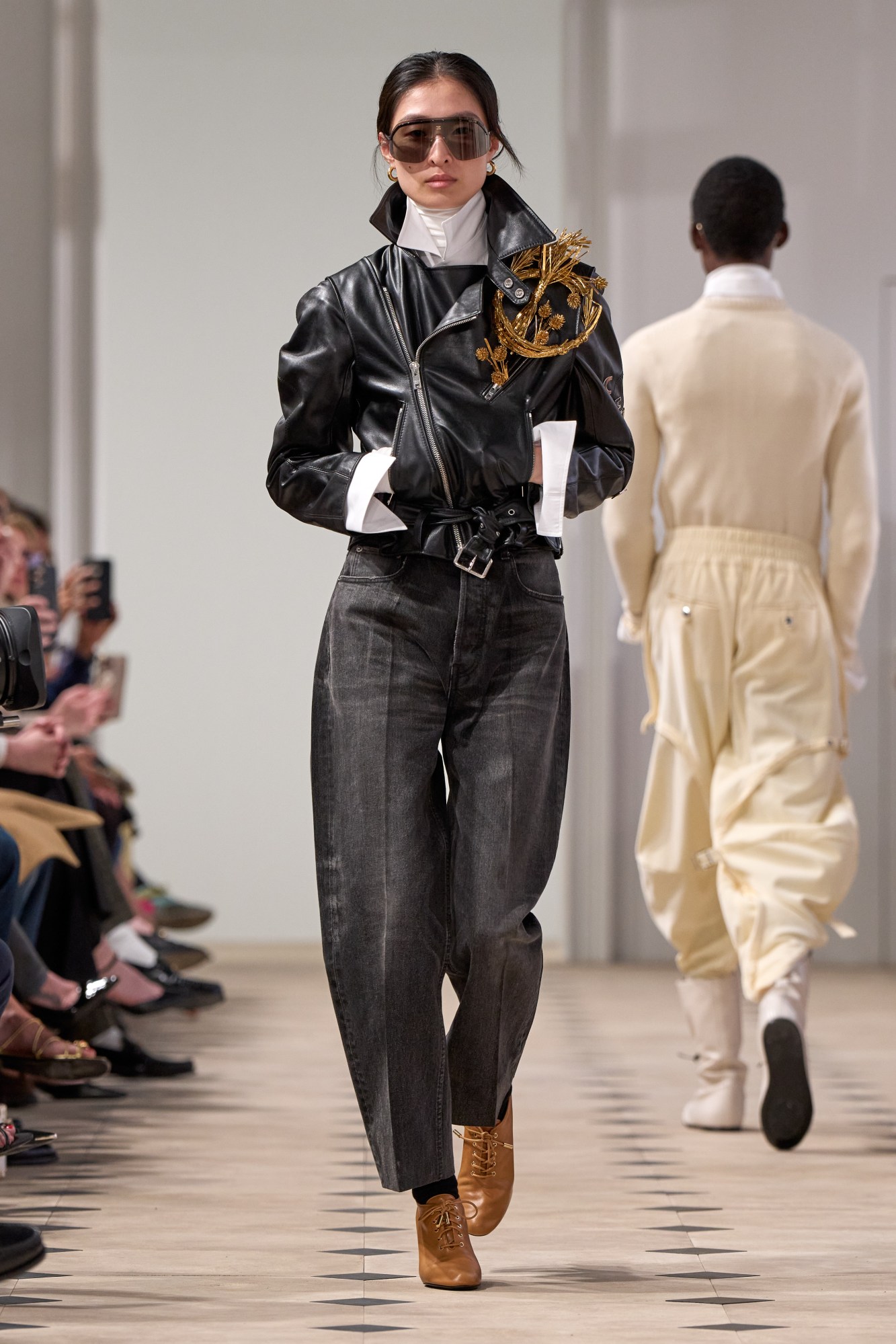
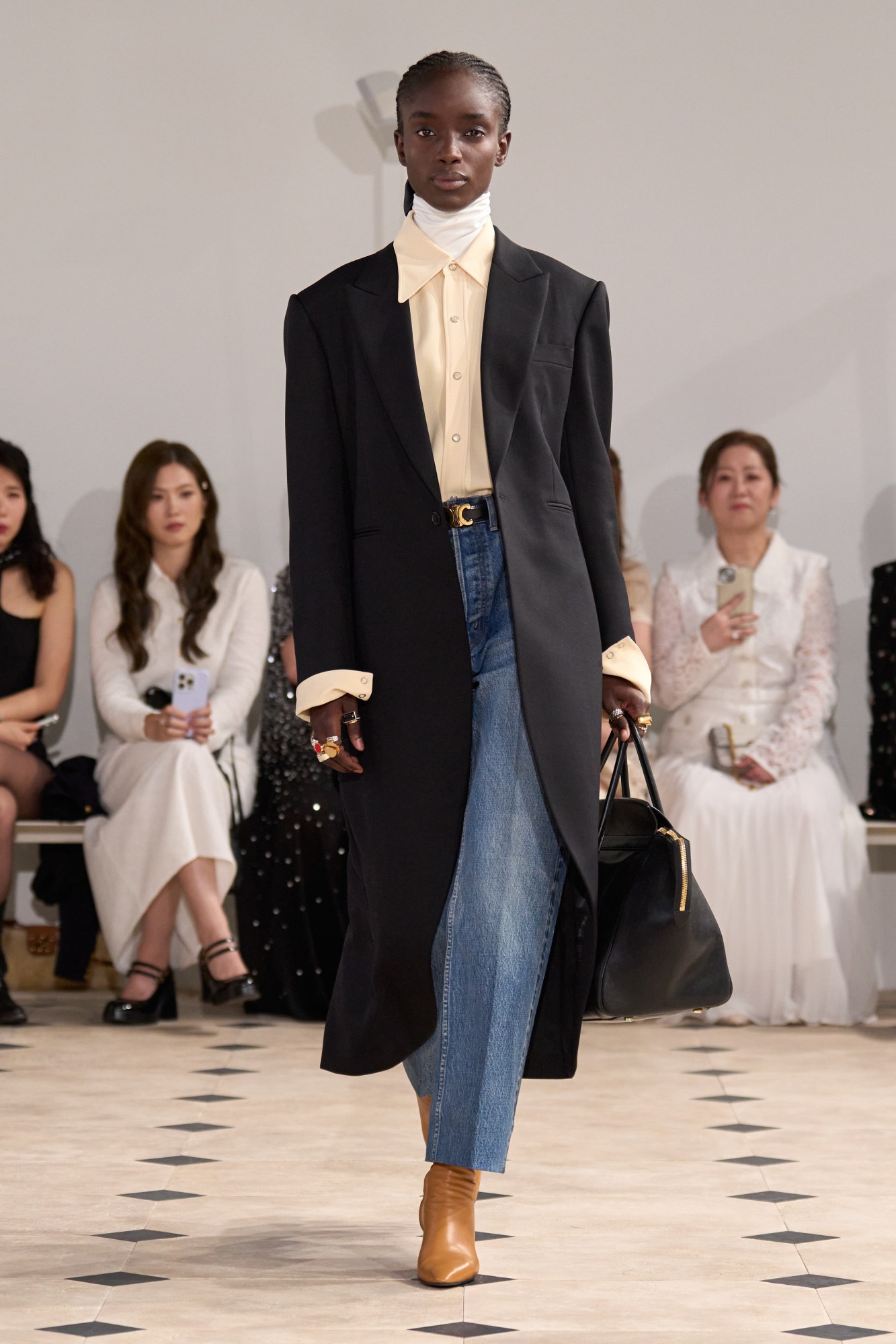
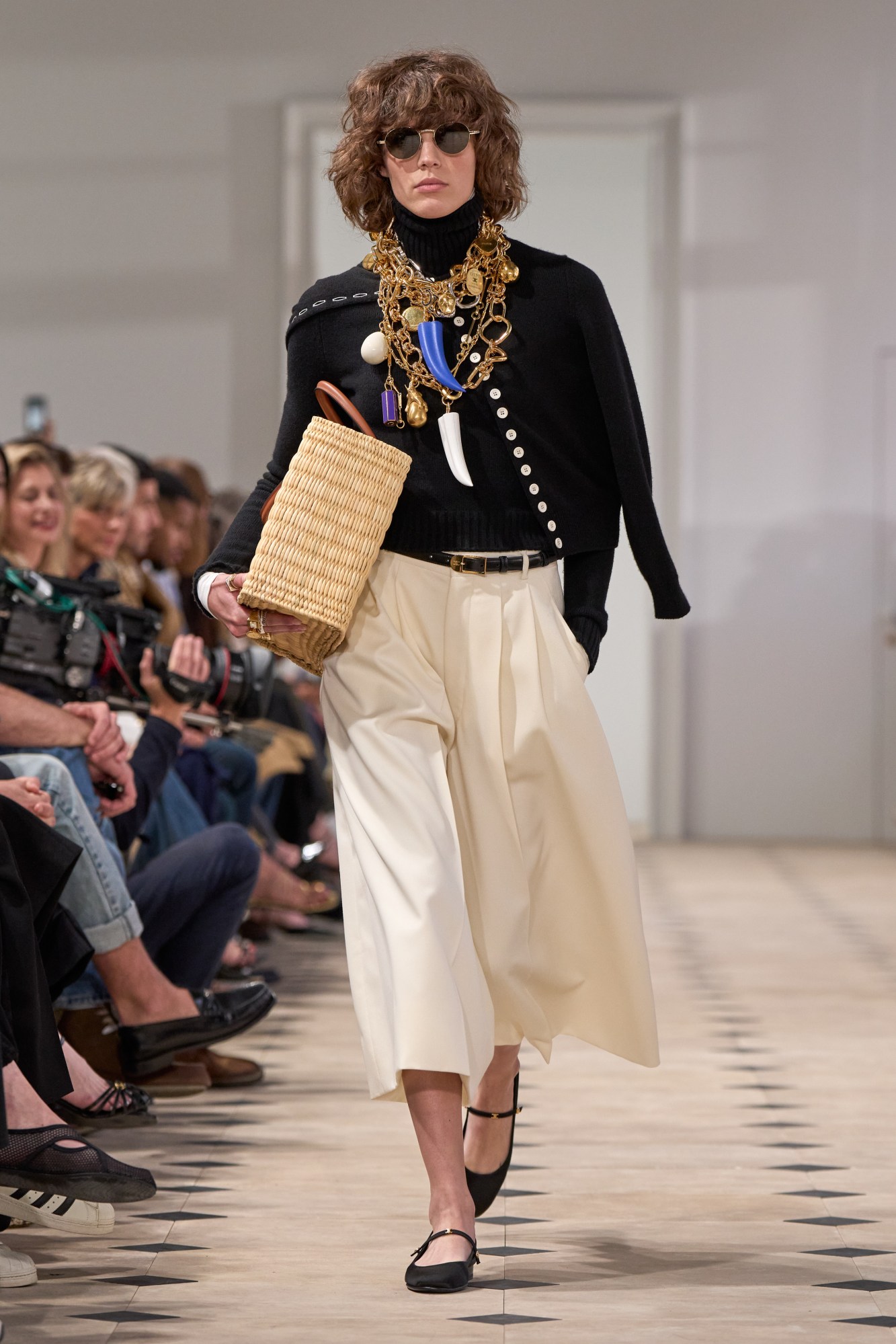

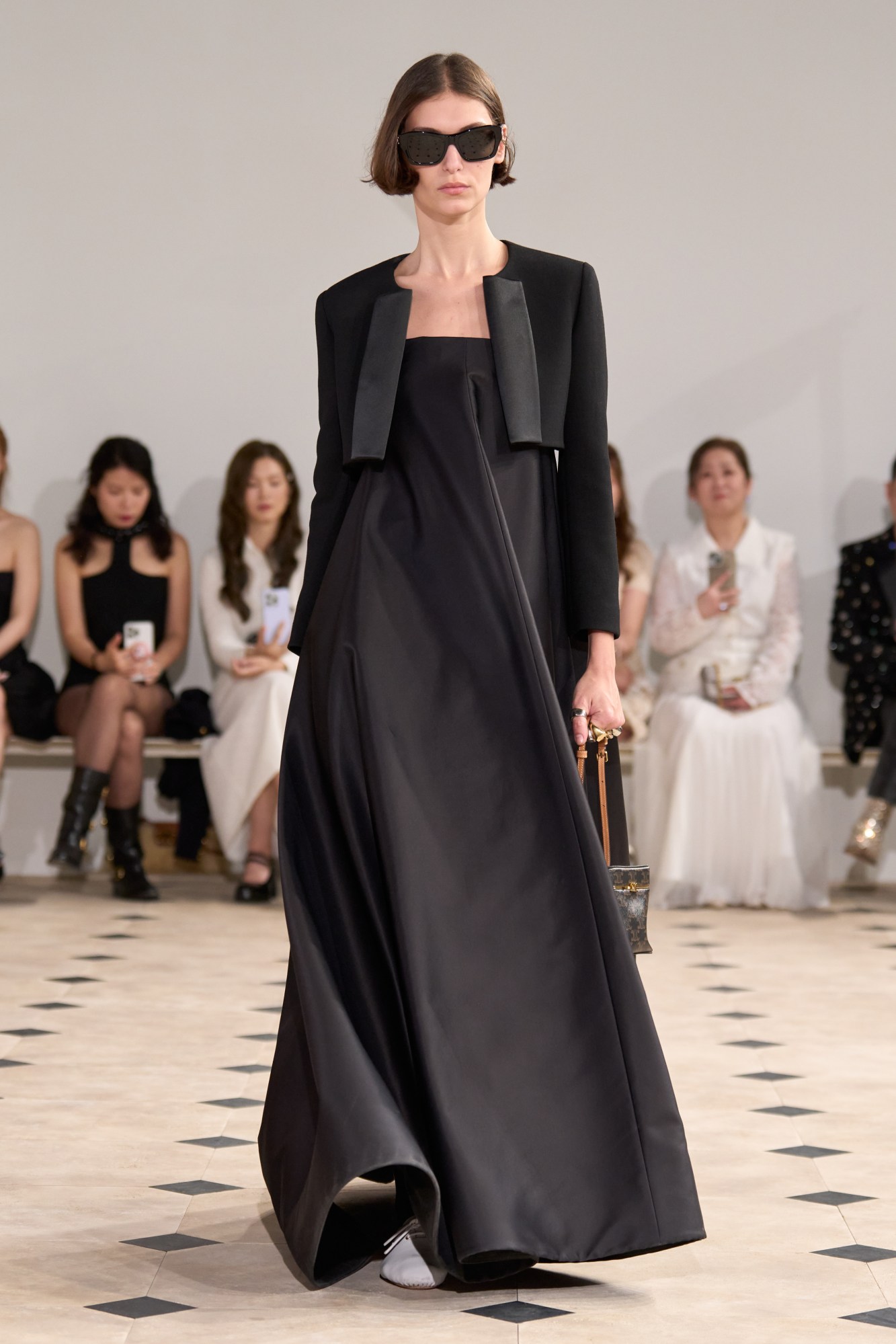
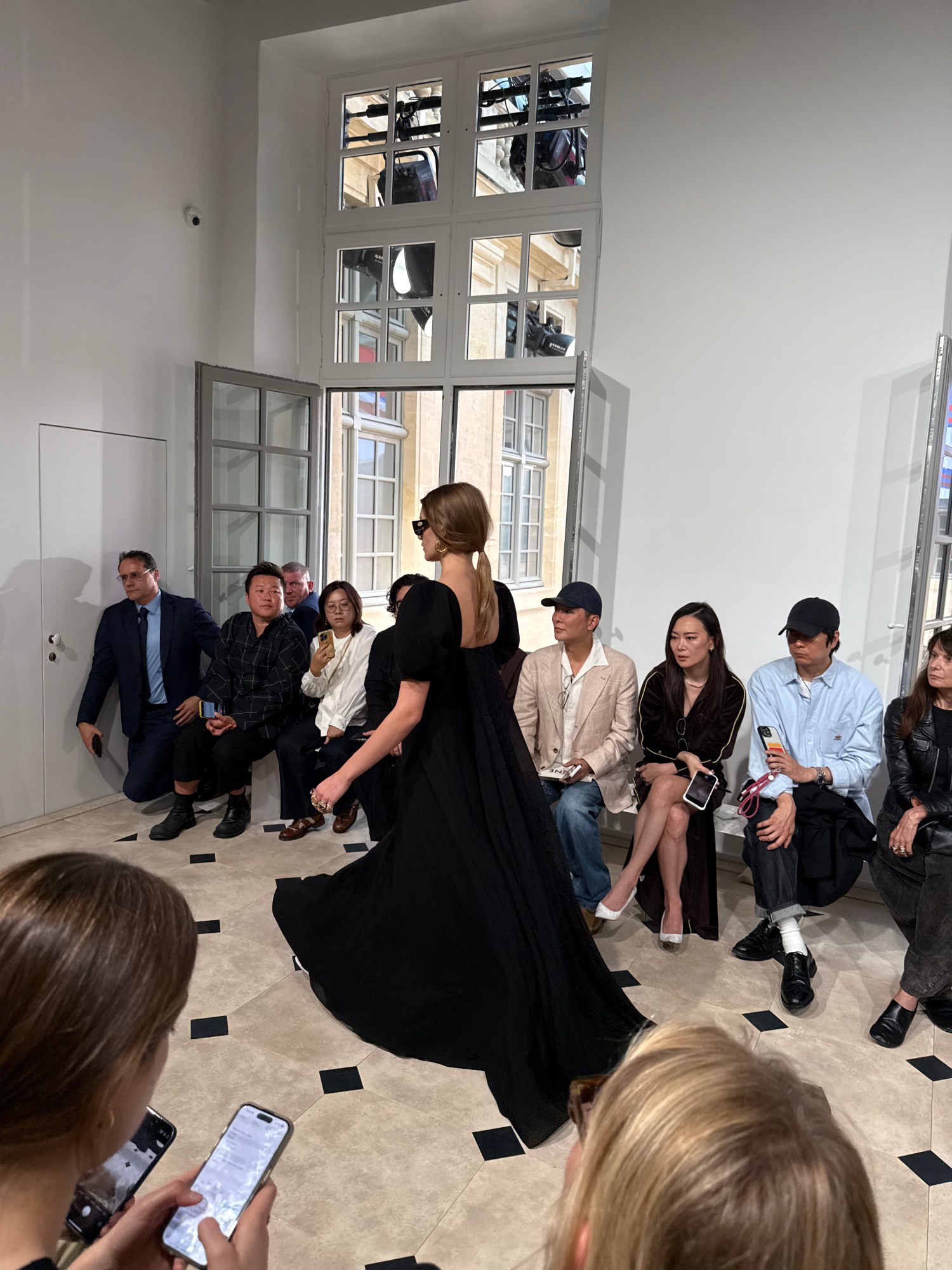
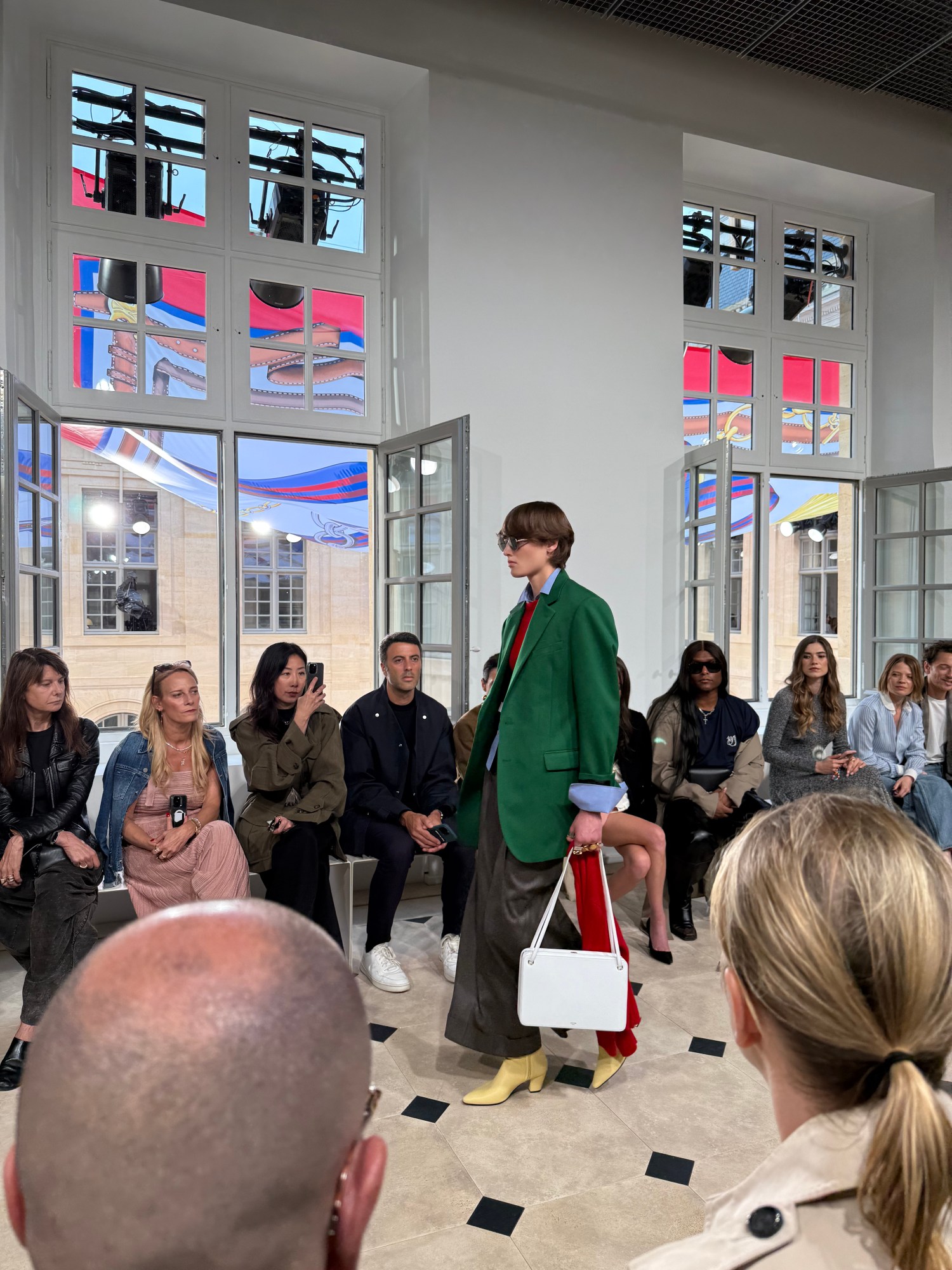
Womenswear, by contrast, felt more exploratory. At its best, it offered sharp moments of off-beat chic. A clean column gown with satin lapels, a snatched, powerful double-breasted coat dress, both read as reverent nods to his Philo-era training, with a few sci-fi-esque Ghesquière-isms woven in as well. But elsewhere, the clarity blurred. A tiered black floor-length peplum dress leaned clunky. A cocktail mini sculpted from Celine tags felt more like a bygone era’s runway stunt. Not flops, but incomplete thoughts. Signs of a designer still calibrating his voice. Looks were assembled with care, and a light touch. Gloves tucked into bags. Loafers worn with puddled pants. Silk scarves knotted low at the neck (the one wrapped around the show invitations was a clue).
Visually the collection stayed in Rider’s comfort zone, using black, ivory, camel, and navy, with jolts of scarlet, cerulean, and gold. The restraint gave texture room to lead, through wool, leather, silk faille, and denim. These were clothes for people who pay attention, and who expect their clothes to do the same. Like Jonathan Anderson’s Dior Men’s debut, which leaned historic and aristocratic without tipping into costume, Rider’s Celine was a study in control. The references were clear. The codes stayed intact. There was no sweeping narrative or branded thesis—just beautifully constructed clothes. The press release arrived as a personal letter from Rider himself. Maybe that’s the big statement: To dress personally and eccentrically is more valuable today than following a big, mainstream runway trend.
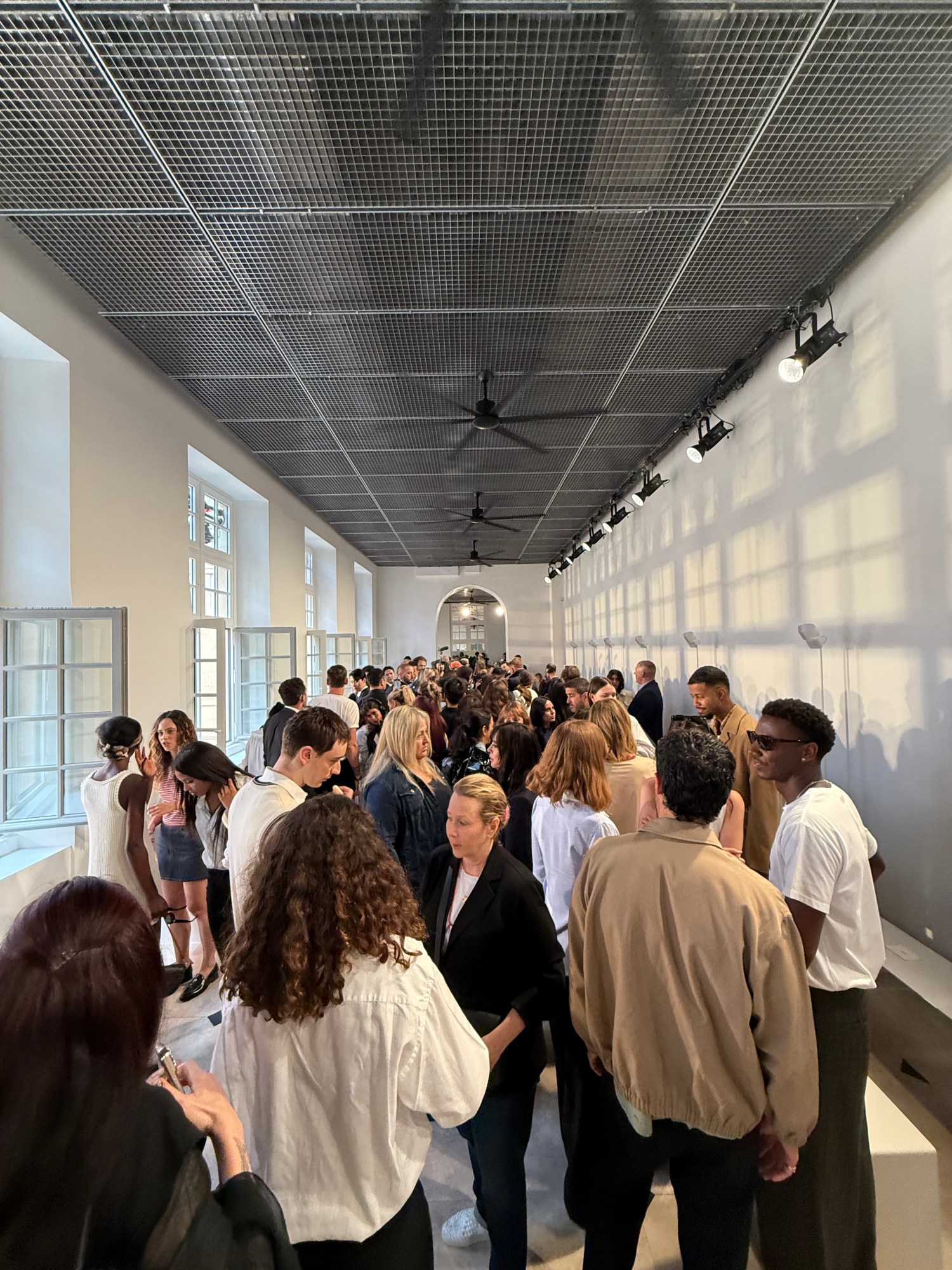
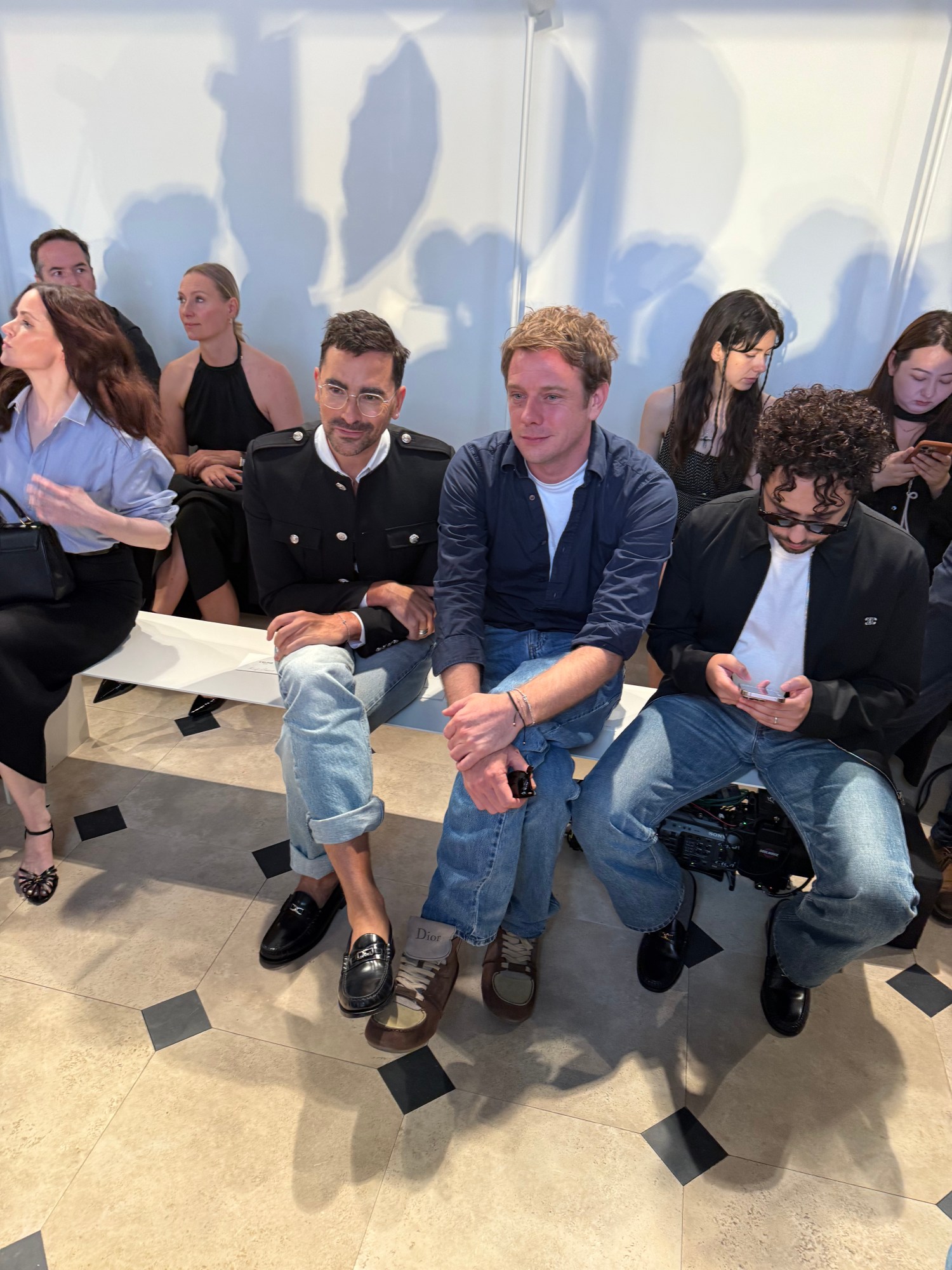
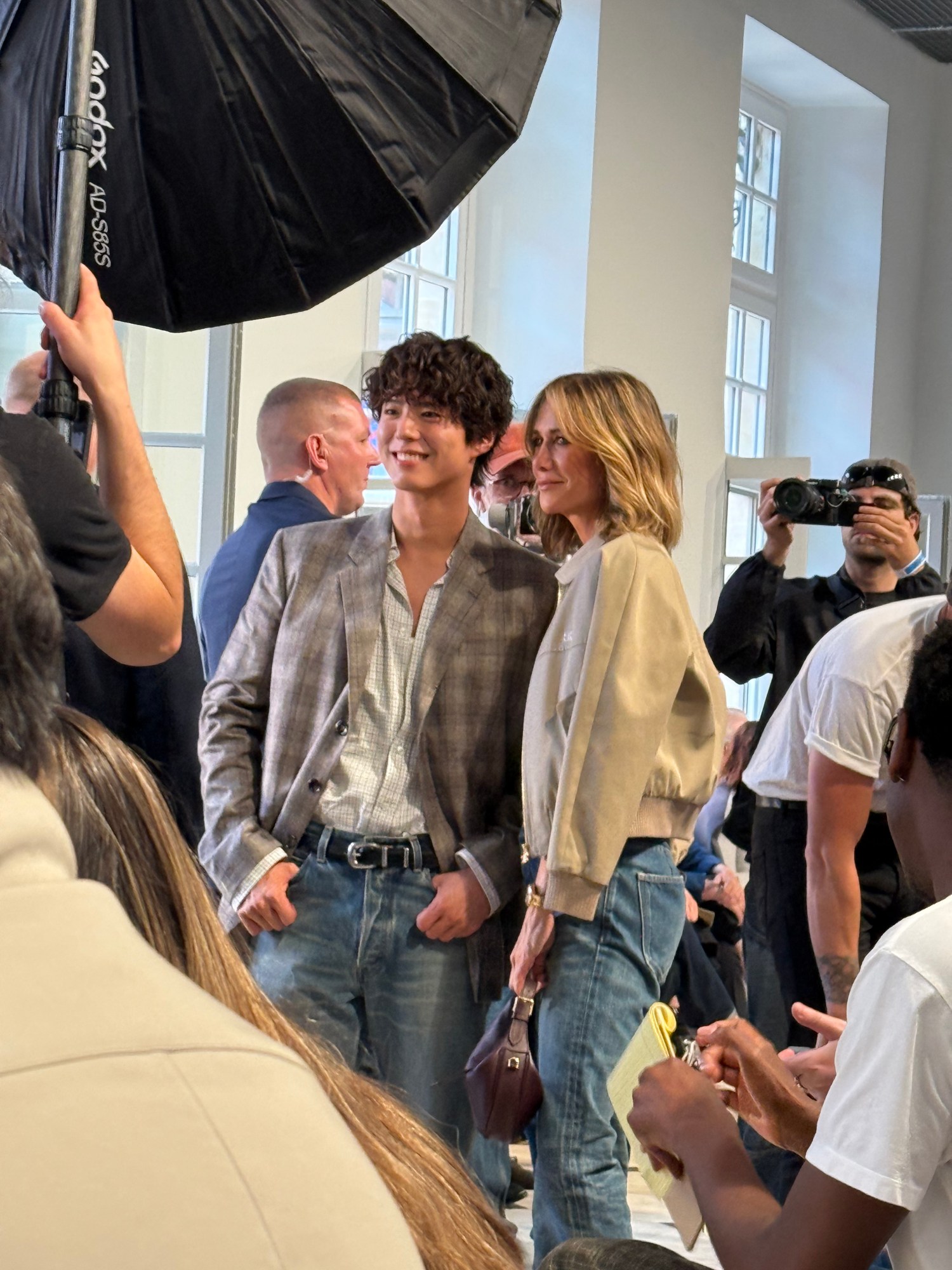
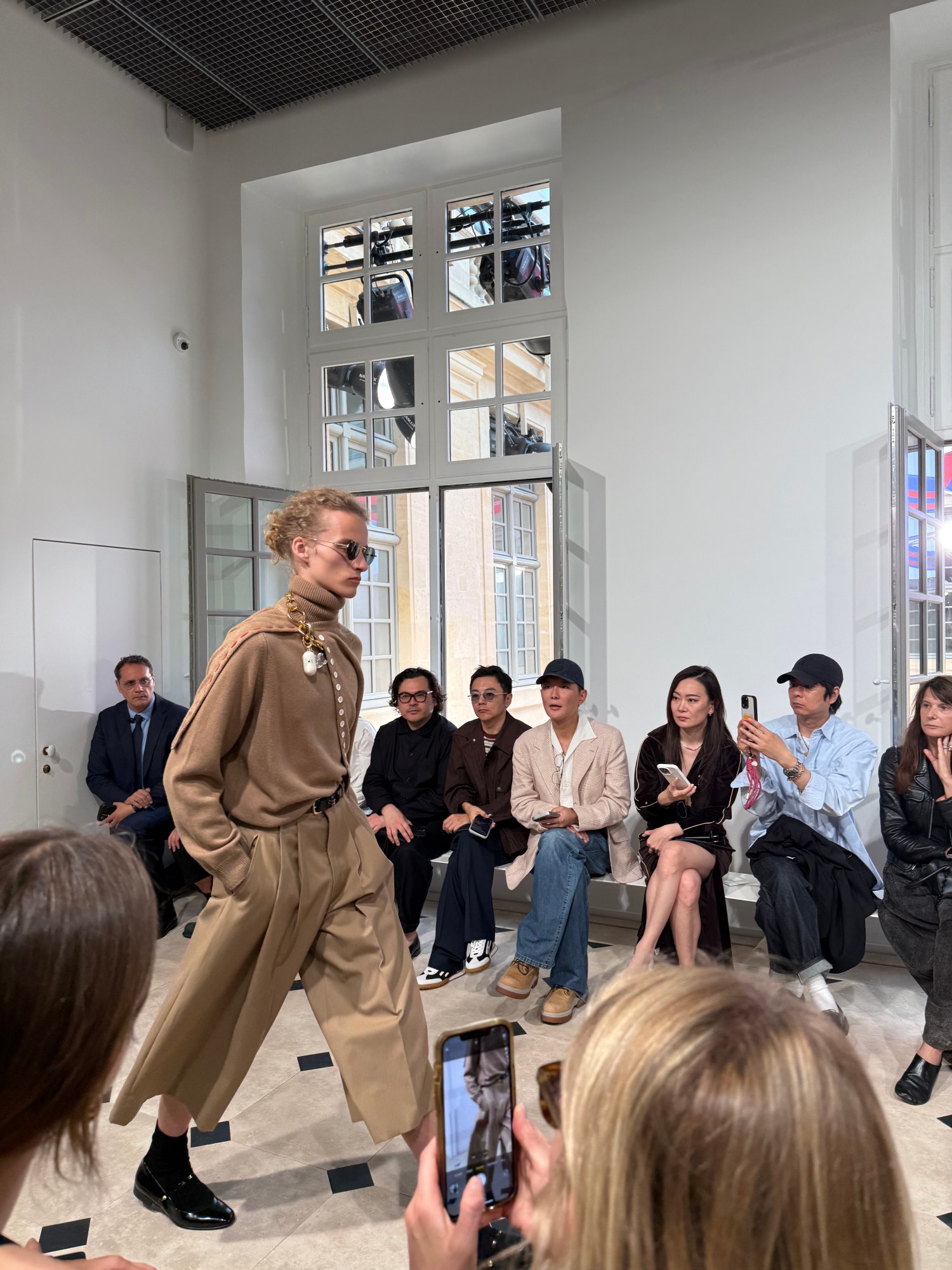
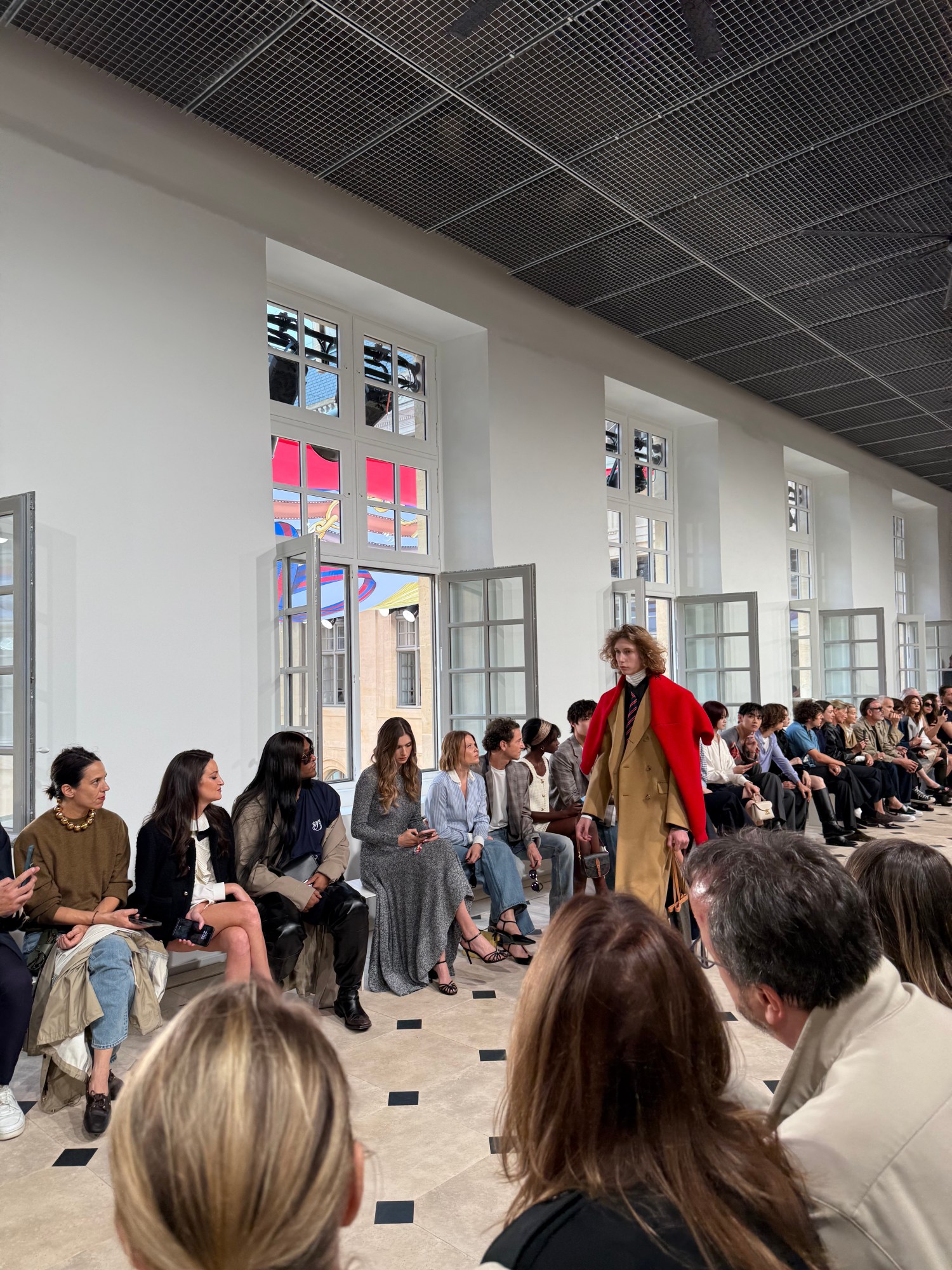
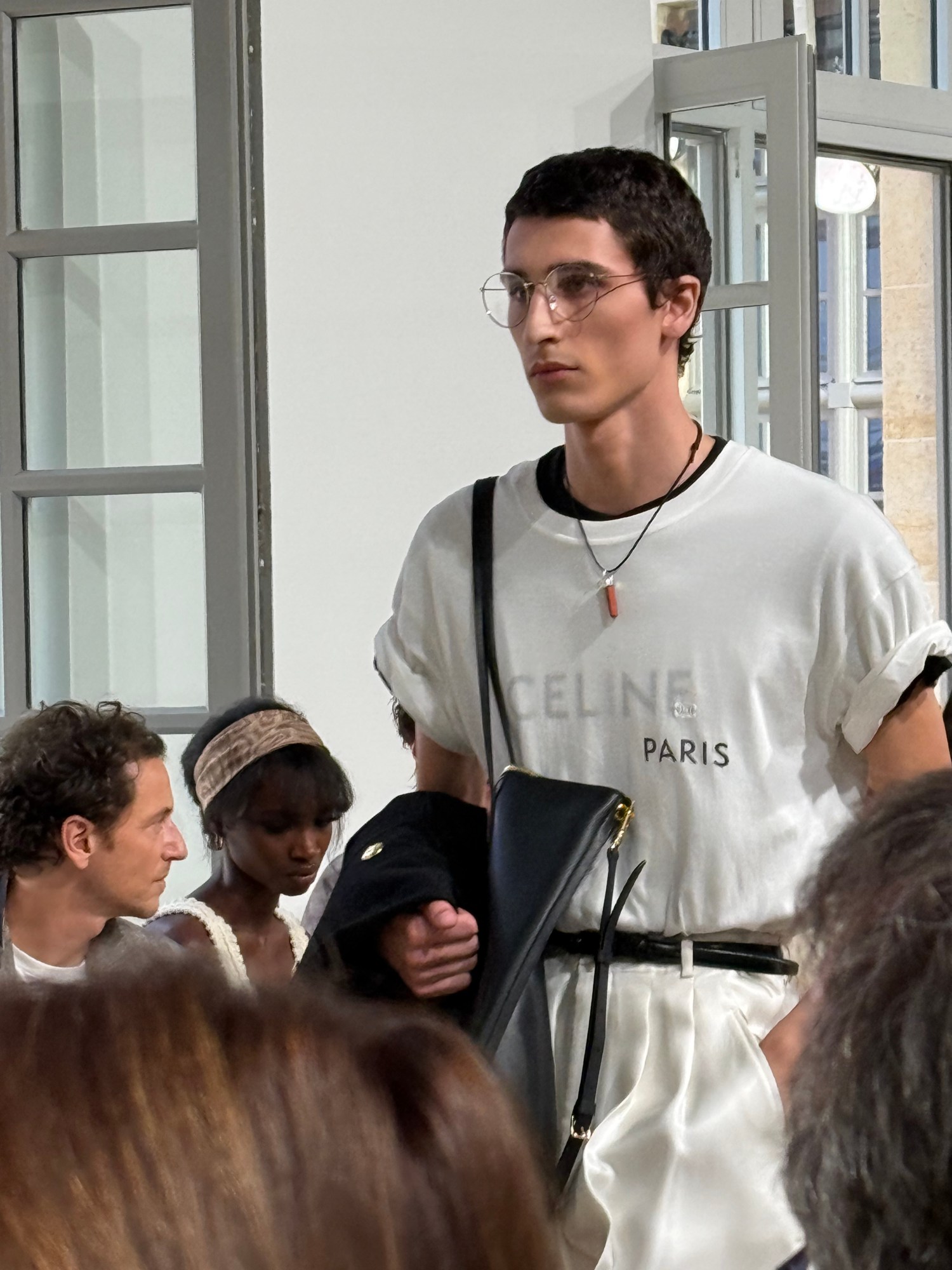
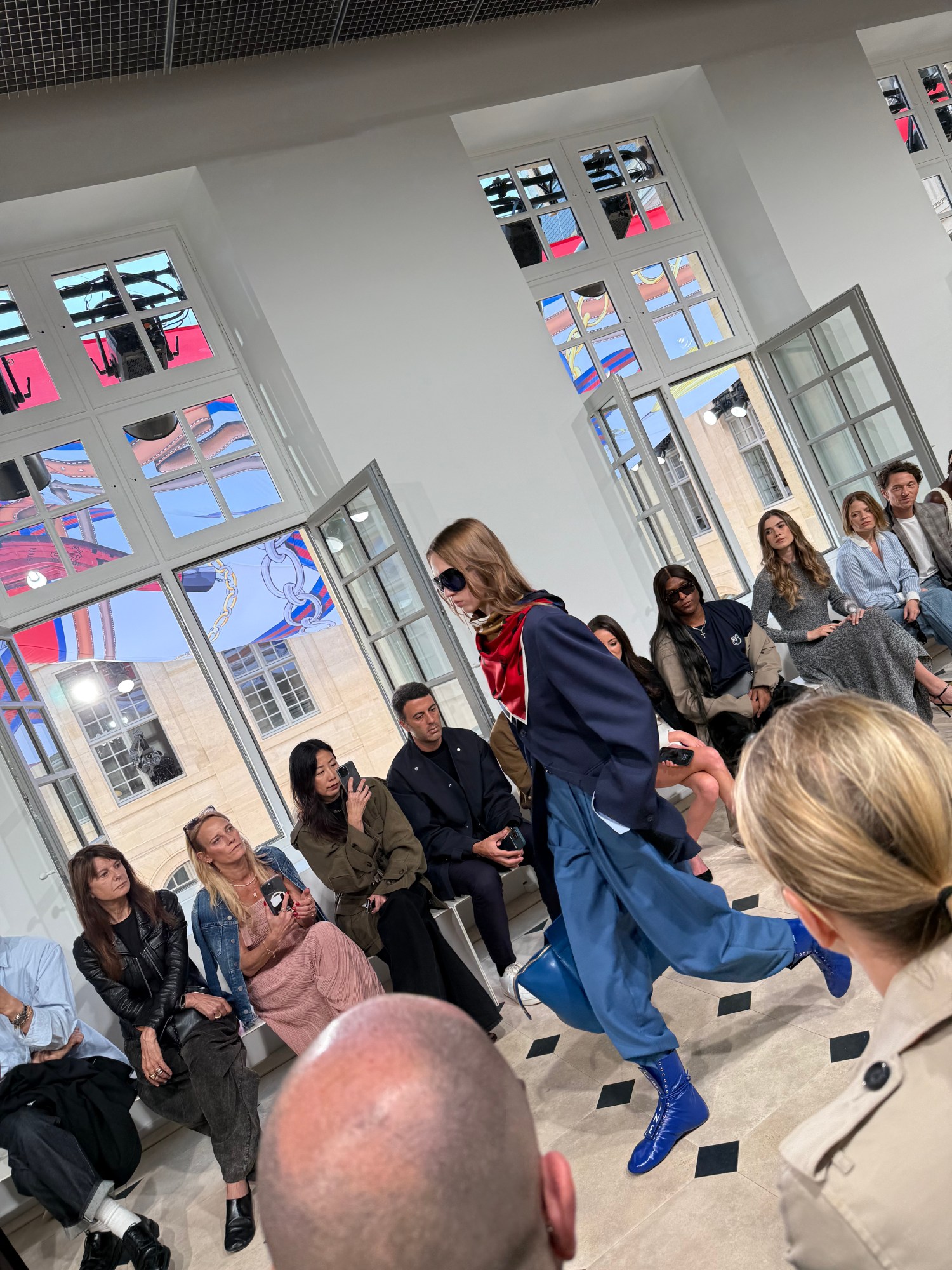
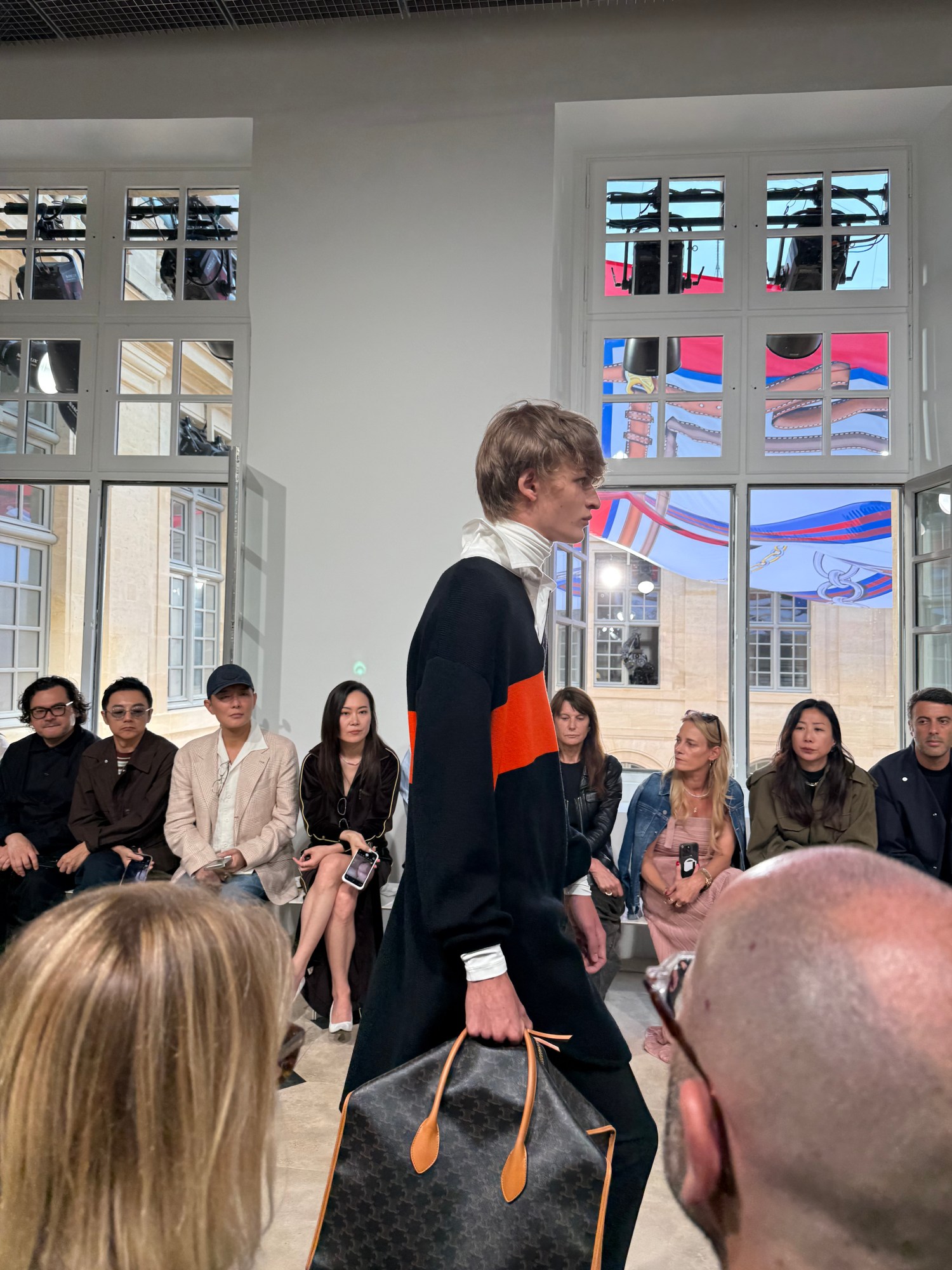
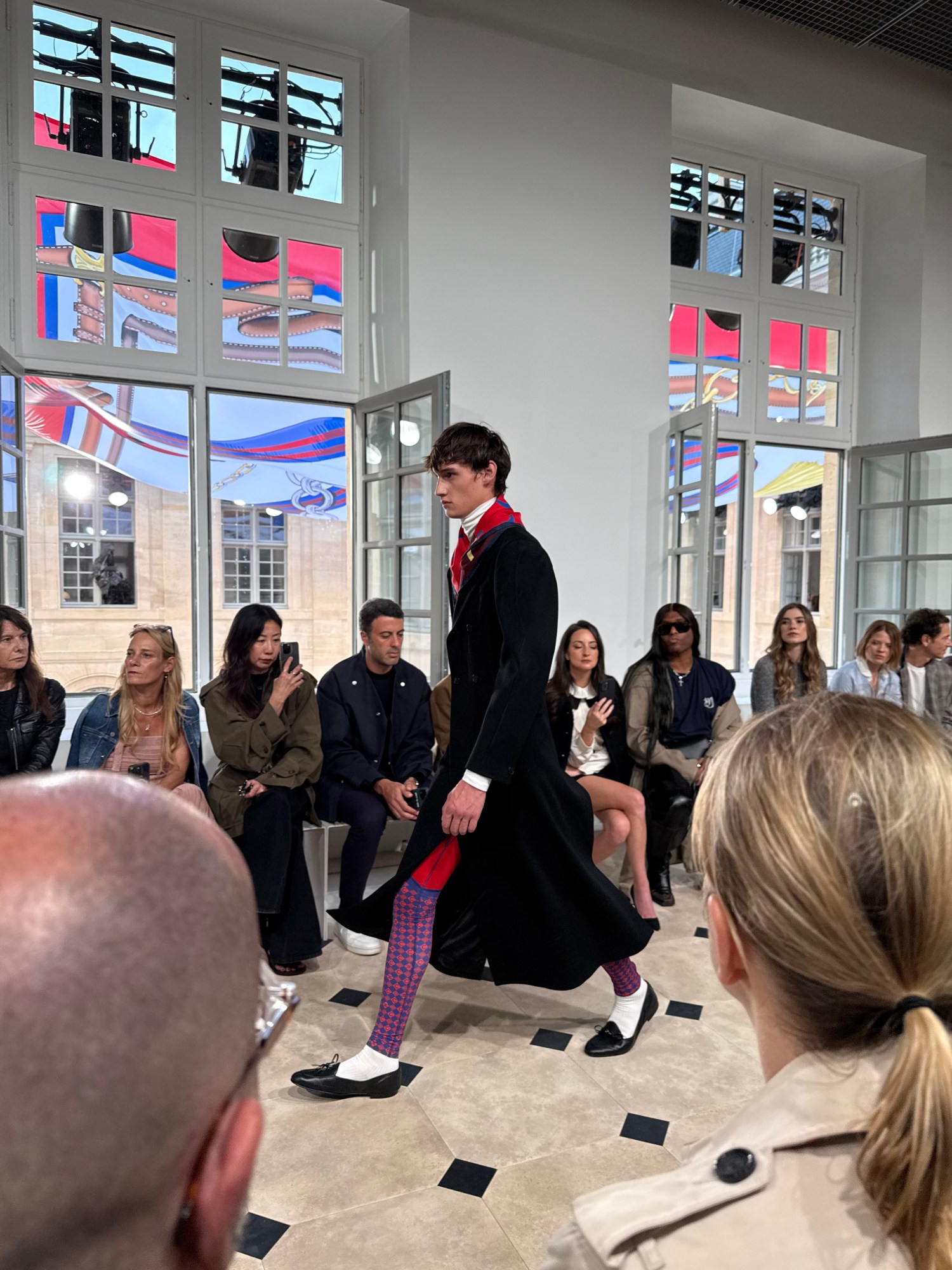

Post-show, actress Kristen Wiig beamed, “I loved every minute.” Alanis Morissette added, “I’ve enjoyed every era of Celine, from Hedi to Phoebe, so this is exciting to be a part of.” Among editors, reactions ran the gamut. “Princely,” offered Ted Stansfield, editor-in-chief of Dazed. “French prep,” said Clarke Rudick of Crosscurrent. One guest compared it to Emily in Paris—a little harsh, non? The collection sparked opinions, not indifference. That, in itself, felt like a win.