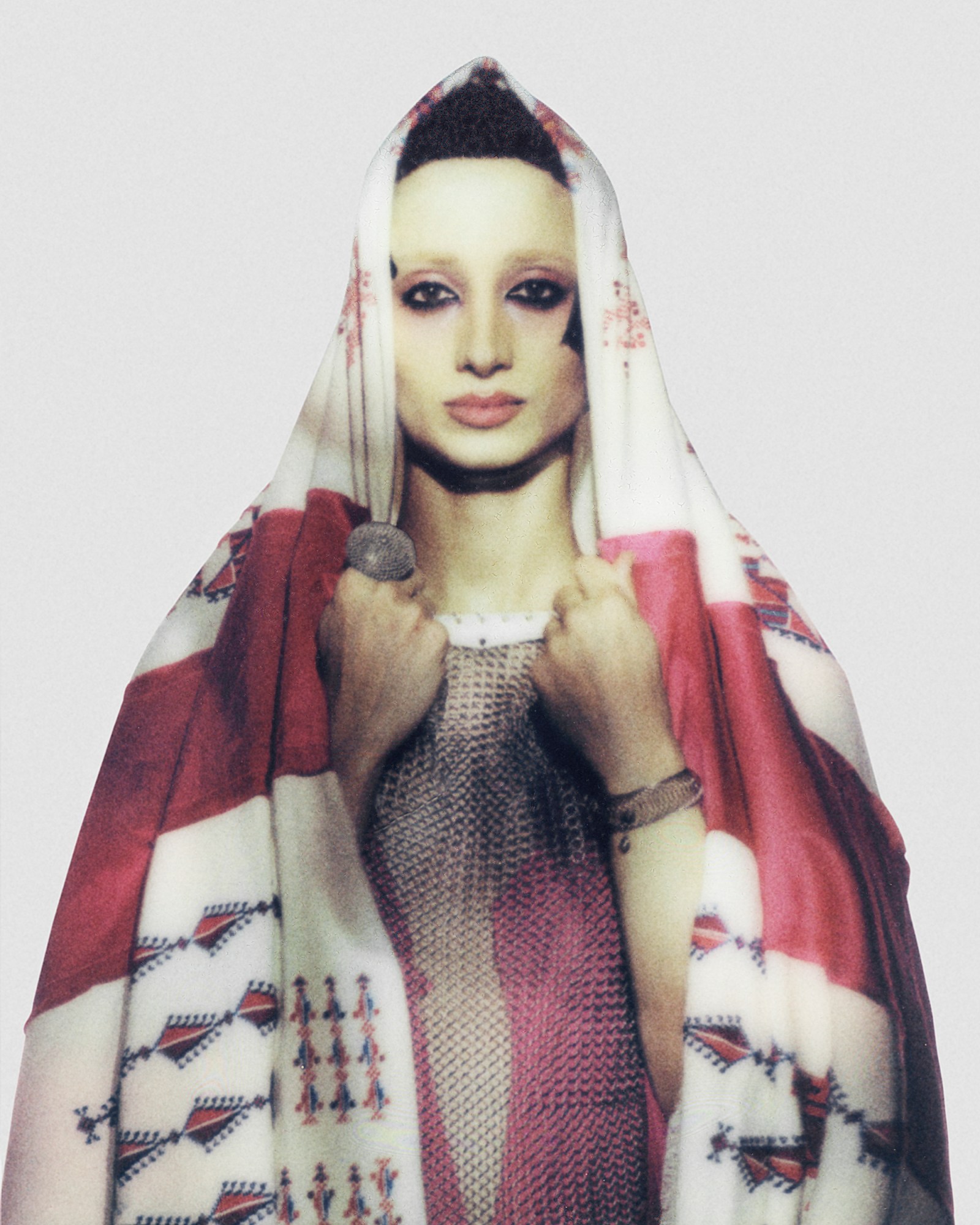
photography NICOLA DELORME
styling ALIA ALULI
For Palestinian designer and Central Saint Martins graduate Ayham Hassan, the color magenta has become a powerful metaphor. “Magenta is a color that our minds invent,” he says of the elusive shade between red and violet. “Just like us, Palestinians—we’re made invisible, denied, erased.”
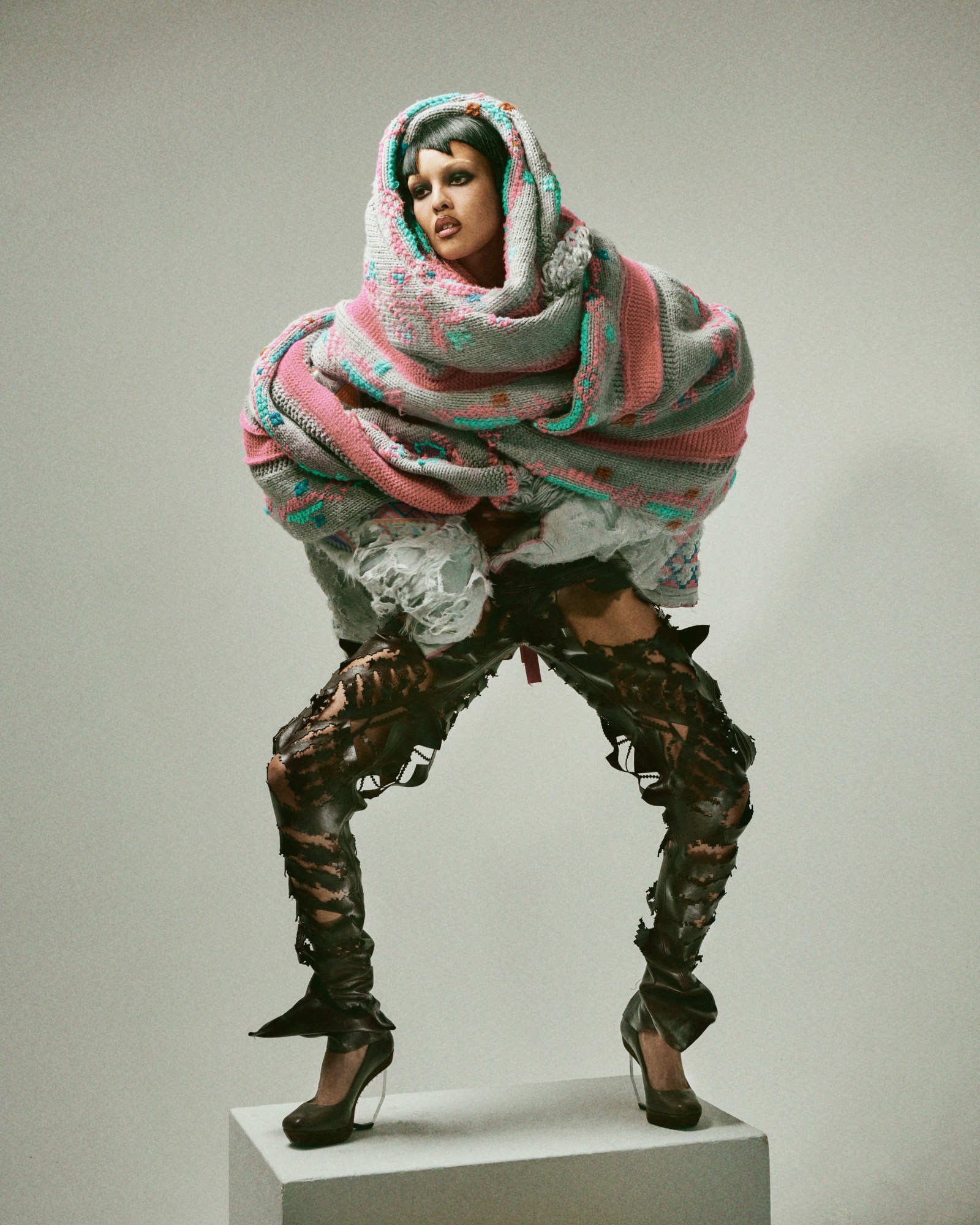
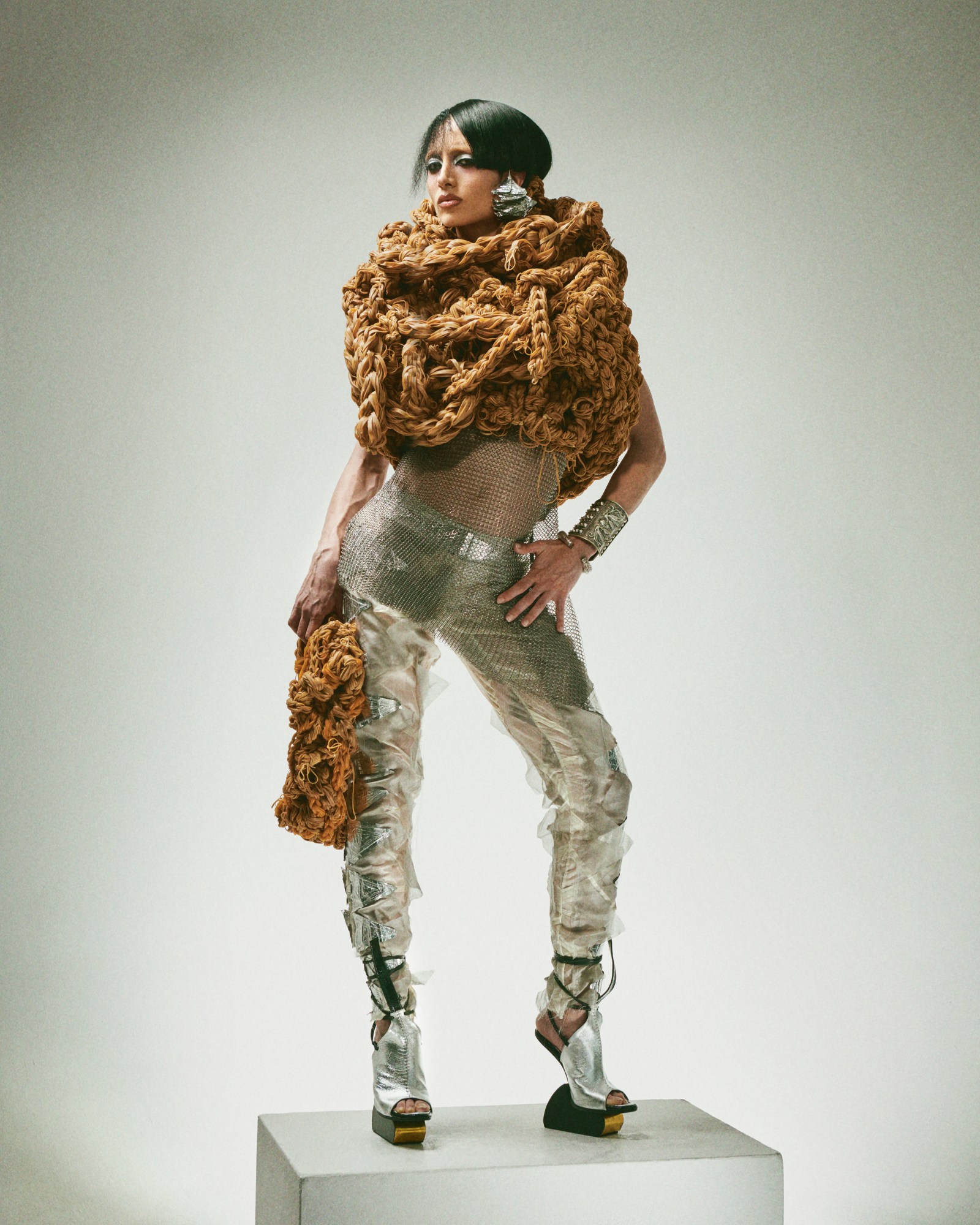
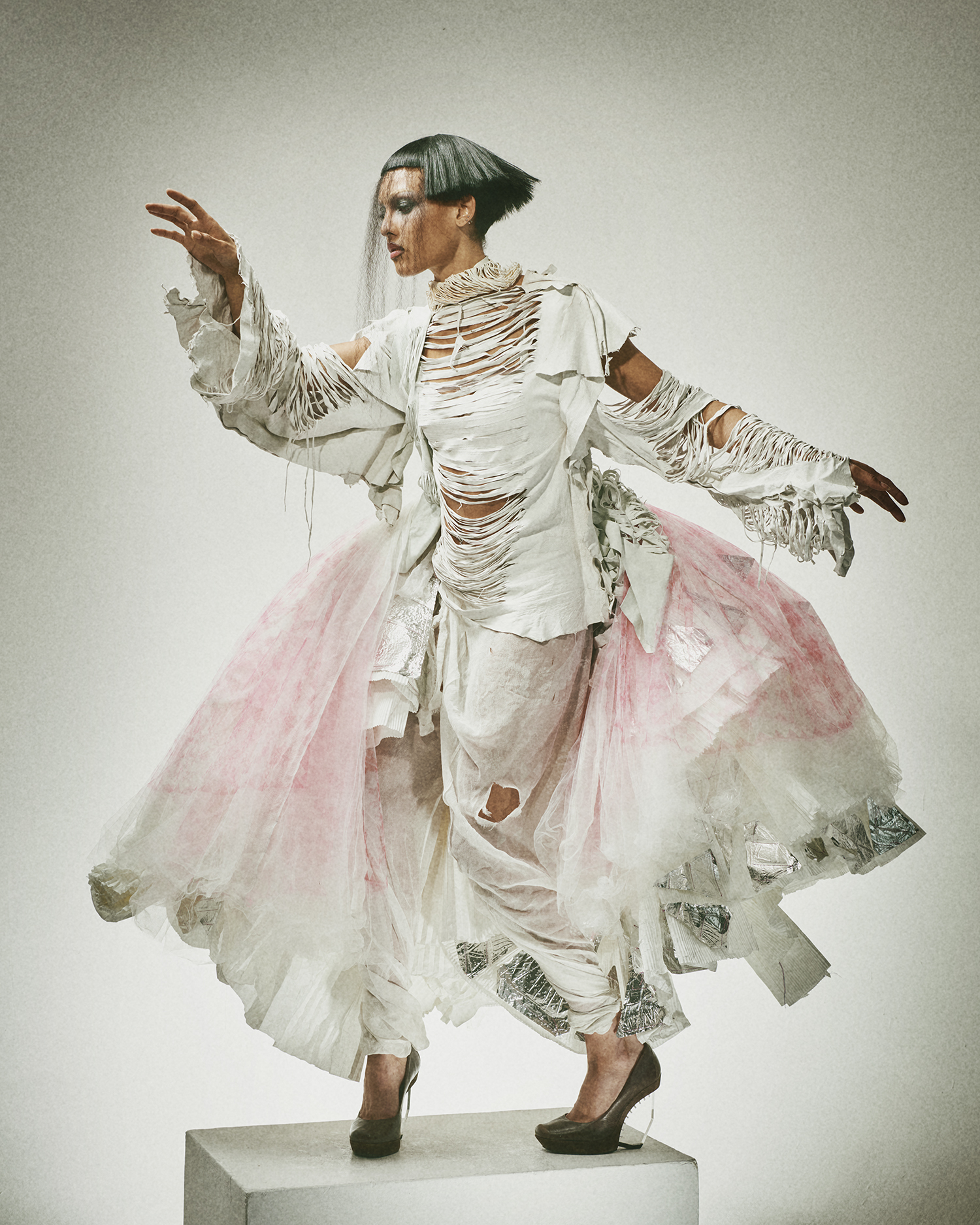
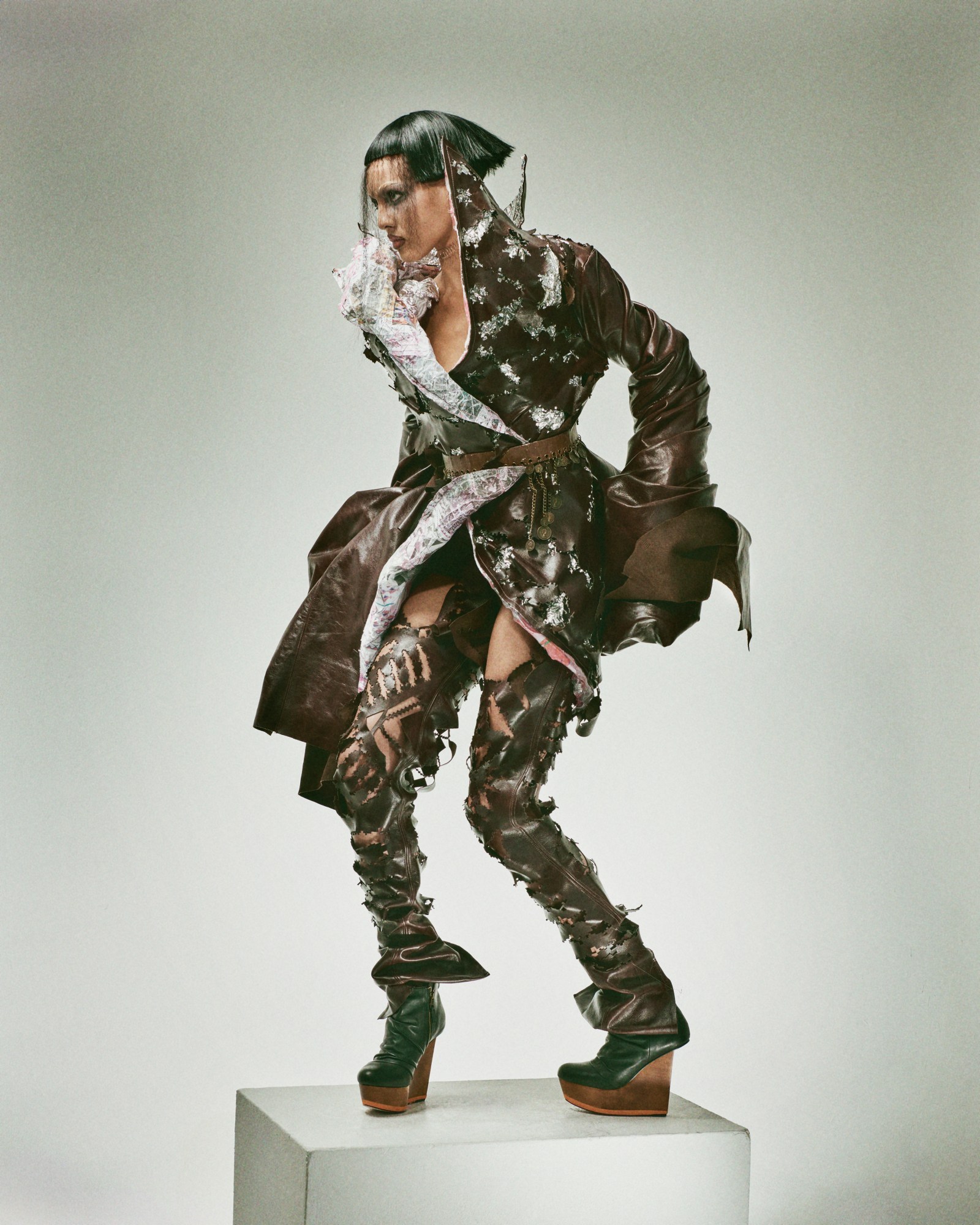
Hassan’s graduate collection “Immortal Magenta” is not just a fashion project, it’s a cry for memory, a plea for dignity, and an exquisite, painful love letter to a culture fighting for survival, rendered in deconstructed tailoring, textured leather, and rich, radiant shades of violet and fuchsia. Against the backdrop of the ongoing genocide in Gaza, Hassan’s work arrives like a stitch in the side of the industry: elegant, intellectual, and deeply subversive by virtue of its honesty.
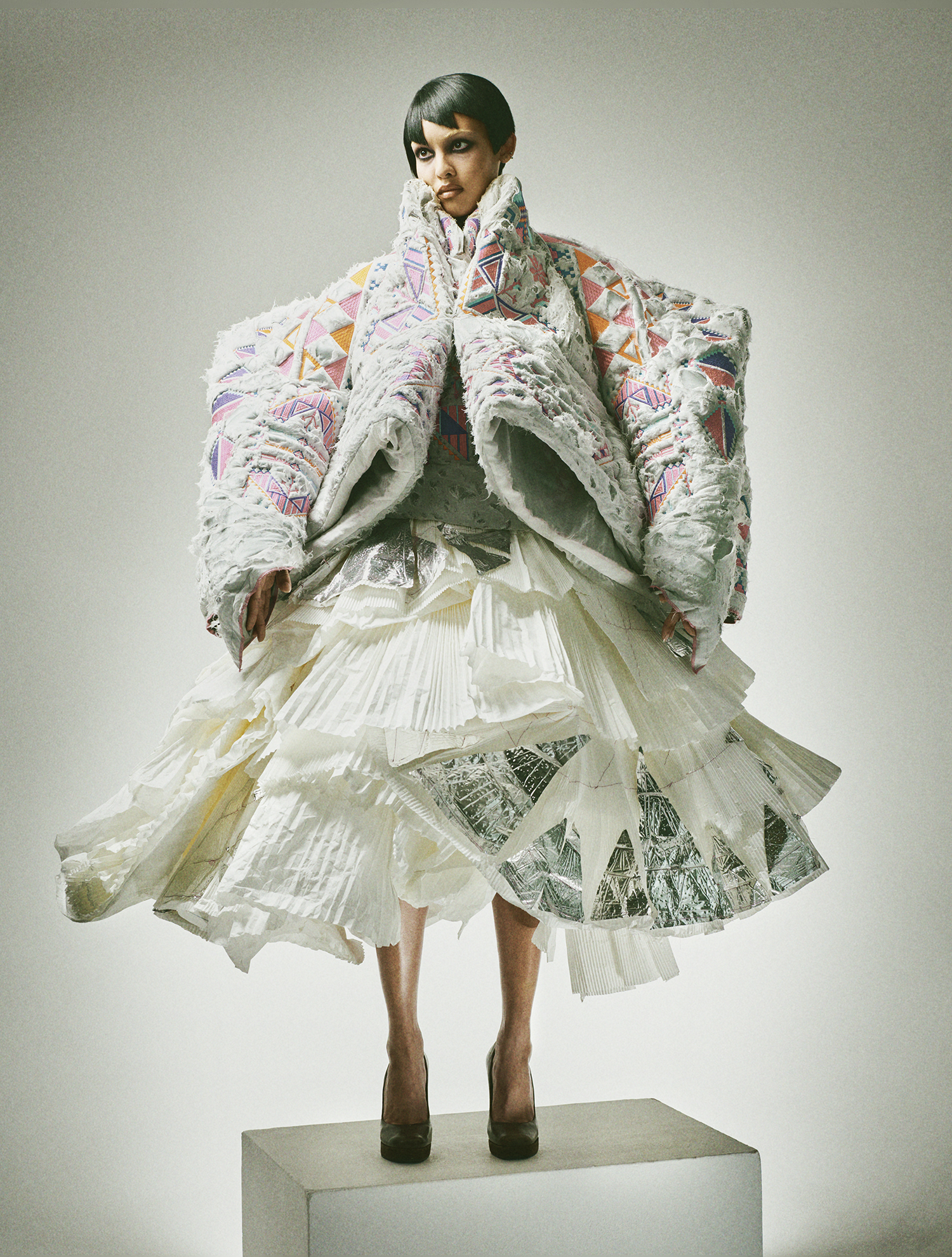
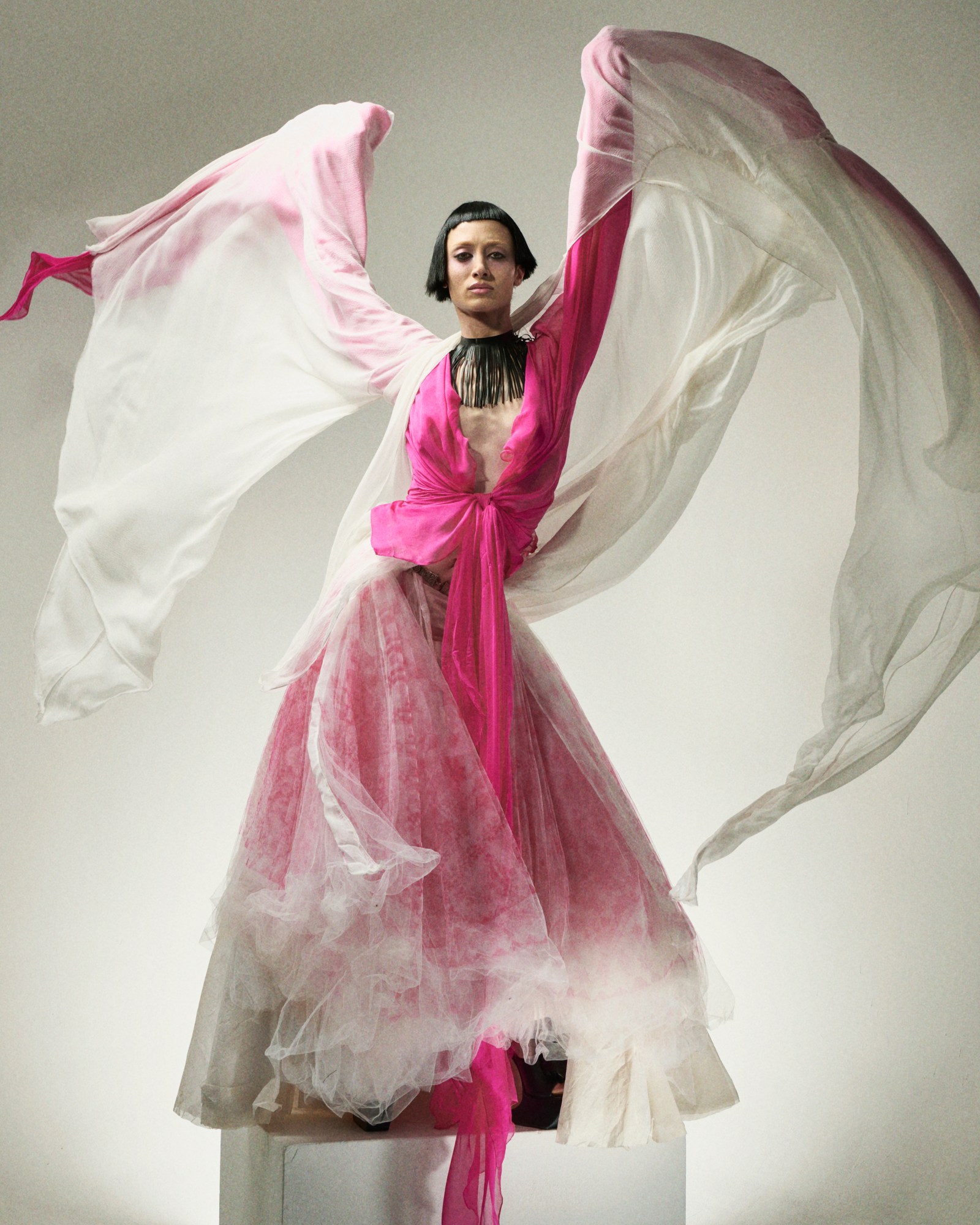
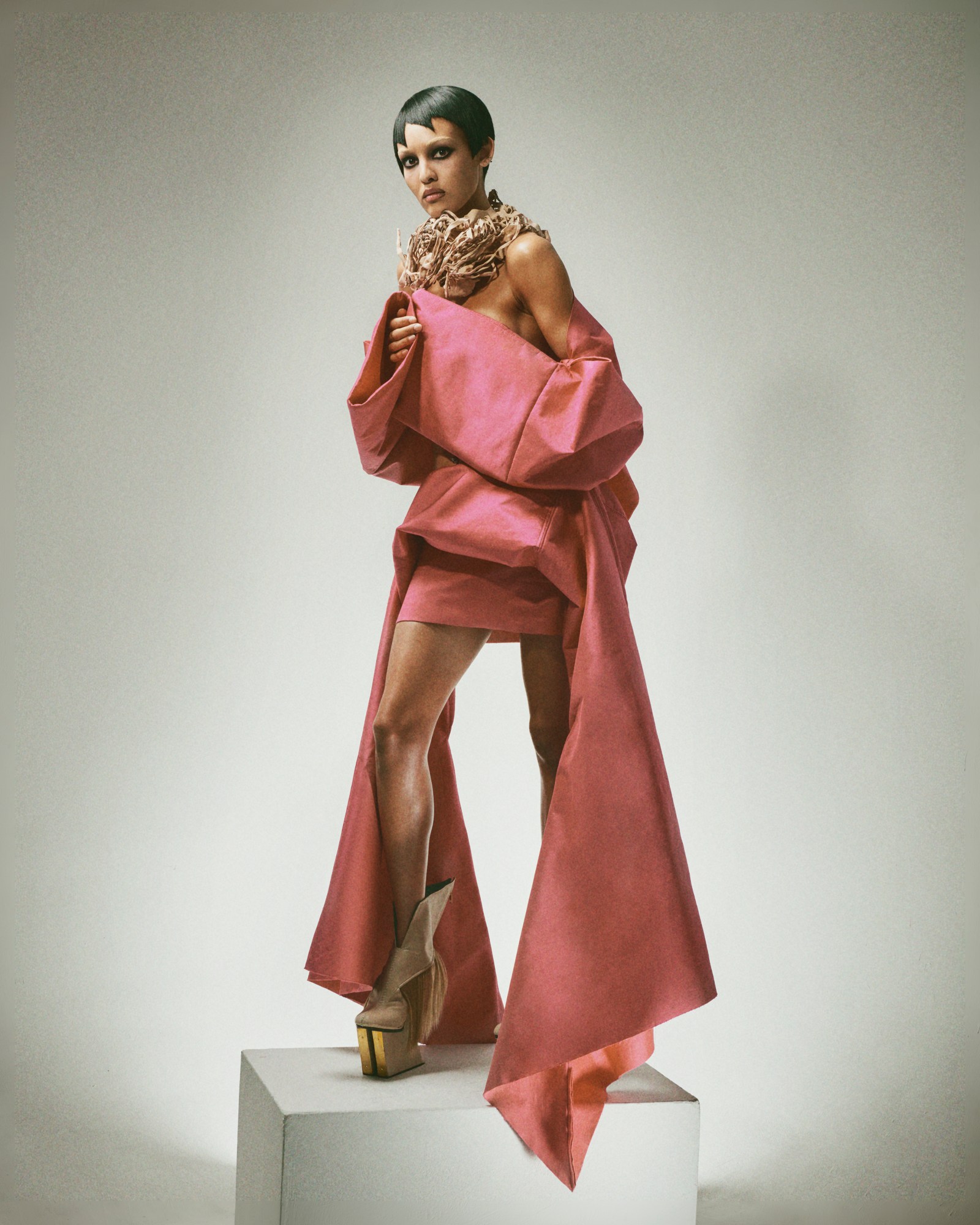
We speak over a shaky video call. He’s in Amman, temporarily unable to return home to Ramallah while borders remain unsafe. “I’m based between Palestine and London,” he explains, “but nothing about this movement is smooth. Traveling home, I had to delete my entire online existence just to cross [the border]. I can’t even carry embroidery. It’s seen as a sign of resistance.”
Laced in with Hassan’s beautiful draping and raw textile manipulation is cultural archaeology and political resistance. His practice is rooted in the techniques of his ancestors: tessreem (a traditional patchwork reinforcement around the cuffs and chest), Majdalawi weaving from Gaza, and cross-stitch embroidery developed with female artisans in low-income areas of the West Bank. But this is no nostalgia project. “I’m not here to romanticize my culture. I’m here to question it, to dissect it. Fashion for me is about healing, yes, but it’s also about disruption,” he says. “I want to confront everything I’ve grown up with—occupation, silence, expectations—and offer something else. Something beautiful, something terrifying, something real.”
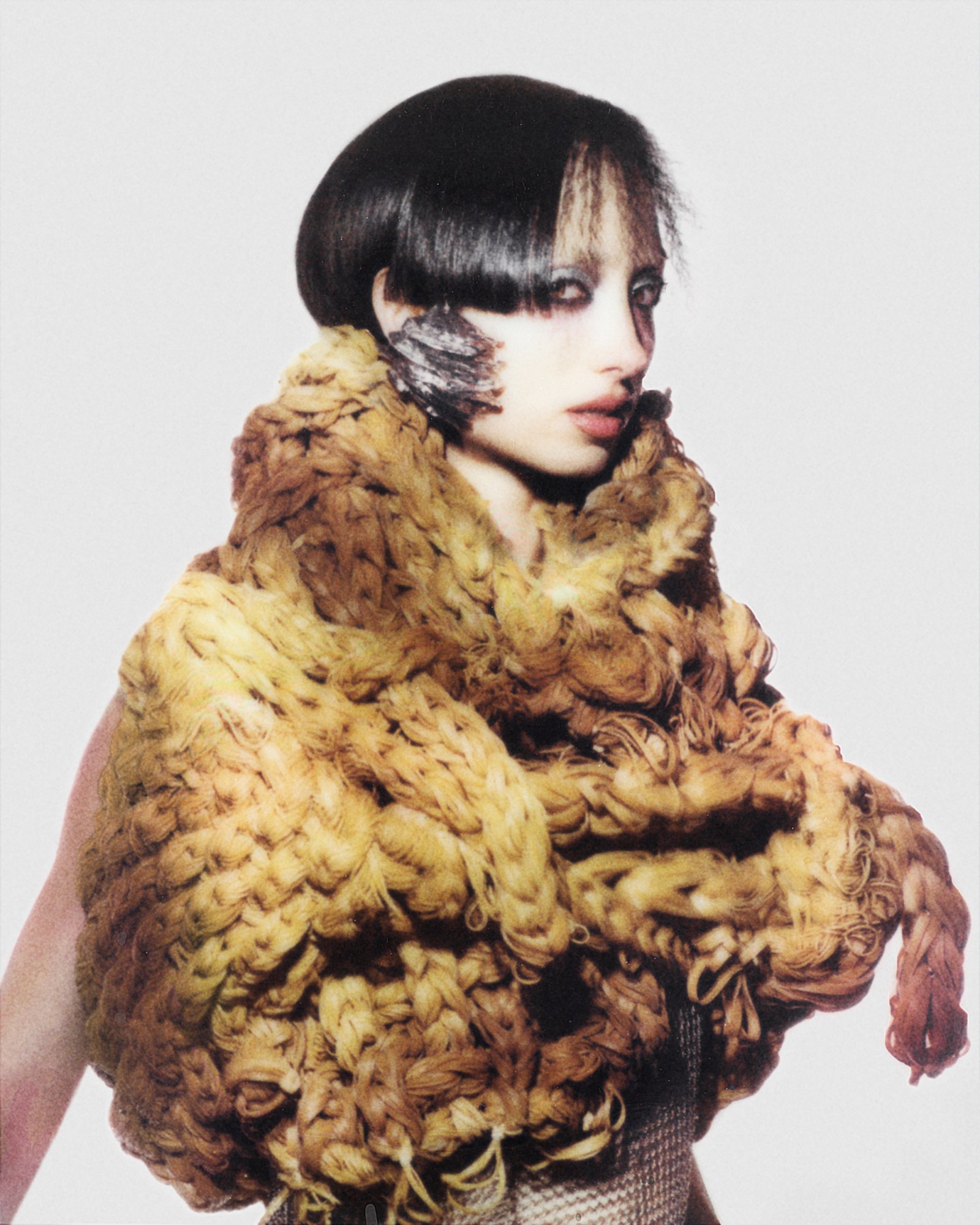
“My references were overwhelming,” Hassan tells me. “Even my tutors said, ‘You can’t do this all in six looks,’ but I had to try. This was my way to protest when everything else was silenced.” In his collection he aims to tackle intergenerational trauma, the erasure of tradition, the betrayal of institutions, and the euphoric, pulsing creativity of survival. He does so by weaving ancestral techniques with contemporary methods, collapsing past and present into garments that are both memorial and provocation.
In the face of institutional complicity—where fashion quietly aligns with power, profit, and political silence—Hassan pushed forward. “I was the only Palestinian, Arabic, Muslim student in my entire year,” he says. “People didn’t want to deal with my work. It was ‘too political,’ ‘too much.’ But what are we doing here if not to speak the truth? If not to reflect what’s happening in the world?”
After CSM’s graduate press show in June, Hassan’s work went viral online. His voice, his story, and his garments resonated. From laser-cut leather engraved with poetry, to embellished V-necklines recalling traditional spiritual protection, the garments speak a language of cultural defiance. “I wanted to show majesty,” he says. “My tutor told me, ‘Your work doesn’t feel like revenge. It feels like pride.’ That stayed with me.”
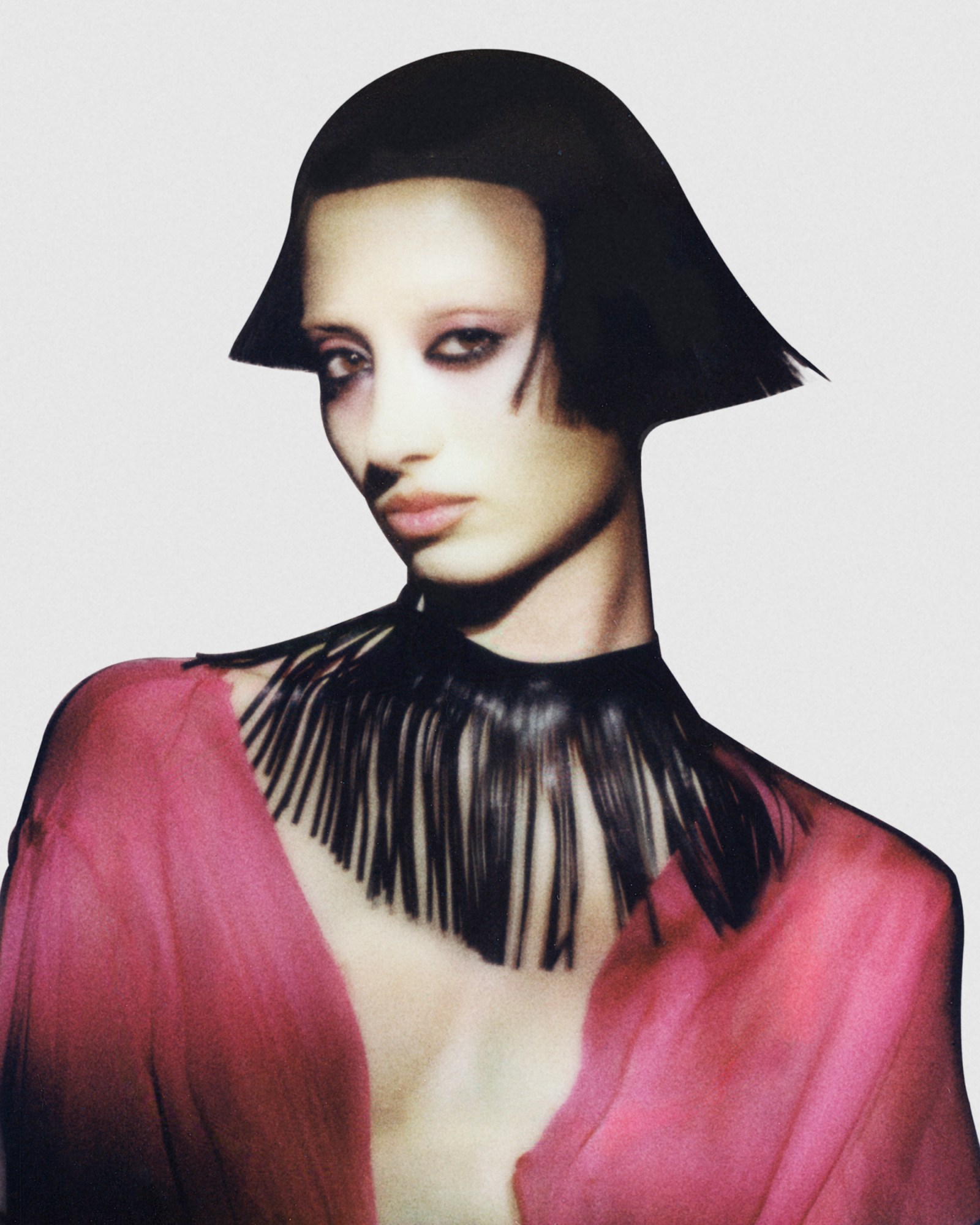
The collection title came to him just two days before the show. “It just clicked,” he says. “Immortality, resistance, resilience, and then magenta, this color from Majdal in Gaza, where the weaving comes from. The last family practicing that technique has been displaced. Some members were murdered. That weaving doesn’t exist anymore. So I recreated it, in my own way. This is what we do… We must keep creating, even when they try to erase us.”
Despite the immense emotional weight, the collection is not weighed down. There’s a profound lightness in its construction, a clarity in its vision. Hassan has worked with deadstock silk, faux leather, knitted wool, tulle, and paper silks—piecing together fragments, like memory, like resistance. The material itself speaks of loss, but also of ingenuity. “I used zero-waste techniques throughout,” he says. “Environmental and cultural sustainability go hand-in-hand. What’s the point of beautiful fashion if it disappears your people?”
In a time when many fashion graduates are choosing escapism, fantasy, or childlike nostalgia as their mode, Hassan has chosen radical truth. “I had to channel my grief into something,” he says. “We, as Palestinians, don’t get the luxury of turning away. But we also can’t only mourn. You don’t survive if you stay mourning. That’s why beauty matters. That’s why fashion matters.”
casting SHARON ROSE
model NAOMI ABIA
makeup artist BEA SWEET
hair stylist KOTA SUIZU @ LGA MANAGEMENT USING ORIBE
makeup assistant HANNAH ISOBEL BUSST
hair assistant FRIDA IBRAHIM DIKKO