
Our culture is flattening. From our style to our smarts, our consciousness to our creativity, we have grown accustomed to applauding replication and expecting iteration. Individualism wanes while globalization thrives, and the smash burger serves as a neat motif for our celebration of conformity: a familiar product endlessly remixed, sold back to us as the epitome of comfort. I’m not buying it.
Standing in the stainless-steel-clad, gray-everywhere Junk in Soho, I feel demoralized. I’ve walked into a real-life render. No ornaments, nothing distinct. The interiors have been stripped to a mono-material, designed to fade into the background so the smash burger can steal the show. This is a lab, one that produces gluttonous perfection. Yet, I can’t bring myself to order anything.
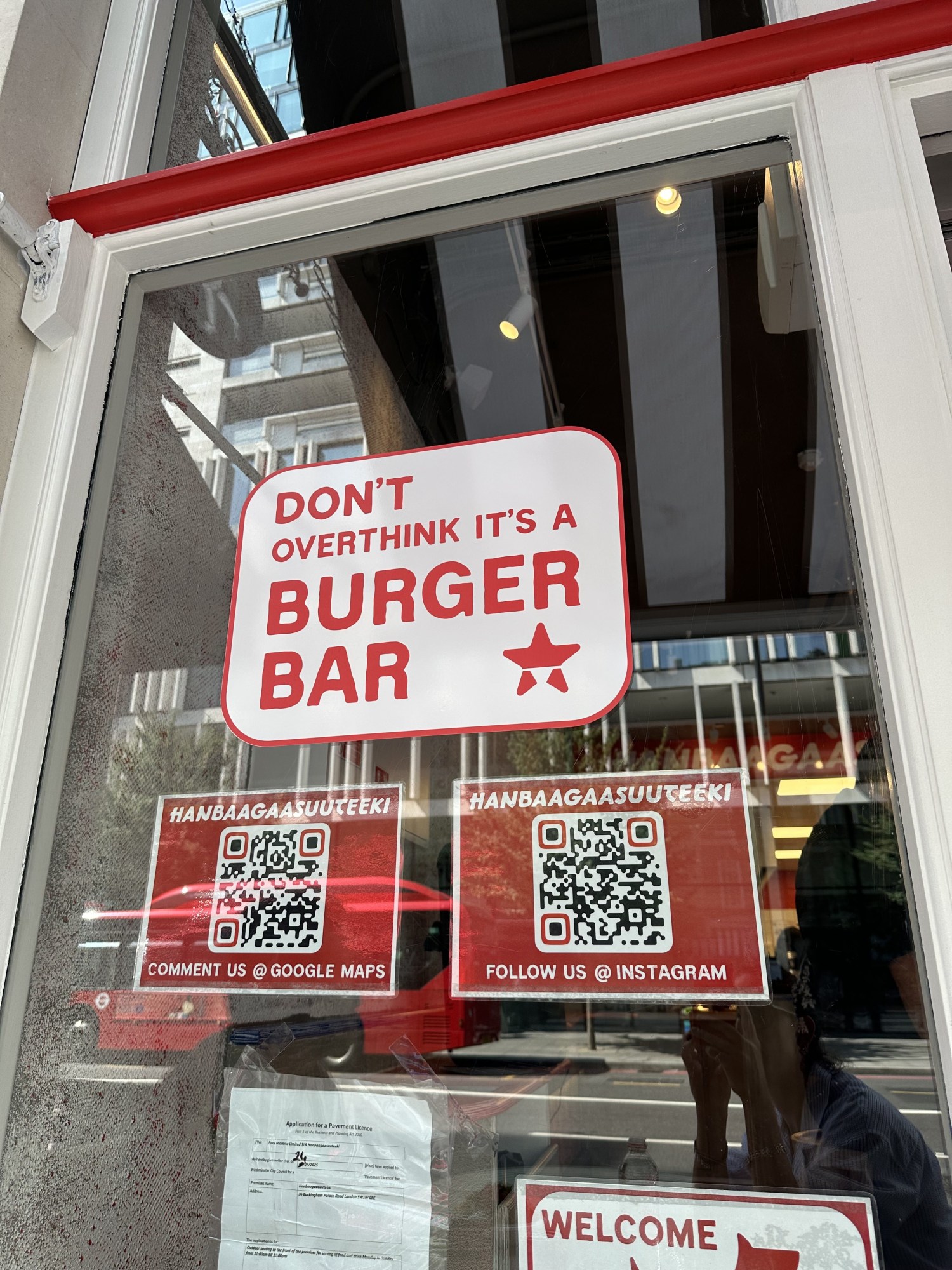
I don’t want the recommended triple patty brioche bun with extra jalapeño. I don’t want to sit in this stony environment, and I sure don’t want to conform to expectations. So I walk to Hanbaagaasuuteeki in Victoria instead. Unlike Junk—a French smash burger chain whose foray into Soho is the first step in its international rollout—Hanbaagaasuuteeki is a new spot with an Asian-inspired menu, opened by an owner with no Asian heritage. At least some messy creativity seems alive here.
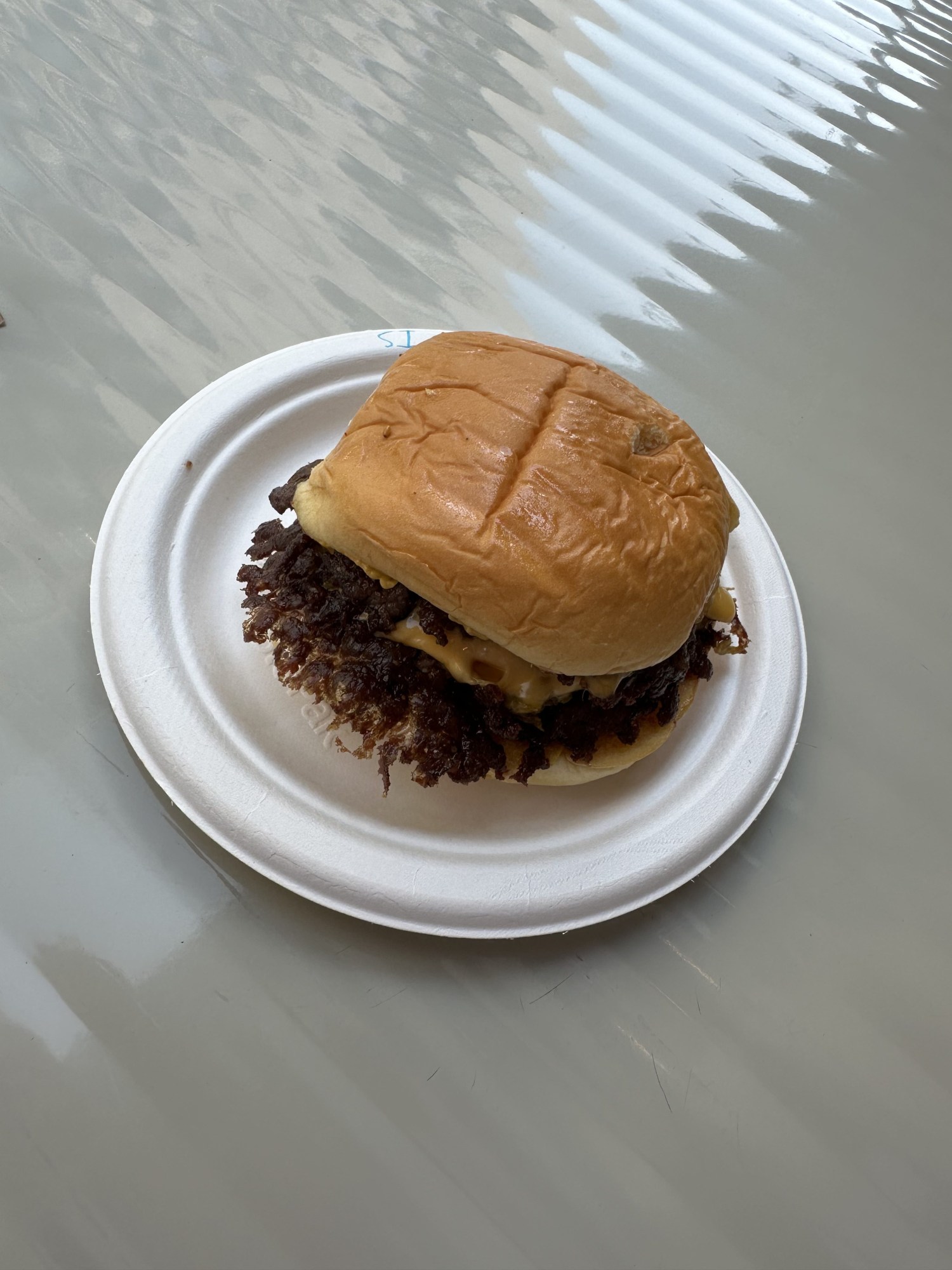
I order the Isan burger, which promises “Thai heat” via holy basil. I sit outside and serendipitously share a table with my old boss Mark Andrew, co-owner of Noble Rot, who loves a plain old cheeseburger. An unplanned lunch companion feels great, until my burger slides apart into total chaos and I have to ask for Mark’s napkins while trying to hold a smart conversation. I wasn’t blown away by it, and I wasn’t expecting to be. In Mark’s words: “A burger should never be more than an 8.5 out of 10, and you wouldn’t want it to be. And it shouldn’t be pretentious, only the best version of itself.”
Burgers are a low-stakes adventure that shouldn’t take anyone for a fool—and neither should any other food fad. Dirty martinis, matcha lattes, soft serve, pistachio-everything: all follow the same cycle. A classic gets remixed, hyped, copied, and stripped of context until it becomes just another badge of belonging. The smash burger is simply the latest to make the loop.
To create today is to reinvent. Where once there was a bias towards originality, we now tend towards things that won’t totally disappoint us, leaning into formulas with the highest likelihood of success and satisfaction. But as we continue to follow the social signals that tell us what to support, we draw ever closer to homogeneity. To pioneer is to be brave, and most of us, fatigued by our lack of control yet overwhelmed by the illusion of choice, opt for neatly packaged, community-vetted novelties to keep us entertained. In choosing the smash burger, we accept a compression of choice; we consent to a flattening of creativity.
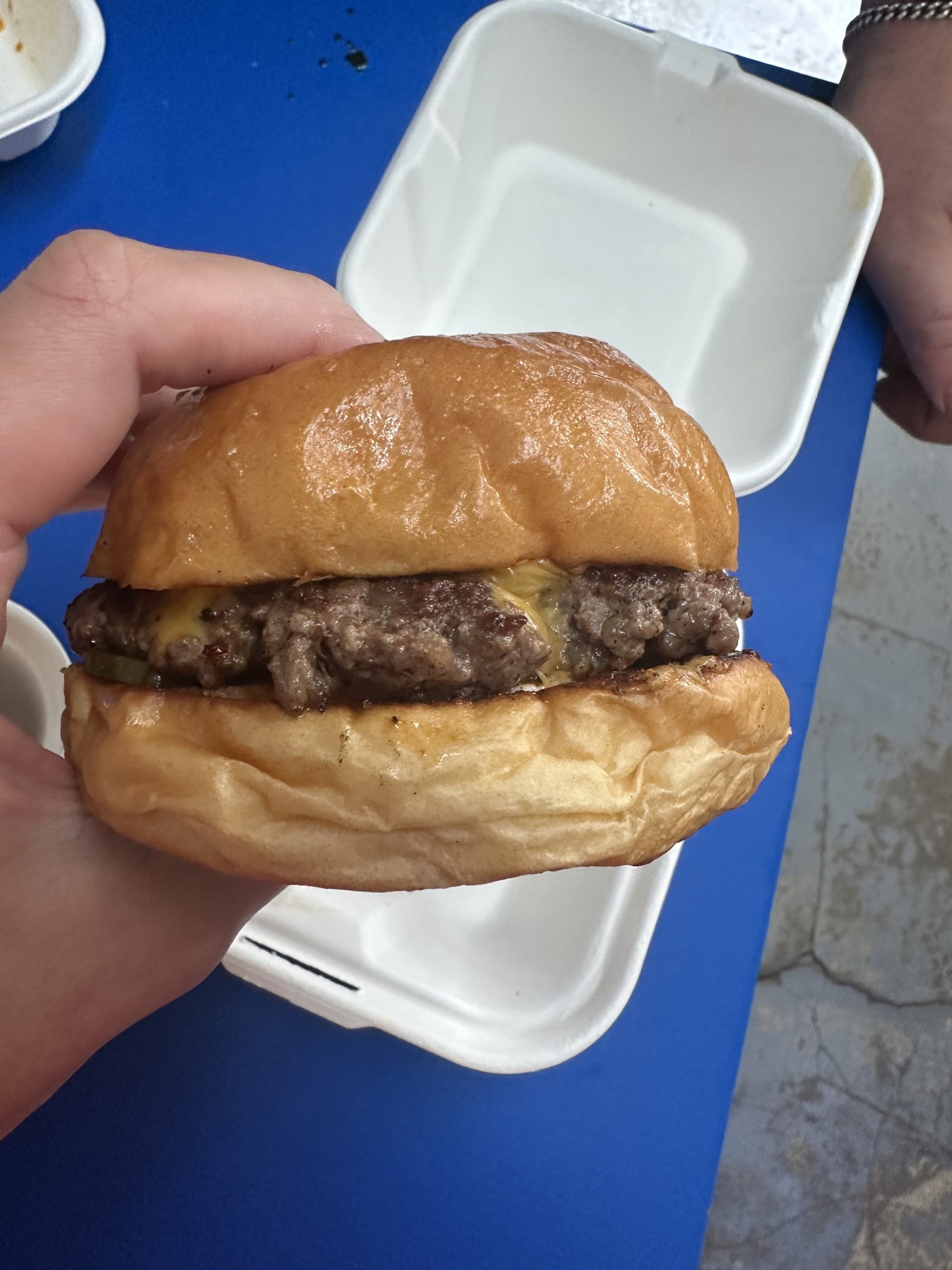
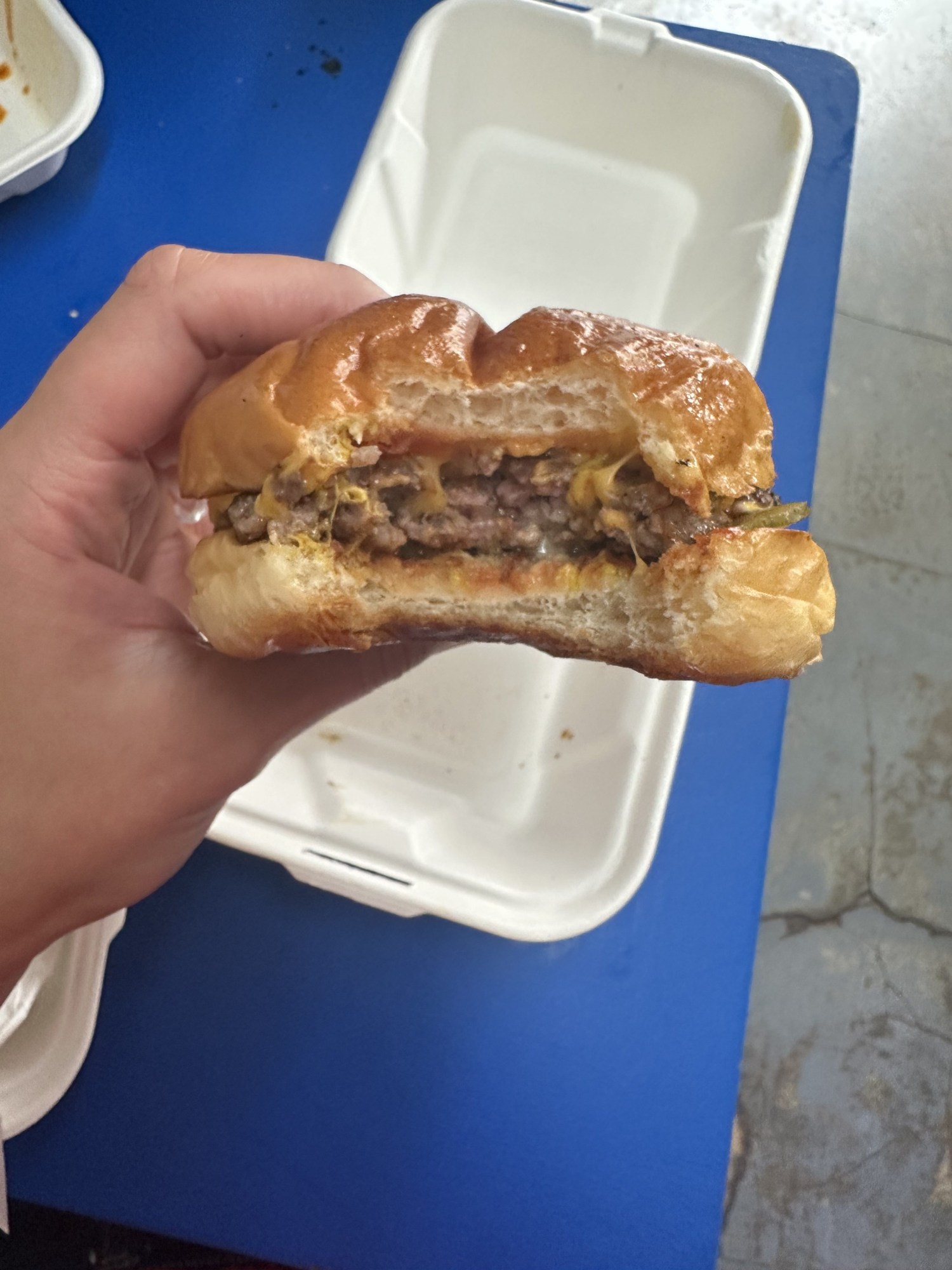
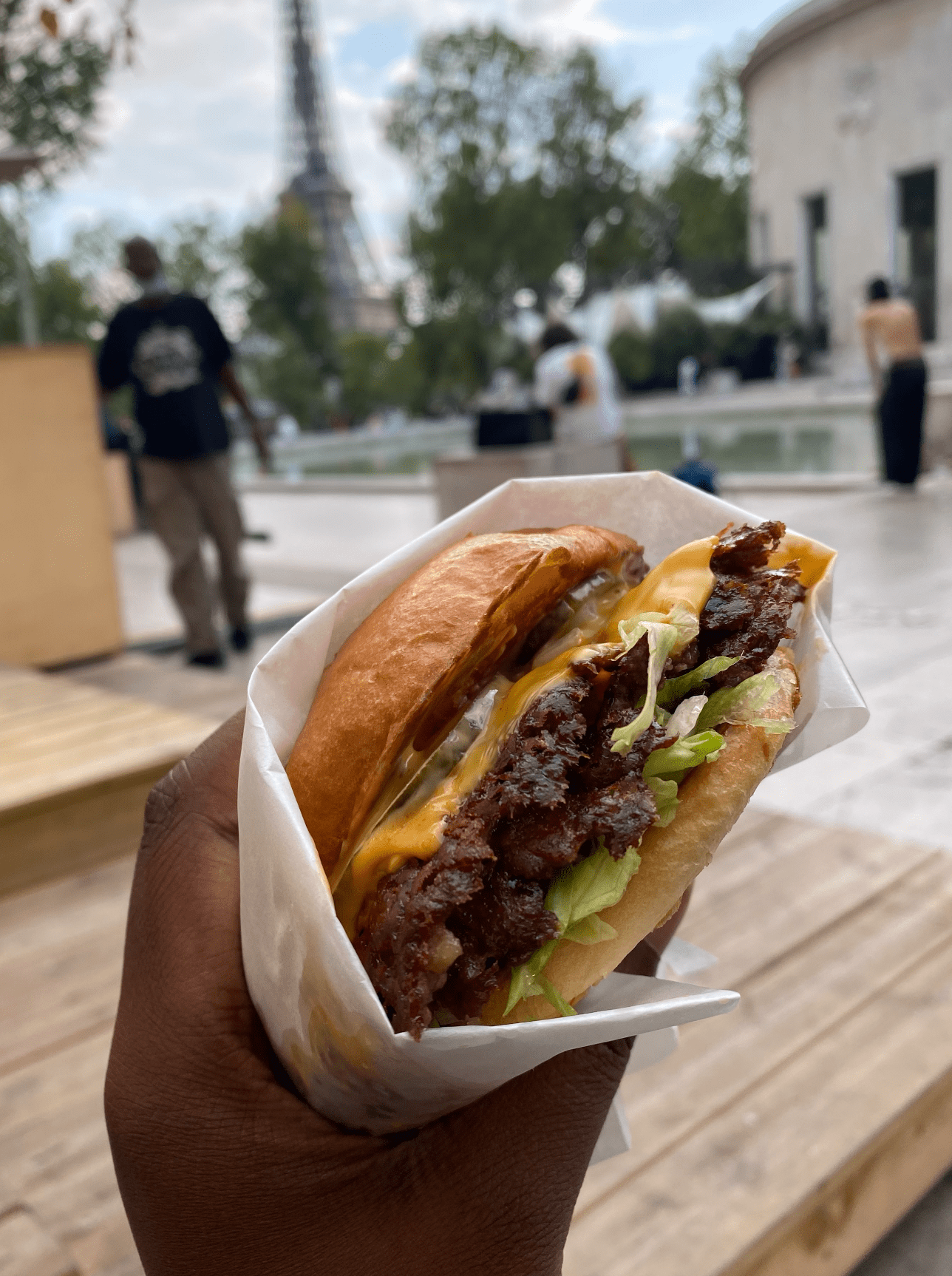
To bring balance, what was once deemed basic has had to invent new depths of meaning. Even if a product is straightforward, we now suggest that it’s the attitude with which it’s consumed—the ethos with which it’s produced—that matters most. To reinvent is to reinvigorate, and few things are more inclined to reinvention, to complete creative bastardization, than America’s most prolific gift to the world: the hamburger.
The burger has become the poster boy for convenience, a cultural artefact overanalyzed by food nerds, and a greasy thermometer for the world’s lust for an easier life. A fried puck of beef tucked inside a roll can spawn a million mutations, but in the contemporary landscape two schools of burger dominate, whose differences boil down to grilling technique.
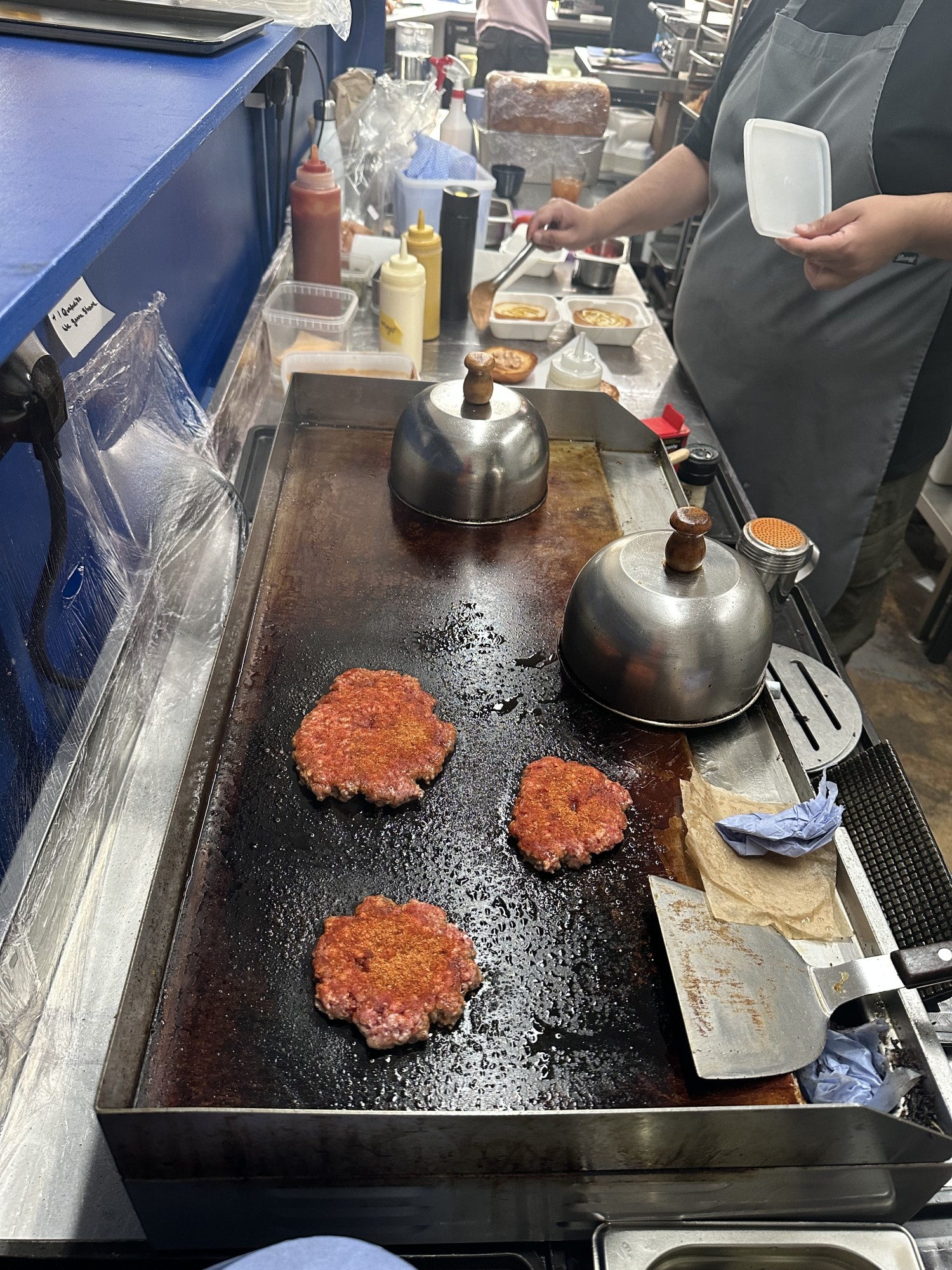
A traditional bistro burger requires the meat to be shaped into a patty before grilling, resulting in a juicier beef experience that typically calls for a sit down meal. The smash burger, on the other hand, hits the grill as a ball of beef before being tamped flat to char. To smash fans, this method yields a thinner patty with more flavor and texture, and one that can be eaten standing up. It’s a sceney snack.
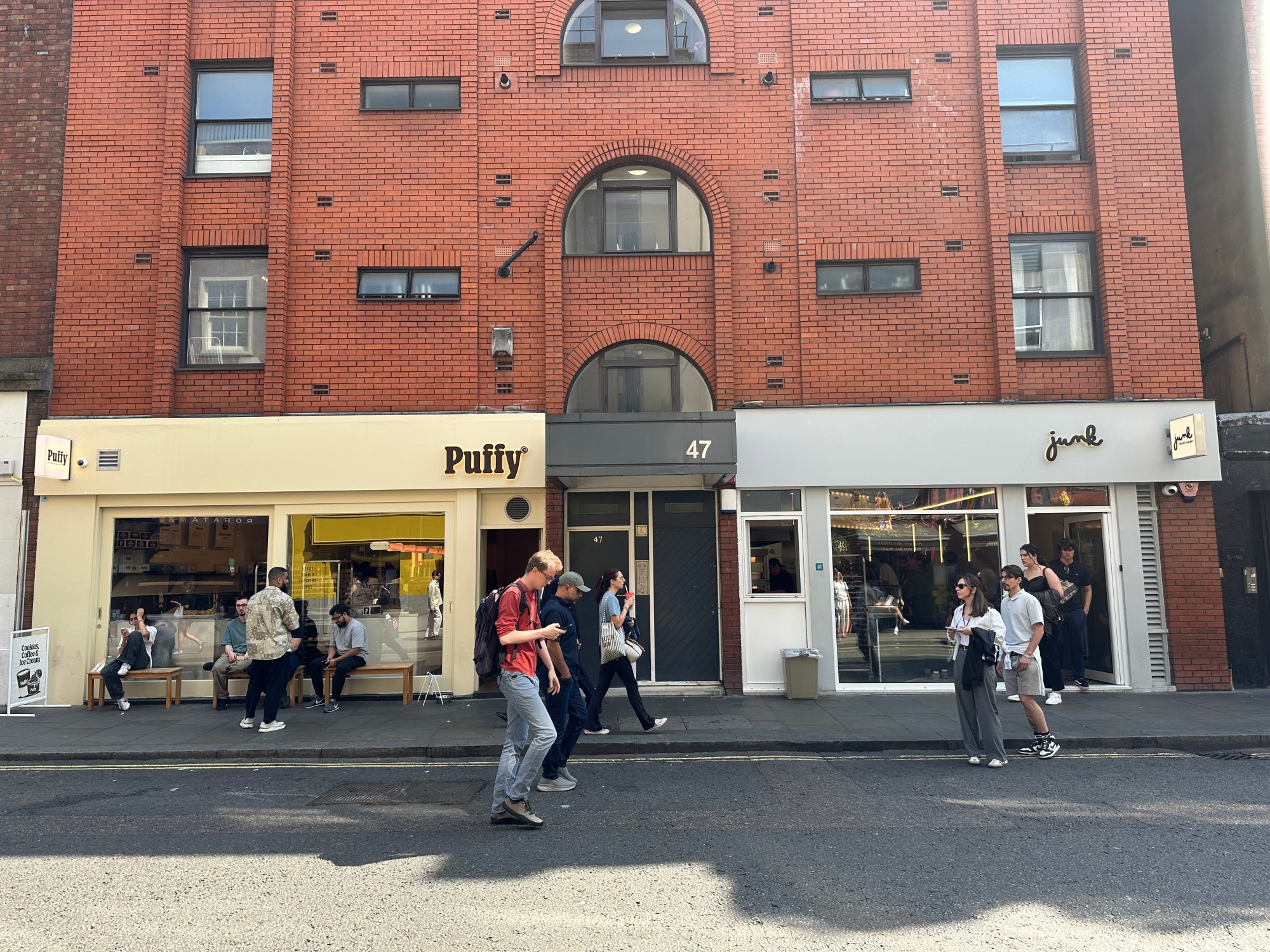
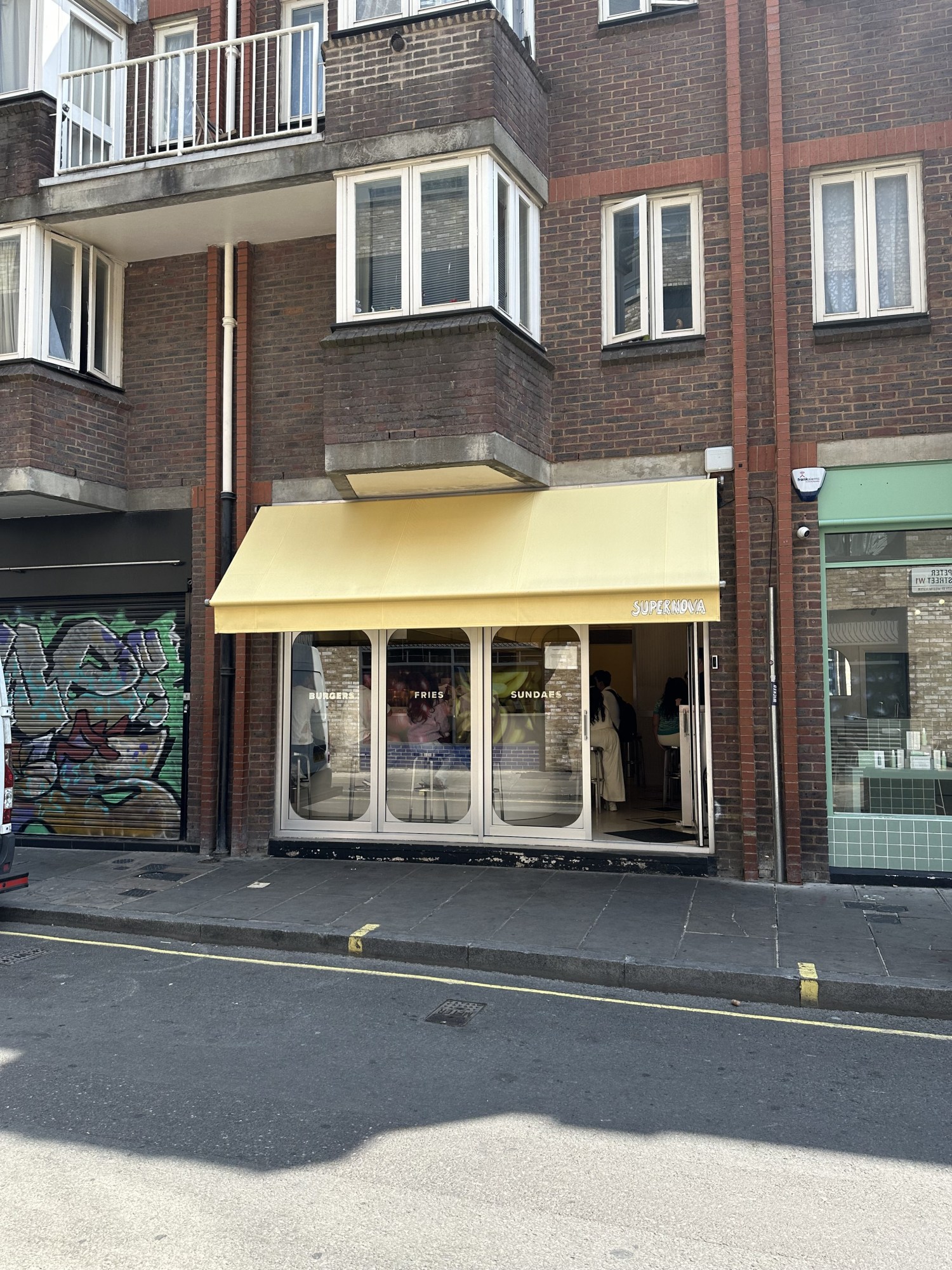
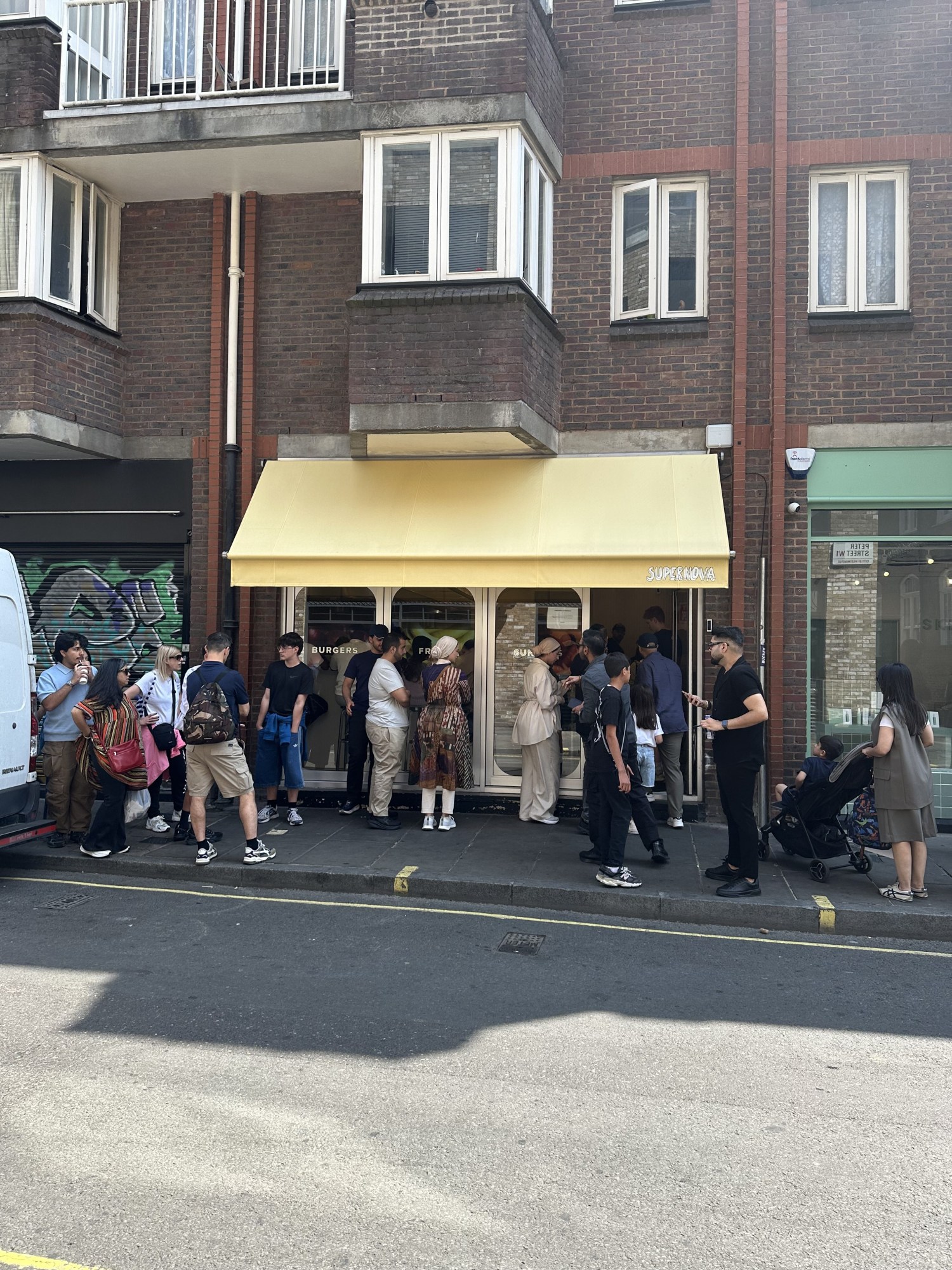
Smash burger momentum shows no signs of slowing. We’re talking about a world gone mad for Americana, a global willingness to aesthetically assimilate. London’s most popular smash burger, Supernova, has opened in Bahrain; there’s Brusco in Porto, BRASH in Cape Town, Brutal in Santiago, and Bun Run in Manila. This phenomenon may have exploded over the past five years, but the smash burger is not new.
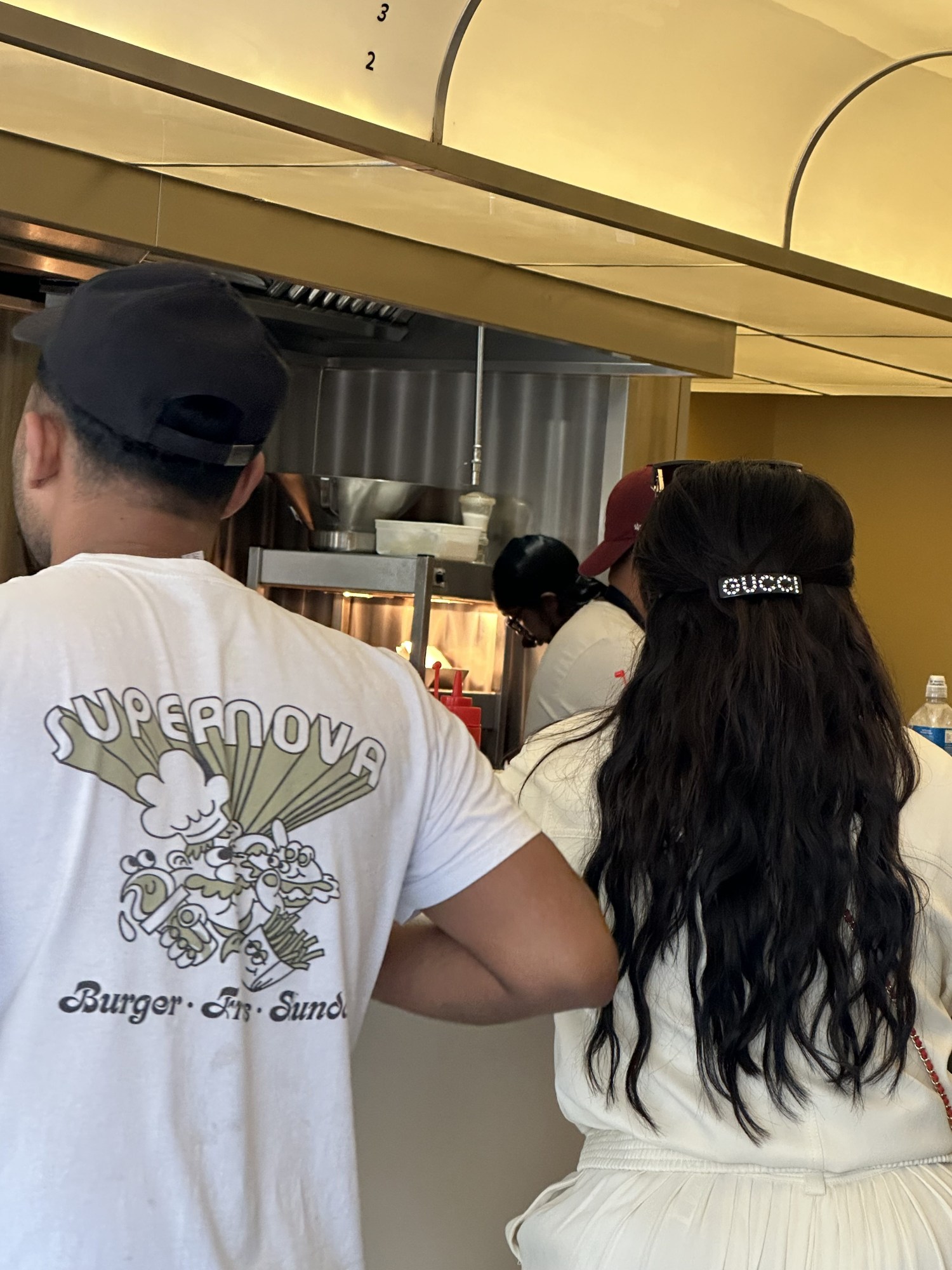
The technique was created in Kentucky in the 1960s using a can of beans to press the beef onto the grill. According to Chuck George, who grew up in the Midwest eating smash patties, “This was the go-to blue collar food that’s been around forever, but there’s zero acknowledgement of its longevity.” What draws people today is the smash’s modern positioning: minimalist, space-age interiors, anthropomorphic mascots, and a streamlined menu that alleviates the doom of too much choice.
Chuck’s eponymous burger brand ticks all these boxes and has helped propel the smash across Europe. But the blueprint for this burger wave was built in Paris with Dumbo in 2019. Dumbo stripped things bare, birthing an androgynous look. Supernova duped Dumbo in 2023, and still there was enough appetite for Dumbo to open in London in June this year, while Supernova launched a second site in July. Sleek interiors and lace-edged patties are now copy-paste commodities, replicated both for visual appeal and operational efficiency—and for us: customers strangely comforted by sameness.
We speak of recession indicators, but the smash burger’s popularity is a regression indicator. In 2015, a time of excess and abandon, burgers stood tall and loaded. In 2025, we seek out the best rendition of the plainest thing. A thinner patty is a symbol of simplicity. “The proposition of a skinny burger is nostalgic” says MONTAMONTA founder Montague Ashley-Craig, whose soap is found in London restaurants and whose husband owns Jupiter Burger. “It’s what McDonald’s felt like when we were young.” This is elementary comfort.
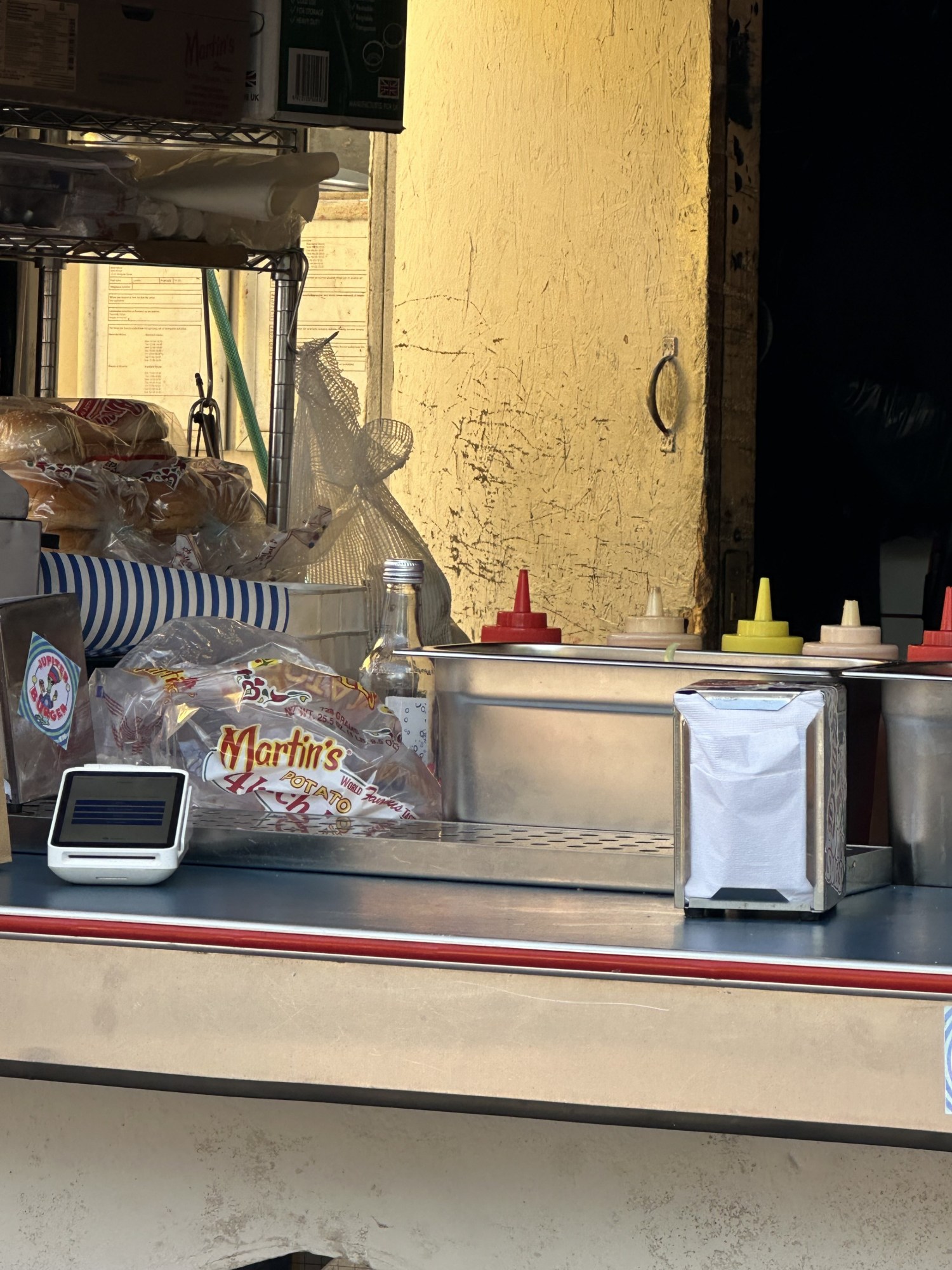
Talking to burger purveyors in London, it’s clear the scene is turbo-charged by the replication of American creations from In-N-Out to Shake Shack, Shopsin’s to Krekel’s. Jupiter Burger mimics In-N-Out’s animal-style customization; more places are replacing brioche buns with Martin’s famous potato rolls. Two of London’s favorite burgers—the smash at Bake Street and the Dexter at The Plimsoll—were built to reconstruct a McDonald’s cheeseburger and Big Mac respectively. The reproductions are far better than the originals, but they reveal just how willing we are to embrace imitation.
In its contemporary environment, the smash burger is both a familiar repeat and a fashionable craze. It’s a traditional format that becomes an It Girl, ripe for ripping off, once served from a trend-lined booth. Many herald burgers as the great democratizer, but I still don’t like them. And I’d rather stay picky than get flattened into conformity.