This story appears in i-D 375, The Beta Issue. Get your copy here.
photographed by LUISA OPALESKY
styled by MALAIKA CRAWFORD
written by NICOLAIA RIPS
Phoebe Gates just got a subscription to Celsius for her office. The energy drink is a favourite of startups across the country, Gen Z’s answer to the acid-reflux inducing zap of Red Bull. Gates beams her blue eyes at me. Celsius is great, “I just hit inbox zero. It was exhilarating.” Gates, though, has an energy that can’t simply be found in a can (believe me, I wish). She’s ebullient, upbeat—always on, always moving, always actioning an idea.
The twenty-two-year old entrepreneur, and youngest daughter of Microsoft founder Bill Gates, is channelling that energy into the start-up, Phia, an AI e-commerce app looking to revolutionise vintage resale. She and her business partner Sophia Kianni also put out the first episode of their podcast The Burnouts. It’s a BFF chat show about their lives and the complexities of being a woman in business, produced by The Unwell network—the digital media empire founded by OG podcast provocateur, Call Her Daddy host Alex Cooper.
Buzz about Phoebe Gates began months prior to Phia’s launch. The first time I heard about her was in the same sentence as legendary feminist Gloria Steinem, who hosted a private dinner at her flat to talk about sustainability in fashion. “[Steinem] gets together the most fascinating people, often people she really disagrees with. She’s been doing these in feminist culture since the ’60s, where everyone has to go around and talk,” Gates tells me. “We reached out to her team, and asked if we could get together a group of women to do one on sustainable fashion, and what is sustainable versus not.” Gates plans on doing a drop with Steinem on Phia—a curation of the iconic looks she wore to protests and rallies (her style signatures: a uniform of scarves, turtlenecks, and yellow-tinted glasses). The proceeds will go to Gloria’s Foundation, supporting feminist causes, and Steinem will appear on The Burnouts podcast.
”The kitchen’s a fucking mess, right?”
Phoebe Gates
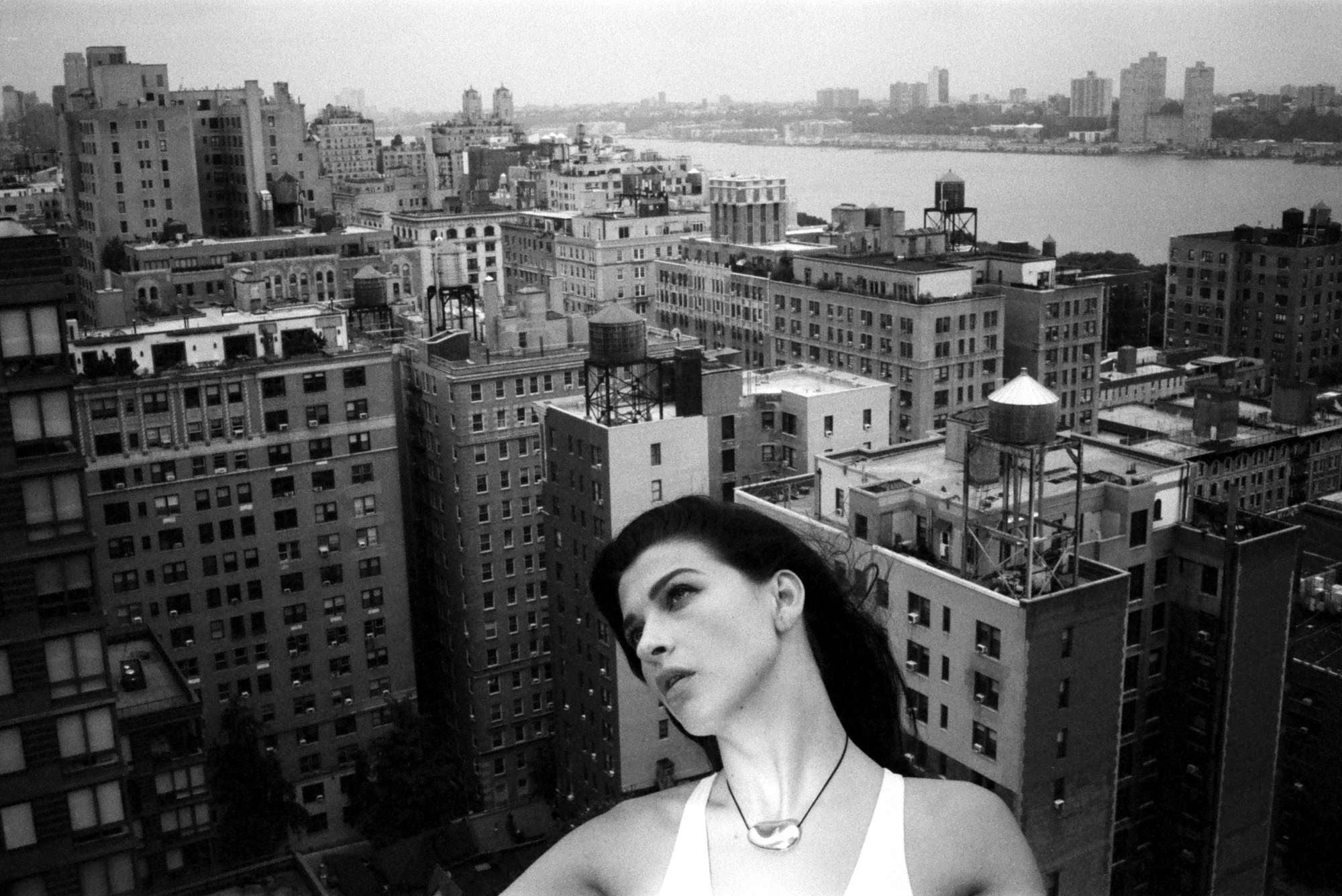
Today, Phoebe and I meet at the Phia office in New York. Right off Union Square, the sunny office occupies part of the top floor—prime real estate in a building dominated by fintech bros. Inside there is a booth for private phone calls, a wrap-around terrace, a corkboard with pushpin photos of mesh Alaïa flats and Bella Hadid editorials, a handful of twenty-something interns from Stanford and a wall calendar with important dates penciled in: Phia’s launch, Gates’ philanthropic obligations, and her undergraduate graduation, which she happens to be flying out for that weekend. The fact that Gates is graduating a year early and yet to officially receive her diploma, but is already buzzing through the world––tells you exactly who she is.
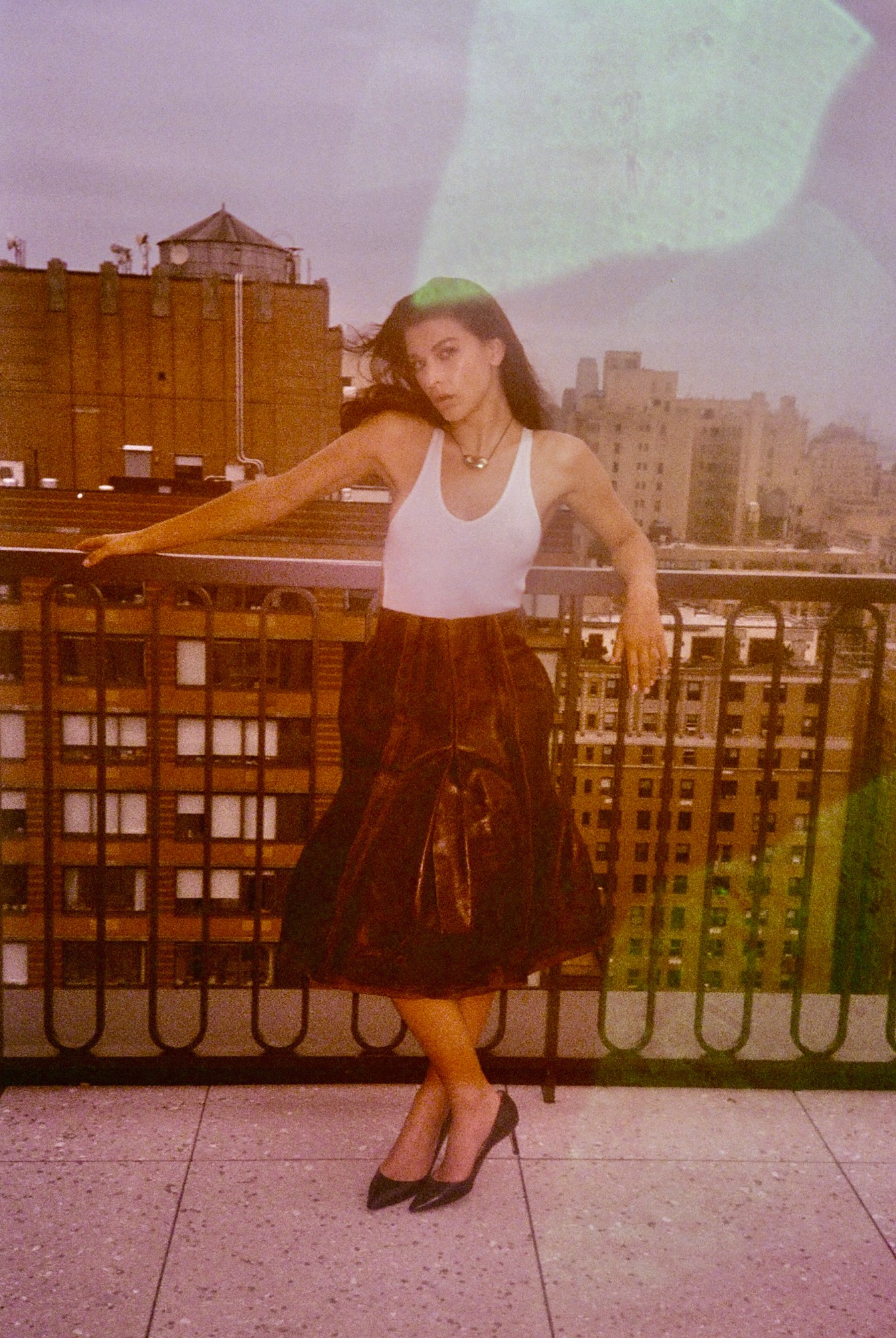
She shows up to our interview in a halter dress, pleated to the floor, and teeny tiny Prada kitten heels. Gates’ vigorous lyricism is riveting. Every other word is punched up—“Can You Believe This Happened?!”—before she delivers an exacting analysis of what happened, what it means for the greater good, what everyone was wearing when it happened, and how what happened pertains to the history of all else that’s happened. In the hour I spent squished on a park bench with her in Union Square, I was treated to the full Phoebe Gates experience. She’s extremely stylish, focused, a little nerdy—and you want to be her best friend. That’s what The Burnouts banks on.
Stanford is where Gates met Kianni in 2021. On The Burnouts, the girls explain their best friend origin story, which began in their freshman year dorm room. Kianni would put on self-tanner in the middle of the night, and Gates would wake up to her naked glisteningly orange roommate. The girls, both outgoing, beautiful, and ambitious, became fast friends and then collaborators.
Motivated by the opportunity to get into one of the legendary Lean Launchpad classes at Stanford, the duo tossed around proposals. An “Oura Ring for your pussy”—a tampon hybrid that uses menstrual blood instead of having to get a full panel drawn—didn’t make it past the brainstorm stage. (“Somebody’s gotta do it, but it wasn’t going to be us,” Gates says). The pair didn’t get into the class, but they did come up with a winning proposal for themselves: Phia, a virtual price comparison app that aggregates searches from resale platforms around the world. They raised the necessary funds to kick-off (early investors included Kris Jenner and Spanx founder Sara Blakely) and were off to the races.
In just two months, Phia attracted over 200,000 users. The first thing to greet those early adopters was the app’s slogan in glossy grey letters: Start Shopping Like A Genius. For Gates that’s the problem with online shopping—e-commerce isn’t smart enough. Specifically, technology hasn’t caught up with how millions of people worldwide really want to shop. It’s too vague. “You’re going on to Net-a-Porter, and we’re having the exact same experience.” She looks at my outfit, a minimalist’s nightmare: Victorian lace top, beaded pink Tory Burch bag, beat up Repettos. “I can already tell that our fashion taste is different. We should have different experiences on the site,” she analyses, “The way we discover fashion has completely changed, but not the way we’re still shopping. It’s completely fragmented.”
In the same way a TikTok FYP is tailored to each user, Phia is engineered to anticipate what you want and show you the lowest price. Currently the app’s hero is its AI price comparison tool, a feature Gates hopes people will use as a virtual personal shopping assistant. “With one click we show you the resale value of an item, or if there’s a cheaper alternative.”
Phia—whose name is a portmanteau of Phoebe and Sophia—is Gates and Kianni’s child. Accordingly, it requires plenty of tending, and a firm hand. They conduct weekly focus groups where “women come into the office and we just ask them to rip our apps to shreds.” They plan to develop the app using the data aggregated to give users personal edits and important information on their purchases, like whether something is returnable. Ultimately, she smiles, “I’m building a fashion app with my roommate from Stanford. What a fucking great job that I get to have!” But it wasn’t a job she always saw herself doing.
Gates grew up in Seattle, the youngest of three. Her older sister is a resident at Mount Sinai Hospital in New York, and her brother works for a United States congressional committee. In high school, she studied briefly at a boarding school in South Africa. “It broke my understanding of where I stood in the world. That was really, really important for me.”
Gates always had an interest in fashion, but it took a while for her to come into herself. Her friends joke (a story she’s fond of telling) that there used to be ‘Temu Phoebe’: bleach blonde, fast fashion, bad style. After a summer working at the Rwanda outpost of the global health organisation Partners in Health, she interned at British Vogue. The dichotomy of the two experiences, on the heels of each other, made her confront the wastefulness of fashion. She describes the first and only time former editor-in-chief Edward Enninful spoke to her. “‘People in this office work really hard. Are you gonna work?’ I literally have not stopped working since he said that. I’m such a fan,” she laughs.
Philanthropy is also a huge part of Gates’ life—personally and professionally. In 2008, her father, the thirteenth richest person in the world, stepped down from Microsoft to focus on the Bill and Melinda Gates Foundation. When thinking about her own philanthropy Gates always asks herself the following question: “How can we allocate resources towards the people who are doing the work that actually matters?” For Phoebe, who studied Human Biology, that means focusing on reproductive rights. Phia is her immediate focus, but like her parents, she manages her aspirations in tandem. “There’s nothing more catalyzing than giving someone access to birth control,” she says. “That [a] woman can now have a career for 10 years and make decisions about her life.”
In autumn 2024, Gates partnered with entrepreneur (and i-D Chairwoman) Karlie Kloss to executive produce Everybody’s Fight: An In Bloom Series, a documentary project spotlighting the effects of a nationwide abortion ban. As of August 2024, 17 US states have outlawed nearly all abortions. “How can we get other donors involved?” She asks rhetorically—using her platforms to bring attention to groups that are on the ground. “Okay, this group in Texas is doing really cool stuff. This other group is doing work on Black maternal mortality. I’m not the person doing the work, [but] I’m here and I have a big social media following, because I am my dad’s daughter. Great, let’s blast that stuff out there.” She explains, “We have never seen a society industrialise without access to birth control. If you see women entering the workforce, and you see the graph of societies industrialising, it’s the same. The fact that there are tens of millions of women without access to birth control in the US is crazy–and we’re taking away the right to abortion. That’s a medical procedure.” She underlines the words with her hand.
Gates, a young woman, is directly concerned with things that factor into the experience of young modern womanhood (be it shopping or reproductive rights). She sees a problem and applies the thinking and skills she grew up around. Every issue is a matter of pragmatism, problem-solving, scaleability, and driving reach. Every issue presents an opportunity.
The Burnouts aims to be an antidote to the current crop of mostly male-hosted business podcasts. It’s conversational and frank, addressing topics like investing pitches, contract negotiations, and making your first million, as casually as you might chat over a dirty martini. Gates and Kianni crack open topics that have long been considered taboo and “unfeminine,” combining the naughtiness that influencers-turned-entrepreneurs, like Alex Cooper or Alix Earle, have built their careers on with the mission-driven foresight of second wave feminism. Each episode is designed to appeal to a click-happy generation, titled “She Built Bumble to $13B…Then Walked Away. Here’s Why,” “The Marketing Hacks That Got Us 200K Downloads and Kris Jenner’s Investment,” and “Hollywood Actress to Investor: The $10K Bet That Made Sophia Bush Millions.”
It’s content for women in the middle of building their careers, who are feeling, well, a little overwhelmed. “It’s something we all deal with in our 20s, right? I’m in an incredibly privileged position. My college was paid for, I’m a nepo baby, and I still feel this way. That’s how The Burnouts started, because we wanted to ask these questions to different women,” she explains, “What if we could just open source everything we’re learning from them?” The resulting podcast bucks traditional expectations of how a woman working in tech or business should act. It’s messy, and fun.
On top of the expectations that come with being a young woman in the world, there are the pressures that come with being the child of a titan in the tech world. When I ask if this gets to her, she nods, “Yeah, but I think a lot of people feel that way. In your 20s, you’re kind of expected to do everything. I think social media really amplifies that for people too. And people are craving community. We have a loneliness issue.” That is how Phoebe Gates thinks, split between the macro and the micro with an expansive view of the internet and culture. To Gates the insecurities that have long forced powerful women to be impervious to maintain credibility—can I wear what I want and still be taken seriously, can I say what I want with freedom—are, instead, openings for real growth. And her community—the people using Phia in droves and her half a million Instagram followers—clearly craves the connection. That is both what makes Gates both a part of a rising cultural tide, and inseparable from the rest of her generation.
The podcast’s name is kind of a lark. Gates and Sophia aren’t burnouts, even if they might feel burnt sometimes. But the title also references Gates’ personal philosophy. For her, life is like a stove top. “You have these different burners: the family burner, the work burner, the romantic burner, the friends burner.” Are all of the burners on at all times? “No,” she explains. “There are different phases of your life when you turn things up. When I have kids, my family burner will be on. When I get married, my romantic life burner will be more on. Right now, my burner that’s on hot is work—The Burnouts, philanthropy, and Phia. The kitchen’s a fucking mess, right?,” she laughs. “But it’s a fun kitchen and it’s a fun mess to have. My other burners are lower, and that’s a sacrifice I make, but I really enjoy the stuff I’m doing, and I’m lucky that my family burner is mostly supported. They’re all rooting for me.” Is the kitchen a mess? Yes. Is the analogy a mess? Yes. But is Phoebe? Absolutely not. No matter how many burners she’s got on, Gates is always cooking.
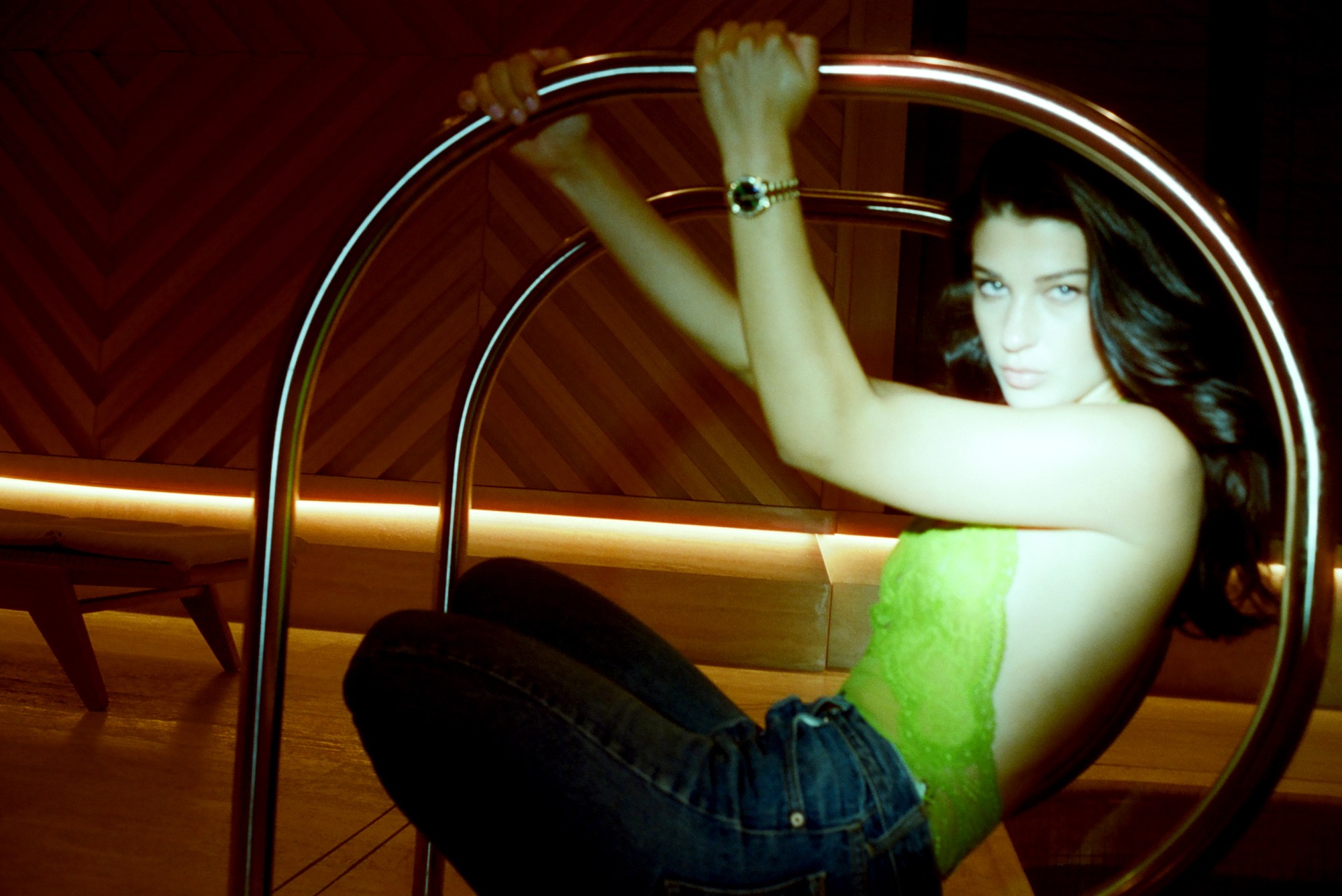
lead image BODYSUIT GUCCI, JEANS STYLIST’S OWN, WATCH OMEGA
hair KABUTO OKUZAWA USING ORIBE AT WALTER SCHUPFER MANAGEMENT
makeup GRACE AHN USING MAC COSMETICS AT DAY ONE STUDIO
nails MAMIE ONISHI USING APRÉS NAILS AT SEE MANAGEMENT
styling assistant NICK TROTTA
production THE MORRISON GROUP
production coordinator CLAUDIA MALPELI
location 96+BROADWAY