photography by ABI TURNER
The clock on my cracked iPhone 12 hits 4 p.m., and resounding chatter is overridden by the ringing of a doorbell. Dreamlike chimes ping-ping off the towering walls, a shush indicator to the anticipating crowd, and, with the emergence of a bedroom-pop beat, Central Saint Martins’ 2025 Reset Show, The House, opens its doors.
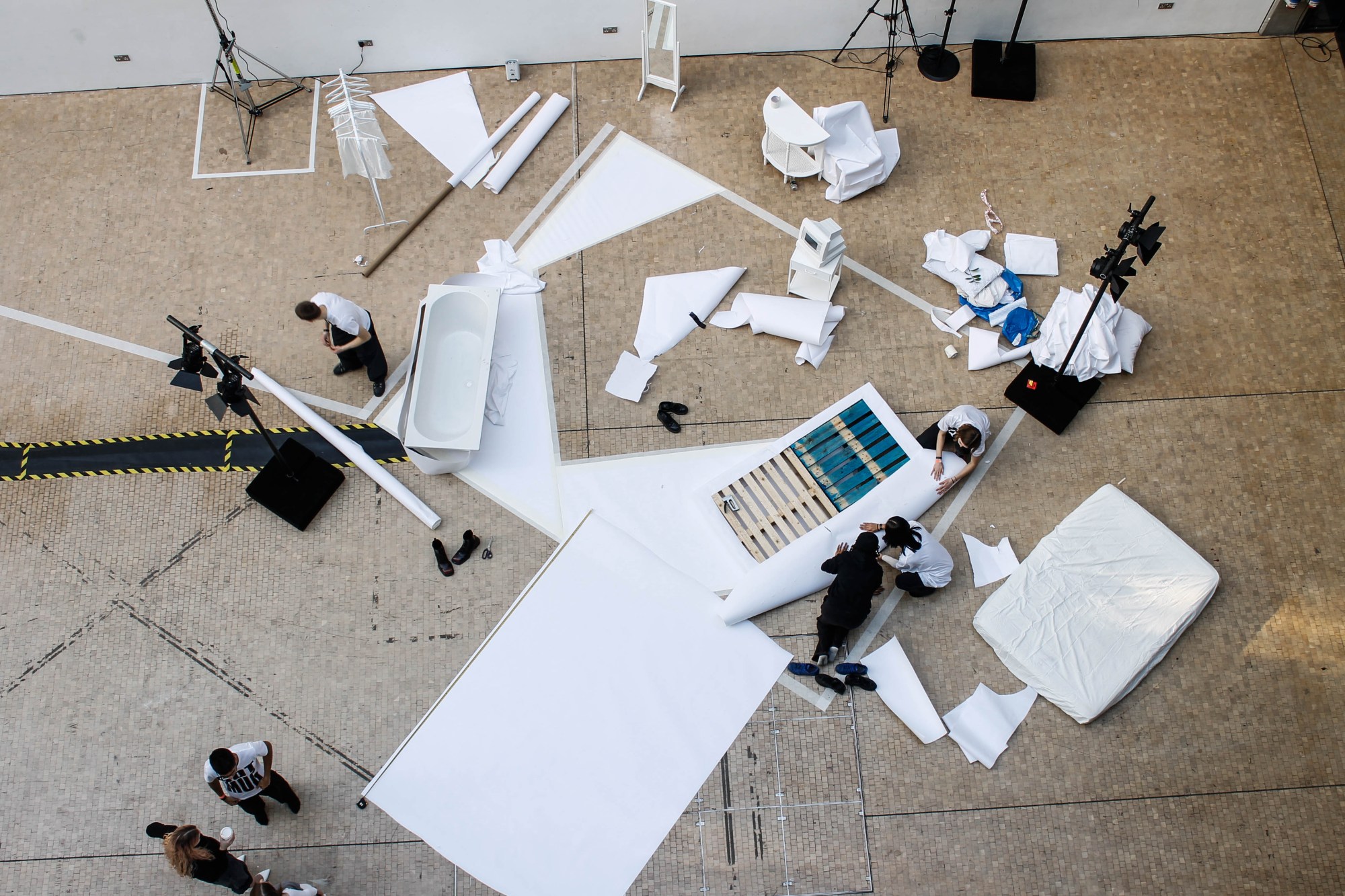
From 7 a.m., my fellow first-year Fashion Communication: Image and Promotion students and I arrived, caffeinated and cold, at the school’s back entrance to start setting up the show. But really, if you want to get technical, construction on The House began on our very first day of school back in late September. Overdressed, underdressed, anxious, and unfamiliar, my coursemates and I were tasked with The Reset Show (formerly The White Show), the decades-old fashion show where first-year fashion design students create looks crafted out of only (you guessed it) white fabric, and the first-year FCP class produces the show.

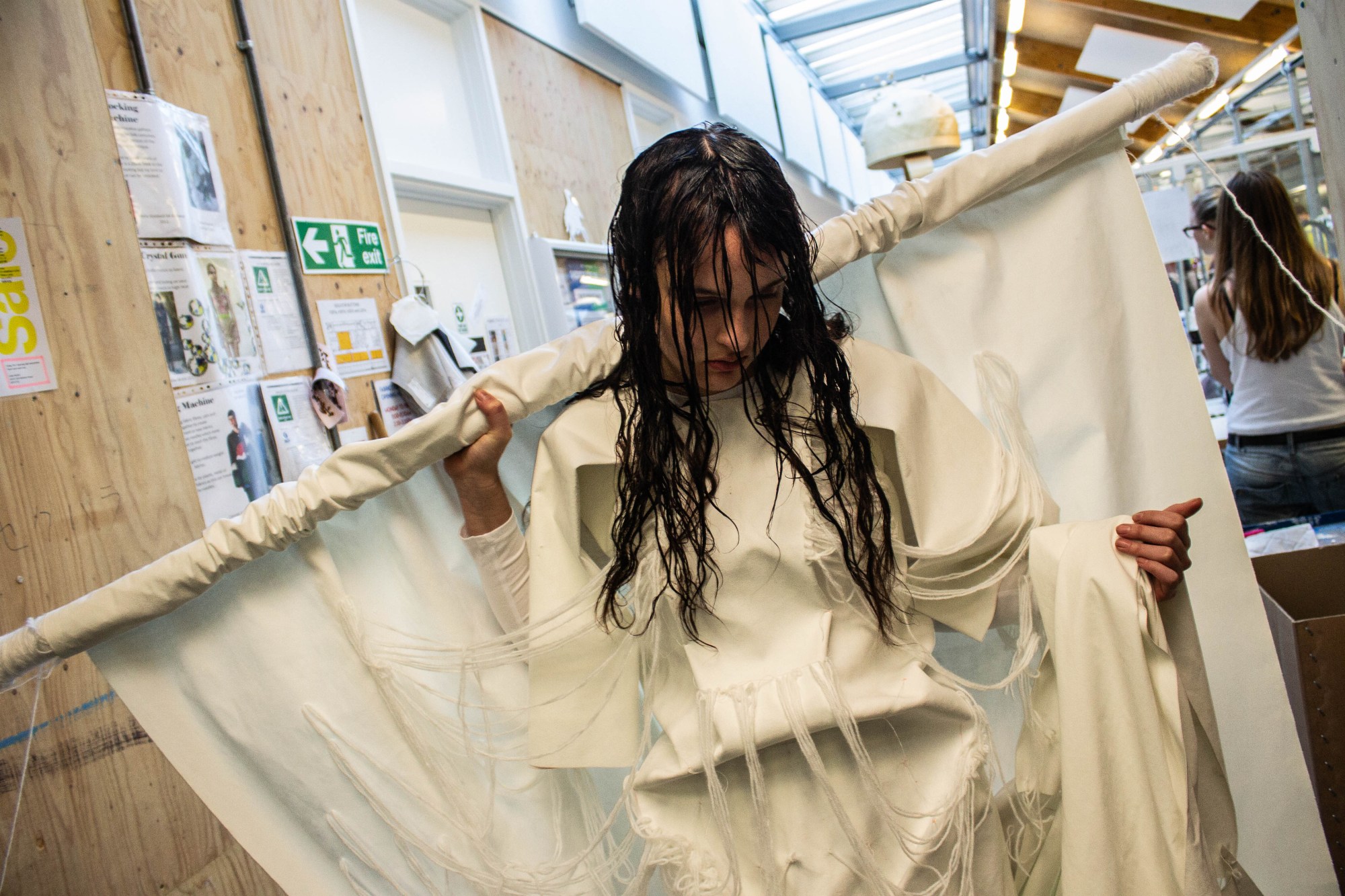
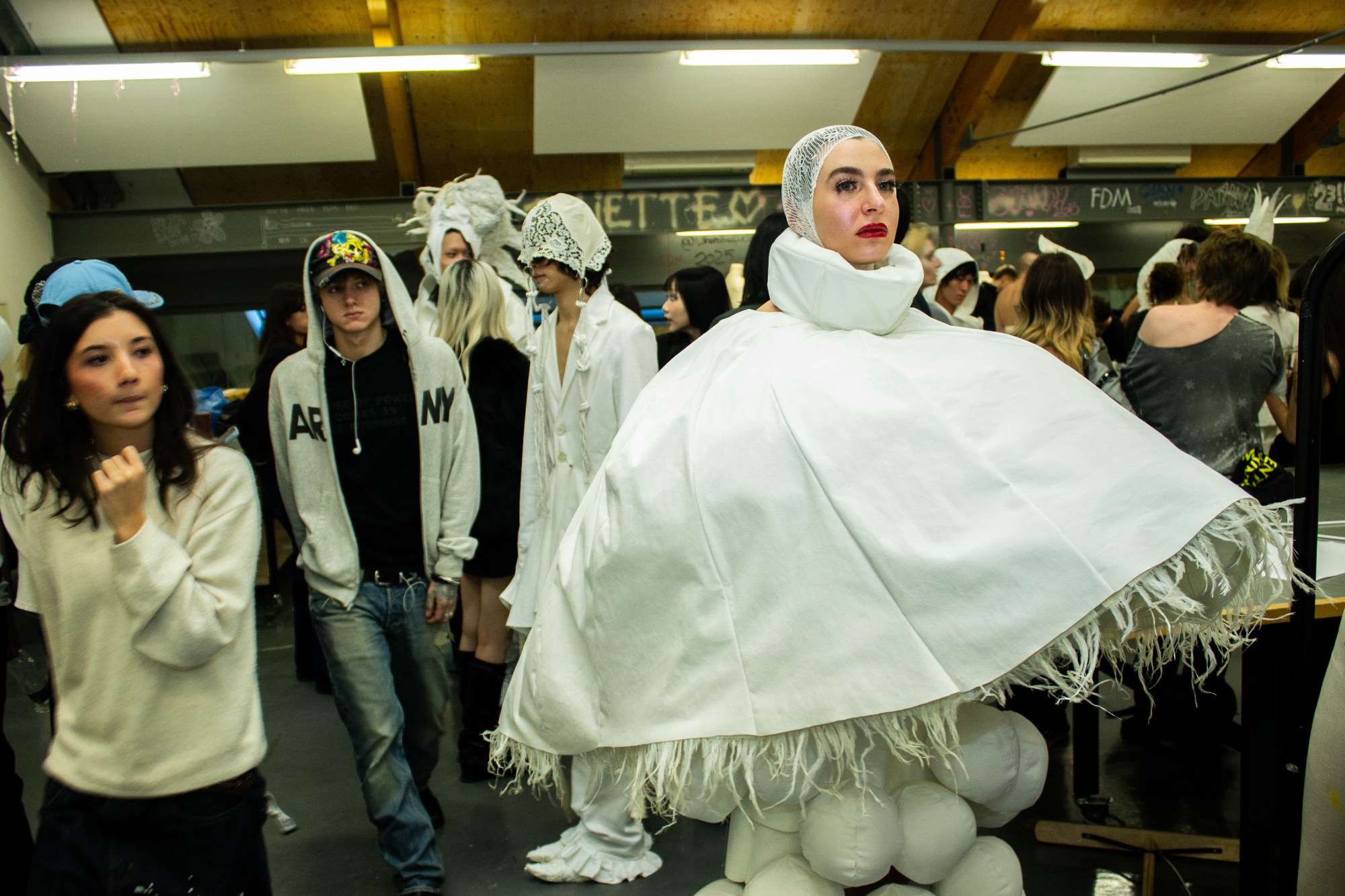
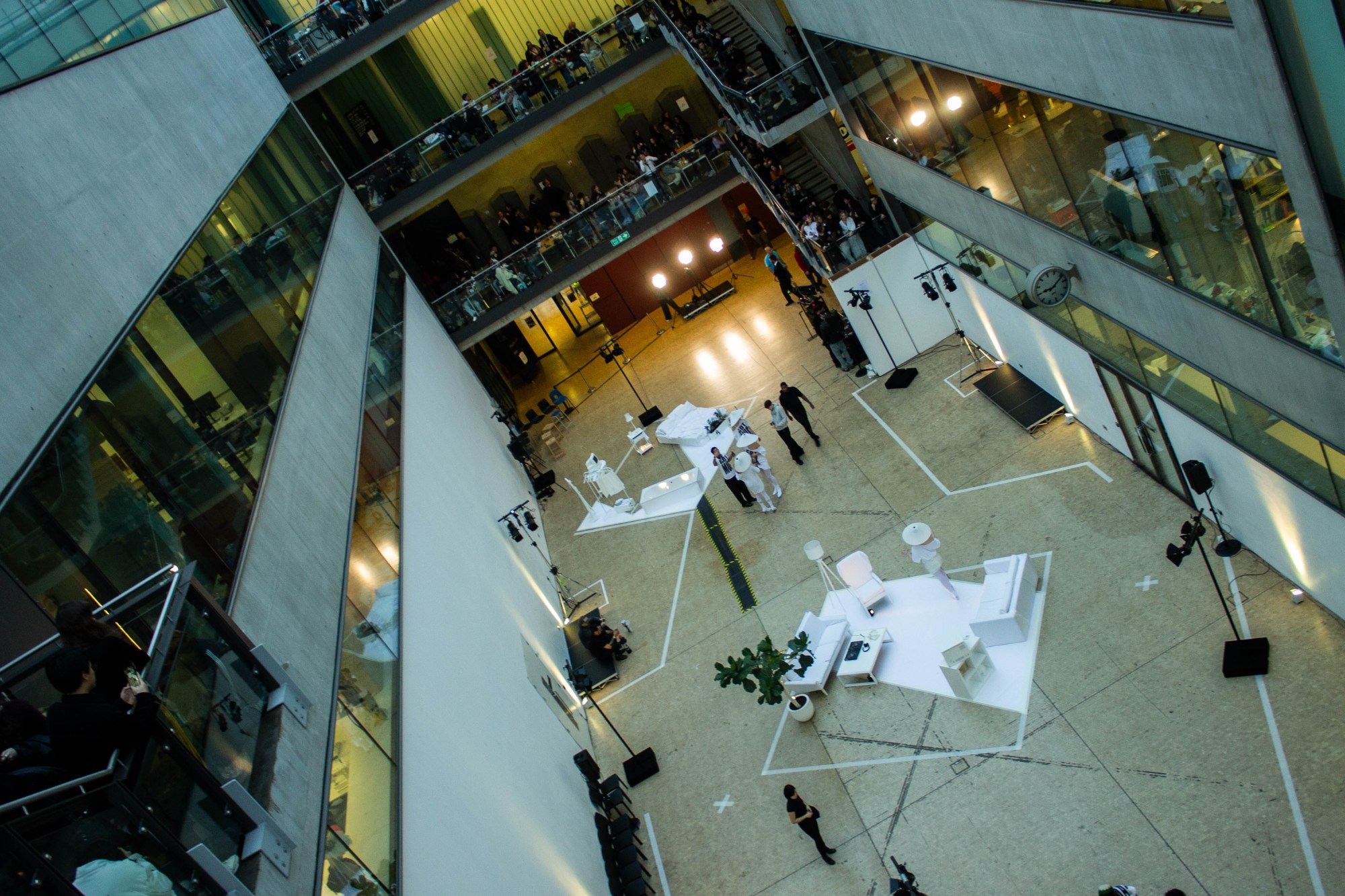
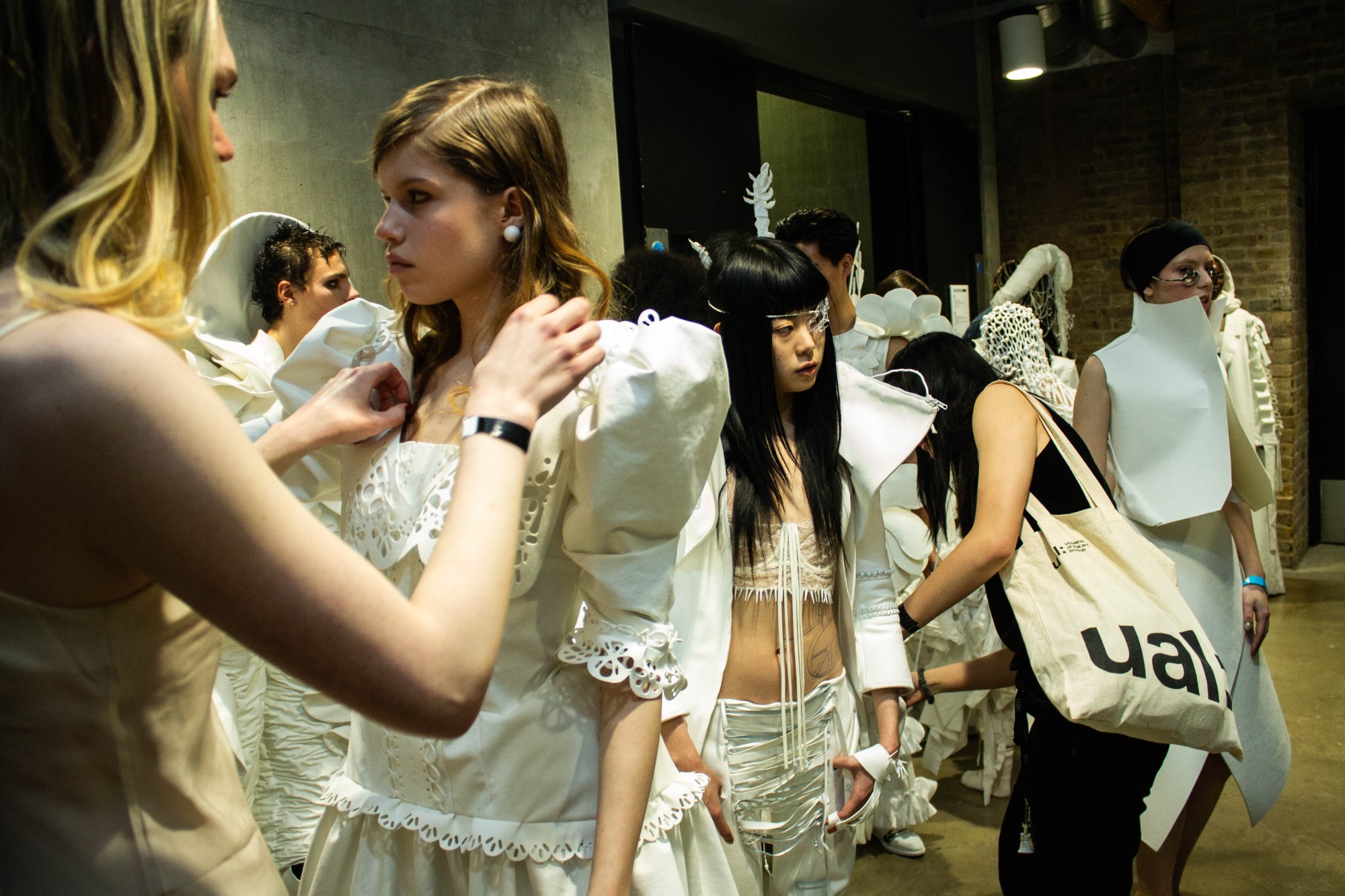
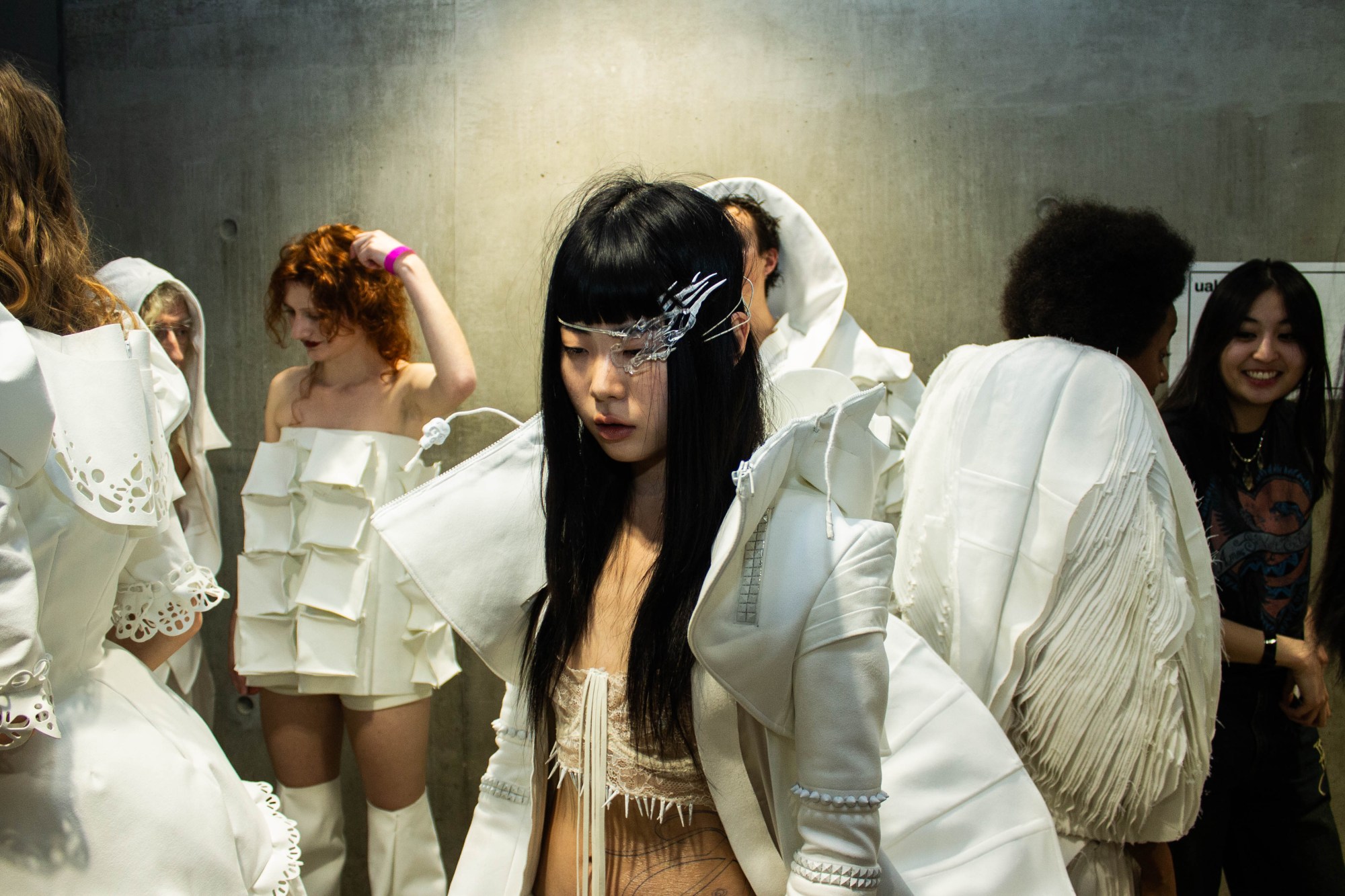
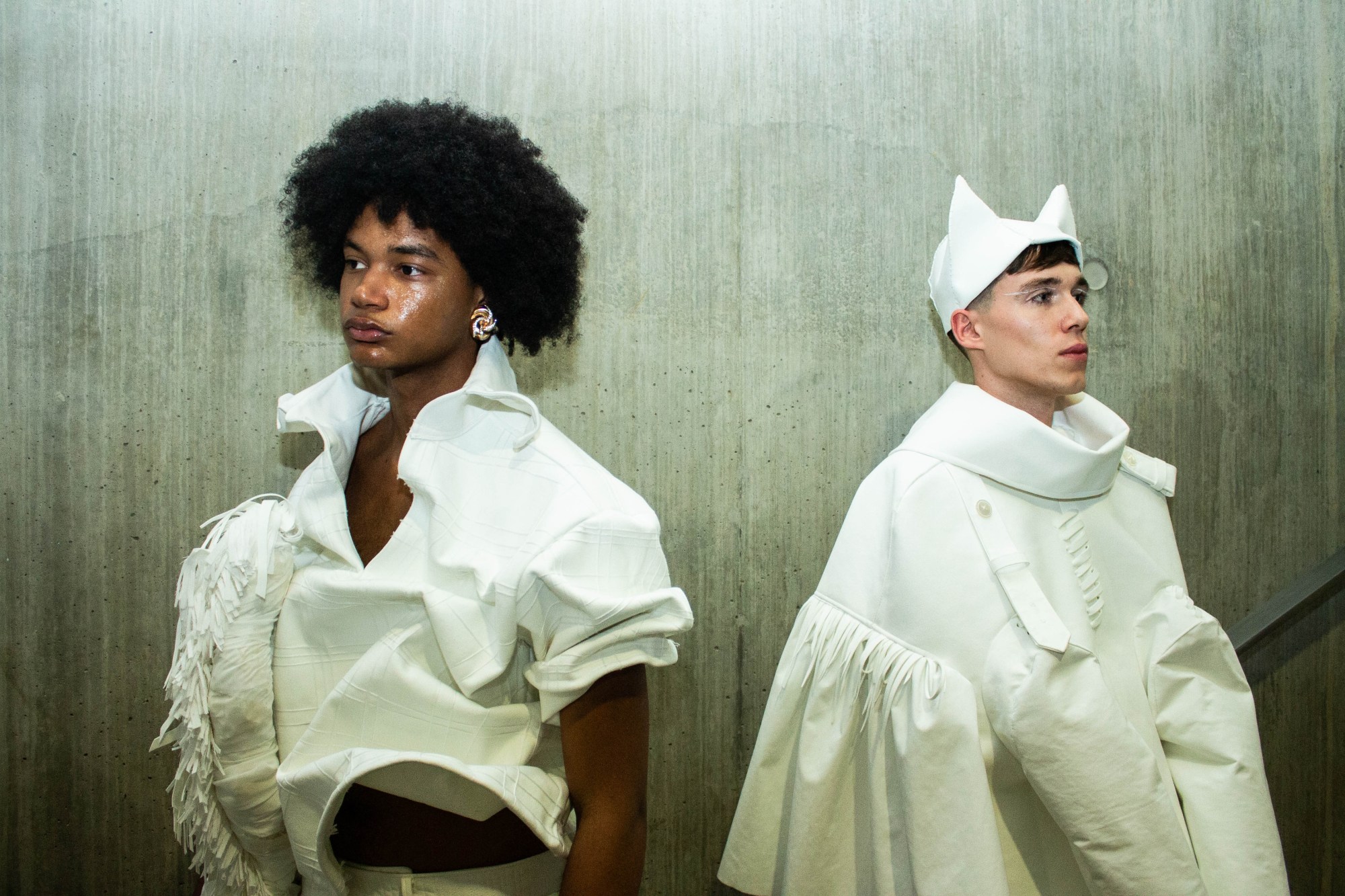
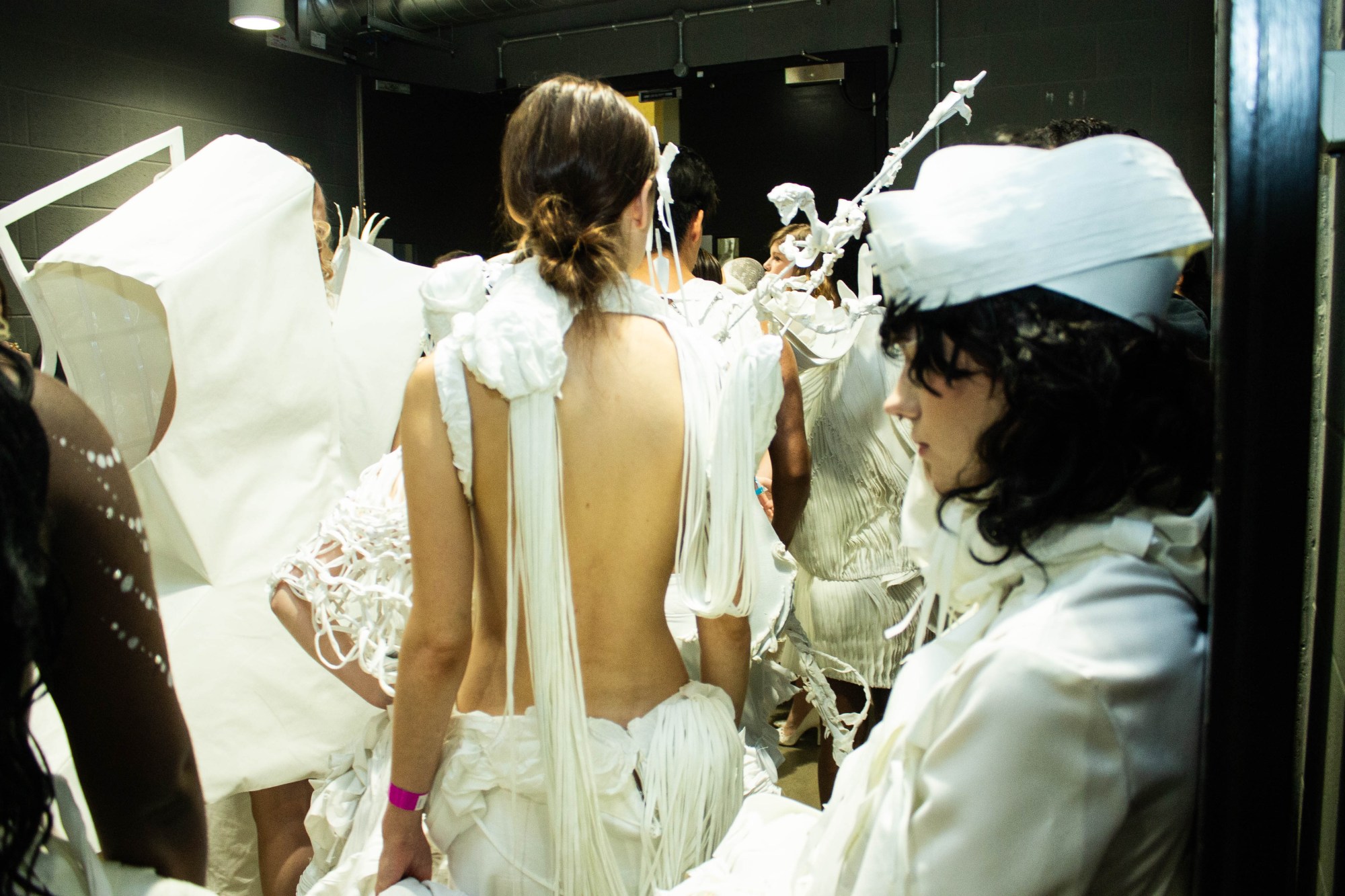
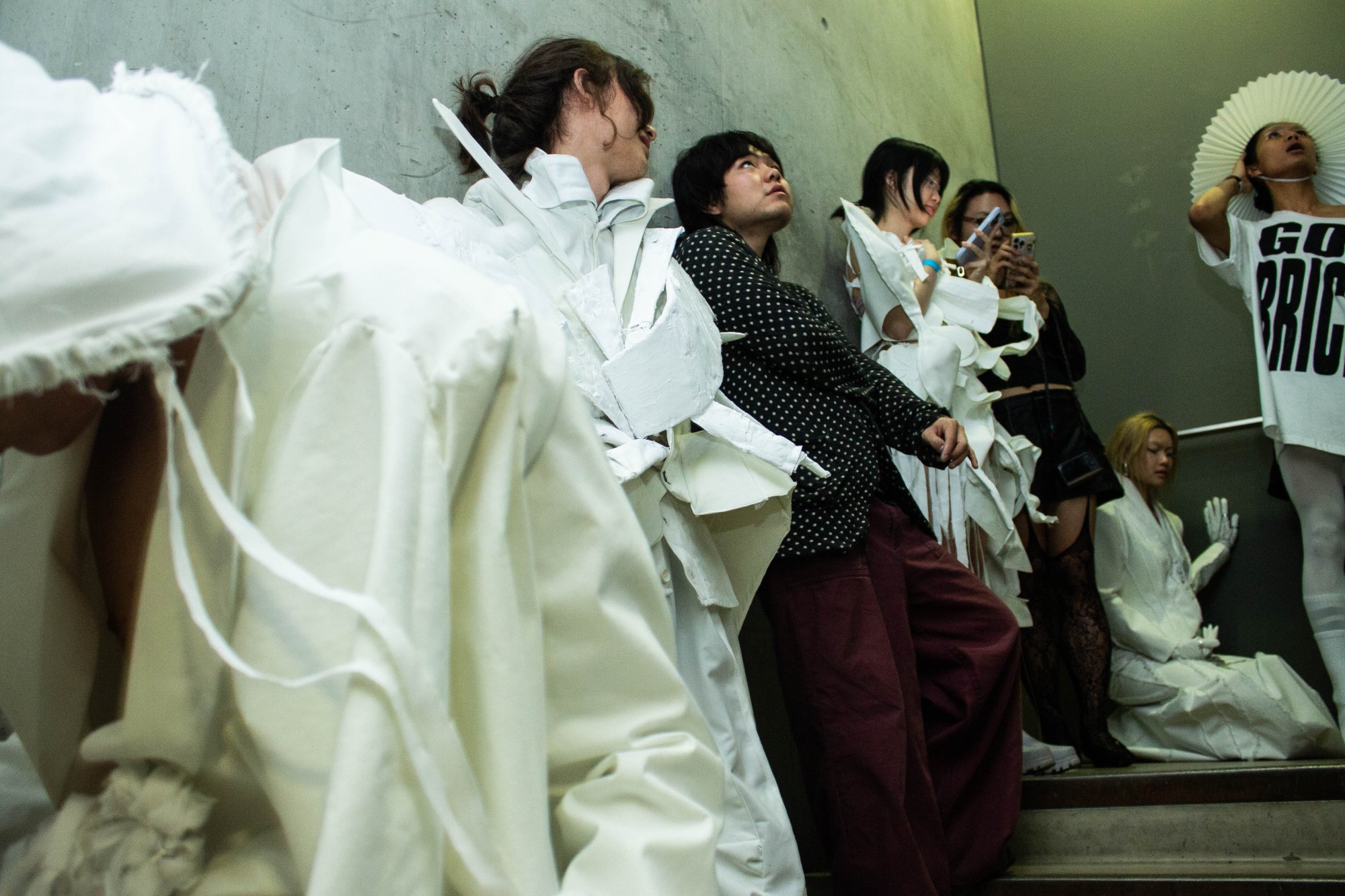
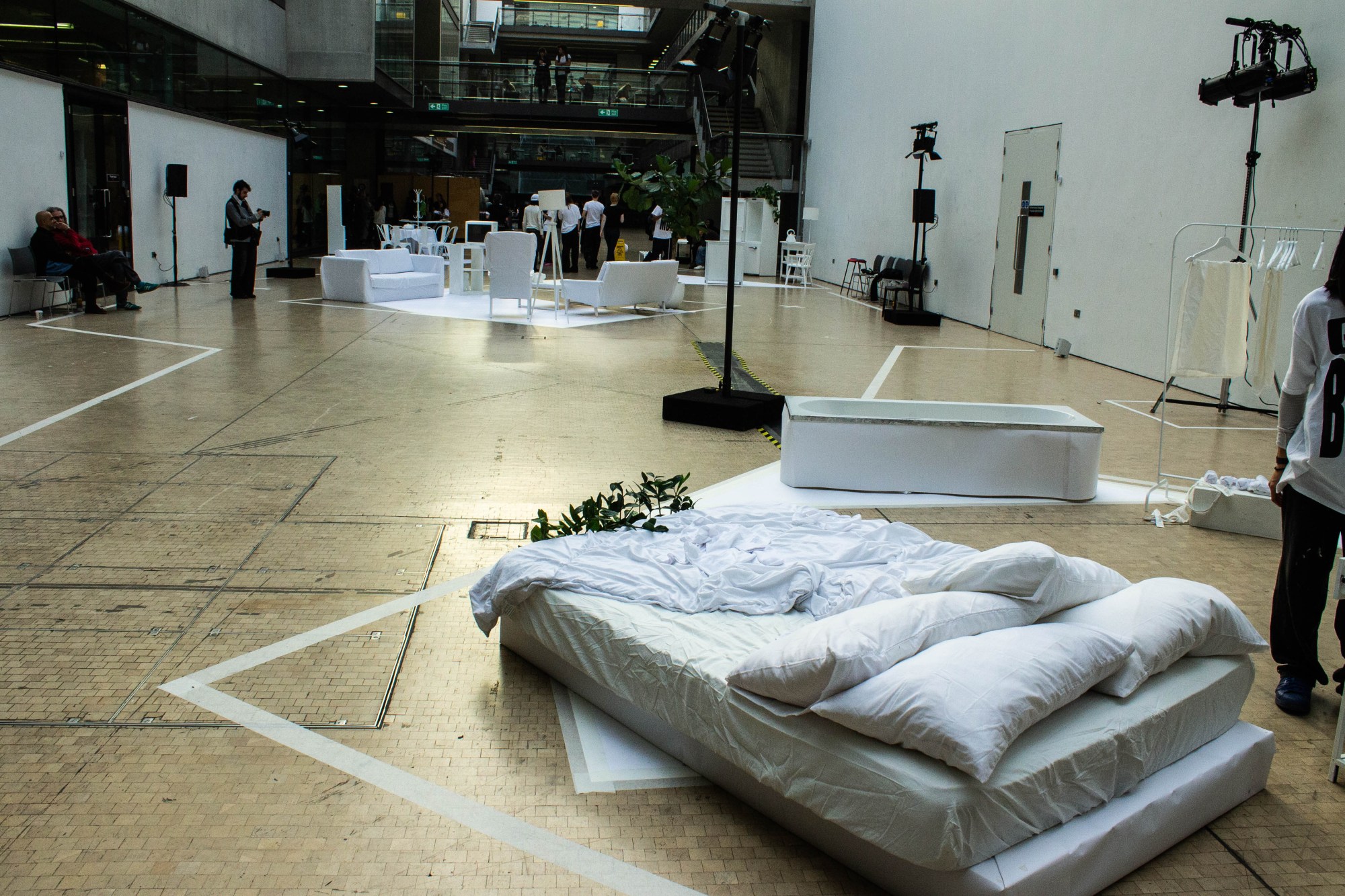
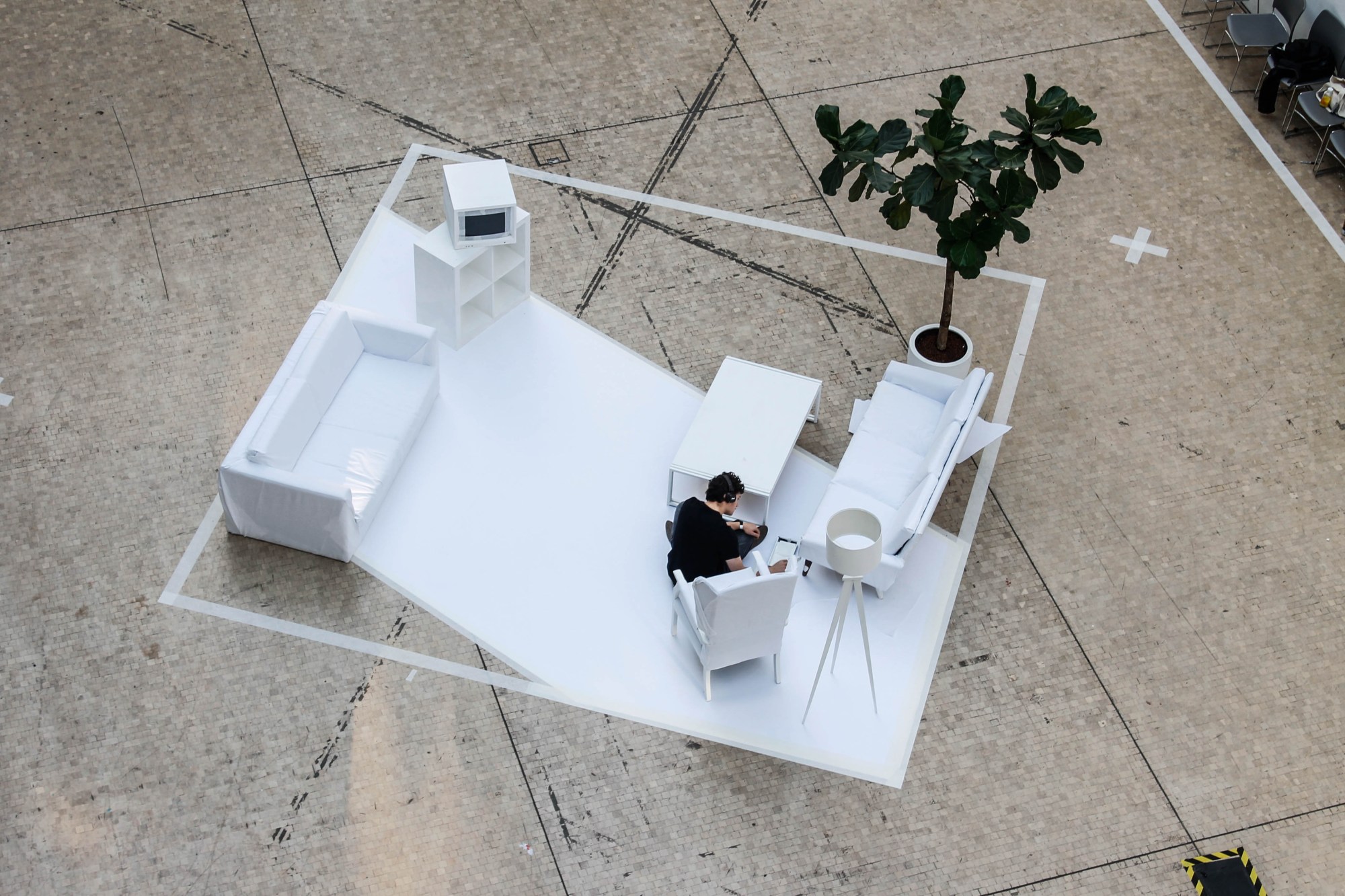
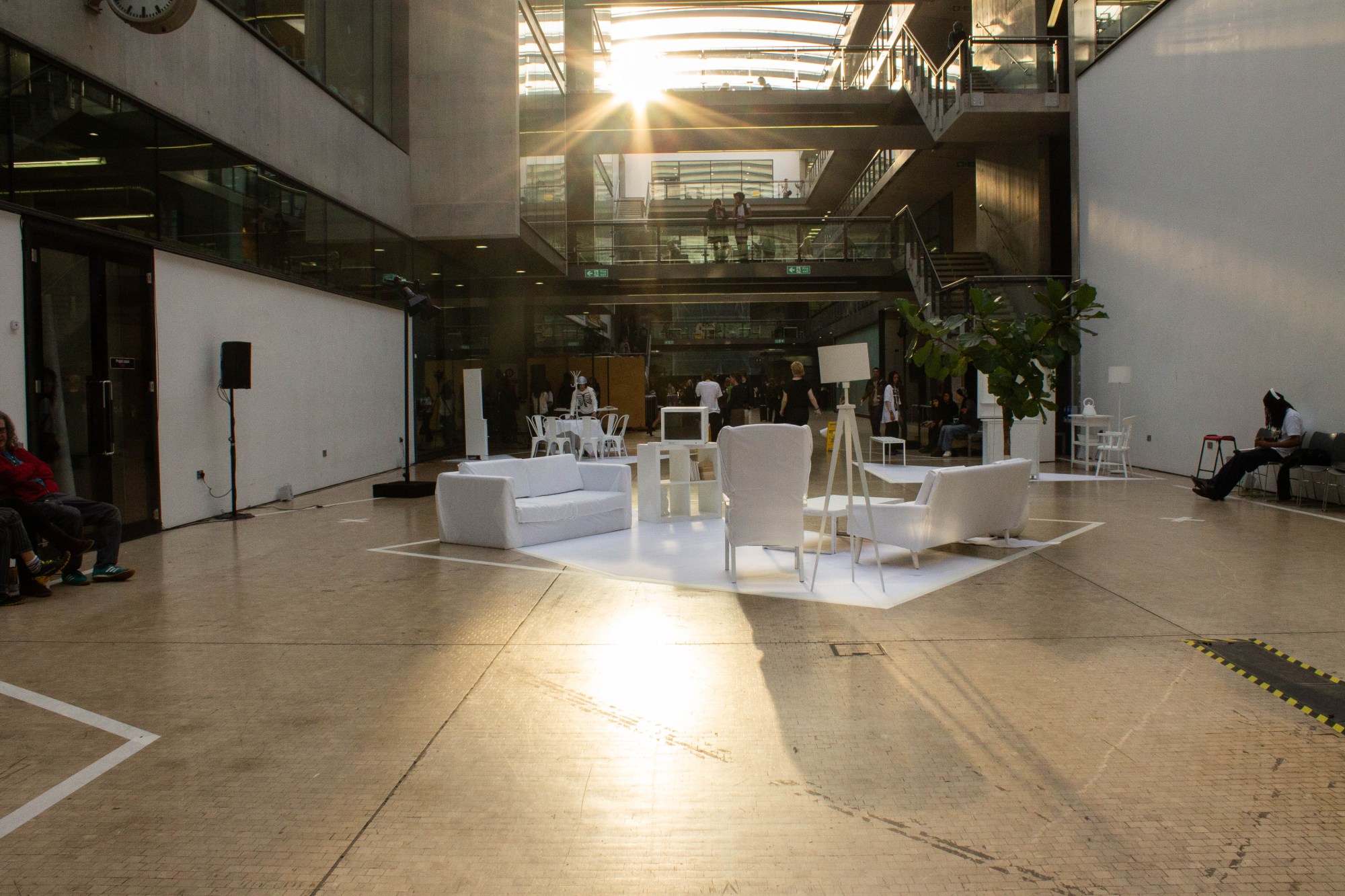
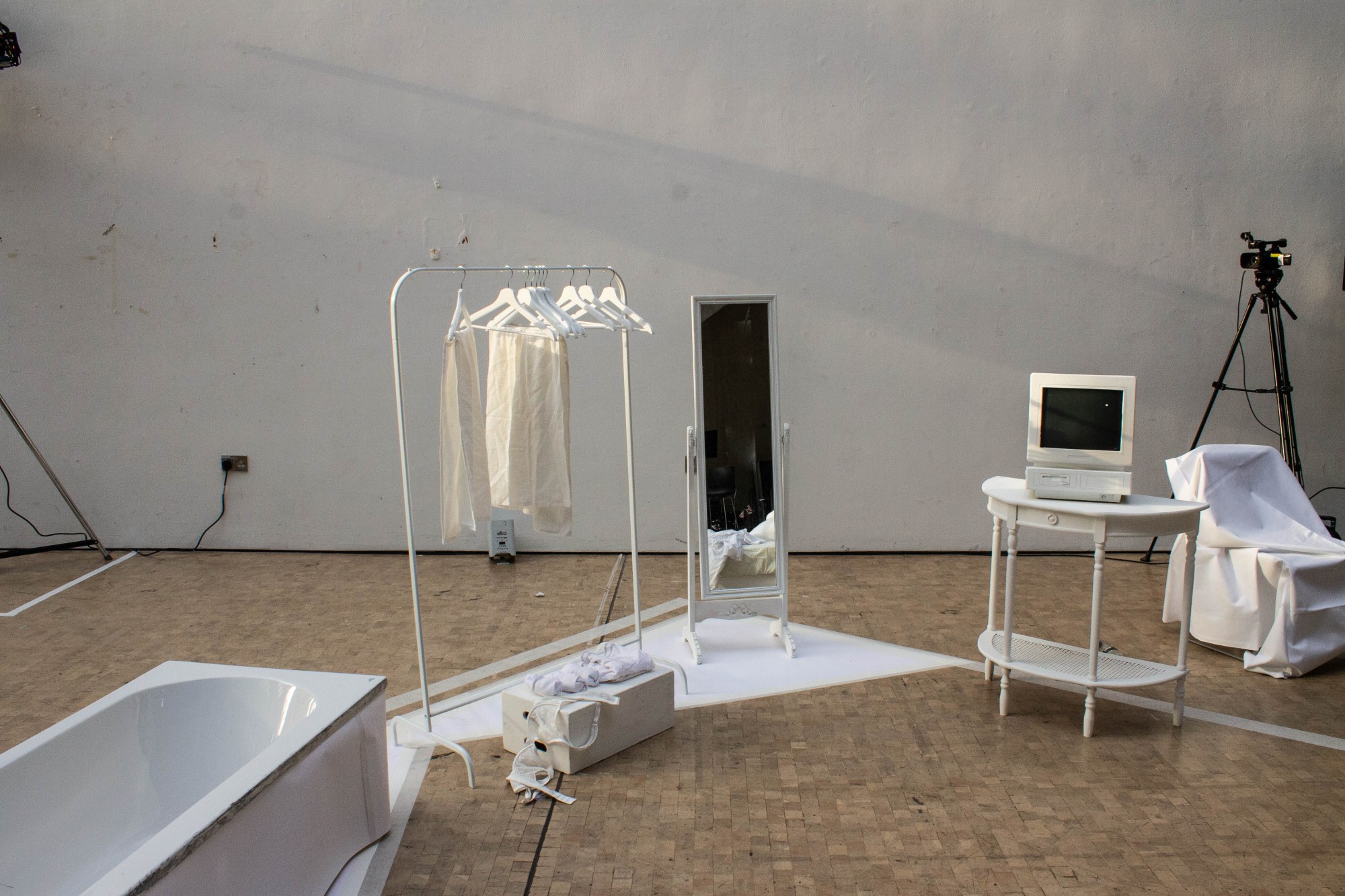
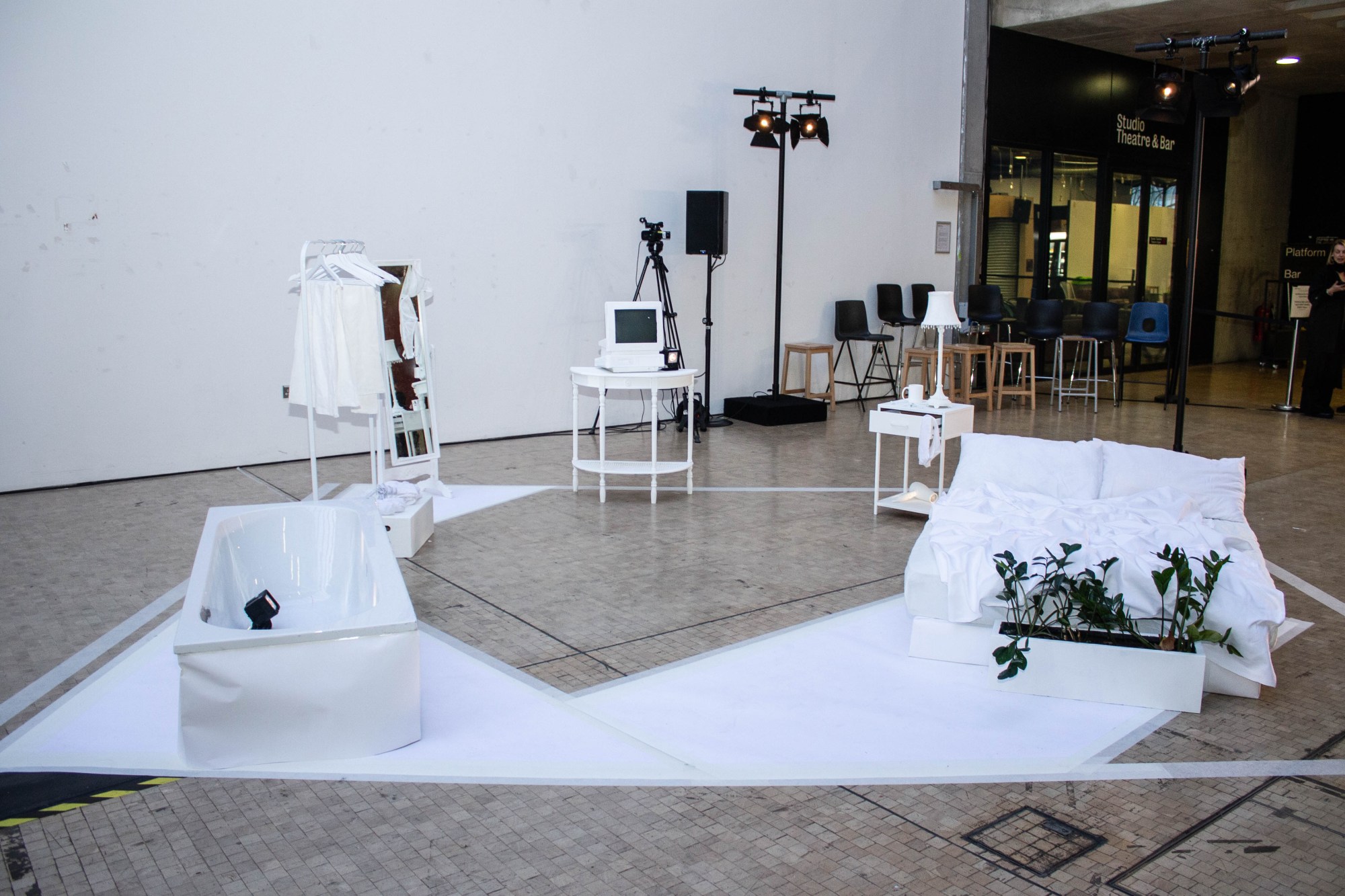
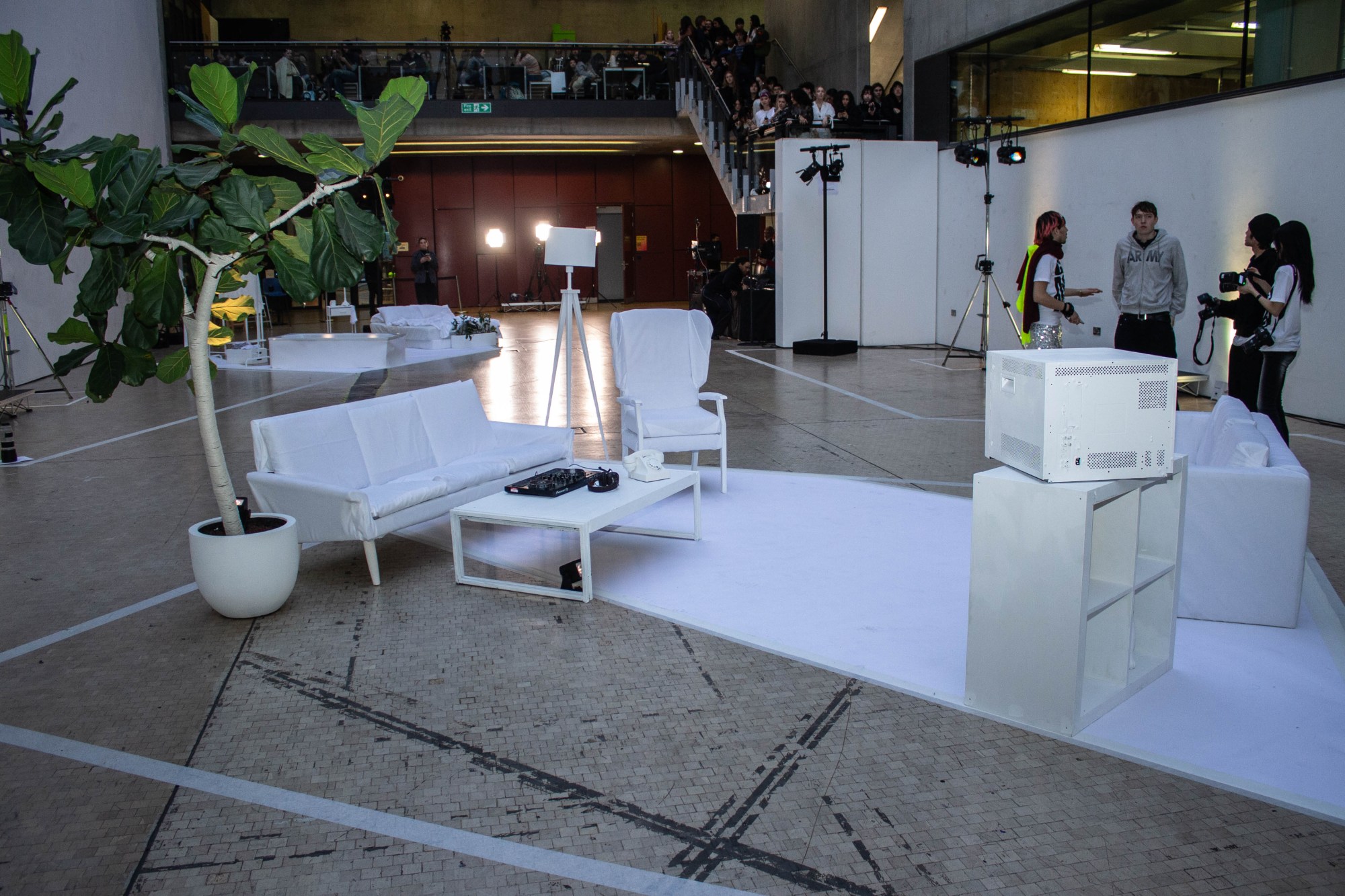
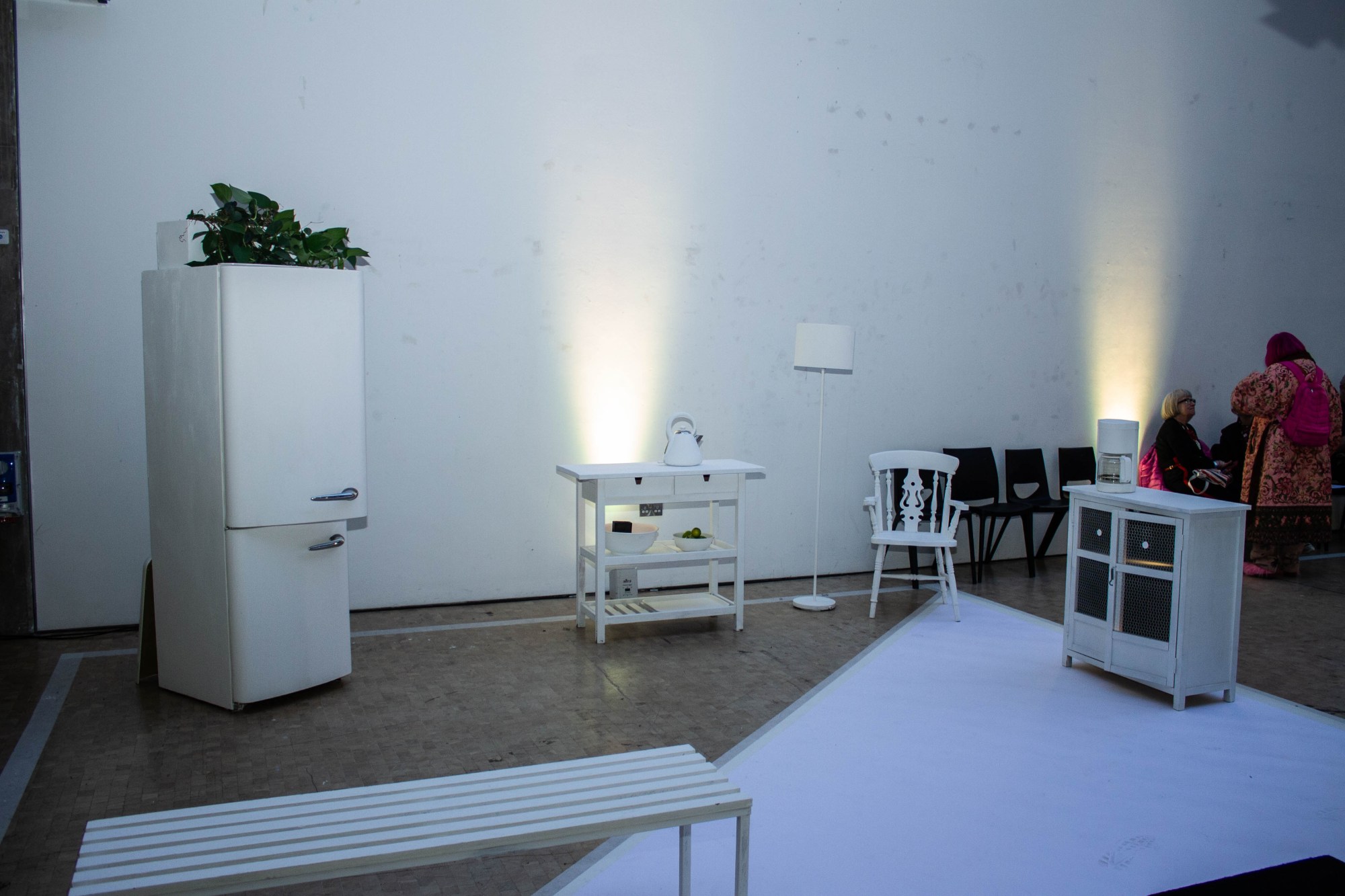
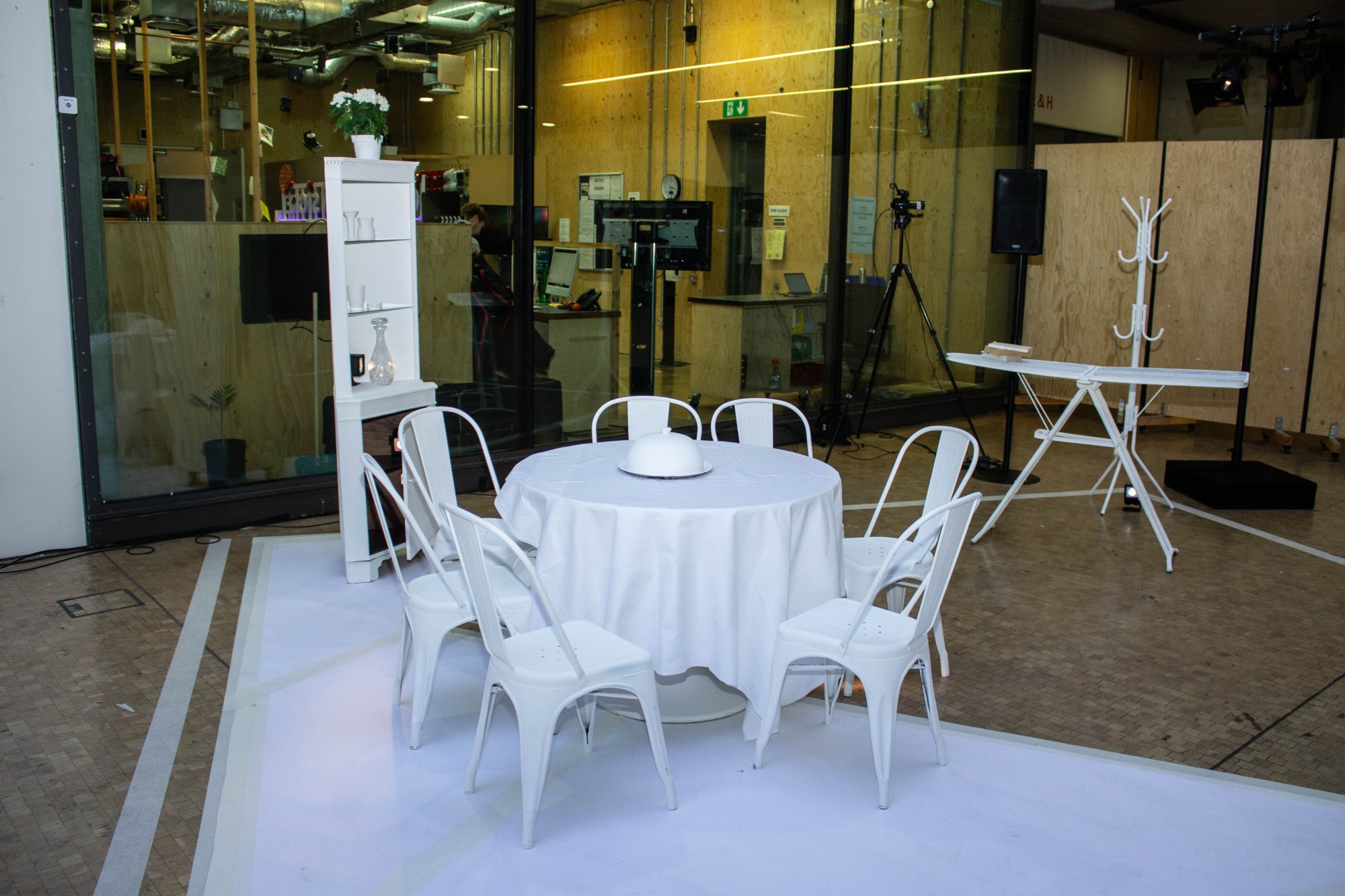
After deliberating between multiple pitches, The House was our tutor’s chosen theme (not my idea, unfortunately; they weren’t too keen on a cunty kitchen-restaurant vibe). Since then, my class developed the concept and visual identity, divided into groups, yours truly being lead of photography, sourced furniture from VICE’s bankrupt office, car boot sales, and the dimly lit doorsteps of online resellers. We painted, spray-painted, and repaired said furniture, created a photo campaign, and pulled the entire show together, metaphorically slapping bricks on top of bricks and hoping it held.
And today, The House was home not just to FCP but to hundreds of audience members, packed shoulder to shoulder, all trying to get a peek inside the world we’ve lived in for months.
7 a.m. – 10 a.m.
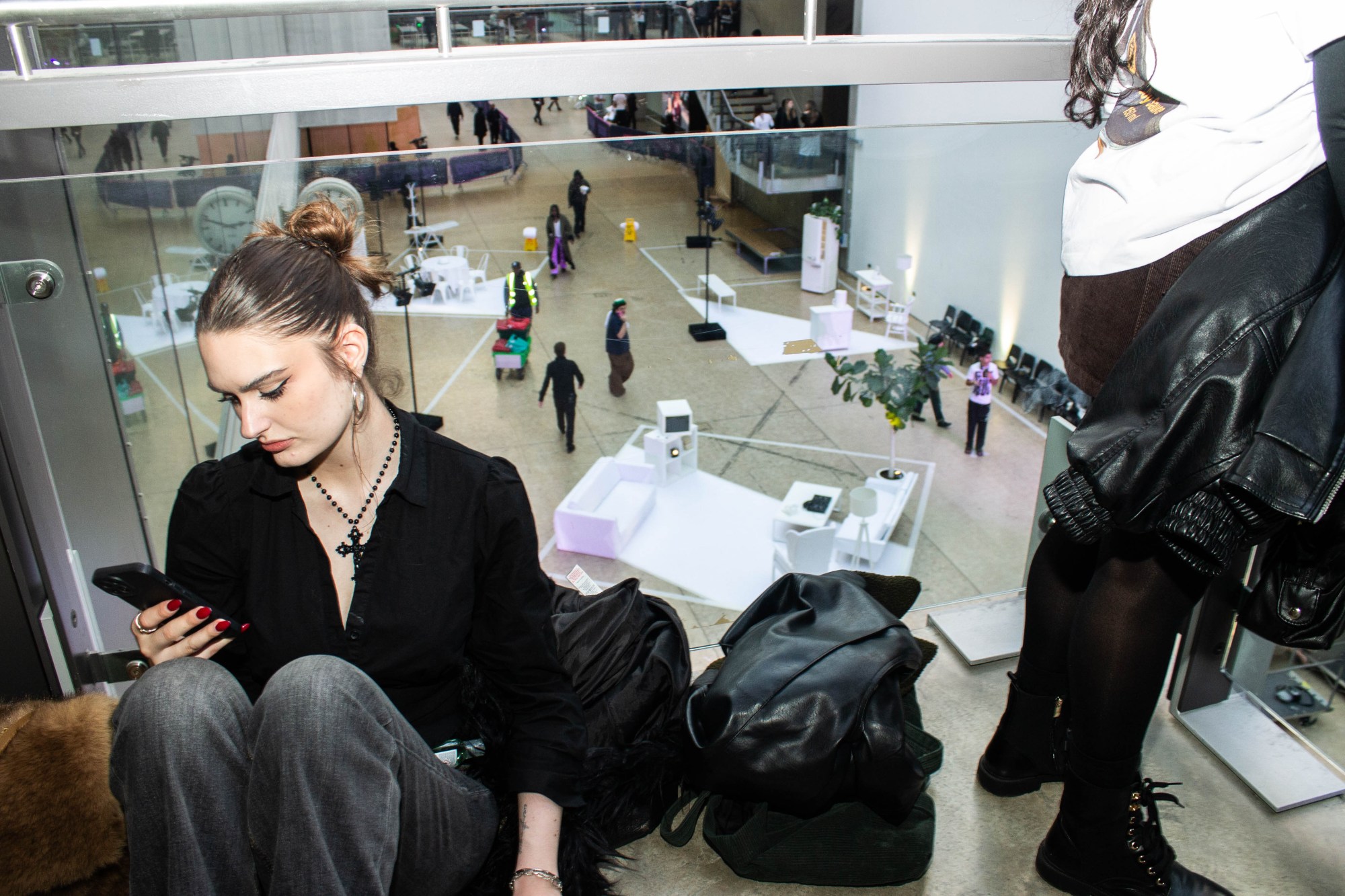
Arriving in matching screen-printed merch, my tired cohort and a collection of UAL foundation helpers began moving the set down to the rear end of The Street (CSM’s walkway). A (leaking) fridge, couch, dining table, and various other domestic items painted white created the four deconstructed rooms on the runway. Slowly but surely, these props that had been congested outside our third-floor classroom like some strange art piece became tangible, sort-of-beautiful spaces.
The early morning silence was ruptured at 8:30 a.m. when 155 designers and their models started to show up. The space filled with excitement and questions of where to go, what to do, and a fair few “my model canceled.” Fortunately for me (and everyone else), I am not on the production team, so I was not tasked with knowing the answers.
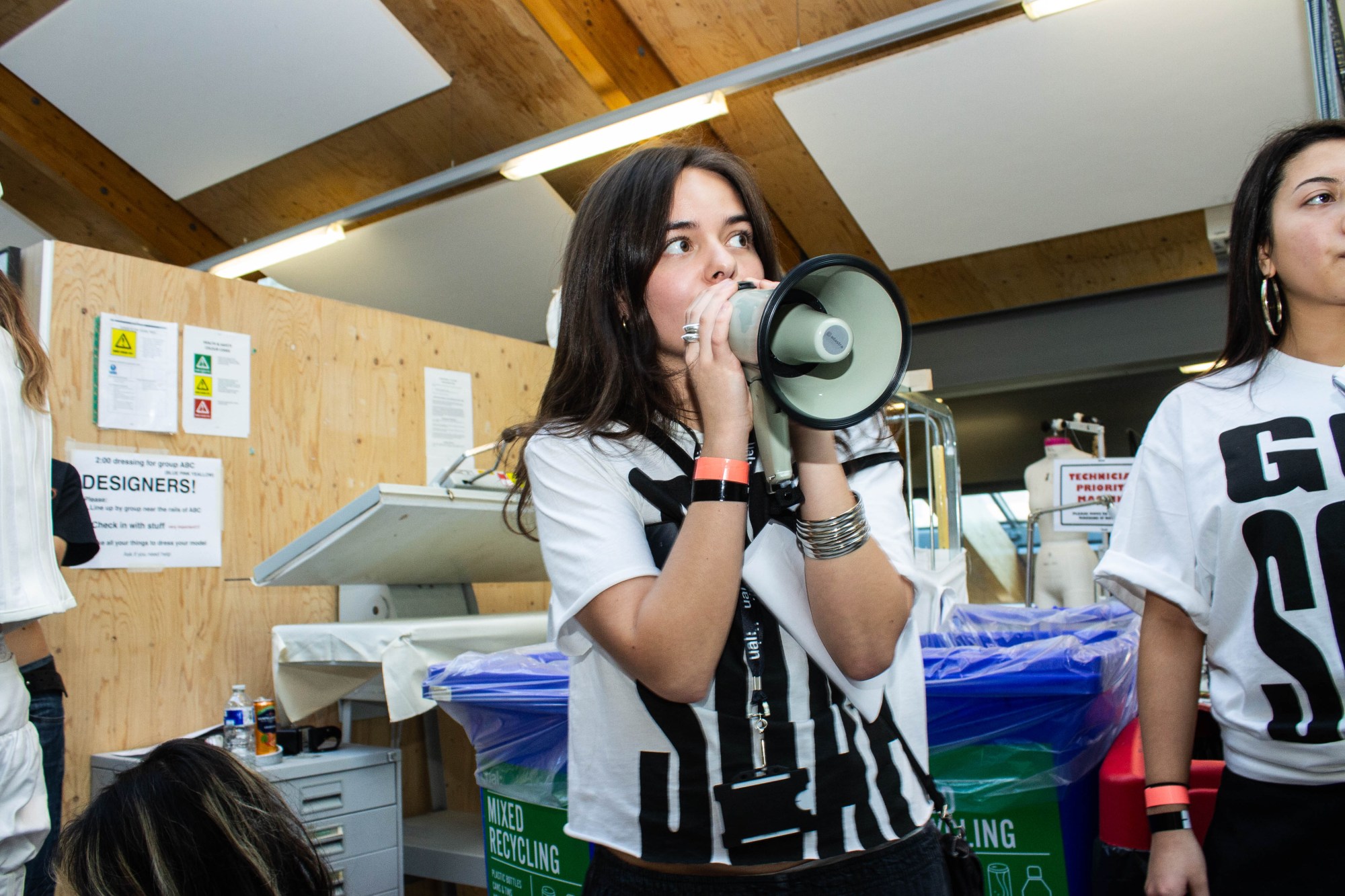
Shortly after instructions were yelled over a megaphone, the models lined up military-style and began rehearsing, each individually assigned a room to interact with during the show.10 a.m. – 1 p.m.
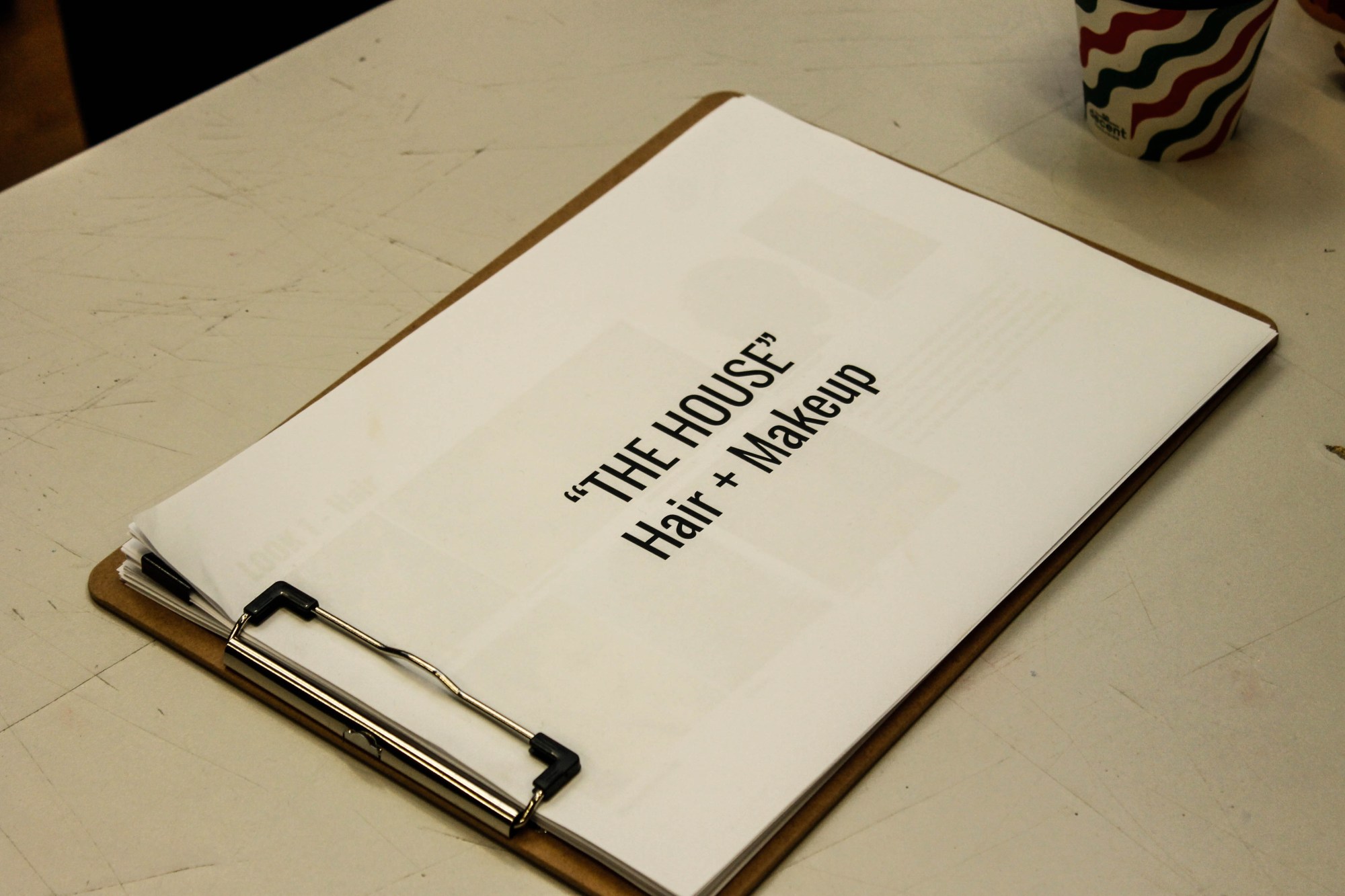
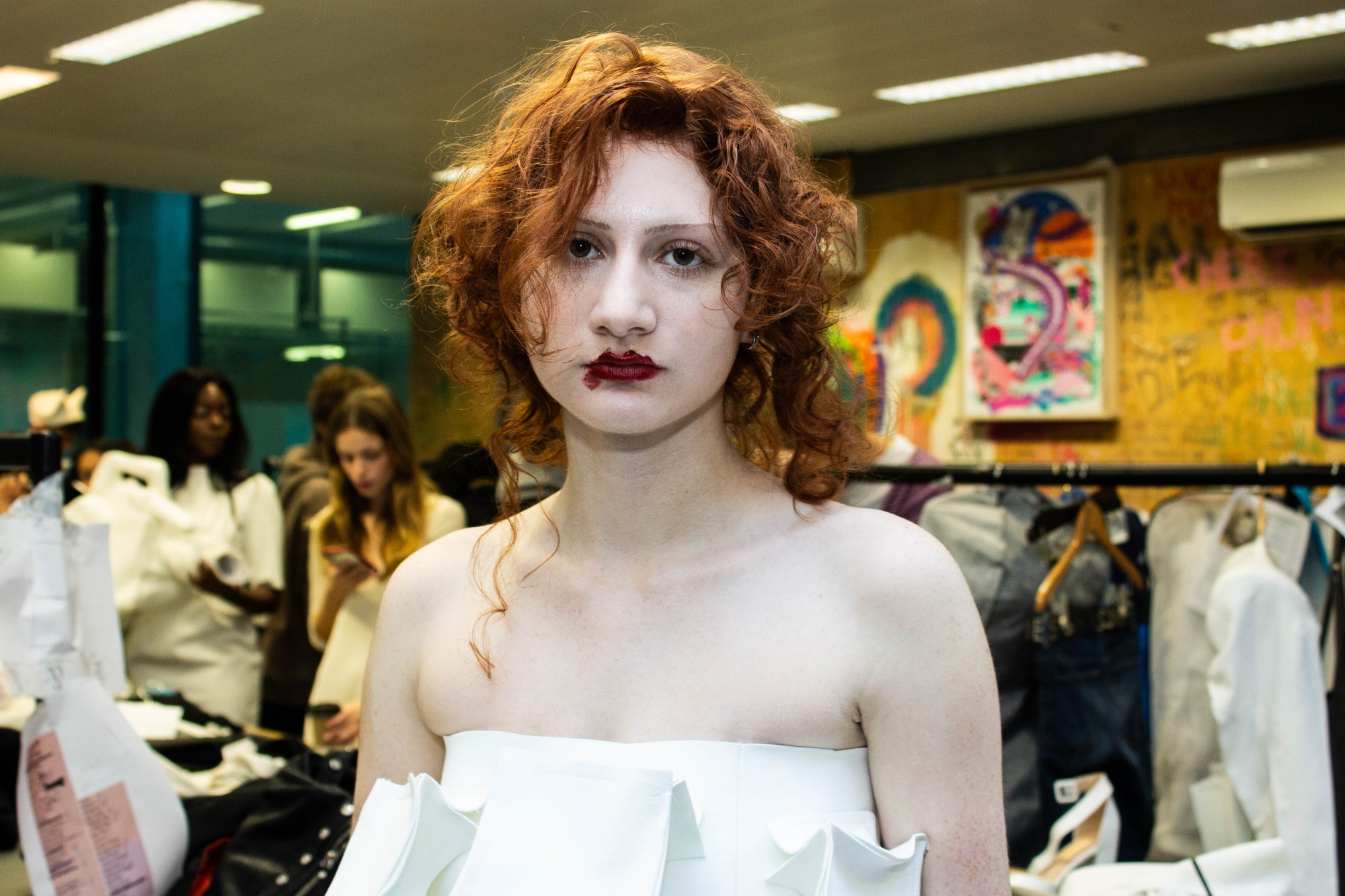
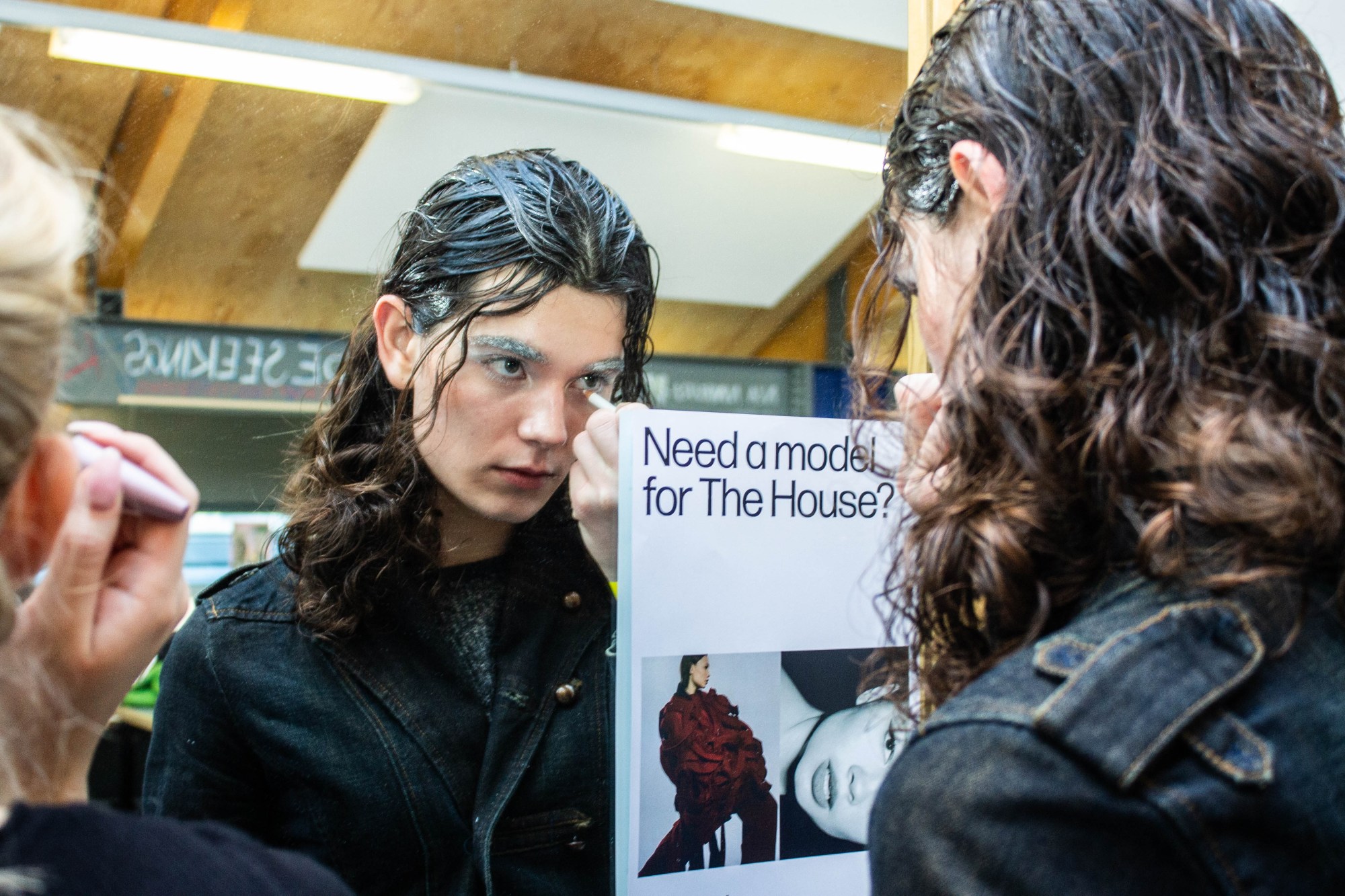
As time went by, anticipation built up (and also a mysterious pain in my stomach, nerves or a dodgy meal deal, I’m not sure). Dividing into groups, models were ushered into the LVMH Theater to get their hair and makeup done. Walking around, I caught the tail end of a designer demanding to know which look her model was in, and being promptly told it was out of her control. (I saw the same designer taking off the makeup later.)
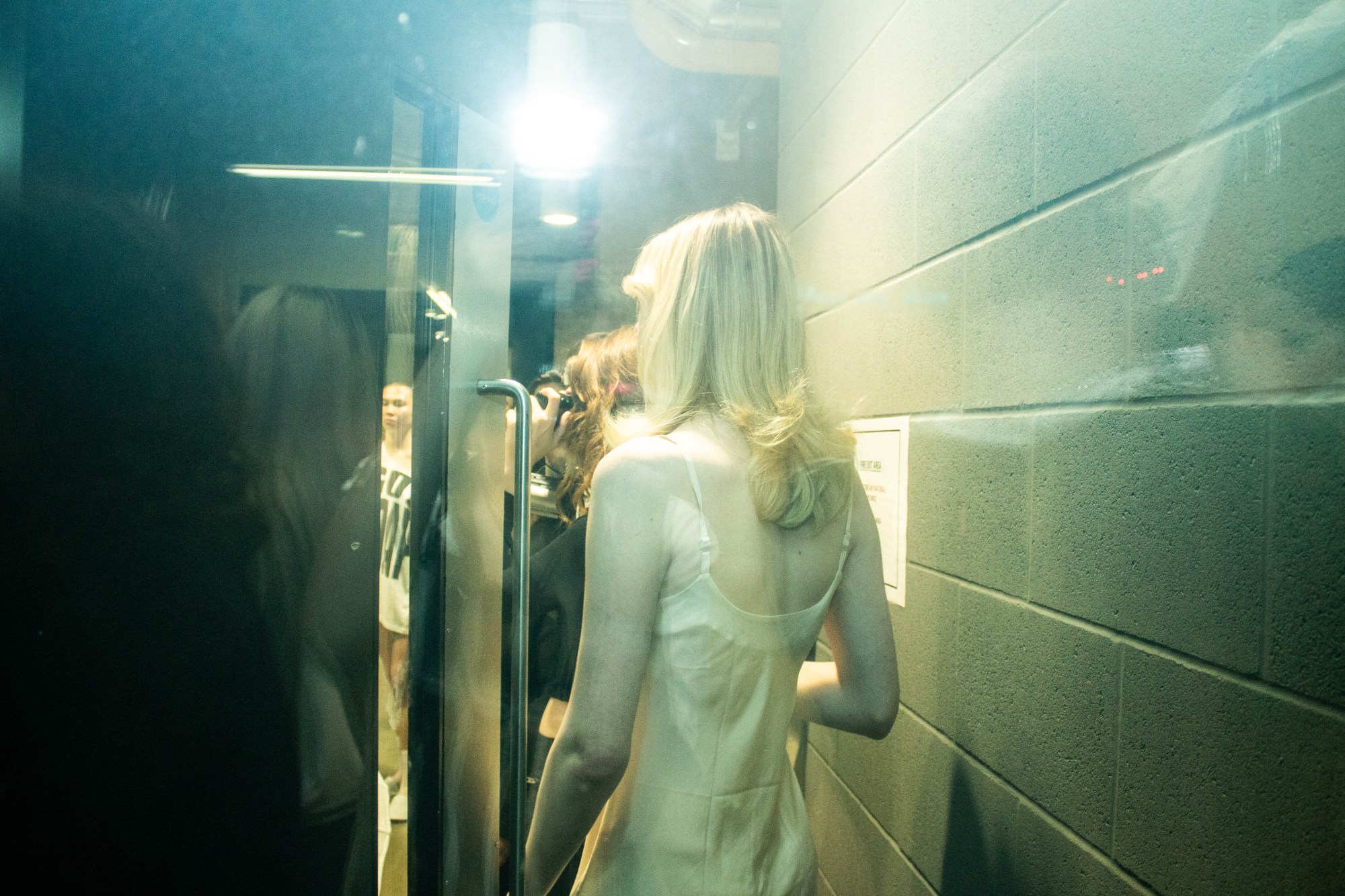
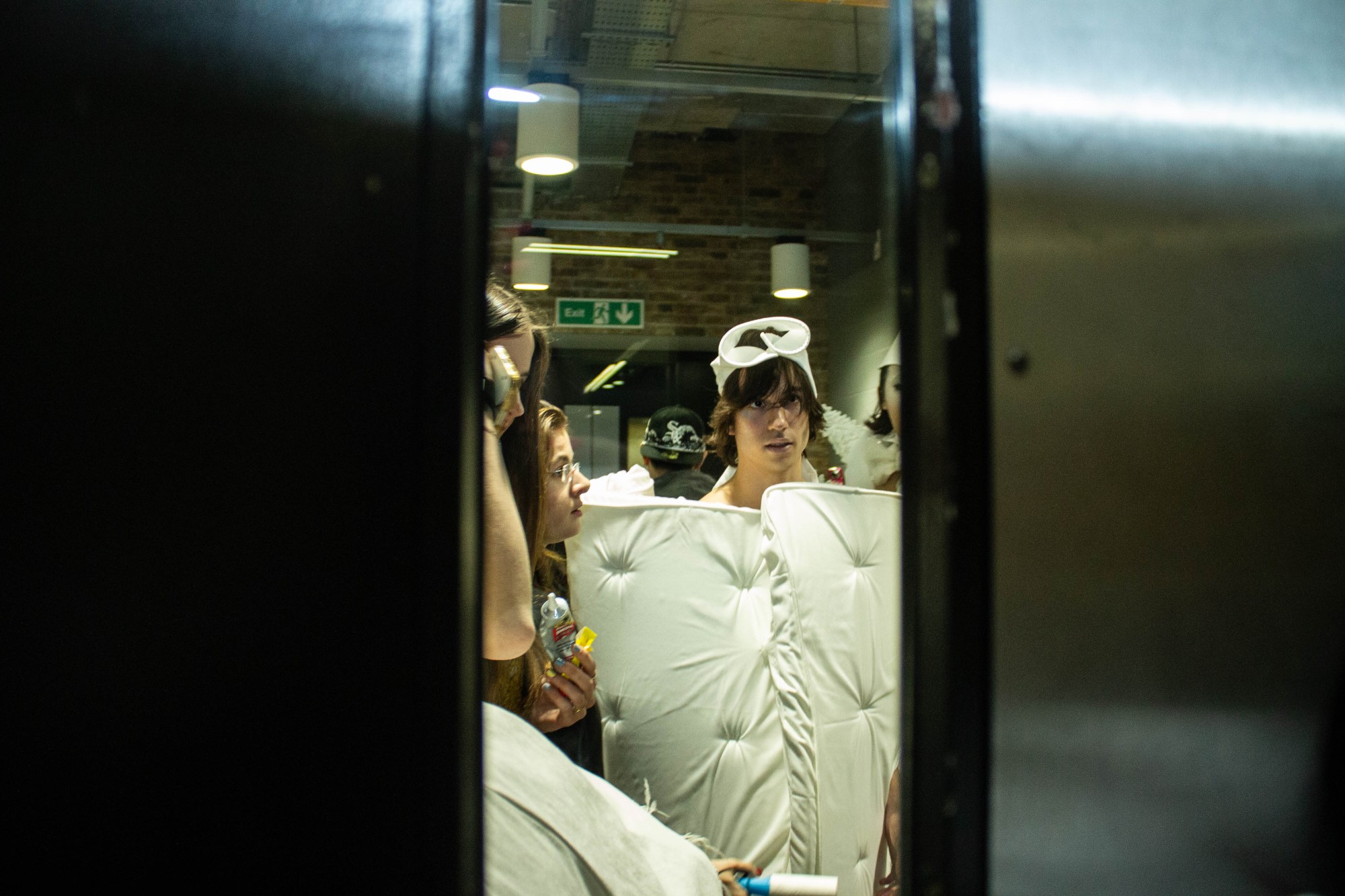
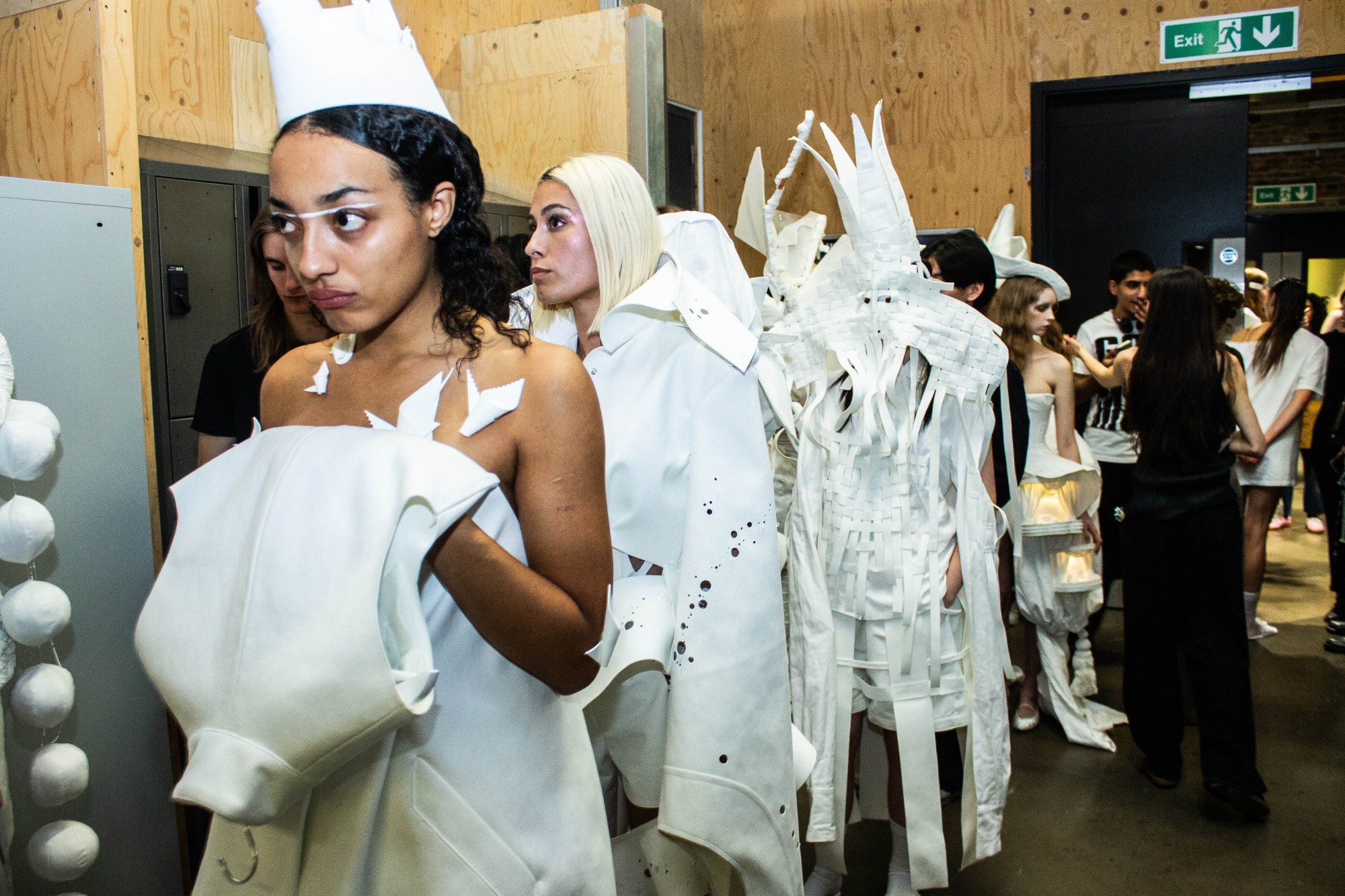
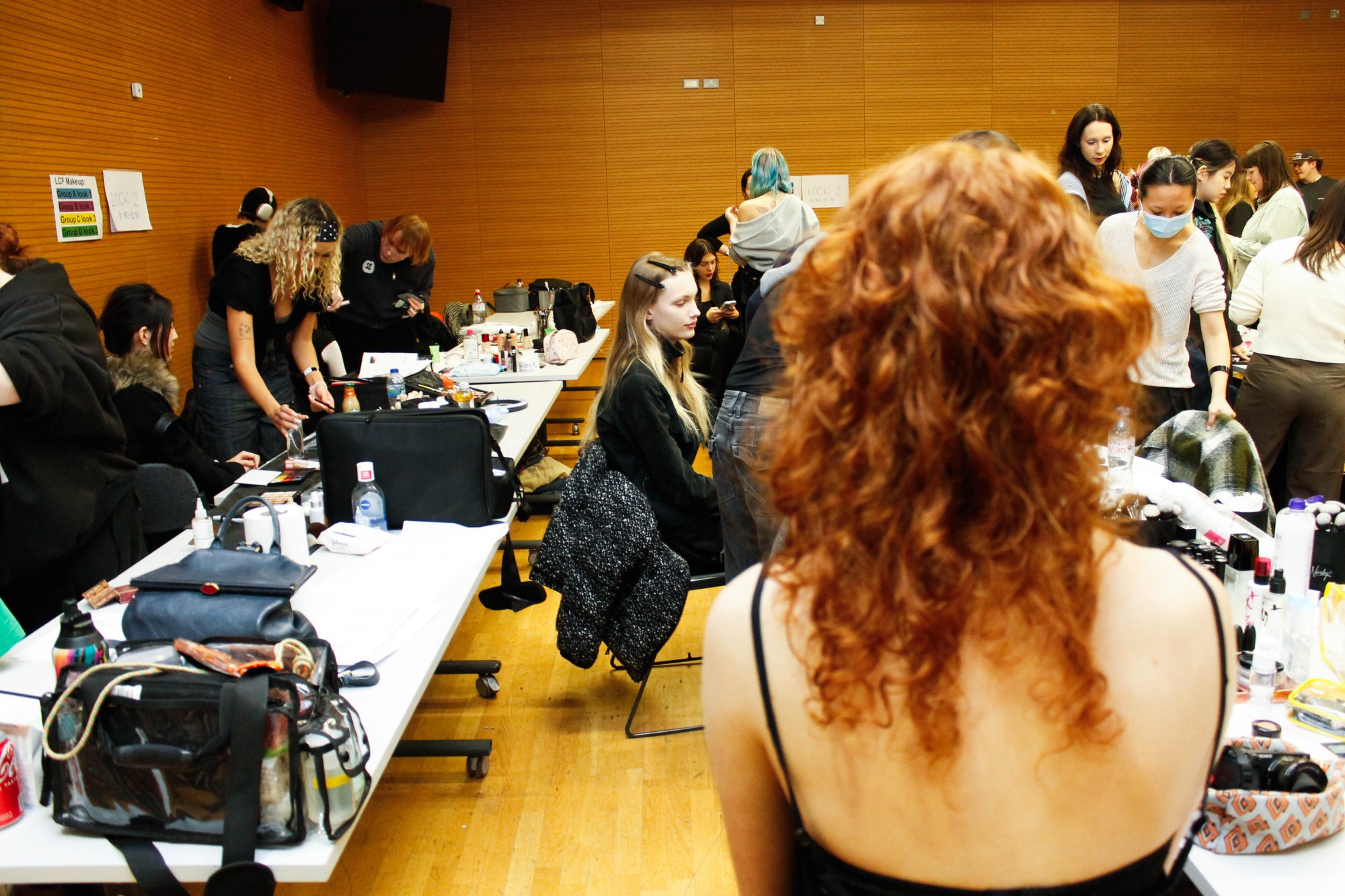
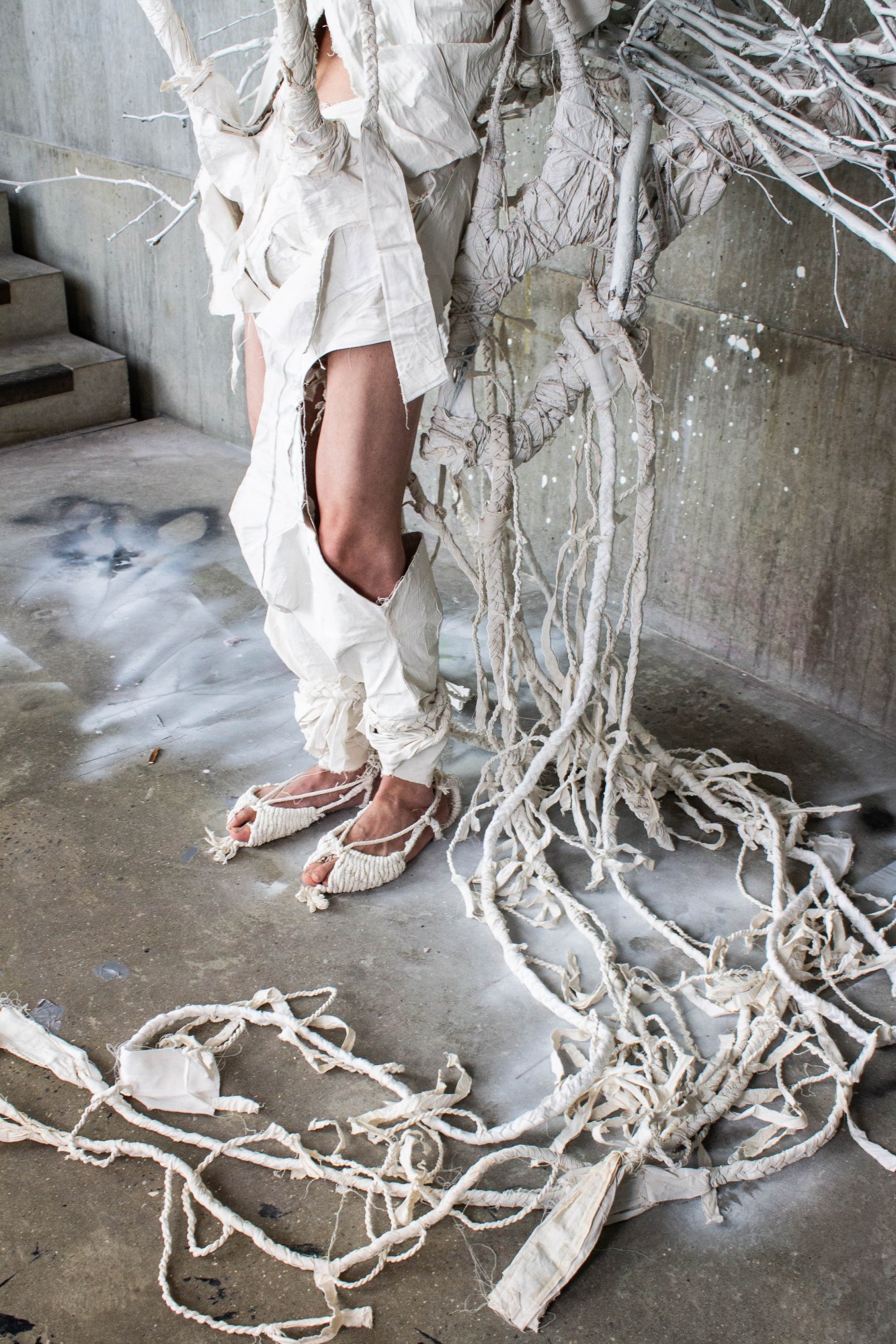
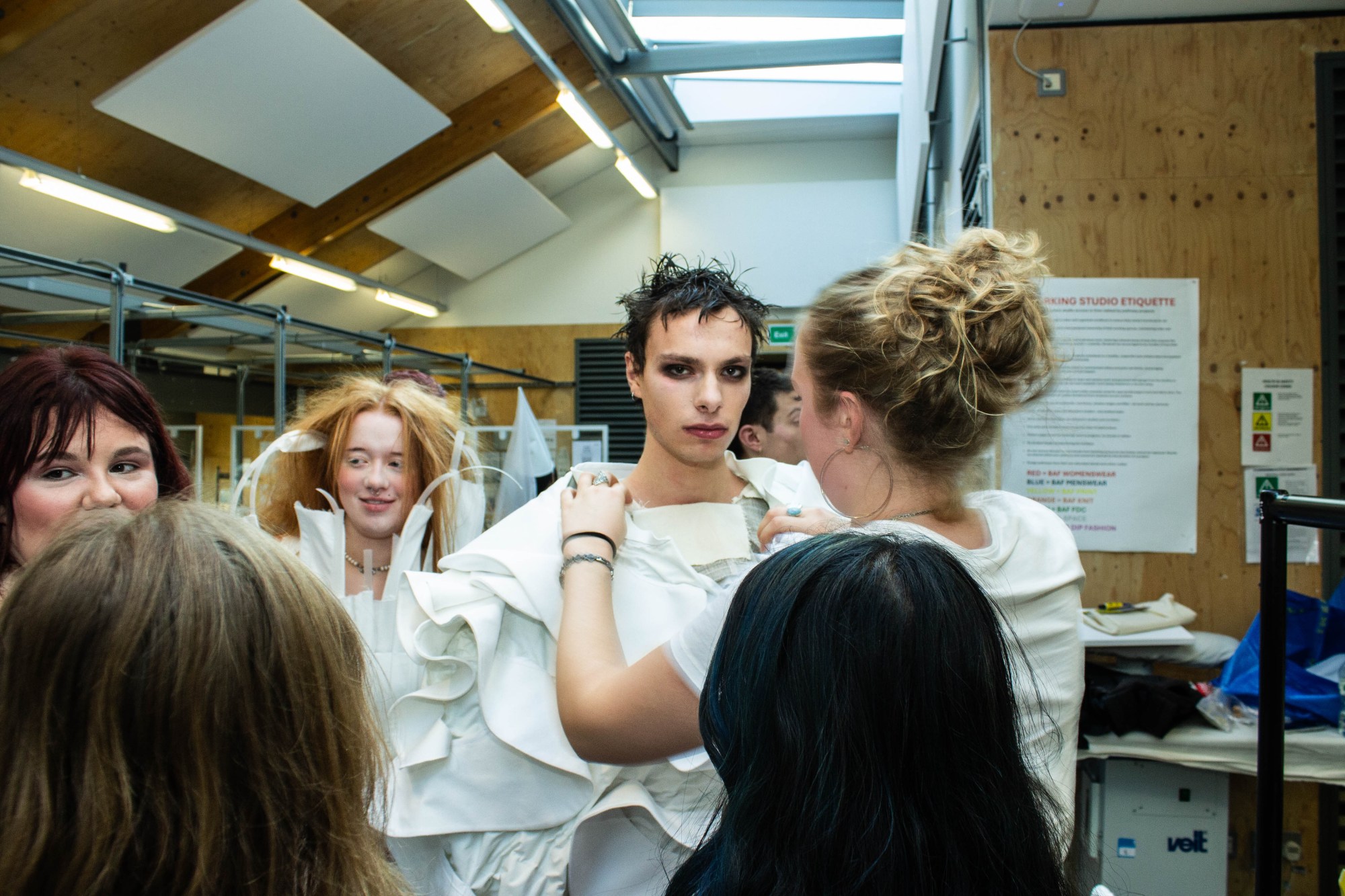
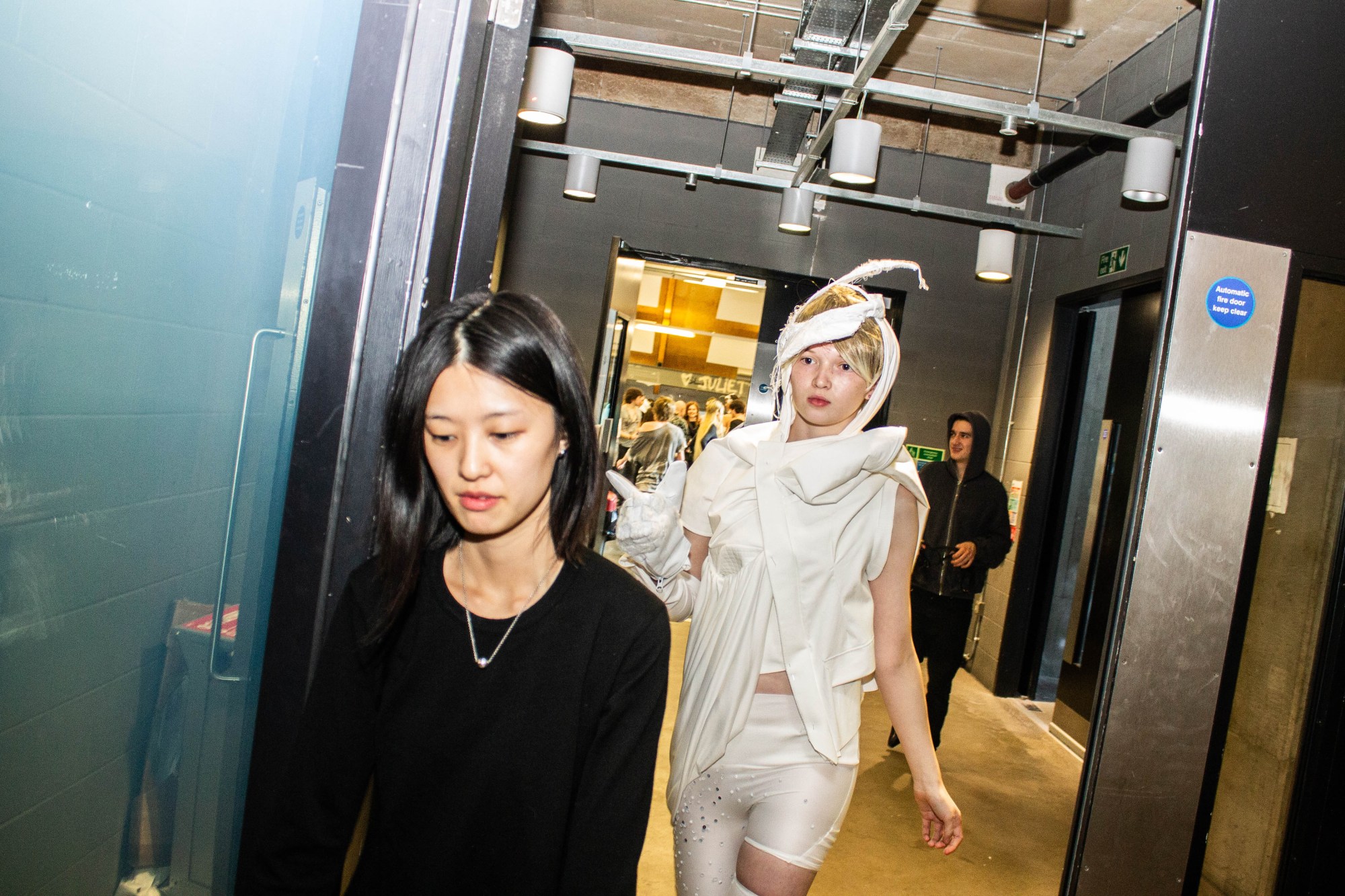
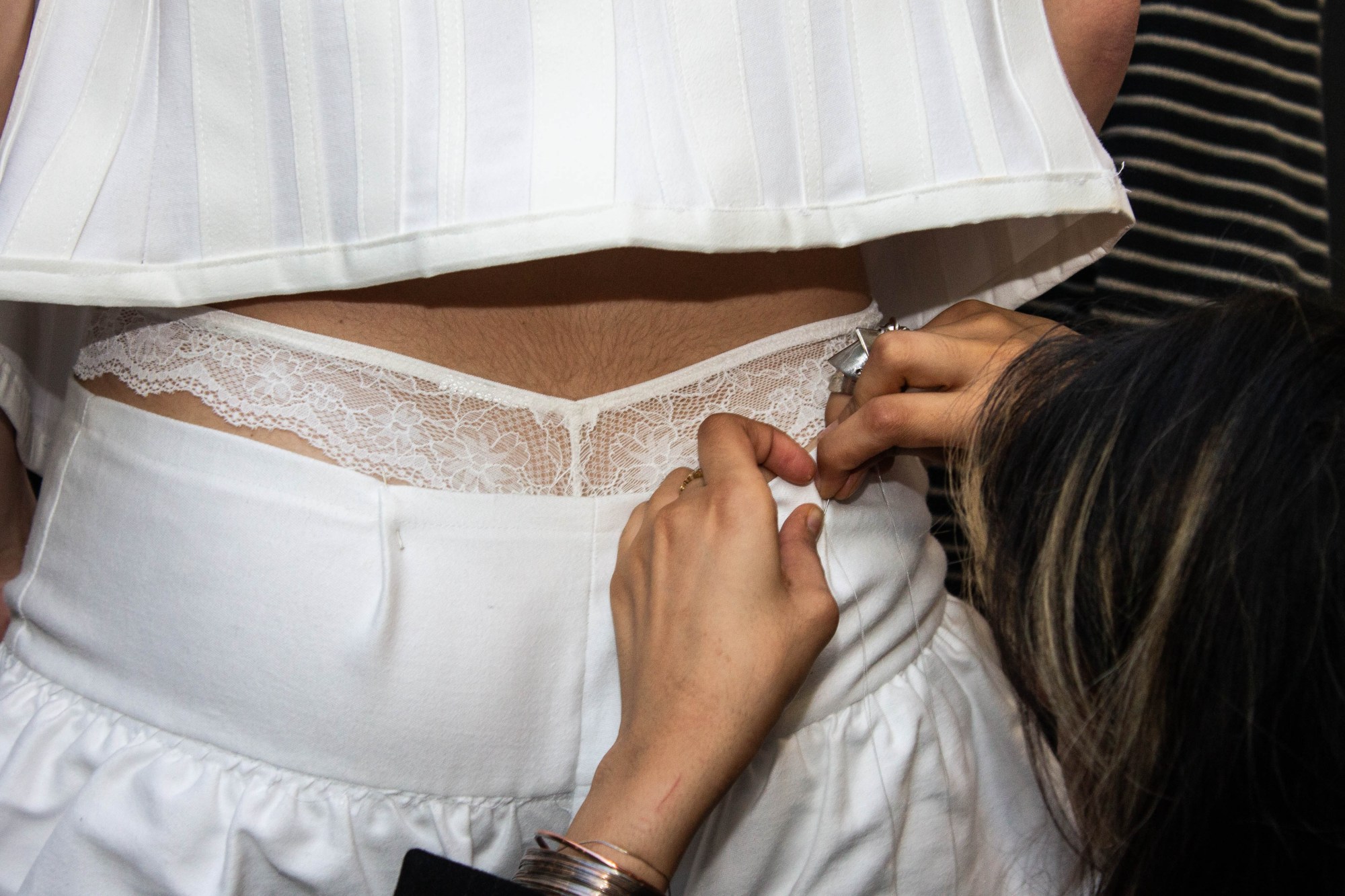
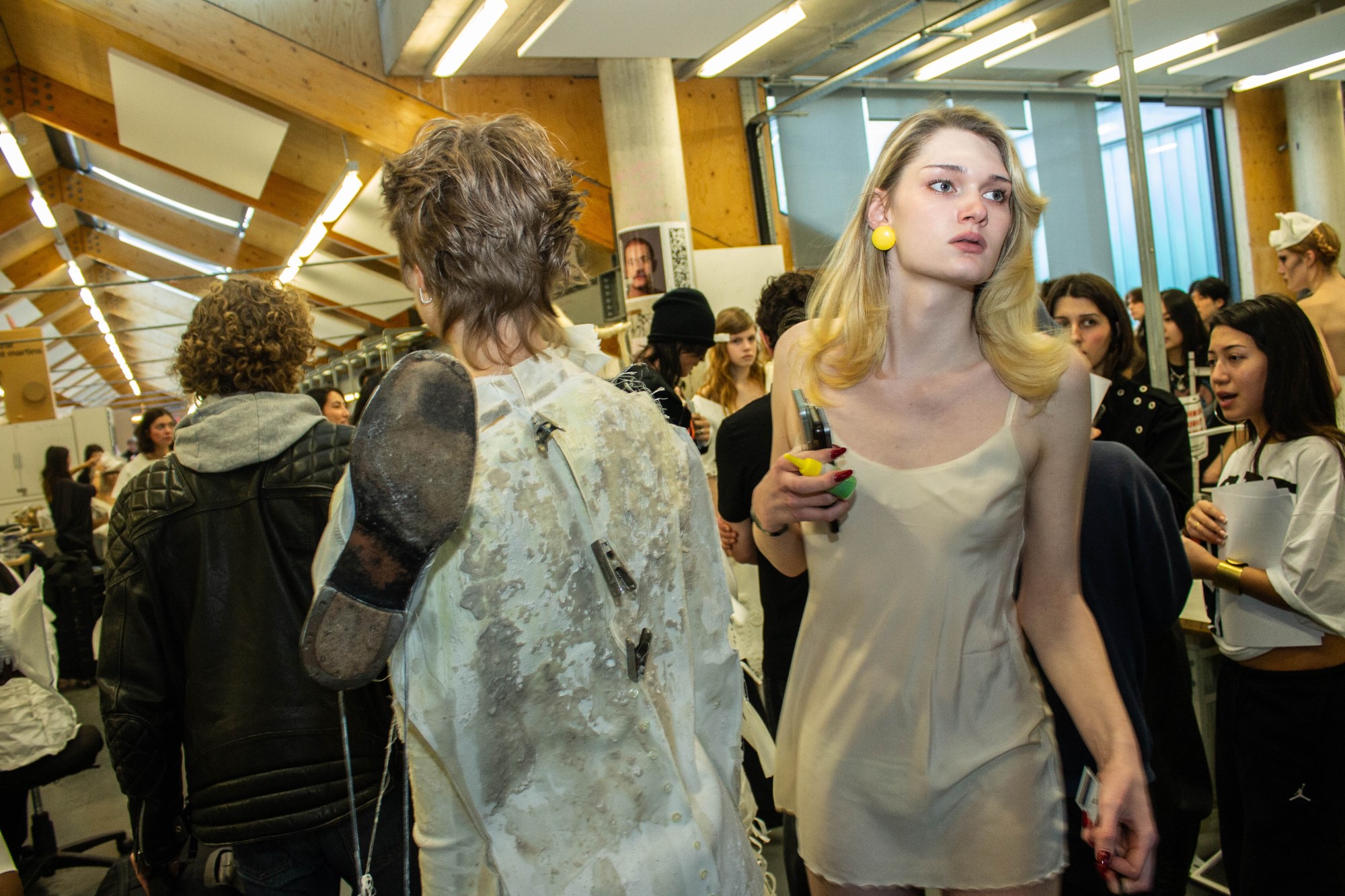
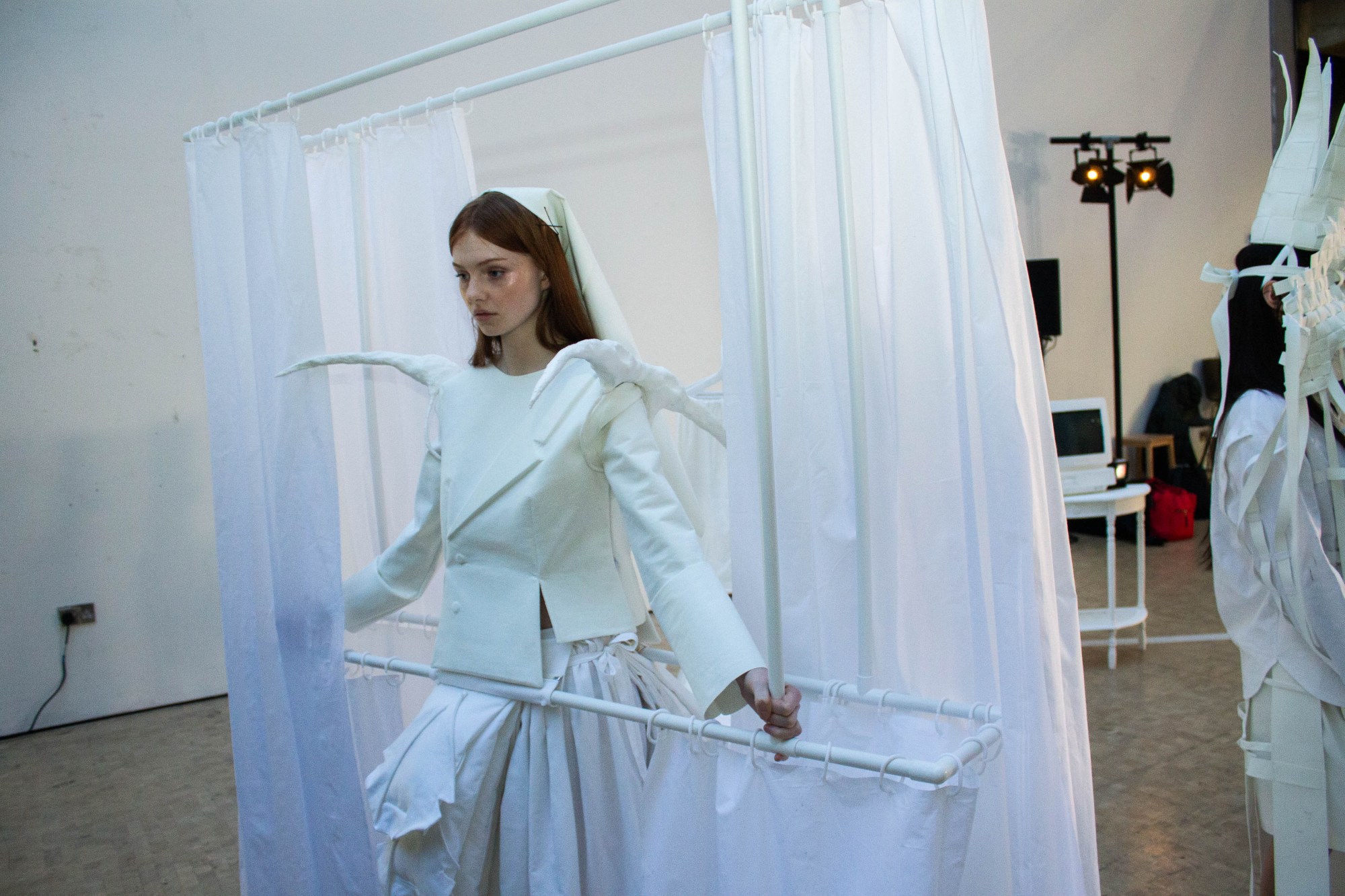
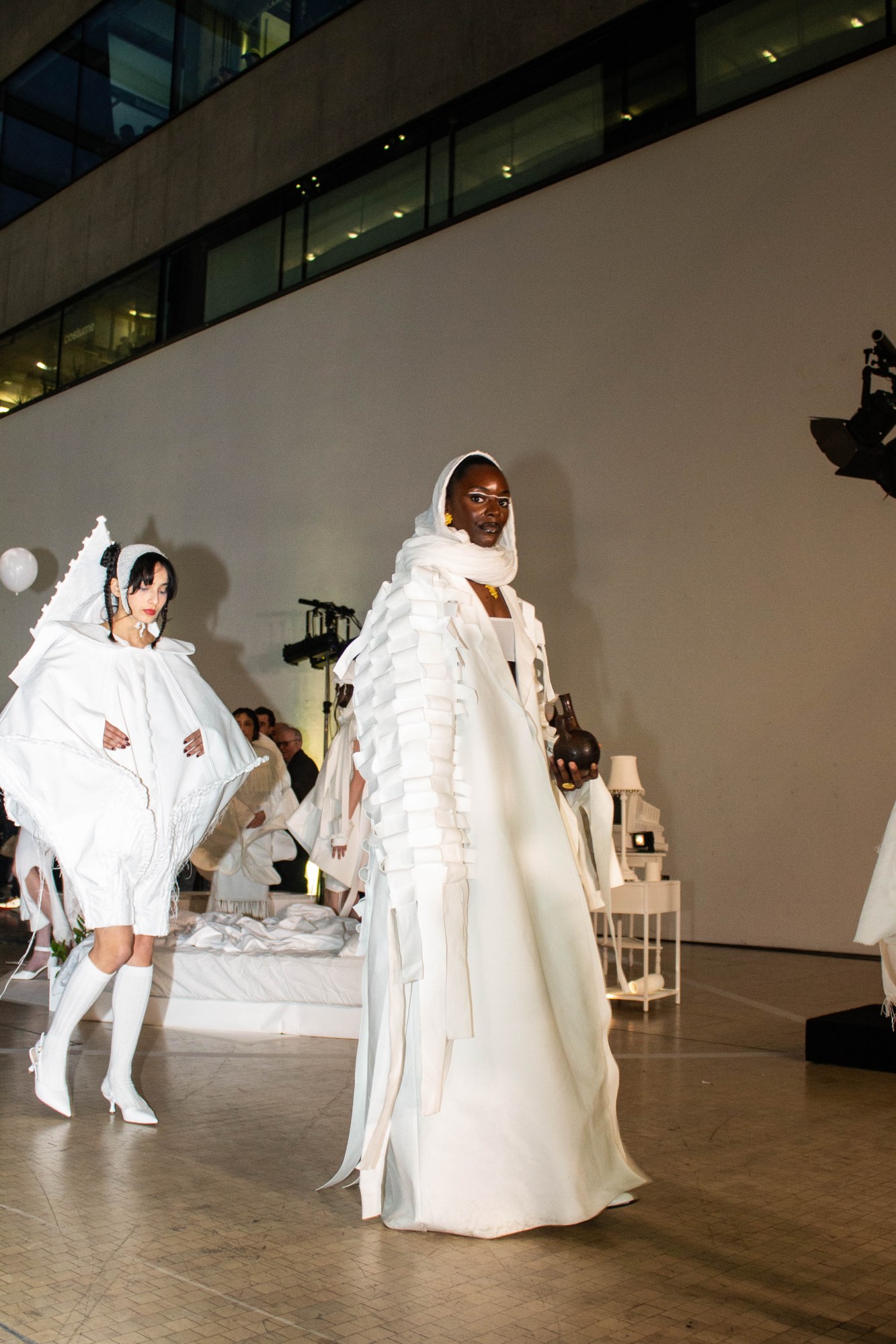
After flashing my camera into pampered models’ and HMUAs’ faces, I ventured into the abyss of white fabric and Lost Marys that were the fashion design studios: rows of benches piled with pins, garments, scissors, cigarettes, and Diet Cokes. Hair-and-makeup–ready models were changing into their looks, ranging from bulbous dresses to protruding spikes to a headless sculpture of a baby.
I maneuvered my way around, tripping only once, to capture the buzzing room. It’s amazing how quickly these people mew at the sound of a click.
1 p.m. – 3 p.m.
With the show inching closer, people grew more frantic. “Girl, I am not walking this sober. Madonna was here last year,” a model snapped when asked what was in his bottle. The designer rolled her eyes, and I chuckled, feeling only slightly jealous that his buzz was vodka while mine was from a now-auditory stomachache.
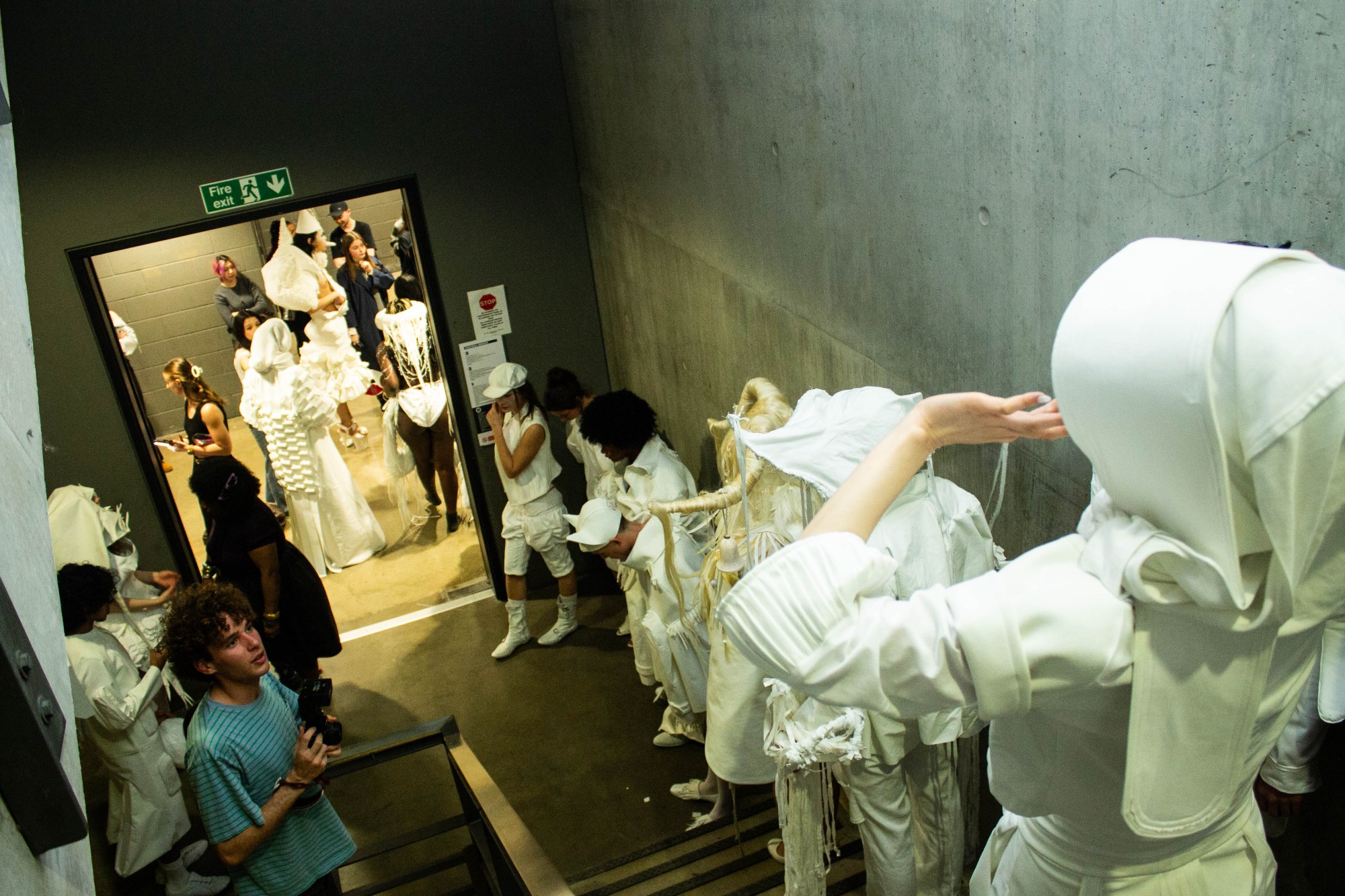
The head of production (aka a girl in my class) was megaphoning instructions about where to start lining up. Swarms of models, designers, and curious second-and third-year students flooded the descending staircases leading to the runway.
On my way down, I noticed a girl crying, upset about having her fringe slicked back. We spoke for a little while, mostly me trying to assure her how great she looked, but you know how people with lifelong fringes are. It’s like codependent twins or bad BO: you can’t shake them.
3 p.m. – 3:45 p.m.
Down at the bottom of the staircase, rumbles from the audience outside permeated up through the cement walls. Models were missing, then located, then missing again. People were anxiously chatting, while some models stood in zen-like silence, mentally prepping or avoiding the impending catwalk.
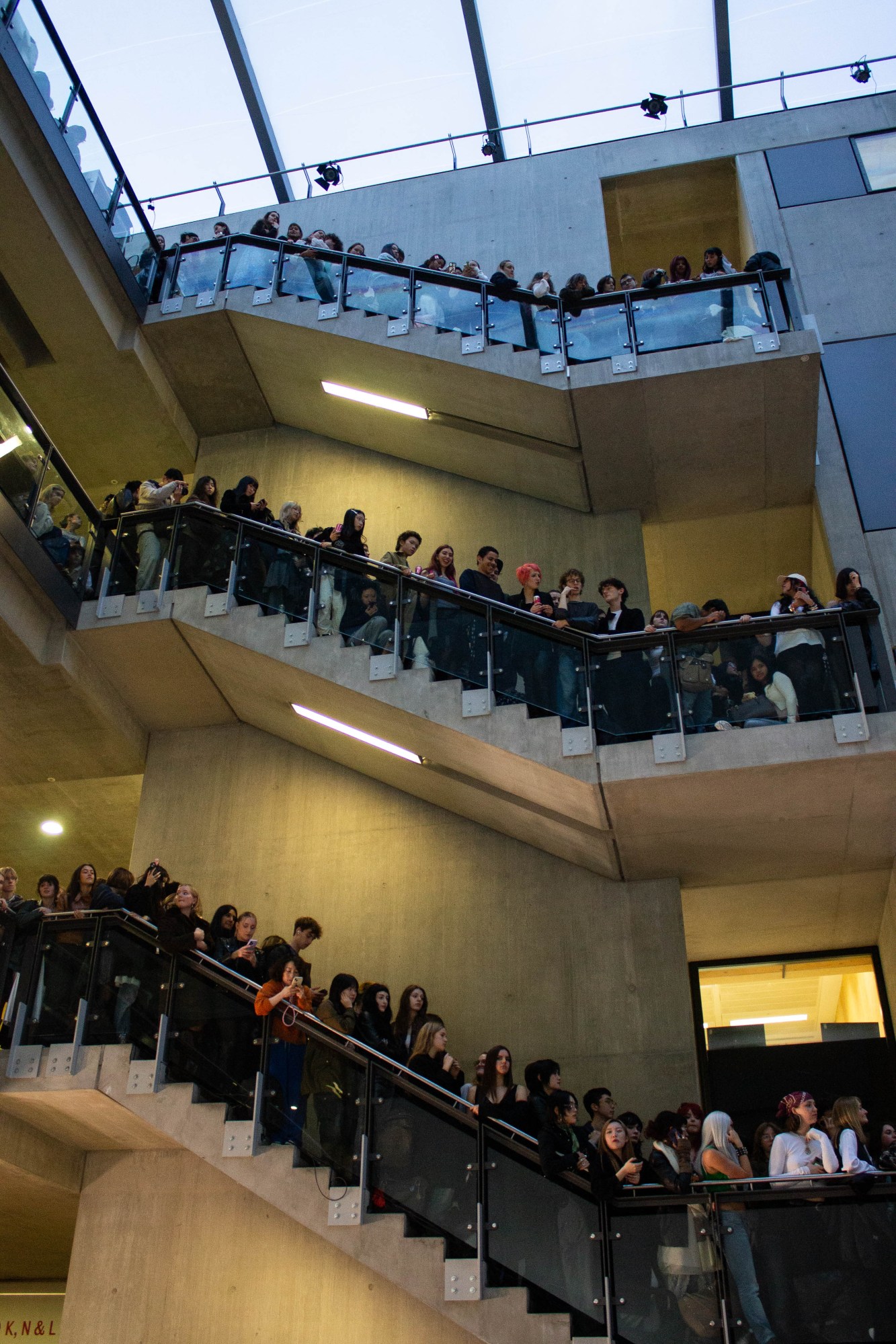
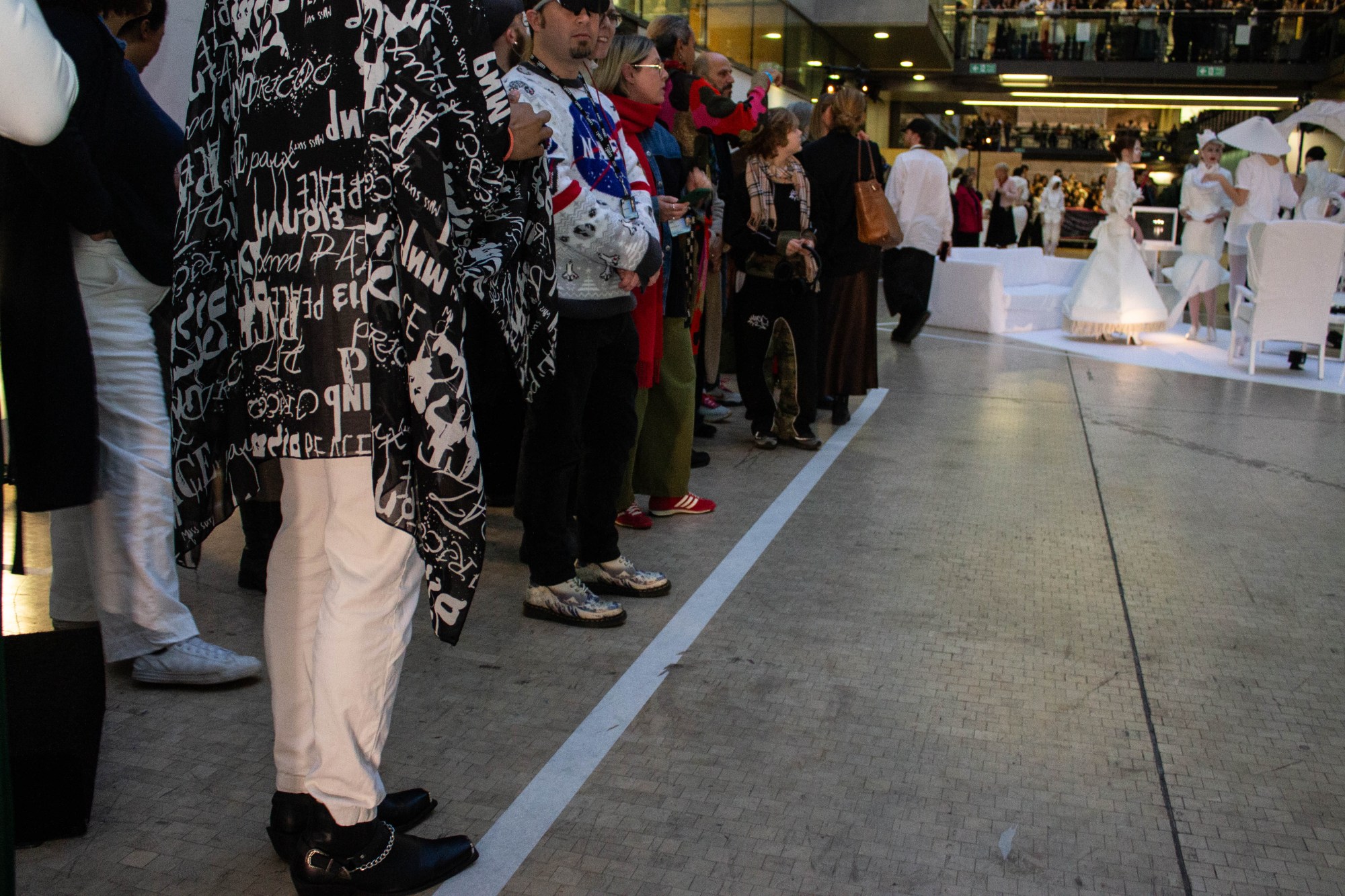
Outside, the ground-floor audience, a smattering of press, CSM tutors, and the fashion-adjacent, were teeming at the edges of drawn triangles indicating where to stand. Fashion elders readying themselves to hawk-eye the work of this year’s progeny. The three-story staircases at the front and end of the runway were jam-packed with students who had started lining up hours before, eager to see the work of their peers.
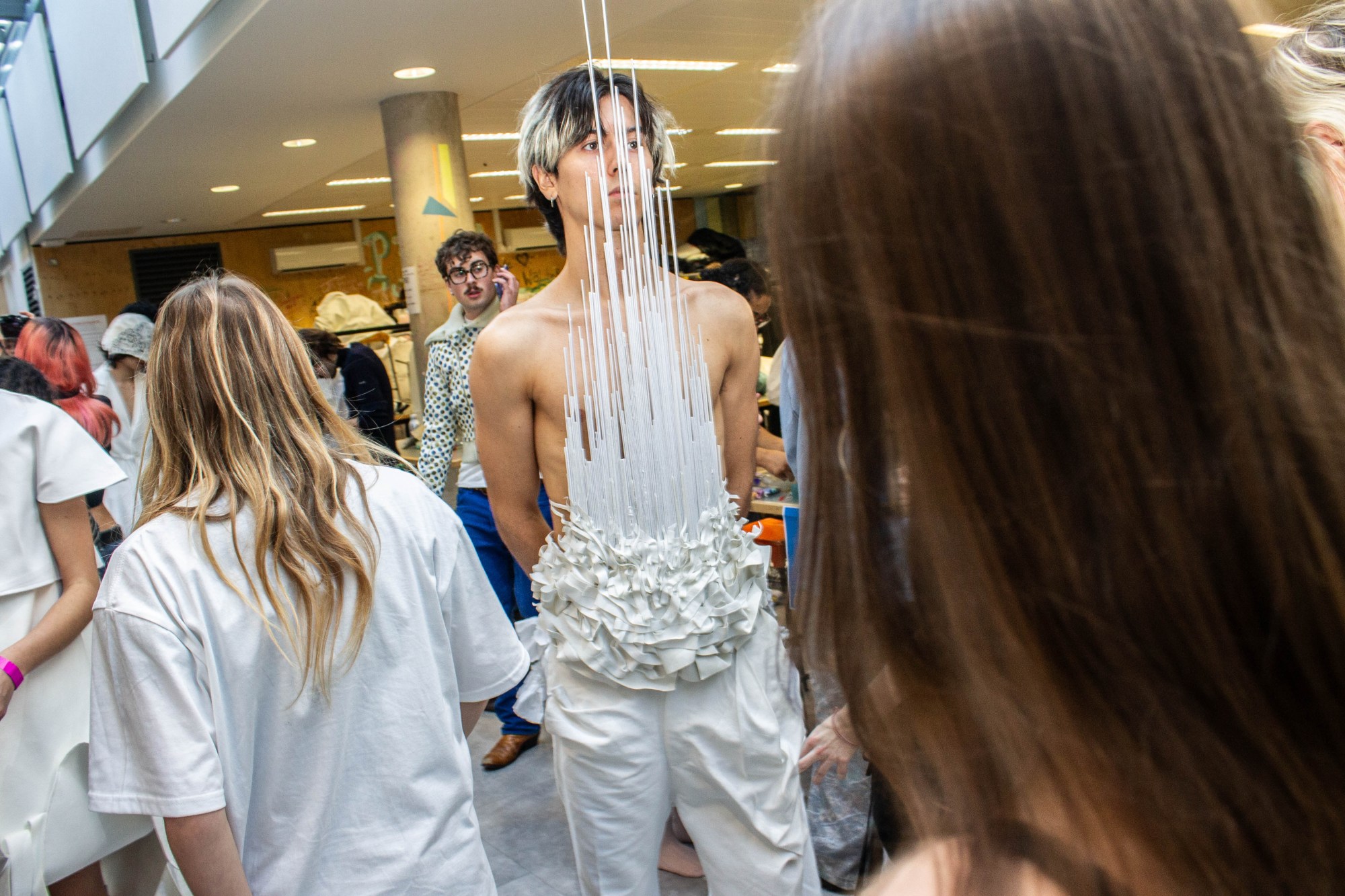
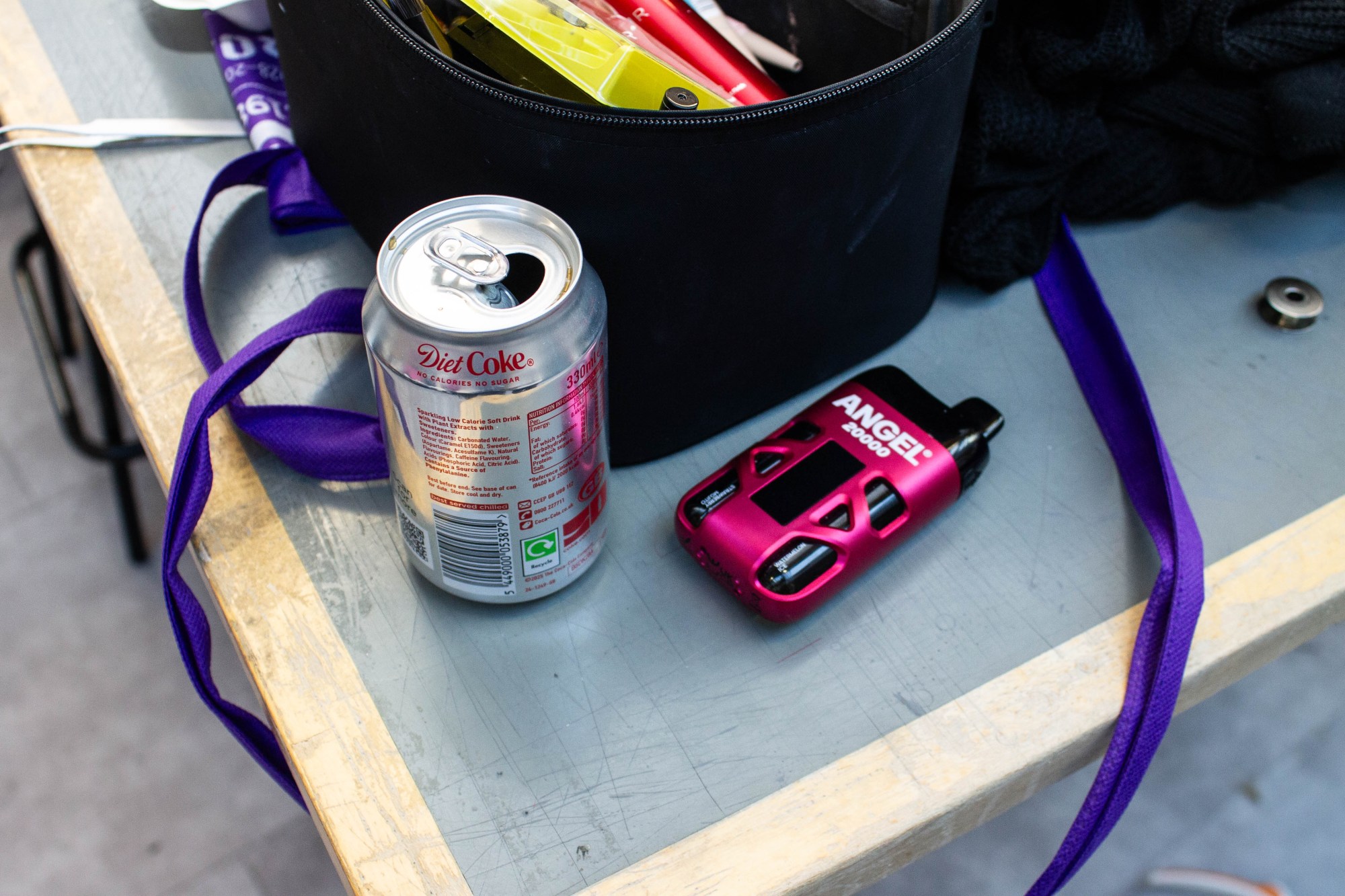
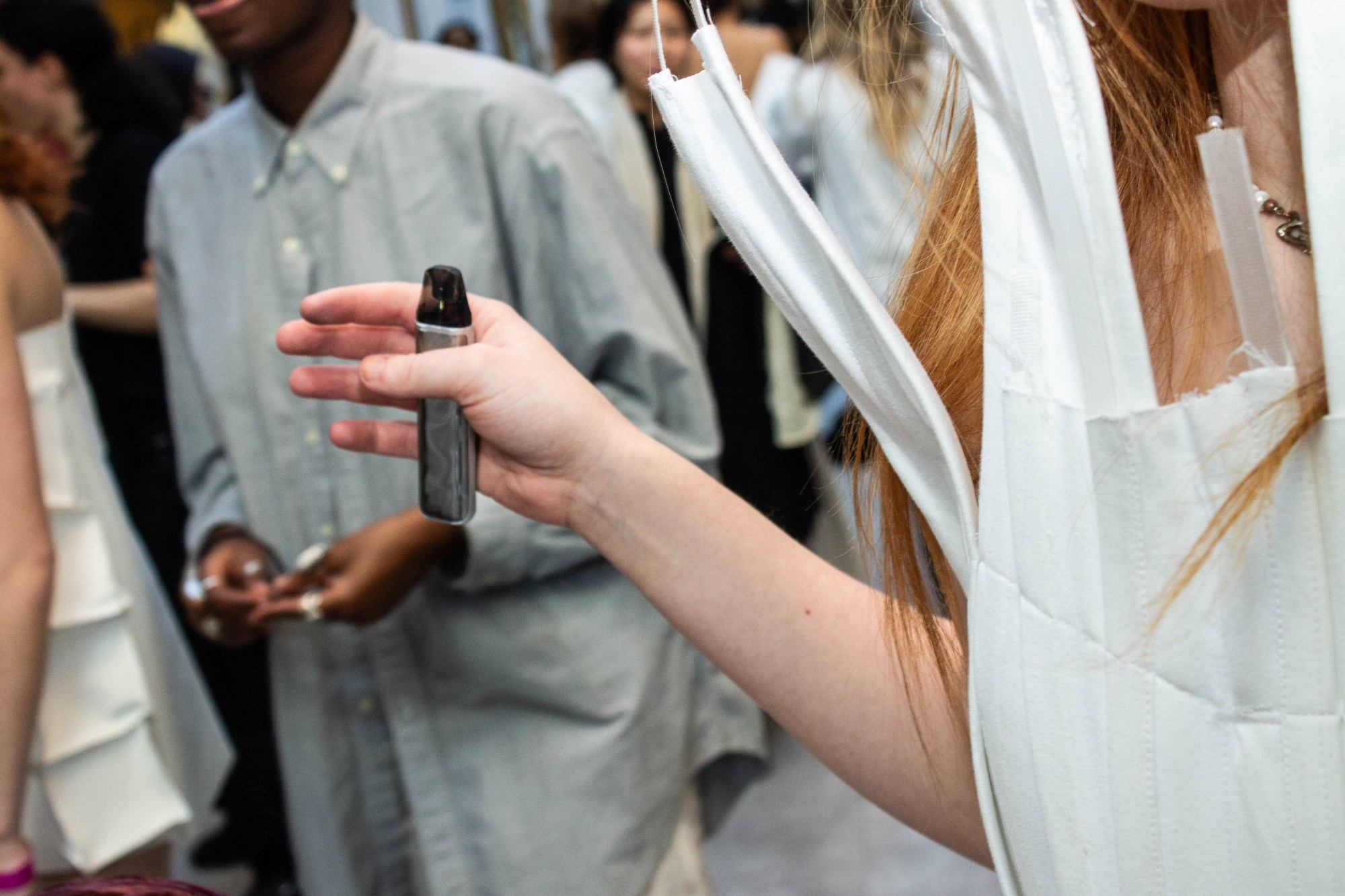
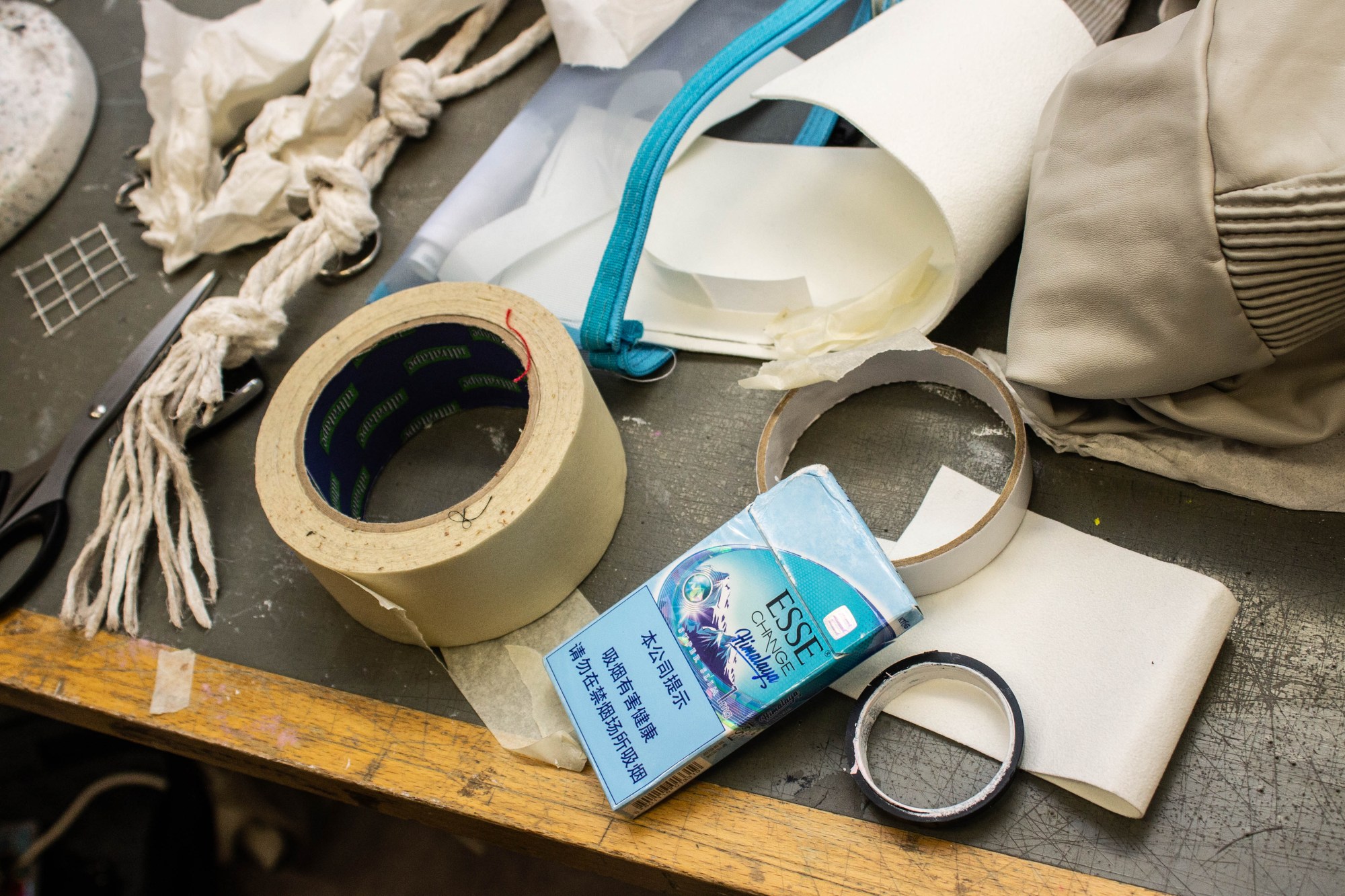
3:45 p.m. – 4 p.m.
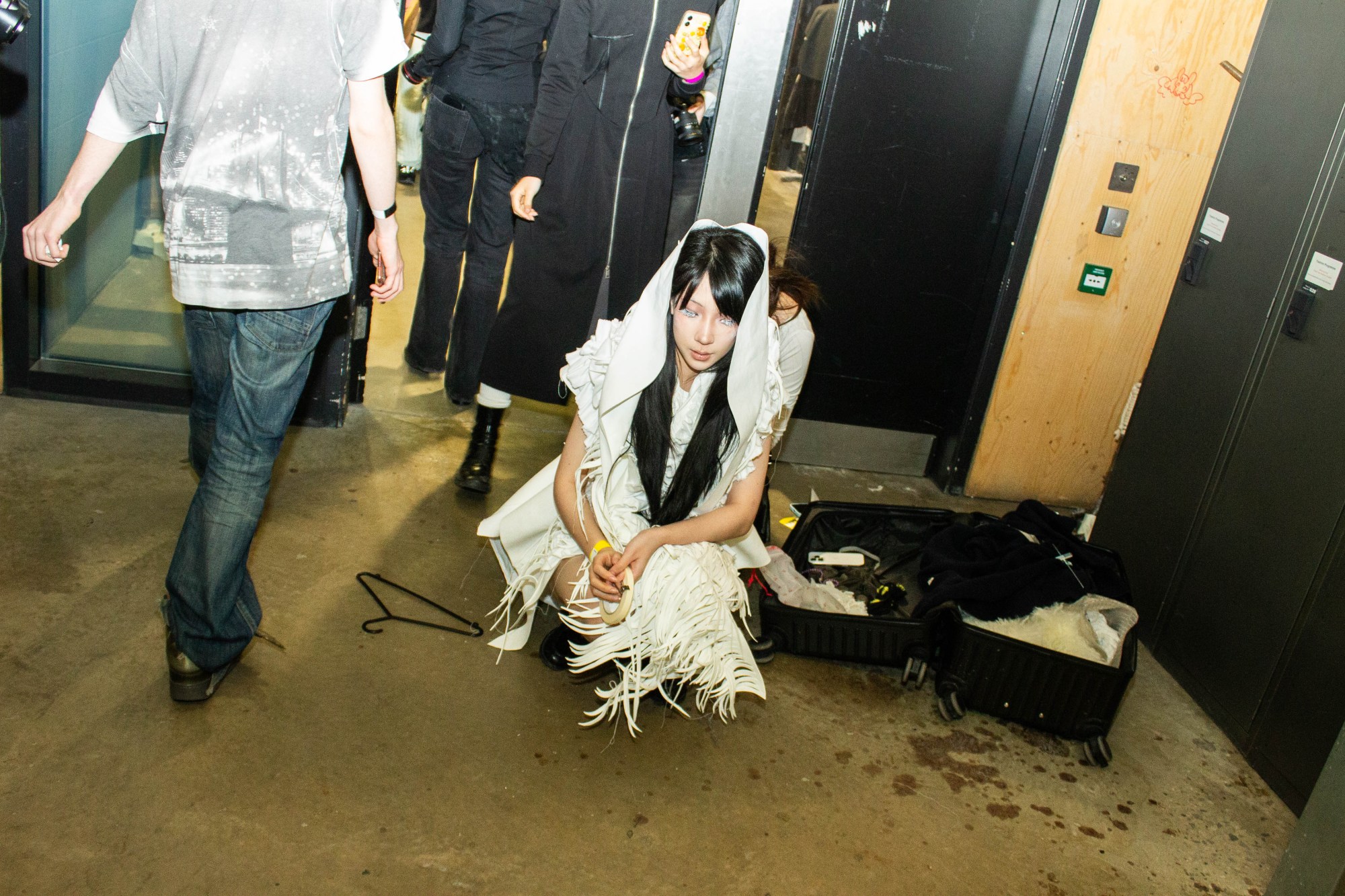
Backstage was bubbling and bursting, and the crowds outside stretched along the whole end of The Street. The chatter grew cacophonous, curious remarks bouncing off the isolated set.
I took my place next to the four floodlights at the very end of the runway, neon-pink nails gripping my dying camera. Good-luck messages pinged in my class group chat, and then, at 4 p.m., the ringing of a doorbell.
4 p.m. onwards
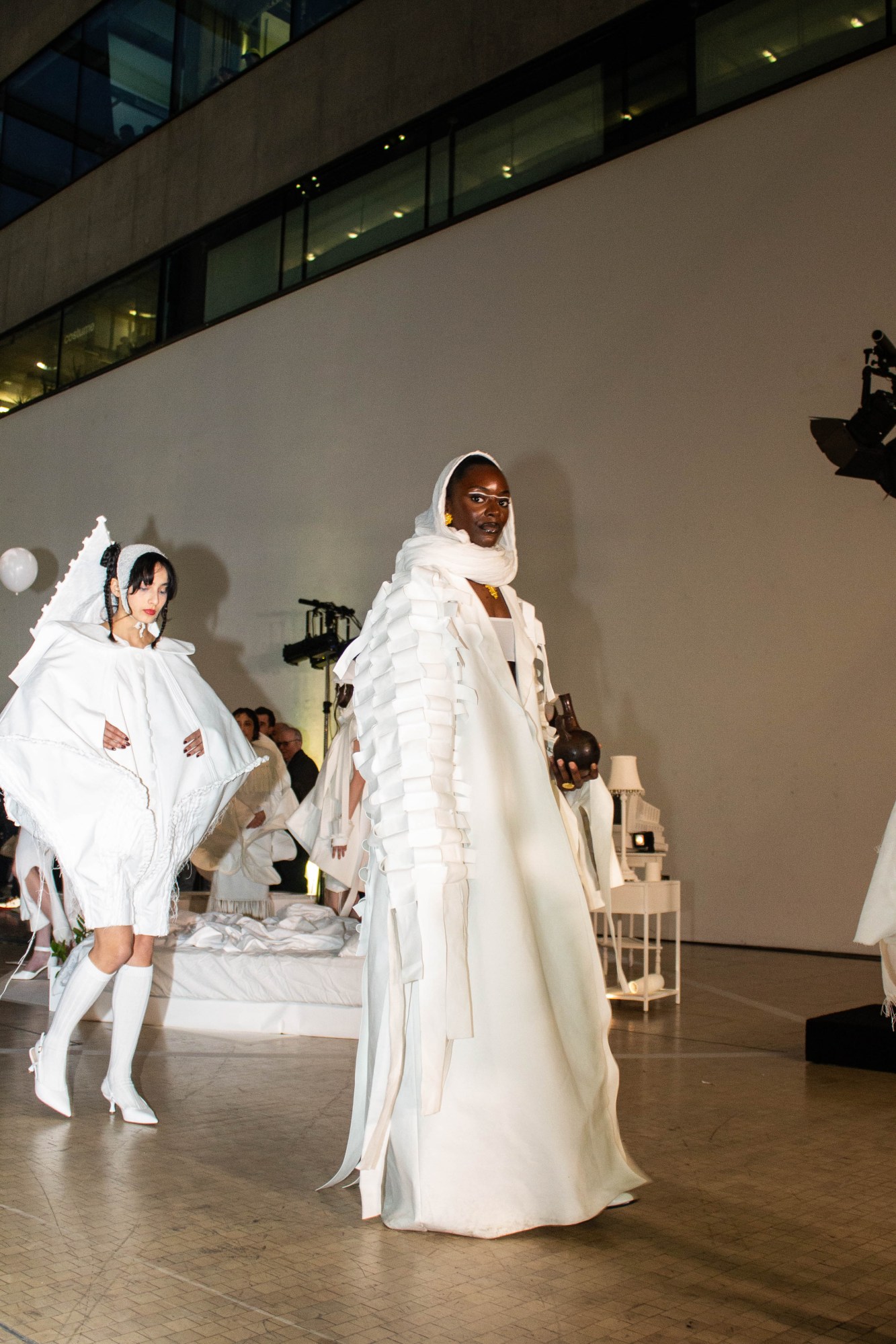
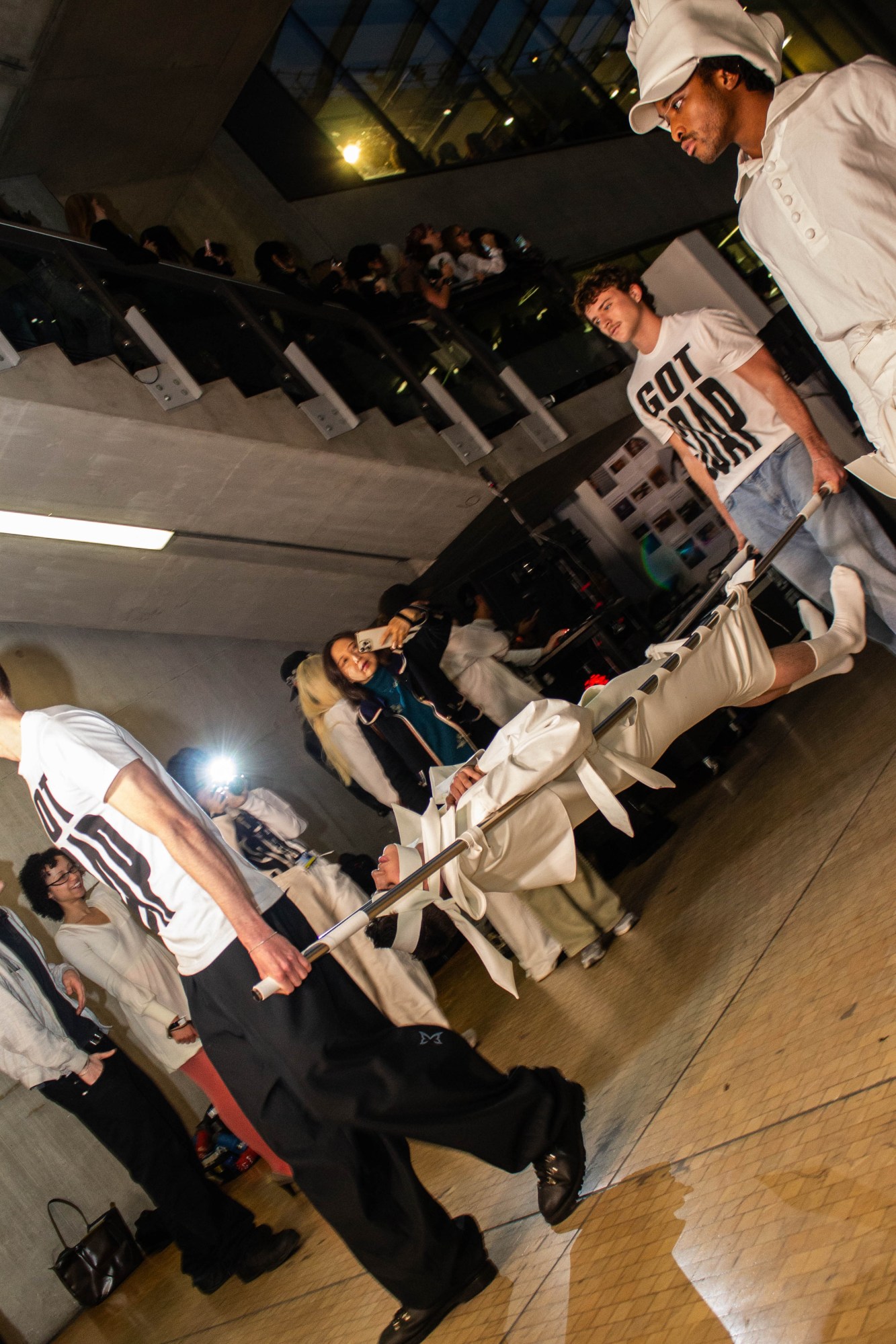
The show came and went in a prolonged instant, like a make-out that lasts a minute. The models strutted, walked, waddled, and, in one case, were carried on a stretcher. A dreamlike sequence of white fabric, ambient beats, and the realization of an idea that is no longer an idea, but reality.
After the last model left, in encore fashion they all rushed the runway again for a “house party.” The ground audience was supposed to join in, but I guess they took those drawn-triangle lines very seriously.
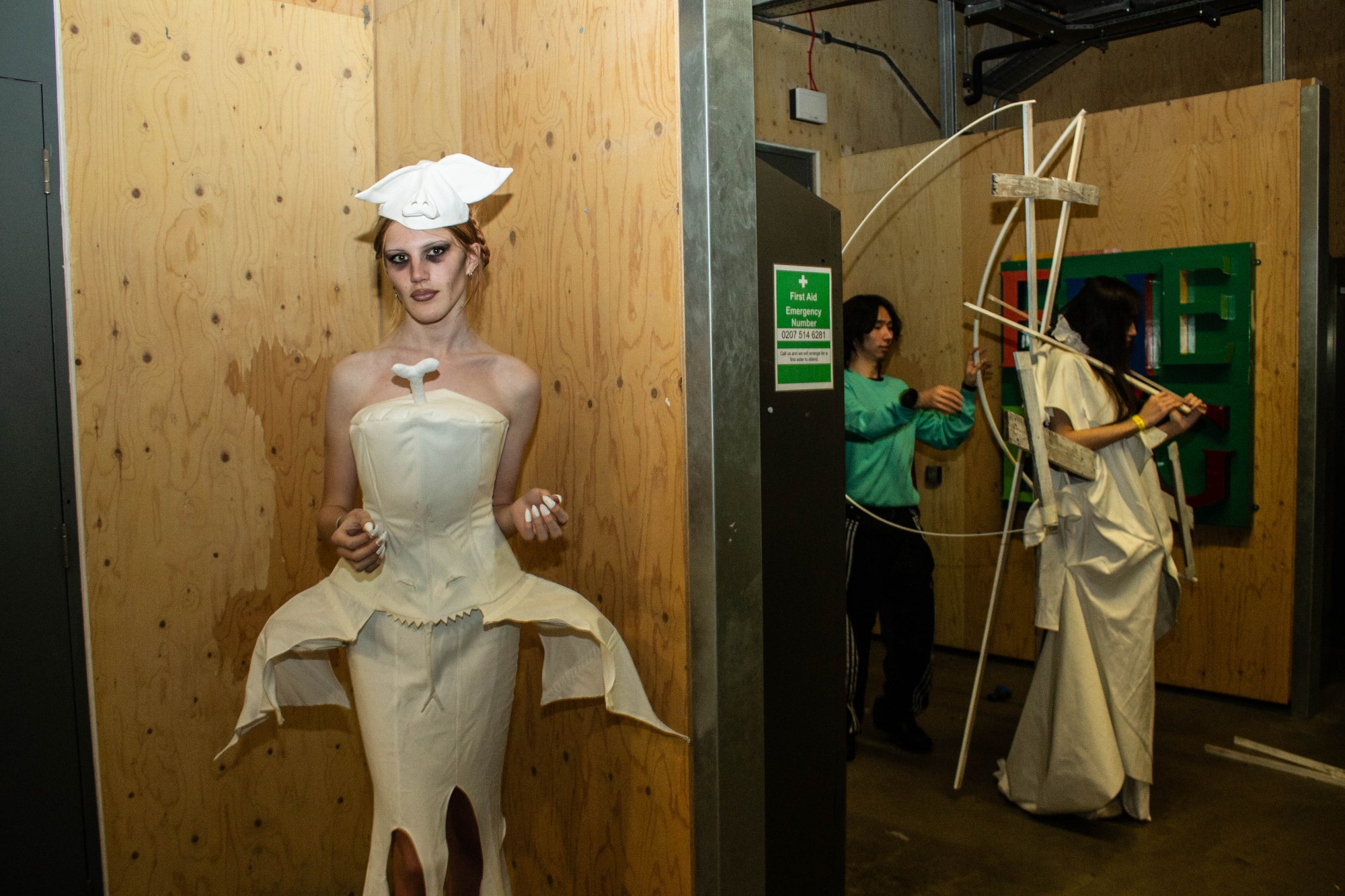
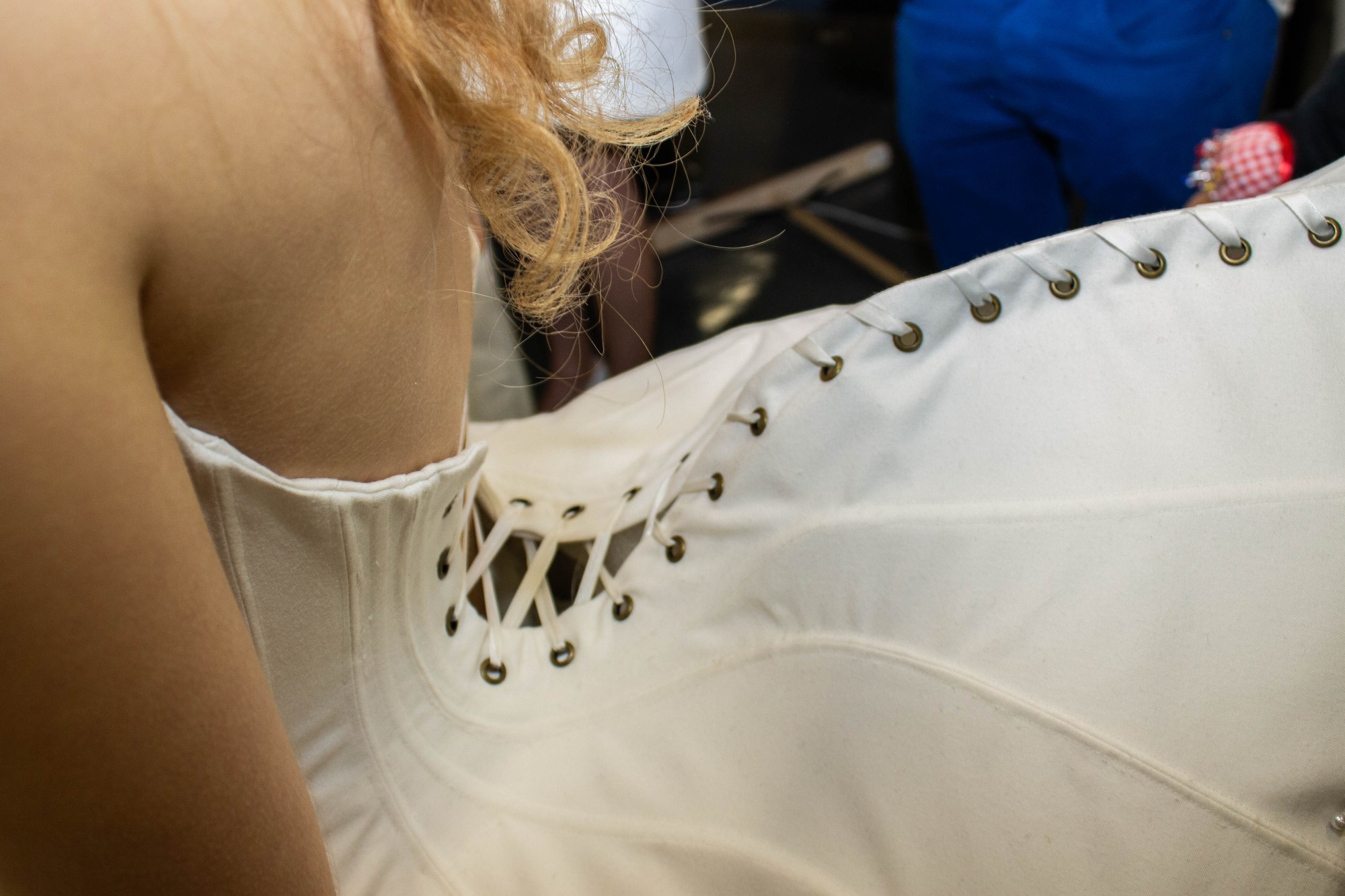
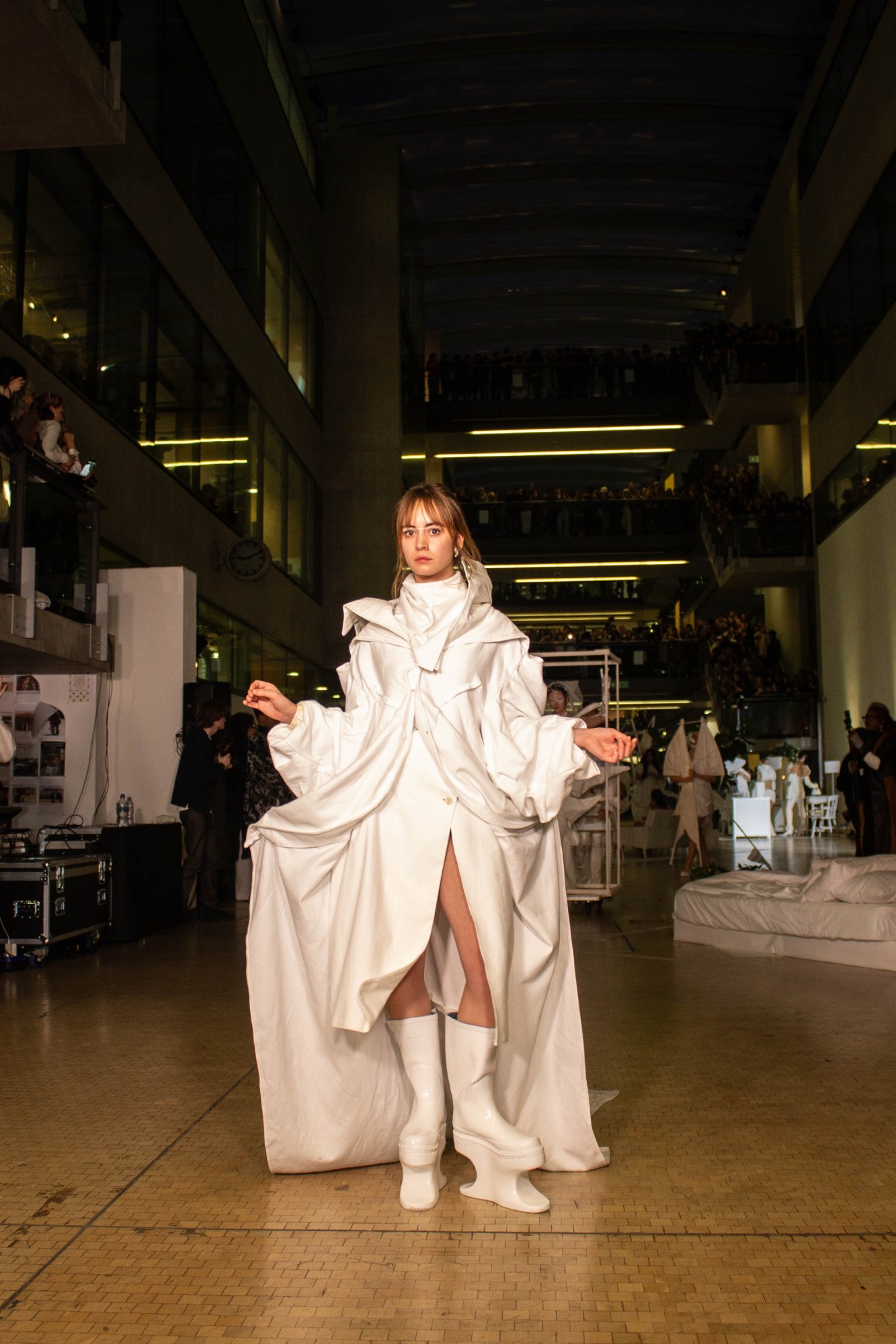
As it died down, I looked over the audience’s faces, trying to gauge the reaction, and I swear I caught the corners of my ever-stoic tutors’ mouths upturned in a smile. But who really knows.
After hugging my coursemates, I ran up into the digital labs to start editing photos, taking a brief pause to look out the window down at the street. The House was already gone, not even a discarded piece of white fabric left. Bittersweet, but to be honest, after all that, all I want now is whatever that model was drinking.