For most of its history, fashion was an art consumed in ornate rooms by small groups of the wealthy and privileged. Fashion photography could be seen in the pages of magazines, but even then, it was limited to those who had access on the newsstands. In 2000, Nick Knight cracked open the fashion industry when he founded Show Studio.
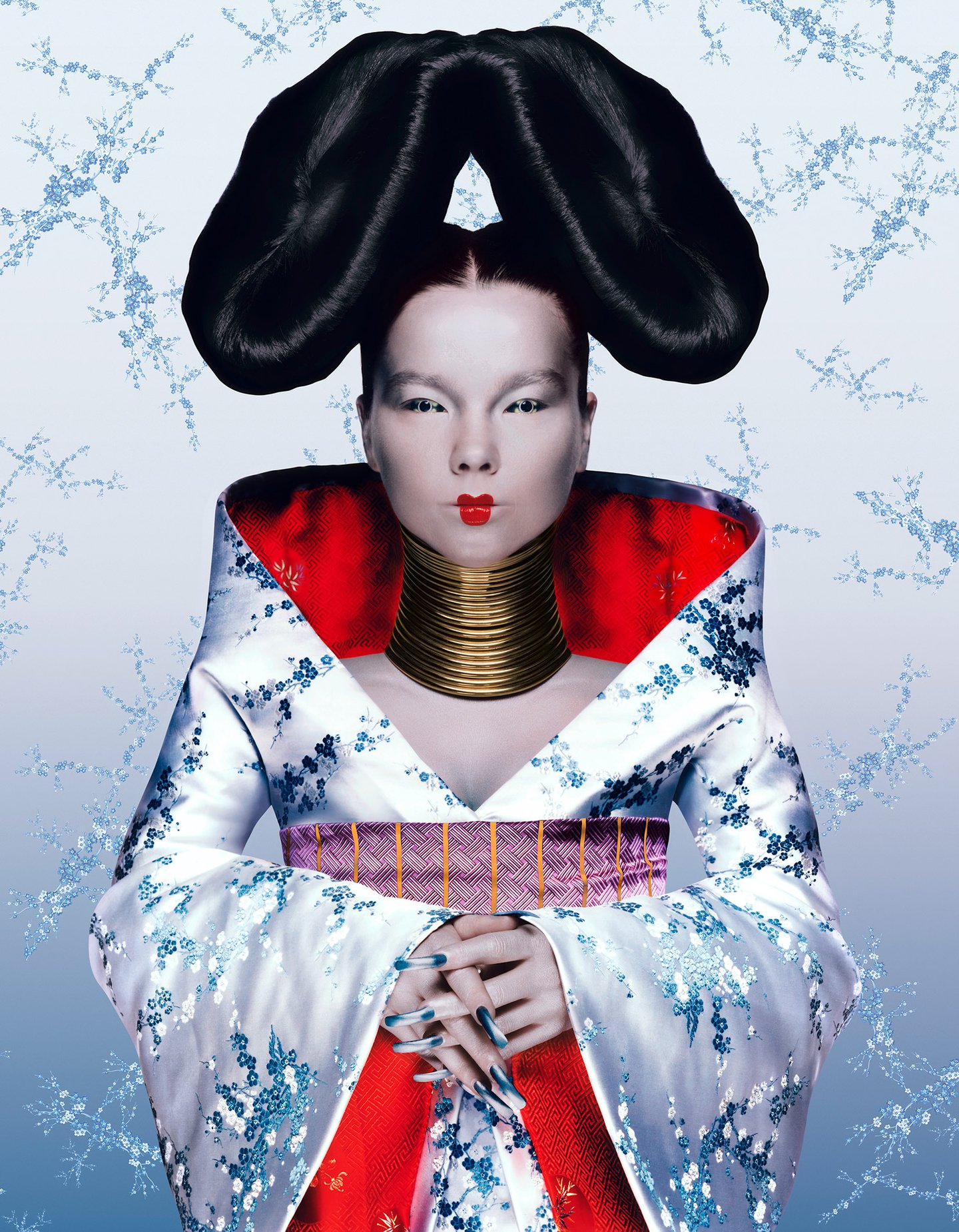
Originally built as a home for fashion films, Show Studio has revolutionized fashion with its live streams—the first was of Lee Alexander McQueen’s Spring 2010 show!—and revolutionized criticism with its live broadcasts and reaction videos. Knight, a prolific visual artist who was once the photo director of i-D and has shot famous album covers of Bjork and Lady Gaga among myriad others, has also used the wholly independent platform as a way to push the boundaries of his own art. At the end of 2025, he livestreamed from his studio, auctioning off personal fashion ephemera donated by the likes of Kate Moss and Michèle Lamy.
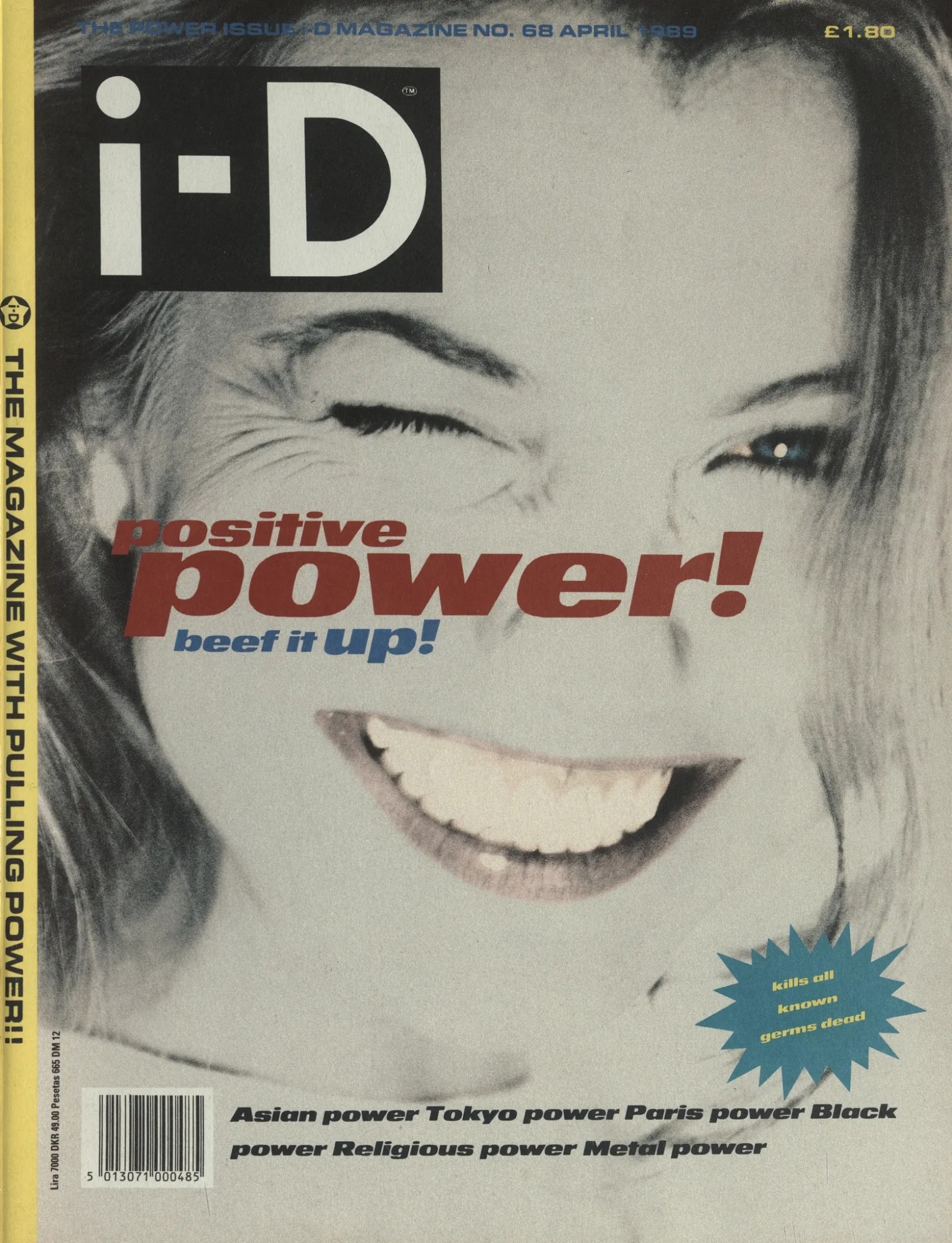
His vision for the future is optimistic and expansive, and in a long end-of-year chat he reflected on 25 years of independence and predicts the next 25 years in fashion and media. He also has a message for i-D… When I asked: Do you have a favorite i-D cover that you photographed?
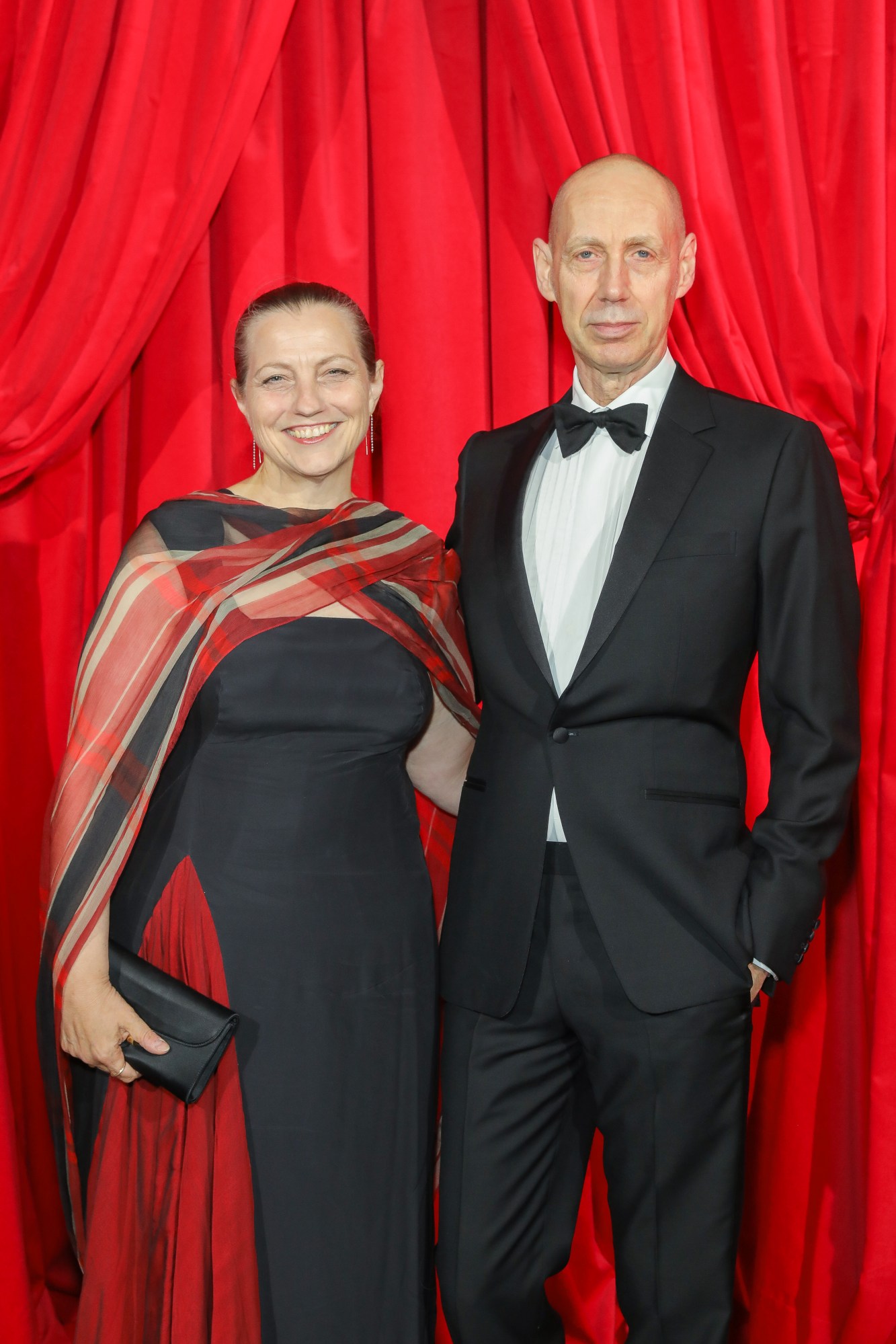
“Yes, of my wife, Charlotte. She’s beautiful and you know she should quite rightly be on the front cover i-D!” Among all his other accolades, he remains a family man.
On founding Show Studio
“The 20th century fashion media landscape was brands showing their collections to a very small audience of buyers and journalists, and the magazines were the way that fashion was articulated. This was before Facebook, before TikTok, before Instagram, before any of those social media platforms. Even, I think, before the show Big Brother. I think ShowStudio started at the same time. Mobile phones, they’d only just been around for a few years, and they certainly didn’t have cameras on them, and there was no social media. I don’t think it felt radically different, it just felt like something that I really wanted to do and was kind of obvious that it should be done. There were so many new things happening in tech. I did my first virtual catwalk back in 1999. It just felt like this was the thing you had to do because it was so obvious. I remember in the 1980s, being with Naomi Campbell, doing a campaign for the Japanese designer Yohji Yamamoto. There were five of us in the room, and I remember thinking, This is amazing. Here’s Naomi in a beautiful Yohji coat, dancing away to a tape that Prince had given her. I thought, well, what a shame. There are six of us [in the room] seeing this. I’m sure some other people would like to see it. So that’s where the idea of Show Studio came from, just showing what we did in the studio, because I was convinced that it was an interesting thing to see.”
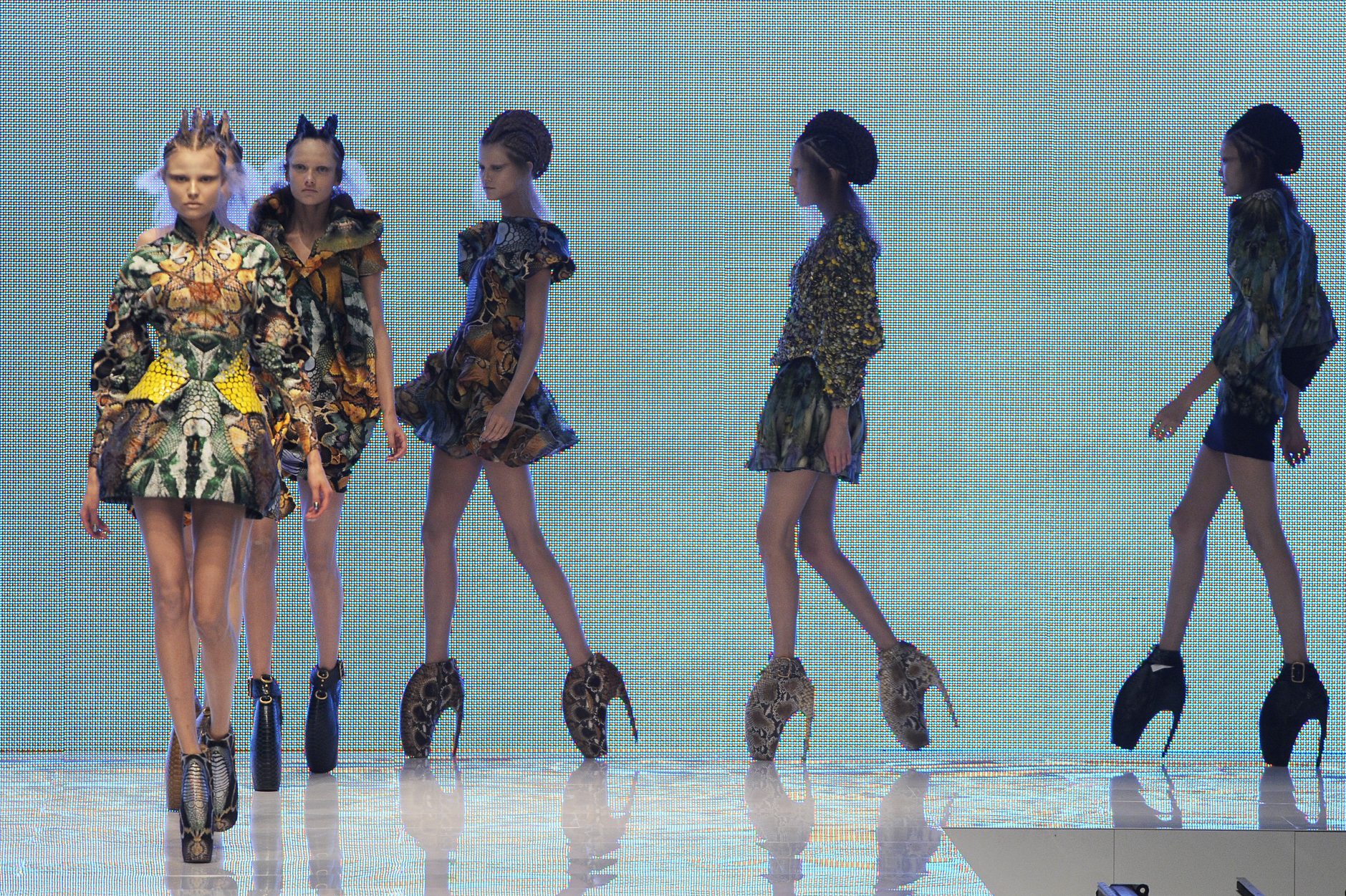
On Livestreaming the First Fashion Show, Alexander McQueen Spring 2010 Plato’s Atlantis with Lady Gaga
“It took a while for brands to realize what was going on online. The watershed moment was Alexander McQueen’s Plato’s Atlantis that we streamed on Show Studio. I think the brands realized they had 300 people in the audience, but 6.5 million Little Monsters came to try and see Lady Gaga. That crashed the stream, which wasn’t desirable, but it was just the byproduct of 6 million people coming at once. I think all the CEOs realized that if you get the right mixture of people they could get their product in front of millions of people, not just a few hundred. It really changed the industry—the next season, 70 of the shows in London were being livestreamed, so it had a pretty radical effect straight away.”
On the Fashion and Social Media Relationship Today
“We have a very interesting social media scene compared to what it was before when nobody could comment on fashion. Now some person in their bedroom in Minnesota can have as much weight as a journalist sitting on the front row. That t really changes the dynamic of how fashion is, changing it from a small and and you know open to a much bigger audience. You’re talking to lots of different cultures and they’re pouring in their influences and their likes and everything else into the sort of mix, so you have a much more interesting fashion scene than when it was before.
The structure that fashion criticism was forced into before was very sycophantic and people could not say what they really thought about collections and shows because the magazine supporting them would lose their advertising. I hope we give an alternative to that, because we don’t take any advertising. At Show Studio we can say what we want. We want to try and be honest and intelligent about criticism, not slanderous or scandalous. There needs to be a place where you could have honest fashion criticism otherwise you’re caught in a stranglehold with a brand. We broke out of that system when we started doing live reviews of the shows with a panel of experts to review them live while they were happening. That changed the dynamic of fashion criticism because we have buyers, fashion historians, models, photographers all able to express their opinions. But it meant that I wouldn’t take advertising. I insisted that it should not be funded by any big companies that came at the beginning and wanted to put some money behind us. It wouldn’t have meant I wouldn’t have been able to say things, and that’s partly why I started Show Studio to begin with—because back in the ’90s the mainstream wasn’t particularly reflecting my views.”
On Using AI in Fashion and Art
“Now we have such great technology, AI and 3D scanning—all the things that we can do now are so incredible. AI has, quite rightly, scared a lot of people. I think that’s quite appropriate that it scares, but I think it’s not going away. It’s here to stay. So surely it’s better that it’s in the hands of artists rather than just in the hands of the military and big business because otherwise you’re faced with the creation of a new digital world which will be created for greed and killing. That’s what we’ve done up until this point in history [with new technologies]: We have created societies based on greed and killing. That’s why I think it’s really important for artists to be involved in AI and have a really big part in the creation of a digital version of ourselves.
Of course, there’s a lot of rubbish, but there was a lot of rubbish when Photoshop first came around. There are some dreadful Photoshop horrors that existed. And—if I’m truthfu—when photography was first popularized in the ’50s and ’60s, there was an awful lot of really bad photography that went around.These big cultural changes do happen, and people, in some ways, are quite right to be fearful of them, but that’s how things change.
AI has only been around for us to experiment within the form it is now for four or five years, so I think we, as artists, need to be experimenting with it. At the moment AI is being used to pastiche photography, pastiche painting, and pastiche film, but it’s actually a new medium itself and it needs artists need to invent it. … I’ve seen enough rehashings of old photography styles, I don’t particularly want to see another you know Avedon shoot, another Penn shoot, another Steichen shoot, another Helmut Newton shoot. We should be finding new things. So that’s kind of where I am with all that.”
On the Spontaneity of His Process
“The way I work when I create a film is probably absolutely a nightmare for my clients because I refuse to storyboard. I’m not just executing a story, I’m trying to find something new. I can’t say to my clients, after this scene, this scene will happen. Fashion film shouldn’t be a narrative medium. You work by seeing things and reacting to them, not by logic-ing it all out and planning it all out. You can’t practice it. You can’t rehearse it.”
On Incorporating AI into his Work
“I have a camera now that when I point it at the scene or point it at a person, it doesn’t give me a photograph, it gives me a poem. I can take that poem and I can feed that into an AI, and that AI will give me back a sculpture. And I can take that sculpture, photograph it, and then make it walk. One shouldn’t just think using AI is somebody pressing a button and out comes the answer, any more than I just walk into a studio and press a button and out comes a photograph. It’s an ongoing process. I was making sculptures out of bits of stone the other day, and then photographing that and then scanning it to the AI, then prompting it to make it abstract. Then asking AI to rationalize that and then making that into a sculpture. That process has never been around before. Previously in the arts, we’ve been divided into linguists and visualists. I’m a visualist. I express myself fundamentally through the visuals I create. Now what AI is allowing us to do is to combine language and visuals. Now an artist can do everything. I can create a song. I can create a sculpture. I can create a passage or I can create a story or I can create a poem. And whatever outcome, I will be the curator of that art.
On the Importance Staying Independent
“I’m not a communist, but I’m certainly not a capitalist. I don’t really believe in money being a source of good. I know that’s a slightly naive thing to say, so I take the flack that would come of me saying that comment, but i just think it’s a false goal. There are two really big false goals which need outing: One is money, the other is fame. Nothing to be gained by being rich or famous other than putting a roof over your head, having food to eat, and security for your family, after that there’s really not much more to be gained. … I’ve survived 25 years of doing something I love that has allowed me to support other artists and to do things I would never be able to do in any other way. And that has been because I’ve been doing it for artistic reasons and not just to make a quick million dollars on the internet. I was never interested in doing that. I was never interested in selling Show Studio to make loads of money.”
His Advice for Young Artists Today
“Believe in yourself. That’s really, really important because there’s no one who can tell you that you’re not doing it right. You also have to realize that it’s not a job, that it’s your life. This is about living your life, the ups and downs, the loves, the hates, the fears, everything else, through your lens. Never be frightened of failure. It’s actually healthy. It’s something you have to go through.”