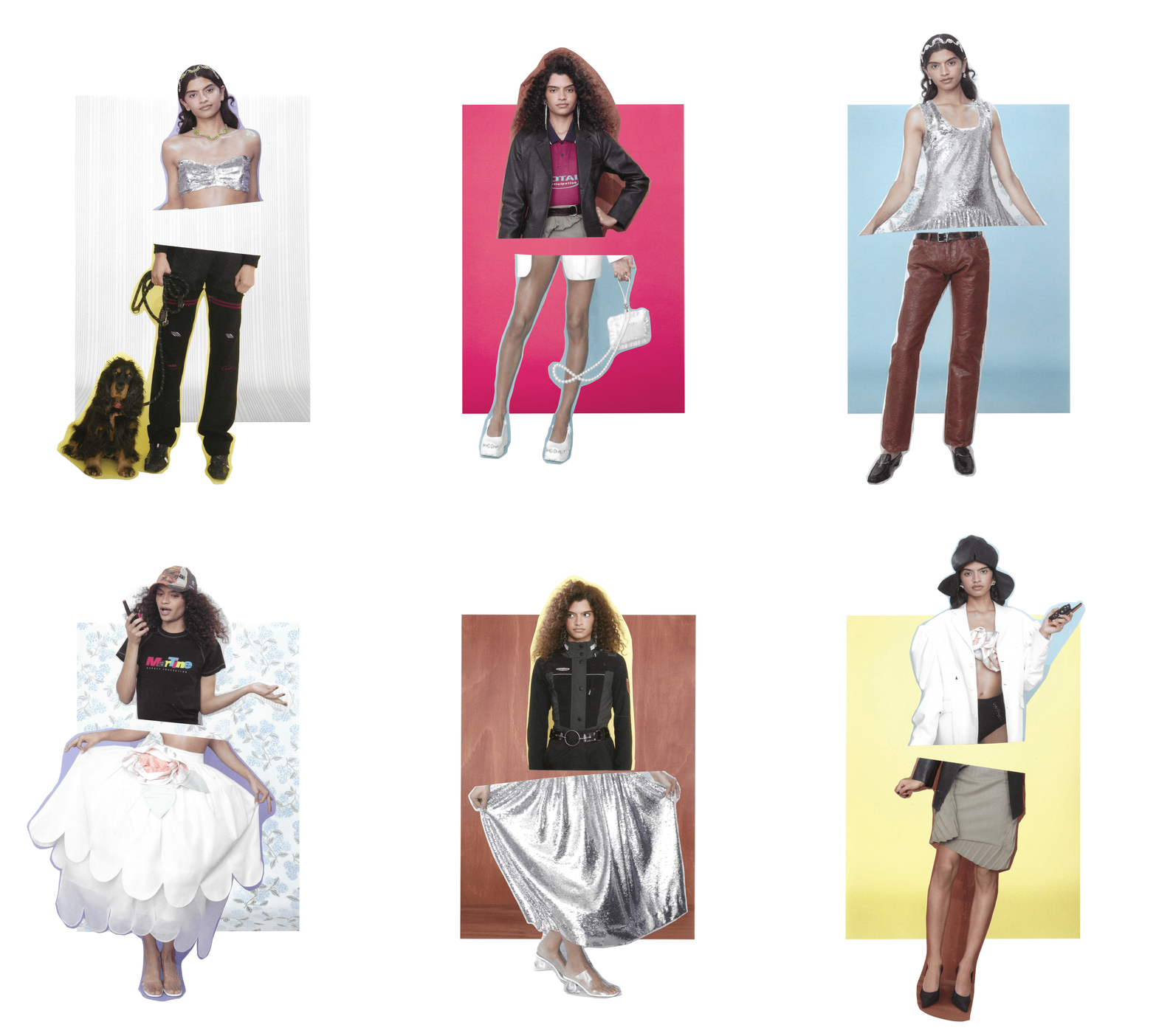
This story appears in i-D’s upcoming Spring 2026 print issue.
written by STEFF YOTKA
photography PHILIPPE JARREGEON
styling CLARE BYRNE
There are thousands of fashion designers in a generation, but there are few that actually change the way people dress. Simone Rocha and Martine Rose surely have. Since coming up in London in the late aughts and early 2010s respectively, the designers have gently and strategically laid out their own radical visions for how to change both fashion and the fashion game: Design with your whole head and heart, cultivate a family spirit, stay independent, and don’t be swayed by the rat race to the top of a heritage house. Even with wildly different aesthetics, they have a rebelliousness and a freedom that unite them.
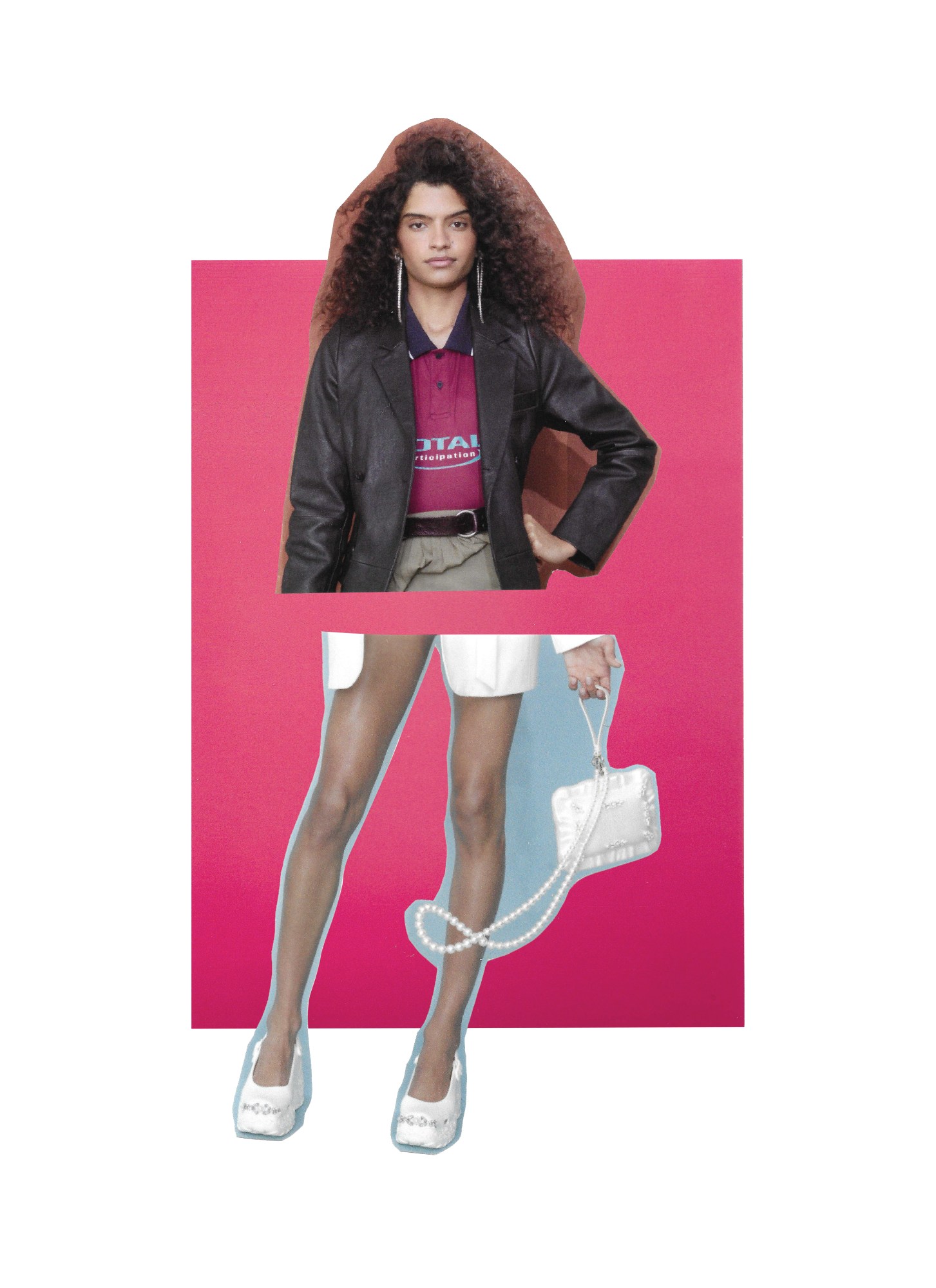
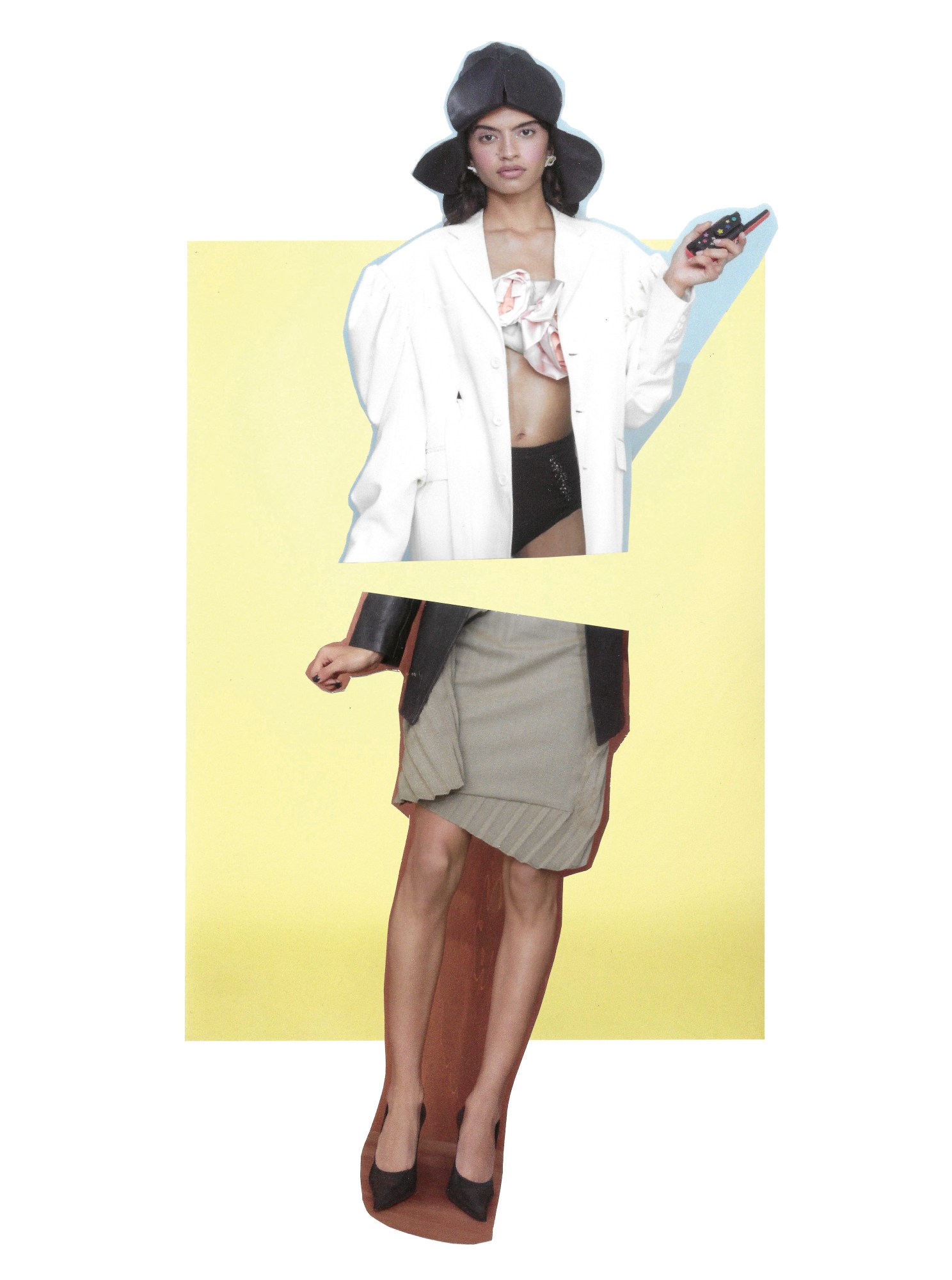
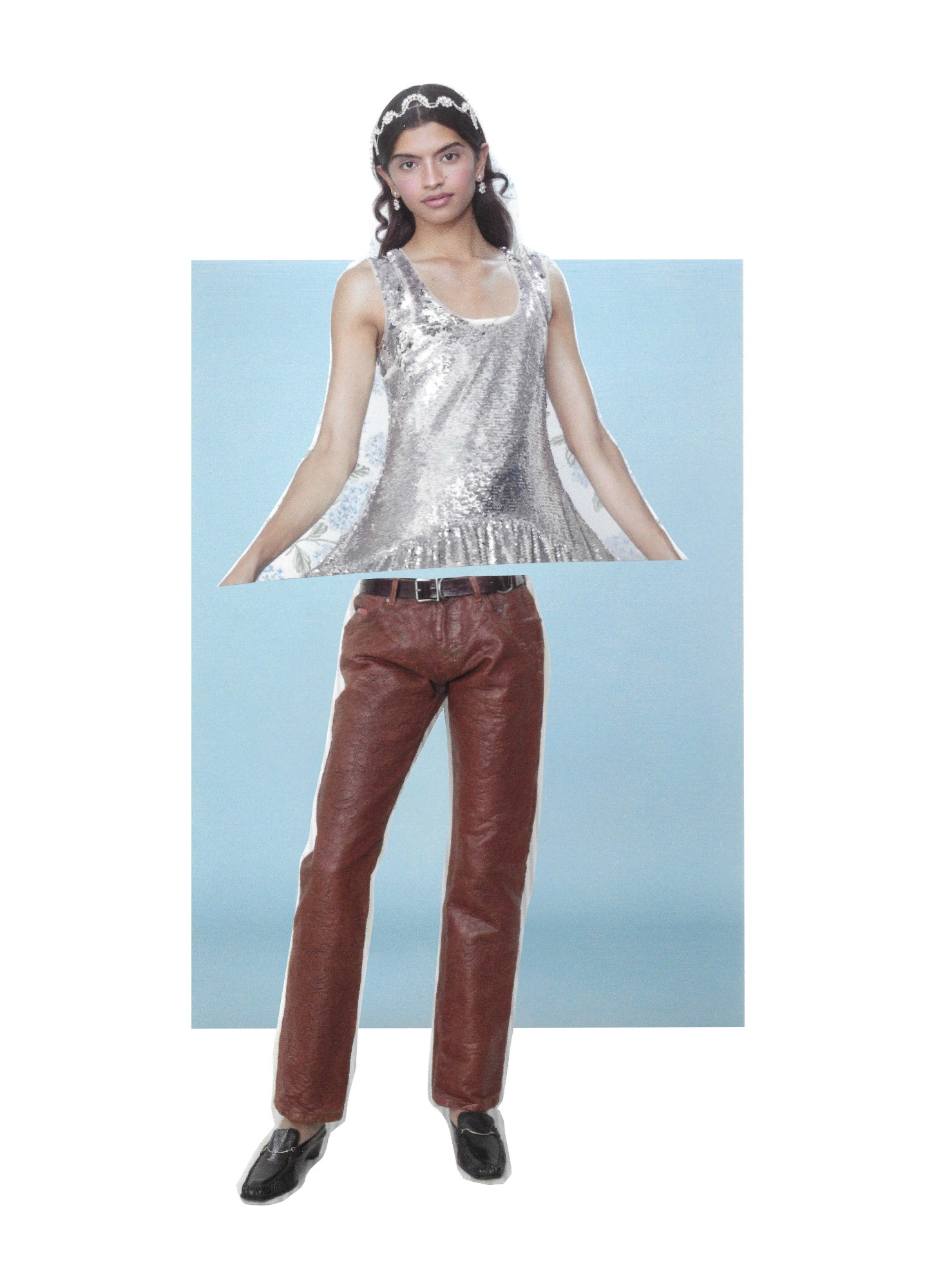
Rocha, born in Ireland, has a fierce and romantic view of femininity tethered to the inner workings of a woman’s mind, spanning from baptismal whites to mourning blacks, this season settling on rebellious teenage years in sequins, band tees, and lilies. She’s made ruffles and romance dead serious—her clothing contains a precocious bite underneath its layers of tulle. Rose, a Londoner through and through, has launched men’s silhouettes toward the bold and kinky, protruding out shoulders and slicing low trousers. Her sharp and sensual tailoring is genuinely charismatic—the clothes have a pulse, a swagger. She’s made suiting and sportswear fun, lending them a sense of whimsy and exuberance so often forgotten in menswear.
The designers, business owners, mothers, and women have been friends since their younger years. They are both vibrant and warm—qualities captured over an early morning video chat from their respective studios, tea in hand, ready to explain how they’re not just surviving the fashion industry, but leading it. If you’re easily distracted by all the chess moves at the big houses, you might have missed that these two women are the ones actually driving fashion forward. That they remain independent is just another feather in their caps of success. My advice to you, readers: Big boss fashion chess is a boring business—try being alive, kissing, dancing, and dreaming, ideally wearing Simone and Martine.
STEFF YOTKA: You’re two women who have founded their brands and grown their brands while remaining the creative life force and overseeing the entire business. What is your favourite part, and what is the hardest part, of your jobs?
MARTINE ROSE: We can get to the hard bit in a minute, but it honestly really does feel like a blessing to do what I do. When it’s great—and it often is—I’m like, “I can’t believe this is a job.” We meet the most incredible people. For me, it’s always about the people. You dream up these ideas, you imagine that you want to work with someone, then you reach out and somehow they want to work with you. And then the worlds just open up and open up.
I get to weave this story throughout it all. I just think that it’s an unbelievable privilege. It’s not lost on me, that side of it. It’s just that running a business is hard. It constantly shows me my weaknesses and my flaws. The business stuff—that’s not really why I got into fashion.
SIMONE ROCHA: Totally. It’s so complex. I get to have these ideas and translate that into physical objects that someone gets to wear and makes them feel something. Then the fashion show—I know we have a kinship in this—I love the show and bringing all these things together. There’s no feeling like it. The adrenaline of the show, being backstage, or when the models are just going out on the catwalk. Or the first time you hear the music—
ROSE: Oh, it’s amazing.
ROCHA: It is the best thing. And you do it every six months. The in-between is what I find quite extreme. The last few years, I’m finding the extremes much harder to deal with.
ROSE: I agree, actually. Maybe, as you get older, you crave something calmer and that’s just not what you get.
ROCHA: And then the hard bits—we might not get into the details [laughs].
ROSE: The hard bits are the universal hard bits. Supply chains. Managing. Putting fires out. The other day, my son said to me, “I’m the leader of my group.” And I said, “What makes you the leader of your group?” He said, “Well, I sort of tell everyone what to do.” And I was like, “That’s not technically what a leader does.”
ROCHA: A leader listens.
ROSE: A leader needs to take responsibility. He needs to be the first to sacrifice himself. He has to uplift his team.
“Once people started wearing the clothes—older women, younger women, large women, small women—I realised that it was a femininity that people could touch on no matter what.”
SIMONE ROCHA
YOTKA: What makes your work so poignant is that you both can present a fantastical world, but it’s never fanciful. You make real clothes, rooted in reality—real people, real emotions, real ideas. What’s in the shop is what’s on the runway. I go to a lot of fashion shows and I hear a lot of BS about what women want and how women dress. How do you connect to that reality while allowing yourselves to still dream?
ROCHA: I always hated when I graduated and people would be like, “So who’s your muse?” I was like, “That is the lamest question I’ve ever heard.” But everyone asked—the press, buyers, recruiters, all these people. I just found it so small.
ROSE: Narrow, narrow, narrow.
ROCHA: What happened with me very early on, and maybe the same with you, Martine: Real people started wearing my clothes. We started selling clothes almost instantly.
ROSE: Same for me. I started seeing my clothes on lots of people, and that was really inspiring.
ROCHA: My shows, at the beginning, very much reflected my own heritage, being from Ireland and Hong Kong. But once people started wearing the clothes—older women, younger women, large women, small women—I realised that it was a femininity that people could touch on no matter what. That made it very clear to me that I didn’t have to get too fixated on one person or one muse.
ROSE: That is exactly how I feel. There is definitely a Rolodex of characters that I’ve always found incredibly inspiring. Like Simone said, when the clothes started to be sold and worn, I saw them on old people, young people, all different races, all different ages, women, men—it was so broad. It added another layer to my work: I really feel like it’s for everyone, or it’s for whoever likes it. You can have all of these ideas and then the reality of it can be another layer of inspiration.
“For me, students have always been a source of reality. When what you do is what young people are looking out for, that means it’s working.”
MARTINE ROSE
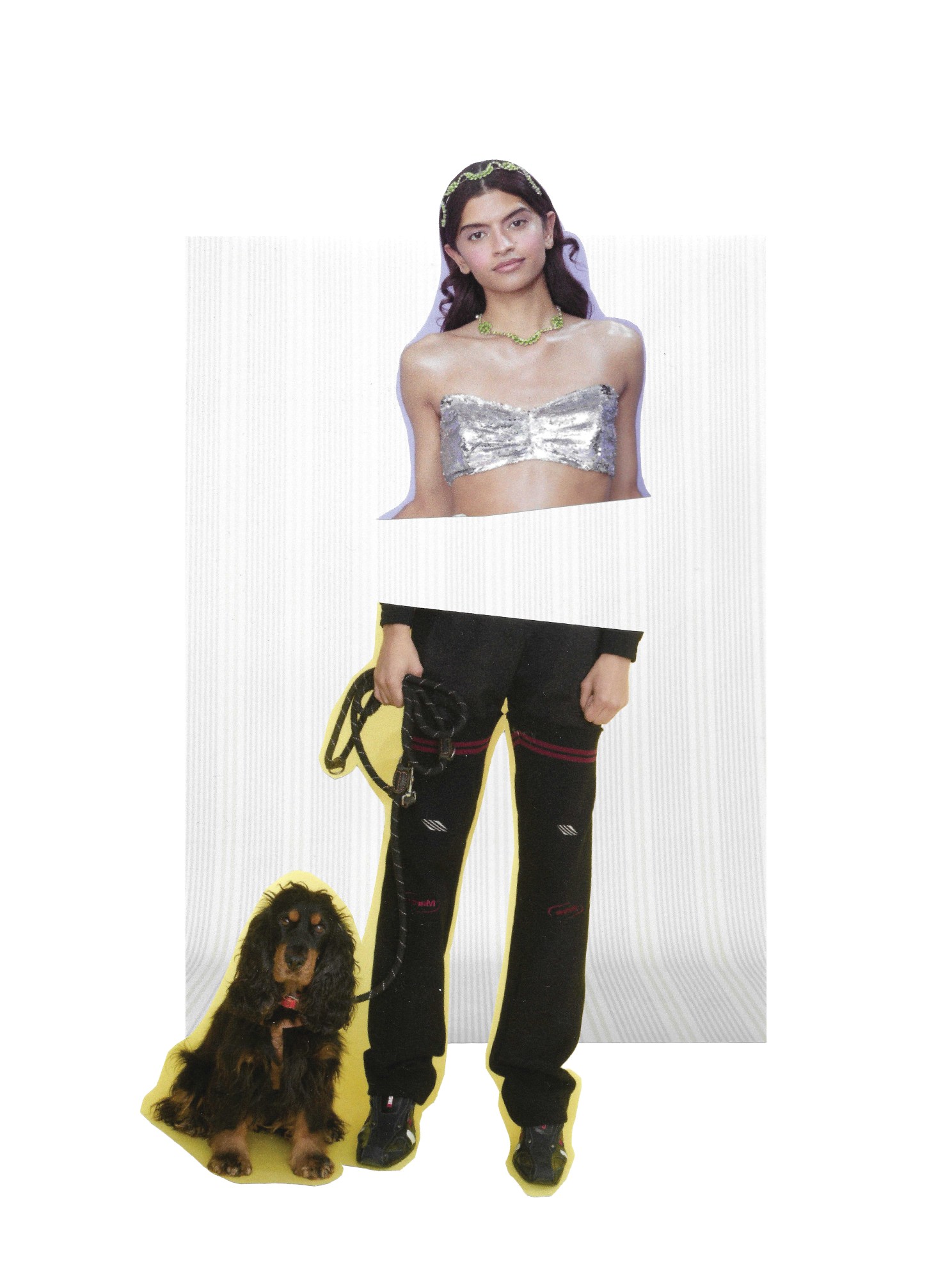
YOTKA: Where do you find feedback that you actually value? People can be wooed by social media or by retail or by dressing celebrities. How do you calculate your own successes?
ROSE: Often, students are a really good barometer. I remember distinctly, I think it was Fall 2014—one of the first really baggy, oversized seasons I’d done, with parkas and big wool trousers. It had been a tough season for me. I thought it was a disaster, actually, like, “I’m never going to work again.” I was teaching at the time, and I started to see the collection come up in students’ portfolios, versions of it in different ways. I was so flattered, because I think if you spend your time with lots and lots of industry people, you can get smoke blown up in your arse—it can just become an absolute echo chamber—but there is an honesty when you actually see students emulate your work. Because I did it as a student! I tried on all different types of hats of what sort of designer I was going to be. I had a Margiela moment, a Helmut Lang moment. That’s how you learn. For me, students have always been a source of reality. When what you do is what young people are looking out for, that means it’s working.
ROCHA: For sure. It’s when you feel like something is so personal to you, and then you realise that that actually feels personal to someone else. When you realise, when people wear your clothes, they’ve tapped into an emotion that they were trying to portray, or a feeling they were trying to give off—that the clothes that you’ve made have given them that power, that’s pretty special.
ROSE: It’s so special, isn’t it?
ROCHA: The fact that it turns into a uniform or a second skin for someone, that really does feel like success.
ROSE: It’s so different to getting a good review or even getting your order book [of sales]. When someone comes up to you and goes, “I wore your clothes for a wedding and I felt like this,” or, “I literally don’t take this coat off.” When someone wants to tell you personally how they feel when they wear your clothes—the feeling is amazing.
ROCHA: Completely. And if the person is someone you really admire or one of your collaborators or peers….
ROSE: We all stand on the shoulders of giants, obviously. Galliano, you’ll bump into him someplace and he’ll go, “I love what you do,” and you’ll literally collapse.
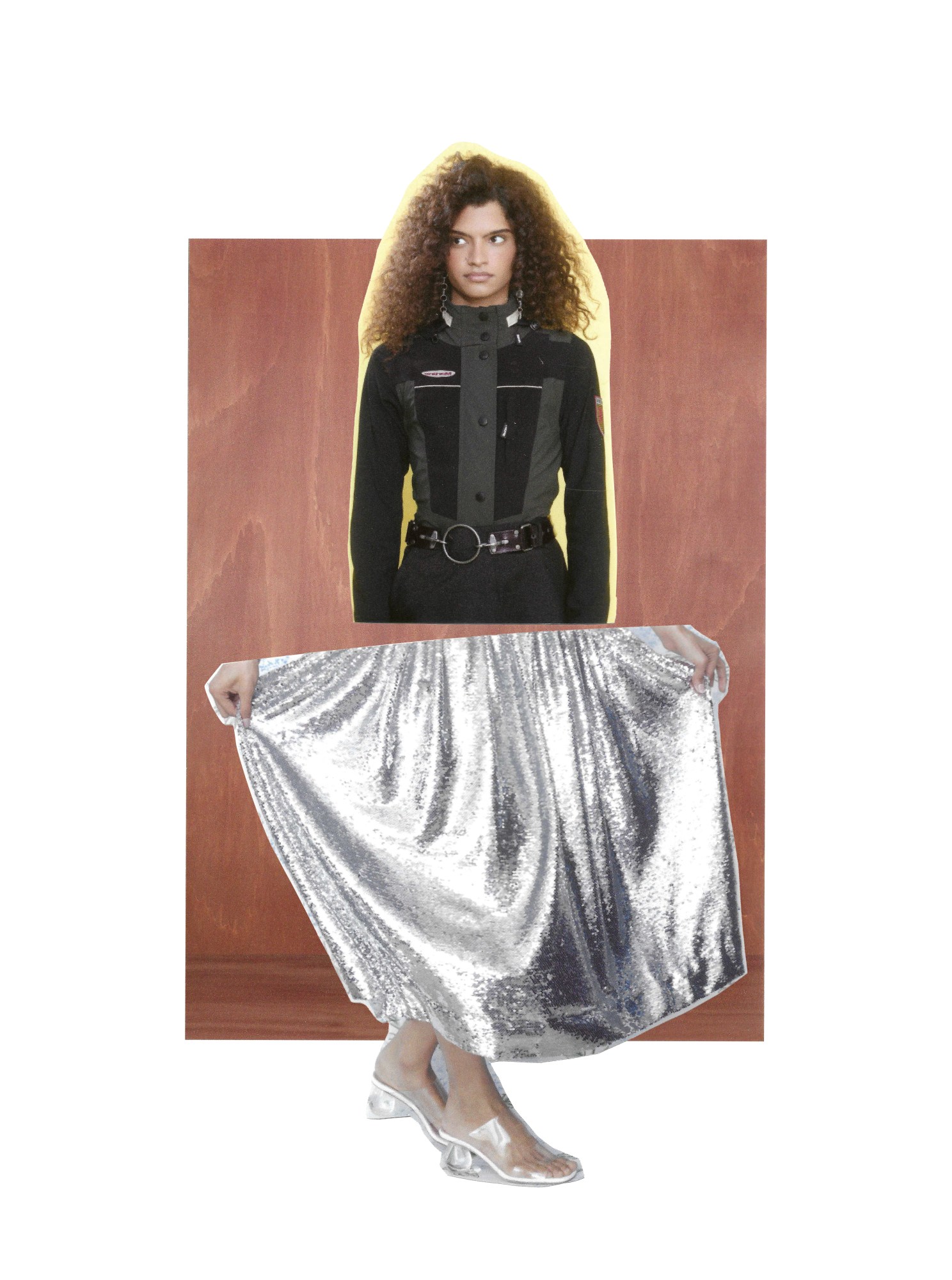
YOTKA: Wait, tell me who the people are that make you go weak in the knees!
ROSE: Well, it’s not even that all of them said, “I love your work,” to me at all. But I think we’d say the same people, because they’ve been uncompromising in their vision—unflinching and so authentic. It’s Galliano, it’s Gaultier, it’s Raf Simons, it’s Helmut Lang, it’s Vivienne Westwood.
ROCHA: It’s Rick Owens.
ROSE: Rick Owens. Oh my God, yeah.
ROCHA: Just the diehards, the hardcores. And they’re all different from each other. But it is really a privilege to—
ROSE: —be in their wake, right?
ROCHA: It really is. Being able to do Gaultier [haute couture as a guest designer] was incredible. To be able to work in a house that you admire, knowing Jean Paul would see it—I was like [screams].
ROSE: Unbelievable. Unbelievable! It’s also an unbelievable collection. Oh my God. It was unbelievable, Simone. I know I really love something when I’m jealous. It’s a good feeling when you feel, “I wish I did that. It was so good. I wish that was me.”
“If you ever try to get something, it ain’t going to happen.”
simone rocha
YOTKA: So when you feel one of those pangs of jealousy, someone else doing a collection or getting a job, do you send out the fishing hook and try to get it for yourself?
ROSE: No, no, no.
ROCHA: If you ever try to get something, it ain’t going to happen.
ROSE: Completely. And it’s not jealousy, like I want to own it. I don’t really know how to explain it… It’s somewhere between jealousy and joy. The things that are for you will come to you—I just know that that is true.
ROCHA: I also think there are lots of different types of designers, but if you want to be independent, like us, things do come to you. And I’m very black and white. I’ll know straight away if it’s right or wrong.
ROSE: Same.
“It’s not like I pat myself on the back and say, ‘Well done, me, for setting on this funny, quirky path.’ I just can’t do it any other way.”
martine rose
YOTKA: But you both have expanded the worlds of your brands in this really holistic way through collaborations with Nike or Crocs or Moncler or Napapijri. It never feels like selling out. I think a lot of people sell out nowadays.
ROSE: It’s hard not to.
ROCHA: It really is.
ROSE: I get it when people are like, “Fuck it. I’m going to do the thing that is going to be the no-brainer.” Unfortunately, I just don’t have that commercial gene, so that’s never a risk. But I understand, because it’s hard. It’s hard sometimes, right, Simone?
ROCHA: These days it’s a trickier landscape than 15, 18 years ago. You have to navigate a lot more. You have to be made of quite tough stuff.
ROSE: It does require a resilience to stay. I mean, I just don’t have a choice. It’s not like I pat myself on the back and say, “Well done, me, for setting on this funny, quirky path.” I just can’t do it any other way.
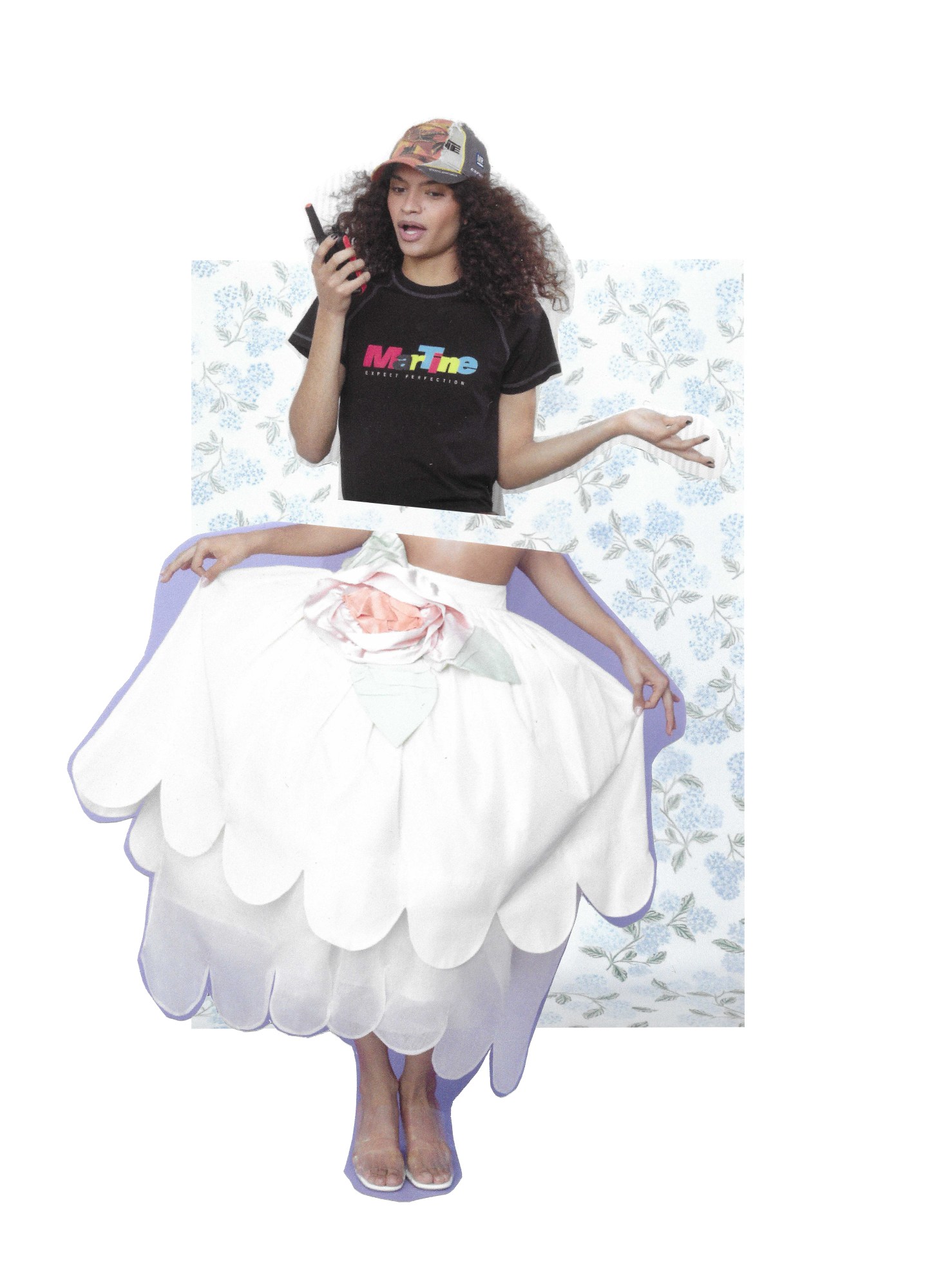
YOTKA: This year was fashion’s “big season of change,” where 11 men and two women got new positions at heritage brands. Did that impact you in any way—either personally or in the broadest, most commercial sense?
ROCHA: It didn’t register to my process or creativity or show. It didn’t change that for me, personally. What I liked was seeing people of our generation, and people that I admire—like Glenn [Martens at Maison Margiela]—in places that I also admire. Some things were more exciting than others, and I think that’s okay. But I think—and maybe this is my opinion—when people are like, “Oh, it’s a man, it’s a woman.” I’m like, “What are the designs?” I don’t really mind if it’s a man over a woman, or cat or dog. [Laughs] For me it’s all about the clothes.
ROSE: What’s the output? What is the thing? What’s the conversation? What are we saying with this?
I’ve never really been on social media, because I find rage very distracting and I find it very, very heavy. I can’t have all of these outside influences. I can communicate what I want to communicate through my collections, or through my visuals. … Beyond that—I can’t remember what the phrase is, something like, “You can’t expect the master to dismantle the master’s house.” I don’t know what we’re looking for from these institutions.
YOTKA: Is it exciting or distracting to have both of your names in the conversation whenever there is a creative director position at a heritage brand?
ROSE: It’s always deeply flattering to have your name in conversations of prestige, isn’t it? People respecting what you do—I don’t know how that could ever be a problem. I think it’s really kind.
ROCHA: It’s always nice to have your work seen. I think it’s something that has become such a headline without the article, though. Like, the reality of these roles is that it’s a much bigger shift or responsibility than one person. I think people forget that fashion is such a living, breathing, working, multi-person thing.
“It’s just knowing that you have those magic moments in you that gets you through the harder days.”
simone rocha
YOTKA: I wonder if you think about your brands becoming heritage brands—will Martine Rose and Simone Rocha be the legacy labels of 2126? Do you think about how you want them to live with you, around you, and after you?
ROSE: I’m not sure I’ve thought about it.
ROCHA: I find it peculiar to talk about and think about, actually, because I’m a very in-the-moment person. I’m also not that nostalgic, so I don’t think that I’m building something to stand as a tomb without me.
ROSE: Same, same, same.
ROCHA: But then, the older I get… We have children, so I do want them to be proud of the work that I’ve done. But I don’t want it to be—
ROSE: —a burden or a weight they feel they have to come into.
ROCHA: Them or me. It’s quite complex.
ROSE: It is a complex thing to think about. I just do what I do because I love what I do. I’m not doing what I do to build something that outlives me necessarily.
ROCHA: I think I’m the same, but it’s also my personality. I’m like, “When I die, just put me in the ground.”
ROSE: Exactly, just chuck the dirt on. The afterlife is not something that appeals to me.
ROCHA: I don’t like hanging around. I’m out.
YOTKA: The thing that both of you enjoy and do so well is to make things feel alive. It’s about that feeling of just seeing something and being totally zapped by an emotion. If you’re not going to have that feeling for yourself, then why have a brand?
ROSE: That’s what I mean. And no one needs more shit stuff.
ROCHA: It’s just knowing that you have those magic moments in you that gets you through the harder days, I think. And knowing that you can produce things that only could come from you. That’s what unlocks it all, really.
ROSE: That absolutely unlocks it all, and it connects us all in a way.
hair SOICHI INAGAKI AT MA+GROUP
makeup LISA MICHALIK USING PRADA BEAUTY AT ARTLIST
nails ANAÏS CORDEVANT USING YVES SAINT LAURENT & MANUCURIST AT ASG PARIS
set design FÉLIX GESNOUIN AT TOTAL WORLD
movement direction BRECKYN DAVILA DRESHER
photography assistants EDOUARD OBENICHE & QUENTIN LACOMBE
digital technician AURENTIN GIRARD AT IMAGIN PRODUCTIONS
styling assistant SIAN CUTHBERT DAVIS
hair assistant MIKI SATO
set design assistants ELIJAH DEROCHE & LUC SCIBERRAS
production TOTAL WORLD
producers ROMAIN EHRET & JADE PAIN SOURAYA
post production IMAGIN PRODUCTIONS
location MEZO STUDIO