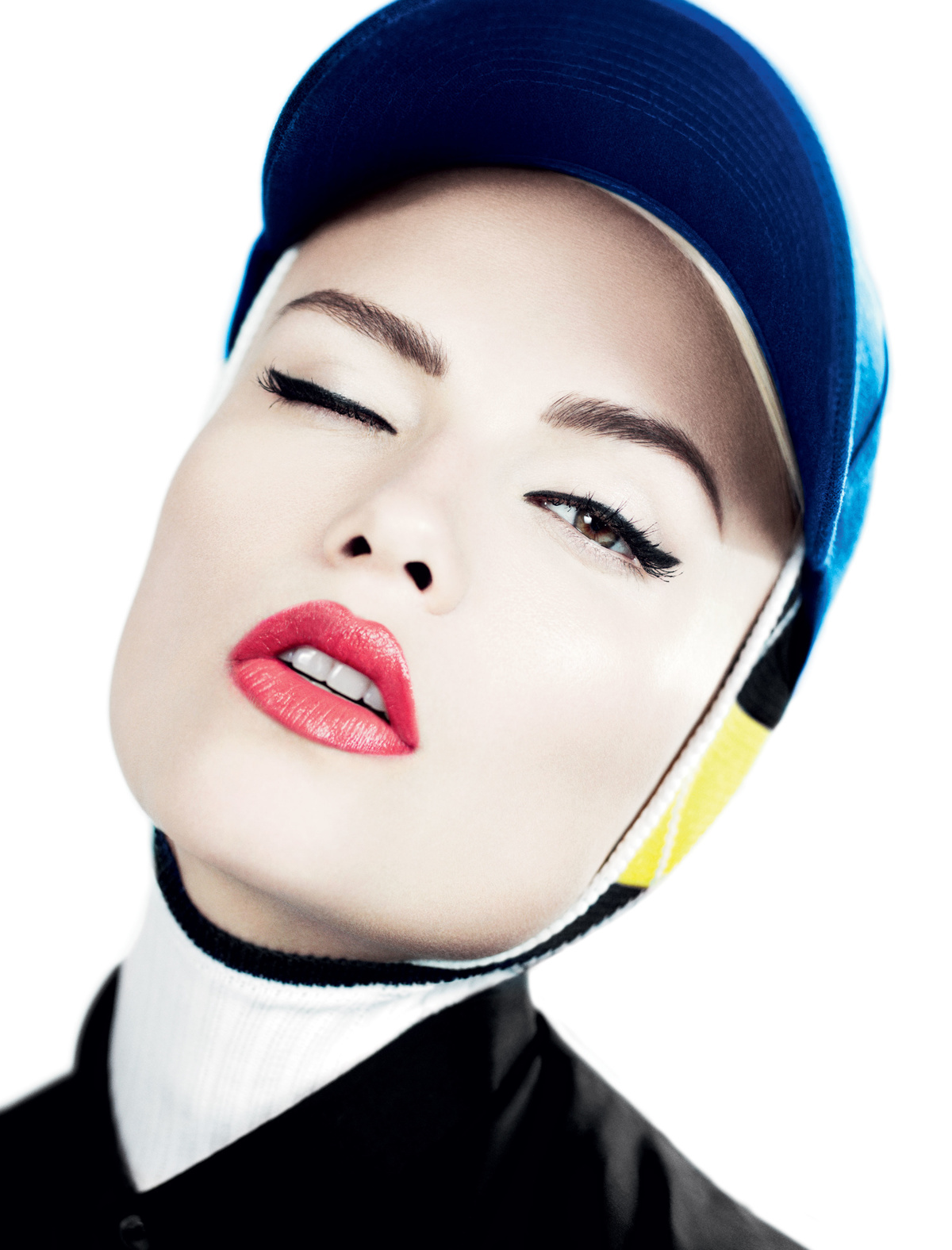
Raf Simons may not have been awake long, but he looks fresh faced in a crisp black shirt, paint splattered shorts and Prada brogues. It’s midday and the Jil Sander headquarters – a stunning, modernist building on Foro Buonaparte in central Milano – is flooded with sunlight. The floor to ceiling glass doors to the show space (where the men’s and womenswear collections are presented each season) have been flung open looking out on to the sun-drenched street below. The team have gathered for lunch – a healthy spread of fresh vegetables, pasta, salad and strawberry cream cake (baked that morning by Jil Sander’s Head of Communication, Andreas Bergbaur). When Raf enters the room, he greets each member of his team with a kiss on the cheek before they sit down to eat.
Do you think fashion can still create the same impact as that Margiela show?
I certainly hope so. I think that every designer should strive to make a difference, to question things, to find a way of having a dialogue with their audience. That is the most satisfying part for a designer, if your brain and heart is very much about creation. But you can be in this environment for very different reasons. I have a lot of respect for people who are only here for business. Obviously after fifteen years in the business I am very much about finding a beautiful balance between those two choices. But for a very long time my main aim was only to have a very intense dialogue with my audience, to question them, and to have them question me.
Did Loppa let you study at the Academy in the end?
No, I never studied fashion. Loppa thought it would be frustrating for me to join a class of eighteen year olds when I was 25-26 at the time. She was also unsure if I was serious. Instead she told me to make something myself and see how I felt about it. That’s when I got really mad at her. I took distance and didn’t contact her. Then I worked on something and eventually showed it to her and she realised she had underestimated me.
So you have Walter Van Bierendonck to thank as an early influence?
Walter showed me the next step. The first fashion shows I saw were though Walter, he took me to Margiela and the next day we went to the Jean Paul Gaultier show together, where Jean Paul introduced Junior Gaultier. Nuns came out of the ground with Neneh Cherry turning around on a chair. It was amazing. I was 21-22 years old and I’d never seen anything like it before; first the trashy yet conceptual environment of Margiela, then the very glamorous and huge – 2,000 spectators – environment of Gaultier. I was very thankful to Walter because I was only an intern at the time. Walter’s environment was very alive, there were always kids around, and I met some really good friends there who were also interns, like Peter de Potter and Olivier Rizzo.
Were you aware of i-D when you were growing up?
Yes, of course. i-D and The Face were the two London magazines I grew up reading.
Do you remember the first i-D you read?
No, but I do remember stories from the early issues, early work from Martin Margiela and all the Belgium designers, the London scene, Bodymap, Christopher Nemeth… The acid house period with the smiley face was when I started reading i-D. I was at college and at the beginning I didn’t even buy i-D myself because I had no money, but I had friends who had copies at home. A couple of years later I started to buy them too.
Have your feelings towards fashion changed over the years, do you still think of it in the same way?
No, I think I’ve changed. There are things that you want to keep the same but at certain points you realise that they too have to change. The nature of fashion is that it changes automatically, and at gigantic speed. The period when I started designing is a very different period to now, from the buyers’ perspective, to how the shows were supposed to be, it was a lot more low key and sometimes very trashy for the younger generation. Now we see on the New York scene very young designers with professional shows much earlier on and I question that. I wonder if they do not do this will it not be accepted? Maybe it was just a Belgium thing, but fashion shows used to be rather clumsy, poor, trashy, low productions and this was ok, people came. Today, I hear, ‘Oh, we can’t host in a place like that because it’s too dangerous or too trashy or whatever…’
Do you think the audience are less open to new ideas and experiences, or is it more about big business?
I don’t really know. The amount of media attention was nowhere near as big back then nor were the shows on the same scale. I remember in the 90s, Helmut Lang – at the very high point in his career – still showed to a very small audience in a very small gallery in Paris. After that there was an explosion of communication and media, and today with the internet there are so many more magazines and bloggers the audiences are naturally much larger. It’s more interesting, but it makes it more complicated. Fashion used to be a lot more distanced from the public. But today, fashion stages itself as if it’s supposed to be for a lot of people. I often question how this will affect it in the long run and whether it is necessary?
Do you feel under pressure to promote Jil Sander in a similar vein to say Dolce & Gabbana or Burberry, who screen the show live and film backstage?
No, not so much under pressure, more that I question the nature of fashion. I wonder what the evolution is going to be. It’s more a question, a curiosity for the future, could fashion really be for everybody or will it return to a small scale once again? Right now the whole thing seems very blown up. I think it takes a little bit away from the mystique of fashion. I used to be obsessed with trying to find out what my favourite designers had been working on and really searching out places where I could see their work. When I was a kid, I was a huge Helmut Lang fan and we would wait and wait to see a couple of pictures from his show, perhaps in i-D or maybe, if we were lucky, see a special report on TV. But those days are over of course, because now with the internet everyone can see everything instantly. We must adapt to the new generation. It’s difficult, but not less interesting. In the end a fashion show stays a fashion show; it’s just a little more polished and clean.
What about the Jil Sander women, has she changed since the 90s or simply evolved with the brand?
Both. We still have clients that are very much connected to what Jil Sander was. Then we have new clients discovering Jil Sander for the first time. For us it’s about trying to find the balance between the two. It influences the dialogue between the show and the collection. The idea of building a collection to allow women to wear a certain kind of garment and working out something that is more language orientated, where you talk with an audience who are interested in high fashion.
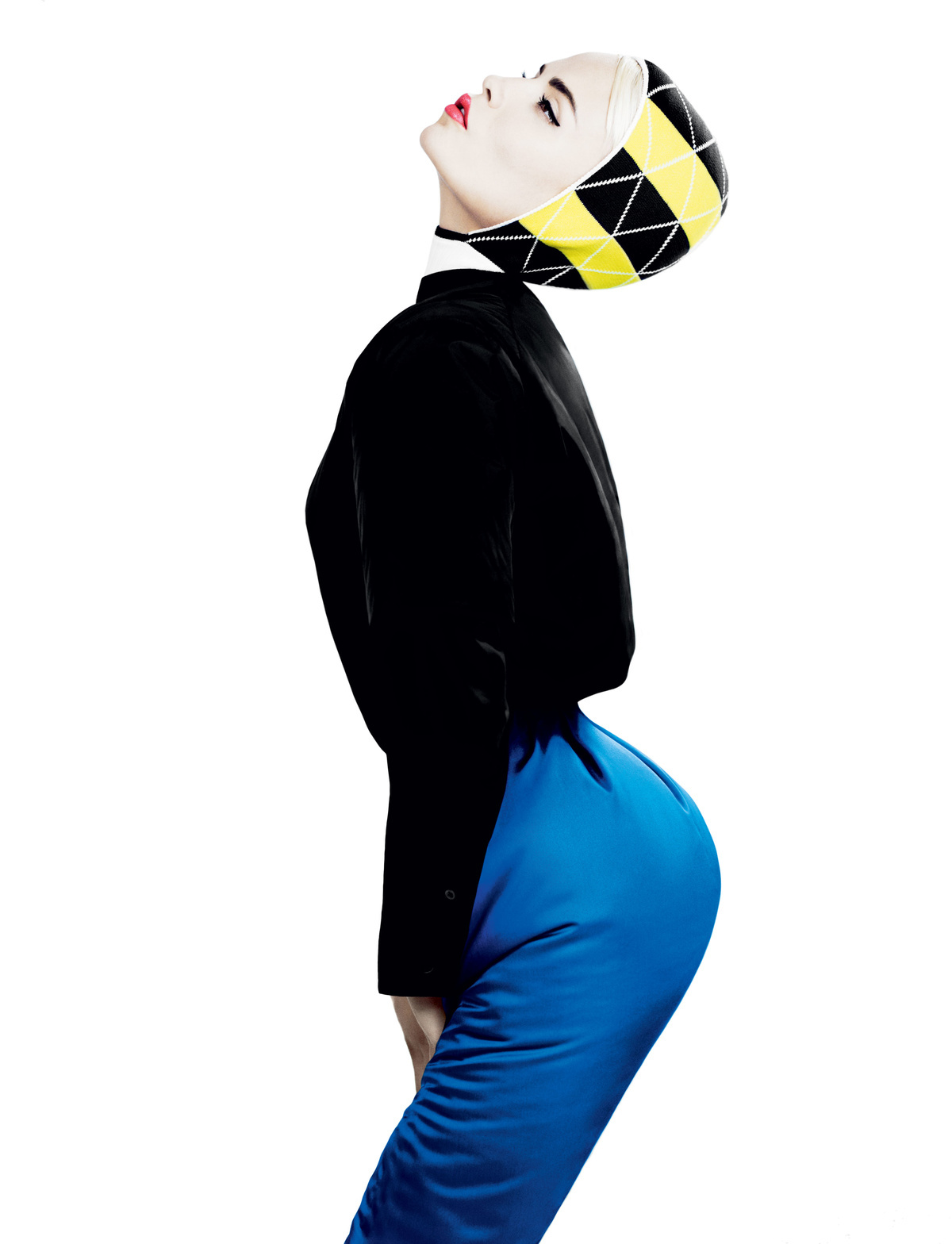
You’ve brought more femininity to Jil Sander, femininity that’s not sexualised but strong. Was this intentional?
Yes, absolutely. Eveningwear and fluidity were not so present in Jil, yet they were all things I wanted to embrace because I see that’s what a 21st century woman absolutely is wanting. In the 90s, a lot of women really educated themselves in one brand. Today, in the 21st century, women adopt more of a stylist’s approach. I don’t want to say, ‘I am the designer of this brand therefore everybody should wear this brand head to toe.’ I don’t want that mentality; I believe that women should have freedom.
How would you describe the Jil Sander woman today?
Our new customers are women who like to be challenged. They don’t expect to have camel, marine or embellishment just given to them. They expect to be challenged by what I call the nature of fashion, and the return of a positive or negative reaction. A person should feel confrontation with what a designer is offering. This has two possibilities; offering things that people will love and offering things that people will want. That’s why I like the new Jil collections. In the 90s the general mentality was different. The designers were building on a certain language, that was slowly evolving, but always offering what people knew would be coming. Whereas lately, designers with strong voices in fashion are offering very different things all the time and that is because the industrial structure of fashion has changed so much.
Does it upset you that the industry has changed in this way?
No, it’s evolution. It’s decided by the people, to fight against it would be bad.
When you took over Jil Sander did you have a goal?
Yes, the goal was to find that beautiful balance. I’m not someone who is happy with gut reactions. I’m a creative person so I love the dialogue and energy of the shows. But overall I want to make sure people fall in love with the brand and that they are satisfied.
Credits
Text Holly Shackleton
Photography Willy Vanderperre
Styling Olivier Rizzo
Hair Ben Skervin at MFA
Make-up Peter Philips at Art+Commerce for Chanel Beauté Manicurist Anny Errandonea at Marie France Thavonekham Photography assistance Romain Dubus and Christian Bragg Styling assistance Donatella Musco and Mara Palena
Hair assistance Akua Gyamfi
Make-up assistance Sofie van Bouwel
Models Natasha Poly at Women Management
Clement Chabernaud at Success Models
Thanks to Henri Coutant at D’Touch and Elisa Allenbach and Paula Dantas da Rocha at Janvier Paris
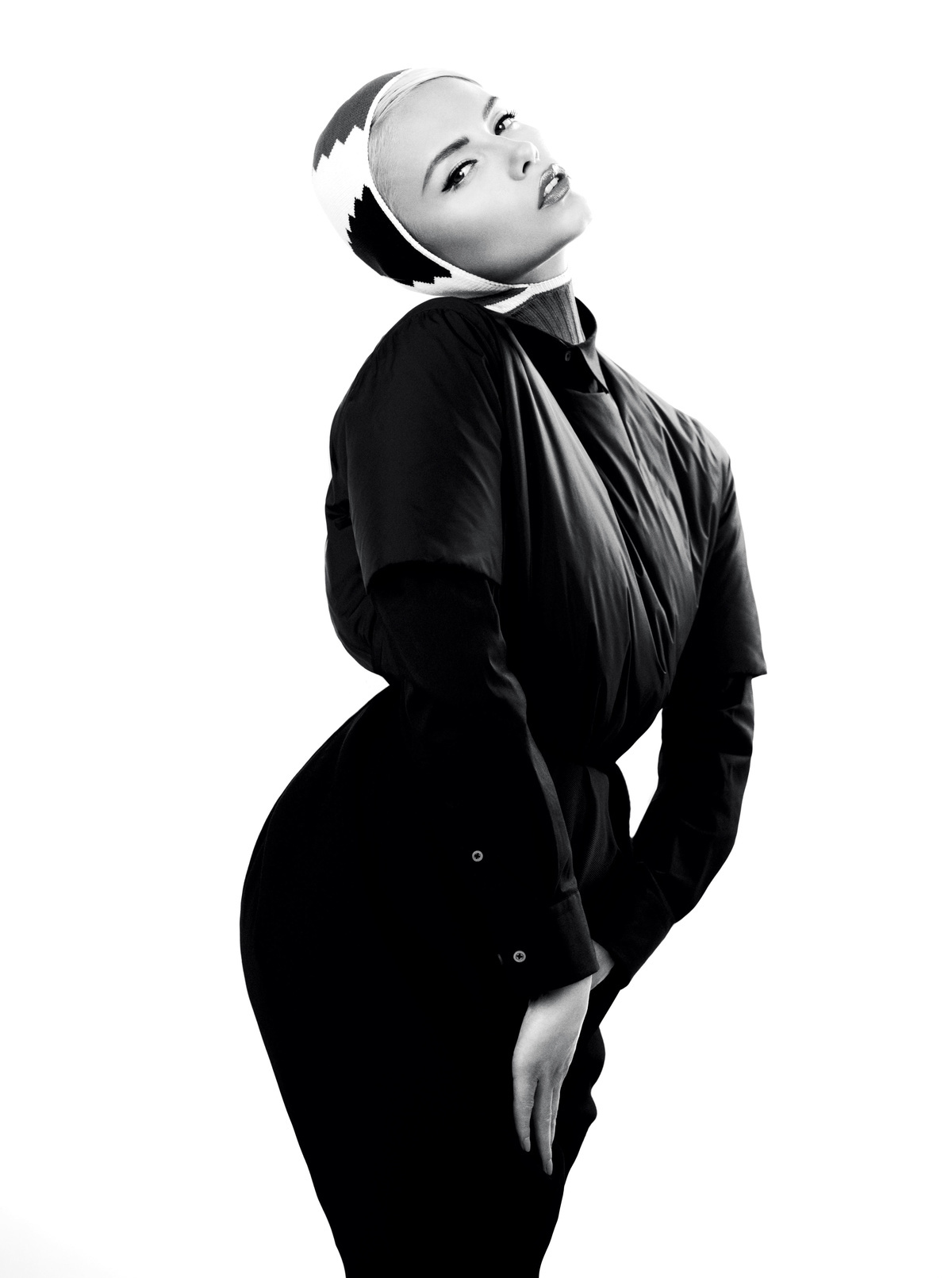
Natasha wears all clothing Jil Sander.
[The Pick Me Up Issue, No. 314, Pre-Fall 2011]