photography by ANGELA HILL
When Angela Hill first got published, it was in i-D. It was the 1990s, before iPhones, before Lightroom, before you could “fix it in post.” She remembers calling the office on a landline. “I rang up, spoke to Nick Knight, who was photo editor at the time—can you believe?—and he said, ‘Come in this afternoon.’” She went with a nearly empty portfolio. “He looked at it and said, you should go to some festivals and shoot Straight-Ups. And then he paired me with another young photographer called Craig. Craig McDean,” she laughs. “So, you know—his career went one way, mine another.”
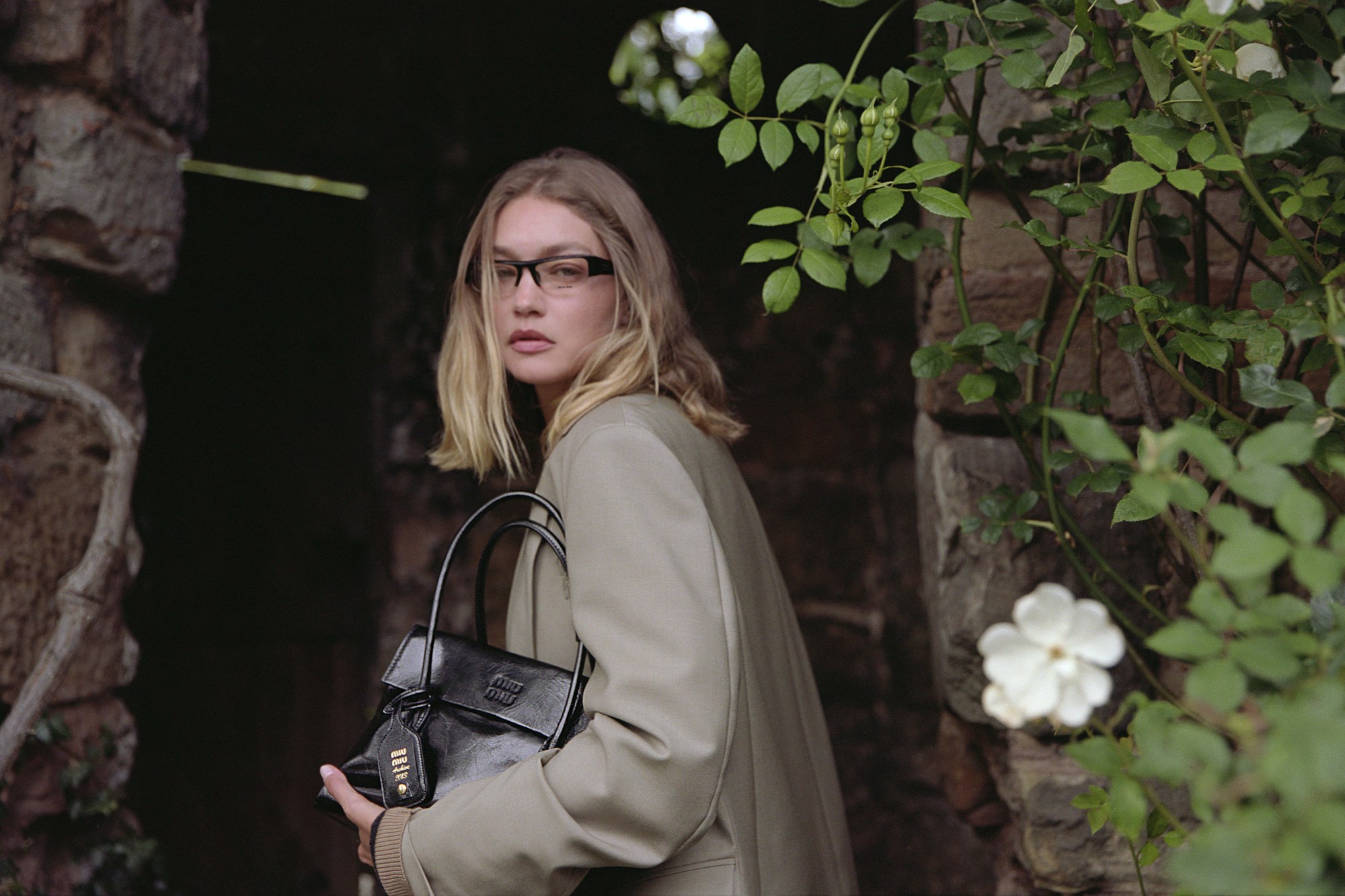
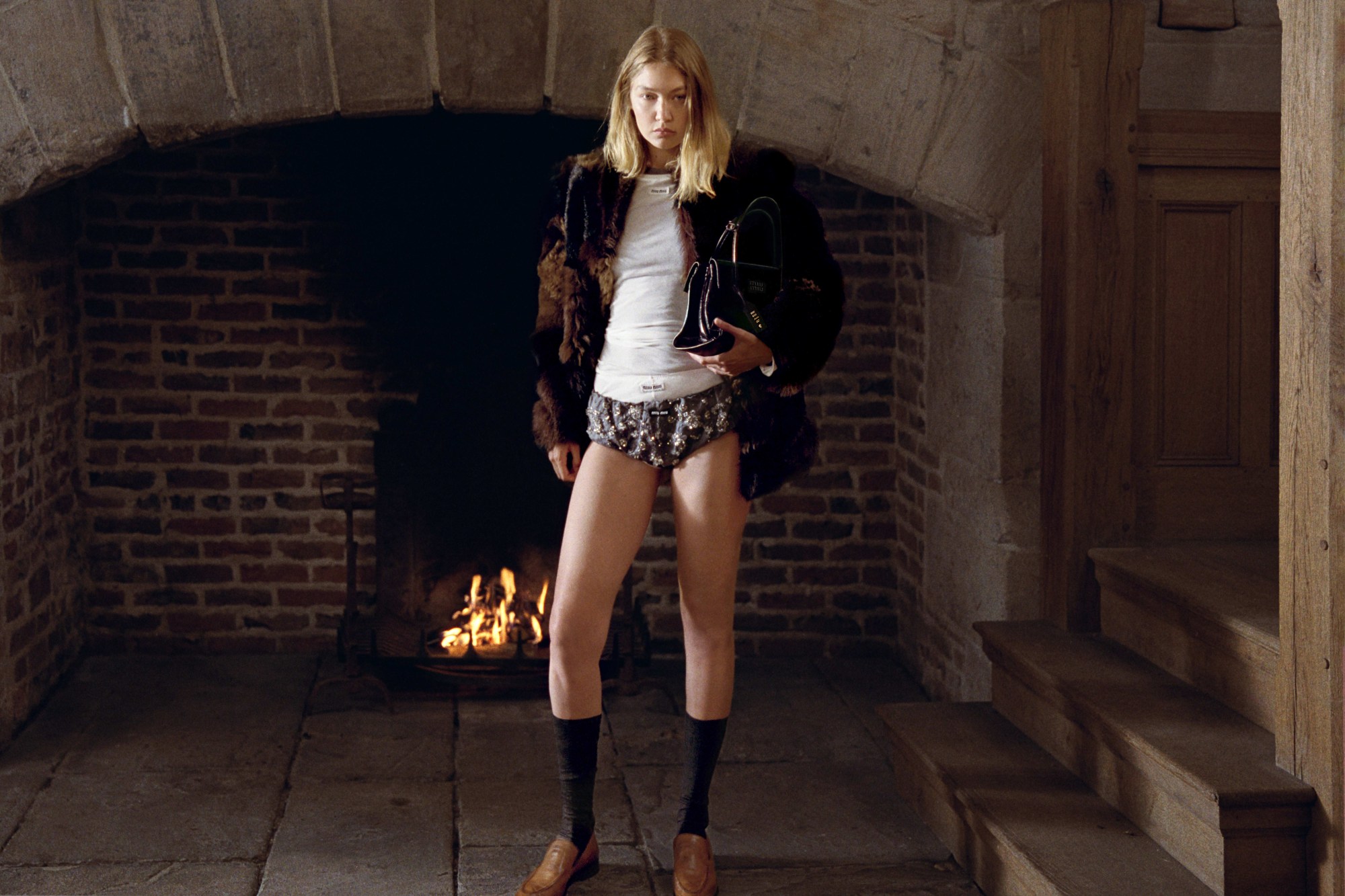
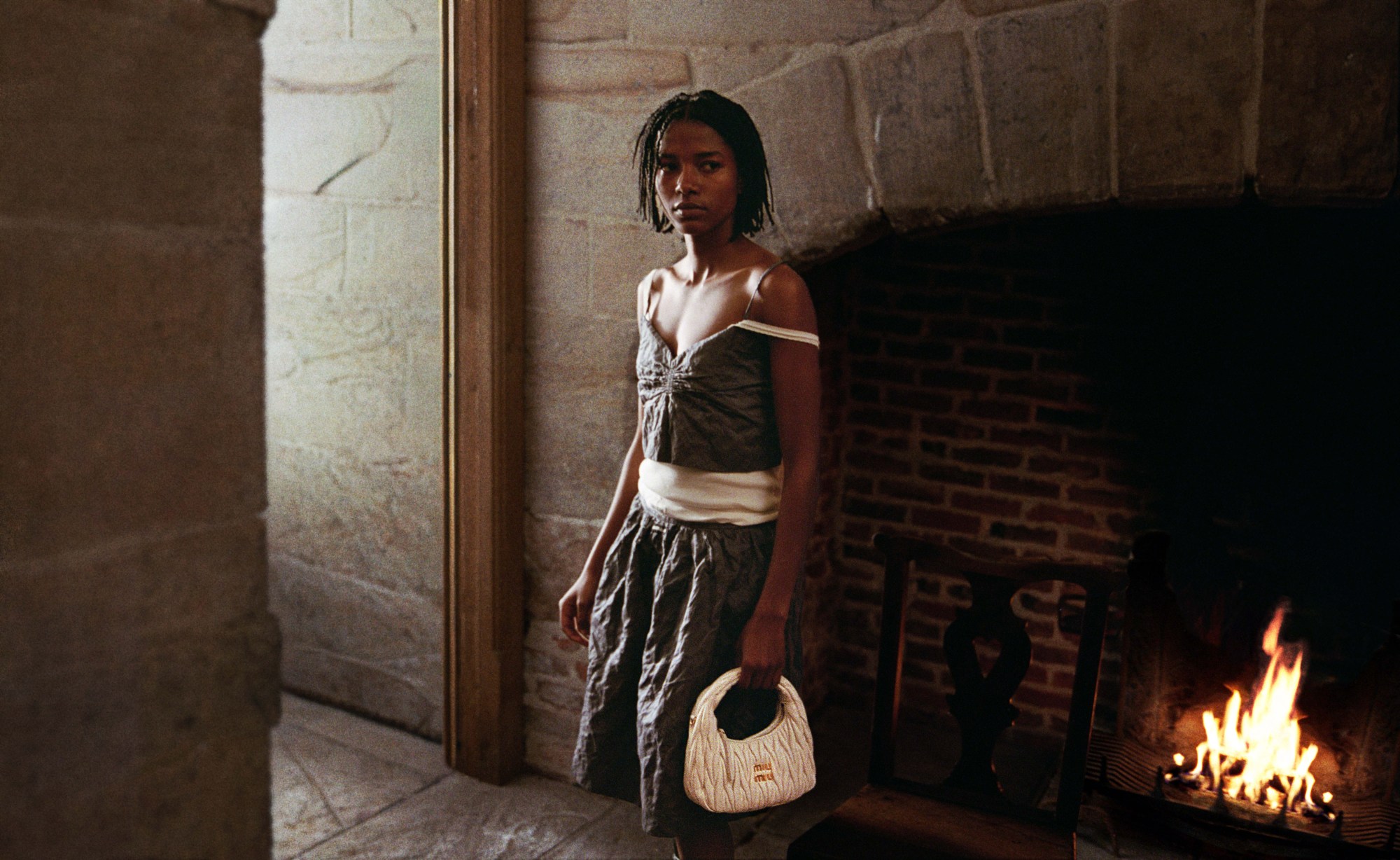
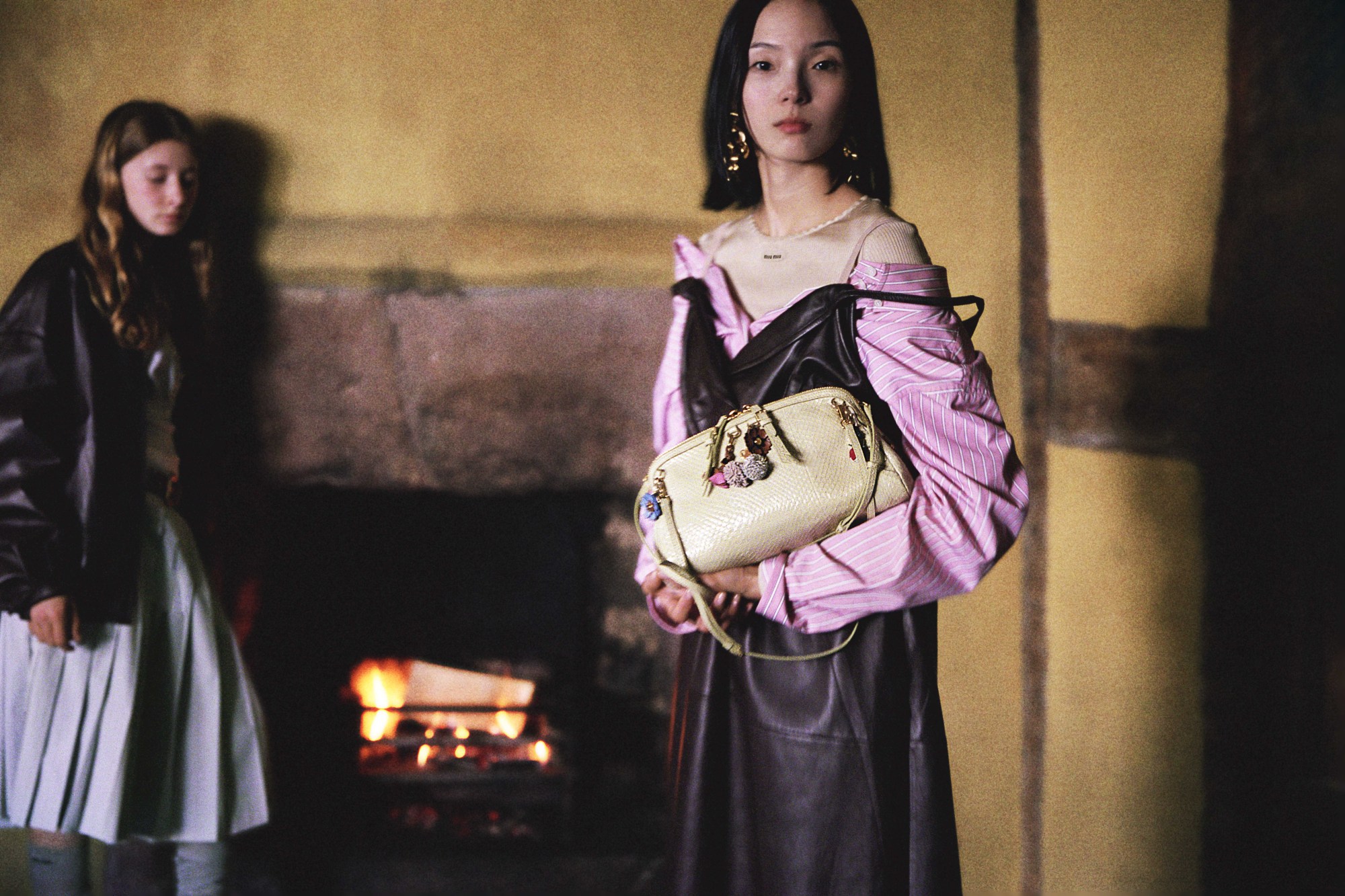
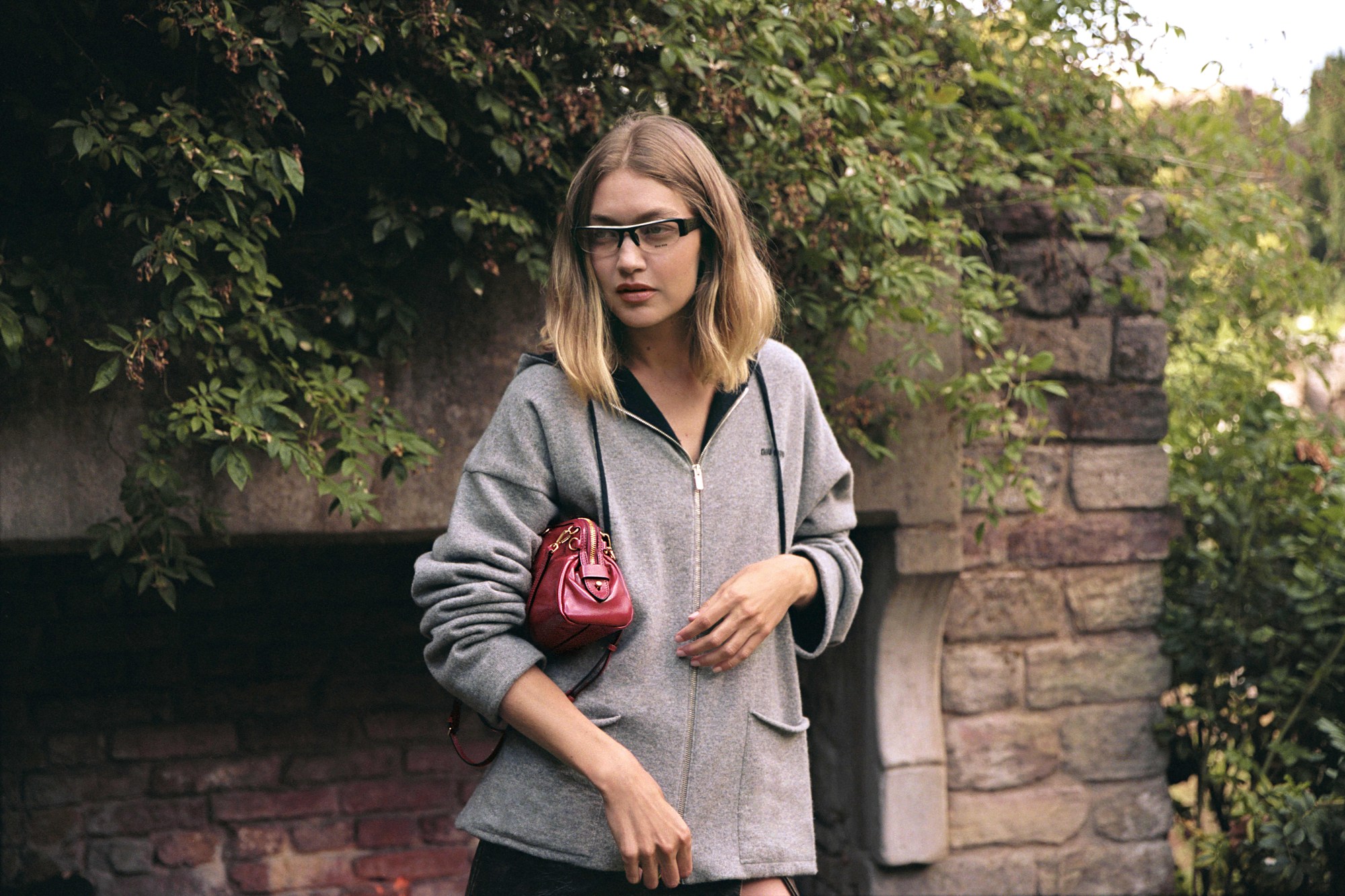
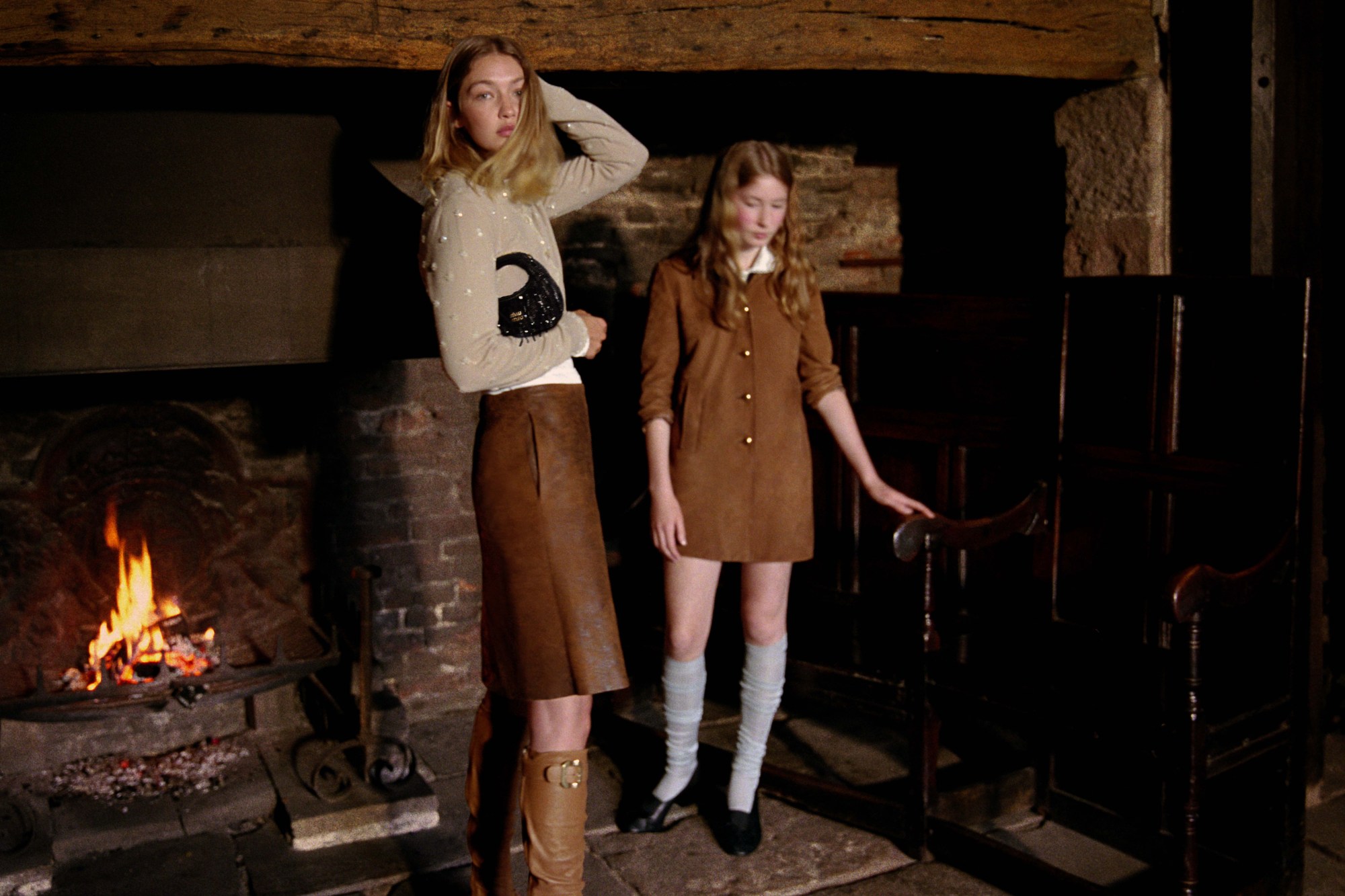
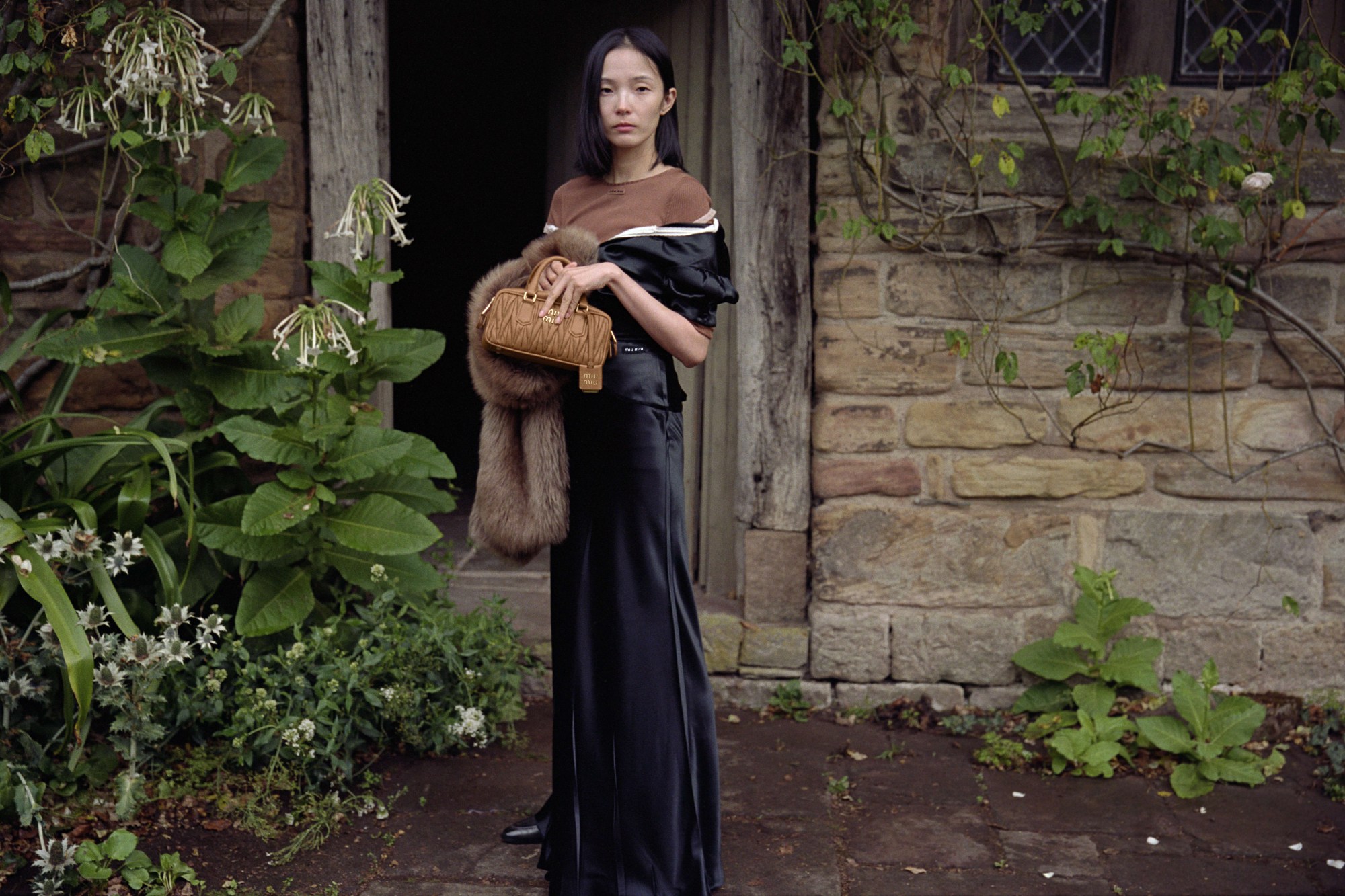
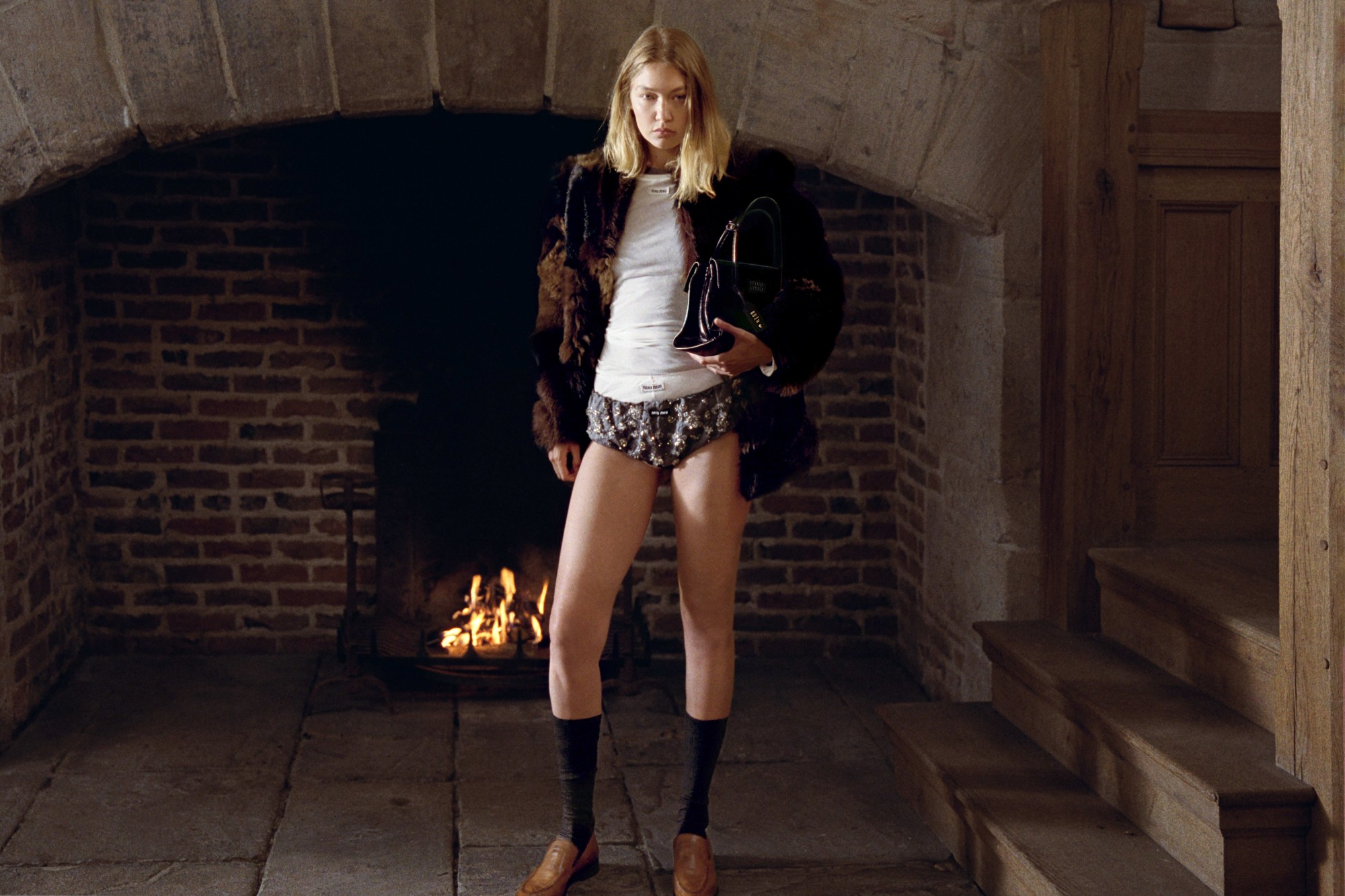
She says it with a smile, but the irony is delicious. Three decades later, Hill is shooting Miu Miu’s Holiday 2025 campaign. A haunting, heart-stirring filmic portrait that could only have come from her eye. Shot on 35mm film and Super 8, the campaign stars Gigi Hadid, Dede Mansro, Viola Sharp, and Ju Xiaowen as a cast of characters arriving at an Elizabethan manor in the English countryside—young women wandering through a house heavy with history, all crumbling stone and echoing corridors. “We literally talked about ghosts before we started,” Hill says. “I wanted that sense of girls and ghosts colliding. Of youth meeting time, of beauty in decay.”
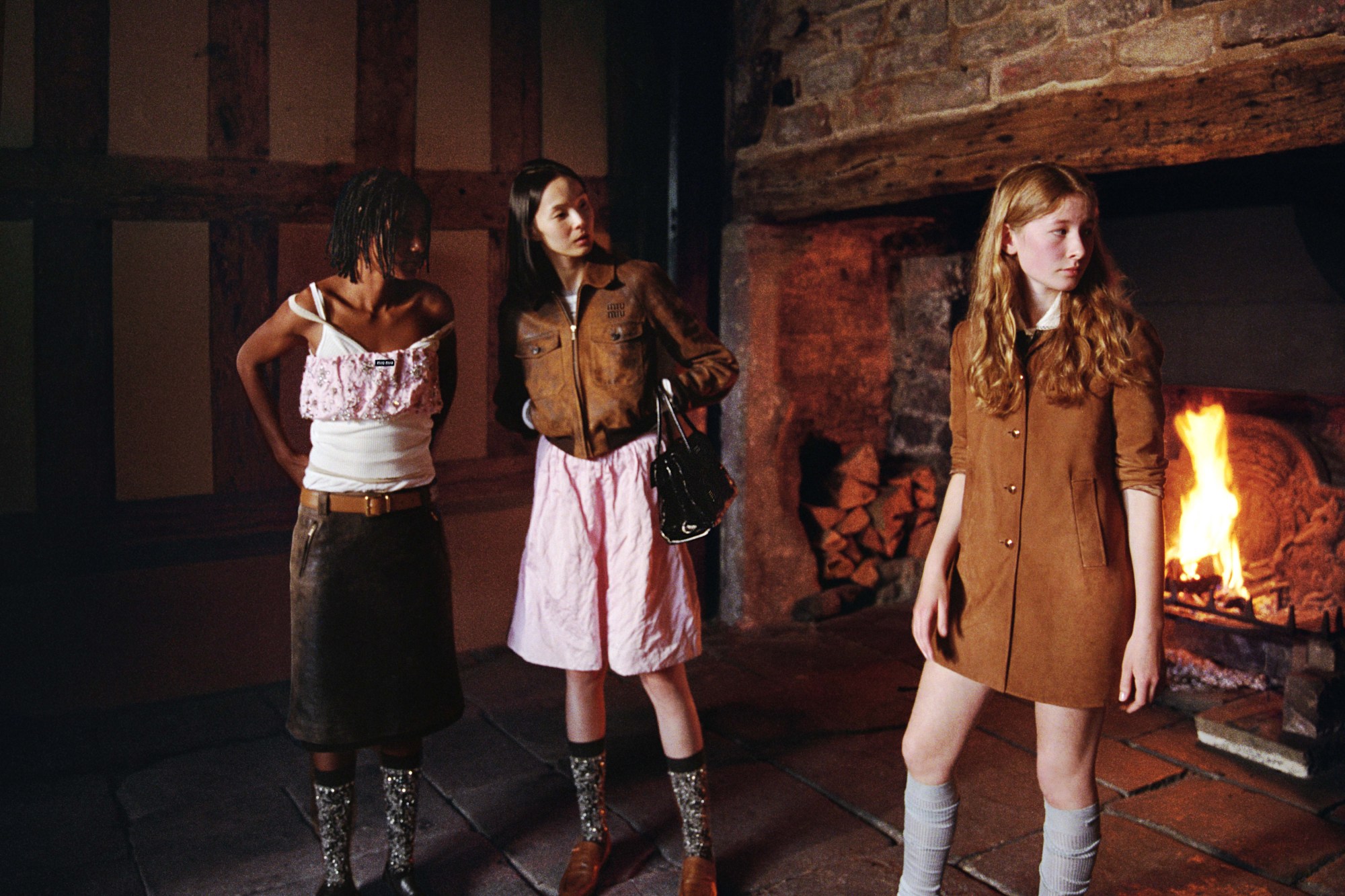
That duality—light and dark, old and new—is at the heart of both Hill’s work and Miu Miu’s world. In Lotta Volkova’s styling, there’s duchesse satin, glittery knits, sequins, stretch georgette; the girls shimmer against the muted palette of antique plaster and charred fireplaces. “It’s the idea of adventure,” Hill says. “Like when you’re at school, and you go on a trip to some stately home. You’re meant to be learning something historical, but really you’re just giggling with your friends, arm in arm, having a day off.”
There’s a warmth to Hill’s photographs, a tenderness, that makes them feel more like memories than images. Maybe it’s because she never shoots digitally. Ever. “I don’t own a digital camera,” she shrugs. “The only digital thing I do is take the odd snap on my phone. Otherwise, it’s film. And Super 8. Which is terrifying, by the way. You don’t know what you’re going to get until it comes back from the lab, and it could all be black. But I’d rather that than see everything on a monitor. Life isn’t pixel-perfect.”
Hill’s devotion to imperfection is legendary. Since the ’90s, she’s photographed with no lights, no makeup, no stylists, no monitors. Her images of teenage girls—first published in her own magazine Very—helped define the honesty of that era’s visual culture. Later, her long-running project photographing Sylvia Mann, a model she discovered in a dentist’s waiting room, became the book SYLVIA, now in its third edition.
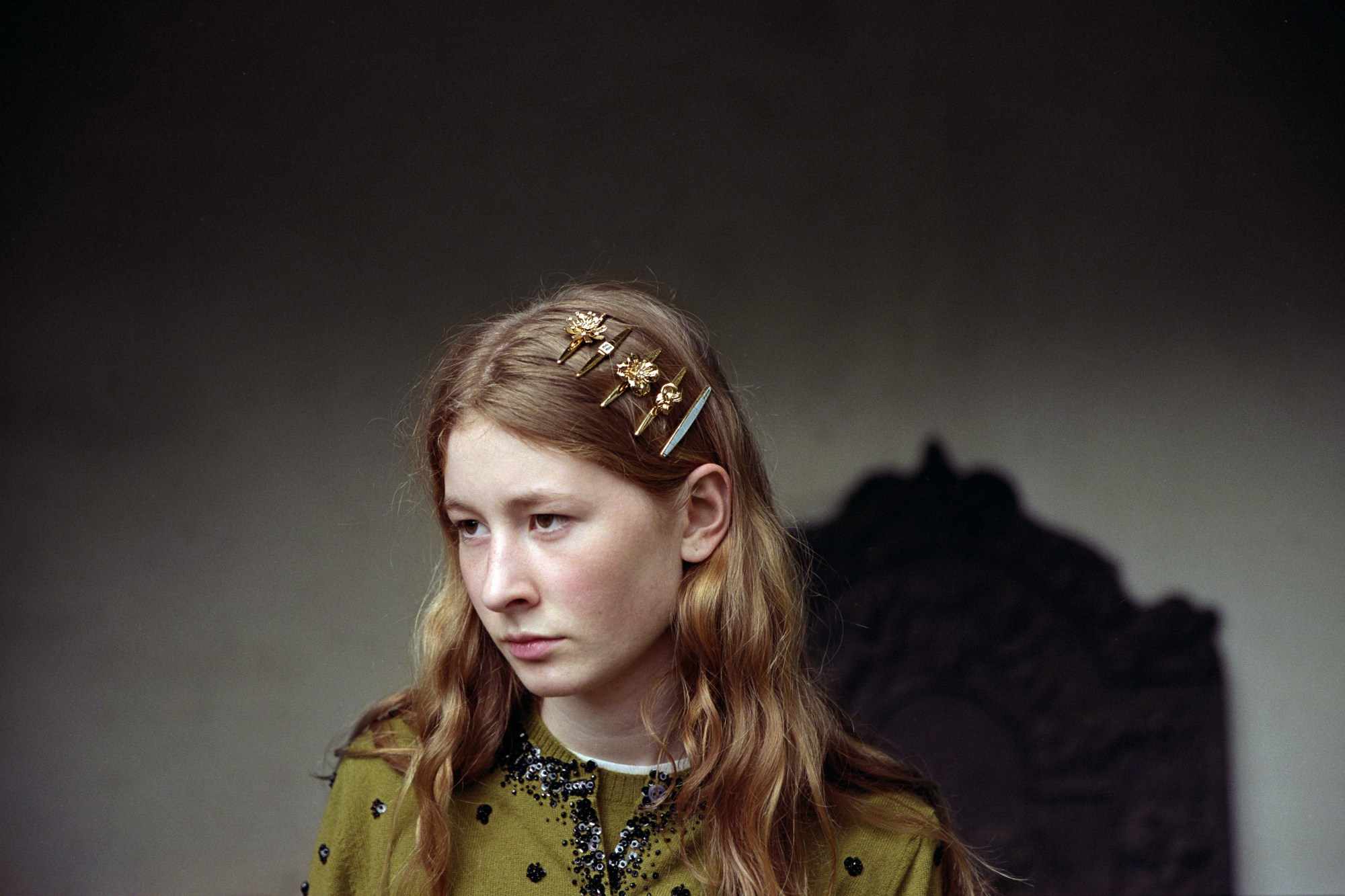
Her pictures are often described as “documentary,” but Hill resists that word. “I think of them as happy accidents,” she says. “I never force a situation. I tell people, I’m not here. Forget I’m here. If you’re making a cup of tea, make it. I’ll take it when I feel it. Because I want the viewer to believe that moment really happened; that they just walked into a forest and saw a beautiful girl, and she happened to look up.”
At the Miu Miu shoot, the approach was no different. “We lit all the fires in the house. We talked about our kids. We laughed. It felt like being with friends. Gigi, Xiaowen, Dede, Viola—they were just so natural. I’d tell them, don’t look at me unless I say so. Forget the camera. And when they do forget, that’s when the best moment happens.”
Magic and fear are, for Hill, inseparable. “I have huge anxiety before every shoot,” she admits. “And huge anxiety waiting for the results. But it’s the same kind of excitement you get watching a photograph appear in the chemicals in the darkroom. That surprise. That’s the magic.”
There’s something touching about the way Hill’s ethos—handmade, heartfelt, utterly analog—has come back into fashion in a world of high-definition gloss. She laughs when asked if she finds her stripped-back approach radical today. “No. It’s just what I’ve always done. I’m not technical at all,” she says. “I have the simplest camera. I press the button. That’s it.”
But simplicity, in Hill’s hands, becomes sophistication. “Everyone talks about ‘realness’ now,” she says. “But I’ve always hated artifice. If she wouldn’t wear it to get a coffee, why am I photographing her in it? For me, real isn’t overused. It’s what I strive for. Always.”
Before we hang up, Hill adds one more thing. “You know, i-D was where it all began for me. So to be talking to you now, all these years later, about this campaign… It feels like a full circle.” She pauses, smiling. “Thank you, i-D. From picture number one.”