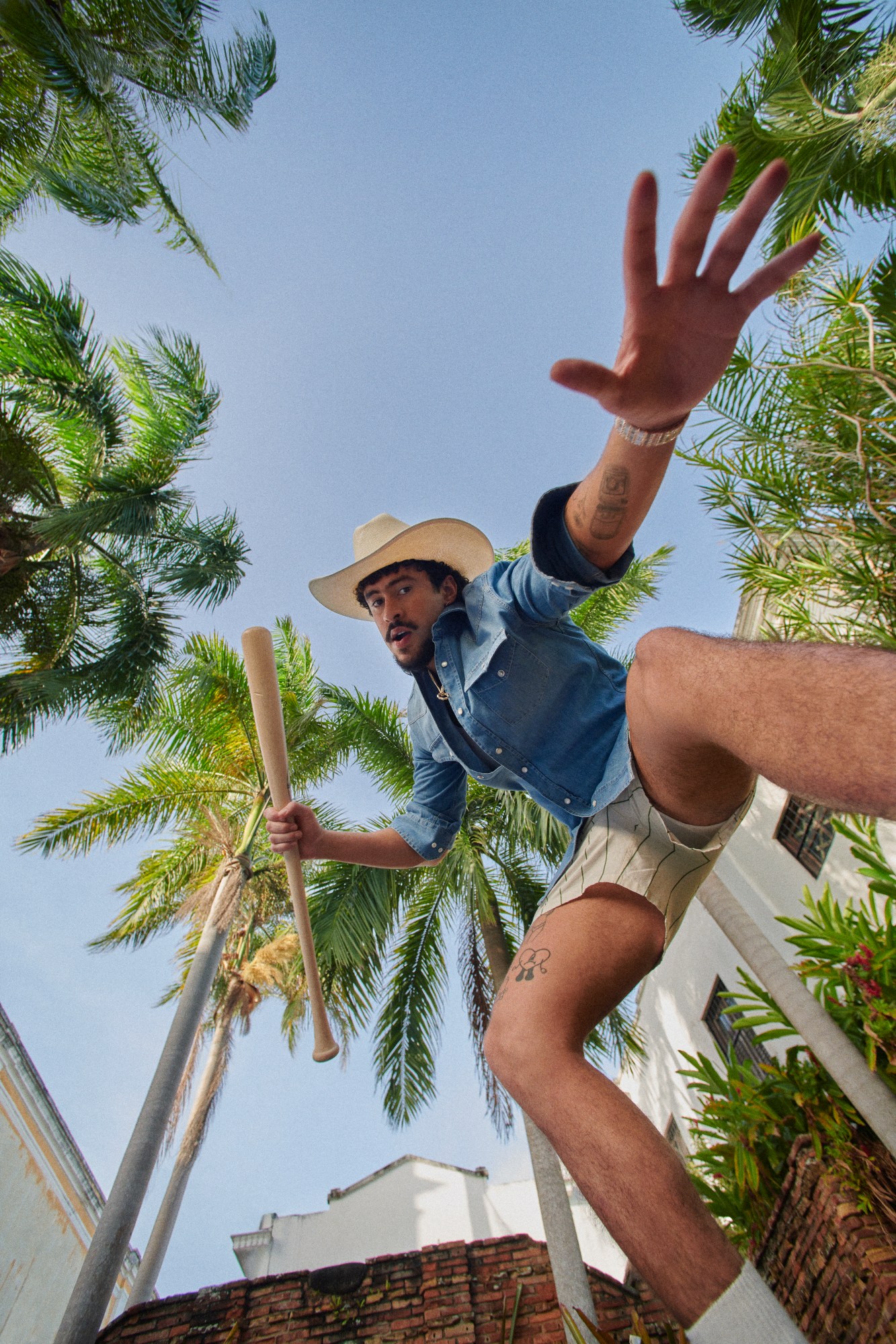
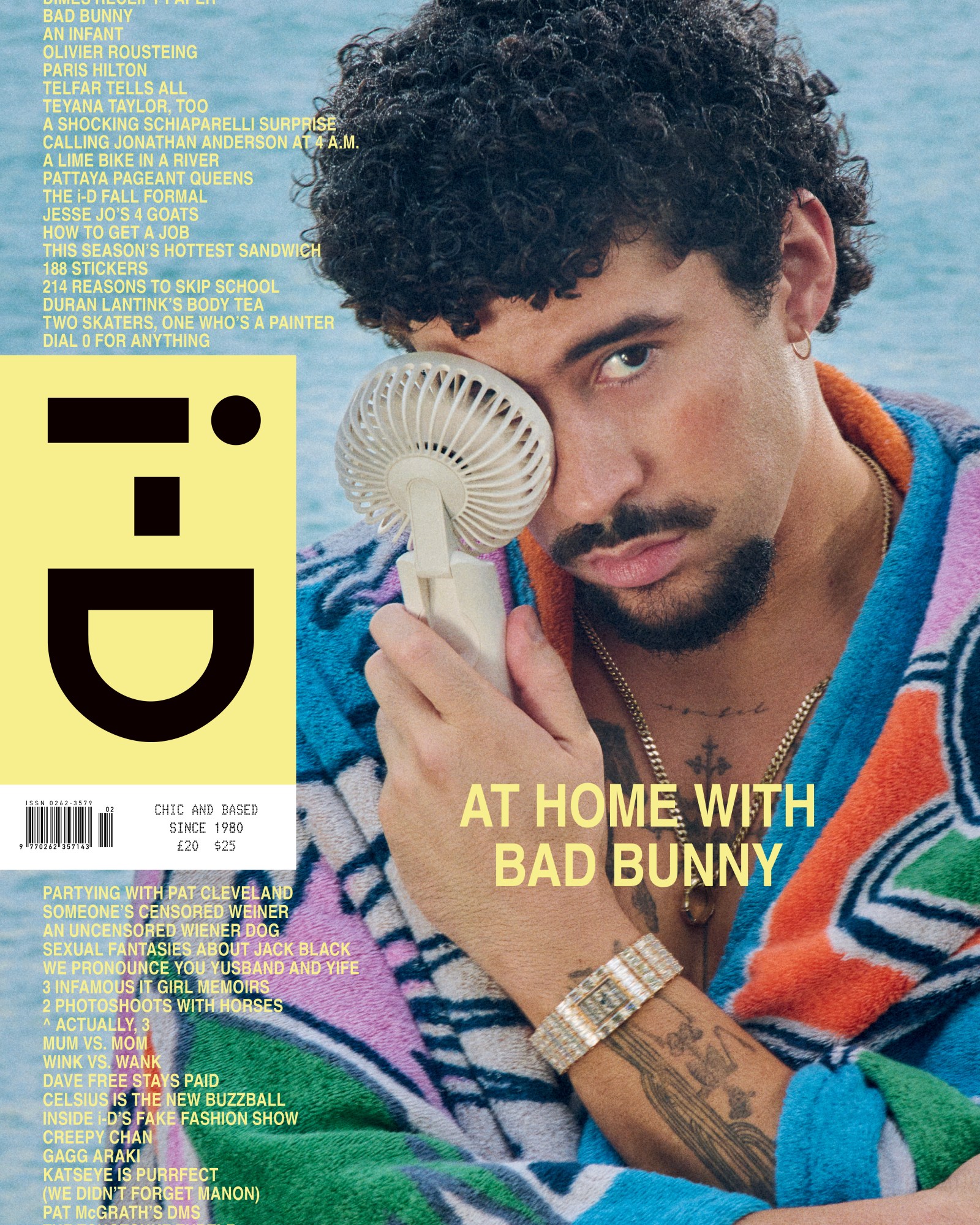
This story appears in i-D 375 “The Beta Issue.” Get yours here.
written by SUZY EXPOSITO
photography RYAN McGINLEY
styling THOM BETTRIDGE
For generations, many Puerto Ricans have exported their musical genius to new audiences in faraway locales. In 1968, José Feliciano performed a Latin jazz rendition of “The Star-Spangled Banner” at the World Series in Detroit. In 1974, the Fania All-Stars––a ragtag salsa collective driven by Héctor Lavoe, Willie Colón, Celia Cruz, and Johnny Pacheco––gave a monumental performance in what’s now the Democratic Republic of the Congo. Years later, pop star Ricky Martin brought “La Copa de la Vida” (“The Cup of Life”) to the 1998 FIFA World Cup final in France, as well as the 1999 Grammy Awards in Los Angeles, where he was met with a standing ovation.
Bad Bunny’s live residency in San Juan featured a series of concerts pointedly dubbed “No Me Quiero Ir de Aquí” (“I Don’t Want to Leave Here”). The Grammy-winning singer-MC did the unthinkable for someone with a new album to promote: He decided to stay home for the summer and play 30 nights in the place that raised him.
His residency shows, which began on July 11 and continued every Friday, Saturday, and Sunday until September 14, were projected to bring in hundreds of thousands of tourists to Puerto Rico—and an estimated $200 million in revenue to show for it. It’s a boon for the archipelago, an unincorporated US territory that’s been run ragged by hurricanes, blackouts, and foreign profiteers who flip family homes into pricey Airbnb rentals.
“I’ve done a lot of shows here in Puerto Rico, and I don’t think I’ve felt so much energy [before],” he said in Spanish, in the afterglow of his opening weekend. “The pride, the sense of homeland that unites generations.”
In his January 2025 release, DeBÍ TiRAR MáS FOToS (I Should Have Taken More Photos), Bad Bunny teased delectable pop songs drawn from Puerto Rican heritage genres like salsa, bomba y plena, and, naturally, reggaetón, walking fans through the roots of both his musical and genealogical family tree. Yet for all that the 31-year-old has sourced and remixed from the past, he has forged plenty of historic and groundbreaking moments entirely on his own. In 2020, his third album, El Último Tour Del Mundo (The Last Tour of the World), became the first all-Spanish-language album to go No. 1 on the Billboard 200. His 2022 LP, Un Verano Sin Ti (A Summer Without You), became the most-streamed album ever on Spotify. That summer, he upstaged Ed Sheeran by claiming his highest-grossing tour ever in a calendar year for his “World’s Hottest Tour.” He’s been a recurring guest on American comedy show Saturday Night Live, plus he’s secured speaking roles in Bullet Train, Caught Stealing, and the Adam Sandler sports romp, Happy Gilmore 2, which debuted on Netflix in July 2025. Soon, he will take DTMF on a 54-stop world tour that’s sold more than 2.6 million tickets.
On a humid Sunday in July, inside the Coliseo de Puerto Rico (known locally as El Choli), the stage was transformed into a lush, makeshift forest to reflect Puerto Rico’s native flora. On the other end sat a quaint pink house, where Bad Bunny played out a raucous party with his dance crew, as well as reggaetón titans Jowell y Randy, and his tour DJ, Orma, manning the mixer. Between the two stages, fans of all ages undulated their bodies to the sticky thump of the bass in songs like “Safaera” and “EoO.” Those gave way to the Afro-Caribbean grooves of his backing salsa band, LoS SOBRiNOS, who performed on “BAILE INoLVIDABLE,” a cinematic tribute to an ex-lover he describes as his “unforgettable dance.”
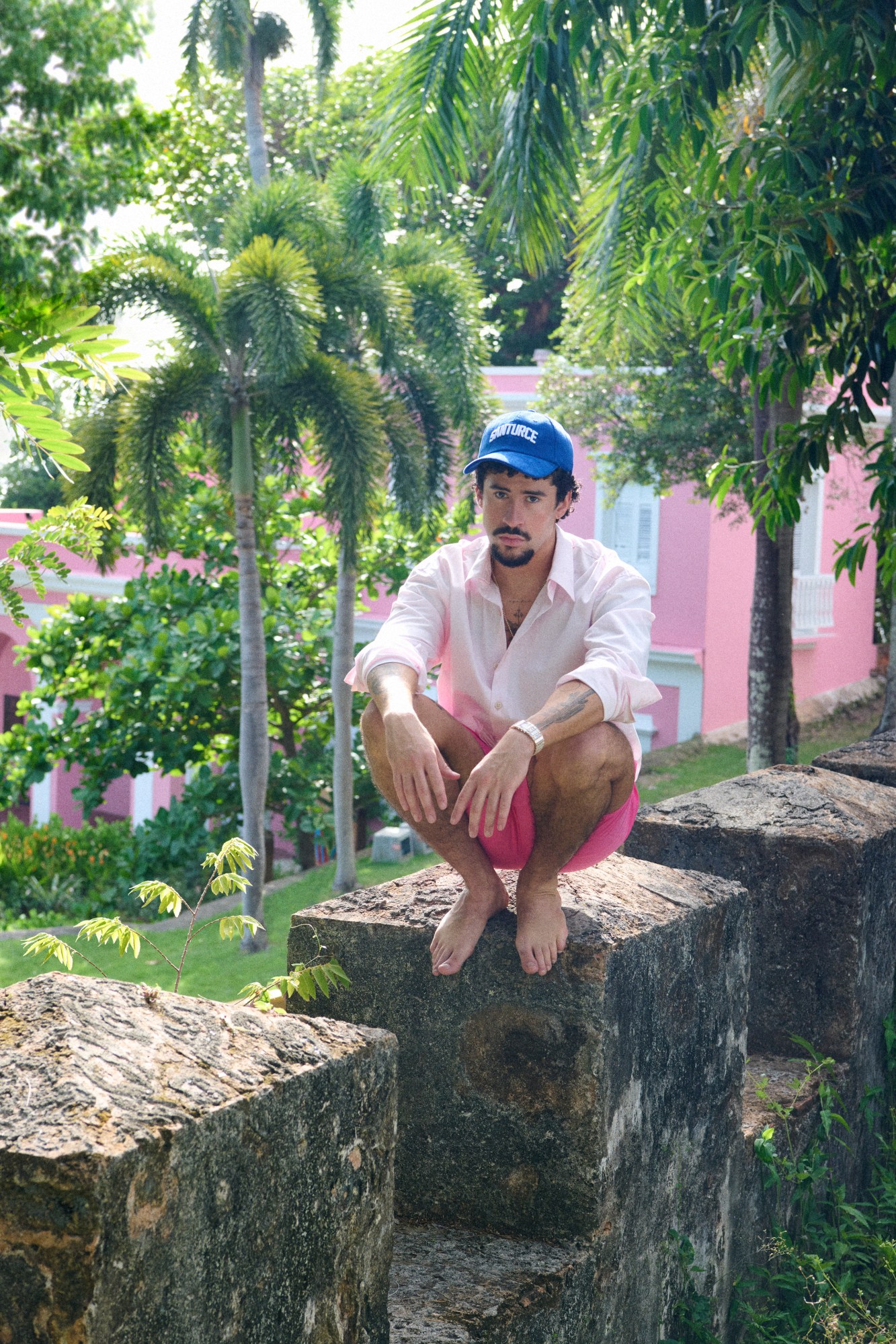
Days later, inside the office for Rimas Entertainment, the company founded by Bad Bunny’s savvy manager Noah Assad, I expected to see a war room befitting their global takeover. Instead, I happened upon the superstar and Assad playing dominoes with their entourage. The artist, born Benito Antonio Martínez Ocasio, appeared focused in a golden yellow hoodie, a white dress shirt, and jeans, his curls springing from beneath a plain white baseball cap.
We hadn’t seen each other since 2020, when I brought him up to the Rolling Stone office in New York to shyly play audacious reggaetón songs from his sophomore album, Yo Hago Lo Que Me Da La Gana (I Do What I Want), which would land him on the magazine’s cover that spring. But five years, four albums, and 45 minutes of dominoes later—he gave me a big hug and sat across from me for our chat.
“Acho,” he marvelled, using a local term that’s short for muchacho, or bro. “I think your Spanish got better!” Our conversation was conducted in Spanglish and translated for clarity.
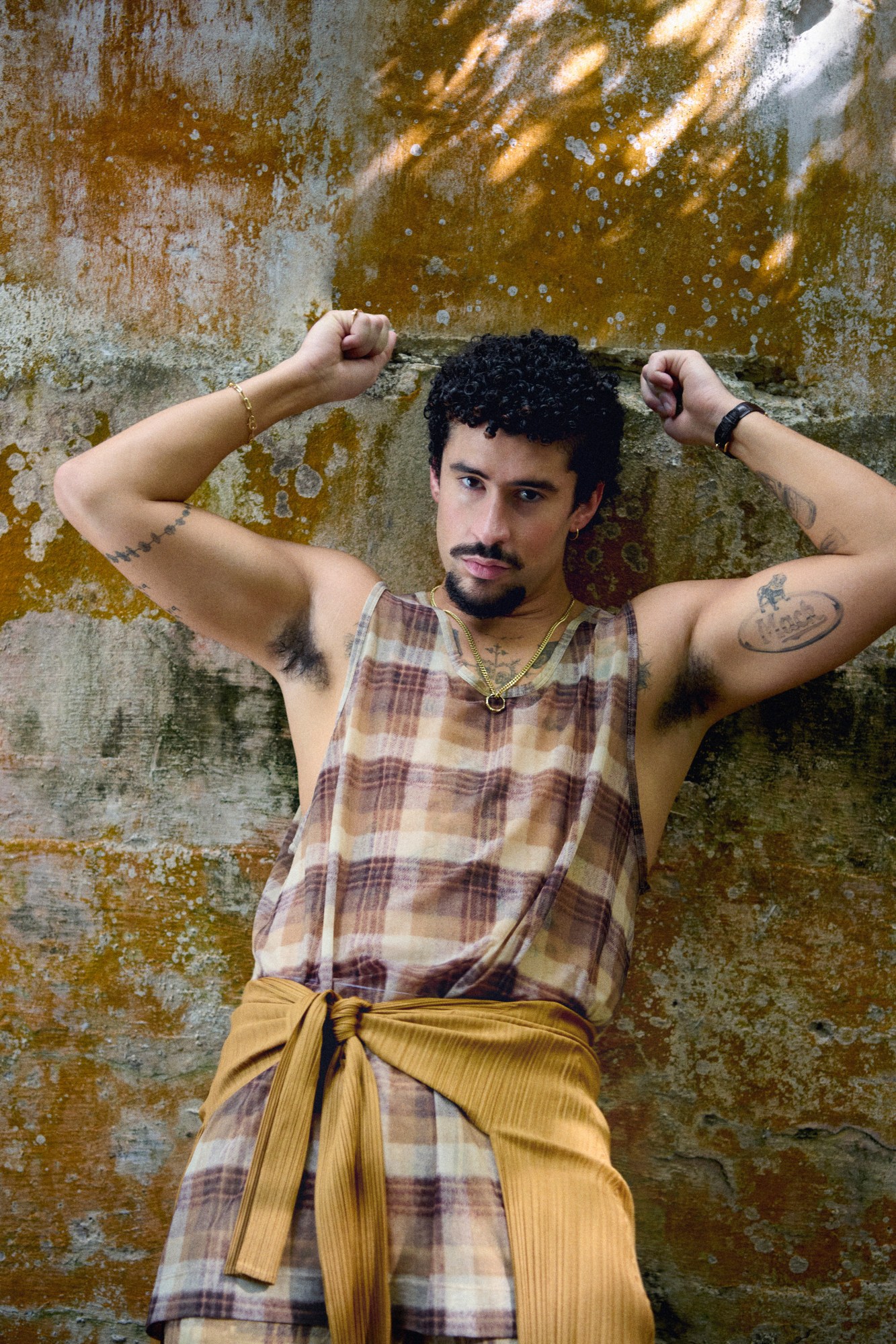
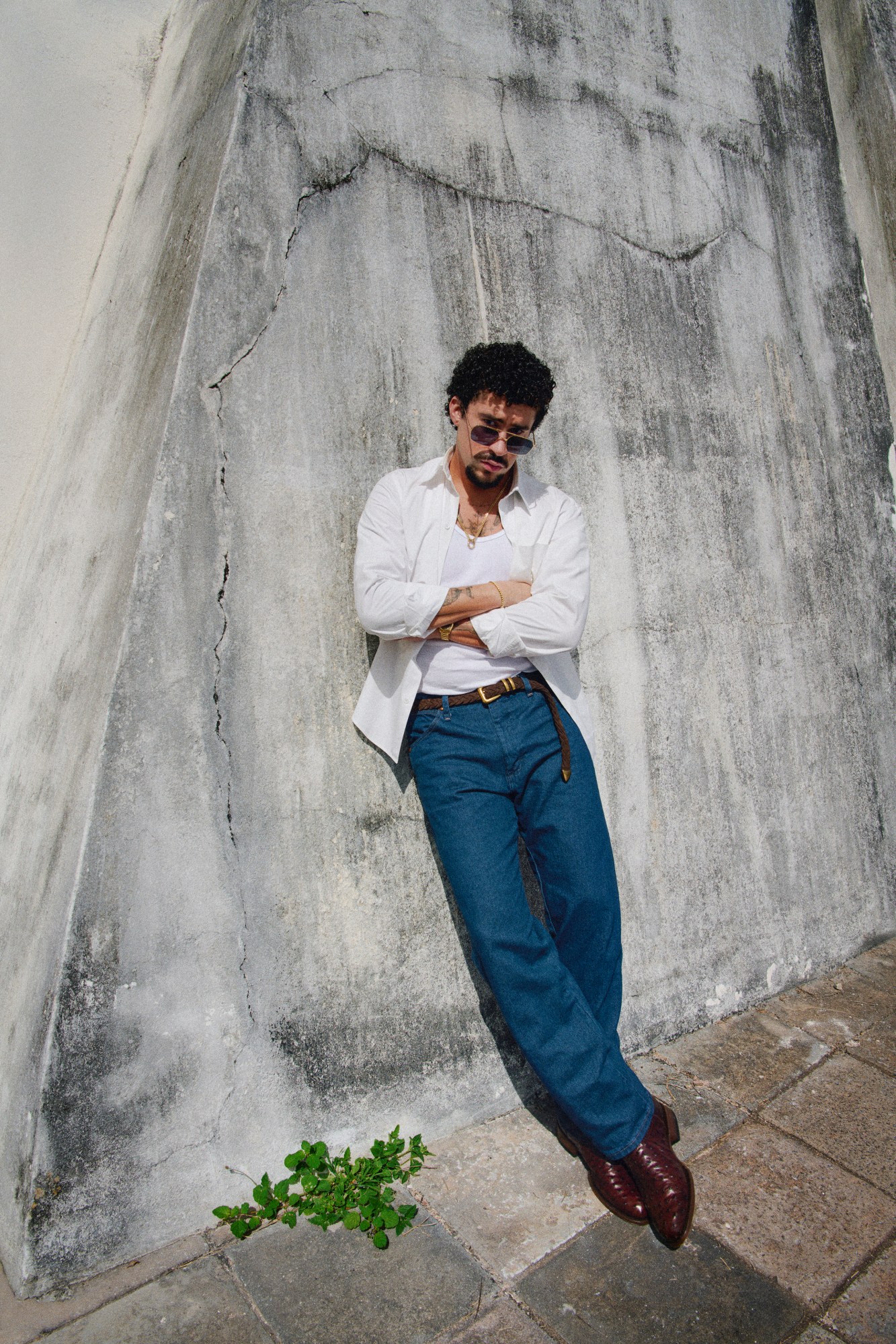
SUZY EXPOSITO: A lot has changed since I first interviewed you in 2018. How does it feel to look back on that version of Benito now?
BAD BUNNY: To tell you the truth, it feels like 10 years ago. Real, and different, and weird. I was doing different things, thinking about different things, so… I look at it with nostalgia. But [I’m] not comparing the present moment with that moment. But without a doubt, professionally we have grown a lot.
Many people doubted the impact of Latin music back then—but your music got more people to read about it. More Latino journalists are getting hired to write about our culture in English. Before, it felt like nobody else cared!
Really, those are things that make me happy. Sometimes I don’t have that up here [points to head]. But when I see things like that happen, and in many other areas of the industry as well… I feel proud to be part of something like that.
When I saw your concert on Sunday, I got goosebumps. Seeing you up there, wearing your Héctor Lavoe sunglasses evoked very deep feelings. Can you tell me about the concept of your residency show?
I wanted to bring the album to reality, [to show] how it would look if it were physical—and that’s what you see. It’s the countryside. It’s a little bit of our past, of our culture, of what bomba is, but with my sound—the sound of now, of the future. It’s a party, it’s nostalgia, it’s struggle… it’s romance. I wanted to combine all those elements into one single event. And I love it. The energy is beautiful.
It feels a bit like… How do I say this? Innocence. An eternal innocence. It has the joy and the party vibe of Un Verano Sin Ti, but this time the Puerto Rican-ness is more present than ever. The pride, the sense of homeland that unites generations. It’s always been something you see in my concerts, but in this concert, it is much more marked. There are kids who are 17, 18—but also those who are 20, 30, 40, 60, there are elderly people. You see people dancing, laughing, singing.
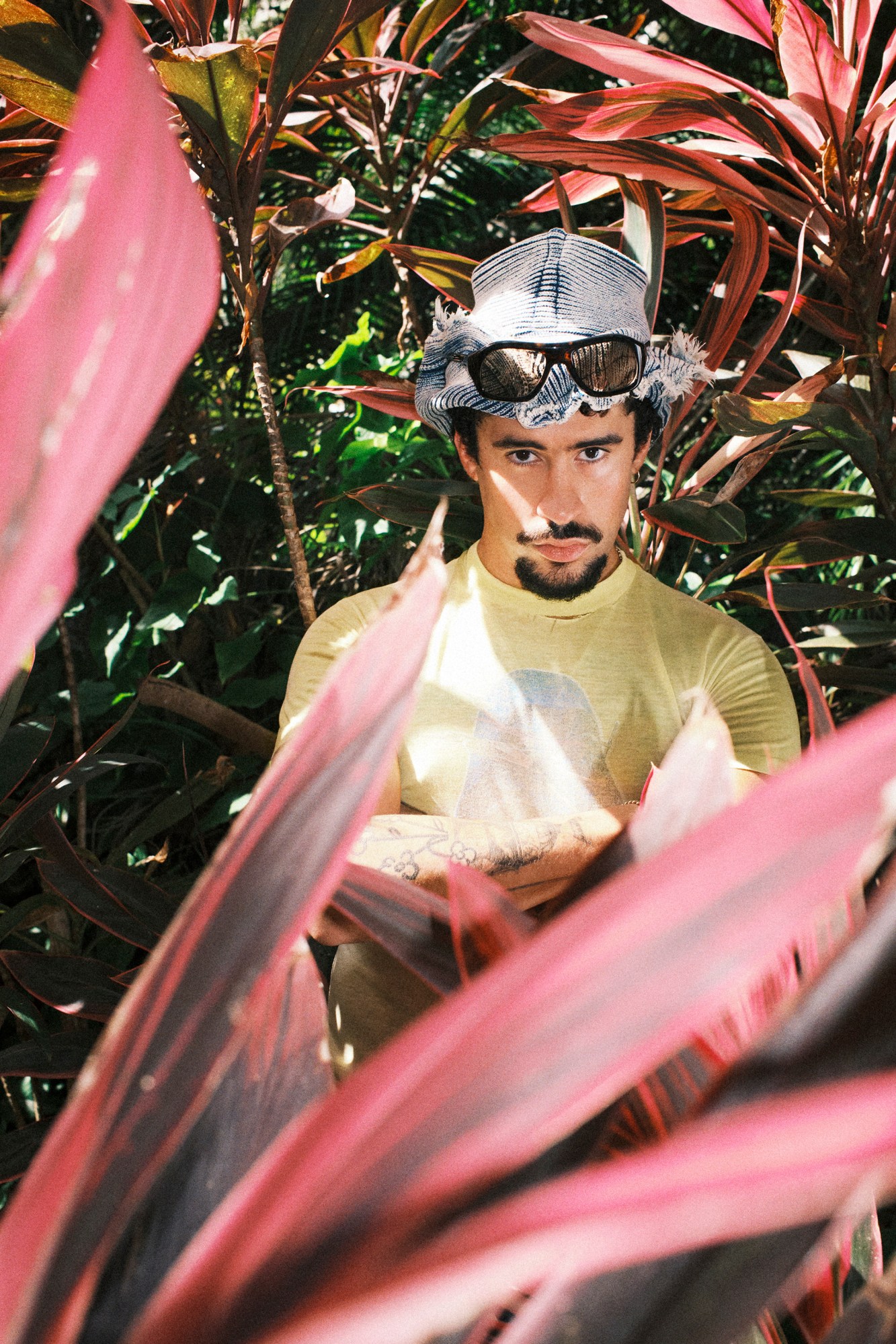
There’s this contrast in your production between the wilderness of Puerto Rico and the little pink house on the opposite end of the stadium [which appears in his short film, also named DeBÍ TiRAR MáS FOToS]. Can you talk to me about that?
The house represents a home where we raise ourselves… a house that is supposed to be ours, but that could also not be. It’s also a home we may have to leave, and that many people would not want to. At the moment, you can feel an instability of not knowing what will happen to it—not knowing if I will continue living here, or if I will have to leave.
In your new album, you went straight to the source with bomba y plena, as well as salsa. What inspired you to go back to your roots?
I had the desire for a long time to try to make a salsa album. But I always thought about it for the future—like, “maybe when I’m 40.” But why wait so long? I already had the idea for the song “BAILE INoLVIDABLE.” I had the track “NUEVAYoL,” which had a sample of salsa. During that time, I was touring Nadie Sabe lo Que Va Pasar Mañana, [on] the “Most Wanted Tour.” I spent some time living in LA, it was the time of Coachella. I was [filming] Been Caught Stealing, I was doing Happy Gilmore [2], and I had never been so far from Puerto Rico for so long. It drove me to [research] my roots, to connect with everything I am as a Puerto Rican.
That makes sense—in Nadie Sabe Lo Que Va a Pasar Mañana (Nobody Knows What Will Happen Tomorrow), you seemed like a foreigner in exile.
I know that for you, as in the Latino community in the US, you were like: “What’s going on with Bad Bunny?” But my people here, they always got it. Every lyric, every bar. It doesn’t sound like a very Puerto Rican album, but lyrically it was a hundred percent a Puerto Rican album. There was also a lot of glamour, like with the song “Vou 787” [the area code for Puerto Rico]. But there is some truth to what you’re saying. The last song, “ACHO PR,” is like, “I’m still here! But I’m trying to find my way.”
Some people go to Hollywood to forget the past, right? But you didn’t forget where you came from, and that’s what makes you different.
I think with Nadie Sabe and DeBÍ TiRAR MáS FOToS, I say to the people: I’m Hollywood, but I’m also Puerto Rico. I’m also the hood. I can talk to these Hollywood people, and the next day I will be in the hood with my flag, with my swag, with my Puerto Rican slang. I’ve met a lot of gringos who come to me talking about Puerto Rico [becoming] a state like it’s something cool. And I tell them, “No, bro, it’s not like that. That’s not cool at all.” And they’re like, “Oh, shit, I’m sorry, I didn’t know.”
A lot of them are ignorant, but it’s just that they’re living their lives. They don’t know that there are people here losing their homes. They were raised in a way that they [only] think about making money, So they don’t have that in their consciousness. There’s another perspective that I try to put them [on to].
“I had never been so far from Puerto Rico for so long. It drove me to [research] my roots, to connect with everything I am as a Puerto Rican.”
bad bunny
I want to talk about your song “LA MuDANZA,” because you talk about your family tree. How did you learn about the story of your family?
Well, there’s a story that I always heard about how [my parents] met, that I’ve known since I was a kid. I knew my mom’s parents died when she was a little girl. I learned a lot of things about my family, it’s not anything bad, but I prefer to keep it private. The journey of making this project was the most beautiful one that I ever had.
And what are some moments that you wished you photographed? Anything from childhood?
My mom used to take a lot of pictures, so there’s a lot of [photos from] my childhood. There’s a lot of pictures [from] after puberty that I don’t have. But my mom always had a camera. All those photos that I’ve been uploading during the promotion are photos that my mom took.
You also learned to dance salsa for this album. Most people learn when they’re younger. What made you take classes as an adult?
I’ve never been a great dancer, [but] I always liked salsa. While we started working on this album I decided to learn—my whole friend group started taking salsa classes. At least I know the basics, so if I get drunk I could dance the whole night. But I like to dance because I feel the music, you know? It’s like a body language, a soul language.
How does it feel to be the band leader in a salsa band?
I feel more like a conductor. More than a leader, I feel like a person who has joined this group of people, to give shape to this orchestra… and to see them develop together, to show their talent [and] what they’ve been practising for years. I learned a lot from them. I had a lot of fun with them in the studio. It’s like they could see me fulfilling my dream. I couldn’t see it myself. I was too focused on doing it.
I saw young people jamming to plena music outside the bar last night. Do you think there’s a renaissance happening for traditional music here? There’s a spirit of resistance in that music, and it’s important to share that with young people.
The music has been passed down from generation to generation, but it’s something that has been gaining strength in recent years. With this consciousness that has been created, little by little… Puerto Ricans are looking for how to move forward, how to keep ourselves alive. And with all that is happening now, it’s something that will continue to grow. I can feel it in the air.
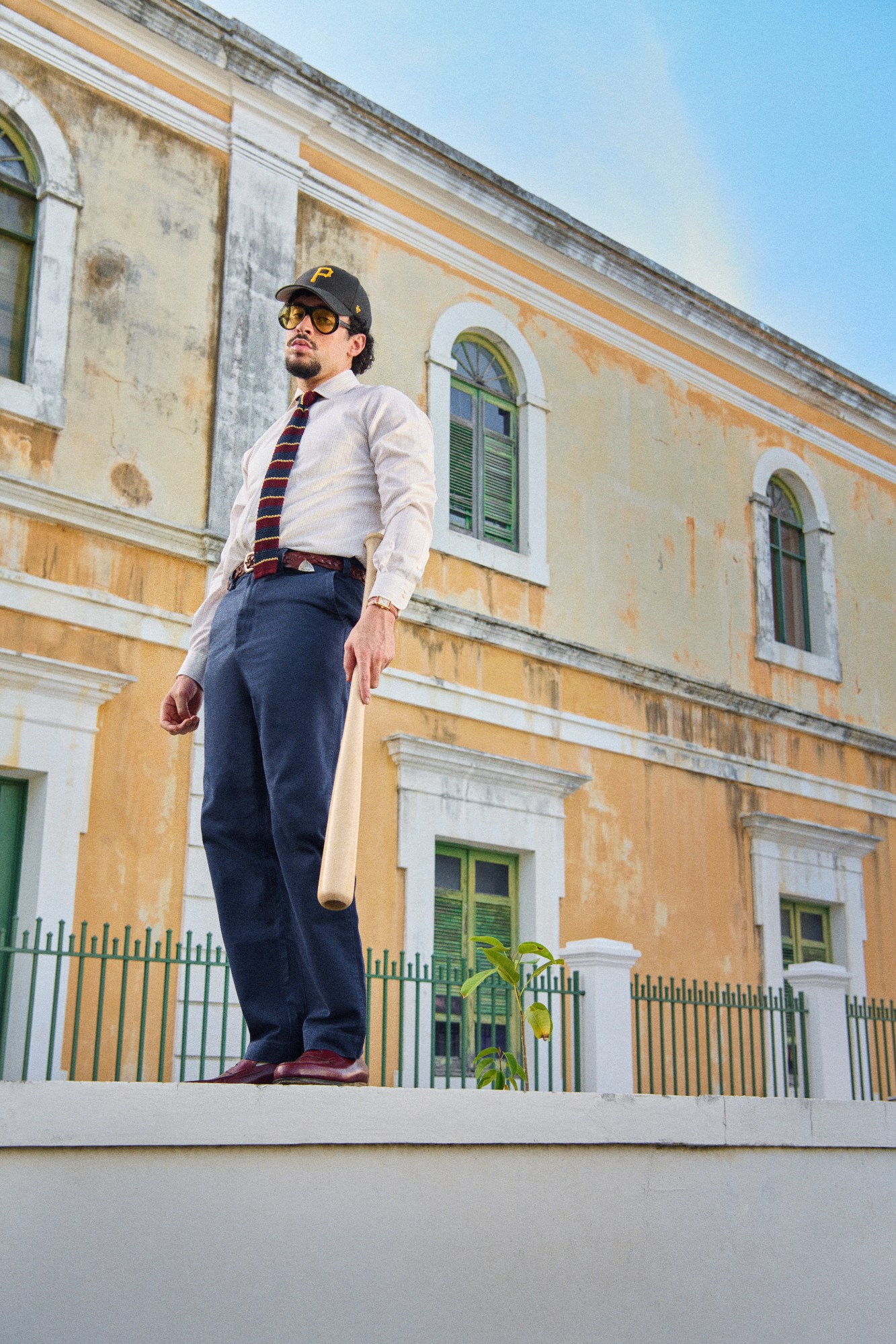
I do want to talk about your presence as an actor on Saturday Night Live…
Well, apparently they love me! But I especially love comedy. It’s my favourite thing. That’s why I’m very excited and happy about this Happy Gilmore movie. Because I [did] acting stuff before, but I was a criminal (Narcos) or it was an action movie (Bullet Train), so this is my first opportunity in a comedy movie. That’s the type of movie that I always watched since I was a kid. Especially Adam Sandler movies, [he’s] my favourite actor of all time.
What is your favourite Adam Sandler movie?
That’s a tough question. He has so many. Well, now, maybe Happy Gilmore 2… But I Pronounce You Chuck & Larry. I love that movie with Kevin James. Click… Big Daddy… I think that was my first favourite movie. I loved The Waterboy, The Wedding Singer.
What was it like working with him?
It was a dream come true. He’s so nice, funny. It wasn’t work, it wasn’t a job to me. I was working on this movie in New York at the same time that I was getting ready for the Calvin Klein shoot and working on my album. I was on [the Happy Gilmore] set from 6 a.m. to 6 p.m., then I [rented] a place in Tribeca to work on my album. The song “Velda” with Omar Courtz was recorded in New York.
I think Tribeca could use the sazón.
We went to a bodega in New York and bought all these things: Puerto Rican flags, cookies, tomatoes, Puerto Rican towels. And that was our studio.
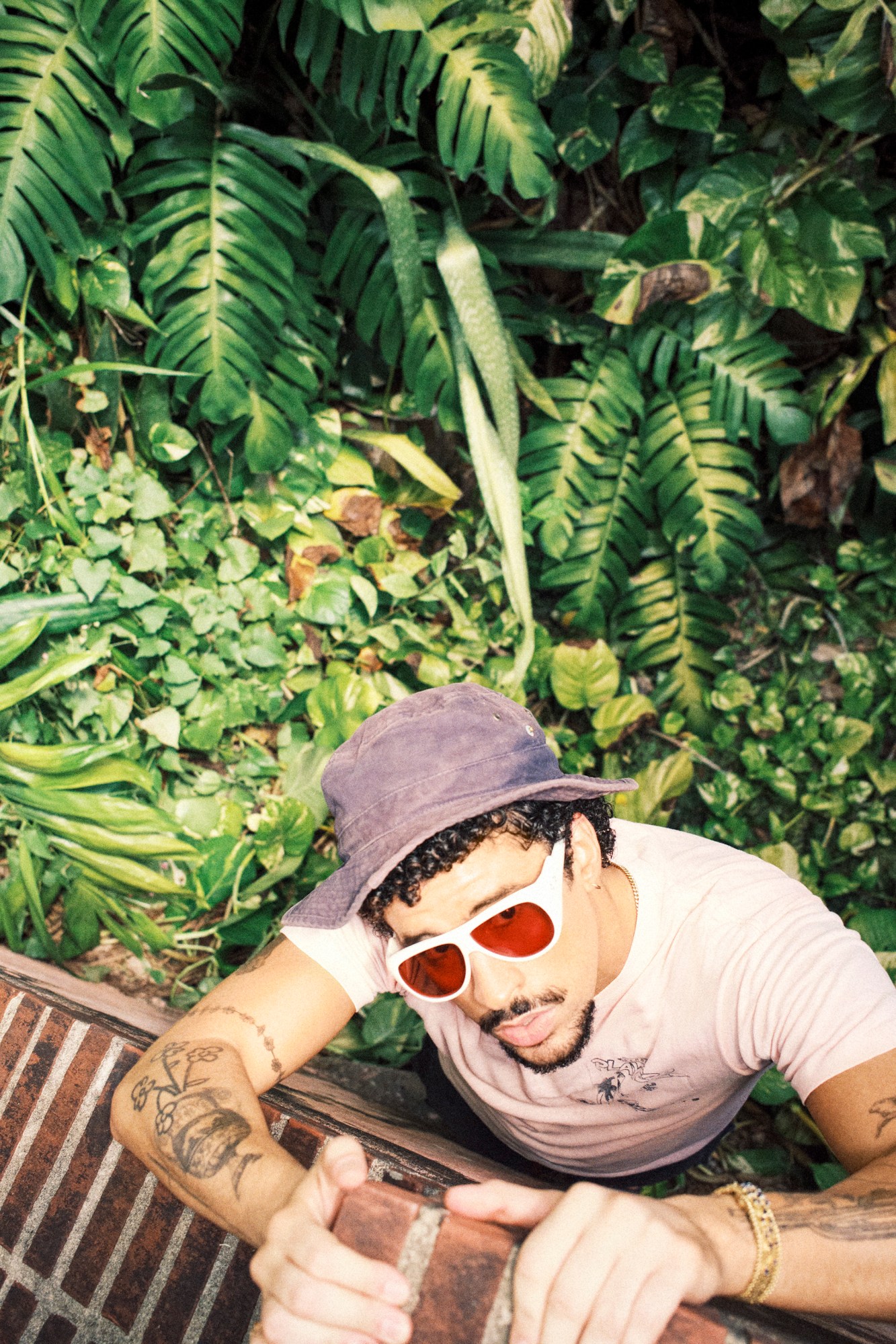
You have a great sense of humour. Where do you think you got your talent for comedy?
My grandpa, the storyteller. He’s the funniest. he’s also named Benito. He’s always making jokes. And also my whole family, from his side——they’re always making jokes and making fun of each other… They’re such bullies. That’s the environment that I grew up in.
I think Latino families can be hard on each other.
Now that I say that, I don’t want my mum’s side to get jealous… There’s also my uncle, he was, he… My God… I’m sorry. [chokes up]
Oh no… was [his passing] recent?
Basically. [wipes tears.]
I’m so sorry.
But yeah… like, my mom is a very happy woman. Her brother, my uncle, was always making jokes and making us laugh. My auntie too. I think I have a lot of comedy from both sides of my family. But my grandpa is the boss. I [grew up in] a huge comedy school.
You said you wouldn’t be giving any concerts in the United States. Was this out of concern about [the mass deportations of] Latinos in the United States?
Man, honestly, yes. There were many reasons why I didn’t show up in the US, and none of them were out of hate—I’ve performed there many times. All of [the shows] have been successful. All of them have been magnificent. I’ve enjoyed connecting with Latinos who have been living in the US But specifically, for a residency here in Puerto Rico, when we are an unincorporated territory of the US… People from the US could come here to see the show. Latinos and Puerto Ricans of the United States could also travel here, or to any part of the world. But there was the issue of—like, fucking ICE could be outside [my concert]. And it’s something that we were talking about and very concerned about.
But also, to actually understand your music… It helps to be in Puerto Rico!
It’s a whole experience!
Suzy Exposito is a Cuban-Belizean writer based in California. She is currently the assistant editor at De Los, the Latin culture wing of the Los Angeles Times. She was previously the founding editor of the Latin music section at Rolling Stone. In 2020, she became the first Latina to write a cover story in the rock magazine’s history; on the cover was Bad Bunny.
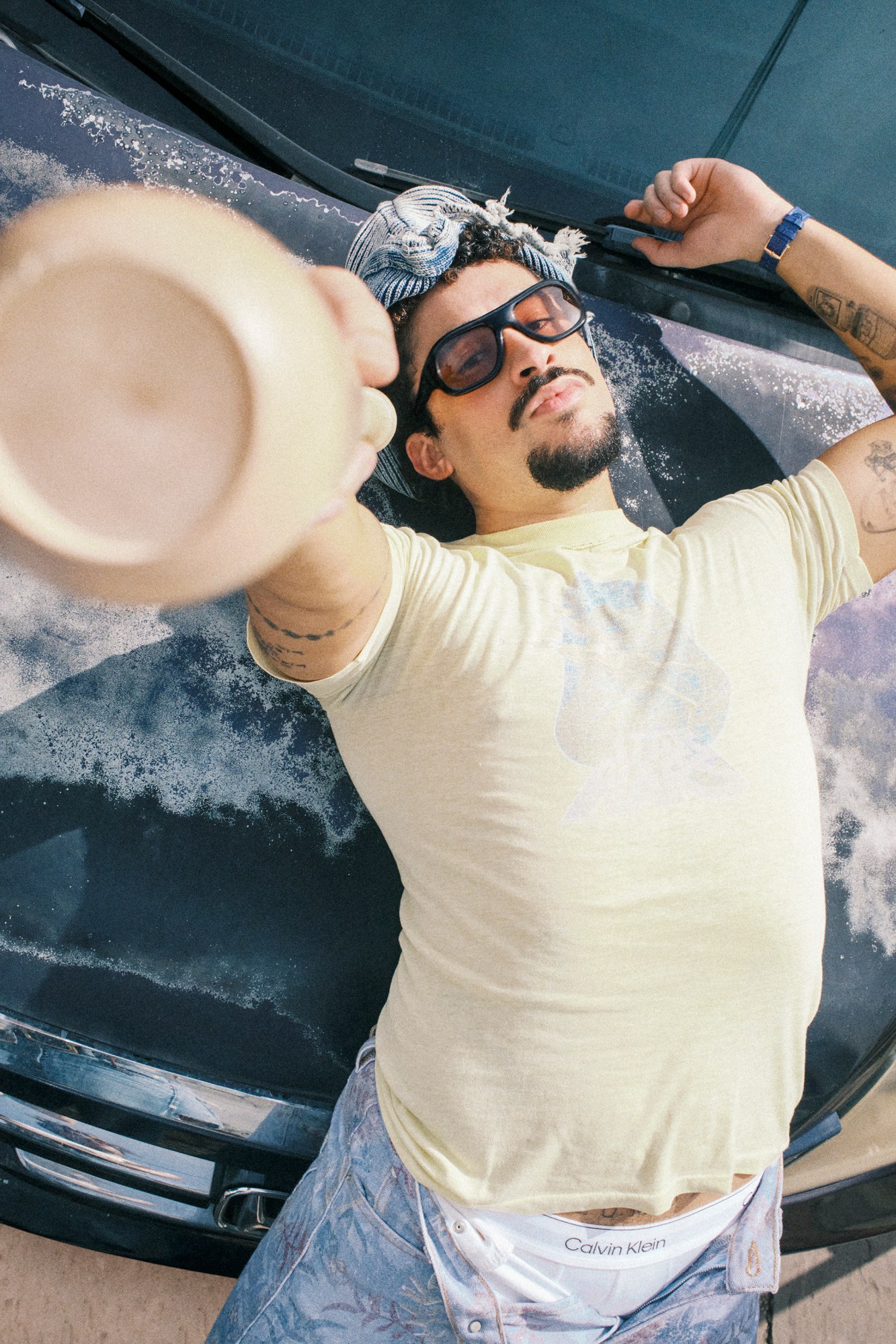
in the lead image: shirt BRUNELLO CUCINELLI; shorts BODE; hat STETSON; watch VINTAGE PATEK PHILIPPE COURTESY OF ANALOG:SHIFT; necklace BENITO’S OWN; socks STYLIST’S OWN
barber CHRISTOPHER VARGAS
groomer MIRNA JOSE USING ISIMA AT SEE MANAGEMENT
nails ISAMAR USING APRÉS NAILS AT MISS PINK GEL BAR
tailor REBEKAH CARRUCINI
movement director ASH RUCKER
photography assistant SAÚL CEDEÑO
digital technician EDWIN DAVID CORDERO
styling assistants KRISTTIAN CHÉVERE & KELVIN SANTANA
location MUSEO CASA BLANCA
production THE MORRISON GROUP
local producer CAROLINA WOLF AT WORLDJUNKIES
local production coordinator ISRAEL ANDINO AT WORLDJUNKIES
local production assistant JEAN PIERRE AT WORLDJUNKIES
post production TWO THREE TWO
special thanks CARIBE HILTON