Paris Couture Week for Fall 2025 delivered something rare: a true inflection point. One door closed in triumph. Another blew open, cloaked in gothic lace and Flemish ghosts. Demna gave his final couture collection at Balenciaga. Glenn Martens made his first at Maison Margiela. And in the space between those two events, fashion was shaken, not stirred. Me? Gagged.
At Balenciaga, Demna didn’t torch the house on the way out. He left a handwritten letter. One written in Guipure lace, houndstooth, reengineered corsets, and the kind of detail that made you lean in, not scroll past. Backstage, he looked peaceful. “It’s very experimental,” he said, soft-spoken and still. “I came as close as I could to being satisfied.” It was a marked shift from his earlier, more viral-making moments—no mud pits, no caution tape dresses, no Balenciaga-branded chip bags. Instead of provocation, this time he offered reflection.
After a decade spent redefining cool as conflict, his final couture show felt like resolution. He started with Paris, the city where his fashion life began. The collection wandered its streets. A love story to both the place and the codes of Cristóbal Balenciaga. Hourglass silhouettes floated rather than constricted. Corsets were reengineered for comfort. Tailoring had the rigid beauty of sculpture, but moved like breath—and gargantuan, of course. A puffer had no seams. A laptop case became a diamond-studded jewelry box. A suit made from faux corduroy was actually hundreds of kilometers of tufted embroidery.
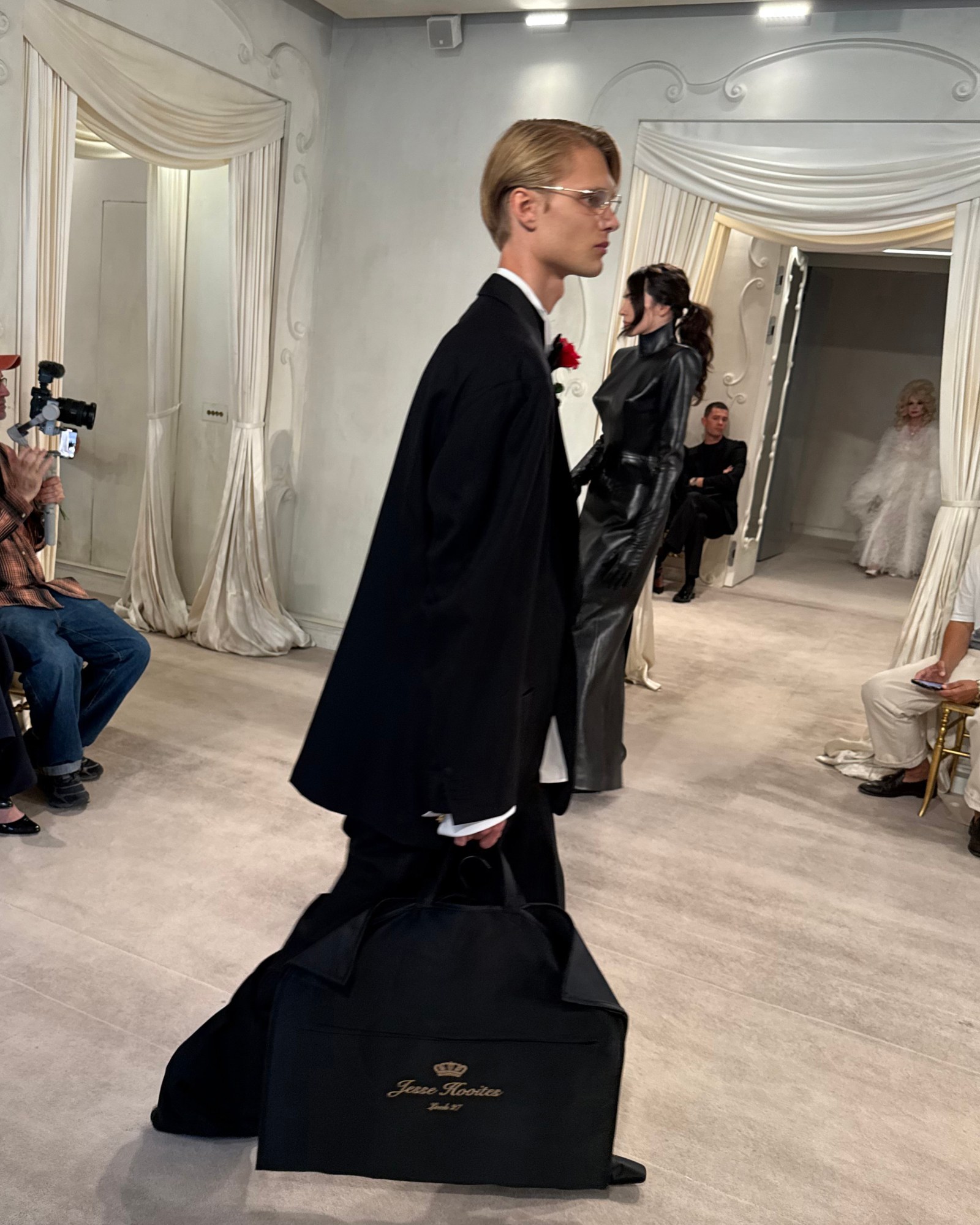
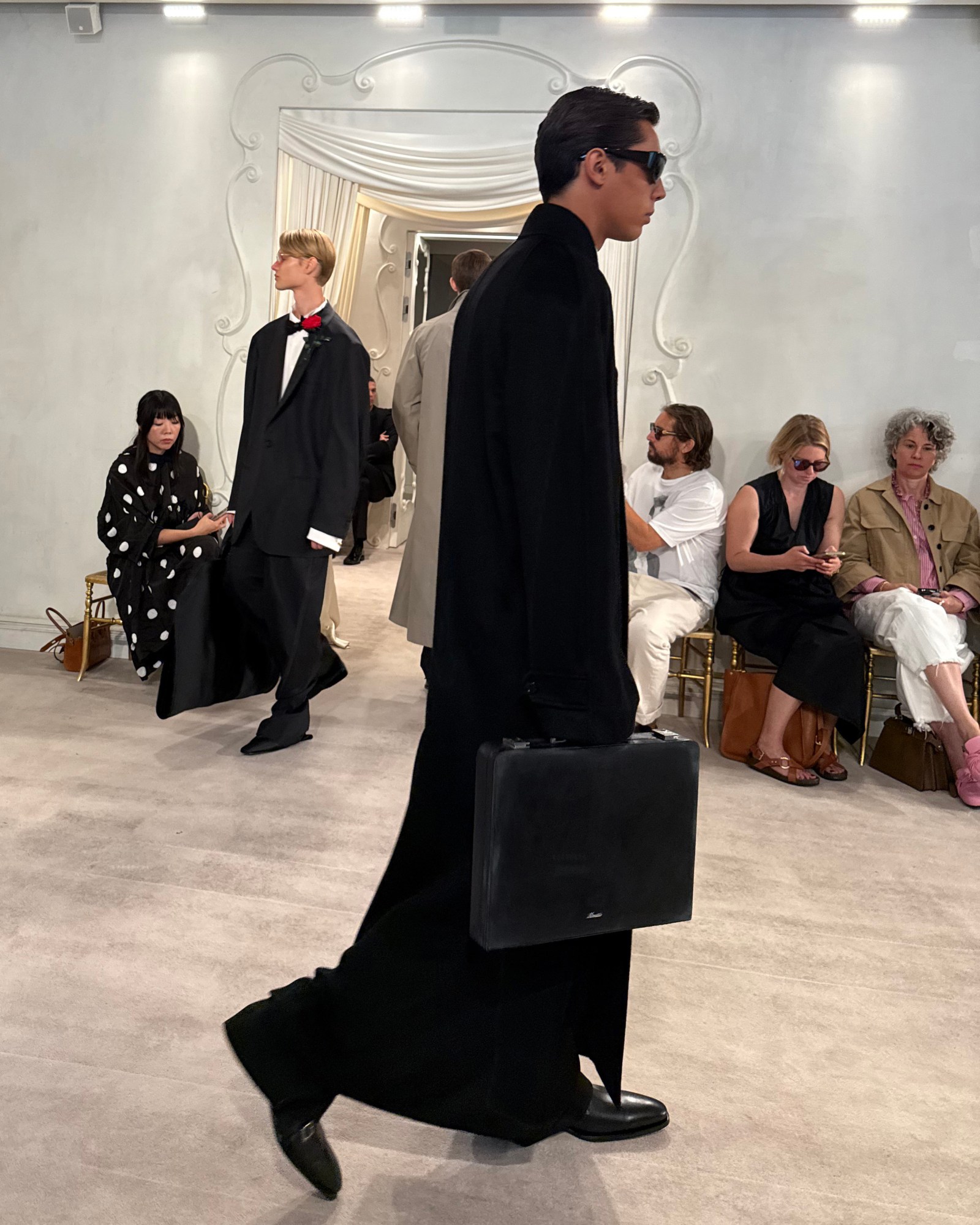
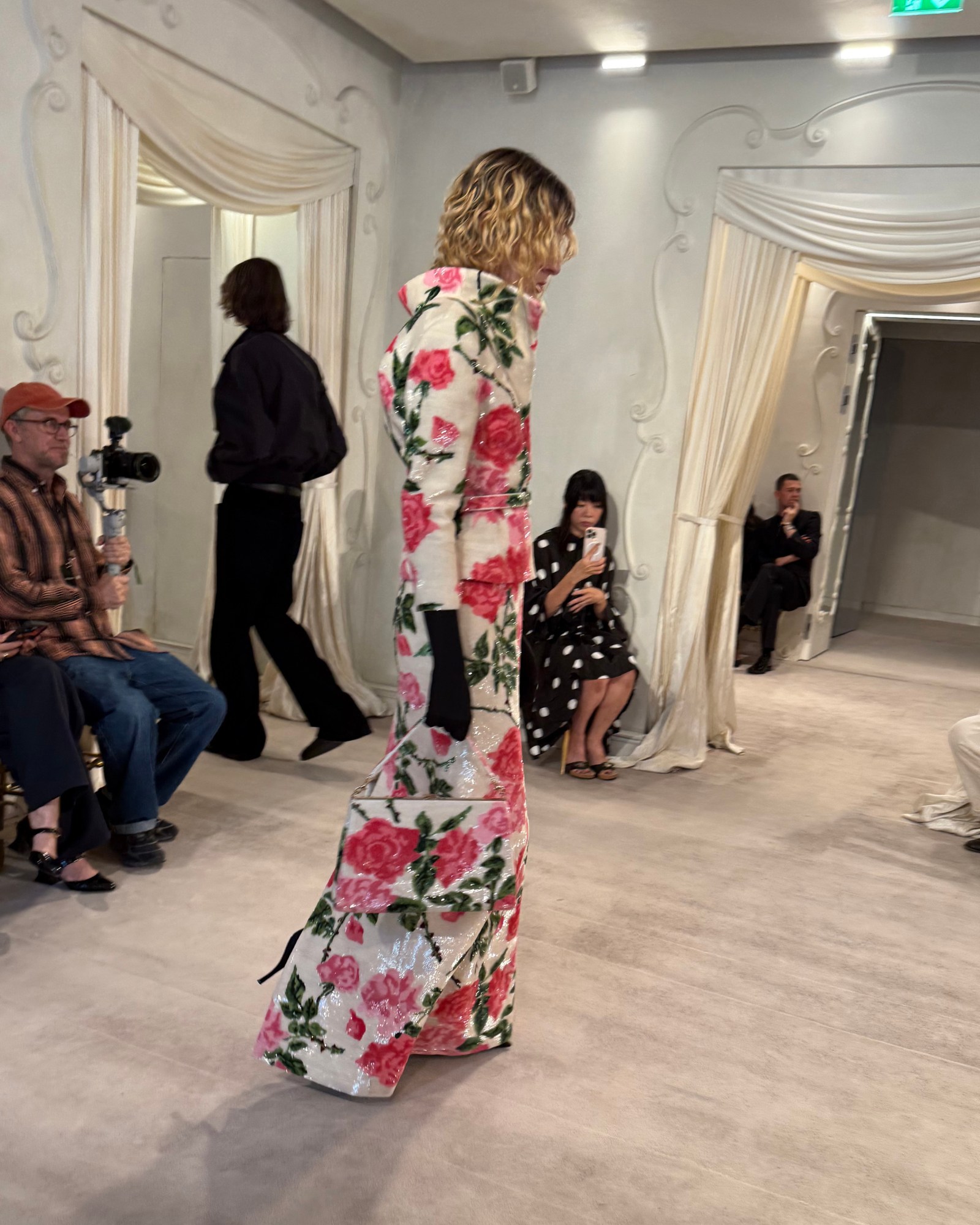
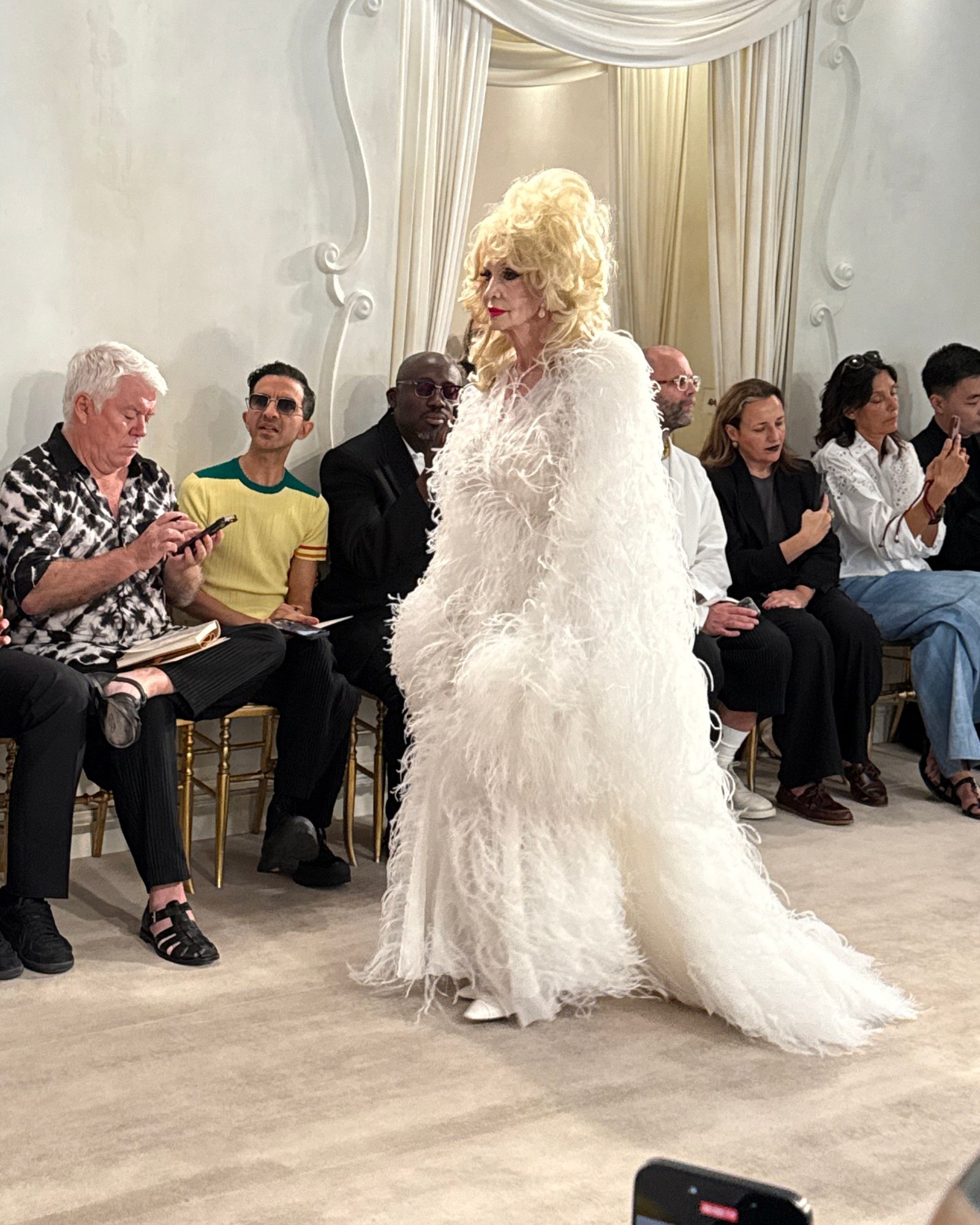
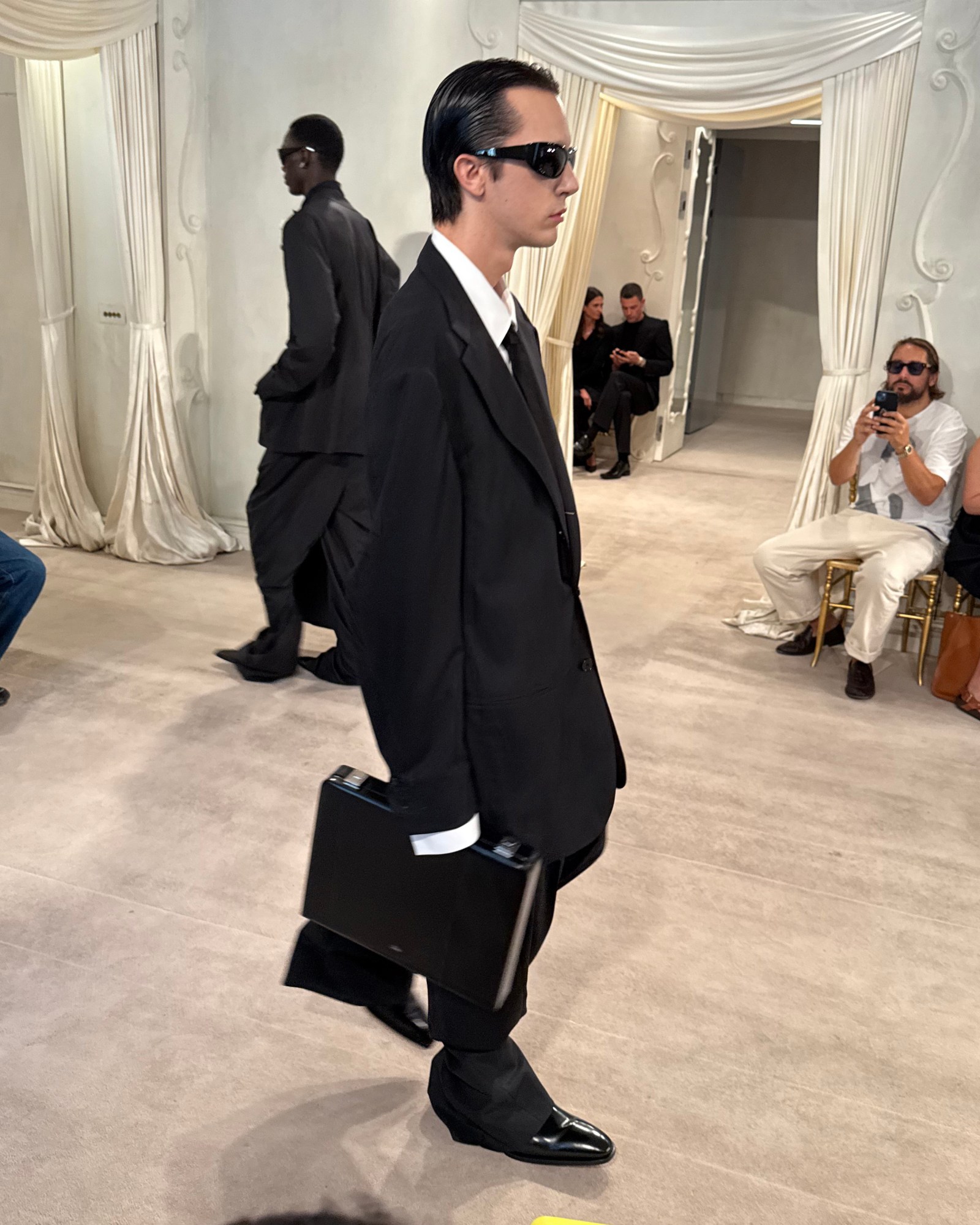
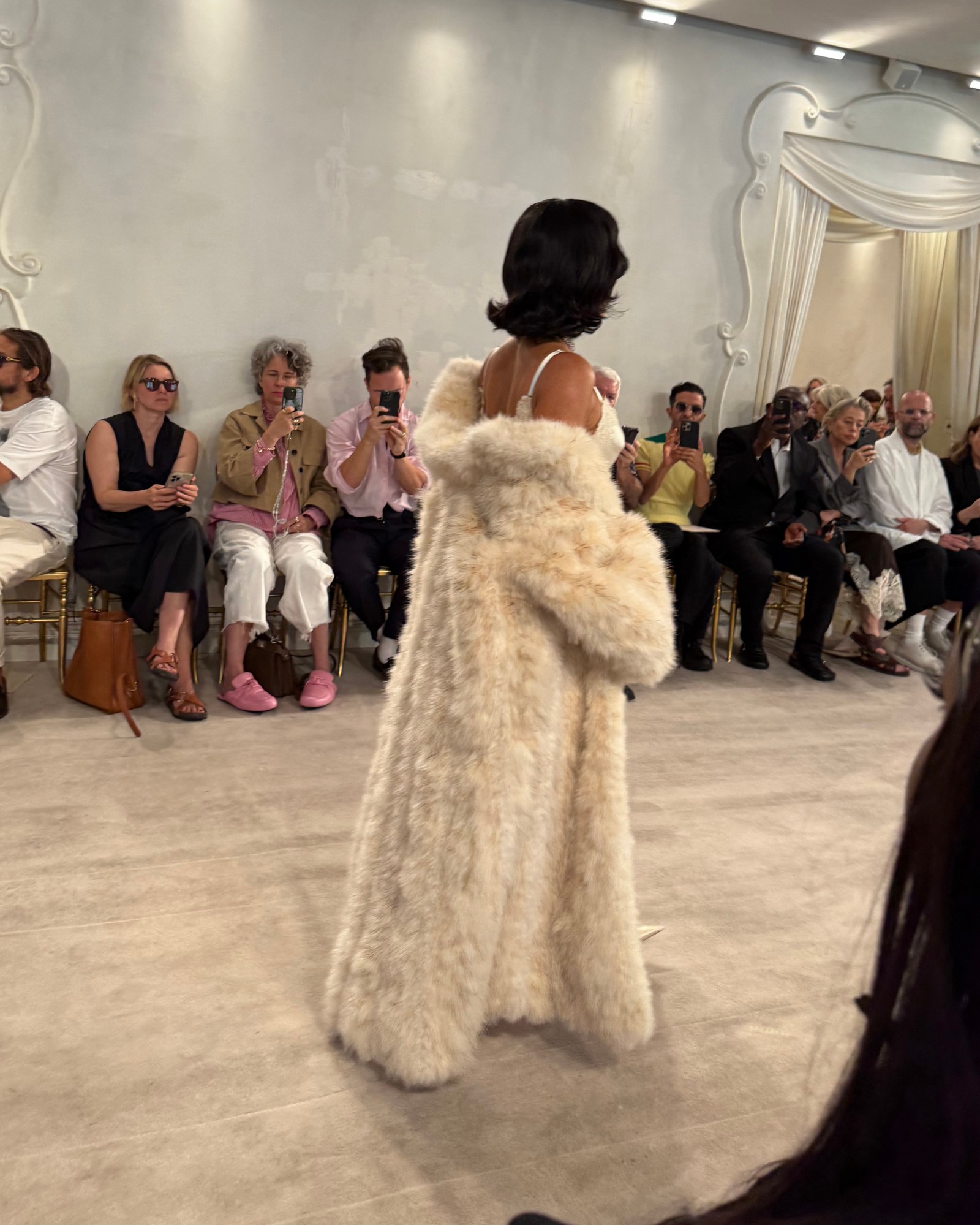
The collection also brought moments of personal tenderness. A sequined floral pattern on a skirt suit echoed the tablecloth in his grandmother’s kitchen. A 1967 houndstooth ensemble once worn by Danielle Slavik, a muse of Cristóbal himself, was reinterpreted with clean aggression. “It’s the kind of wardrobe I wish existed in the real world,” Demna said. “Outside the ballroom. Everyday couture.”
And of course, there was Kim Kardashian. She appeared draped in faux feathers and real Lorraine Schwartz diamonds (“They’re borrowed!” she said to me post-show), playing the part of Elizabeth Taylor with a sultry, modern-day edge. A silk slip beneath, mink-not-mink on top, diamond drop earrings brushing her collarbone. She didn’t just wear the ensemble—she absorbed it. A punctuation mark in human form. In the final look, Eliza Douglas, longtime Demna muse, wore a seamless lace gown shaped using millinery techniques—no zippers, no seams, just volume and silence. And just like that, Demna was done. No stunts. Just a slow fade to blissful white.
Across town, later in the evening, things were less meditative. At Le Centquatre—the venue where Martin Margiela had his final show in March 2009 for the house he founded—Martens held nothing back. His first Artisanal collection for Margiela was not a debut, it was a detonation. Couture exploded under his direction into a baroque hallucination. There were bustiers sculpted in clear plastic, claw-footed Tabi boots, masks made from crushed metal boxes, and draped plastic sleeves that blurred the line between clothing and shadow. Martens didn’t just reference the house codes, he excavated them.

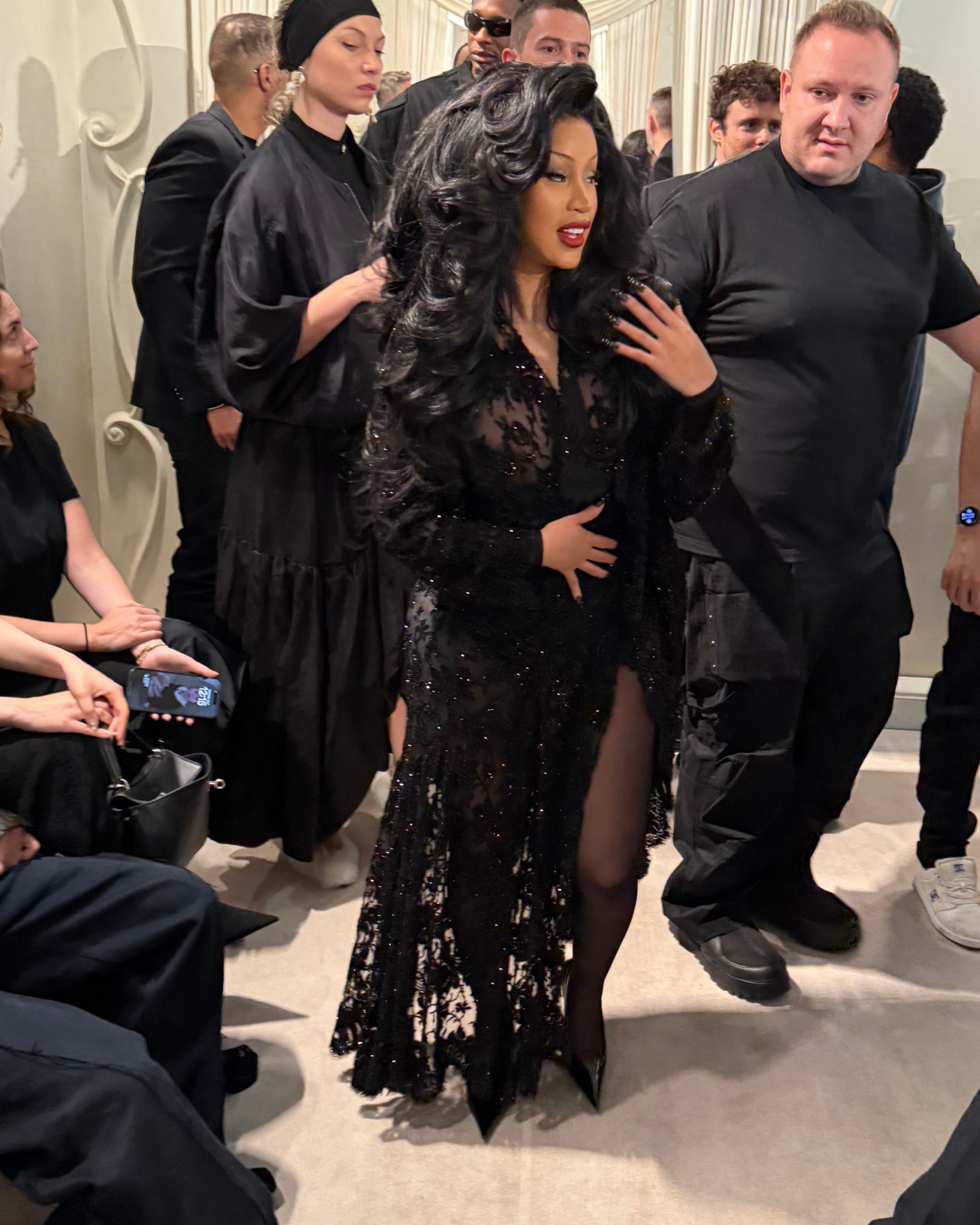
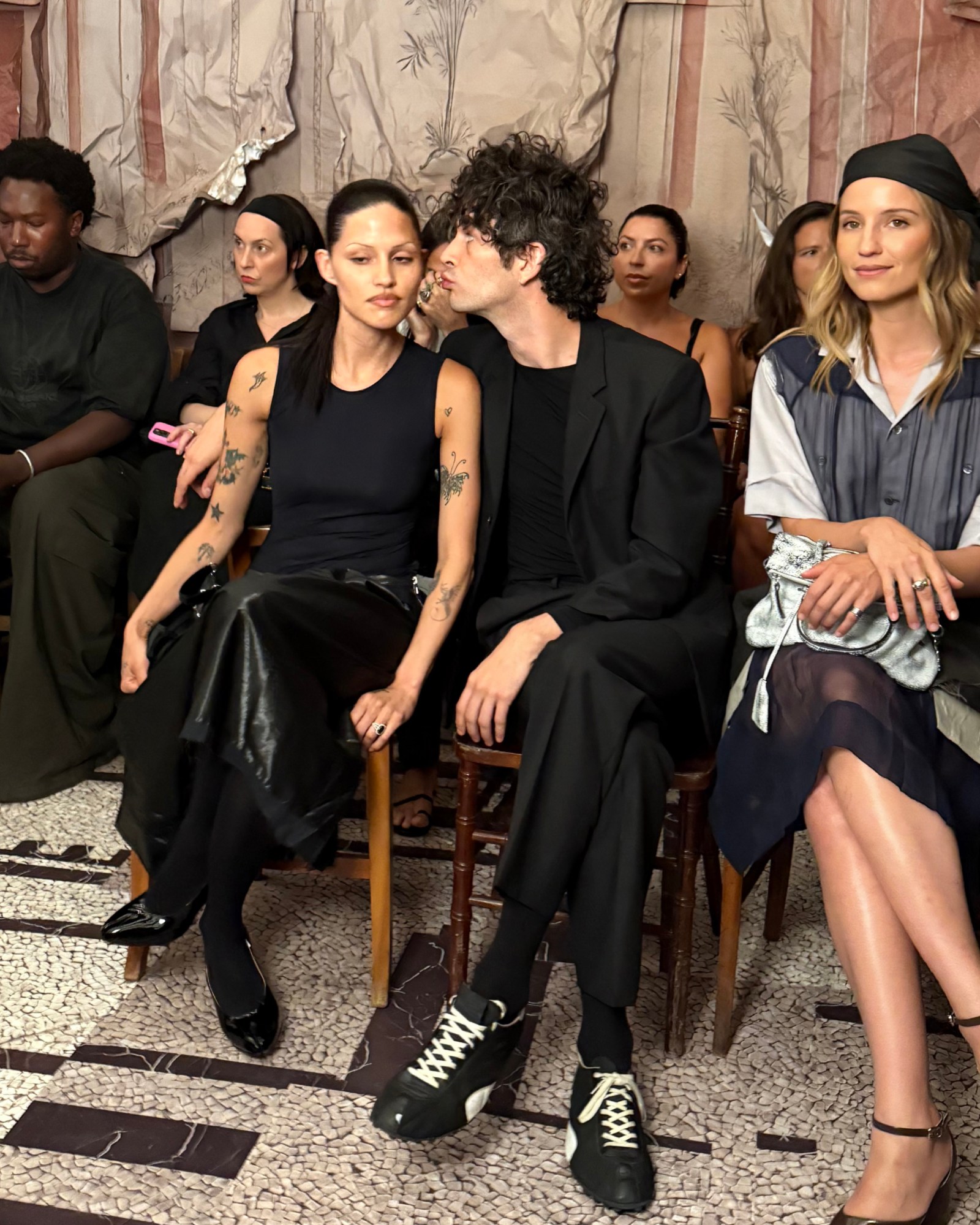
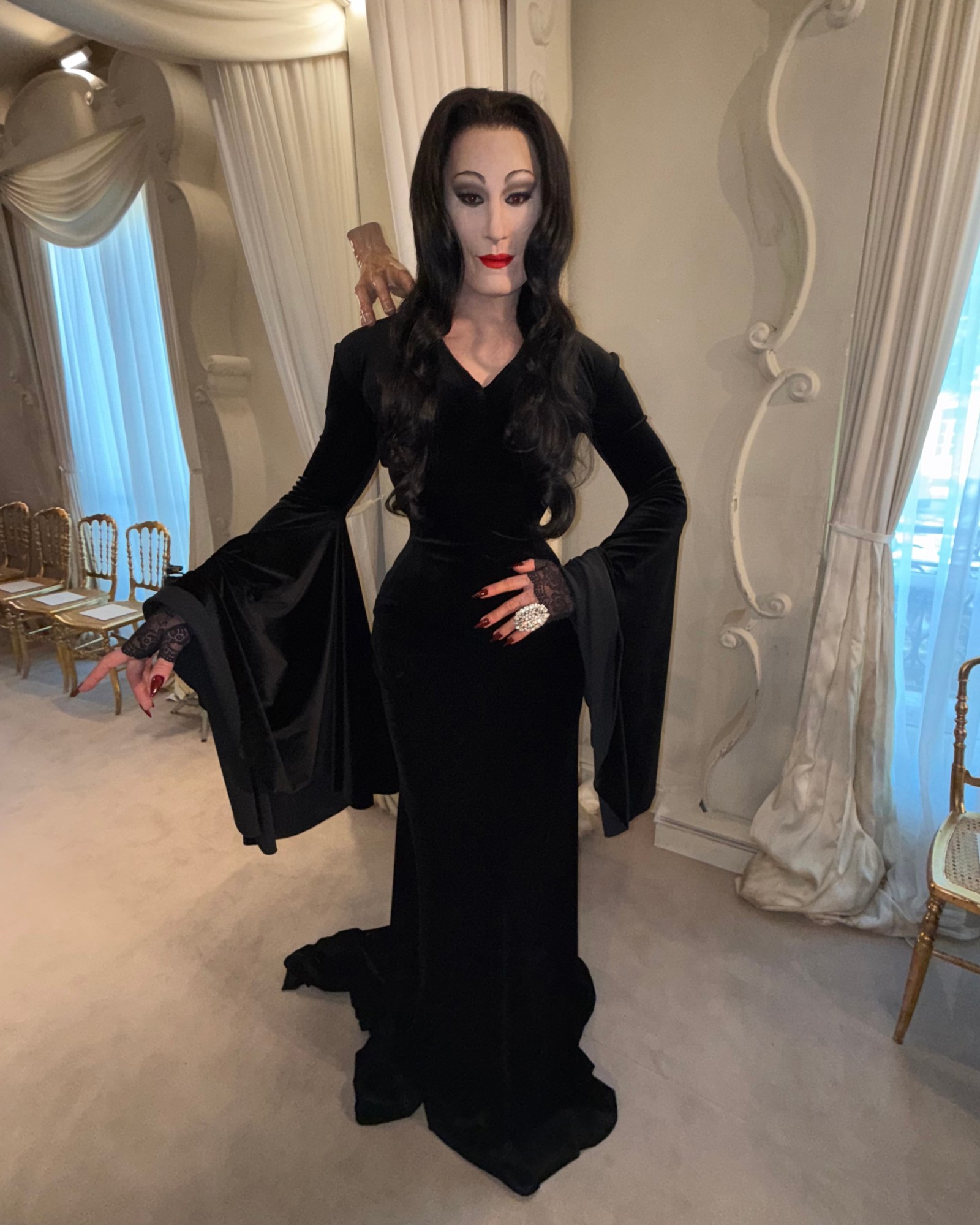
“I love everything John [Galliano] has done,” he said of his predecessor in an interview ahead of the show with Vogue Runway. “But I could never be John. I’m not such a good storyteller.” And yet, this collection told stories with every crushed pearl, every burnished edge. Inherited Flemish motifs collided with recycled motorcycle jackets and printed wallpaper from centuries past. Bodies were corseted with anatomical exactness—under the rib cage, over the pelvis—then layered in illusion tulle that looked like peeling frescoes. A feast of ghosts.
The collection pulsed with references to Gustave Moreau, Northern Renaissance interiors, and oil paintings of birds, game, and flowers warped into wearable relics. Plastic coats were flocked with faded brocade. Biker jackets, overlaid with ghostly wallpaper prints (much like walls of the show space), took on a chapel-like solemnity (some had peekaboo finger holes to show off striking red nails). Gowns in molten gold and oxidised silver echoed the celestial drama of his guest couture collection at Jean Paul Gaultier, while a deconstructed Diesel jacket nodded to his gritty reinvention of the brand (TBC if he’s planning on staying there, but the rumours are swirling).
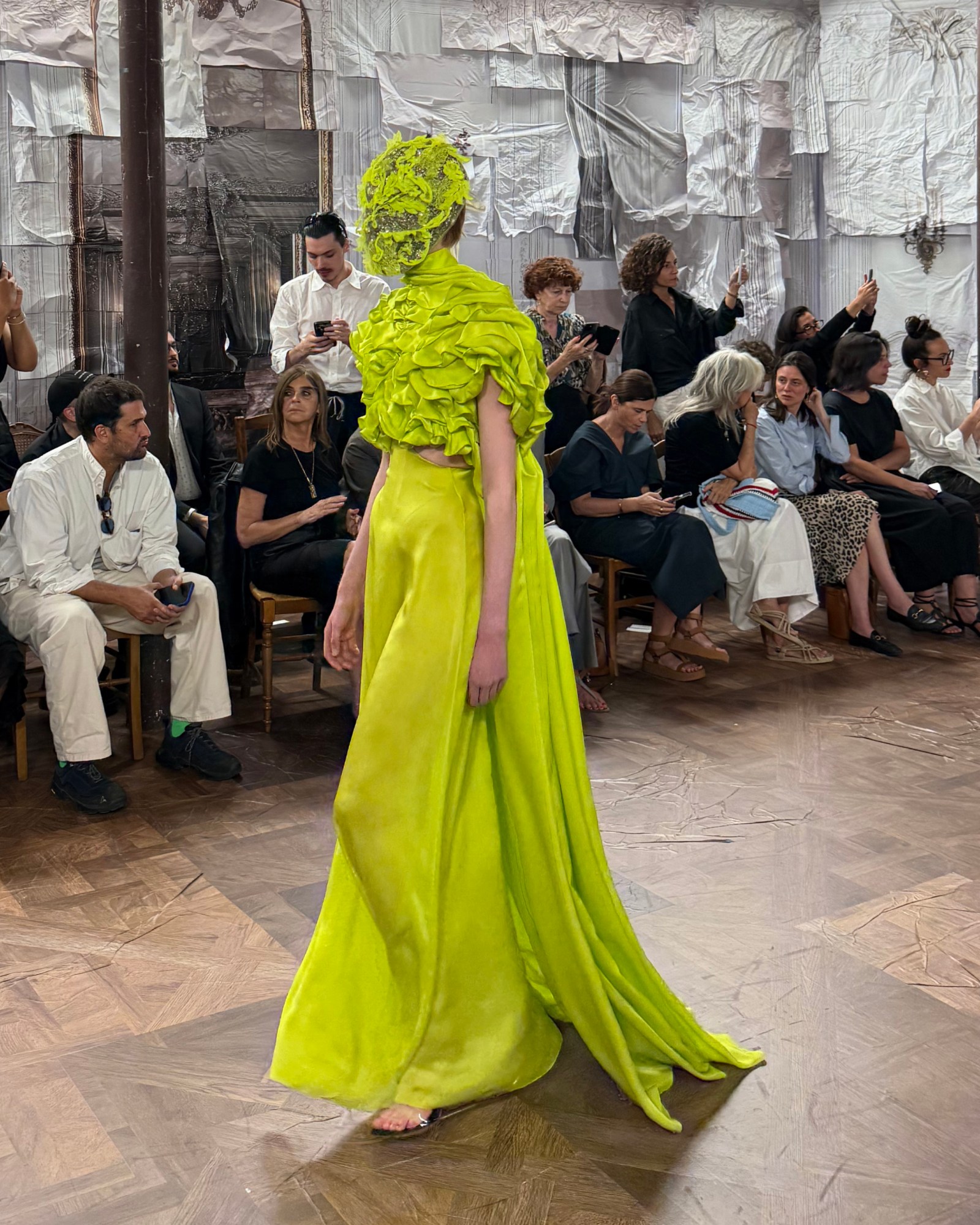
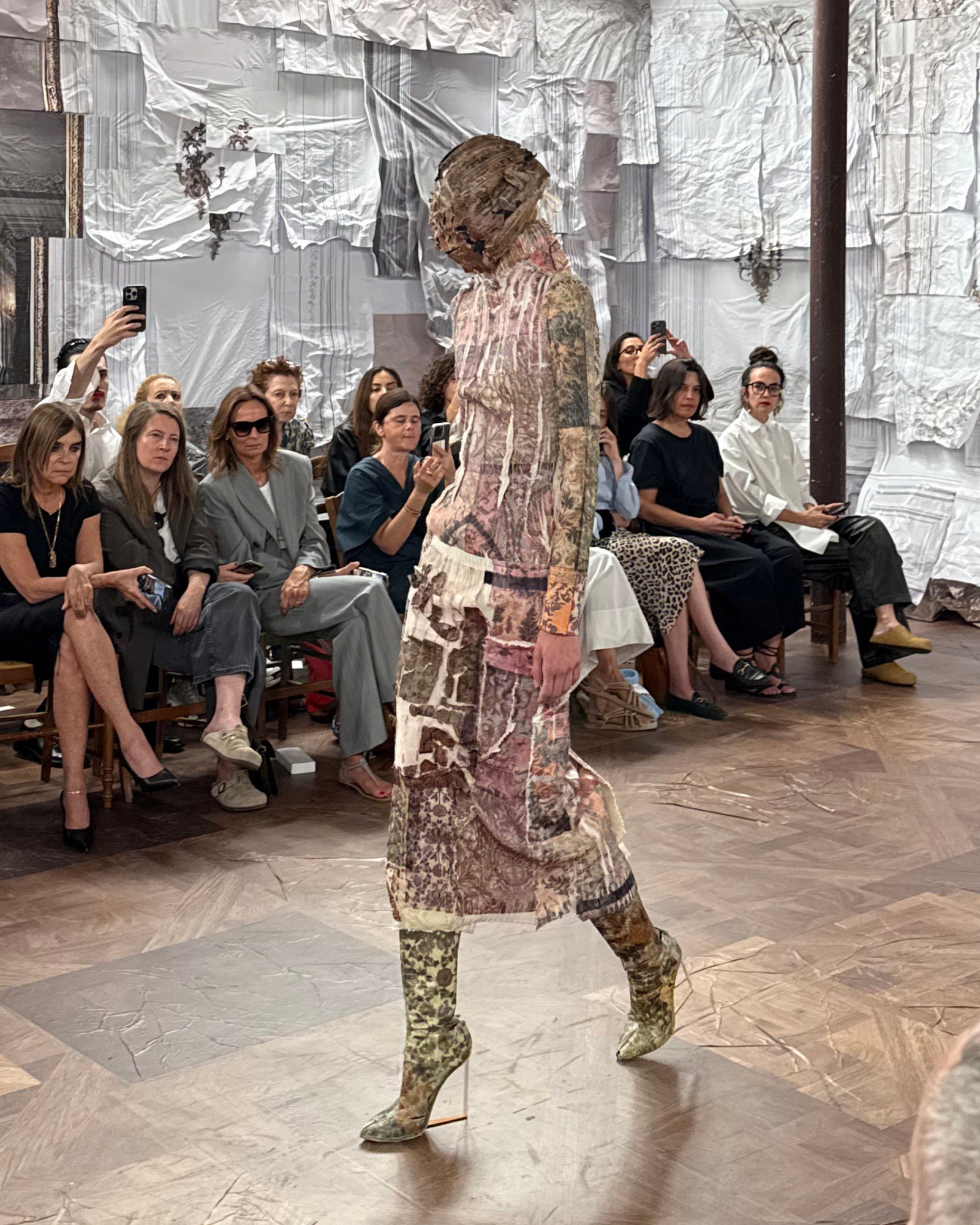
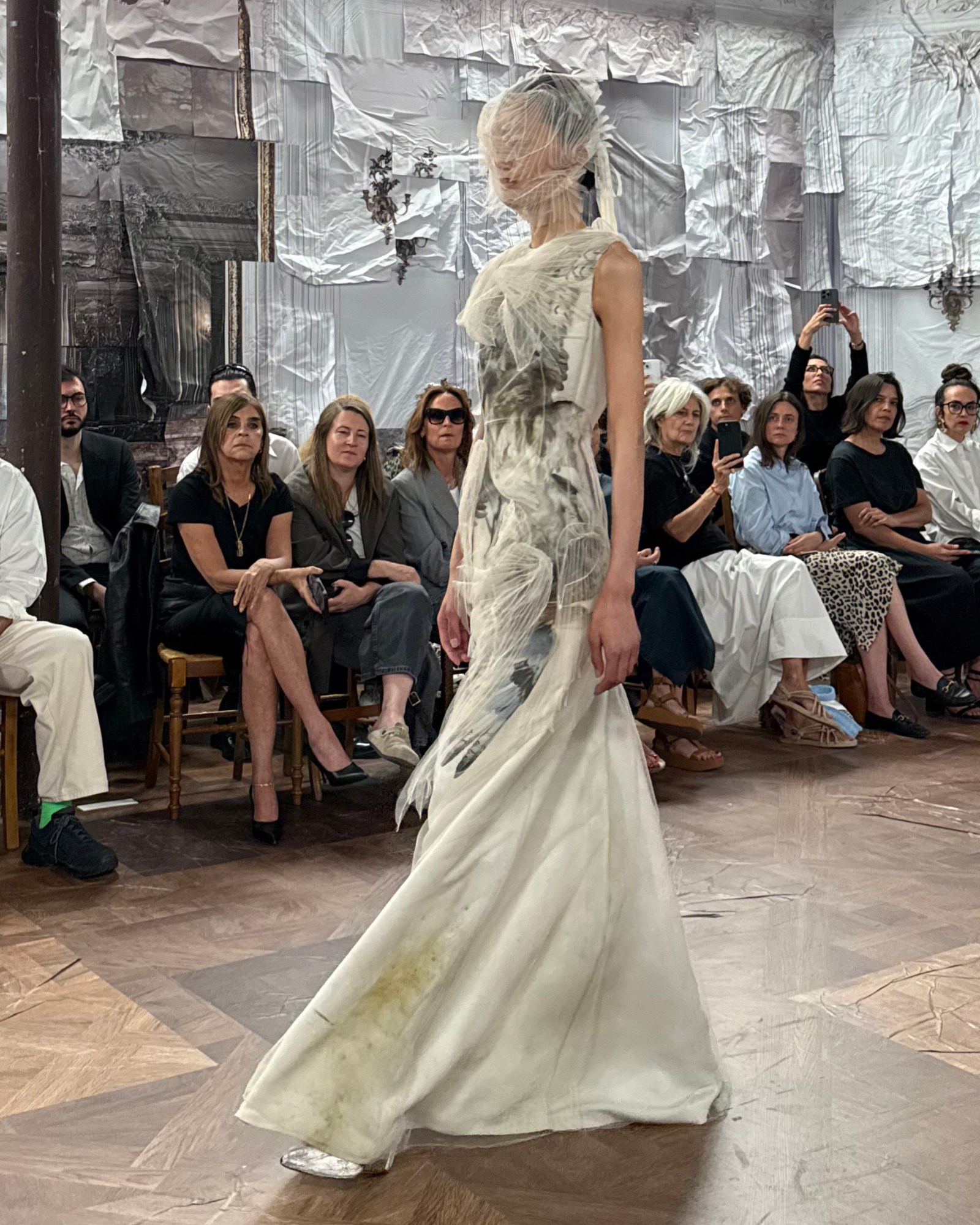
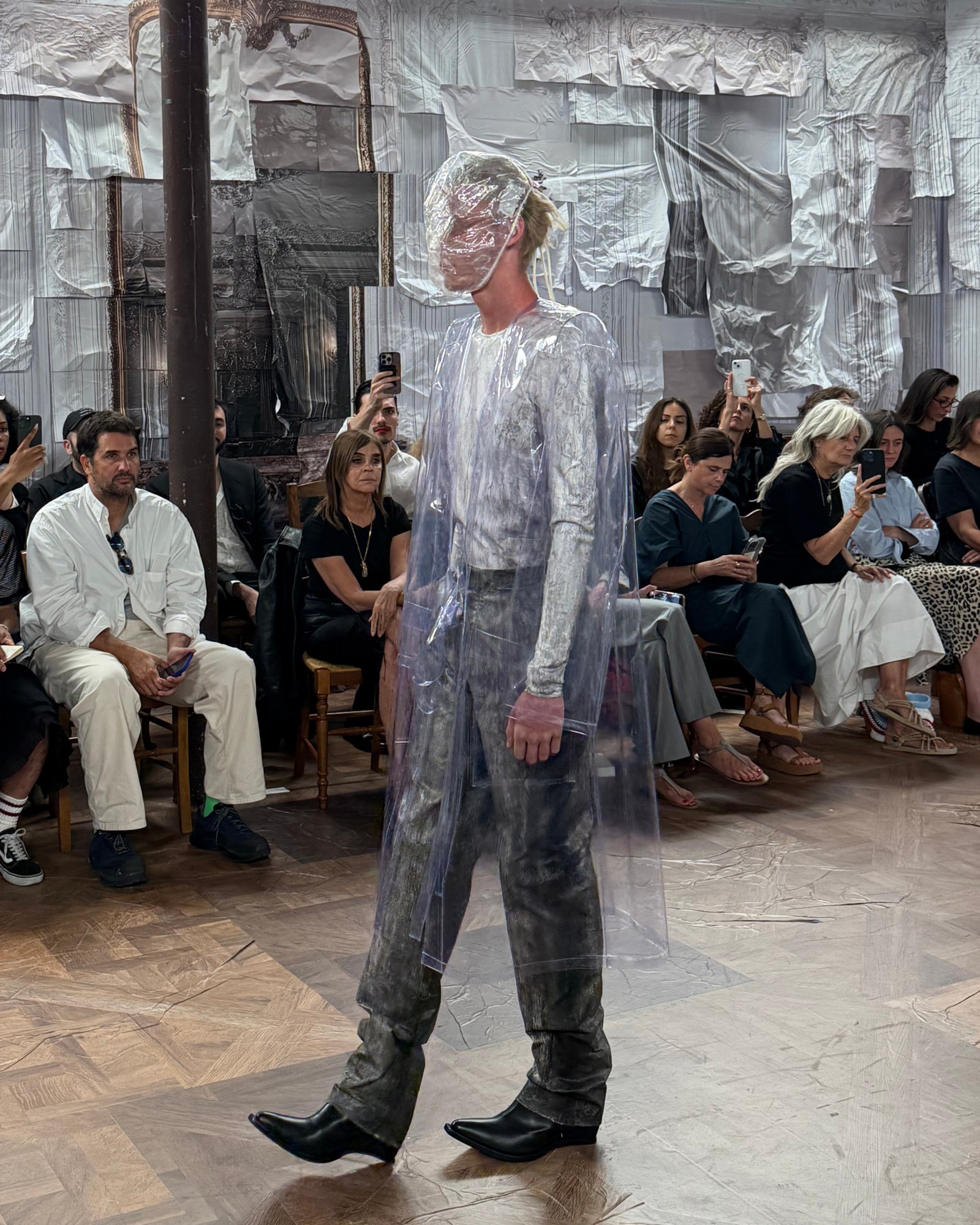
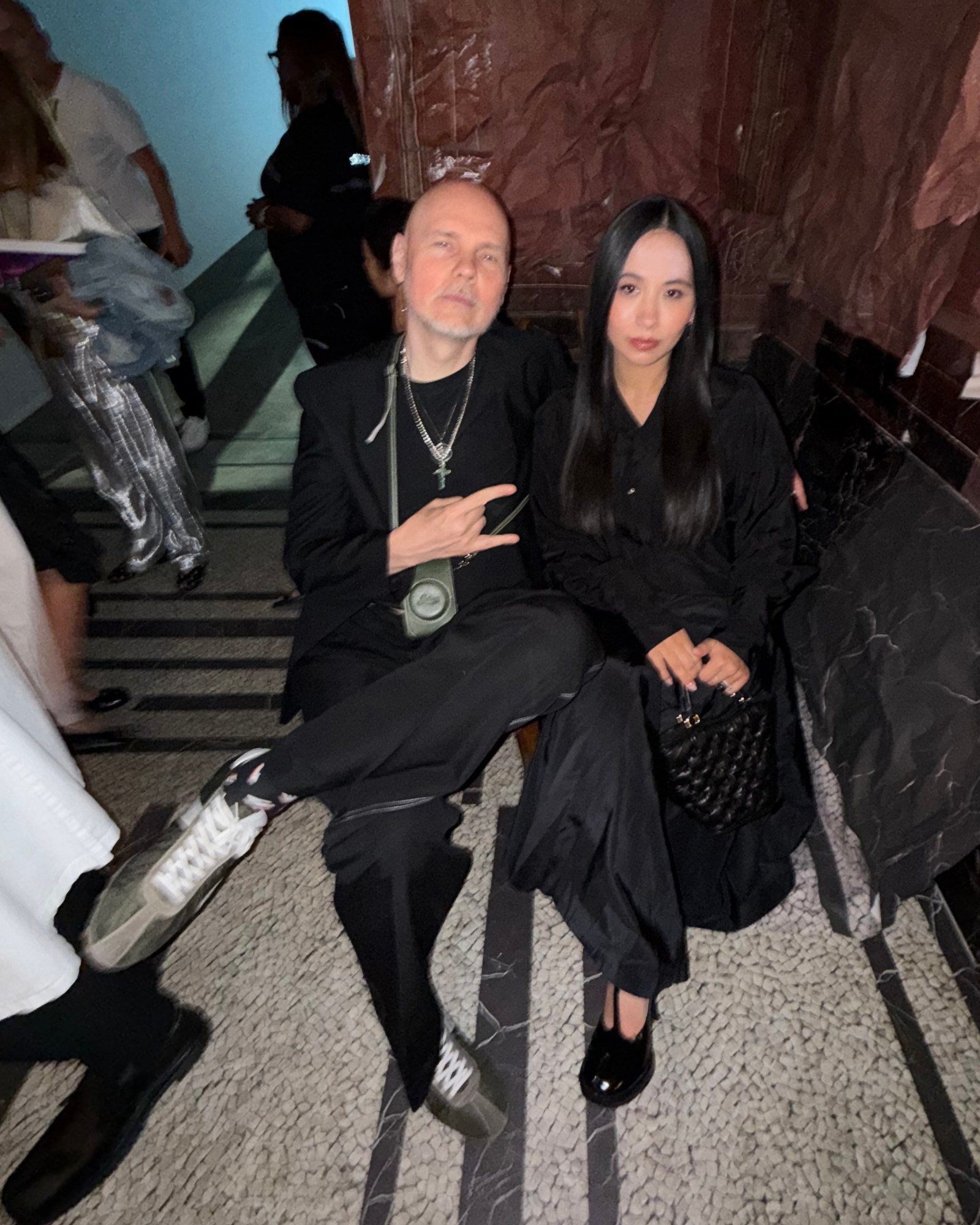
There was something unmistakably Belgian in the approach: an ability to conjure beauty from the overlooked, the industrial, the unglamorous. Where the world sees ruin, Martens finds romance. Where there’s decay, he builds poetry. This was couture as resurrection. Couture as séance. No meme-bait, no cheap spectacle, just silhouettes so extreme, so sculptural, they felt like church statuary let loose on the runway. Yes, there were celebrities—but that wasn’t the focus. (Though Billy Corgan’s presence, alongside his wife Chloe Mendel Corgan, felt right at home given the Smashing Pumpkins’ “Disarm” haunted the soundtrack.)
In the span of 6 hours, couture said farewell to its most mischievous disruptor and embraced a new high priest of deconstruction. Demna slipped out like smoke, on his way to light up Gucci. Martens kicked the doors off their hinges. With Demna set to show his first collection for Gucci next year, his final Balenciaga offering felt less like a farewell and more like a tender “see you soon.” And whilst we can’t wait to see how Martens translates this vision into ready-to-wear come October, for now we’re left with two shows that reminded us why couture still matters. Onward to stranger, newer pastures.