At night, gazing down at the city of Medellin, it’s almost like you’re facing upwards. From high above the lights from buildings and houses look like stars. For the kids of Stillz’s debut film Barrio Triste, there’s a sense that their aspirations are clipped by their circumstances. No matter how hard they try, the world out there—beyond the working class housing that borders Medellin city—isn’t welcoming. So, they dream beyond it, in worlds of monsters and extra-terrestrials.
Trust an artist like Stillz to make a film like this one. For years, the half-Colombian creative, known best for articulating the visual messages of musicians like Bad Bunny and Rosalia, has played with this cool tension between popular and the unknown. He’s never shown his face in public, including at this film’s premiere. That air of mystery seeps into Barrio Triste too.
Partially because, like the early movies of its producer Harmony Korine (his company Edglrd are key supporters of it), it cares less about plot and more about mood. In its opening shots, we watch a news reporter recount stories of strange lights in the city, alluding to a connection between aliens and man. Then, all of a sudden, the camera is wrestled out of the camera man’s hand, and we’re firmly in the POV of the film’s protagonists: a band of four teenage boys-cum-petty thieves who are near anonymous in the thrum of their city.
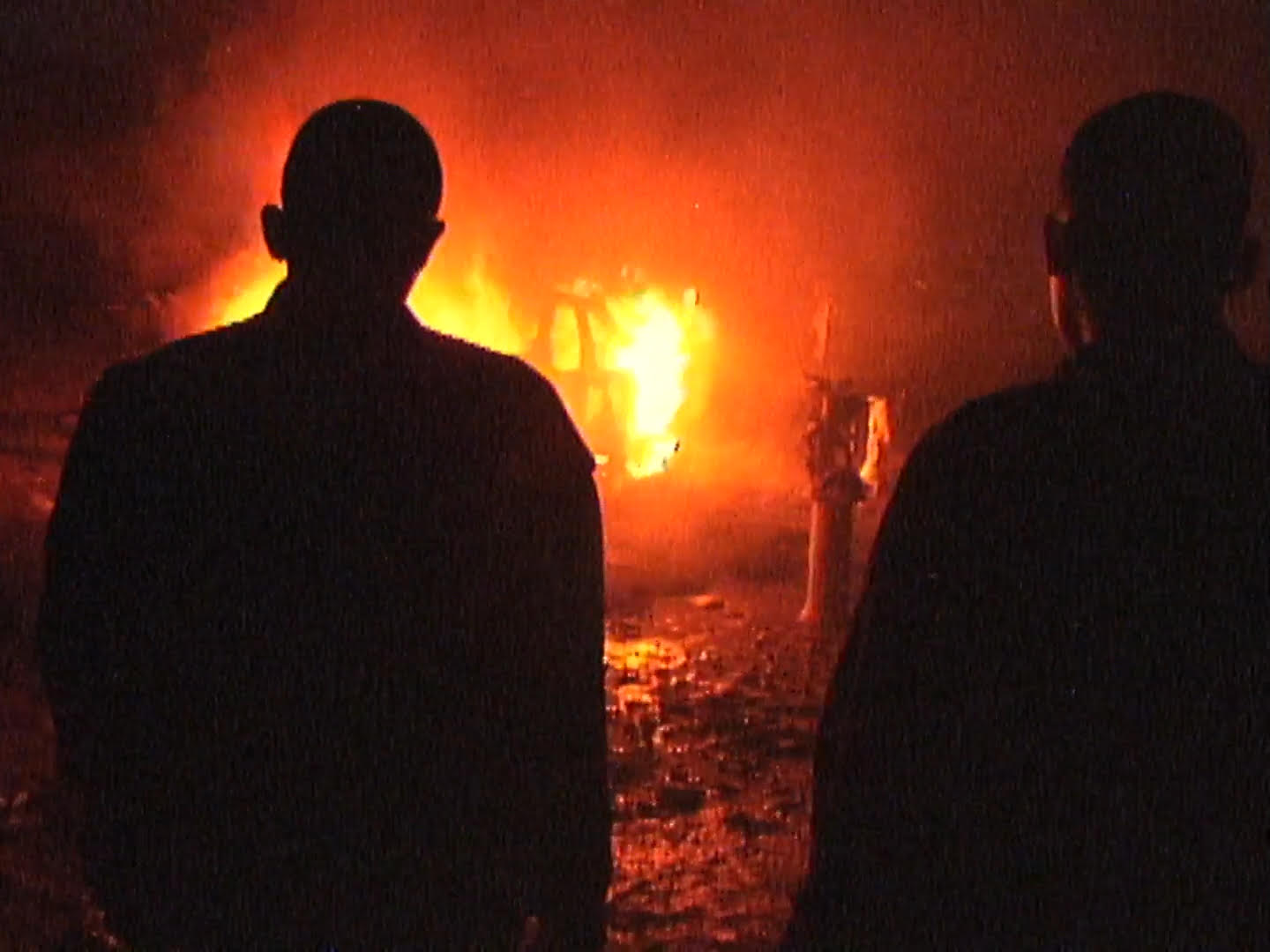
“There’s sword-dancing, burned out carcasses of cars, religious effigies, ominous graffiti, and weapons.”
Soon after, as we are bundled into a car, the camera is planted firmly on the car’s footwell as we listen to a radio call-in show, in which a man insists he’s a serial killer targeting sex workers in the area. It goes on for so long that we slip into a dazed state, and then—bang. The boys slip on masks, the car doors are thrown open, and we’re watching a raid on a jewelry store gone wrong. They pocket pearls and diamonds but leave the owner in a pool of his own blood. This all occurs in one startling shot, accompanied by a violently loud score by Arca.
This is about as conventional as Barrio Triste gets. From that point forward, the film chooses to show us the background of these boys through scattered shots of their lives, all from the same MiniDV camera that they stole. There’s seemingly endless walks down dimly lit streets at night, encounters with horses, goats and donkeys in strange circumstances, sword-dancing, burned out carcasses of cars, religious effigies, ominous graffiti, and weapons. Then, every so often, we cut to what feels like interrogation footage, and these boys we barely saw in the beginning, framed only as foolish teenagers, start to gain layers. Piojo, a broken tearaway played by Juan Pablo Baena, bursts into tears recounting the life he wants:a repaired relationship with his parents and to be reunited with his daughter. In the midst of something visually overwhelming, it gives the film a soul.
If there’s a thesis in this engrossing, weird and wildly original film, it’s that it feels like an homage to the people Stillz must know: of the forgotten kids wandering through a world with no consequences, trying everything to pass the time, and find their place within it.