This story appears in i-D 376, “The Lore Issue.” Get your copy of the print magazine here.
written by IVA DIXIT
photography INEZ AND VINOODH
styling CLARE BYRNE
For a while there, it seemed as if fashion had altogether outgrown the art of scouting a model from the wilds of real life. Sure, one might still get “discovered” on Instagram or TikTok these days, but the tales of the truly great runway models being plucked from the plebeian crowds—Gisele Bündchen spotted whilst eating Big Macs on holiday or Natalia Vodianova snapped up from her hometown of Nizhny Novgorod in Russia—have been relegated to myth. It’s yet another disappearing analogue from the 1990s that fashion people talk about with nostalgia, the same way they bemoan the large budgets and folded magazines of the olden days.
But that was before Bhavitha Mandava.

Seldom does fashion virality, generated on the highest and most gatekept echelon of runway, overflow into civilian life the way it did for the 25-year-old model, who opened the Chanel Métiers d’art fashion show in December—yes, the one held inside an abandoned New York City subway station. Post-show, Mandava posted a heartbreakingly sweet clip to her Instagram, captioned “my brown parents’ reaction to me opening the Chanel show,” which exploded with the kind of resonant intensity (26.2 million views) to rival a Marvel movie’s box office numbers. At first, the internet was abuzz with curiosity about her identity—who was this incredibly beautiful young woman, and why wasn’t she everywhere?
Perhaps it was the unique dissonance of the set (Chanel in the subway?) or the intentional simplicity of the clothes (wait, Chanel makes jeans and beige quarter-zips?) or the fact that she could’ve been just any girl in the city, running to make her train. But there was something about Mandava’s stoic, focused walk down the subway steps that sent a much-needed jolt of exhilaration through audiences, both IRL and online, on the heels of a near-soporific season. Overnight, Mandava went from new york university student with a campus job to being mobbed by crowds for selfies everywhere she went.
“For the first time in my life, I was given this opportunity of, ‘We got you. Your rent will be paid. Your food is on the table.’”
bhavitha mandava
“I did get a little overwhelmed [at first],” she tells me. We’re drinking hot chocolate on a freezing Wednesday in January. During our conversation in the mostly-empty café, we’re interrupted by a grandmotherly white lady in her 70s, who shyly comes up to Mandava to express her admiration. She’d found out about the model from her neighbours Sanjeev and Alka, who told her about the Indian girl who walked in the Chanel fashion show. She could not wait to tell them that she’d met her in real life. Another young man leans over to politely remark, “I can’t believe I’m just sitting right next to you.”
The adoration is pure and completely devoid of the malice sometimes directed at objects of new stardom. Mandava’s attitude toward this whole fame thing, so far, has been one of unflappability. She’s neither too moved by it nor completely dismissive of the ways it’s changed her life. But yes, it’s still been a lot to take in. “I locked myself in for, like, two weeks,” she says of the initial wave of virality. “Because in my head, I was like, ‘Okay, this is gonna die down. The world moves so fast, they’ll just forget about me. But then I went out again.” The lady who owns her neighbourhood laundromat tried to give her a discount, which Mandava politely refused. “I don’t think I’ve ever been like, ‘I’ve blown up and I’m the shit,’ you know? But it hasn’t died down yet.”
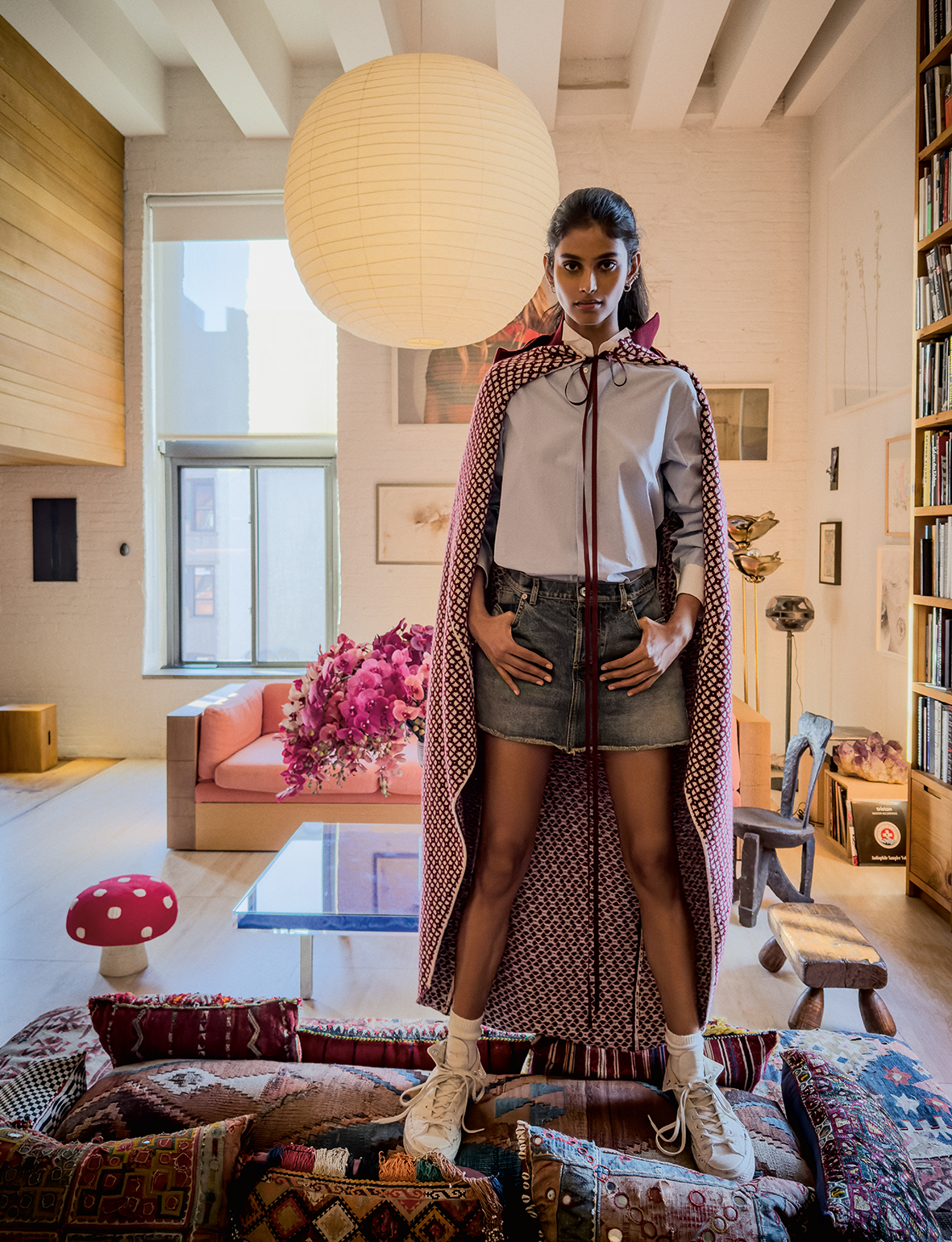
In the flurry of news articles chronicling Mandava’s rise to runway supremacy, the word “Cinderella-esque” has been invoked more than once—which is fair, considering the obvious parallels: beautiful young woman, miraculously rescued from a life of labour, becomes the people’s princess. The ugly stepsisters in Mandava’s fairy tale, however—in a modern twist—have been 1) a historically awful job market and 2) the limitations on immigration options for international students in America, who cannot work on an F-1 visa.
Born in the city of Vijayawada, in the southern Indian state of Andhra Pradesh, and brought up in Hyderabad, Mandava is the child of classic middle-class Indian parents, who raised her with the classic middle-class Indian ethos of “work hard, get job.” It doesn’t account for what happens when you “work hard,” but the “get job” part doesn’t follow. I understand this fallacy on a fundamental level, because I too am a product of the same system, which refuses to acknowledge the larger structural forces that play a role in things like employment. For the many of us raised having completely internalised this system of belief—that putting your head down automatically begets success—that first encounter with the American job market comes as a stunning reality check. Mandava was stumped.
“Up until a few months back, my parents were quite concerned for my mental health, because I was fighting for my life, for this job. And now I model for a living and make a lot more than I would have ever made in tech.”
bhavitha mandava
An architect by training, she came to America in 2023 to pursue a master’s in integrated design and media at Nyu’s Tandon School of Engineering, where she worked as a design lab coordinator for $30 an hour on the side. “From day one, I was hustling, right? I got the job on campus. I was prepping for internships. Suddenly, the job market froze.” Here she was, juggling a full master’s course load and a campus job—and nothing seemed to pan out on the employment front.
“That was the first heartbreak I had after coming to the US,” she recalls. Her original career plan was one of classic immigrant bootstrapping: come to the States, secure a degree from a good university, get a good job in tech, earn in dollars, save money, send some of it back home, and pay off the debt she’d incurred as the sunk cost of achieving her dream. “I did so many interviews,” she says. “I had so much debt. Back home, my idea was, like, ‘I come here. I earn so much money. I help my parents.’ But now I had more holes in my pockets—there’s no way out.”
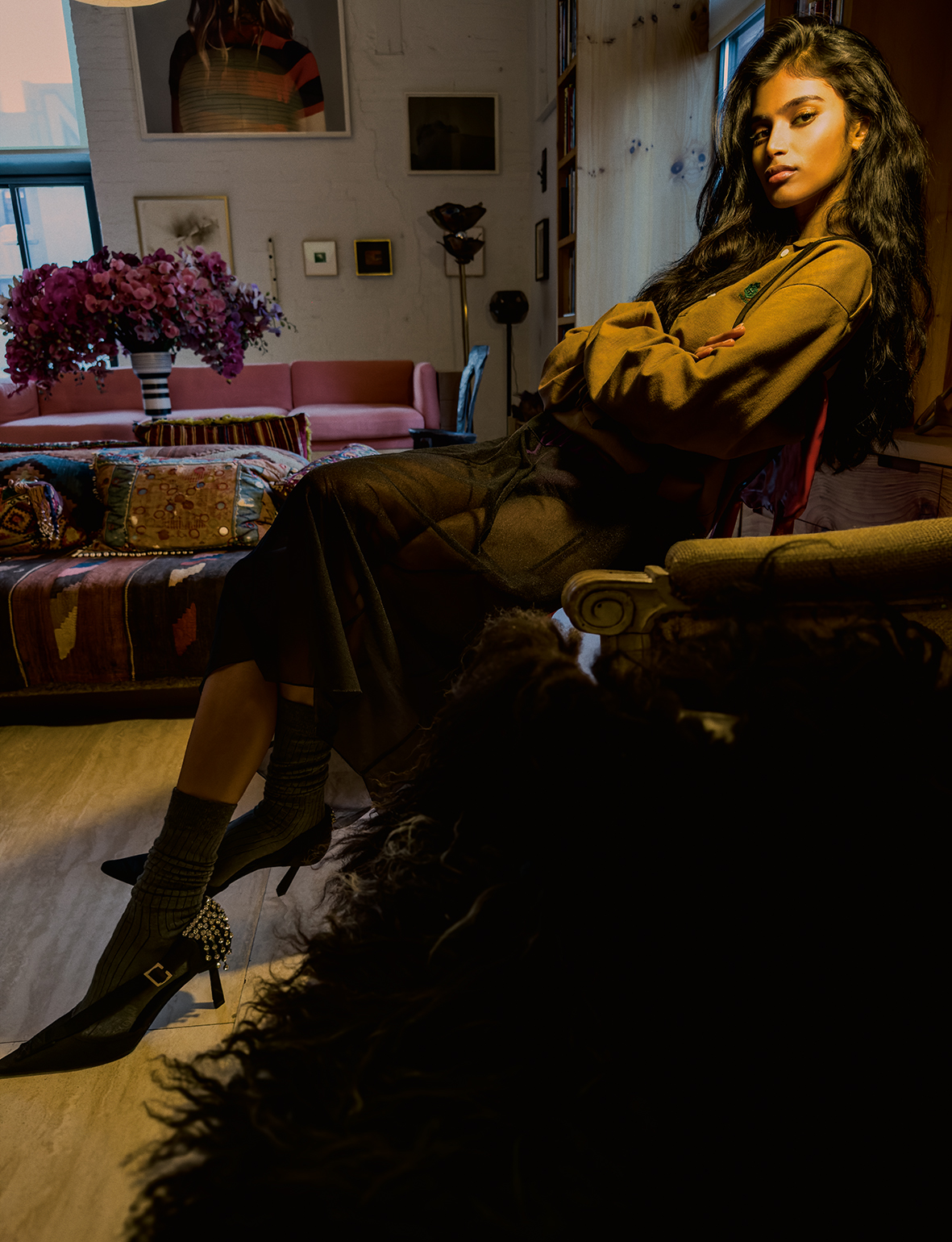
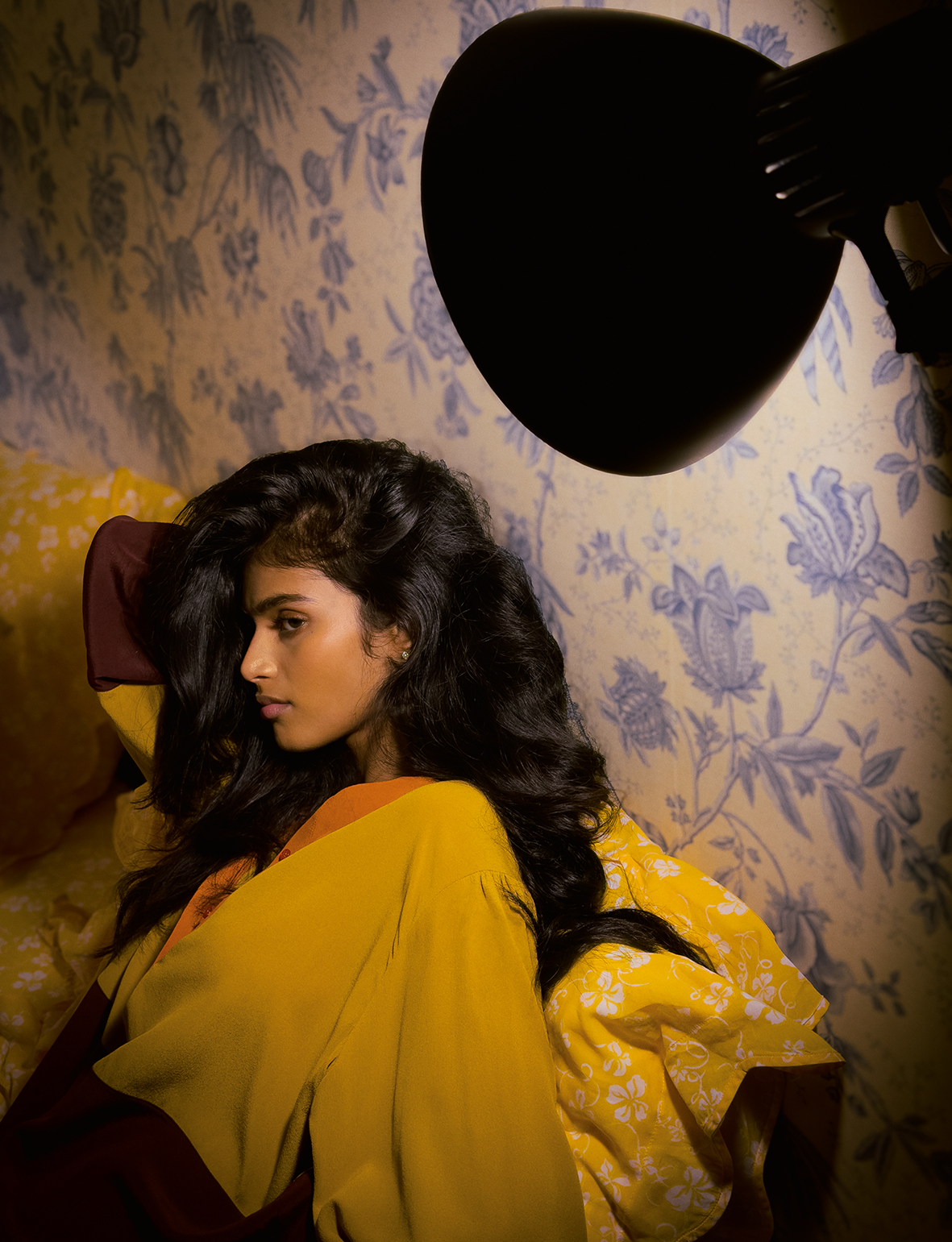
Call it divine intervention by the bored fashion gods, who knew just how badly the runways needed her—but this was the point at which Mandava’s career took a surreal, cinematic turn. “It was summer 2024,” she recalls. “I did not get a summer internship, and I was really sad. So me and my friend, who also didn’t get a summer internship, wanted to go grab biryani.” They headed to Hyderabadi Zaiqa, a restaurant uptown. While waiting to switch trains at the Atlantic Avenue subway station, Mandava was approached by her now-agent Showin Bishop, who just knew he was seeing a true star in the making. By now, this part of her story has been repeated so often that it’s reached even the Facebook grandmothers. But here it is: Bishop asked Mandava if she’d ever consider becoming a model. She politely demurred. He gave her his contact information anyways. She was in a strange place in life, when nothing was working out as planned, and thought she might as well give it a chance. The casting directors who saw her digitals scrambled to work with her. Within a few weeks of being scouted, the 5-foot-9 girl from Hyderabad—who’d never worn heels in her life, let alone come across Bottega Veneta or Matthieu Blazy—was walking in the runway show for the man and the brand. When Blazy departed for Chanel, he made sure to bring Mandava with him.
“If I could work with Matthieu and Chanel forever, I would love that.”
Bhavitha mandava
When she graduated, Chanel offered her an exclusive contract; in layman’s terms, they compensated Mandava well enough that she wouldn’t walk for any other brand. In January 2026, she became the first Indian model to front a Chanel print campaign. For Spring 2026 Couture, she became Blazy’s debut “Chanel bride,” joining the ranks of models like Claudia Schiffer, Alek Wek, and Linda Evangelista in the tradition of closing the show
in a wedding dress. These achievements feel surreal: “Up until a few months back, my parents were quite concerned for my mental health, because I was fighting for my life, for this job. And now I model for a living and make a lot more than I would have ever made in tech. It’s just so funny.”
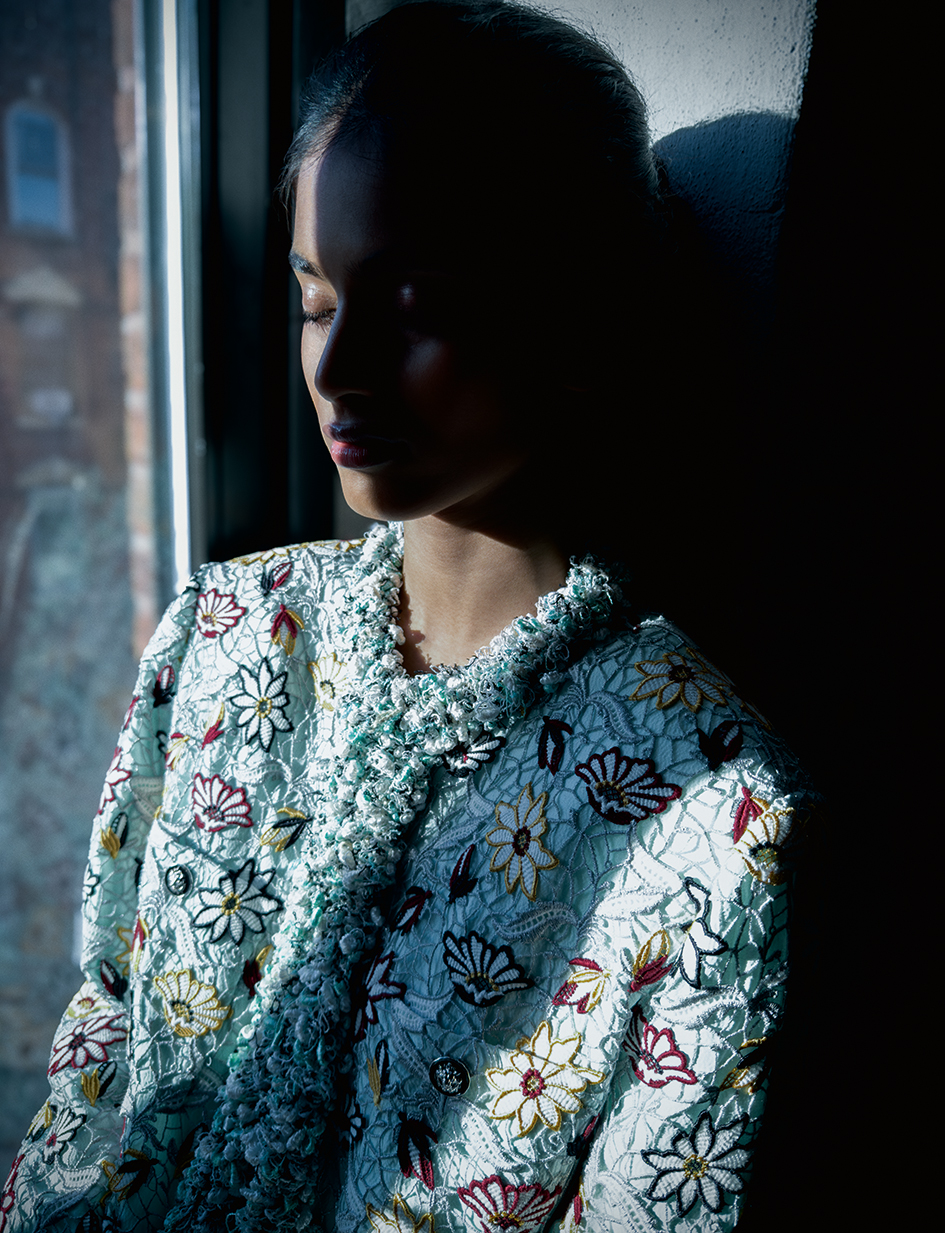
She might not have known who Matthieu Blazy was when she first met him, but Mandava is leveraging her newfound embrace of the industry to learn more and more about the different houses and their designers. She’s curious about Daniel Roseberry’s work at Schiaparelli and Anthony Vaccarello’s at Saint Laurent. “If I could work with Matthieu and Chanel forever, I would love that, right? But I’m naming brands I didn’t know a few months back. I’m so obsessed with them!” She doesn’t yet recognise all the industry people who say hi to her backstage, but she’s stayed close with the Chanel fit models with whom she started out.
Mandava has adjusted to the fame, yes—but what she’s genuinely the most happy about is the financial security, which has brought with it certain freedoms. “For the first time in my life, I was given this opportunity of, ‘We got you. Your rent will be paid. Your food is on the table. You don’t need to worry about anything.’ So I just went ham on hobbies,” she says earnestly. She has downtime for the first time in her life—time that she has filled with activities not in pursuit of getting a job. She bought an Indian flute. She bought a stick-and-poke tattoo kit. She bought a ukulele. She started sewing. She and her biriyani-seeking friend still make plans to eat out at restaurants. But mostly, when she’s not working, she stays home and cultivates her interests. “I do my chores every day. I think that keeps me grounded. There is an opportunity, money-wise, to hire somebody to do those things for me. But I guess, with so much free time, what am I gonna do if not chores?”
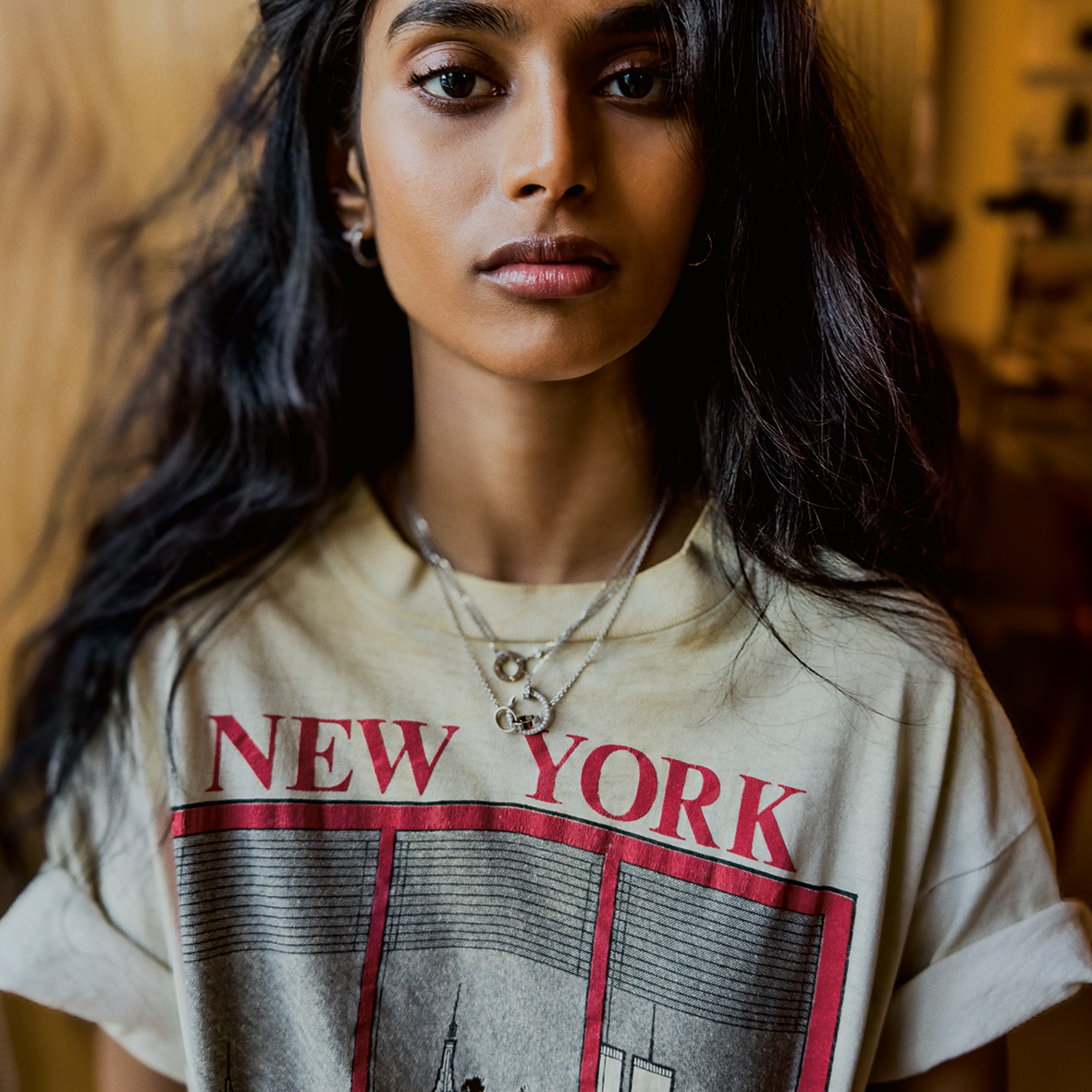
in the lead image BHAVITHA WEARS TOP VINTAGE COURTESY OF ARTIFACT, JEWELLERY CARTIER
makeup SIL BRUINSMA USING VICTORIA BECKHAM BEAUTY AT THE WALL GROUP
digital technician BRIAN ANDERSON
styling assistants CHARLOTTE FOLEY & KRISTINA KOELLE
production VLM PRODUCTIONS
producer MICHAEL GLEESON
post production STEREOHORSE
location VLM