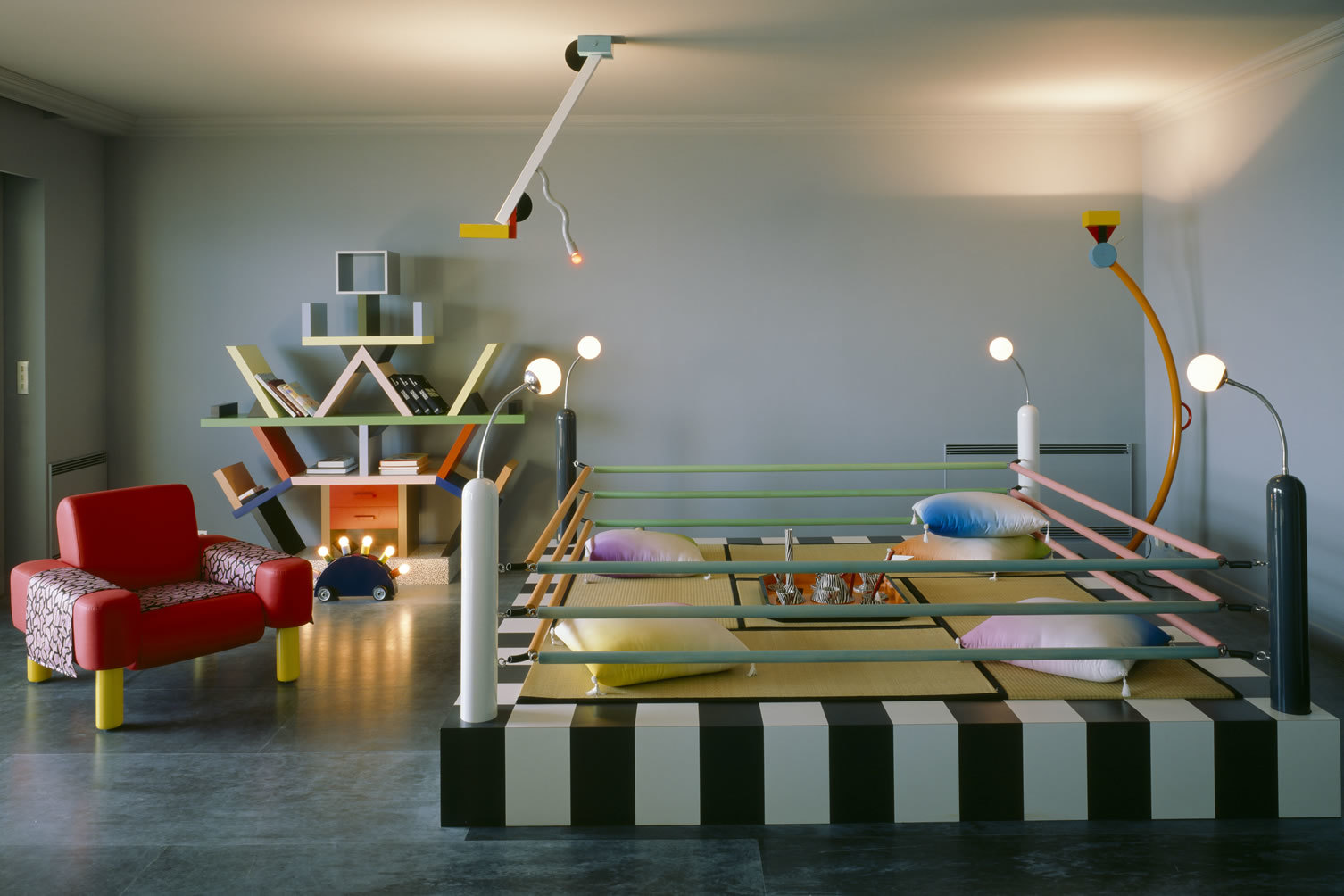
Next month, Sotheby’s will auction hundreds of artworks from David Bowie’s personal collection. Presently on view in Hong Kong, the pieces included paintings by Damien Hirst and Jean-Michel Basquiat (one of which is expected to sell for over $3 million) and sculptures by Marcel Duchamp. Also on the block: over 100 pieces of Bowie’s furniture, much of which is the idiosyncratic work of the Memphis Group, the Milan-based design collective that made waves in the mid 80s with its bold colors and playful mentality. Though its style is divisive (The San Francisco Chronicle once called Memphis “a shotgun wedding between Bauhaus and Fisher-Price”), the group’s postmodern designs have proven massively influential in fashion, film, and, arguably, fast food.
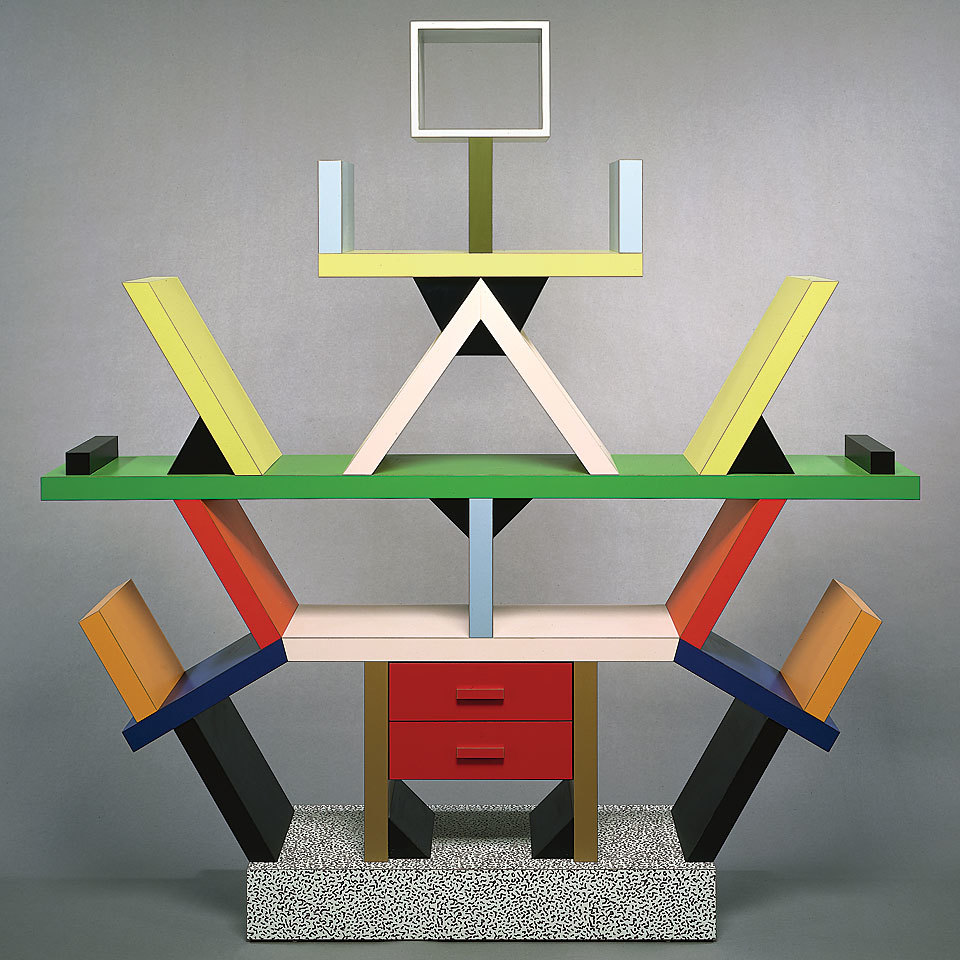
Bowie was an apparently devoted collector of OG Memphis pieces. At least two works by the group’s founder, lauded Italian designer Ettore Sottsass, from the Memphis’s first collection in 1981 will be available at the Sotheby’s auction: the Carlton Bookcase — often hailed as Memphis’s defining product — and the Casablanca Sideboard. Bowie’s collection also includes the adorable rolling Super Lamp by Martine Bedin, and Peter Shire’s Big Sur Sofa from 1986. Each of these items — like Memphis’s oeuvre — is characterized by bold colors, an asymmetrical clash of geometric shapes, mixed materials like plastic and laminates, and a playful sense of irreverence.
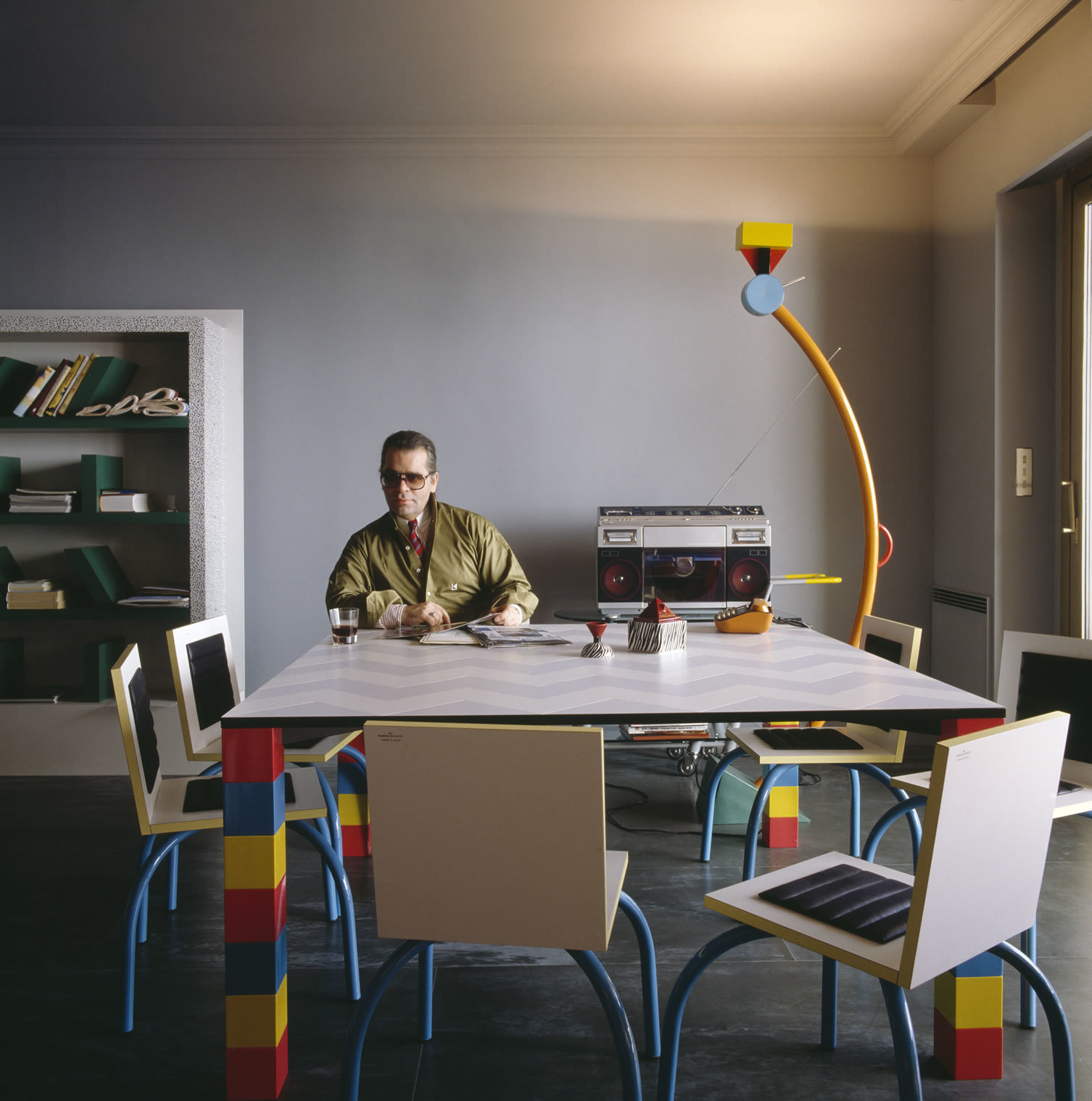
Though the collective disbanded in 1991 (Sottsass himself left the group in 1985), its unique approach to design has been influential across many creative fields. Fashion loves a Memphis moment: Dior’s fall/winter 2011 collection — designed by Bill Gaytten and Susanna Venegas in the interim between John Galliano and Raf Simons — played with the group’s penchant for slick textures and black-and-white graphic patterns. Fellow countryman Angela Missoni drew inspiration from the Milanese movement more recently, for fall/winter 15, when she presented a series of asymmetrical knits layered over printed leggings. But perhaps fashion’s biggest Memphis fan is (or, rather, was) none other than Karl Lagerfeld, who made a veritable shrine out of his Monaco apartment in the early 80s. Sotheby’s auctioned off the Kaiser’s vast collection back in 1991. But Memphis’s influence isn’t simply felt on the runway, or in the private palaces of fashion’s elite. Sottsass frequently collaborated with Esprit, the community-driven, colorful, and — thanks to a recent Opening Ceremony collaboration — certifiably cult brand. Most memorably, he masterminded its store design. More recently, American Apparel enlisted Julia Cumming and Michael Bailey Gates to model its collaboration with Memphis member Nathalie Du Pasquier.
Outside of fashion, Memphis flexes just as powerful a muscle. Many have argued that the sets of Beetlejuice and Saved by the Bell are also inspired by the collective’s aesthetics. The Tim Burton classic features those same squiggle shapes, mixed media glass textures, and black-and-white composition notebook-style graphics. The beloved Bayside High School gang hung out at The Max, a kitschy, widely colorful diner that simultaneously recalls retro 50s shapes and Memphis postmodernism. And The Max isn’t the only restaurant likely inspired by Memphis design. Think back to your earliest memories of Taco Bell, long before its unholy merger with KFC. You might recall that the restaurant’s interior featured clashing geometric shapes, mixed media installations, unconventional seating concepts, and colorful details. Despite its cuisine, Taco Bell’s interiors were much more Milanese than Mexican.
You can sneak a peek at Bowie’s Memphis pieces, and other highlights from his art collection, on the Sotheby’s site, before its sale on November 10. Given the group’s singular aesthetic and pervasive influence, it makes sense the Starman was such a fan.
Credits
Text Emily Manning
Image via Twitter