Fashion month, if that is what we’re still calling it, hasn’t even officially started. But last week’s Copenhagen Fashion Week felt like a palatable amuse-bouche of “it’s not that serious” ahead of the upcoming rotation of New York, London, Paris, and Milan shows, and perhaps that’s what we need right now. The Scandi way of dressing—think mismatched Marimekko patterns, puffy Cecilie Bahnsen skirts paired with utilitarian sneakers—has long been reminding us that fashion is for fun. This season marked the 20th anniversary of Copenhagen’s bi-annual participation in the global fashion industry, two decades of this sartorial archetype being solidified in our brains as its own genre of style.
I flew out of New York one day early, only thinly escaping the Nor’easter’s heavy dumping. Upon arrival, I was pleased to find Copenhagen’s cobblestones only delicately dusted with snow (a palpable vibe shift, meteorologically and metaphorically speaking). The Danish way of kicking off a fashion week is with an opening ceremony, which is really a cocktail party with a short speech from Copenhagen Fashion Week’s CEO Cecilie Thorsmark. One thing I genuinely appreciate about this ritual: Each year, Thorsmark’s remarks address fashion in the context of the world—of political and cultural current events—reminding guests that if anything, it’s fashion’s economic and environmental impact that matters, and thus, any participant is required to meet CPHFW’s official sustainability standards. Even just acknowledging the elephant in the room, that fashion feels trivial during trying times and that it also carries responsibility, garners a collective sigh of relief. I often think about what it would take for the other fashion week cities to take this specific page from Copenhagen’s book.
The shows commenced on Tuesday with OpéraSport at the H.C. Anderson Castle, a regal building in the Tivoli Gardens, where an asymmetric layering of a pale pink sweater over a black long-sleeve t-shirt over a baby bump with black low-rise slacks caught my eye. Then there was Forza Collective, another homegrown brand, where a black sheer floor-length dress floated down the runway and made me think about Jane Birkin’s famous short black sheer dress (I’m currently reading It Girl). Forza’s was more gown-like, with an open back and billowing skirt.
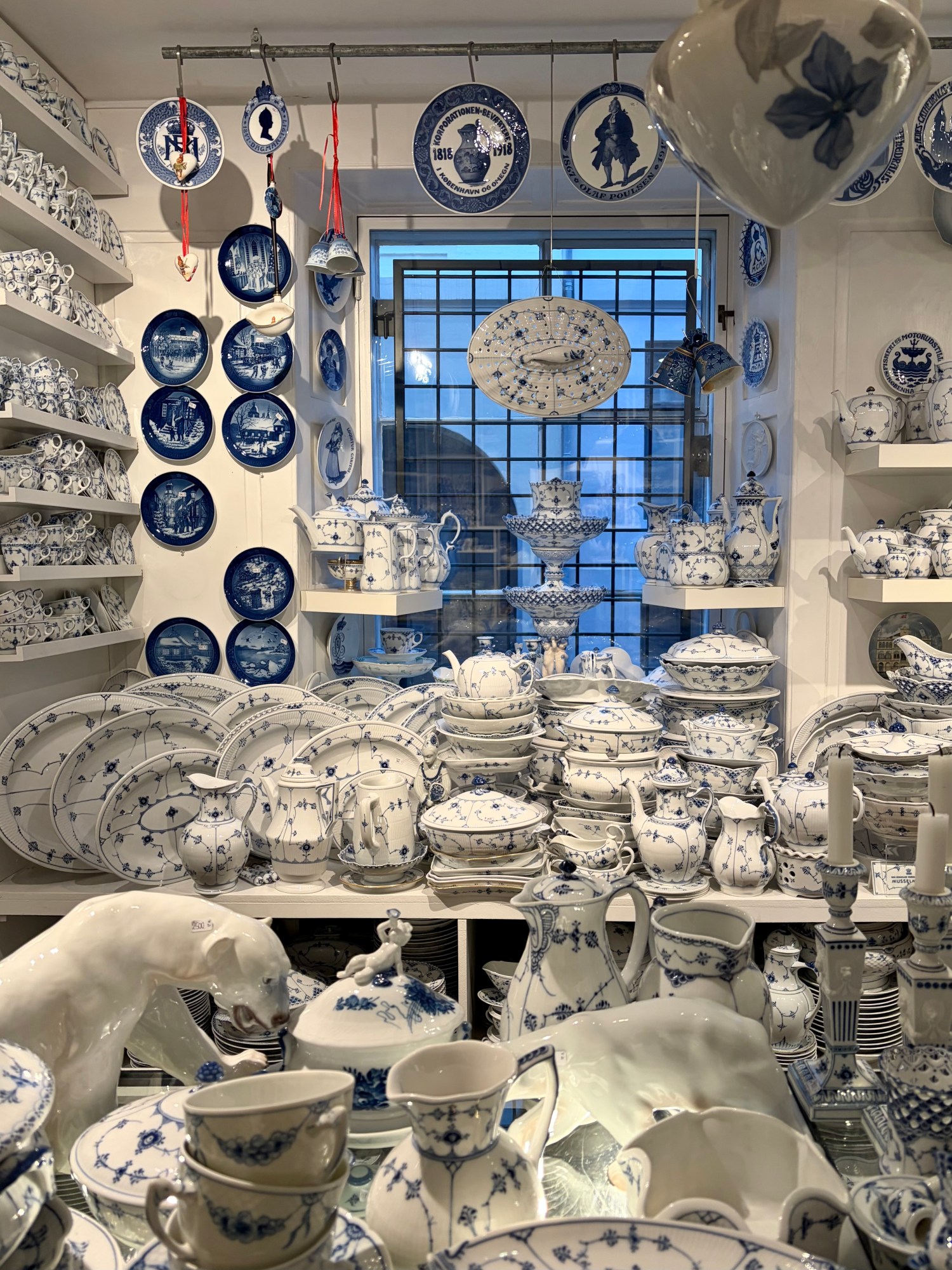
Before the next show, I opted for an antiquing break (something about shows inspires shopping). Antik K, a cavernous shop filled floor to ceiling with Royal Copenhagen china, was the antidote. Sidequest complete.
Back to the main event: Anne Sofie Madsen, the Copenhagen-based designer you’ll remember for her omnipresent rat last season, was up. Madsen is not like other emerging talents. She first launched her eponymous label in 2011, after designing for John Galliano and Alexander McQueen, and took a break from creating new collections in 2018. Last season marked her return to the runway. This season, her show took place at The Odd Fellow Palace (another historic building, which became a theme for the week), where she brought a live band (some very cool-looking guys behind the photopit) and 22 new looks: toggled hooded jackets with pleated mini skirts, a pearl-and-chain draped mesh shirt, silk draped dresses, and a fabric rose-embellished top and dress, to name a few favorites.
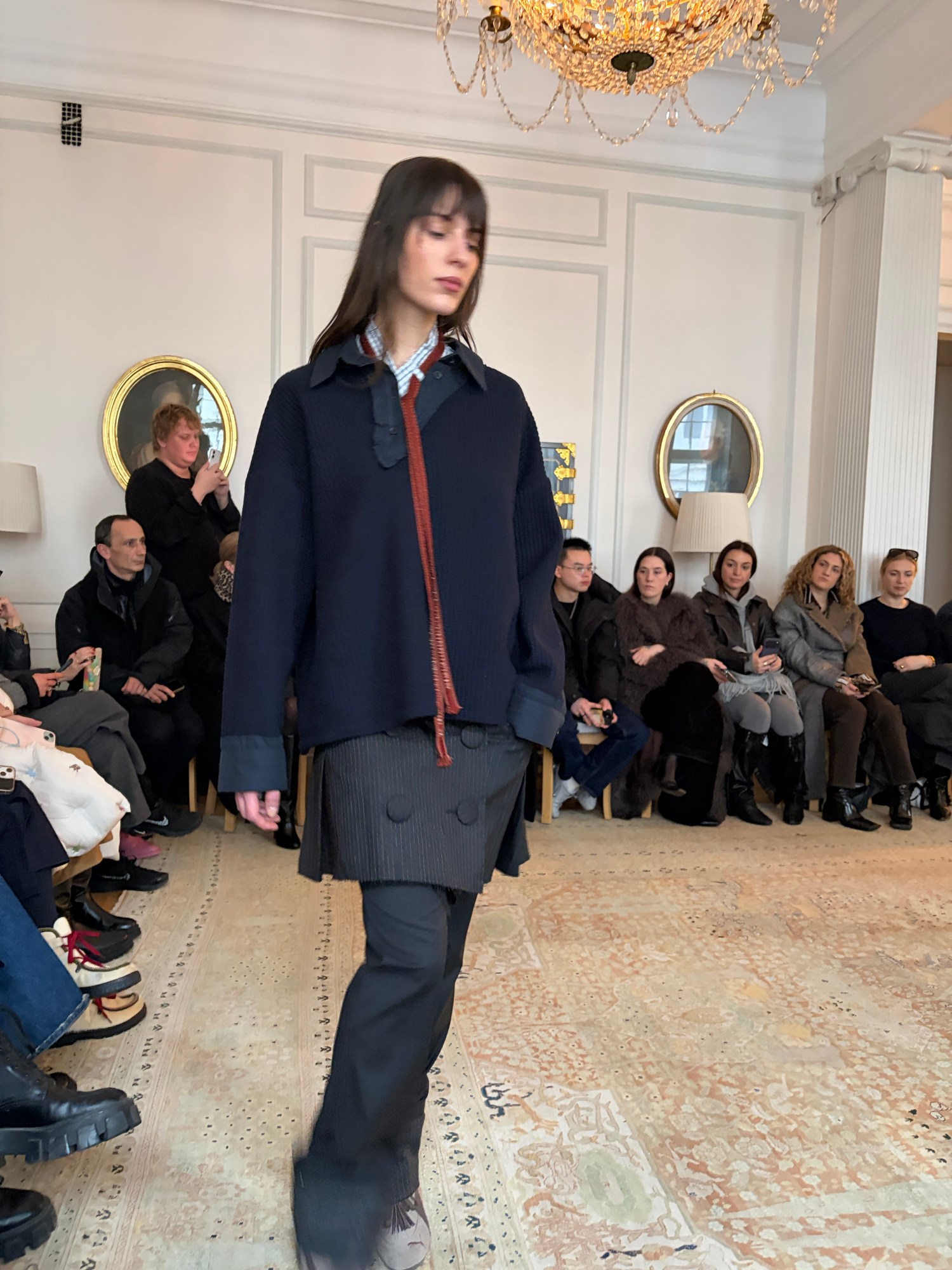
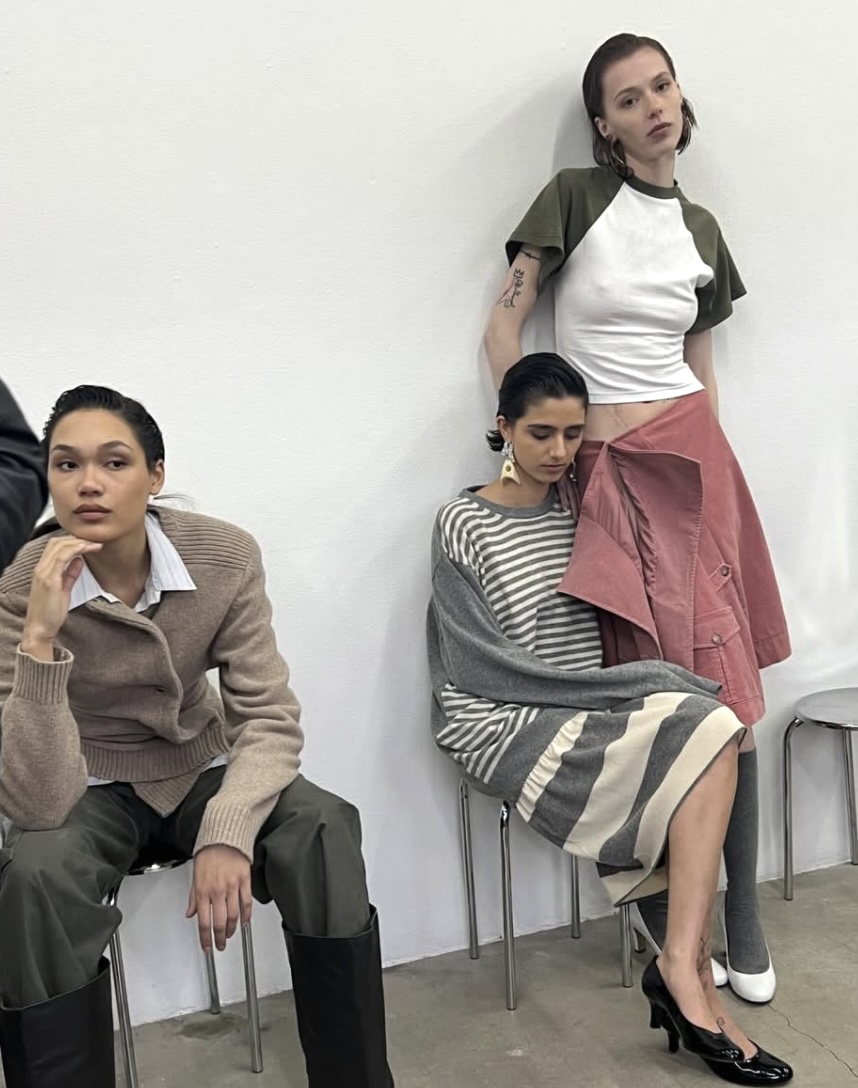
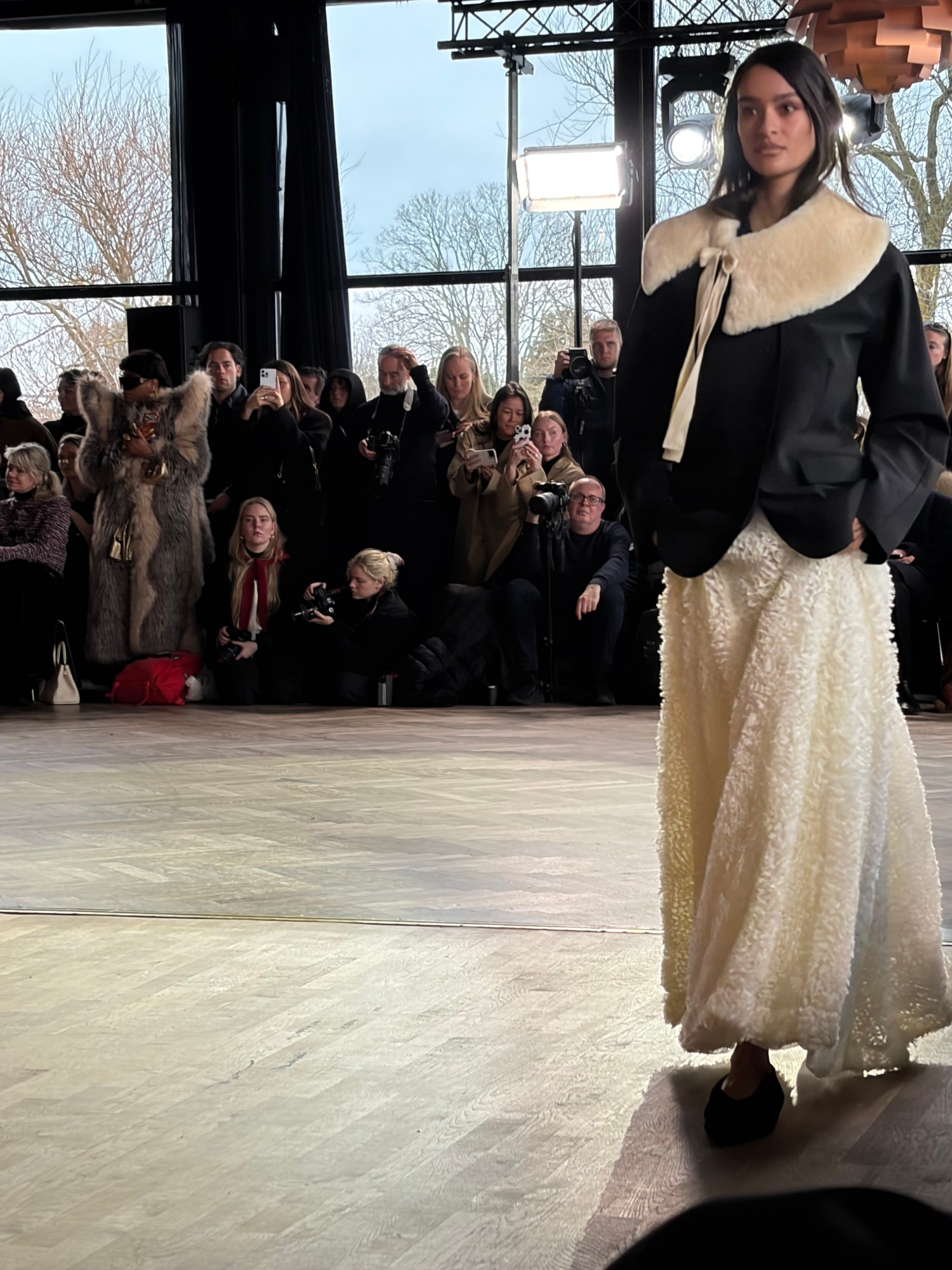
Stem and Bonnetje, two new kids on the block (they’re both recognized by CPHFW as new talent to watch), also showed Tuesday. Stem, founded in 2021 by Sarah Brunnhuber, specializes in loom-woven textiles and is committed to a zero-waste policy. The textures in this latest collection were delicious: plaid wool kilts, tweed-like woven dresses, and a pair of white knit tights woke me from my jetlag-induced lethargy. Each model wore a thick white stripe of white top eyeliner, which was also tantalizing. At Bonnetje, the designers Maja Hansen and Anna Myntekær presented twelve looks made almost entirely from deconstructed men’s suits (this is the foundation for all of their collections). There was a microscopic, hip-hitting off-white spaghetti-strapped dress with thigh-high stockings (these are kind of everywhere suddenly?), a Miu Miu-esque bralette made from the waistband of a pair of slacks paired with a midi skirt with a large circle cut out, and a mid-length black sheer slip dress embellished with buttons, further fuel for my aforementioned obsessing over black sheer dresses.
I would be remiss to not mention one more new talent brand on the roster, Ssson. The Swedish line was founded in 2024 by Yulia Kjellsson, and this season their collection fell squarely in the elevated tomboy category. A cotton baseball t-shirt, a cargo midi wrap skirt, and an oversized jersey long-sleeved striped t-shirt dress were all pieces I would have liked to take home and wear now.
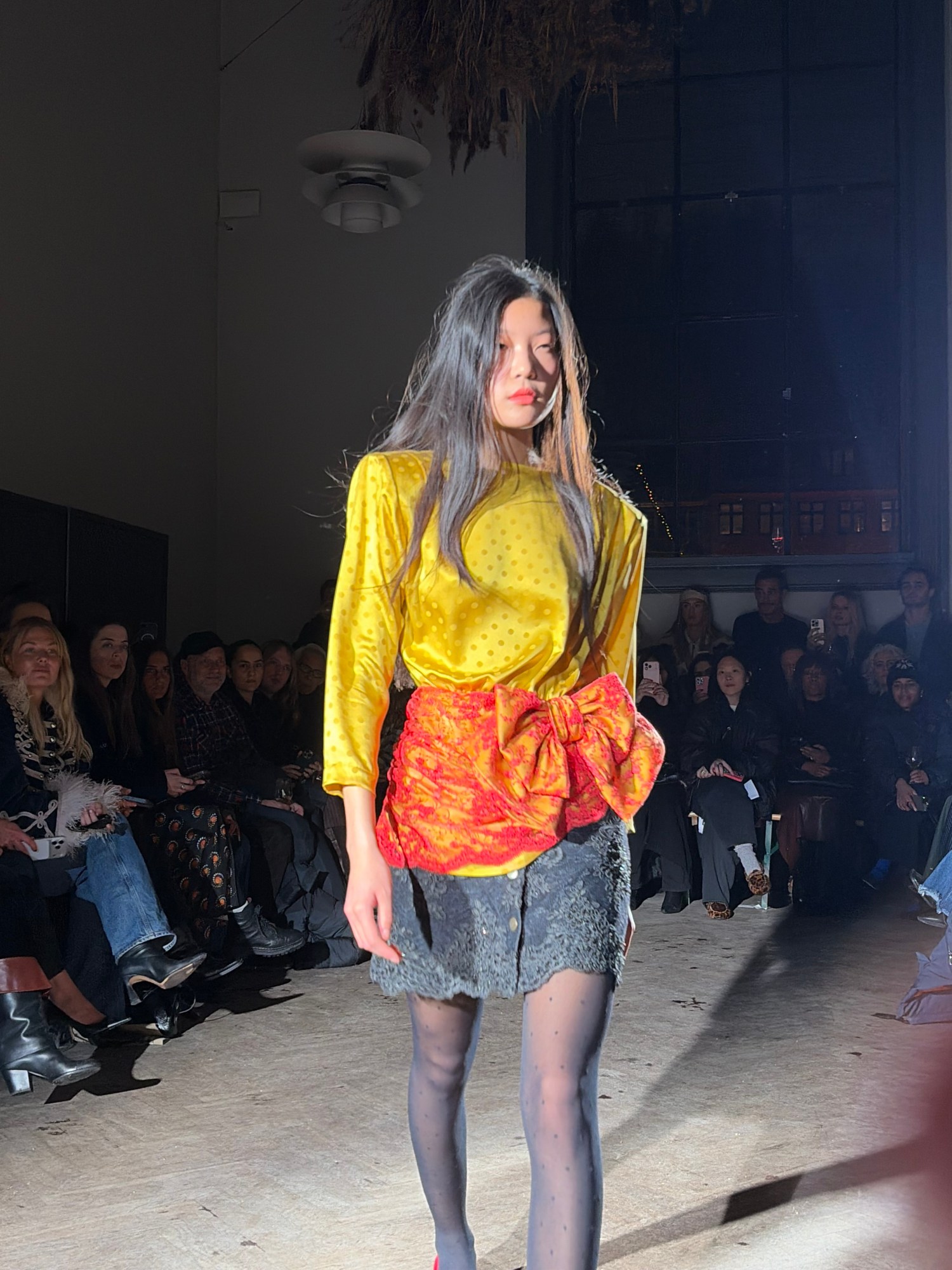
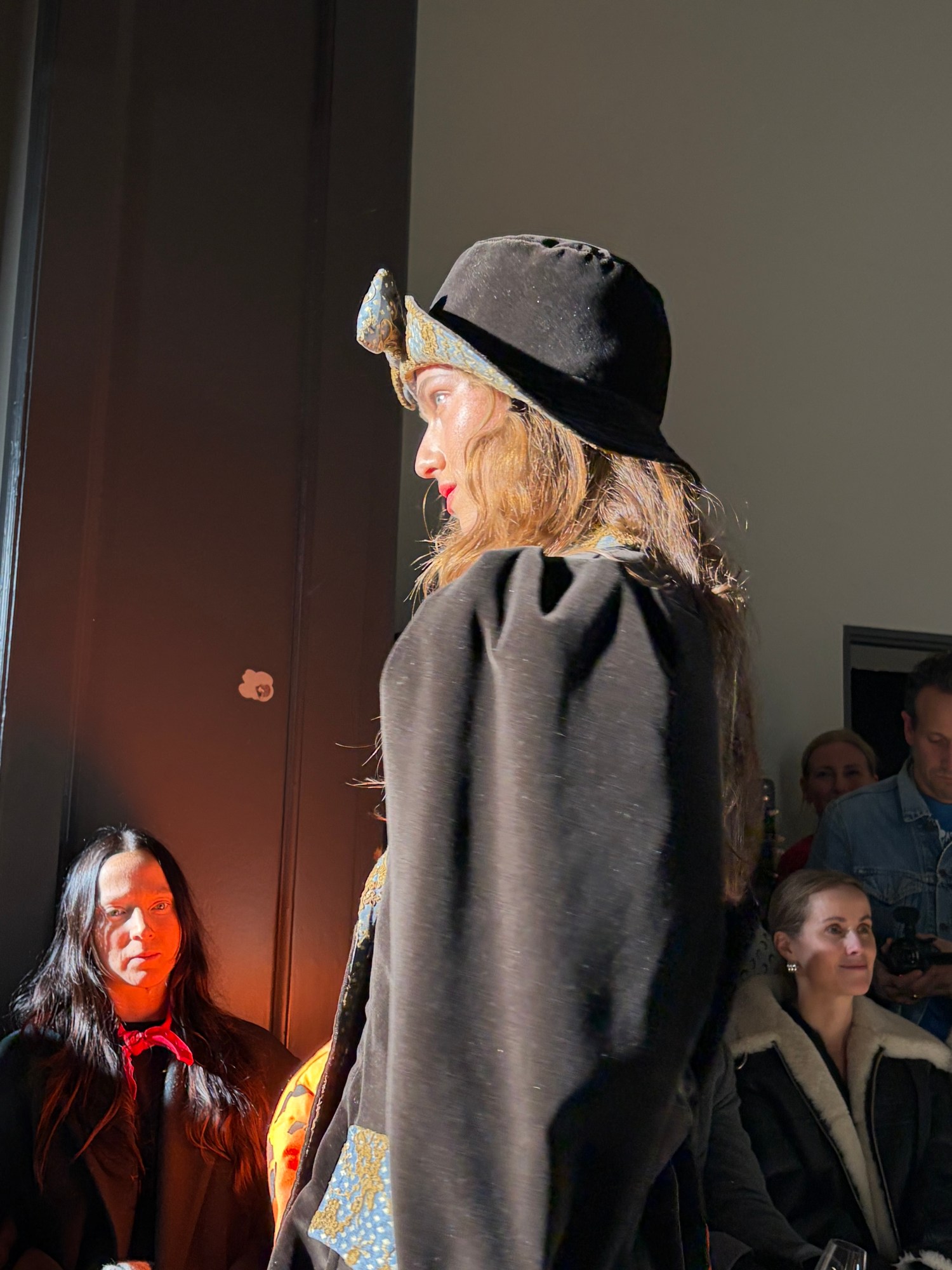
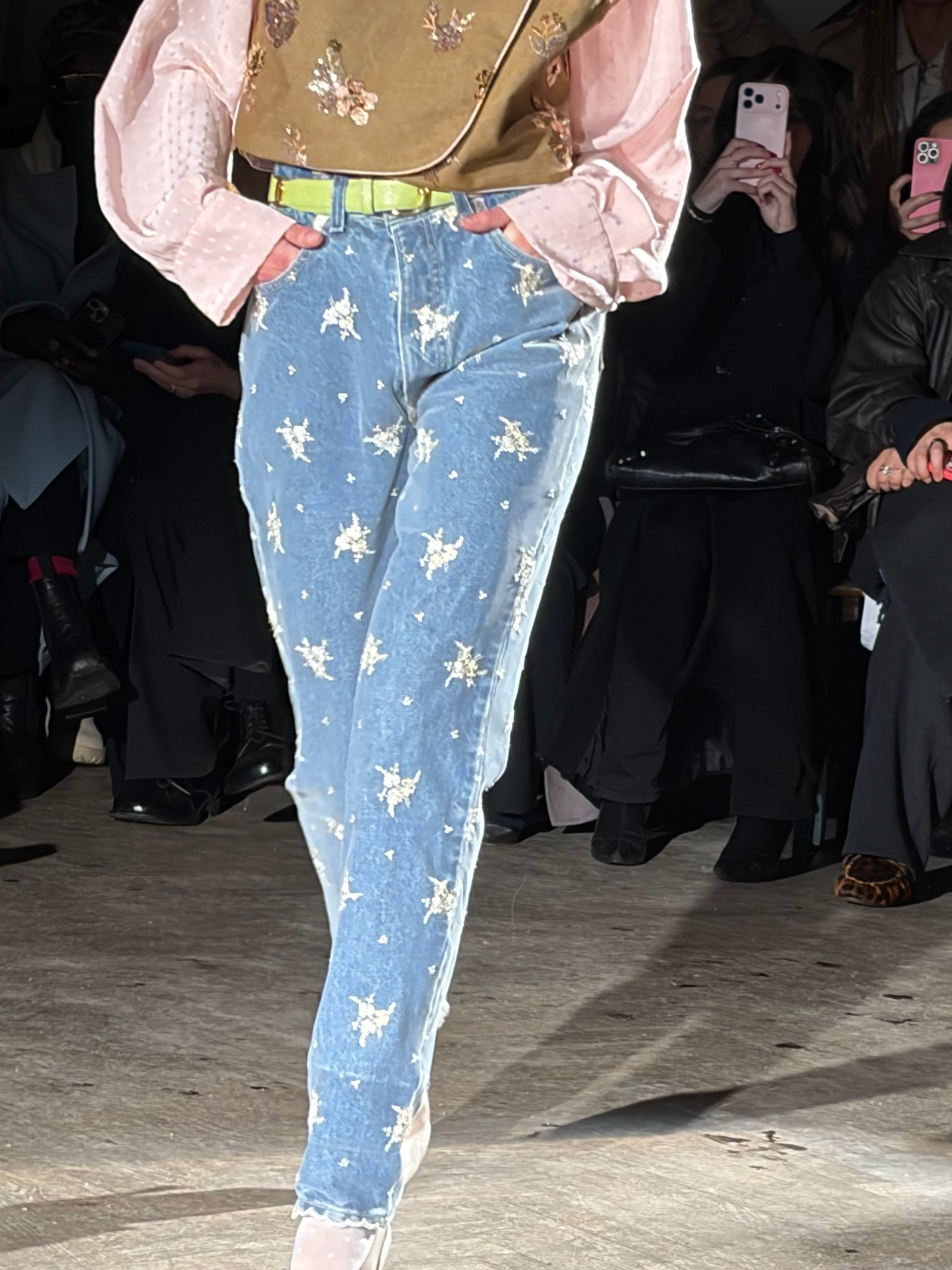
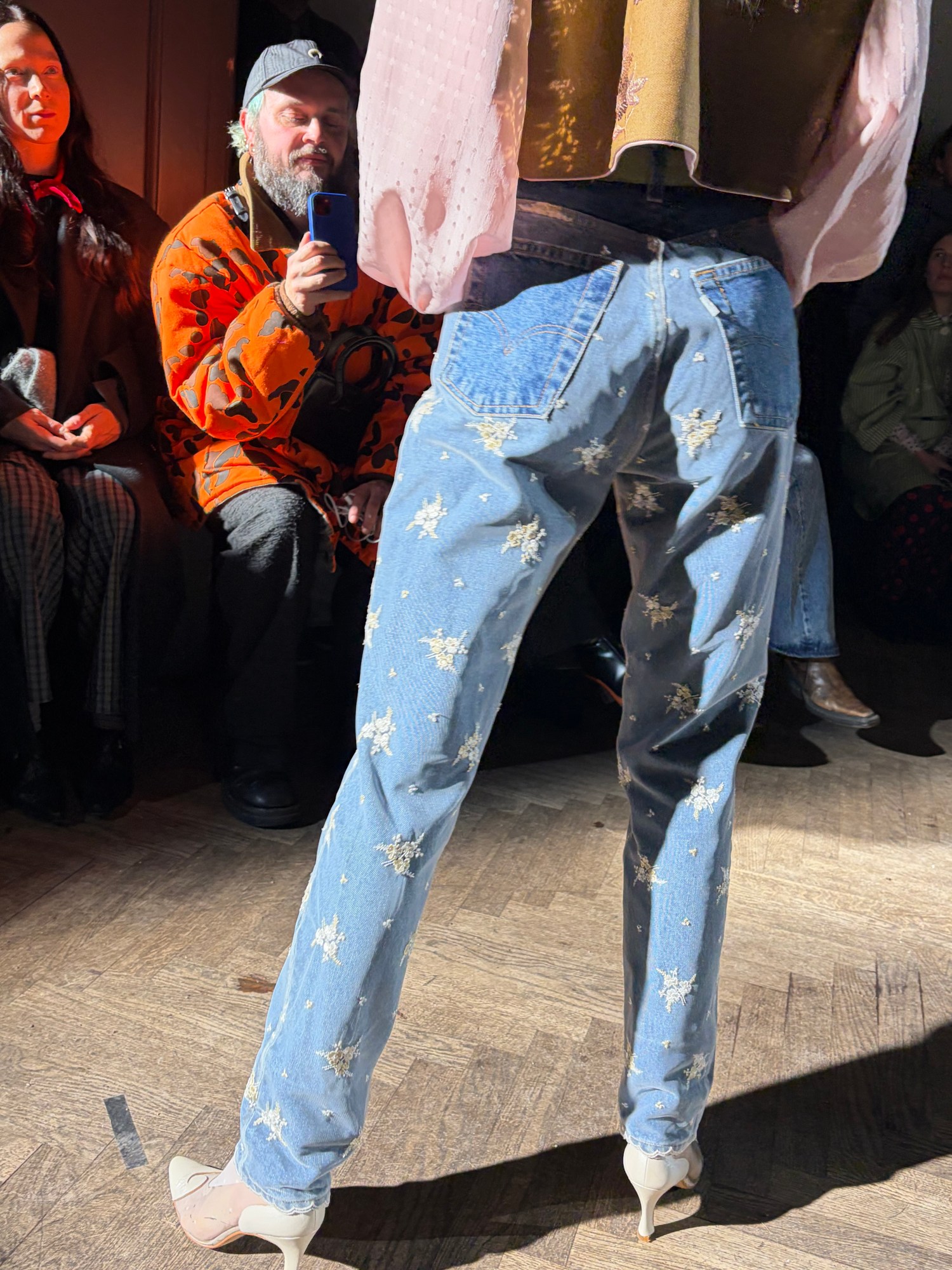
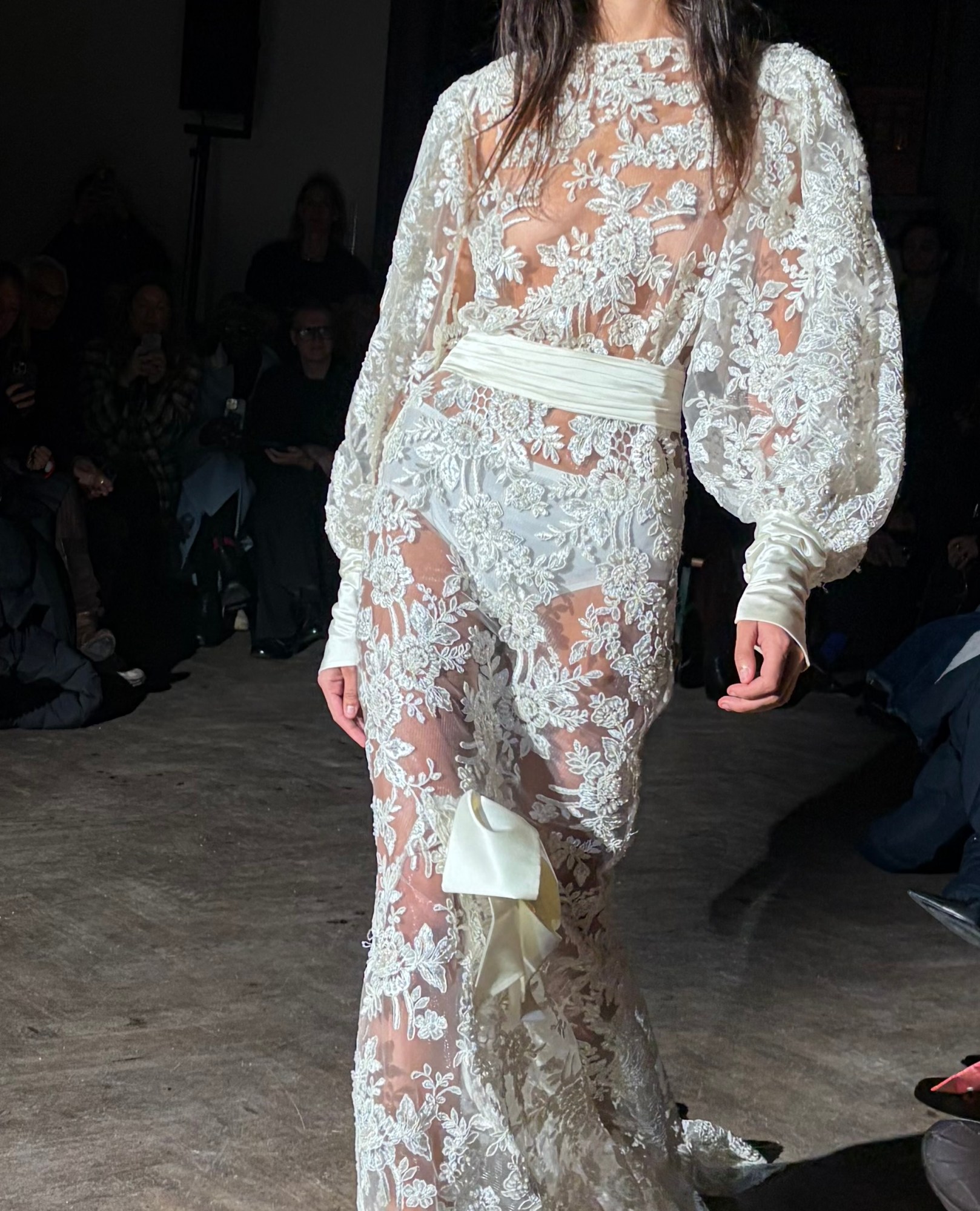
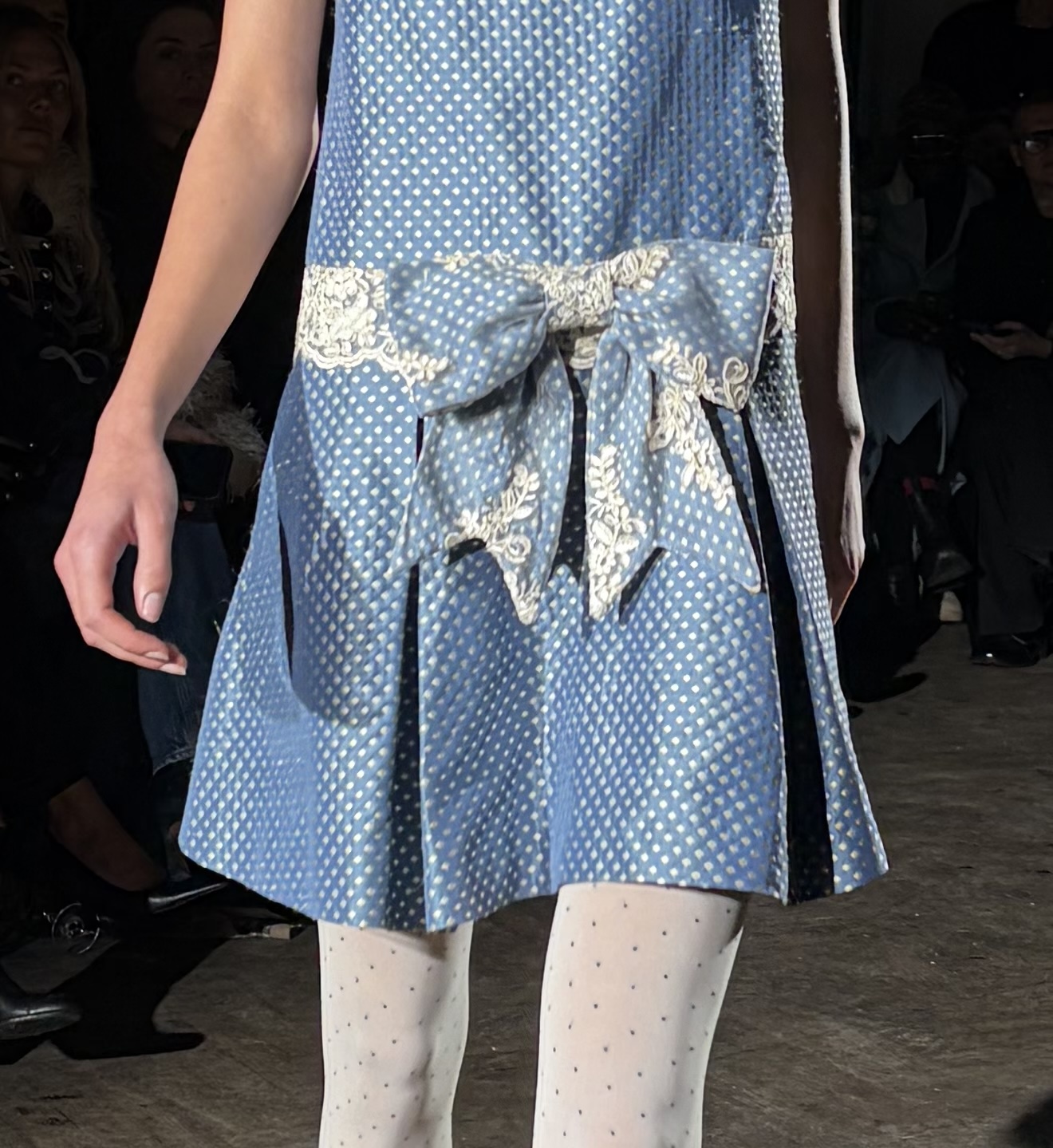
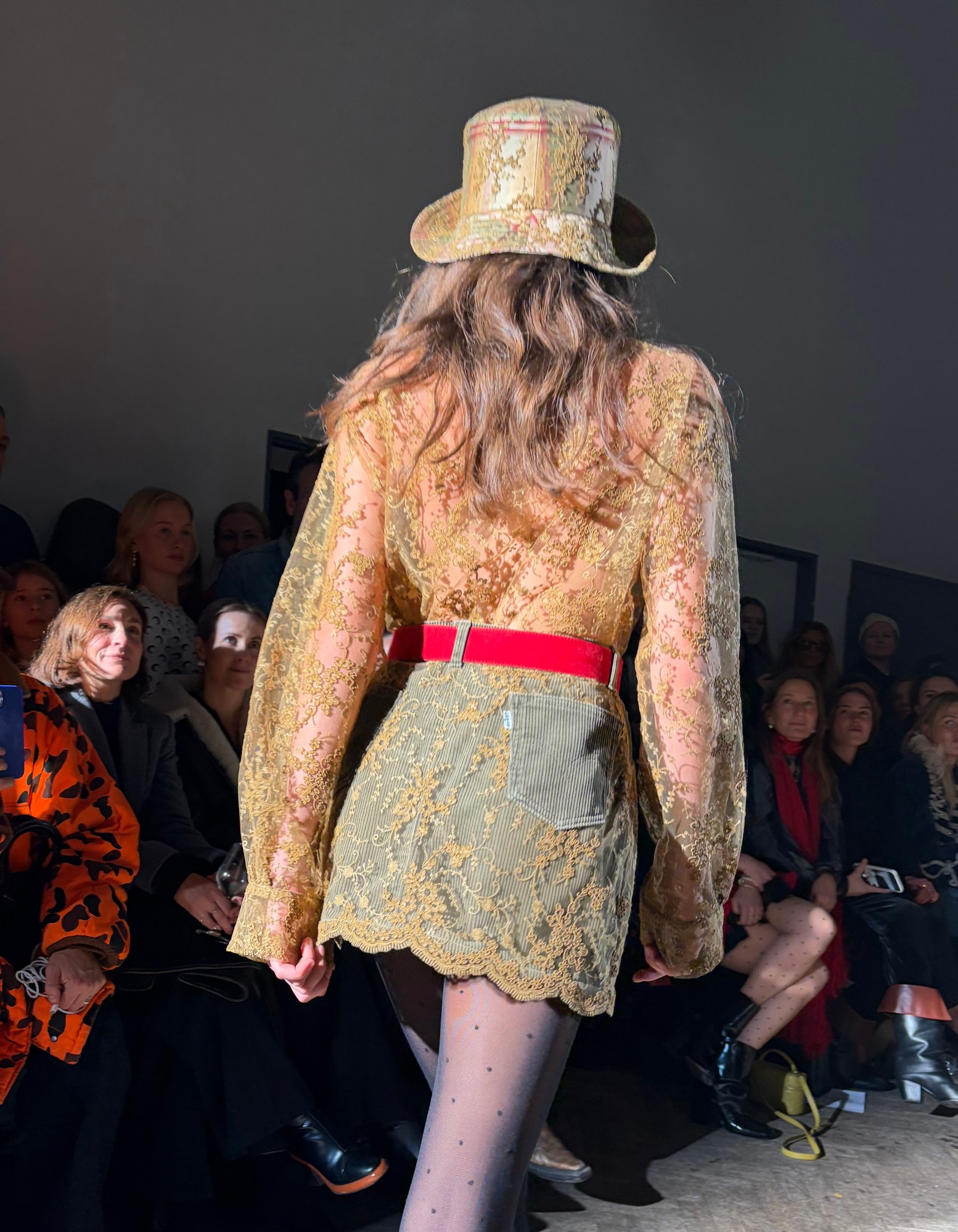
That evening, the Caro Editions show took place at Apollo Bar. Caroline Bille Brahe, the Danish girly girl she is, represents the 80s pop girl corner of Scandi style (my breakdown of Copenhagen’s rebel girl, sporty girl, and girly girl here). She was true to form this season. A saxophonist wearing a black lace-overlayed Canadian tuxedo opened the show with a brief jazz set. His look was a precursor for what was to come. Doechii’s “Bullfrog” played as a model wearing a gold lace-embellished pencil skirt, top, and Paddington-like hat followed. A mini skirt version with a red belt came next. There was a blue-and-white polka dot shift dress with a pleated skirt and white lace waistband, jewel-toned silk blouses, more lace mini skirts, and several oversized bows. The closing look was a white lace, long sleeve belted gown with a matching Paddington foldover hat. The models then danced to Donna Summer’s “Last Dance” for the finale, encapsulating a Copenhagen fashion feeling I love: girl-forward, great music, and a cute hat on top.
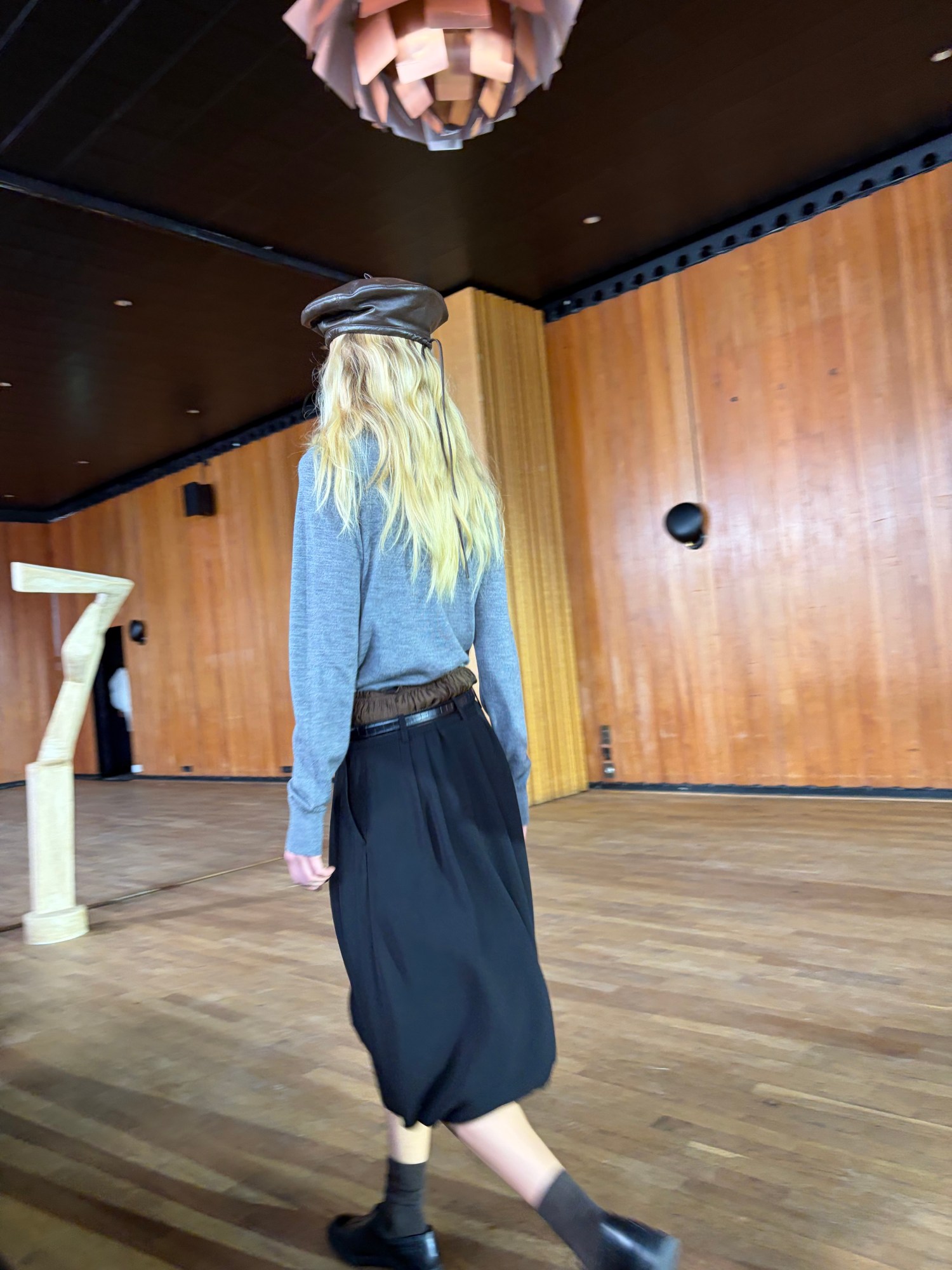
On Wednesday, The Garment, MKDT Studio, Henrik Vibskov, and Baum und Pferdgarten headlined the calendar. I had planned to attend all of them, but because I am a modern working girl with several jobs, I was instead existing in a Zoom vortex for the better part of the day. I was happy to have made it to The Garment, where I was unexpectedly mesmerized by a chocolate brown leather beret, which was worn with a belted black low-rise midi bubble skirt and a charcoal wool sweater that was somehow both a v-neck and collared with buttons. If it’s possible to have a crush on a runway look, that’s what happened here. At MKDT Studio, high-neck coats—I would even venture to call them turtleneck coats—were trending.
A few girls decided to kick off Thursday with a morning trip to the Danish Goodwill, also known as Lidkøb Østerbro, which was brilliant. I barely made it there in time (that 9AM wakeup call hits different when your circadian rhythms are off), but upon arrival I managed to find a very special ceramic rose candle holder for $20, which I managed to buy despite my somnolent state. The experience was a blur, but I will always remember being half asleep in the Danish Goodwill.
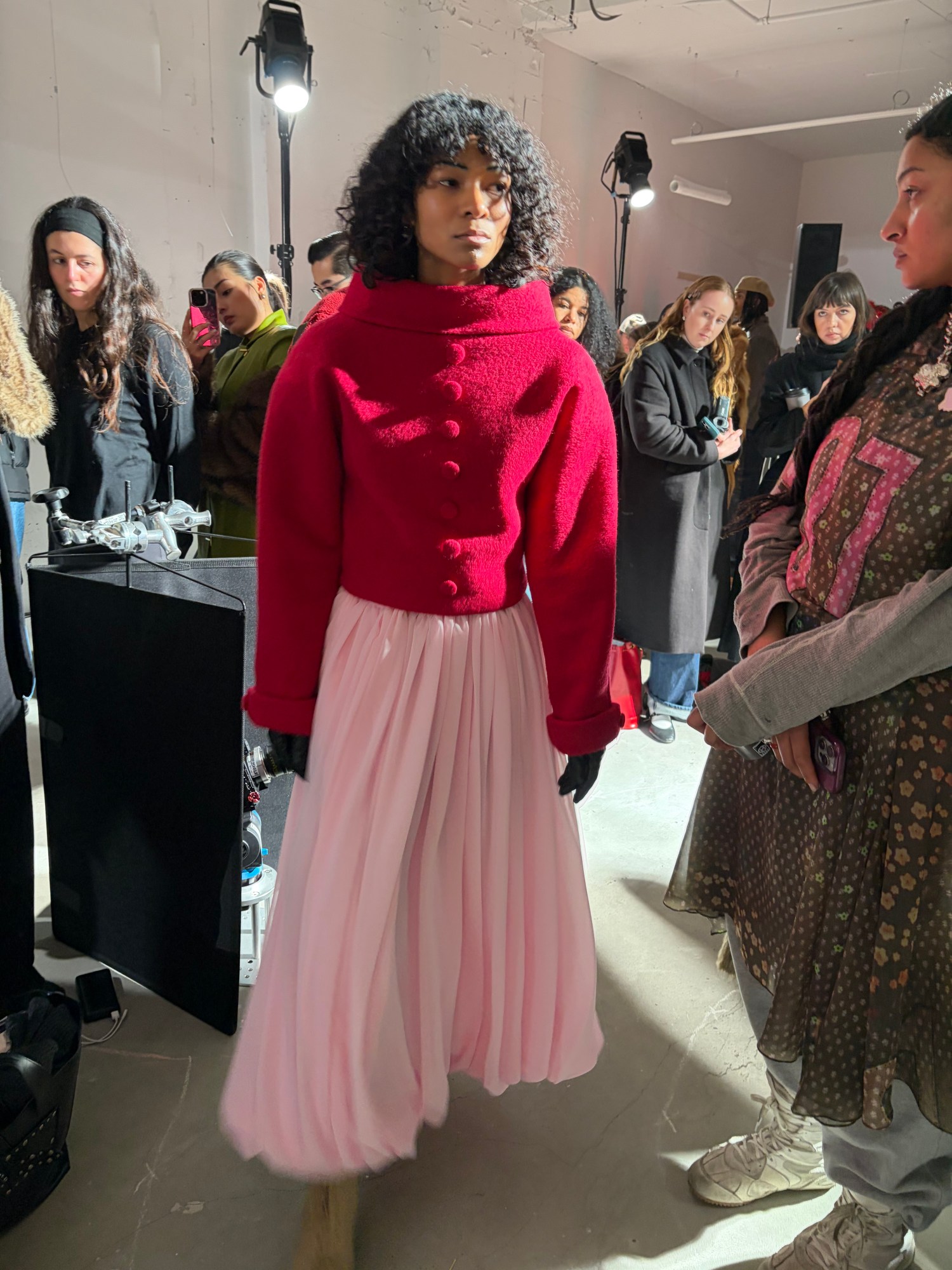
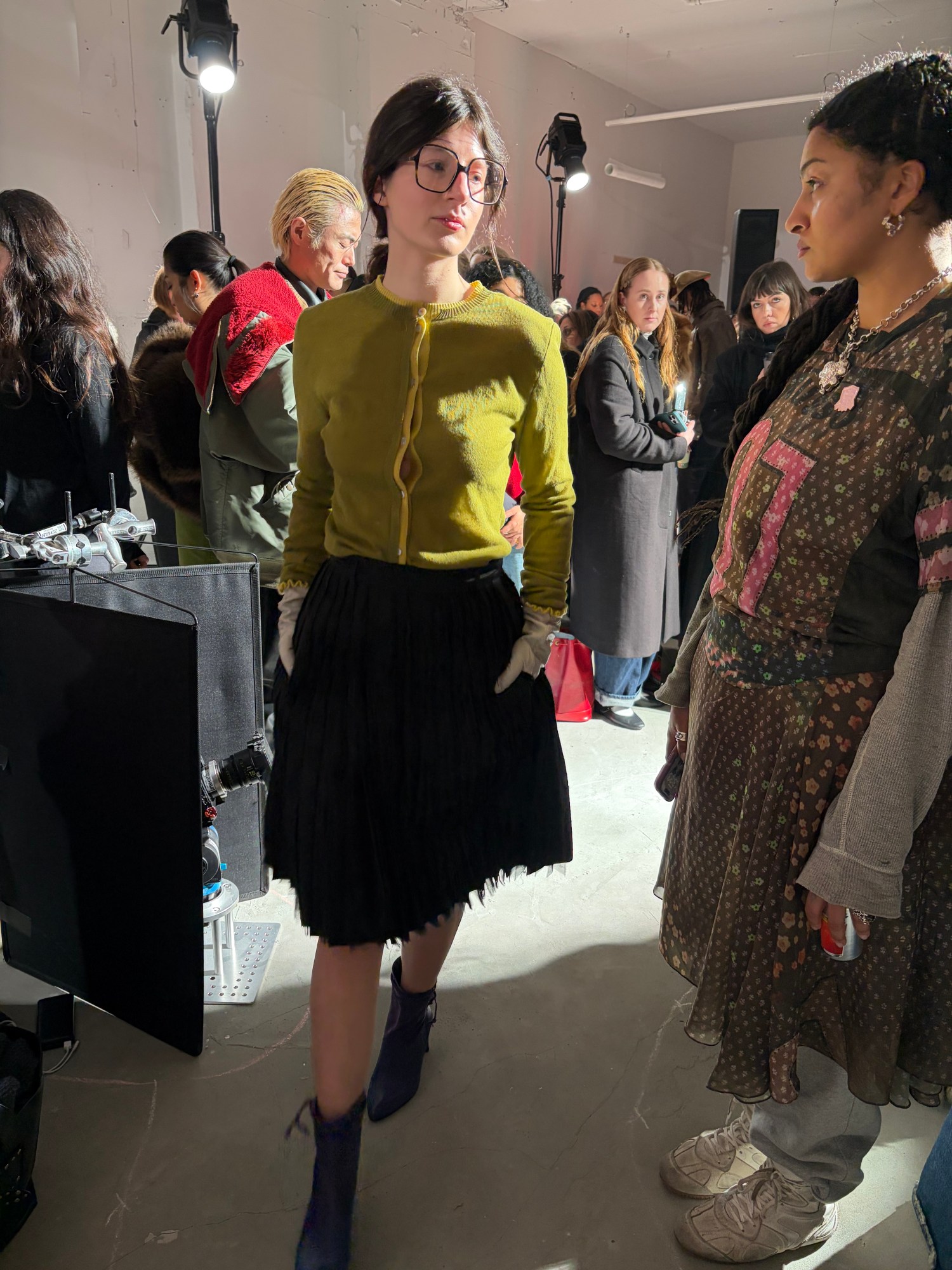
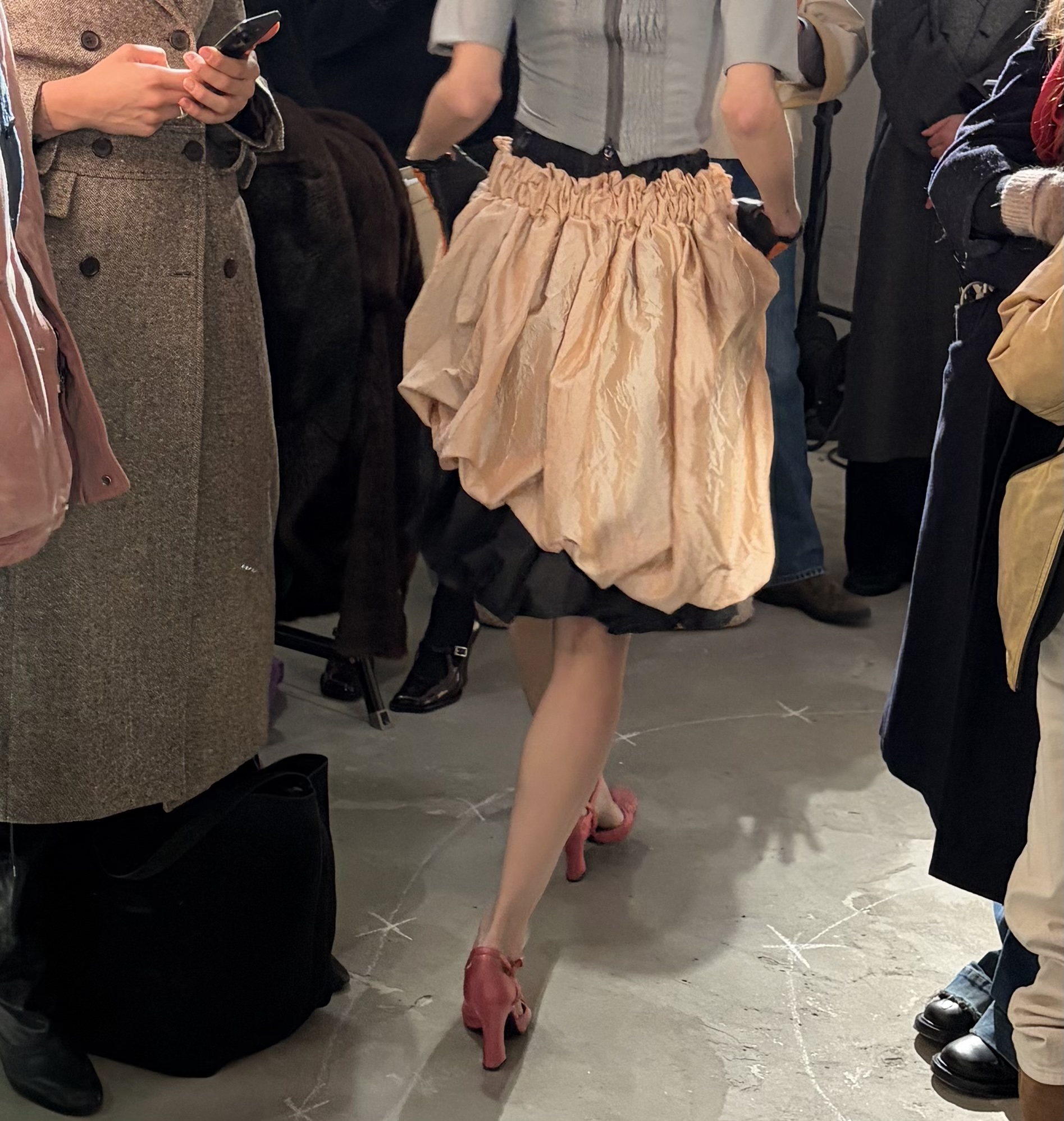
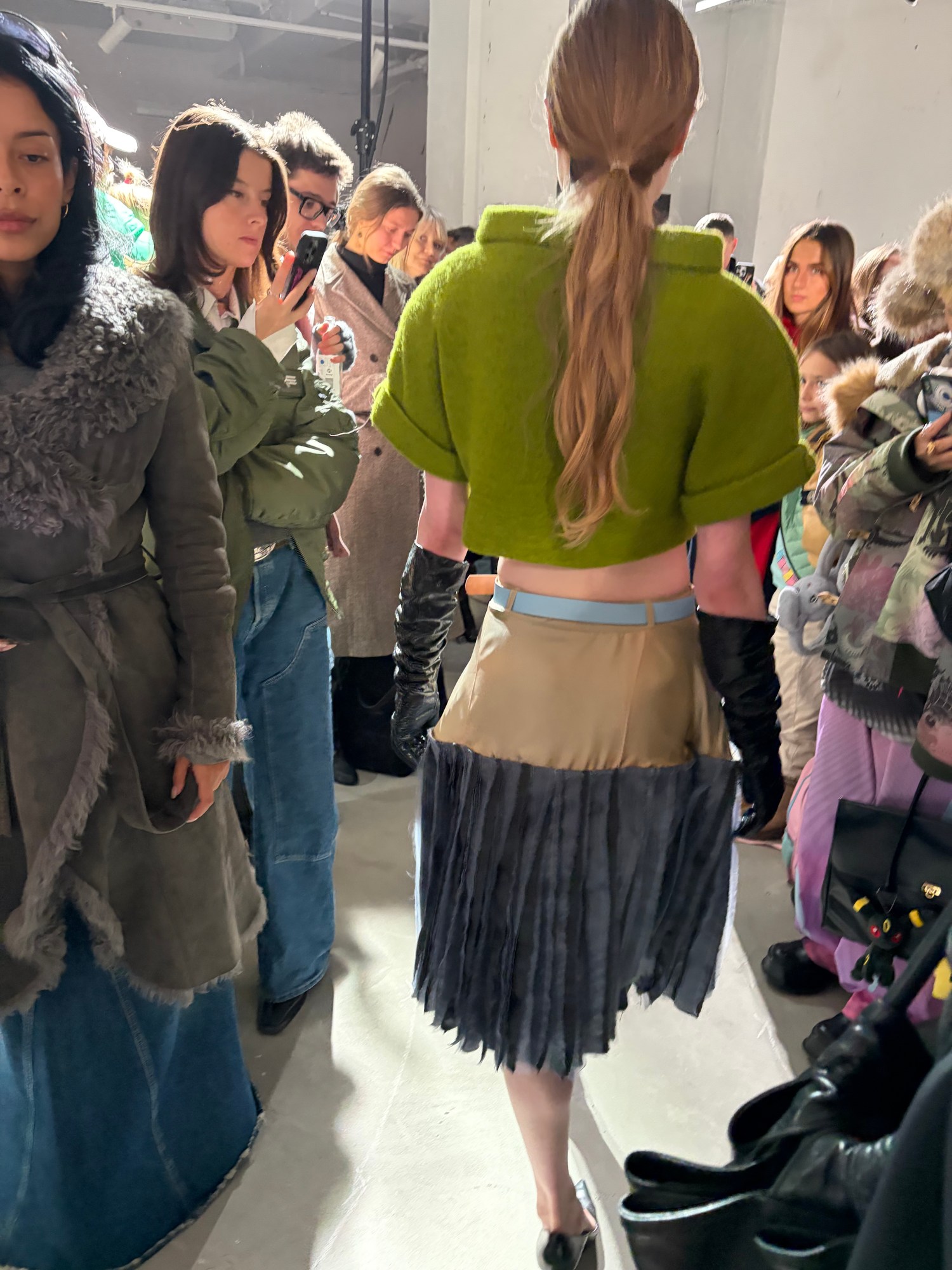
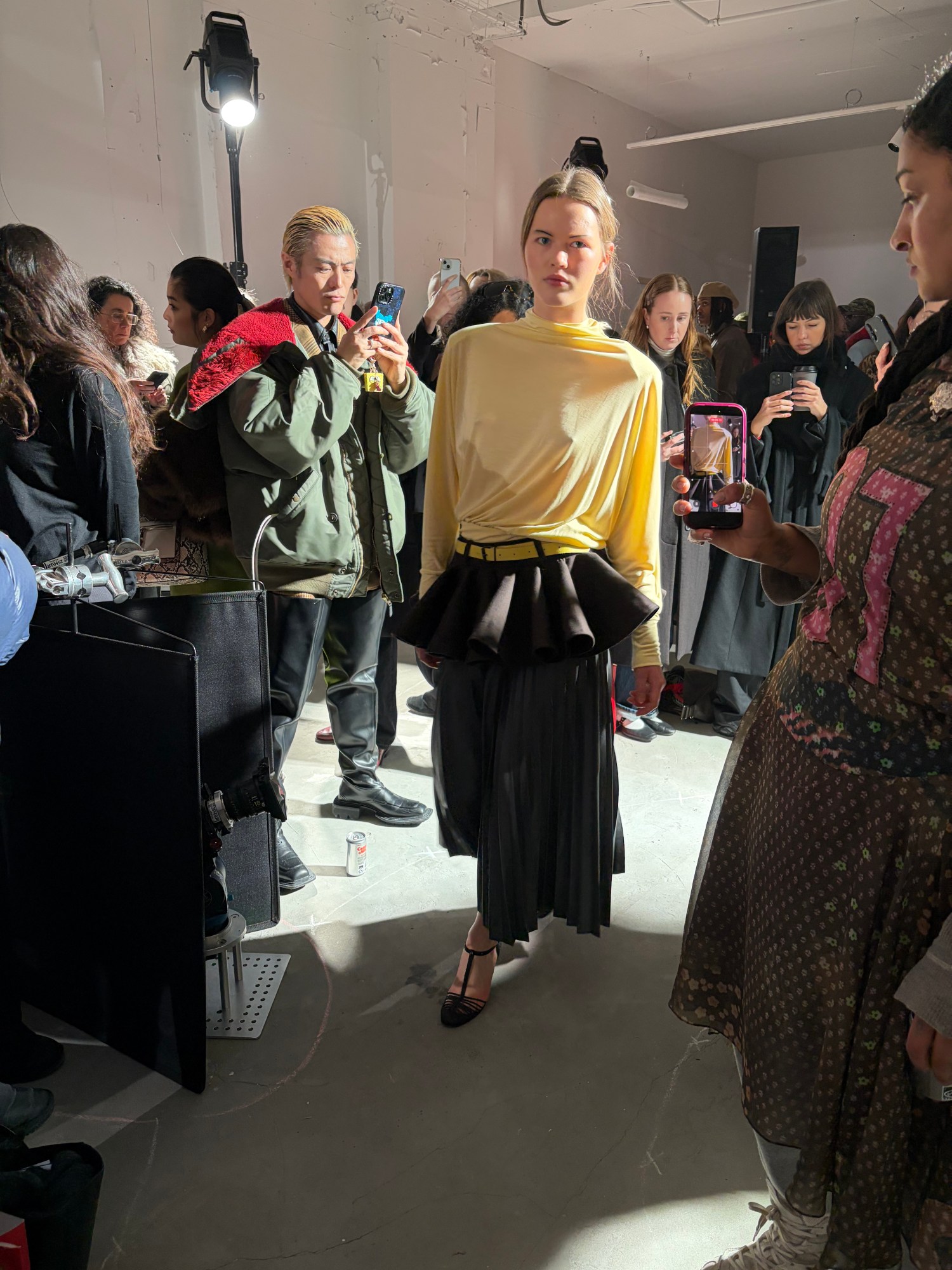
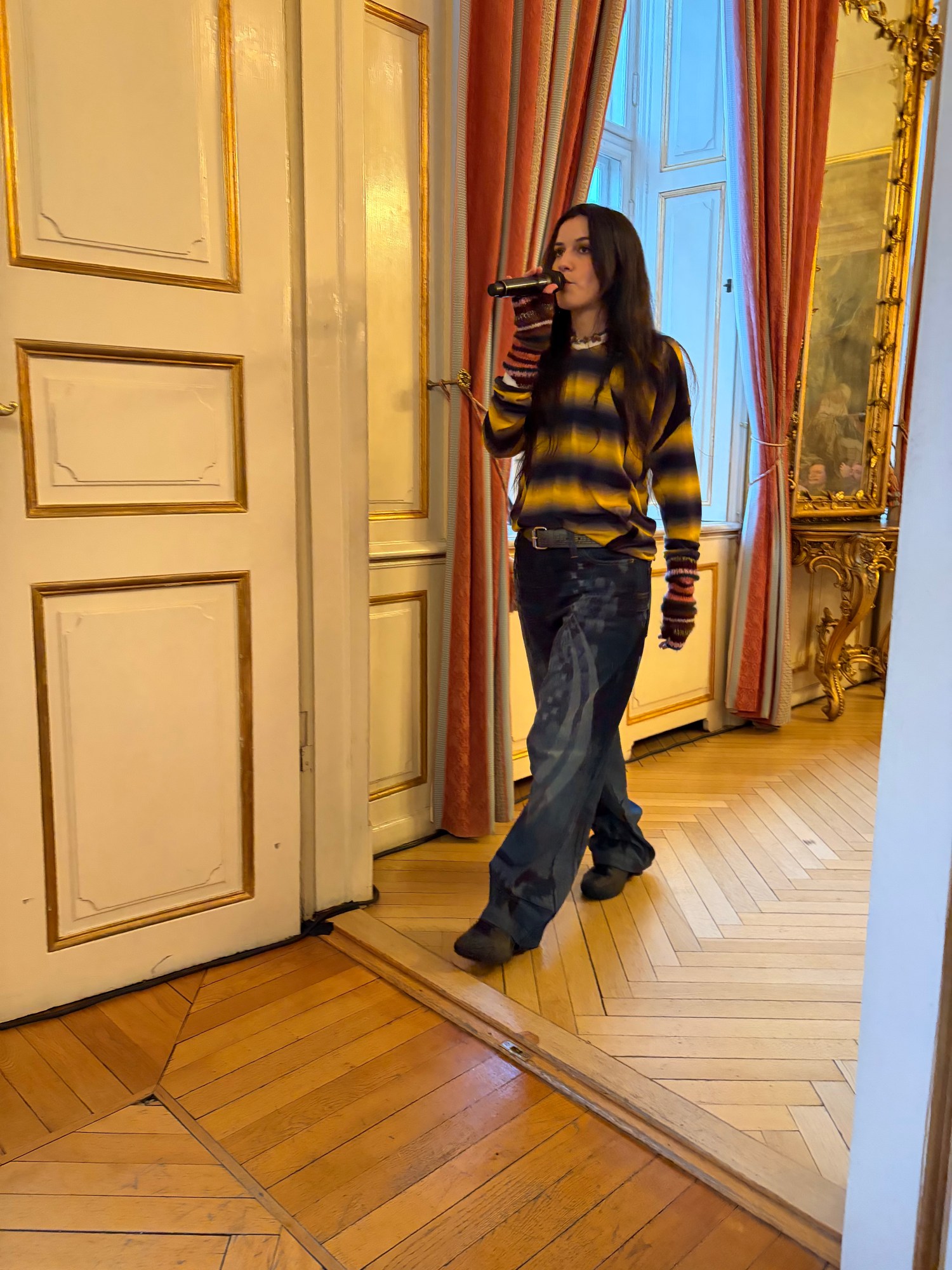
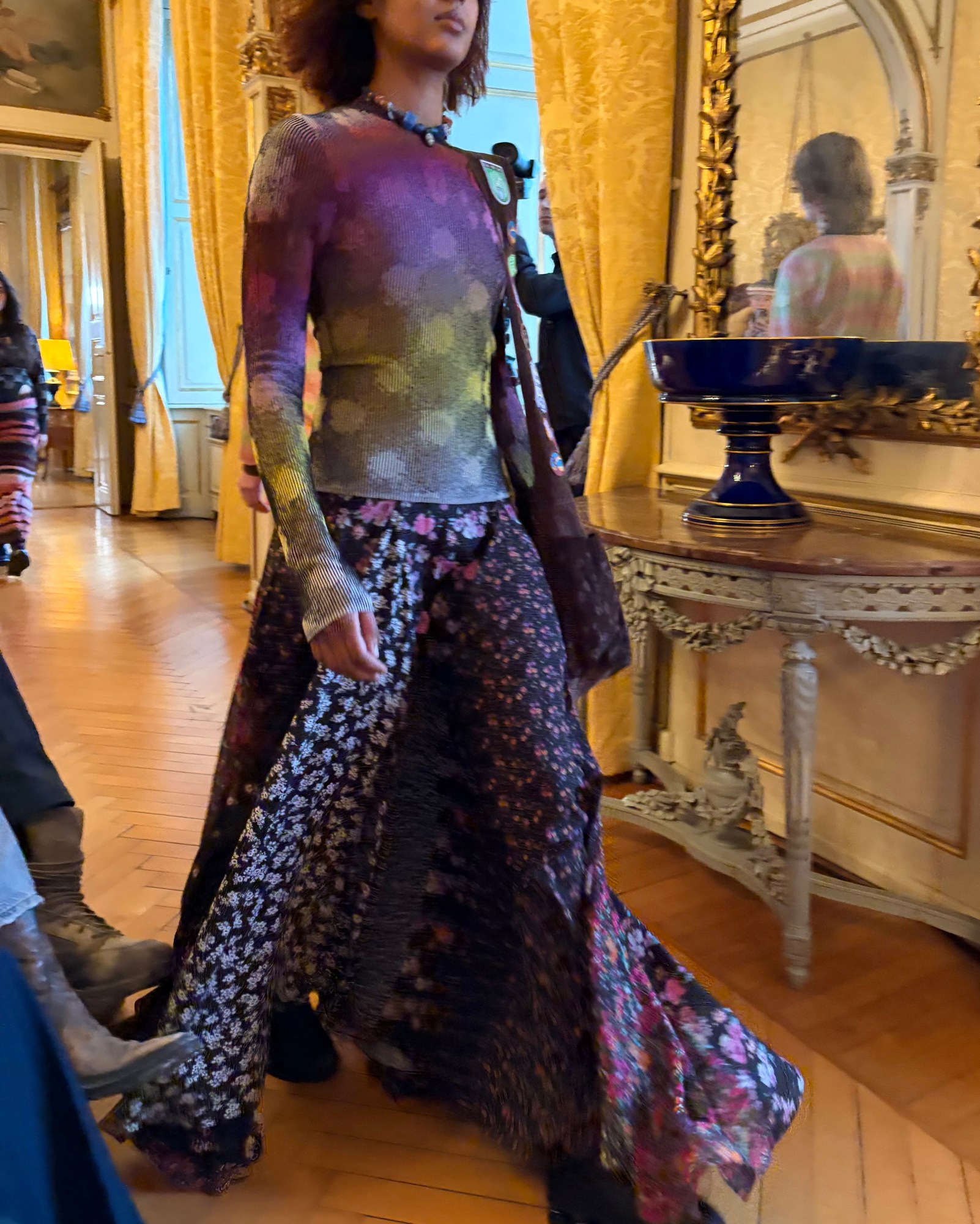
The final day of Copenhagen Fashion Week this season was “the moment”—to use current cultural terminology. Nicklas Skovgaard showed a new collection of doll-like clothes: dramatic buttons, utterly feminine, and even vaguely corporate. Then, not one but two shows took place in embassy buildings. Something to know about shows at embassies: they all start with a speech from the respective ambassador, which, who knew? Rave Review, the Stockholm-based brand known for upcycled plaids, showed at the Swedish embassy.I loved Rave Reviews dramatic (and very Scandi) collars, layered pleated skirts, and academia vibe. Onto the next embassy, the French one, where Paolina Russo showed. Oh my god, the colors, the patterns, the silhouettes! It was all giving girl scouts who knit, and I mean that in an incredibly aspirational way. Miss Ella Emhoff opened, and the artist Oklou performed throughout the show. This was undoubtedly the highlight of the season.
At the closing dinner that evening (we love a bookend), Thorsmark reflected on the last twenty years—the genesis of the Danish fashion girl riding her bicycle to shows, when Laird Borelli-Persson (an icon) began reporting on Copenhagen back in a Style.com era, and even how Queen Mary of Denmark supported the cause. I looked around the room and saw every designer that showed and many of the individuals who worked to bring those shows to life. It’s heartwarming, and I might have even choked up at the part where Thorsmark lauded Borelli-Persson for her career. Maybe fashion is not that serious, but I left with a heart full with some kind of Scandi sappiness, which I don’t mind at all.