written by STEFF YOTKA
photography HARLEY WEIR
styling HELENA TEJEDOR
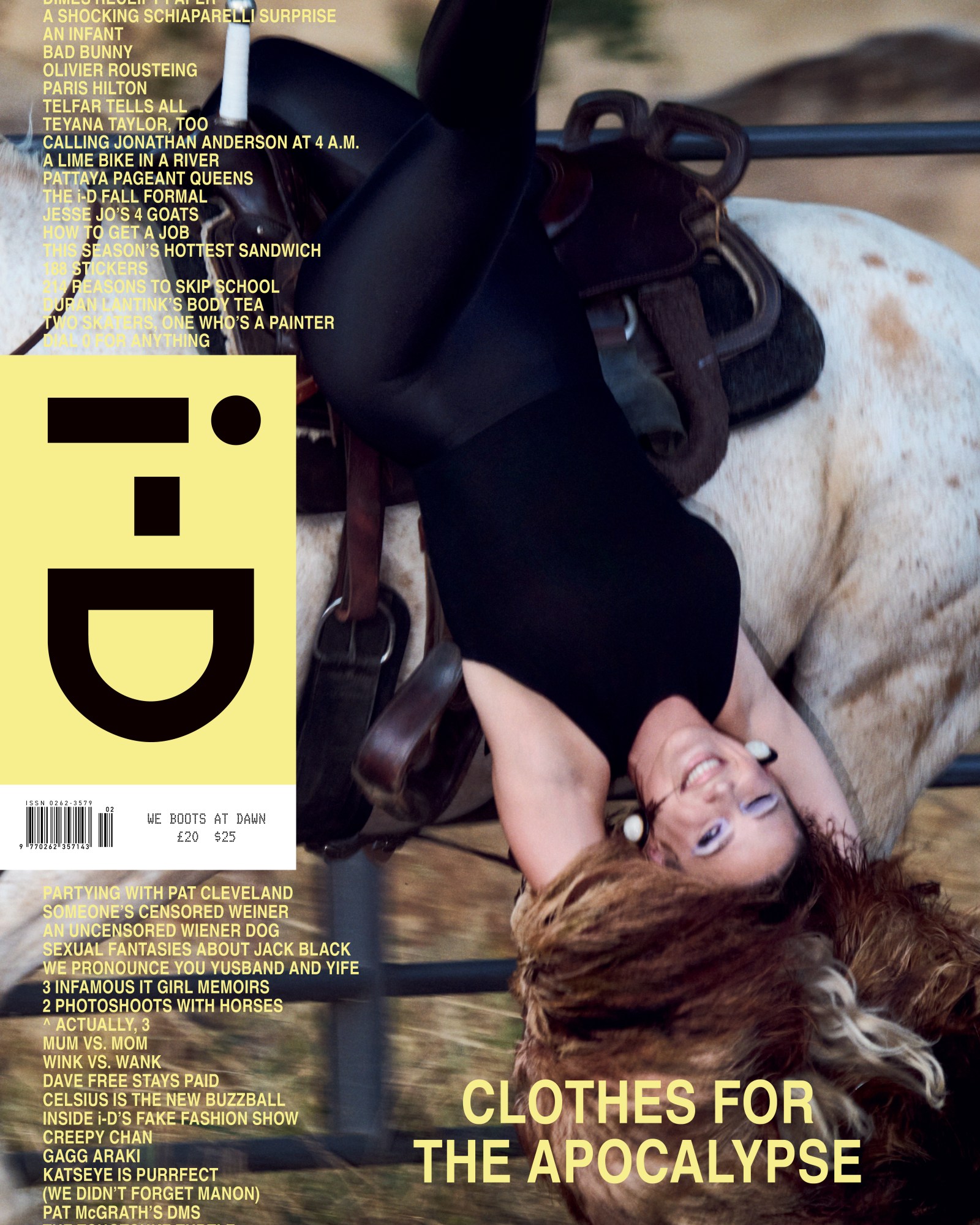
This story appears in i-D 375, The Beta Issue. Get your copy here.
“When I first started at Schiaparelli, I had this phrase ringing in my head: How do you dress for the end of the world?” says Daniel Roseberry. “And that was in 2019.”
In the six years since, it feels like the world has ended again and again and Roseberry has come up with the most fantastical ways to meet our ever-worsening moment. His clothes are not direct rebuttals to pandemics, wars, or nationalism—they are instead philosophical reactions and fantastical provocations to the issues of our time. Even if abstractly, he is watching, listening, communing with the realities of being alive in 2025, and trying to reflect that back to an audience through clothing. He’s not just obsessed with the merchandising and the sell-through—he’s obsessed with making garments that mean something.
Roseberry signals peace in clouds of silk that billow up around the shoulders, and takes on real and artificial strength with bodices carved into Hulk-like abs. He prizes the air we breathe with artificial golden lungs sitting atop the chest, and he imagines a future where mothers tote microchip-encrusted babies. Watching these clothes walk the runway or the red carpet, where Schiaparelli is a prominent fixture worn by the brightest stars from Ariana Grande to Demi Moore, you can’t help but wonder: Is this dystopian or utopian? The contradiction might be the point.
Born in Texas, Roseberry has referred to his journey as “Plano, Texas to Place Vendôme.” The son of an evangelical, born-again preacher, Roseberry’s been a good church-going boy, a missionary in Hawaii and Pakistan, a swiftly fired Chili’s waiter, a rebellious twenty-something fashion student in New York City, and a uniformed head of design at Thom Browne. Now, at 40 years old, he’s the charming and intelligent mastermind of one of Paris’ most enchanted maisons. He’s surely the only creative director in Carhartts at the couture salon.
“I was walking here this morning in the same clothes that I was wearing seven years ago, when I was walking to my studio in Chinatown,” Roseberry recounts from inside the Schiaparelli hôtel particulier on Place Vendôme. (Decor: Gilded, artfully kooky, with a wooden donkey that belonged to Elsa Schiaparelli herself greeting guests in the hallway. Outfit: Button up, beat-up jeans, white socks, sneakers.) “I’m wearing my boyfriend’s jeans that are tattered and old, but I can’t let ’em go because that, recontextualised here, is the superpower of the brand today.” What he means is the playful tension behind Roseberry’s Schiaparelli is that he’s still a small town Texan kid with big dreams.
“If they had hired a stuffy, Euro, classically-trained couturier, I don’t think it would be exciting,” Roseberry reflects. Founded in 1927, Schiaparelli is all about breaking rules: Elsa Schiaparelli was an arty outsider to the rarified world of fashion, collaborating with Surrealists like Salvador Dalí and Man Ray, and making provocative clothing that turned women into armoires and shoes into hats. Mischief is as integral to a Schiaparelli garment as a zipper.
“The word that I was thinking about on the walk over here—and the word that I keep coming back to that feels part and parcel for what Schiaparelli is—is tension,” Roseberry affirms. “It’s tension that the whole DNA of the house is built on.” The tension of a dreamer planted in reality, of combating evil with beauty, of seeing the future without judgement, but with promise. His clothes find freedom in the tension—inviting you to choose what you do with that freedom. Isn’t that glamorous?
Building excitement in the tension between elegance and kitsch has become Roseberry’s calling card. His designs have gone viral time and time again––from Kylie Jenner’s lifelike lion’s head gown, to Lauren Sánchez’s ultra-snatched pre-nuptial look in Venice, to the paisley illusion dress Beyoncé wore as she became the first Black woman to win Best Country Album at the 2025 Grammys. “The most urgent topic as a creator is to know how to make the world stop,” he says. “And even if the world does stop, it stops for two milliseconds as opposed to two weeks or whatever it used to be. That is the hardest part about working today.”
Going viral isn’t the be-all-end-all to Daniel Roseberry. He has a 15-minute timer on all social apps on his phone and can spend upwards of 100 hours perfecting the beading on a couture gown. Nor is it to Schiaparelli, which will celebrate its 100th anniversary next year. Attention spans might be at their shortest ever and fashion’s appetite for a gag might be at its highest, but Roseberry wants to chart a new course.
“I was thinking about what could become a true luxury: being terminally offline,” he begins. “Peace and quiet, mental clarity, stability, and the lack of noise now feels like the most erotic, fetishised got-to-have-it thing.”
To find it, Roseberry went back home to Texas, and back to the women who have inspired him over the course of his life, from his mother and sister to his friends like Julia Wideman Wertheimer, “the mother to my goddaughter, who wears the clothes in a way that is constantly inspiring for me.” His Fall 2025 ready-to-wear collection, presented in March this year, under the honey-hued light of Paris’ Musée d’Art Moderne and to the sounds of Lainey Wilson and Brandi Carlile, is titled “Lone Star,” an homage to doin’ it for yourself. Gigi Hadid opened the show in a giant shearling collared coat, strutting slowly—almost deviously so—as her reflection alighted the mirrors behind her. From white singlets to deconstrcuted gowns, the collection had a boudoir spirit. Who would a woman be all alone, at her most free?
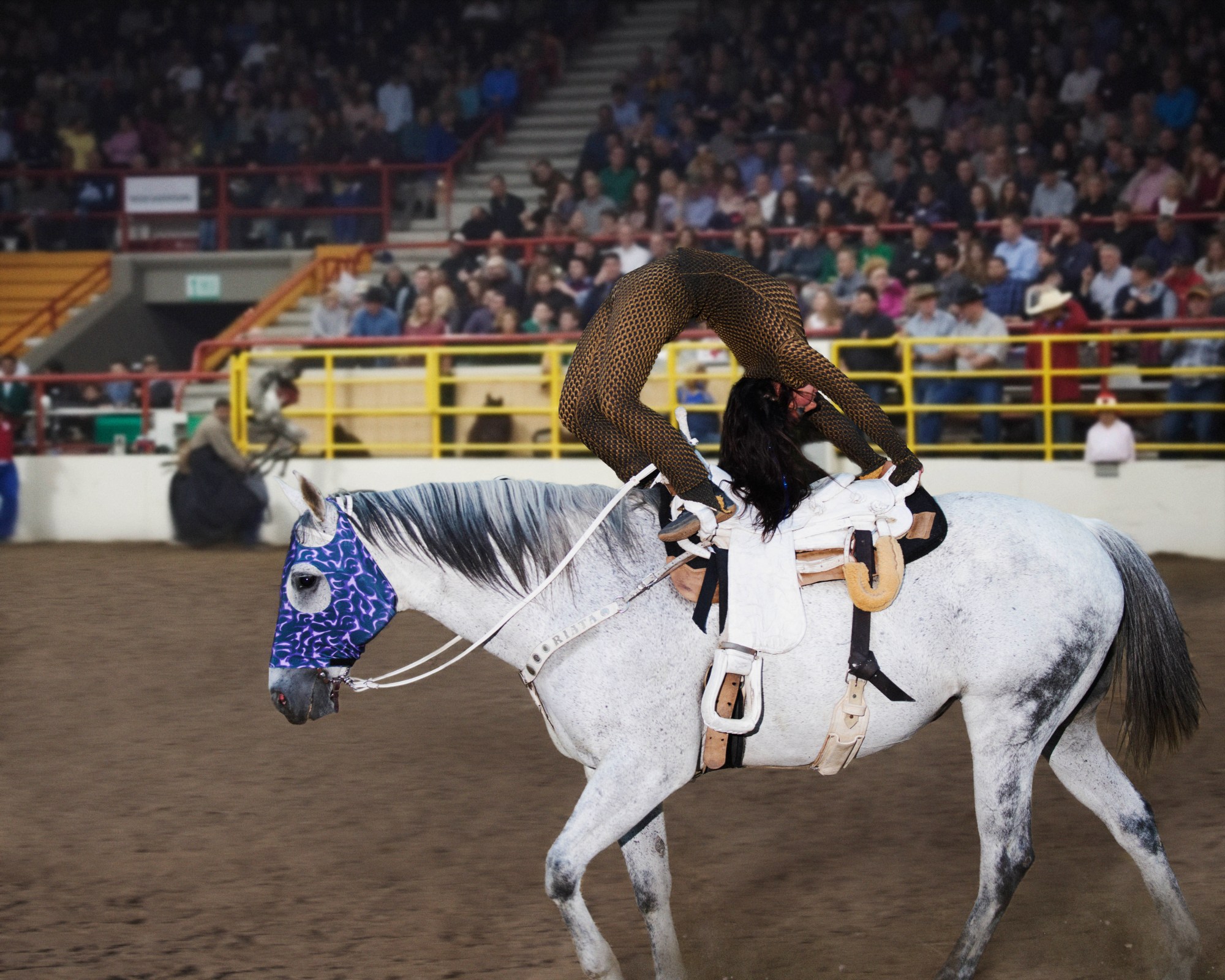
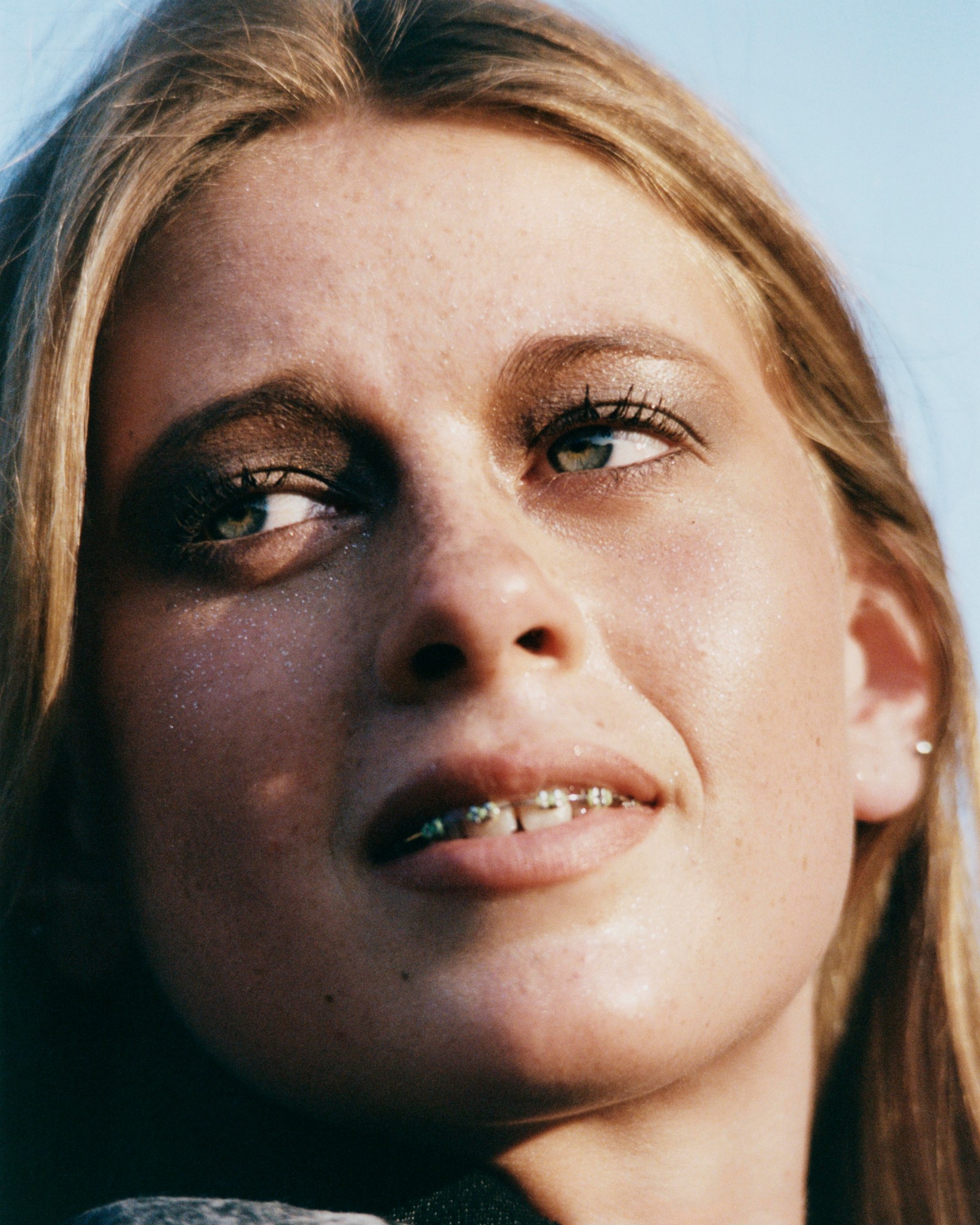
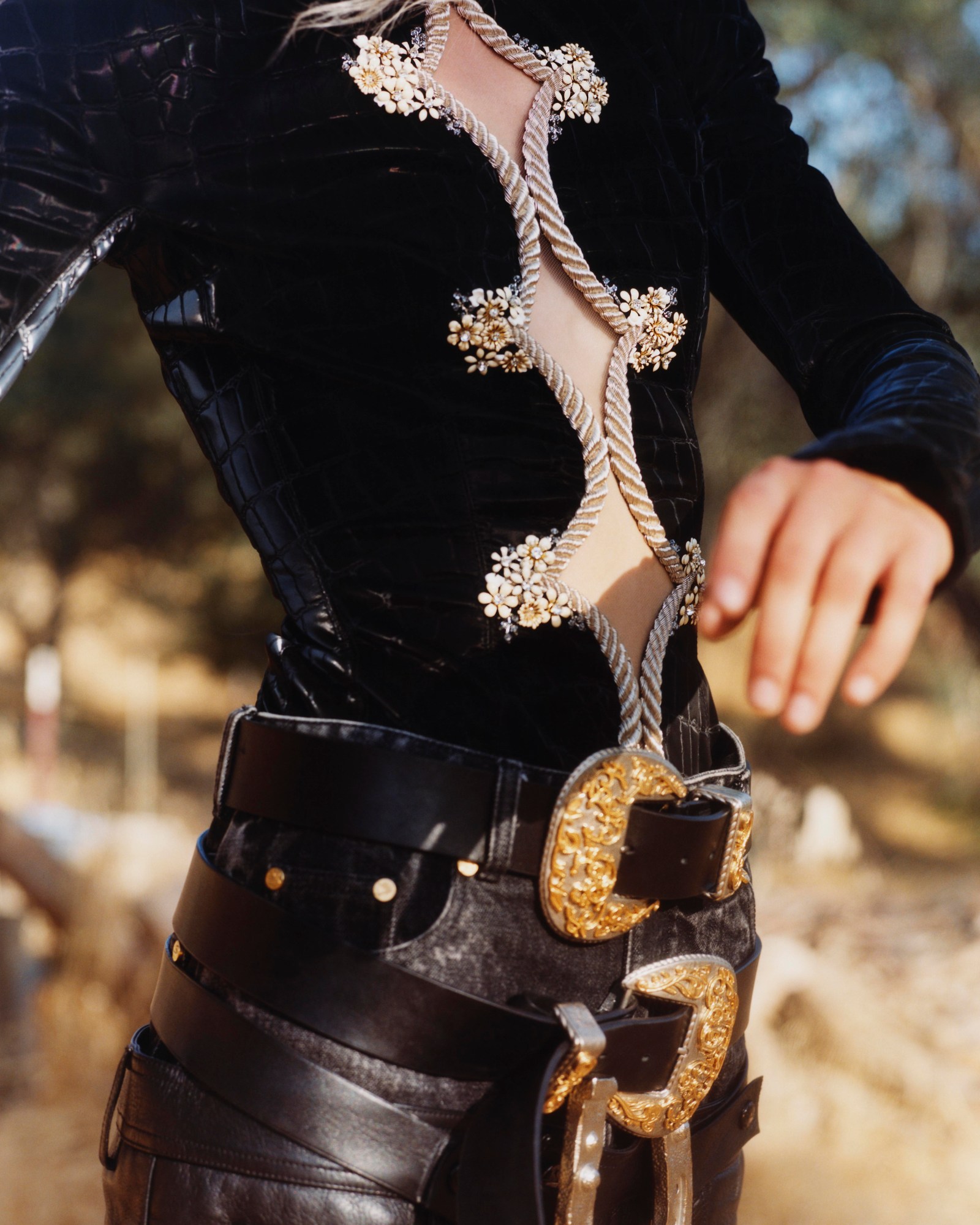
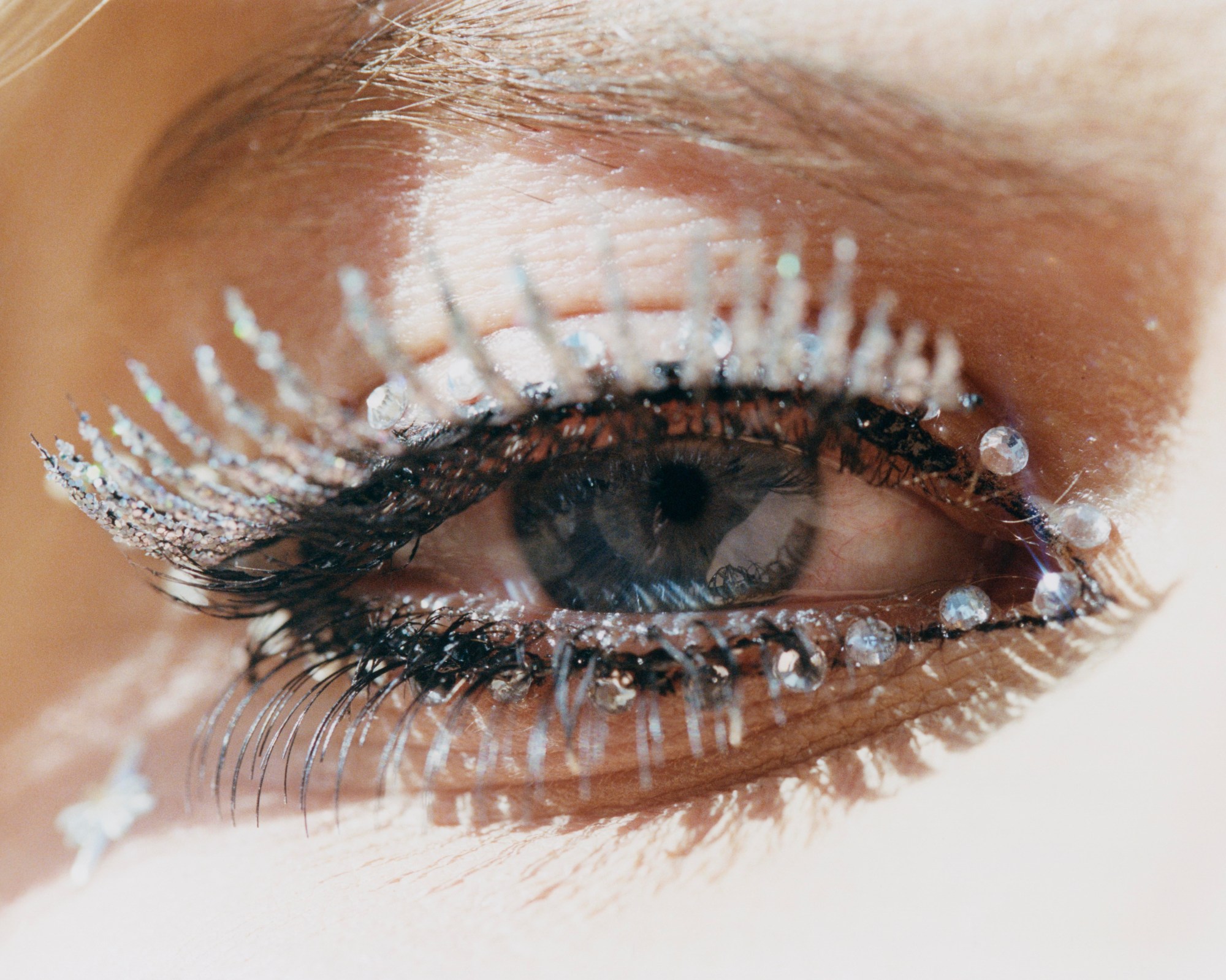
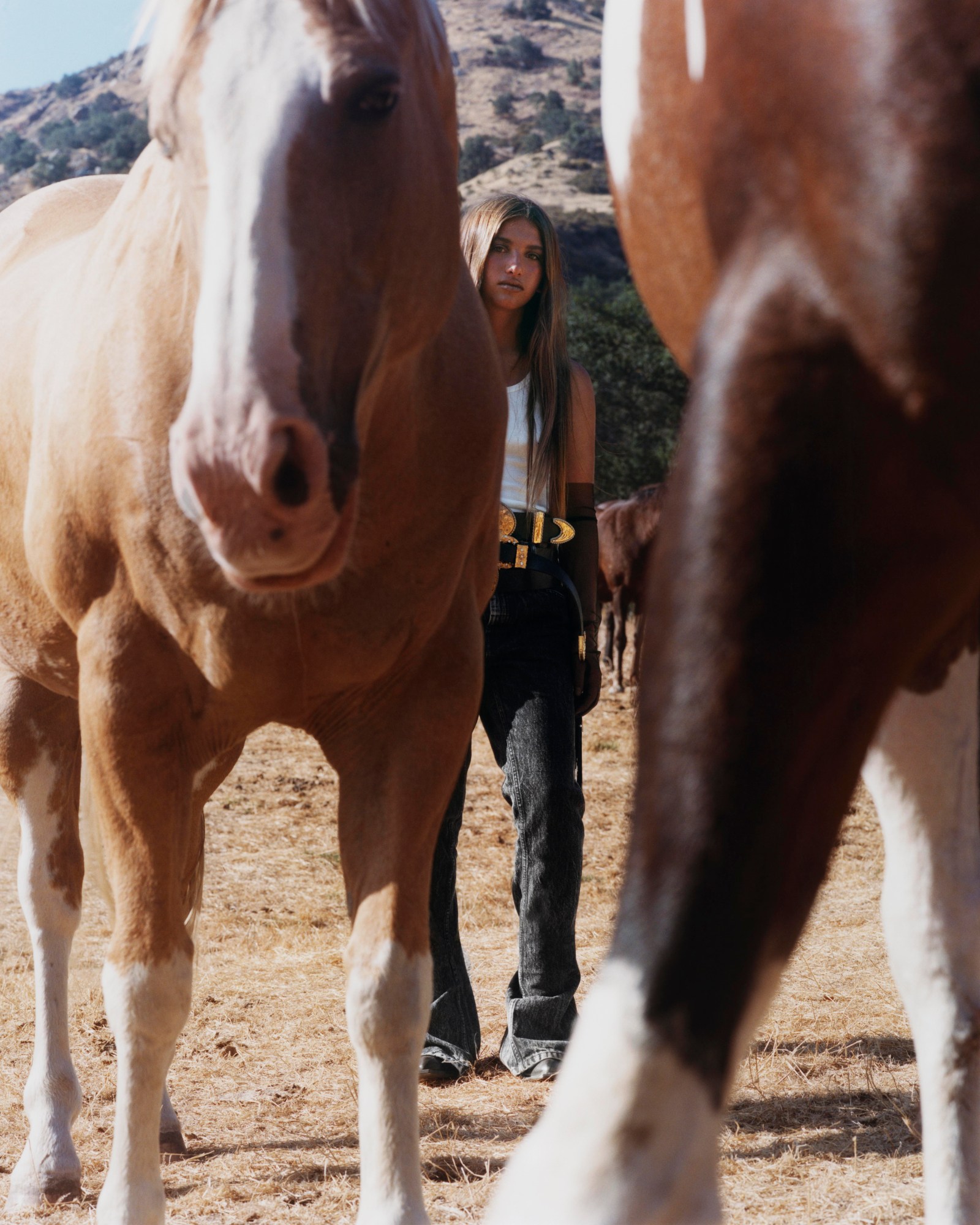
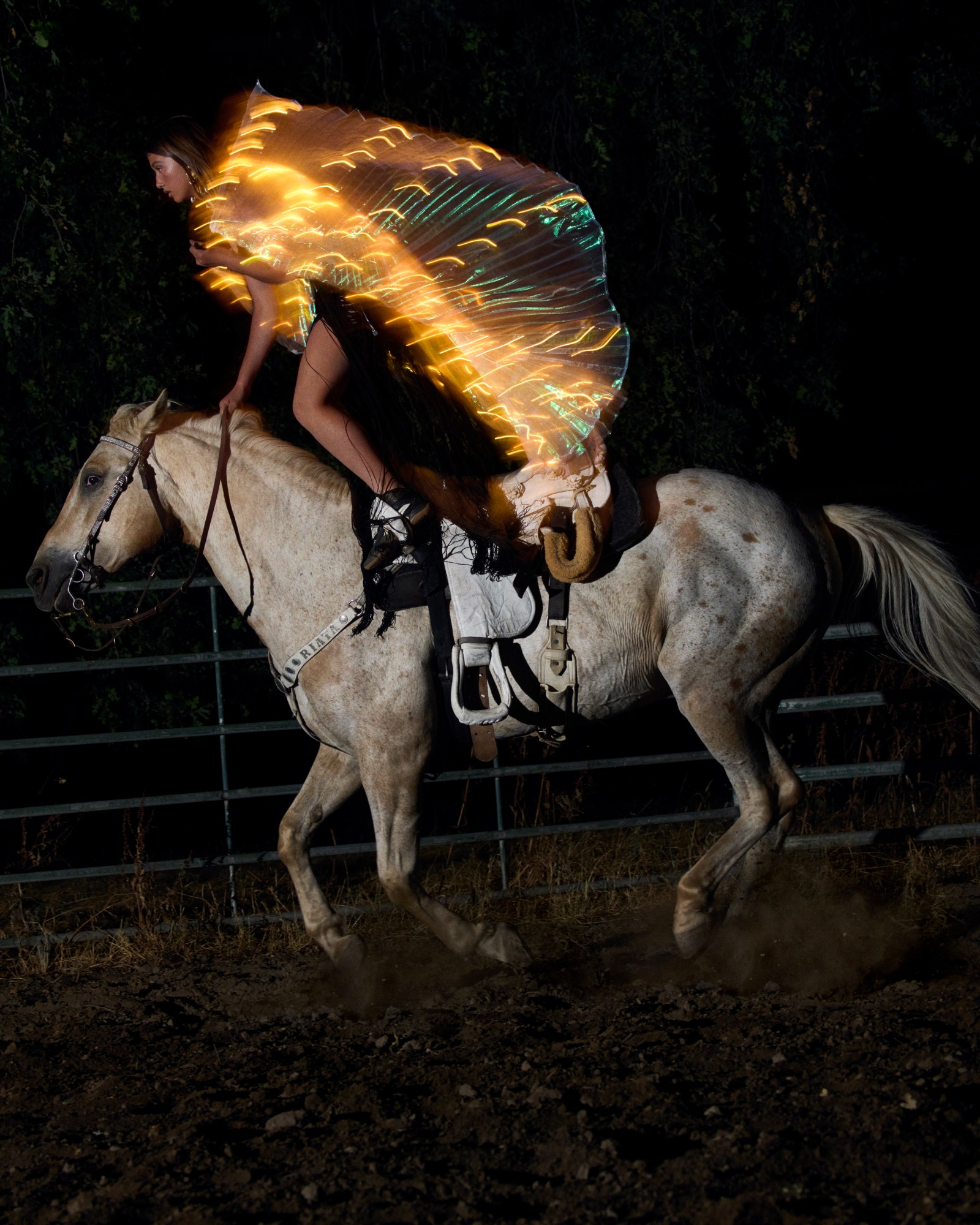
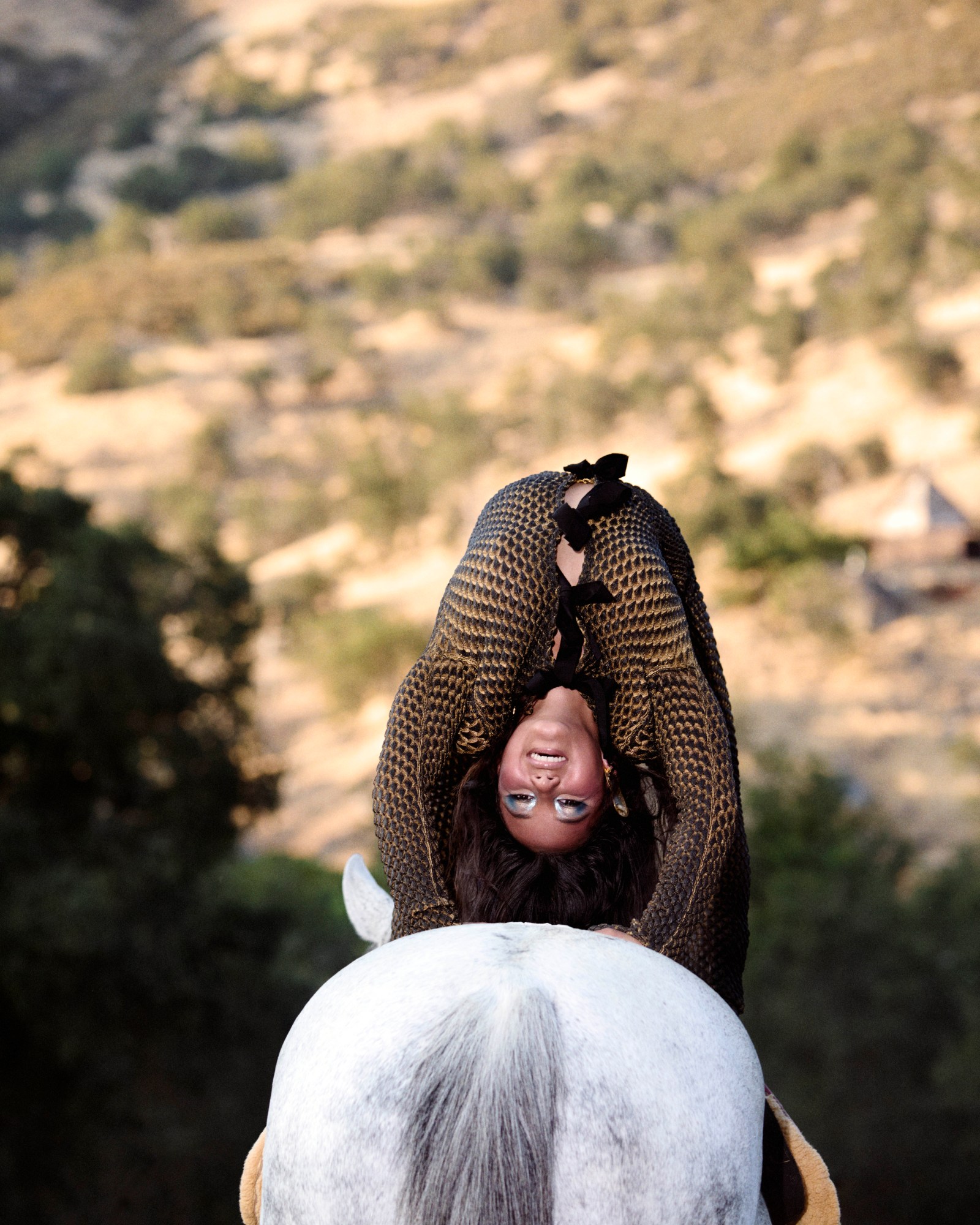
“Meaning comes from recognising what is still precious in life—the things and people that can’t be replicated, that have to be experienced physically and personally. I’ve spent the past few months speaking less and listening more. I wanted to make things that can inspire, and that can never be replicated by fast fashion,” Roseberry says of this collection. Aptly, in these pages, Harley Weir shot the Fall 2025 collection on the Riata Ranch Cowboy Girls—Spencer, Mellody, Aybrey, Ava, Lottie, and Lexi—a band of trick riders in California who share stables, horses, and the freewheeling spirit that Roseberry brought to the catwalk. “The women in my life are lone stars—there’s no one else like them, and there could never be. I hope they, and all women, feel the same about these clothes.”
Tapping into the indefinable essence of togetherness, of a life-well-lived, is one of the hardest things to achieve through fashion. Can a skirt ever really truly signal you are living well? And yet, the big, wowee, sensational moments that once ruled fashion’s roost quietly gave way to a new sense on the catwalk––one more about personal style, eclecticism, and individuality. The era of the runway gag is officially over—no more stunt casting or stunt clothes. Now, we are in the era of the vibe. Fashion has refocused on the more cerebral pursuit of world-building, where designers like Jonathan Anderson at Dior, Julian Klausner at Dries Van Noten, and Michael Rider at Celine are prizing the eclecticism of a magpie lifestyle—and the silhouettes to match it—over big sweeping messages that can be summed up in a single blue square on Instagram. Roseberry’s Fall 2025 collection, spanning 1950s car coats to butch belts to crystal-covered evening tops, is more about a mood than a moment. “There was something that was really more vibe-driven at that show—and some of the strongest looks, I felt, were the most normal. There was a chocolate brown crewneck sweater with a leather skirt. There was a pair of embroidered pyjamas. There was just an ease that felt weirdly more bold and more vulnerable,” he pauses to smile a little, “more of a risk than doing tits and ass all the time.”
The risk of being “normal,” if you will, is that the Schiaparelli customer has become accustomed to the mischief of golden nipples on a cable-knit jumper or metal trompe l’oeil toes. “They expect us to be the alternative destination to this over-merchandised, too-available concept of luxury,” Roseberry says of his clientele. “The golden rule is: Is the product something you can really only get at Schiaparelli? If we do a shirt or a bag or a jean that looks generic in any way—that’s not what they’re looking for.”
Fear not, Roseberry seems almost biologically unable to make something basic. Even when he brings up New York Magazine’s “West Village Girl” article—a cheeky but eviscerating send up of the Alo Yoga, Rhode phone case, claw clip, matcha latte girlies of West 10th Street—he does so to analyse the psychology of the girls, not their outfits. “Four people sent that article to me because that’s what I want to know,” he laughs, “I want to know that women are still moving to New York to live out their Sex and The City fantasy. I don’t really care how they choose to manifest that.”
How he manifests self-actualisation is always via glamour. In today’s world, “agency and control is what feels glamorous to me,” he says. “Women who have always read as glamorous to me like Cher, Dolly Parton, Audrey Hepburn, or Catherine Deneuve have this element of control that I find is the opposite of basic. It’s the opposite of doing something because you’re told to do it. And that’s what I love about the women who choose Schiaparelli.”
That’s something he has in common with the house’s founder, Elsa Schiaparelli. Born in 1890 to a family of philosophers and intellectuals, Schiaparelli was also a Virgo designer with one foot in the heavens and the other squarely on earth. She survived two World Wars and made friends with Paris’ Surrealists, creating challenging, glamorous clothes for women who weren’t to be fucked with. Her most famous client was the Duchess of Windsor, who kissed the throne goodbye with a lobster painted across the crotch of a Schiap ballgown.
“I have to believe that nothing is ever really totally ruined,” he says of the state of the world. “It’s not the end of the world, but it is the end of the world as we knew it.”
TWO MORE MINUTES WITH DANIEL ROSEBERRY
Steff Yotka: Tell me a secret you’ve never told anyone before.
Daniel Roseberry: I used to eat lunch in the bathroom in high school. When I moved schools I didn’t have any friends and I was too terrified of the lunch hall, so I took my lunch into the bathroom. Is that too embarrassing?
What’s your favourite Elsa Schiaparelli piece?
The gold Giacometti buttons.
What’s your favourite meal in Paris?
The French omelet that I make at home, Or if you want a real thing, I would say the fried olives at Ralph’s.
What music are you listening to right now?
Jessica Pratt, Nick Drake,
Sufjan Stevens, and Vashti Bunyan.
I’m listening to a lot of Vashti Bunyan
right now.
What’s your comfort movie or TV show when you need to shut your brain off?
Lord of the Rings.
I’ve seen it so many times.
riders LOTTIE COUGHLIN, AVA DAVIS, SPENCER ROSE, MELLODY REIS, AYBREY OTTOWAY, LEXI WILLIAMS
hair MARANDA WIDLUND USING ORIBE AT HOME AGENCY
makeup KENNEDY USING DIOR BEAUTY AT STREETERS
DP JACOB MESSEX
casting FRANZISKA BACHOFEN ECHT FOR JE SUIS CASTING AT MINI TITLE
photography assistant BROOKS GALLO
styling assistant RAEA PALMIERI
makeup assistant KELBY ADAM
casting assistant LIV TENDLARZ
production DOBRA PRODUCTION
producer MICHELLE KAPUSCINSKI
post production THE HAND OF GOD
location RIATA RANCH INTERNATIONAL