This story appears in i-D 375, The Beta Issue. Get your copy here.
photography HENDRIK SCHNEIDER
styling YASHUA SIMMONS
written by BEN DANDRIDGE-LEMCO
It’s 2009, and Kendrick Lamar drops the video for “Compton State of Mind,” rapping his hometown homage in front of various local landmarks: the Dr. Martin Luther King Jr. Memorial in front of Compton Courthouse, a strip mall along Los Angeles’s major west-east thoroughfare Rosecrans, and the bleachers at Compton College.
The 22-year-old Lamar is clad in a simple uniform: a white V-neck T-shirt, backwards Washington Nationals hat, and beat-up Converse, looking every bit the aspiring rapper he was. Almost everything about the video, from Lamar’s outfit to its out-of-focus aesthetic, is worlds away from where the Compton-born rapper has ascended to since then. He’s collected 22 Grammys, become the most awarded artist in BET Hip Hop Awards history, headlined the Super Bowl halftime show (the first solo rapper to ever do so), and been awarded a Pulitzer Prize for Music. Yet, 2024’s “Not Like Us”—his Grammy-winning, Hot 100-topping, atomic bomb of a diss track—brings us right back to where he started the very first shot: the plaza outside Compton Courthouse.
By his side through it all, helping transform Lamar’s lyrical world-building into a fully-fledged creative vision, is Dave Free. For more than 20 years, Free—who directed both the “Compton State of Mind” video (as dee.jay.dave.) and “Not Like Us”—has been a guiding force behind the scenes. His professional trajectory resists neat classification, and he has always preferred to let his work speak for itself. His video direction is renowned, working with Baby Keem, ScHoolboy Q, and SZA alongside Lamar. But he has at times also been a DJ, producer, record executive, creative director, and artist manager. He’s emblematic of a generation of multi-hyphenate creatives driving huge influence in culture, beginning their careers as creative consiglieres for hip-hop stars. (Virgil Abloh started out in a similarly amorphous role, working with Ye, formerly Kanye West.)
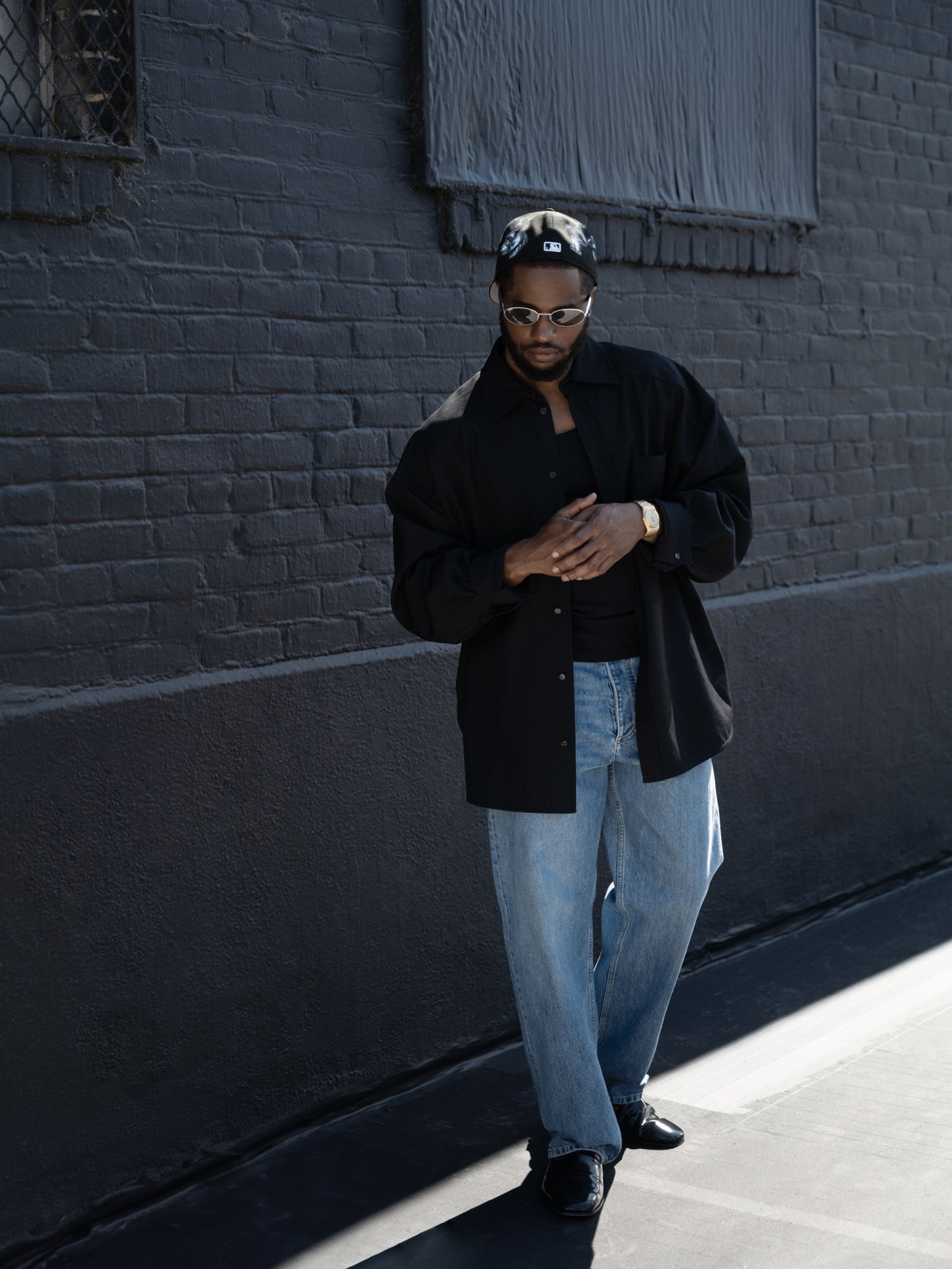
Free doesn’t give many interviews. On the phone, the Inglewood-born 38-year-old is calm and unhurried. He speaks with a quiet confidence, pausing for multiple beats and appearing deep in thought, whether he’s contemplating the early days of Top Dawg Entertainment (the record label he helped transform from scrappy indie to global powerhouse as president between 2007 and 2019) or reflecting on the evolution of pgLang, the company he co-founded with Lamar in 2020. pgLang, like Free, is difficult to define—willfully so.
Free and Lamar met in ninth grade when the former drove over to Centennial High School to meet the young rapper, whose talent was already earning him a reputation among his peers south of the I-10. They spent long nights recording in Free’s older brother’s studio and began performing at small, often makeshift venues around LA, with Free acting as Lamar’s hype man. Free first met Anthony “Top Dawg” Tiffith, the founder of Top Dawg Entertainment, in the mid-2000s while working as a technician in a computer repair shop after graduating high school. He decided to press play on Lamar’s latest mixtape while he was attempting to fix Tiffith’s computer, sparking a partnership that would forever alter the course of all three of their lives.
In those early days, when they were driving around Compton shooting their first video together, he and Lamar were fueled by Cup Noodles, Louisiana Fried Chicken, and a belief that they had something important to say together. “We were always focused on telling our story,” he says. “We felt like it was a different perspective on growing up in the neighbourhood.”
At the time, though the hip-hop landscape was shifting, Free says LA’s rap culture still heavily revolved around the same sort of gangster rap ethos that had first put the city on the map about two decades before. Free points to Pharrell’s work with both The Neptunes and N.E.R.D., and the way Williams married the worlds of skating, hip-hop, fashion, and more together, as early signposts for an alternative future. “I’ve got to give a lot of respect to Pharrell, and everything he was doing. The way it was mixed in with fashion and everything. It was so fresh, so new, the energy of it,” he tells me. “It came from all the stuff we were taking in that was happening globally, and hip-hop was growing and changing and forming into different things.”
That was when a young Free first came to photography and directing via Tumblr, the then-nascent image-sharing platform. “There’s something like an aspirational quality to be able to show people the things you like and aligning that with your character,” he says. “I always looked at curation as a magical key that can unlock so many doors if you curate your perspective right.” In between Gordon Parks photos and quotes that caught his attention (lines from movies, for example), Free would post Lamar’s music alongside his own original photography. “There wasn’t even really a thought process,” he remembers. “Just capture this moment and see what comes out of it.”
While “Compton State of Mind” marked their first collaboration, Free says they truly laid the blueprint for their approach with Lamar’s 2010 “Ignorance is Bliss” video. Directed by Free, the no-budget video marks the beginning of them translating the visions in their head into something tangible. “We always had this thing where it was like, if we’re spending this much time on the music, we gotta spend a sufficient amount of time on the creative too,” Free speaks with determined conviction, outlining a core tenet that has carried his and Lamar’s creative partnership from the early days into the present. “You can’t just do the music and phone in the creative.”
Given Free’s exacting creative eye, it’s no surprise that the moniker he and Lamar eventually landed on for their work as video directors was one born of aesthetic concerns. They were watching the credits roll on their latest video, noting a “bunch of names” in the director slot: Lamar, Free, and their collaborator Jerome D (D directed 2012’s “Swimming Pools (Drank)” as well as 2013’s “Backseat Freestyle”). “[Lamar] was like, ‘Yo, that’s too many goddamn names on there, man,’” Free remembers with a laugh. So, they dubbed themselves The Little Homies. The Little Homies-era signalled Free’s status as an enigmatic creative heavyweight and codified the sensibilities they had, by that time, already been honing for close to a decade. “I liken it to a Porsche 911,” he says of the way their creative work has evolved. “It’s the same chassis, same look, same design, it’s just refined over time.”
By the time major label budgets and video treatments came into the picture, Free and Lamar were accustomed to carrying out the process on their own, collaborating with visionary directors, including Dave Meyers, Colin Tilley, and Nabil. Their calling cards are easy to spot: striking images that evoke the distorted vision of the American Dream they saw in their home neighbourhood; the beauty and power in community and togetherness; the promise of abstract, magical thinking to create a future that doesn’t yet exist. It’s in Lamar levitating over the streets of California––from the Bay to LA––in the “Alright” video. It’s in his face morphing into the latest TMZ-headlining Black celebrity in “The Heart Part 5.” It’s in the recurring image of Compton Courthouse.
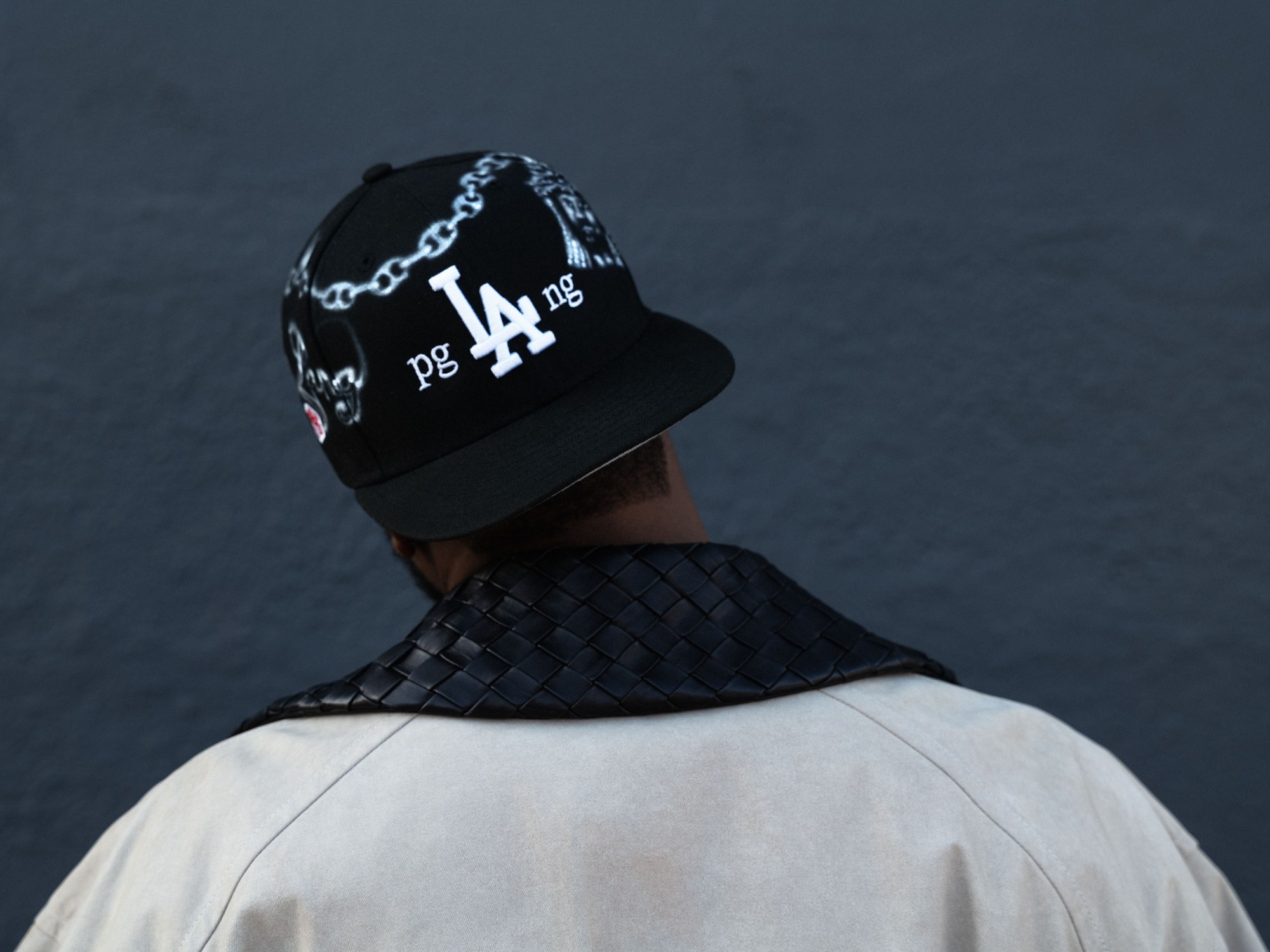
In 2020, pgLang was born. When Free and Lamar announced the creation of what they described as a “service company,” they did so in their own cryptic, heavily-stylised fashion with a “visual mission statement”—a trippy video featuring two suited figures with giant eyeballs for heads fighting, butter sizzling in a pan, and a shapeshifting plastic bag on a beach. The short film confused fans, begging questions without providing answers about what pgLang actually is. The answer, today, is: a powerhouse, making Free one of the most influential creative figures you’ve never heard of.
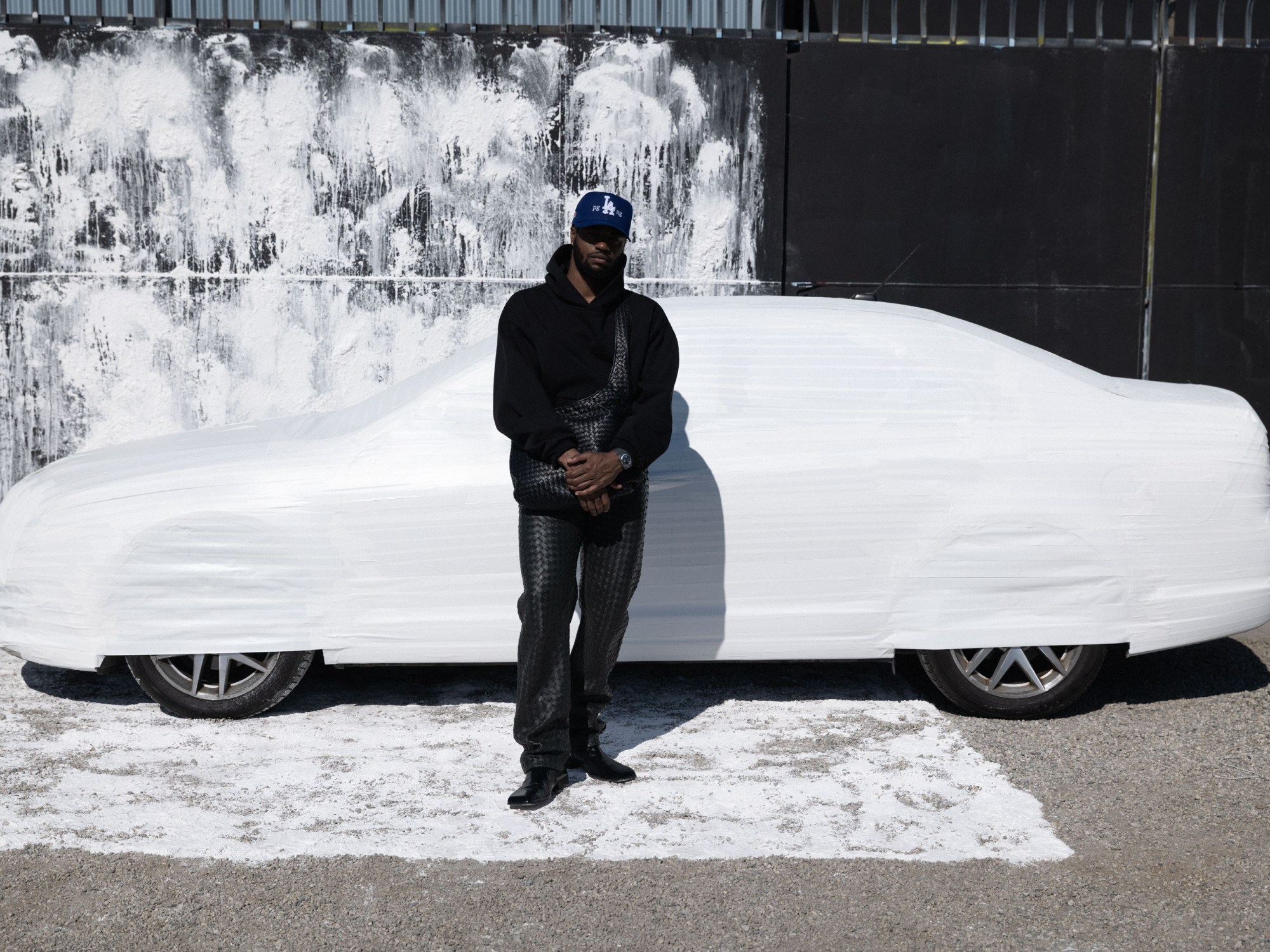
Lamar and Free have built a business that defies categorisation—intentionally. Their mission statement upon the company’s launch stated, “This is not a record label, a movie studio, or a publishing house. This is something new.” It’s seen their influence spill beyond music, embedding them in fashion, conceiving campaigns for the likes of Calvin Klein and the paragon of French luxury fashion Chanel. (This year, Free featured in front of the camera for a Bottega Veneta campaign celebrating the 50th anniversary of its signature intrecciato weave, alongside cultural juggernauts including actress Julianne Moore, British author Zadie Smith, and director Dario Argento.)
If you were to liken pgLang to anything, you might describe it as a creative studio. Alongside directing music videos for Lamar and developing fashion campaigns, they’ve even had Doechii deliver financial advice in a viral ad for CashApp. Free’s umbrella corporation has also created an ongoing concert series in Ghana and other African countries in partnership with Global Citizen, helped launch the career of ascendant star Baby Keem, and produced Lamar’s Super Bowl LIX halftime performance. Five years on, and Free is still hesitant to box in what the company is and can be. “PgLang is bigger than what we thought it would be, but also still not even close to what it could be. We don’t like talking about it, we just like to do it. It’s not a lot of Batman-signalling before the incident,” he says decisively.
“We truly aren’t just driven by revenue or endless growth. We’re driven by impact,” Free explains. “We’re driven by how to pay it forward, how to push—I don’t like to use the word ‘culture’ in this way, because it’s so cliché—but the world forward. We talk about this a lot. A lot of what we do is just being brave to try things and fail in front of everyone, and not give a shit.”
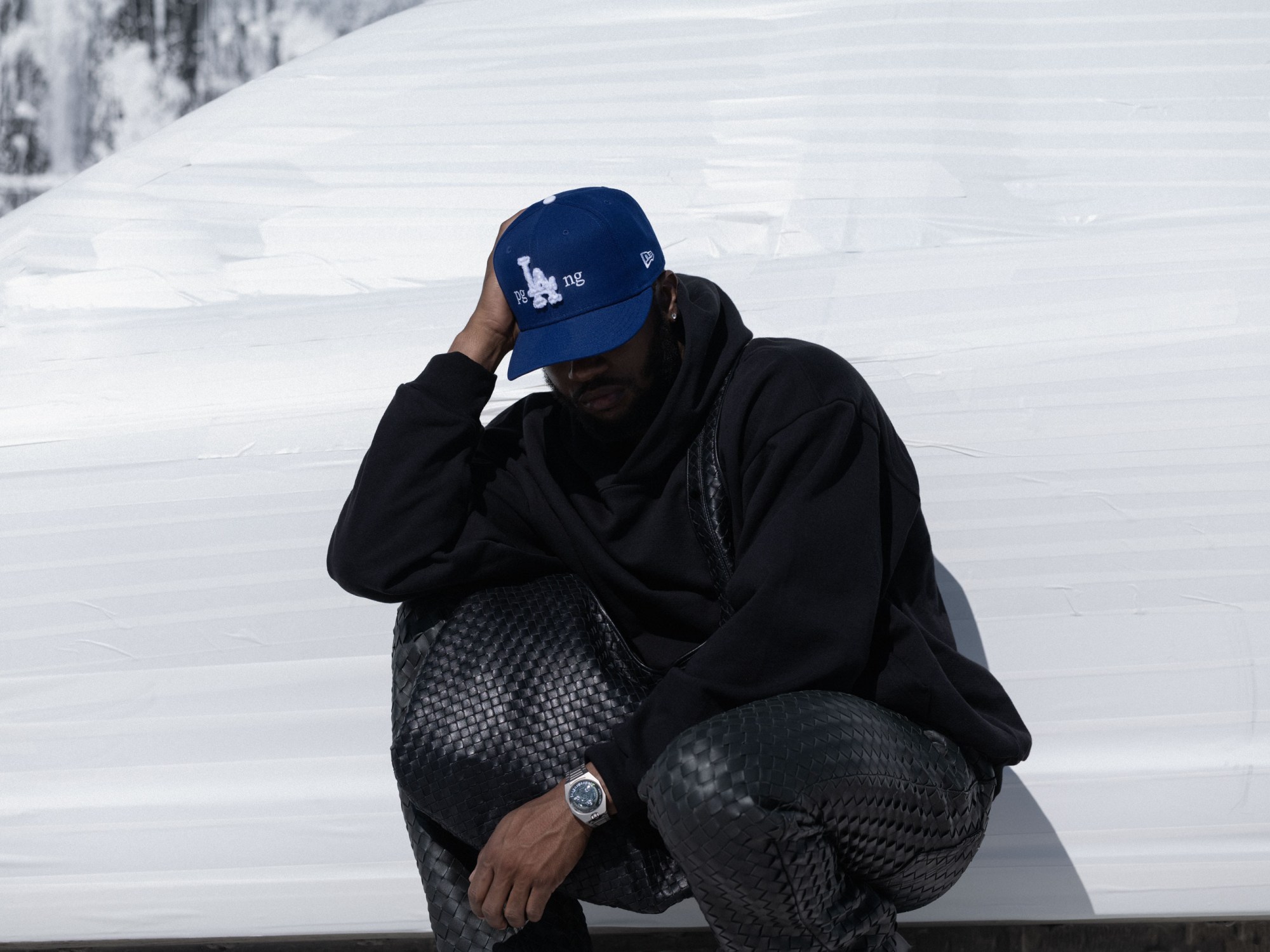
Since pgLang launched, Free says his creative process has become more streamlined. He and Lamar often aren’t in the same place at the same time but after more than 20 years of working together, they’ve grown to trust each other’s instincts completely.
In the wake of number-one singles, Grammy sweeps, and record-breaking tours over the last 12 months, which he says has largely been about “moving in the moment,” Free is now mostly concerned with questions of scale and accessibility. He’s asking: How can Lamar, the rest of their pgLang team, and he reach the biggest possible audience without watering down the message? He tells a story about visiting a museum on a field trip when he was an elementary school kid in Inglewood, listening on as a teacher’s explanation of the art completely missed him. “I just didn’t get it. I felt so disconnected from it.”
Free has carried this experience with him throughout his career which explains his show-don’t-tell attitude. Whether he’s directing a music video, putting Samuel L. Jackson in front of over 120 million people as Uncle Sam at Lamar’s halftime performance, or recruiting LA artist Lauren Halsey to do the tour visuals for Lamar on the Grand National Tour, he remains committed to fleshing out a different perspective on where he came from that first drove him and Lamar to create together all those years ago. “The first question I always ask an artist is, ‘Who is it for?’” Free says. “Once it starts to be ‘for the world,’ it’s for everyone. I can’t shut the door.”
“You can’t just do the music and phone in the creative.”
barber TRELL JONES
groomer STEPHANIE VALETE AT A-FRAME AGENCY
nails EMI KUDO USING CHANEL AT A-FRAME AGENCY
tailor LYDIA JAKUBOWSKA
set design JAMES RENE AT JONES MANAGEMENT
photography assistant EVADNE GONZALEZ
styling assistant AIDAN PALERMO
set assistant RYAN ELLIOT
production THE MORRISON GROUP
production manager ALAURA WONG
production assistant ERNIE TORRES
post production TAYLOR UG
location HUBBLE STUDIO
special thanks HUBBLE STUDIO