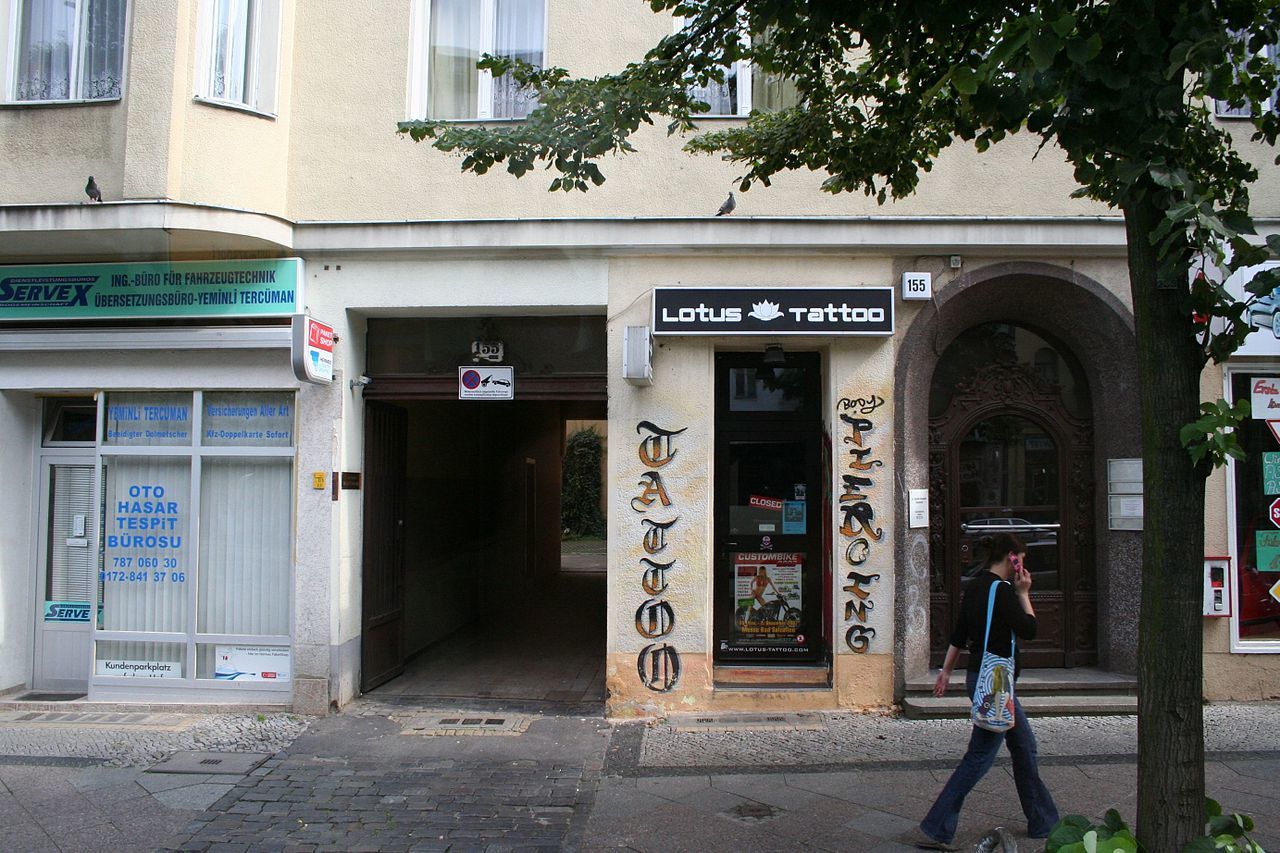
After a rather tumultuous period of living in LA — where he wrote the epic album Station To Station, developed an astronomical cocaine habit, and lived in a state of paranoid terror (stories from a Playboy interview at the time circulated that Bowie was living off peppers and milk in a room full of ancient Egyptian artifacts, burning black candles, and apparently receiving telepathic transmissions from The Rolling Stones) — David Bowie relocated to West Berlin in 1976 to get clean.
It didn’t go too smoothly at first. A famous incident that took place around this time, one that he’d later capture on the song Always Crashing In The Same Car, involved Bowie and Iggy Pop speeding around an underground parking lot until their car ran out of gas.
But out of the tumult, Bowie slowly got his life back together; he got off coke and began plotting a dramatic reinvention of not just himself, but pop music entirely. To this end he recruited producer Brian Eno, discarded the pop and the glam and the costumes, and began work on the Berlin Trilogy of albums: Low, Heroes, Lodger. Inspired by the avant-garde German music scene of the time, the records were some of the most experimental pop records ever made — taking in minimalism, ambient, and electronic music, they summon together an artistic masterpiece from a fractured city and Bowie’s fractured mind.
Now, following his death earlier this year, the city he left his mark on (and that left its mark on him) is recognizing his impact with a porcelain plaque outside his old home in Schöneburg. It’ll be unveiled on Monday by Berlin’s mayor, Michael Müller, and will include a line from his most famous Berlin song, “Heroes.”
Credits
Text Felix Petty
Image via Wikipedia