I need to tell you a sad truth: Most people are too afraid to have style—let alone their own unique aesthetic. From afar, I watched the Fall 2026 menswear shows in Florence and Milan, and I recently joined a small cabal of editors in Paris for an abbreviated week of shows. Conservatism and chicness are everywhere. Nice, indefensible black coats, layered beige clothes, tonally safe layering. Everyone looks nice, but everyone looks like nothing, on the runways and off.
I was jolted out of my sleepwalk through fashion week by Jonathan Anderson at Dior, who produced one of the most challenging, invigorating, and alive collections of the week. Anderson is a pot stirrer. He can’t sit still. He can’t do beige. He can only think big. At one point during a fluorescent-lit 9 a.m. preview, he said, “I think you can buy ideas through commerce.” I promise you, very few, if any, of the other big-league creative directors are even trying to sell you ideas. They are selling you merchandised, thoroughly background-checked cashmere.
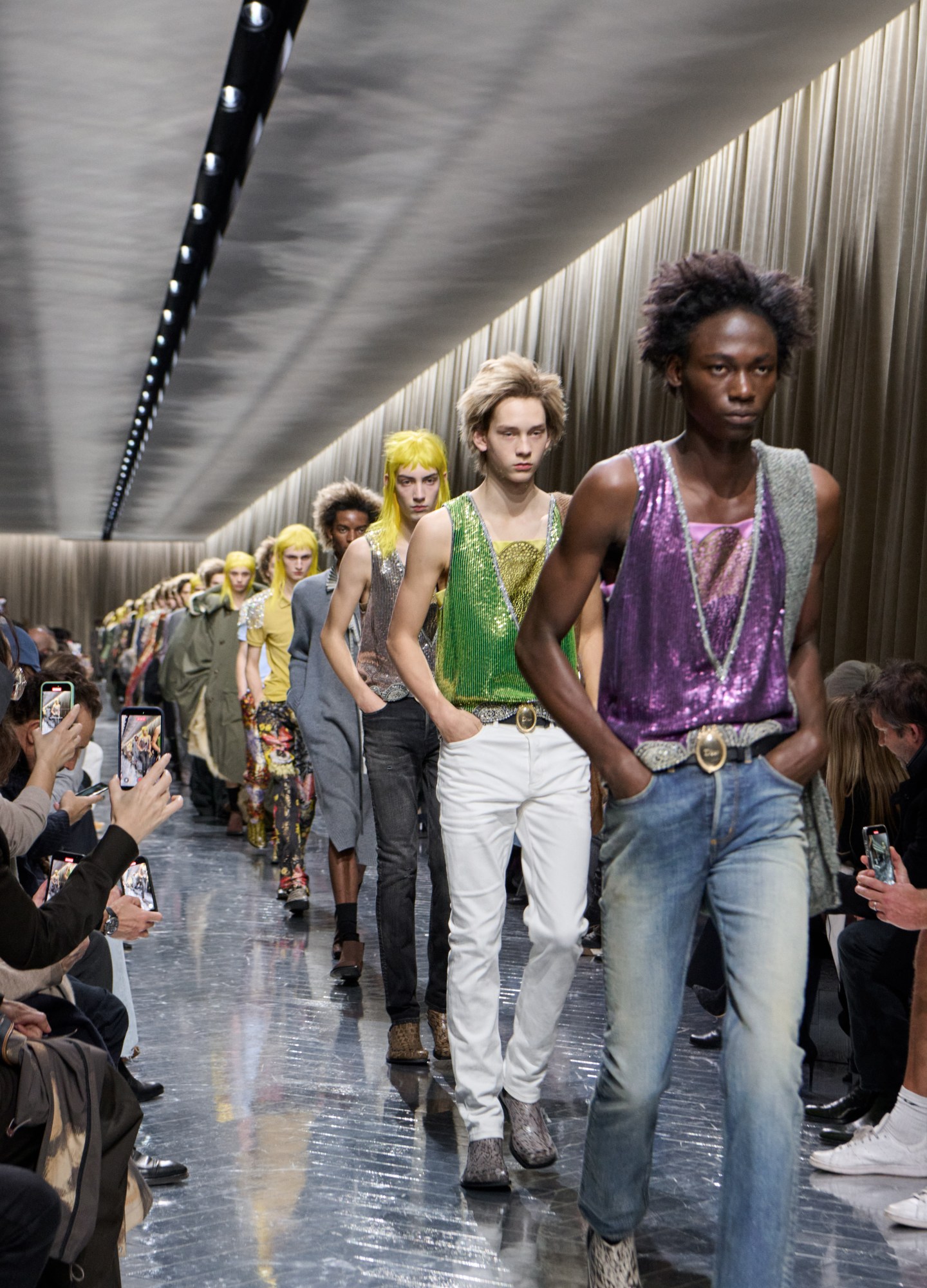
His Fall 2025 menswear show was met by many with a raised eyebrow. What do yellow wigs, sequined going-out tops, and Mk.gee have to do with Dior?
But I think many are forgetting that Christian Dior himself was something of a fashion radical. After Madeleine Vionnet, Madame Grès, and Paul Poiret liberated women from corsetry in the 1910s through the 1930s, culminating in the gamine suits of Chanel, Christian Dior said “non” and shoved bodies back into pert breasts, nipped waists, and hippy skirts with his 1947 “New Look.” It was retrograde, it pulled from history, and it was certainly not what masses were wearing.
Anderson, like Dior, is a magpie designer, pulling together references personal and global to challenge his clientele and push fashion forward. For Fall, a chance meeting with Mk.gee in Los Angeles inspired shrugged-on parkas and skinny jeans, while another realization, that a plaque honoring Paul Poiret sits in front of Dior’s Avenue Montaigne store in Paris, inspired a loose 1930s silhouette, draped silks, and a sort of global mélange of accessories. Those opening sequin tops were handmade in Paris after a vintage Poiret dress because the machines to automate the process no longer exist. Boiled-wool bags and skinny, cropped suiting added to the strangeness of the collection.
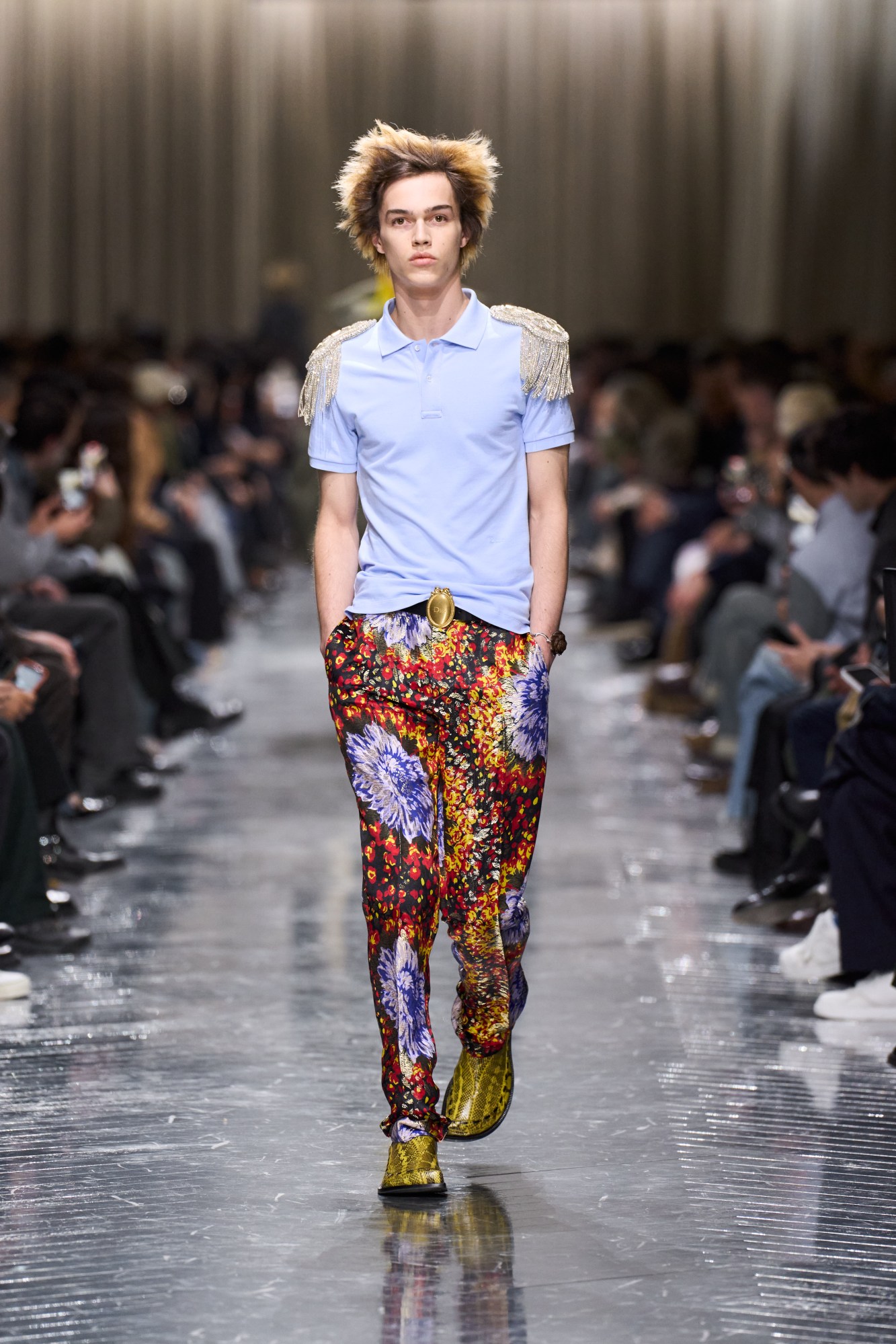
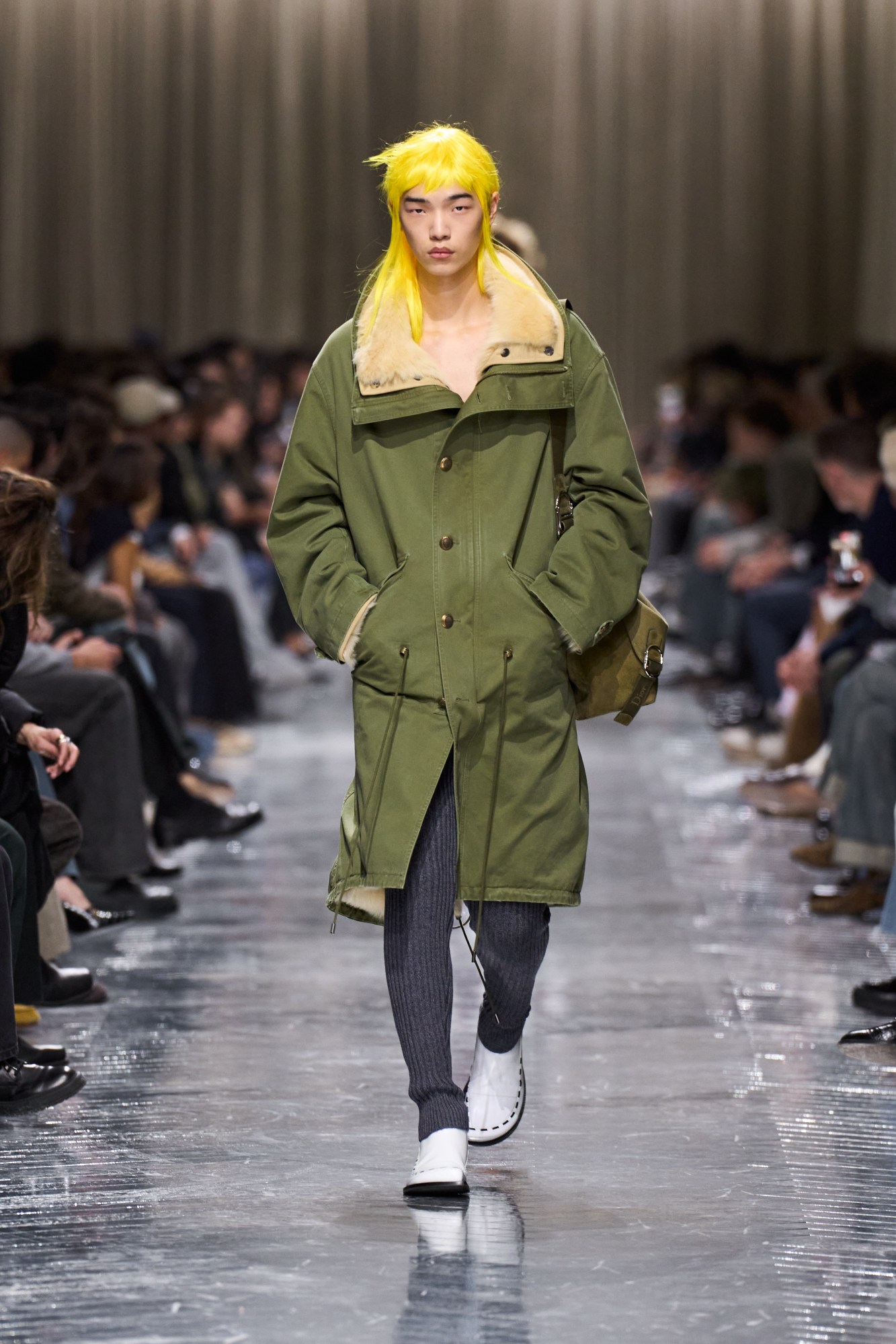
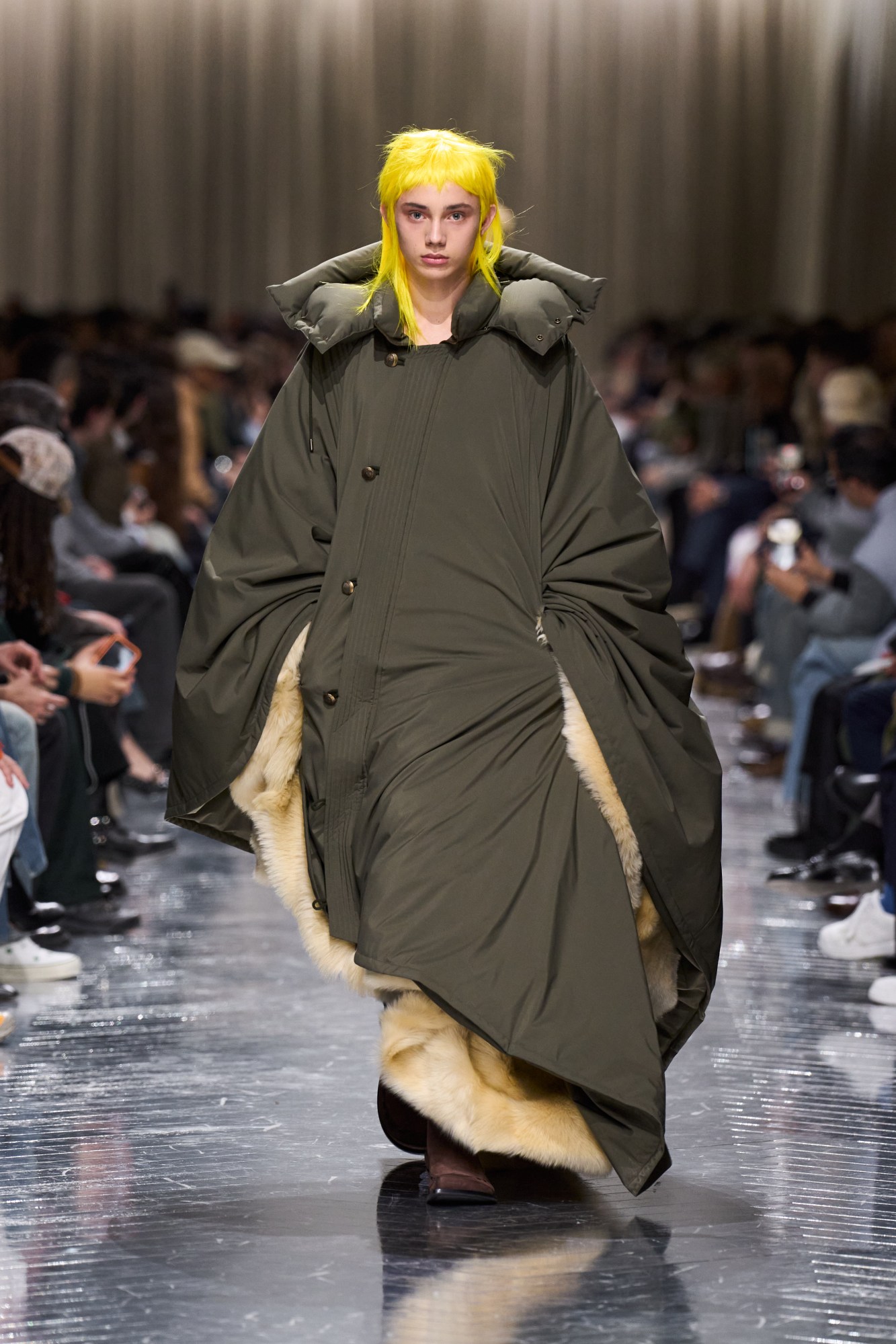
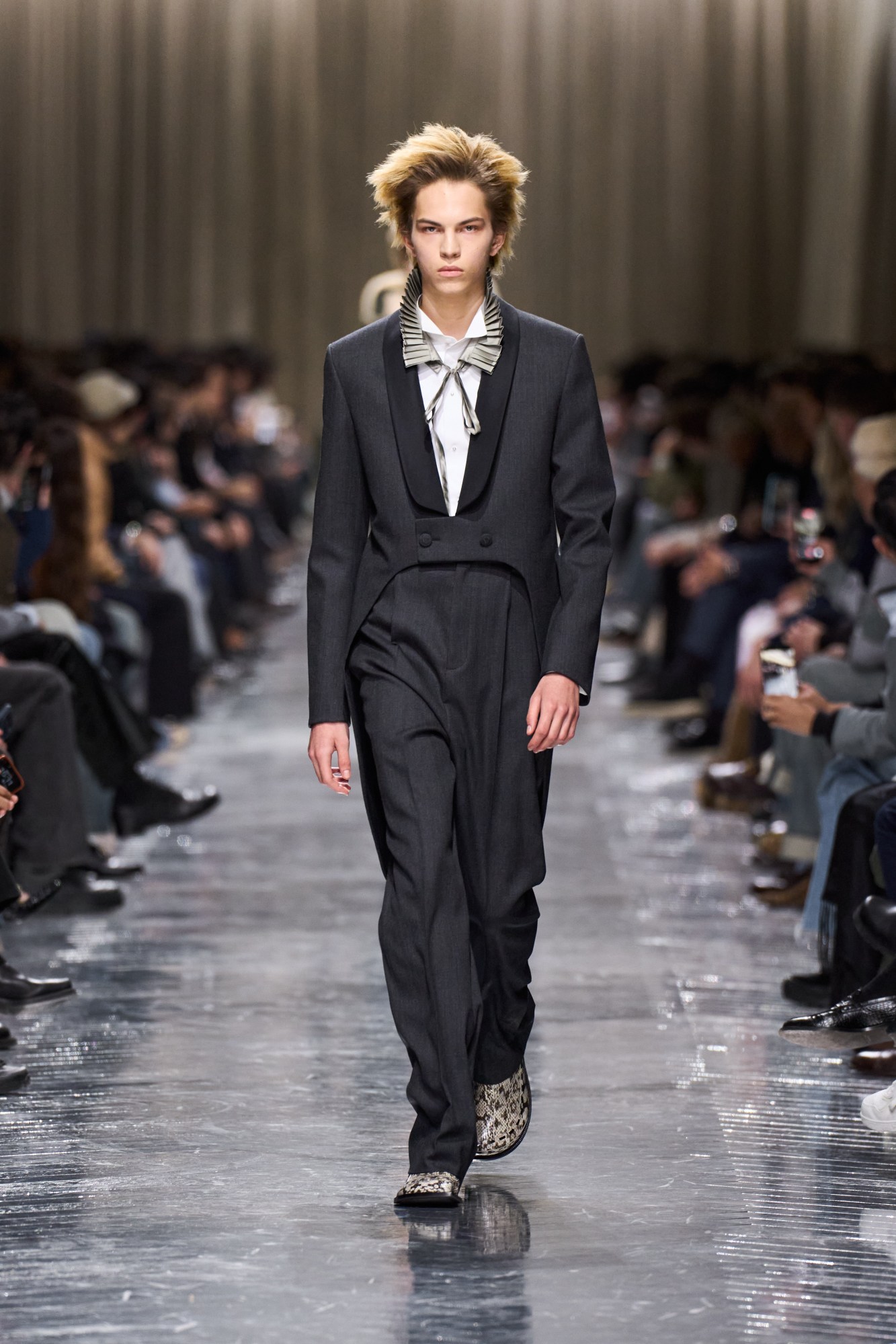
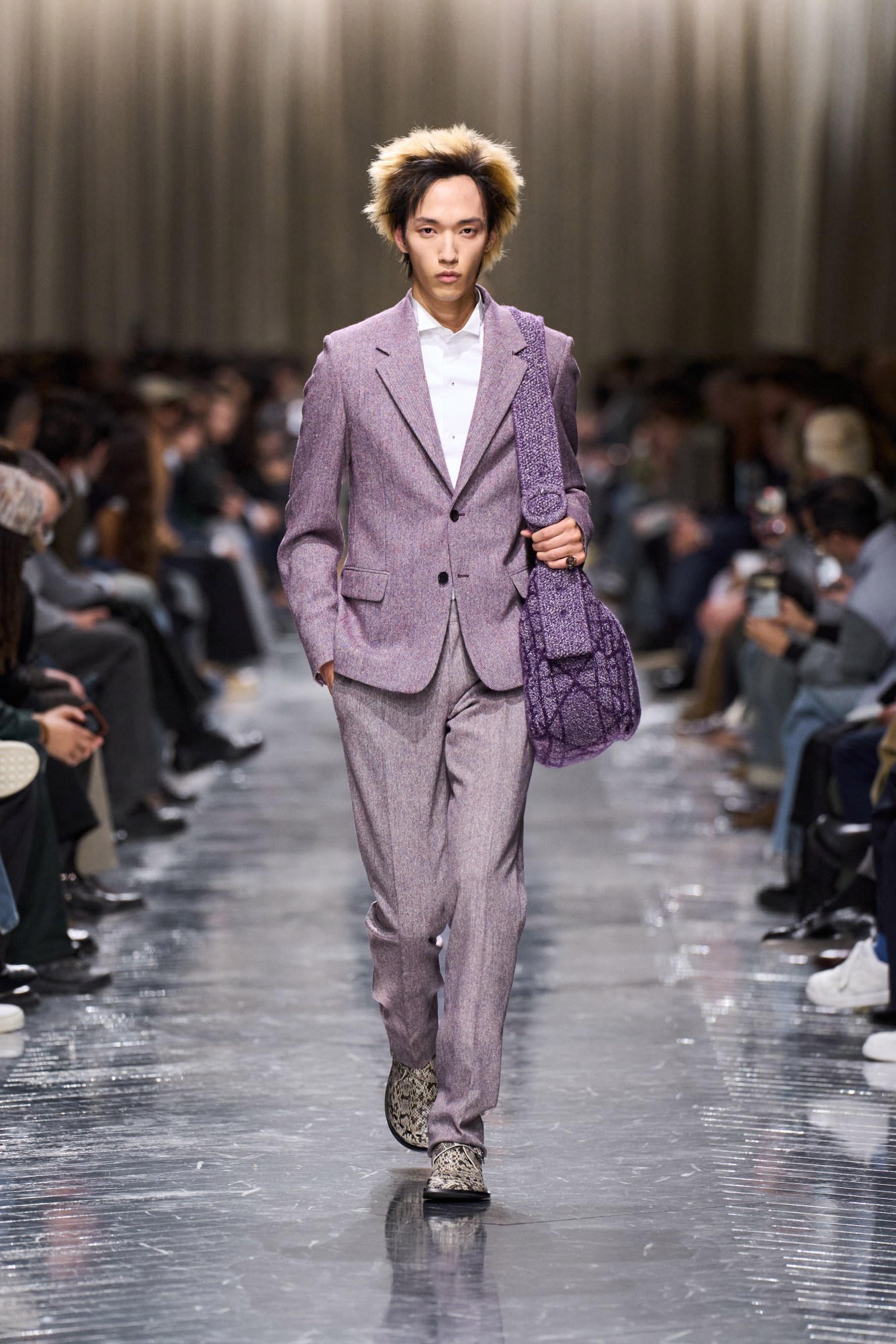
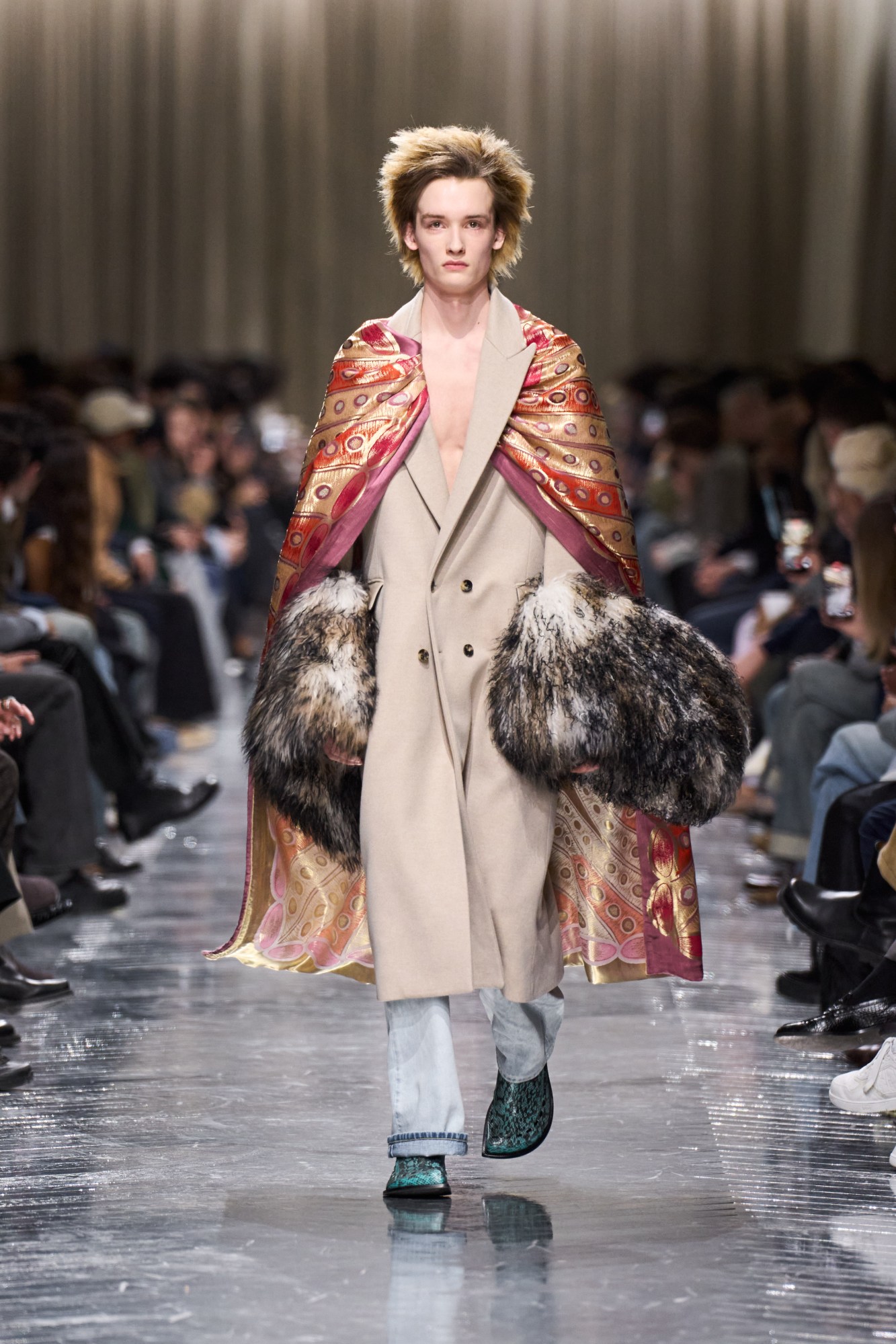
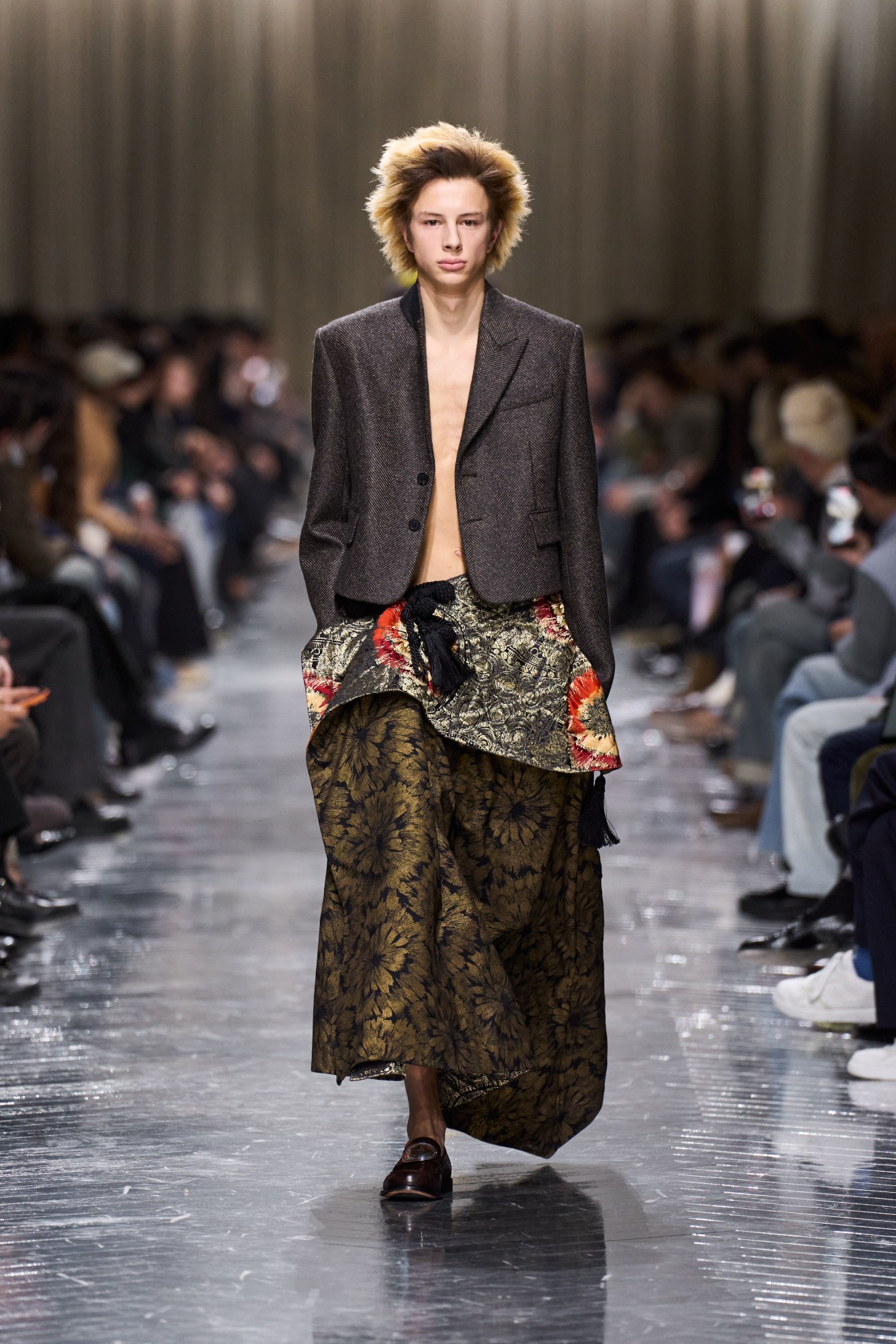
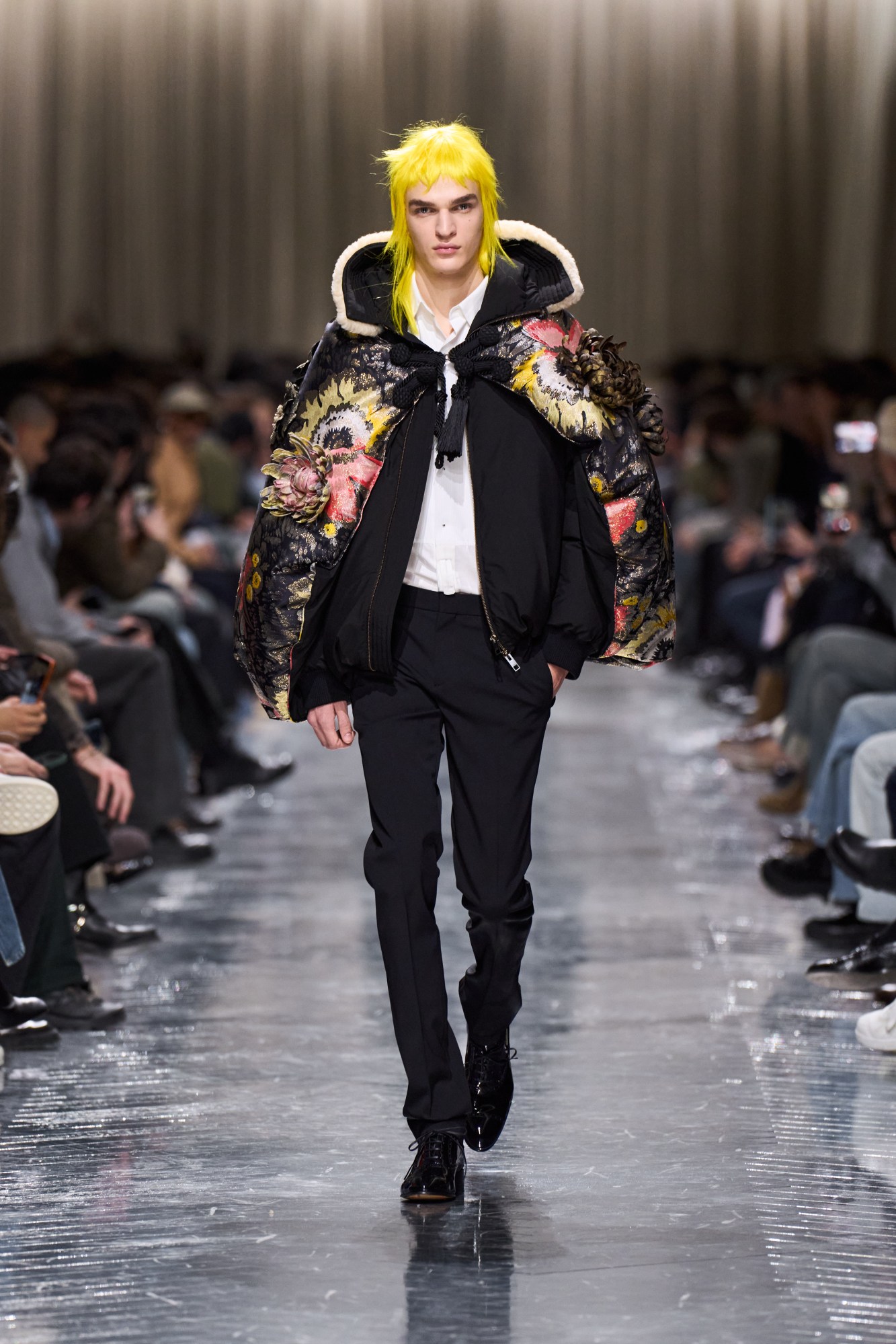
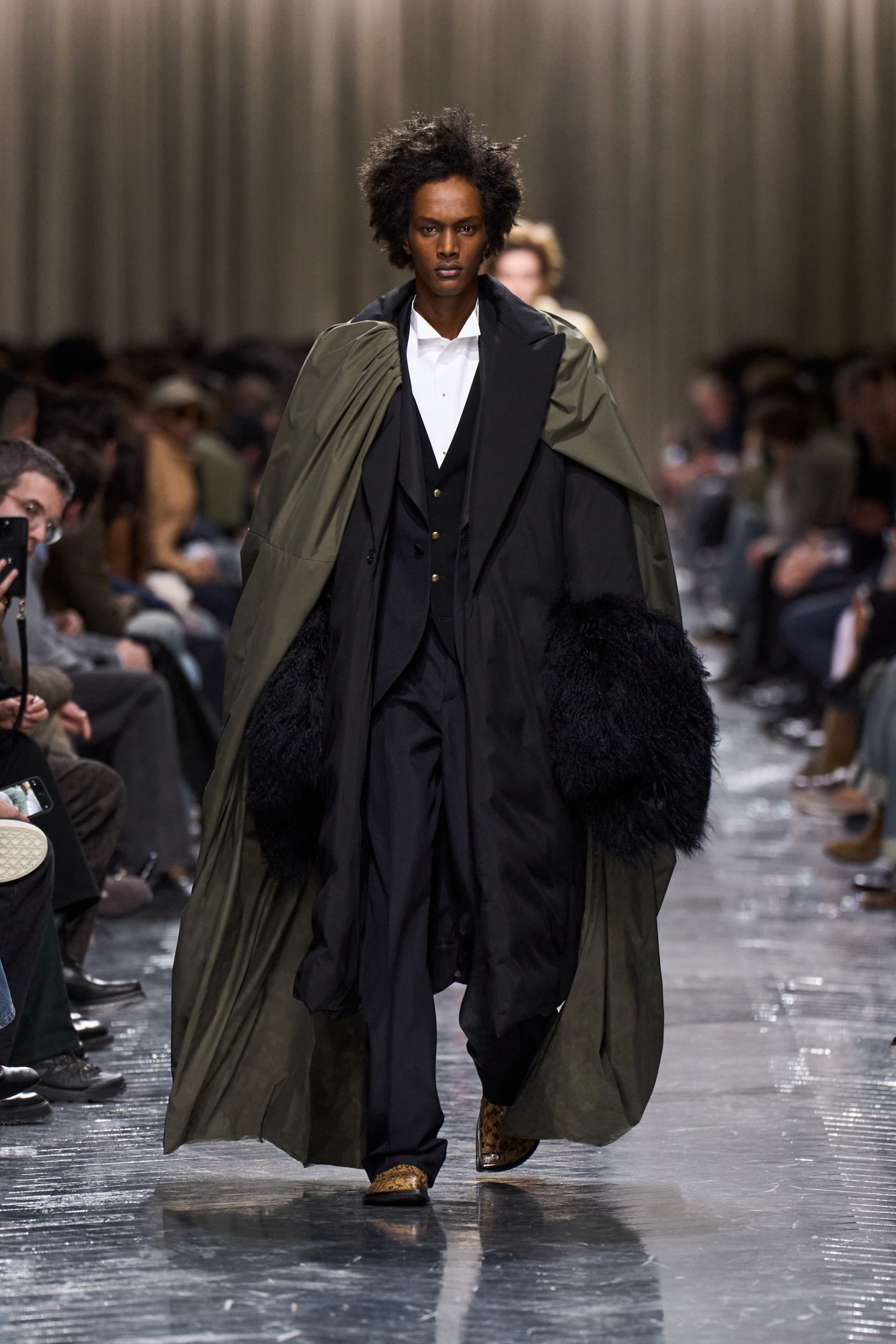
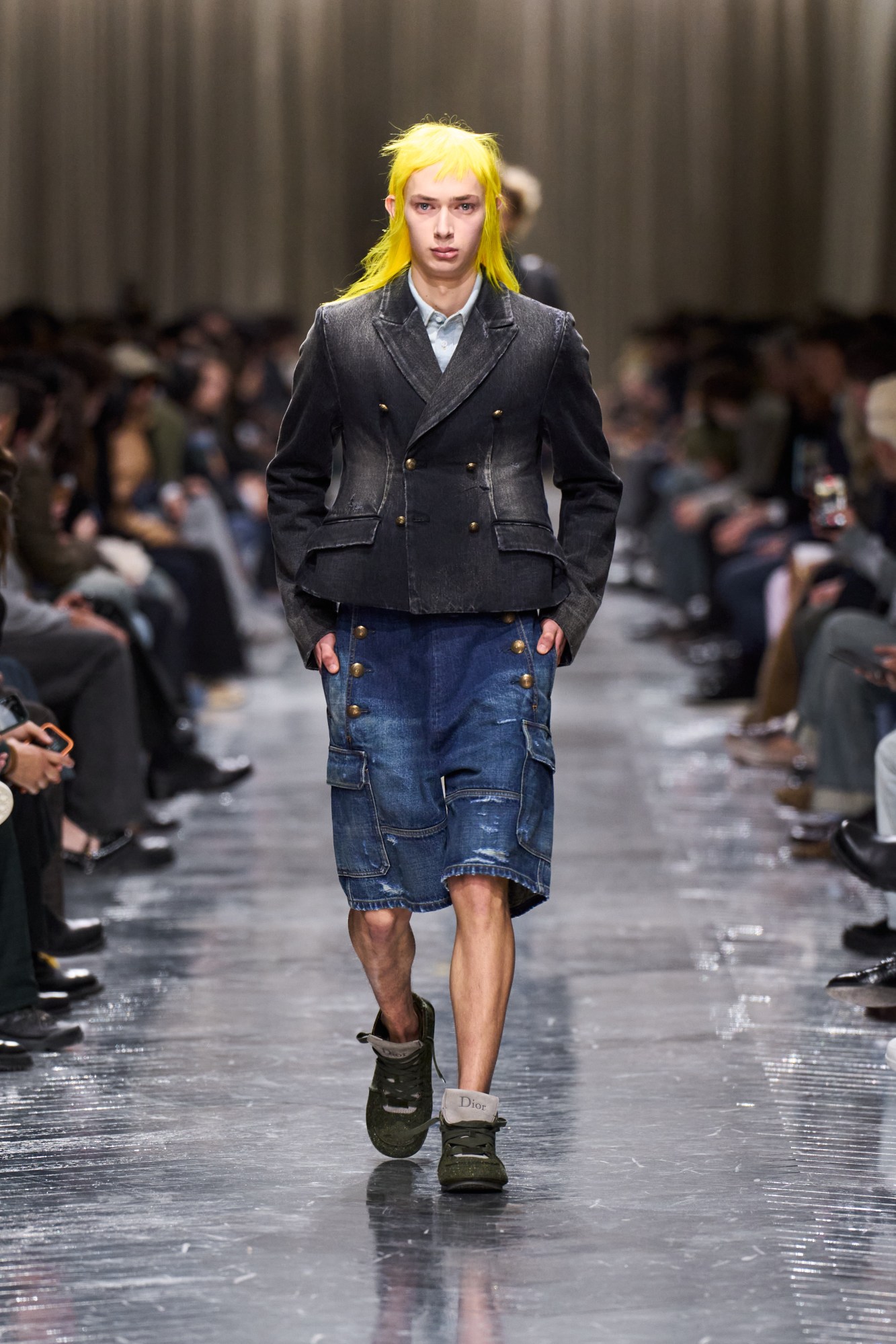
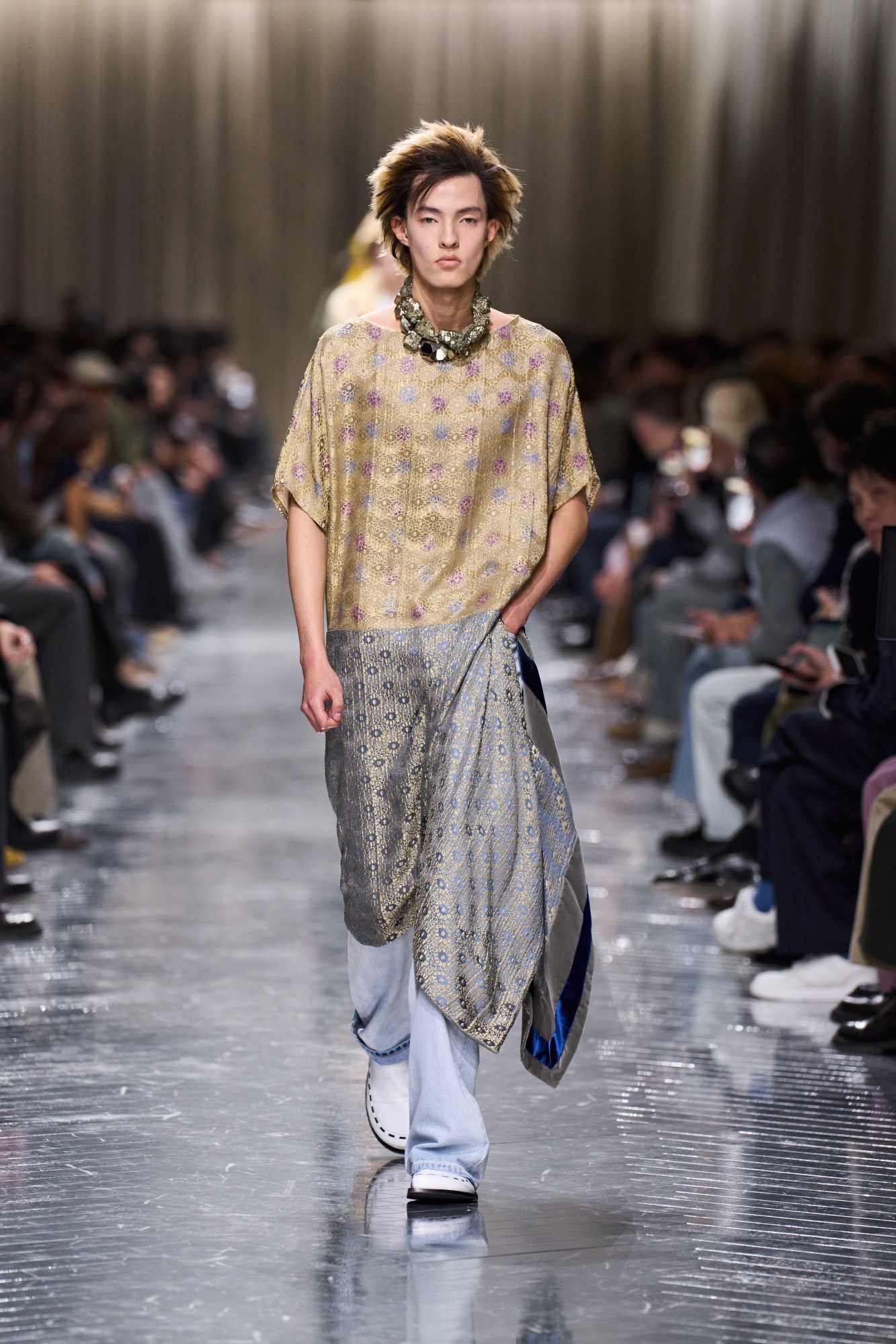
Each model, as he traversed the dark chrome runway, was his own universe of ideas to be bought. There was the good boy, in a New Look-cropped tweedy jacket and brass-button jeans, sort of studious but perhaps a bit awkward. The rock star, swaddled in a puffed robe coat and Pam Hogg wig. Crystal epaulettes on a plaid shirt worn with velvet trousers and snakeskin Cuban-heeled boots… I don’t know, that feels like a look for the international-student son of a deposed dictator. I just don’t know who will wear this.
And I’m glad I don’t. Because it’s become too easy to make nice, inoffensive things for people to wear. Anderson makes collections with brainfeel, collections about the scattered way you intake information from your phone, from the world, from the sky. He can only offer the suggestion. “Fashion shows are about showing ideas,” he said. “The show is built up with this idea of collaging things together.”
I found this to be a delightful collage of big shapes and small ones, of randomness and provocation. I left feeling lighter, wondering how anyone could pull this off in the real world, and looking forward to the delight of figuring it out.