
This story appears in i-D issue 375, on newsstands September 22. Get yours here.
written by STEFF YOTKA
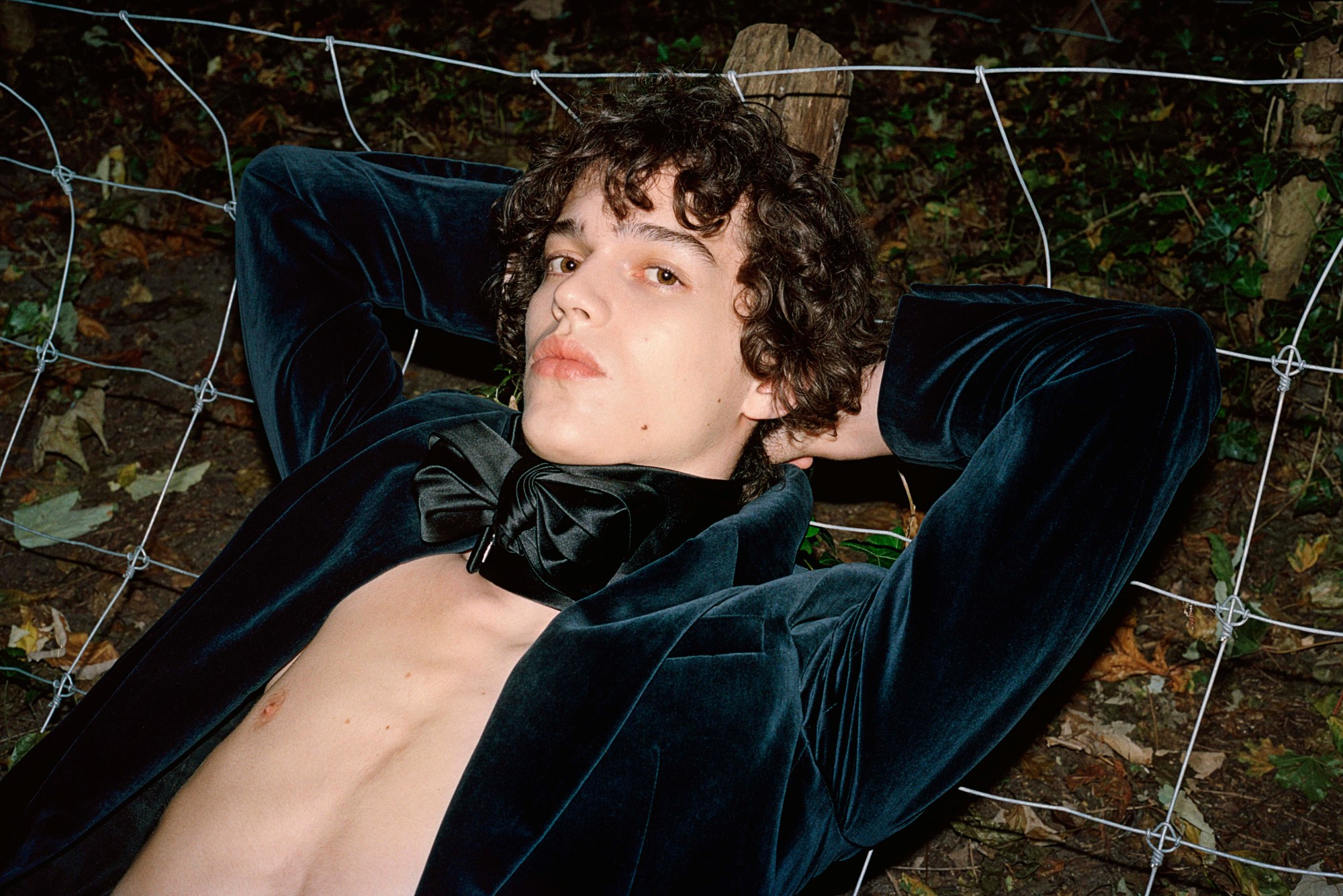
photography MATTHIAS VRIENS
styling JANNIS JELTO WITZEL
When Jonathan Anderson first appeared in the pages of i-D in 2005, he was already over-accomplished. It was his first designer profile—ever—and he’d already established the kind of all-encompassing worldview that would define his career. “Just 20 years old, he’s already experienced more life than someone twice his age. In the last couple of years, he’s relocated to New York from his native Northern Ireland, worked for Prada, completed a brief stint in Midsummer Night’s Dream for Washington, DC Shakespeare Company, and scored a stylist job for Rufus Wainwright,” wrote Lauren Cochrane, accompanying a picture of Anderson on a London street by Angelo Pennetta.
In the 20 years since, Anderson’s modus operandi hasn’t changed—it’s only snowballed, chewing up and spitting out everything from luxury fashion, to arty Hollywood films, to the way we brand products in general. He’s not just a fashion designer—he’s an everything-designer, bending and recurating the world around him to be more beautiful, more evocative, and elegantly stranger. A man with a magpie eye, he has brought cinema, fine art, TikTok memes, and kitsch to his eponymous brand, JW Anderson (launched in 2008); to Loewe, which he took over as creative director from 2013 to 2025; and to his myriad personal projects that range from costume designing Luca Guadagnino films to curating shows of lesser-known British ceramicists like Lucie Rie.
Now, Anderson is taking on a job so big it didn’t even exist yet. In the spring of 2025, he was appointed the sole creative director of Dior, arguably the crown jewel of the world’s biggest luxury company, becoming the first creative leader to oversee the womenswear, menswear, haute couture, and the spirit of the brand since Christian Dior himself. For Anderson, it marks not only the summit of a career in design, but also an opportunity to rebuild the job of creative director to suit his needs—and the needs of an ever-changing world.
Dior’s Spring 2026 menswear runway in Paris on June 27 was his manifesto. Pulling from the lexicons of prep school and period pieces, Anderson composed a serene collection of frock coats, cargo shorts, and pseudo-skate sneakers. Ever the luxury alchemist, he reimagined the brand’s successful Book Tote, embroidering it with the actual covers of books from Bram Stoker’s Dracula to Truman Capote’s In Cold Blood. A Jean Siméon Chardin painting of strawberries was borrowed from the Louvre for its mundane subject and untouchable clout. Rihanna and A$AP Rocky applauded from the front row. Across Paris, over 300 fashion diehards turned up to a dixième dive to watch the livestream.
The show was remarkable not just for its grandeur but for the new message it telegraphed: Enchanting clothes with expensive auras are back, and viral, slapstick fashion is over. The next wave of luxury will be about taste—both having it and living it—through a tight curation of people, products, and, most importantly, ideas borne from the juxtapositions of high and pop culture. Here, Anderson speaks with i-D 20 years after his first turn in our pages about what will keep him going for 20 more.
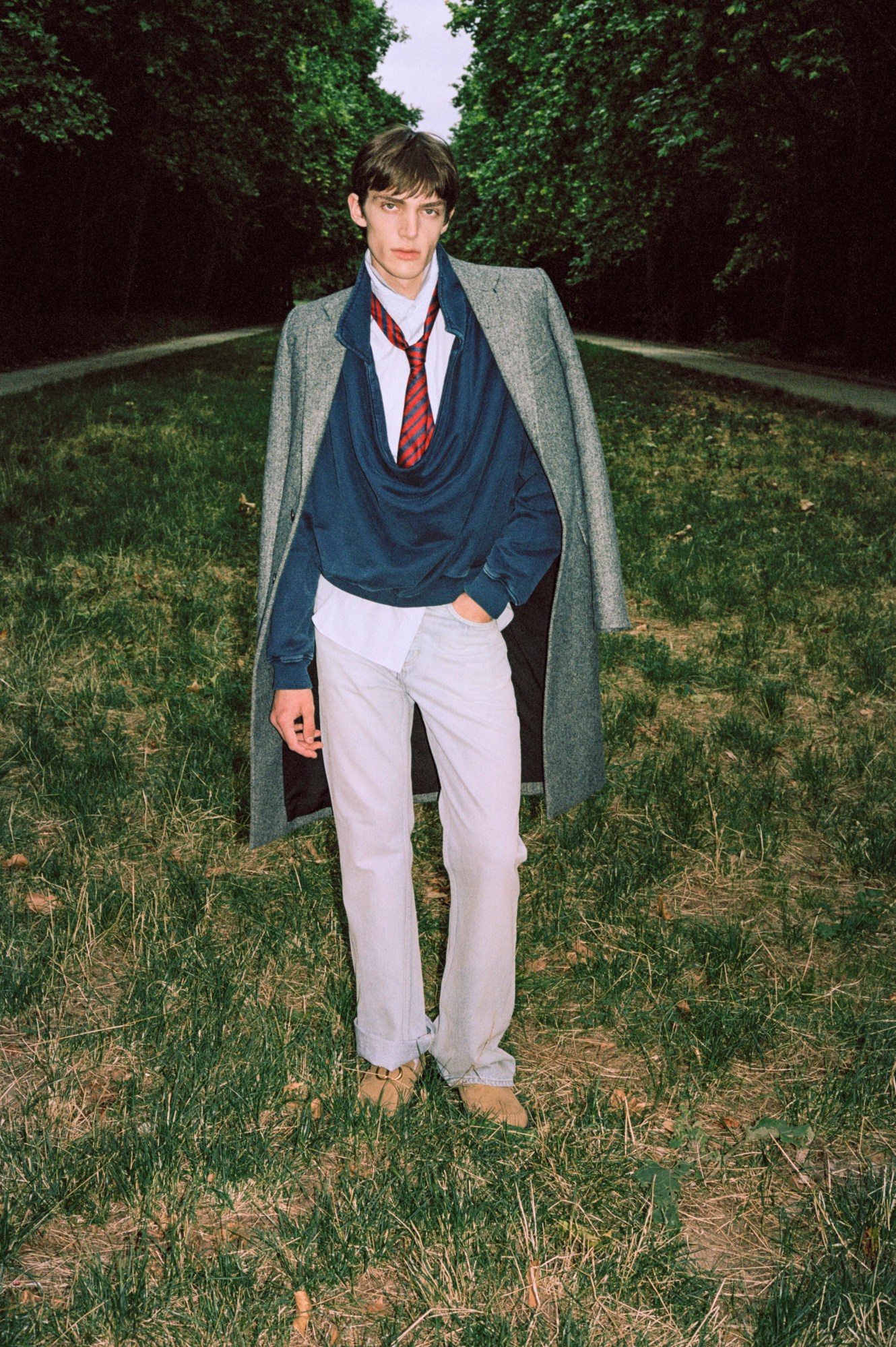
STEFF YOTKA: Tell me about the inspirations and the references in your first Dior menswear collection.
JONATHAN ANDERSON: For me, the opening look is how I want to tackle Dior. That’s how I see it. You’ve got the stock [collar], which is about formality and elongation. The Bar jacket and Donegal Tweed are about my personal relationship to the brand. The Delft dress [a 1948 design by Christian Dior] we cut as cargo shorts, which is ultimately about how we can evolve what is in the past to the present. and then the idea of the sock and sandals is ultimately about personal style.
Then, I want things that are mirrors of things. The idea of the chino with the tie, the shirt, and the backpack——I like the idea that there is some sort of newness found in normality. It’s like a kind of harsh mirror, and I find that there’s more conceptualism in that than the crazy [designs] because it’s more off-kilter. It’s about putting the gas on, putting the gas off. I know what I want from [Dior], and the great thing is me and Delphine [Arnault, the CEO of Christian Dior] get on very well, so we know what we’re doing and I know what is needed in the brand. I know the balancing act that needs to be done. I don’t need to be told. It is a brand that has a very enduring appeal, so ultimately you’ve got to try to work out a way where you are challenging and embracing—challenging, embracing, challenging, embracing. This is how men’s will be tackled. Women’s will be tackled completely differently, and couture will be different than that because each show has to have a different purpose.
Can you give a little tease as to what women’s will tackle and what couture will tackle?
The women’s is going to tackle this idea of hard and soft. I think Dior is a very kind of pure brand—in terms of the historical work that [Monsieur Dior] did, it is very structured. It’s going to be this conflict about leisure-meets-construction and it will be more of a ready-to-wear world. How do we find a contradiction of the sweatpant-meets-couture dress? What is that in today’s society?
The couture will be completely abstract. It’ll be about trying to find newness within form. It might be about art, it might be about things that are experimental with volume. It might not be about the end sale. Couture will become the lab of the brand, trying to carve out newness.
You’ve spoken about style a lot in relation to the menswear show. Style has overpowered fashion in pop culture, this idea of having personal style and telegraphing something through personal style. How do you approach style through a brand as big as Dior?
Ultimately, you can never say to the consumer or to the public, “This is how to wear it.” That’s the joy of fashion to me. I think what you’re doing is you’re setting up a template of what is in your club. Do you want to be in my gang or do you want to be in their gang? I think branding has always been about that. But I’m fascinated by this idea of: How do you sell the aristocrat? It’s an odd thing: We love the aristocrat, but we hate the aristocrat. We love elitism and then we hate it. Fashion is about conflicts of two things. That is where you can find newness, and that’s what I’m excited about at the moment.
“We love the aristocrat, but we hate the aristocrat. We love elitism and then we hate it. Fashion is about conflicts of two things.”
jonathan anderson
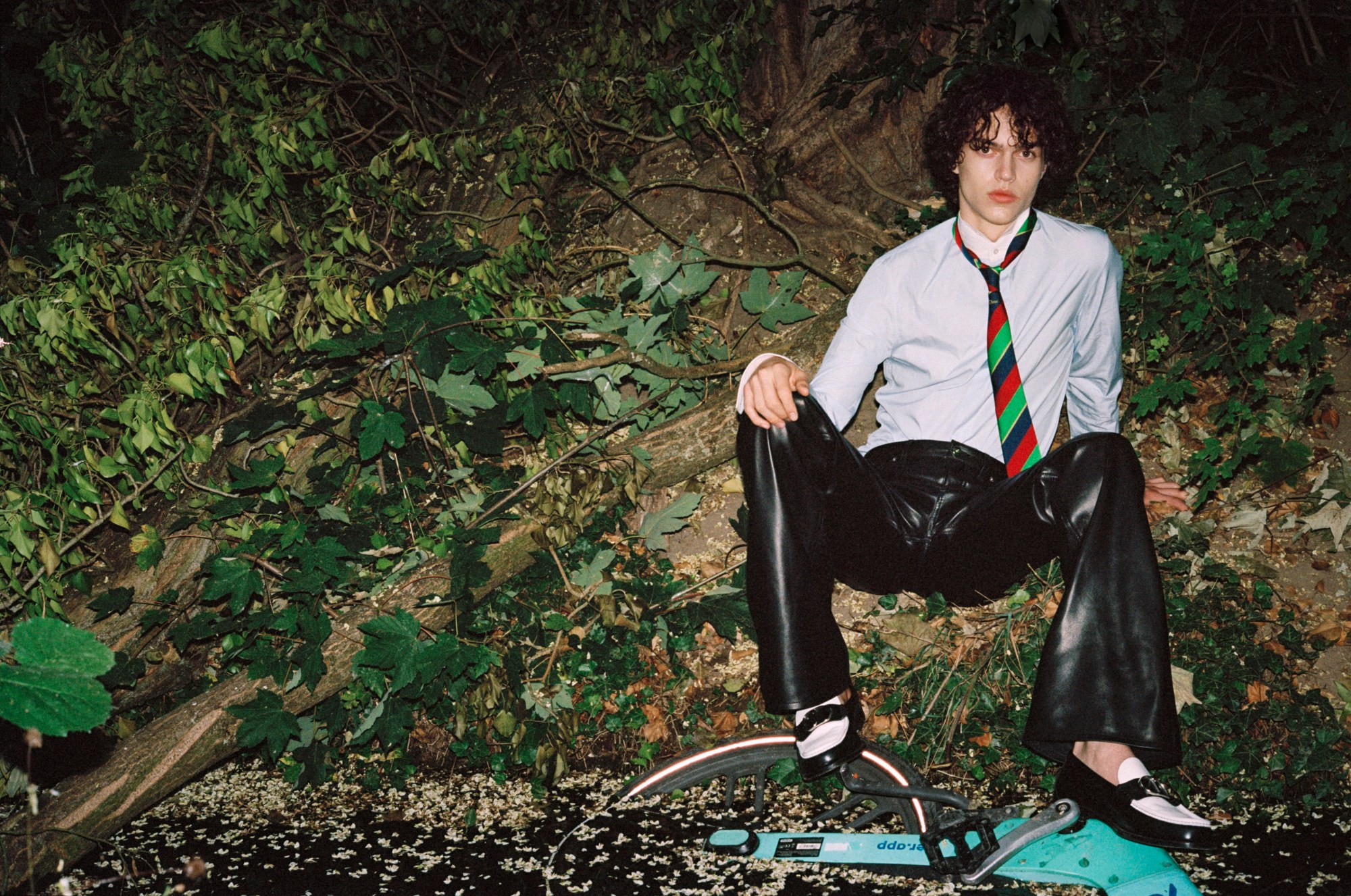
The first pictures you released at Dior included an old self-portrait of Theo Wenner, as well as Andy Warhol Polaroids of Lee Radziwill and Jean-Michel Basquiat. Why did you want to start with re-appropriated imagery?
Anytime I do a new project, I always like to start with something that does not belong to me. I like this idea of a detachment, something where it’s about a mood, about how I feel. I’ve known Theo for many years and I have always loved that picture he did for Arena Homme +. I liked something that was about the person more [than the fashion]. Lee and Basquiat… it was to break a code inside Dior. Christian Dior was very good at archetypes—he could have a show of 60 dresses and each dress would be completely different.
I wanted to set off from the get-go this idea that Dior is going to become more about style rather than about an archetype. I wanted something where insiders would understand who it was, but an external person may not even question it as a new image.
When you’re dealing with a brand of this scale, the key is that you are not just talking to the fashion audience. You have to go outside of fashion because if you don’t, you are courting the courtable. When you go out to mass audiences, you’re trying to slowly get them on the journey. They’re going to be the biggest judge because they’re going to be the consumers.
“If you don’t like it, go somewhere else. That’s what luxury is today.”
jonathan anderson
How do you court a mass audience? In your debut, for example, you had everything from Jean Siméon Chardin paintings, to Truman Capote books, to Yung Lean songs.
I’m trying to work out things that oppose each other. Ultimately, it’s about taste level. It’s about saying that these things are curated things with a taste level that is able to break the cycle. We’re in a very odd period in fashion because it has become even more part of public culture. There’s no anonymity about it anymore.
I think if the pandemic had never happened, the change in fashion would have happened before. The pandemic was a kind of false sense of illusion because ultimately you [could] sell anything—the expansion within brands was huge. Now we’re in a period of reconsolidation and working out the purpose [of fashion]. I’m trying to work out what the next couple years will be about: Why is Dior still part of our imagination still to this day?
You mentioned taste level. How do you describe the taste level of your Dior?
I’m going to revert to the brand. I’m not going to be scared of using what Dior had done. I want to go back to that: My edit of Dior. It’s also about the narrative of taste between men and women, how we wear clothing, how that wardrobe can be shared, because we are in a modern world now, and we have broken down many boundaries in terms of men’s fashion and women’s fashion. It’s not about siloing things, it’s more about just about: You either like it or you don’t. When starting with these first shows, I’m kind of adding these layers.
A cumulative story is so much more rewarding, but I worry sometimes that people have such short attention spans nowadays.
I think we have to remove ourselves from the idea of social media versus reality. It’s sort of like: Everyone hates everything online. It’s the story of the generation. It’s easier to sit on the sofa and hate something than actually be constructive about things. As you get older, you start to realise that there is a detachment for the consumer from the internet. For me, it’s sort of like: If you don’t like it, go somewhere else. That’s what luxury is today.
Where do you find feedback that you really take to heart?
Really, it’s in sales. It really boils down to that because you’ve got to convince people to go in the store and emotionally purchase something that makes them feel good. For me, this is the biggest reward. I think sometimes we wash it with some sort of romance, but at the end you want to get people emotionally invested in something that they are willing to purchase. I think this will be [a creative director’s] merit because ultimately it is the hardest part.
“Mystery does not work in mass.”
jonathan anderson
Ages ago, we were talking about your work at Loewe, and you said that your job is 70% marketing—or 70% everything else besides sitting in the design studio, conceptualising collections, and fantasising. Is that still true for you?
The fashion show is really one tiny component to the whole thing. It’s for brand awareness. If any designer thinks that they’re not going to be aware of or involved in a huge percentage of this—it will not work. There is no such thing as the humble designer locked in a room sketching because fashion is no longer this table business. When you look at the very big brands, like Gucci or Chanel or Ralph Lauren or Burberry, they’re juggernauts, and they take massive teams to make them work. Even at Loewe—it is big, big work.
You’re aiming at the fashion show, but then you have to be able to tell that story on multiple platforms. You have to be able to sell it globally in hundreds of stores and you have to be able to get the message from the runway through the entire point of sale. So I think if you were spending a hundred percent on just being the creative genius, then you would be talking in a vacuum. For me it’s about trying to get a team of people going in the right direction. It’s like being a coach.
Is there a mantra or a mission statement that you give people on your team? You pull the curtain so far back. I thought showing the guests in the car on the way to the show was the most genius evolution of having celebrities attend fashion shows.
Mystery is great for a 200-million-euro business. Mystery does not work in mass.… it’s about trying to get the audience in. For example, with the Dior men’s show, we had over a billion views. We had 200 million viewing live, globally. It’s entertainment. Fashion is entertainment. I think there’s a way to make it personal. I want to be able to show the celebrity; you want to see them at the wrong angle. You want to see them getting into the car. We are doing this kaleidoscope of different things, which ultimately is selling you what you’re going to see [on the runway], so you’re part of the greater journey.
This is a very strange thing to say, but I do think fashion is going to be a war of words now. We’re entering into a moment of words because we are trying to get the hook. What is the hook of these brands? Things move so fast now and we are at peak cancel culture—we are scared to be artistic without feeling cancellable. People are self-censoring, which means that creativity becomes a bit more mundane, ultimately, because we’re scared to intellectually challenge people. Or people don’t want to hear it. And even the intellectuals don’t want to hear it, so it’s even more concerning.
When you say a war of words, what do you mean? It feels, to me, like pop-cultural literacy is at an all-time low.
That’s what I mean. Words boil down to the lowest common form. therefore, to be able to tell a narrative, it is about finding new words. Brands have to find new words to decode what they mean today before you even go into product. Dior is a word, Gucci is a word, Chanel is a word.…You’ve got to really rework the purpose of the brand as a word before you can rework a product.
So you’re asking: What does Dior really mean on paper?
This is why I think now can be an intriguing moment. We have very high hopes, but at the same time I do think we are going through a very complicated situation. We have a [financial] contraction happening globally—and that’s not just in fashion, it’s happening in cars, it’s happening in housing, it’s happening in everything—but I believe that something will come from it. I think we may have to readjust what we expect.
“Don’t be too conservative. Think big and think abstract and don’t worry about being the good guy.”
jonathan anderson
Your appointment at Dior is happening in a moment so many other creative directors are joining different brands—it feels like the whole fashion industry is having this sea change. Do you feel a part of that?
I’m thinking: Who’s standing in five years? … There’s this generational move that is happening with designers. I am selling to my peer group—it is the forty-year-olds selling to forty-year-olds. This is where it can be quite dynamic because it can be either antagonistic or it can be supportive. When you’re speaking to your own demographic, that is the consumer, you are trying to work out a way to understand your age demographic and understand how to encourage [existing customers], as well as recruit [new ones]. So this is going to be the interesting thing: Will this generation of peers support each other or will this generation not?
Are there qualities that you associate with our generation that you feel excited to incorporate in your work?
The thing that I think is exciting about our generation is that we do remember a moment where there was no internet. So as much as we have to use the internet, we have a detachment from it. … Now, you are born into swiping. So, this I think will be interesting. But then sometimes I think—[laughs] well, I include myself—we can be too moralistic. We want to be heroes and it doesn’t work that way.
But that’s also such a pre-internet idea—you didn’t know everything about everyone before the internet, so you could have heroes. Kurt Cobain could be your hero because you didn’t hear from him every day.
Never read the tea leaves, never write the future. I do think we are living in such an interesting moment. I was doing research on the history of designers that went to Dior, and each time a designer went into Dior there was a birth of a new media. It could be the birth of the tabloids, the birth of Instagram, the birth of the internet, the birth of the radio, the birth of the newspaper, the magazine. I was thinking there is no new media. We’re entering a period where there is no new media and AI is growing at an alarming rate. We all kind of are pretending—
—that it’s not.
I feel like we are going to enter into this period where we don’t have new ideas because we’re kind of feeding off old ideas, or we enter a period where it becomes so fast that we hit the AI revolution—god knows what that means. But I don’t think we can be scared of it. I think we have to be aware that things will change and as every kind of technology comes in, it gets faster and faster.
Now, a couple of fun questions. The first time you were ever in a magazine as a designer was in i-D in 2005—did you ever imagine that you would be here doing this?
Not at all. I remember that shot very well. It was in Bermondsey Market, and I was making jewellery at the time. I think Fran Burns was the stylist. I would never imagine that I was at Dior right now when I look back at the picture because I feel like I was a different person. It was the first time I ever was in a magazine and it was such a big deal when it happened. When you are in a magazine, and then under your face there are words that say you are a designer—it’s official.
What advice would you give to the 20-somethings and teens that are at that point of their journey in fashion today?
Don’t be too conservative. Think big and think abstract and don’t worry about being the good guy. I think today we have to challenge things and not compromise on an idea just because the rest of the world is against it. Sometimes it’s really better to work for a brand than to start one. Sometimes you have to learn in a brand and learn how a brand operates before opening a brand. I wish I had done that.
Who do you feel like you’ve learned the most from?
My best friend, Benjamin Bruno. He keeps me very much on the ground, and I think he’s one of the best artists in the world. I love working with him. We have been friends for years and I know how to push him. He also pushed me. I think we learned through that.
When did you first work together?
14 years ago. I think once you find that creative partner, you have to stick with it, through thick and thin.
Twenty years from now, what do you want to be doing?
Twenty years from now I don’t want to be in fashion.
At 60 years old?
At 60, I would hope not to be in fashion. For me, it’s all or nothing. If I’m going to do the job, it’s until the job is done, and then after that, I don’t know. I feel like I could just be a gardener and enjoy life, but I love to work.
I want to guarantee to you—and we can fact-check this, God willing—that in 2045 you will be doing something that is not just being outside gardening.
I think with creativity, you can have a time and period of time to say something—and it’s not being ageist, it’s just personal to me. Some people are really good at continuing [for their entire lives]. I’m way too vain. [Laughs.]
You’ve got a long way to go! ’Til then, I’ll see you at the women’s show.
See you at the show.
This interview has been edited and condensed.
models CRUZ KAHLBETZER & HECTOR HERODY AT NEW MADISON MODELS
hair RYO NARUSHIMA USING BUMBLE AND BUMBLE AT TOTAL WORLD
makeup SHANA MONTIER
casting director AFFA OSMAN
styling assistants BOHDAN PUZYK & GUILHERME CEVIDANES
production THE MORRISON GROUP
production manager ALYSSA CLARKE