
In fashion, looking fresh is the default. Which makes it all the more interesting to think about the part mess and imperfection play in fueling the industry. Think of everything from those artfully scuffed Golden Goose sneakers now sanctioned for the school run, to JordanLuca’s piss jeans—an instant sell-out in 2024—or Burberry’s mud-caked Glastonbury runway for Spring 2026.
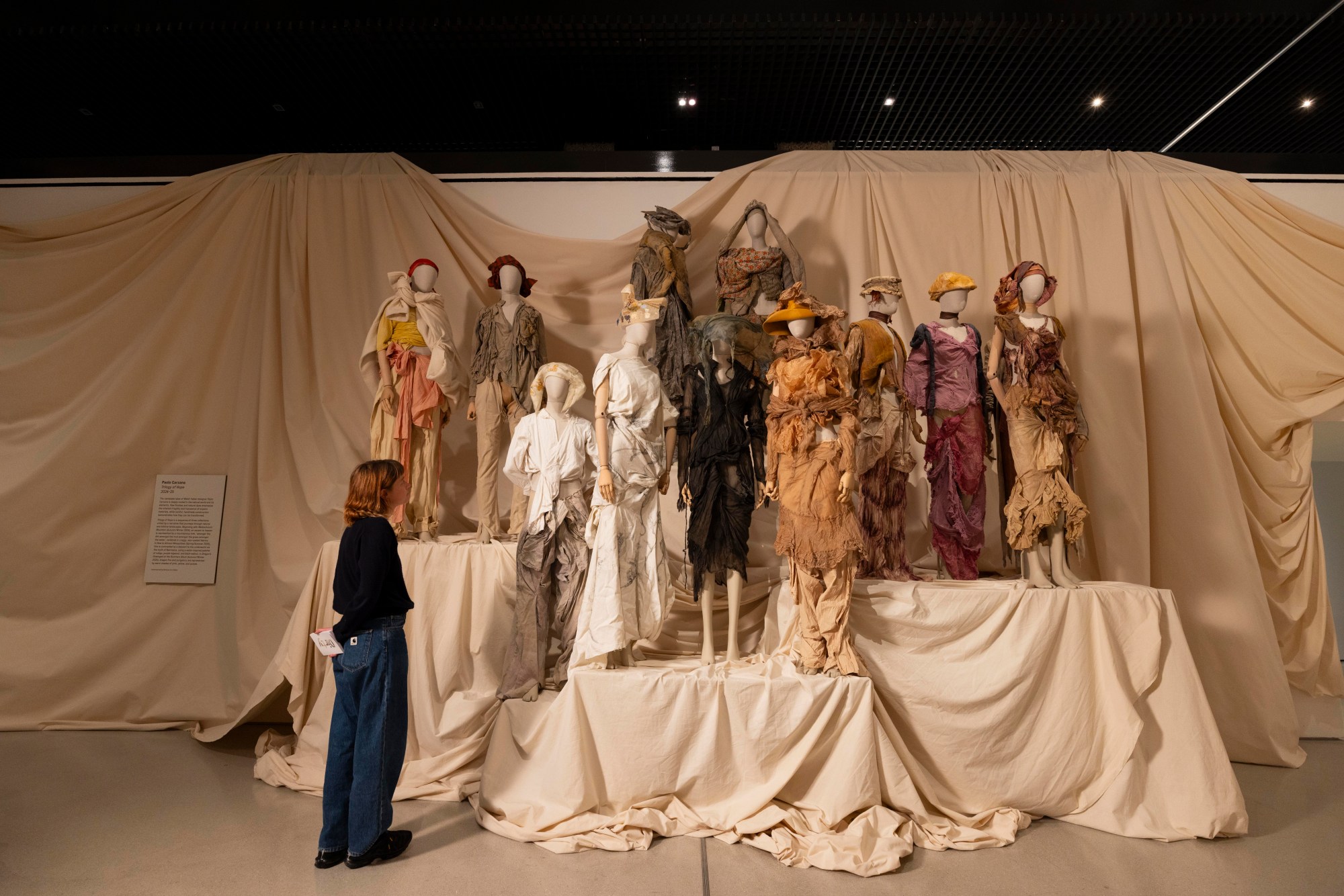
That dirt is the focus of “Dirty Looks,” the Barbican’s cannily named new fashion exhibition, its first in seven years. The show includes everything from Hussein Chalayan’s graduate collection that was literally buried in the garden, to Paolo Carzana’s natural dyes and Vivienne Westwood’s Nostalgia of Mud. Here are seven moments when fashion went full Christina Aguilera—and was all the better for it.
Keeping it clean—until it got dirty.
Karen Van Godtsenhoven, curator of Dirty Looks, points out that fashion’s fixation with appearances has deep historical roots. “Since the Enlightenment, the whole thing about respectability and being modern is also about hygiene and looking clean,” she explains. “The white shirt, of course, is the most telling example of being a respected member of society.”
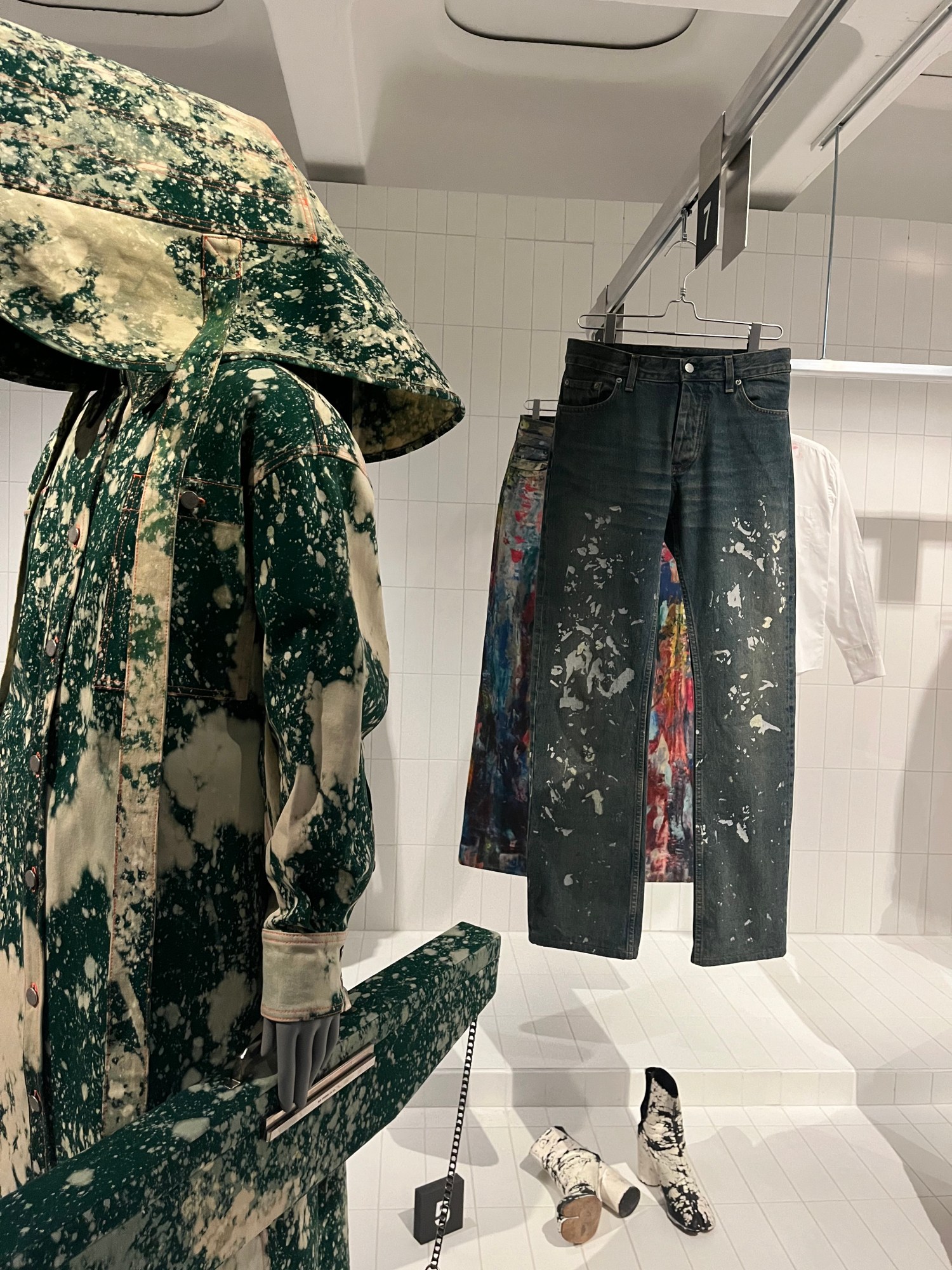
Now, that standard has flipped. “Torn denim is now designer denim, where the work that has gone into it becomes a new type of craftsmanship,” she argues. “It is the new pinnacle of luxury.”
Vivienne Westwood: early dirt advocate.
In 2017, the designer quipped that her secret to staying young was only bathing once a week. That relaxed approach to cleanliness began decades earlier with the aptly titled Nostalgia of Mud collection in 1982, created with Malcolm McLaren. The title itself was lifted from Tom Wolfe’s 1970 essay Radical Chic, a phrase describing a yearning for rural life among the urban elite.
Part of the collection’s inspiration came from McLaren’s trip to the Appalachian Mountains—“there are some great pictures where he is herding cows and things like that,” notes Van Godtsenhoven. The result was a back-to-the-land, get-your-hands-dirty kind of dirt. Yet, as the curator cautions, elements also veered into cosplay and even appropriation of traditional Latin American dress. Still, the impulse was clear: “there is this longing for simpler lives…a rejection of industrial and capitalist or consumerist notions. That is also a common thread.”



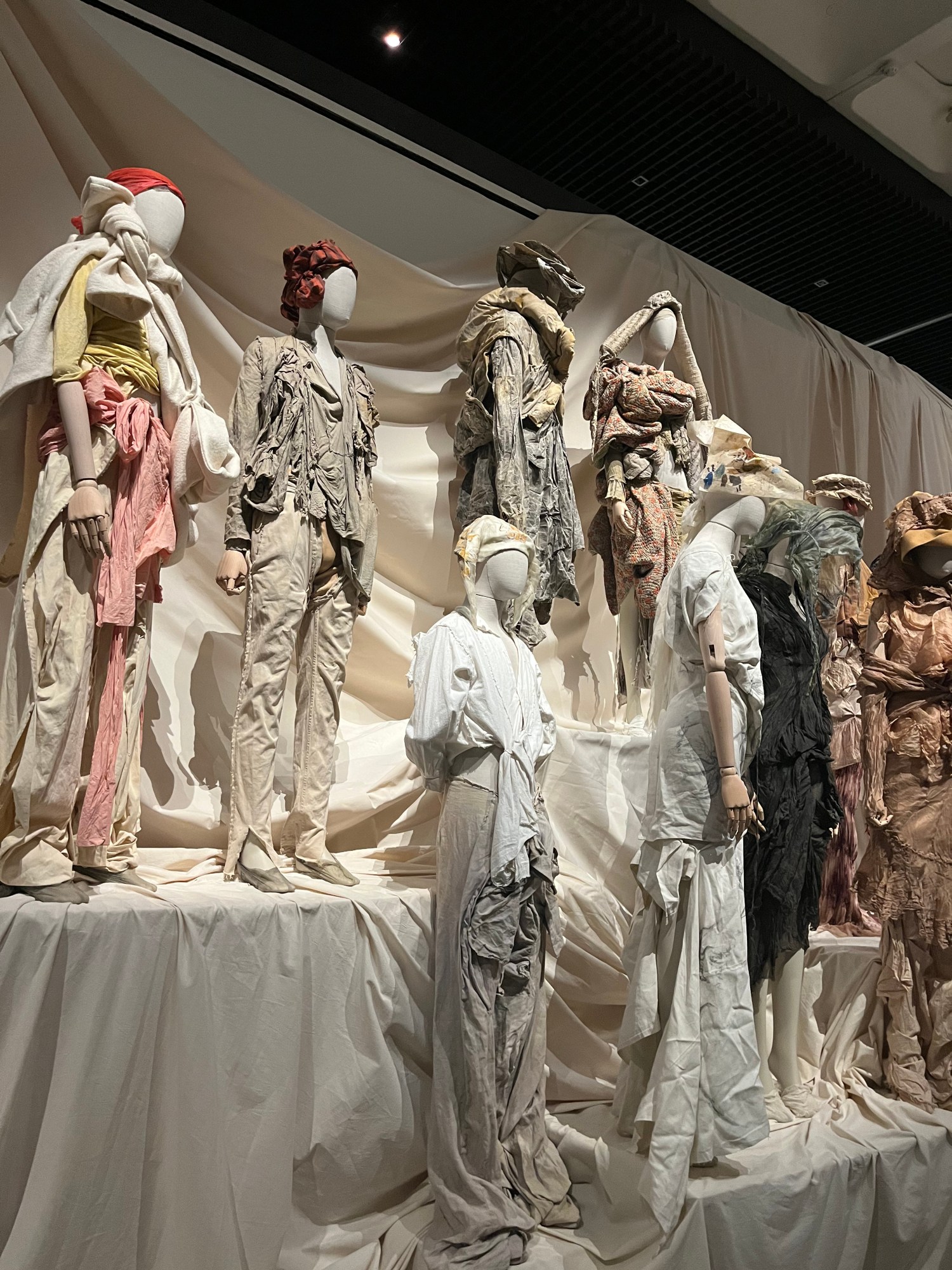
Yohji Yamamoto and Rei Kawakubo: elegance in decay.
If Westwood’s punk spirit was a touchstone, Yohji Yamamoto and Rei Kawakubo translated dirt into something different. Their early-’80s Paris shows featured frayed hems, holes, and raw edges. “You have a different perspective on ideas such as decay and patina with the wabi-sabi philosophy in Japan, where a kimono that gets worn and even patched becomes more highly valued because of the time spent wearing and repairing it,” says Van Godtsenhoven.
At the time, critics responded in racist shorthand. “I don’t want to repeat it too much but they called it ‘Hiroshima chic,’” she recalls. In reality, the garments were exquisitely made. The holes in a Comme des Garçons sweater, for example, were a kind of lacework, not destruction.
What was once shocking now looks prophetic. “People focused on the frayed hems,” says Van Godtsenhoven, “but these things are now completely normalized. We can’t even see them anymore because they’re so commonplace—like a pair of torn jeans.”
Hussein Chalayan: gardening as fashion.
London in 1993 was electric. Alexander McQueen unveiled his debut collection, Kate Moss appeared on the cover of i-D in a thrifted jumper, and Hussein Chalayan buried his graduate collection in the garden with iron filings for two months. The entire collection was snapped up by Browns, echoing the way John Galliano’s graduate work had been bought a decade earlier.
“Dirty Looks” marks the first time Chalayan’s pieces have been reunited. “They look incredible, like moonscapes, when you see them up close,” says Van Godtsenhoven. Chalayan called it “future archeology” because the garments continue to oxidize. “It’s past, present, and future colliding in a dress, giving free rein to the elements.”
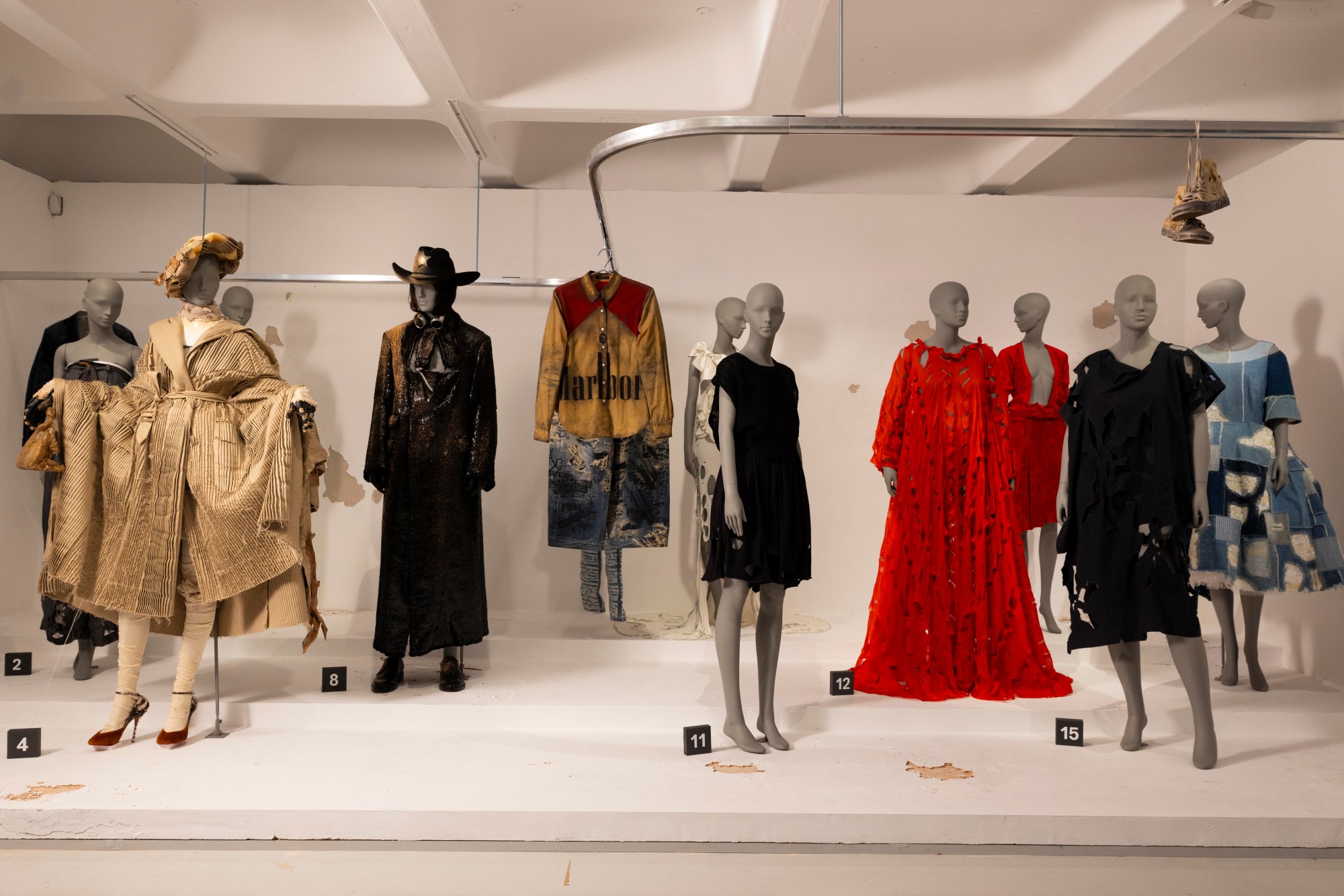



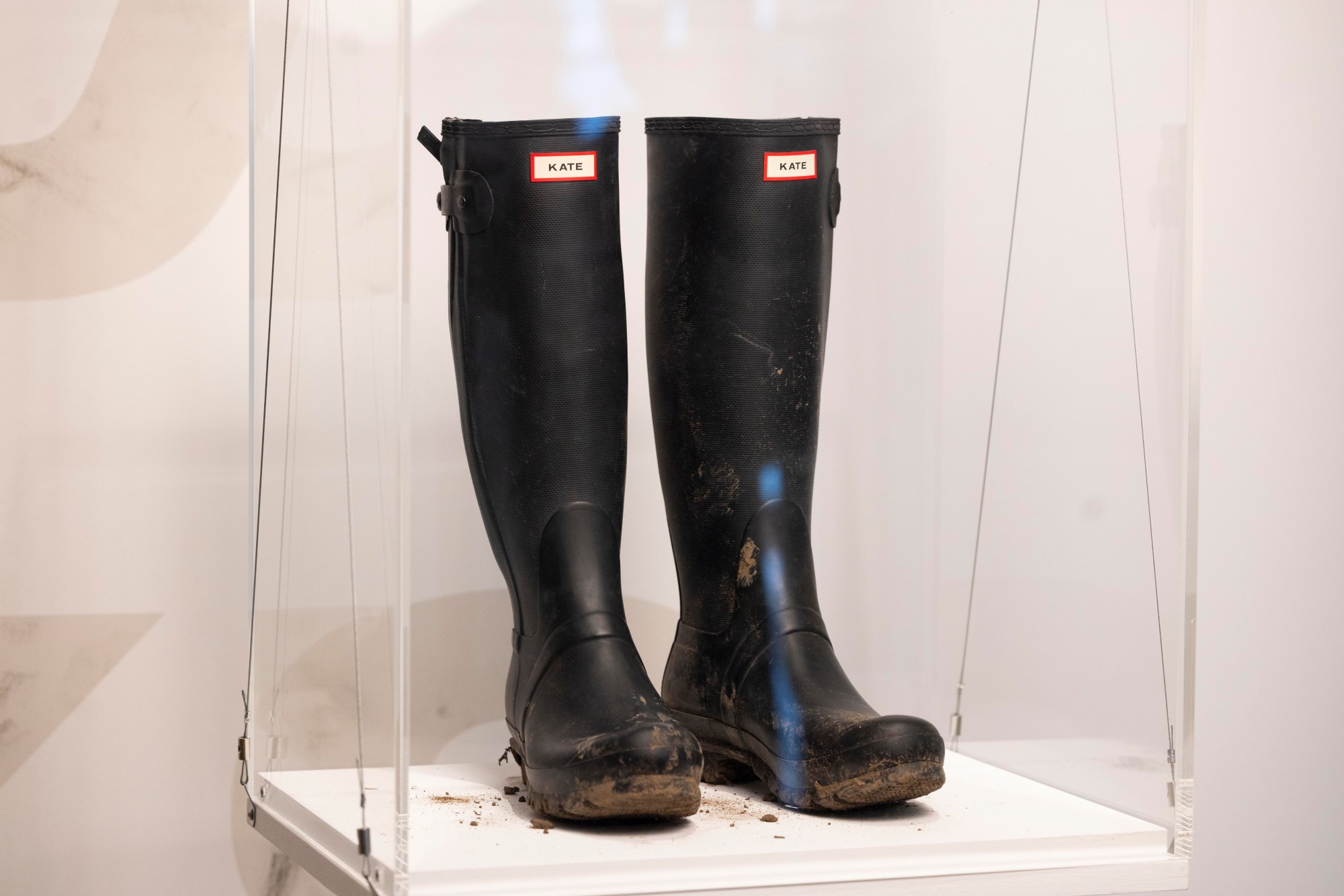


Forget Clean Girl—enter Dirty Girl.
Looking at contemporary designers, Van Godtsenhoven notes how often women are leading the way into filth. Elena Velez staged a mud-wrestling show in 2023, while Di Petsa designs around sweat and bodily fluids.
For her, this shift is feminist rebellion. “Torn jeans are no longer shocking, but there is still a strong sense of propriety,” she says. “We can’t have sweat stains or period stains or things related to personal hygiene. I see the mud-wrestling as liberating women from the sanitization of the online Clean Girl aesthetic.”
Fashion’s dirt, reimagined.
Today’s dirt isn’t always literal mud. Increasingly, it means what gets discarded. “It’s almost become standard for designers to use deadstock fabrics, or to repurpose,” says Van Godtsenhoven. “There’s a re-appreciation for older fabrics, or for things that have had a life—a transformation of materials.”
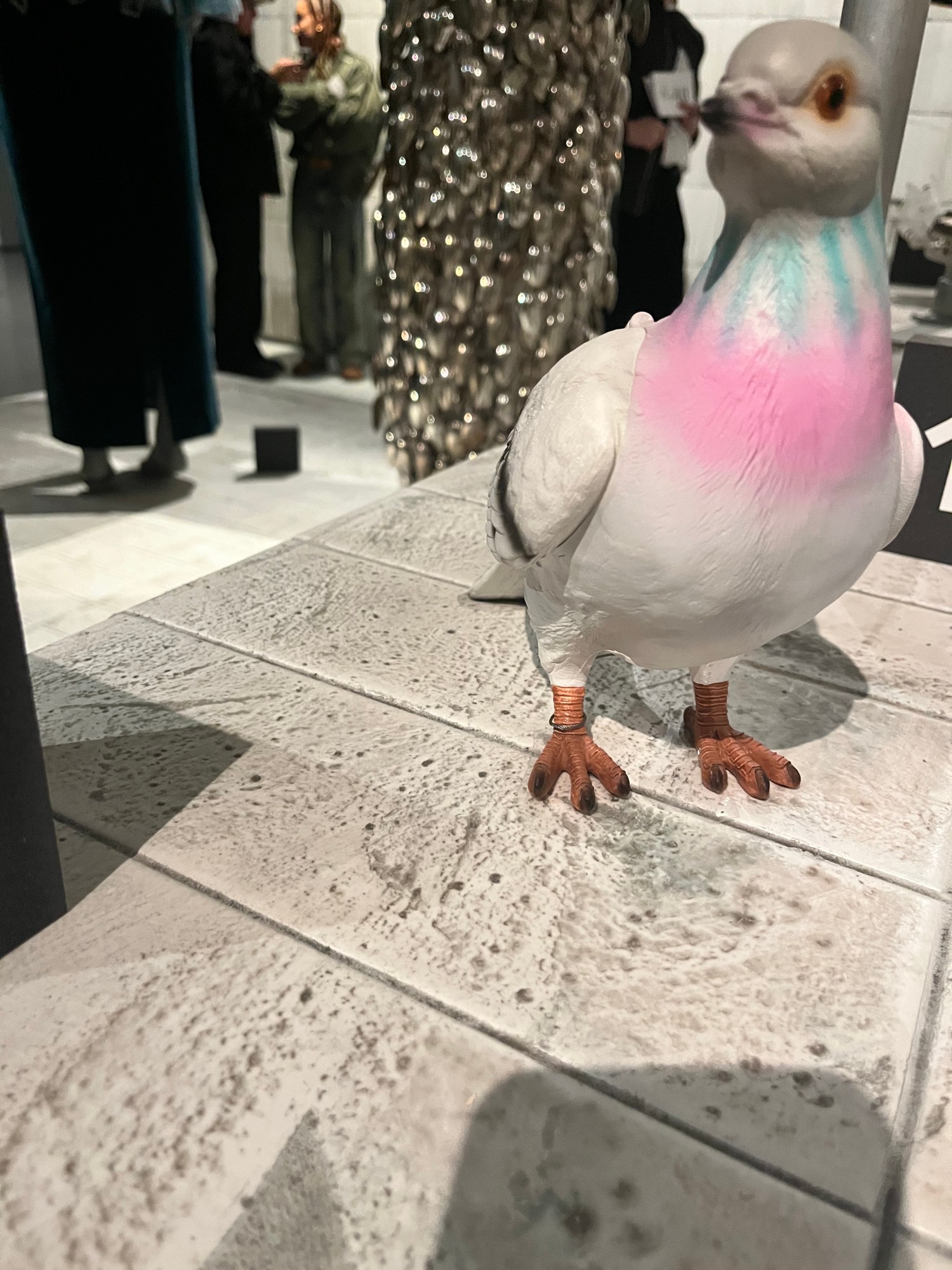
That includes Carzana’s deadstock garments dyed with natural pigments, or the radical work of IAMISIGO, the brand by Bubu Ogisi, based between Lagos, Accra, and Nairobi. “We wanted to show different perspectives—what do we call dirt?” Van Godtsenhoven explains. “She uses plastic and tree bark in her clothes and calls it both nature, because sadly plastic is so omnipresent in Ghana and Nigeria, where landfills dominate the landscape.”
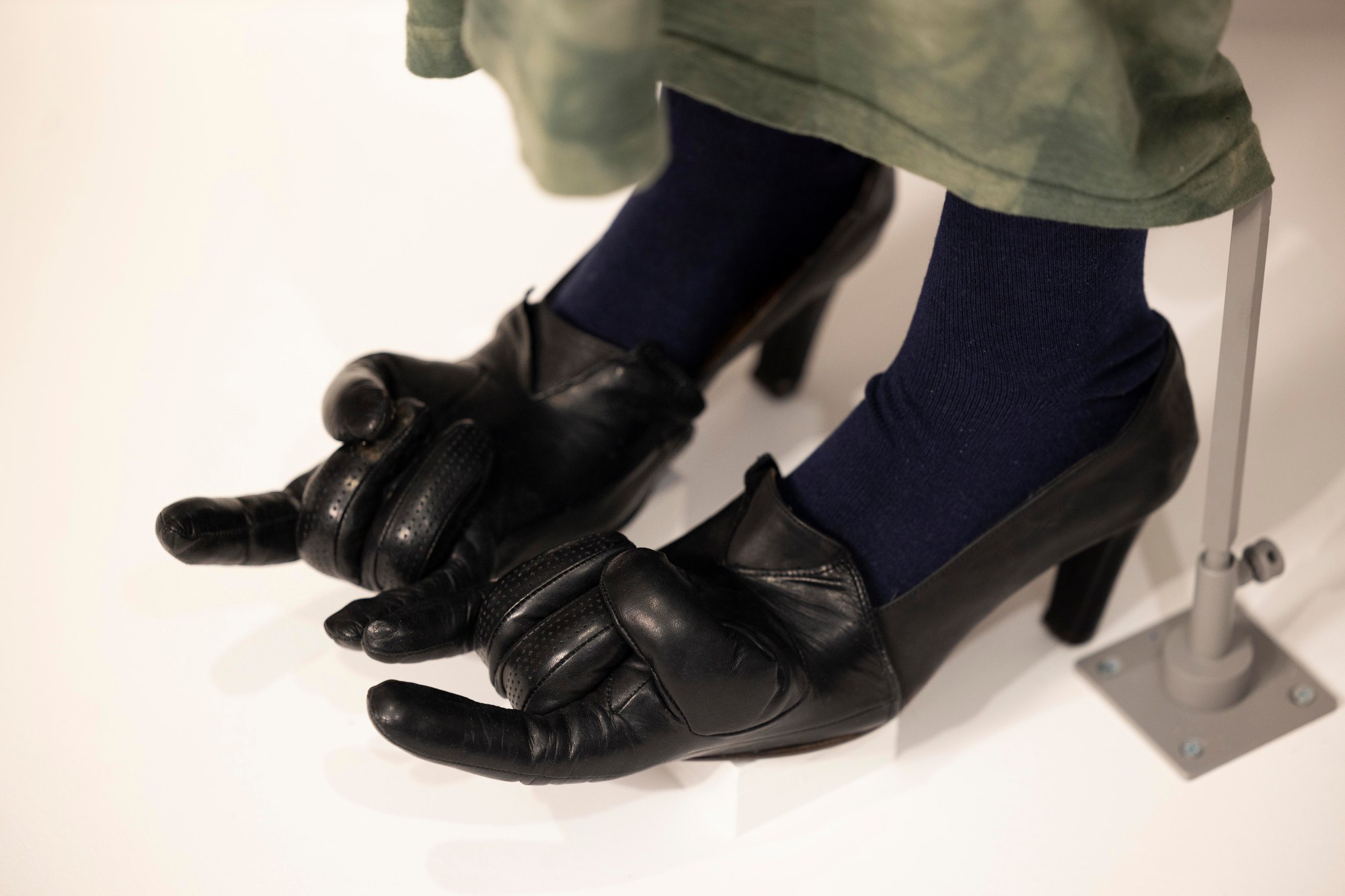
Galliano: muck as masterpiece.
Galliano’s fascination with muck runs deep. His 1984 graduate collection, Les Incroyables, was inspired by an 18th-century French subculture who wore muddied tailcoats. In 2000, he staged a controversial show based on the clothes of the homeless.
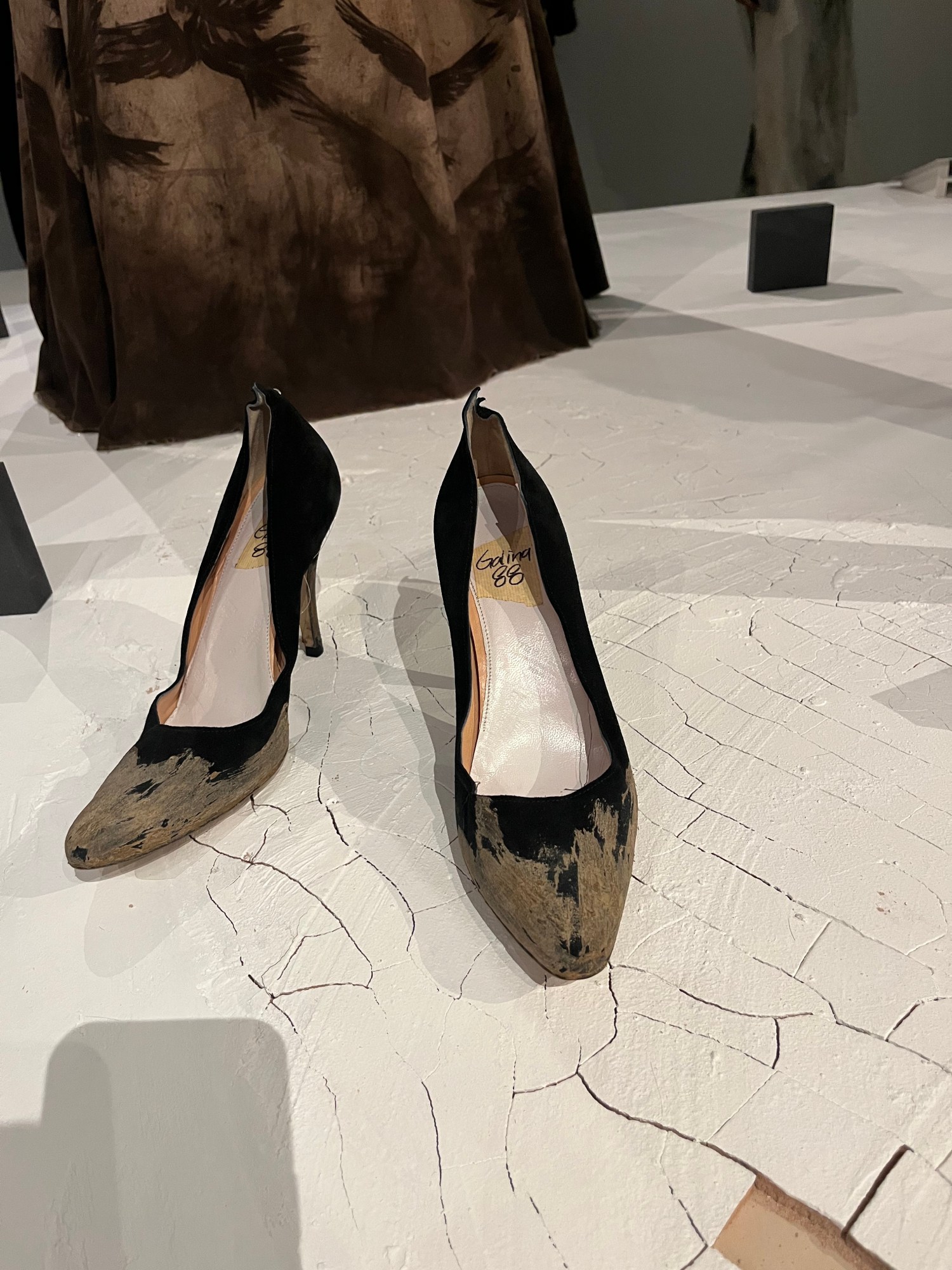
The theme resurfaced in the Maison Margiela Artisanal collection for Spring/Summer 2024, which shut down fashion feeds for a week. A standout “cardboard” trenchcoat was both couture-level craftsmanship and a sly nod to decay. “I would say it was the apex of all these ideas,” argues Van Godtsenhoven. “The effects of deterioration are executed with couture techniques. It still signals punk transgression, but it’s also the pinnacle of luxury. Over the years, the two have merged.”
Will dirt continue to shock, delight, and inspire? Absolutely. It’s fashion’s yin to immaculate’s yang. “Since modern times, fashion has always been about looking as if you’ve just come out of a shower,” Van Godtsenhoven reflects. “But what draws designers to this aesthetic is precisely that—it’s an antidote to glamour.”