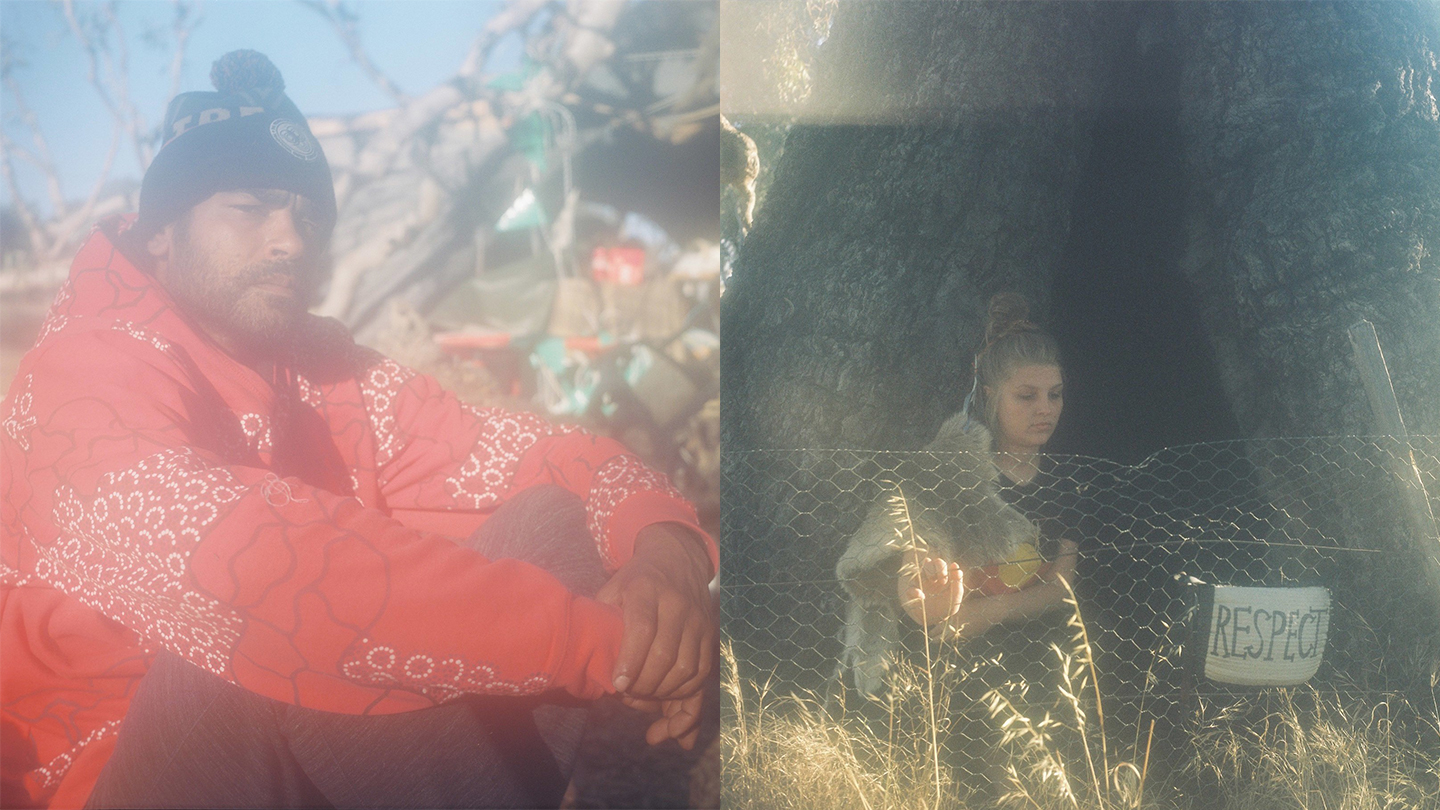
In the Ararat region of Victoria, about 200 kilometres west of Melbourne, traditional owners and their supporters are gathered on Djab Wurrung country in protest. The area is said to be women’s country and is home to 260 sacred trees, a number of which are hollowed birthing trees. Last year the Victorian Government announced plans to demolish a number of trees and clear landscape in order to expand the nearby Western Highway. According to Uncle Robbie Thorpe the protest is “the last stand” against the Australian Government’s efforts to erase Aboriginal culture.
Now, almost one year on, the sacred trees still stand thanks to the efforts of traditional owners and groups like the Djab Wurrung Heritage Protection Embassy who’ve set up camps to protest and protect the land. Currently the Government has agreed to not start works before May 15 while legal challenges are made — but the preservation of the area still hangs in the balance. We visited the Djab Wurrung camp to hear directly from protestors about the area, its cultural significance and what they want outsiders to know about their efforts.
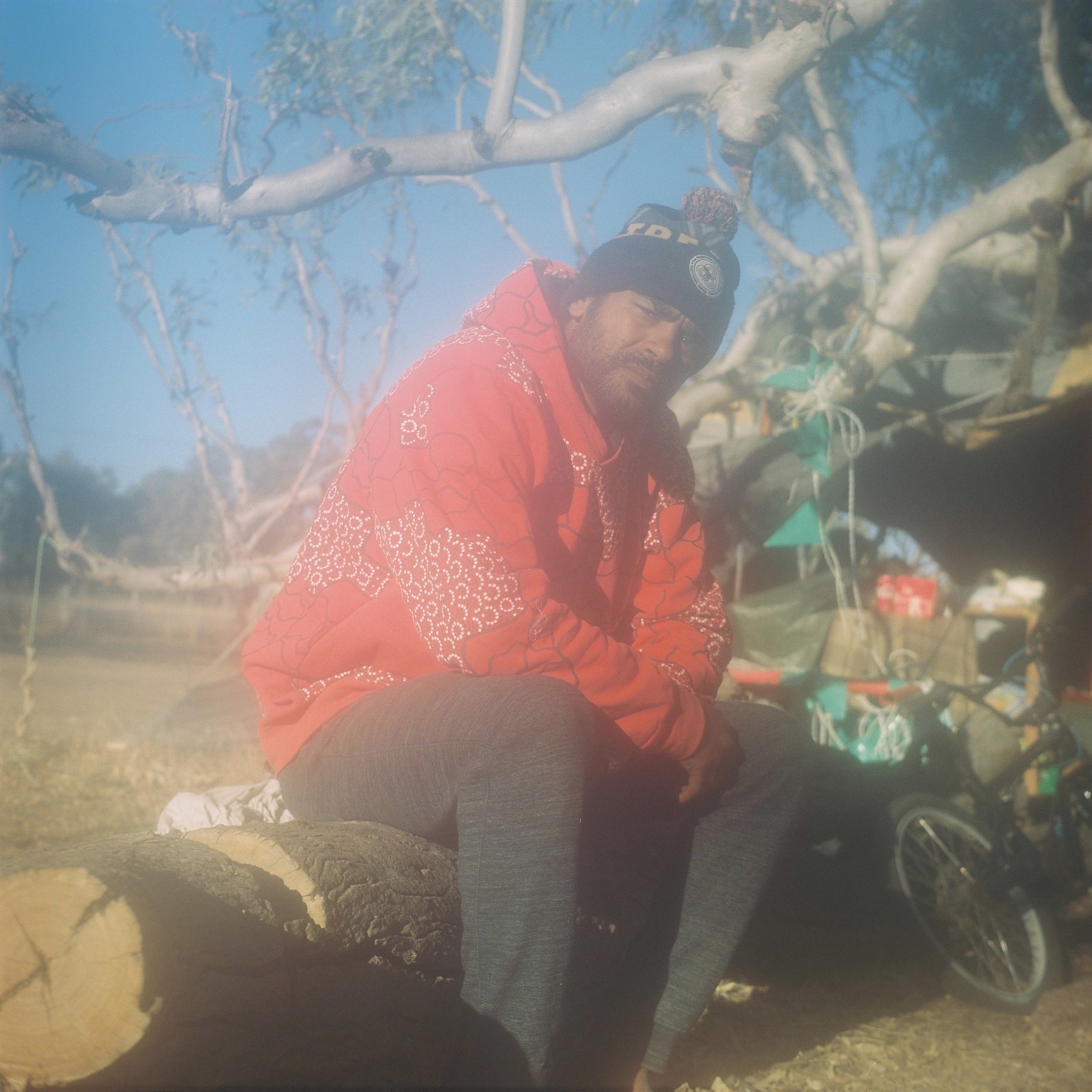
Zellanach ‘D.T’ Gunaikurnai, Djab Wurrung lawman
How did you come to be here?
I packed up my house to come and be on country, to give it the full respect and process it desperately requires. The government has never given it the respect to thrive. I stepped into my obligation, to stand up and protect our sacred sites from desecration, from contractors and the government, forcibly trying to remove us from our homelands and stop us preserving and continuing our country, landscapes, and sacred sites, which include our birthing sites, ceremony sites, our bush court sites, our law grounds, our dance grounds.
What are you hoping will be the outcome of your actions to protect this land?
To take back the full 12 kilometre stretch of land. It has all the cultural remnants and relevance. They need to leave that for our people and say they’re not gonna touch it. They don’t have jurisdiction here and must understand that. They call themselves Australian but where is their proof? In just 238 years they’ve destroyed so much country. I see and feel it crying out for us. It’s so brown, no green, no life. The place is full of roads and tar. They want to continue that here.
Children all over are standing up and taking strikes from school for climate change. That’s our culture. We have been the gardeners, the farmers of this country for forever and a day. We sustained the country and preserved ourselves too. We know our place. In order for the colonial system to have sovereignty they’ve got to deny true custodians their history; If they wipe us out, they don’t have to prove their legitimacy. They’re using brute force to forcibly remove us.
What has the behaviour of the police towards this camp been like?
Well, they’re sent in by a higher power. They sent in an actual riot squad to try to intimidate us with their army tactics and intimidating stances. They were making personal comments to us. Police officers don’t get to make personal comments, you’re a trained professional not above the law.
Do you have any message for the Andrews Victorian Government?
Your time’s coming Mr Andrews. All that treason you fellas have committed has been documented. You either need to wake up and start doing the right thing by us or be prepared when it comes your time. You’ll be done for treason. I can tell you that right now.
Note: On May 3rd the camp reported that Zellanach ‘D.T.’ Gunaikurnai was arrested on the charges of disrespecting a police officer and driving with an expired license and is being remanded. In response to this the protectors have set up a second embassy camp outside the Melbourne Assessment Prison in central Melbourne.
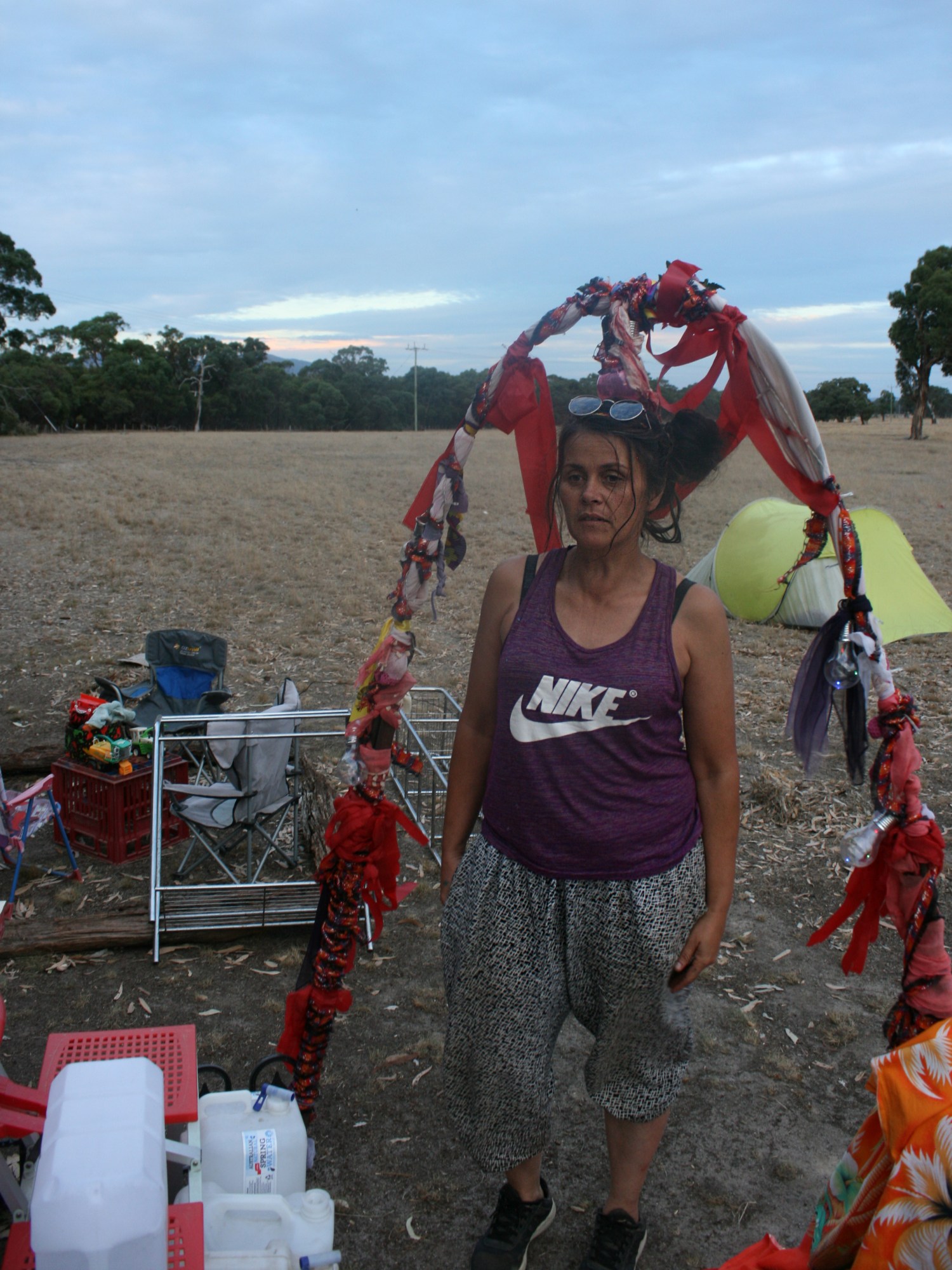
Amanda Mahomet, Arrernte woman
How did you come to be here?
I’ve been here basically from the start. I couldn’t leave once I came. I was shown something by the landscape. To walk away from that — I wouldn’t be able to live with myself. So I’m here to protect the land and make a difference for everybody in society. And I mean everybody. Together we can stand up to the system. We’re all enslaved to it! We weren’t put here to just eat, sleep and work, earn money. We’re all detached, even from each other.
What do settler Australians who care about the environment have to learn from Aboriginal elders?
It’s about recognition firstly, you know ecocide, genocide, genocide, ecocide. They go hand in hand. Traditional owners should have their say because that’s what the stories, songlines, were about. They were passed on because it teaches everybody how to look after the land. They were really the original legal papers over this land. This is global to me. Bigger than a road or Victoria. We need to set an example here because if we don’t now, it’s never going to happen, and things will get worse.
What do you know about this land and what has it shown you since you’ve been here?
Women would have dominated here. Many families with children living peacefully. We’ve found artefacts and so many scarred trees. It’s said over 50 generations have been born inside those trees.
When I first got here, there was just a magpie. As time has gone by we’re seeing redtails, yellowtails, cockatoos, eagles, hawks, mountain ducks, blue wrens, rose alphas and more. It’s really amazing. It’s the ancestors showing up to be with us. When I had a flock of eagles overhead, the message I got was, “You know we’re watching. We’re glad you’re here. Thanks for protecting the land.” It felt bad here at first. Eventually we found out about the documented massacres nearby. Mount Langi Ghiran over the road had many undocumented massacres. Women and children were chased into caves which were set alight. Six weeks ago the feeling changed, and after that lightning struck some trees near women’s camp. It purifies the land through the roots. That’s another way of the ancestors saying everything’s gonna be alright going forward. We’re getting rid of them negative energies now.
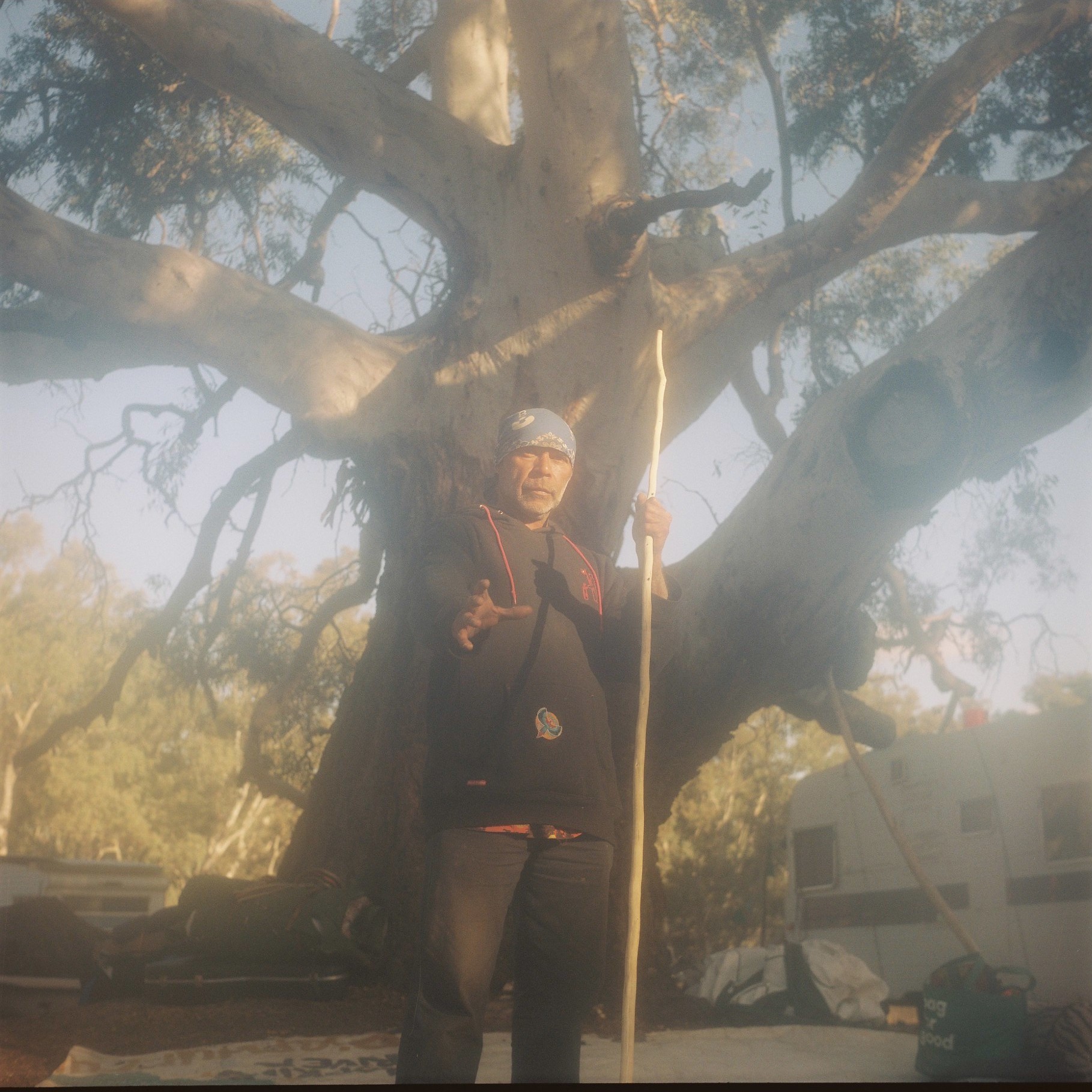
Uncle Paul, Djab Wurrung elder
How did you come to be here? And what is the significance of these trees to the Djab Wurrung people?
I believe that our people need to get out and sit on country more often, nurture these trees back to health. The country is slowly dying. Compared to thousands of years of us managing our lands. This place is one of many suffering. Everyone knows we’ve got a problem with the Murray Darling Basin dying. The rivers and trees are very important to Aboriginal people. So I’m here to give guidance and wisdom to the young people. The birthing tree is where mothers give birth inside of a tree trunk that’s been scarred over generations to hollow it out. It’s no different to a hospital. Same concept, a birthing place for a lot of generations for many years.
What can settler Australians learn from Aboriginal elders?
Aboriginal people grew up on a spiritual level. Non-indigenous people are using the term being grounded, people are starting to understand that being grounded is being part of the dreaming of the land. The river system in the land is no different to the veins in our body. The little creeks and then we got our main river flow. If we cut our river flow, then we drain the little creeks and the land will suffer. Same with trees. Would you rip the trees off your head? Leave our mother alone because that’s our trees on her and she’s the one.
Do you have a message for the Andrews Victorian Government?
Respect needs to be put in place, sir. If you do believe you have the rights to destroy, rape and pillage our lands, then you need to produce a legal documentation of legal ownership. Not a constitutional act or laws from 1901 to 1967, when Aboriginal people were not legally accepted as people, when they believed they would wipe us out. You couldn’t wipe us out. So what you’re trying to do now is socialise us, financialise us, media brainwash us. Everyone on this land claims to be Australian, yet you will never be an Australian until you’ve been accepted by me and my people. They’re all aiding and abetting a cover up, a conspiracy of genocide.
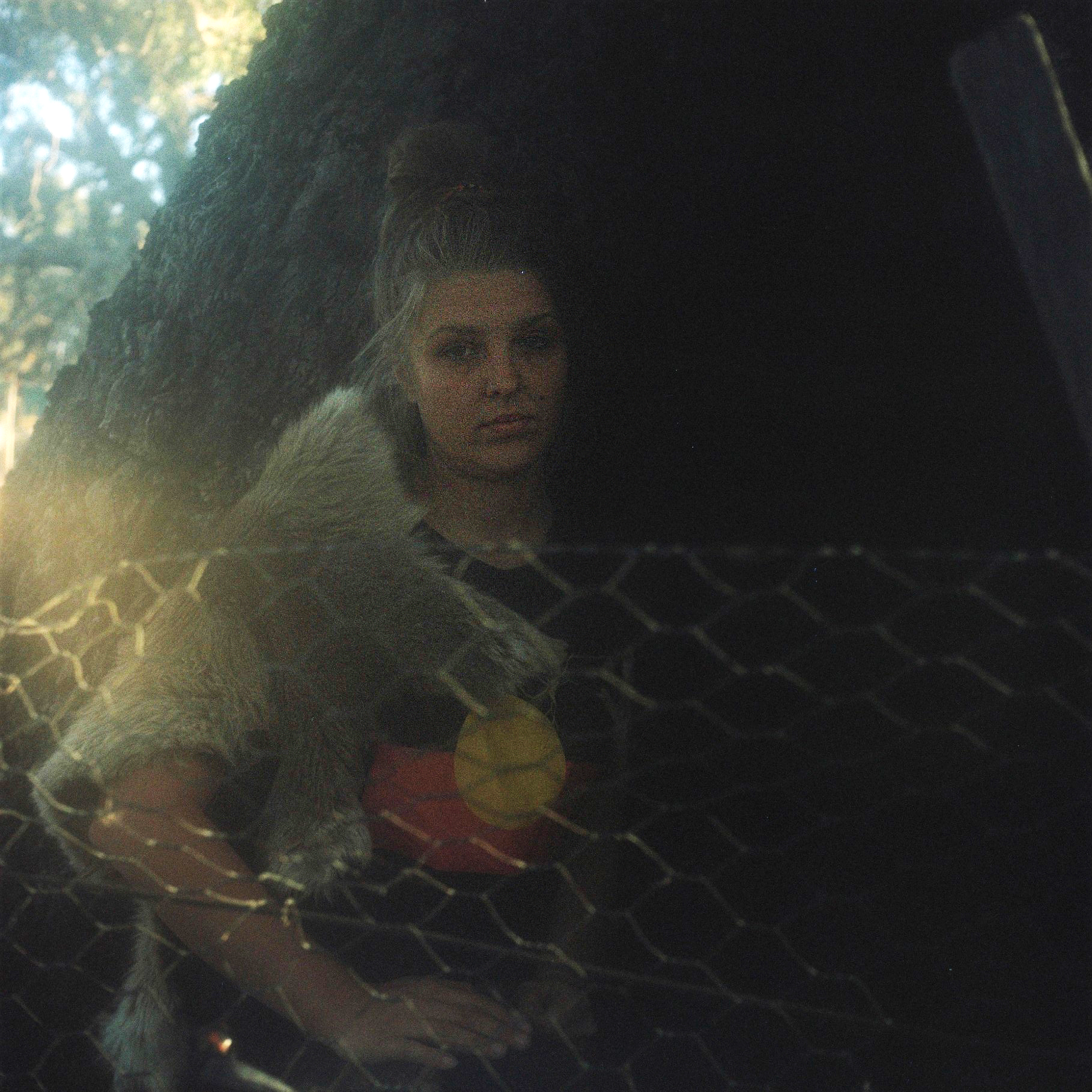
Rebecca Jakobi, Djab Wurrung woman
As a Djab Wurrung woman what does the preservation of these trees and this land mean to you?
Well, I come from Ballarat and am descended from the Lake Lithgow people. I have a strong connection to this place. We need outdoor classrooms like this to come and practice our culture or it will continue to die out. My dream would be to set up different sites and camps, and have a cultural information stop for tourists to learn. I do feel a desire within myself, when I have a baby to have my baby out here — and I’m not alone in that.
What do you know about the colonial history of this land?
By the mid-1800s half this land was farms. Imagine all those displaced people. They couldn’t use the waterways or go on land they had lived on. Of course they stole livestock; people were starving. Farmers would go out and come across the first blackfella camp they saw, they wouldn’t even ask about the livestock they’d just start killing. I’ve read horrible things about how children were killed, and how farm workers’ huts would have skulls and bones of Aboriginal people as trophies.
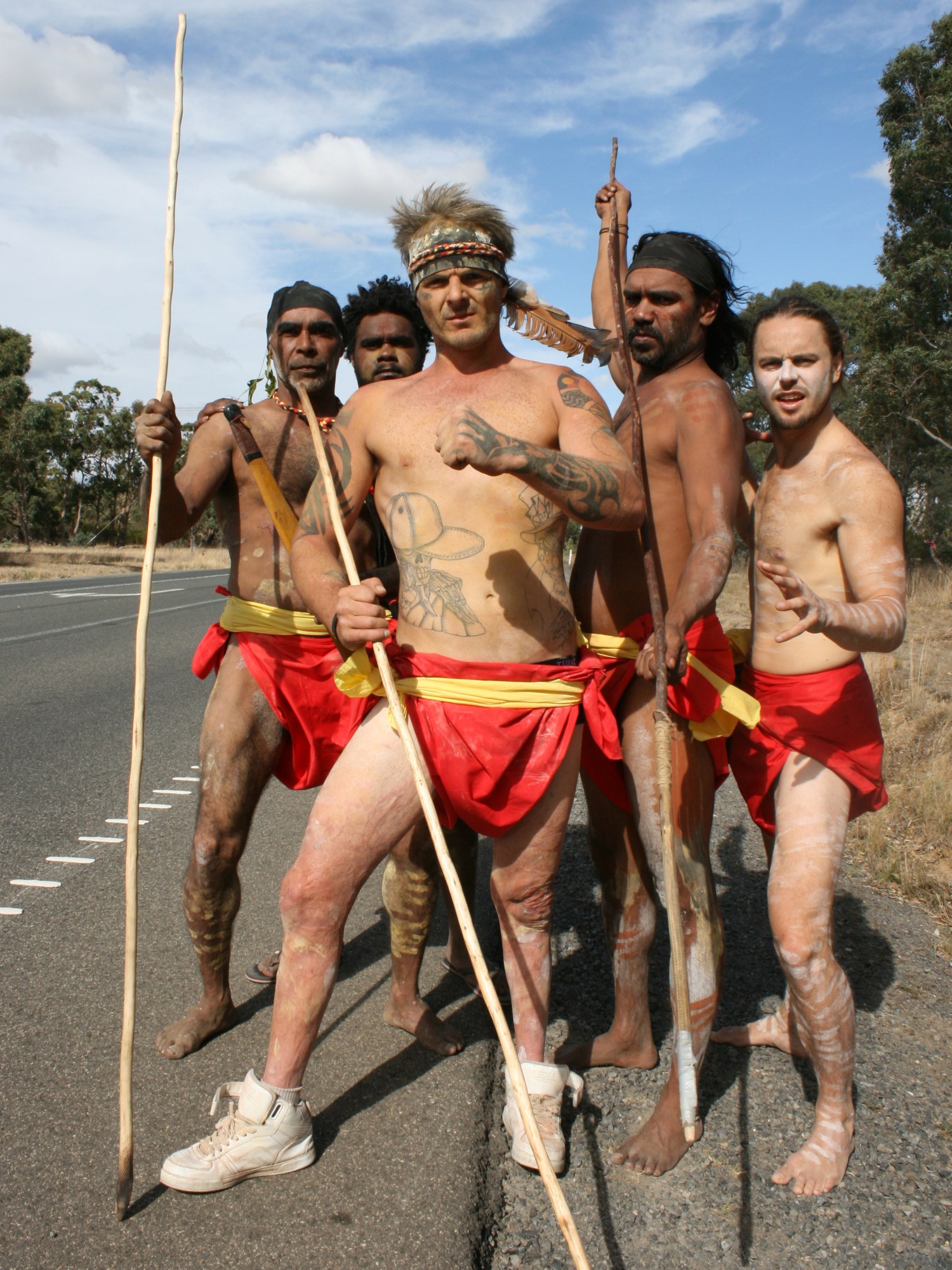
Zane Harris, Palawa man raised on Djab Wurrung country
You grew up here, have you been in communication with the townsfolk?
I’m from this country, I grew up in Ararat. I’m from Palawa mob, Tasmanian mob. Our culture got whitewashed through genocide over there. It tears my heart out to see them try and put their whitefella highway through here. Many people in Ararat are whinging about us. Many of them were driving past yelling things like, “We’ll cut ya fucken tree down”. Then me and Zellanach did a fundraiser, a ceremony, song and dance. Afterward a lot of the community town folk came up to us crying, saying, “We don’t know why we say the things we say. We’re sorry.” We touched them through ceremony, through the songlines from here.
What outcome do you want to from this protection of country?
I wanna see all the mob back on country. It’s women’s country so I’d like to see women feeling comfortable out here, having a yarn. I wanna see the kids out here. We want to build out here. Create Indigenous ranger jobs. Look after animals. Control fire danger periods. Create educational centres for visitors. Claim the waterways back. It’s wrong the way the farmers got their water permits; they pump it dry.
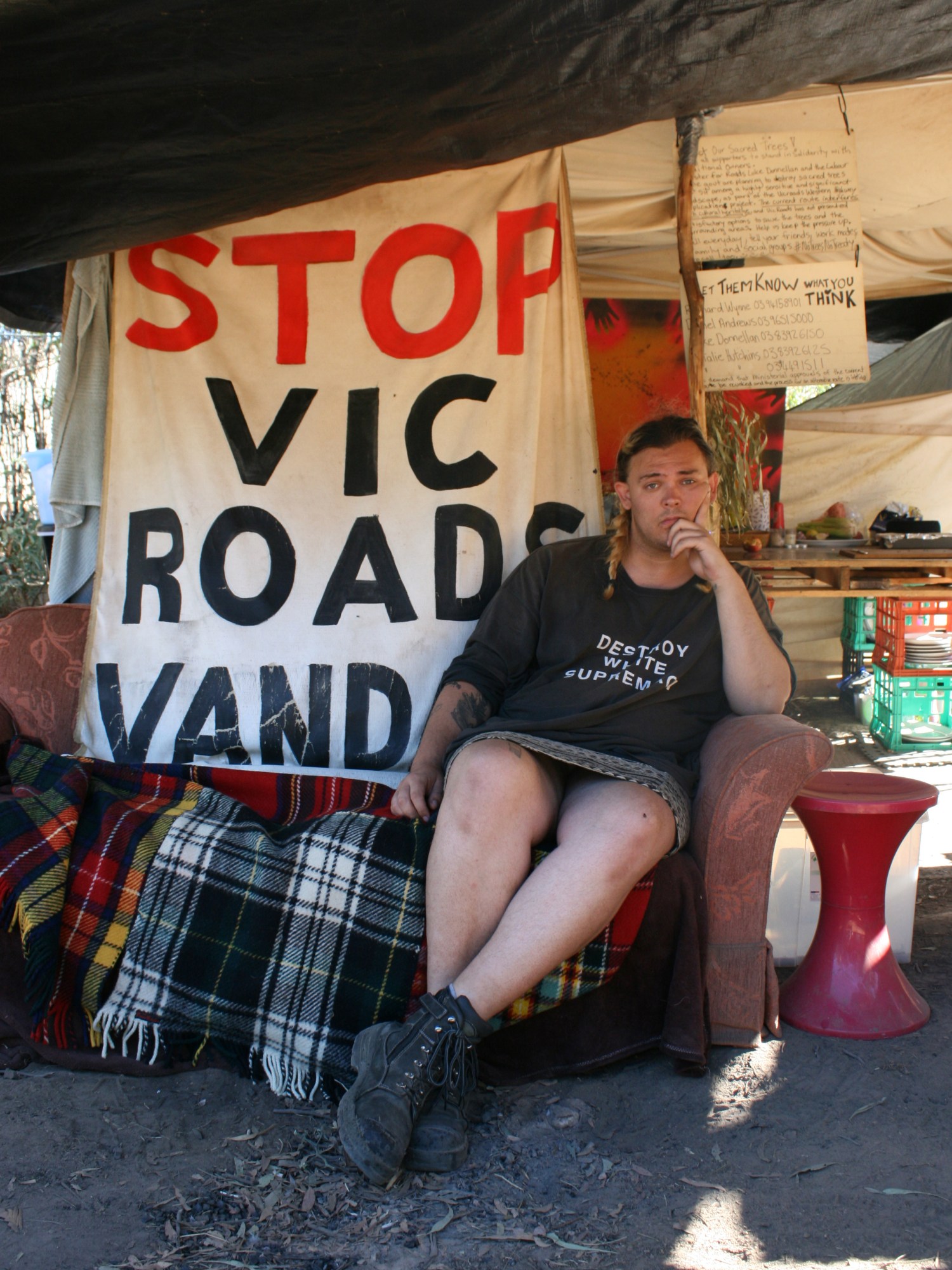
Hannah Barcan, settler ally
How did you come to be here?
I’ve been up here since the crisis call. I was in a position where I could come up and help. I think it’s one of my obligations as someone benefiting from settler colonialism. I was gonna be travelling but rather than be totally hedonistic I’m here where I’m wanted and needed. Genocidal acts like this against Aboriginal people are ongoing and unrecognised; that is so important for Australians who benefit from settler colonialism to understand.
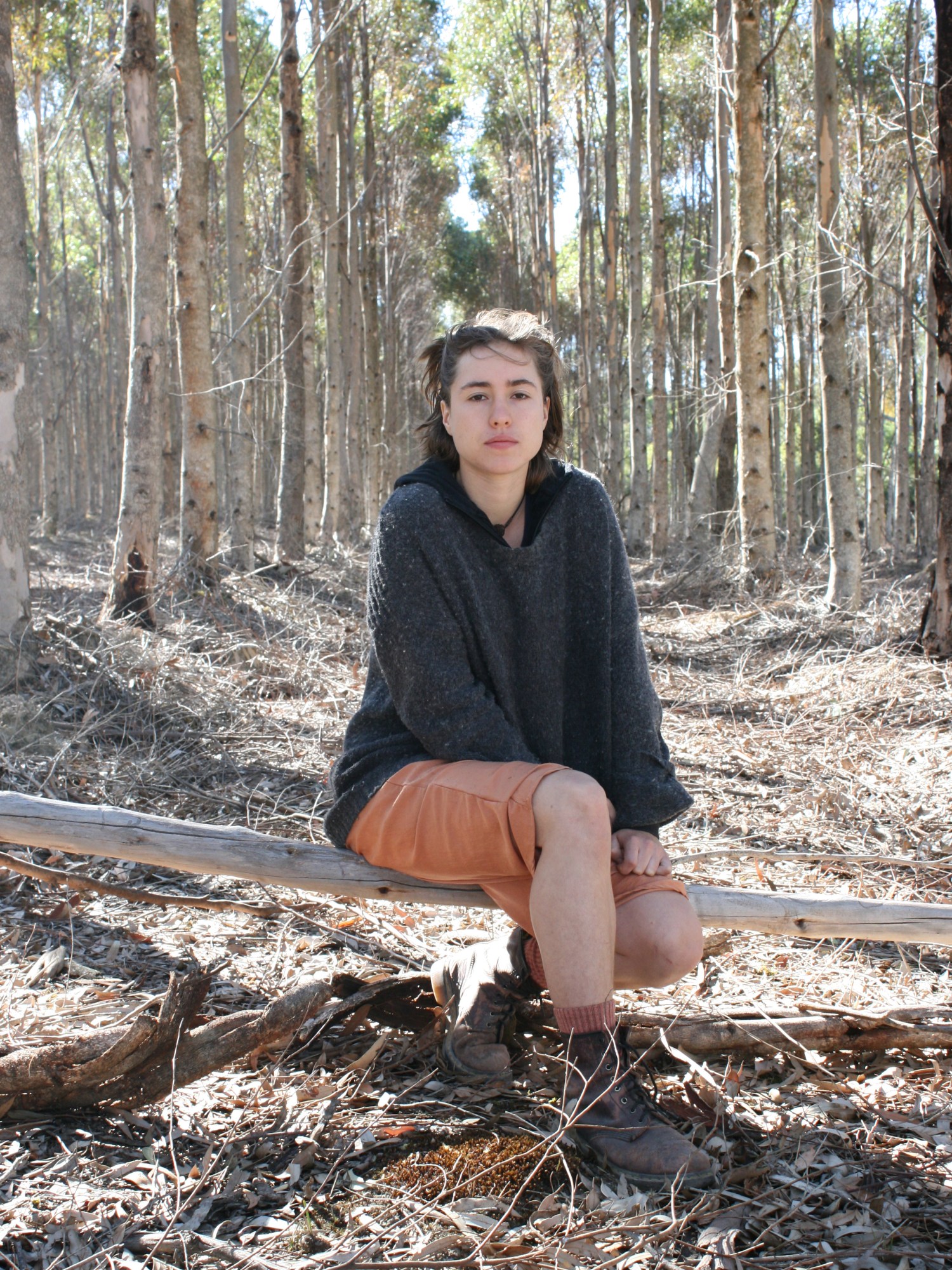
Eva, settler ally and environmental activist
How did you come to be here?
I visited a few months ago in response to another call. Now I feel obligated to protect the trees from when I first came. They are super powerful. I felt horrible knowing they were out here at risk. My ancestors aren’t from here — I’m a settler. I grew up in the forest and I’ve always liked growing things and learning about conservation. When I opened my eyes up to that I felt a huge responsibility for the damage that’s been done to this land, and an understanding of it’s fragility. It can be an endless spiral of discovery. I’m one of not many people working on this. We can’t compromise anymore. In Australia we’re lucky that we’re a large country. We should be holding onto these little pockets we have left. It’s not like we’re asking for a lot by protecting a few pieces of land, compared to what’s been lost already.
Djab Wurrung Elders are calling for on ground support at their Djab Wurrung and Melbourne embassies ahead of the threat to begin works on May 15, and into the future. You can follow calls for help at their Facebook page and donate to their GoFundMe page .
Credits
Words and photos by R. Oliver
Special thanks to Aunty Sandra Onus and Djab Wurrung Elders.
These interviews have been edited and condensed for clarity.
We acknowledge that we work on the stolen land of the Wurundjeri people of the Kulin Nation, and the Djab Wurrung people in production of this story. We pay our respects to First Nations elders past, present and emerging. Sovereignty was never ceded.