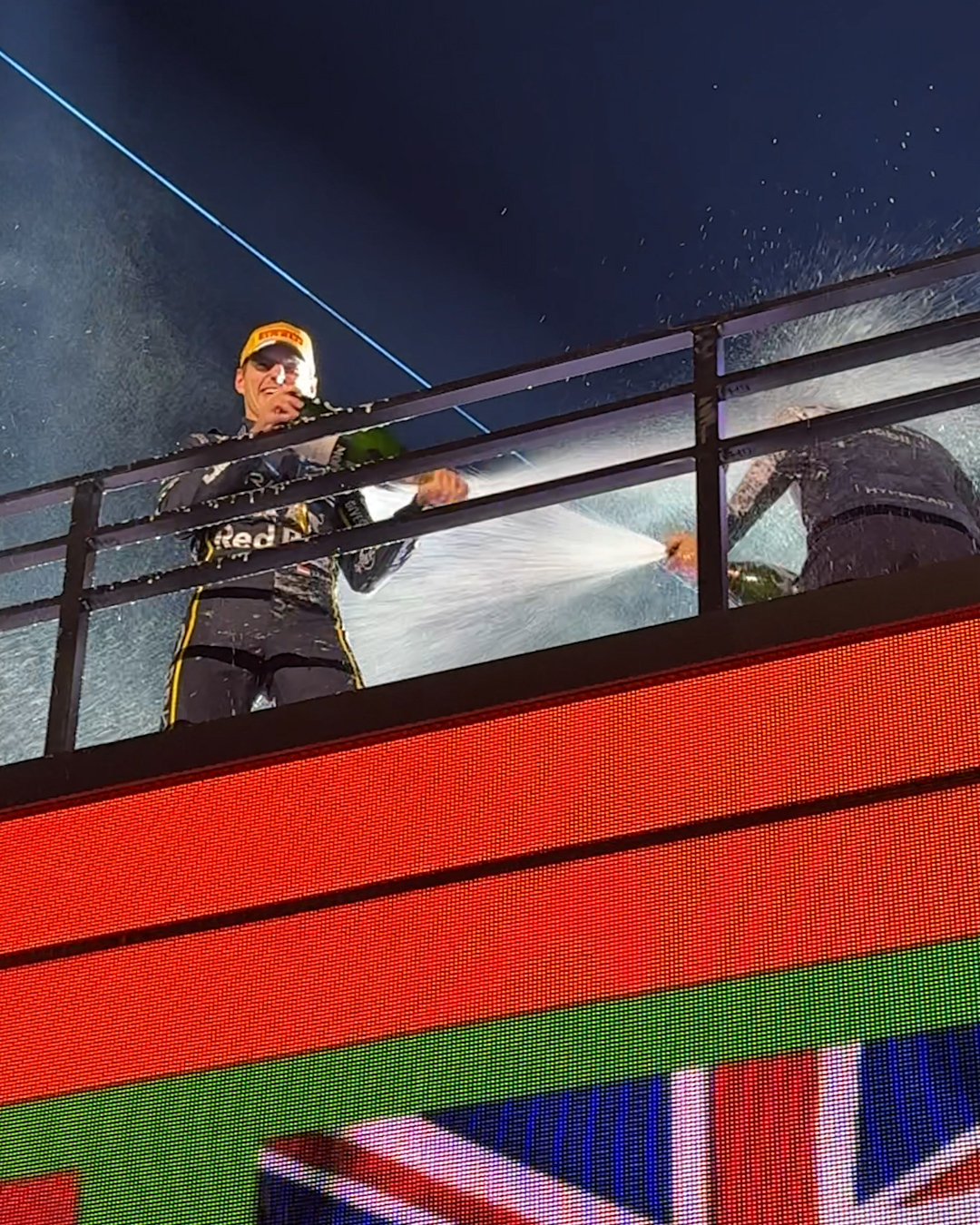
Here’s what you’ll find in the minibar at your Las Vegas hotel room: a $12 pack of gummy bears, $18 nips (1.7 fl oz) of liquor, and a $50 “New Indulgence Sexy Kit” that contains 2 condoms, a vibrator (battery included), and bondage restraints. You won’t find a coffee machine, however, or even a humble kettle to make a cup of tea. For a kick of caffeine, you’ll need to wander down to one of the three Starbucks that linger on the outskirts of the football-field-sized casino floor. Getting bled dry has always been the story of Vegas. But no more than Los Angeles, New York, or Miami, its defenders will tell you. Vegas is just more transparent about it.
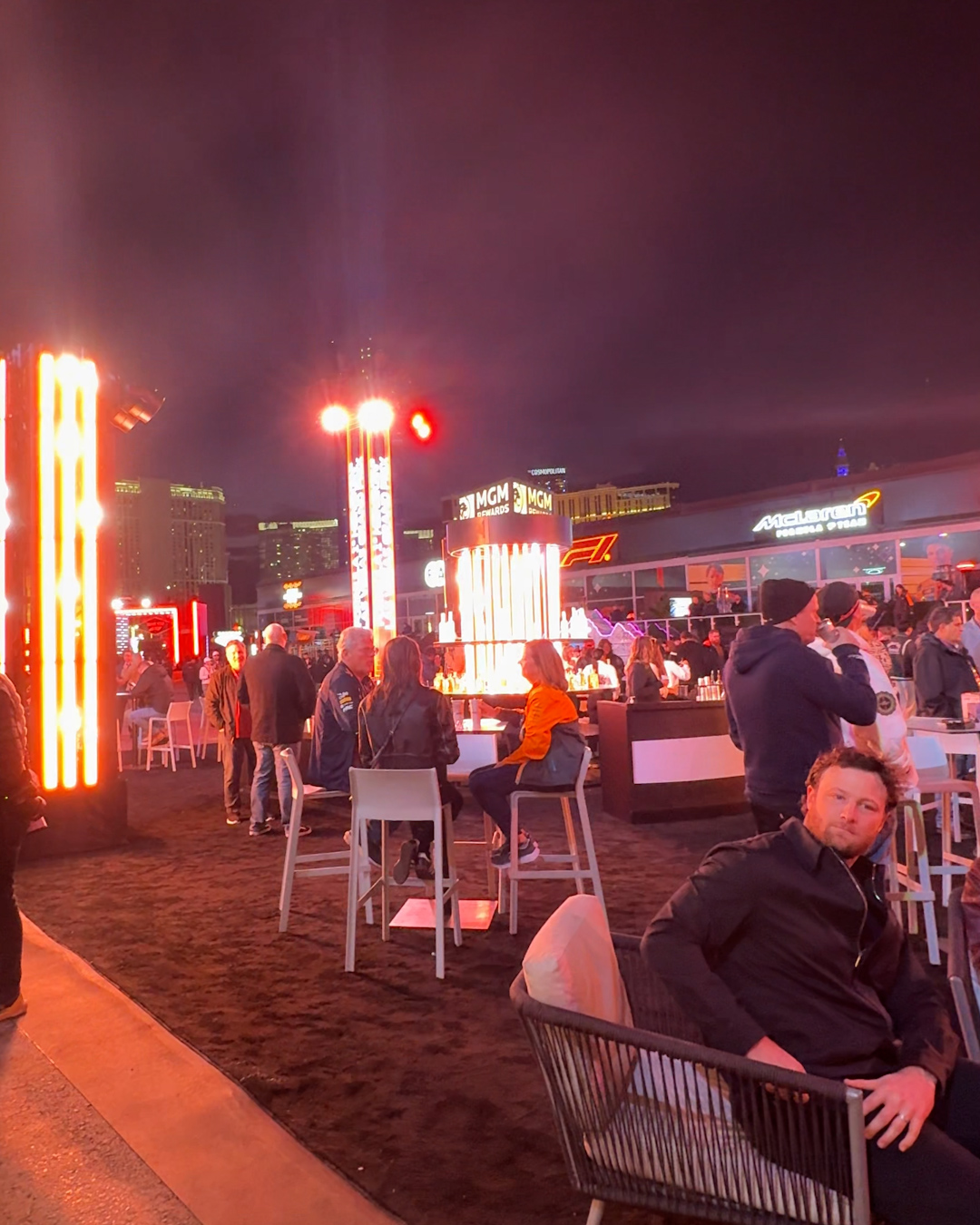
At Resorts World, a massive resort casino that conjoins three separate hotel towers, staff members wear custom racing shirt uniforms as both children, dads, and college kids coalesce in a mix of Ferrari red, McLaren orange, and Mercedes green merchandise within a labyrinth of patented Vegas attractions. Just a few streets over, downtown Las Vegas is all road closures to accommodate the Las Vegas Grand Prix—the Formula 1 race that loops between casinos like a Need for Speed fantasy for the video game age.
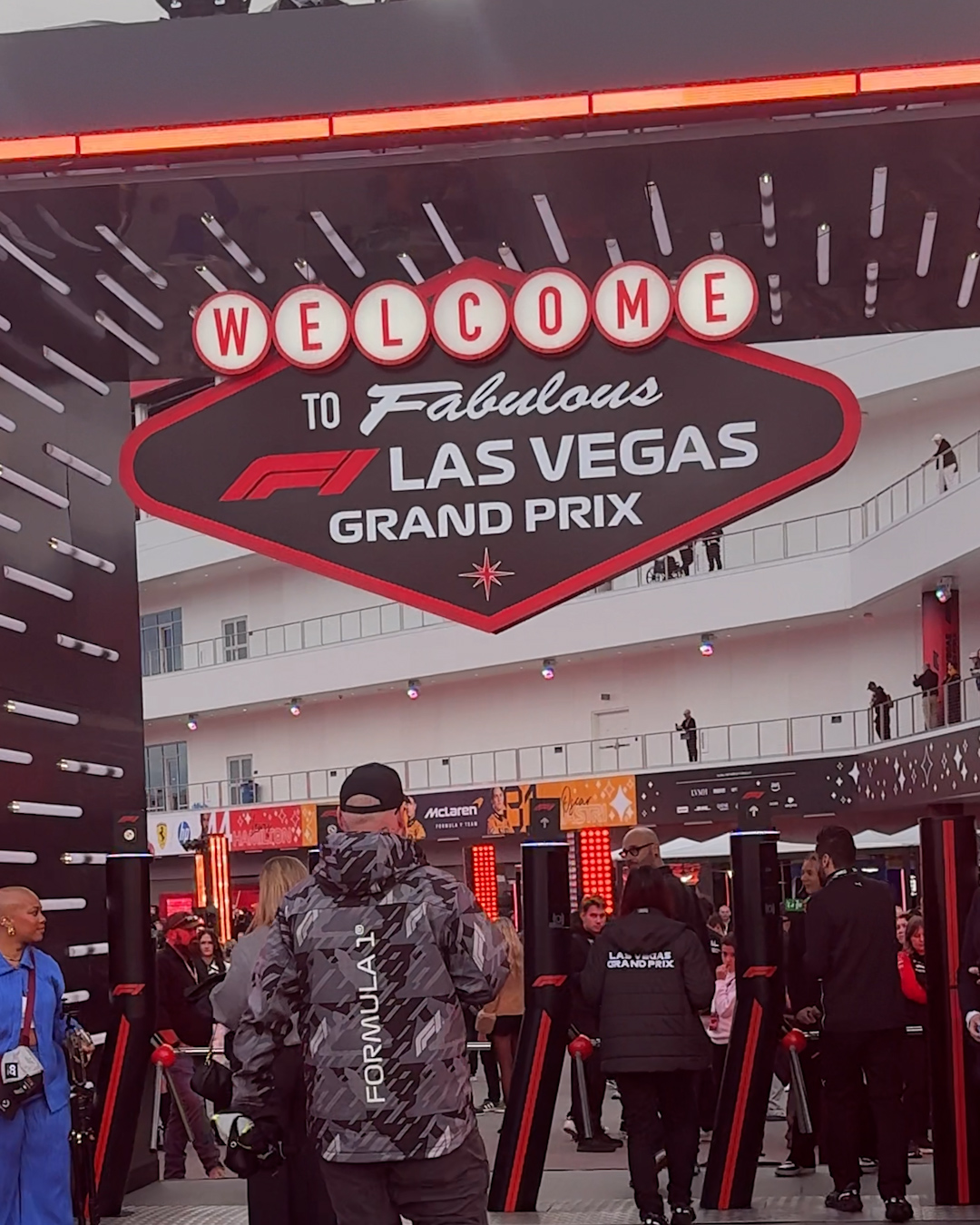
In 2017, Liberty Media, an American media investment group whose ownership portfolio also includes Live Nation, acquired a majority stake in Formula 1. Two years later, the hit Netflix docuseries Drive to Survive debuted under Liberty’s watch. The show chronicles the highs, lows, drama, and stakes of each season in a bingeable streaming package. In the years since, the company has loosened F1’s tie when it comes to sponsorships and exclusivity, welcoming an explosion of new fans to the sport. The Las Vegas Grand Prix, which debuted in 2023 with its inaugural race, has become a crown jewel within Liberty’s vision of what a modern sports league and event can become.
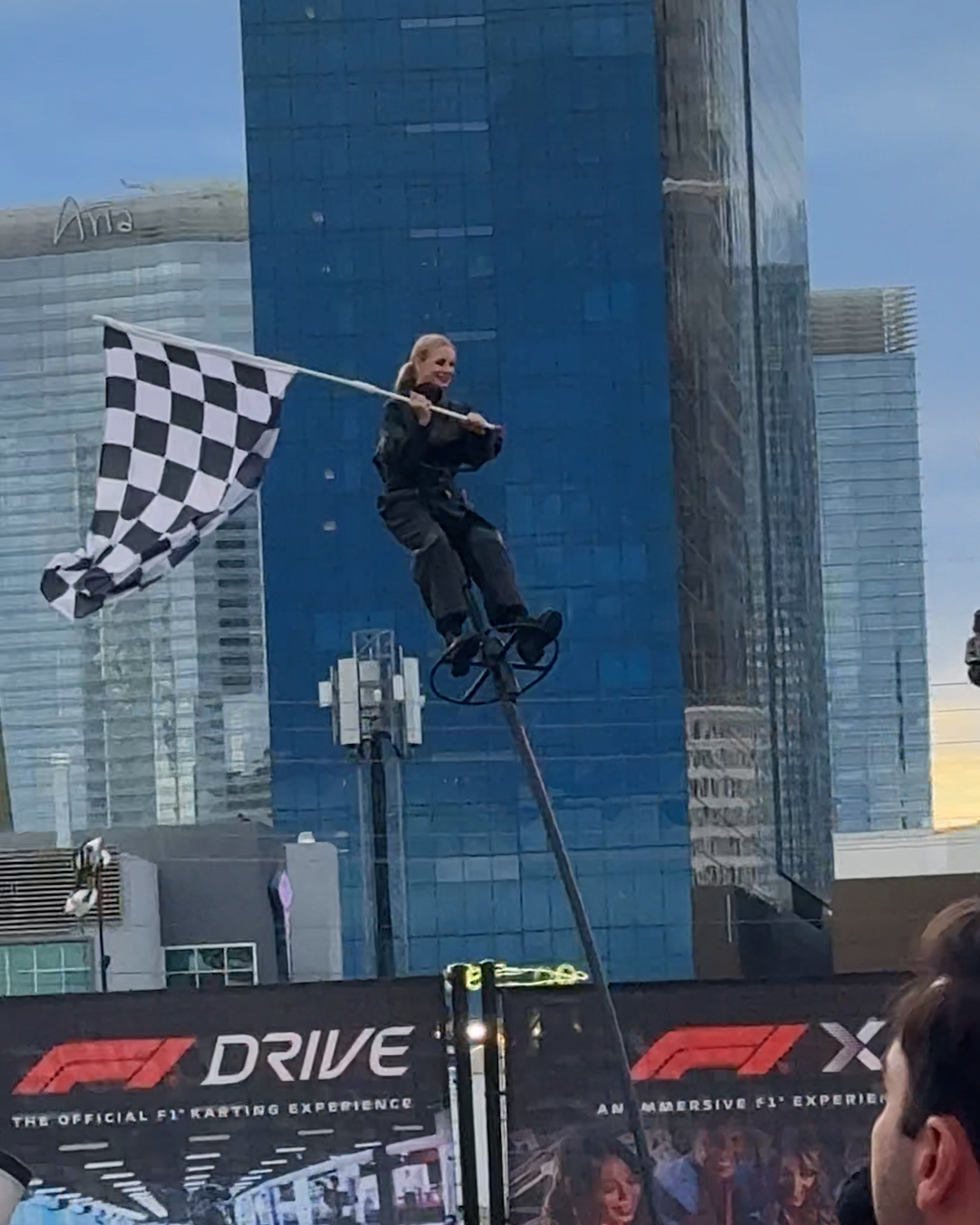
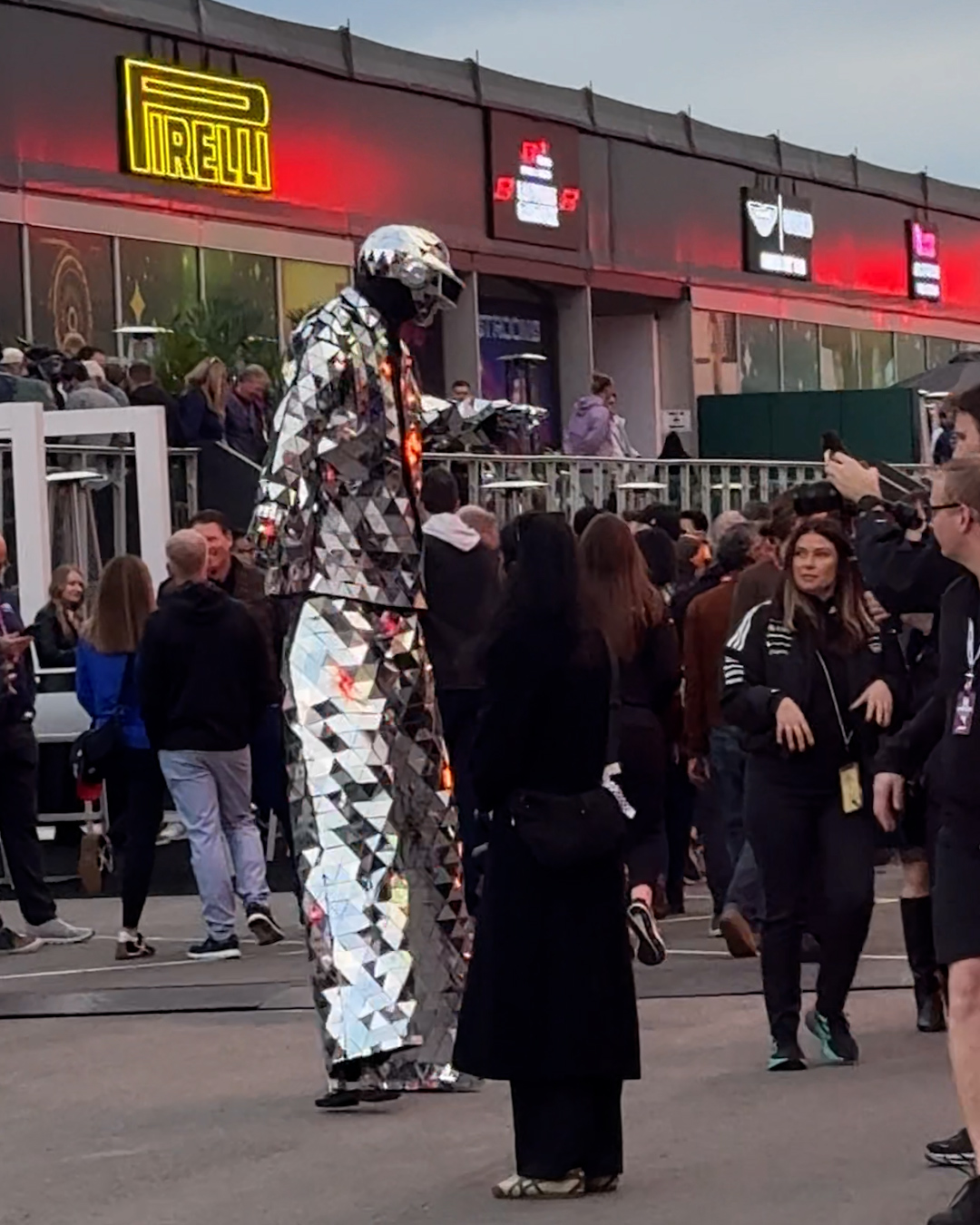
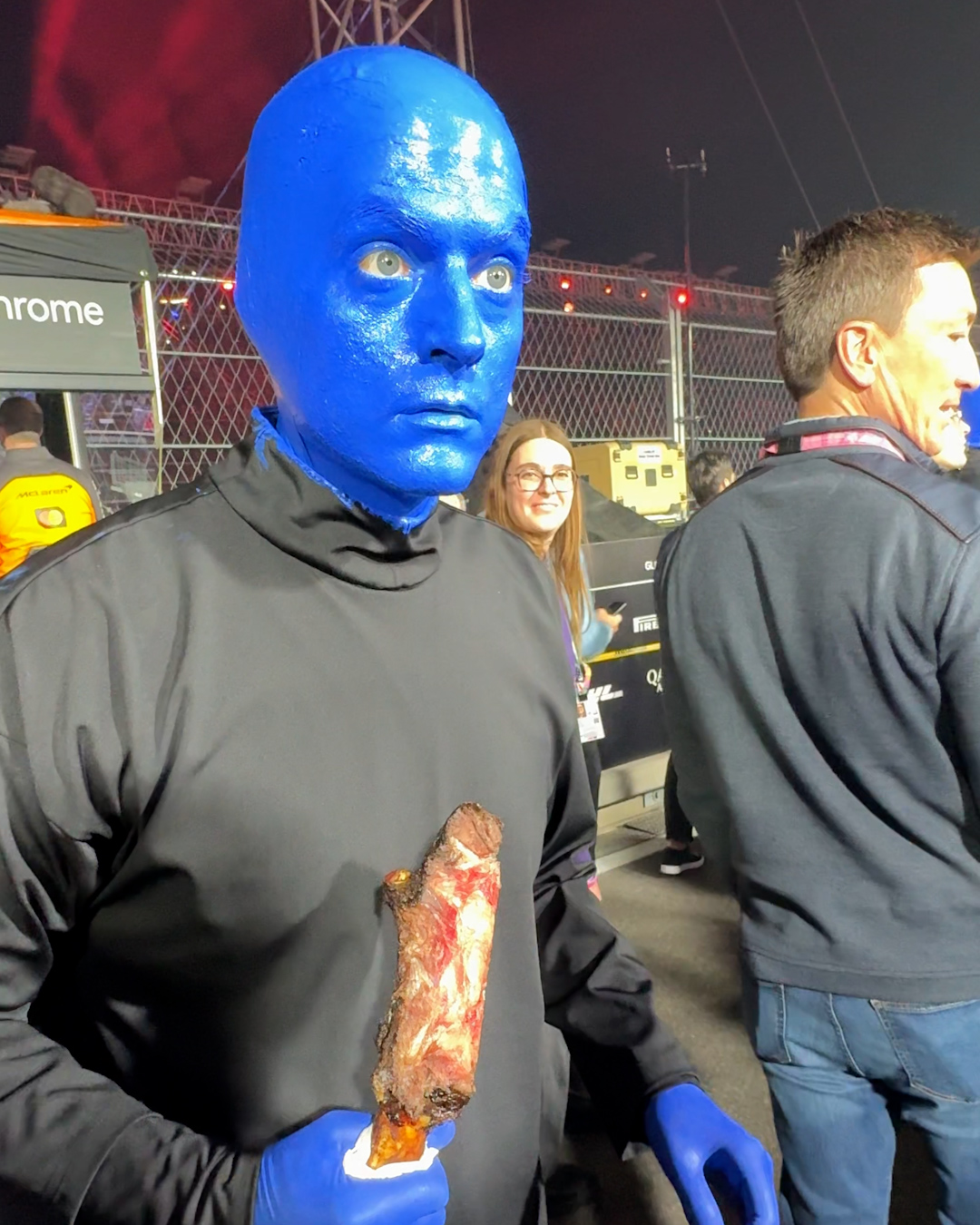
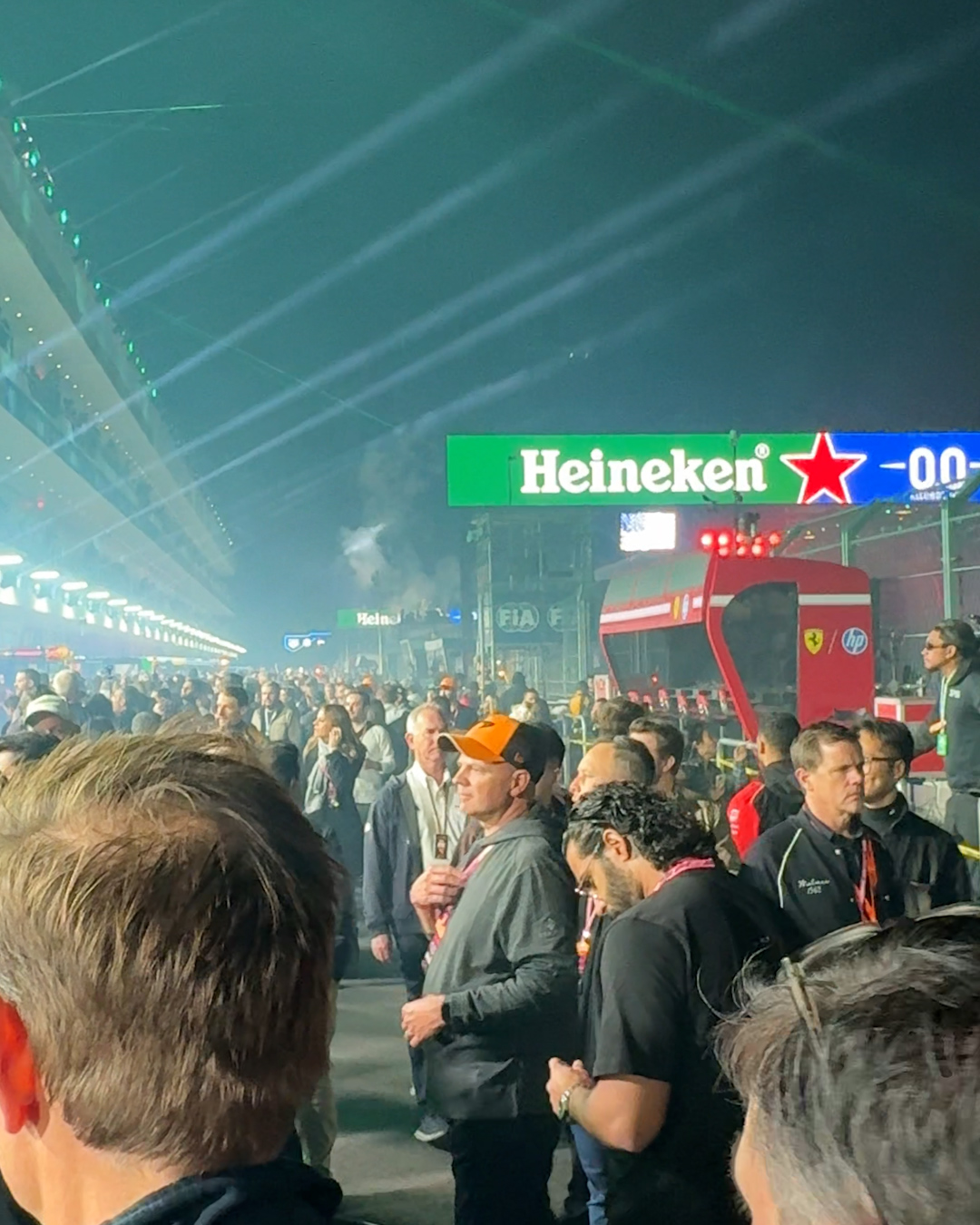
Six hours before lights out on the track, I wander through a private security entrance to the race’s main hub, known colloquially as the paddock. The exclusive area is adjacent to pit lane and has become a famed social scene in the era of Drive to Survive and TikTok vloggers. An In N’ Out stand sits adjacent to acrobats who swing on 40-foot poles, waving checkered flags. The Evian Hydration Station shares space with sponsored cocktail bars circled by outdoor heating units. Elvis impersonators and Daft Punk-looking stilt walkers commingle with fans carrying Heineken-branded goodies. Only a few steps from the end of the step-and-repeat red carpet (where both drivers and celebrities make their required entrance) a small army of engineers is piecing together each racecar under strict supervision from the FIA, the circuit’s governing body.
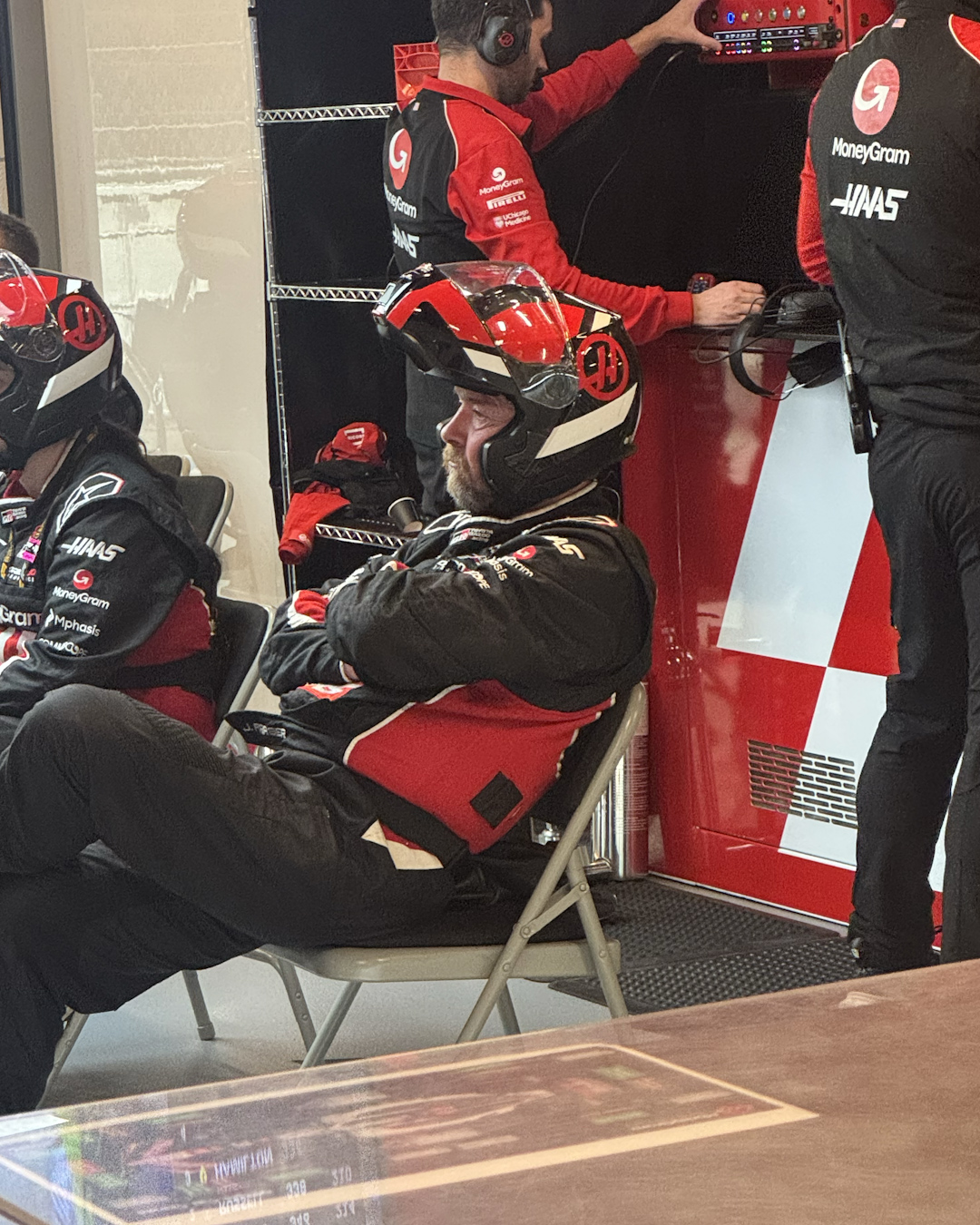
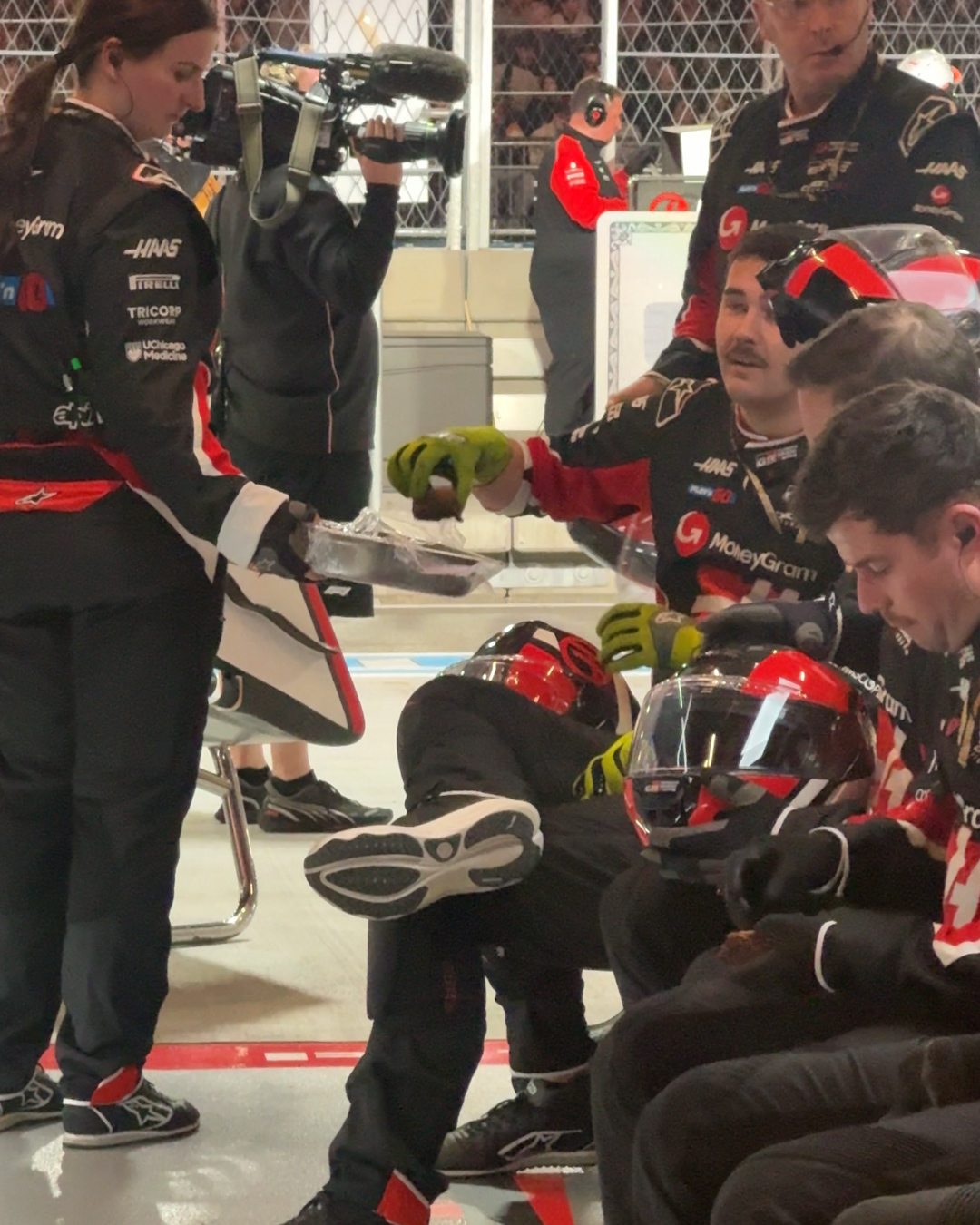
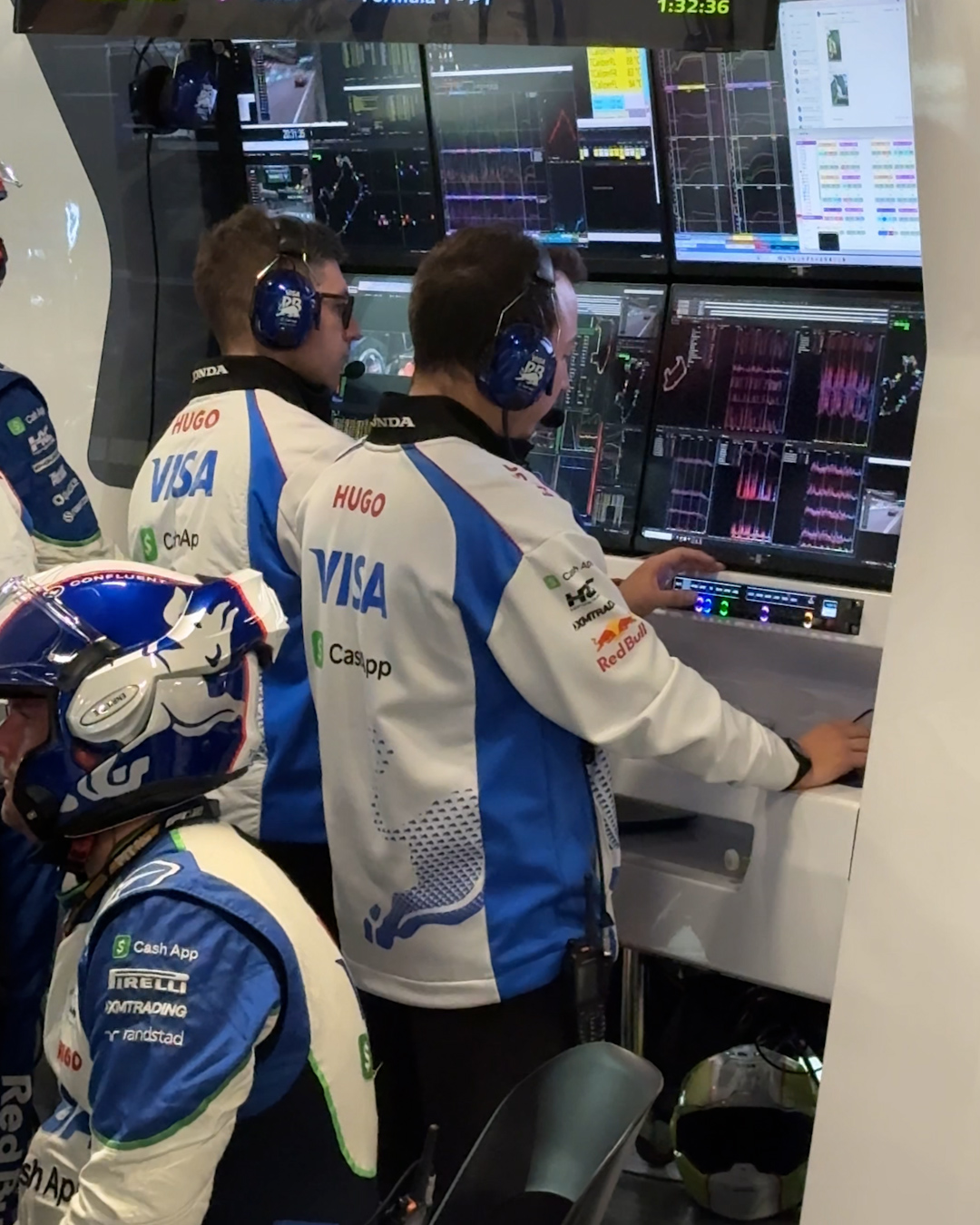
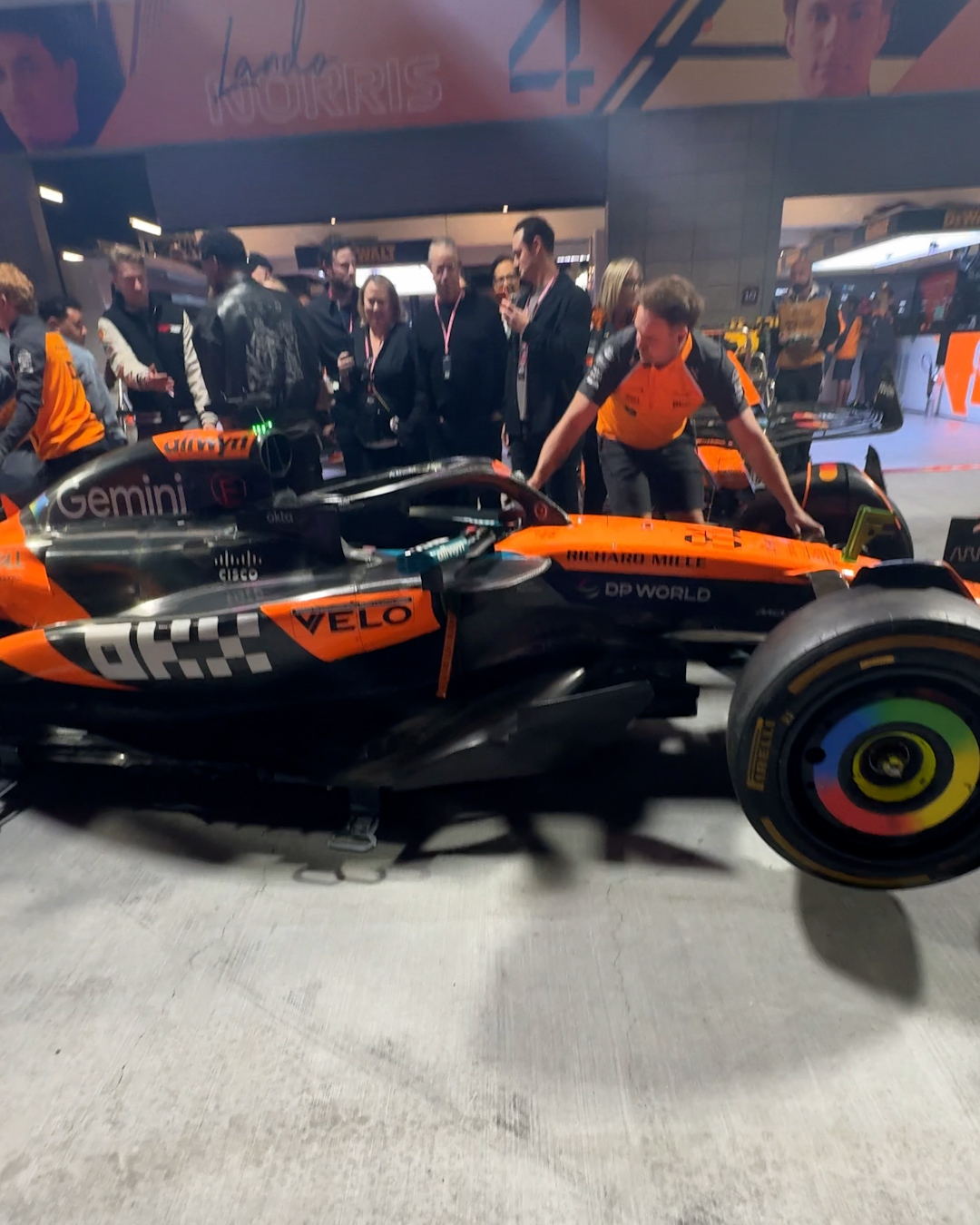
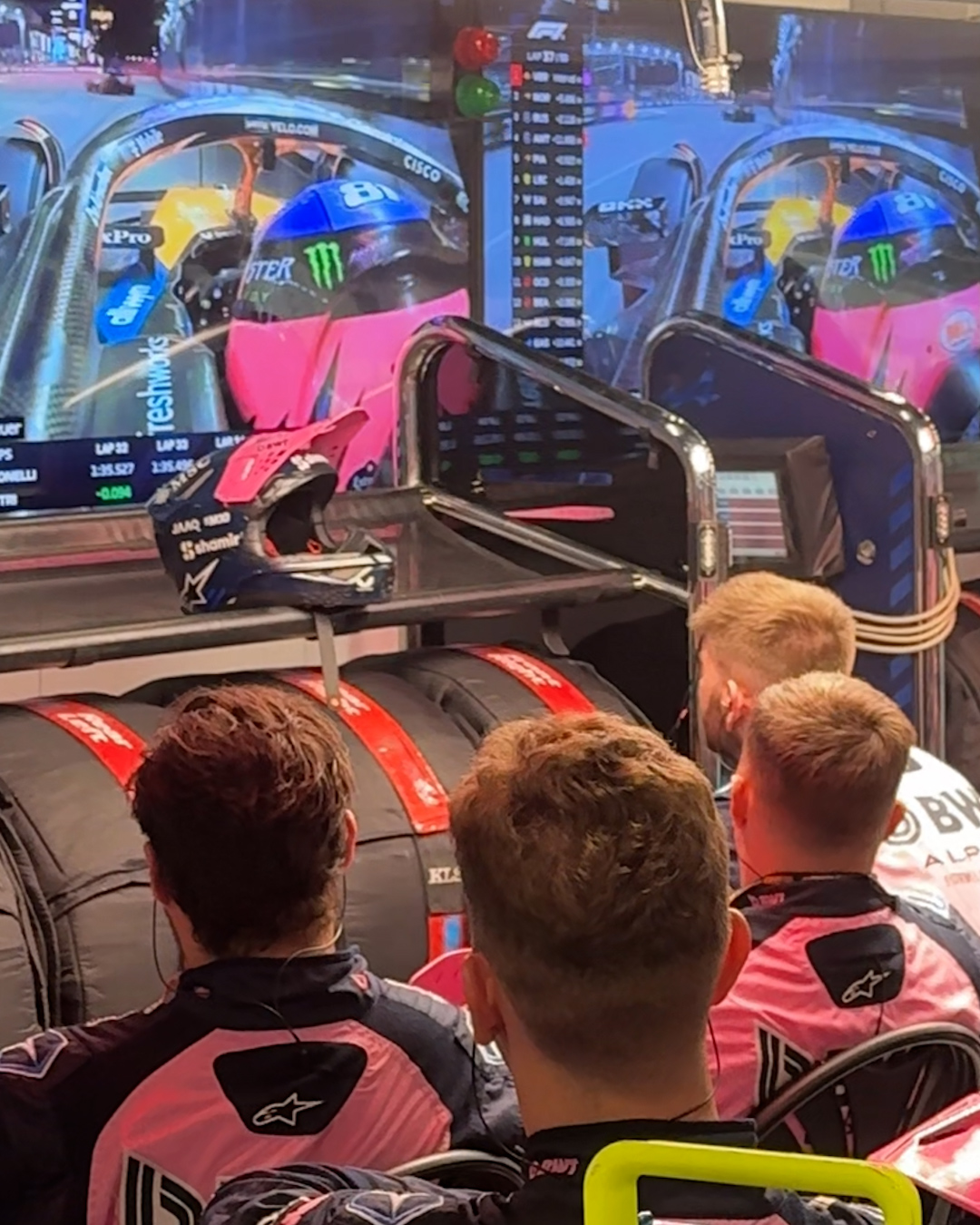
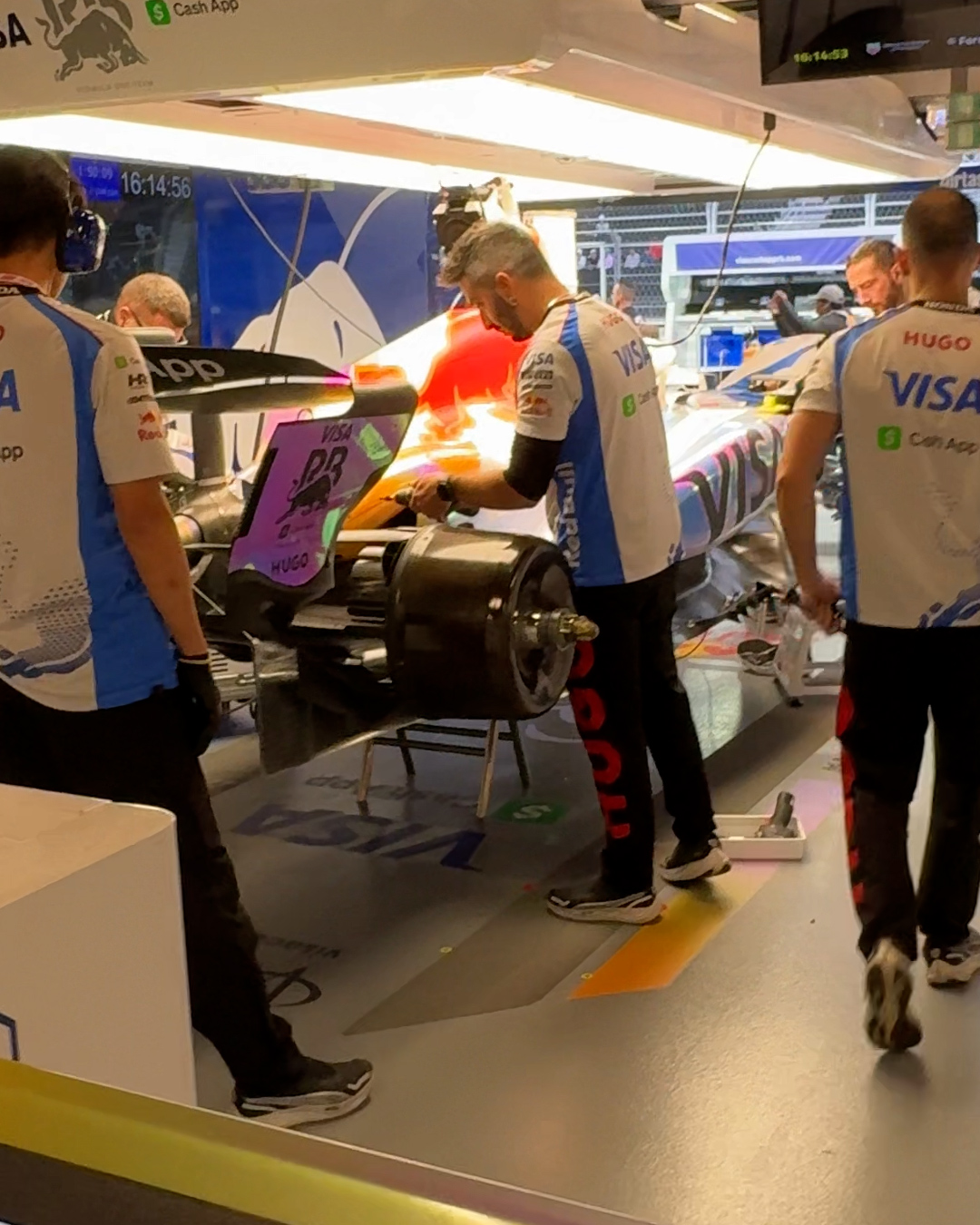
The levels of security to enter each garage vary from team to team. A crew member at Visa Cash App Racing Bulls, the Italian newcomers who debuted in F1 in 2024, describes the team as the cool kids on the block. I watch as the motors are tested and the screws are tightened on the outer shells of the team’s two cars. No one bats an eye when you whip out your phone to snap a close-up photo of an engine or computer screen displaying indiscernible data graphs.
The vibe is markedly different just a few doors down at McLaren. The British squad is flying high atop both the individual and team standings of the F1 Championship. Their strict no-phone policy is a reminder of the espionage-like environment that exists between teams as they each employ their own design secrets to the cars to gain a millisecond worth of competitive edge.
A crew member walks me through the garage as the cars are being fueled. It’s less than an hour before they hit the track. He lets me hold a spare chassis that is so light it could be papier-mache. He explains what each button does on one of Lando Norris’s alternate steering wheels. The pedals and buttons are unique to his hand size and preference. A small electrical malfunction could equate to death for a car traveling at 200 MPH down the Las Vegas strip.
Despite operating under immense pressure, the crew members will gladly tell you about how many censors are used to measure the temperature of tires during the race and the countless other microscopic details that make F1 tick. They have no idea who the VIP with 3 million Instagram followers is gawking at them from the VIP viewing area in each garage. When asked who their favorite celebrity sighting at an event is, most seem puzzled; all stars have started to blur together after Brad Pitt came during the filming of Apple’s F1 film.
“You want to hold it?” the McLaren engineer kindly asks, dangling Norris’s steering wheel out in front of me.
If the billboards, ticket packages, and celebrities mold F1’s glitzy perception to the outside world, the energy inside the garage is familial. After the grueling 9-month season that spans Las Vegas to Qatar, London to Singapore, and more, the technical research division continues as a year-round, nonstop gig. Work-life balance isn’t a thing here. Most crew members sacrifice “normal” adulthood for a trip on the traveling circus. One of them describes the environment as “high school on wheels,” crew members across teams socialize, date, and vacation together. They find family, feuds, and plenty of drama within their motorhead social circle.
I ask a spry talent manager who has worked with a number of F1 drivers what the industry thinks of Vegas. He explains that the sponsorship opportunities and obligations, both here and in Miami, far outsize any of the other stops around the globe. Once practice rounds and qualifications kick off, every driver’s schedule is packed with media appearances and meetings that help boost the organization’s bottom line.
Earlier in the week, before the hordes of fans descended into Vegas’ neon-encrusted temples, he tells me that he and Norris played baccarat on a casino floor without being swarmed or recognized. A lone fellow gambler at their table played alongside the F1 superstar without a hint of suspicion about the world-famous athlete he was rubbing shoulders with. After the guest proved to be a good luck charm for Norris’s dice rolls, the British racer mused that they should bring him to the track on race night and have him rub the car for good luck.
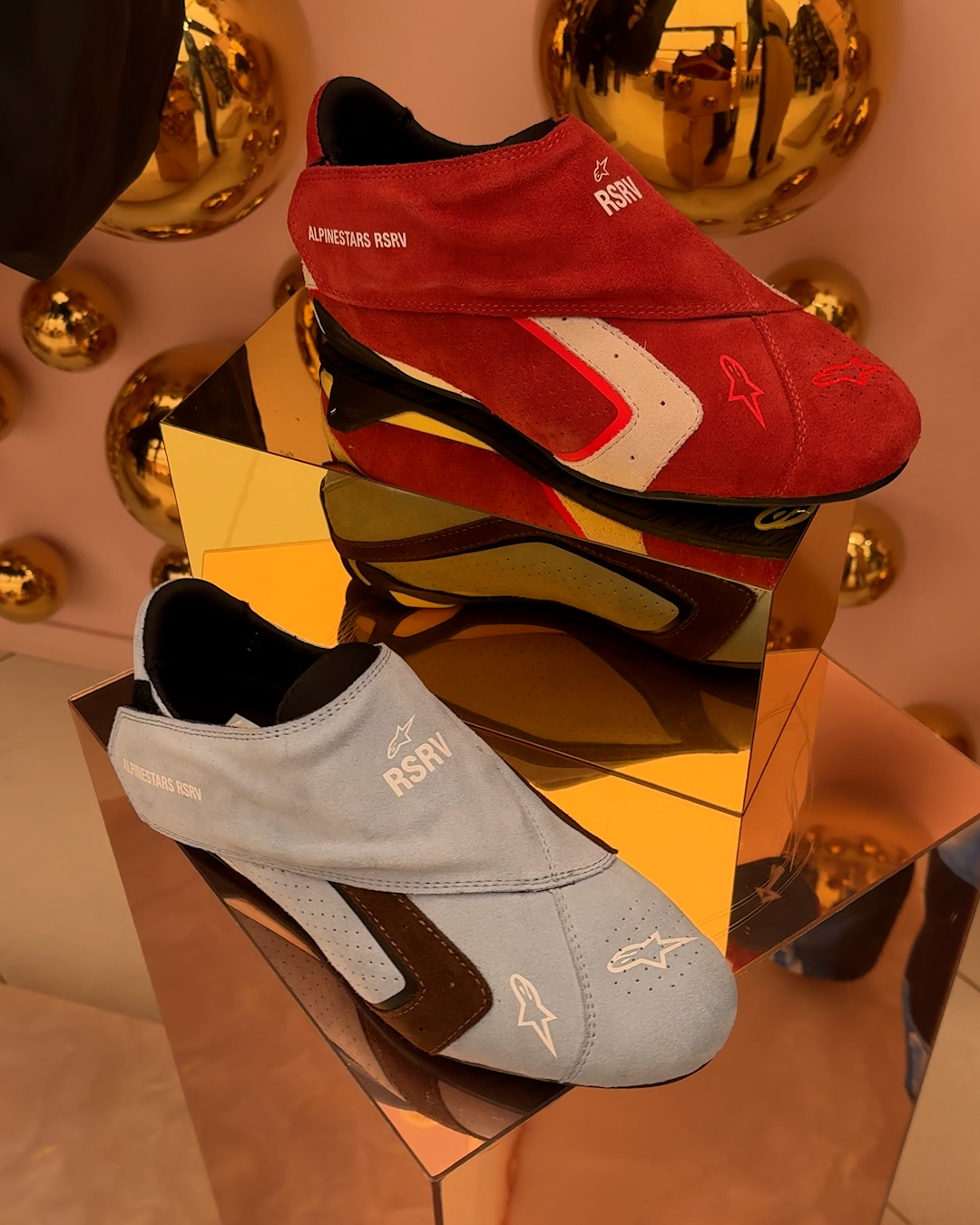
Over pre-race dinner, I spoke with Gabriele Mazzarolo, the head of Alpinestars, a company founded by his father in 1963 that is more or less the Nike of motorsports apparel. The company currently outfits five F1 racers in their top-of-the-line technical gear, including both McLaren’s Norris and Oscar Piastri, who are top of the individual race standings going into today’s race. Mazzarolo is soft-spoken and doesn’t give many interviews. “When they ask what’s next or what’s new, I don’t have much to say. The people who need to know those things will know,” he explains, harkening back to the sport’s lock and key information economy.
Alpinestars has been a foundational part of Formula 1 long before Netflix cameras invaded the hospitality suites. Mazzarolo shares stories of his own motorsport excursions, driving personally constructed cars across barren corners of the United States for long stretches at a time. Denise Focil, his wife of more than two decades, has also seen F1’s transition from niche European interest to global celebrity sensation. Focil started her namesake fashion brand in 2009. In recent years, she’s founded Alpinestars RSRV, a luxury offshoot of the brand that uses deadstock materials to craft ready-to-wear leather jackets, boots, and more. Relatively still in its infancy, the brand has collaborated twice with Balenciaga and has become a favorite among race-frequenting celebs like Machine Gun Kelly and Metro Boomin.
Despite the sport’s cultural boom, Focil can’t help but reminisce about the early aughts years of pre-glam F1, when there were fewer cameras and looser restrictions on guests and attendees. Even legacy partners face strict caps on how often they can invite friends and business colleagues to races to see their life’s work up close and in action.
Mazzarolo, an old-school Italian workaholic, couldn’t be further removed from the world of Instagram reels. If F1 is at the top of the motorsports pyramid, the planks beneath represent an entire economic industry tied to manufacturing and smaller market racing like motorbikes, rally cars, or drag races—an entire economic sphere that all benefit from the rising tide of F1. The dynamic isn’t dissimilar from the growth of Fashion Week, with perhaps idealistic oversight in place, benefiting far-removed leatherworkers in rural Italy.
Trip over, I ponder if F1 Vegas’s digital gratuity has real economic trickle down as I head to the airport.
“Flight is soon?” my driver, Marius, asks. I tell him I’m running well ahead of schedule. “I was hoping for an excuse to drive fast!” he laments.