About a month a go the third Fuck Parade stormed through London’s East End, over 200 apoplectic protestors raged down Brick Lane, with the event seeing the vandalisation of the Cereal Killer Café: an establishment that sells only cereal, for up to £4.20 a bowl. The right wing media had a field day obviously, suggesting these ‘thugs’ and ‘mobsters’ were entirely misguided, and totally senseless.
FIND out how London’s changing with our series exploring the shifting city.
It’s undeniable, however, that this small business is yet another symptom of hyper-gentrified London. In these Tory times, when grass roots activism often feels like the only option for the marginalised to be heard, it’s wearying to work out what else, beyond direct action, we can do to actually foster links within communities, and slow down a process which seeks to erase any form of cultural diversity and history from our city centres.
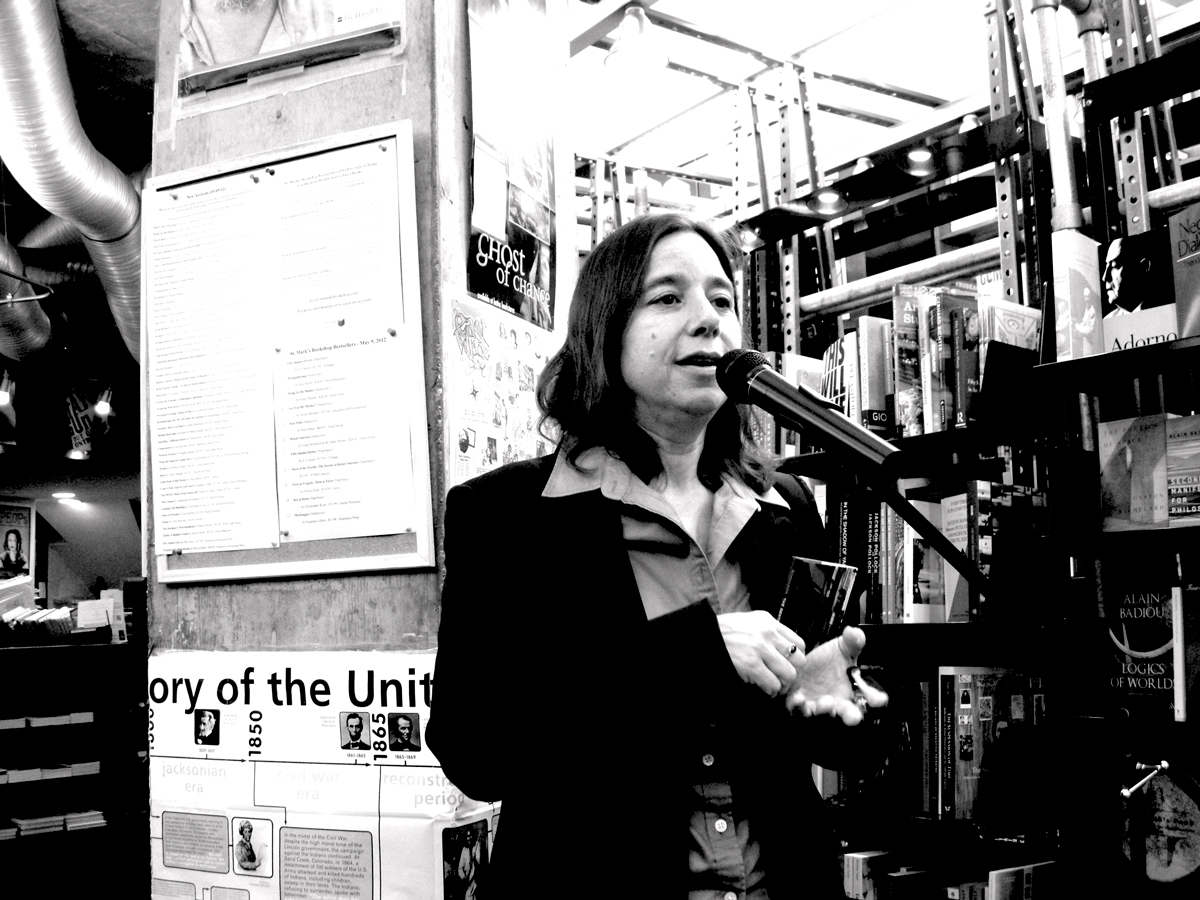
The legacy, and continuing work, of Sarah Schulman – an unstoppable activist and academic – takes her experiences of living through the changing landscape of New York, as well as her involvement in incredibly influential activist groups such as ACT UP (The Aids Coalition to Unleash Power), or her role on the advisory board of Jewish Voice for Peace, and offers a practical lens through which the individual can contribute to more community cohesion.
“Well white people are going to grab everything if you let things evolve without design and intervention” she suggests, as we email swiftly back and forth. “Gentrification cannot be controlled without governmental policy.” She’s resolute that a movement needs people pushing in all sectors: everywhere from government policy to action on the streets.
Sarah’s means of communication is direct. She doesn’t beat around the bush, she attacks it, “[successful activist] movements need to be focused on reasonable, winnable and doable goals. We need simultaneous actions on multiple fronts. And, since change is not made by majorities, we need a critical mass that is effective in their efforts.”
But when direct action campaigning is either ignored, or entirely misrepresented on mainstream media platforms, alternative strategies must also be employed. She adds, “gentrification was created by large scale policy decisions, not by individual actions, and it cannot be reversed by individual actions. We need political solutions.”
This feels a little hopeless — what if you’re not an upper-middle class white Etonian? Schulman is quick to offer solutions for change outside mainstream political structures.
“Individuals do have responsibilities.” Phew. “Young white people moving into people of colour or low income neighbourhoods can follow some basic etiquette.”
(Sarah Schulman’s five steps for not being an awful gentrifier…)
1. Introduce yourself to your neighbours.
2. Join your building’s tenant association and your block association.
3. Give back to your community: teach kids to swim, and adults to read. Work at food pantries.
4. Shop at local businesses.
5. If there are legal means for protecting low-income tenants or businesses, use your skills and time to contribute to realising these rights for your community.
Engagement with the community around us is important in the face of social cleansing, and already people across London are mobilising into nurturing the diversity and uniqueness of their city. The problem with the new luxury apartment owning gentrifiers of our cities is a sense of both the deserved, as well as a real feeling of the timelessness of their own presence. What is the impetus for these people to be active in their engagement?
“In ACT UP, I was HIV negative, but worked as an advocate for HIV positive people. But solidarity is a very tricky business, and easy to corrupt. I think the four basic tenets of solidarity are: the responsibility to intervene. The responsibility to listen and to hear. The responsibility to be effective and the responsibility to be morally consistent.”
We all have a relationship with gentrification because it is happening now, around us. In the cosmopolitan centres of the world everything is in flux. This is not new — forms of gentrification have been happening for centuries and there is, in part, a need to accept the altering landscape of our cities. But what Sarah is asking is that we redress how imbalanced the equilibrium between newness and social displacement really is. The opportunities to get involved are plentiful: join the fight to save Goldborne Road, add your voice to Sisters Uncut to prevent further cuts to domestic violence services for women, save the George Tavern, save Brixton Arches, support the maintenance of London’s queer venues, fight for social housing. But first, listen to Sarah Schulman. Getting to know our local communities, and putting love back into the landscape will make us much more enraged at the sight of the first bulldozer.
Wed 11 November 5.45 – 6.45pm @ Soho Theatre
Penny Arcade and Sarah Schulman. GENTRIFICATION OF THE MIND. In an on-stage conversation Arcade and Schulman recall the rebellious queer culture, and downtown New York city arts movement of the AIDS years (1981-1996) BOOK TICKETS
Credits
Text Tom Rasmussen