Of the many hallucinatory experiences I had while visiting the Apple HQ for their iPhone launch — chief among them, watching Travis Scott and Mr. Beast take a selfie with Tim Cook — bumping into Inez and Vinoodh Lamsweerde at the Silicon Valley Four Seasons motorcourt was relatively ordinary. But why were the maestros behind some of the most iconic fashion photography of the past four decades clocking time in Palo Alto? There was too much going on to speculate too much.
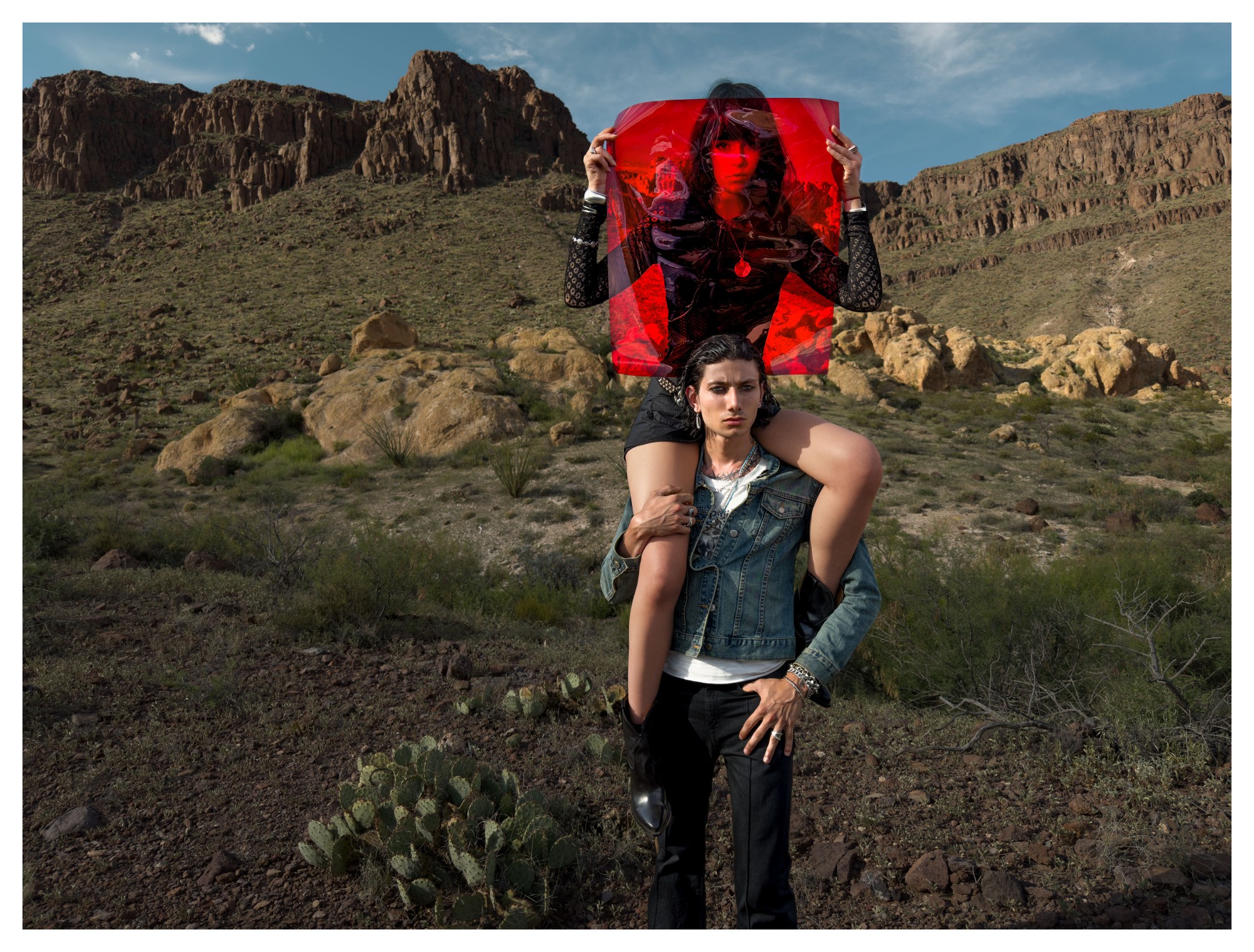
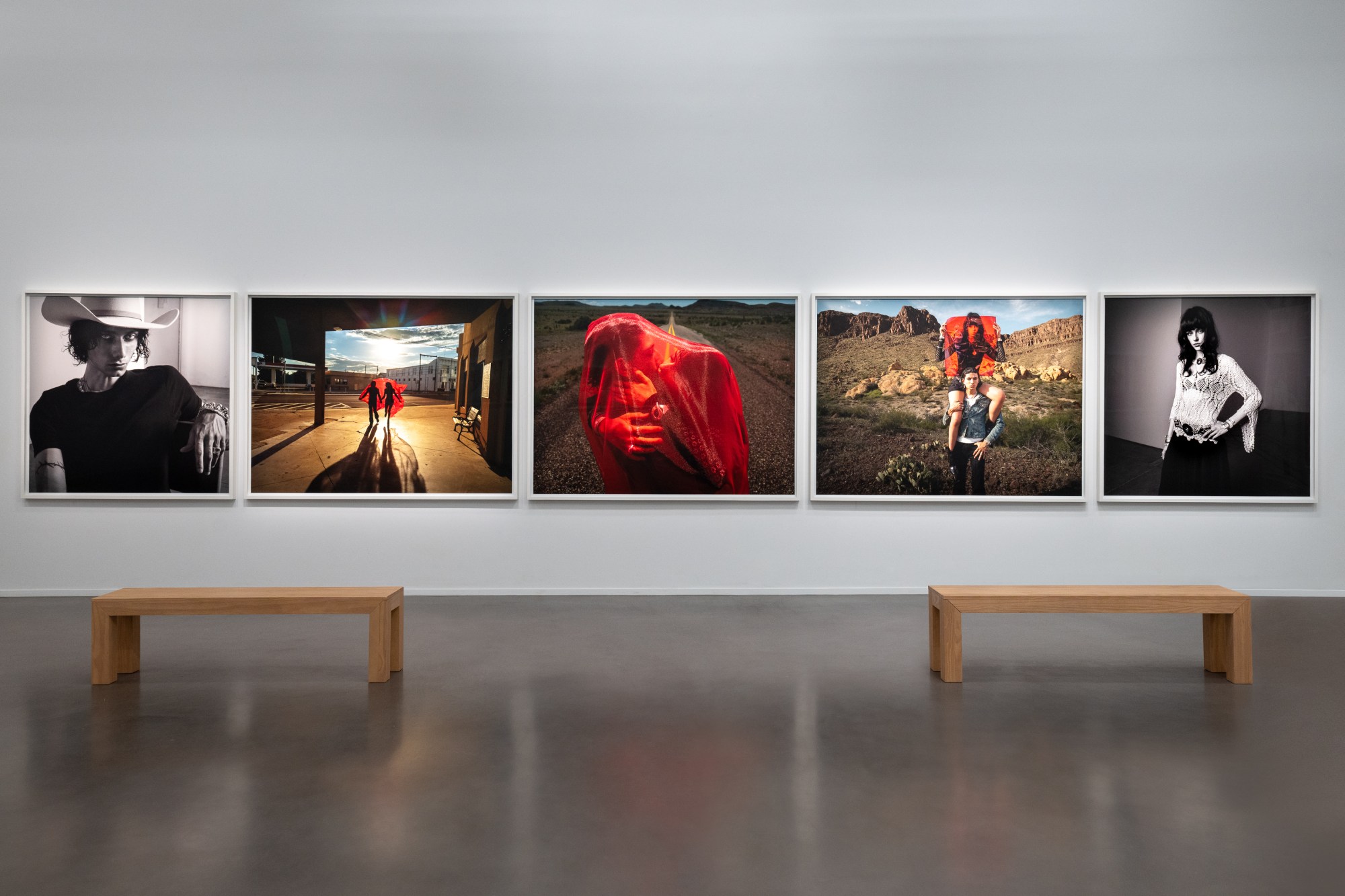
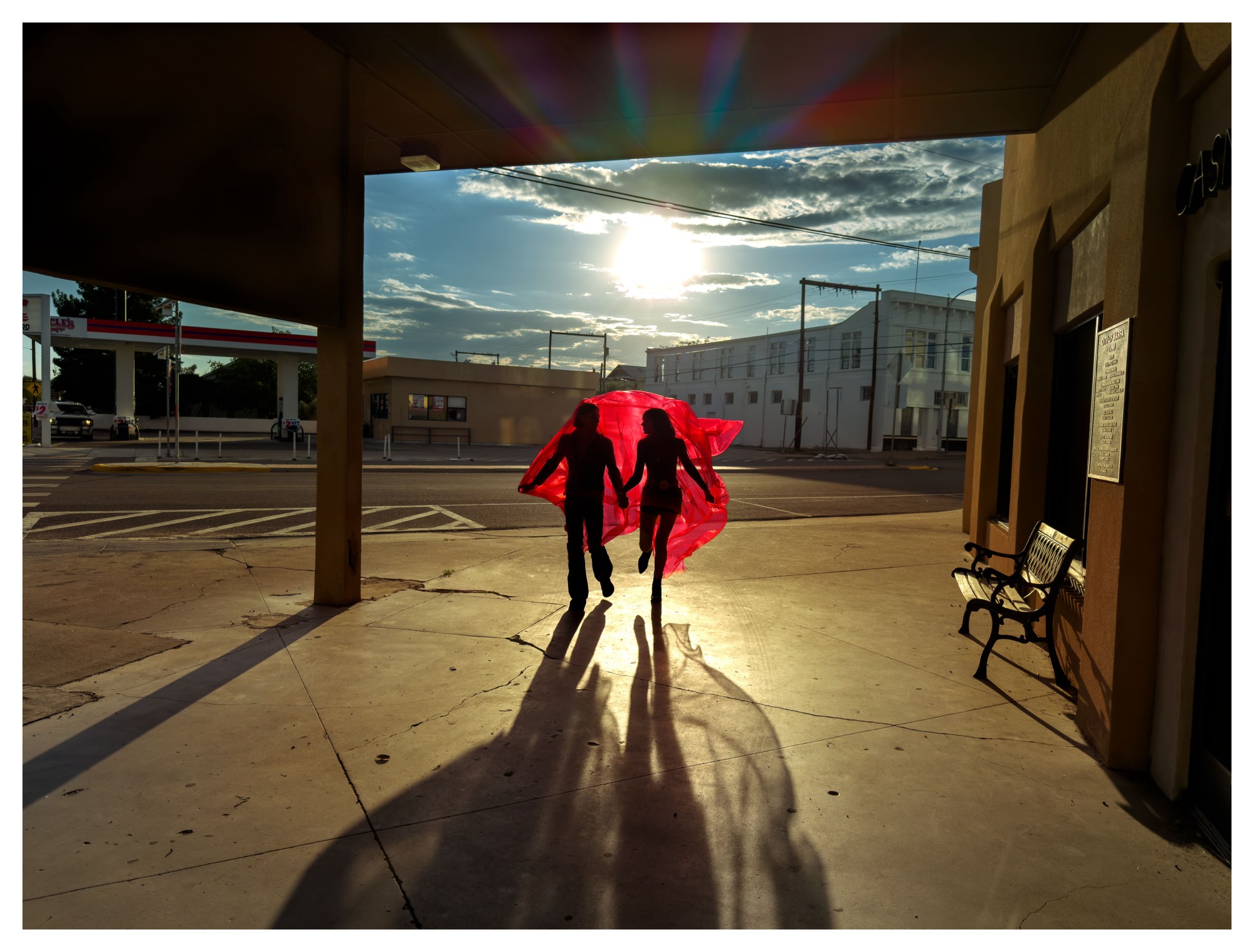
Fast-forward a week, and I’m at the opening for an exhibition titled “Joy, in 3 Parts” which features photographs shot on the new iPhone by Mickalene Thomas, Trunk Xu, and…Inez and Vinoodh. Now it all made a lot more sense. But looking at the gigantic prints of their portraits of their son and his girlfriend taken in Marfa earlier this year, I still had questions. I’ve been thinking a lot recently about the proliferation of Slop and the TikTok-ification of fashion imagery, and I’m fascinated by how Inez and Vinoodh (and their peers) manage to make monumental photographs in a society that seems to be begging for the opposite.
Part of it is that Inez and Vinoodh do engage very deeply with technology — in ways that are less gimmicky than they are magical and uncanny. Tech for them isn’t a wave to ride or a box to check, but rather something that allows the fantasy to be executed. When I was a baby editor at 032c, we ran a cover by Inez and Vinoodh that centered on the dancer and movement director Stephen Galloway. In one of the shots, they had used (I assume) photoshop to make Stephen’s already-quite-big hand 75% bigger. The effect — and others like it in the shoot — were mesmerizing in how they altered the image and gave it an extra layer of surreality.
Curious about this and many other things, I walked up to them for a chat.
Thom: So I was raised on your genius — my first job ever was at 032c when you guys and Mel [Ottenberg] shot all those amazing covers. The one with Rihanna and –
Inez: The one with Stephen Galloway.
Thom: With those plays on portions and his giant hand. I loved that one. Anyway, I’ve been wanting to ask you. Since you guys started working in photography, the tools of creating a photo have become so much more democratized. Does the fact that everyone is now raised constantly making their own images change how you approach making images?
Vinoodh: No. [Laughs]
Inez: It’s so great that photography is now equal to language. It’s the way everyone communicates. But, for us, it’s still the stuff that sits in our heads and comes out through the camera.
Thom: The camera is just a tool for making the idea.
Vinoodh: And it’s an incredible tool, but you need humans to make it and connect with other people.
Thom: Something I love about the world now is that young people are so literate in image culture. If I wanted to know who you guys were when I was a teenager, I’d have to collect the right books and buy the right magazines. Now, I see kids dropping your work as references left and right.
Inez: There’s so much more access now to everything. With the whole history of photography and art, it’s so important for everyone to keep seeing it and seeing exhibitions of people who made work in the past. There’s a really long lineage of people making stuff with a camera, and it’s important to preserve that.

Vinoodh: It’s very important to see things printed, because your brain will read it differently on the screen.
Inez: I feel like our world is kind of divided between seeing things on the screen over the phone and seeing things as billboards on the street. Everything in between is sort of–
Thom: Dead.
Inez: We both feel that gallery shows with photography are so important. You can experience it as a singular object, not so much as something you just swipe or drive by. You can experience every details in someone’s face, in their hands, the size of it is just so magical. You can go up close and dissect someone — and that’s very much how we work. We’re very obsessed with faces, like how an eye sits in a socket, how the eyebrow sits above it, where the cheekbone lands, all that stuff.
Thom: How does technology play a role in your work? Because it is often quite technologically advanced, but not in a gimmicky way.
Inez: We started using technology so early, pre-photoshop back in 1991, when there was one machine at one lab with an operator, and we would sit there for nights, just working on it.
Vinoodh: What I really learned was to think in layers — about what every layer means. If you look back at our work, it’s never one thing. There’s all these different meanings.
Inez: The idea that you could go into the computer and change things is now normal for people. But back when we started, it was a big revelation. For us, it was incredibly mind-opening in terms of how we thought about the images we were making.
Vinoodh: Next year, we have our show in Den Haag, where we’ll have 40 years of our work. The way we created the show is that we almost took time out of it, because no one can see which image was taken 40 years ago.
Thom: And when you went and looked back at your older work, were there ideas in there that you had forgotten about?
Inez: It’s always that.
Thom: Tell me about the work you created for this exhibition — you went to Texas with your son and his girlfriend.
Inez: We really wanted to set out toward this idea of “return to paradise.” This idea of that generation being so focused on the intimacy they have with each other but also on preserving nature.
Vinoodh: And they’re both artists in their work, so nature is always a big subject.
Inez: We wanted to get the intimacy and vastness, set against this immense landscape, which is very inspired by Zabriskie Point. Our friend has a giant ranch in Marfa, and the phone couldn’t be seen, so we knew we’d be private at her ranch. Marfa is such a beautifully preserved art bubble, which really added to this feeling of the two of them in their love cocoon.
Thom: And I guess it’s a very intimate thing shooting on a phone, versus having a gigantic crew with you.
Inez: That’s the beauty of it. We love planning and then letting go, so the improvisation part is a big thing for us — no big lenses, no equipment, no camera bags–
Vinoodh: No 50 other people.
Thom: Do you think if you went to luxury clients and were like, “I’m going to shoot this campaign with my phone.” Would they be scared?
Vinoodh: People do it already. They just don’t talk about it.