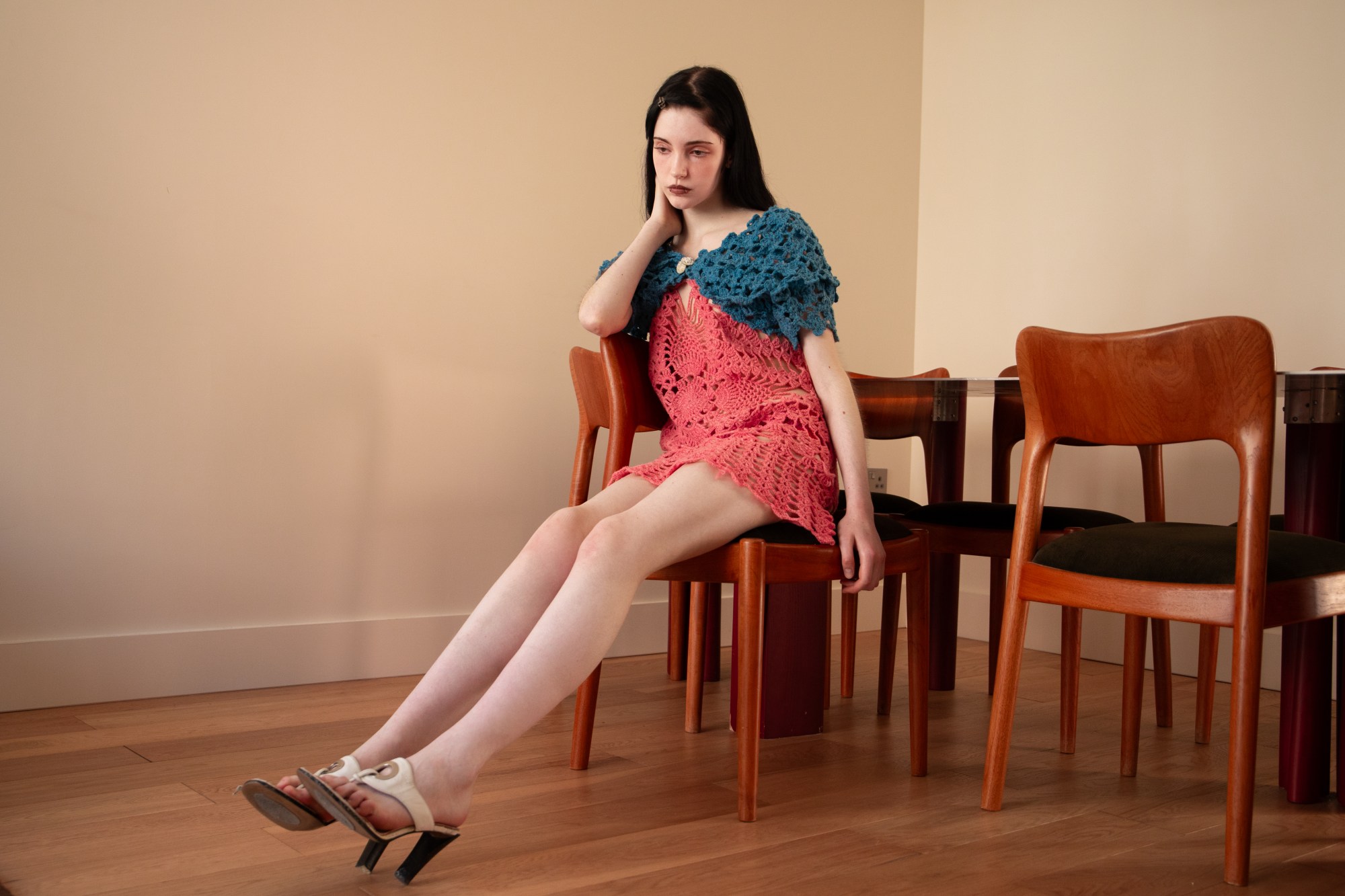
“I looked like a little cake,” says Katya Zelentsova, recalling the first dress she ever truly loved. “It was from a local market, very pink, very puffy, and absolutely horrendous. But my mom let me have it. She said, ‘It’s your mistake to make.’”
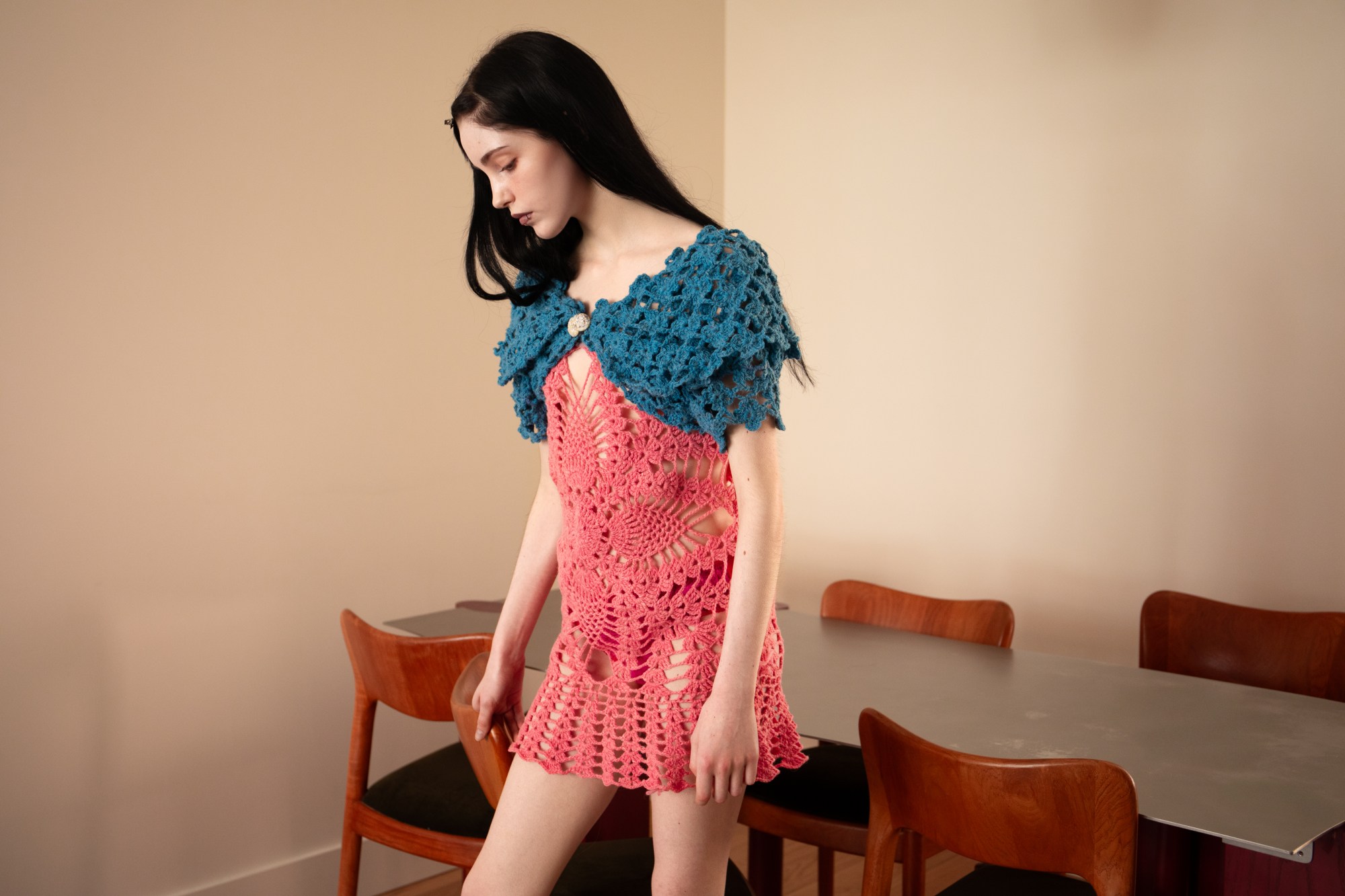
That early embrace of glamor, drama, and self-expression—no matter how left-field—still pulses through her work today. Zelentsova’s designs are tactile. She calls it “sentimental knitwear,” a phrase that captures both the intimacy of her fabrics and the feelings she hopes they evoke. Her Spring 2026 collection runs with the idea: crochet jackets, lace-paneled leggings, steampunk-studded tunics, and clingy jersey dresses designed to shift, morph, and surprise. Amid all this texture and play, everything still feels cool. Effortlessly sexy, even. “I’m not designing for a capsule wardrobe,” she says. “I want to make things that excite people. That cheer them up. That let them dress how they feel, especially when things aren’t feeling great.”
Born in Volgograd, in southern Russia, Zelentsova grew up surrounded by audacious women, clashing patterns, and extreme weather. “We had really hot summers and freezing winters,” she says. “So I think I got interested in how clothes work across seasons. Especially knitwear—how to wear it in the heat and still look gorgeous.”
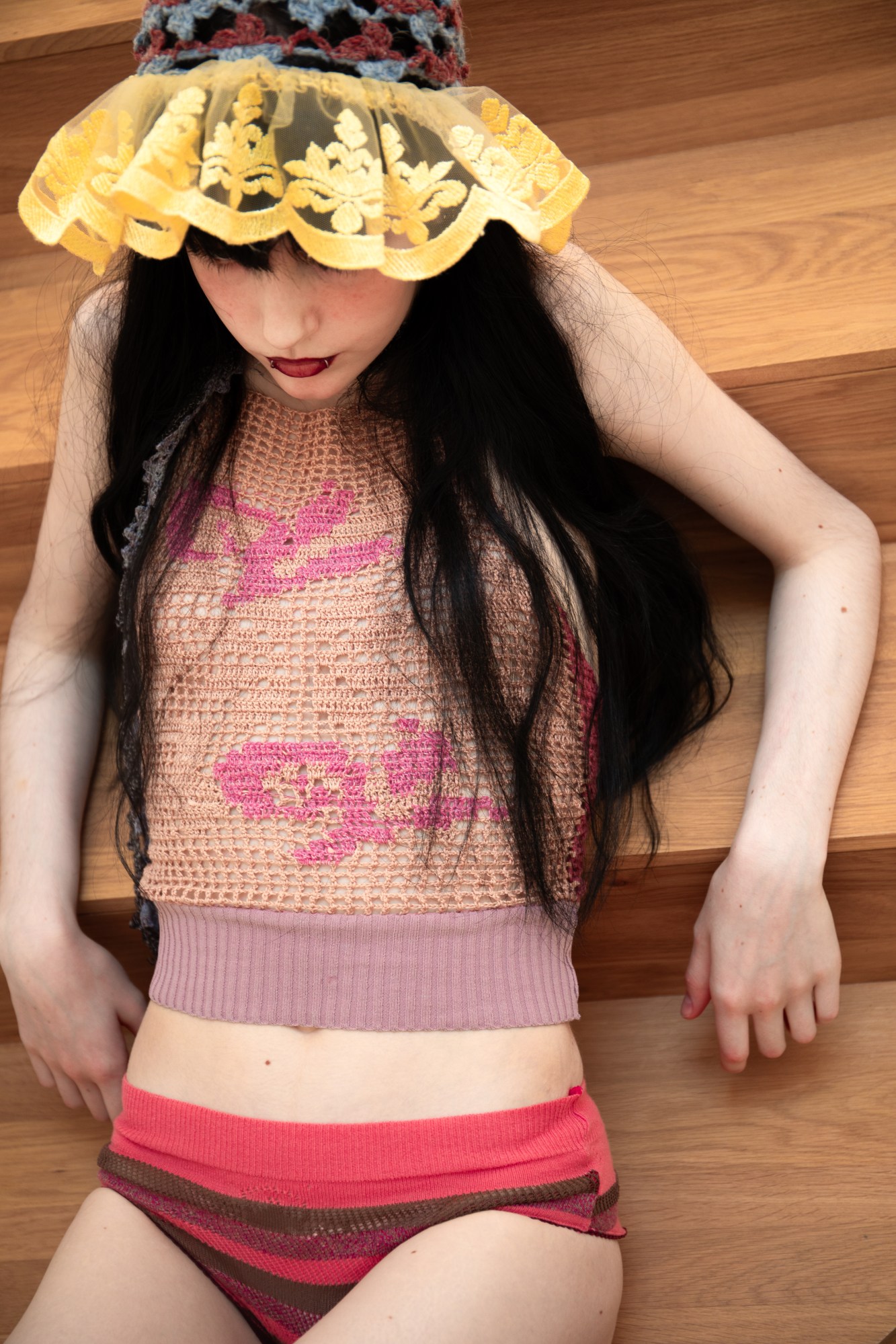
By the time she was ten, she’d declared fashion her destiny. She moved to London at 18 to study at Central Saint Martins, eventually falling in love with knitwear during foundation year. “I didn’t really know how to sew or draw. I wasn’t trained. But something about making my own fabric just clicked,” she says. “It gave me total control over the garment. Which, as a Virgo, I love.”
That obsession with process shows up in every stitch. She often uses deadstock yarns, soft merinos, cottony linens, viscose blends. The goal is always comfort, but elevated, sensual, slightly strange. “I spend a lot of time thinking about how things feel on the body. I want the material to hold you, not restrict you.”
Spring 2026 came together in two halves. The first dropped in February. The second, just released, bursts with bright color—orange, primary blue, pink—and new structural play. Inspiration came from a library find: black-and-white portraits by photographer Vanessa Winship. “They’re simple but emotionally loaded,” Zelentsova says. “Women in everyday clothes with little embellishments or gestures that make everything feel delicate.”
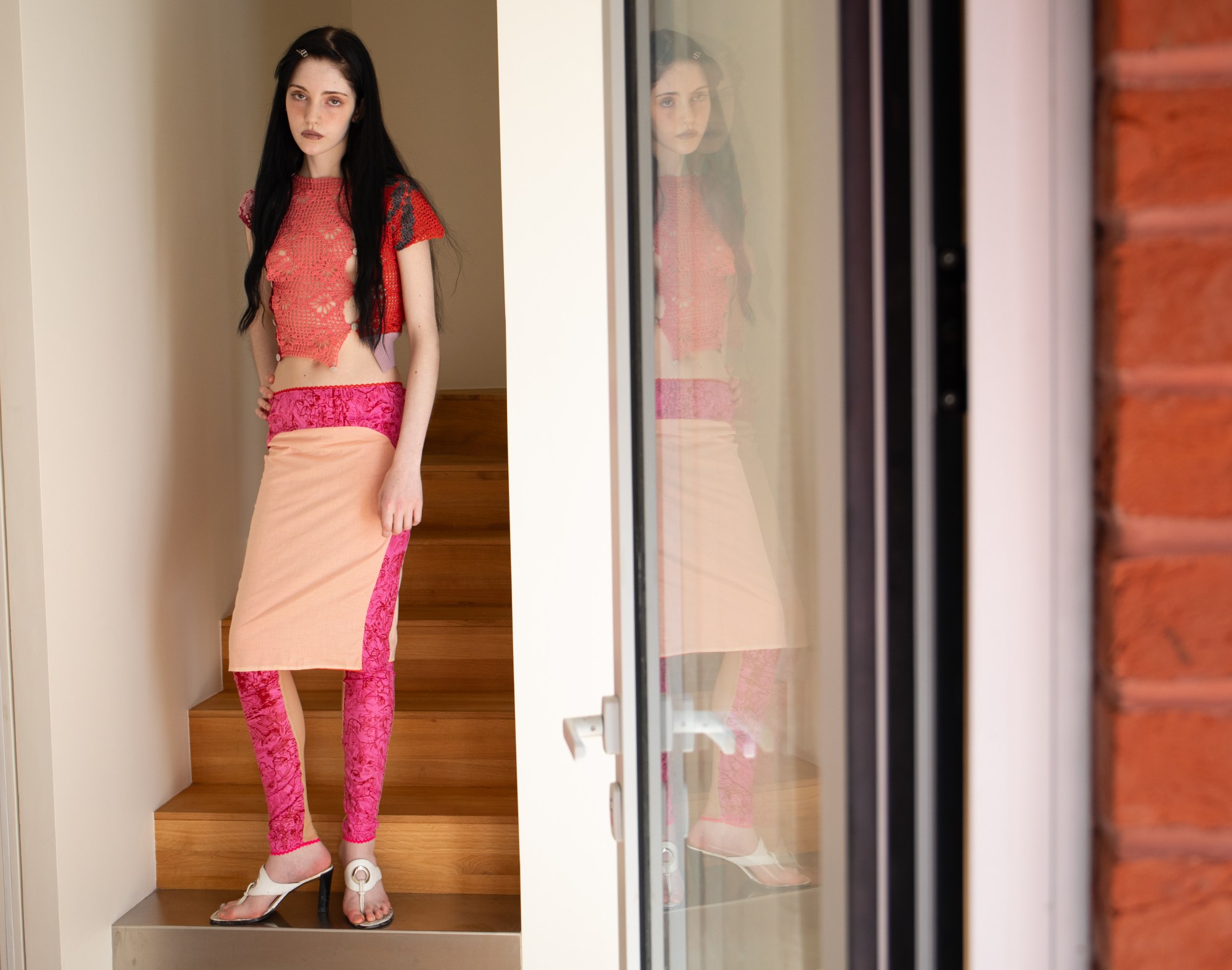
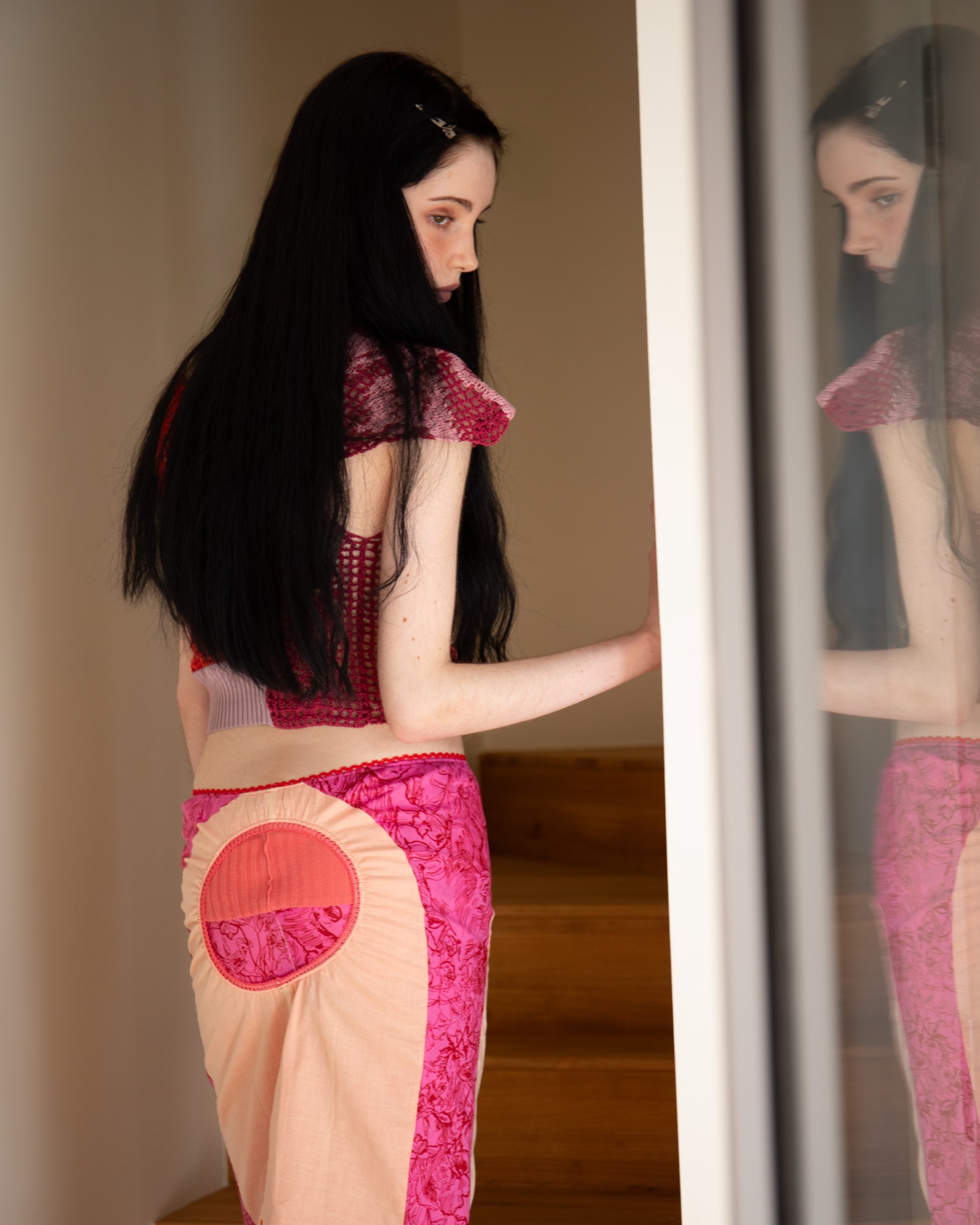
Another influence: Soviet-era DIY culture. “I kept thinking about these improvised objects, such as bags made out of volleyballs, mugs turned into kettles,” she says. “That kind of ingenuity really speaks to me. It’s about finding beauty in constraint.”
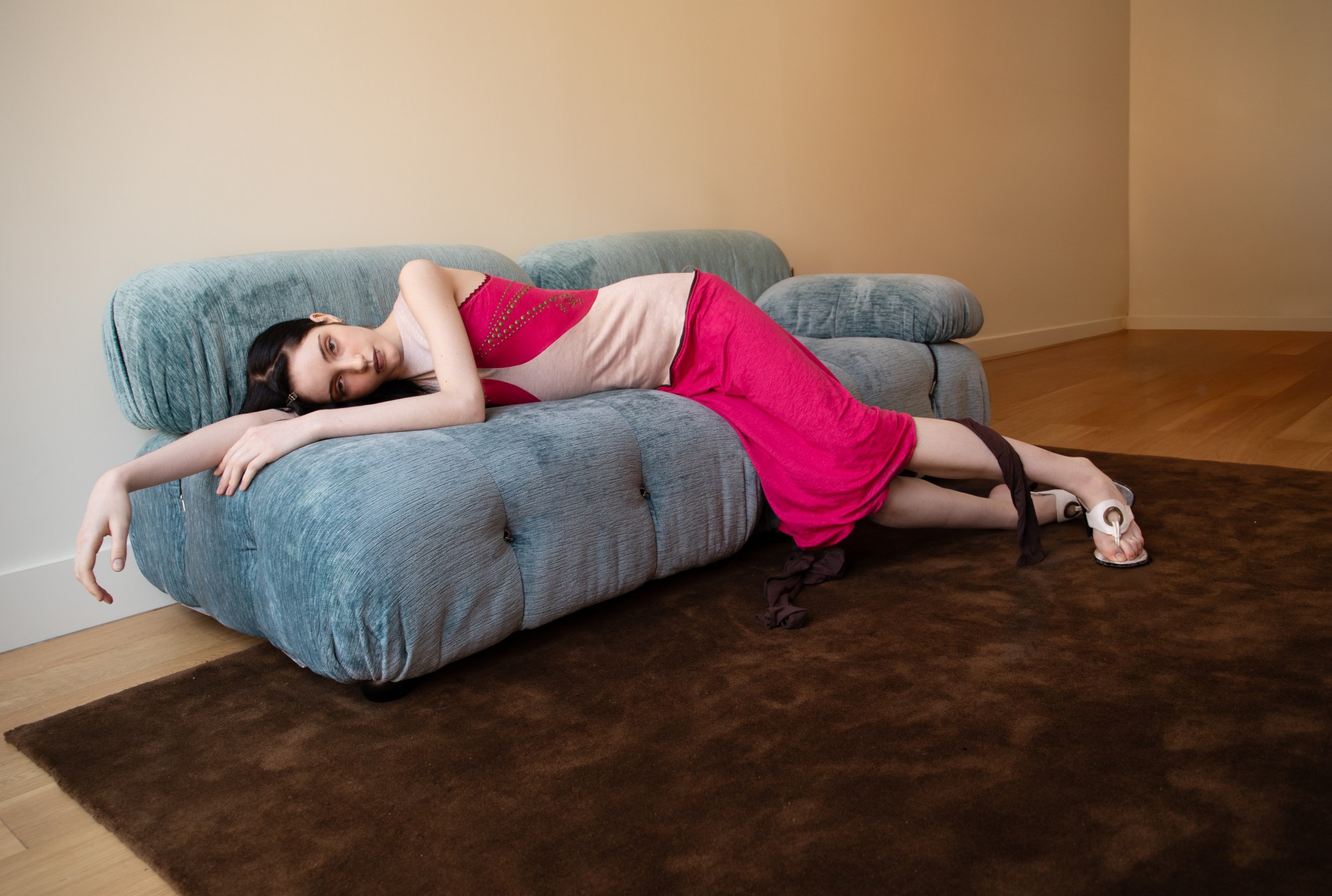
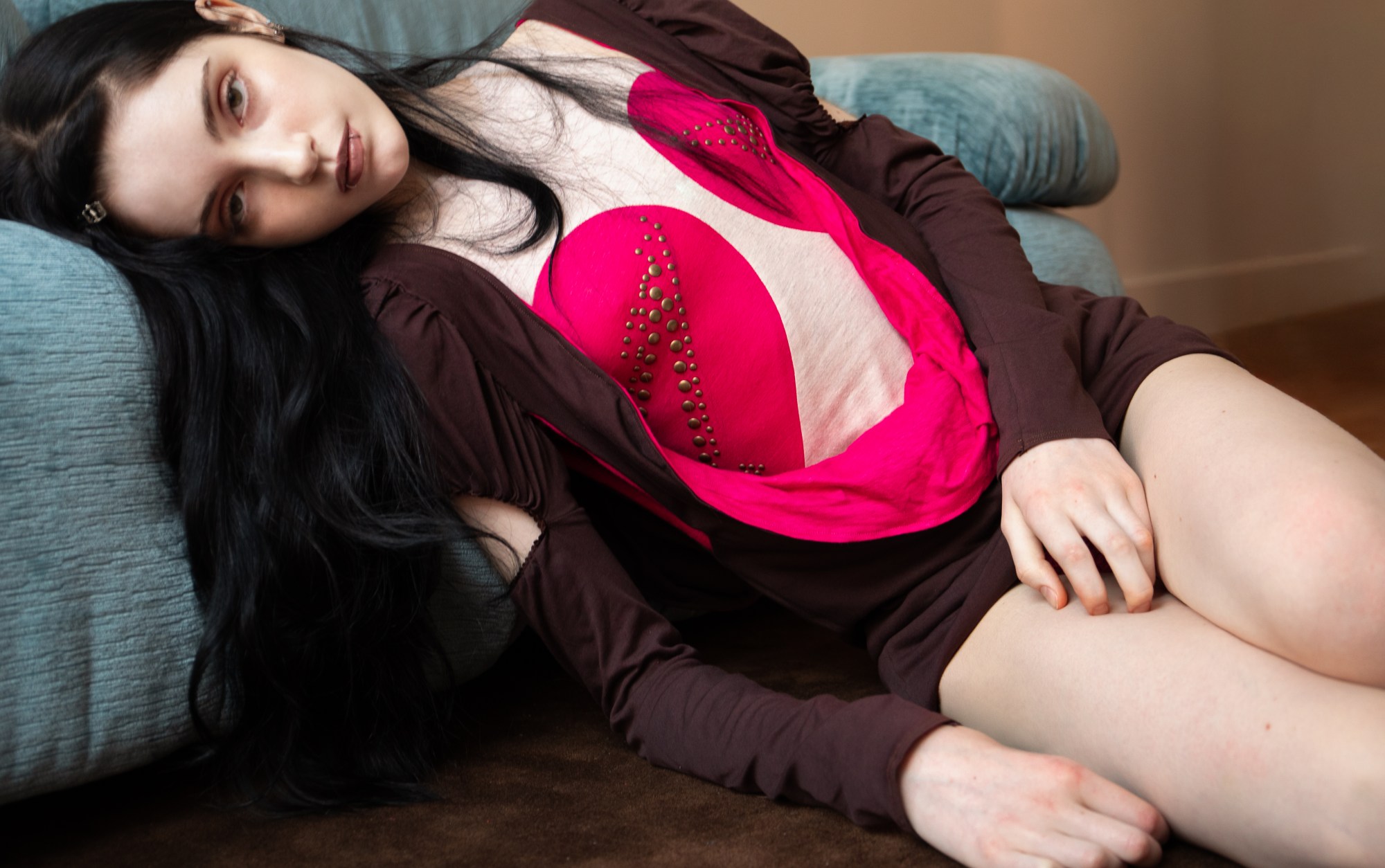
You see that idea in the detailing. A fuchsia and brown jersey tunic, studded and dramatic, can be worn multiple ways. A mesh-paneled legging-and-skirt set reveals hidden intarsia motifs. There are soft, bulky crochet jackets with hand-forged buttons, dresses with cowl backs and lace cutouts, and “infinity” gowns that drape and shift depending on how you wear them. It’s a wardrobe full of surprises. “I like when pieces are a little open-ended,” she says. “You can wear them however you want.”

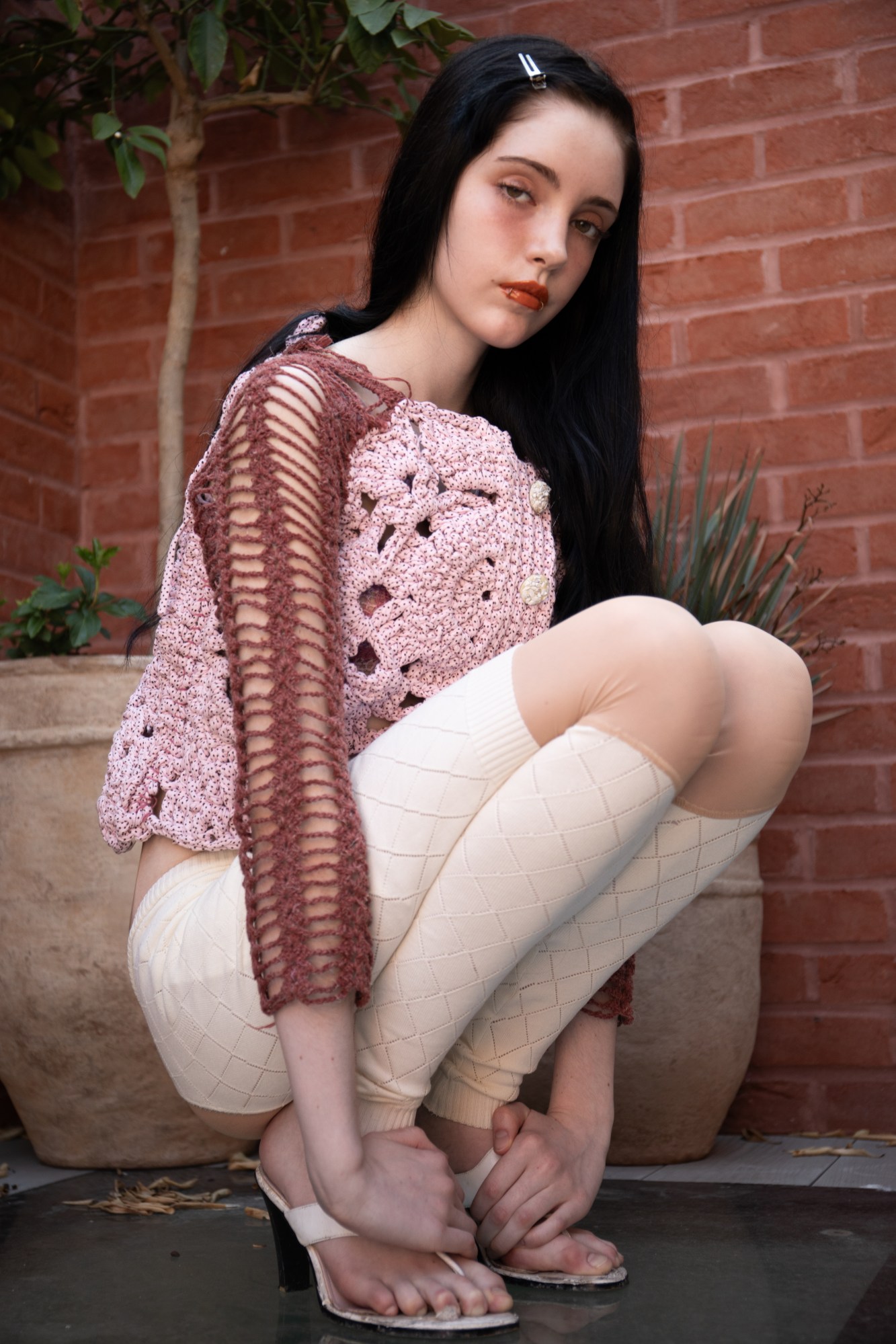
After finishing her CSM MA during the 2020 lockdowns, Zelentsova worked briefly at Burberry before turning her full attention to her own brand. Now, she’s building it on her own terms, taking her time and staying clear of the churn of the traditional fashion calendar. “So many brilliant young designers burn out trying to keep up with the system,” she says. “I want to grow in a way that feels healthy, by building something with intention.”
And who is she designing for? She doesn’t name names. “I think I’m drawn to people who know how to make something out of nothing,” she says. “People who dress to feel like themselves, even if that means looking like a cake.”