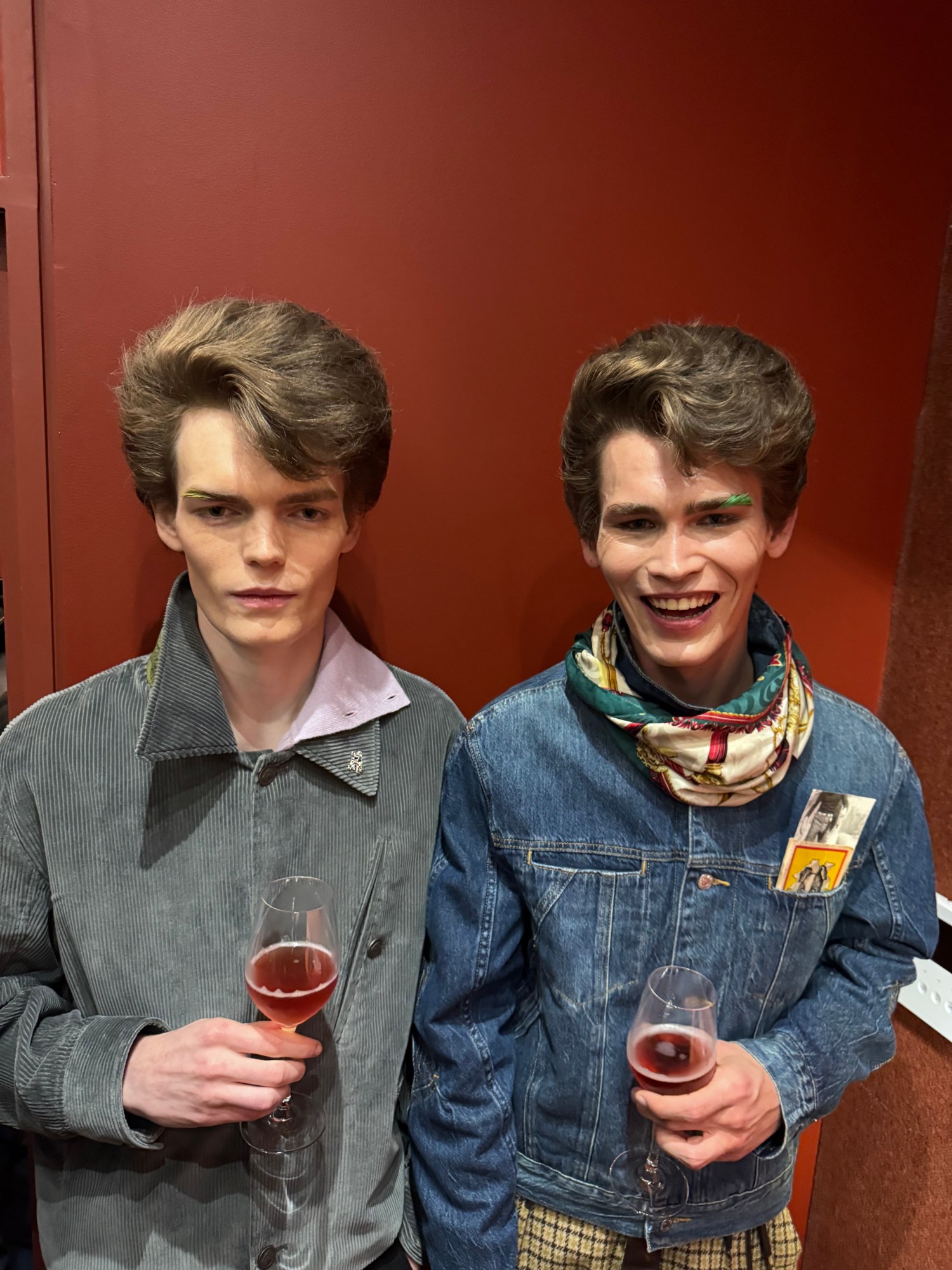
I’ve been thinking about what makes fashion meaningful in 2025. What makes a garment worth buying—let alone loving? Over the course of this year I’ll have seen fashion shows, presentations, showroom appointments, press days, and store openings on 3 continents, and I wonder what will stay with me in 2026, 2030, 2060….
I don’t think I will be gagged, 35 years from now, by the buzz of a big conglomerate designer switcheroo. I don’t think I’ll care about a cool artist collab or a runway-to-celebrity red carpet debut. Is it that fashion is out of touch? The industry has certainly lost the plot on the most basic scale—most fashion fans care more about brands (and marketing) than products, resulting in the boom of hundreds of commentary accounts that talk about campaigns and collaborations and coolness, but very few that talk about fashion, let alone style.
“It’s a bit boring for me,” said Kiko Kostadinov over a Pocket Coffee in his new Haggerston office. “People just look like a clone.”
“It’s a bit more quiet in a sense,” nodded Leo Gamboa from across the room.
I asked these menswear gurus—Kiko the designer who spawned a cult following of true menswear obsessives, and Leo, the head of fashion partnerships at Levi’s—to describe the men’s fashion scene right now.
“On the surface level, it’s quite predictable,” Kiko continued. “It’s just that so much content is being pushed digitally. That content talks to the product and they are formed by one another—it’s like two mirrors looking at each other. At some point you’re going to reach a point where we’ll have to restart, otherwise it’s AI generating for AI.” He laughs a little bit—a sort of worried laugh. “The algorithm is just generating something that works and people are clicking, and watching, and it’s just pushing, pushing, pushing, pushing, pushing.”
“But there are so many interesting people that are just in their little communities doing things,” he conceded. “That’s why it’s important to have a physical store, because you can come and try something new. You can buy something new.”
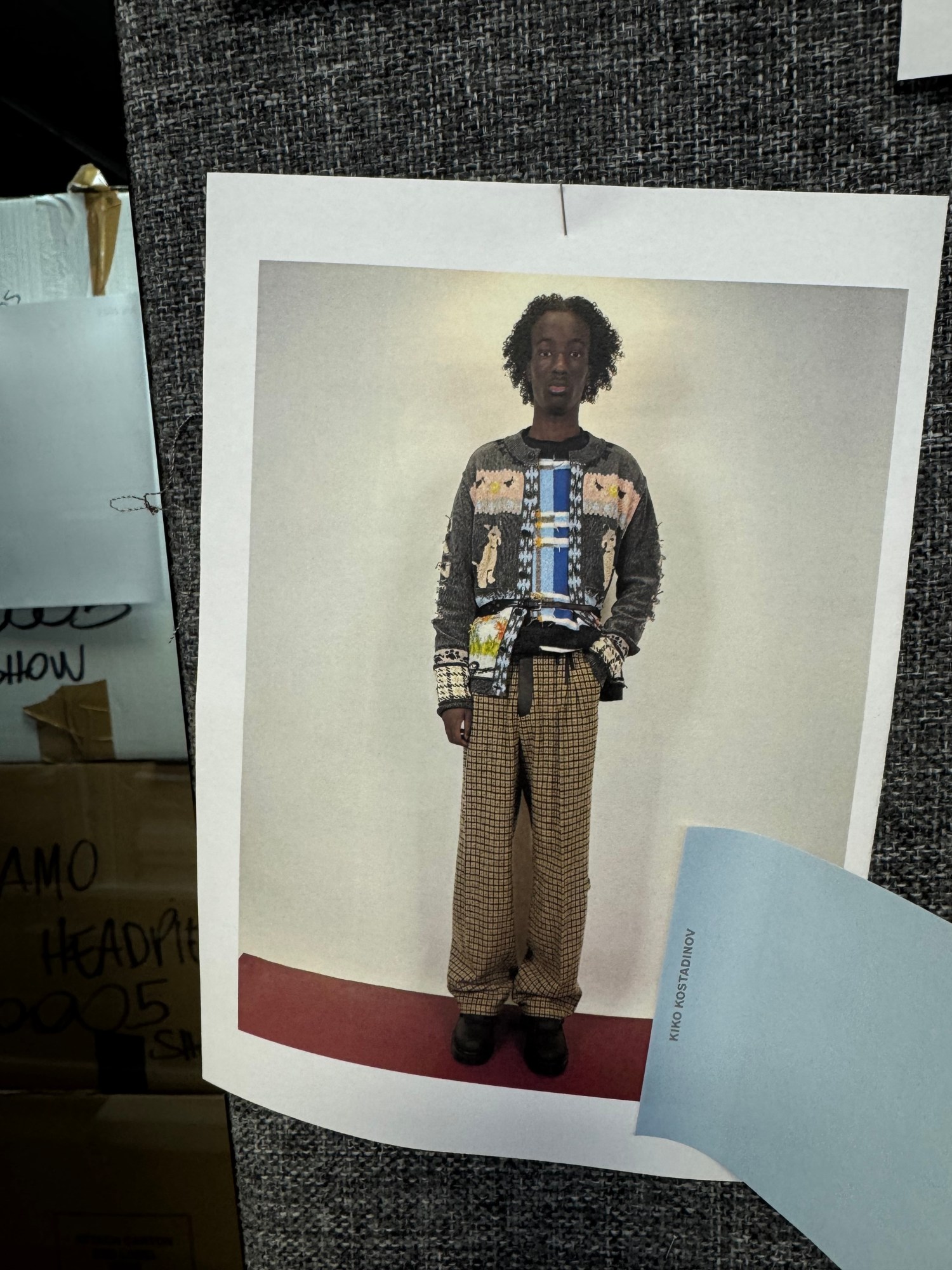


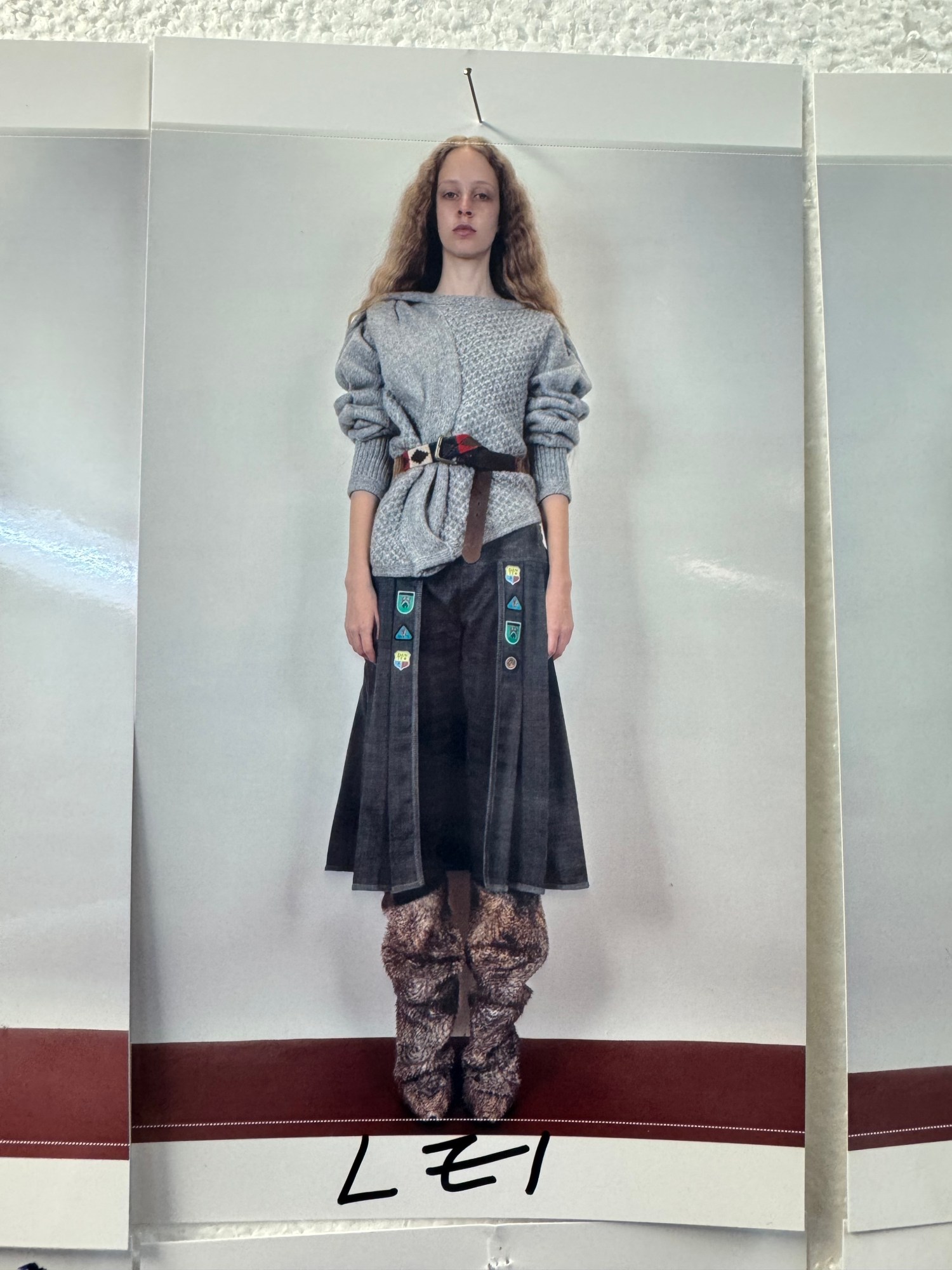
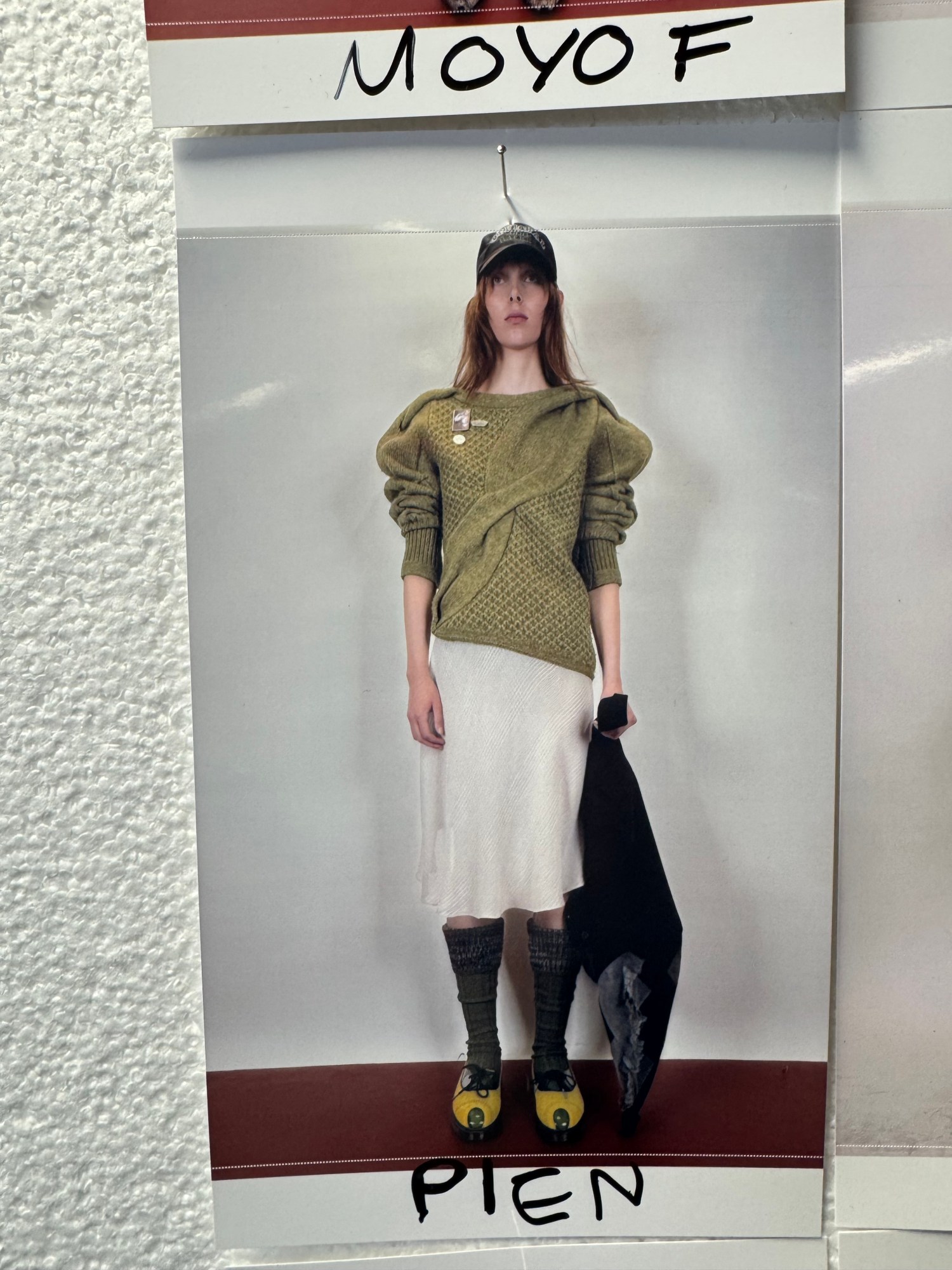
Below us, Kiko’s father and a crew of builders were putting the finishing touches on the first-ever Kiko Kostadinov London store. The model is quite old school—design studio upstairs, store downstairs—but the look is anything but. Maroon walls, stark silver piping, boat furniture, a haunting work, “Stunt Tank,” from Ryan Trecartin and Lizzie Fitch playing on a screen. “We can obviously be a shop, but it can also be a showroom, have meetings, have dinner parties, watch the Super Bowl, watch the Champions League final. It can be anything—Eurovision,” said Kiko. When the store opens the next day it’s filled with everyone: buyers from Paris, It Girls from Tottenham, a baby from Southeast, and several dogs. Kiko is upstairs watching the Champions League—some of his team are scattered on stools leftover from the fashion show the night before, sipping natural wine.
About that fashion show: Kiko and the co-creative directors of the brand’s womenswear, Deanna and Laura Fanning, designed an entire special collection as an ode to their dog, Dante.
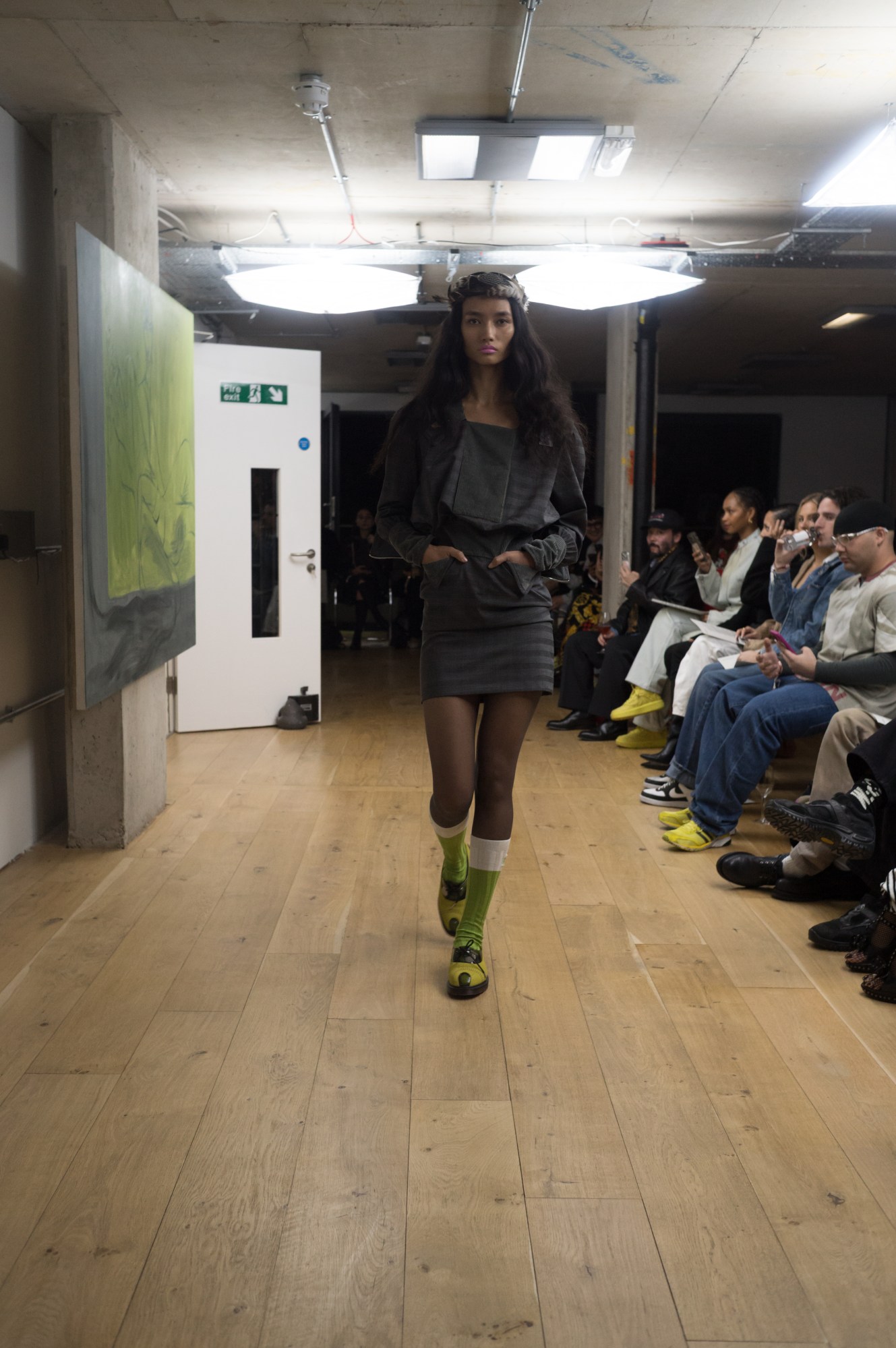
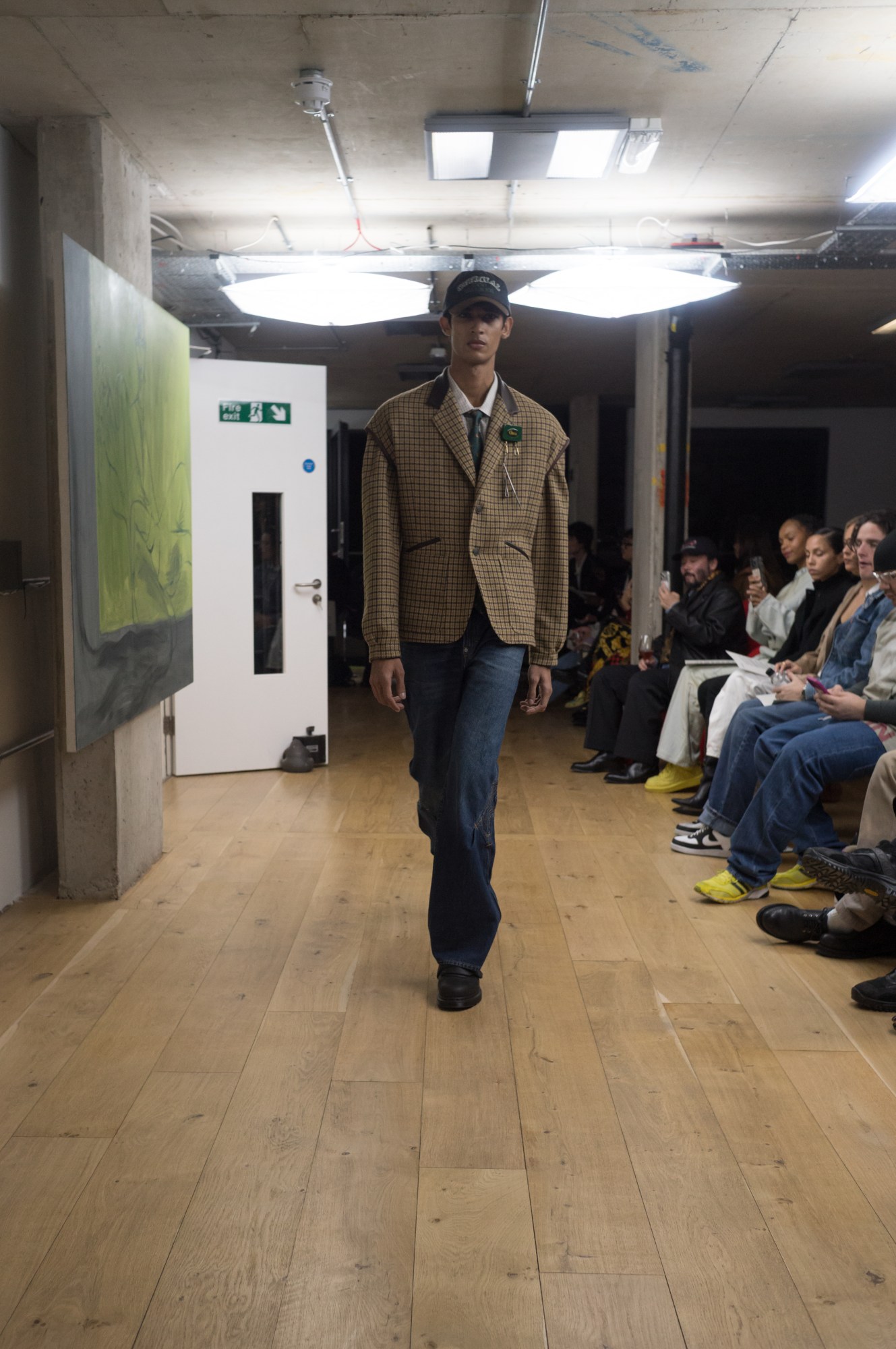
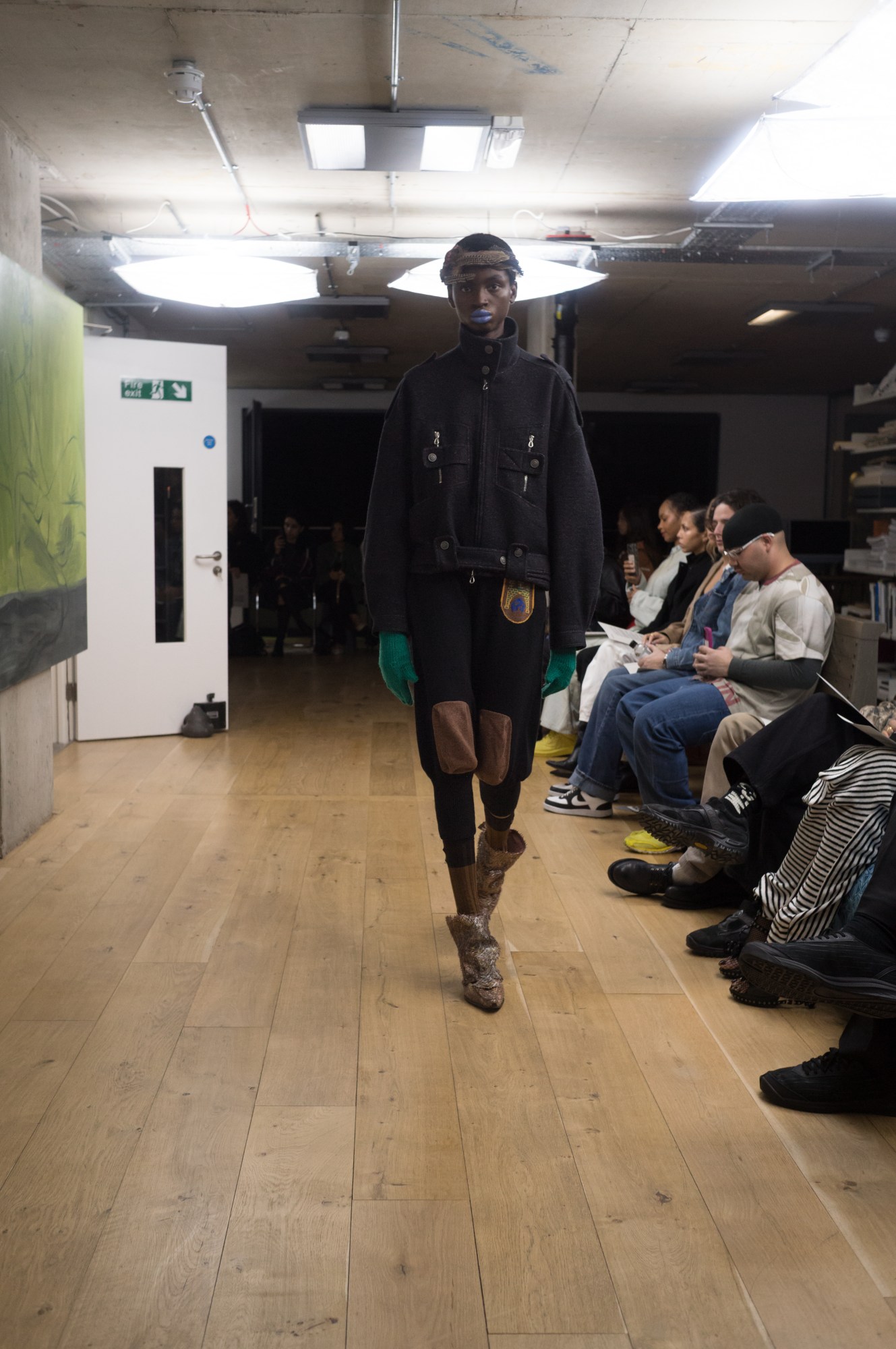


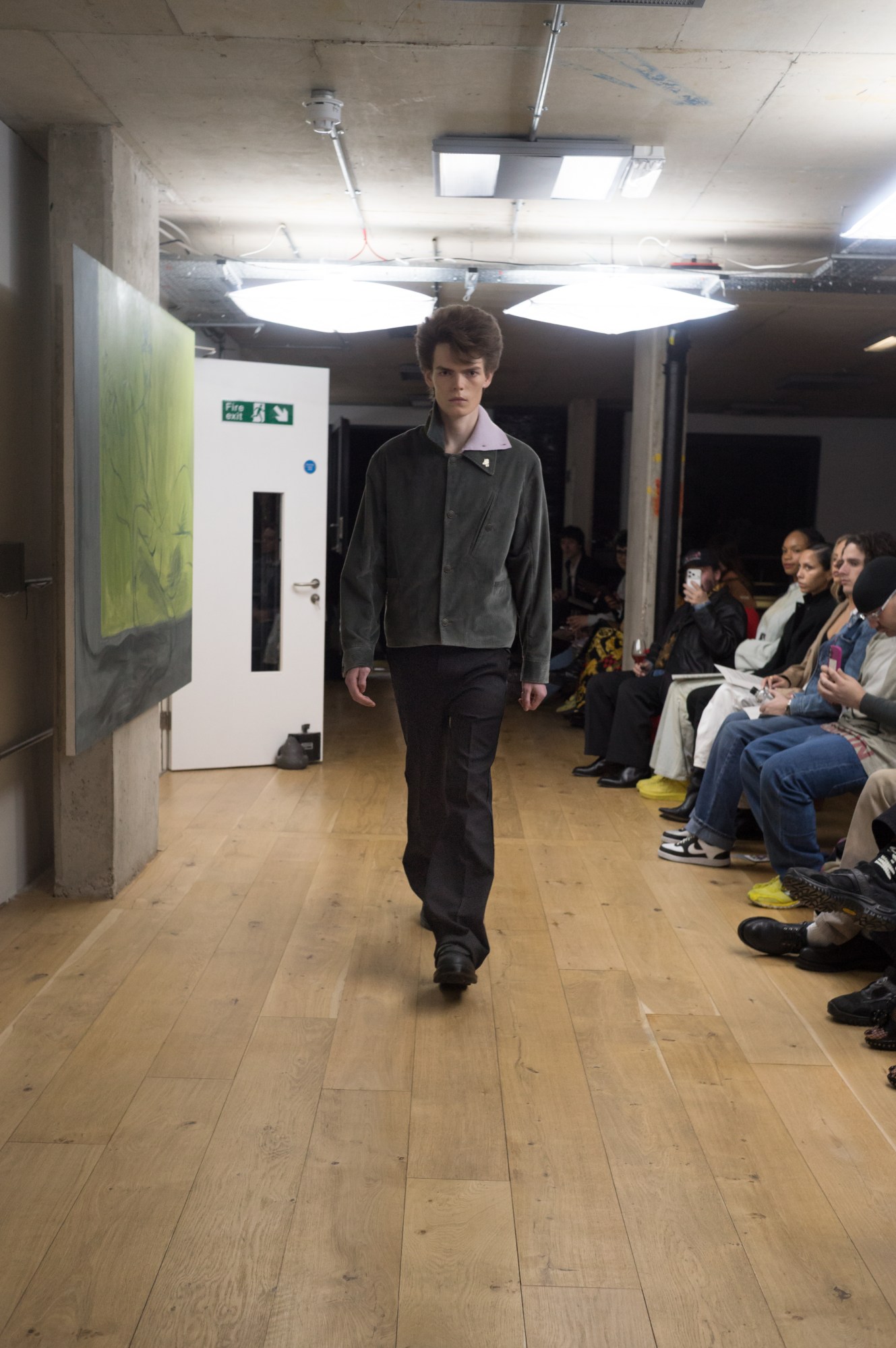

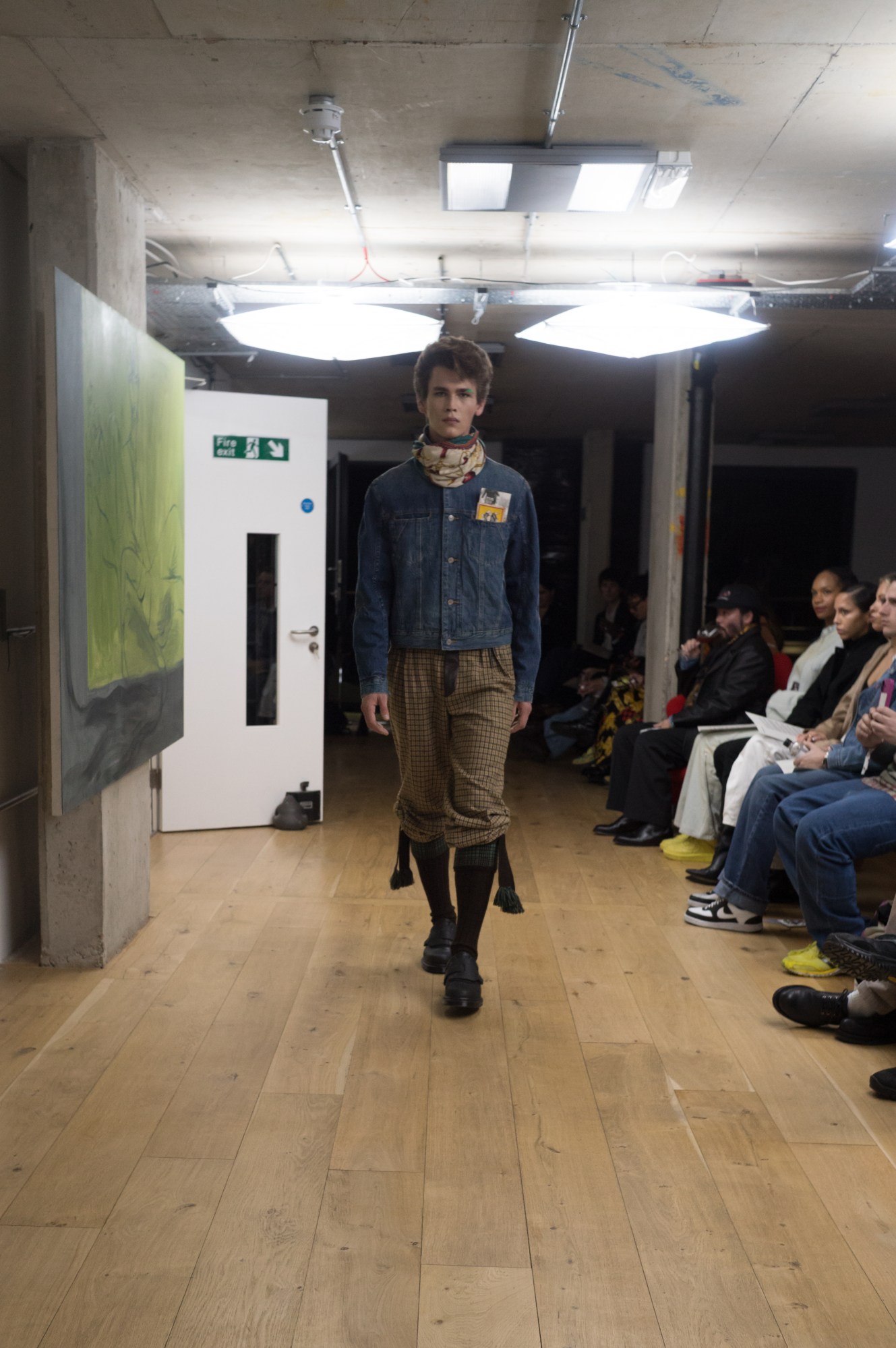
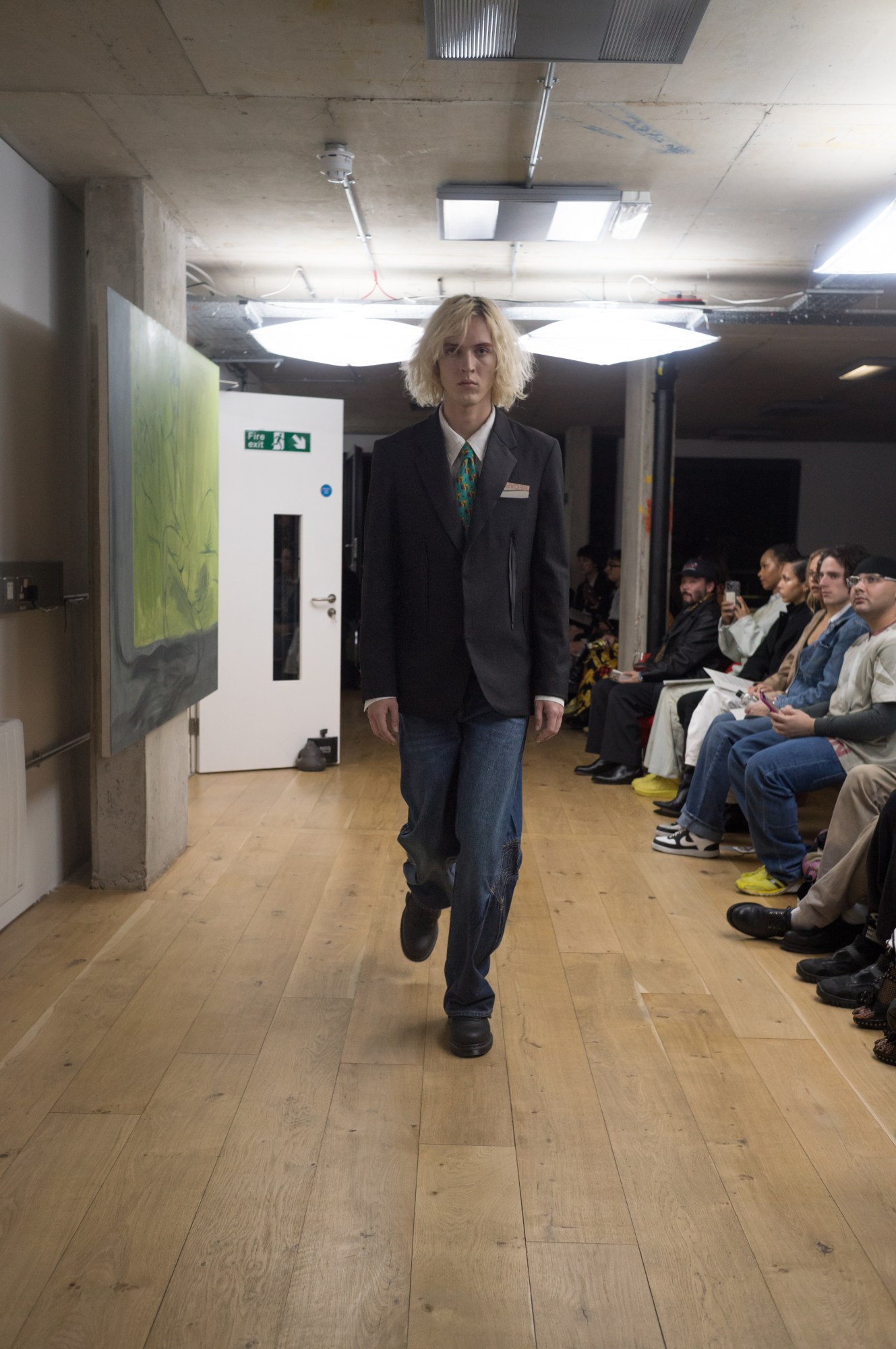
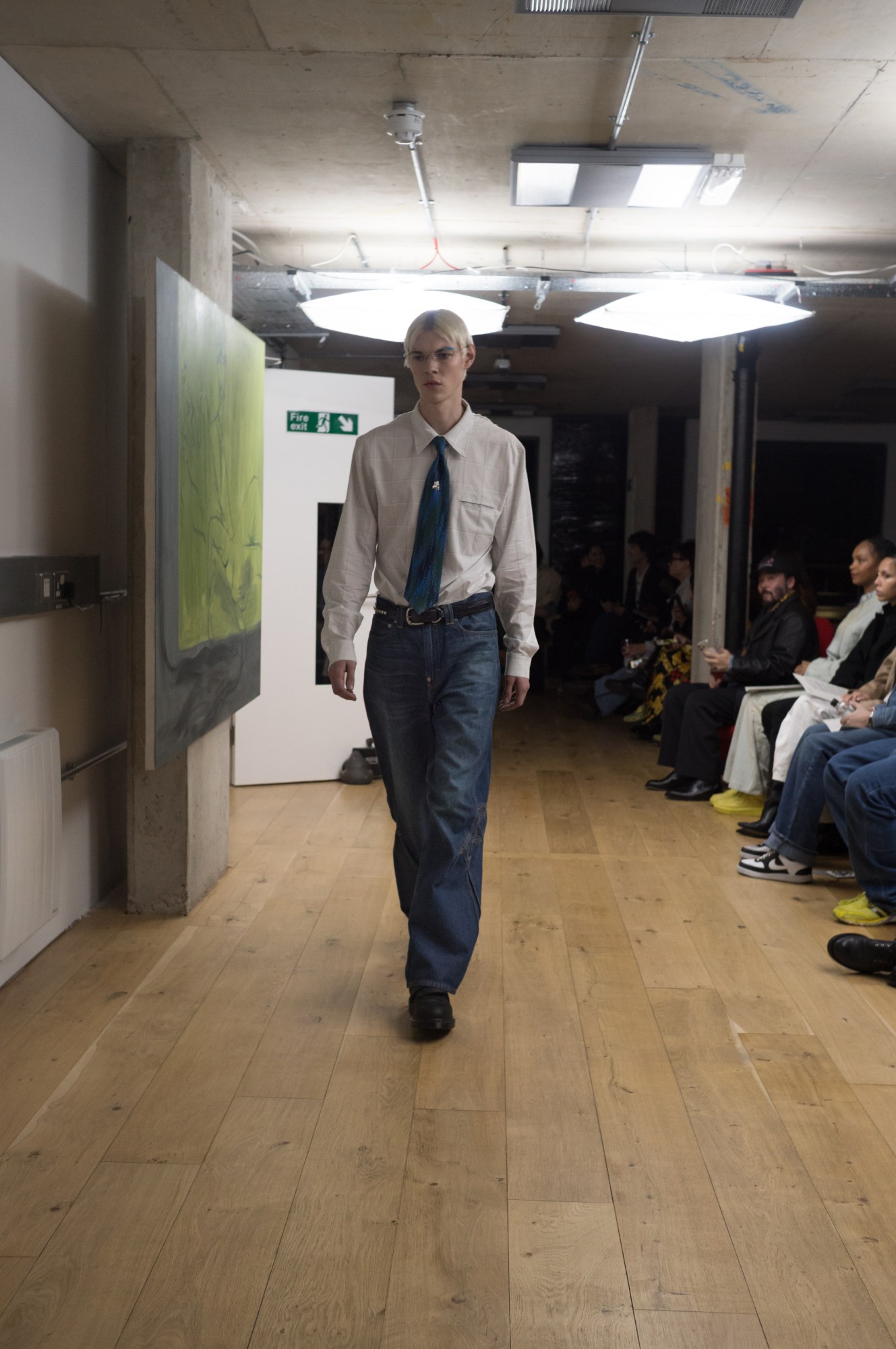

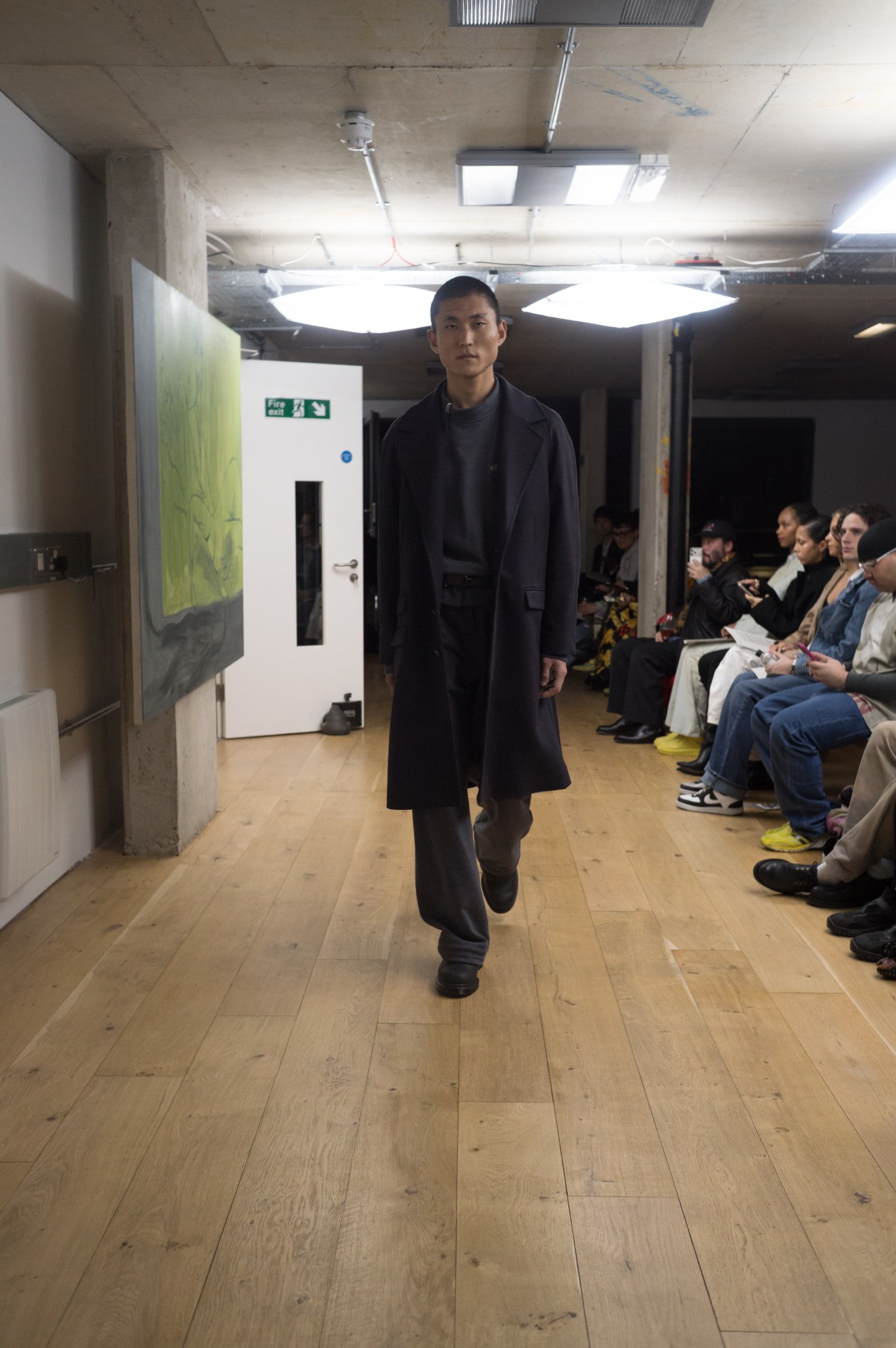
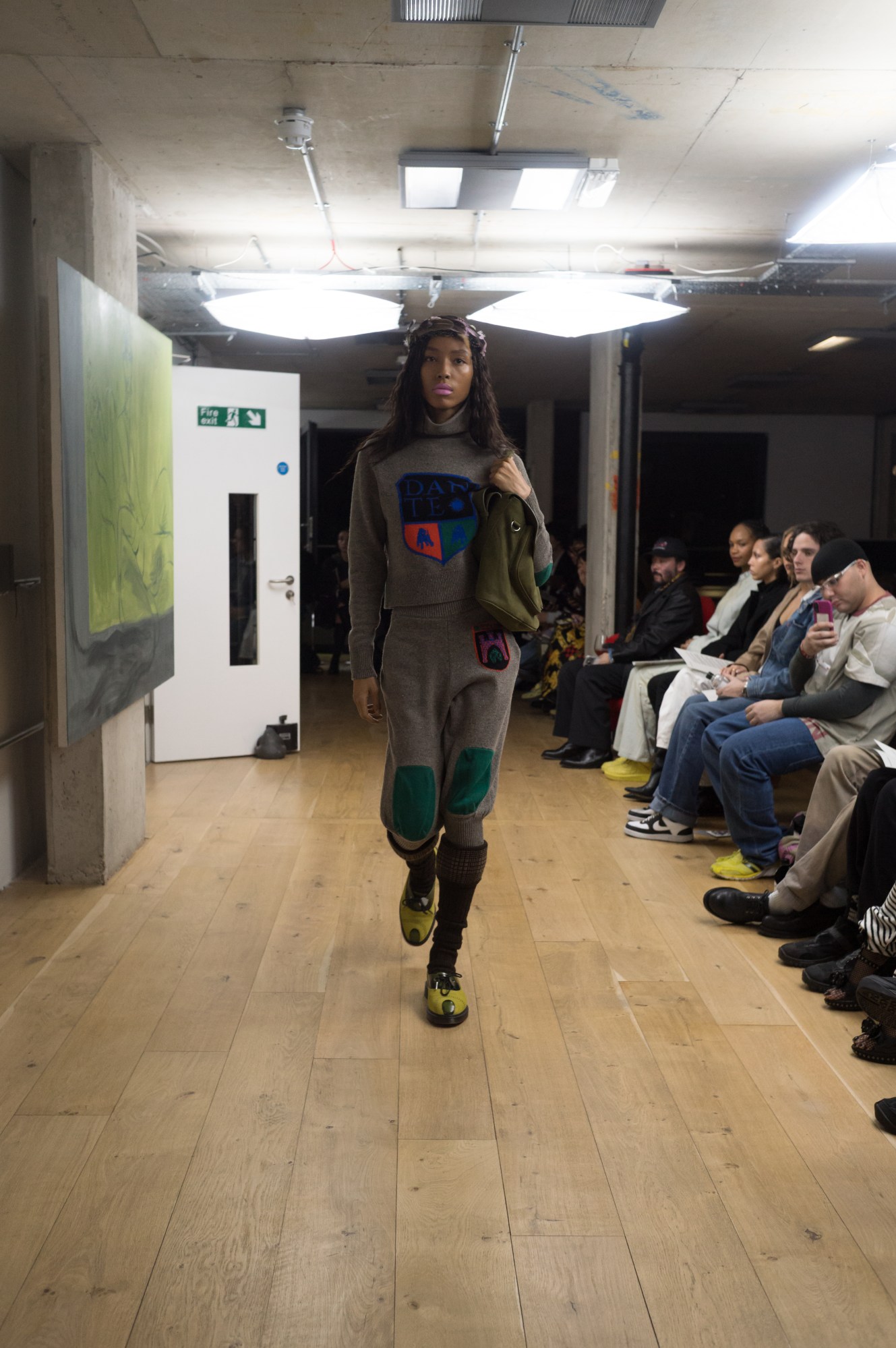


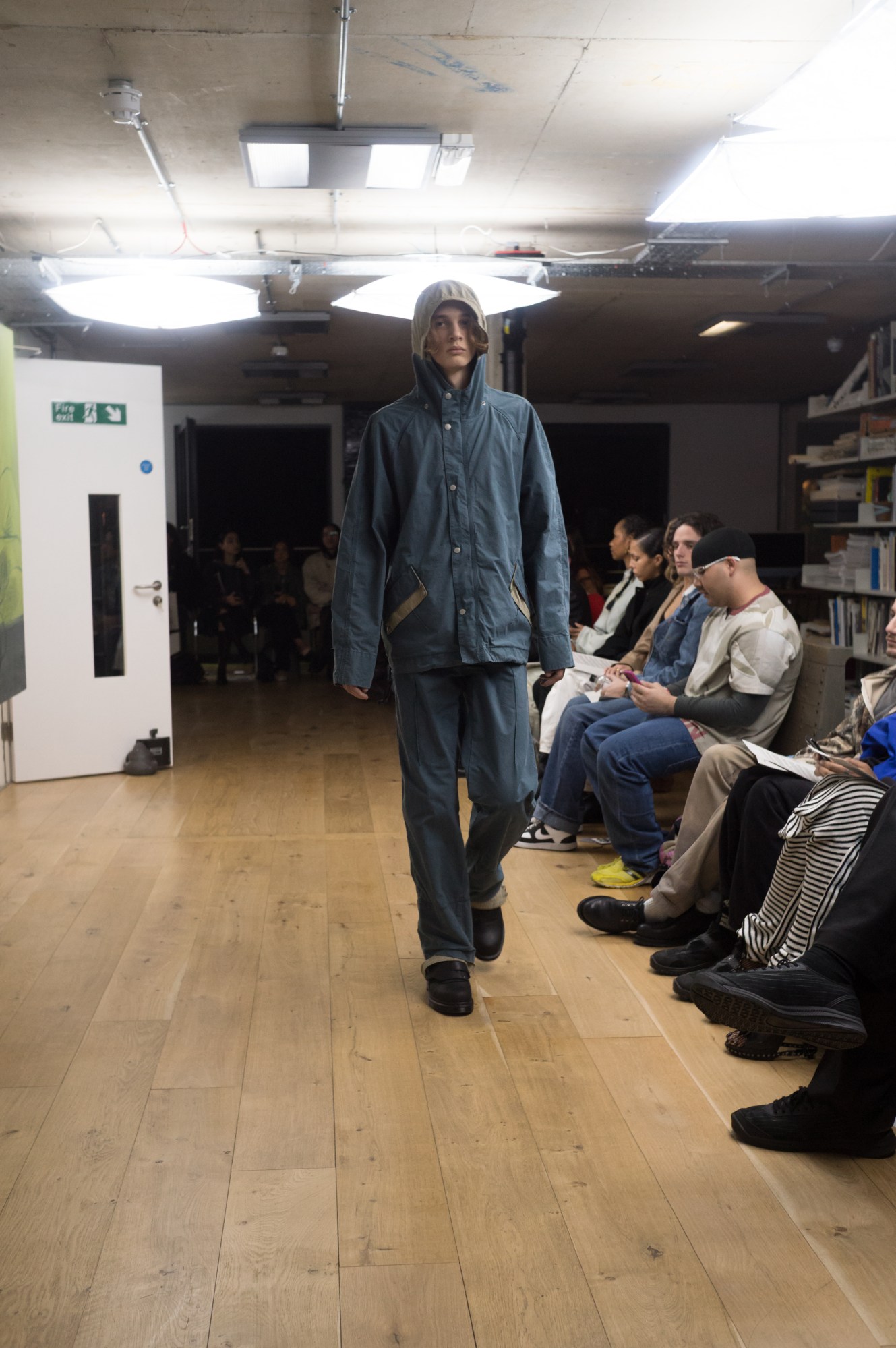
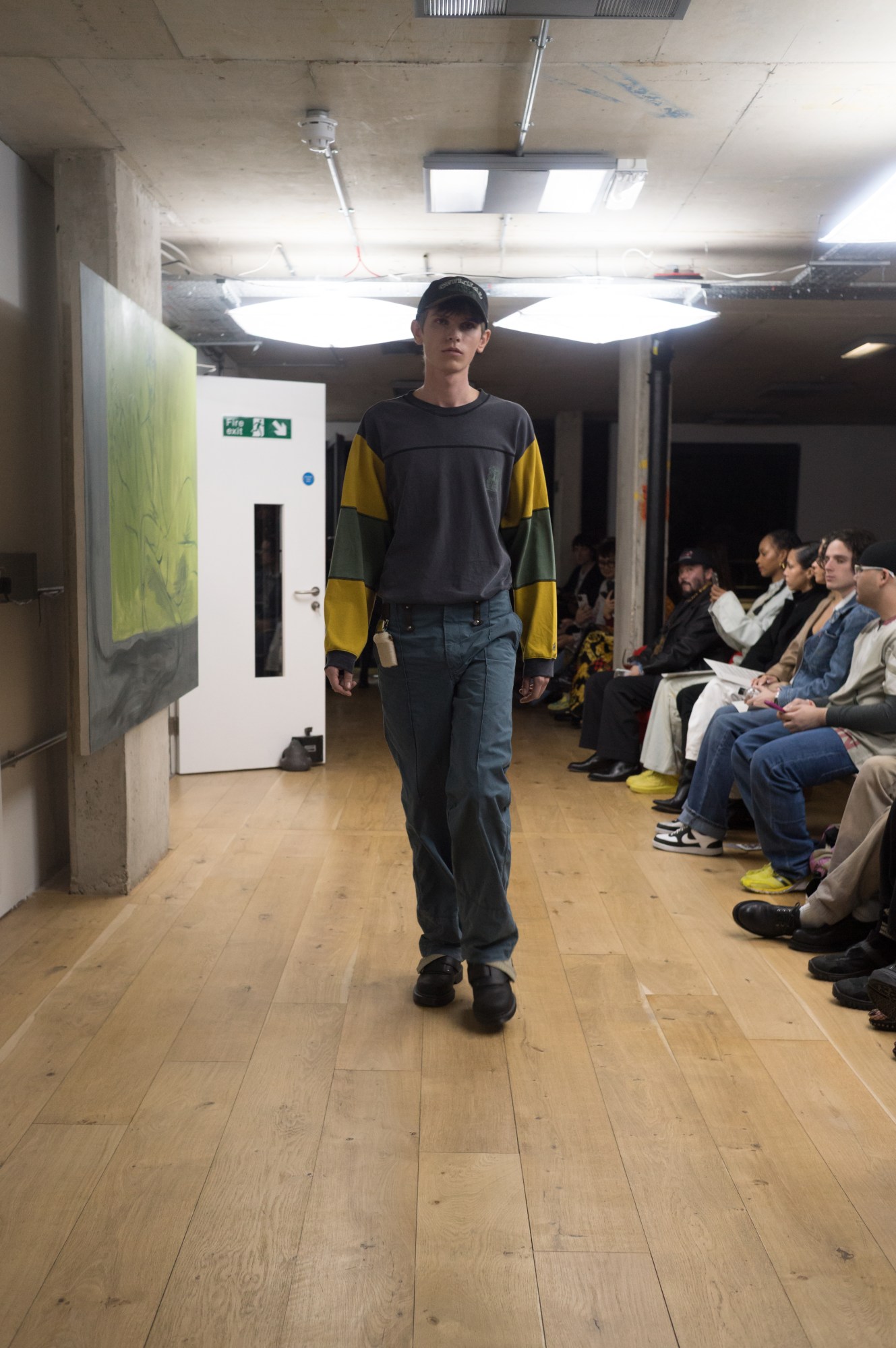
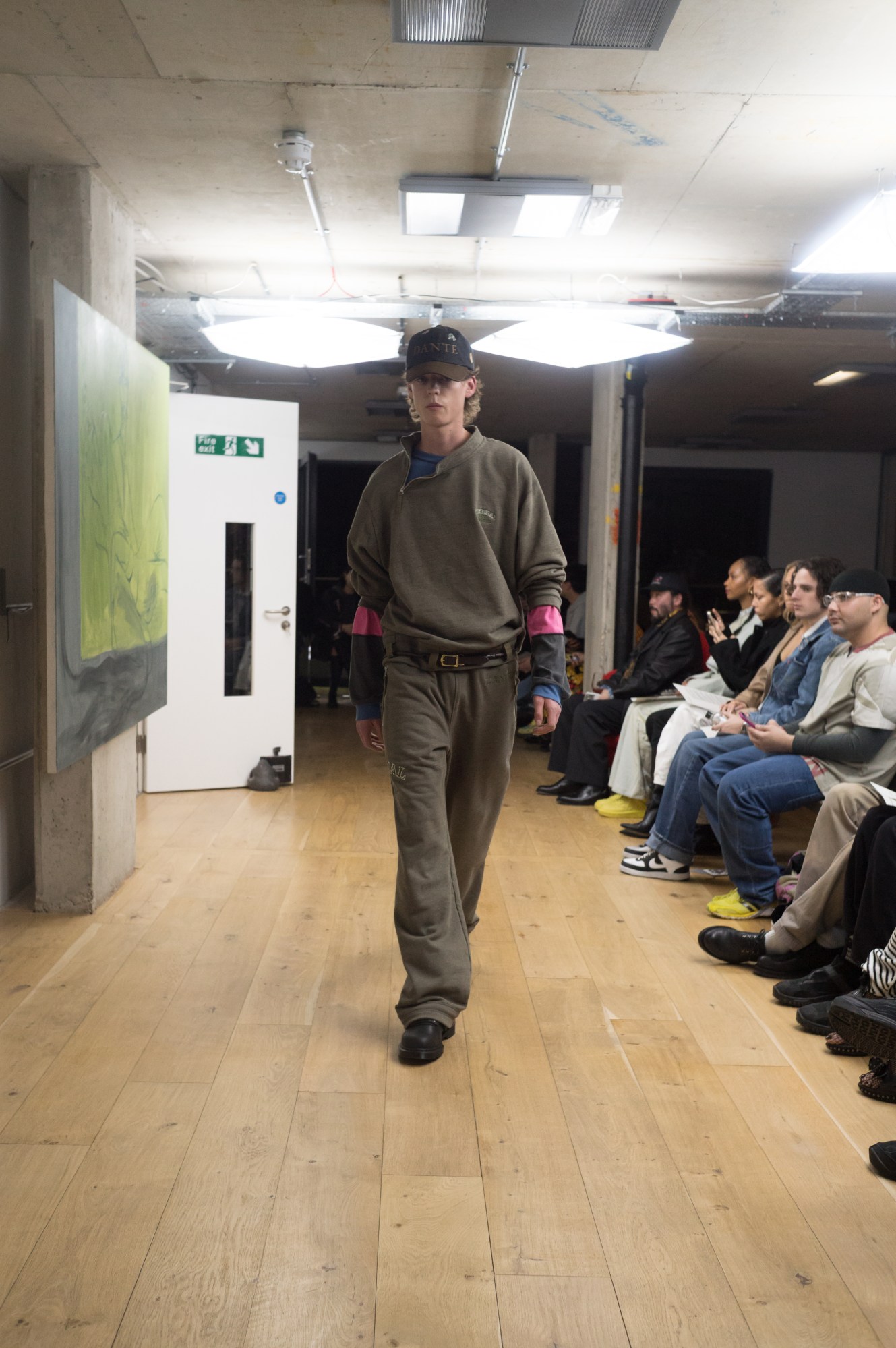
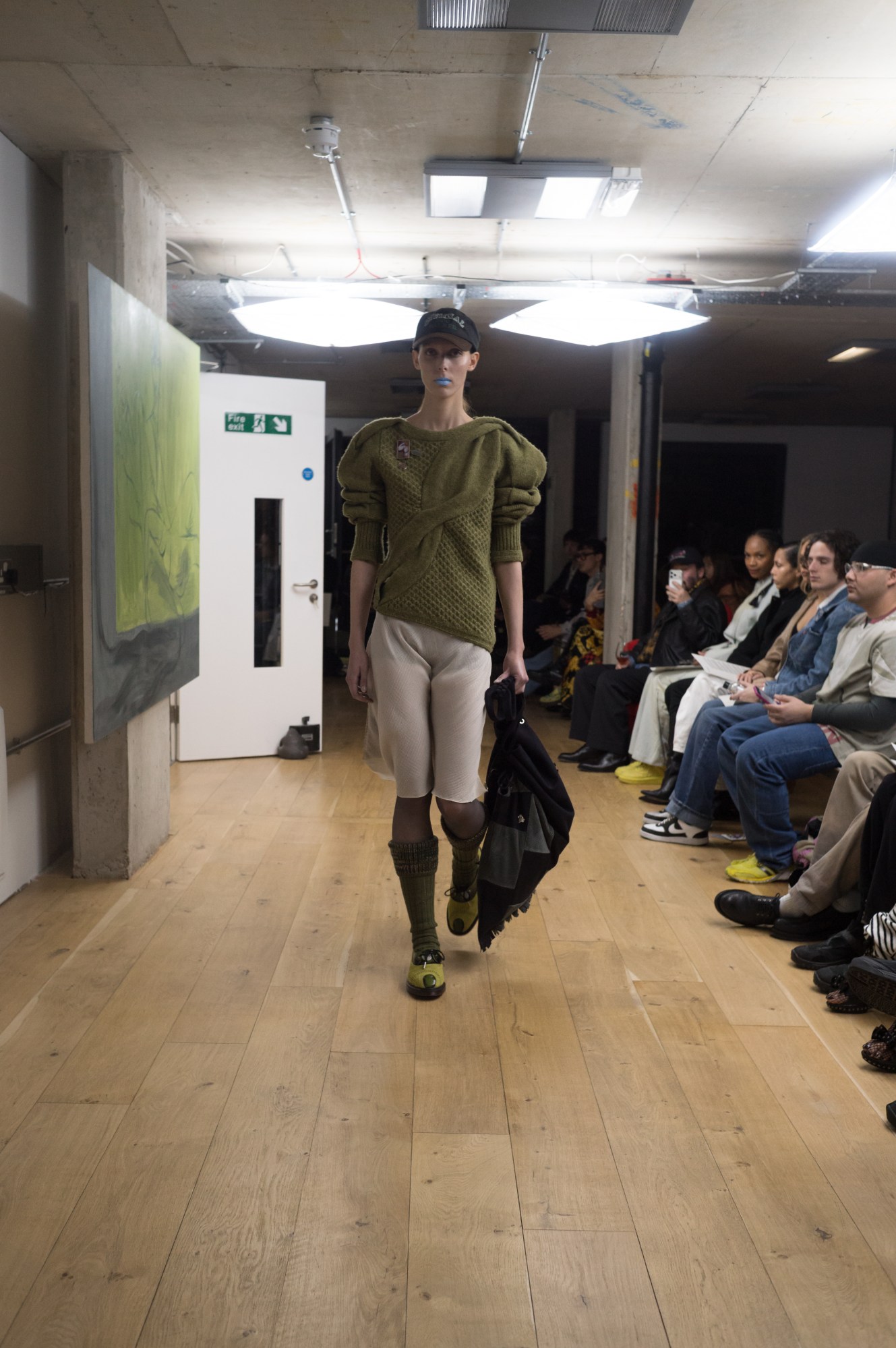
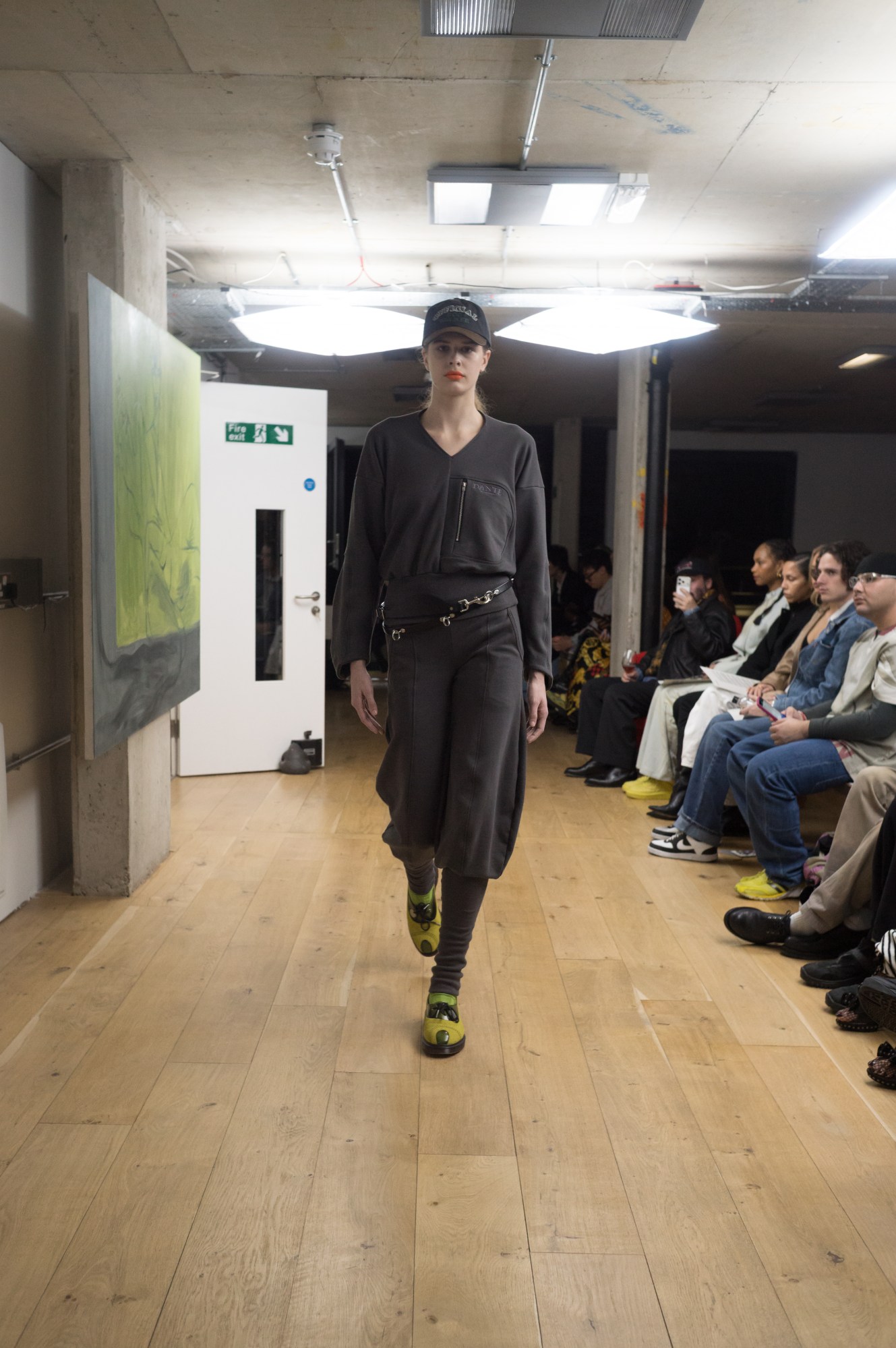

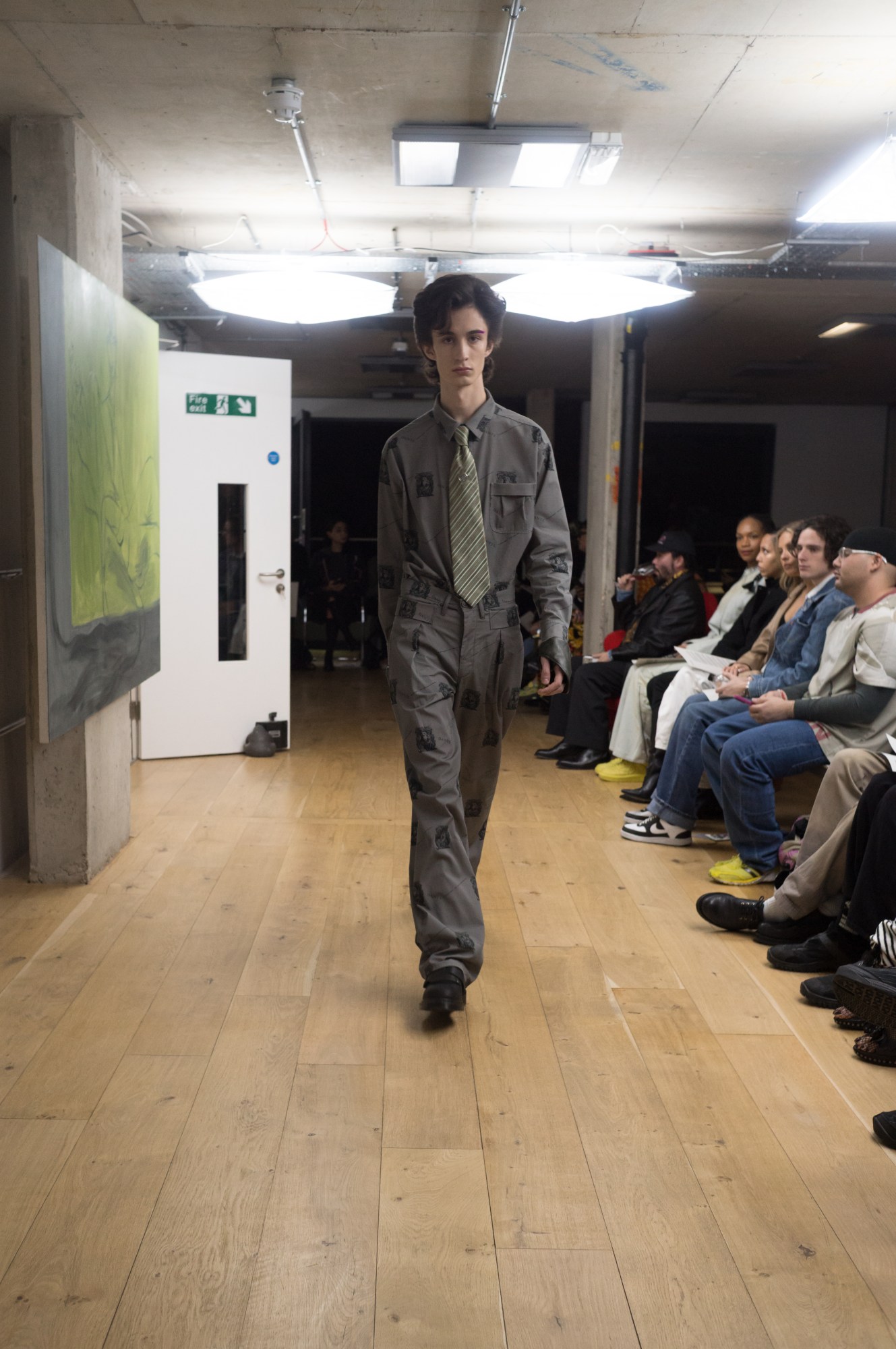
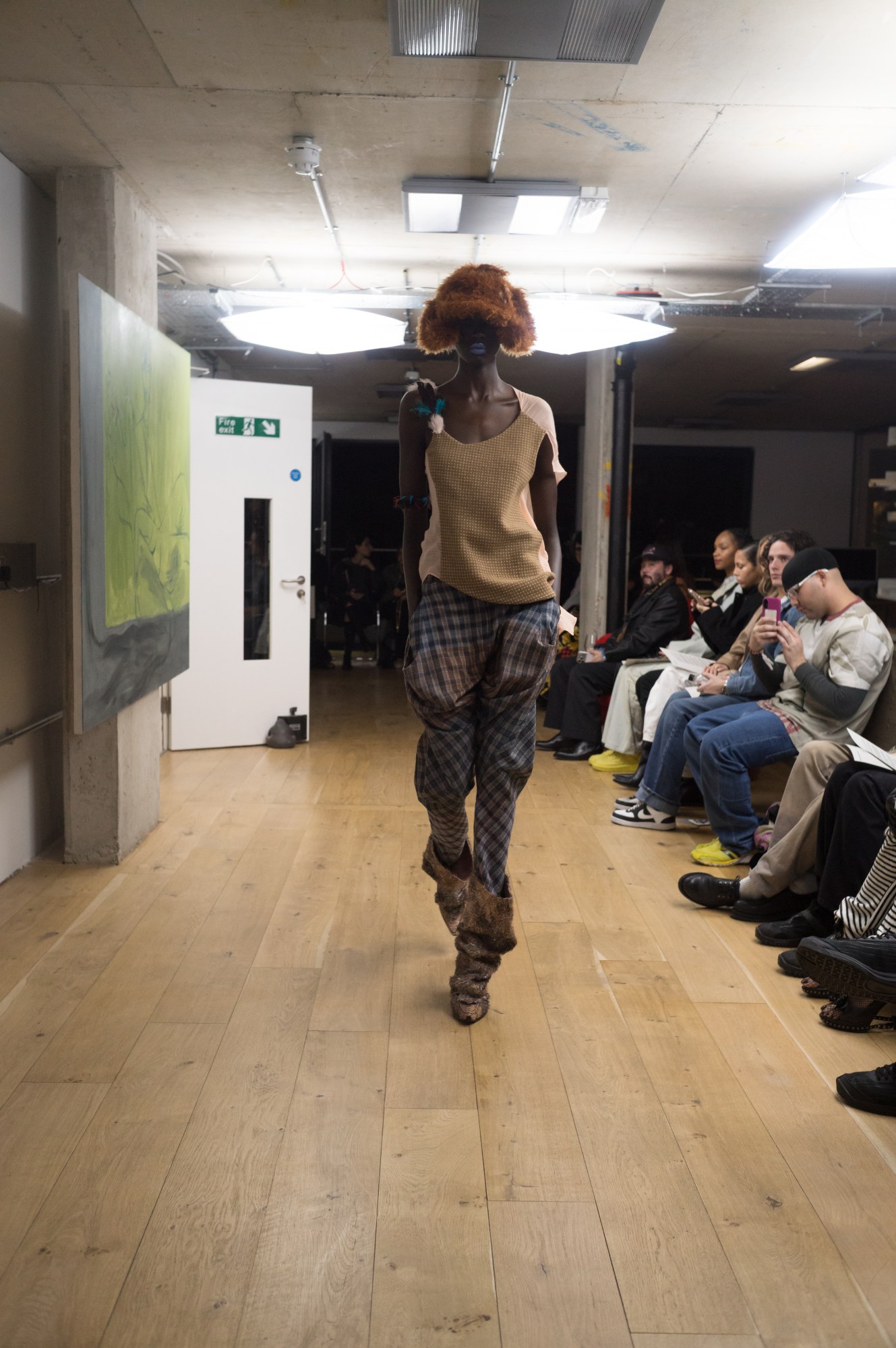
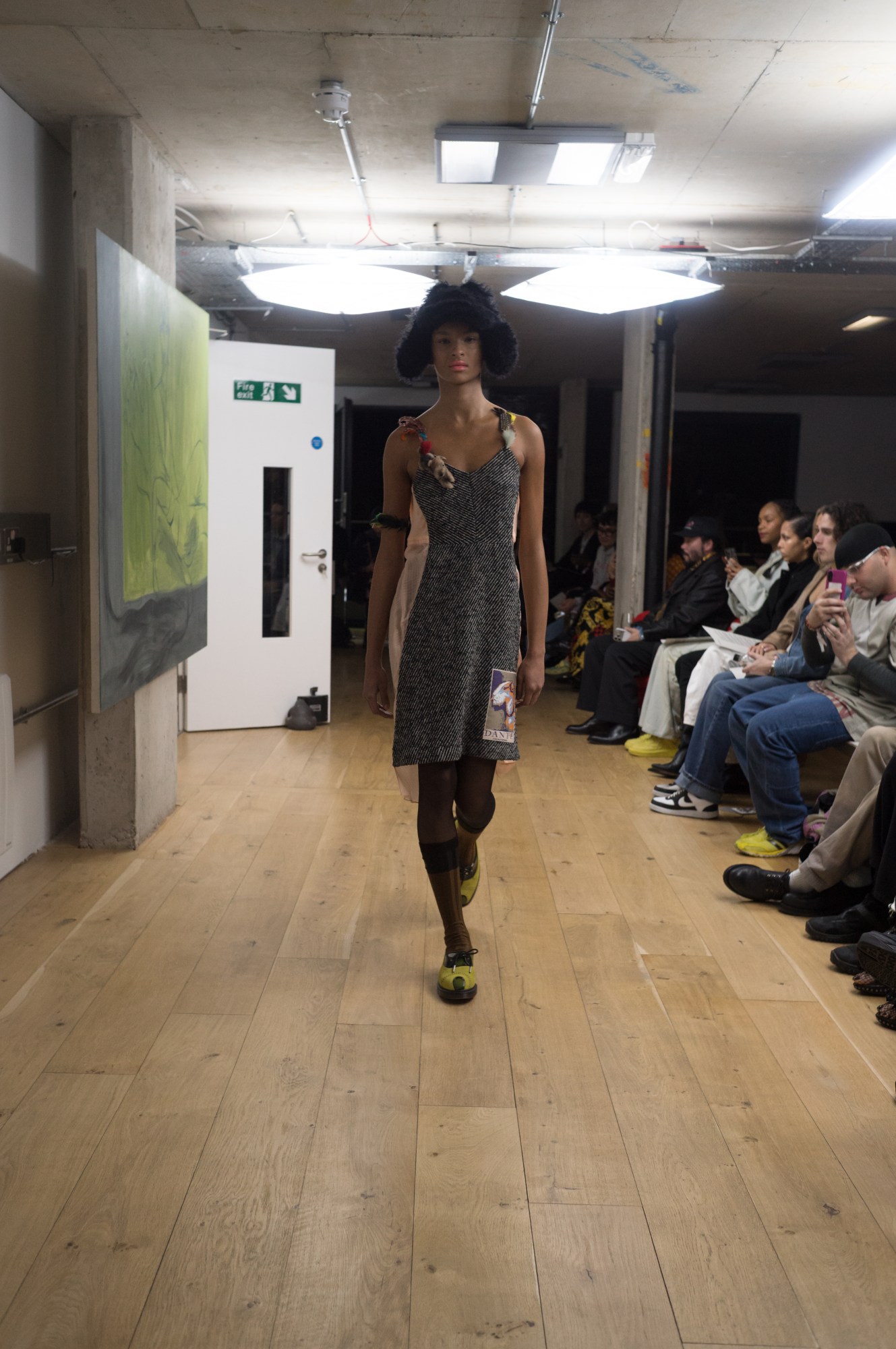
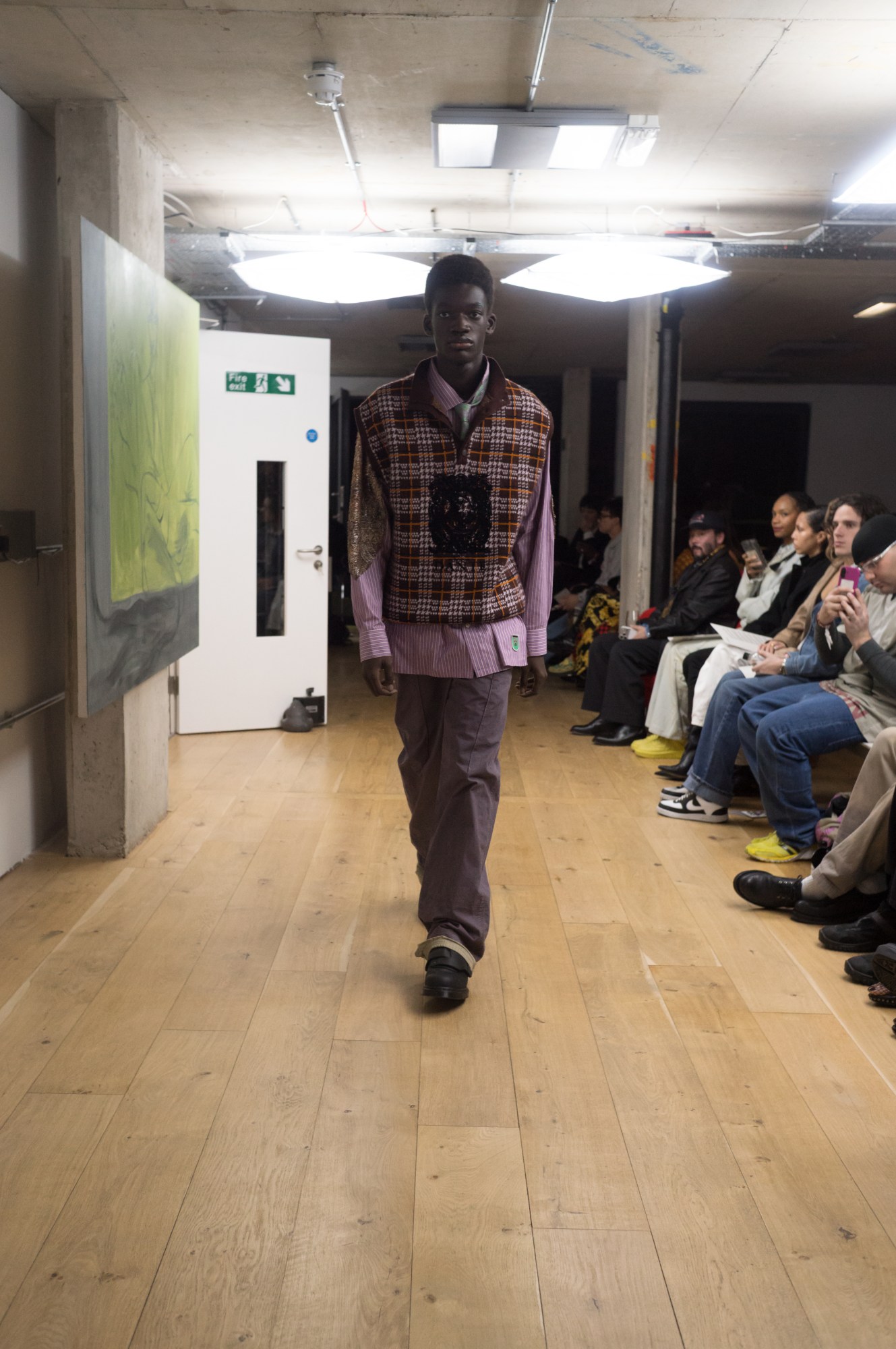
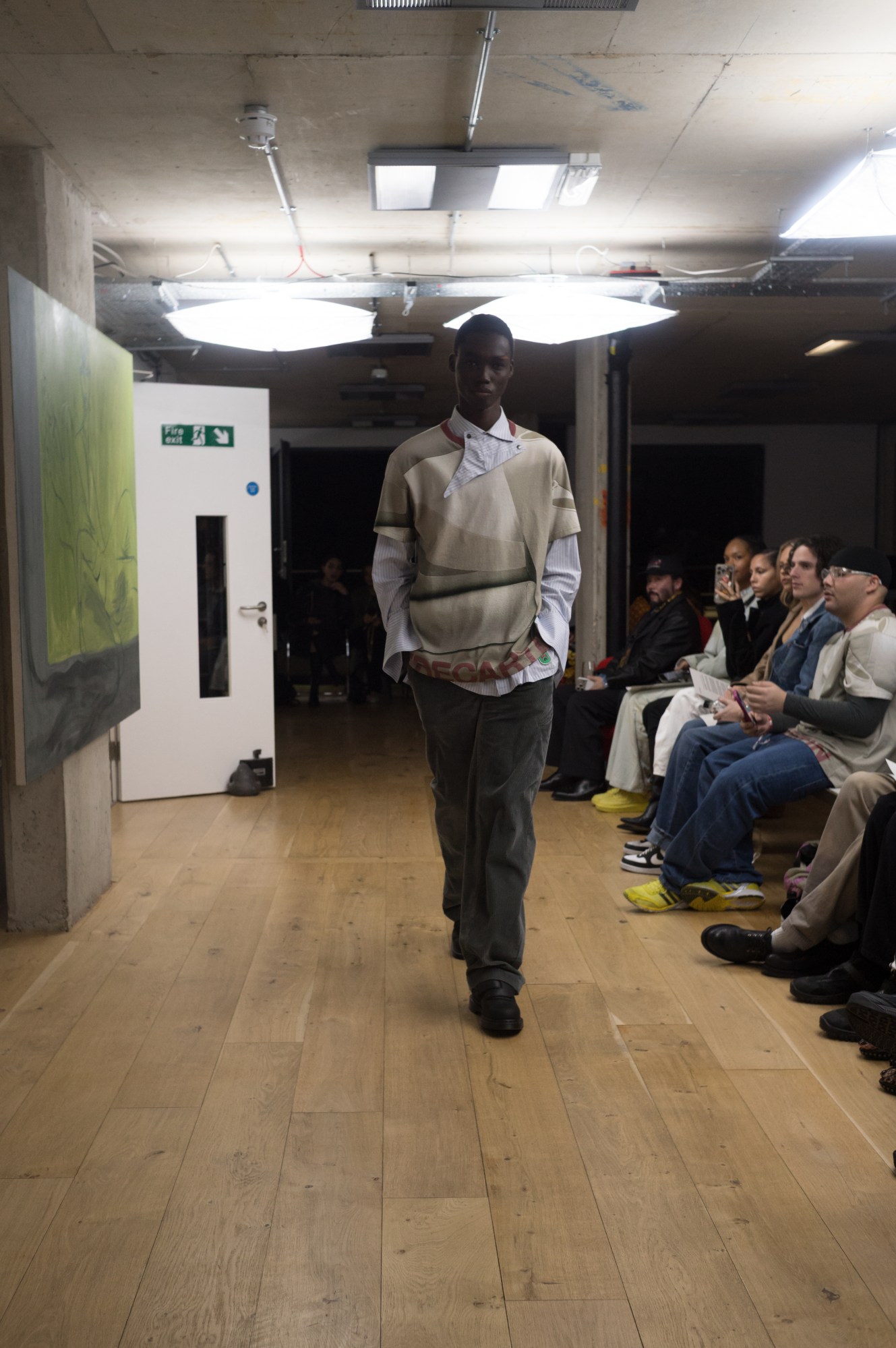
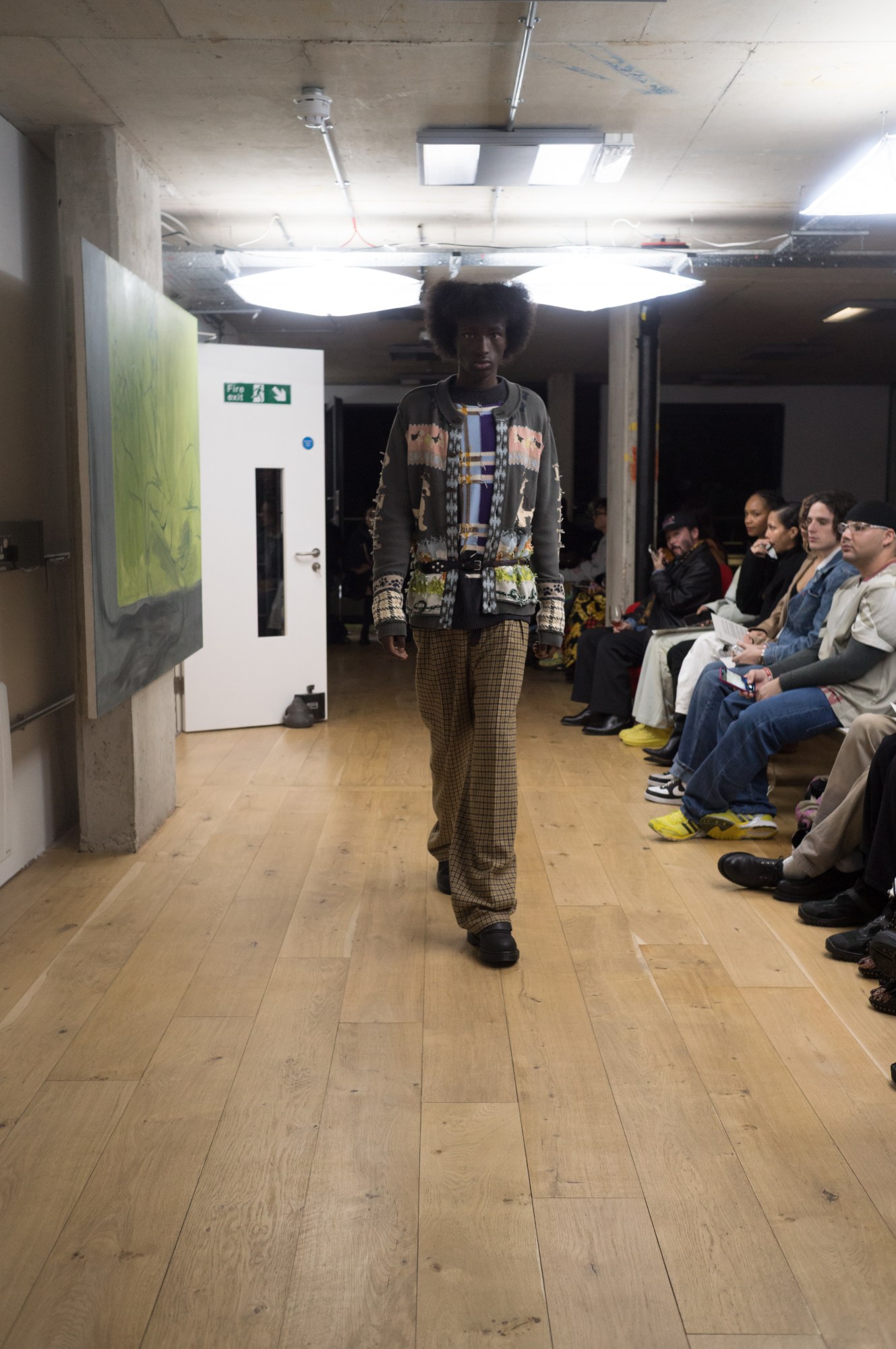
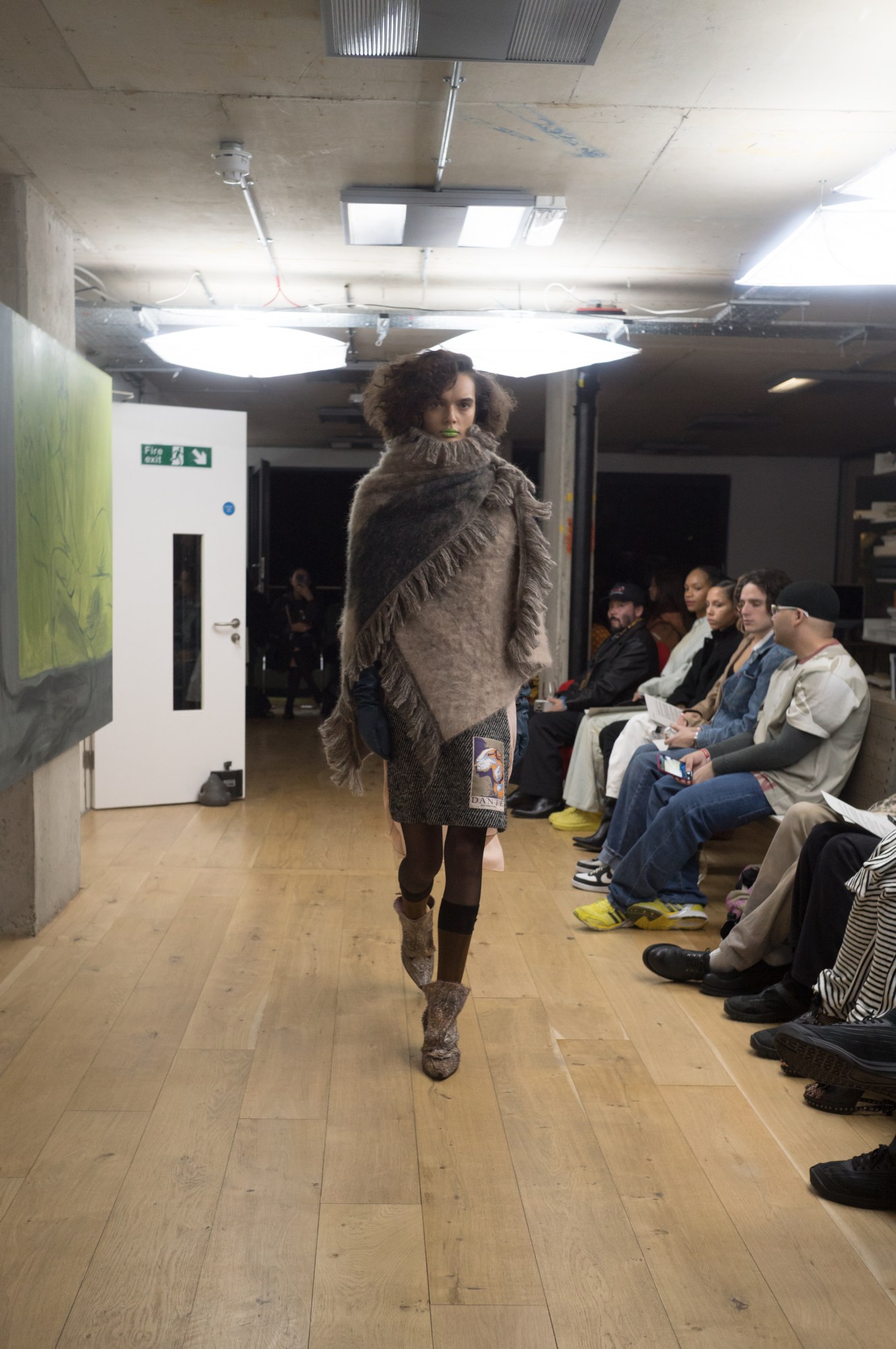

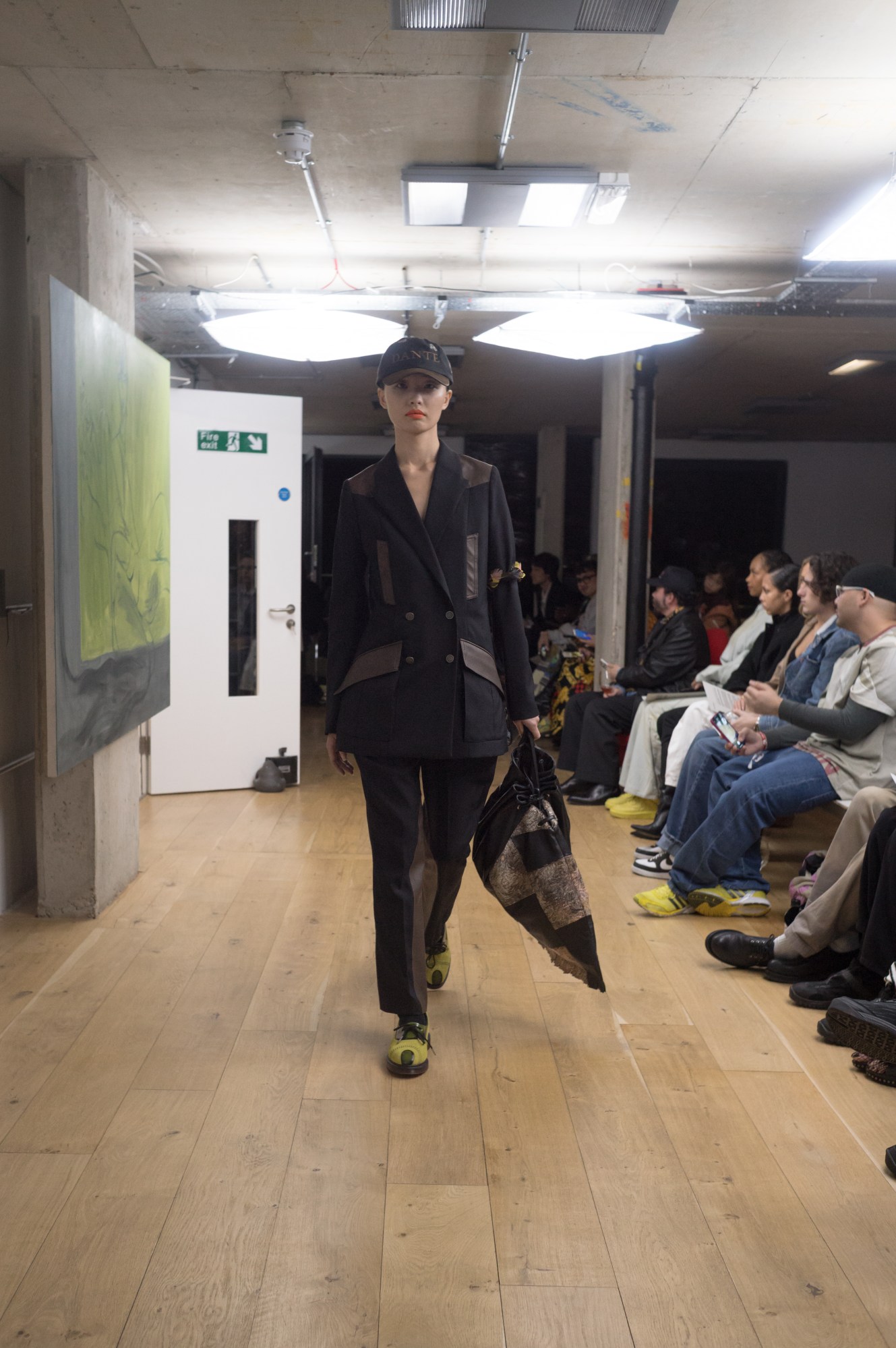
Described in a press release as “part mascot, part muse, part furry CEO,” he has been a barking presence around the family of designers for 4 years. In this 30-look collection he’s given the muse treatment—his obsessions (bananas, naps) and his aesthetics (curly Lakeland Terrier fur, a chestnut-to-walnut palette) have been reconsidered as knits, keyrings, magnets, and plaid skirt-trousers. The most resounding Dante-ism—well, besides the tiny furry Dante brooches or the vintage feather headbands that look like the ducks he likes to chase—is a men’s knit cardigan with his silhouette repeating across the chest.
“Dante loves the countryside. We took him to the Cotswolds and I think he had the best time of his life. He likes cashmere, so we used cashmere,” Laura Fanning told me after the show of her womenswear references. “I mean, that all sounds very basic,” she laughs, “but we were thinking about something that we could both connect with. It made sense to think about Dante in the countryside and dream about what that would be.” The fantasy of Britishness might be something foreign to the Bulgarian Kiko and Australian Fannings, but in looking through the eyes of their dog, they found an elegant, attainable kind of aspiration in off-kilter cable knits, plaid skirt-pants, and punky, proper Dr. Martens shoes in British moss green.
Reality seeps in with the latest in the brand’s ongoing collaboration with Levi’s, too. For men, Kiko designed a suit inspired by Andy Warhol’s unstuffy tux-and-jeans look worn to The White House in the 1970s. Made from Levi’s STA-PRESS fabric, a midcentury marvel in unwrinkling, the swaggy retro shape brings a dapper formality to the mix. “I have maybe 6 pairs of the STA-PRESS pants before even working together and the cut is amazing,” Kiko said. New medium-wash jeans with knee darting and a men’s shirt finish off the collection—a bit of propriety alongside the “Official Dog Walker” sweats. “We were very responsive to it and liked it immediately,” said Levi’s Gamboa. “There was no real brief or expectations, which is always the best to work together,” added Kiko.
Even among the Kiko Kostadinov team there’s kind of a “no brief” brief. “We actually hadn’t seen each other’s collections really before yesterday when we were doing fittings,” Laura said. “We hadn’t seen it all together, but it feels quite natural in a way together. Quite nice.”
It’s been almost two weeks since I saw the show, wandered the store, ate a delicious butter cookie shaped like a dog biscuit, but I can’t shake the memories. What the Fannings and Kiko have realized with this collection is that the most meaningful things in life are not given to you by grafting importance from the marrow of cultural institutions. What makes clothing work is its heartfulness—its ability to exist in your life not only usefully, but beautifully.
Kiko Kostadinov’s best collections to date have been thoughtful and challenging, but not sweet. Sentimental is not a word—publically facing, at least—that one would associate with such a future-minded brand. But with a collection inspired by their dog, the brand has found something both more pragmatic and more blissful than could be expressed on a PFW catwalk. It’s tender and savvy, uncompromising on the expert patternmaking and sense of silhouette and shape the trio are famous for. Watching shoppers rip the clothes off the rails the following day only hammers the point home: Clothing with soul will last. 2030, 2060, beyond.