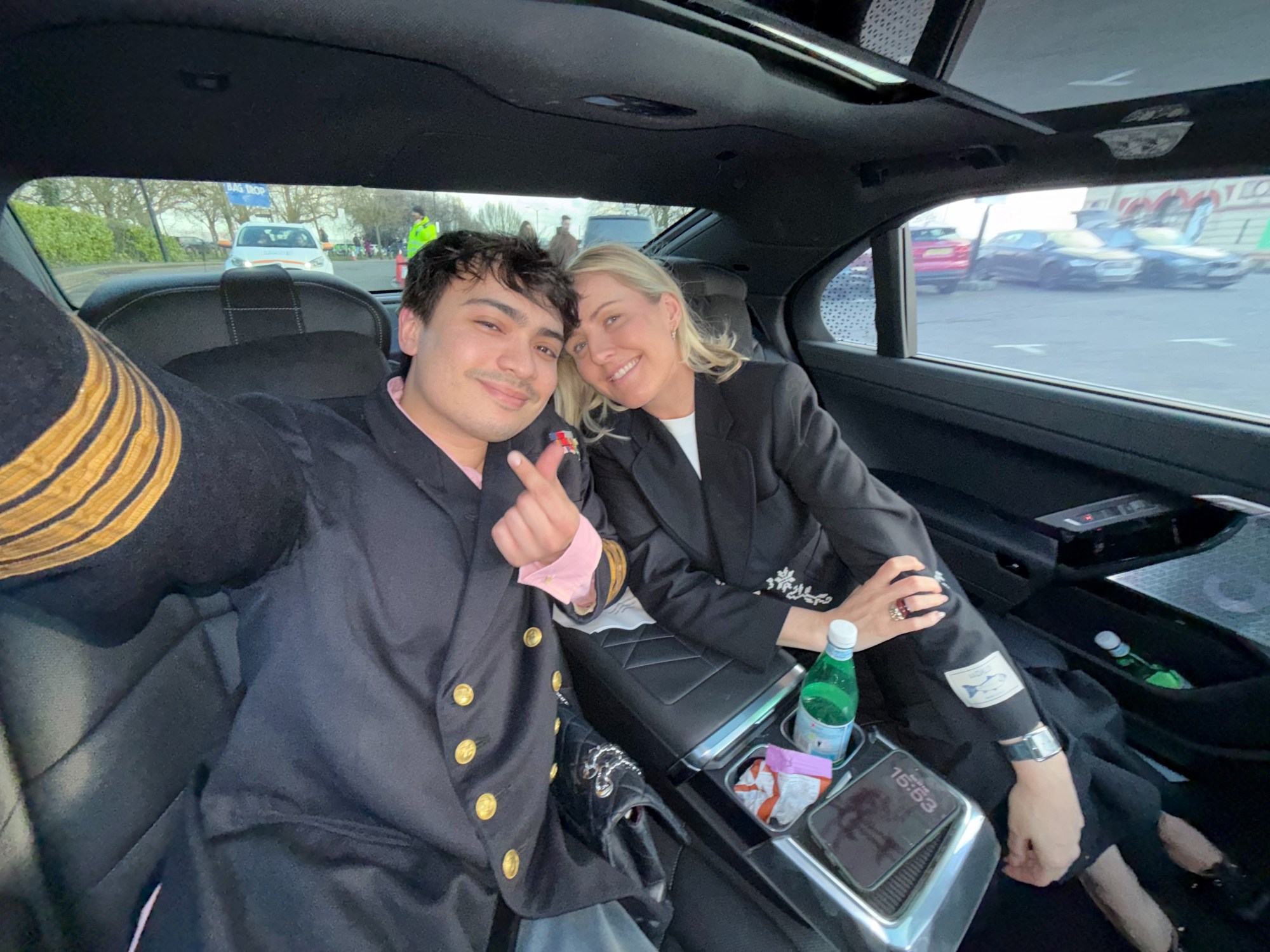
Laura Weir is London-born, newsroom-trained, boardroom-tested. Before being appointed CEO of the British Fashion Council in 2025, she built her career the long way around: trade press reporter, broadsheet editor, glossy insider, magazine editor-in-chief, executive creative director at Selfridges. She has written the reviews, commissioned the covers, run the budgets, sat on the board—and now oversees the institution tasked with supporting, defending, and promoting British fashion.
London Fashion Week sits in that familiar push and pull. The heavy hitters still draw global attention, from Erdem and Simone Rocha to Burberry, while the indie edge keeps the city restless, designers like Derrick, Oscar Ouyang, Karoline Vitto and even newcomer The Vxlley staking their claim. Add the pipeline power of Central Saint Martins and the usual murmurs around funding, scale, and longevity, and this season feels less like routine and more like a reckoning. Which is exactly why this conversation matters now.
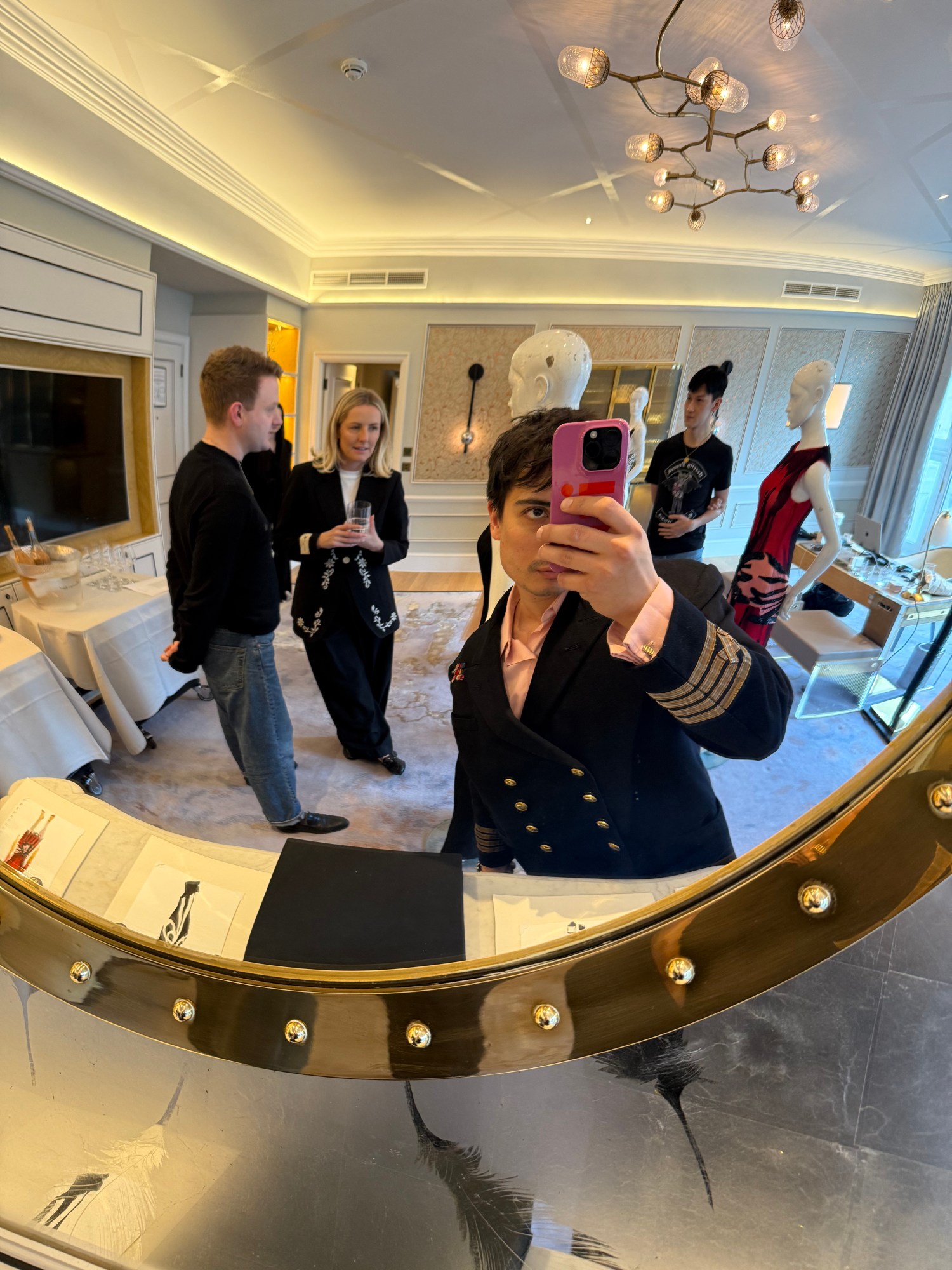
Over the course of several shows and a few well-timed car rides, I spent the better part of London Fashion Week in motion with her.
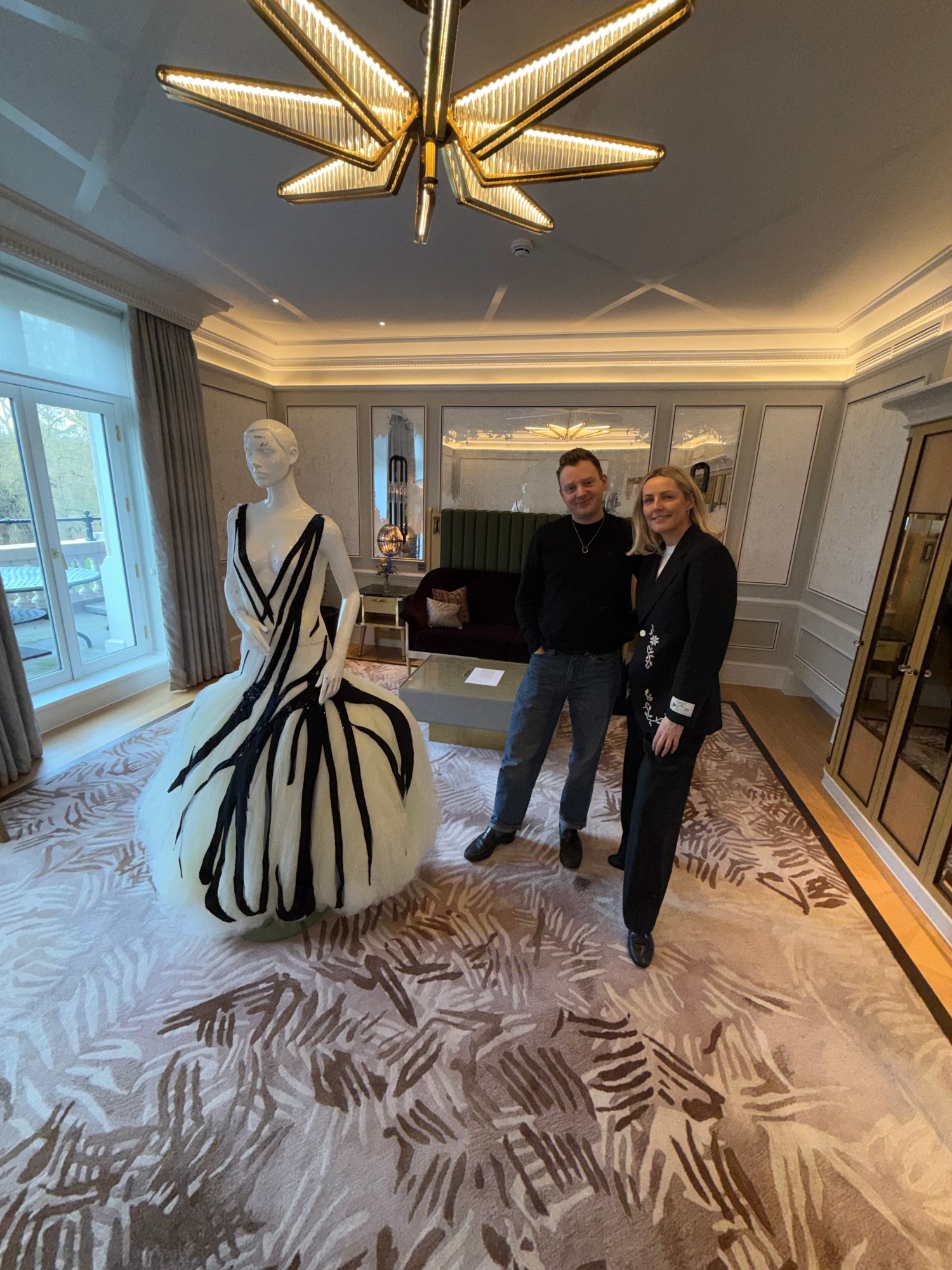
Beside the feathers and flou of Erdem, we give LFW a mantra.
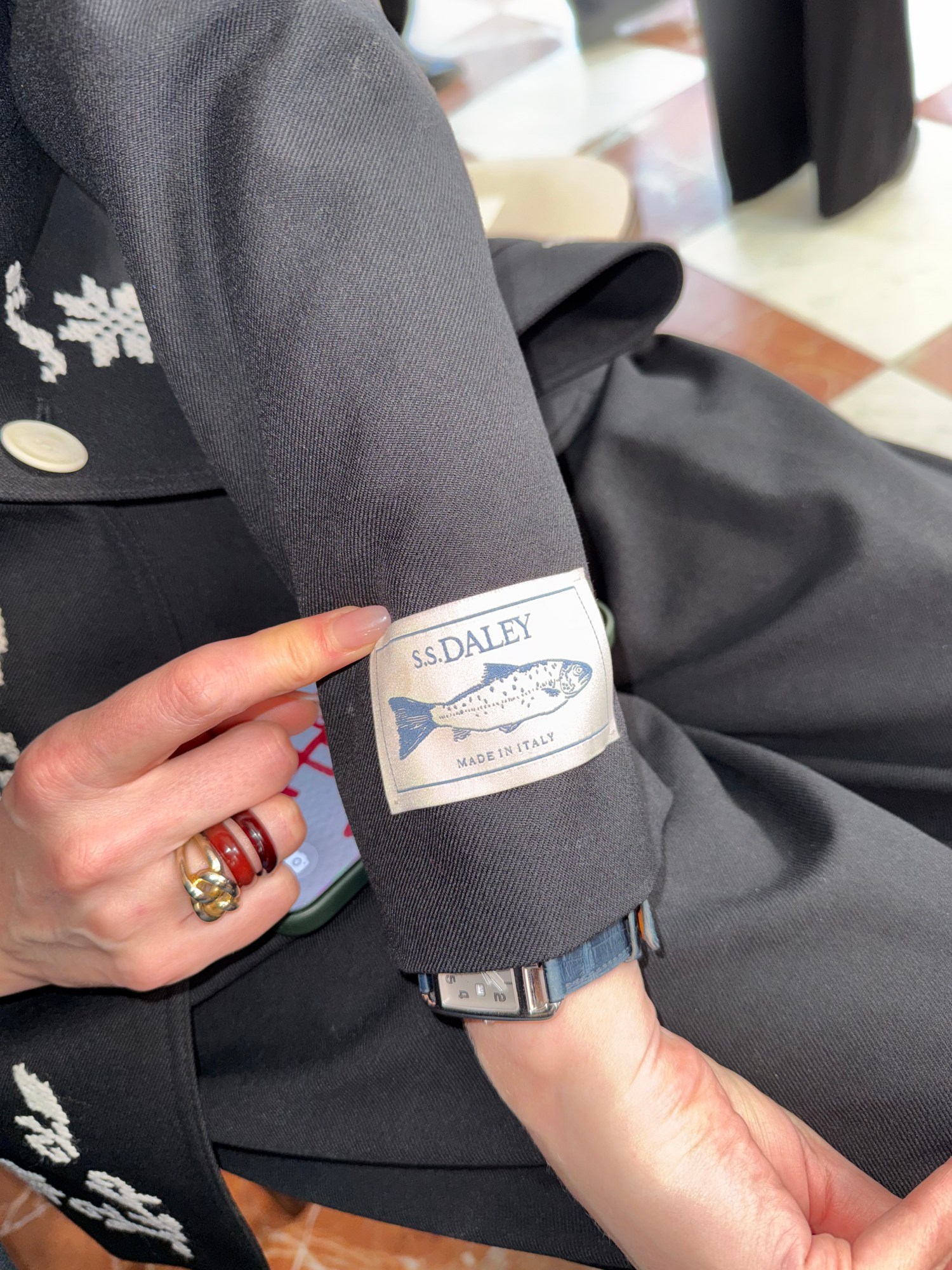
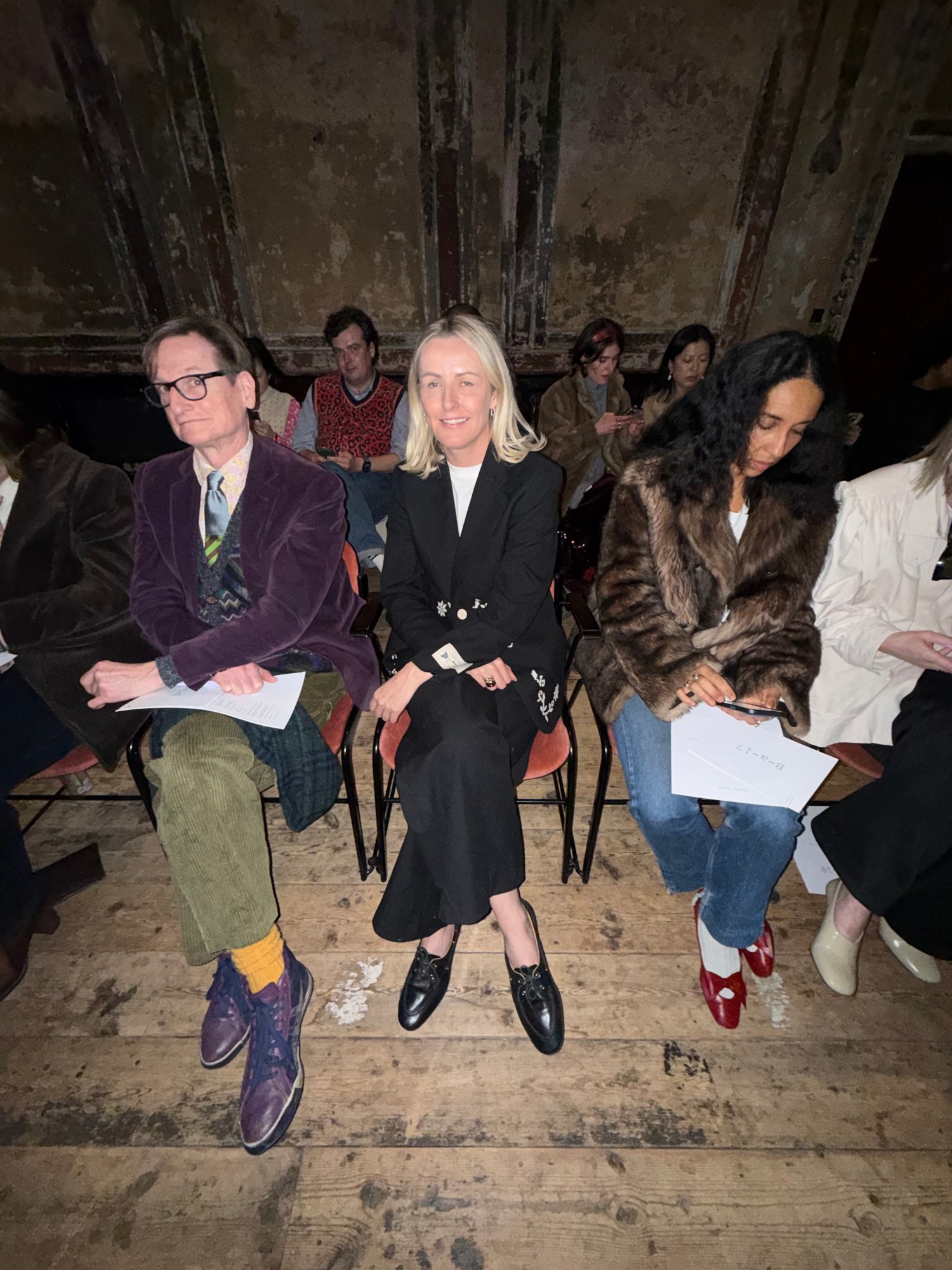
We meet first inside Tate Britain, before the show begins. The runway is still empty. Editors are settling into their seats. The room buzzes with that particular pre-show electricity. She arrives in a black S.S. Daley pant suit—sharply cut, softly authoritative—the kind of look that communicates alignment without theatrics. She smells faintly, expensively divine. “Your brain never stops,” she says, referring to her years as a journalist. “It’s muscle memory.”
We haven’t discussed the collection yet. Nothing has happened. Instead, we are talking about the week so far. About something she has noticed. “There’s been a real leveling up,” she says, wincing slightly at the phrase but not retracting it. “The quality. The finish. The confidence.”
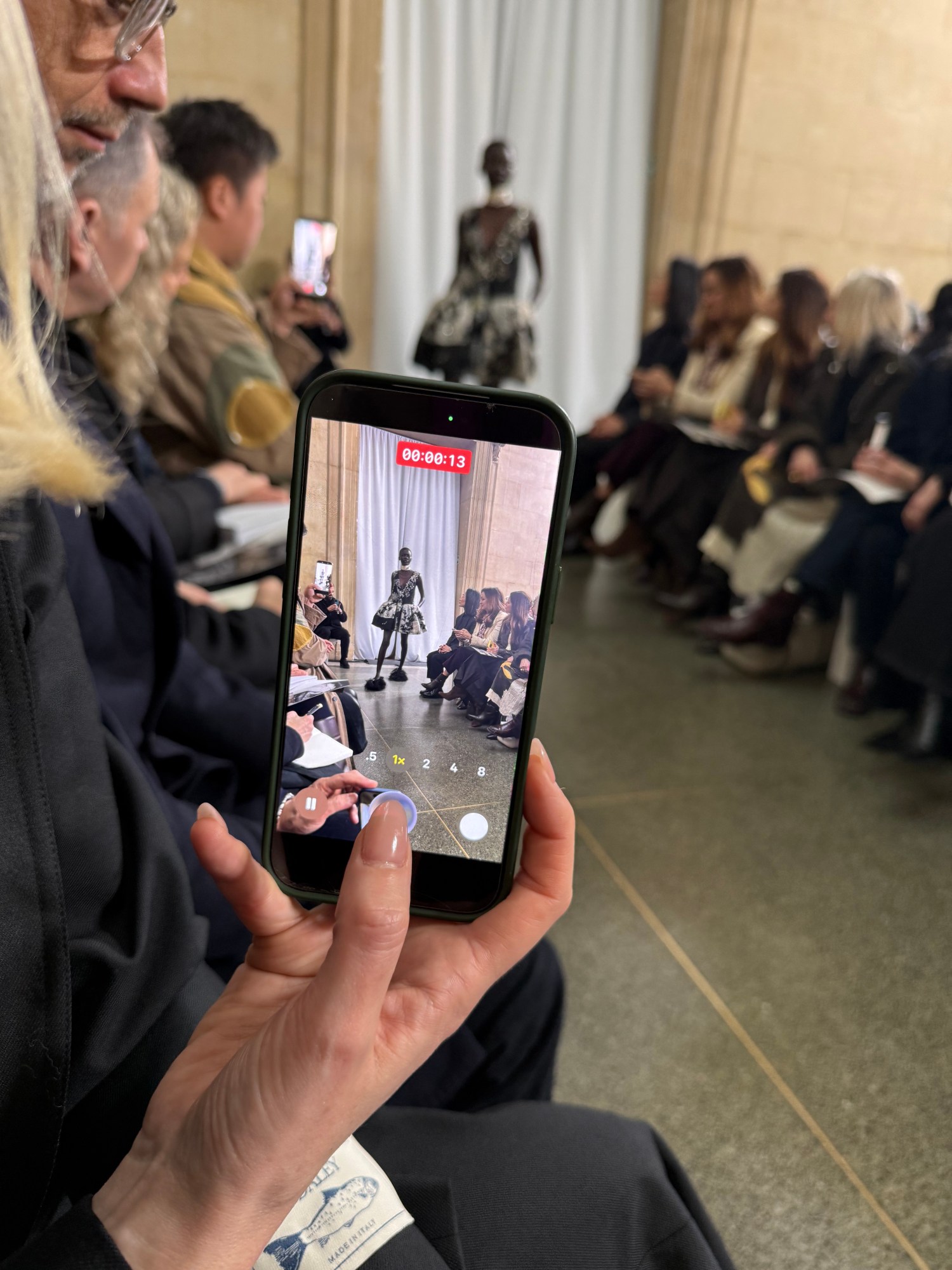
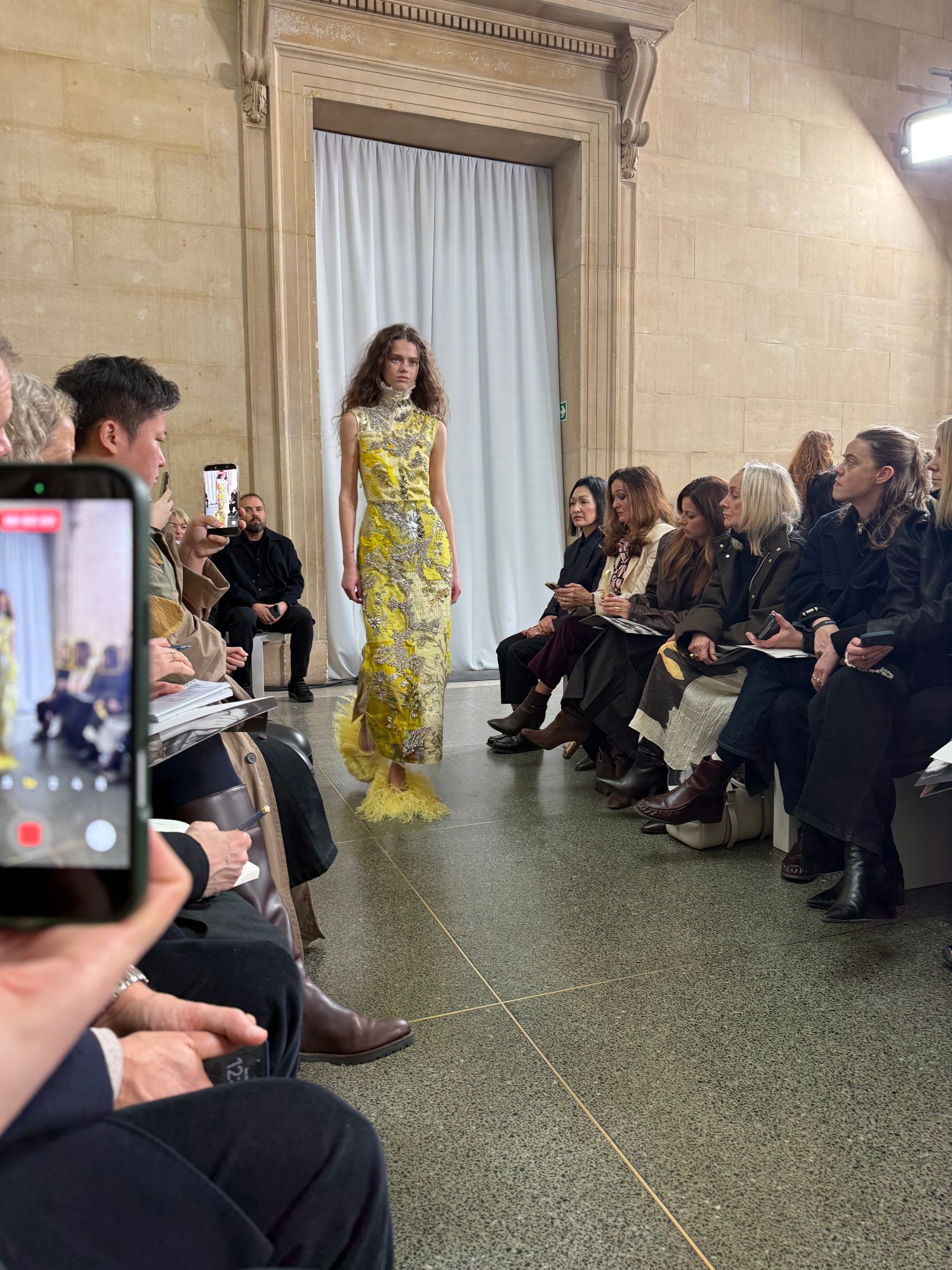
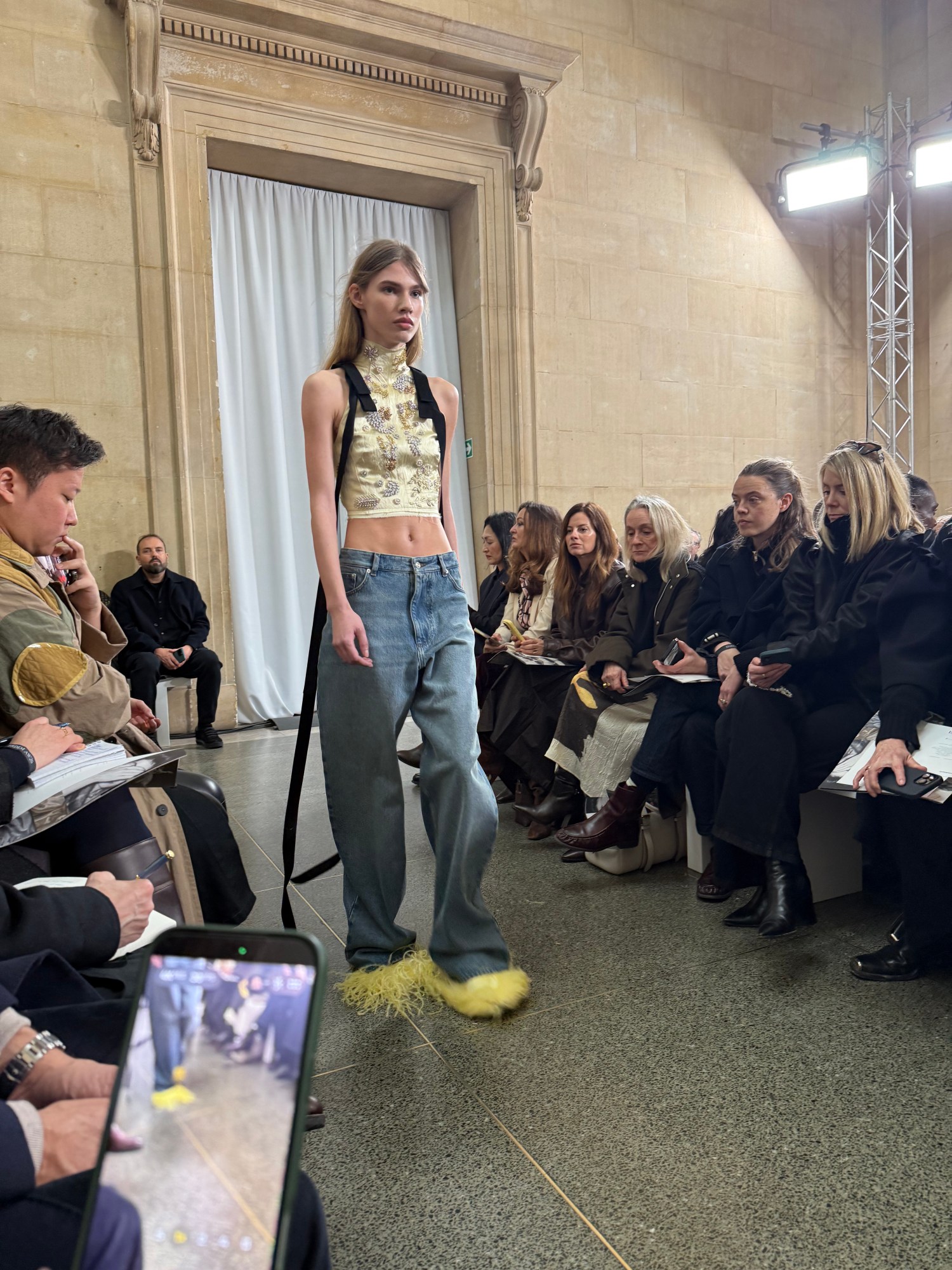
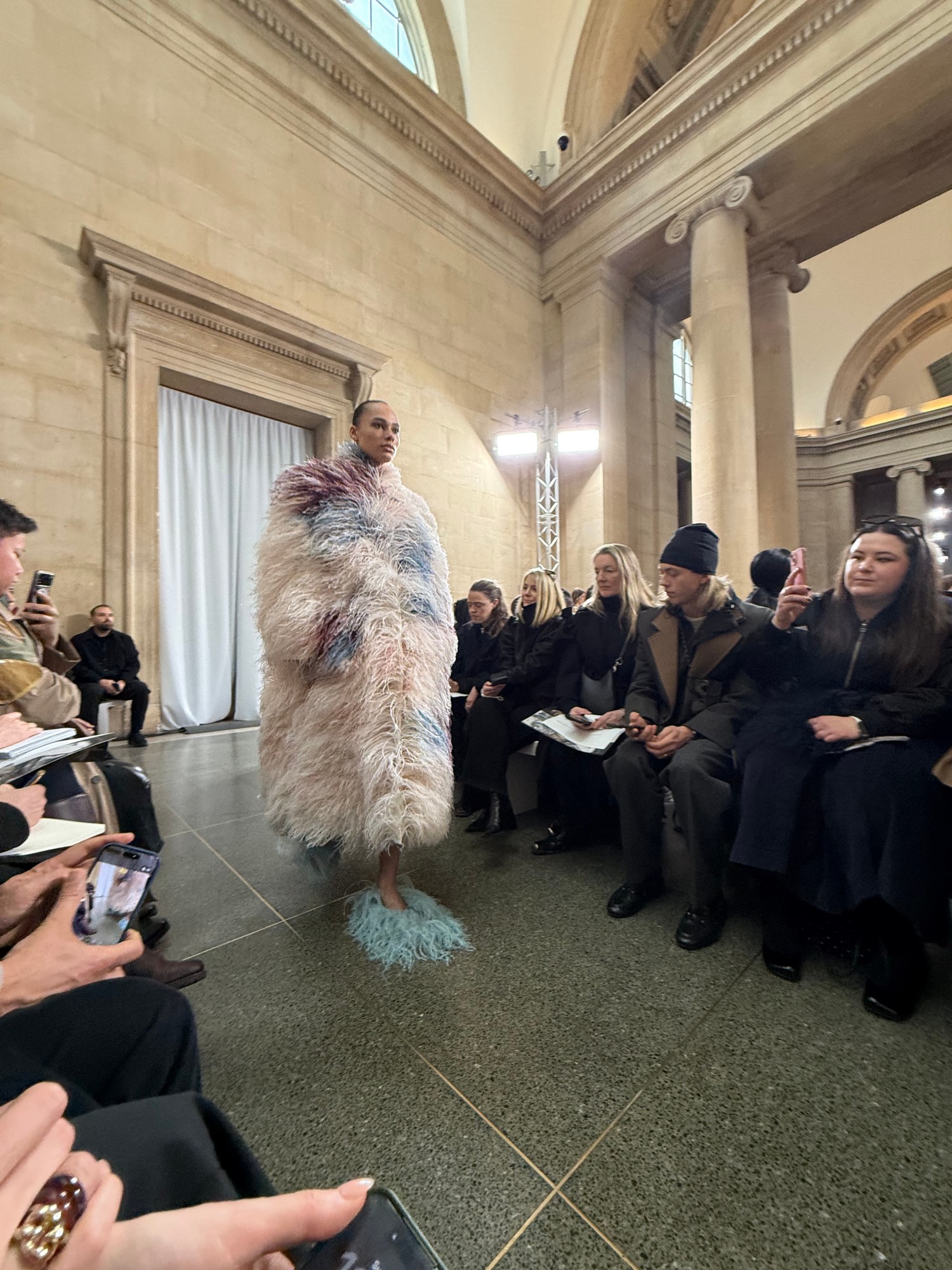
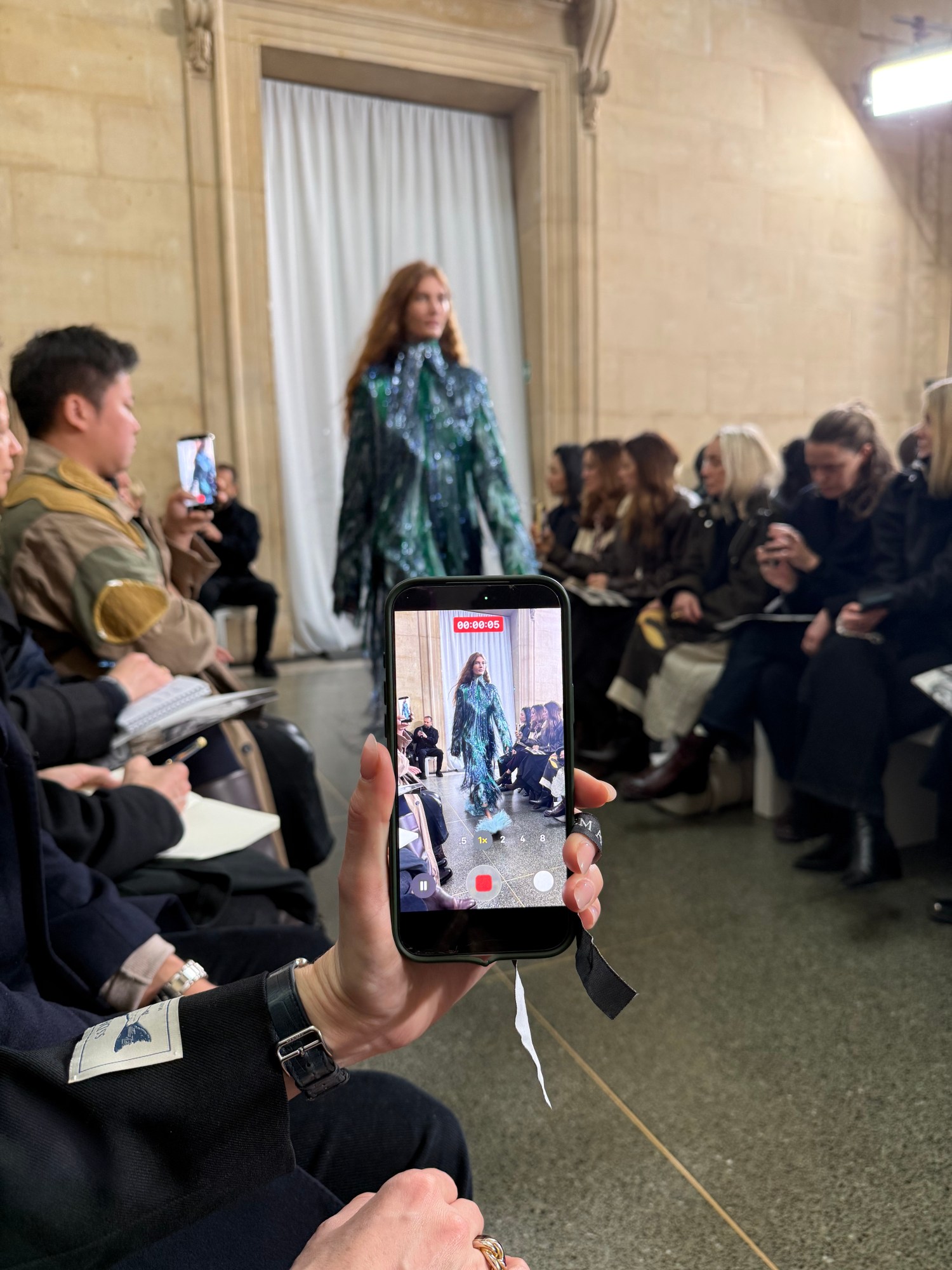
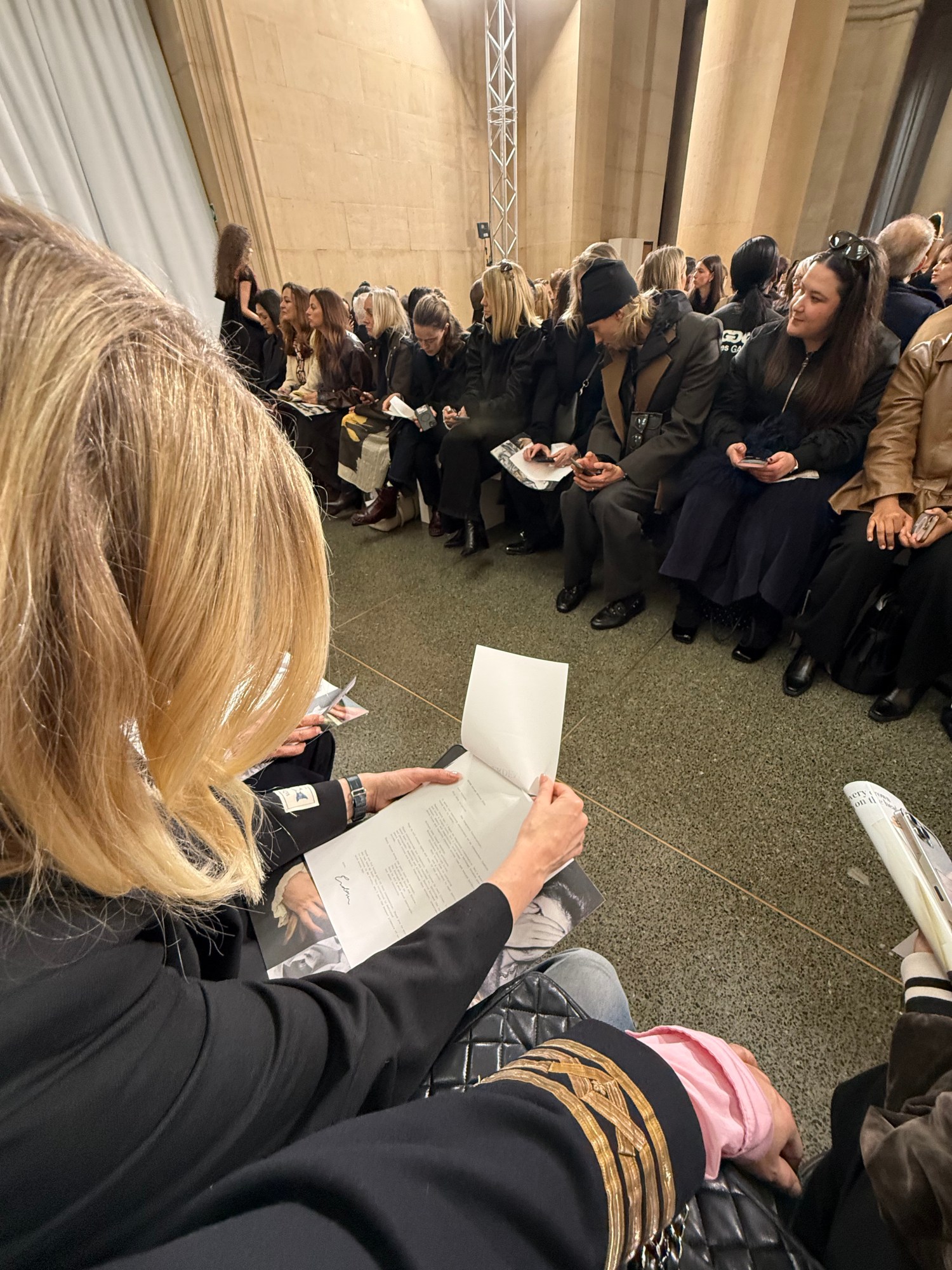
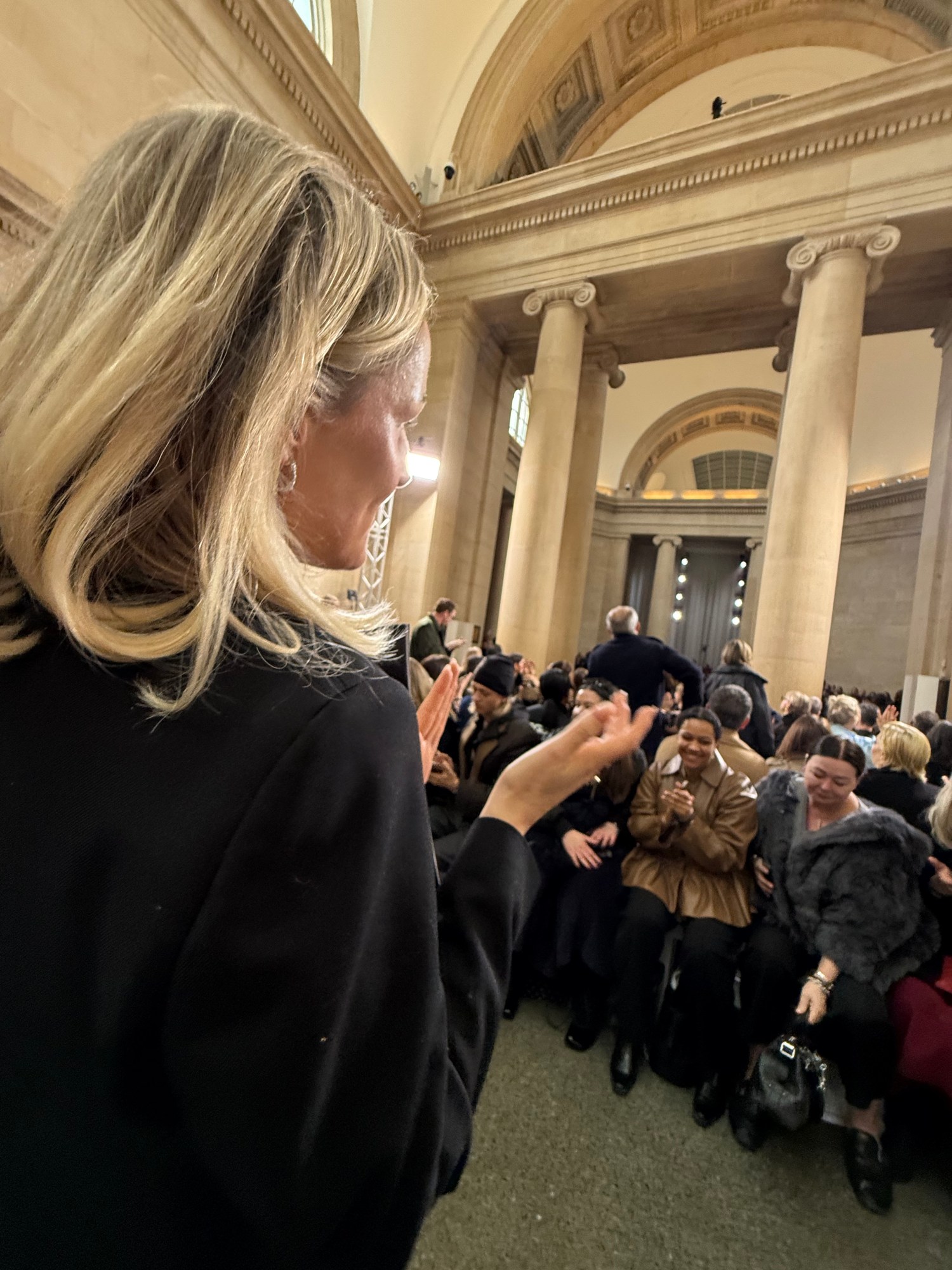
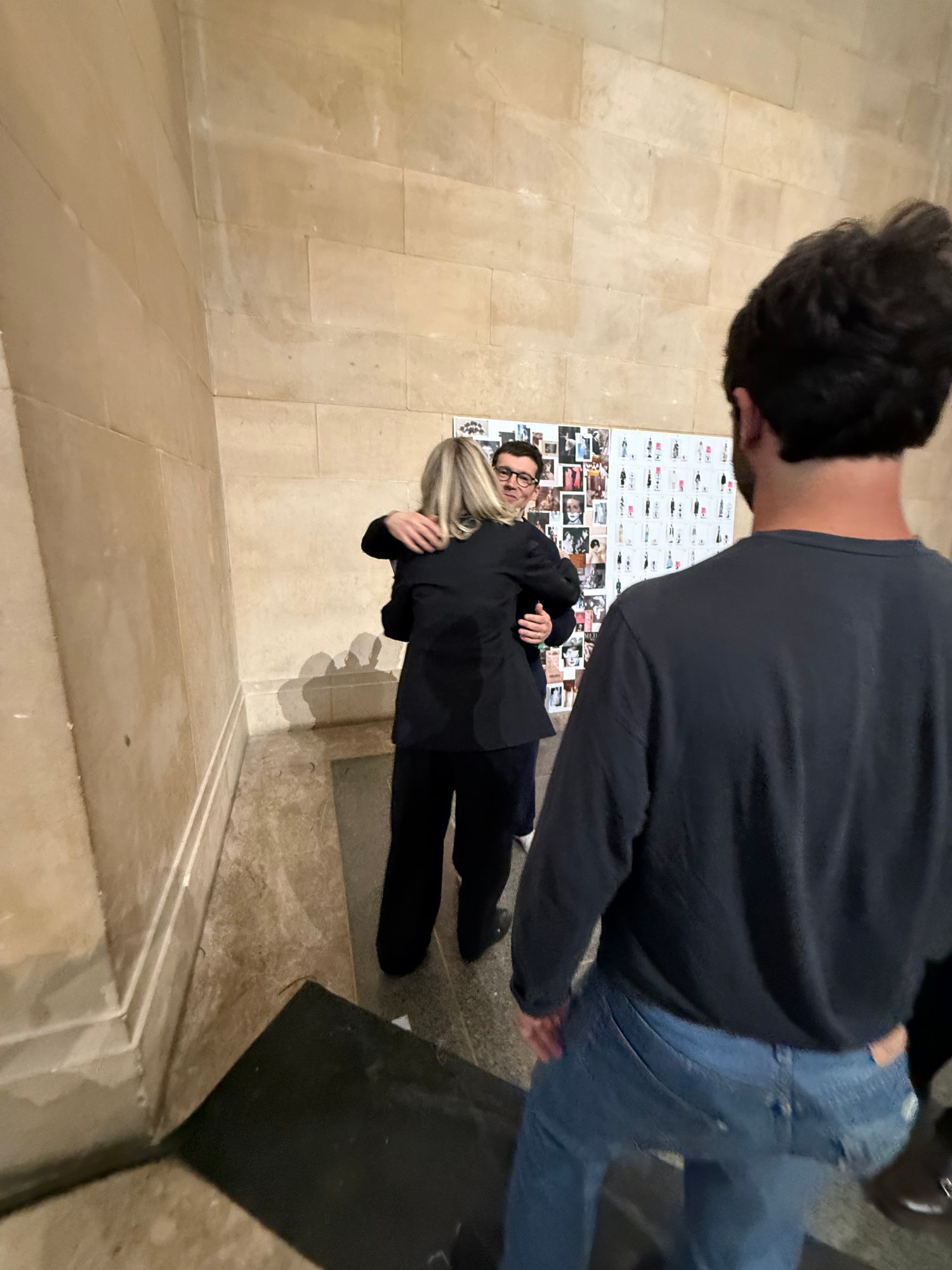
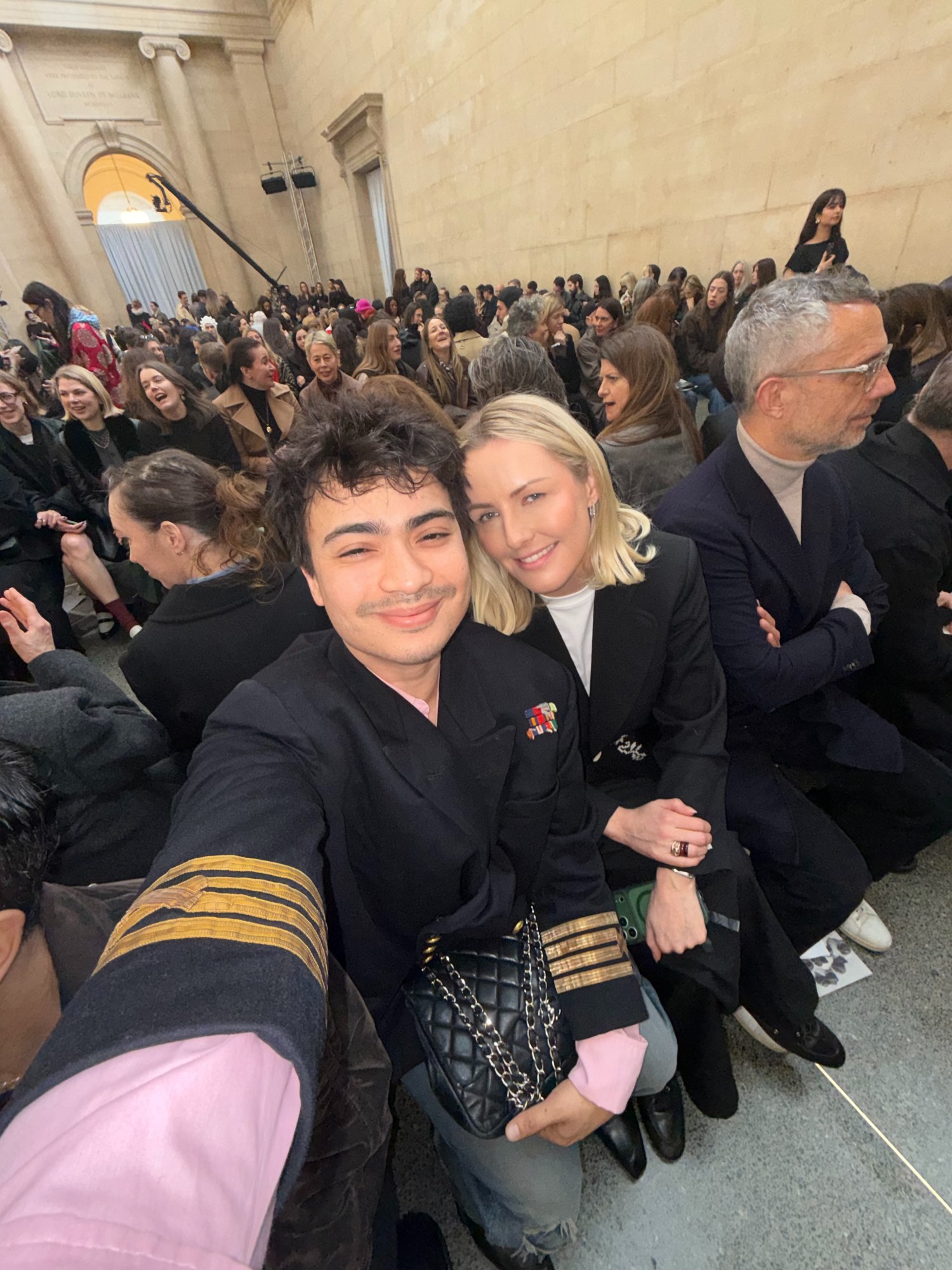
London has long carried a narrative that now feels outdated: brilliant but chaotic, creative but commercially fragile. Sitting inside Tate Britain, about to watch a designer who has built a two-decade career on aesthetic consistency and precision, that binary feels thin. “These are people who’ve stuck to their vision,” she says. “That’s success.”
She is measured when discussing other capitals. Paris is formidable, of course. But conglomerate dominance can create a certain uniformity of output, a narrowing of silhouette and scale. London’s power lies in its contrast. Established houses operate alongside insurgent talents. Young designers platform ideas that don’t exist elsewhere. It isn’t polish versus experimentation. It’s both, at once. The show hasn’t started, but the thesis has.
Great gowns. Beautiful gowns. At Emilia Wickstead.
We meet again later, at Emilia Wickstead. Once again, the conversation unfolds in the anticipatory quiet before the lights go down. She chooses seats near the exit. “So I can dash,” she says lightly. She attends every show on the London Fashion Week schedule. The logistical choreography alone is a full-time job. I ask whether designers still need the runway, as schedule stars like Jawara Alleyne and Chopova Lowena sit out the format this season. “There’s a difference between need, should, and could,” she says. “Does a designer need to show to be successful? No. Should they consider it for visibility, amplification, community? Yes, if it aligns with who they are.”
She speaks less about spectacle and more about strategy. A runway still carries cultural power, but it is not the only valid format. A presentation in a retail space can drive direct commerce. A pop-up shop on-schedule can build community while generating sales. “It’s about building a world,” she says. “And driving commerce. That’s important for London.”
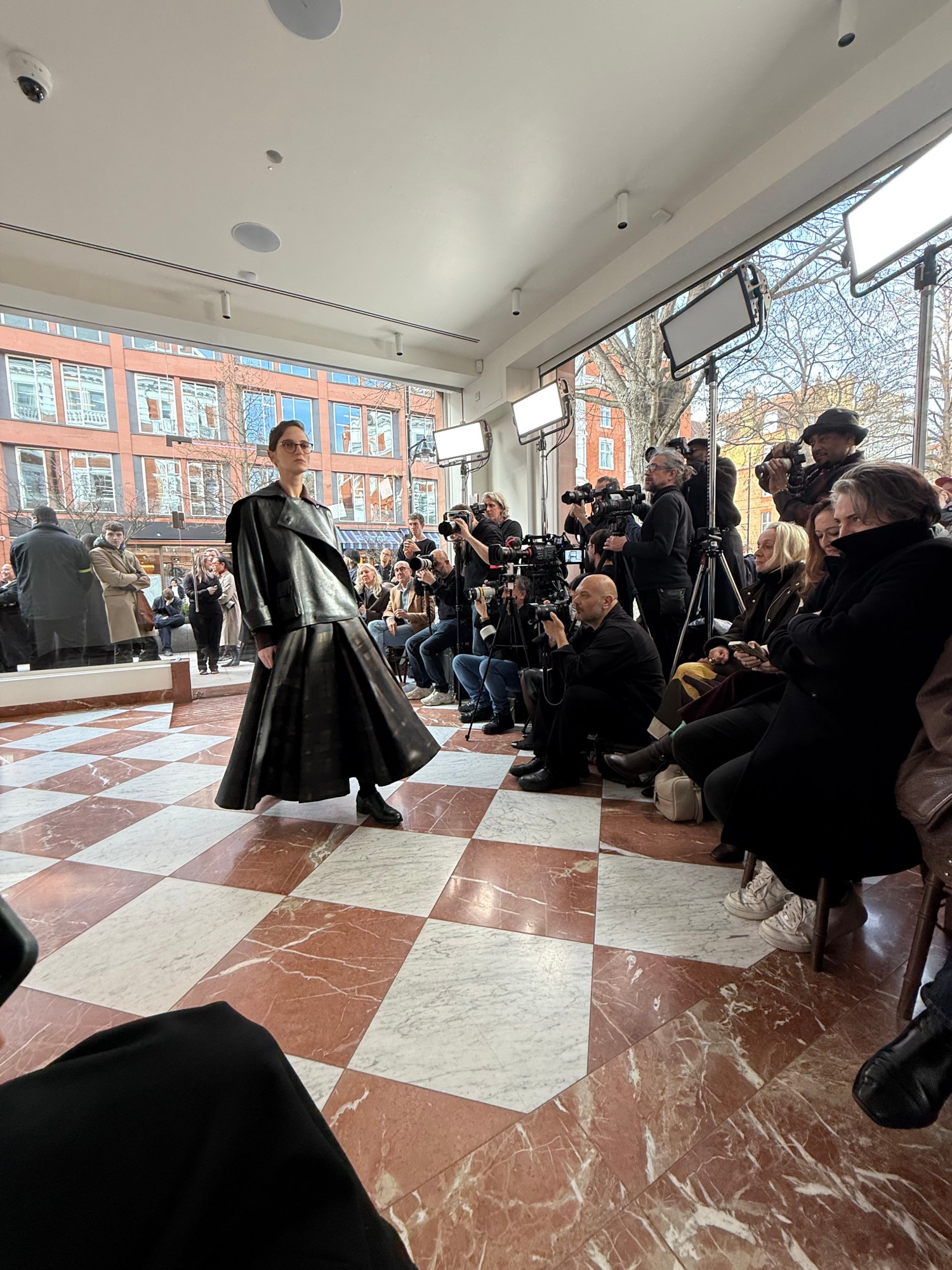
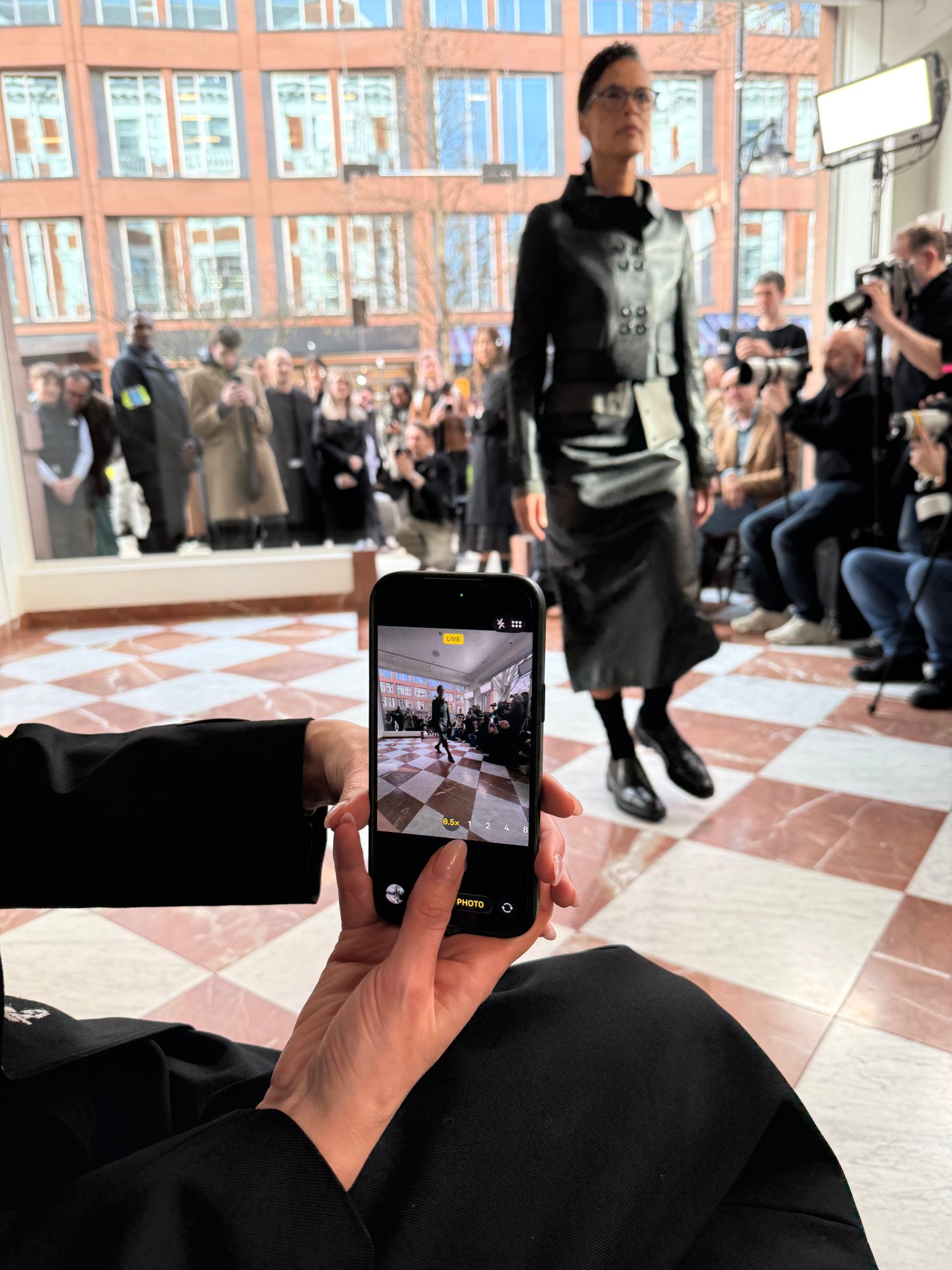
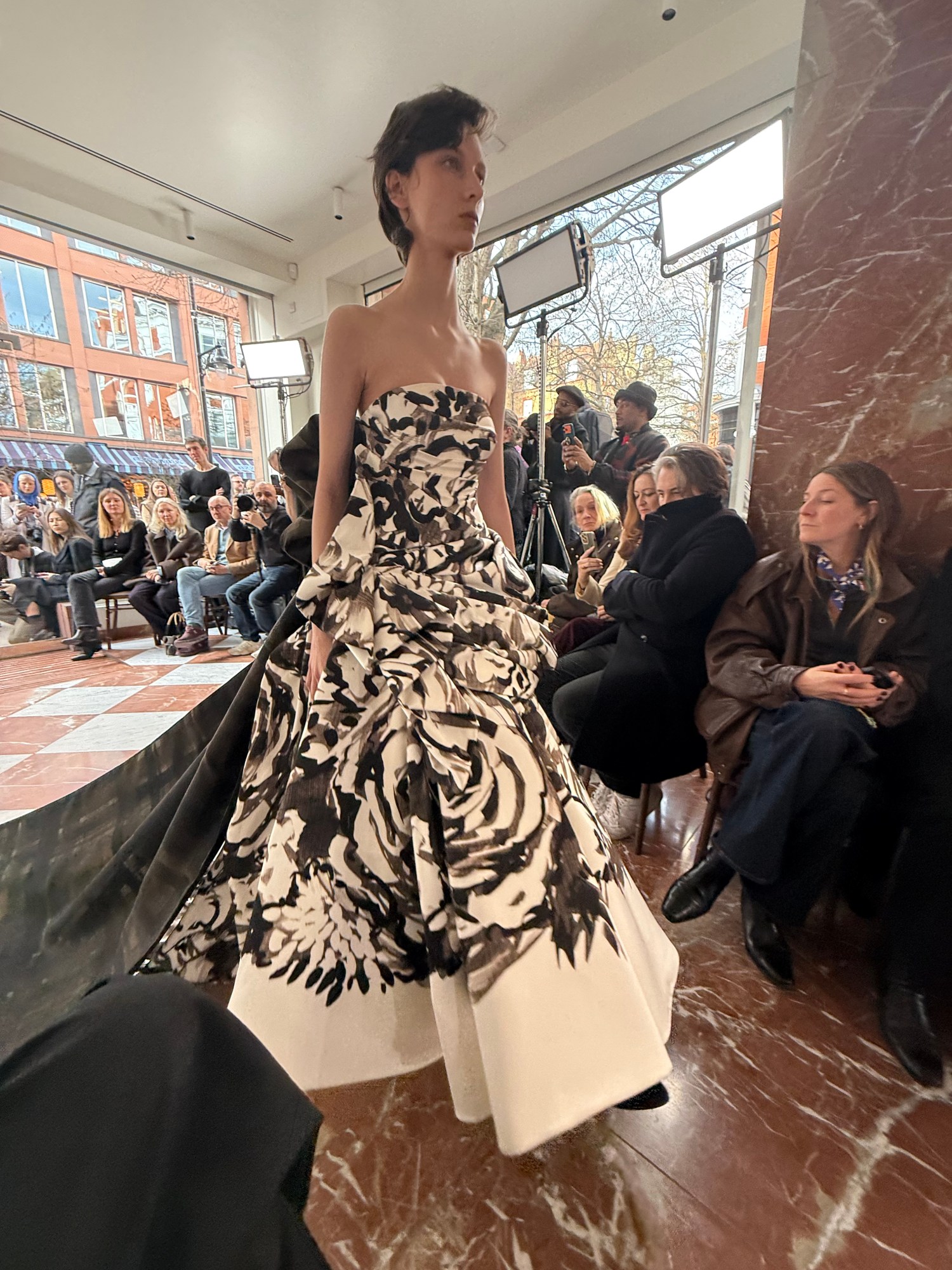
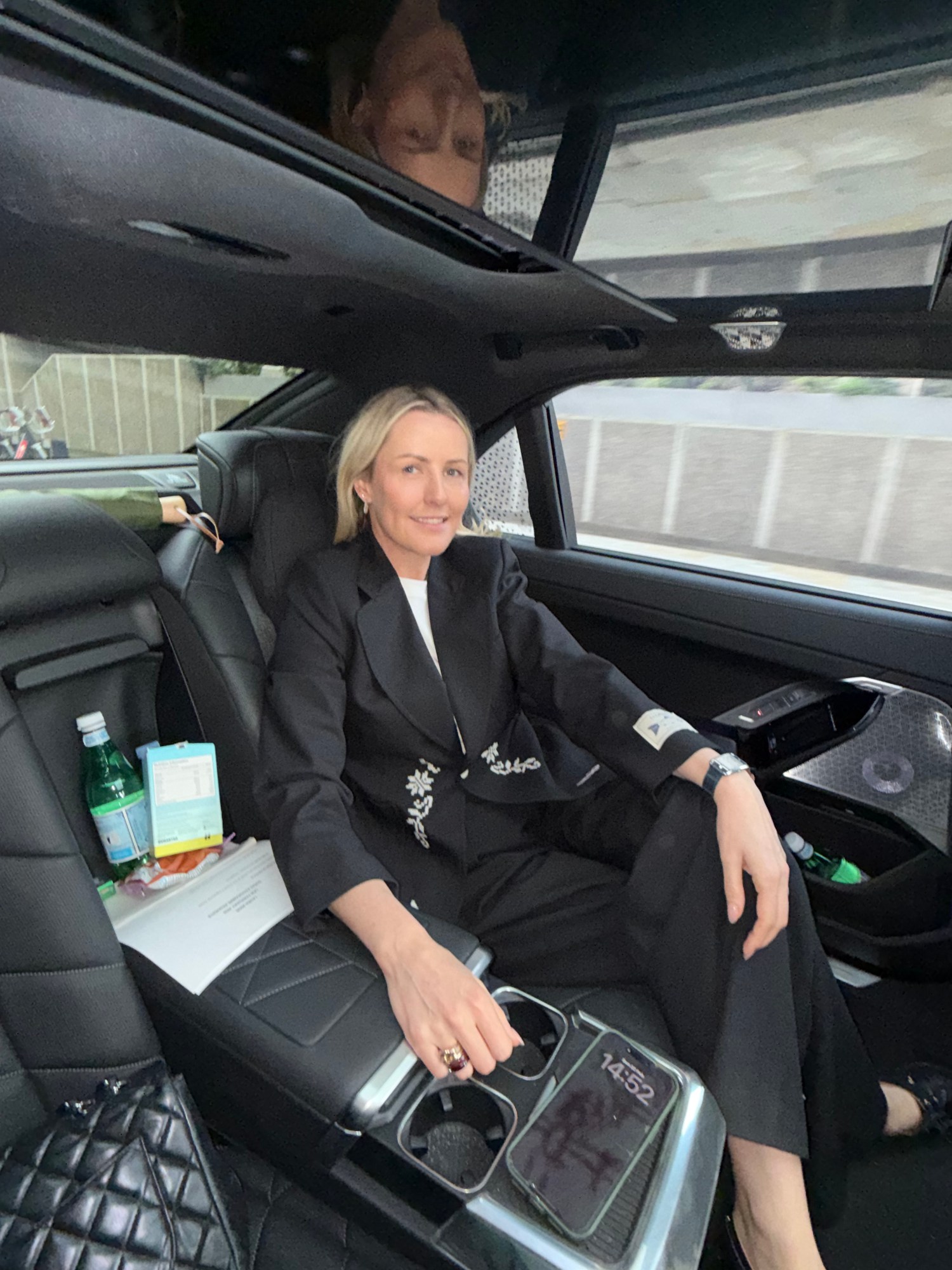
Between Emilia and our next appointment with Steve O Smith at the Mandarin Oriental, I climb into her chauffeured BMW. The back seat doubles as a mobile office. Emails are answered. Strategy documents are proofread. Calls are taken between traffic lights. She moves seamlessly between macro thinking and minute detail.
Chocolate peanuts and a goss en route to Simone Rocha.
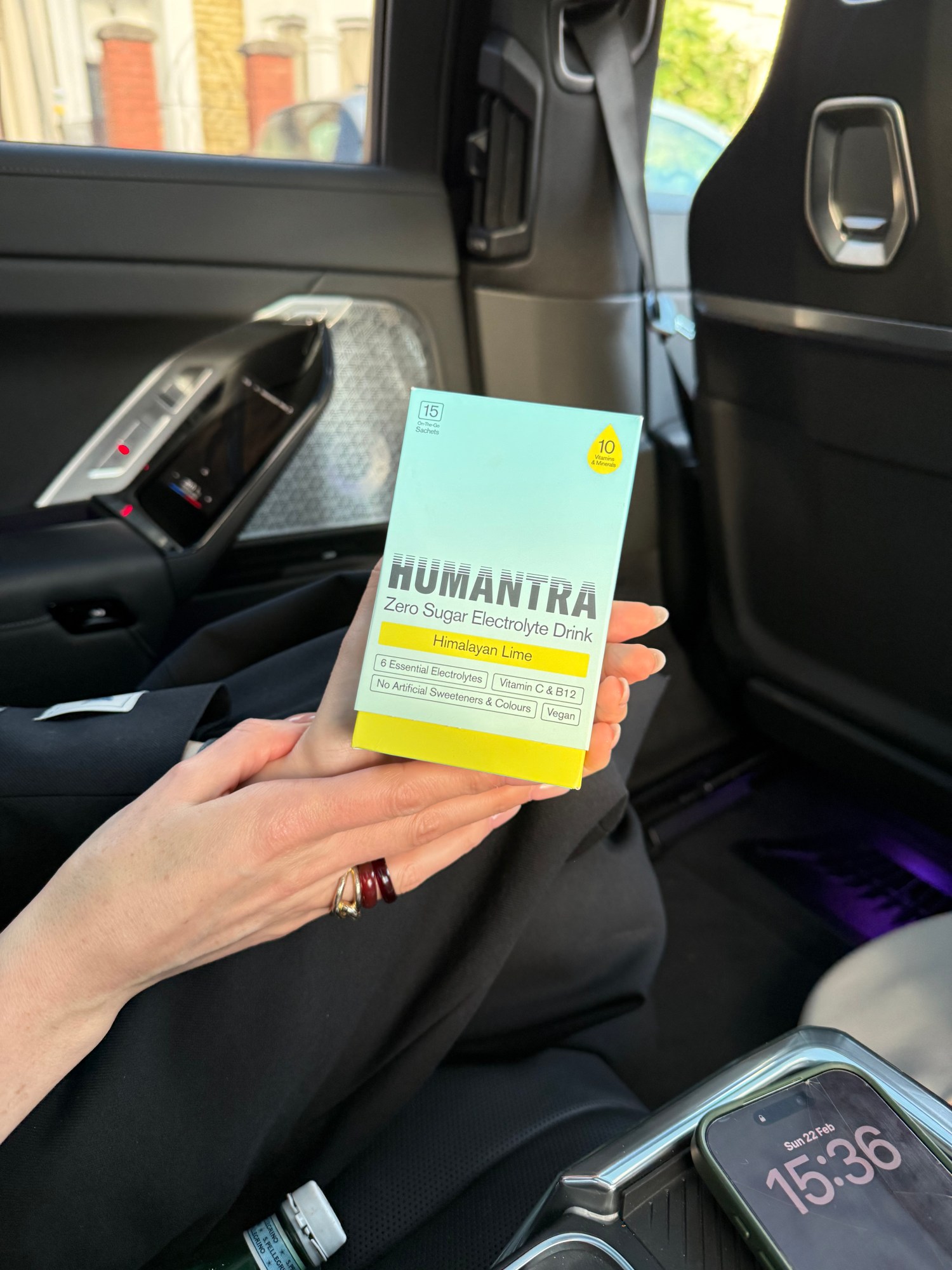
On our way to Alexandra Palace, the pace softens. We share Belgian milk chocolate peanuts from Marks & Spencer—her favorite. Her other Fashion Week essential sits nearby: Humantra’s zero-sugar electrolytes (Himalayan lime flavor). Hydration, she tells me, is non-negotiable. It is in the car, suspended between venues, that the personal chronology unfolds. She was born at Guy’s Hospital in London. Lived first on Manor Road, then in Charlton. Her parents separated when she was 11. She worked from 14 at Greenwich Market, making jacket potatoes and fry-ups. She sold double glazing. She cleaned. She sold insurance. “I’ve always worked,” she says, without drama.
She applied to study fashion promotion at London College of Fashion and was rejected after an interview that, by her description, felt designed to test whether she belonged in the room. She named Lee McQueen as her favorite designer and was questioned for it. “They didn’t let me on,” she says. “It was the best thing that happened.”
Instead, she studied journalism. Court reporting. Shorthand. Philosophy, politics, economics. A vocational education rooted in rigor. Fashion entered her life through Drapers magazine, discovered on a coffee table. Business and creativity in one place. She wrote them a letter asking for an internship. It worked. While interning, she overheard someone mention they needed a junior online reporter. No one quite knew what to do with the internet yet. She did.
From Drapers to Elle to The Sunday Times, she built a career in newsrooms defined by pace and precision. She learned the codes of conference, accountability, and sourcing. Then at British Vogue, she shifted from weekly immediacy to long-lead storytelling.
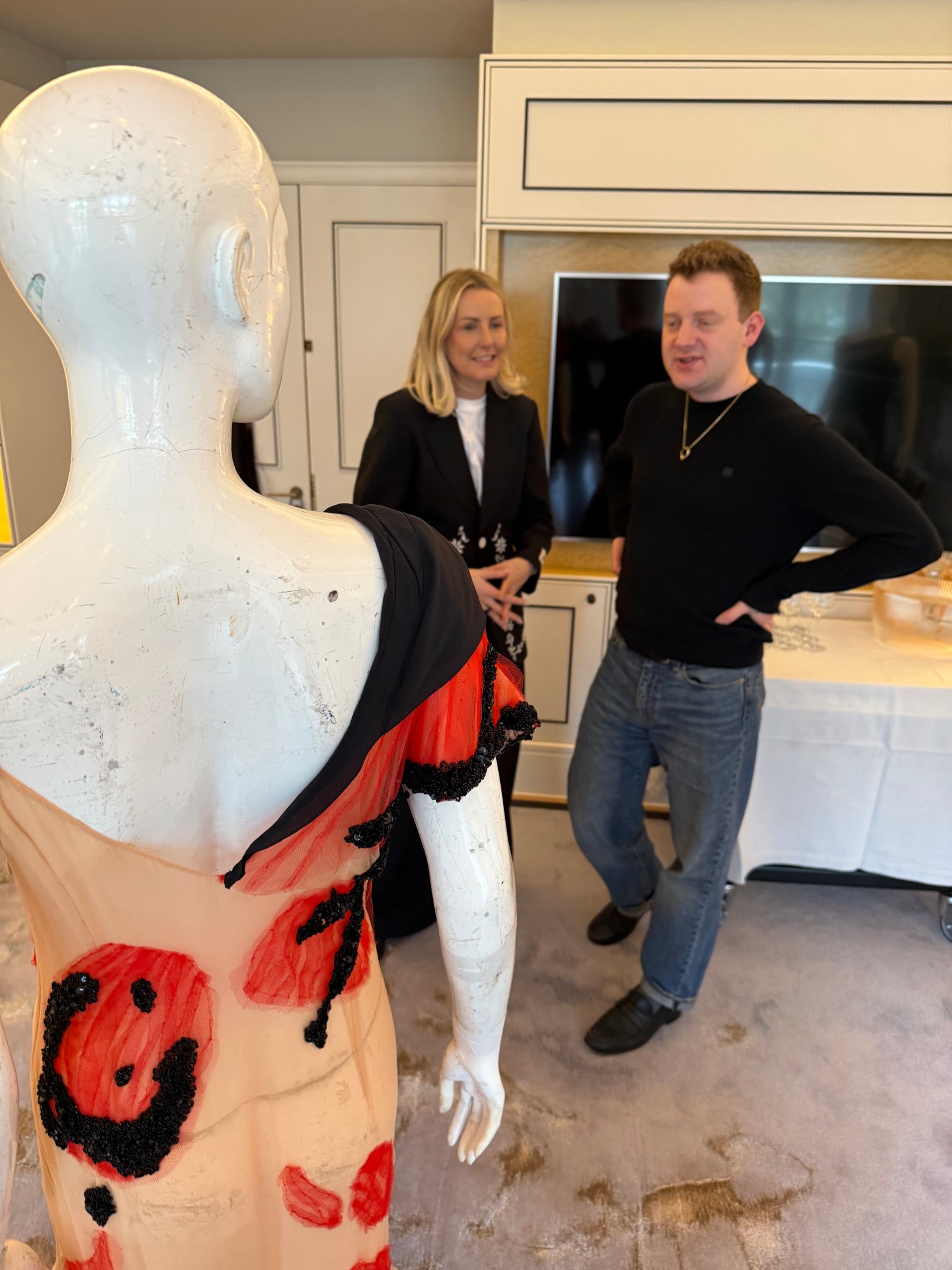

At the Evening Standard Magazine, she took on her first major editorship, shaping a weekly publication that reached millions across London. “I wanted it to feel like the London I knew,” she says. When crisis struck London, she commissioned legendary artists to respond. The magazine became civic space rather than glossy distraction.
After launching her own consultancy and serving as executive creative director at Selfridges, she was approached about leading the BFC. “As the interview process went on, I started to want it more,” she says. “I thought about who would get it if it wasn’t me. And what the industry deserved.” She wore a vintage McQueen suit she bought from a sample sale in Clerkenwell to the final round. She got the job, duh.
When she talks about the role, she breaks it down into verbs. Those verbs matter. Support means pipeline. Scholarships. NewGen. School outreach. Ensuring that from classroom to catwalk, there is structural backing. Defend means advocacy in the face of political and economic turbulence—Brexit, supply chain shifts, wholesale volatility. Promote means global visibility, but also recalibration. “The activity hasn’t fully responded to the shifts in the market,” she says. “Wholesale is volatile. Direct-to-consumer is central. Content is commerce. Digital storefronts are core.”
There is a widely acknowledged gap between emerging designers and global houses. The middle tier often lacks infrastructure. That is where she sees opportunity. “We need to meet designers where they are,” she says. “Not do things because we’ve always done them.” She uses the word dismantle without flinching. It does not mean destruction. It means editing systems that no longer serve.
Being a first-time CEO while transforming an organization is, she admits, complex. “You’re running the day-to-day and trying to build something new at the same time,” she says. “You’re flying the plane and adjusting it mid-air.” But she does not seem intimidated by scale. She has moved through enough firsts to know that competence is cumulative. “You have to back yourself.”
Let’s make it about me for a minute!
Somewhere between Hampstead Heath and Ally Pally, I ask for advice. Not for designers—for myself (teehee). “What are you really good at?” she asks. It feels deceptively simple. I answer carefully. I’m quick. I’m smart. People tend to like me. She nods. “Then you need pace,” she says. “You need to be in the action. You’re a facilitator.” It reframes something I’ve instinctively understood about my own career. What I love most about journalism is not the byline itself, but the leverage—the ability to use a platform to amplify someone else. To write a review that connects a young designer to a buyer. To make a meeting matter. “You feel useful,” she says. “That’s important.”
Bye, queen.
We part ways at the Simone Rocha showspace. By the end of the day, it’s clear that Weir’s ambition for British fashion isn’t spectacle for spectacle’s sake. It’s infrastructure. Access. Refinement. Sustainability. Front row, back seat, boardroom… the choreography never really stops. British fashion doesn’t need rescuing. It needs refining. And someone willing to keep writing the note after the show. And yes—she’s cool. But more importantly, she’s building something.