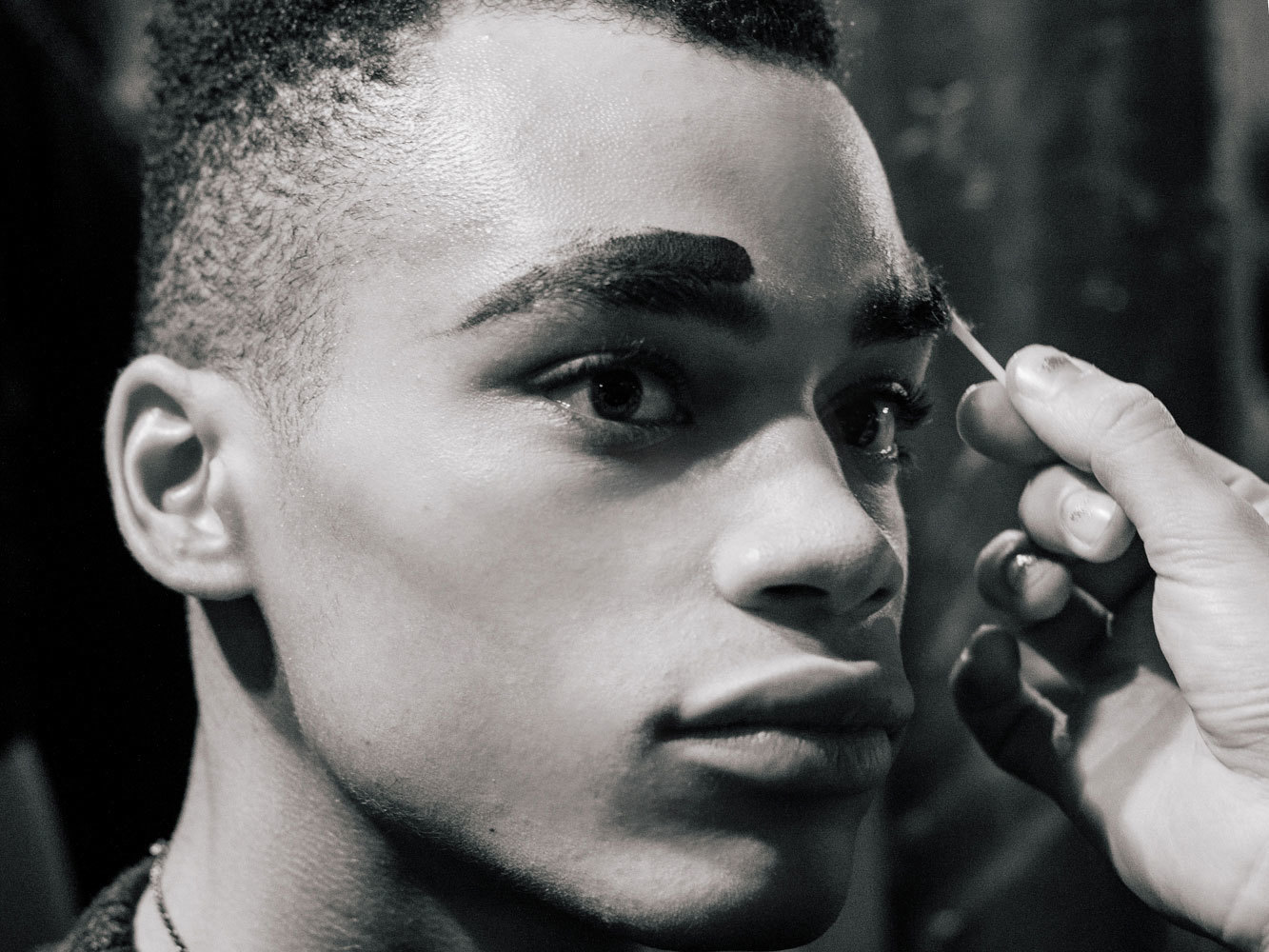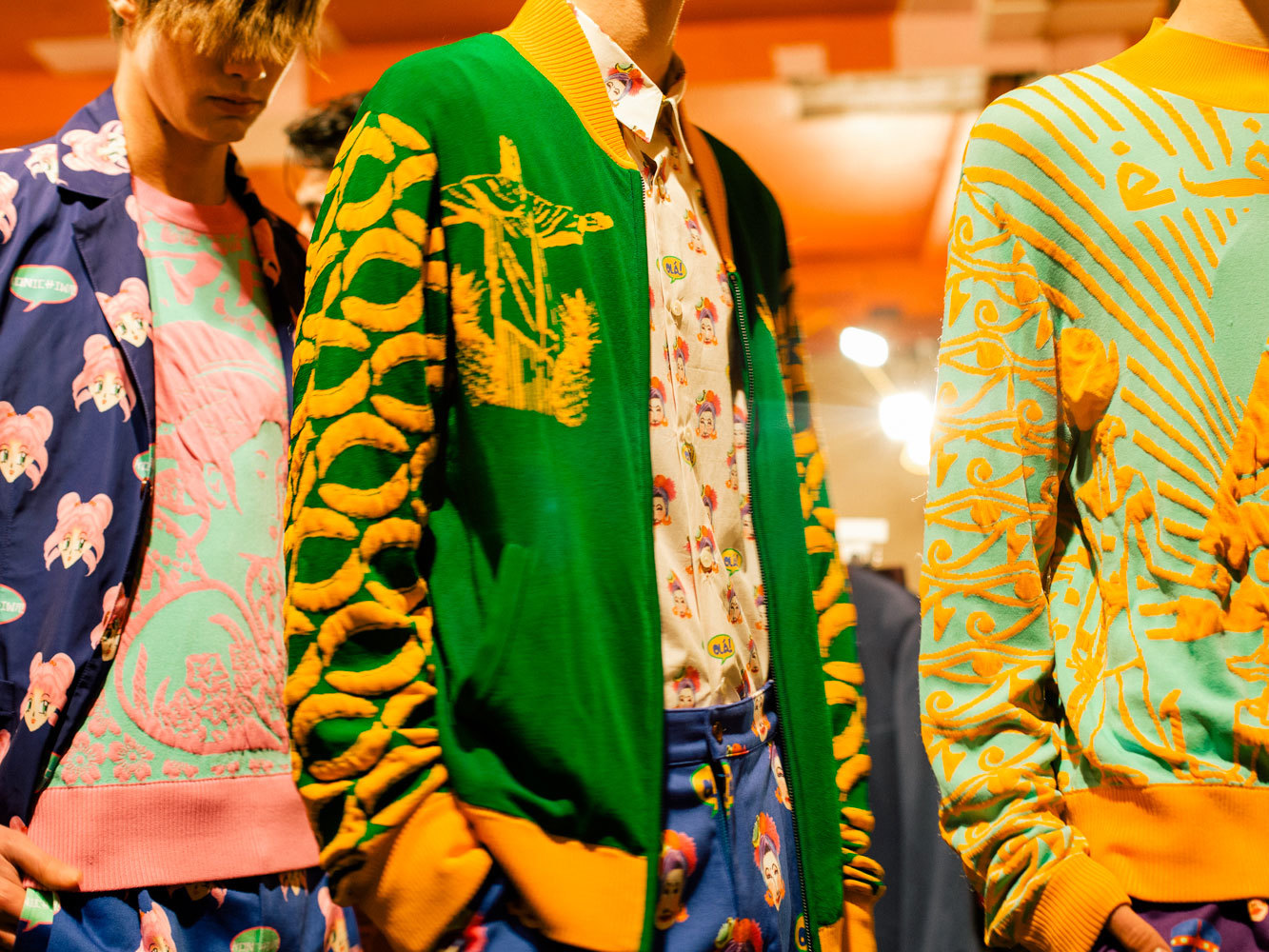
London College of Fashion has really started to hold its own at fashion week the past couple of seasons. Showing it’s MA Womenswear for the first time at Fashion Week just last year, it’s a massive step to have the MA Fashion Design Technology Menswear grads sending their garms down the runway at LC:M for the first time yesterday.
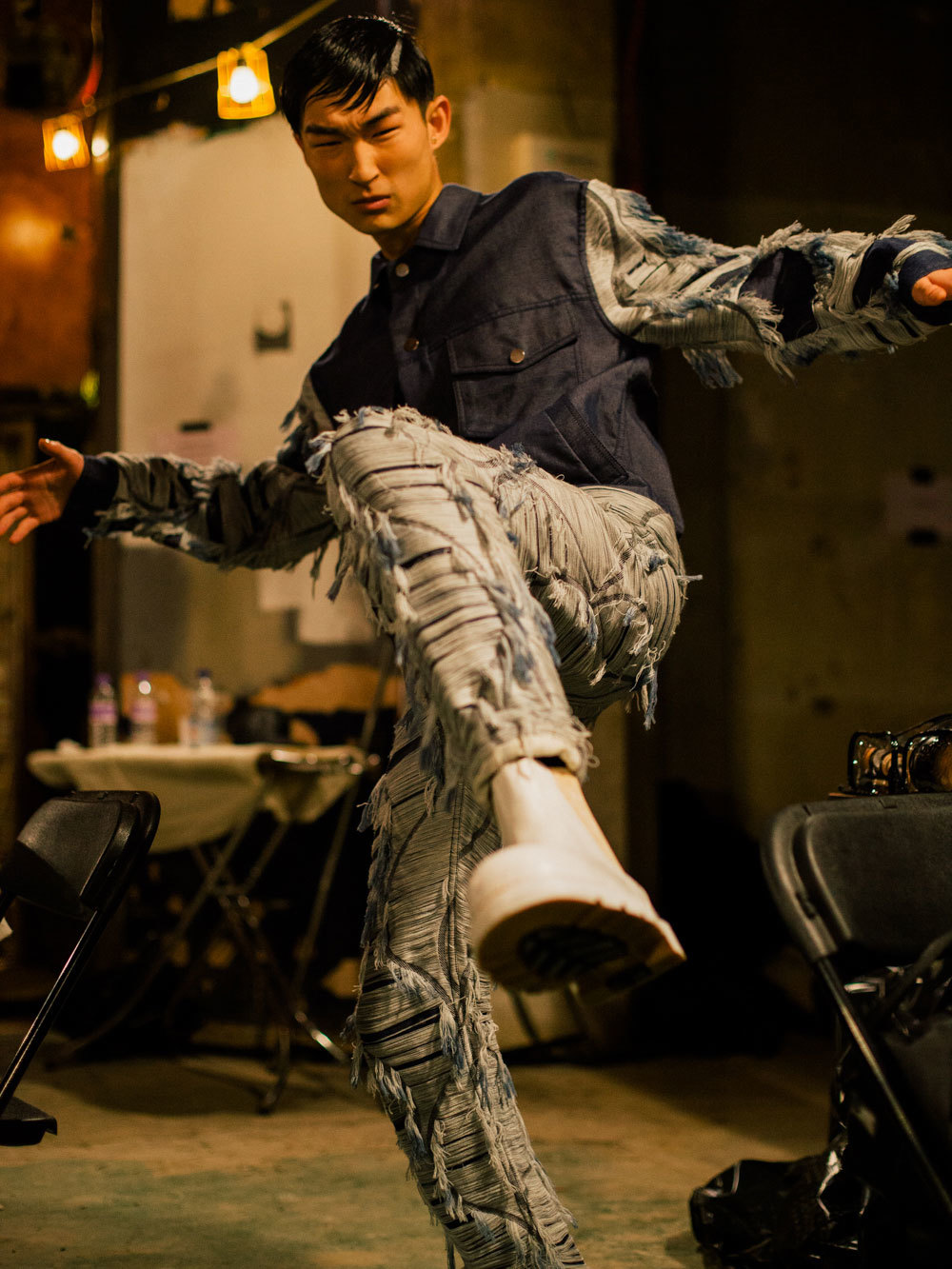
Students are often the most inventive of the bunch and this LCF’s MA15 show was no exception. The twelve students selected to present the culmination of their student work found inspiration in everything from Greek mythology to intoxication with who we predict to be London’s next prominent denim designer, Emma Fenton Villar being a fave. With sustainability, customisation and DIY at the heart of her collection, you can snip away at and fray your own clothes without them unravelling thread by thread, “It means the garment can stay with the wearer a lot longer, they can build a relationship with it. Also I think people have lost touch with making their own clothes. We’re kind of dictated to with what we should wear so it brings about this idea of craft again and people picking up a pair of scissors and cutting something up and a customising approach to denim,” Emma tells us backstage. Here’s what the future of fashion had to say about their own collections, students take note…
Kitty NG
Tell us about your final collection?
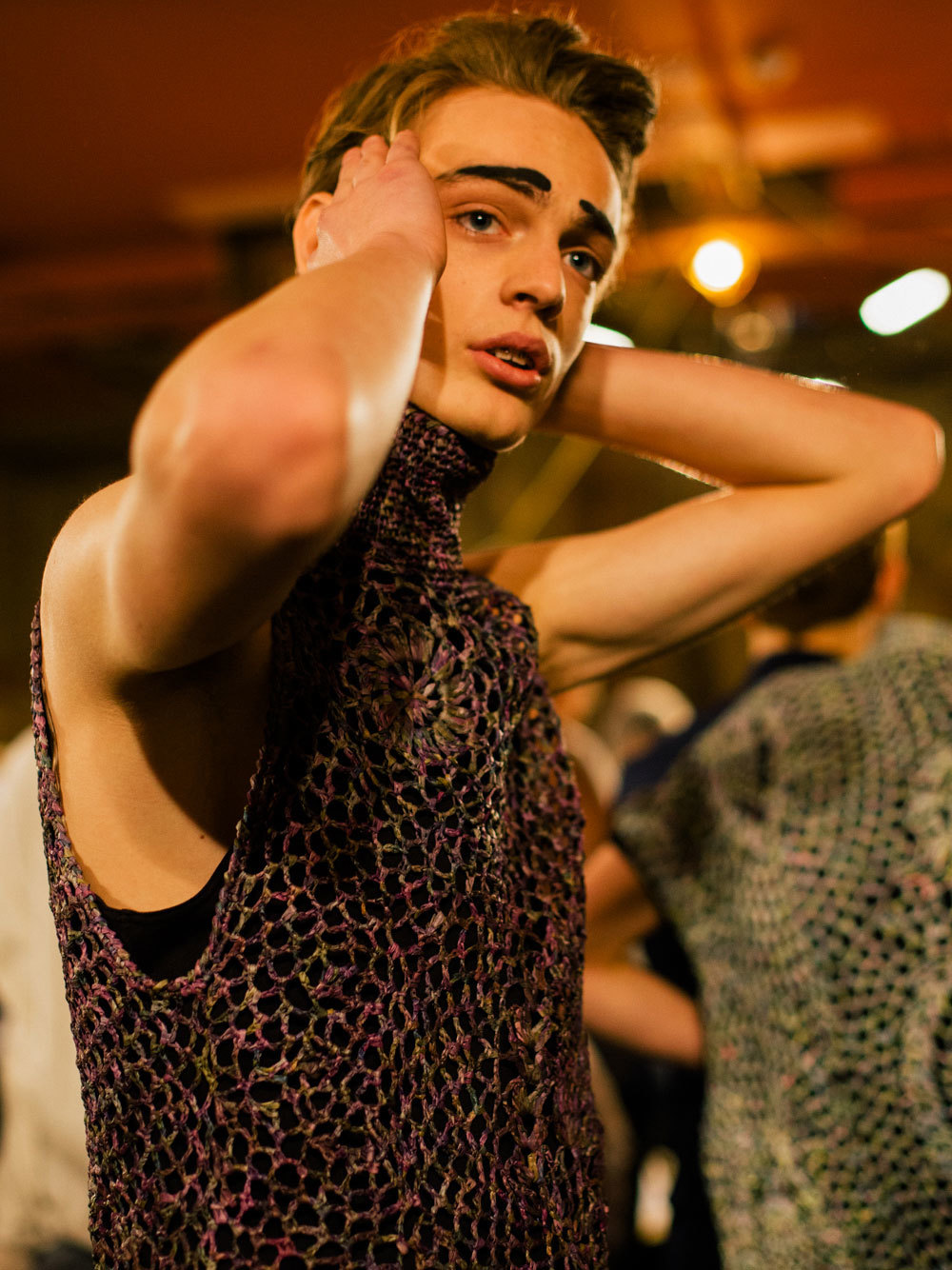
It’s called Organic Raincoat and is inspired by ancient Asian farmers’ raincoats, which were made from waterproof, organic, natural plant materials and a variety of handcraft techniques.The collection uses the irreplaceable techniques and skills of traditional crochet craftsmanship. Current industry places a higher priority on profitability and short production timeline and this ultimately means that some handcraft skills will disappear soon. The world market has already forgotten how to use natural plants to create waterproof fibres and although this project may seem low-tech, it actually includes a lot of high knitting and weaving technology.
Ka Kui Cheng
Tell us about your final collection?
My concept explores cultural ignorance among tourists – does our understanding of cultures increase alongside the increased amount of travelling around the globe? Does it necessarily broaden and deepen our knowledge of the places we visit? To what extent do people really know their destinations and cultures?
What are your future plans?
My plan is to find a design job within a high fashion company. This could be in womenswear or menswear, but probably in knitwear design as this I am most experienced in. Having my own label is also an option, but on the condition that I have financial support.
Emma Fenton Villar
Tell us about your final collection?
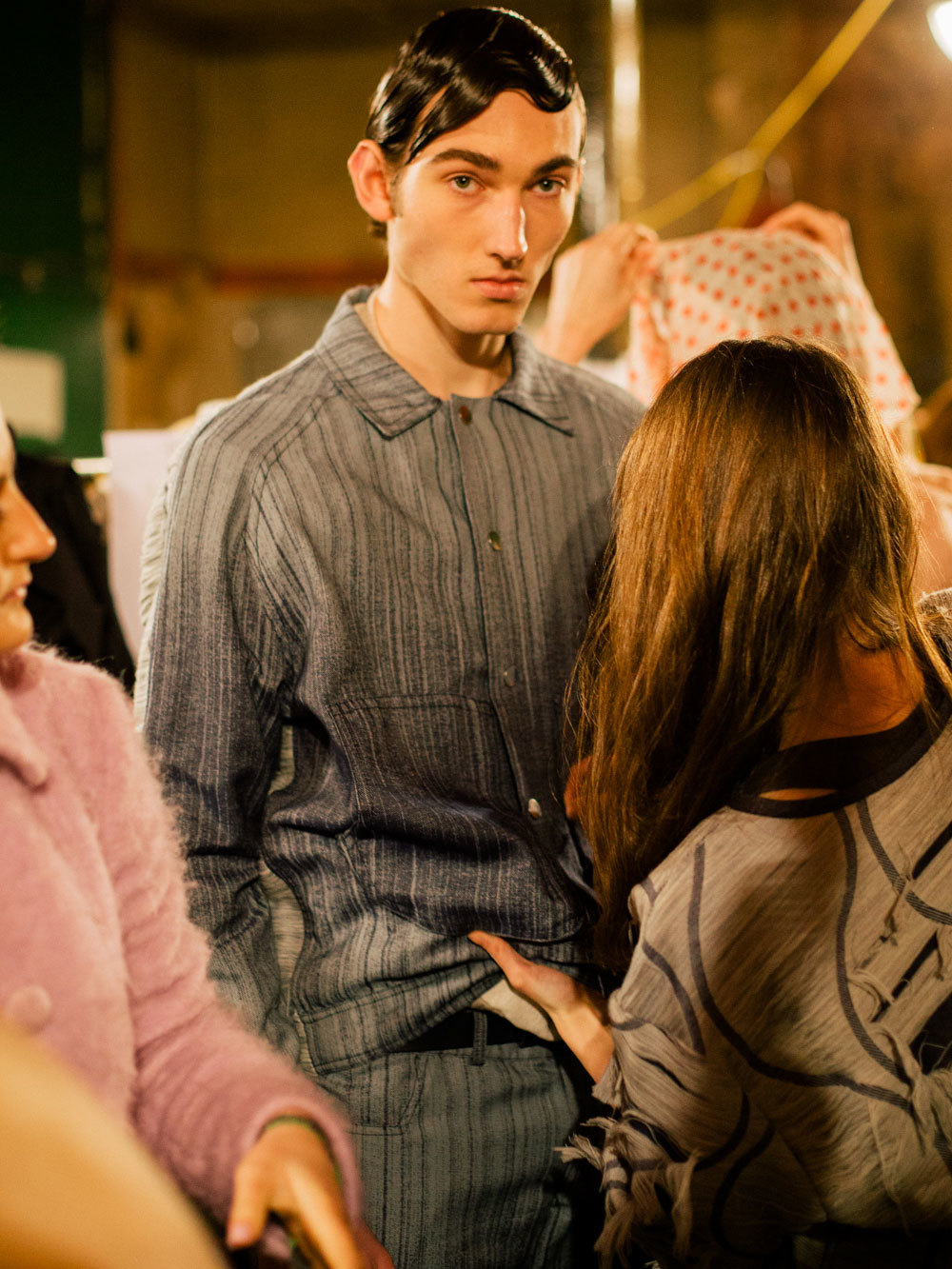
Most of us have become compliant consumers displaying minimal interaction with our clothes. Today we can encounter others wearing the exact same garments offered by brands and chain stores selling the same choice of products. We are losing our sense of individuality. In commissioning a British weaving mill I have worked to develop a denim textile. The surface design incorporates a repeated curve with wool yarn floats that can be cut to personalise the garment to which it is applied. This collection aims to consolidate my practice as a designer and serve as a catalyst for further projects in co-creative design development as a sustainable practice. Wearers are offered a voice in the design process and the designer’s role strategically motivates product development without exclusive control of the final result, allowing both wearers and designers to share and create together.
Gebei He
Tell us about your final collection?
My collection was inspired by the colour and shape of Sichuan cuisine and combined with research into the Chinese mythical beast “Taotie” who is a symbol of desire.
What are your future plans?
Slow Fashion. I only want to produce one collection per each yearfor a couple of years.
Young Hwan Yang
Tell us about your final collection?
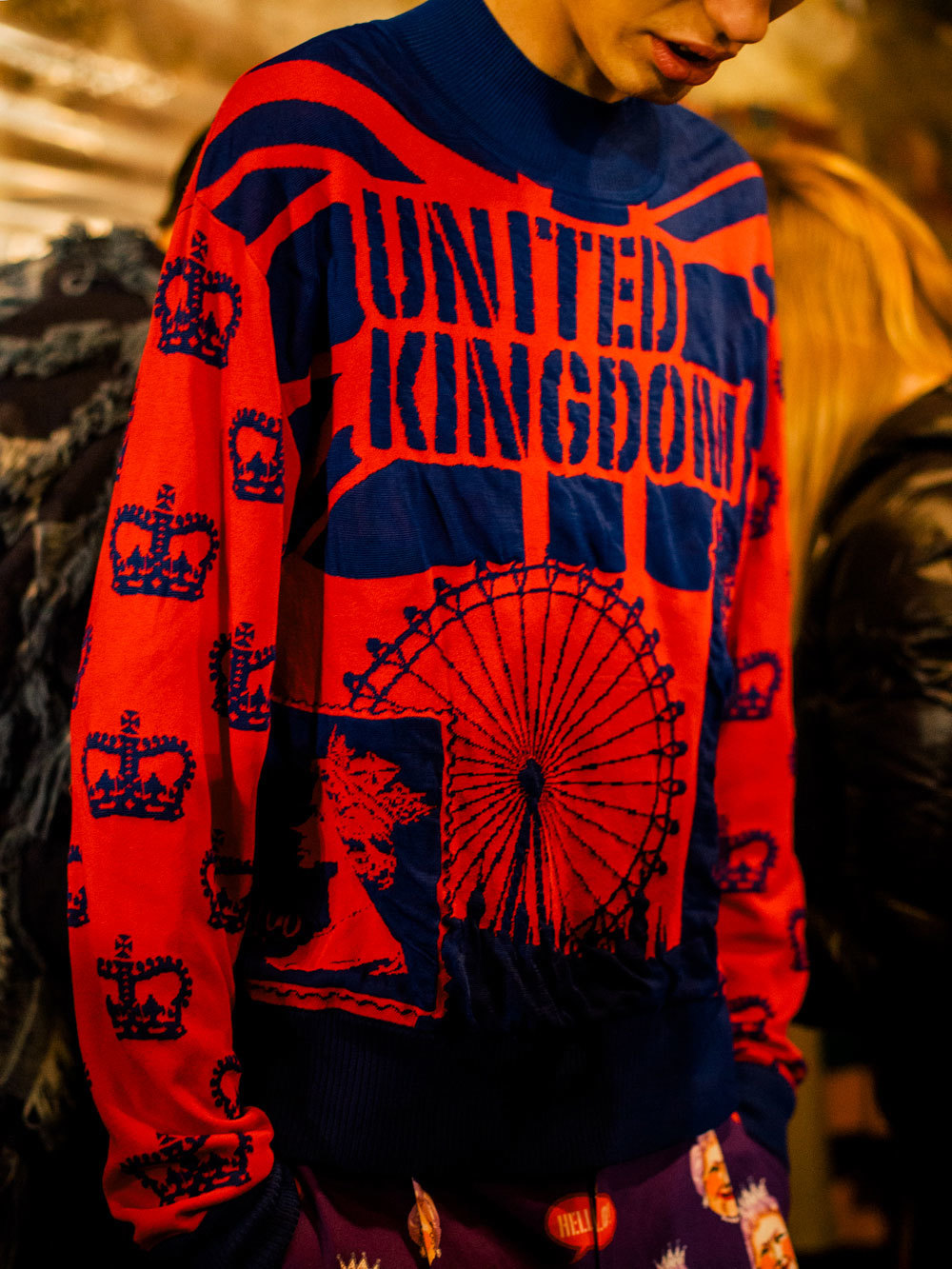
I created different faces that are representative of a distinct part of an individual. Especially with men, decorating the face and body with make-up, piercings, extreme hair styles and tattoos is not always welcomed in urban societies. I wanted to break away from the stereotypes of being a ‘man’ by implementing exotic and vivid features of men of the Papua New Guinean tribes. I wanted to express a distinctly different nature of a ‘man’ against the mainstream idea of being a gentleman.
Xuefei Wang
Tell us about your final collection?
The collection is about reduction and minimisation. It is the research and development of clothes themselves. It experiments with the possibility of reducing the elements of clothes until they can no longer be improved by subtraction.
Roberto Antonio Slusarz Filho
Tell us about your final collection?
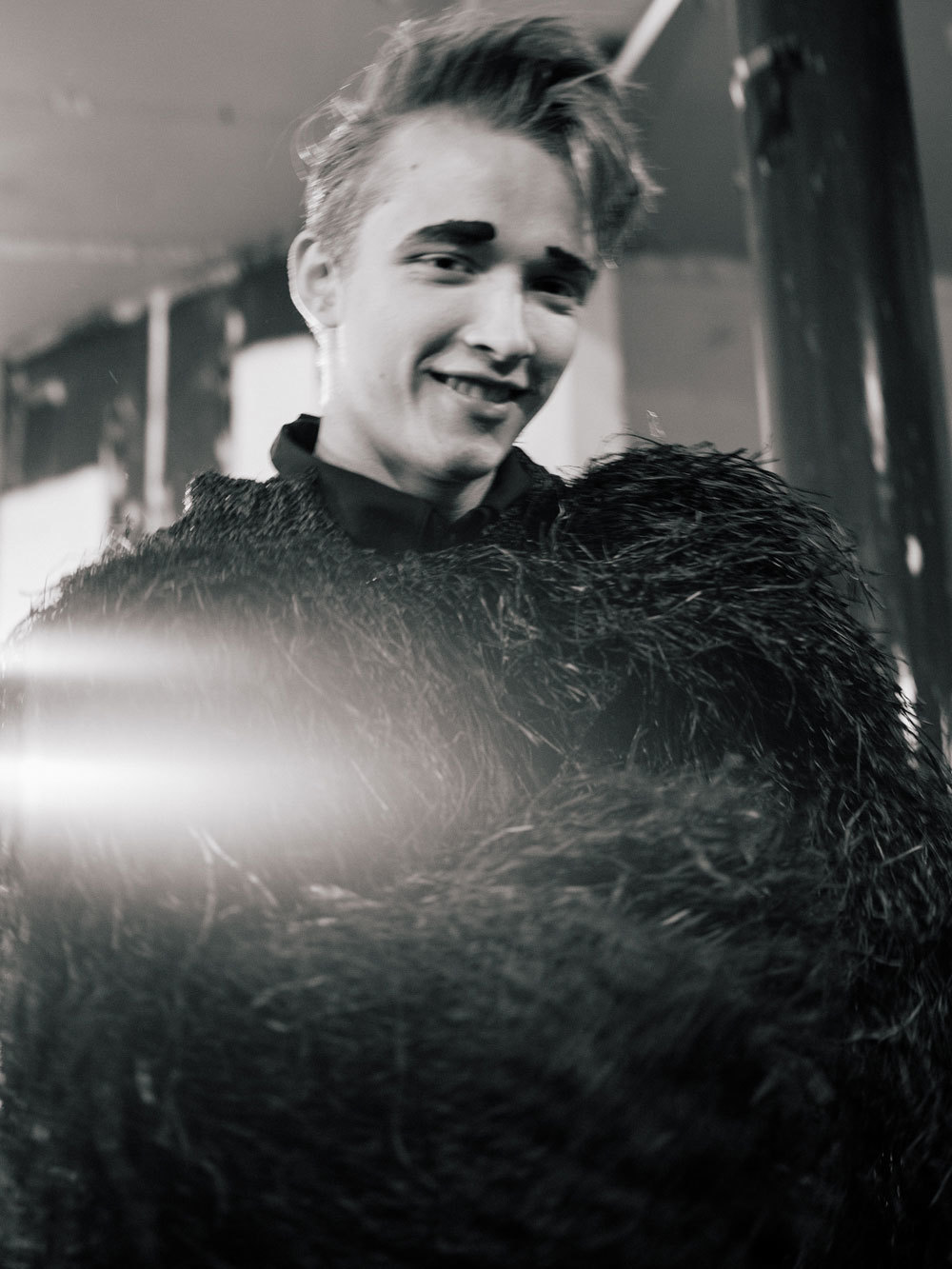
My final project is mostly about surface design and cultural clash. It started as research on the silk route, traditional fabrics and embroidery techniques, and evolved from that, to urban communication, visual pollution and torn poster walls. My aim was to use embroidery in an unconventional way, as part of the fabric itself, and not just decorative. It’s appliqué technique on a large scale.
Jasmine Haoyao Deng
Tell us about your final collection?
My final collection is an outcome of integrated innovations and processes. It is inspired by traditional Peruvian handcrafts and textiles and is based around building a relationship between knitting and weaving and modern functional garments.
Thien Trang Sui
Tell us about your final collection?
My collection, The Self Rule is based on the philosophy of incorporating luxury into an everyday lifestyle. Growing up, luxuries such as clothing or precious china were wrapped up and reserved for special occasions. In today’s society however, the definition of luxury has evolved not only in terms of monetary value, but also in consumer lifestyle. Our society’s fast-paced and ever changing way of life makes it important that our clothing and way of dress properly manage our external appearances, affirming our social or personal statuses. While modes of dressing have adopted a more casual aesthetic due to consumer lifestyles, this collection integrates the delicacy of formal fabrics such as silk and lace in ordinary staple garments such as the simple t-shirt. My collection adapts to the male consumers’ modern lifestyle whilst maintaining the essence of everyday luxury.
Xiaoli Su
Tell us about your final collection?
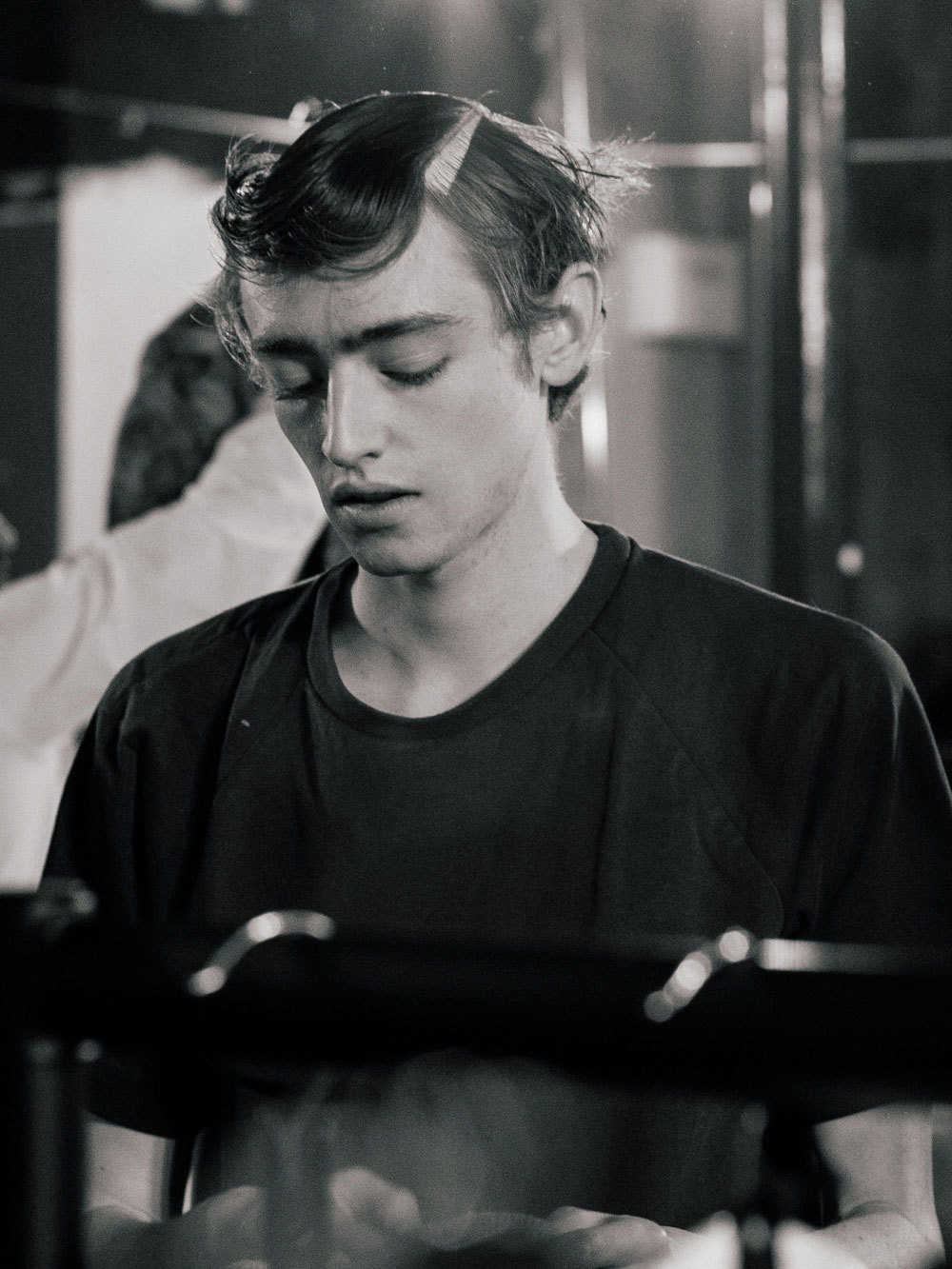
I selected intoxication as my concept due to my curiosity and excitement-seeking personality. For the development of this project, research was conducted in various bars in Central London to observe the state of drunken people and their overall awareness and behaviour. Experiences of the drunken process, from sober to tipsy and then completely unconscious stages were encountered. Meanwhile, further research regarding medical and academic references on the causes of alcoholism in the process of flowing and changing in the human body were conducted; as well as a series of optical illusions caused by people’s reflection to drunken physiology. The feedbacks inspired me to design menswear from a different angle. According to personal experiences of getting drunk, the most satisfying part in the drunken process is the dizzy and uncontrolled feeling. Due to the desire to express and catch the feeling of the moment, repetition, twisting and misplacing elements of the garment were used. Block offsets were printed within the engineering of the pattern and metaphorical definition of colour in emotion of drunkenness. Patterns and colours were developed according to space, light and colour.
Jun Zhou
Tell us about your final collection?
The collection is titled Sensory Expression and it is about misplaced structure and tactility. To create the collection I started with visual sensory experiences. I applied geometrical abstract colours to fabric and materials to compose a picture on the human body. The collection features large-area geometrical colour blocks and solid graphics and sensory touches.
Na Liu
Tell us about your final collection?My final collection explored the subject of “Design narratives – emotionally respective and anecdotal provenance to the senses,” and I did this by using the Greek mythology Orpheus and Eurydice. It referenced Pina Bausch’s 1975 modern dance version, and I translated it into fashion language. The whole collection was divided into four scenes, “The mourning”, “Violence”, “Peace” and “The Death”. Beyond the mythological tale itself, my collection evokes the despair, grief and fragility of the human condition. The 10 looks were finally connected together to form a complete emotional experience.