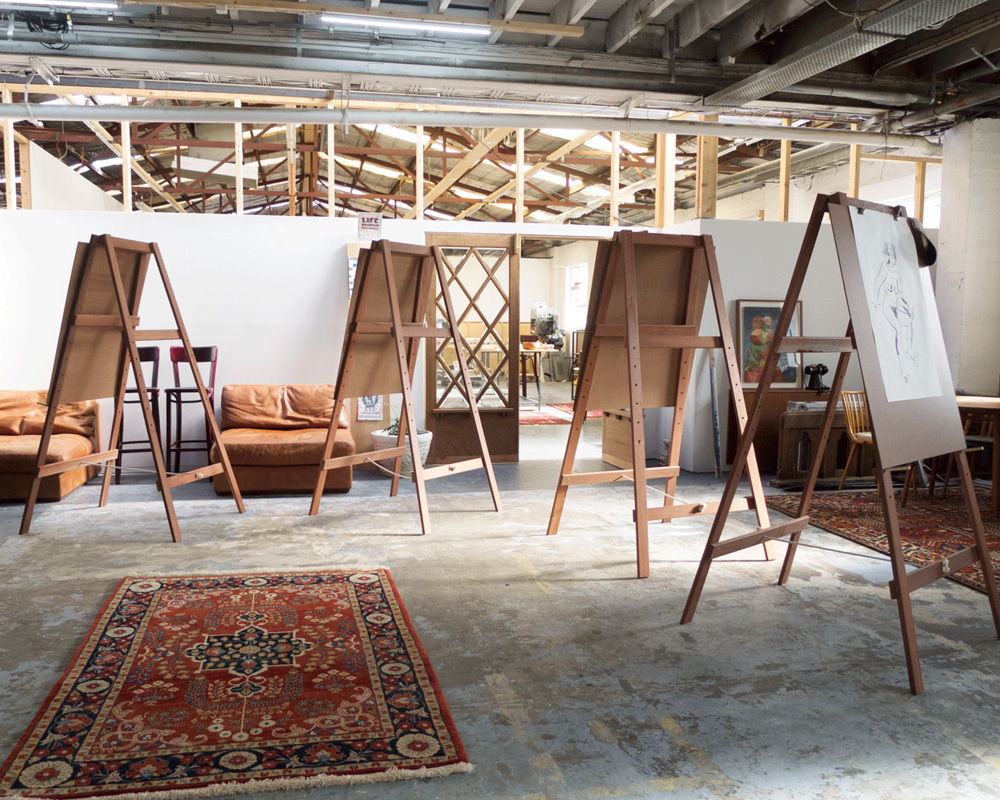
Life drawing is a central and somewhat stereotypical vestige of a classical art education that is long overdue for a renaissance. People sit silently around their easels, focused on a beautiful female form, trying to translate their image to paper as accurately as possible. But over the past few years the practice has been adopted and embraced by a considerably different demographic.
All over Australia life drawing classes are cropping, but this wave are frequented by young men and women interested in an increased focus on identity, body image and diversity. Melbourne based artist Ruth O’Leary has worked as a life drawing model and the experience made her reflect on how we consume and frame nudity in art and society. She decided to run her own classes to explore these themes – historically omitted from formal “fine arts” education. The resulting sessions are a chance to consider gender, identity and embodiment through art.
She spoke to i-D about the continuing and shifting importance of the practice – and the role it can play in connecting with our own bodies.
Hey Ruth, life drawing is often seen as a pretty dry practice, what drew you to it?
It doesn’t have to be charcoal on newsprint, it’s an interpretation, an experience. For me teaching an art class around the nude body is a constant source of inspiration; and seeing the way everyone relates to the body and all that’s associated with it is interesting. So it’s not actually dorky at all, it’s rare, magical and challenging.
Dorky is cool.
I know life drawing isn’t cool, it comes with this baggage of the old school art institution and traditionalism that makes people shudder.
It’s interesting you say that. I feel like in the current art-crowd climate, what’s ‘cool’ is to deviate from your classical art education – to ‘deskill’. With that in mind, what made you stick by life drawing?
It’s really beneficial for your brain to compute what you see and translate it to paper. It’s a useful exercise for any artist—even if it has nothing to do with their practice. The better our observation skills become, the more we can express.
But this resurgence is more than people seeking technical skills. We’re seeing a different kind of participant being drawn to it. Why is that do you think?
It’s rare that we’re able to study the nude body as a form in reality. We’re not connected to our bodies anymore; we look at bodies on our little screens more than in real life. The naked body is still taboo in Australia. We don’t look at each other, or even ourselves, naked.
So for people to engage with nudity through art, do they have to de-sexualise it?
I don’t think nudity has to be sexual at all. In the environment of life drawing, sexuality is not important. The important thing is actually having the opportunity to not sexualise a naked body.

You yourself have been a life model, how is the experience from the other side?
It really helped my self-esteem; realising that I could be naked but not be sexualised felt amazing. When I started modelling at 20 I hadn’t had the opportunity to appreciate my body without all the toxic messages surrounding me infiltrating my worth. But yeah, you have to push against what we project onto the body and find a new space for it to be looked at and studied without preferencing desire.
What goes into choosing a model then?
In my undergraduate degree, we often drew pretty female models, which drove me crazy. I’m not interested in continuing the canon of art illustrating youthful beauty. When booking models, it’s important to provide a variety of different body types.
A good model is able to feel comfortable, but more than that, you have to understand space really well. All of these things are easy but what makes a good life model is the soul or something. Like, they’ll walk into the room and sit down as they would sit in their kitchen and I’ll think, wow, that’s so nice.
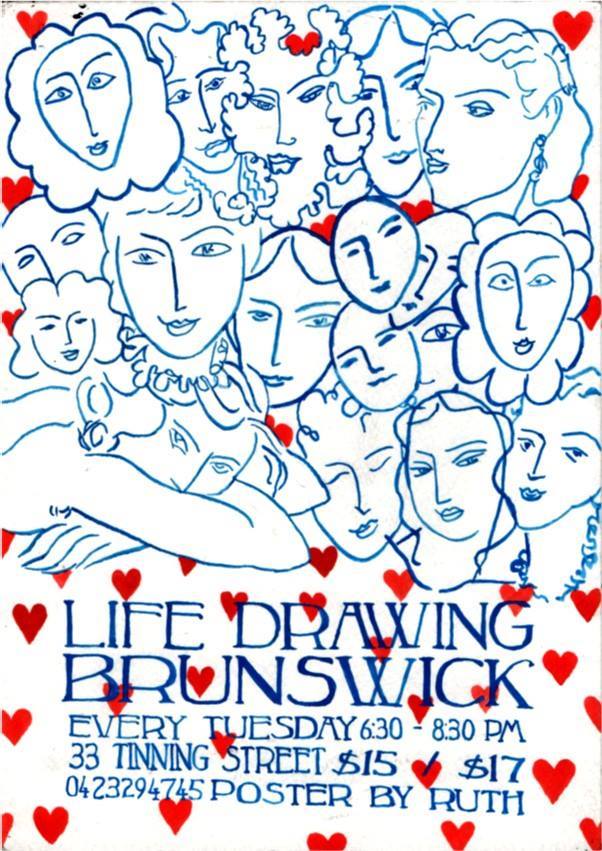
Ruth O’Leary’s Life Drawing Brunswick classes will be held every Tuesday from 6.30 – 8.30pm at 33 Tinning Street. Classes will commence in February.
Credits
Words Audrey Schmidt
Images via Life Drawing Brunswick