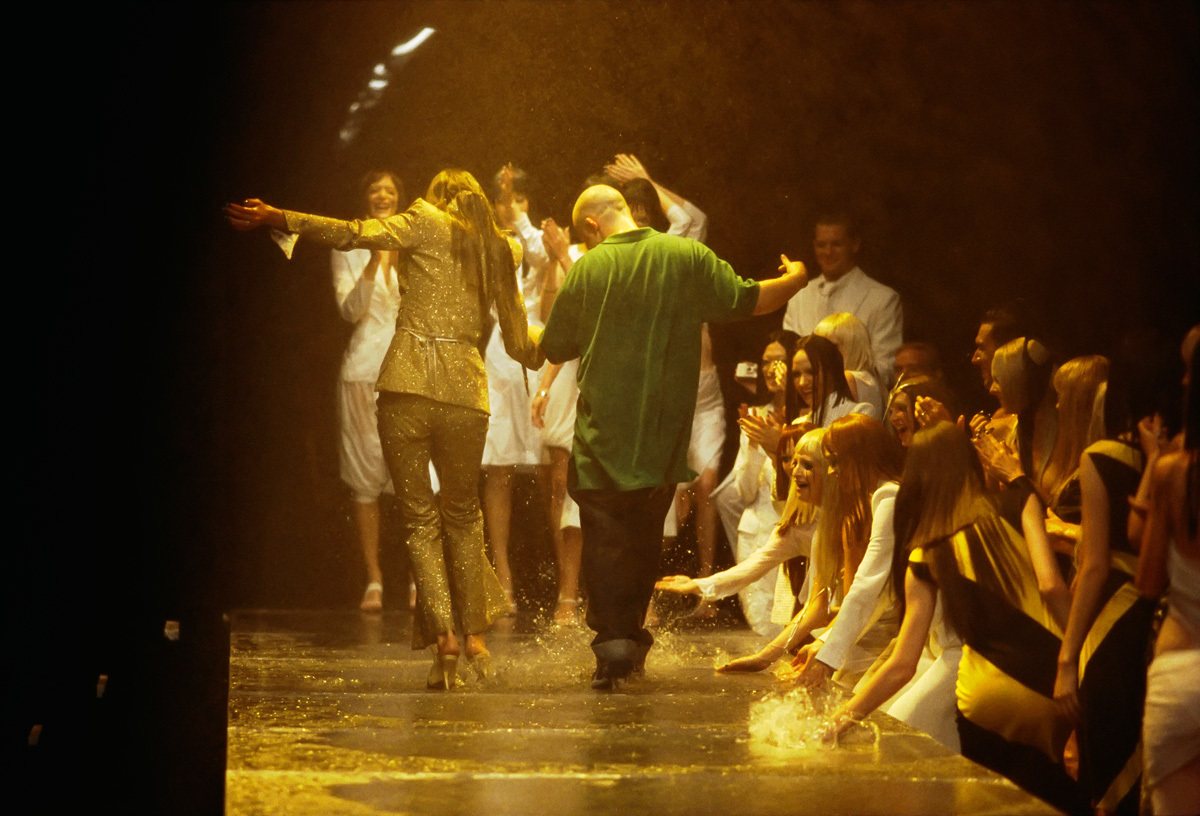
Robert Fairer was there, in 1993, at the Bluebird Garage, when Lee Alexander McQueen staged his first professional catwalk show, Nihilism. Though Lee’s production budget was minimal compared to the spectacular productions that would define his career (he’d only just graduated from CSM), his wild talent and sheer inventiveness were there for all to see. The tightly wrapped saran wrap dresses splattered with paint and mud, sharply tailored evening coats, unbuttoned men’s shirting, and first glimpse of the infamous bumster trousers, provoked and intrigued. From exaggerated silhouettes to provocative model behavior, and a fine balance between romance and aggression, the McQueen signatures were all on show. All the elements were there, and Robert was there to document it.
What Robert’s lens captured over the next 17 years would reveal McQueen’s world in all its intricate glory, dazzling splendor and creative chaos. Robert shot all but five of McQueen’s collections, from the runway, sat in front of Andre Leon Talley or Anna Wintour, craning to get the best shot on his medium format camera, or backstage, slipping quietly into the background to capture the energy and power of Lee at work.

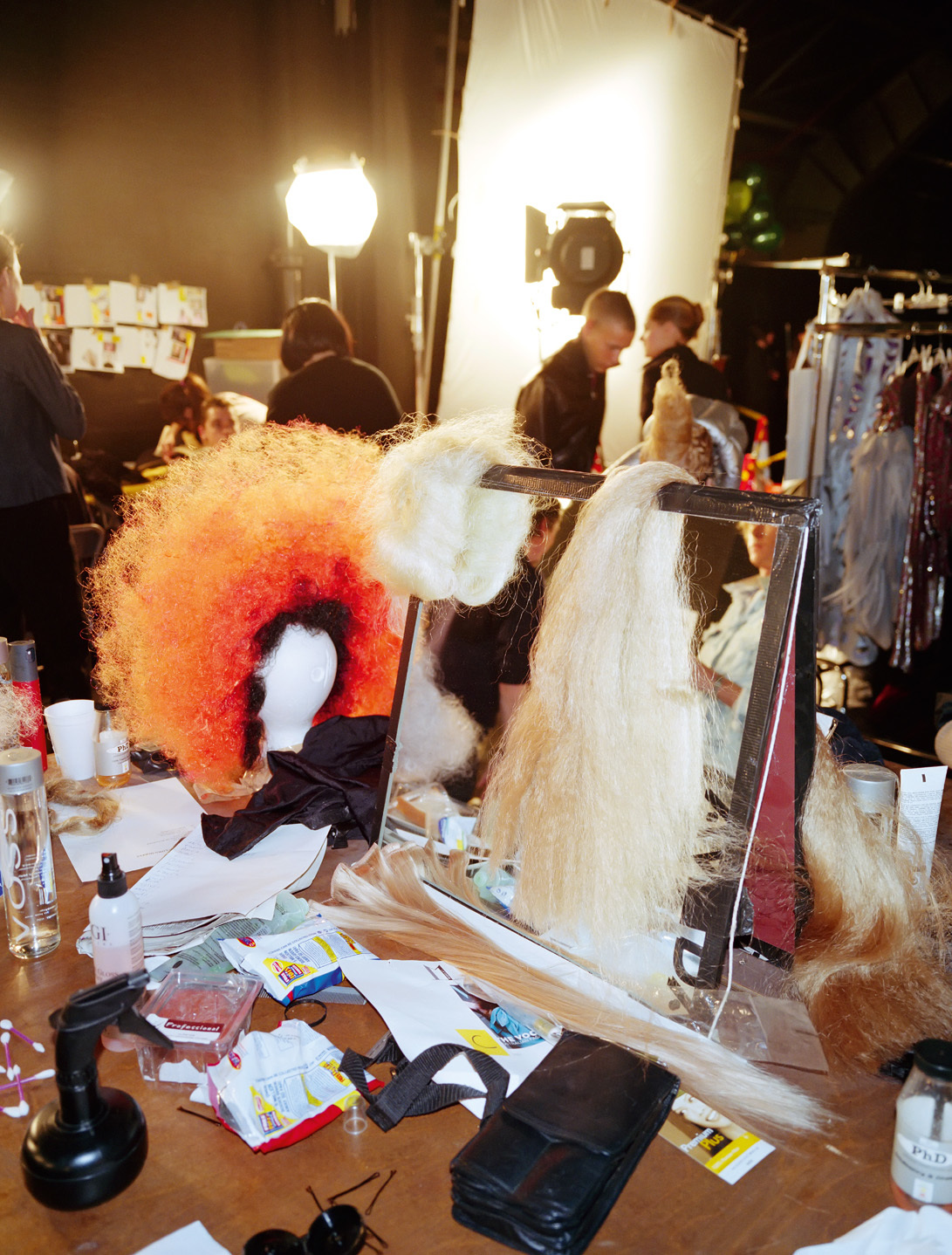
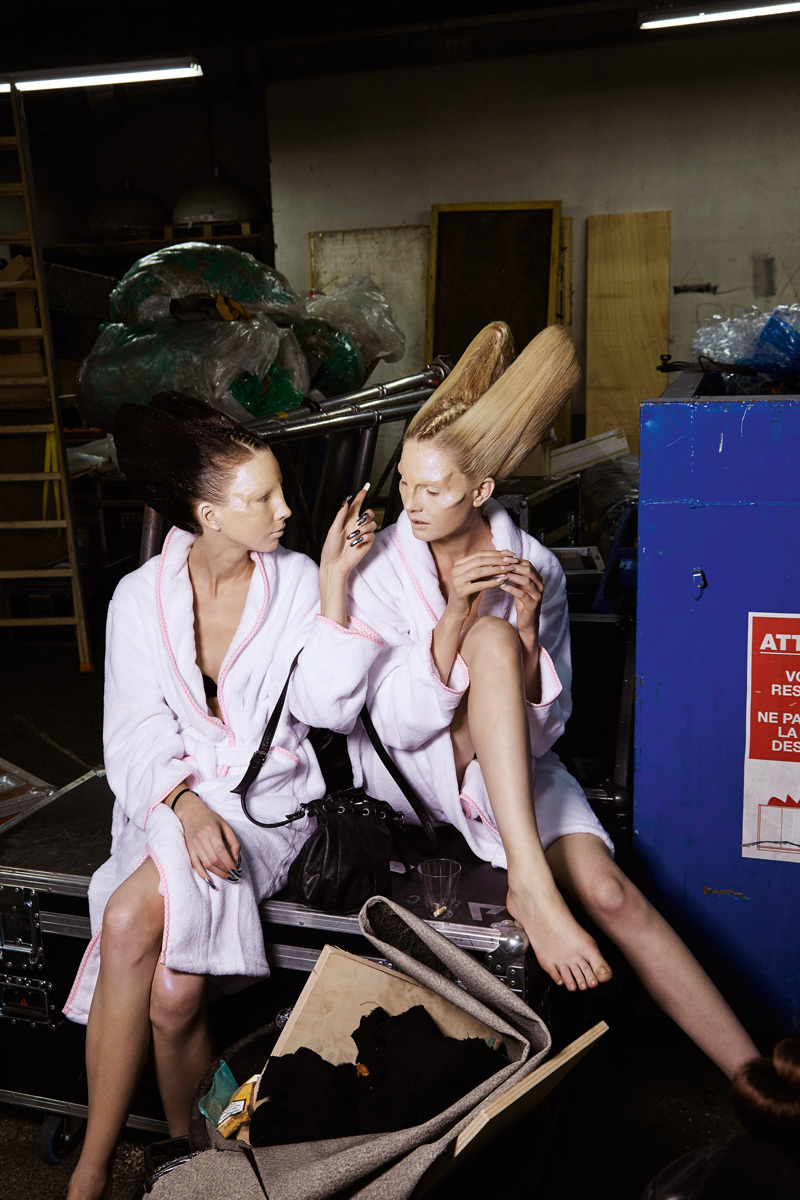
But beyond a display of McQueen’s talents, Robert’s images are just as much a window into a world of fashion journalism that’s all but disappeared. As the internet’s eclipsed print, the role of the catwalk and backstage photographer has changed. Fairer was one of the genre’s pioneers, one of the first to slip away from the catwalk ruckus and behind the curtain; and few designers provided such a vein of activity to mine backstage as Lee. As much as he was the master of the big visual spectacle, he was also a master of detail. Robert’s images document the preparation and staggering visual shocks that Lee created, but they also show the designer putting final touches to looks before they went out on the catwalk, losing himself in the intricacy of his creations.
Now, as he opens his archive of Alexander McQueen images to world in an immense and intense monograph of unparalleled beauty, we spoke to Robert about a career defining relationship with our greatest designer, a man who was “light-years ahead of us all.”

How did you get into photography and fashion?
I always loved the markets on the King’s Road, where I grew up, and posing with my friends. It was the 80s and we were all mad about music and fashion. From my earliest memory, I have never been without a camera, and because my wife was in fashion, I went to the London and Paris shows a lot. My start was great; after I finished at London College of Printing, photographing graduate fashion week, friends had art shows, and then it all really began with Nihilism at the Bluebird garage with Lee McQueen.
Was there anything in particular that made you want to do this book now?
Yes. I am getting older and Vanessa, my wife and agent, had been looking for someone to publish my archive with for a few years. A commissioning editor at Thames & Hudson finally backed us and we decided to start with McQueen because it’s where it all began for me. And after Savage Beauty, the moment felt right.
What was it like to compile? What unexpected memories did it bring up? How did you go about choosing the images?
We’ve been working on publishing my archive but it never felt appropriate to touch McQueen; Savage Beauty gave us the courage to do it. It’s been a very tough project filled with highs and lows, there’ve been genuine moments where I felt right back there in it, and then there’s been feelings of extreme sadness and utter disbelief. Image selection is never right — you do your best but there is limited room in a 350-page book with a budget. I tried to explain the vibe, the scene, so that anyone interested can understand it was messy, hands on, and very special.
Can you remember what you thought the first time you came across the work of Lee McQueen?
I knew I was seeing something exciting, I just loved all the attitude and being around the artistry.

You must’ve photographed thousands of shows over the years. Did you feel McQueen’s were different from the start?
Nothing got close to the atmosphere or the feeling of liberation from the team and their dedication to Lee. It was never commercial; everyone was there because they had to be and couldn’t be anywhere else. It was 17 years of perfecting the art of fashion.
When did you realize you were photographing something that would have such an impact on fashion (and beyond)?
The It’s a Jungle Out There show, at Borough Market in 1997. My wife got shouted at and thrown out before the show. We snuck in four hours before, hid under some bleachers and got caught — it was mad. I managed to stay, as I was bonafide. Lee was just starting at Givenchy and I was backstage with Sarah Harmarnee, the jeweler, and we all knew Lee had no limits — nothing was too strong for him — there was utter self-belief to, but there was fire and passion in all his clothing. Isabella Blow would turn up at parties in his clothes and it was really outlandish and exciting — as it should be.
Do you have a favorite McQueen show moment?
No, just a sense of loss that it had to end, that time passes so quickly. It’s still going on in my head actually…
What was it like to capture the spectacles he created on the catwalk?
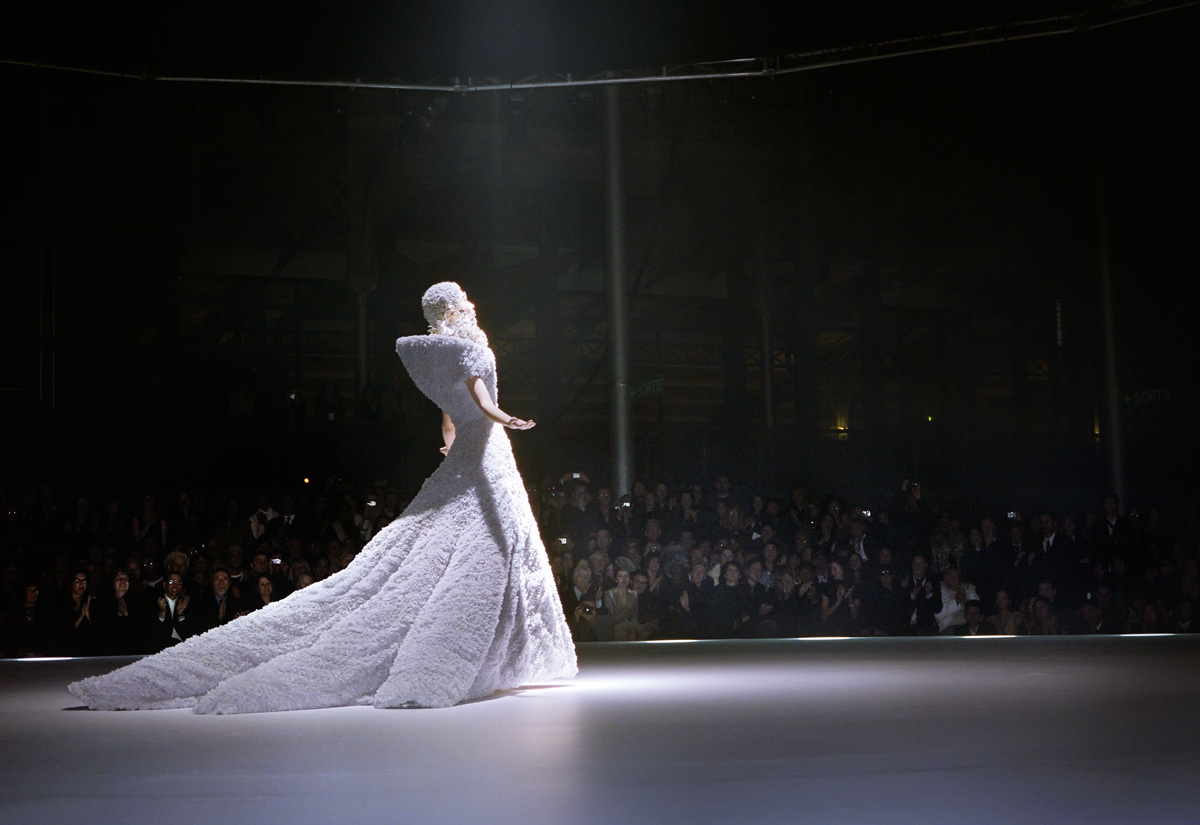
Fast! When shooting on the runway, I was either standing on a camera case, in a large group of guys all firing away, capturing every outfit. Or years later sitting on the floor in front of Andre Leon Talley or Anna Wintour making sure my camera was very still so I could get the shot on my medium format camera, making sure I could get enough light in the lens.
How do you feel the models felt about wearing some of his more outlandish fashions?
Every girl I ever knew at McQueen loved it all — they were honored to be in anything he gave them to wear. Sometimes the shoes were tricky but everyone looks back with an amazing memory.
What were those clothes like to shoot?
The best, I would like to do it all again! They were great individual pieces that had an identity, a wicked cut, silhouettes you can only dream of — take me back.

Did you develop much of a rapport with Lee? What was he like backstage?
No. I was always afraid he would throw me out if I bothered him; this was his most manic time. He would see me and let me stay; that was enough. He was the master, I was the slave.
So what was it like backstage?
Nothing compared to it, maybe John Galliano, or in the old days Vivienne Westwood when Kate Moss and Naomi were walking.

Did you relish the bustle and stress of it, the challenge of shooting great images amongst that?
It was my life and who I was; the calm, easy going guy who didn’t get on anyone’s nerves and got the best images for American Vogue.
What makes a great backstage image for you?
Energy, power and, as your editor Terry Jones said to me once, when he saw me backstage, ‘capturing the moment’. No one was really there back then: me, Roxanne Lowit, Juergen Teller, Sean Ellis or Gavin Bond occasionally — it was a beautiful blank canvas.
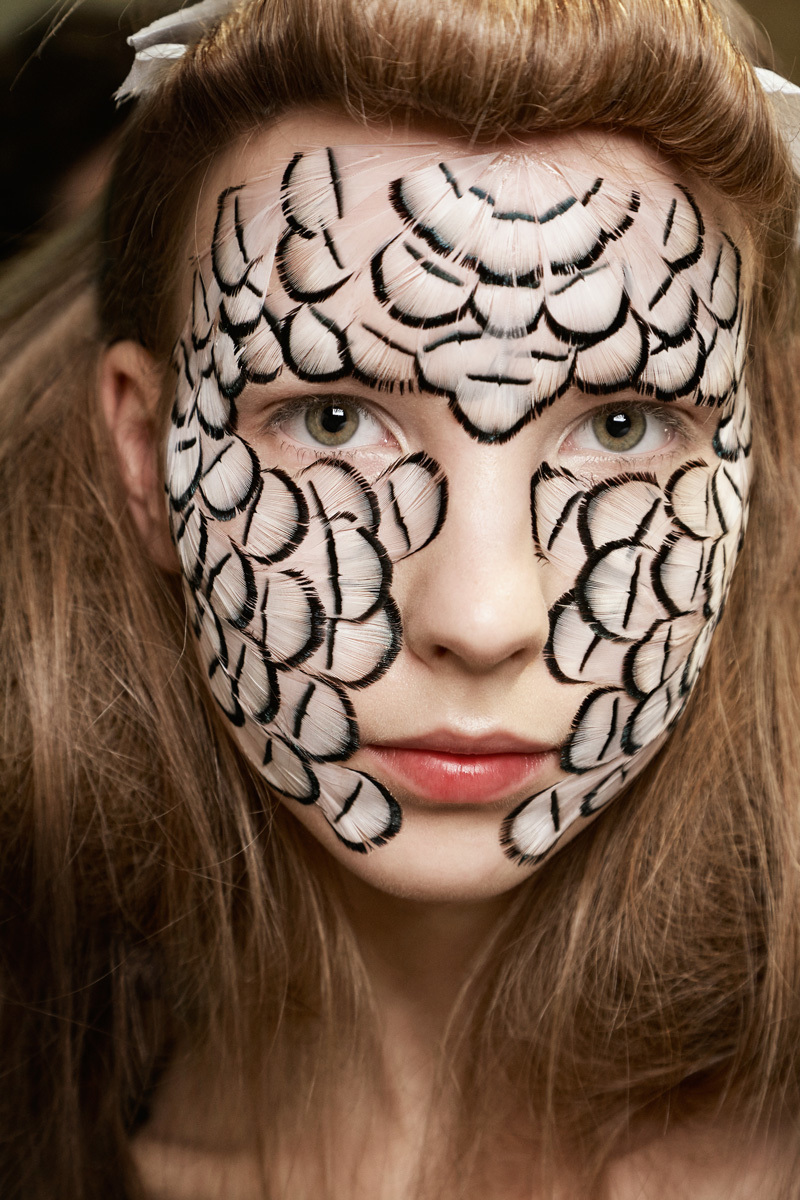
What was it like to see some of the clothes again at Savage Beauty?
We went so many times and luckily the wonderful V&A team would sneak us in so we spent enough time there to drink some of it back in again. Vanessa and I were amazed by the proximity allowed to the clothing on the mannequins. It was fantastic. I loved seeing that the clothes had been worn in some cases, and that I had a relationship with them at their birth.
How do you feel backstage photography has changed over the years? Is there anything beyond the technology you feel has changed things?
It no longer exists. The zeitgeist had to end; we have become fast fashion junkies. Well, not all of us.
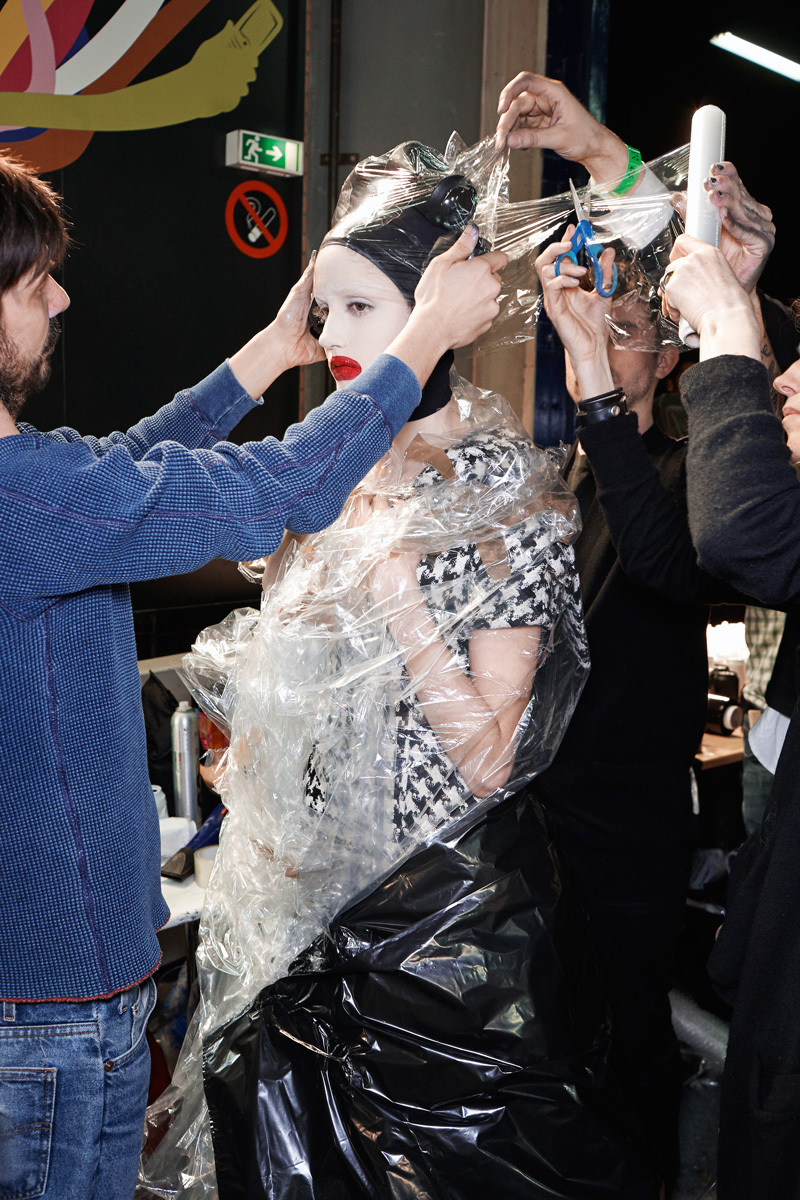
Do you think it’s possible to separate McQueen’s creativity from his personal issues? Can we separate the images in the book from the tragedy that followed on from them?
We all have personal issues and since his death in 2010, we have a far more tolerant world. I think he was often completely overwhelmed and burnt out by his work schedule — he was looking for his own space. Beautiful people often have short lives. His final imagery is a reminder of the struggle for life — if you are really seeing it and living it, it will end, so it’s a metamorphosis, a transformation. I think if you look at his final outfit on Polina Kasina at the Plato’s Atlantis show he made the ultimate suit for life, space, an underwater skin… Lee was all about the body and he knew we needed to adapt. He was light-years ahead of us all. He was the man who knew too much.
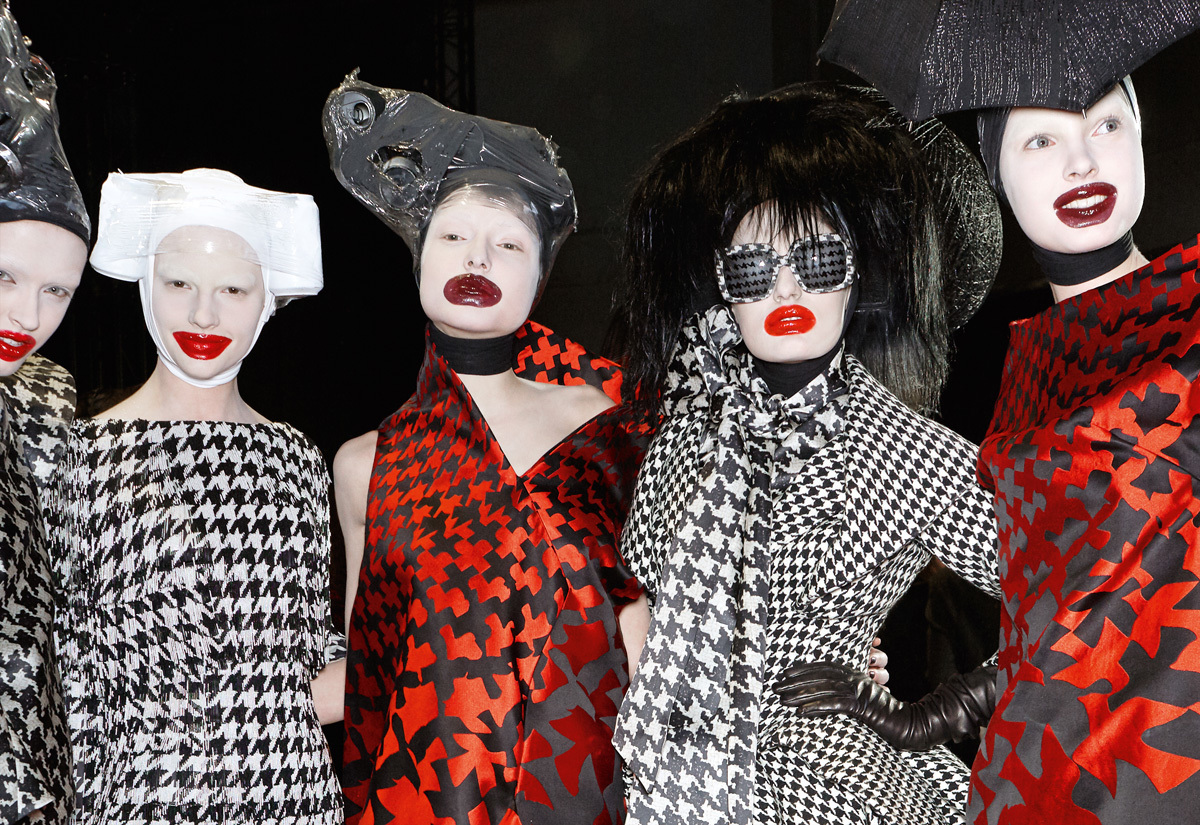
Credits
Text Felix Petty
Photography Robert Fairer