
Mercedes Benson once planned to become a doctor, spending long hours in biomedical science lectures and labs. But one internship changed everything, pulling her into music instead. The transition wasn’t easy—she spent countless hours cold-calling and hustling for opportunities before landing a role in Adidas’s Entertainment Marketing Department. That job became her entry point into London’s creative scene and grassroots music culture.
By 2016, Benson was hosting her own night, Future Sounds—an R&B and electronic fusion party designed to give new artists a platform. It quickly grew into a community built on energy, discovery, and good vibes. Almost a decade later, she’s still on the rise. With festivals across the UK under her belt, she can now add playing The Outpost by Defender stage at Lost Village to her achievements.

Tora Northman: Tell me, how did your music journey begin?
Mercedes Benson: One thing about me is I’m pretty audacious. Looking back, my first event was at XOYO. I laugh now at the fact that I thought I could pull it off—but I did, which was amazing. Off the back of that, I just kept going. My introduction to DJing was very practical. Honestly, it was about saving as much money as possible. I wanted to make sure I had enough to pay the headliner, so I would just play the warm-up set myself.
Festivals are such a big part of the British summer. What has your experience been like joining the circuit?
Coming into the UK festival circuit has been a pinch-me moment. It started when Glastonbury invited me to DJ, and I’ve now done it three years in a row. That gave me the confidence to keep going and developing my sound. Scaling it further—going up north, which I’d never done before, and playing at Lost Village with Defender—was surreal. It’s reassuring to see that the festival scene has space for women like me, especially in the UK. There are still plenty of barriers to break, but we’re getting there—one festival at a time.

How did the partnership with Defender come about?
I remember getting an email three years ago, asking if I wanted to join a trip—Scotland, I think. I was like, wait a second, what’s going on here? Who gave them my email? How do they even know me? Once I went on that trip, I realized Defender is genuinely committed to working with tastemakers in music—it felt very intentional.
The fact that they’ve stuck with it three years later, and evolved from simply saying they’re passionate about music to actually backing it—supporting UK festivals and now curating The Outpost by Defender stage at Lost Village—is huge. It’s a real testament to Defender’s commitment to championing independent artists and shaping a new cultural narrative for the brand.
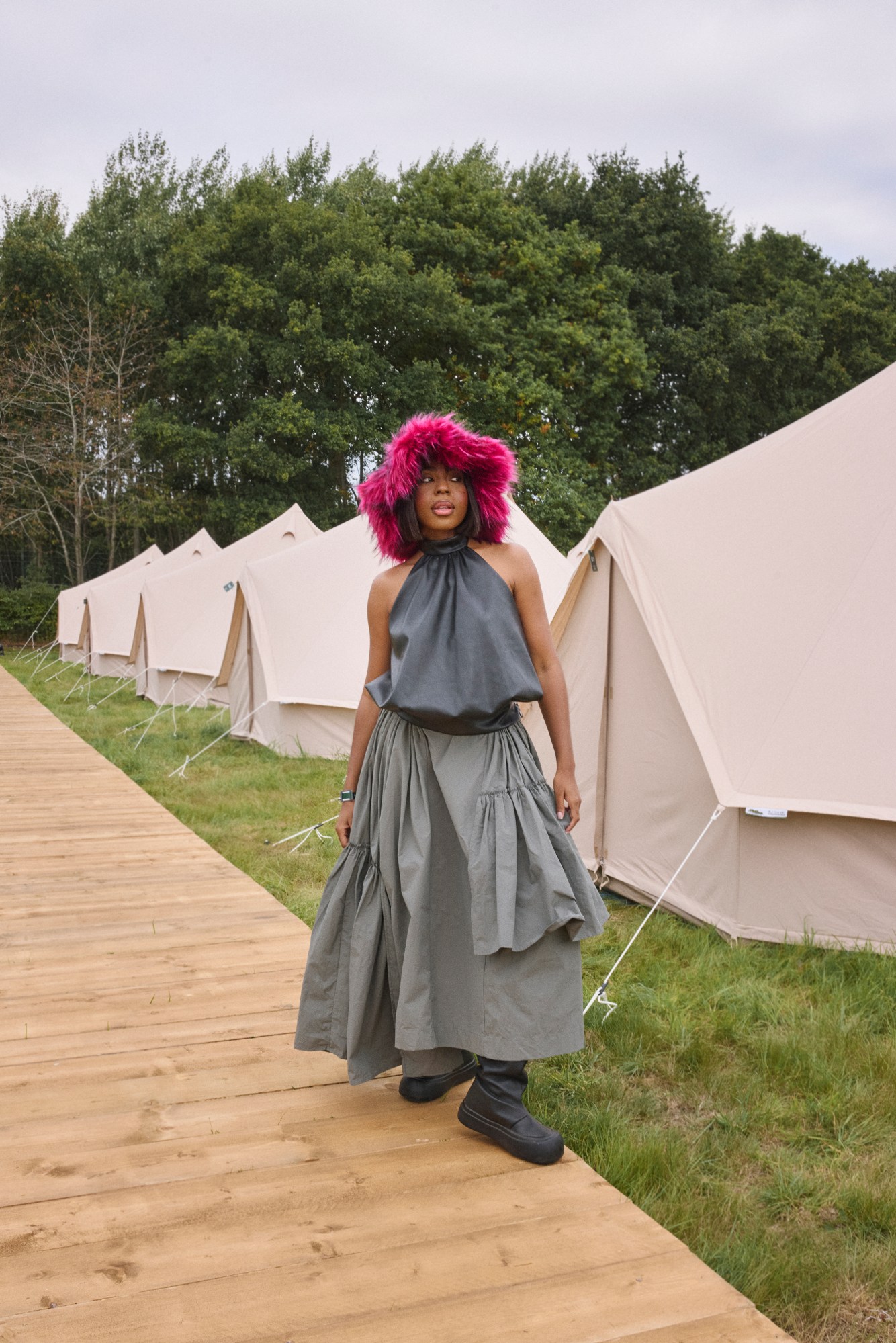
Do you remember your first-ever DJ set?
It was at Lovebox Festival. Honestly, it’s a bit of a blur. At the time, house music was easiest for me because of the steady BPM. My goal as a DJ has always been to get people dancing, so when I saw the tent go from empty to packed with people moving, I counted it as a win. Outside of the nerves, I can’t remember much—but I’m glad I did it.
How would you describe your sound?
At my core, my music comes from or is influenced by the diaspora. It’s really just a fusion of all the sounds that raised me. Being from London but Nigerian, I’ve leaned into genres like Afrobeats, while also appreciating the dancehall influences that are part of London’s music culture.

It was your first time at Lost Village. How did you curate your set to reflect the festival vibe as well as your own identity?
I’m definitely a DJ for the people—I want to make sure everyone’s having a good time. I wouldn’t call myself a selfish DJ who only plays my favorites, though I’ll sneak in a few. Lost Village was in the middle of a forest, and there was this sense of mystery—you didn’t know what to expect. I tried to bring some of that mystery and spontaneity into my set.
What’s one track that never fails to get the crowd going?
I have to go with my classic ’90s house jam—Robin S’s “Show Me Love.” You can remix it a hundred different ways, but once that chorus drops, the crowd is in the palm of your hand.
Last question, how do you embrace the impossible?
I act before I think. Honestly, I think that is the best way.