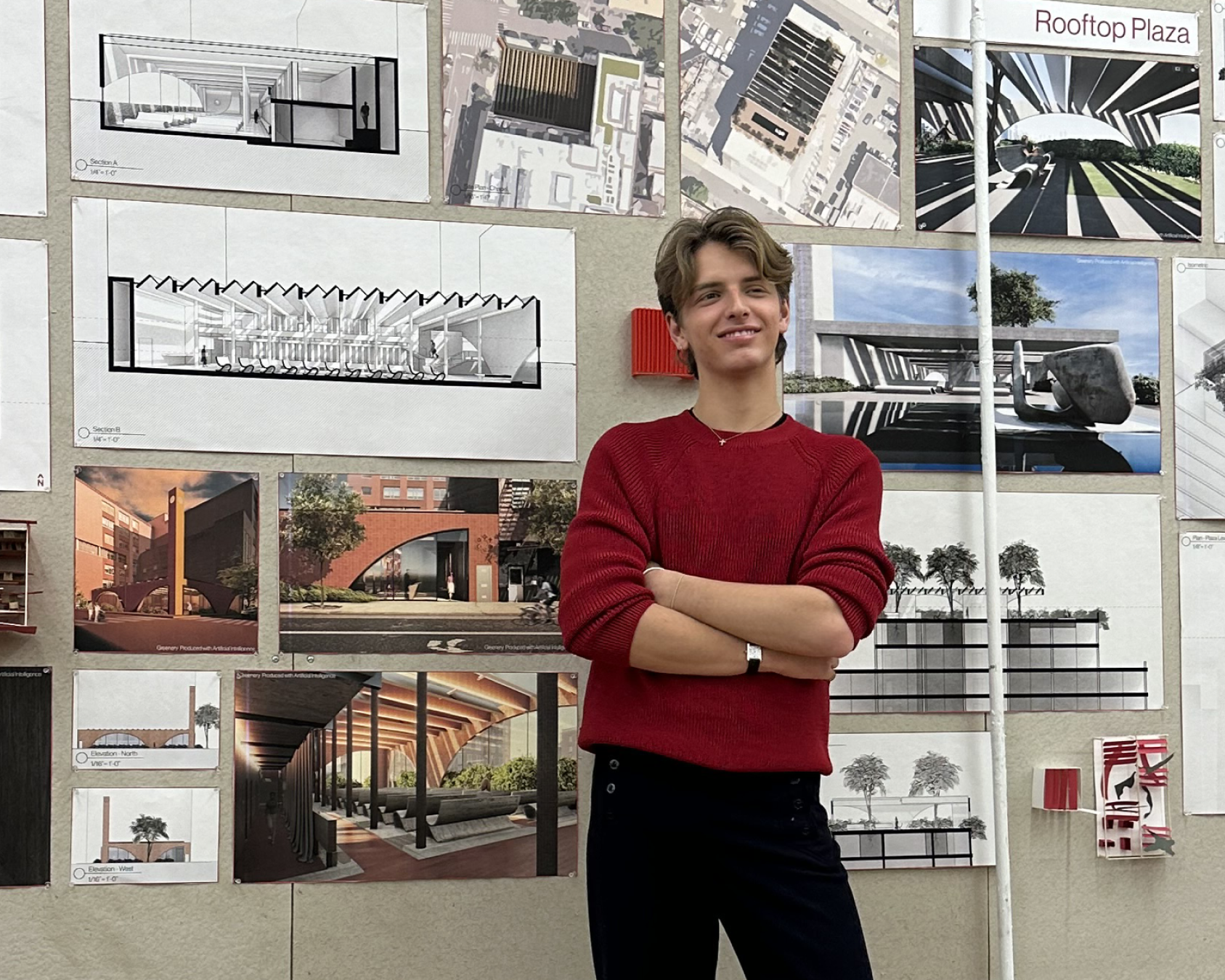
Humans engage with design the same way we do language. It surrounds every aspect of our lives, shaping the ways we connect with one another, express ourselves, and see the world. Nino Ferrari-Mathis has been entranced by the architectural design around him since his days as a child in Brazil. After moving to France in his early teens, he did a brief work placement at an architectural firm in secondary school and set his sights on a formal architecture education, moving to New York to start undergrad at Parsons. In the thick of his schooling, he started Nino’s Buildings, a social media persona dedicated to sharing architectural gems from around the world, born from a deep appreciation for architecture, an always-learning approach to life and design, and a desire to share what he knows with others.
Now, he’s got an Architectural Design BFA from Parsons and over 400,000 followers on Instagram. His thesis project centered museums and community gardens as activist spaces and was recently featured in Architectural Digest. His videos expose people of all ages and backgrounds to structural design around the world. From organic architecture in Mexico to public toilets in Tokyo, he’s creating a bridge between the world’s greatest architectural minds and the internet.
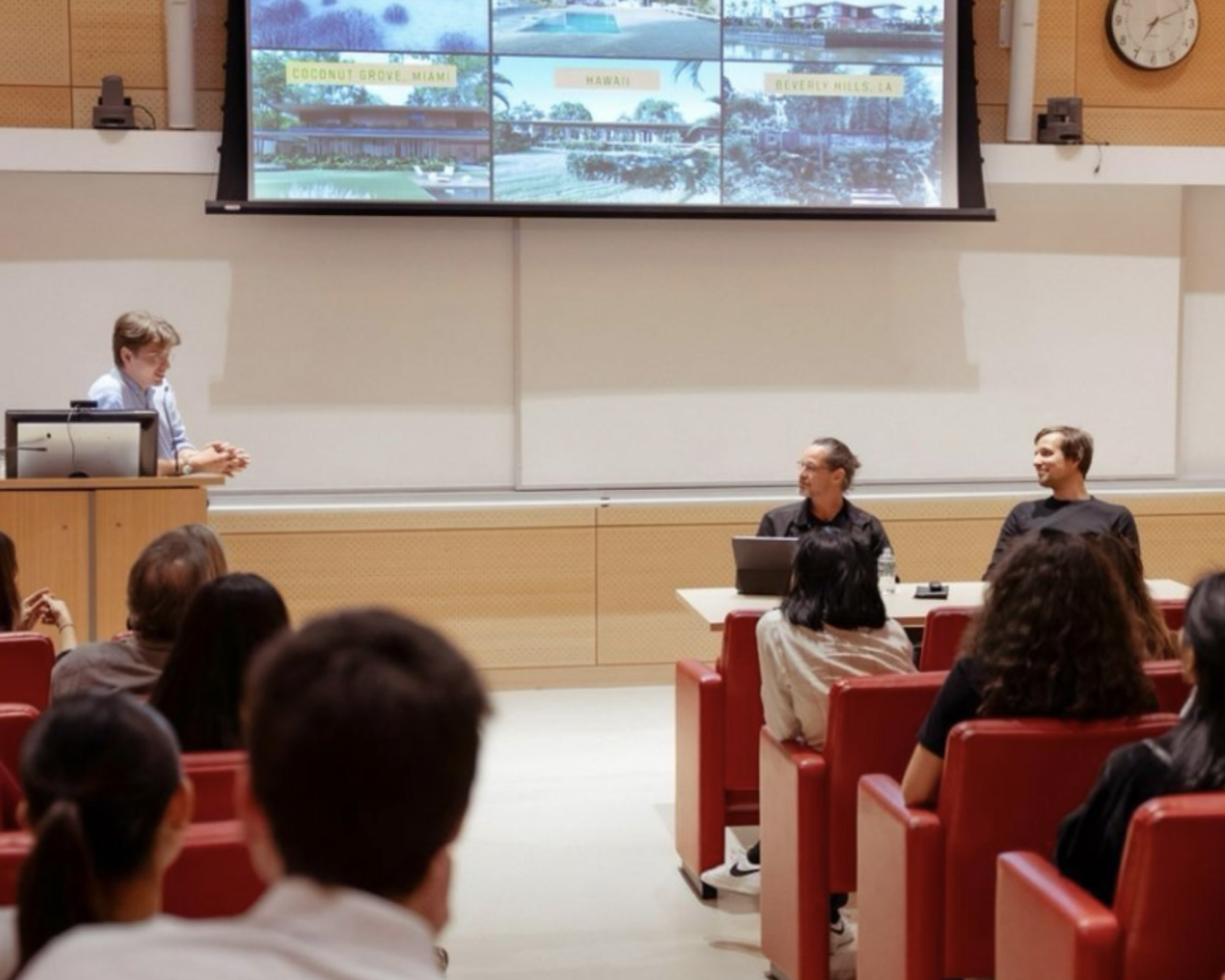
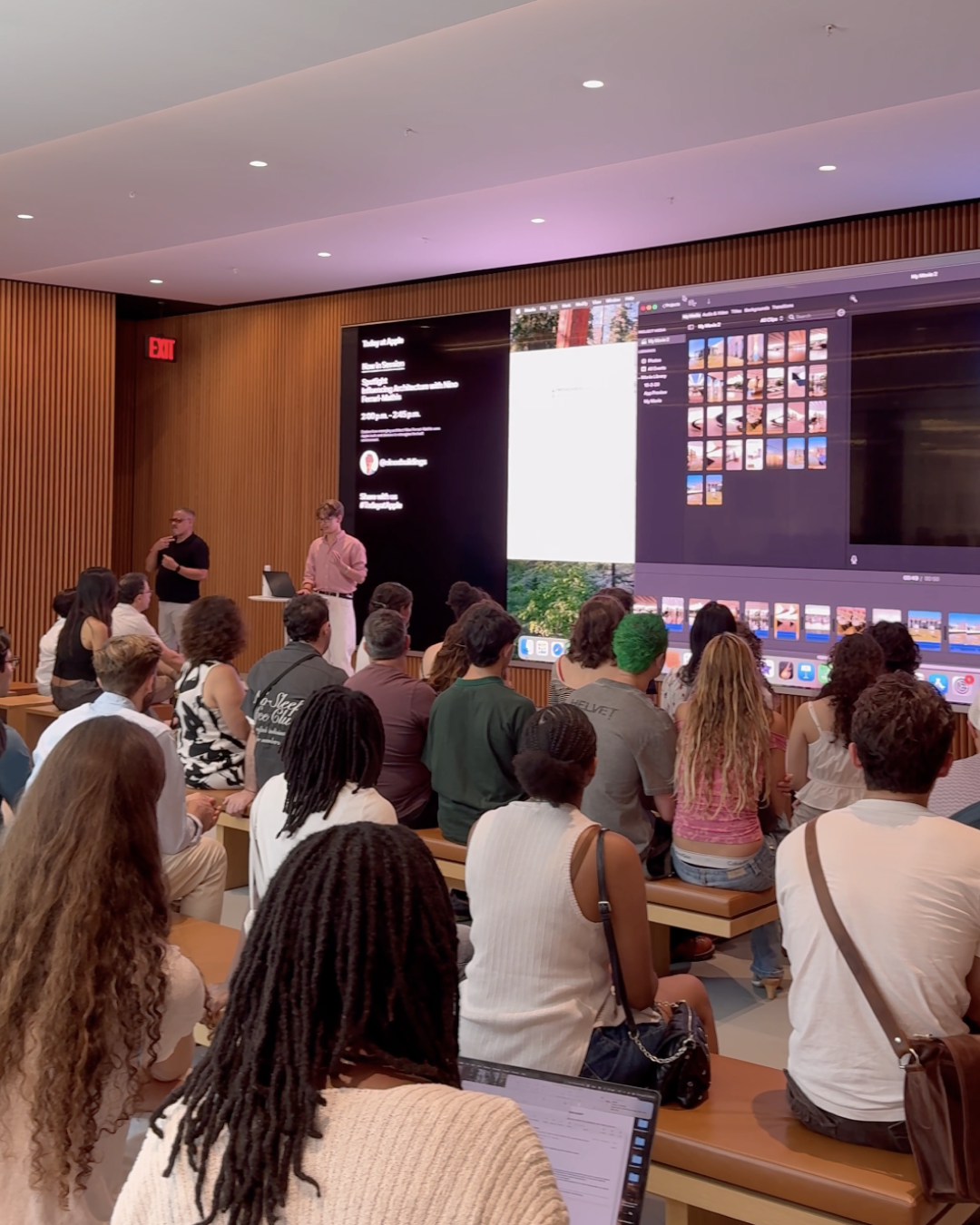
Last month he held his first in-person event, hosting a “Today at Apple” talk at the brand’s Soho store to discuss his journey with architecture, his education, passions, and life with his followers. When we speak, he’s three months post-grad and back home in Paris with a clear blue sky in the background of his video. He tells me it’s his first time being interviewed, he’s more accustomed to being the interviewer. His passion for design is evident, as is the joy he finds in sharing his knowledge with others. We talked about his favorite buildings, brutalist rage-bait, and getting into design when you don’t know where to start.
Flora Medina: Is there a first building that you remember really impacting you or sparking a deeper curiosity about architecture?
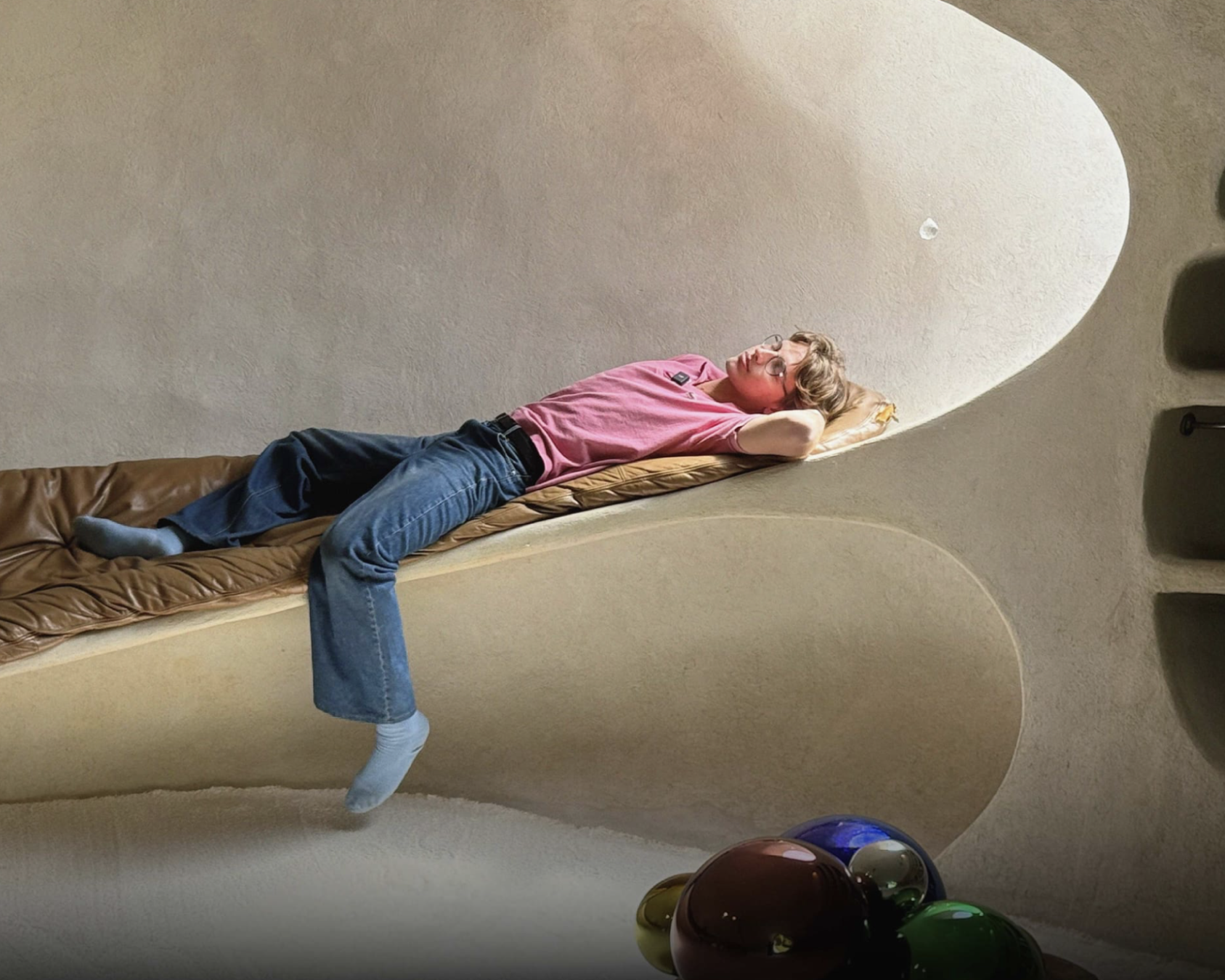
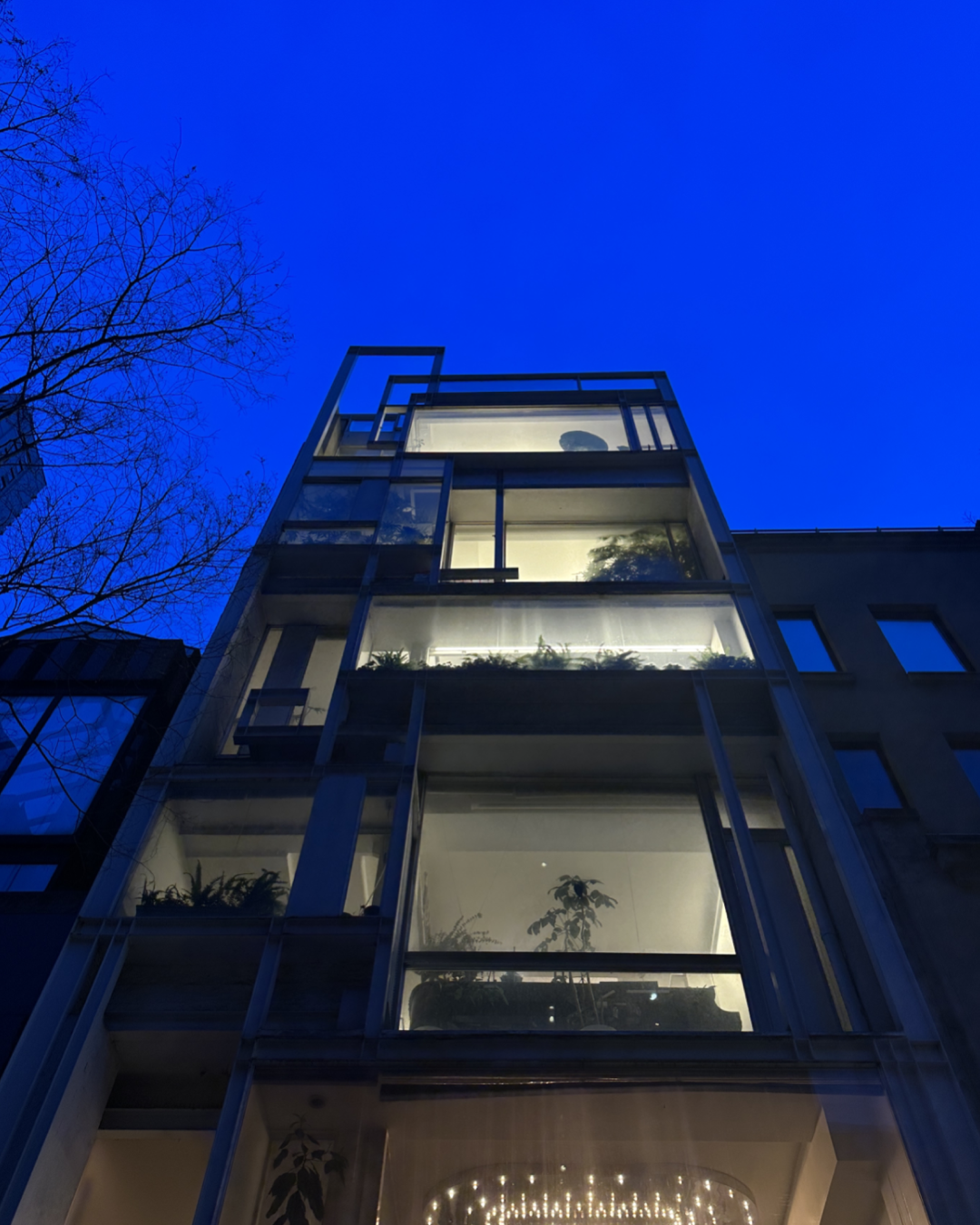
Nino Ferrari-Mathis: In my lifetime there’s been a lot, even the buildings when I’d walk from home to school, I was always fascinated by them. One that immediately comes to mind is the Modulightor Building in New York, it was designed by Paul Rudolph and it was the first video I did for Nino’s Buildings. He built himself a townhouse, it has apartments, a showroom, what used to be his office, and now it’s an institute open to the public. I first went for an open house to see it before filming and I remember being so shocked.
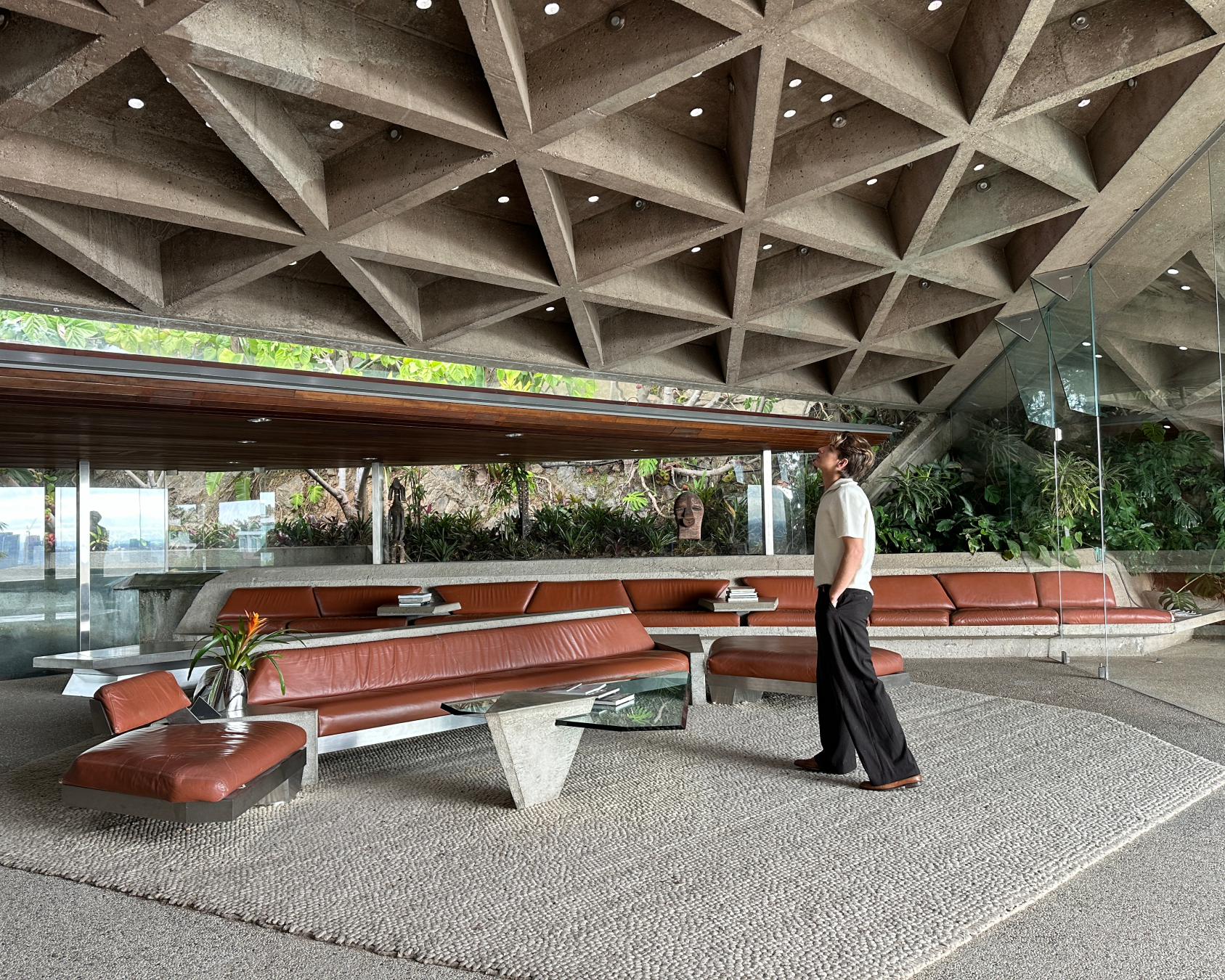
Just being in a space that isn’t familiar to yourself that is really beautifully designed and you can get access to was mind-blowing for me. I’ve been volunteering there for the past two years and every time I’m in that space, I learn something new. It’s a cool place to go with your friends because the open houses are on Fridays after work, they have an open bar and they play jazz music and it’s a bunch of young people exploring the space. It’s definitely a building that’s deep in my heart.
Art school is a very unique educational experience. What were some of your favorite things about getting to study in that type of creative environment?
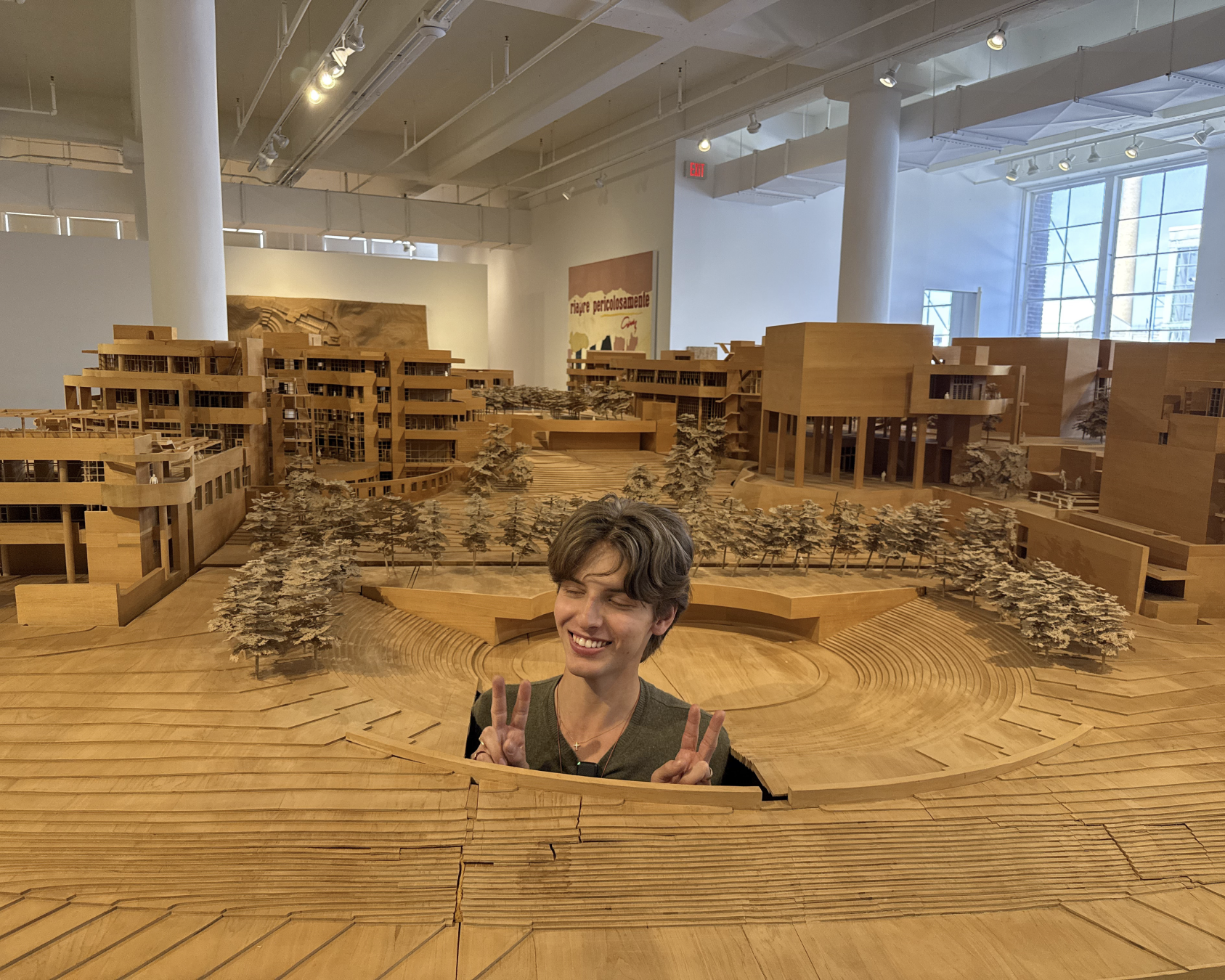
Art school was so fun. As crazy as I felt the entire time, I think the people were really what made my education unique. I was with people from every background. Architecture is such a subjective thing, you learn the most from it when someone says something like ‘oh but in my childhood home, our laundry room was here instead of here.’ Those little things make you curious and I really enjoyed that.
What were some of your survival essentials to get through long nights in the studio during your program?
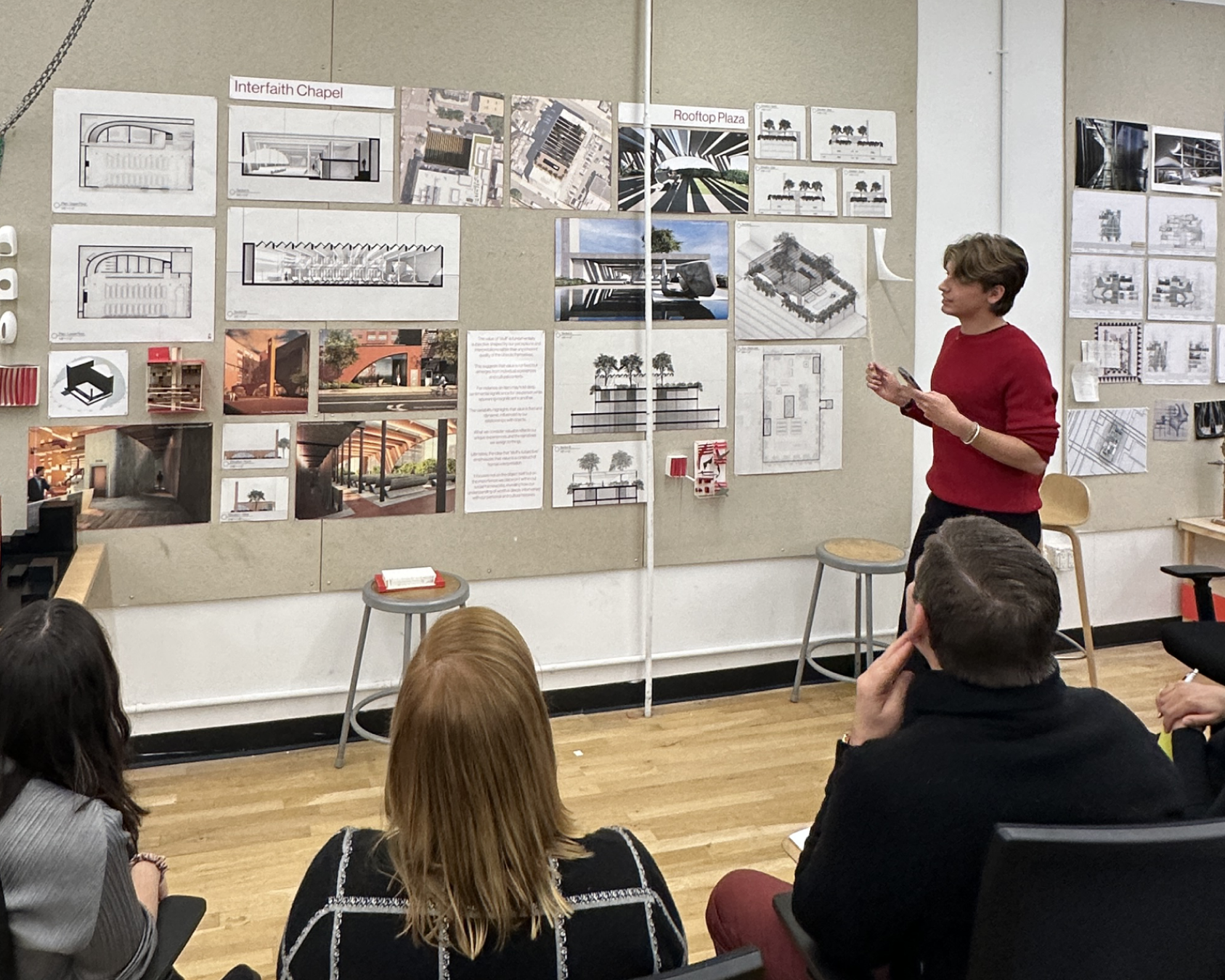
I was spending every night in the studio comparing myself to others and going crazy. The special moments happened when I left the studio and was reminded I could just go on a walk and see an insanely cool building in New York and be inspired by that.
That’s what I tell a lot of the people that are stressing out there. You don’t have to be a model maker. You don’t have to be a professional drawer. You just have to be someone that’s open to the idea of learning about architecture, experiencing it, and then hopefully gaining the confidence to design it yourself. Trying to become an engineer while studying to become an architect will just give you more headaches.
Tell me a bit more about the Apple event and getting to speak to some of your followers in person.
It was so much information but the whole point was to show that it’s not a linear process. We had a little Q&A session and it was all the architecture students, little shaylas, saying they were so scared. It was something new for me, but something that I’d want to do again. I think it’s the final step in making my perspective on architecture accessible. I’m already sharing it with all these people online, but having in-person, free events is different. It made me want to do more.
Even when you’re a student and you’re in school and trying to go to the events like art gallery openings, fashion events, or architecture institutions, it’s so hard to just get there. Then you get there and you’re usually the youngest person or you feel out of place. That’s why I think merging the digital realm gets rid of that inaccessibility.
What advice would you give to those people who do want to appreciate architecture in a more intentional way, but don’t really know where to start?
I usually ask this question to architects and I’ve been leeching off of what they’ve told me: go for long walks, sit down on the street, bring a sketchbook, bring your phone, take photos of details, take the time to look up. Especially in a city like New York, you’re always walking from point A to point B, but you’re surrounded by so much design and history that if you sit on a stoop and just observe the details of the building across from you, you’re already learning. If you sketch it then your brain is documenting that. It’s not a formal education but it will translate in any sort of further exploration you want to do in design. There’s not one simple approach, but just having an open perspective and taking a little bit of time out of your day to stop and look up is already a great start.

Do you have a favorite design style?
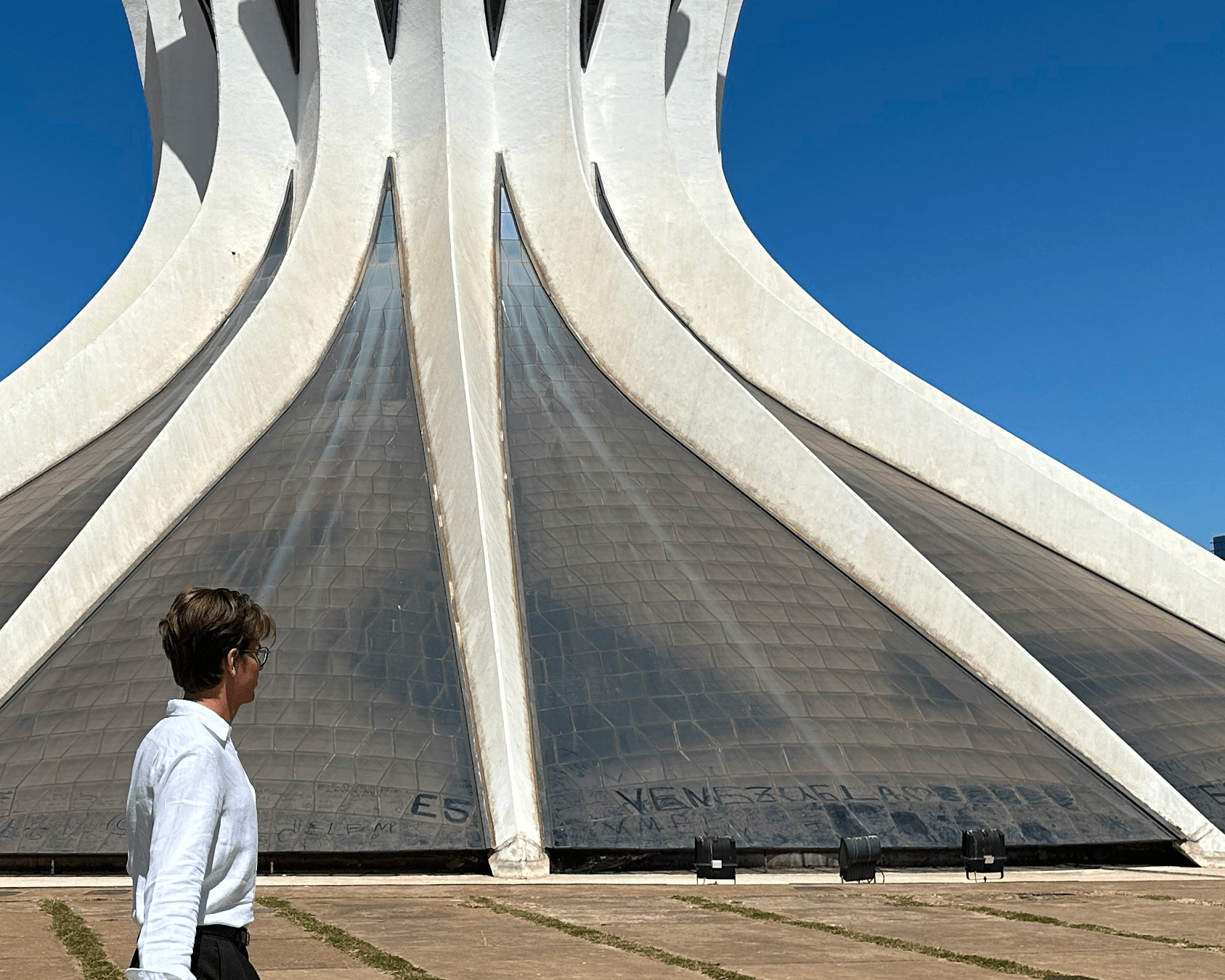
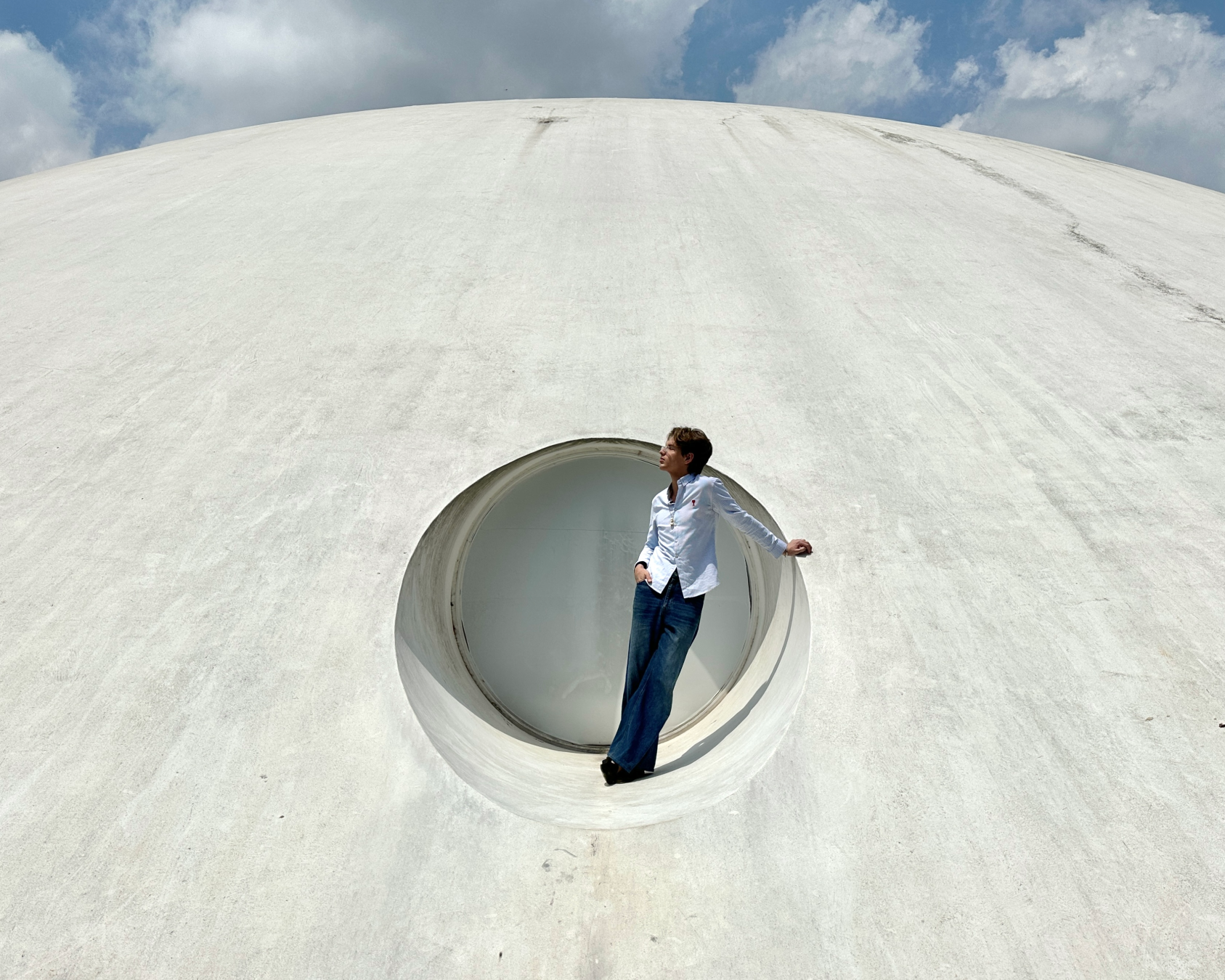
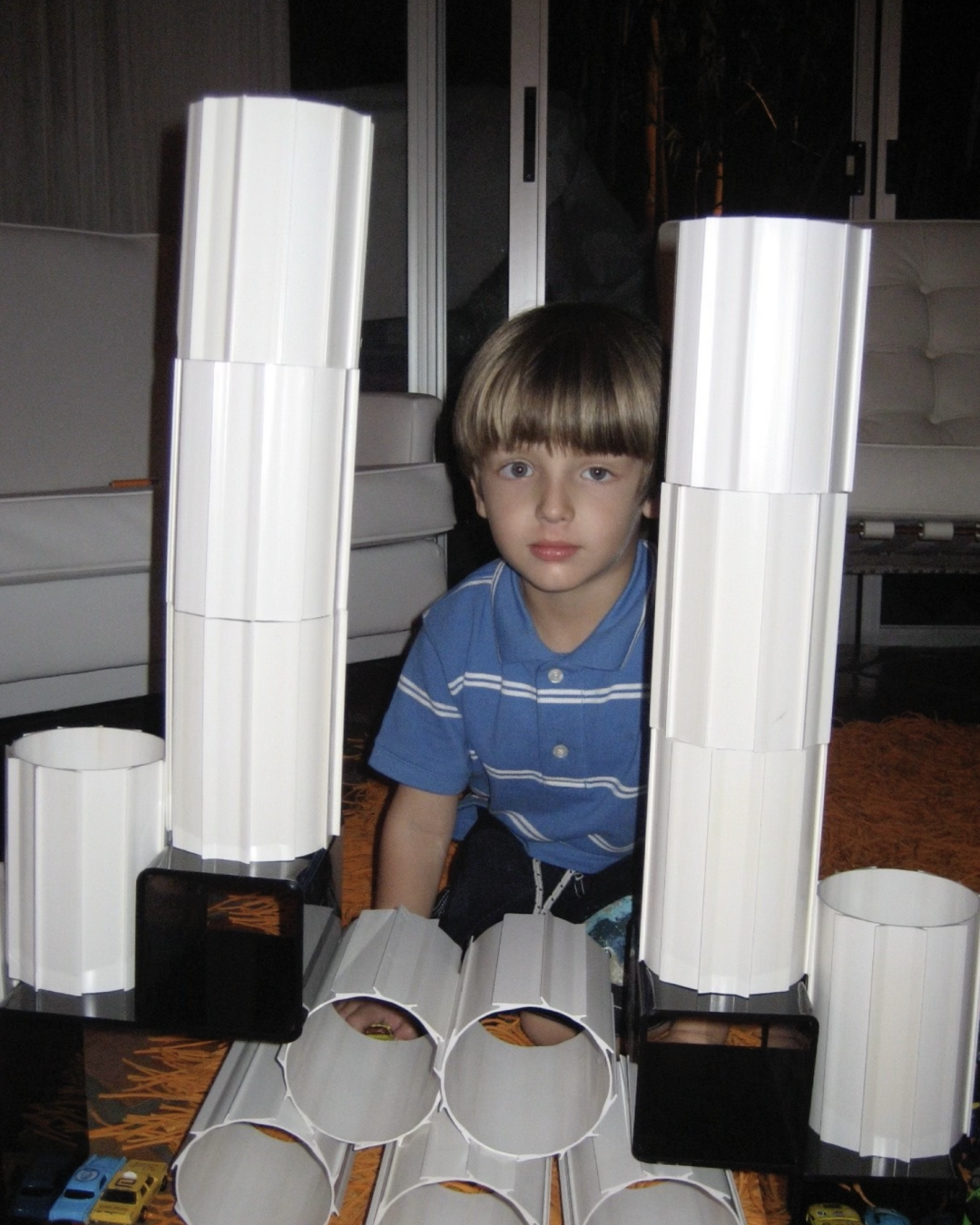
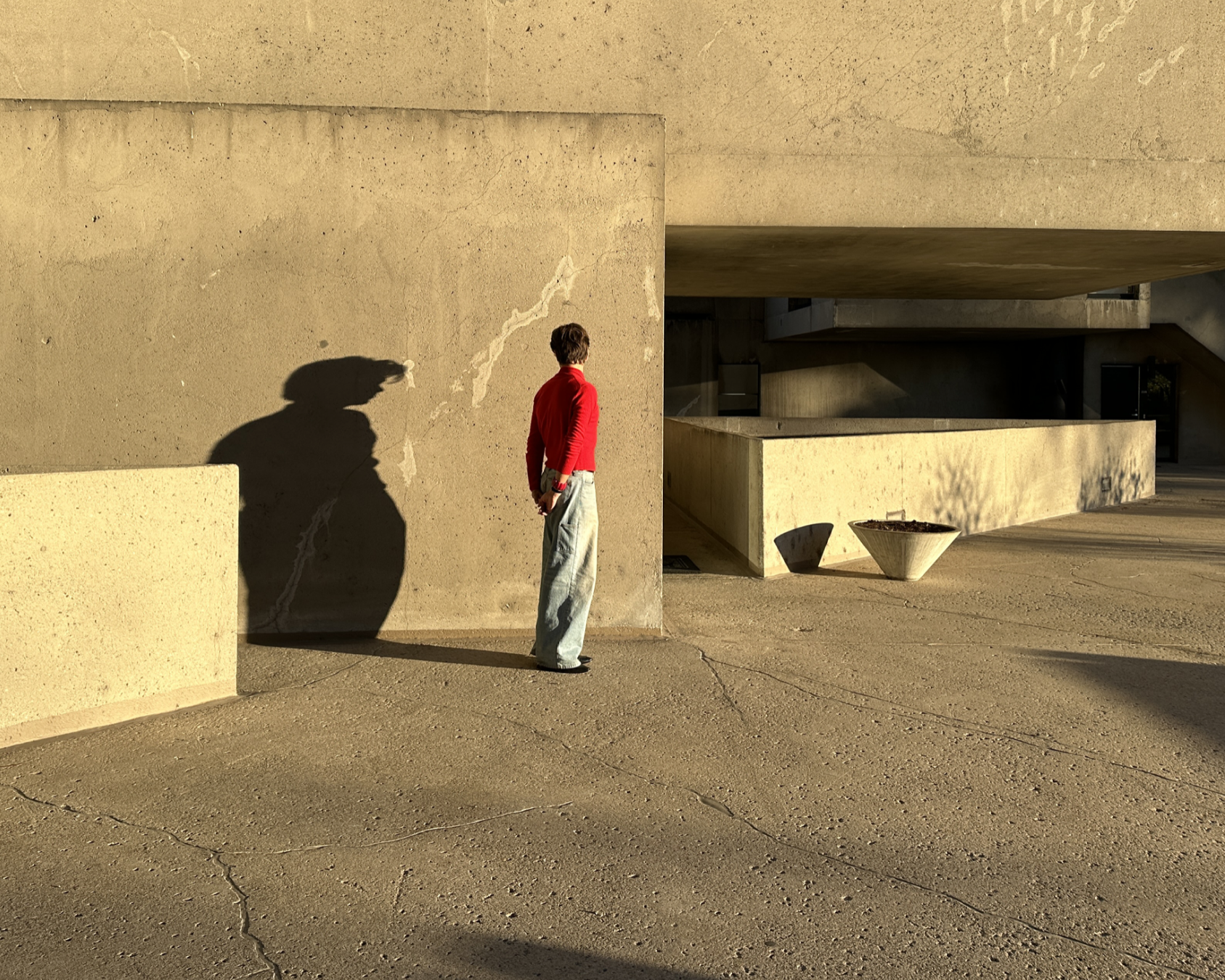
I have a lot of favorites, but the one that I’ve become known for in my videos is brutalism. It’s a controversial style but I find it so intriguing. In Brazil, brutalism was the main style when the country was trying to develop its own architectural language. Over there they’ve mixed brutalism with very tropical environments and landscaping, it’s like sculpture. When I saw that as a kid, it felt like a little playground. You just want to climb it and explore.
Even though France is known for its traditional, decorative architecture, they also had a boom in the ’60s. Brutalism came from a French-Swiss architect. When I walked to school as a kid, I lived in a neighborhood where there would be a classic building and then this crazy brutalist apartment building that’s falling apart. I always go back to the philosophy of brutalist architecture because even the process was so much more artistic. Even though the buildings don’t look liberal, it was so much more liberal.
Now that you’ve graduated, what are you up to?
I’m back in Paris. I want to pursue these videos but I don’t know if I can do this full-time yet. It’s such a new thing to me and to the architectural world, being a content creator or an influencer. I’m trying as much as I can to just make it fun and pursue it. There’s some buildings in Europe that are insane, no one’s really filmed them before and I want to be the one to do it. I don’t see what’s stopping me, apart from going broke after a while. I’m hoping that my passion will bring revenue. The moments like the Apple talk and a collaboration we just did with Architectural Digest just make me feel like I’m doing something right. I feel like I owe it to what I’ve created to pursue it.