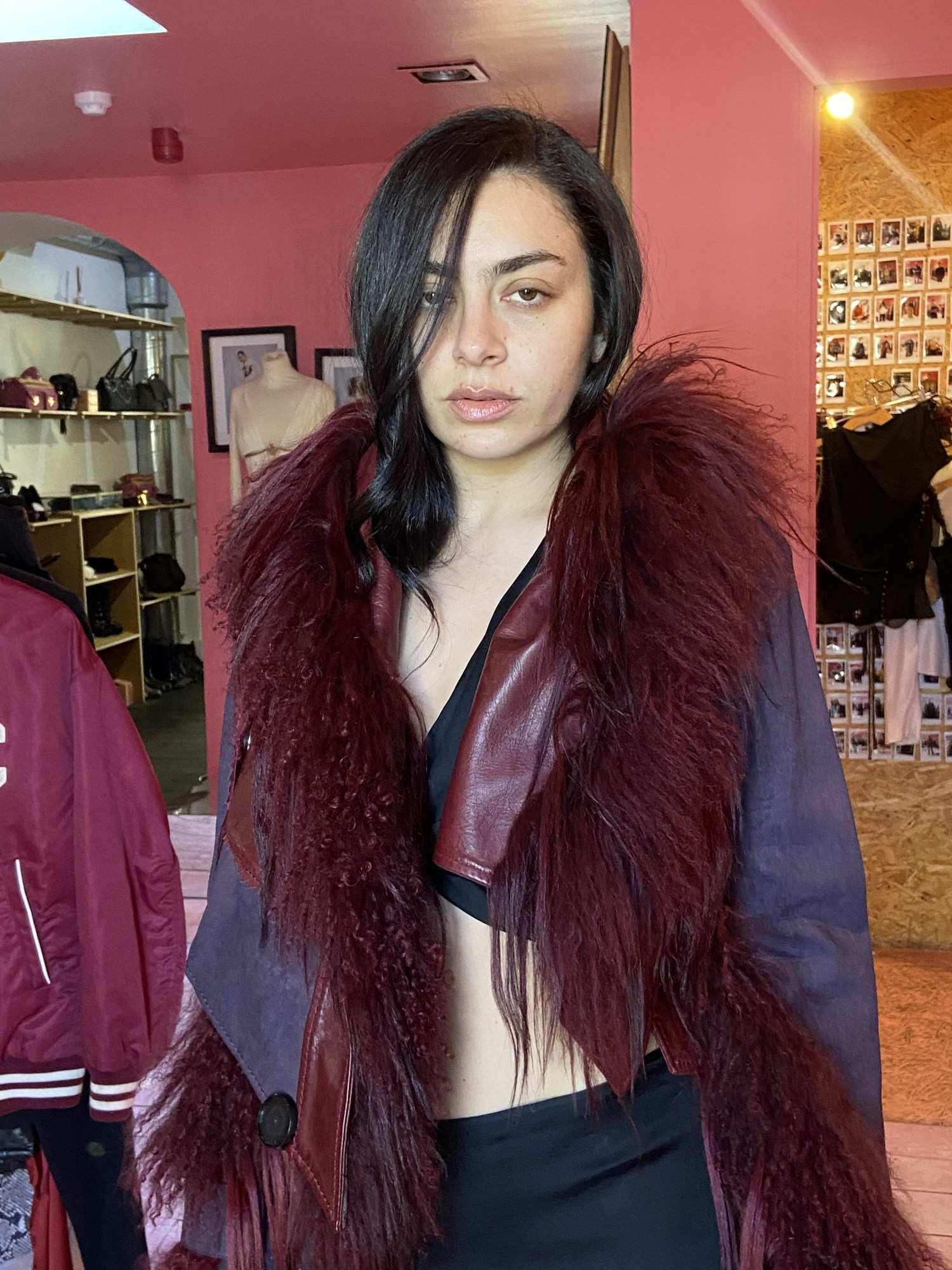
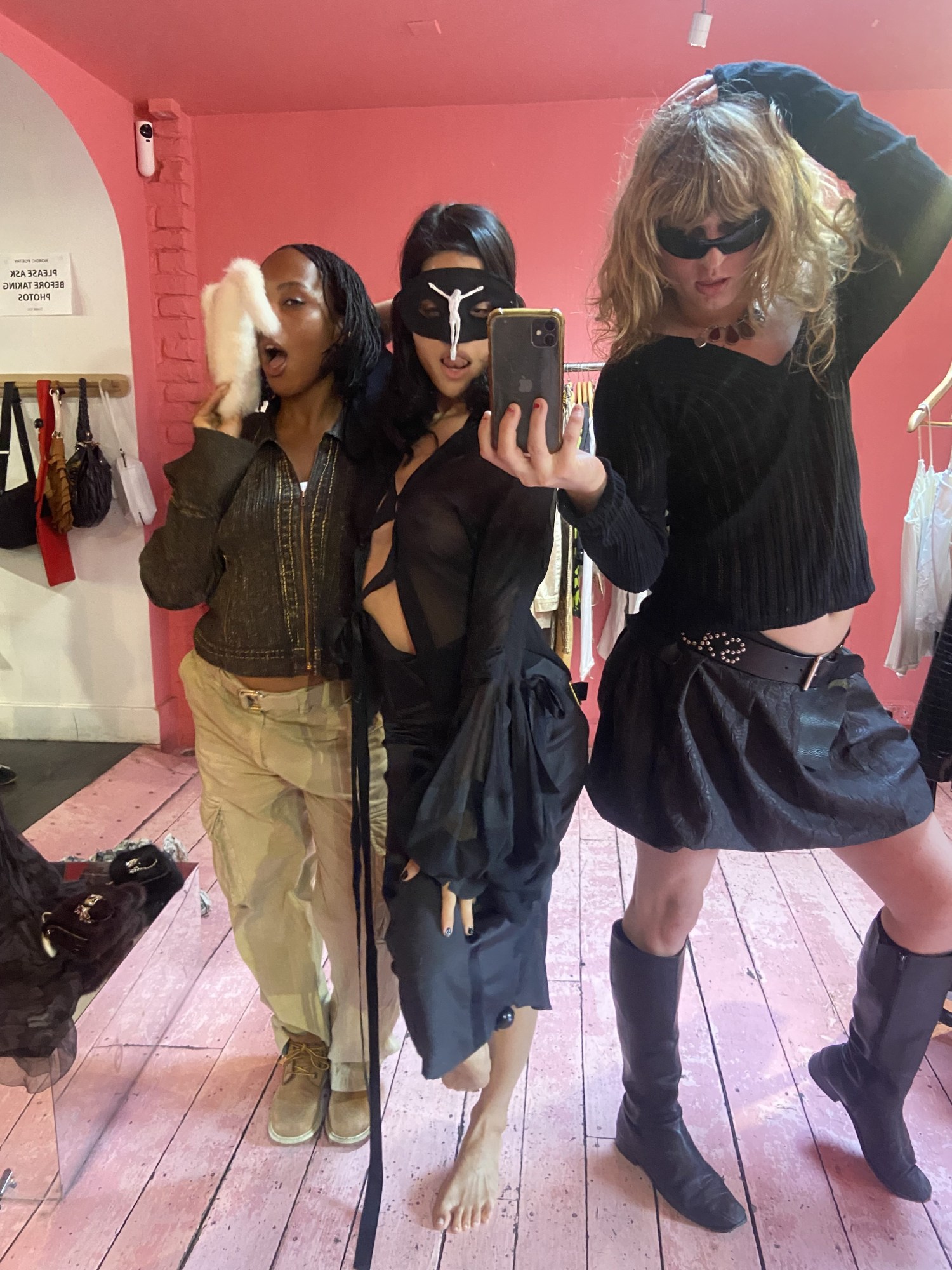
You don’t walk into Nordic Poetry expecting spectacle. The Shoreditch storefront is petite, calm, almost underplayed (and dangerously close to i-D’s London HQ). The giveaway is in the back—the pink wall you’ve seen in a hundred photos, the one Charli xcx, Sombr, Alex Consani, Zara Larsson, and Gabriette have all posed against without really trying. It’s not meant to be iconic, but it’s iconic anyway. The whole store has that energy.
I’m here to meet founder Ameli Lindgren, and the first thing that strikes me is how uncluttered everything feels. Nordic Poetry doesn’t flood you with curated chaos or self-conscious “archive” mood lighting. It’s just racks and Lindgren—sharp and matter-of-fact. She tells me the story of how all of this kicked off. “I literally started off with £100 in my own pocket,” she says.

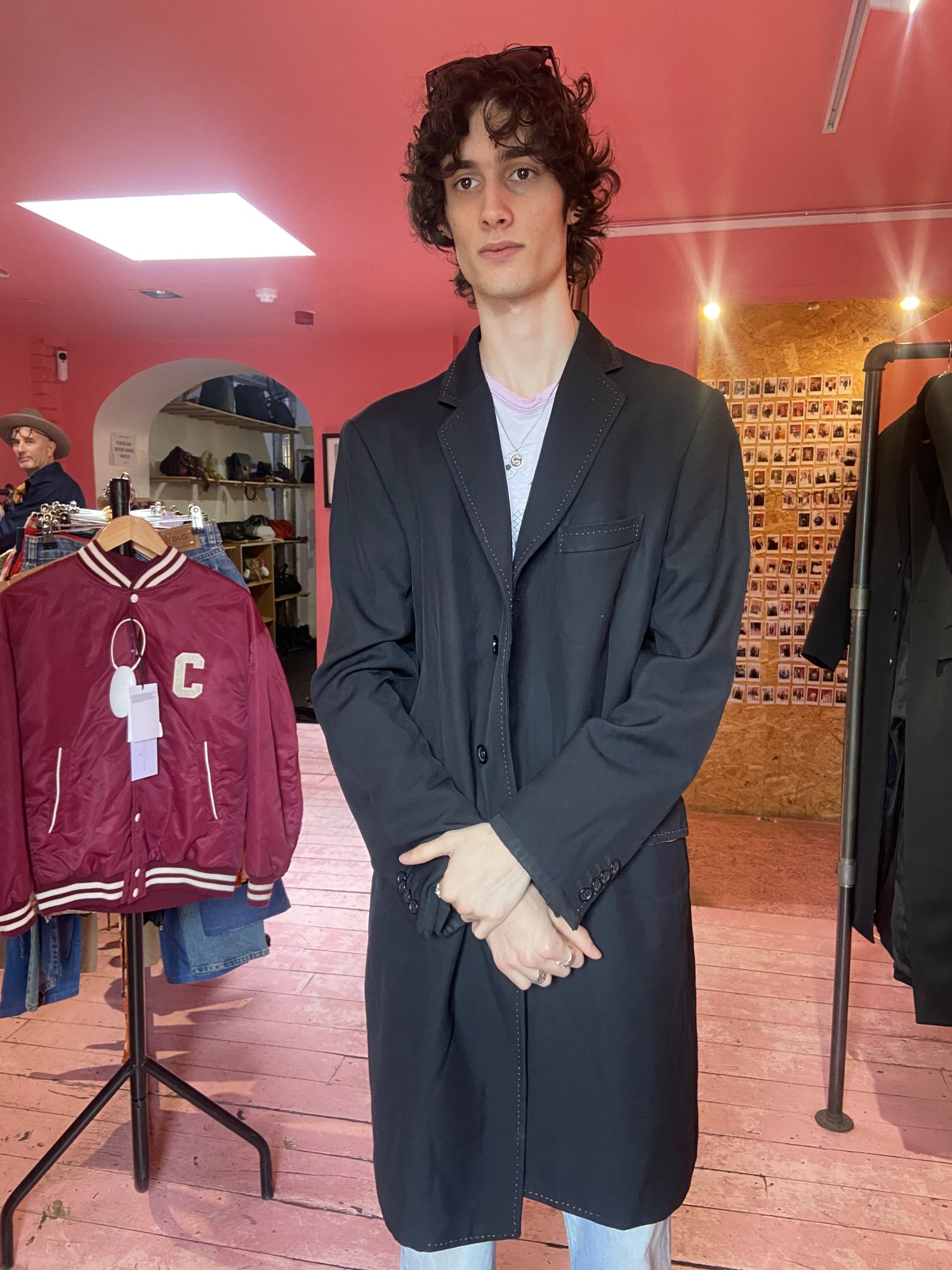
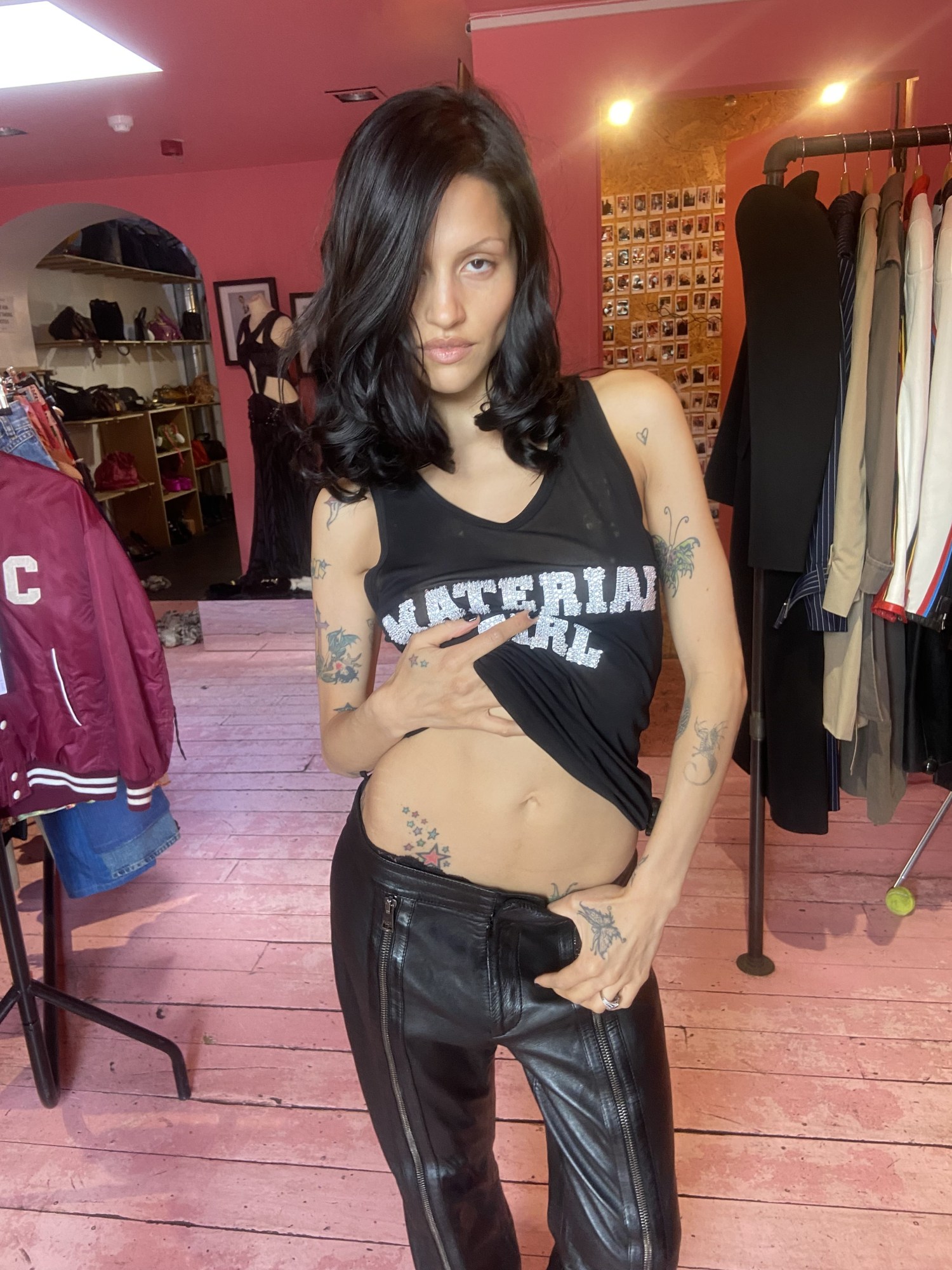
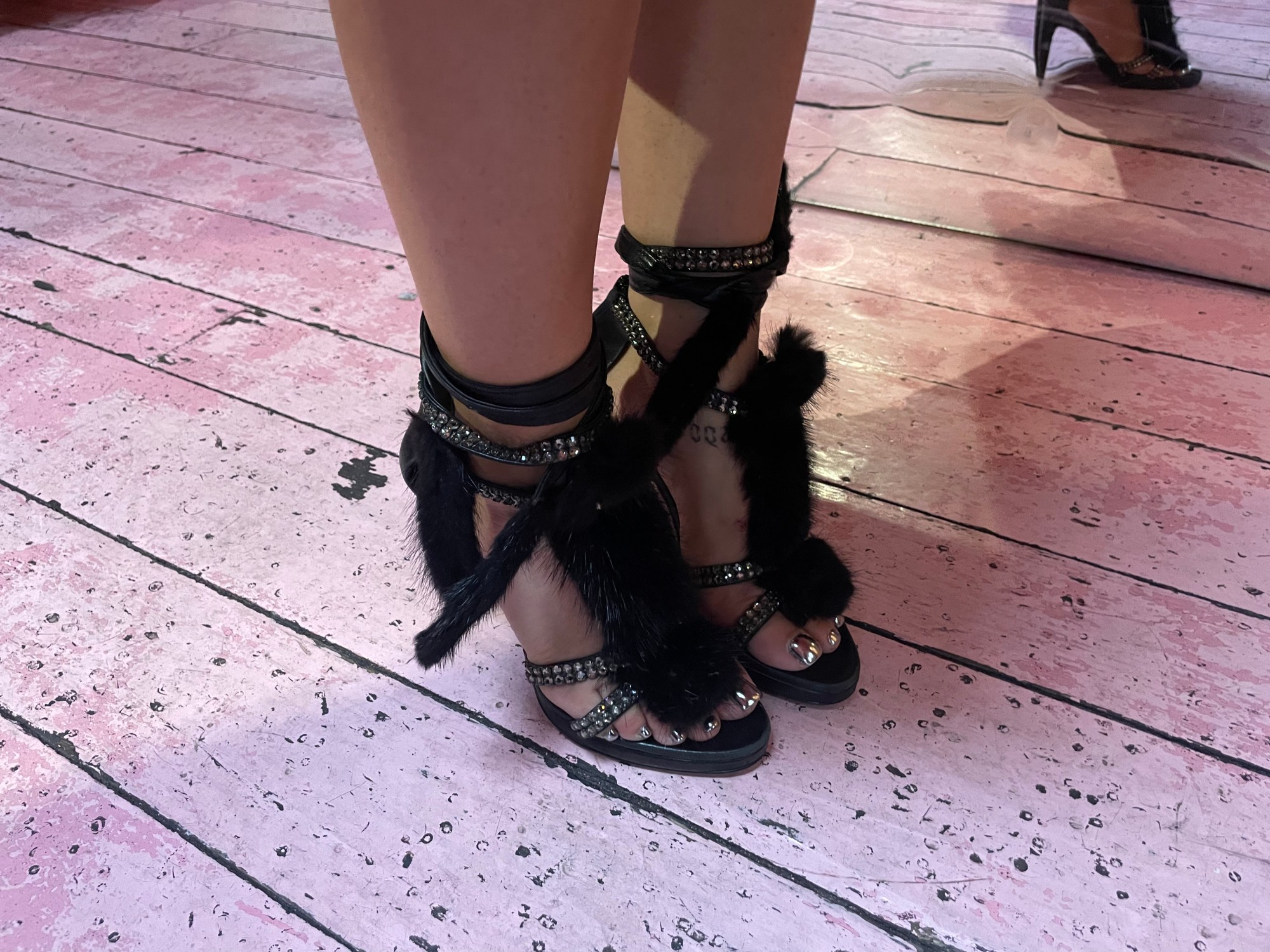
Before the store opened in 2017, she spent 4 years doing market stalls, then moved to a Boxpark unit so tiny it practically had a 180-degree turning radius. She remembers her first proper luxury sale vividly: a black satin low-cut Vivienne Westwood Spring 1995 “Erotic Zones” corset. “I should’ve never sold it,” she says, shaking her head. “But it went to a good home, and that’s what matters.”
Her interest in fashion started long before London. “My mom used to resell my clothes when I was young,” she tells me. “I’d run around her market stalls and pick out things I liked.” It tracks. There’s a certain clarity to how she looks at clothes—not as trend pieces, but as objects that have history and intent. “I’ve always been into vintage,” she adds, “because it’s ethical, sustainable—and I never wanted to look like everyone else.”
We sit near the back pink wall where staff in perfectly mismatched vintage—think a little Gaultier, a little ‘borrowed-from-the-back-room-but-not-really’—bring up pieces from the archive for me to see. They arrive one by one like characters entering a film scene. First: the Vivienne Westwood Fall 1993 “Elizabeth I” corset, one of those garments that shifts the air just by existing. Then the hand-knitted Vivienne Westwood Fall 1994 “On Liberty” runway dress, heavy, intricate, the opposite of fast fashion’s amnesia. A Versace Spring 1991 pleated skirt and top co-ord, so crisp it feels teleported from a better era. A long Jean-Louis Scherrer black magnolian lamb evening coat from Fall 2000 with the kind of Brutalist drama only the early 2000s could produce. And a Fall 1991 Alaïa knitted butterfly pencil skirt—playful in a way that feels almost subversive.
Then they bring out the piece: the Alexander McQueen crucifix mask from Fall 1996 “Dante,” designed by Simon Costin and inspired by Joel-Peter Witkin. It’s chilling, serene, confrontational, and beautiful. They hold it carefully while I look, and even though nobody says it, the room shifts slightly. You don’t have to understand fashion history to feel the gravity of that object.
This kind of inventory is why stylists and musicians keep showing up at Nordic Poetry. They don’t come here for nostalgia—they come because Lindgren sources pieces that carry weight. “Most celebrities now want to wear archive on the red carpet,” she says. “They don’t want to look like someone else.” For her, the cultural pivot toward archival dressing isn’t a fad; it’s a correction. “I’d rather buy two or three good things a year that add value to my wardrobe,” she tells me. “These are investment pieces—they go up and up in value.”
Vintage reselling has exploded in the past few years—not because people suddenly discovered old clothes, but because everything else feels too disposable. Fast fashion is tired. Micro-trends are exhausting. Individuality has become more aspirational than luxury. Nordic Poetry sits squarely at that intersection.
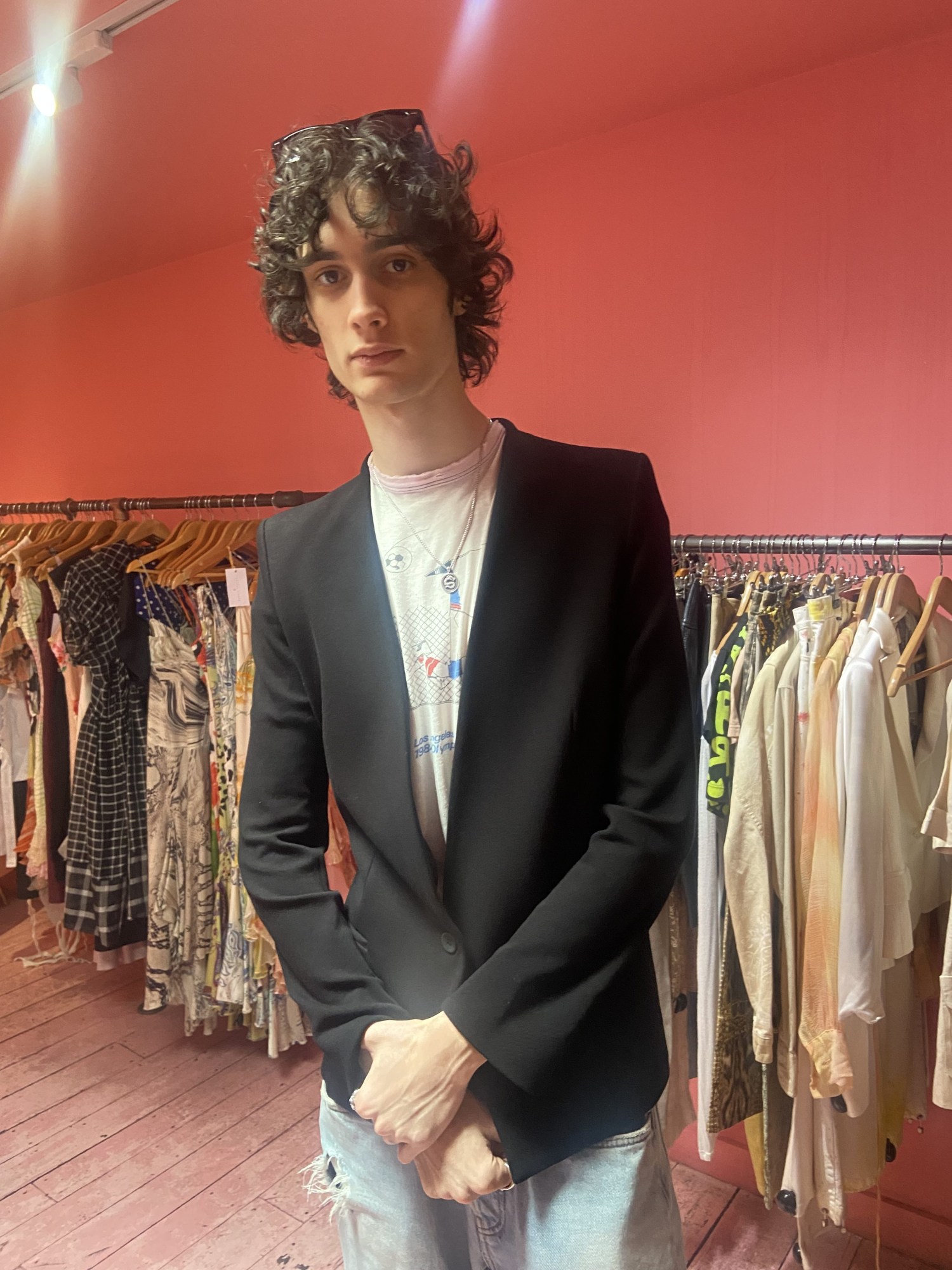
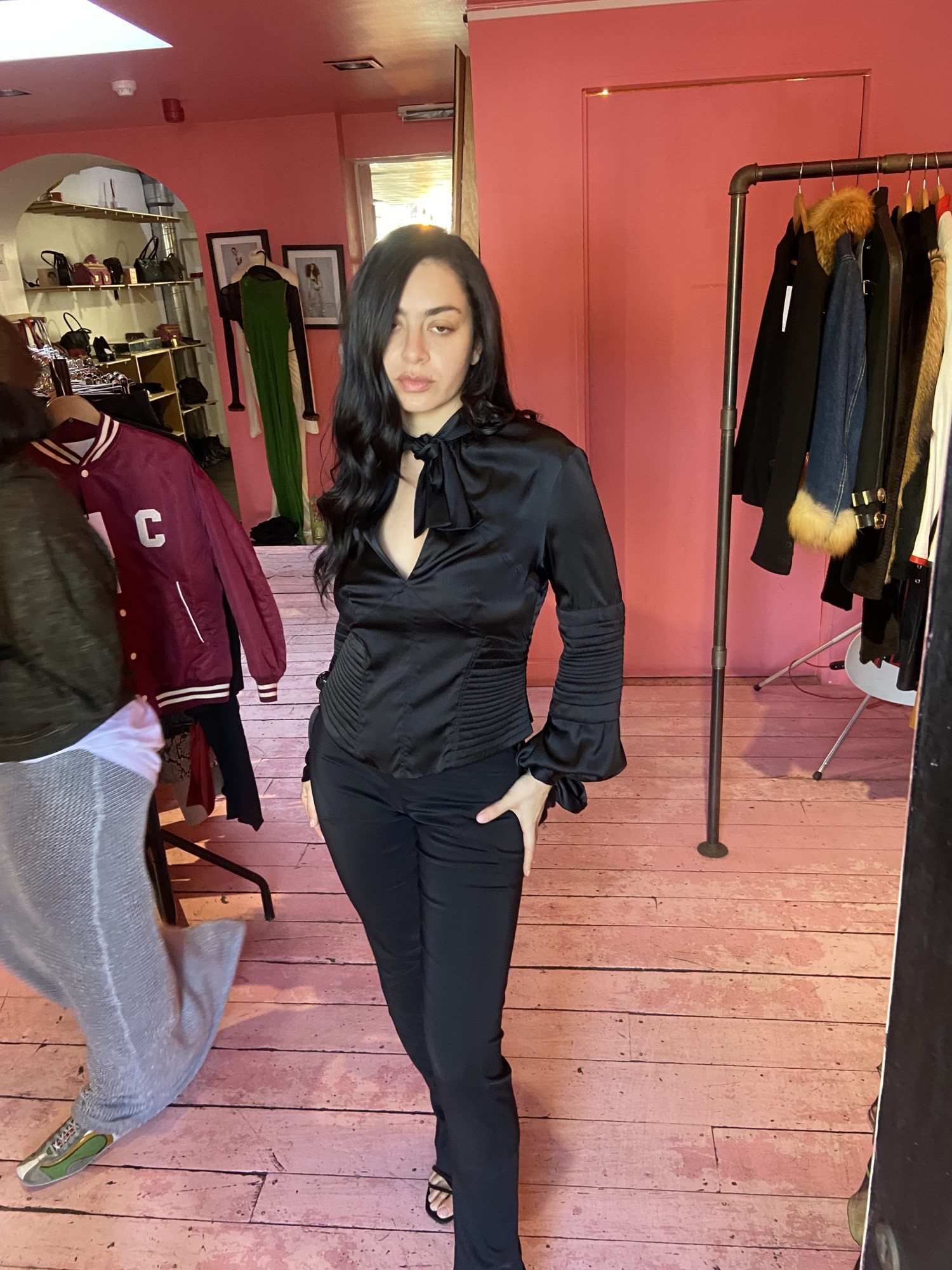
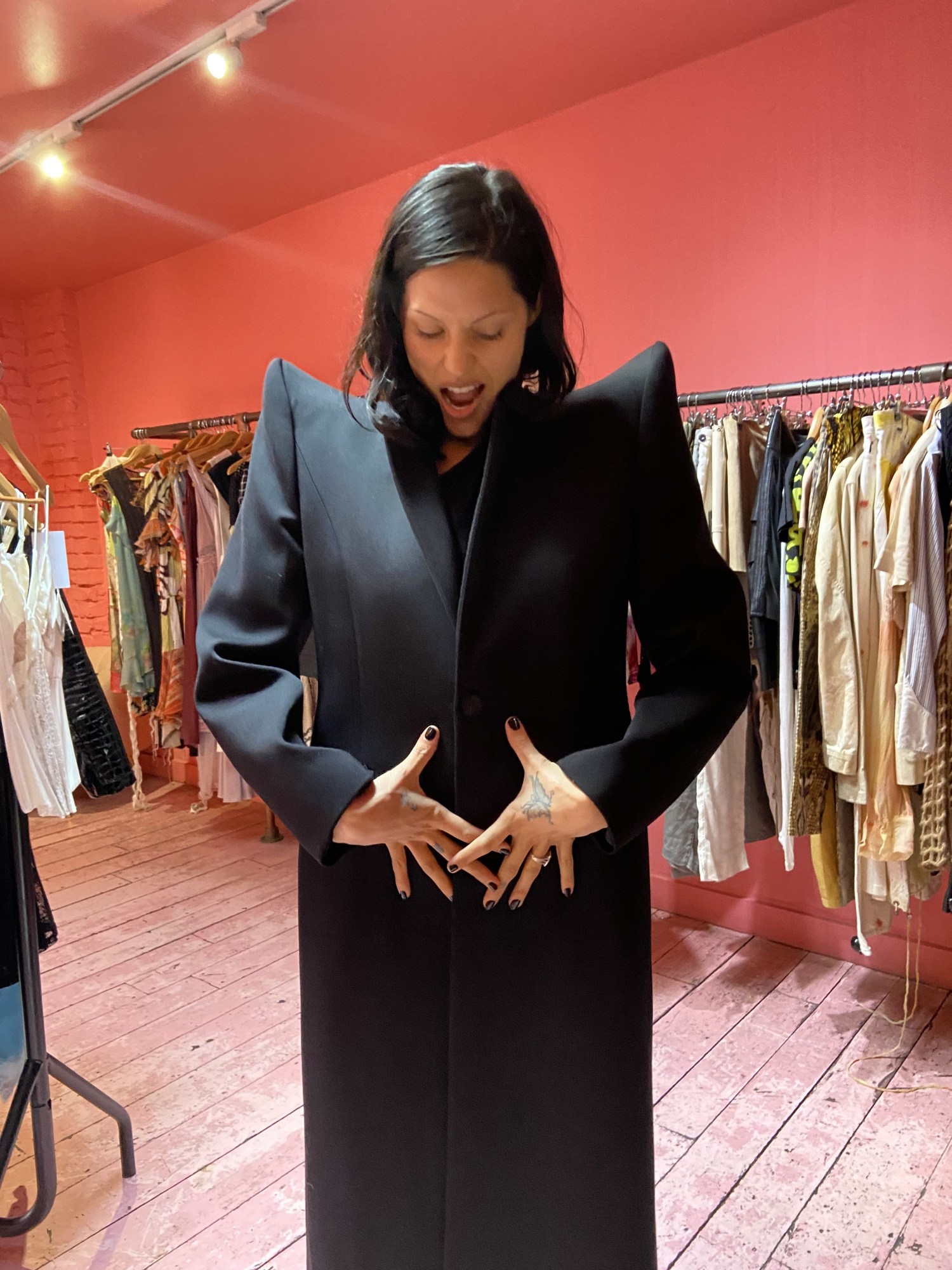
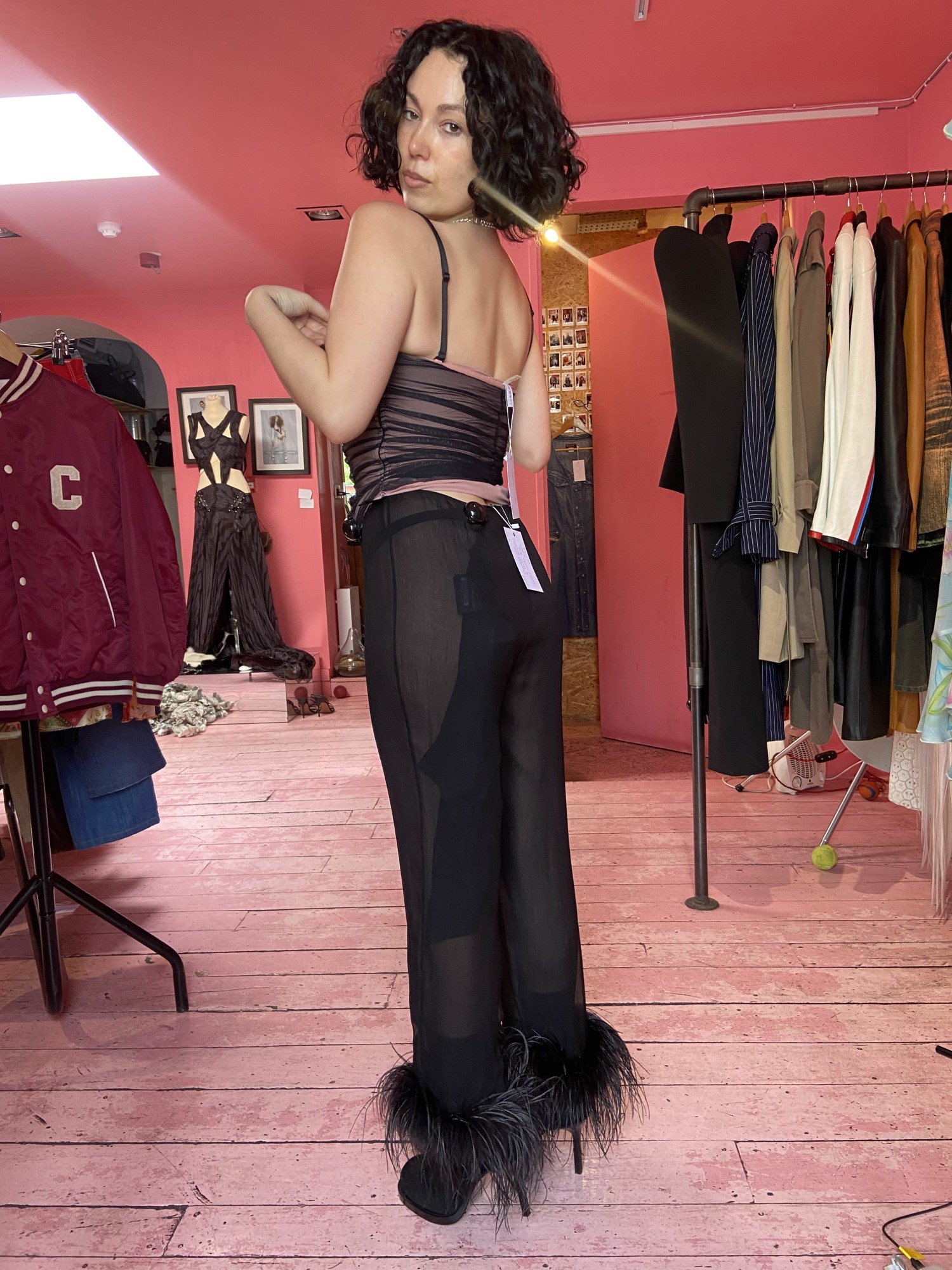
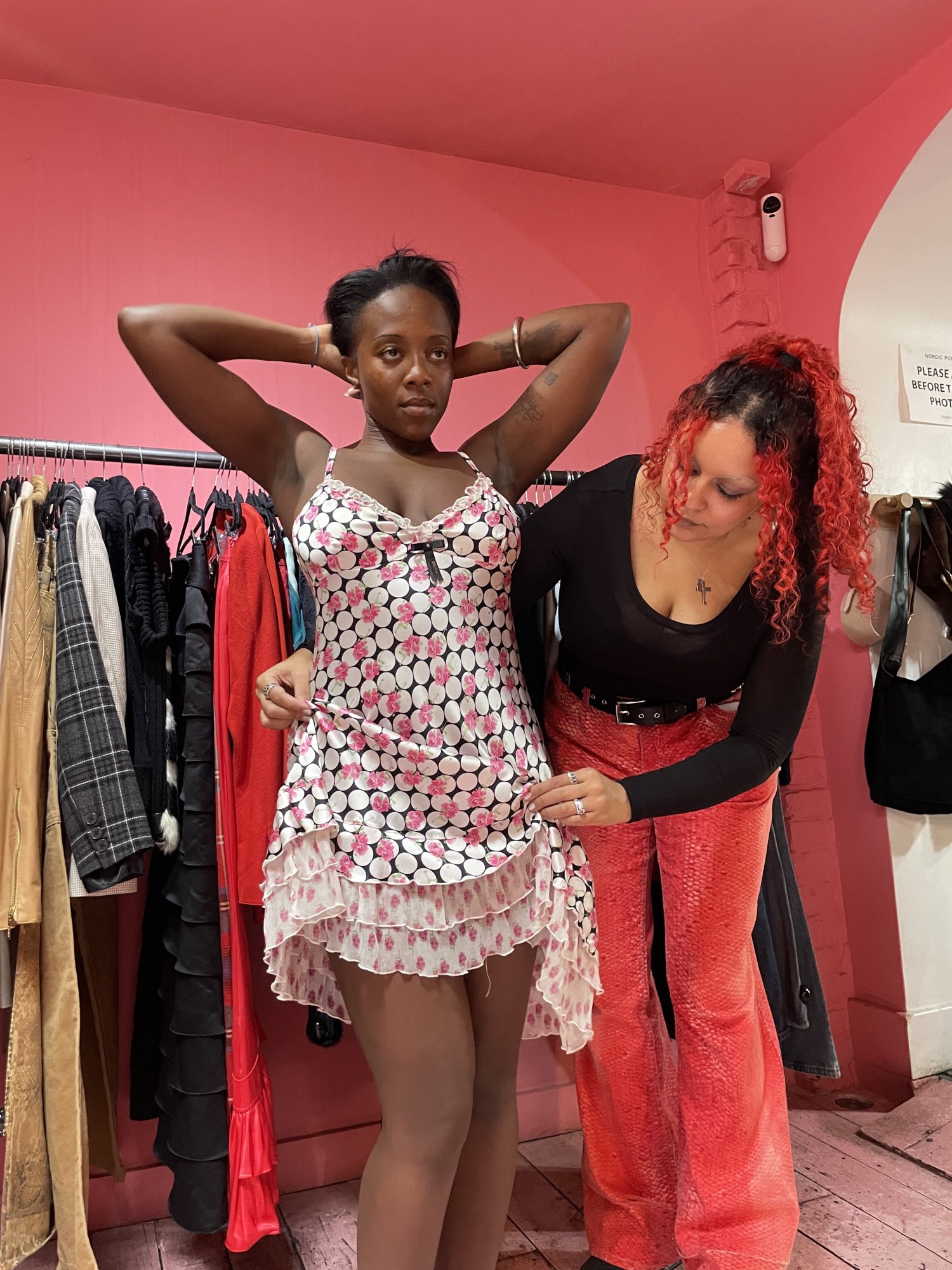
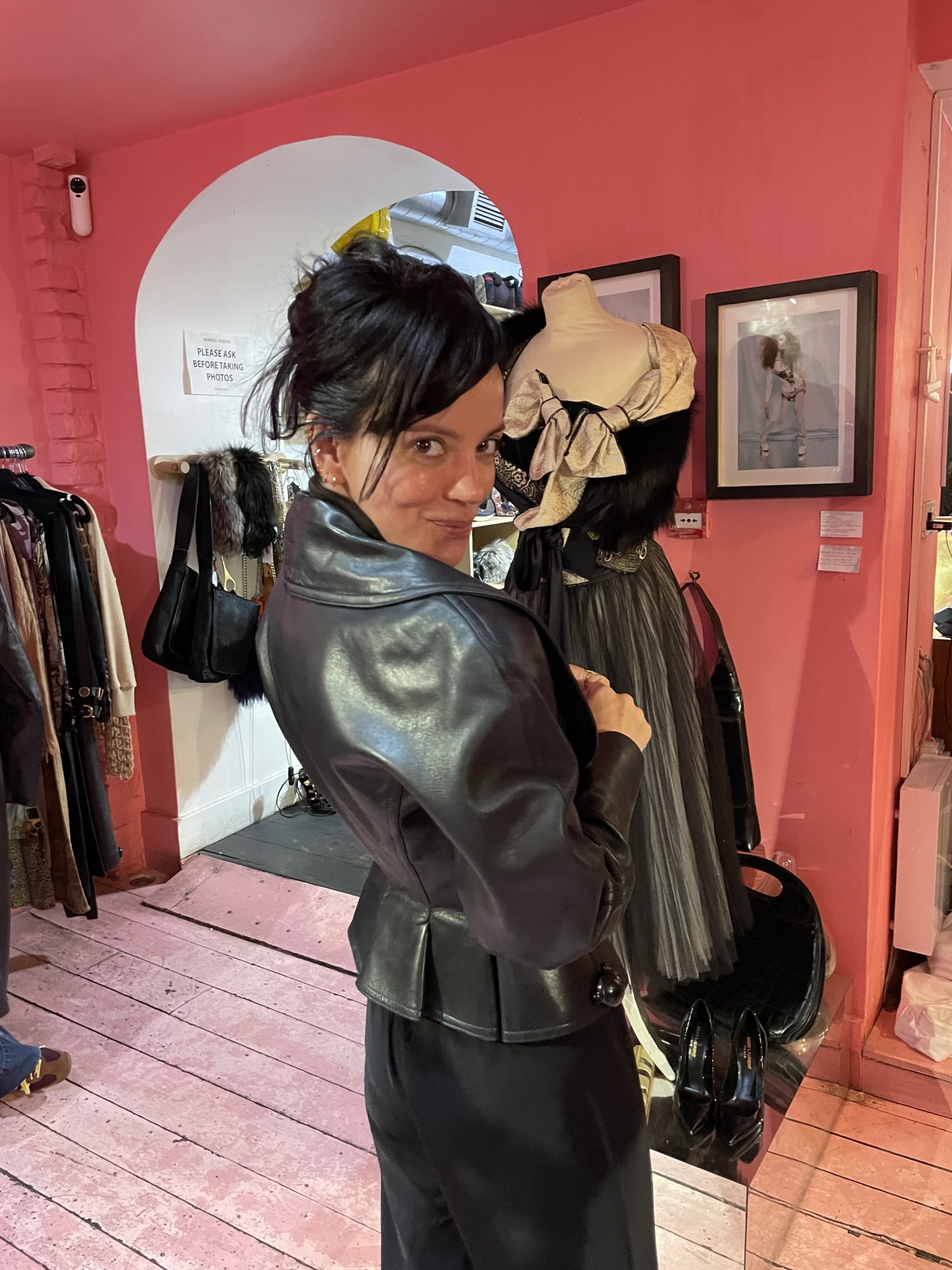
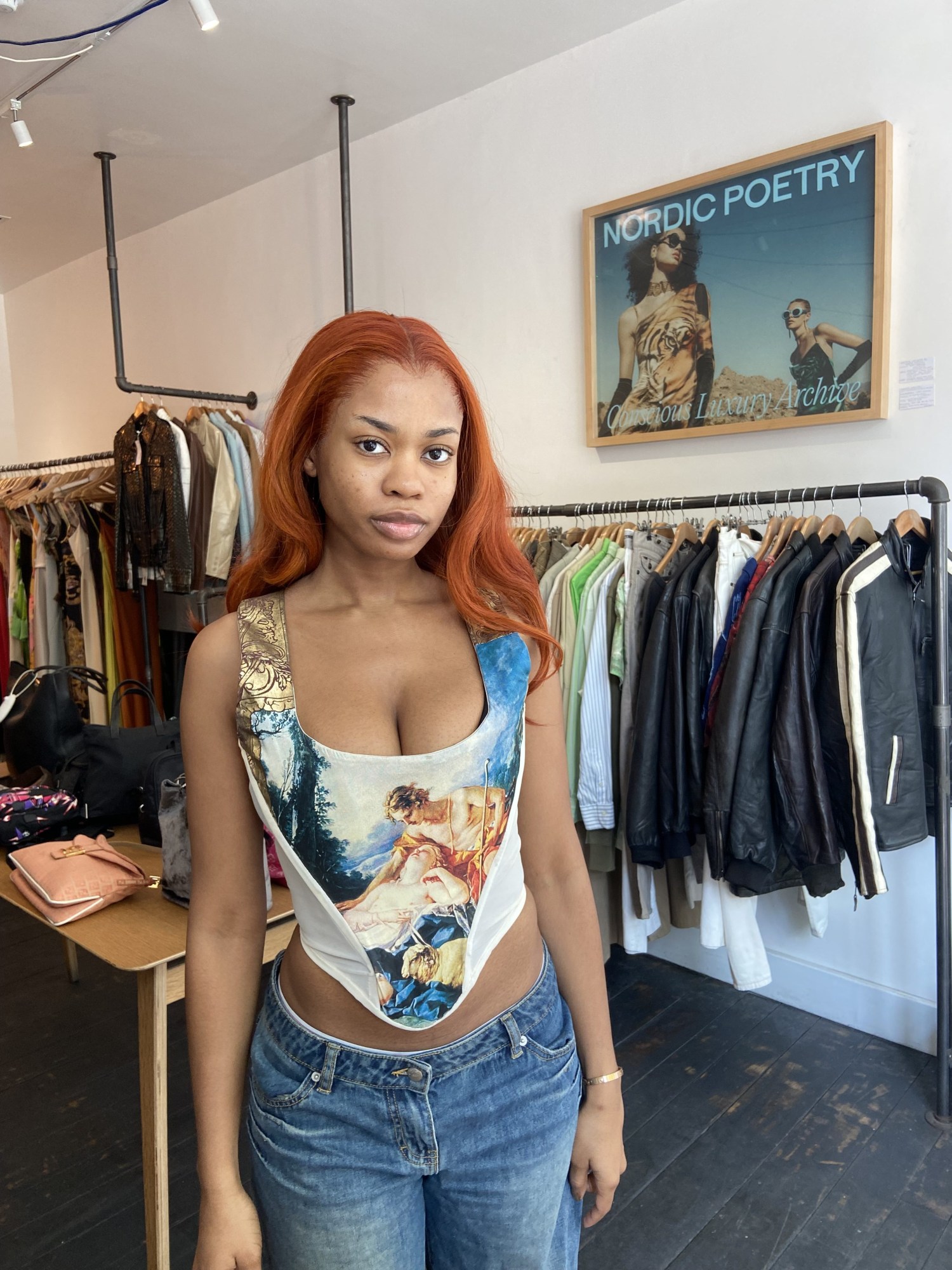
Afterward Lindgren and the team walk me through what’s actually on the shop floor. The edit is tight and unfussy: a metallic Paco dress with that unmistakable Paco Rabanne attitude, a clean-lined Helmut Lang Fall 1991 perforated mini dress that feels weirdly modern again, and a soft dusty-pink 2004 Galliano chiffon gown that looks good even on a hanger. Accessories are strong too. There’s a Spring 1993 Chanel circle shades. Nothing feels random. Everything feels picked with intention.
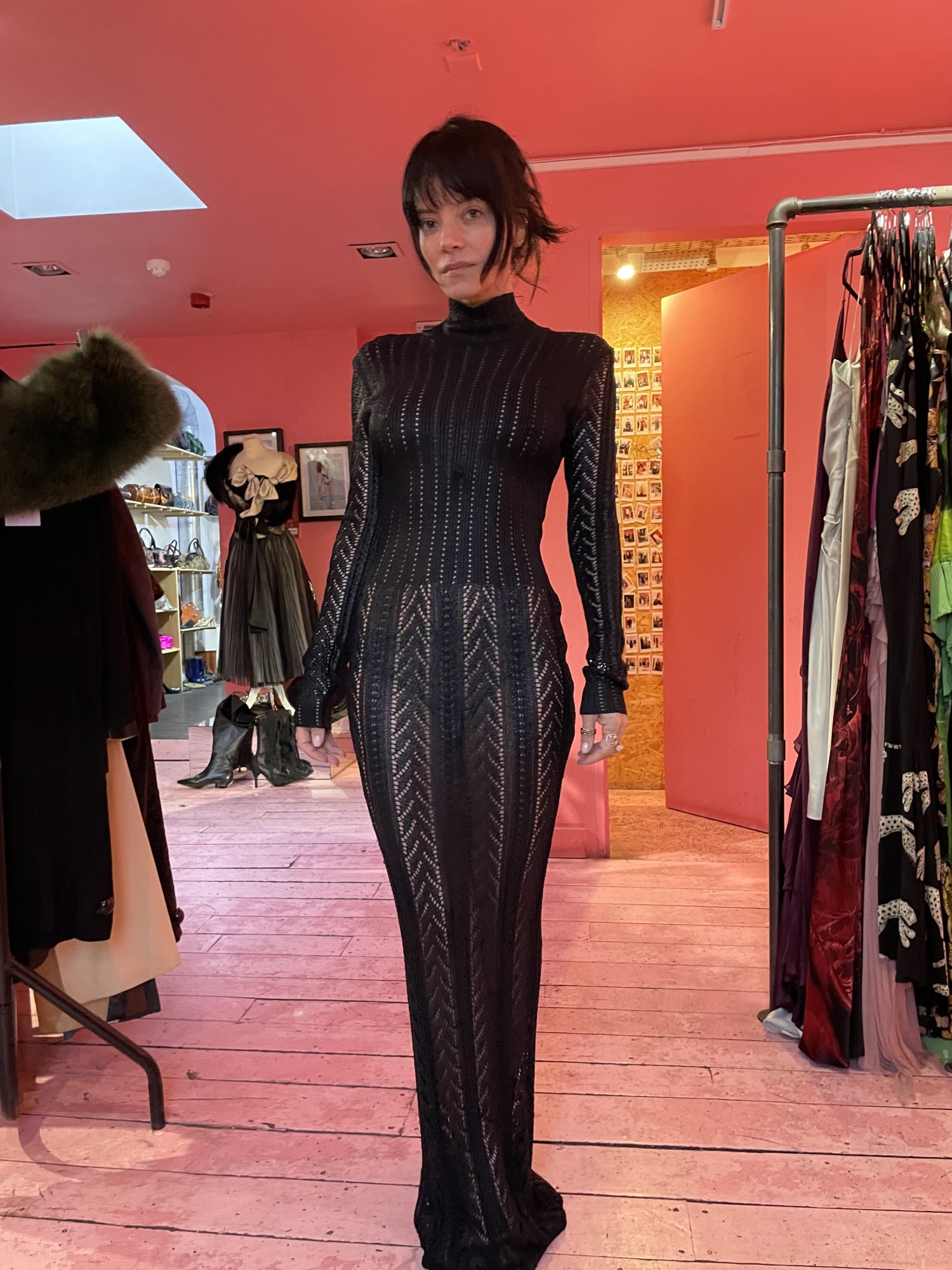
What surprises me most about Lindgren is her lack of performative mystique. When I ask her if anyone particularly interesting has come in, she pauses—not to be coy, but because she genuinely doesn’t categorize people by fame. “Lily Allen was really cool,” she says eventually. “She has a real appreciation for our pieces.” She mentions other unexpected clients—people who don’t fit the stereotypical archive-fashion profile but instantly connect with the clothes. It’s clear those moments matter more to her than a name-drop. But maybe I should get a selfie by the pink wall before I go.