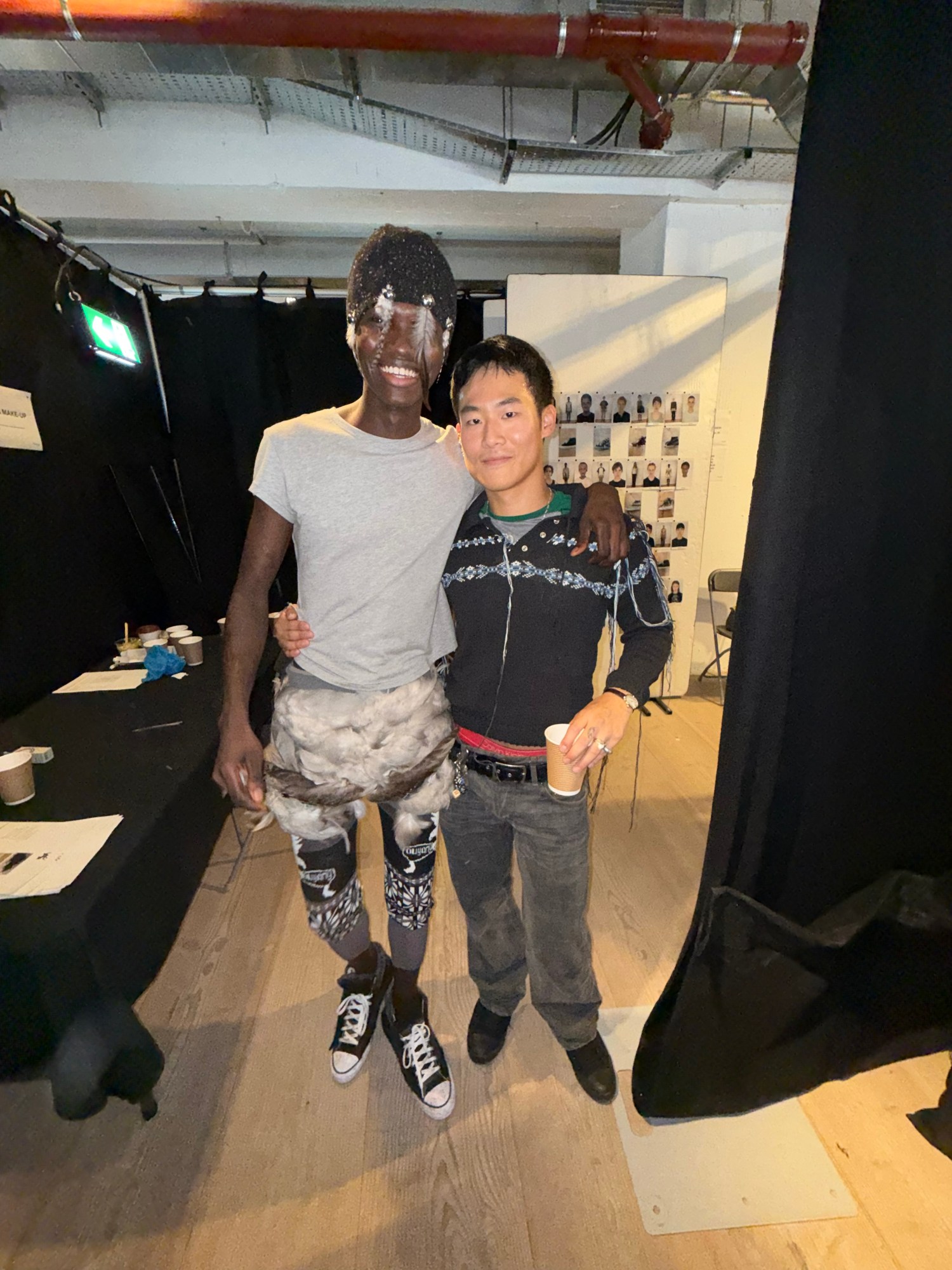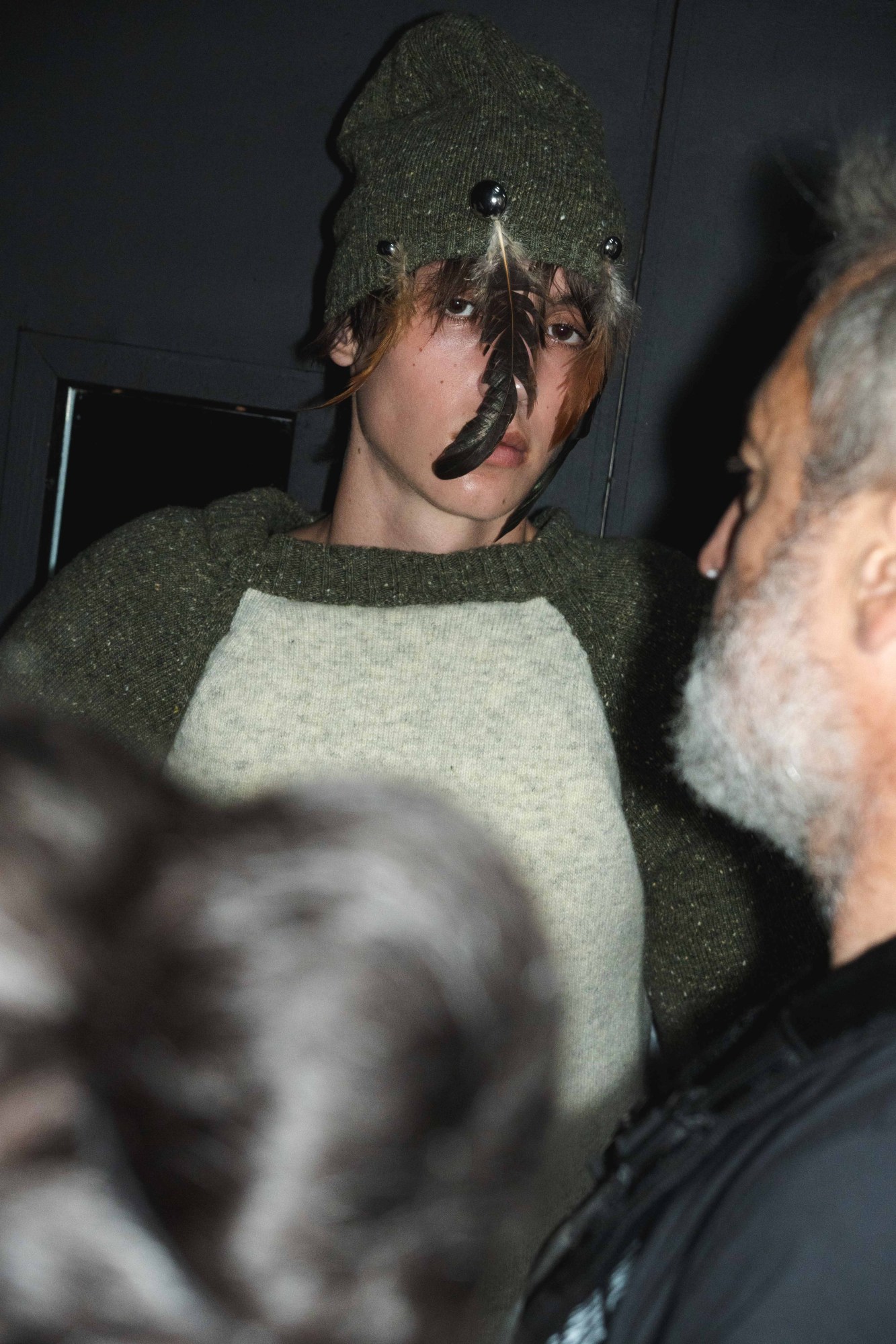
The first time I met Oscar Ouyang was not at a studio or a showroom, but on a dance floor. At Shanghai Fashion Week, post-Shushu Tong blockbuster show, post-cigarette smoke, somewhere between a gin-and-tonic and too many perfect haircuts, we start talking. I liked his style before I even knew he made clothes. Months later, in east London, I sat with him in his studio to talk through Fall 2025—five seasons deep and already selling without ever needing a runway. Now, it’s showtime. “I’m ready,” he says. “I’ve built a team, I have a story to tell—now I want to share the universe.”
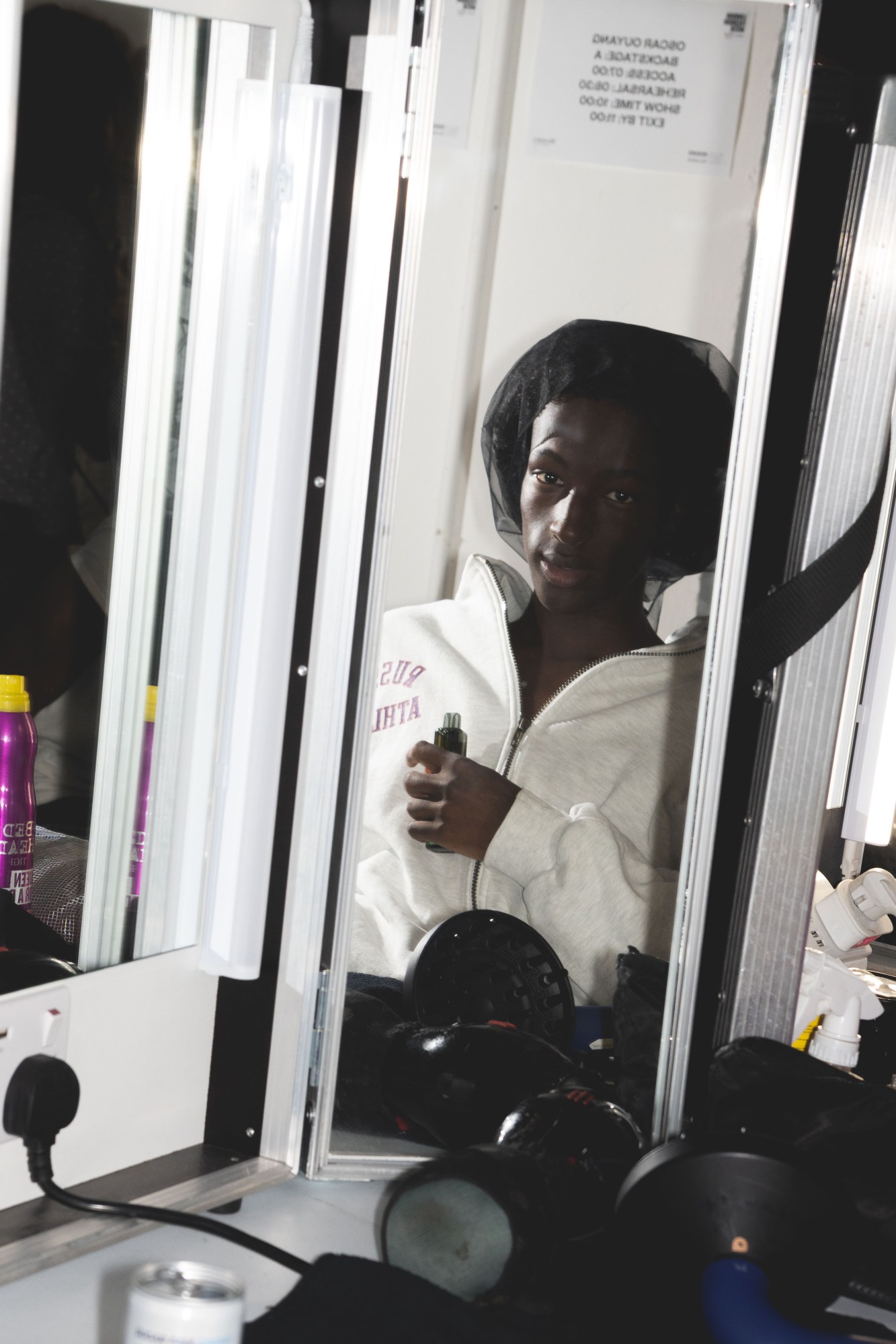
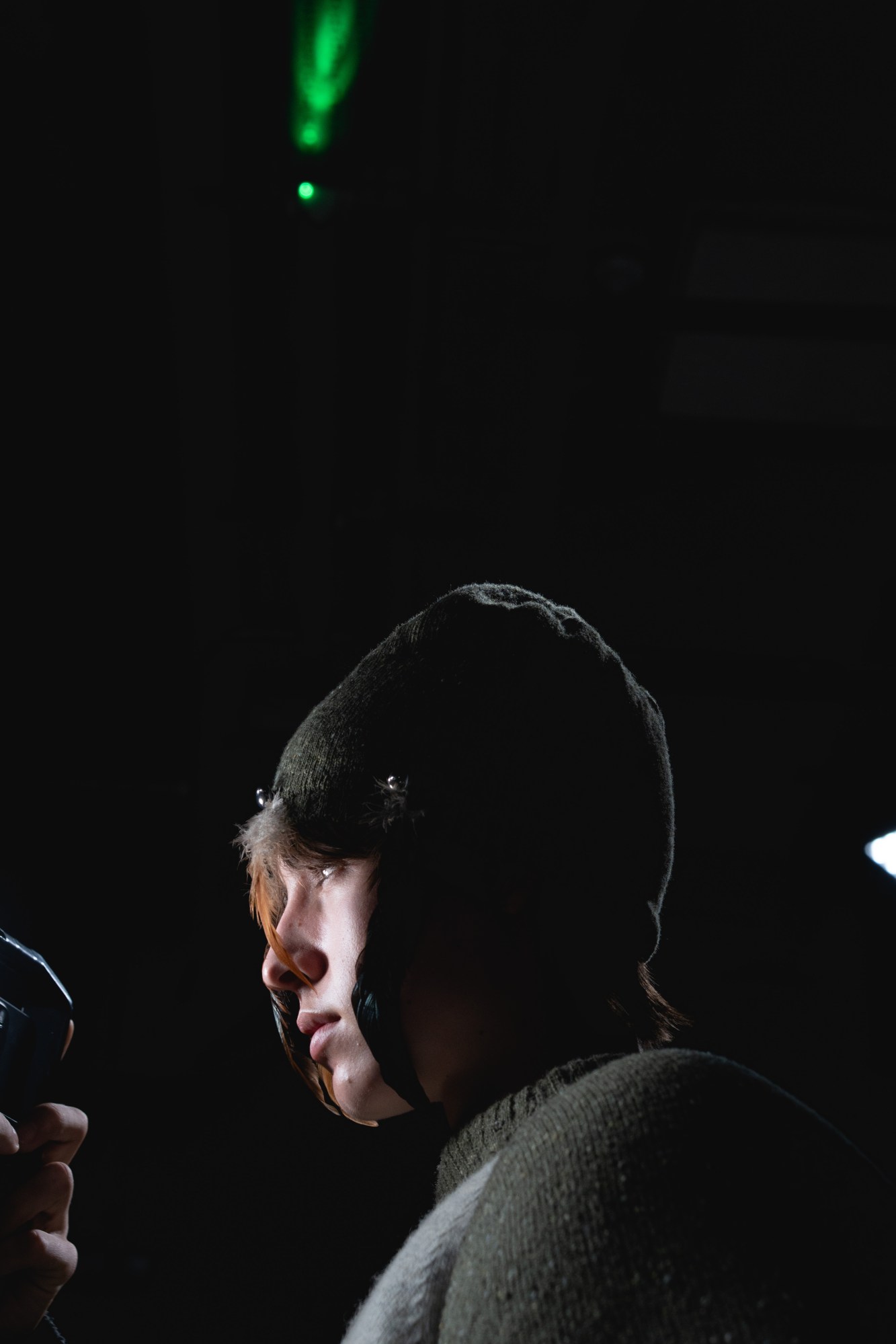
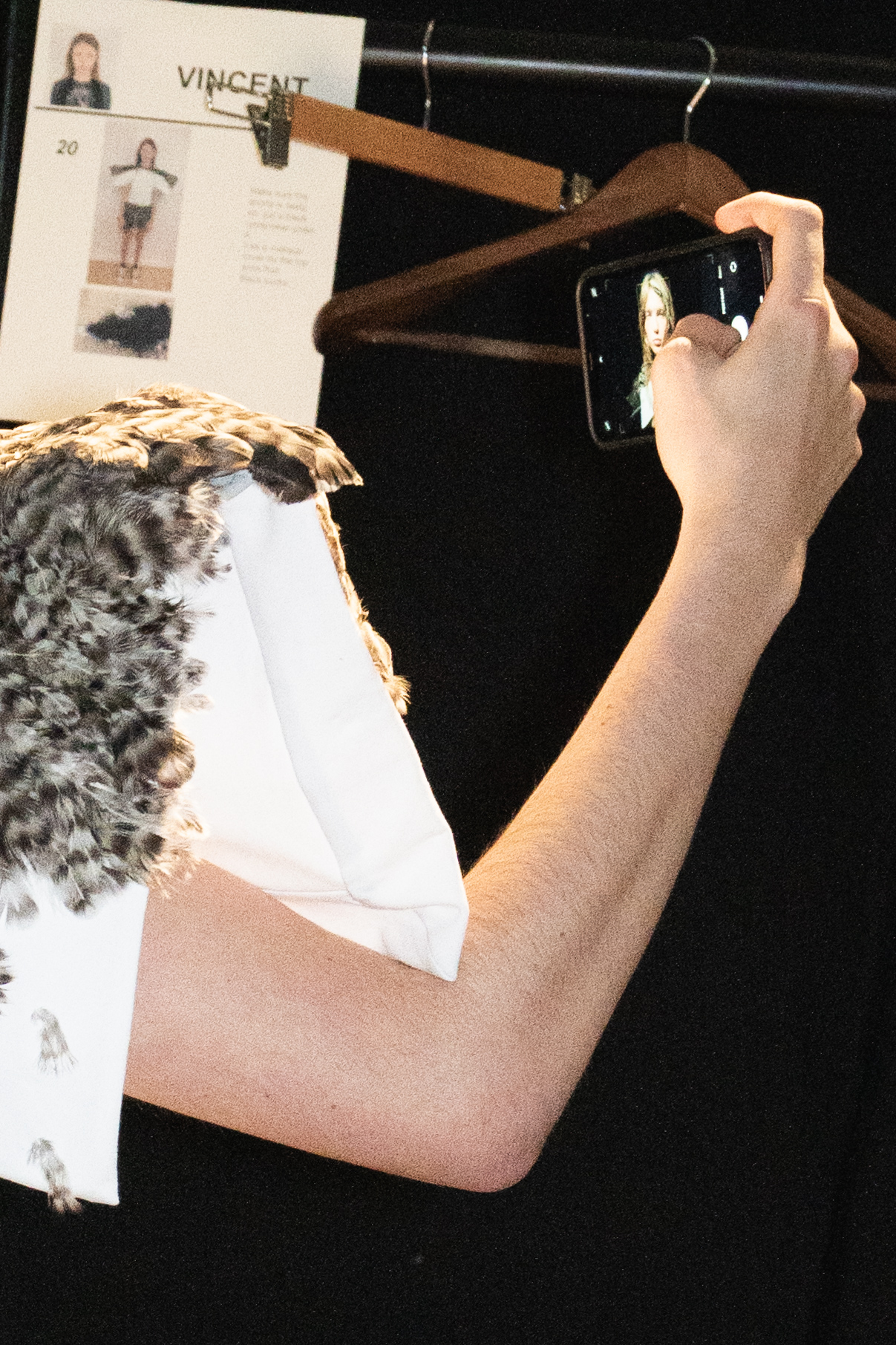
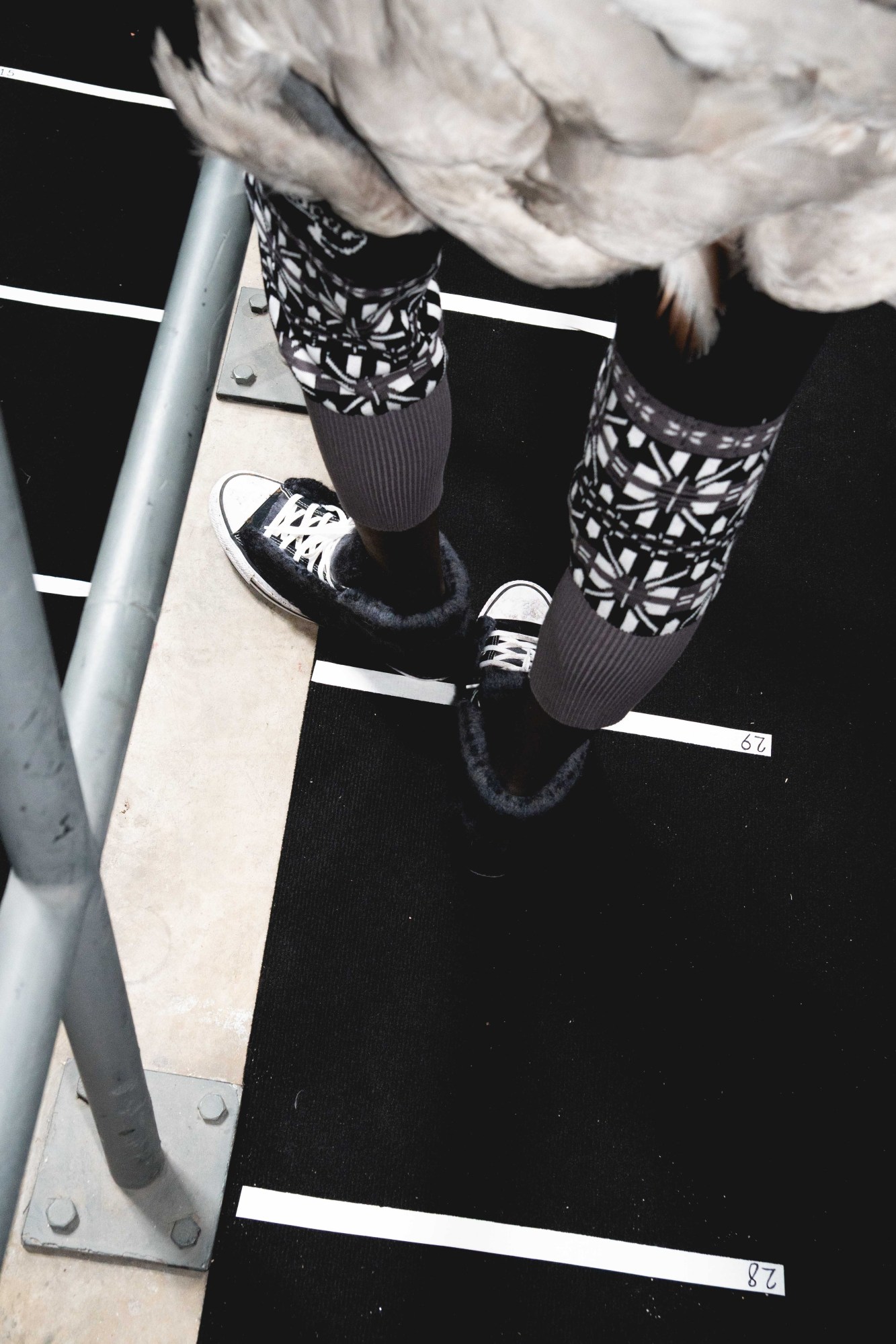
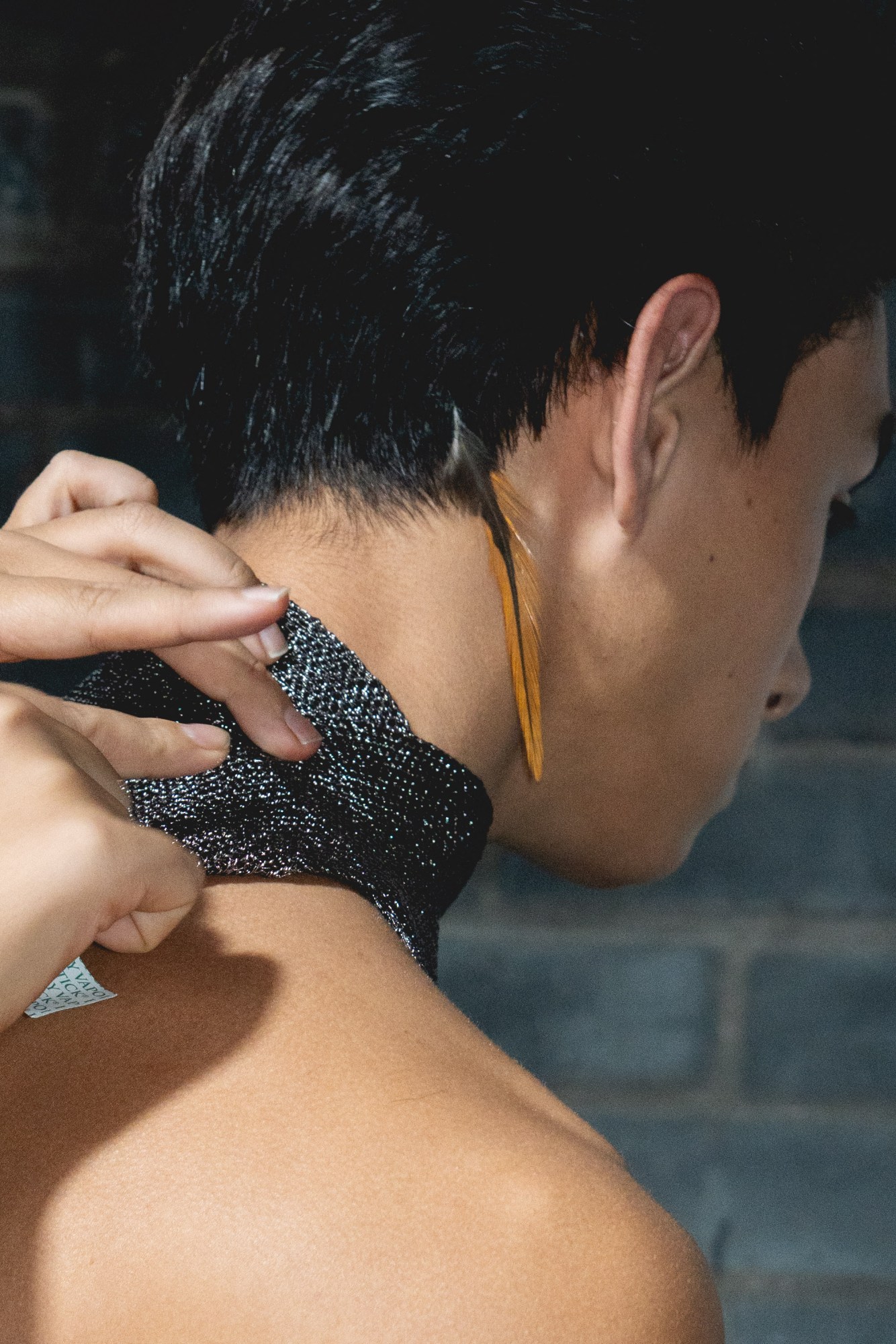
And so, at 10 a.m. sharp on the second day of London Fashion Week—the hour usually reserved for cold brew and regrets—Ouyang stages his debut under BFC’s NewGen programme. The set is spare but poetic: fragments of letters scattered across the floor, a direct nod to his Spring 2026 theme, “Don’t Shoot the Messenger.” The idea comes from messenger birds carrying news that never arrives, a metaphor for our digital lives: chaos, miscommunication, the noise of endless, half-filtered messages. “You’re in this cocoon of information,” he says, “but the message doesn’t always get through.”
On the runway, that metaphor takes flight. Detachable wings peek from the backs of T-shirts. Feathers, sourced from the meat industry, are embroidered into cotton jersey until they shimmer like couture. A trench coat flashes pistol motifs hidden in its lining. A gold cable-knit dress, shoulders so broad and sharp it could slice the front row, earns audible gasps. Mini shorts stitched from oxford cotton dangle with rusted keys—clever, funny, and a little sexy. “Every piece is wearable,” Ouyang explains. “Even the simplest jumper has something—cut, a cuff, a neckline—that makes you look twice.”
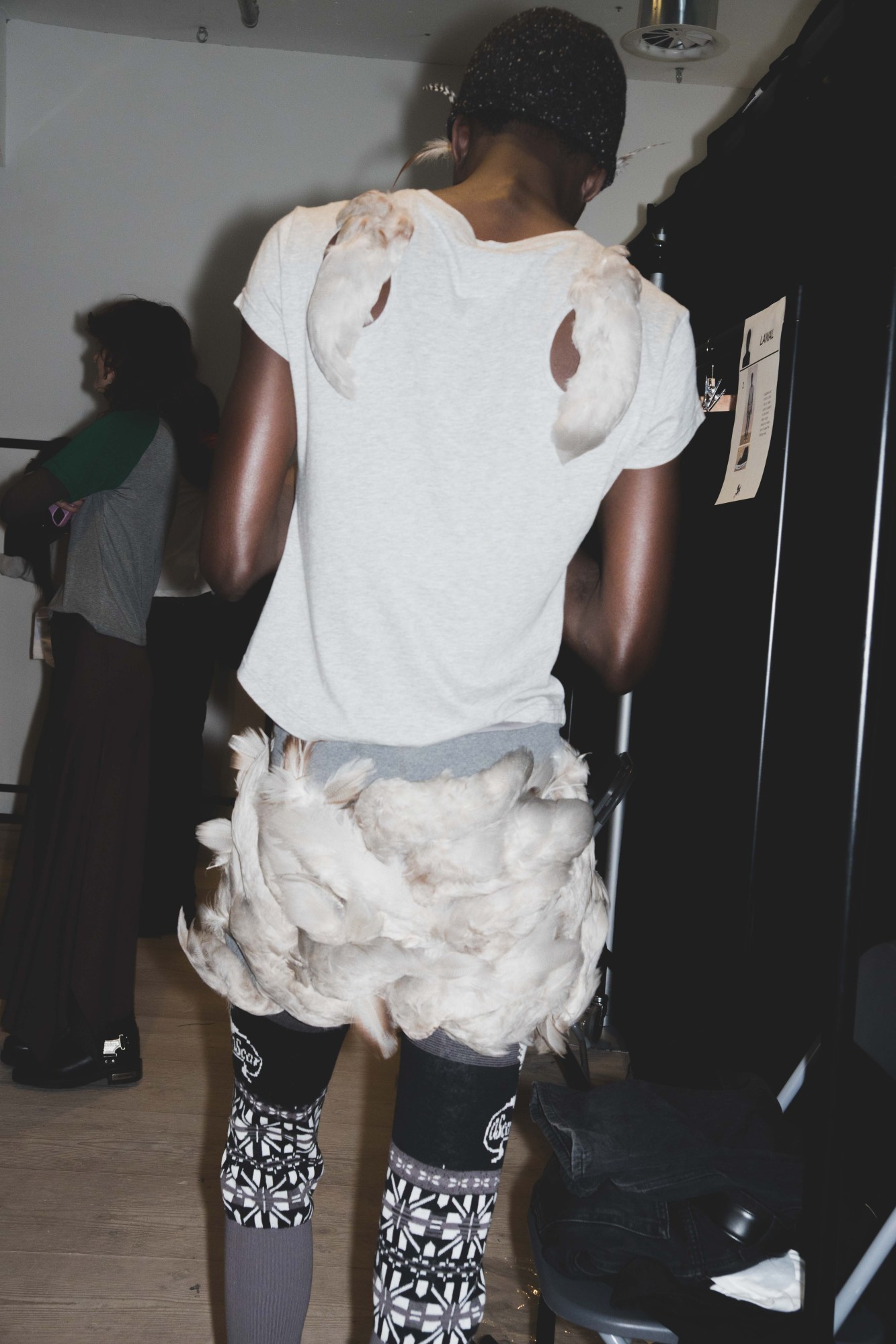
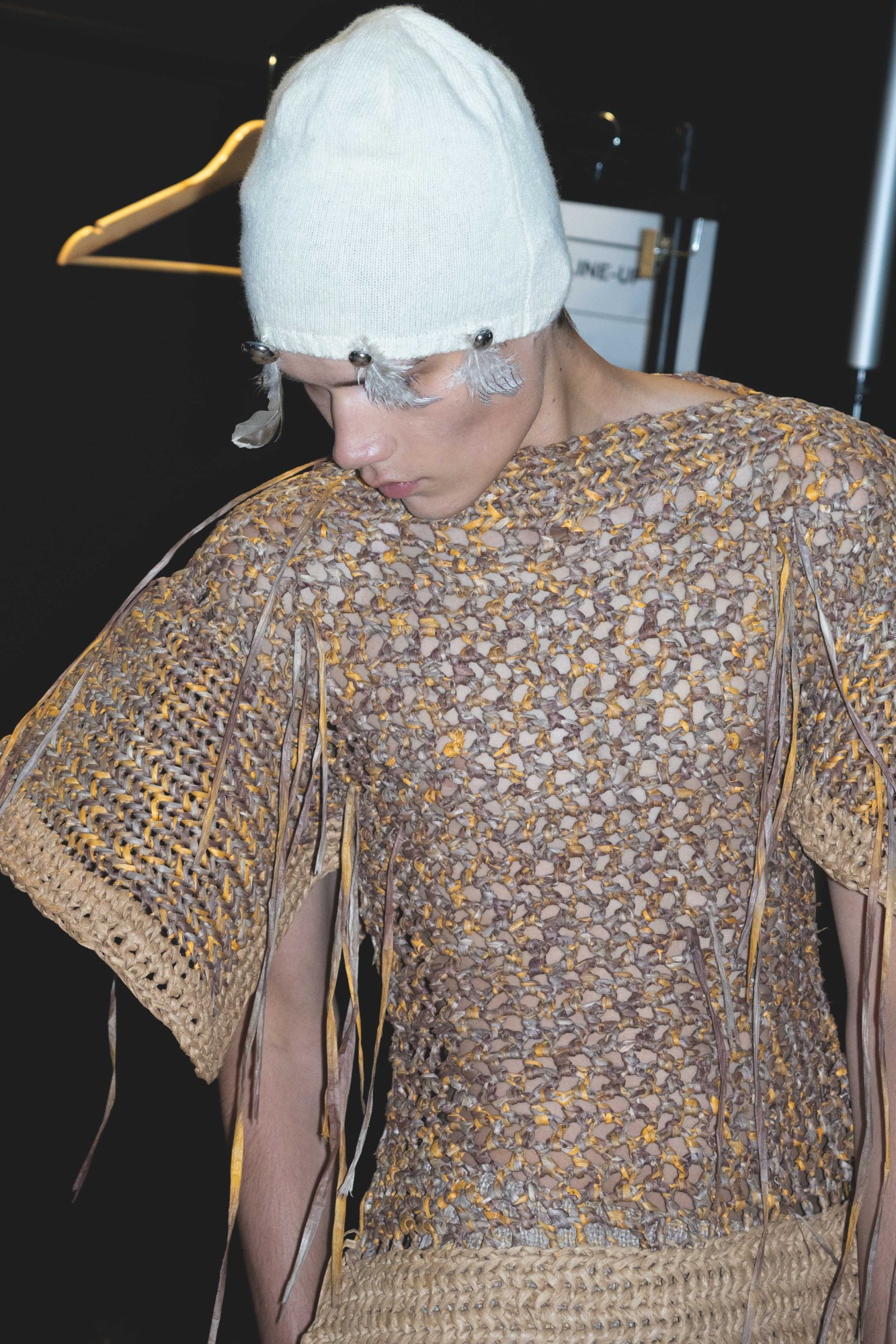
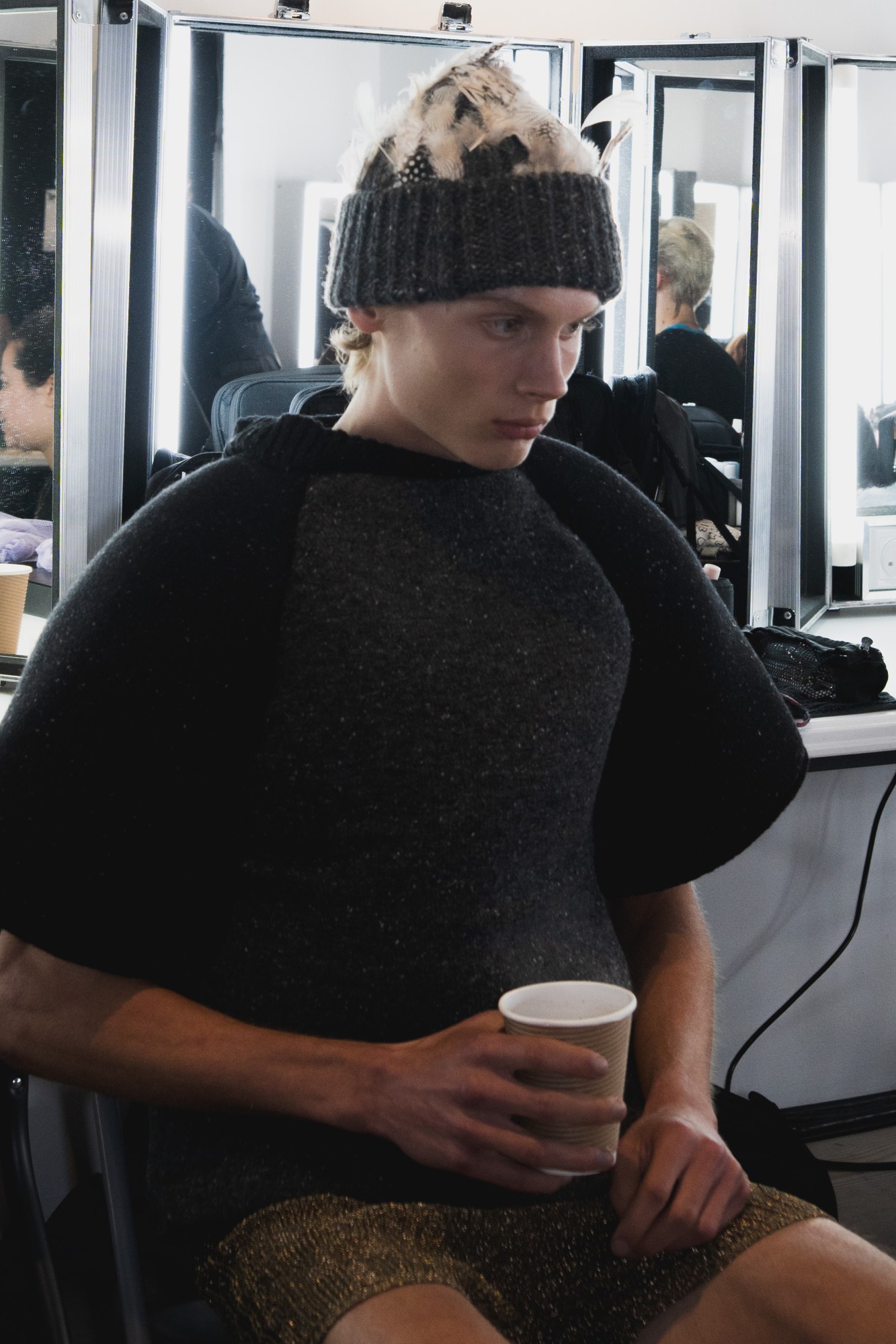
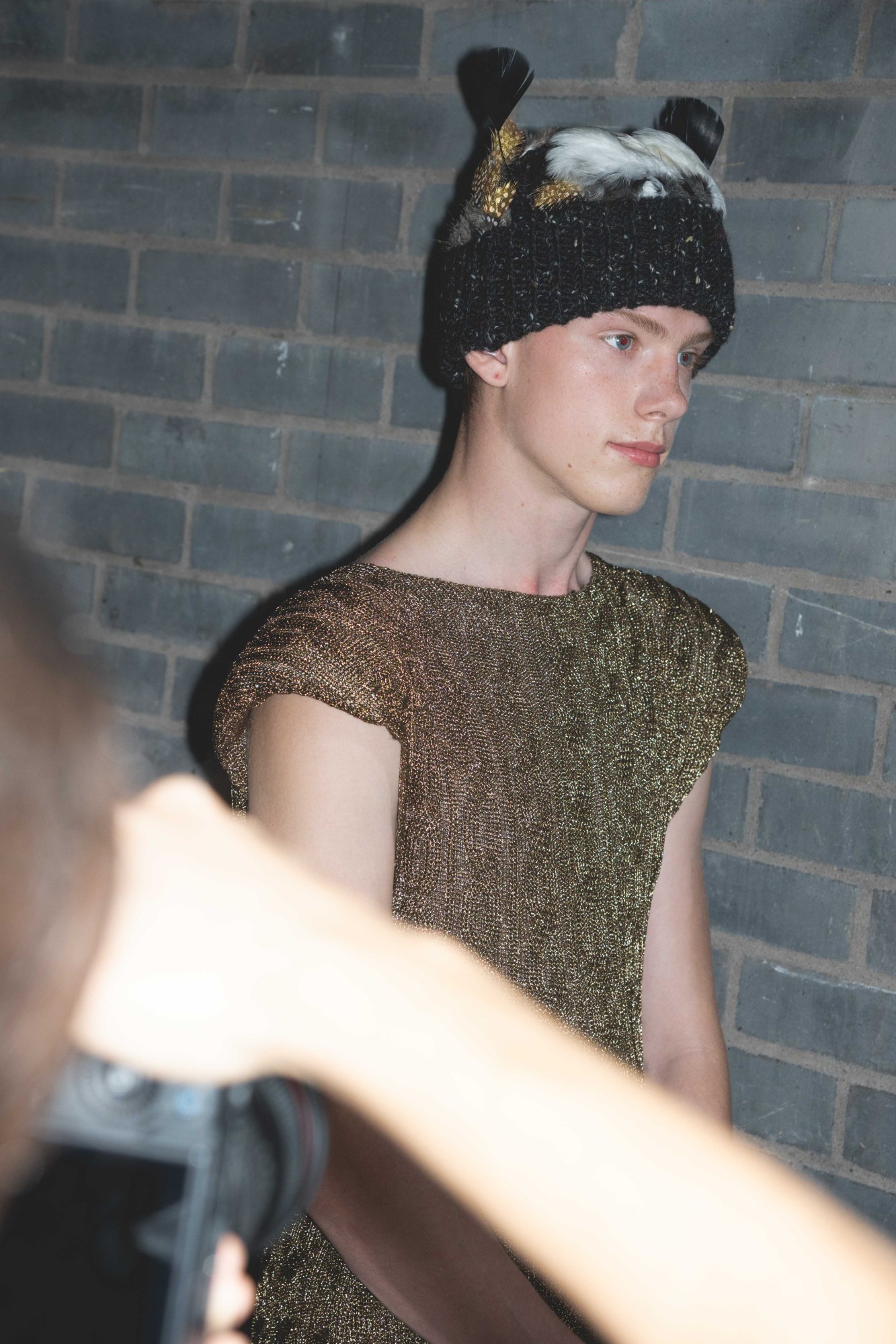
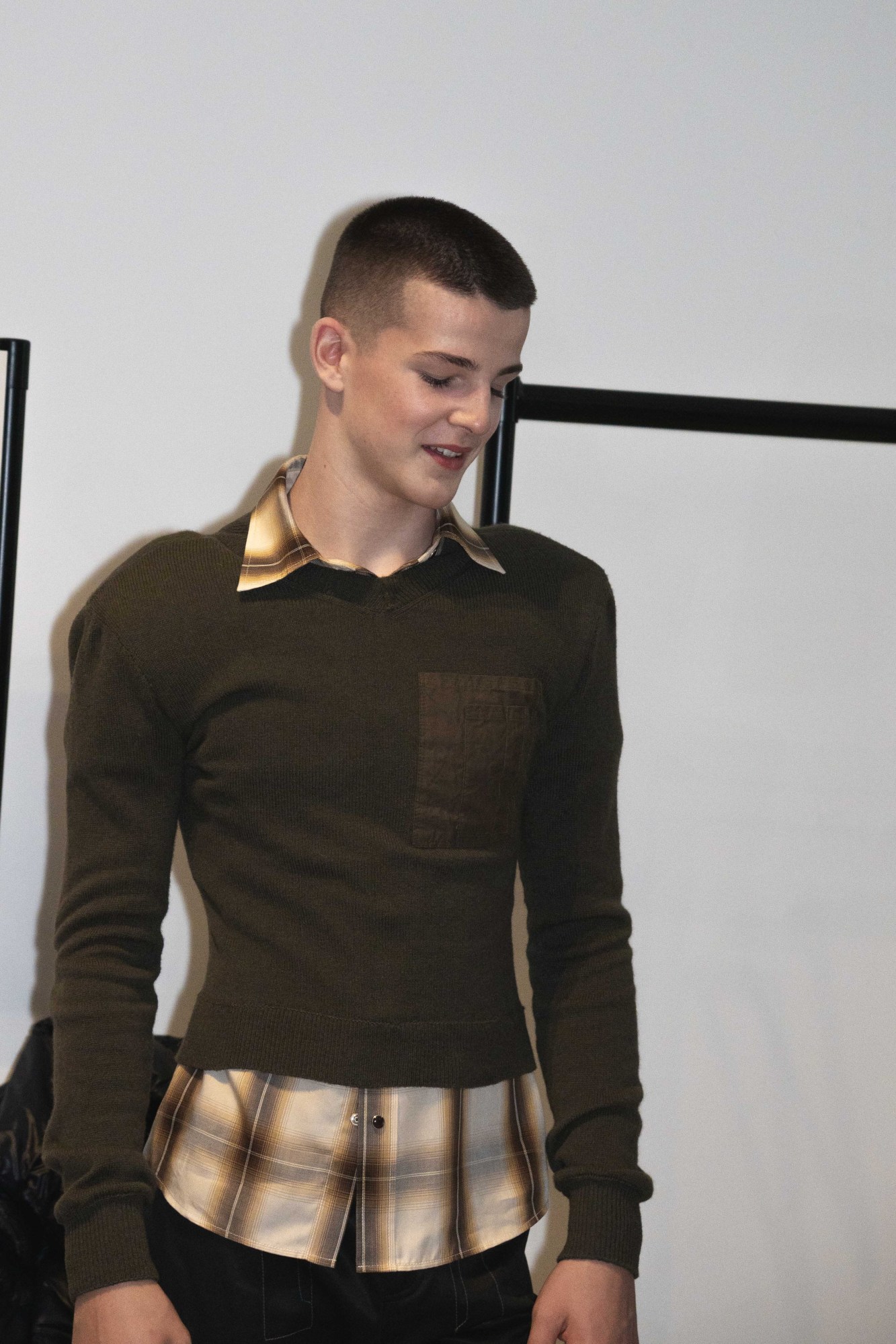


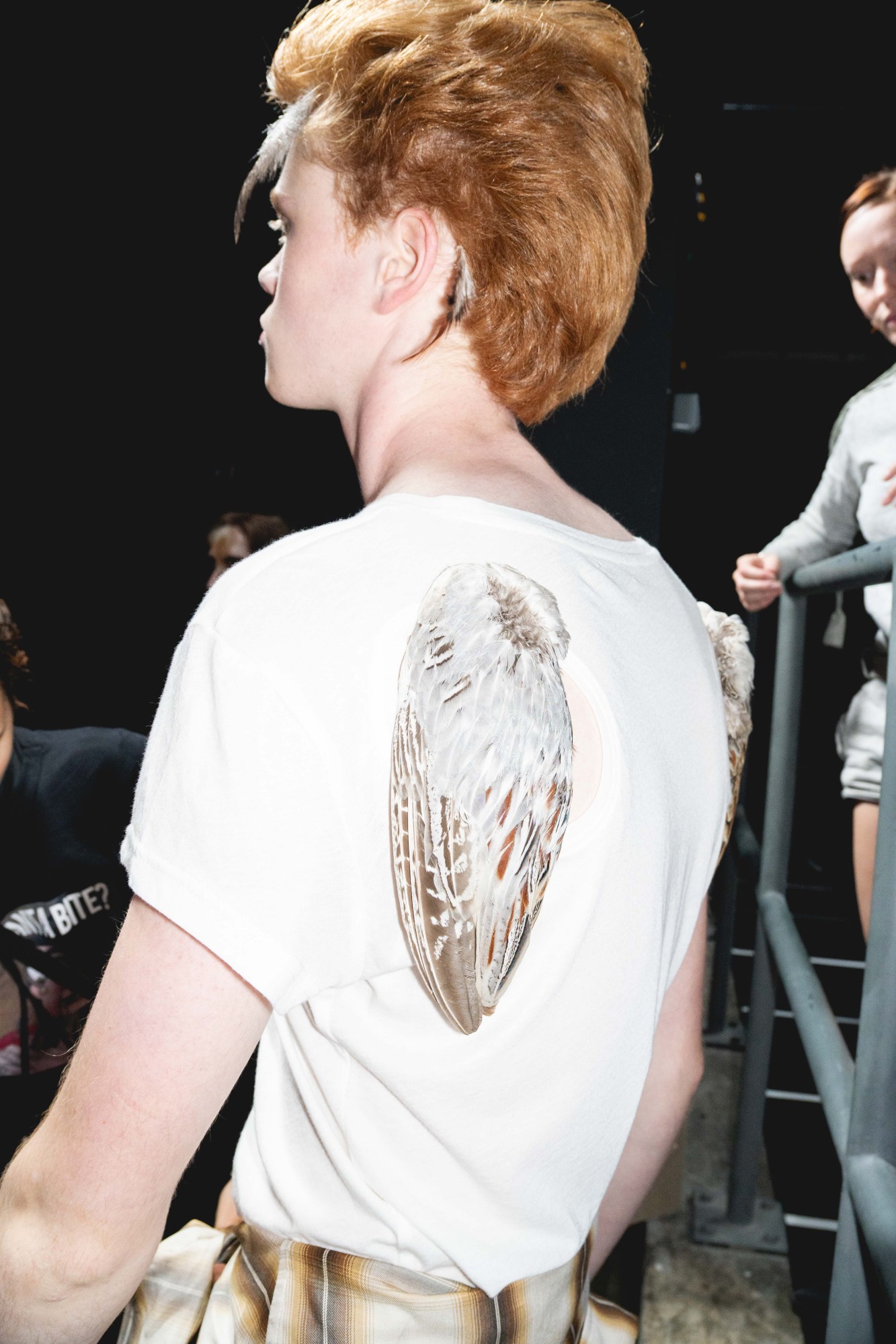
This is Ouyang’s world: grounded in craft, but playful, youthful, and slyly queer. The so-called “Oscar boy” is not one person but a collective character, embodied here by a cast that feels unforced and diverse. Knit raglan T-shirts puff up like couture gym gear, feather embroidery turns everyday fabric into luxury, and showpieces push between boyishness and sensuality without ever being literal.
The soundtrack, curated by Ouyang’s Berlin-based best friend Rui Ho, slides from soft synths to heavier drops, pulling the collection into rhythm. “It’s like writing a book with co-authors,” Ouyang says of building the show with his team. “I start the story, but then everyone adds their part.”
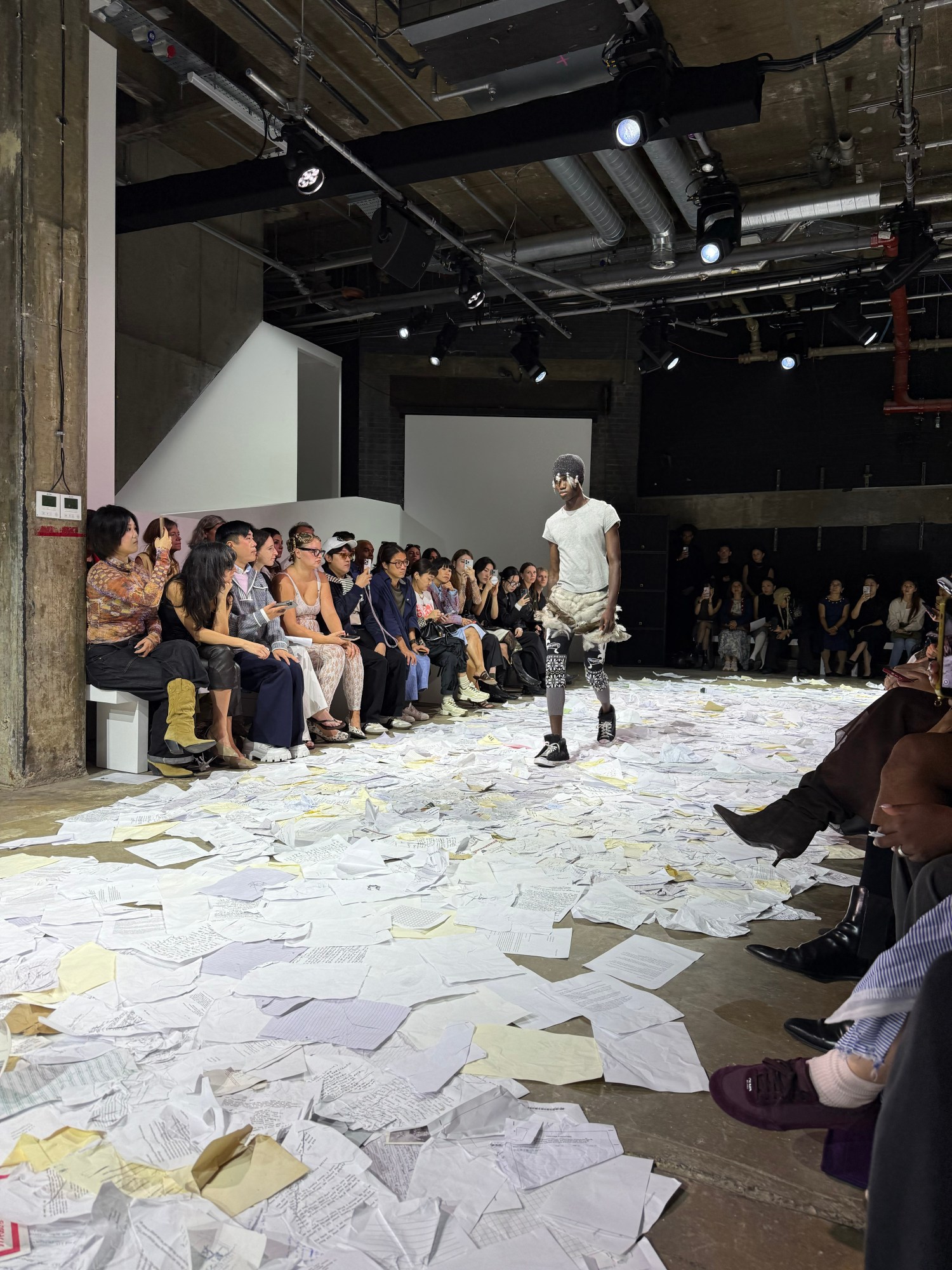
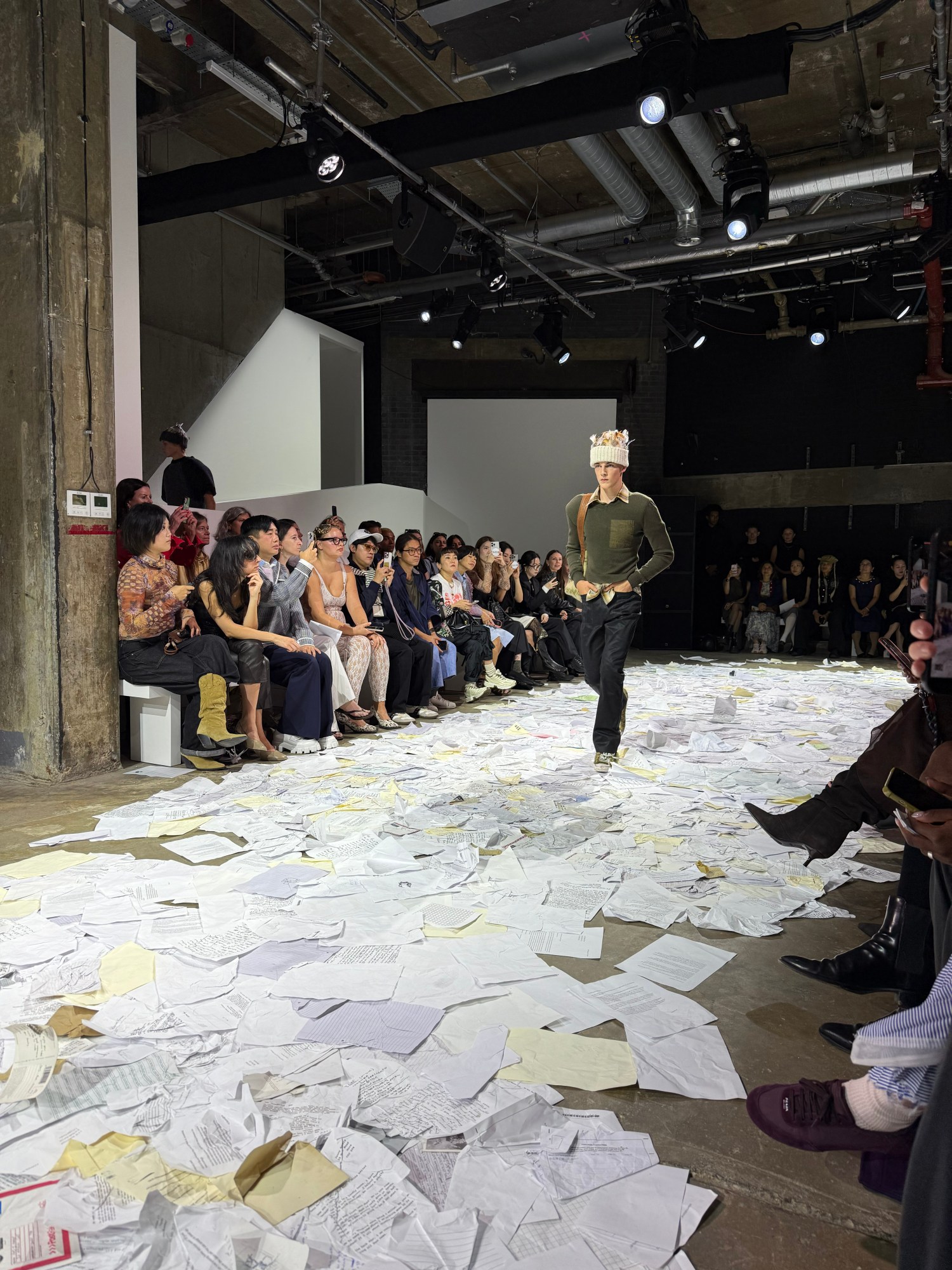
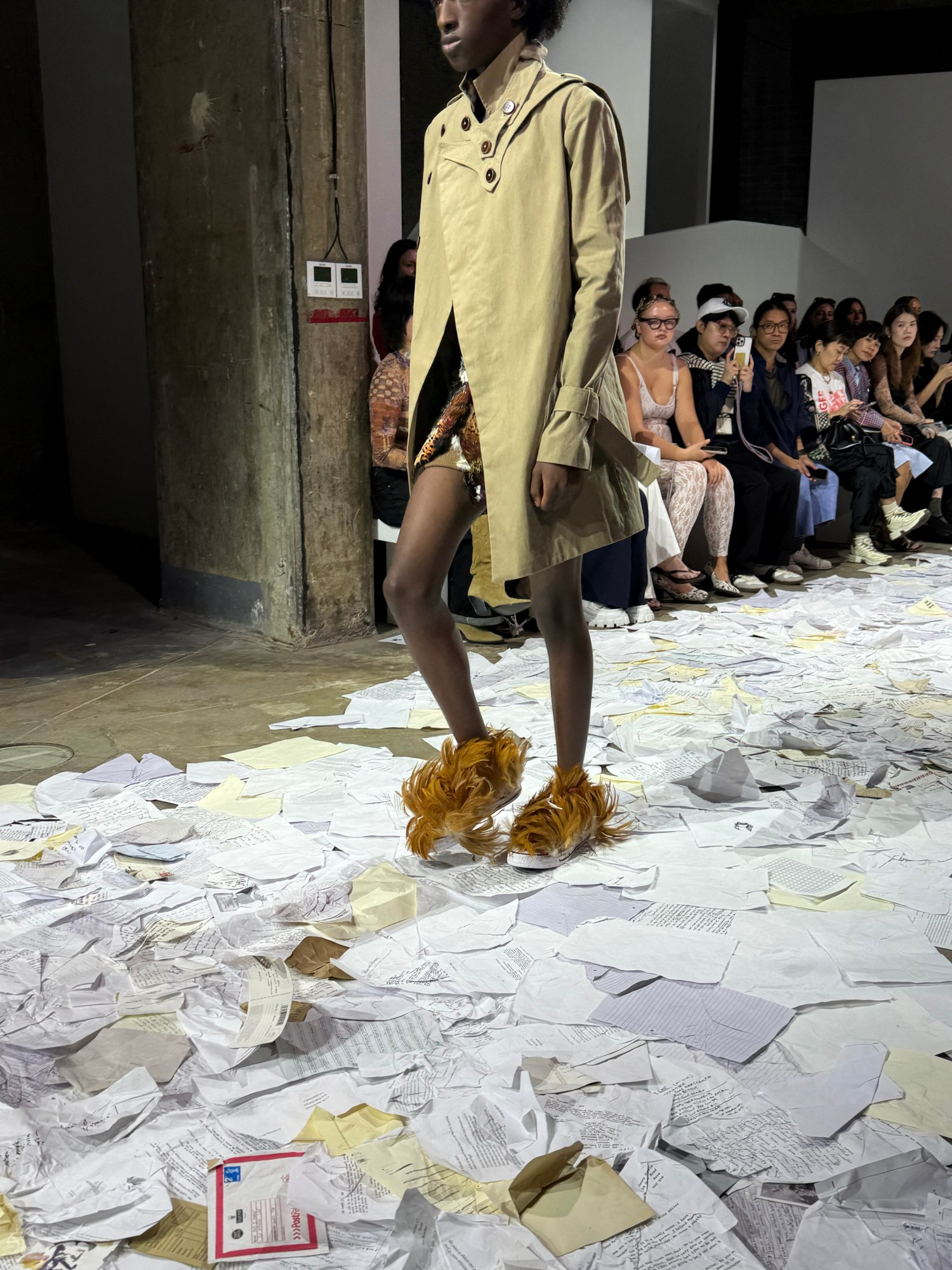
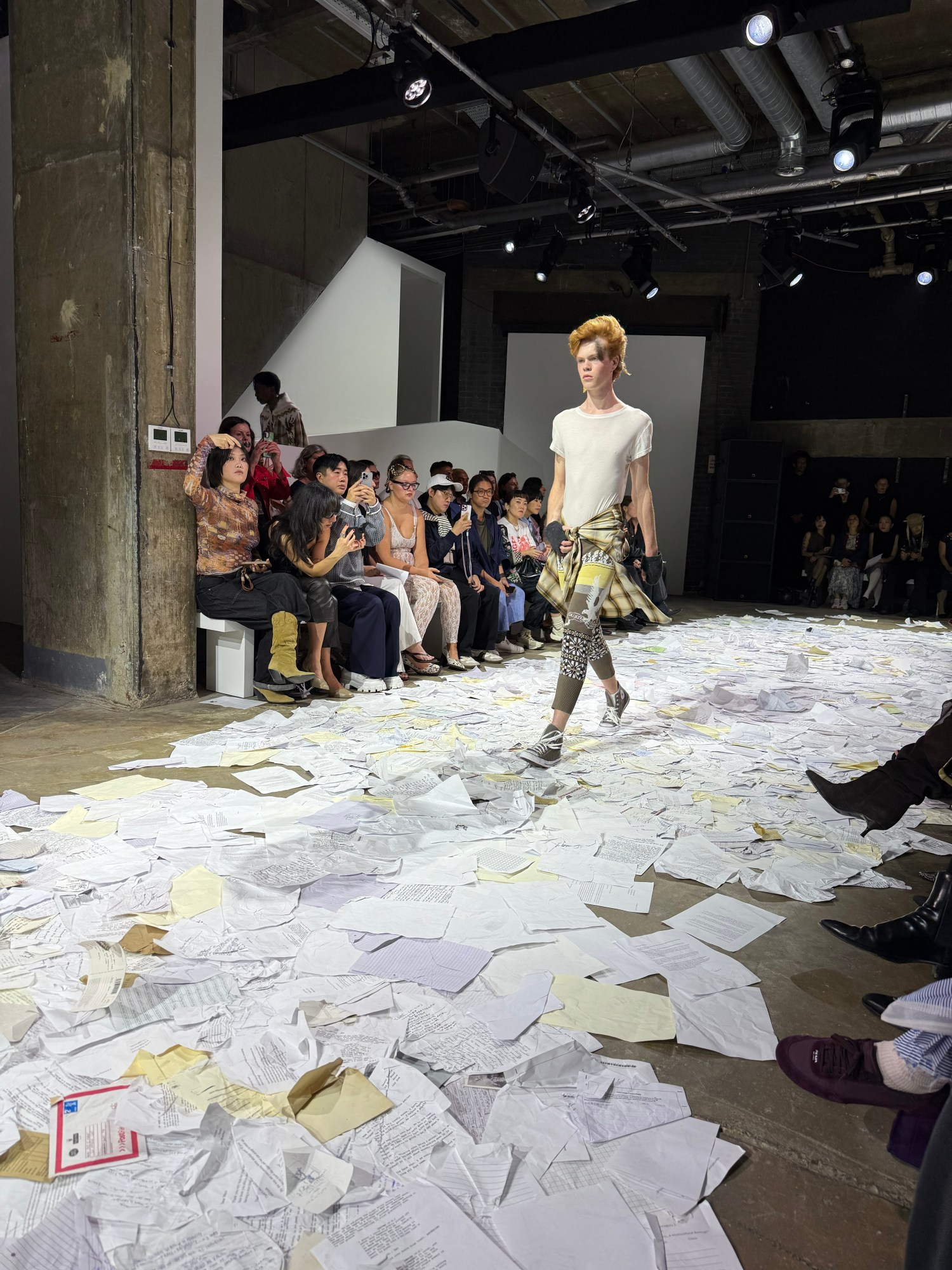
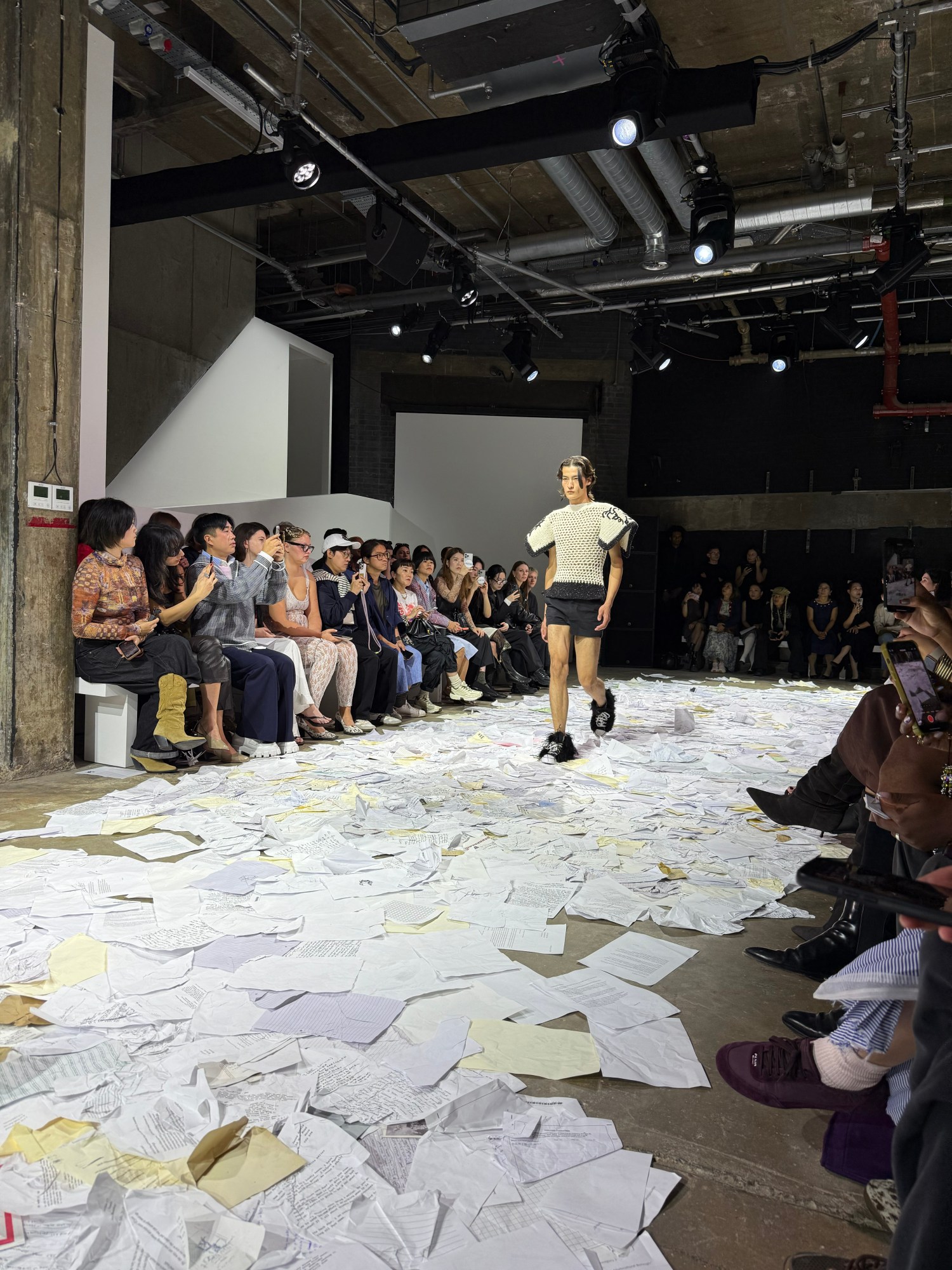

If the message of the collection is about communication, the show itself is about timing. After five sell-out seasons, Ouyang doesn’t arrive on the runway to prove himself, he arrives to confirm it. “Sometimes you don’t need a show,” he says. “But for me, now—it feels right.”