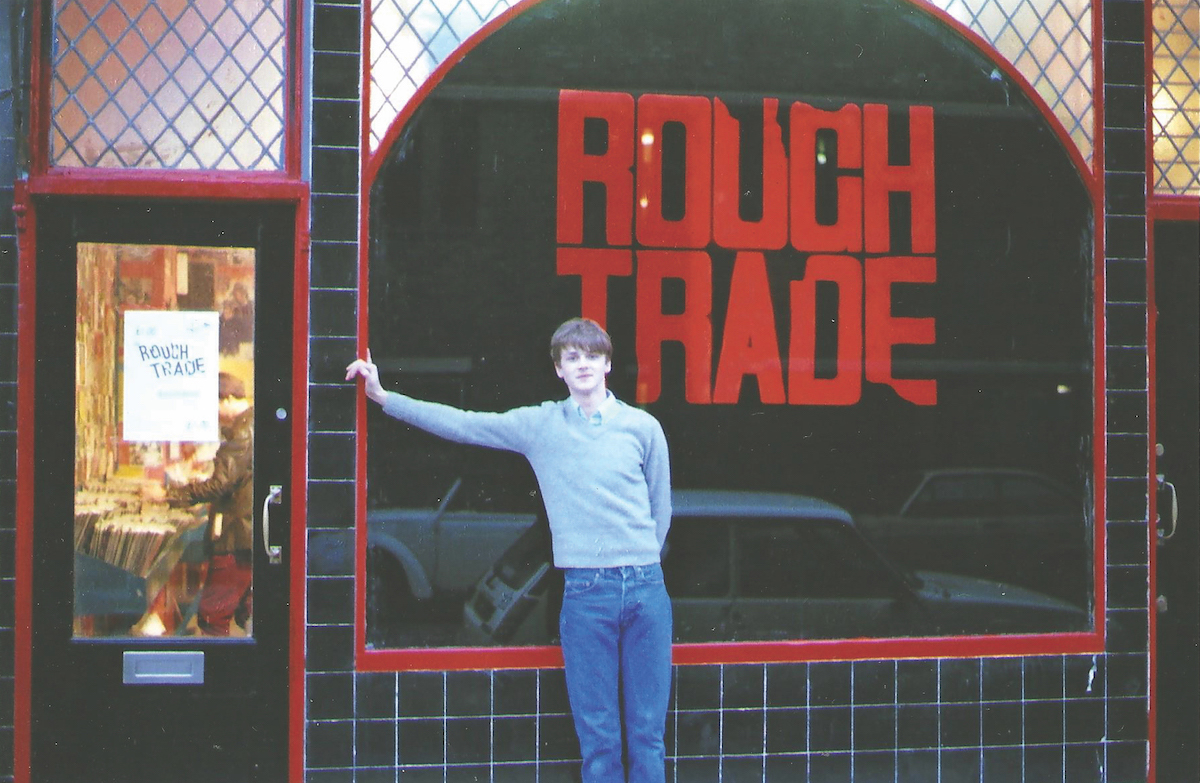
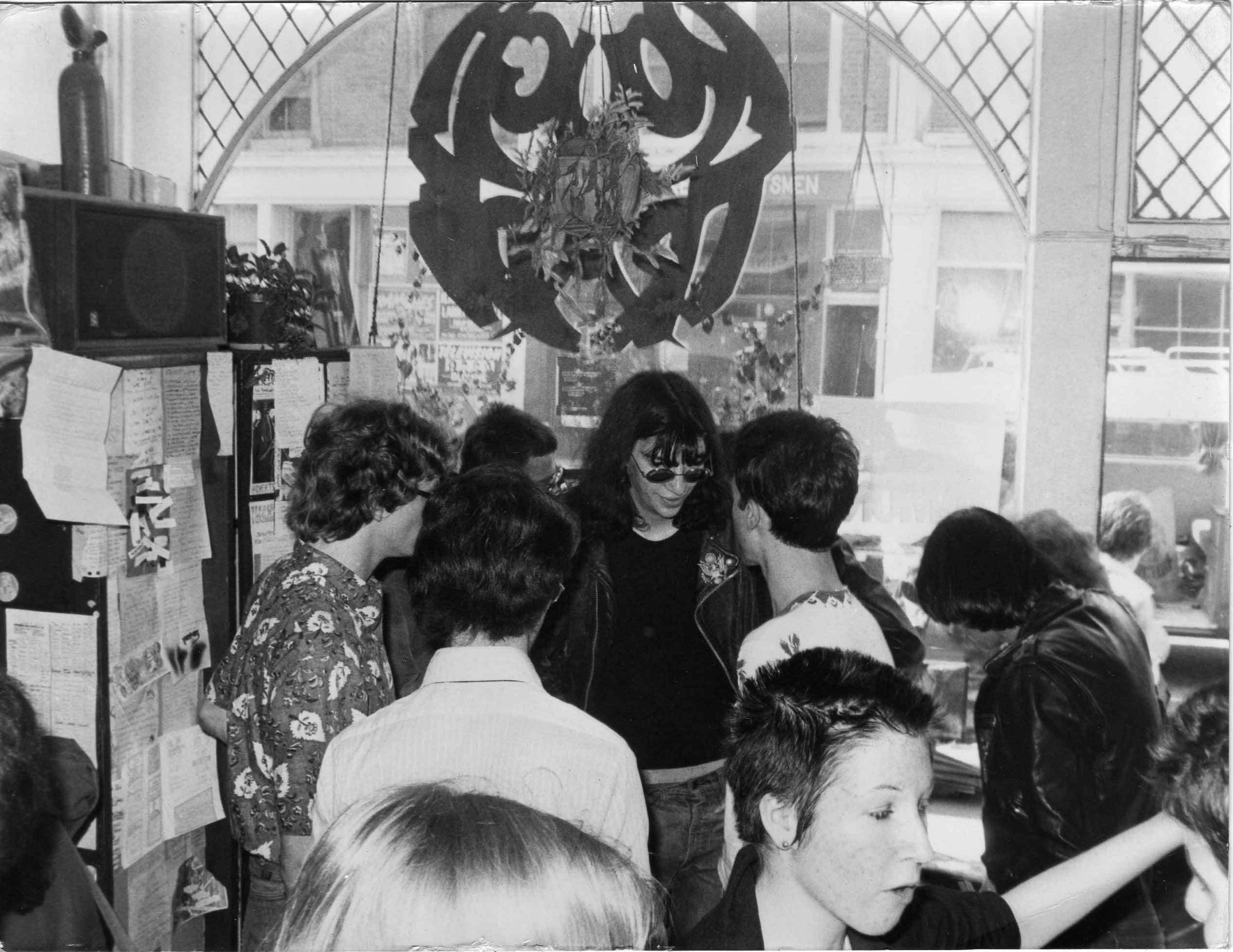
When Geoff Travis returned from America with a suitcase load of second hand vinyl in 1976, he inadvertently – nay, advertently – started a shop that would change the face of music in the UK. Opening up in Notting Hill Gate, the arrival of Rough Trade coincided with a genuine youthquake in the country; kids everywhere looking for something exciting, something alternative, something independent. The sounds were short and sharp and no one expected them to be around in 40 years (even if it did eventually splinter off into the multifaceted entity that gave us The Smiths, The Raincoats, Cabaret Voltaire and more).
Of course, Rough Trade very nearly didn’t reach 40 years: the shop going through one of its periodic financial crises in the early 80s, before three of its staff – Nigel House, Pete Donne and Jude Crighton – clubbed together to buy it from founder, Travis. They still run it today – alongside newer spaces in Shoreditch, Nottingham and New York – and you’ll be pleased to know the message is as it ever was: that music shops are about more than just records, they’re about making connections too.
With a series of anniversary-celebrating discussions, debates and performances taking place across London – including the Barbican this very Saturday – we spoke to co-owner Nigel House about a changing music industry and the legacy Rough Trade has left upon it. Here’s to the next 40 years…
When did you first start manning the desk at Rough Trade?
I started in 1981 or 82, I think. I was doing a postgraduate thing at the time but I’d been a customer in the shop and they needed somebody to take a job. And I’ve been doing it ever since.
Is it true you used to hire security on a Saturday because of the Ladbroke Grove skins?
Yeah, that was in the old shop on Talbot Road. The Ladbroke Grove skins were pretty sketchy I can tell you and they used to come down because of the punks, I suppose. I remember I was doing security at a Mekons gig at ULU, this is before I started at Rough Trade, and the Ladbroke Grove skins turned up. They said, “We’re coming in” and I said, “Well, have you got your tickets please?”. They said, “No, we haven’t got any tickets” and one of them just nutted the fire door that I was standing by and said, “We’re coming in”. Okay! What can you say? I’m sure they were nice boys really.
Who used to come in the shops in those days?
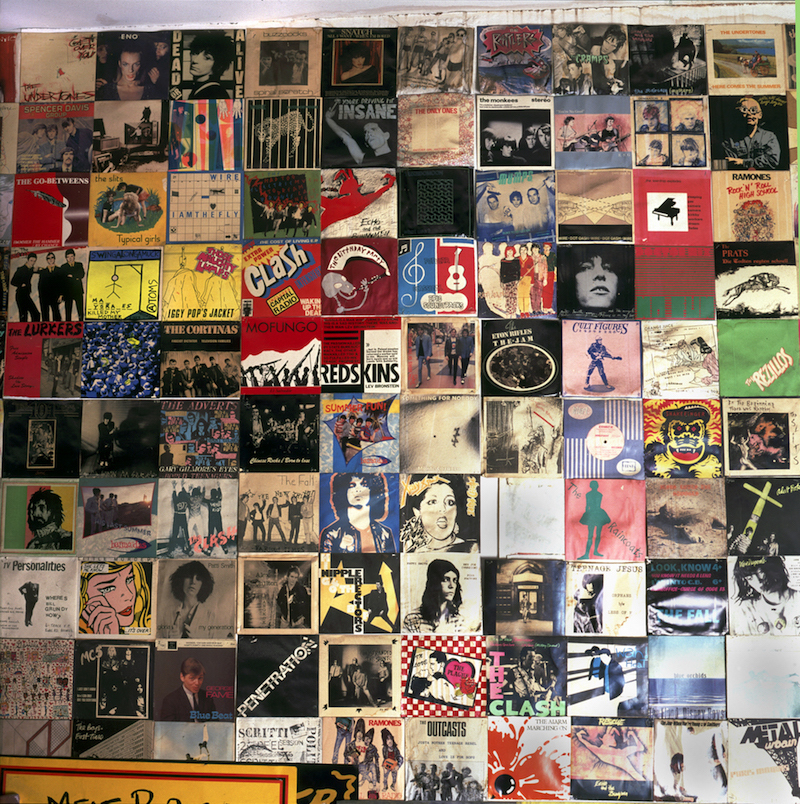
I suppose Rough Trade’s always tried to appeal to lots of different people. It wasn’t just punks that came in. We’ve always sold loads of reggae, soul and hip hop. We never tried to just be, like, a dance shop or an indie shop. I think it was Duke Ellington or maybe Lou Armstrong who said, “There’s two sorts of music: good or bad” and we just try and sell the good stuff. I know it’s personal but we just try and have interesting, exciting records. African, punk rock, reggae. Just something cool and interesting.
You tapped in the skate thing early on too, didn’t you?
That’s right, yeah. At that time, we used to buy records direct from Rough Trade Inc. in America and we used to get all these box loads of hardcore. Hüsker Dü, Black Flag, all the SST stuff, Descendents, T.S.O.L., Circle Jerks, all these kind of punk bands. And alongside that we used to bring in the Thrasher cassettes, the skate rock cassettes, and also Thrasher magazine, which we used to sell mainly because of the music people like The Faction in it. It used to be crazy. We’d get these boxes and word would get around and we’d be flooded with people on a Thursday afternoon; Hüsker Dü flying out, Black Flag, stuff like that. Anyway, at the time skating was at a bit of an ebb here so there weren’t many places to buy all this product from. So we started bringing in skateboards as well. We used to get these Americans come down from the army bases in Norfolk and Suffolk, and on Saturday afternoons at Talbot Road it was crazy. Yanks coming in getting skateboards, buying hardcore punk, but also punks and people buying music as well. So that’s how it started. And then that led onto the shop downstairs, we opened the basement up and put all the skateboards and hardware downstairs. Then that went so well we opened a shop in Neal’s Yard with skateboards upstairs and records downstairs.
Were you putting on gigs by this point?
Funnily enough, we were talking about this the other day, I think the first one we ever did was The Violent Femmes outside Talbot Road when the album came out on Rough Trade. And then after that, I reckon the next one was Suicidal Tendencies, who were a sort of skating band. They didn’t play, they did a signing but it was crazy. So many people. Then when we opened up Neal’s Yard we did more because it was easier to do them there, downstairs. We did some amazing things. I suppose the most famous one was the Beastie Boys one. But, you know, PJ Harvey, Courtney Love, Jeff Buckley. Amazing people. I think we’ve still got the tapes of some of them somewhere.
Vinyl’s in such rude health at the moment, but were there ever times you were less confident about the medium?
Not really! Because I work over the counter quite a lot, you just know. When you listen to what people are asking for you hear these things. We always knew that people wanted vinyl and so we stocked it. Vinyl was kept going for a long time by the dance culture and the rave culture. All the people like The Chemical Brothers and the Underworlds , all those sorts of crossover-y people. So we used to sell tons and tons of dance 12s. And that kept vinyl going, pressing plants going. Funnily enough, I can see the same thing happening with CDs. I don’t think it’s going to be long before some shops are saying, oh, CDs are so over, nobody wants them. But they’re wrong! People do want CDs and for certain things they’re a good format and a good medium and a good price. You just have to listen to what your customers want. The price of vinyl is quite high, so I think people are going to mix and match a bit more. They might spend £20 on one vinyl and think, actually, I only want that for ten quid, so I’ll get that on CD. That’s how things are going to pan out.
And in terms of online retailers, how do you compete with them? Is it by emphasising the social aspect?
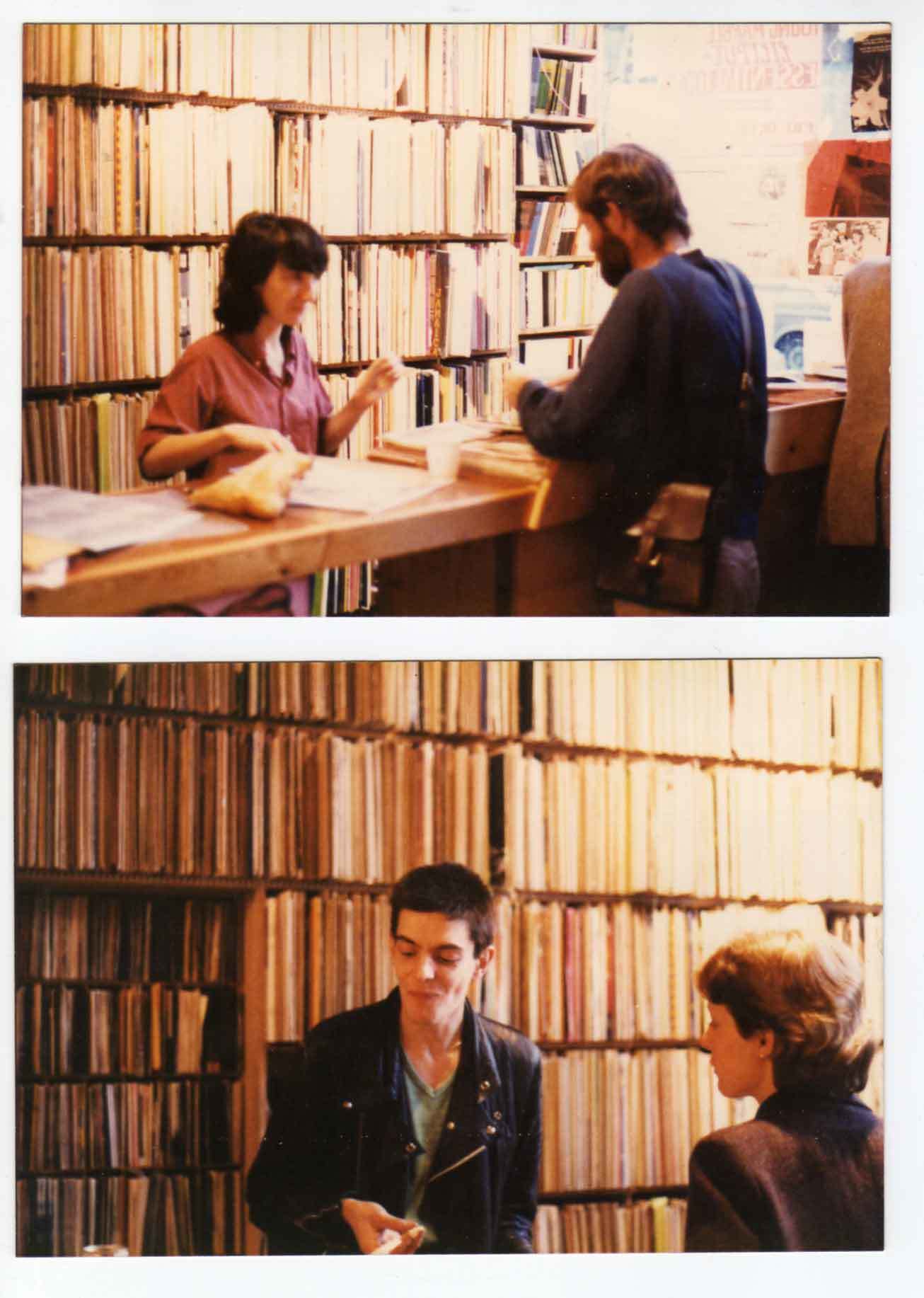
Well, we’ve always wanted the shops to be part of the wider musical community. We’ve always wanted people just to come and hang out. The Television Personalities wrote a song where one of the lines was, “Then they go to Rough Trade”. And that’s great! You just want people to come and hang out, meet each other, have a chat, have a coffee. Music to us is the highest art form, you know? We just want people to be involved in it and be connected with it.
Who comes in the shops now?
Music lovers really. Both older people and younger people. I suppose our task as retailers with the next generation coming in, young kids at school or uni, is to try and hook them. It’s like fly fishing. You want to hook them and reel them in and keep them for life. Some of them will fall away but really, you just want the same people to keep coming back. When I work in the shop sometimes, there are customers whose kids I know now. One such customer, his son’s in a band and we’re stocking his record. And I love that! The way these things come around. That’s what we have to do. Make sure these kids get caught up in the excitement. I mean, I love it, the buzz of record shops and what’s going on and meeting people and, wow, that’s Thurston Moore over there, stuff like that. It’s just making it exciting and interesting, I think.
And how about the next 40 years?
To me, formats don’t really matter that much. It has to be good, that’s the main thing. That’s what I’m saying when I say you have to hook these customers. I want to be seeing some of these kids who are seventeen or eighteen now and I still want them to be buying records or buying CDs in twenty years time. I do think there’s always going to be customers for physical products because there’s nothing quite like it. It’s all very well streaming something but music, you want it to be a bit outsider, you want it to be different. You want to be different to all those other people. You want to make it exciting. You want it to be alternative, really. That’s what we’ve always looked to do.
Rough Trade 40 takes place at London’s Barbican this Saturday (22 October) and feature John Grant & Wrangler (feat Stephen Mallinder), Scritti Politti & Alexis Taylor and The Pop Group & Protomartyr.
Credits
Text Matthew Whitehouse
Images courtesy of Rough Trade