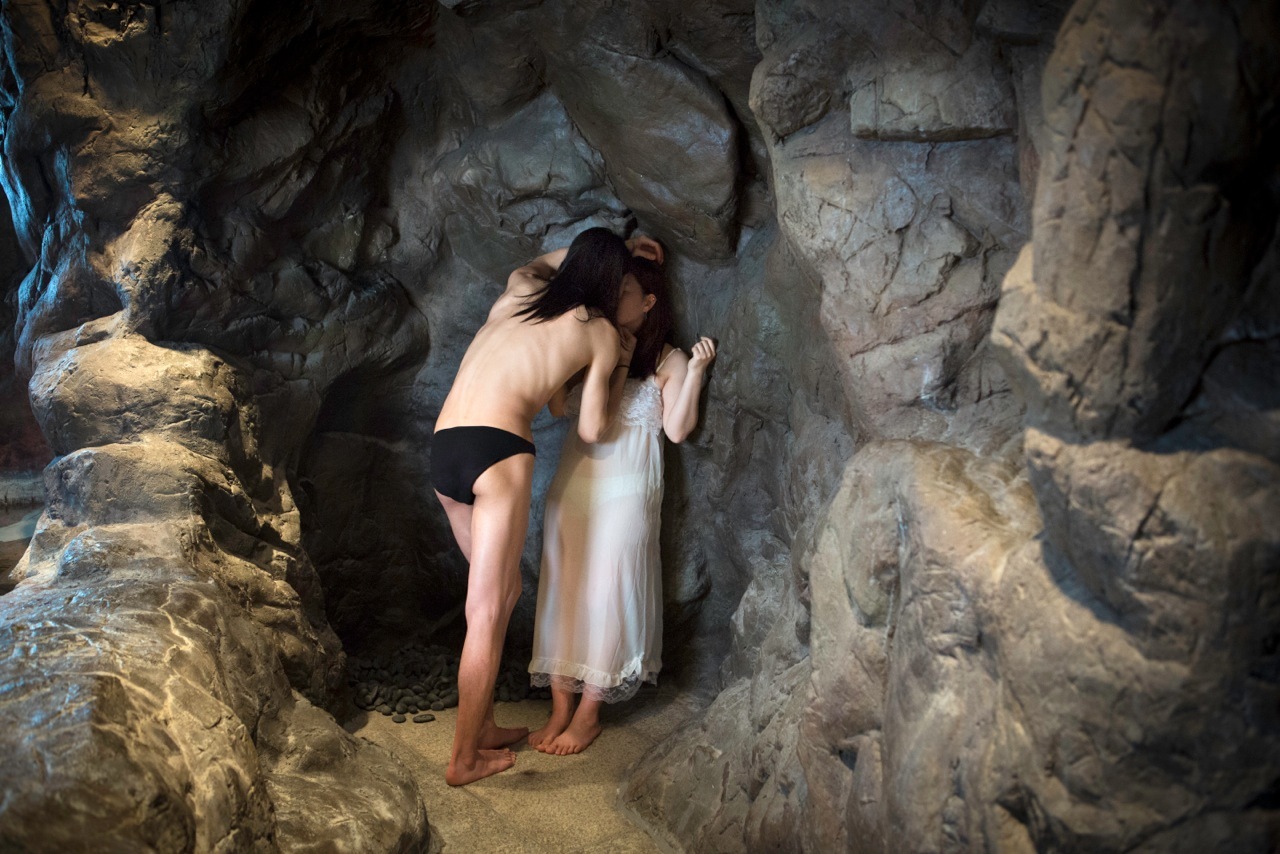
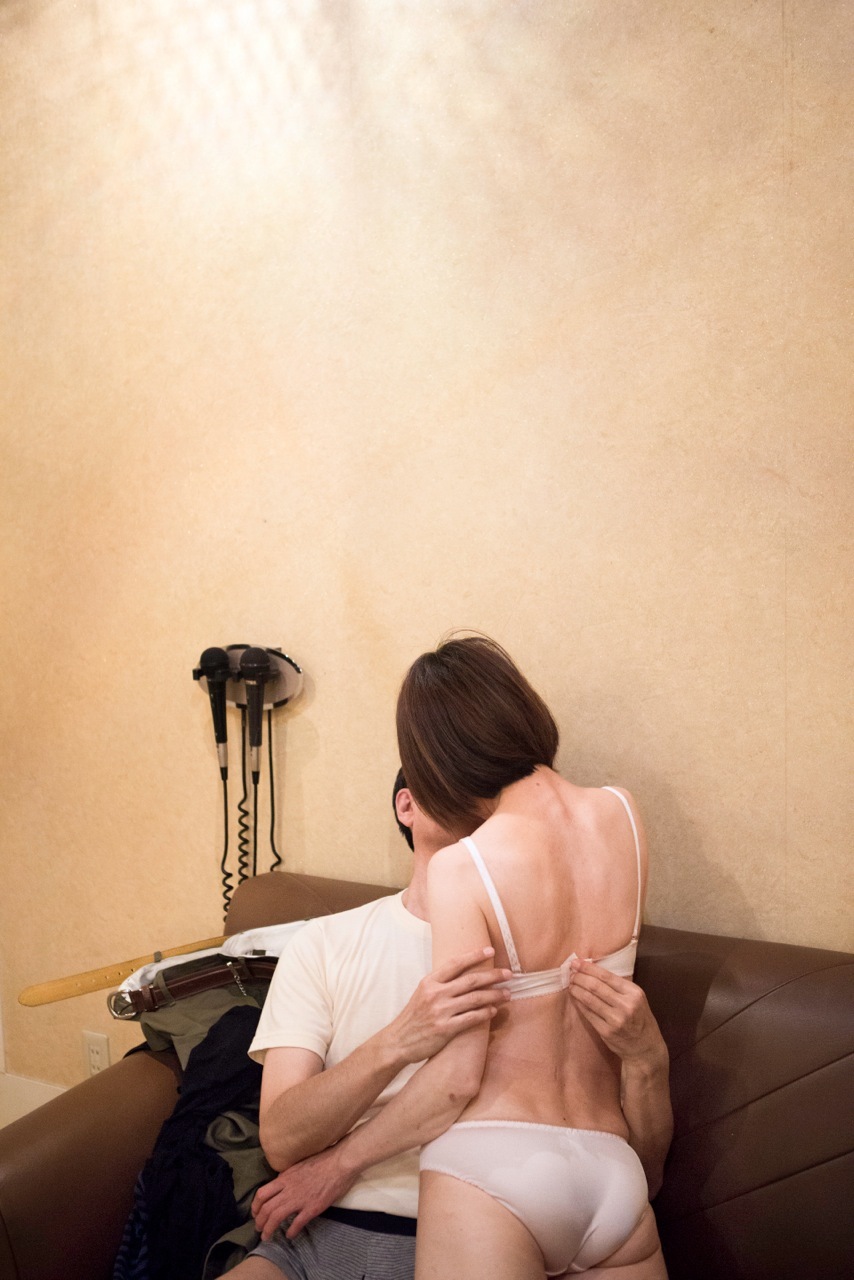
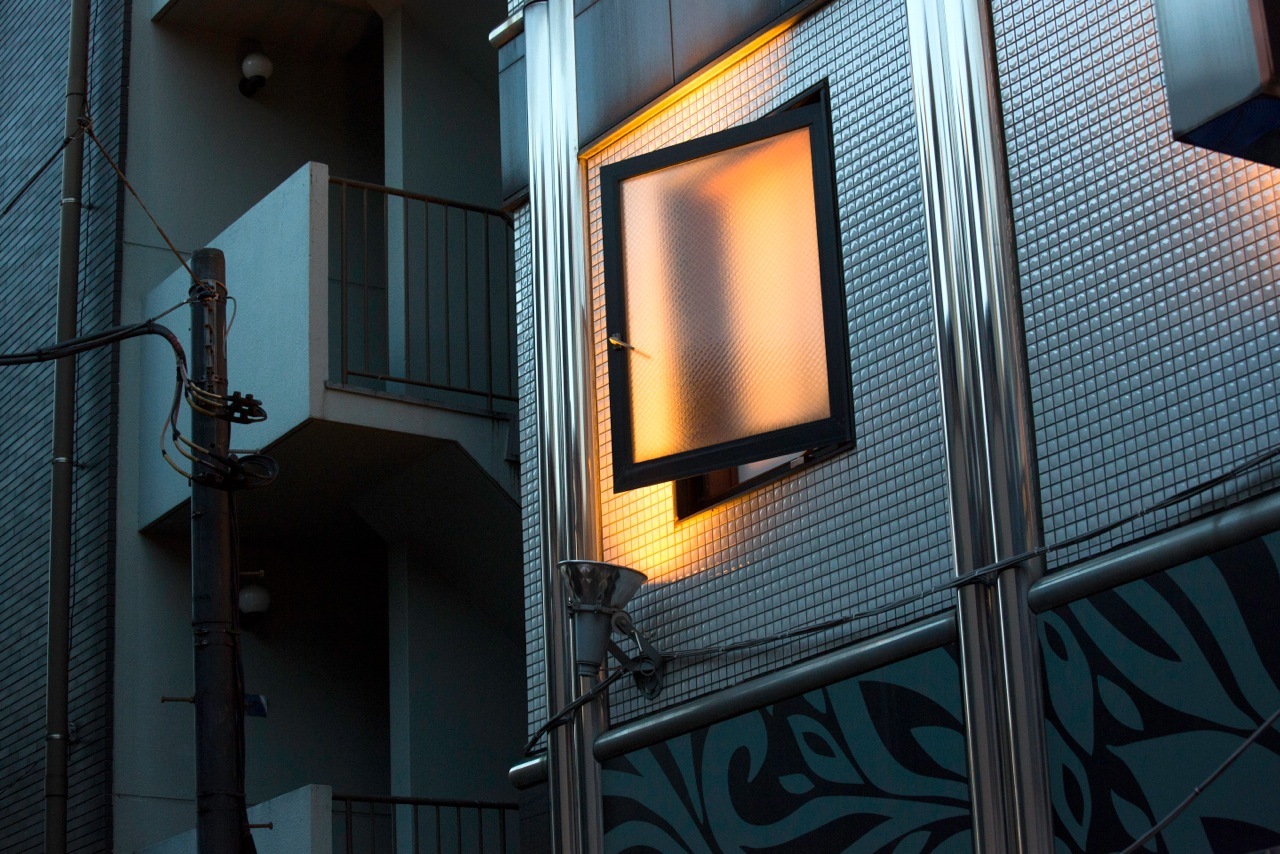
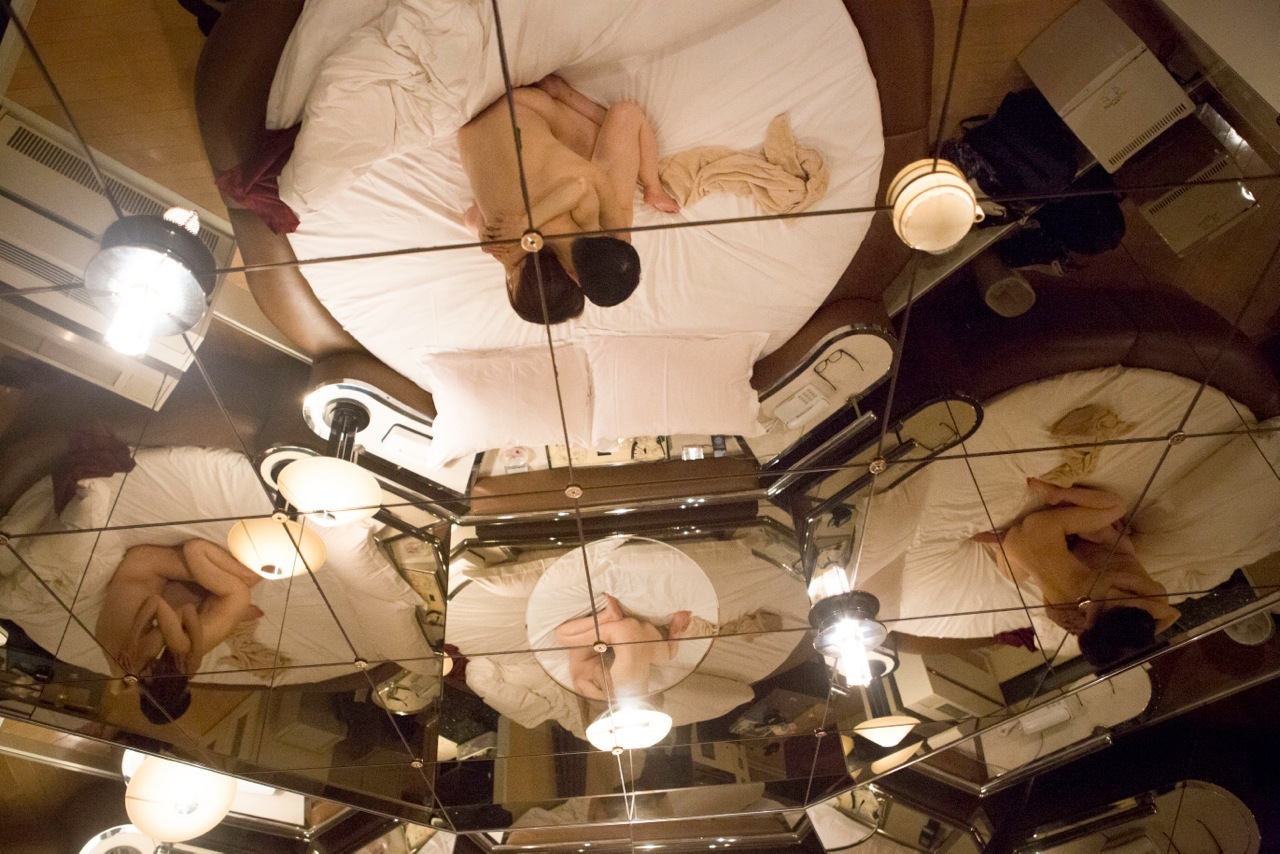
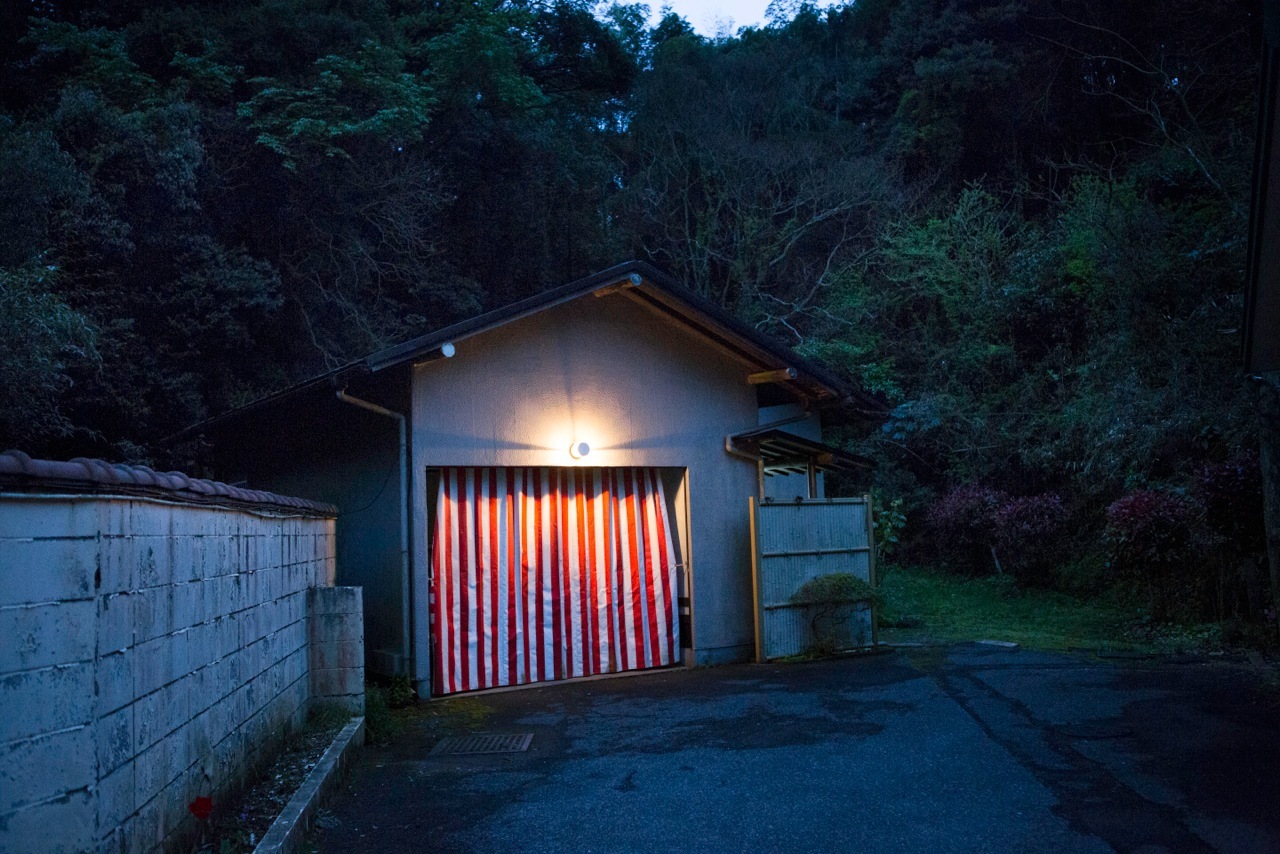
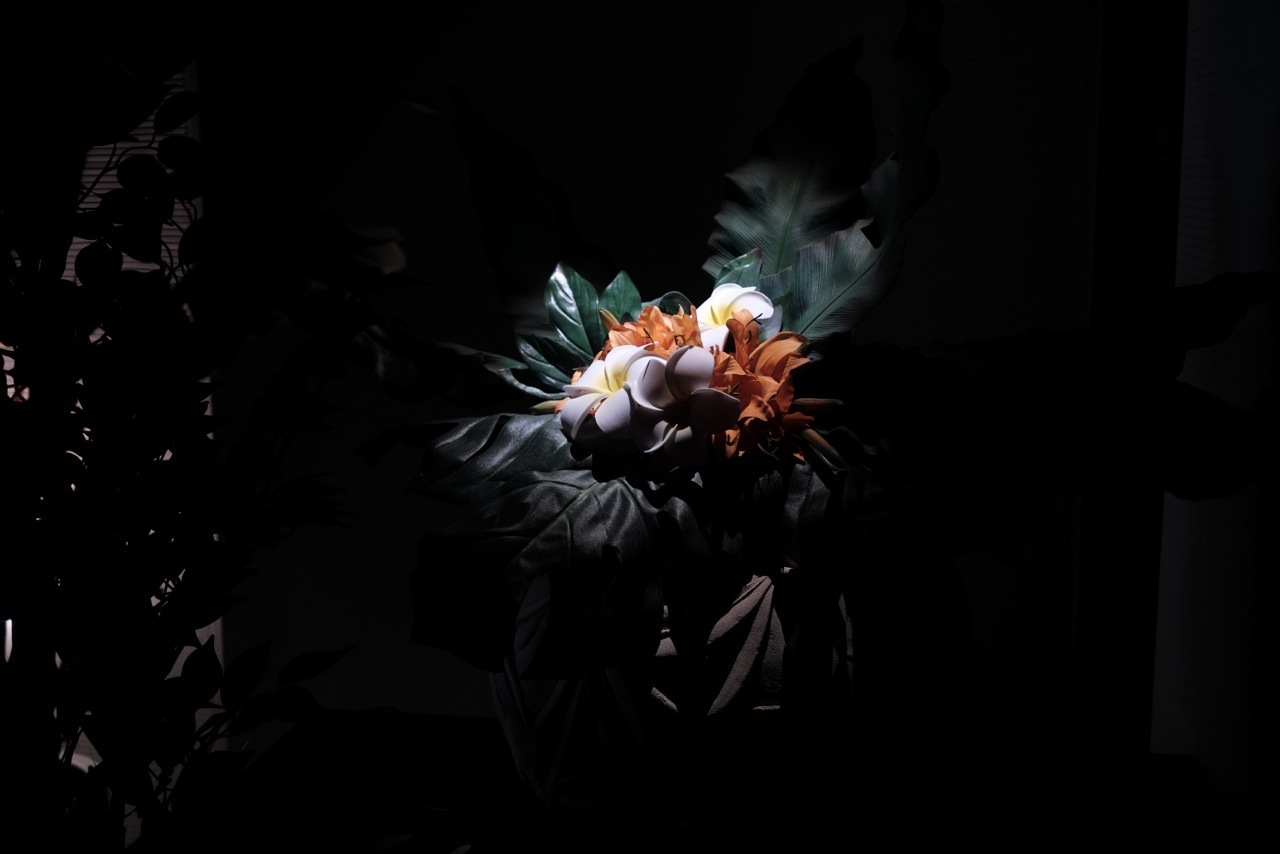
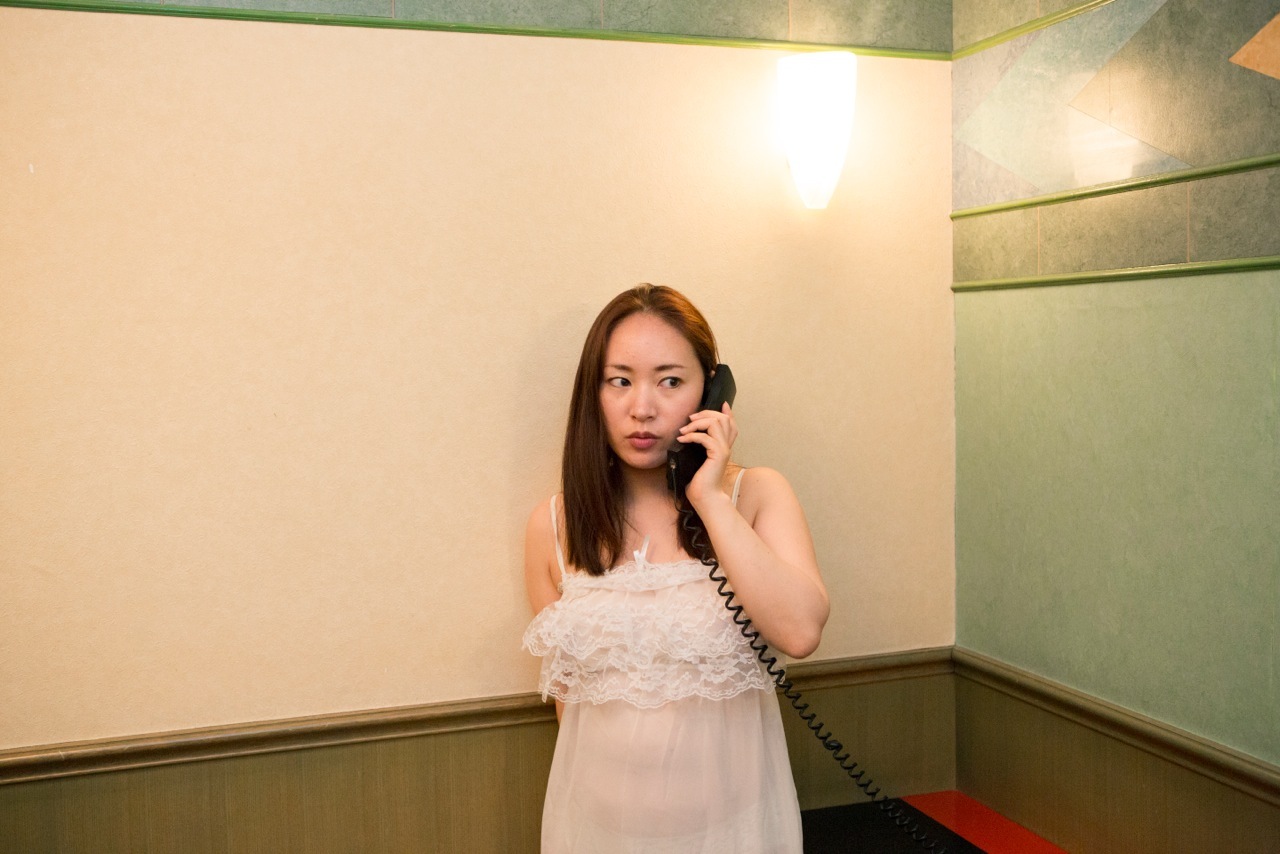
Belgian photographer Zaza Bertrand is not interested in capturing sex. Instead, she sifts through countless hours of human interaction for those precious moments of raw erotic tension that manifest themselves in the emotive crinkle of a brow, the orange-tinged light oozing surreptitiously into a white hotel room, or the gentle motion of a person’s leg intuitively wrapping around another’s. Her subjects in the series “Japanese Whispers” are strangers who answered an online ad to meet in a love hotel. Inside, they join not the kinky cartoonish world of the “weird Japan” we all know, but rather an awkward landscape that falters between nature and artificiality, often revealing more about sex and intimacy than the erotica for which Japan has long been famous.
How do love hotels work? And how did you manage to shoot inside?
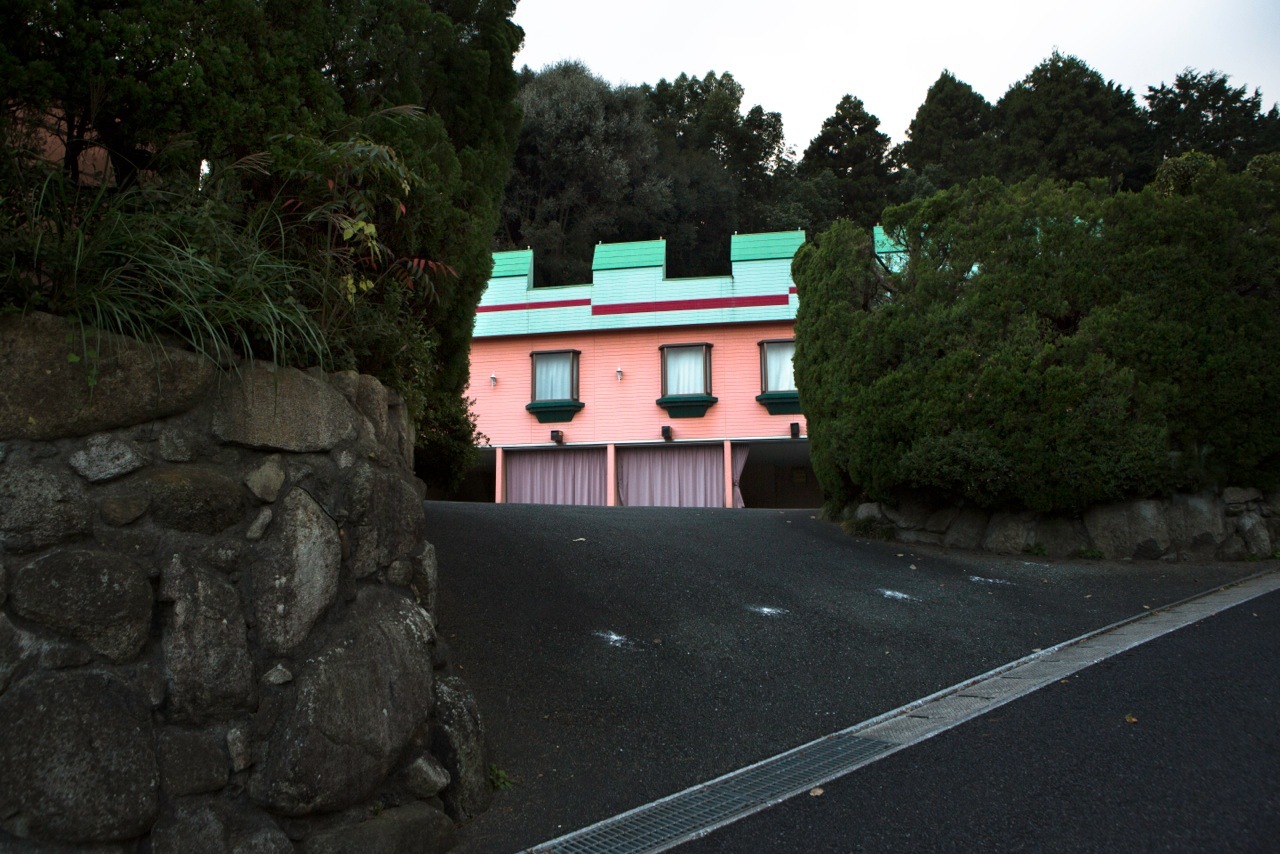
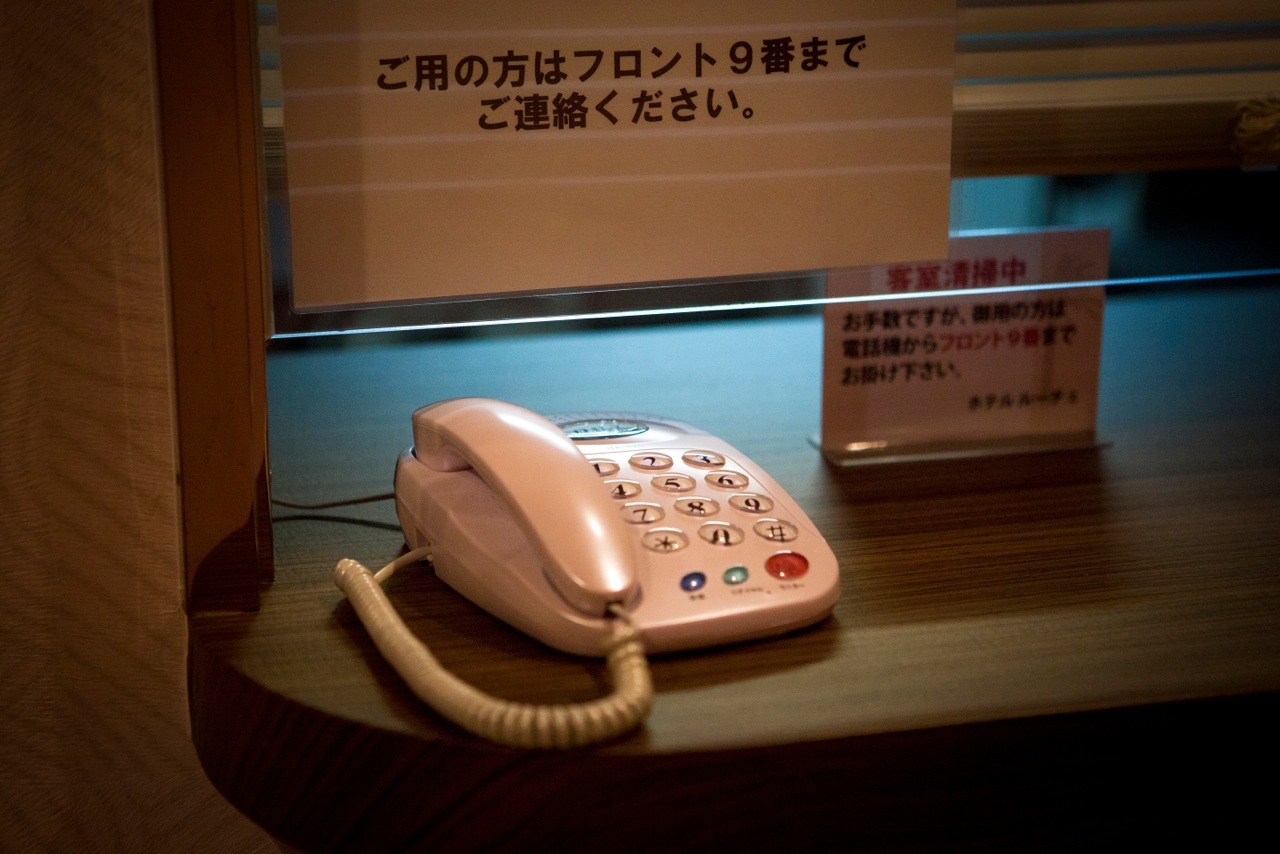
You usually enter by car, and your license plate is hidden by curtains. Inside, you don’t have contact with anyone. You just look at a machine and pick which room you want — each room has different settings and colors. I always chose together with the models because I wanted a room that fit who they were. You get a key and then you go up to the room. You get an hour or more (you can also get a night, but I never paid for a night). I think the maximum I paid for was three hours, and the people would stay or leave after if they wanted.
What types of rooms did you end up in?
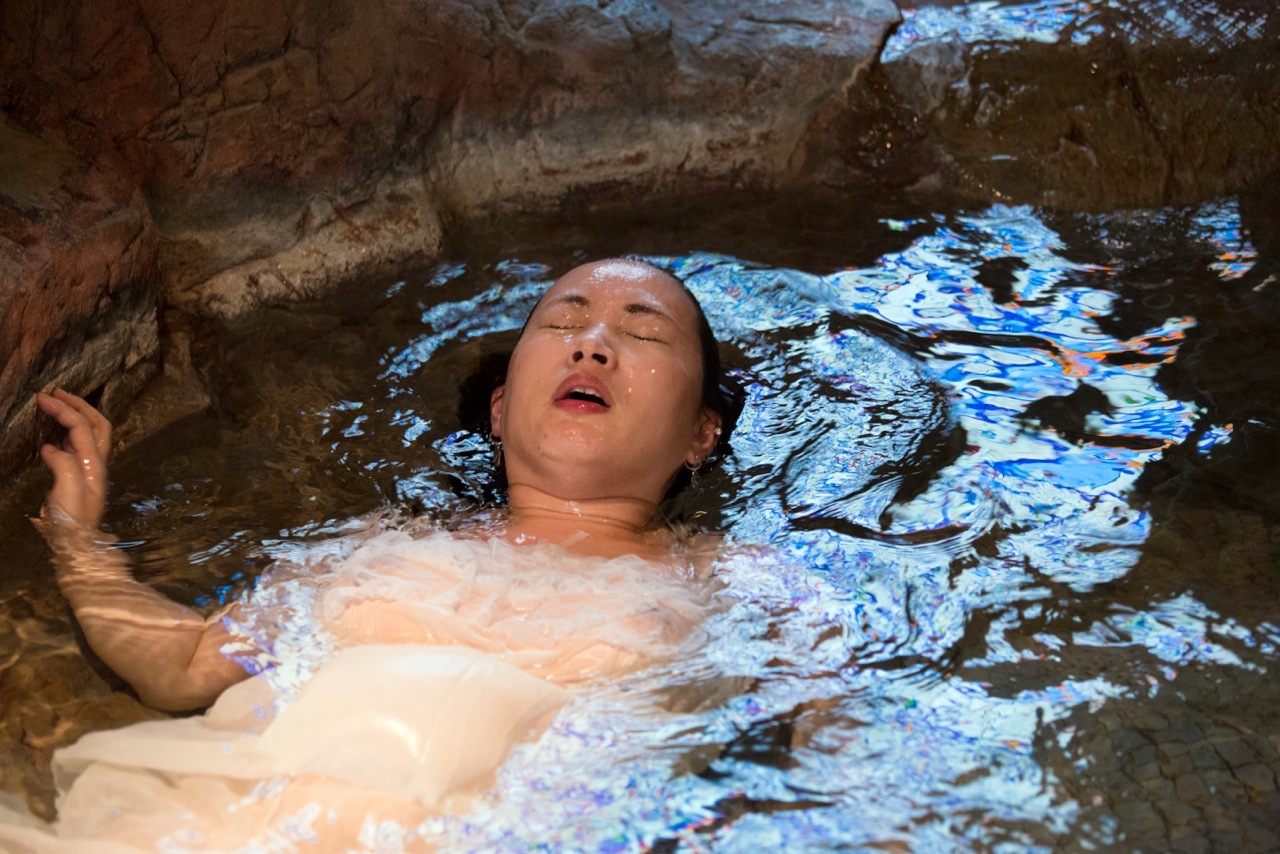
At first, I didn’t want any kitschy, super-decorated, Disney World-ish rooms. When you hear about love hotels, that’s what you usually see. I just wanted to show how random these places are and that all kinds of people use them. Also young people who are on a budget and who have no place to go — they just take whatever room. One couple really wanted to do a shoot in that hot spring room. At first, I was not so enthusiastic about it, but it was so filmic, like a movie scene, that I really thought it was interesting. It showed their expectations, the desires that they had, their fantasies. But it wasn’t my intention actually.
How did you choose your subjects?
I looked for people who were willing to be photographed. First, I talked to people entering the hotels, but that was really hard. It was not a good moment to approach people. So I started to write advertisements online with the help of a Japanese friend, and people were much more open on the internet. Of course, around half of them canceled. But some of them were very curious, and I always offered the room and the pictures, so it was kind of a deal for them, too.
So you paid for the rooms?
Yeah, I think a lot of people were quite interested in the experience. The first time, I worked in Fukouka, which is in the southern part of Japan. And then, I went back to Tokyo. In Tokyo there are more options because it’s bigger.
When models arrived, was it always a surprise?
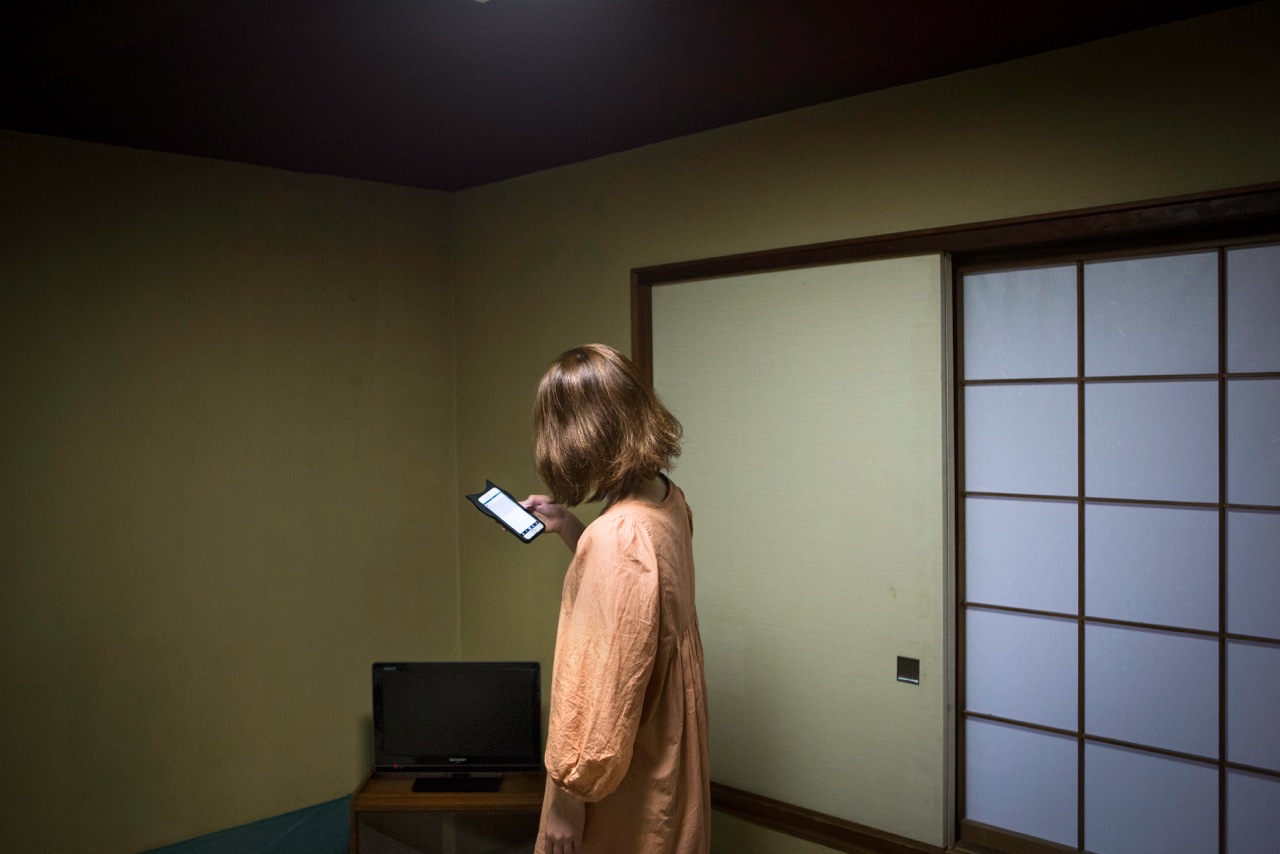
Yeah, I never knew who would show up. There were no restrictions on age or gender or anything. Once, a guy brought his mistress. Once, I had a call girl. She was addicted to host boys, which is a common phenomenon in Japan. It’s like the modern version of geishas, but you have men and women versions, and they just sit next to you, go on dates, talk. It costs a lot of money, so she became a call girl.
Were you ever scared or uncomfortable?
Yeah, for sure. But what I realized is that the appearance that you get is not always how people are. I had one guy who I didn’t feel comfortable at all going inside with, so I asked my translator to come with me. Normally, I wouldn’t have asked him because I like to be alone with my subject. But I asked him to wait in the hallway, just in case. In the end, the guy I was afraid of was really sweet.
If the hotels are designed for couples, why did you choose to shoot singles sometimes?
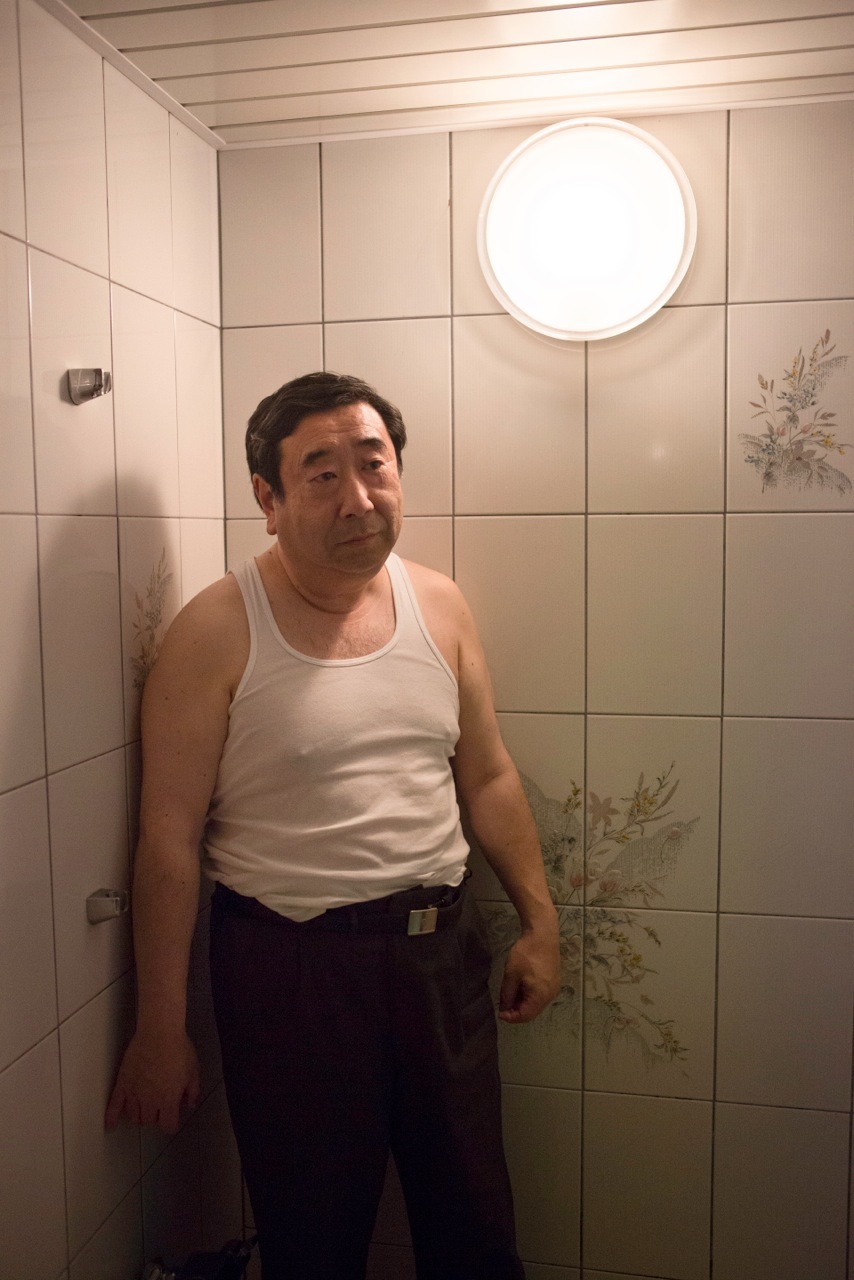
Some people just came alone. This one guy really wanted to be photographed. At first, I didn’t want singles, but then I thought, “Okay, let’s see what happens.” This guy was turning 60 and he just wanted a memory, a portrait. He said he also photographed girls in hotels and he wanted to have the experience himself. The photo of him is the one in the bathroom. Sometimes, I direct the shoots but sometimes things just happen.
When you shoot people in intimate situations, is it staged or spontaneous?
For this project, it was really a combination. For other projects, I used to wait, sometimes or a whole day, in the hope that people would forget me and that I would become invisible. Now, I really organize these shoots (because usually we only had one hour) and I kind of directed [the intimacy]. But of course, some people also expected me to photograph that.
So people actually wanted to be shot having sex and you had to tell them, “That’s not what we’re doing”?
Yeah, that happened a couple times. One couple — my very first shoot — they had sex. I kind of left because it was getting more and more intense, and that’s not what I’m looking for. I think it’s much more interesting to have information missing sometimes and you can build up a certain tension.
How do you choose your settings? Did you hear or read about Japanese love hotels — or Egyptian gated communities, from your last series — and decide to travel there? Or do you stumble across these stories while already traveling?
Both were actually places I had been before. I was invited to Cairo for another project, and then I discovered this whole other side of Egyptian society that I found very interesting. Actually, in Japan it was the same thing. I photographed another project and then I came across these hotels. I’m always very interested in intimacy and relationships between people and social manners. So the love hotels were something that really intrigued me, especially because the Japanese way of being is very different and very complex regarding emotions and relationships.
Will your work continue to focus on other parts of the world?
I’m sure I will keep going to other places, but Europe is small. I would like to do a project in France. My country is super tiny. It’s difficult to get inspired sometimes in places where you live. It’s always easier or more intriguing to make work somewhere else.
“Japanese Whispers” is currently on display at Riot Gallery in Ghent, Belgium and Ibasho Gallery in Antwerp, Belgium. The book “Japanese Whispers” is available here.
Credits
Text Blair Cannon
Photography Zaza Bertrand