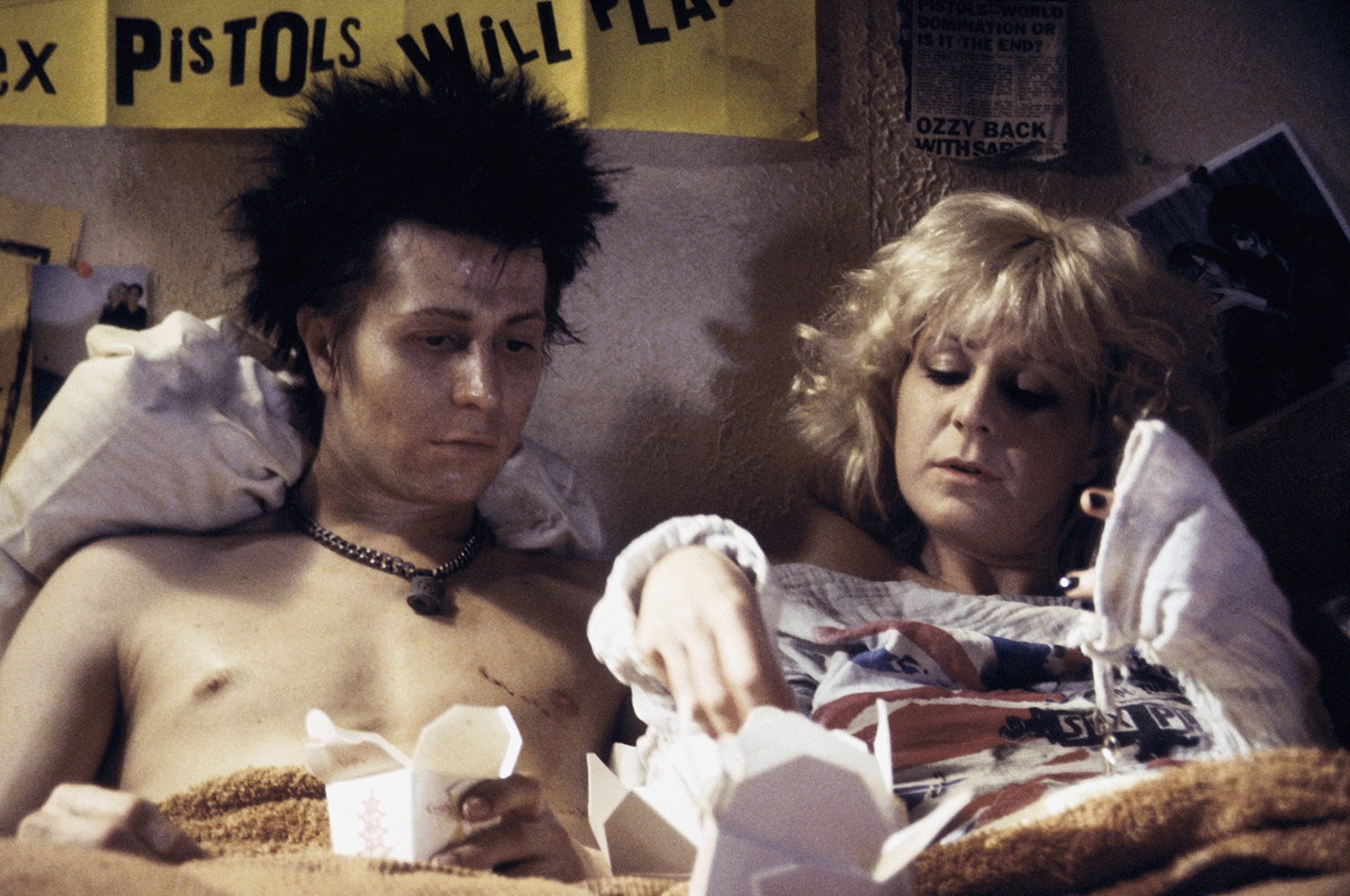
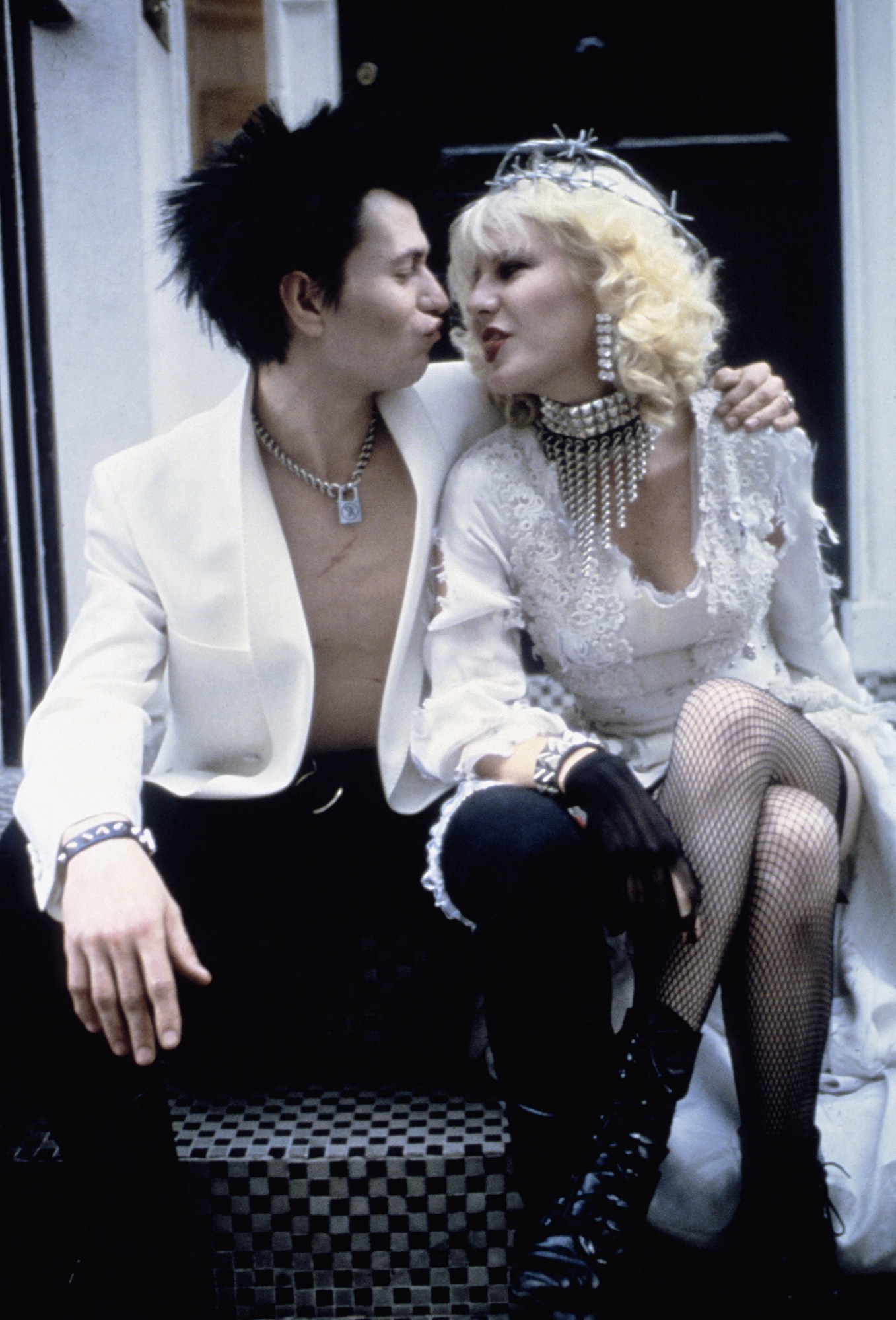
In Sid & Nancy, Alex Cox’s seminal punk biopic, the Sex Pistols bassist Sid Vicious and his girlfriend and manager Nancy Spungen are star crossed lovers intent on sex, drugs, and annihilation. It’s a real life narrative that has been mirrored in musical eras since, most closely by Kurt and Courtney in the 90s. The two are not unconnected; Courtney famously auditioned for the role of groupie Nancy and the film helped launch her career. After she impressed Cox so much, he wrote her a supporting role. But the movie —which has been restored for its 30th anniversary — belongs to Gary Oldman and Chloe Webb, who played the title roles. The actors, steered by Cox’s uncompromising vision, demonstrate the old adage (and the film’s alternate title) that Love Kills. Ahead of Sid & Nancy’s cinema re-release, i-D talked to Cox about the real life nihilism depicted in and inspired by the film over email.
There was some opposition to this story being told. I understand that Sid’s mother, Anne, was initially against the project but came on board. What did you say or do to persuade her?
Not that I recall. She was keen to be portrayed a certain way, I think. But luckily for filmmakers and writers, a person’s mother doesn’t get to decide whether a film gets made or a story gets written.
Former Sex Pistol John Lyndon criticized the film while in development and to get him to engage with you, you left a message at his hotel in New York. Can you tell the story?
Don’t recall any message at a hotel. I met Lydon while he was staying in New York at the Mayflower Hotel. He had read the script and was very generous with his notes. He recommended taking the portrayal of the band in a different, more original direction. And he invited Drew Schofield, the actor who played Johnny in the film to New York to hang out with him, and study the Way of Rotten.
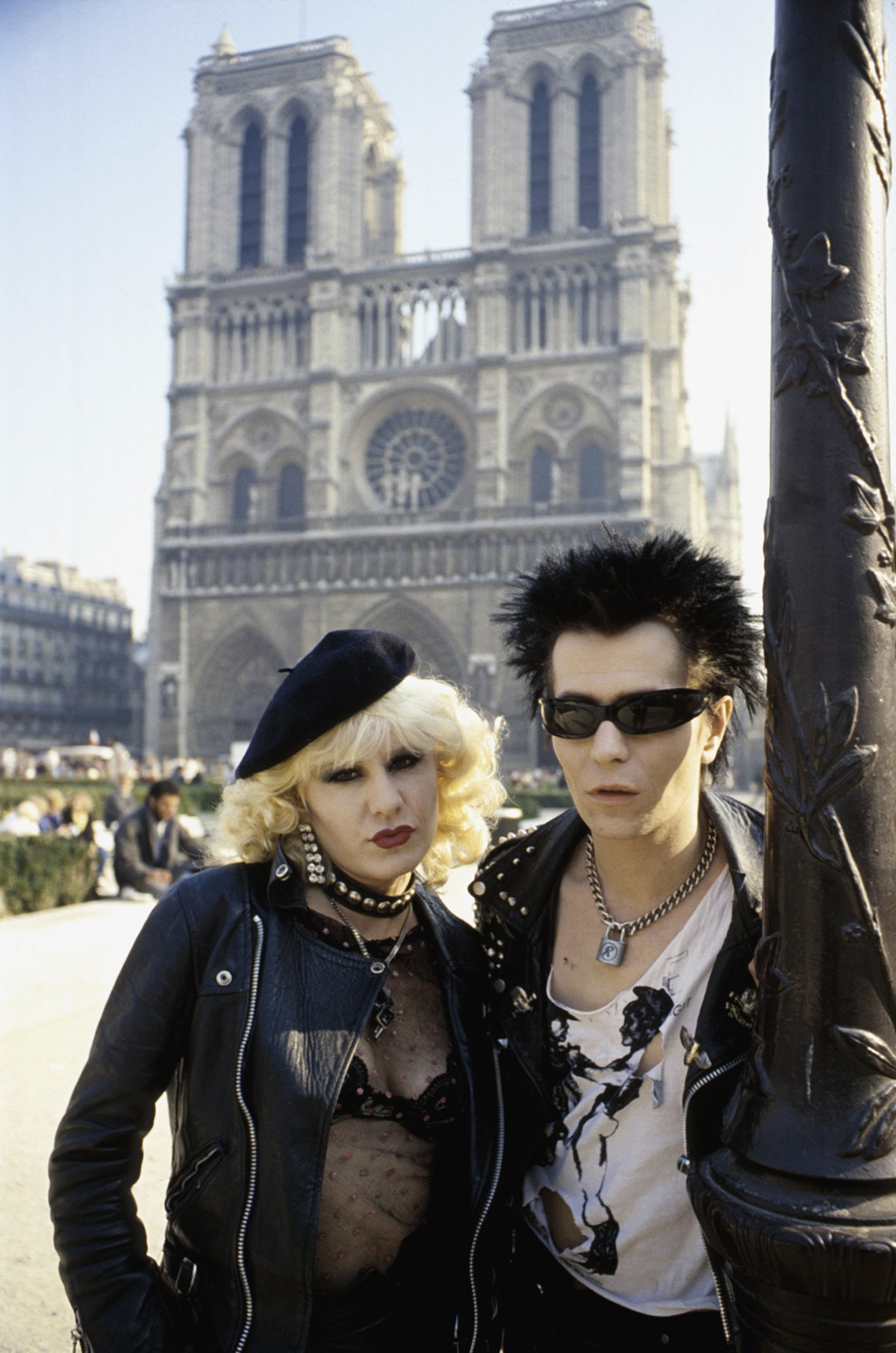
Courtney Love auditioned for the role of Nancy but it was decided she was too young for the part. What about her made you want to cast her?
I thought she was an excellent actor and was delighted to work with her again in Straight to Hell.
What did you find aspiring about punk?
It was a revolutionary, anti-capitalist movement. It showed that groups of individuals without money or permission or even skills or talent could declare themselves independent artists, connect with an audience, thrive and challenge the corporate status quo. It was very exciting.
Where did it all go wrong for punk?
Corporate media triumphed over it. Funny, that. Though the beat goes on.
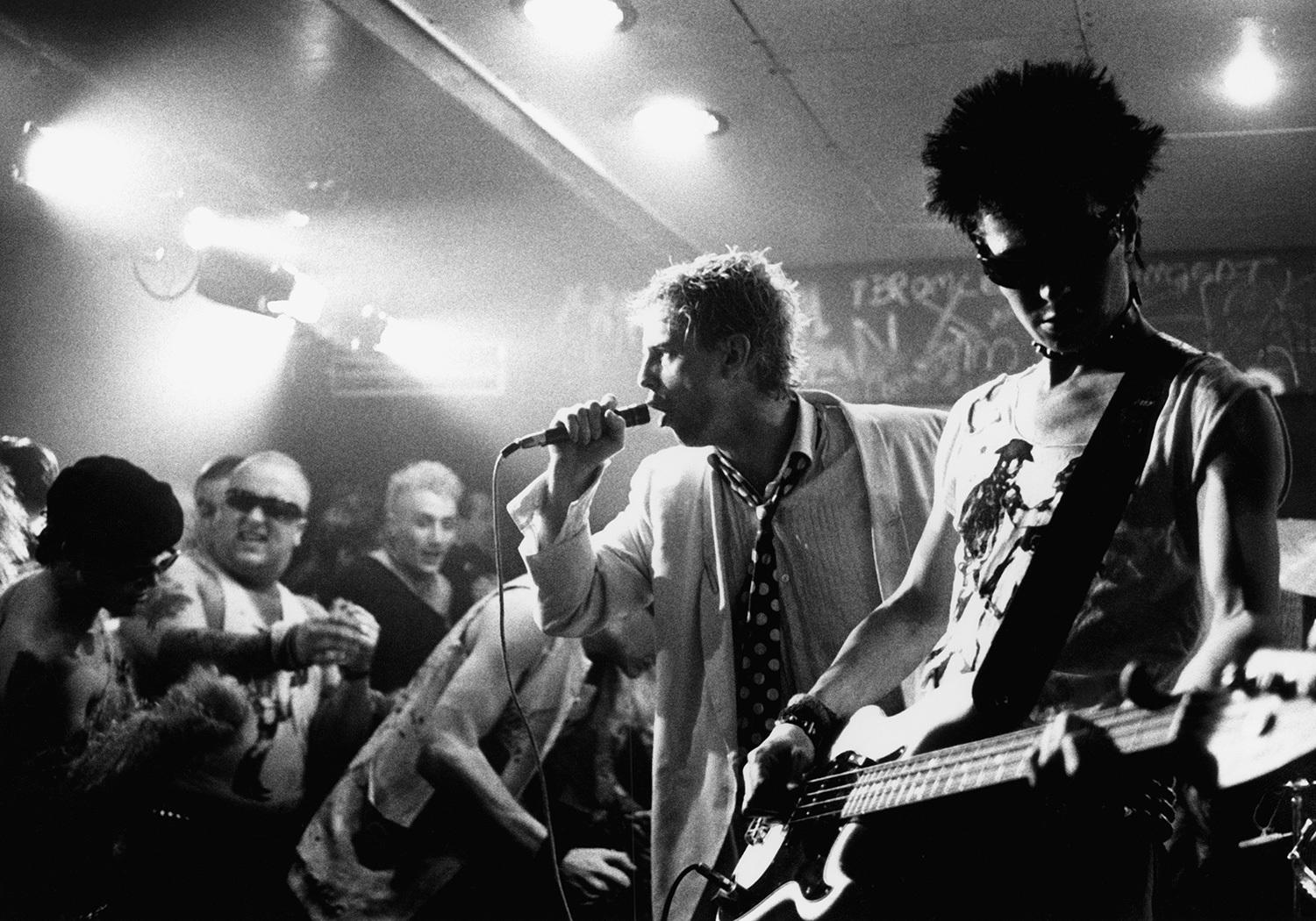
Do you think punk has had a lasting legacy?
In fashion, certainly. And to some extent in music and the arts and political activism.
After Sid & Nancy you were offered a number of big studio projects — Robocop and The Three Amigos — which didn’t work for you because of their politics. Do you feel like you’ve kept a punk spirit in your work?
I don’t think about punk stuff that much! It was all a while ago. But the struggle continues.
You were keen to romanticize Sid & Nancy without glorifying them but now feel you failed in that endeavor. Can you explain how the film, in your mind, fails to do so?
It may be an inevitable part of all drama, that in depicting something you make it to some extent heroic or glorious. Or it could be that the ending of Sid & Nancy, with the “taxi to heaven” which seems very sentimental now, contradicts the message of the film (spoken by the guy in the methadone clinic).
Is it true that some cast and crew actually became junkies after working on the film? Given the squalid — and the kind of boring nihilism shown — how was this even possible?
You tell me.
We’ve seen that kind of rock ‘n’ roll doomed romance play out a number of times since, most obviously with Kurt and Courtney. Do you think it’s the love or the drugs which is the main driver?
A situation in which both parties in a relationship are drug addicts is unlikely to reach a happy resolution. Strong feelings reinforce each other and the results don’t seem good, do they? Love Kills was the original title of the film — it was changed only at the 11th hour — and perhaps it was a better title, even if a little over-eggy!
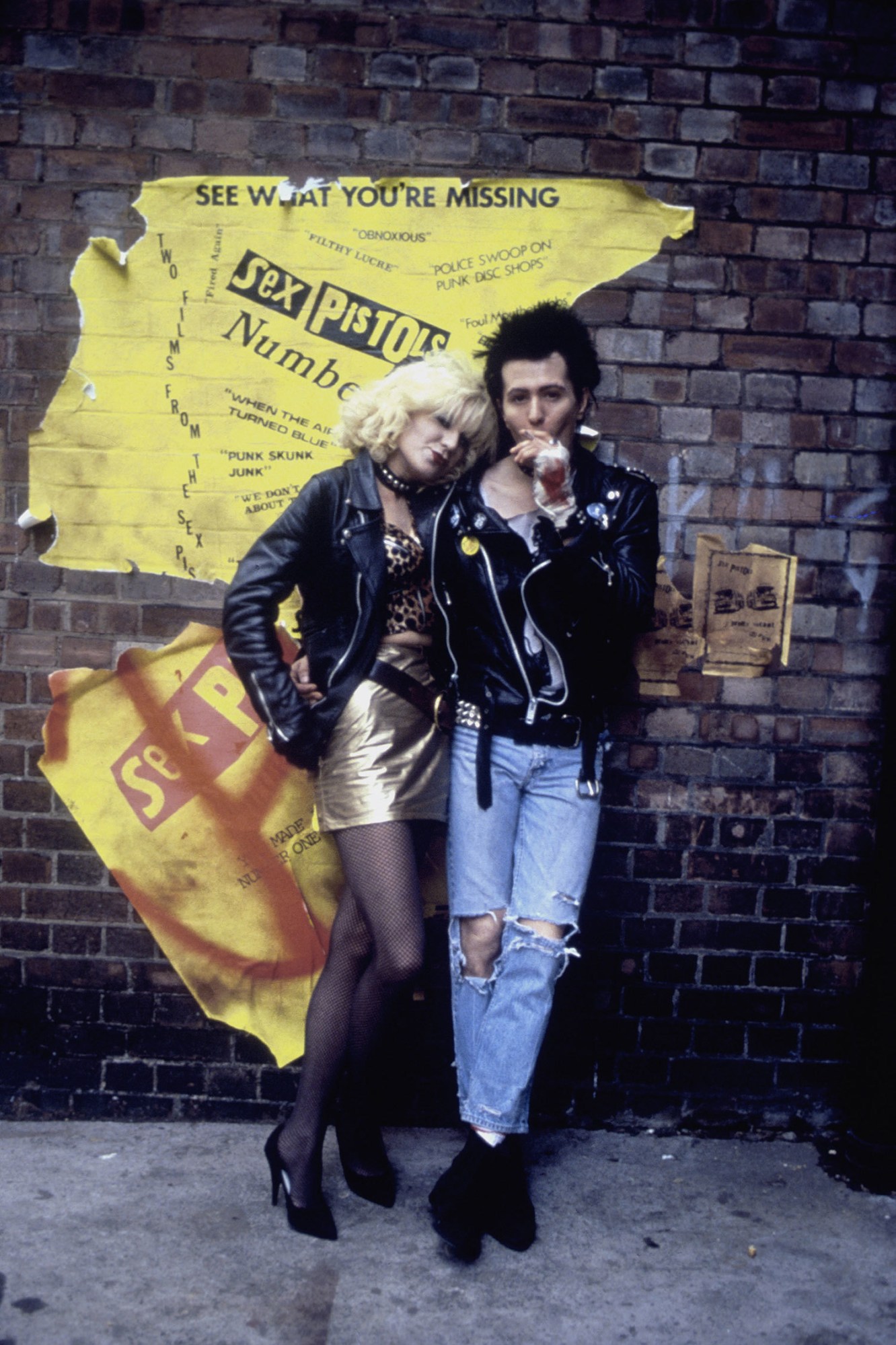
Lots of the locations, the music, and the era now have been mythologized — like the Chelsea Hotel, punk, the late 70s in both London and New York. What should be celebrated about the time and what is best left in the past?
The best thing about the 70s from my perspective is that there was still cheap rent, you could go to school without racking up a ton of debt, and there was more of a social safety net (at least in Britain). That was no myth!
I know you’re working on your next project Tombstone Rashomon. Can you tell us a bit about it?
It’s the story of a Western gunfight told from six different perspectives, in the style of Kurosawa’s film Rashomon. We shot it in May at Old Tucson in southern Arizona. It’s in post-production now and will be finished by the end of the year.
Sid & Nancy is in theaters August 5 and on DVD August 29.
Credits
Text Colin Crummy