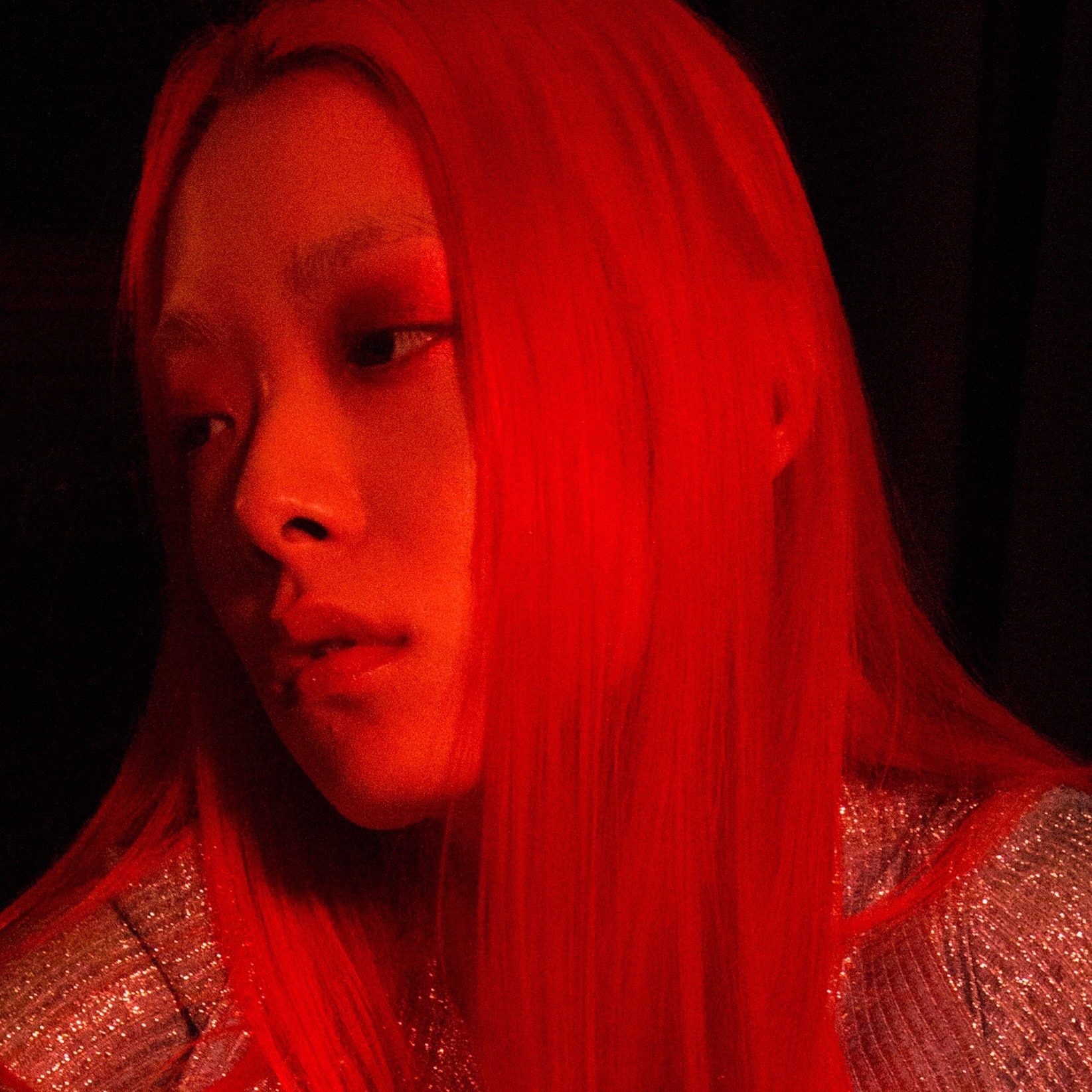
Red-haired singer Rina Sawayama’s music is a lovely-sounding social commentary. On this year’s Where U Are, she observed the disconnect between the real and digital lives of the community of young artists she found herself in. Now, as she works with Nao collaborator A.K. Paul on her debut album, Rina has channelled her sparkle into a Christmas tune of sorts.
“In the digital age, things are so transient that tracks and even full length albums get forgotten in an instant,” she explains. “Christmas songs on the other hand have a timeless quality, and I wanted to explore that by writing a piece that fused elements of my music with the festive ballads so heavily ingrained in us when growing up. It’s a season when things almost seem to stand still, an excuse to be different, so I wanted to use this time before my record comes out.” Considering that we’ve had this beautiful song dancing around our heads since Rina sent it in our direction last week, we’d say she’s probably succeeded in tapping into that holiday magic.
With the title This Time Last Year, the salute-produced song touches on what a difference a year makes, both personally and socially; as we sit in our cosy little echo chambers, the big bad world keeps on turning. Take an exclusive listen to the loveliest thing you’ll hear today and read Rina’s reflections on 2016…
“This time last year I thought I knew everything…”
The closing line to my Christmas single This Time Last Year, which was originally written about how widely things can change in love, seems so apt in a year that took everything we knew, and took for granted, and turned it upside down. We millennials flattened the world so much in the palm of our hands and trusted corporate apps to give us accurate information. Our feed would not lie. But their tailored, reassuring algorithms were hiding the truth. And the truth, it turns out, bloody well hurts.
As Kylie Jenner once said about 2016, it was a year of “like, realising things”. We realised that half the voting populace, huge swathes of people in the UK and USA, voted for candidates and campaigns founded on unabashed racism, misogyny, xenophobia, homophobia and ableism.
Faced with a crisis, people on both sides pointed fingers, labelled each other in a heated Facebook post, and left it at that, contented. I was one of them. They said, “immigrant”, so we said “racist”. Labelling is so easy.
They say the first step to recovery is realisation. But beyond just “realising things”, we have to be brave enough to analyse and even empathise, and try to understand. Why are people racist? Why are they sexist? Why did people vote Trump? Why do people blame immigration?
The world has moved unrelentingly onward, even if we only see a regression. Perhaps things break in order to be fixed. I don’t have any answers, but I recognise the need to ask questions. If not us minorities, then those white people who wish to be our allies. I know first-hand that these confrontations of such people and views can be unsafe. But we can’t rely on our assumptions anymore, we cannot sit preaching to the converted, and thinking this is a solution. We thought we knew everything, but we don’t. We need to be ready to face our new reality, outside our newsfeed, and be ready to confront, interrogate, understand, not relent or pander, nor demonise nor slander, but work toward something less broken.
Today I saw a viral tweet of an email sent by a white woman to John Lewis, complaining that its Christmas advert this year was “wrong in so many ways” because it featured a black family and a song by a black singer. “How I grieve for my culture and country”, she said. Last week a man I met at a party walked away from our conversation because I “couldn’t speak English”. So in the festive spirit I hope you enjoy This Time Last Year, a Christmas single sang by a non-religious Japanese immigrant (me), and produced by a black Austrian immigrant (salute). Season’s Greetings!
Credits
Text Frankie Dunn