photography FLORA MEDINA
The 2025 WNBA season has been record breaking: Over 2.5 million fans have attended games this season, the Golden State Valkyries sold out every home game in their inaugural season, and Paige Bueckers now holds the single-game scoring record at 44 points. The new generation of players and fans have to thank the people who charted those paths: ballers like Sheryl Swoopes, Lisa Leslie, Diana Turasi, and Sue Bird. Sue Bird spent all twenty-one years of her professional career building a dynasty with the Seattle Storm. Bird is one of the best point guards in the history of women’s basketball, All-Time WNBA leader in assists, 5-time Olympic gold medalist, 2025 Naismith Basketball Hall of Fame inductee, and only player in league history to win four championships across three different decades.
Now, as of August 17 2025, her legacy has been solidified in bronze. The date marks the official Sue Bird Day in Seattle and Washington State. The unveiling of an 8-foot bronze Bird mid-layup outside of Seattle’s Climate Pledge Arena, home of the Storm, marks the first instance of a WNBA franchise (a more common occurrence for the NBA, Dwyane Wade’s statue having gone viral last year for its notable artistic liberties) honoring a current or former player with a statue.
With all of her career accomplishments on the court, her legacy is just as much defined by her impact off the court. She was a leader of the WNBPA, the union for WNBA players that is currently working towards their next collective bargaining agreement. She’s also part of a sports power couple: she and her partner, global soccer legend and gold medalist Megan Rapinoe, first met at the 2016 Olympics and now co-host a women’s sports and culture podcast, A Touch More. The honor is fitting, not just for Bird’s legacy as a player, but her legacy as a cornerstone of Seattle’s history. Seattle has long felt like a Mecca for women’s sports (as a born and raised Seattleite, I’ve followed every step of Bird’s career). In a basketball city that has been absent from the NBA since 2008, the Storm has been a pillar of Seattle’s culture and community for decades. There are few athletes—or people in general—more beloved than Bird in the city. The day before her statue unveiling, I was able to speak with Bird at the Storm practice facility about her likeness in bronze, advice for new fans and players alike, and what it’s like to be one half of one of the most iconic power couples in modern sports and lesbian history.
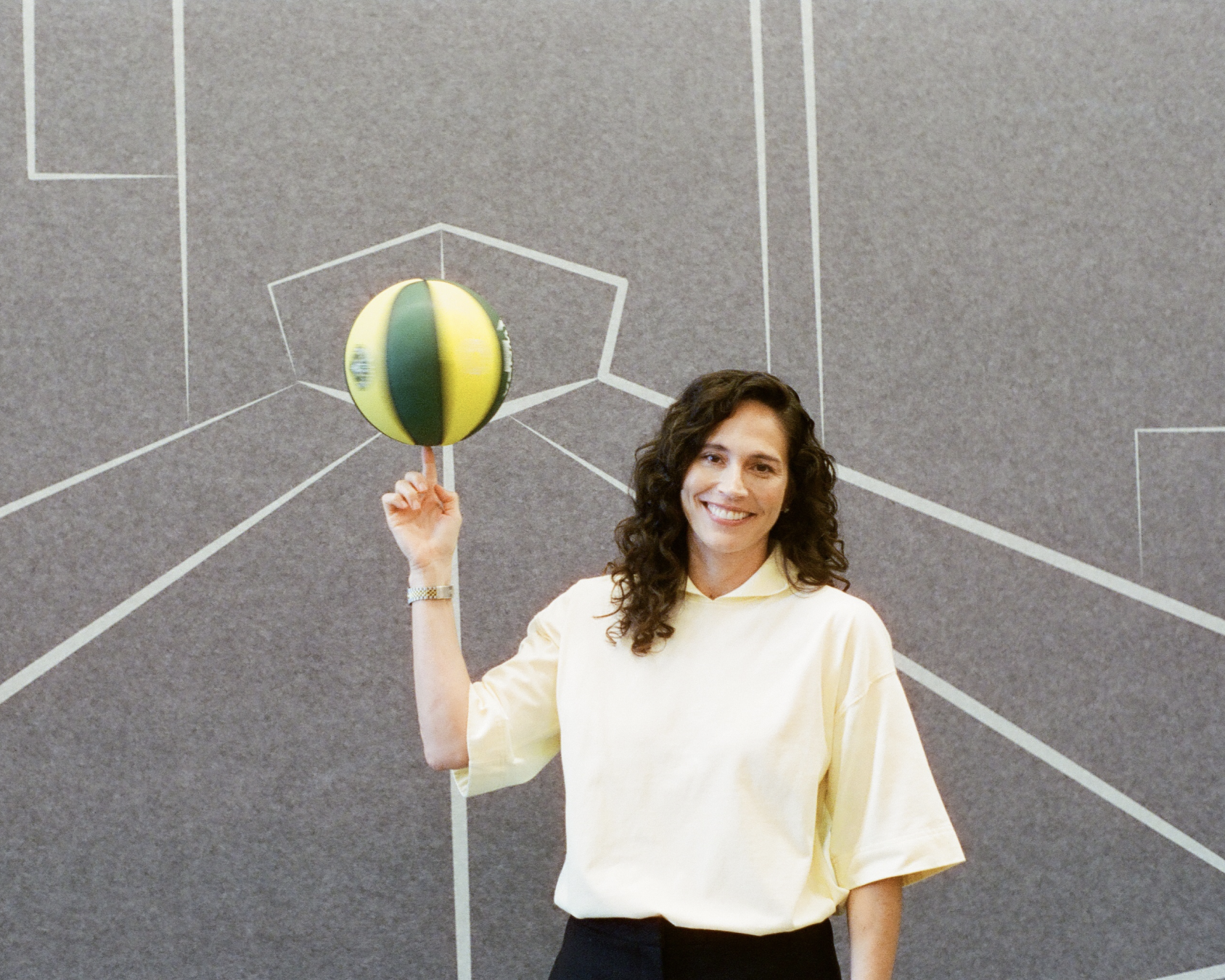

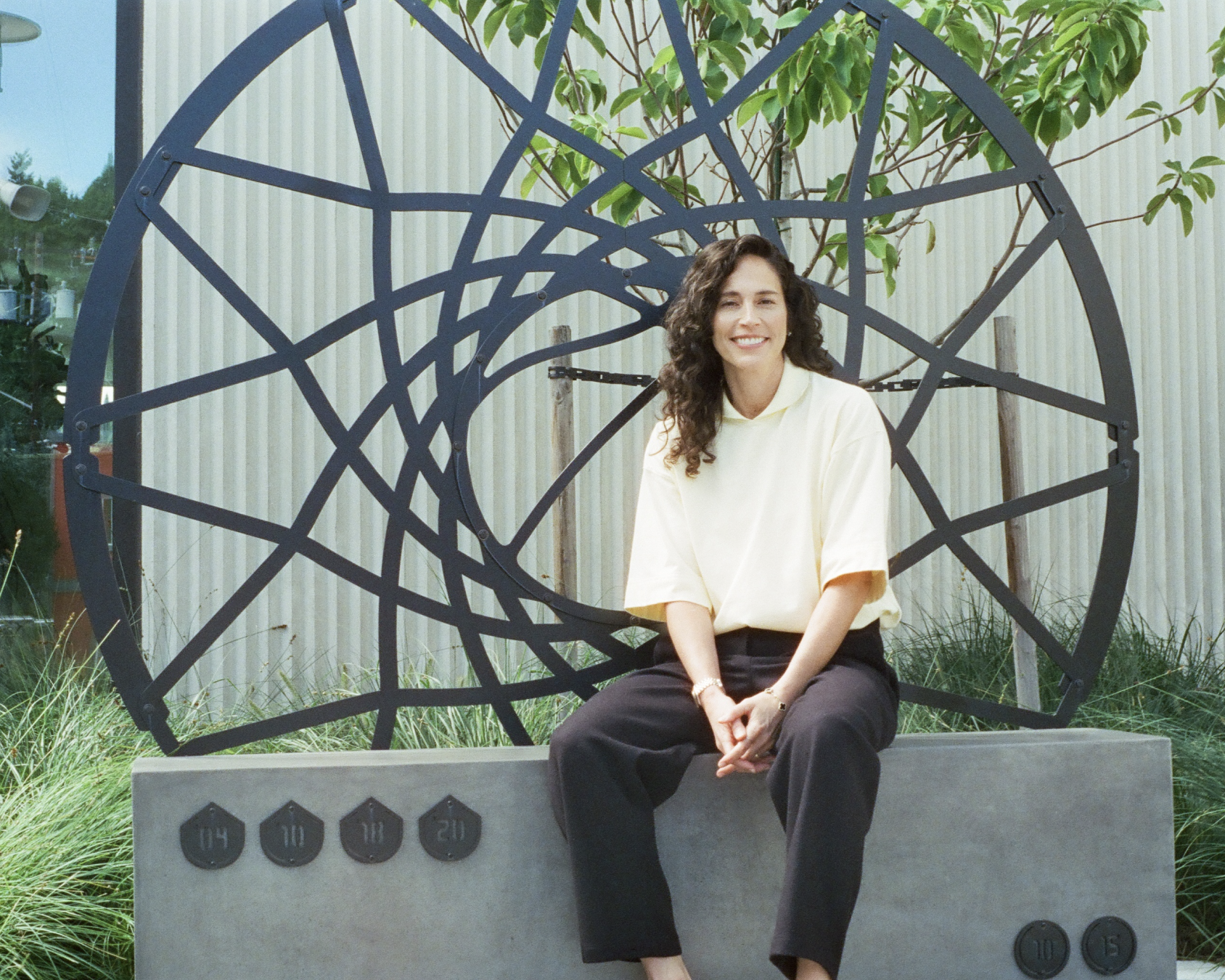
Flora Medina: Tell me about how you found out about the statue.
Sue Bird: About a year and a half ago the Storm ownership reached out and told me that this was happening. I’d heard rumors about it at different points in my career, but to actually have it be a real thing was pretty incredible. I mean, how surreal. I’ve been struggling to find the right way to articulate how it feels. I’m not sure I’ll know for a couple years.
What was it like the first time you saw it? It must be very weird to see yourself in statue form.
I haven’t seen it bronzed yet. The first time I saw a clay version, it was maybe twelve inches high. The face was a little off because it was so small. I went back to the studio the second time months later, and saw the eight foot version of my clay self. That was wild. You’re standing underneath yourself. It’s like when you accidentally take a photo and you see up your nose, that’s what I was looking at. I was like, Oh my God, that’s me. They really nailed it. My hair is my favorite part, it’s kind of flowing. They made me look real ripped too.

Was there a moment in the statue development where you were thinking, Damn, I hope my hair looks good,or I want to look jacked here?
I’m usually a pretty humble person, but I said to Megan [Rapinoe], “Man, they made me look ripped.” She said, “You are ripped.” I was like…Oh yeah. I was ripped, past tense. It’s true to form, it’s to scale. When you see yourself like that, it’s pretty trippy. But they did a great job. I have on my favorite Nikes that I ever wore, the Huarache 2k4s. All those little details matter to me. I’m really pleased.
Women’s sports are obviously starting to get the attention that they actually deserve, basketball in particular. The version of the W that you grew up in and helped shape is very different from what newer players experience now. What parts of this growth are you most excited about, and what are tense?
This growth is something we’ve all been dying for, working for, believing in. Honestly, it’s so validating. Sometimes I just want to be like we were right but with the acknowledgement of how great the league is, there’s been a simultaneous loss of history. I was saying to somebody else the other day, something weird about Diana Taurasi who just retired last year, myself who just retired three years ago, even Tamika Catchings, we’re spoken about as if we are the Bob Cousys, when I’m more like a Steve Nash. I just played! That’s frustrating because I think you have to understand the history of a league to really understand what’s happening today. So then the comparisons start. Sometimes they’re right, sometimes they’re really wrong, and it creates a lot of frustration. People are now categorized as old fans, new fans. Who cares? It’s just, the history needs to come with the growth, and that could probably solve a lot of the pain points that we’re experiencing.
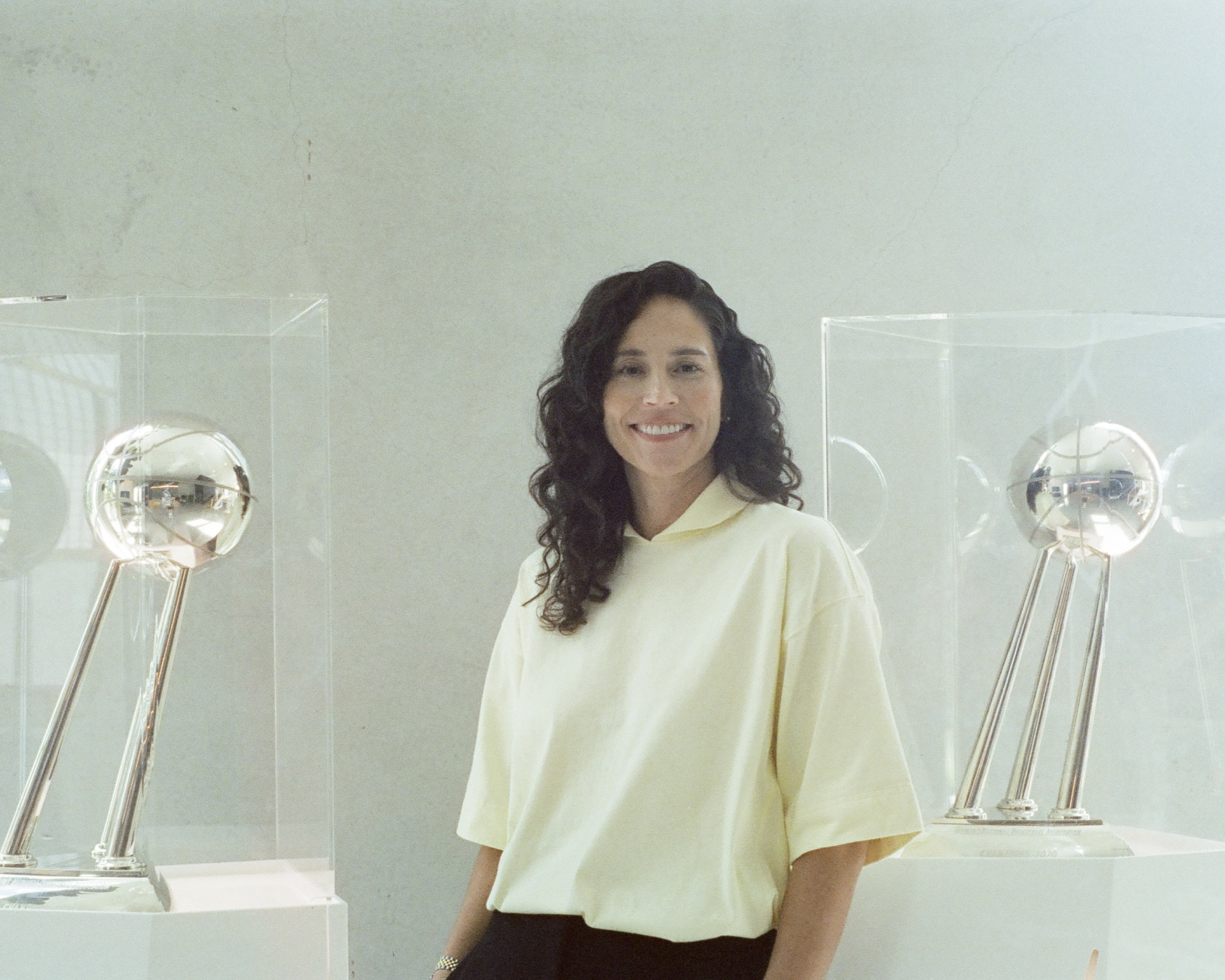
Do you have any advice for the next generation of players entering the league?
For somebody entering the WNBA, what I would say is there’s not a lot you can control. That’s actually life, but it’s definitely sports. It’s so cliche but in sports they always say ‘control the controllables.’ It can be a really tough life, so you have to control what you can. You have to control your training. You have to control how you prepare. And I think the other lesson I’ve learned is you really only get one reputation. I don’t mean public, that’s a bit of a different category, I think you actually can get multiple. When it comes to being a teammate, being an athlete, going from different teams to different teams, your reputation does follow you. How professional you are, what kind of teammate you are, so you really want to take care of that. I think that’s paramount.
Do you have advice for new fans?
Learn that history! Enjoy the game You’re here for a reason, something about it pulled you in. But trust me when I tell you, it was like that three years ago. It was like that five years ago. You came to this sport that had been built. I think learning the history will allow you to love your current favorite even more.

Since your retirement, you’ve gone head first into storytelling. Between Togethxr, A Touch More, and Bird’s Eye View, you’re creating platforms for female athletes to be the ones shaping their own stories. What inspired you to make that your next pursuit?
First, I’m really passionate about women’s sports, and this feels like a way I can continue to help grow the business. I was doing that as a player in a totally different way, this is the way in retirement. And it comes naturally. I love telling stories. Very quickly into my retirement I made this connection that being a point guard is not that different from being a producer. When I was playing the position, things needed to fit, people needed to be set up for success, and you needed to get from A to B to C and so on. Sometimes you have to go to M to come back to make it make sense, you have to be open to that. That’s really what playing basketball is: having a plan, wanting to get it done a certain way, but then being open to the spontaneity of a moment, going with that flow and following it. I’m not a great interviewer, but I’m learning that you have to follow the person, but also, keep in mind what you want to get done.
With A Touch More, we’re able to talk about cultural events and where women’s sports interact with it in a nuanced way that I think belongs in the ecosystem of media coverage. You need it all, the problem early was that we didn’t have a balance, it was too many hot takes. With Bird’s Eye View, specifically, it’s a place where I can sit down with players that I have relationships with. It’s comfortable. It’s kind of morphed into “Tell me about your life, how did you get to where you are? What shaped you? Why do you play the way you play?” Sabrina Ionescu was my first guest. I imagine a world where she comes back on, the episode is a little shorter, and we’re just talking about present day stuff. I imagine it’ll continue to evolve, but right now, it’s actually about letting them control narratives, telling their story in their own words. I’m just there to help them do it. I’m just lobbing it in.
“Maybe some people aren’t going to like the WNBA, but the ones that do are going to fuck with it for life.”
There’s a sense of authenticity in the league now that wasn’t there before which has to do with players, like you, coming out and feeling more comfortable publicly being themselves. How do you think this openness has impacted the league’s growth?
It might be the root of all of it. Social media can be a negative thing but it was also a place where a lot of players in our league could showcase who they are, because nobody else was covering it. Or the coverage we had was so little, you never really got to see those parts. If you’re trying to be something you’re not, people aren’t going to be able to connect with it. It’s a turn off. If you are authentic to yourself, maybe some people don’t like you. That’s a possibility. Maybe some people aren’t going to like the WNBA, but the ones that do are going to fuck with it for life. That’s how you build fan bases, especially sports fan bases. We were missing that. Before we were put in dresses and a lot of us didn’t look comfortable. Now people get to dress the way they want and the way that they’re comfortable, you’re like, Oh, I see what’s happening here. It’s a totally different thing.
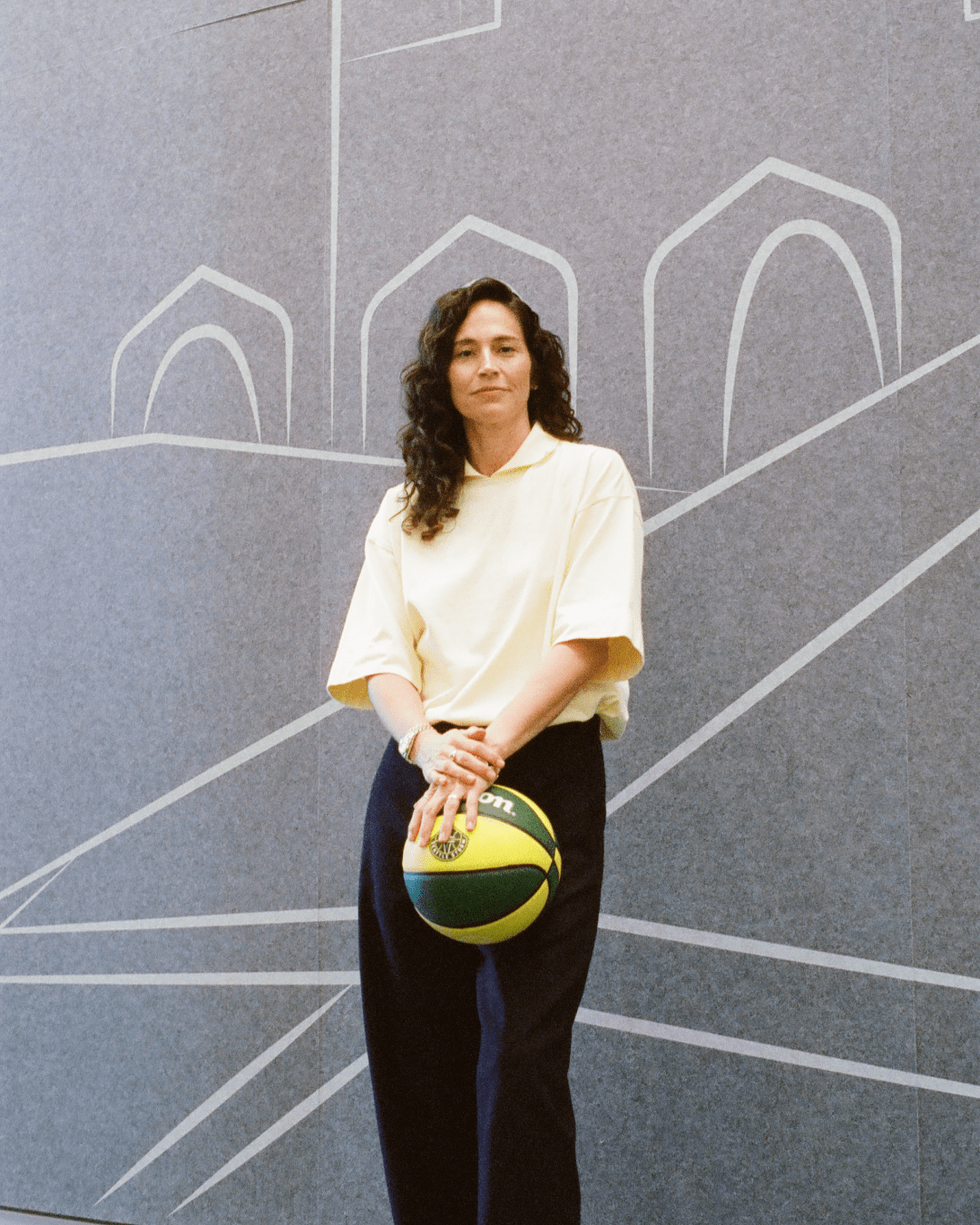
For a long time there’s been a real absence of fashion icons, not even just for queer women, but any women that want to tap into masculinity more in how they’re dressing. How did your style develop when you started to become more publicly yourself?
Megan [Rapinoe] played a big role in that, she was already doing it. She just really encouraged me to be comfortable. It wasn’t about a certain style, look, article of clothing, or anything like that. It was just: Be comfortable. This looks good, but do you like it? Yes, I wanted to look good, but it became more about how I felt.. Because I felt forced to dress more feminine or to show that side, it was really freeing to move all over the spectrum. When I started dressing more masculine, I actually felt more feminine. That was the mind fuck, but it’s because I’m more comfortable. To be corny, your true essence comes out. It really does. Now if I want to wear a dress it’s my choice. It’s very empowering to tap into that part of myself where, because it felt so forced, I never really wanted to tap in. It didn’t feel good. Now it feels good, because I’m choosing.
What’s great about the WNBA is that there’s so many different women, different body types, and different styles. It was really cool to be able to be a part of the tunnel fits. There’s a couple women I’m gonna shout out because Cappie Pondexter was doing this well before anybody else. Cappie was always fashion forward. Crystal Langhorne was on her Instagram account. She called them game days, basically she would post her fit every game day. Then I didn’t play in the 2019 season and the tunnel fit was becoming a thing. The NBA was already doing it, it was starting to come into our world, but I was on the bench. So I was like, “I want to get fits off.” That was the year when people started talking about me and what I was wearing. Then I stayed with it and I started to do it all the time.