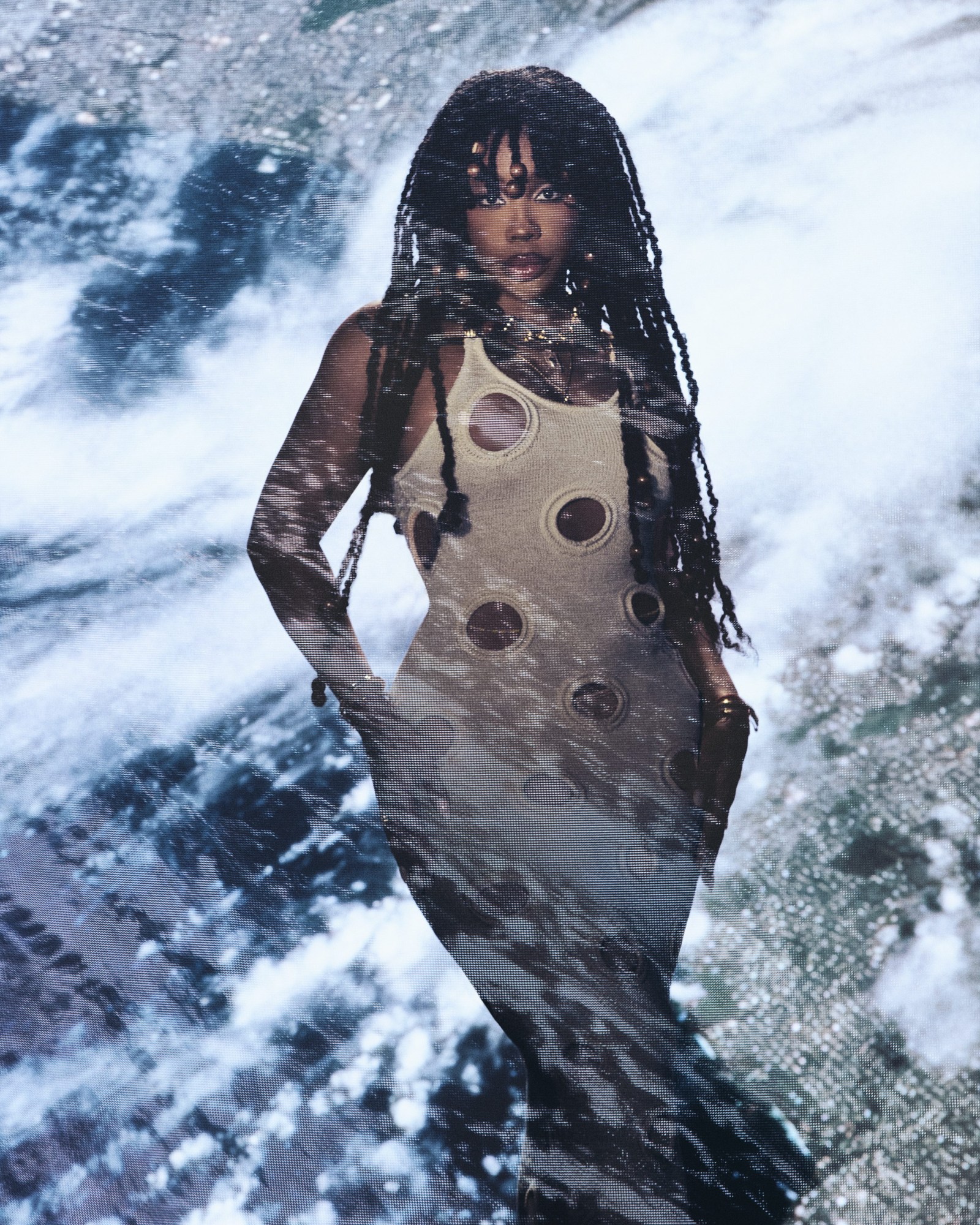
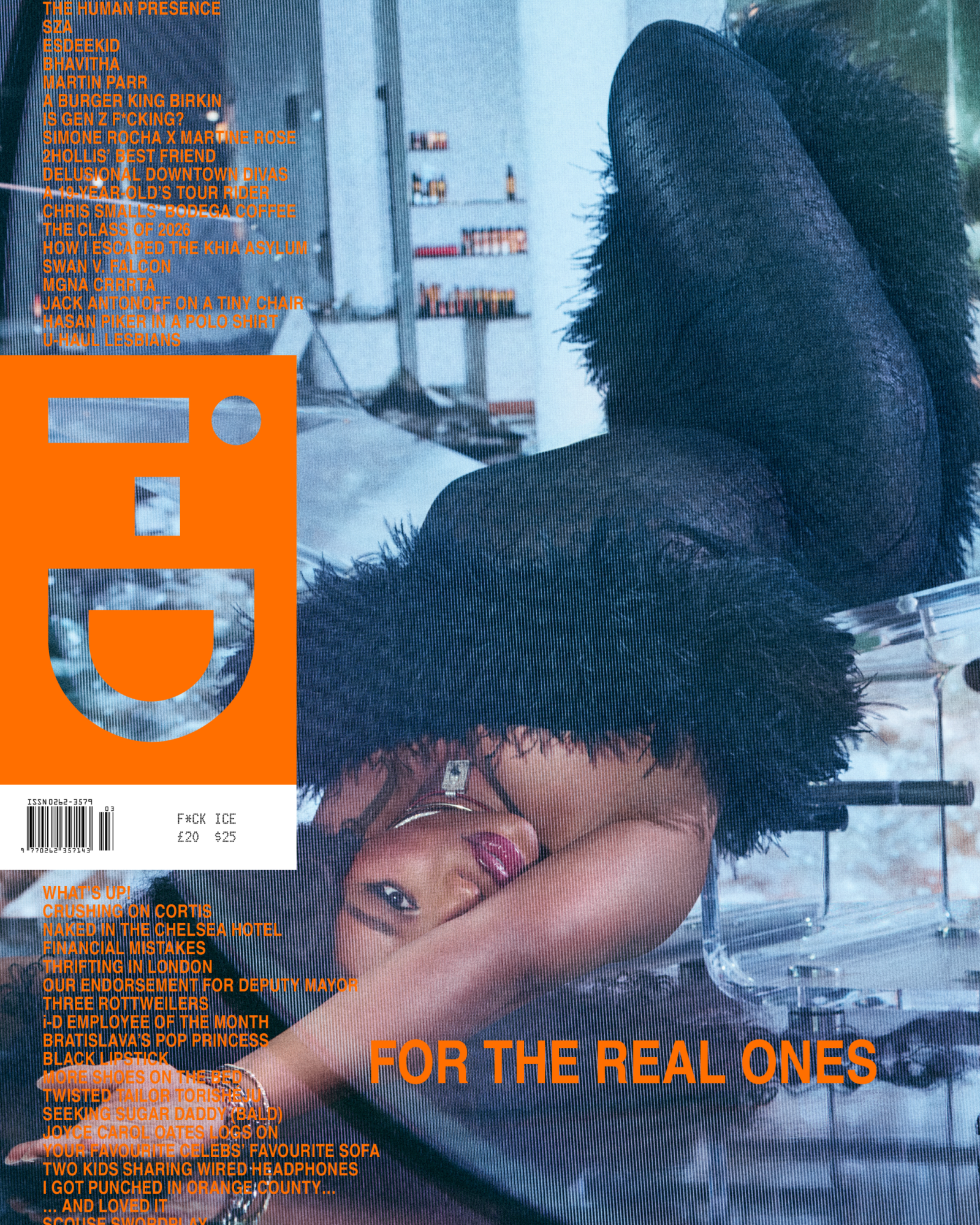
This story appears in i-D 376, “The Lore Issue.” Get your copy of the print magazine here.
photography TORSO
styling BRIANA ANDALORE
written by BRITTANY SPANOS
SZA is in her kitchen, holding a shot glass. “It’s my niece’s birthday,” she exclaims into her phone, panning to the birthday girl, Savannah, with a wide smile. “She’s a grown-up today!”
Lately, it feels like SZA has endless milestones to celebrate. Since dropping her sophomore album in 2022, her career has skyrocketed. SOS spent 10 weeks at No. 1 on the Billboard 200—she’s the first Black woman to achieve that. She went on her first headlining arena tour in 2023, then reissued SOS as LANA, a sonic balm to the wounds she addressed on the original album.
Not even SZA could have imagined that, after all that, 2025 would be even bigger. She kicked off the year with her first film role, starring in the Issa Rae-produced buddy comedy One of Them Days alongside Keke Palmer. In February, she performed at the Super Bowl LIX halftime show with old friend and fellow Top Dawg Entertainment artist Kendrick Lamar. Their collaboration track “Luther,” off Lamar’s GNX, topped charts for 13 weeks—SZA’s longest-running No. 1 single on the Billboard hot 100. By April, the pair were co-headlining the Grand National stadium tour.
But SZA seems unfazed. “If anything, I feel like I don’t know what just happened,” she says, propping up her phone in her bedroom, searching for a lighter for her blunt. “But I got to follow [2025] up strong, and that’s where my brain is.”
She accurately remarks that nothing in her career has been incremental. SZA’s early EPs were buzzy enough to earn her opening slots on tours with Coldplay and Jhené Aiko. She had co-writing credits on Beyoncé and Nicki Minaj’s “Feeling Myself,” Travis Scott’s “Ok Alright,” and Rihanna’s “Consideration,” all before she released her debut album. And that debut album—2017’s Ctrl—was so instantly beloved and acclaimed that it hit No. 3 in the first of over 400 weeks it spent on the Billboard 200. She’s spent a lot of time figuring out how to handle her breakneck ascension on the fly. But now she’s locking in: “I don’t want to wing it no more. The truth is readiness.”
The journey to getting whole began in 2024, when SZA embarked on a transformative trip to Bali. She was encouraged to start meditating. “This lady was like, ‘If you don’t learn to control your emotions, you’re gonna go to jail and you’re gonna lose everything,’” she recalls. this wasn’t the first time she’d heard something like that, but it was the first time it was spoken to her so directly.
“I could tell this bitch was not lying.” SZA had been spending a lot of time with Sadhguru, the spiritual leader and founder of the Isha Foundation, who deepened her knowledge of yoga and meditation practices. It was life-changing. “I used to really make fun of girls that were into the woo-woo and the crystals—and here I am,” she laughs. “God is very funny. But I’m a super sceptic.”
While practising Shambhavi Mahamudra, a breath-work-forward type of yoga, SZA noticed just how much she could release. She could be “pissed as fuck” before, and free from negative feelings after. In the 10 days between the premiere of One of Them Days and the start of Super Bowl rehearsals, she went to India to take a vow of silence. After the halftime show, she headed straight back to the ashram.
“It made me realise I’ve really got to get in control of myself, and be the fully-realised version of myself. I can’t hide forever off stupid insecurities,” she explains. “It’s crazy, because I find myself thinking that I’m free in different junctures, but it’ll be some new shit that shows you you’re actually [still] very affected. I can tell it’s my task to get free.”
SZA was reminded of that cycle when she herniated her C5 and C6 spinal segments. As a lifelong “happily clumsy” person, it was a jarring experience to lose mobility in her neck, unable to sit or stand comfortably, let alone turn her head. The injury happened right before her 36th birthday. Instead of celebrating, she was bedridden. So she went back to the ashram for a 30-day yoga treatment.

“It was somehow the best birthday,” she says, “because it was like, ‘Let’s get real and do something that can stop the running and the constant disappointment.’” As someone who loves control and certainty, she’s been learning to let go, feeling the effects of yoga and meditation in the small moments. She spent last New Year’s Eve alone in New York City, walking around the East Village, passing by the places she would frequent when she “was drunk and 23.” She saw a young girl discover Ray’s Pizza & Bagel Café on St. Mark’s: “She was drunk, stumbling with excitement. I just couldn’t imagine how great [it felt]. I was so happy for her.” The light flurry made it even more magical. “Ray’s Pizza at 1 a.m., New Year’s evening. That must’ve been a hit.” In the past, she wouldn’t have been able to appreciate something so mundane, busy waiting for people to call or figuring out where to go next—hoping to fill the next phase of her life with the biggest dreams possible.
Earlier, before our call, SZA was thinking about mitochondrial DNA. She’s been practising yoga and meditation with her family, and it’s led her to reflections on childlessness. Her mom, Audrey, waited to have her until she was ready and comfortable, giving birth to Solána imani Rowe when she was 43. “She can rest knowing that the mitochondrial DNA of every woman that came before her lives through me,” SZA reflects. She wonders if she’ll carry that lineage forward: “I’m bossed up, I’m taking my time. It’s spooky out here—maybe I won’t have kids. Maybe I will. Do I really want the magic and the love to end with me, or is it the end of A KARMIC cycle?”
For now, preservation of what she has is the priority. She’s been spending a lot of time with her family and shows me a recent haul from Barnes & Noble—brain games and puzzles for her and her parents, along with a stack of books: The Let Them Theory by Mel Robbins, Killing Rage: Ending Racism by bell hooks, Anthem by Ayn Rand.
“Do I really want the magic and the love to end with me, or is it the end of a karmic cycle?”
SZA
“I feel aggressively Black right now,” SZA says. She spent a whole night reading about the Heritage Foundation, learning that the people behind Project 2025 are well-versed in the right-wing think tank. “It’s so scary to realise that we’re so deeply unprepared and fractured and fragmented as a society,” she says. “The veil is down and anything is happening. We aren’t empowered by a sense of community and solidarity. We don’t have it.”
SZA wants to know more about her family’s experience of history. she’s asked her mom about living through MLK’s and JFK’s assassinations, and her dad about doing work for the Black Panthers. Recently, the White House used her song “Big Boy”—produced for a Saturday Night Live sketch—in a video celebrating ICE agents. “I don’t know why the White House is tweeting me,” she says, reluctant to give them further press. “I want to be educated. I don’t want to be swayed by an algorithm. I don’t want to be swayed by AI. I don’t want to be convinced that it’s not my problem, because I did my part and I voted. It is unfair for it to be anybody Black’s problem right now. But by the same token, I will not go quietly into the dying of the light. I just won’t. I just can’t.”
For as much as she’s been practising presence, SZA isn’t lying when she says she’s ready to follow up last year strong. She’s been back in the studio on and off since Grand National wrapped, working towards her third album. She’s realised she always needs a good “why.” “With Ctrl, I wanted to set myself apart,” she explains. “I wanted people to know that I can write. Ctrl was about ‘fuck you,’ but a different brand of ‘fuck you.’ Like, ‘I actually can do that if I want to. I just didn’t want to before.’” (She compares the album to her college experience: She didn’t finish, but stayed long enough to make Dean’s List. “I just wanted n*** to know I’m not stupid. I just didn’t want to be here.”)

SOS’ “why” was to affirm that—though the record took a while to complete—she wasn’t finished. “I could bang in a mainstream space if I wanted to,” she continues. “I made ‘Nobody Gets Me’ because I never made a ballad before. I could do my little angry rap [‘SOS’], and I didn’t have to keep it just for me. I could let other people hear it. Now, it’s the intro to the album.”
At the end of the day, SZA is a Scorpio. She needs that driving factor. These days, it’s preserving music’s humanity in the face of rising technology.
“I feel like I’m at war because of AI,” she states, sternly and defiantly. She sings about it on “Ghost in the Machine:” “Let’s talk about AI, robot got more heart than I / Robot got future, I don’t / Robot get sleep but I don’t power down.” In the years since she wrote those lyrics, artificial intelligence has overtaken our daily lives—so much so that AI-generated songs and artists are raking in real streaming numbers.
“It’s happening disproportionately with Black music,” she continues. “Why am I hearing AI covers of Olivia Dean, when Olivia Dean just came the fuck out? She can’t even collect the streams. I’m also really offended by the type of Black music that’s coming out of AI. Weird, stereotypical struggle music.”
This summer, on Instagram, she spoke out against AI’s spurning of environmental racism—pollution and resource depletion in disproportionately Black and Brown communities. She has a new adversary in AI’s mining of creative and intellectual property, preexisting and stolen by way of future generations’ opportunities.
“I’m not up against the pop girls. I’m not up against the R&B girls. I’m up against anti-intellectualism and doing things easy. The type of blend of information my human experience provides, AI can’t even be prompted to fuck with. I want to just let this angst drive me into bizzare directions.”
While on tour, SZA’s longtime producer, Carter Lang, recorded sounds in every country they passed through—usually while they were hiking. She sees so much potential in the cross-pollination of sound and culture, an endeavour that takes work, experience, study, and, most importantly, curiosity.
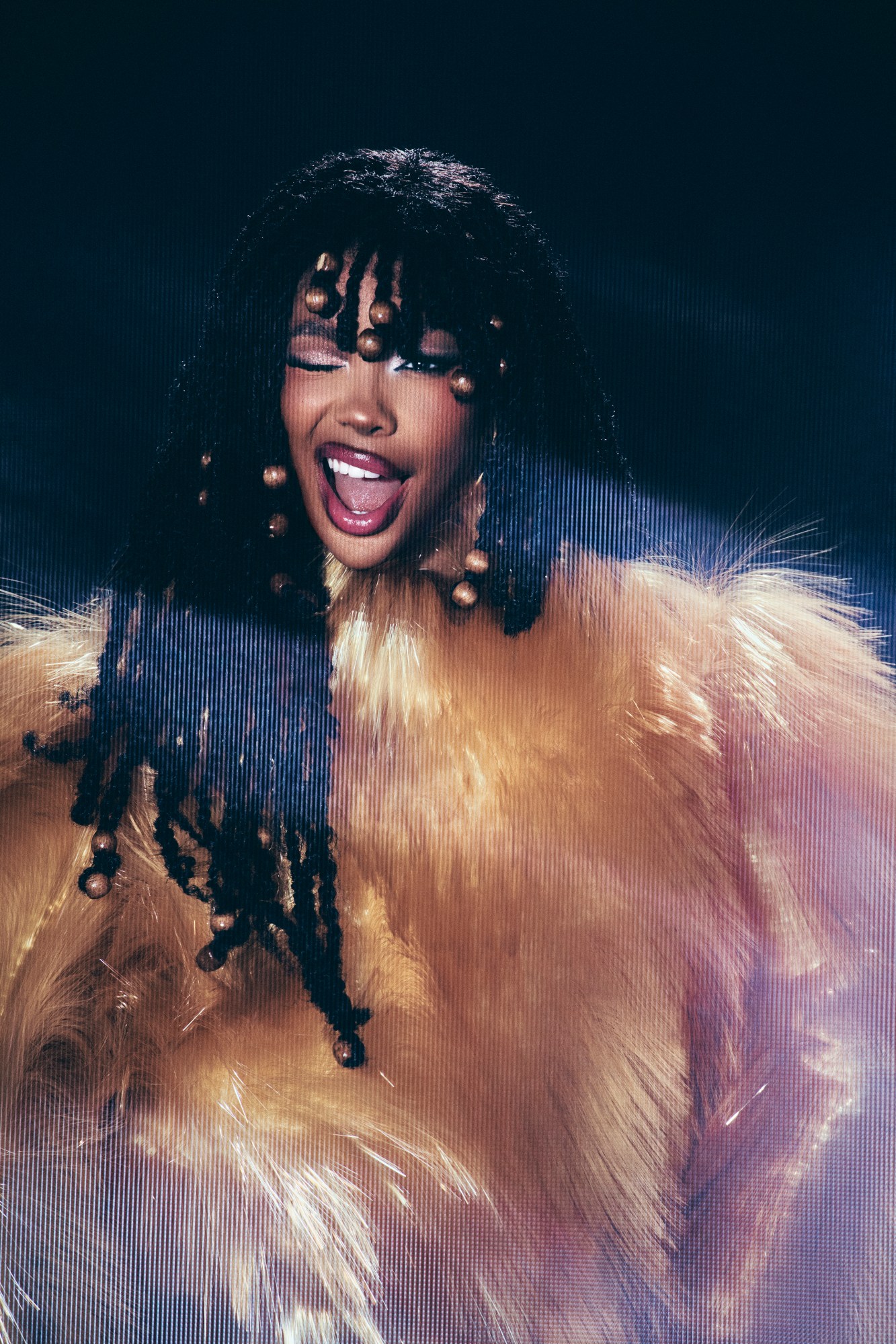
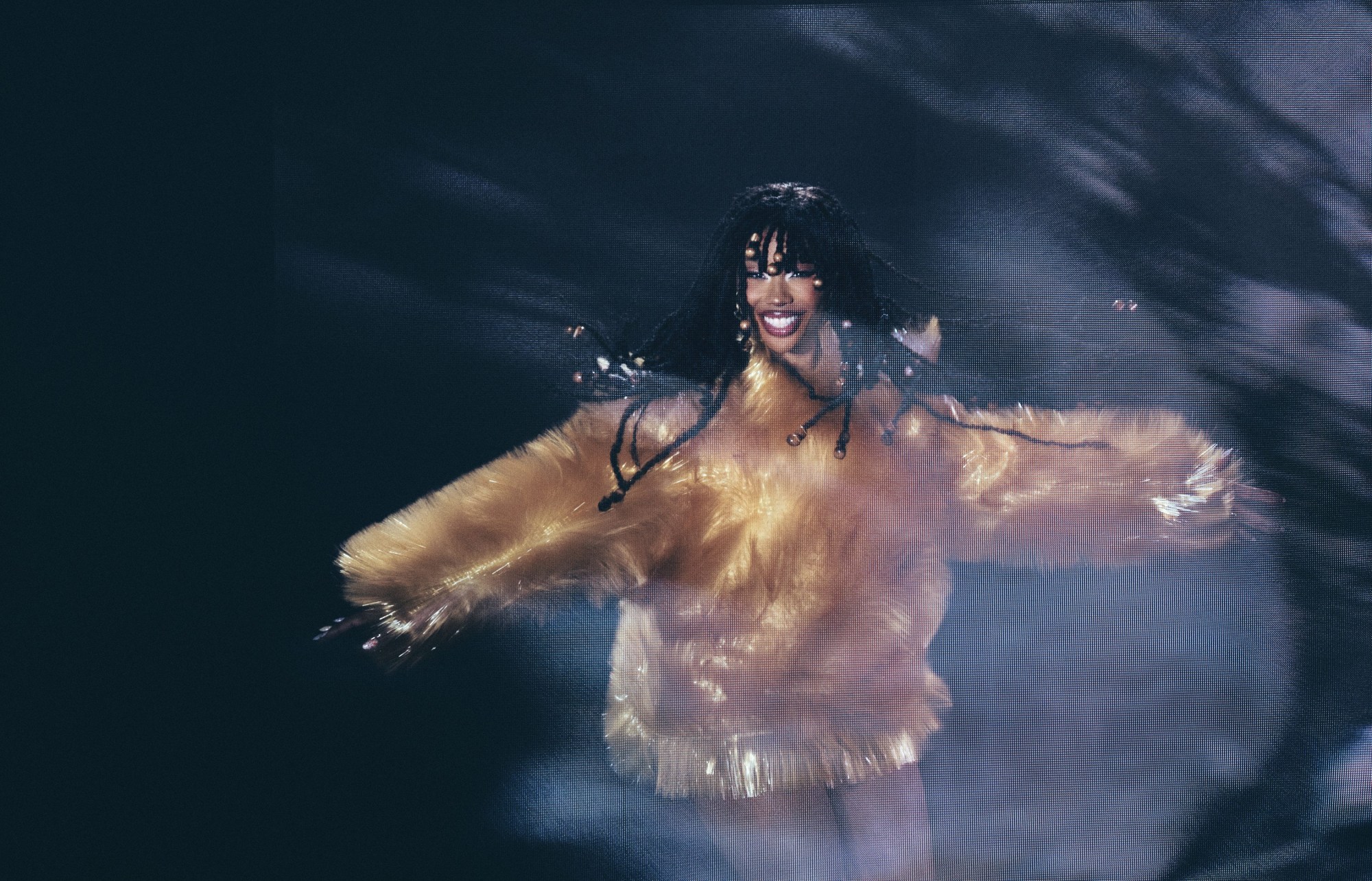
SZA can’t reveal too much about the humanity she’s feeding into her new music, but she has previewed some of it on @notmusicatalliswear—her IG “spam page” where she drops bodega selfies, memes, and long captions. In August, she teased a lush, string-laden track with the lyrics, “Can’t take what’s meant for me / It lives inside / Can’t miss what’s meant for you / Enjoy the ride / Cycles / Enjoy the cycles.” It ends with a pair of samples: Nikki Giovanni reading her poem “My House,” and dialogue from the 2001 film Baby Boy.
“I’ve been dabbling a little bit in everything,” she says. The music she’s posted is more about “healing frequencies,” and sharing something soothing with her community. She’s been in the studio with a live band, letting them work out beats from scratch. She freestyles into the mic, making things that “feel good and don’t say too much.” Steve Lacy joined her for a few sessions, too; they “made a random little project together.”
“I’m trying to just open my brain and open my heart, channelling awesome humanity shit right now,” she says. “Humanity is my ‘why’—preservation of what’s left, extreme expression of what is, and a desperate plea.” She’s letting her emotions and her music be unfiltered, raw, and flawed. “I feel insufferably human right now.”
At the time of our conversation in January, our social feeds were both full of people looking back on 2016. It was the year SZA was on the precipice of something great: her voice opening Rihanna’s Anti, then making Ctrl with her own money in Lang’s grandmother’s house, before she got signed to RCA records. “It was one of the scariest, most exciting times of my life,” she says. SZA smiles. “It was more like, ‘Wow, I’m really hungry. I’m really hungry, and I really don’t live anywhere for real, and I need to finagle that bagel.’”
I ask if 2016 SZA would believe everything 2026 SZA has accomplished. “Yes and no,” she replies. “Part of me was like, ‘Why not?’ I didn’t have a ceiling for myself. I definitely didn’t see this at all, but I thought that what I was doing was special. Because it made me feel smart and special when I made it.”
She had enough people telling her what the ceiling was—hitting No. 1 on any chart was impossible, let alone doing it multiple times. “My label told me that it was likely that I wouldn’t beat Taylor Swift, and I should prepare for that,” she says, referring to a 2023 chart battle between SOS and Midnights. “I was laughing by week three. It was just like, ‘What is this? I never even imagined I could be on the radio.’”
But it all did happen. And SZA hopes that, in the future, she will live each moment as fully and presently as possible—since she spent so many years with her eyes on her next move.
“I feel like anything is possible,” she says. “I feel like I’m adulting kind of hard right now, and I might be eating. I feel like I might be alright when it’s all said and done.”
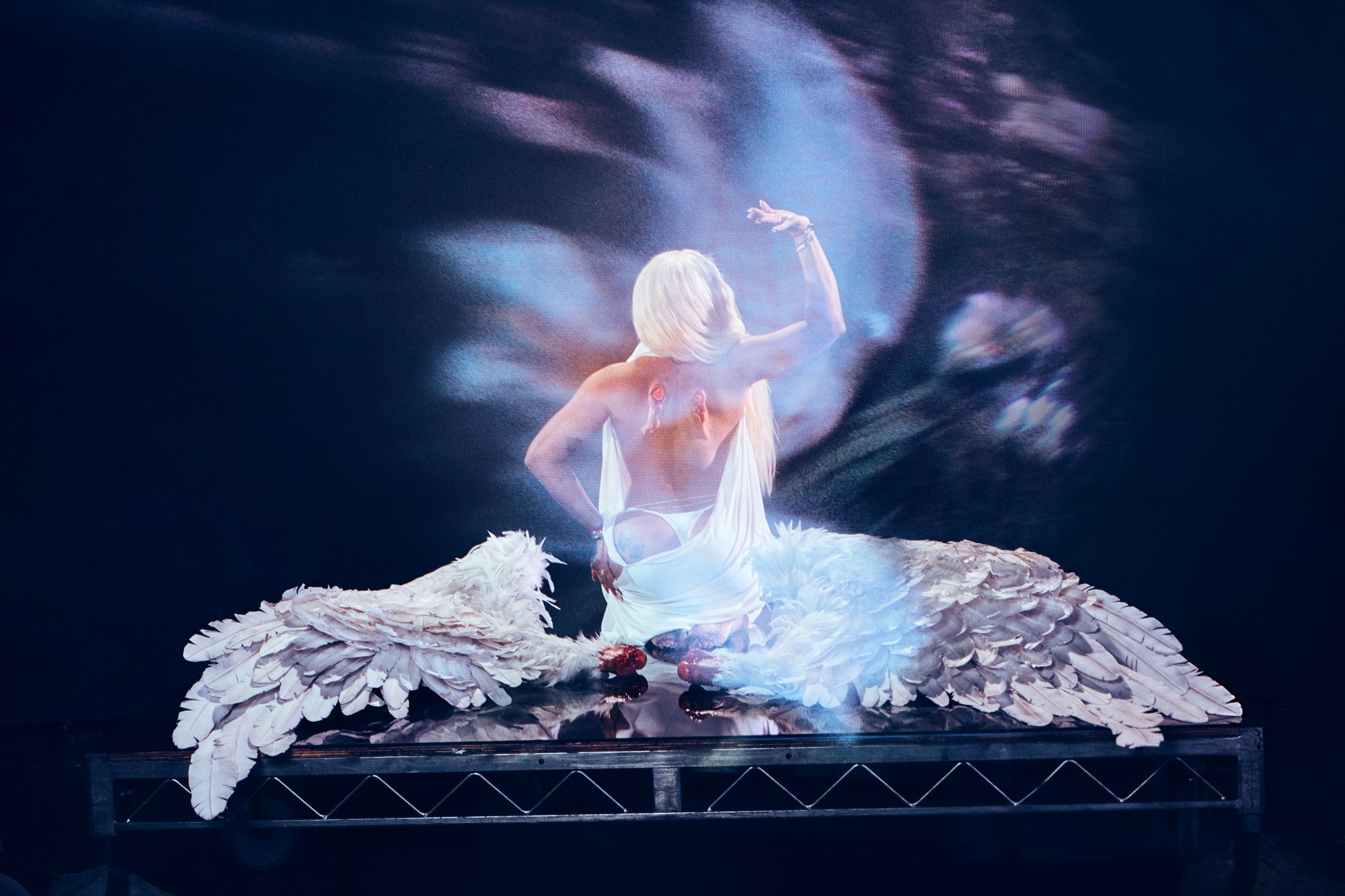
in the lead image Dress and earrings SCHIAPARELLI, Jewellery SZA’s own, Top necklaces TIFFANY & CO.
hair DEVANTE TURNBULL using K18
makeup DEANNA PALEY & KENYA ALEXIS using NOT BEAUTY
set design WESLEY GOODRICH at ARTISTRY
movement director CAMI ÁRBOLES
wings & prosthetics JASON HAMER
sfx application MALINA STEARNS & MIRANDA JORY
photograph assistants GUSTAVO SORIANO, CARLOS QUINTEROS & BRETT WILLIAMS
digital technician BENOIST LECHEVALLIER
styling assistants ALEXANDRA HARRIS & ROBBIE
production THE MORRISON GROUP
production manager CECILIA ALVAREZ BLACKWELL
production assistants ERNIE TORRES & TYREEK VOLTAIRE & RON DAVIDSON
photo producer MORGANE TAYEAU at DIVISION
post production INK
digital artworks HUNTER HORNOF
location SV STUDIOS