
The heart of Africa pounds through the blood of Brazil. 130 years on from abolition of slavery in the country, and its racially diverse populous is celebrated for its continued rich contributions to cinema, dance and art, while the African beat is felt overtly everywhere from Bossa Nova to Baile Funk. Last week, i-D headed to Brazil for the latest in Boiler Room and Ballantine’s Scotch Whisky Stay True series, to discover the global influence of Brazil’s ever evolving sound. While in the bustling bright lights of Rio de Janeiro and Récife, an equally energetic city a few hours to the North, we emerged ourselves in everything from the beach to the bloco, from Funk Carioca to Karol Conka. One thing is for certain; in Brazil, the beat can’t stop, won’t stop…
1. Brazilian music has hella regional subcultures
From Bossa Nova’s origins in Bahia and Baile Funk’s invention in mid-80s Rio de Janeiro, every region in Brazil seems to have invented its own street sounds. Each are all wildly different and, beside from the drumbeat at the heart of nearly all Brazilian music, each scene is sonically autonomous.
An offshoot of Baile Funk, Funk Ostentaçãois Sâo Paulo’s version of the Miami bass and sample led favela music. Ostentação does what it says on the tin; it’s more flamboyant than Balie, and generally much more concerned with money, girls, cars and escaping the favela. Fluxo is what happens when Sâo Paulo kids listen to Funk from their cars.
There are many other subcultures bubbling under too. Technobrega hails from Northern Brazil, mostly Belém, and is mental. It’s basically ‘cheesy techno’ and is much sniffed at by Cariocas (people from Rio). To the south of Belém lies Récife and its traditional Frevo. The best time to experience Frevo is before and during Carnival (Récife’s carnaval is known for being the most authentic in Brazil). DJ Dolores is a pretty big deal in Récife and worth checking out to get a feel of the city’s distinct Mangue sound. DJ 440, who plays at the Boiler Room’s Récife show, is from the nearby UNESCO protected town of Olinda. Though it might be known for its beautiful, if faded, colonial architecture, Olinda joins Récife and the outlying region of Pernambuco for adding exponentially to Brazil’s rich musical scene. “Our music has really strong characteristics; it’s really traditional and that’s really important,” says 440. “It makes the music here different to the music from other big cities, which tends to rely on other influences from different parts of the world. Real, traditional music from Brazil isn’t really known, especially from Pernambuco. I want to spread this music, and Brazilian culture, around the world. Brazilin music has a swing that makes people want to dance and sing along,” he adds proudly. “It has a mix of different cultures from not just the country but the world. That mix makes Brazilian music special; it’s not just one thing, it’s lots that make it so special.”
2. Rising rapper Karol Conka is amazing
We first spotted Conka at a night in Rio called Heavy Baile run by local DJ and producer Leo Justi. She took to the stage at around 3am, with total abandon and aplomb, stirring the super diverse crowd into one heaving mass with hits including the Tropkillaz produced Tombei [Tumbled] and ÉO Poder [It’s The Power]. Karol turned up again in Récife a few days later to jump on Gilles Peterson’s set and is once again a beautiful whirling dervish of bright pink dreads and scatter gun raps, infusing the experience with her own blend of Brazilian energy. “It’s rare to have women in music in Brazil, we’re treated a little special; you can get recognised just by existing here,” says Karol of being one of the few female voices found in Brazilian hip hop. “The bad side of that is simply how rare it is; we’re put aside as a special, weird thing and it’s really rare to see women rapping. It’s a very small stable and that’s not good because people – promoters, producers – think they’re aren’t others and so they don’t look for new talent.”
Though she’s touted as the Nicki Minaj of Brazil, Conka has a lot more in common with Lauryn Hill. “When I saw Lauryn for the first time, it awoke a desire, a will within me,” she remembers. “I wanted to be a beautiful, black, female singer just like her. She is my inspiration. For a really long time, women in Brazil have suffered from low self-esteem, and Lauryn Hill’s music bought me confidence and self esteem. Now I want to pass that onto other women. I’ve started a project in my hometown of Coritiba, which encourages women to throw themselves out there into the world of music. I think girls are maybe shy or intimidated because they see how few spaces there are for women in music.”
3. The Brazilian beat is addictive… and plentiful
For the party in Récife, Boiler Room invites a mix of people to play; both those local to Brazil including Sao Paulo’s DJ Nuts and DJ 440, from the nearby city of Olinda, and international superfans of the sound including Nightmares on Wax and Gilles Peterson. “For me, the thing that’s so special about Brazil is that it’s got the sadness and the happiness,” says Gilles, who premiered his take on the really rare 1958 album Tam Tam Tamby Jose Prates. “It’s quite reflective music and it’s got the minor chords. For me, that’s the ultimate really, that’s what I like in music. I like a bit of emotion and I like a bit of energy and Brazil ticks those boxes, beautifully.” For someone who’s been digging deep in the Brazilian crates since the eighties, Peterson points out there’s still much to discover about the country’s rich and diverse musical history. “There’s so much going on, there’s so much to get into and devour. People can be put off by the language. I don’t understand Portuguese, yet I understand the emotion of it. There’s always something new to discover, even now. The more I keep researching, the more I discover, such as the Jose Prates album. It’s a bit like discovering a new Nick Drake or Terry Callier album. It consistently surprises me how deep it goes.”
4. The scariest thing about partying in a favela is the cab ride up
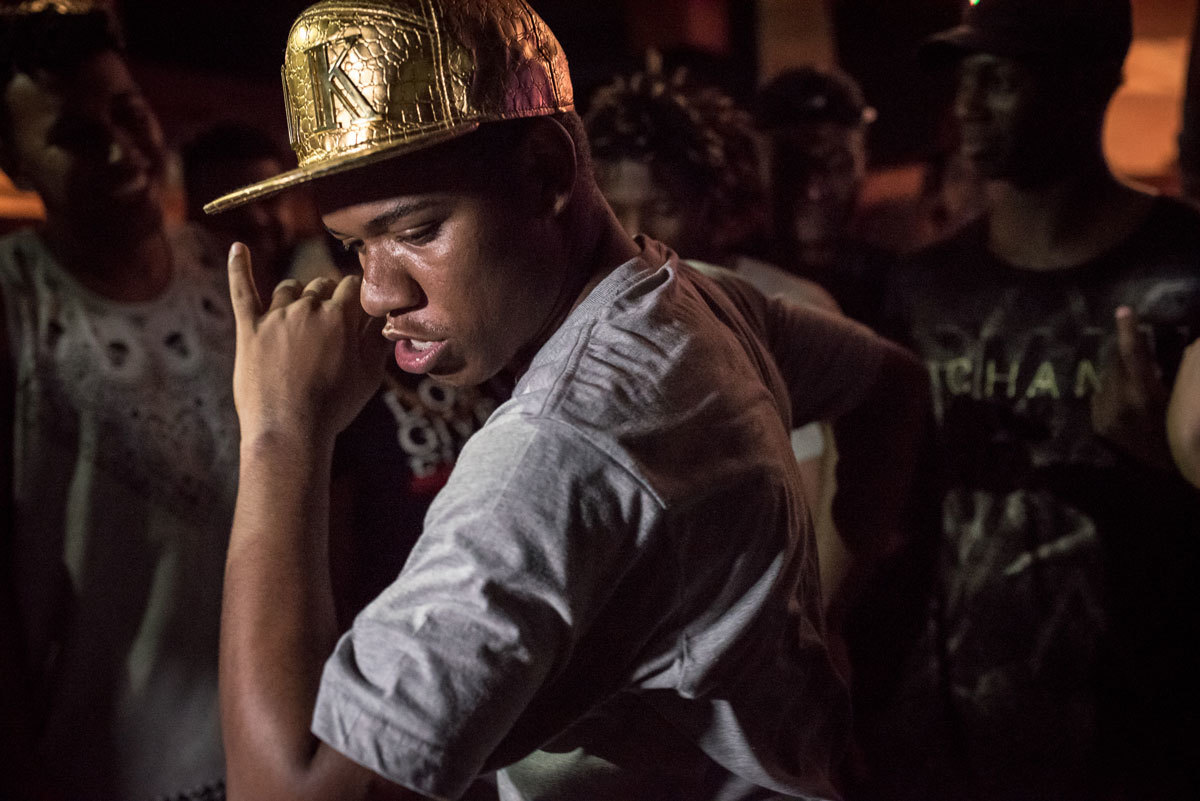
Uber doesn’t do favalas. It’s not entirely clear why – they’re too tricky to drive through maybe, the local druglords don’t allow it, possibly. As we reach the bottom of Vidigal, a hillside set favela at the end of Ipanema Beach in Rio, the driver looks dubiously at our GPS destination, before shaking his head. As a warm up to the Stay True Brazil party in Recife later in the week, Boiler Room throw a party in Vidigal, the first favela to be pacified; i.e. it’s not as batshit crazy dangerous as it once was. The driver points, vaguely, in the direction of some motorbikes, a cab company of sorts run by local kids. It becomes clear that in order to get to our final destination, we have to helmet up and hold on tight. The speed is set to full throttle and health and safety is thrown to the wind as the teenage drivers hurtle us up the hill, swerving erratically as numerous objects – people, cars, cats – career towards us. It takes around 12 minutes and it’s easily the scariest, most invigorating, life-affirming experience you’ll have. The ride is more than worth it; taking place in the middle of a maze of alleys carved out the side of a mountain high above the sprawling city and crashing Atlantic sea far below, DJ’s Sany Pitbull and Vinimax deliver a three hour set of serious Baile Funk, the music particular to Rio in the way Grime is to East London. As the sun sets, a crew of local kids turn up to dance Passinho (see: below). Regrettably, the night eventually ends around midnight, and though the way back down the mountain is ten times more terrifying, we’re pacified a little by a whisky and ginger (or two).
5. Dance hard or go home
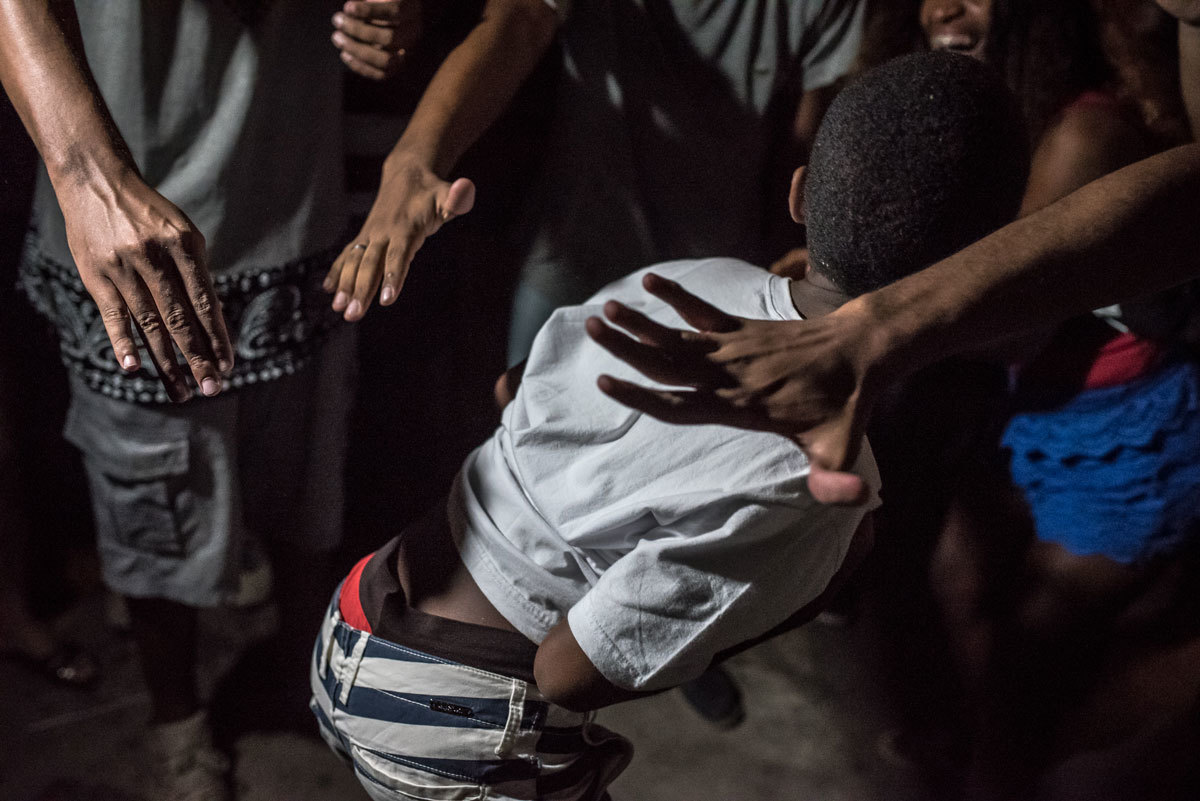
At some point during Sany Pitbull’s set in Vidigal, a crowd of kids arrive and begin to battle. Most are barefoot, although you can hardly tell given the speed their feet move. This is Passinho, particular to Funk and many of the kids are pretty famous in Rio for their dancing. As the sun sets over the city, the sight of their spiraling feet and the accompanying heavy Funk set that vibrates through the body, is quite the spectacle. People bang on about Caporeira being amazing; trust us, you haven’t seen serious moves until you’ve seen some teenagers dance Passinho.
6. Todd Terry Turns Up Even On A Funny Tummy
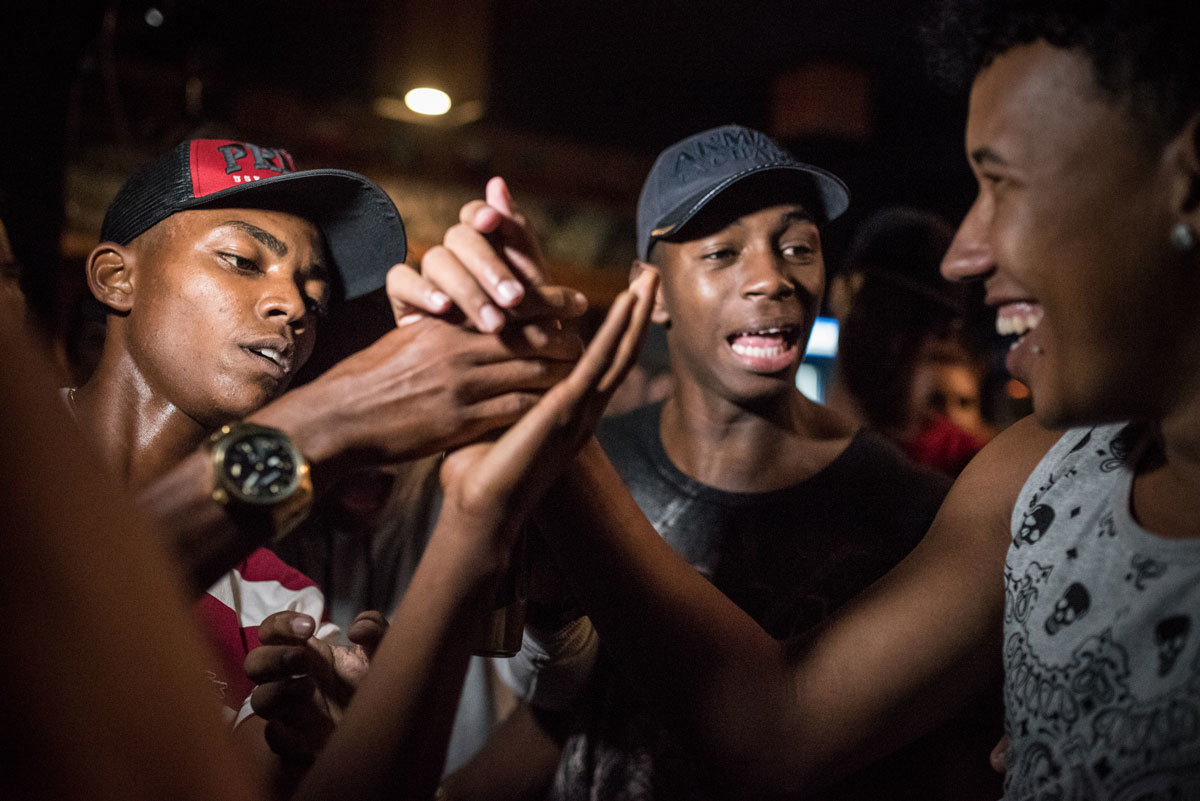
The New York Hip Hop House legend turned in a set in Récife that was a sight to behold. Playing quite literally all the hits, Terry set the city on fire with his blend of classic bangers from the 80s, 90s and today. All that and the poor guy wasn’t been feeling very well. “I had a cold last week, so I’m trying to get over it. I think I picked up something on the flight over,” he said before his set. “But I gotta get out there and get it, like I always do.” Nodding to Brazil’s influence on his own work – “the spirit probably more than a particular sound”, Todd may play a CDJ set, but his heart lies in the more tactile world of older technology. “Too much computers has put a dampener on what we should be doing with music,” he points out, adding that the magic of Bossa Nova and Salsa, Jazz and Soul, is in the musicianship. “Now you make music without music. It’s an interesting cliché that’s happened over the last few years. But I’m happy, I got a good 20 years out of it, so I’m good.” Long may he – and Brazil – keep that beat banging.
7. Brazil has some pretty awesome party locations and seems super LGBTQI friendly|
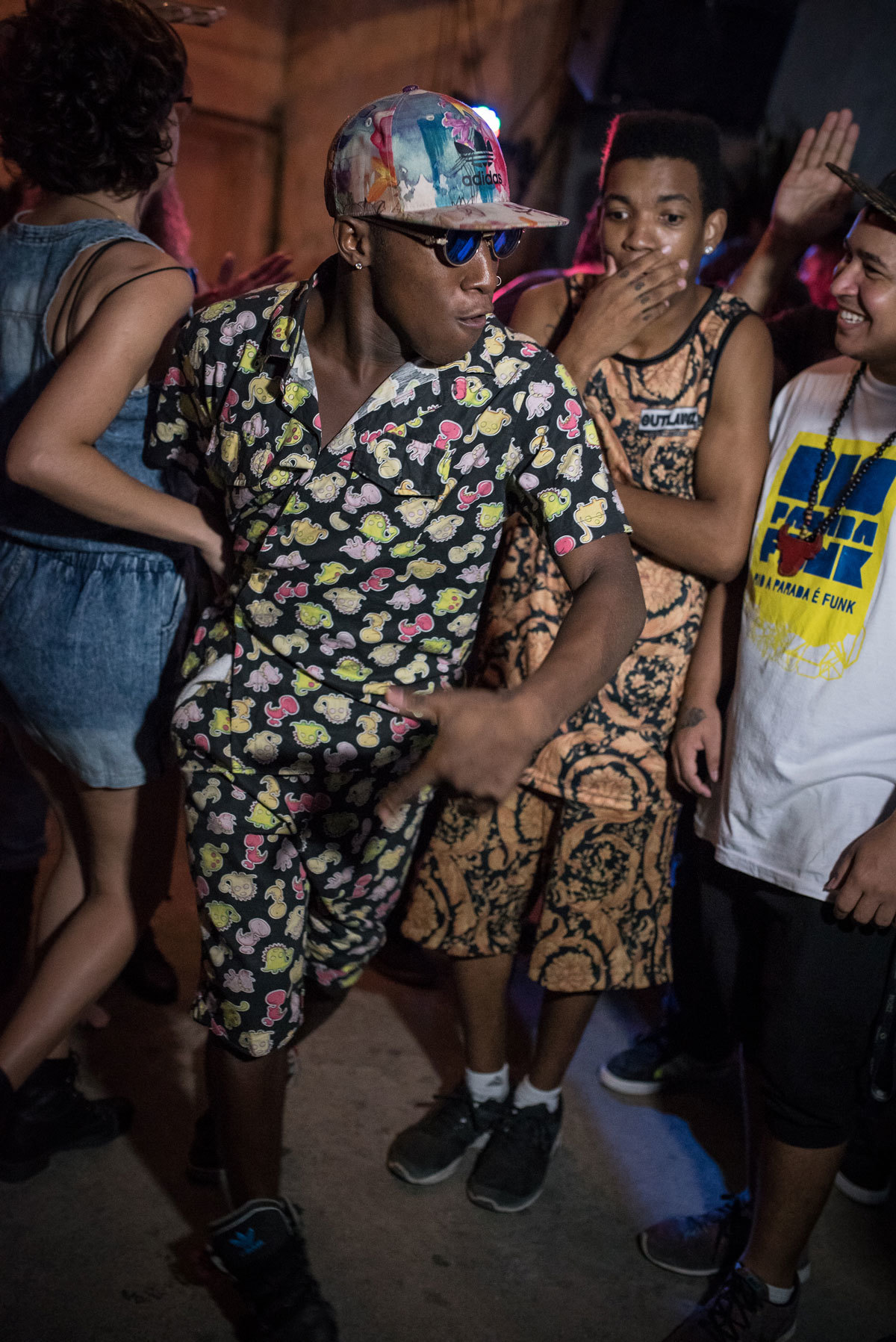
Whether up high on Rio’s Vidigal, on the streets of the UNESCO protected Olinda, or in an abandoned fort near Récife’s old town – the destination for Boiler Room’s Stay True Brazil rave – partying in Brazil feels incredibly invigorating. It’s loud, it’s late and it feels incredibly open to its LGBTQI community. In pretty much most of the clubs, street parties or beaches we go to, trans people exist easily alongside cis. “It is very mixed here, but it depends where you go. You’ve been to perhaps more open-minded places,” notes Karol Conka cautiously. “Not everywhere is like that, unfortunately.” It’s a shame, because one thing that seems particularly wonderful during eight days in Rio and Recife is that gay and trans life seems to not only be accepted, but as much a part of life here as feijoada and caipirinhas.
8. In short, we really, really love Brazil.
It’s awesome. We want to go back. Now.
To check out all the performances from Récife, as well as previous sets from Ballantine’s and Boiler Room’s ‘Stay True Journeys’, click here
Credits
Text Hattie Collins
Photography Vincent Rosenblatt