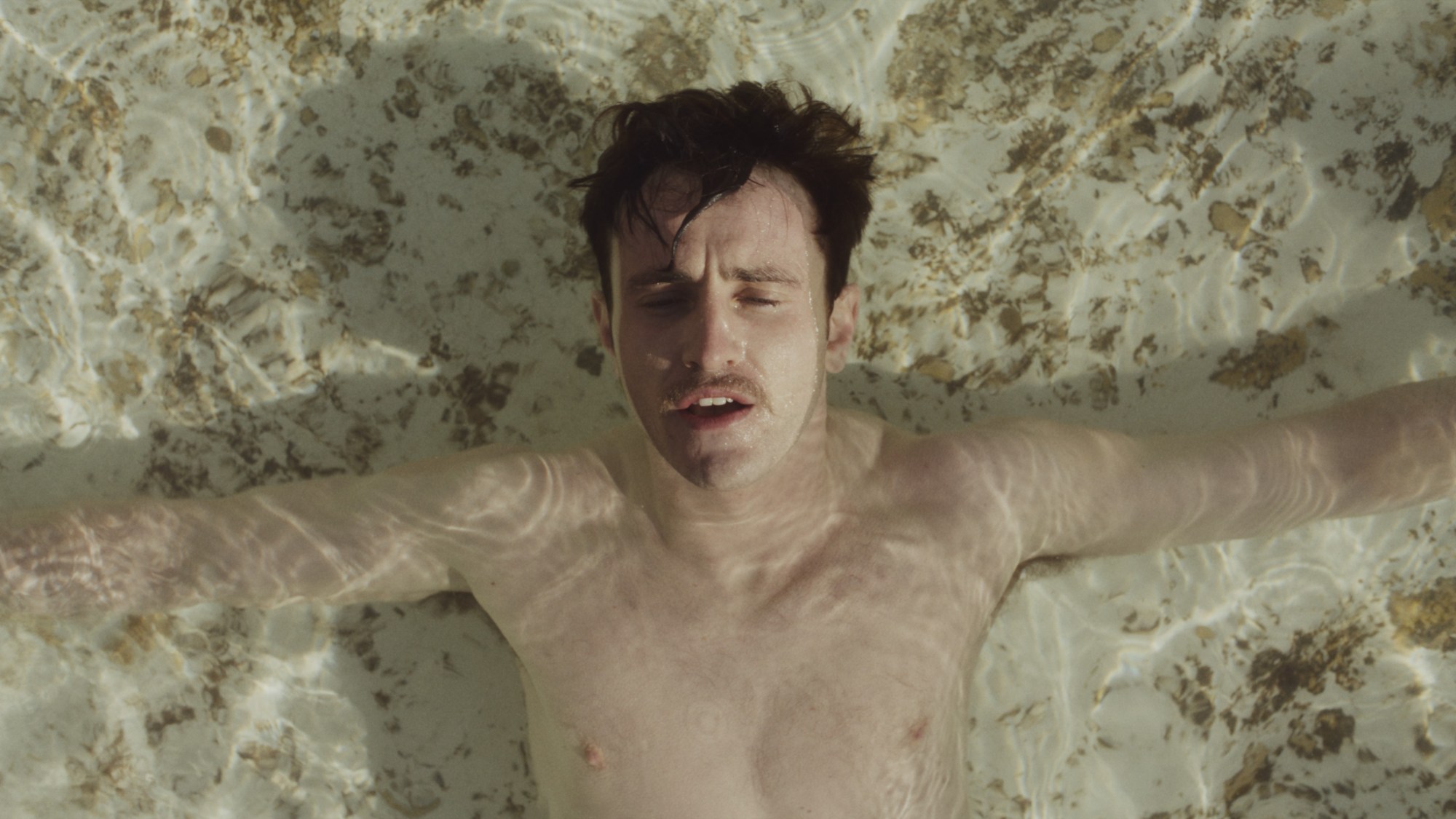
In recent years, Paul Mescal and Josh O’Connor––arguably two of the greatest young actors working at the moment––have given impactful and, in O’Connor’s case, breakout performances in films centered on queer stories. Mescal’s devastating, freeing turn in All of Us Strangers should have won him an Oscar; O’Connor’s part as a closeted lamb farmer in God’s Own Country was both sexy and otherworldly. This year, their worlds collide for the first time in The History of Sound. Directed by Oliver Hermanus and premiering at Cannes Film Festival, it’s a sweeping, moving period romance about two men bound by music and pulled apart by war.
Set in the early 20th century, initially in rural America, Mescal’s Lionel is a young man whose home life feels out of sync with his ambitions. So he jumps at the opportunity to move to Boston to study music. One night, at a piano, he meets a beautiful fellow student—O’Connor’s David, a composition student—and as they play and sing together, a covert romance quietly begins to unfold, mostly behind closed doors.
When the war breaks out, Lionel finds himself held back due to his eyesight, and the two are forced to part ways, hopeful they’ll reunite. When they finally do, years later, they set out on a project to collect and document the folk songs of America’s rural communities, crossing the country with nothing but a gramophone and a tent on their backs.
“Lionel and David’s relationship feels authentically of its time: isolated and charged with everything left unsaid”
Perhaps the film’s biggest surprise is its restraint. The gay men and Fujoshi-coded audiences who added it to their Letterboxd watch list a few years ago may have expected something a little more feral. But the film is free of nudity; its sex scenes are scarce and artful. In some ways, it feels like a film made for the period it depicts rather than the moment we’re living in—and that’s not a bad thing. Were gay men fucking like feral rabbits in the woods in the 1910s? Almost certainly! Does a film that doesn’t give us what we desire on that front therefore feel like a failure? I’d argue not.
In some ways, its restraint and sensitivity is one of its greatest assets. Lionel and David’s relationship feels authentically of its time: isolated and charged with everything left unsaid. A quiet image lingers. As Lionel marches through the woods with David behind him, feathers spill gently from a hole in his pillow, leaving a trail in their wake. Quietly, David collects them. Later, at a lively gathering in a rural home, Lionel blends into the warmth of the crowd while David, alone, tries to stuff the feathers back in.
It’s a fitting metaphor for The History of Sound’s central tension: when we toe the line between what we want and what’s expected of us, how far can we drift toward desire before our world implodes? And if we let go, can we truly live?