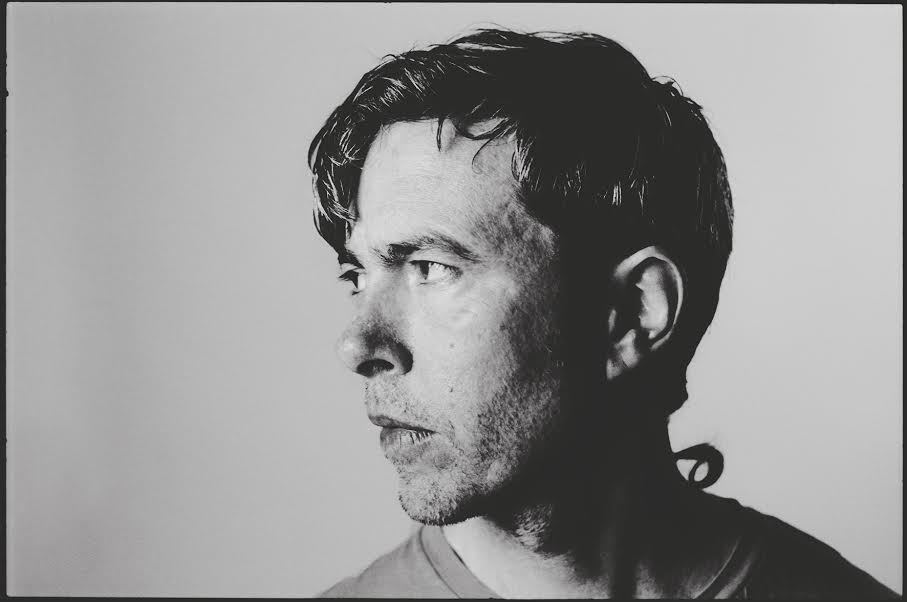
Bill Callahan is one of the most important song writers working today. His work puts him amongst the greats – artists like Bob Dylan, Johnny Cash and Leonard Cohen. He is also one of my personal heroes. His music means a lot to me. And to my friends. And to most people who care about good music and delicate things.
There’s an image surrounding Bill Callahan. A certain mystique. An idea of what kind of person he is. For years my idea of him was that of a man sitting quietly in a dark motel room, cigarette smoke outlining his silhouette, Donald Southerland interview flickering silently on a peripheral TV screen, staring out a window at trucks driving by into the night. I was apprehensive about meeting that man, the man sitting quietly in the room. Nervous about speaking to him, about asking him questions. I didn’t want to ask the wrong thing, to come across as trite or naive. Or even to waste his time. The idea of his time is precious to me.
The first thing I asked him was what gets him going to write. What motivates him. He responded in a quiet, calm voice, that he is drawn to the idea of making things that people love, and that for years he made them slowly. He explained that until recently his writing process has been laborious, like making a pie with infinite care, adding sugar grain by grain. And that often he struggled to find the right ingredients. However in recent times his process has changed, become less painstaking, less fastidious. He works more fluidly, and when a song arrives he gets it out as quickly as he can. He told me that the change has been like a revelation for him.
Bill Callahan’s songs tend to have open structures that follow their own trajectories. So I asked him about the relationship between his songs and modern pop music with its heavy, formulaic focus on the choruses and ‘ringtone’ hooks. He told me, “when I listen to other pop music on the radio I feel like we are from different worlds, we don’t belong together”. He explained that he needs space in his music, room to move, to breathe. And when it comes to shows, he needs band mates who can follow him musically while providing him the freedom to play his music the way he feels it.
Giorgio Agamben talks about the tension between the individual and the universe, and argues that the act of creation is, for the individual, an experience of the universal. There is something distinctly ‘universal’ in Bill’s laconic use of the language. Examples spring to mind: The beautiful lines from the song Small Plane: ‘Sometimes you sleep while I take us home/That’s when I know/We really have a home’ or Ex Con: ‘Whenever I get dressed up/I feel like an ex-con/trying to make good’. I asked Bill how he felt about people’s preoccupation with dissecting his lyrics. Did people’s yearning to understand his meanings disrupt their ability to personally experience his music? He responded that the idea used to concern him, but that he has come to realise that, “people’s experience with the music is their own – often they are just checking that they have the right grasp – if they hear my idea of what the song means it isn’t going to change their own connection with it. That’s always going to be stronger than my intention. And if they have no connection to the music that isn’t already their own, my intention isn’t going to give them one”.
Bill has a reputation for being a deeply private person who doesn’t much like giving interviews. He doesn’t seem all that interested in participating in his celebrity, or being part of any scene. So I asked him about his idea of belonging. What it means to belong to a culture or a place, or to America. To him, America is “just a place. I write about it because it’s in me just like a feeling. Feelings as though you don’t belong, or the idea that you don’t belong, is just an excuse for disengagement. The choice to disconnect from what’s around you”.
While our phone conversation was wrapping up I became distracted. We were talking about planes and how we both travel too much and Bill wanted to know if being on a plane was something I was comfortable doing. “Are you a small person or a big person?” he asked. The familiarity of this touched me. Distracted, taken aback, I stumbled to reply “uh ha, I guess I am a small person”. Then silence. The longest silence. I didn’t have anything meaningful left to say, so I just hung up.
A few days after the interview I met Bill at a photo shoot under the Opera House. While we waited for him to arrive I tried to distract myself. I applied and removed makeup which was odd because I don’t even wear makeup. I just wasn’t quite sure how I should be around him. It was the first time I’ve ever been nervous. He arrived and luckily I found his presence calming. He speaks quietly and slowly and he smiles a lot. His eyes are intense in an amused, sad way. It’s true that he doesn’t use many words and he didn’t answer all of my questions. Instead he would just look me in the eye and smile, as if to say ‘we don’t really need to discuss this, do we?’
That night I went to his show. He isn’t interested in theatrics. His band played in a line at the front of the large stage, which was otherwise empty. He didn’t dance or even really move that much. Occasionally he would do this little march on the spot, like one of those wind up wooden soldiers you buy in Britain. He was stiff, like he was holding in a breath and almost comical. But his face wasn’t. His face meant business. It moved with his rhythm. Sometimes twisted, sometimes blank. Angelic. Confronting. Grotesque.
Not everyone liked the show. People left early. I’ve always thought the most interesting artists are the ones who divide, who polarize. The ones who people either idolize or hate with nothing in between. Somewhere in the middle of Bill’s set my friends all left and I sat next to strangers while he played Small Plane. I cried.
I don’t know why I cried. Maybe it was the content of the song. Maybe I’d been wanting to cry all week. Or maybe that’s the space Bill spoke about. The room to breath in the songs. Songs you can enjoy because you inhabit them. Songs you can ride for the feeling.
Credits
Text Britt McCamey
Photography McLean Stephenson